GCSE Foundation Mean Median Mode Revision Worksheets
All worksheets are created by the team of experienced teachers at Cazoom Maths.
What Mean Median Mode questions appear on the GCSE Foundation paper?
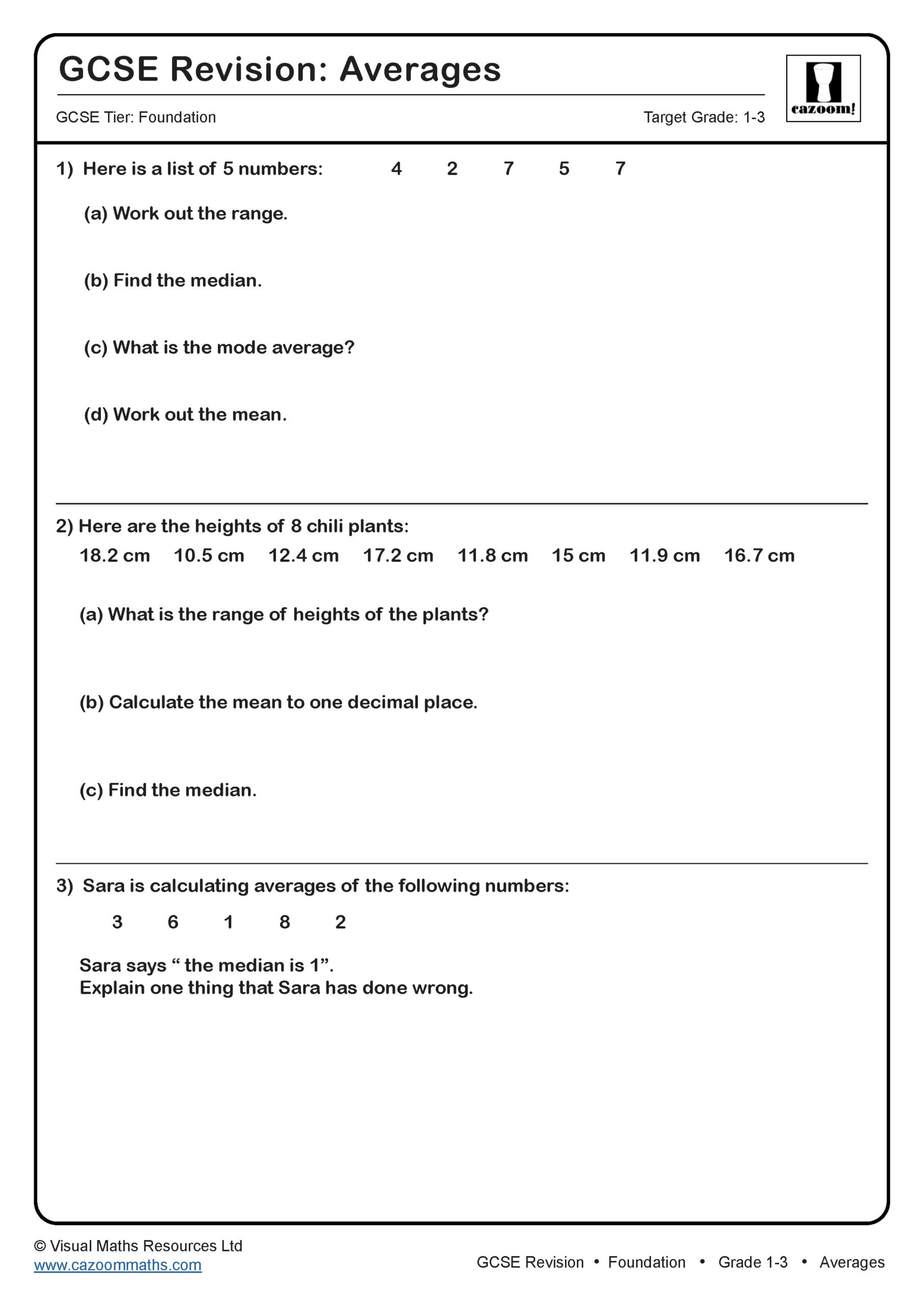
Foundation papers typically include 3-5 questions across both papers testing averages and range, worth around 10-12 marks combined. Students calculate mean from small datasets (usually 5-8 values), find median and mode from lists, and determine range. Questions often embed these within real contexts like test scores, temperatures or football goals. Worded problems might ask students to compare datasets using averages or explain why one measure suits a situation better than another.
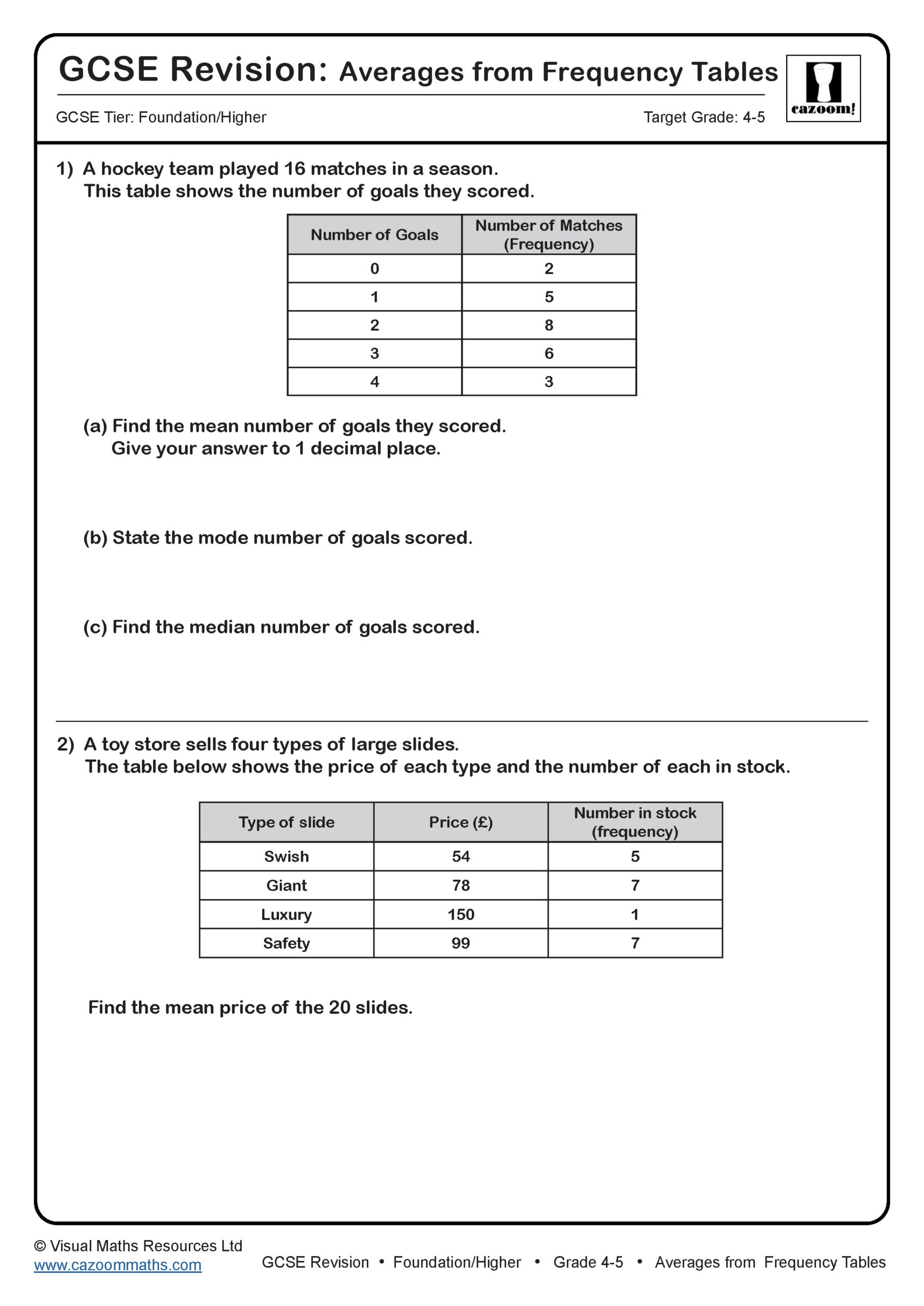
A common error at this tier involves calculating mean from a frequency table without multiplying values by their frequencies. Students add the first column instead of finding the total, losing all marks despite showing working. Exam mark schemes expect clear method marks, so showing 'sum of values ÷ number of values' explicitly helps secure partial credit even when arithmetic slips occur.
What grade are Mean Median Mode questions on Foundation GCSE maths?
Basic mean, median, mode and range calculations from simple lists typically target grades 1-3, with straightforward contexts and small datasets. Questions requiring students to find a missing value when the mean is given, compare which average best represents data, or work with frequency tables aim at grades 4-5. The overlap content at grades 4-5 appears on both Foundation and Higher papers but Foundation versions use friendlier numbers and clearer contexts, while Higher papers combine averages with probability or more complex algebra.
Students aiming for grade 4 should focus first on securing all grade 1-3 content, ensuring they never confuse the three measures and always order data before finding median. Once confident with basics, tackling missing value problems and frequency table questions builds towards grade 5. Teachers often set worksheets by grade band, allowing targeted revision where students need it most.
How is Mean Median Mode tested differently on Foundation compared to Higher?
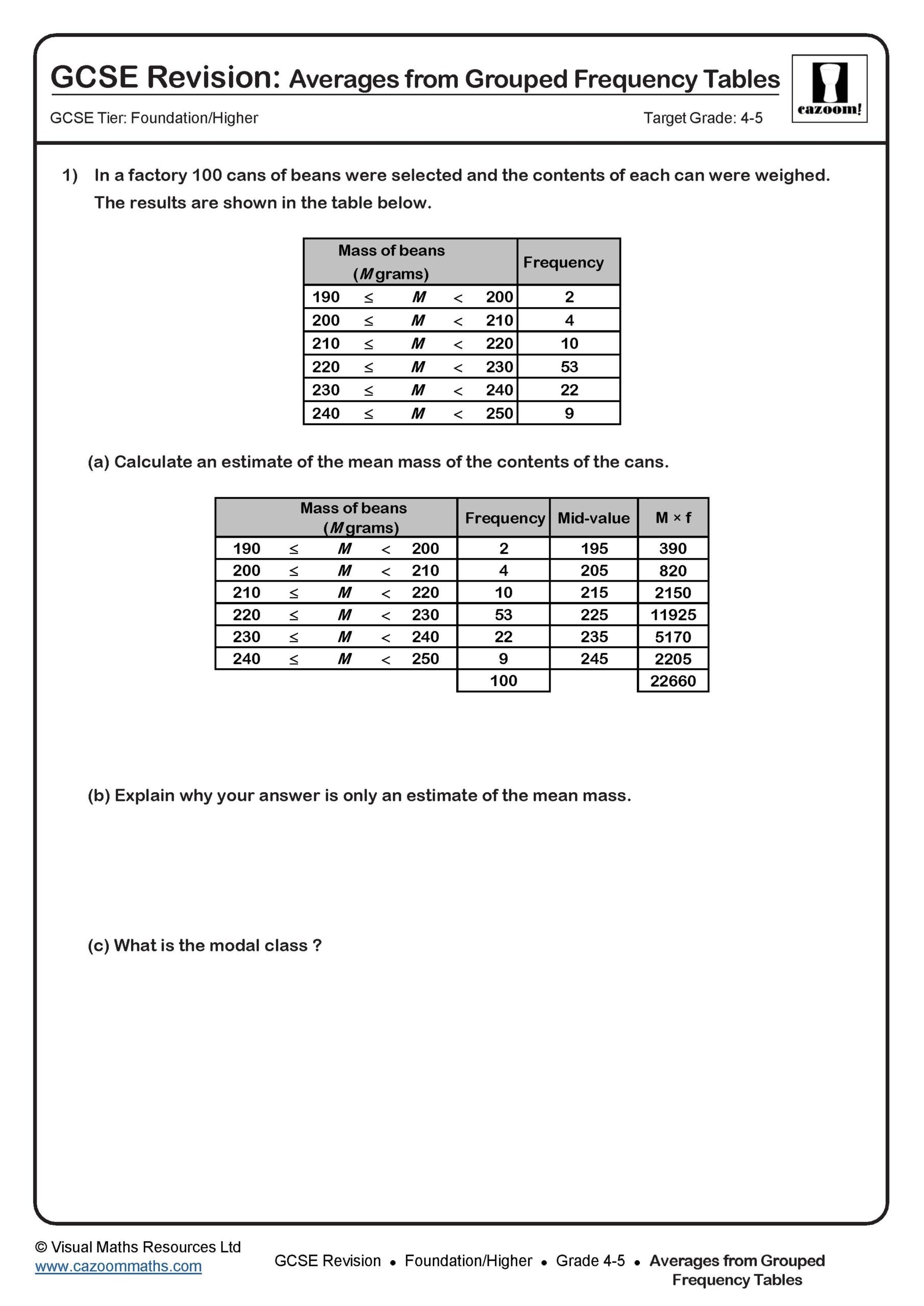
Foundation papers focus on calculating averages from datasets and interpreting results in context, with numbers staying manageable and contexts remaining straightforward. Higher papers introduce estimated means from grouped frequency tables, reverse problems requiring algebraic manipulation, and questions linking averages to probability or cumulative frequency. Foundation students rarely encounter grouped data or need to form equations, instead concentrating on accurate calculation and choosing appropriate measures for different situations.
This Foundation approach matters because it builds the statistical literacy students need beyond GCSE, understanding what averages actually reveal about data rather than just mechanical calculation. Teachers notice that students who grasp why median works better for house prices, or why mode matters for shoe sizes, perform better on application questions. Foundation papers reward this understanding through context marks that stronger students often collect reliably once calculation skills become secure.
How should students revise Mean Median Mode for Foundation GCSE maths?
Start with worksheets covering individual measures separately, ensuring students reliably find mean, median, mode and range from unordered lists before mixing them. Set timed challenges once accuracy improves, as Foundation students must work through these questions quickly to leave time for harder topics. Always check working against answer sheets immediately, identifying whether errors come from method confusion or arithmetic slips. Practise frequency table questions separately, as these require different thinking and catch many students out under exam pressure.
Teachers can use these worksheets for morning starter activities, building routine with averages across several weeks rather than one intensive block. Setting specific worksheets as homework after teaching particular grade bands helps consolidate learning before moving forward. Differentiating by grade focus lets students work at appropriate challenge levels during lessons, with extension material ready for those securing grade 5 content quickly.