GCSE Foundation Percentages Revision Worksheets
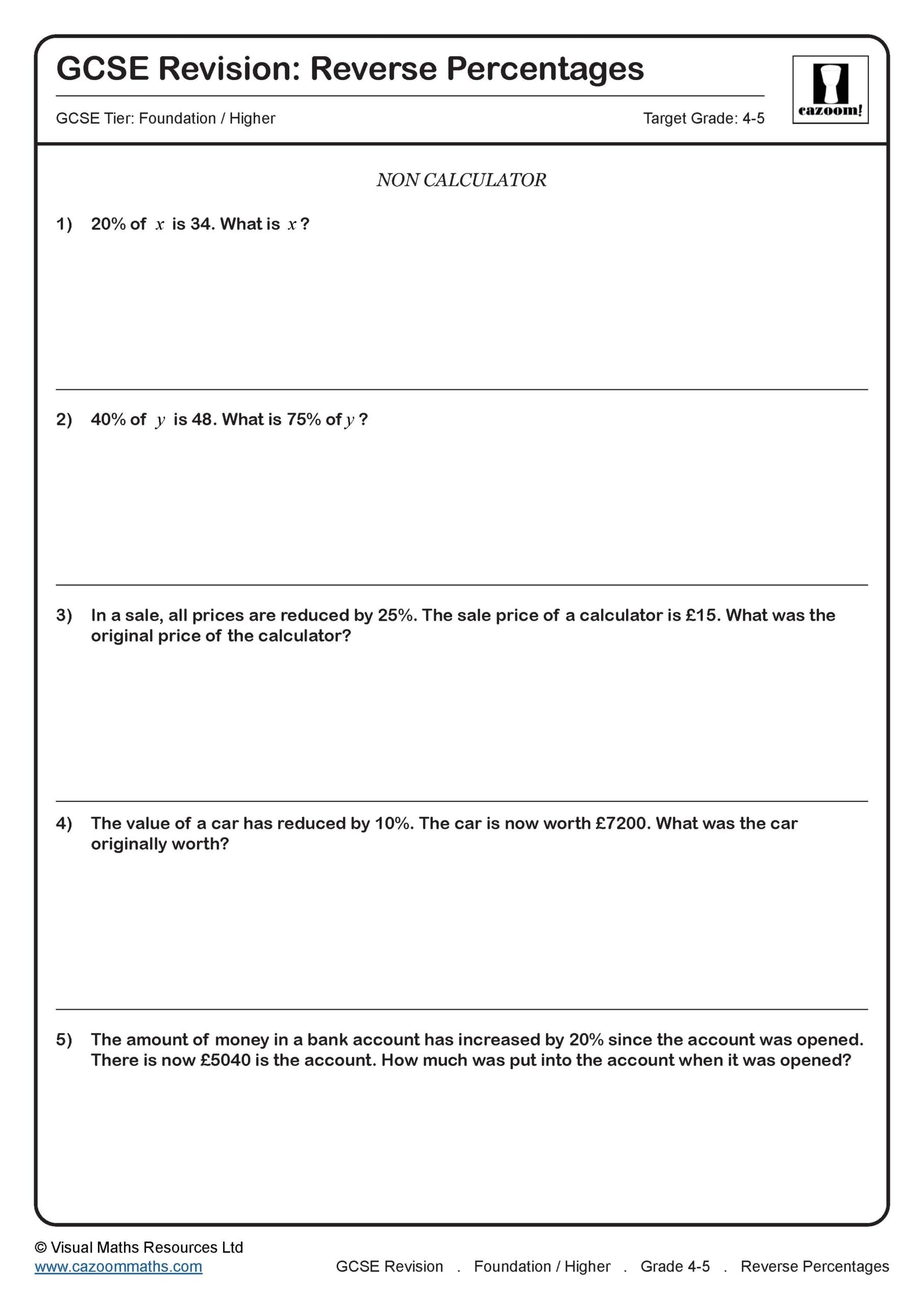
All worksheets are created by the team of experienced teachers at Cazoom Maths.
What Percentages questions appear on the GCSE Foundation paper?
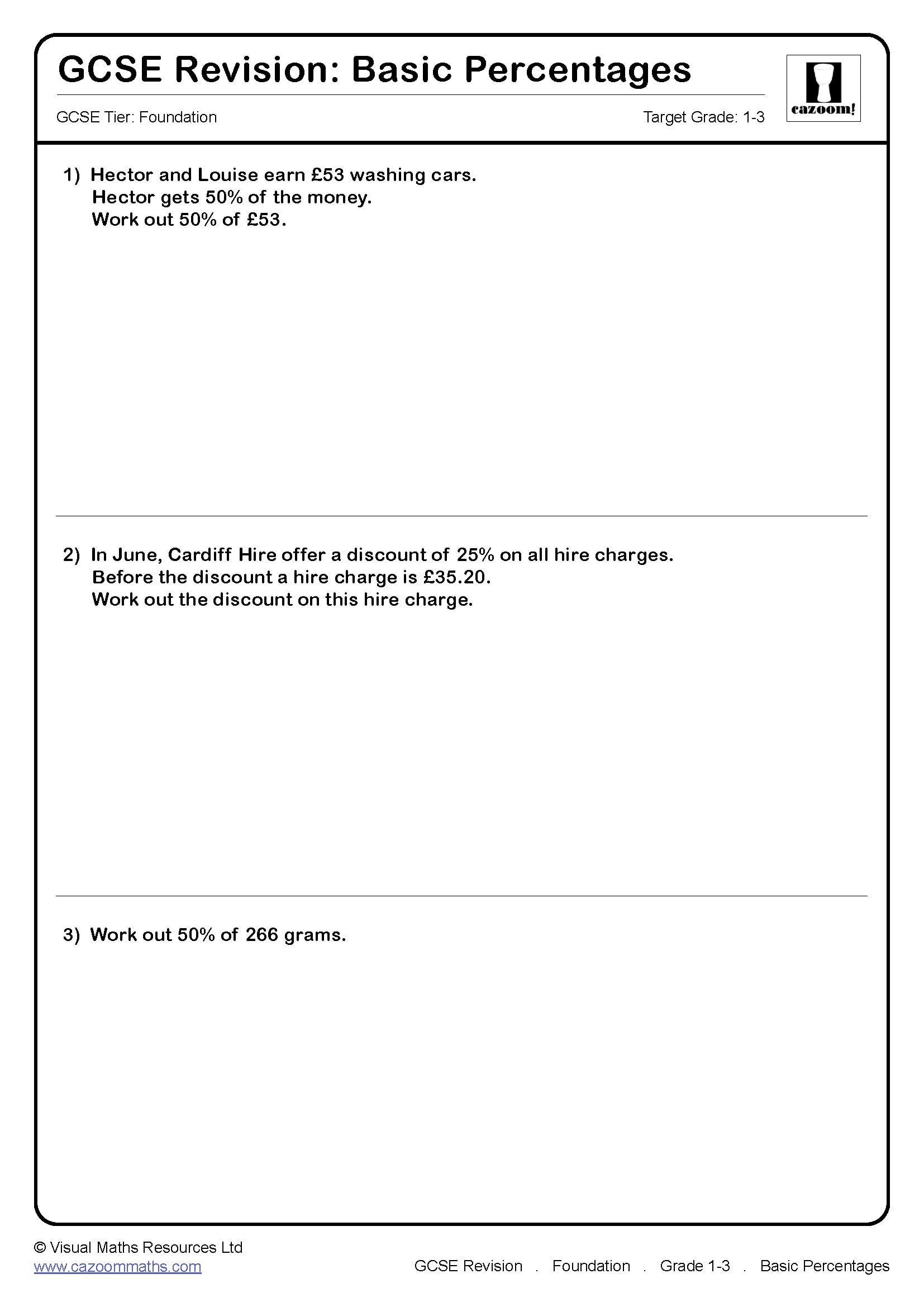
Foundation papers typically include four to six percentage questions worth approximately 12-15 marks in total. Students face calculations like finding a percentage of an amount, working out percentage increases and decreases, expressing one quantity as a percentage of another, and solving reverse percentage problems at the simpler end. Questions appear across both calculator and non-calculator papers, with non-calculator questions usually involving friendly numbers like 10%, 25%, or 50%.
A common error at Foundation level occurs when students calculate the percentage change but forget the final step of adding it back on for an increase or subtracting it for a decrease. Exam mark schemes expect students to show this working clearly, and many lose a mark by jumping straight to an incorrect final answer without demonstrating their method.
What grade are Percentages questions on Foundation GCSE maths?
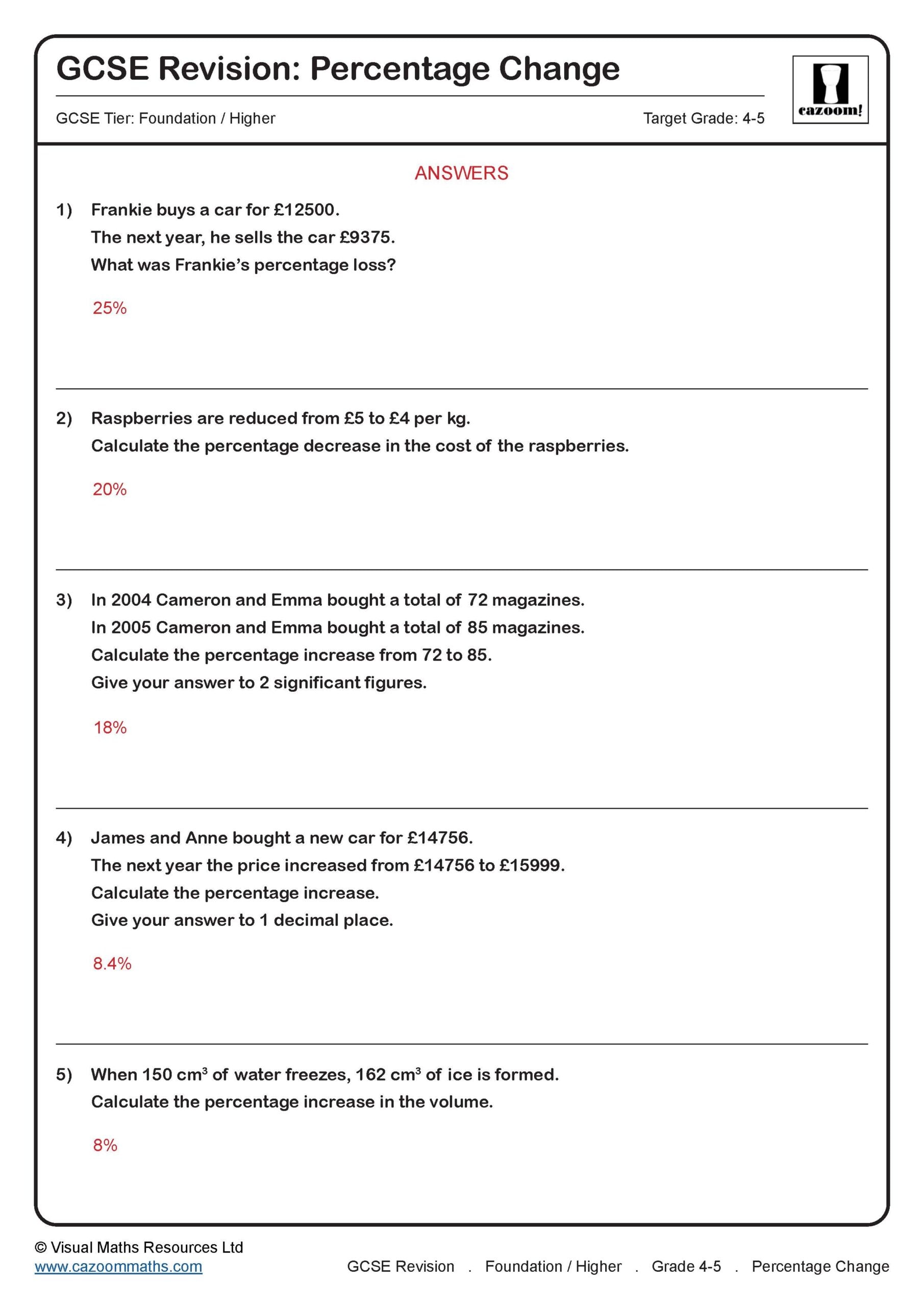
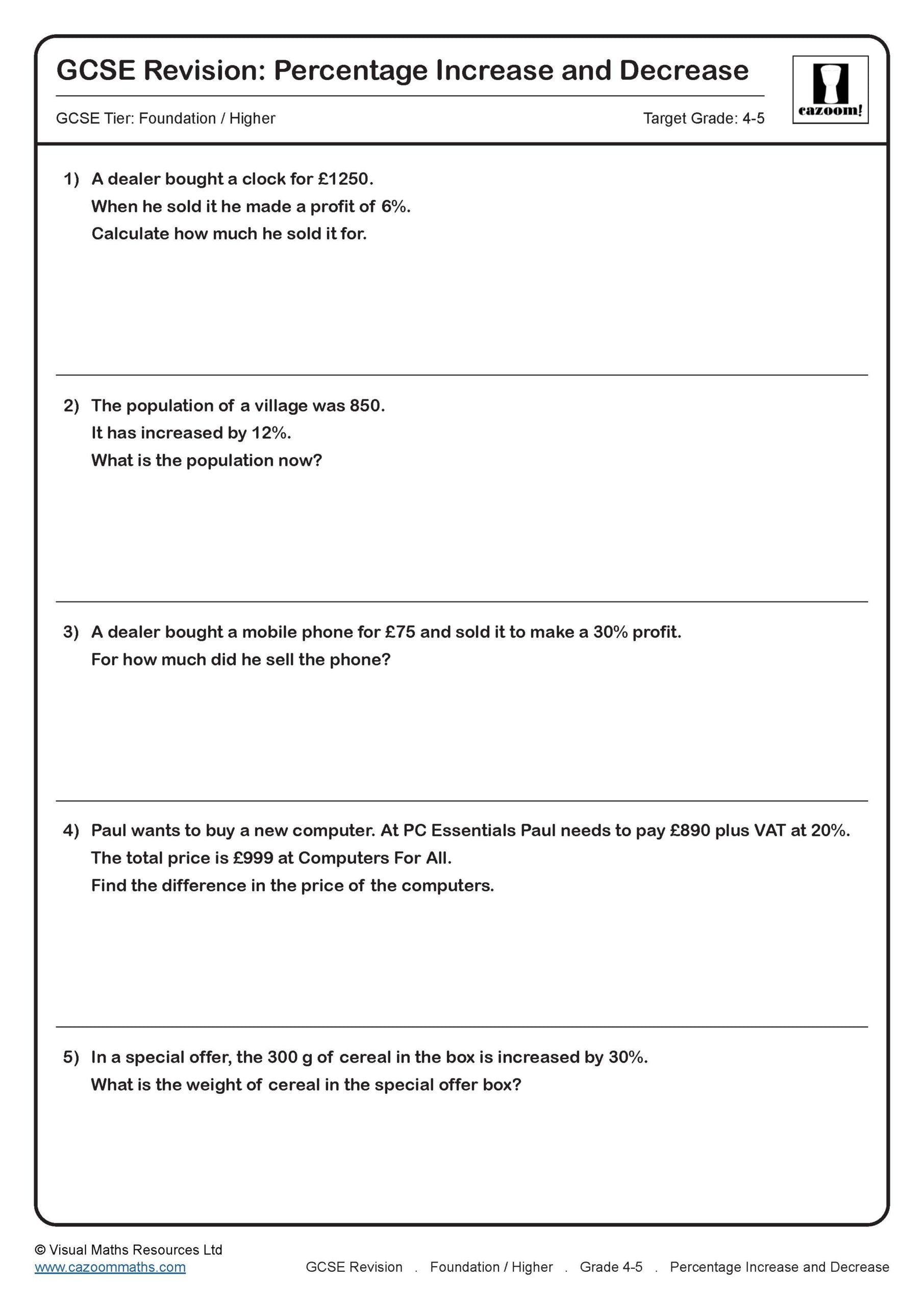
Basic percentage calculations, such as finding 10% or 50% of an amount, typically target grades 1-3. These questions test whether students understand percentages as parts of 100 and can apply simple mental methods. Questions involving percentage increase and decrease, or calculating percentage change, appear at grades 4-5. These require multi-step reasoning and careful attention to whether the percentage should be added or subtracted.
Students revising for a grade 4 or 5 should prioritise the more complex percentage change questions once they have secured the basic calculations. Teachers often suggest working through easier questions first to build confidence, then gradually tackling the grade 4-5 material where students typically find the step-up in demand most noticeable.
How is Percentages tested differently on Foundation compared to Higher?
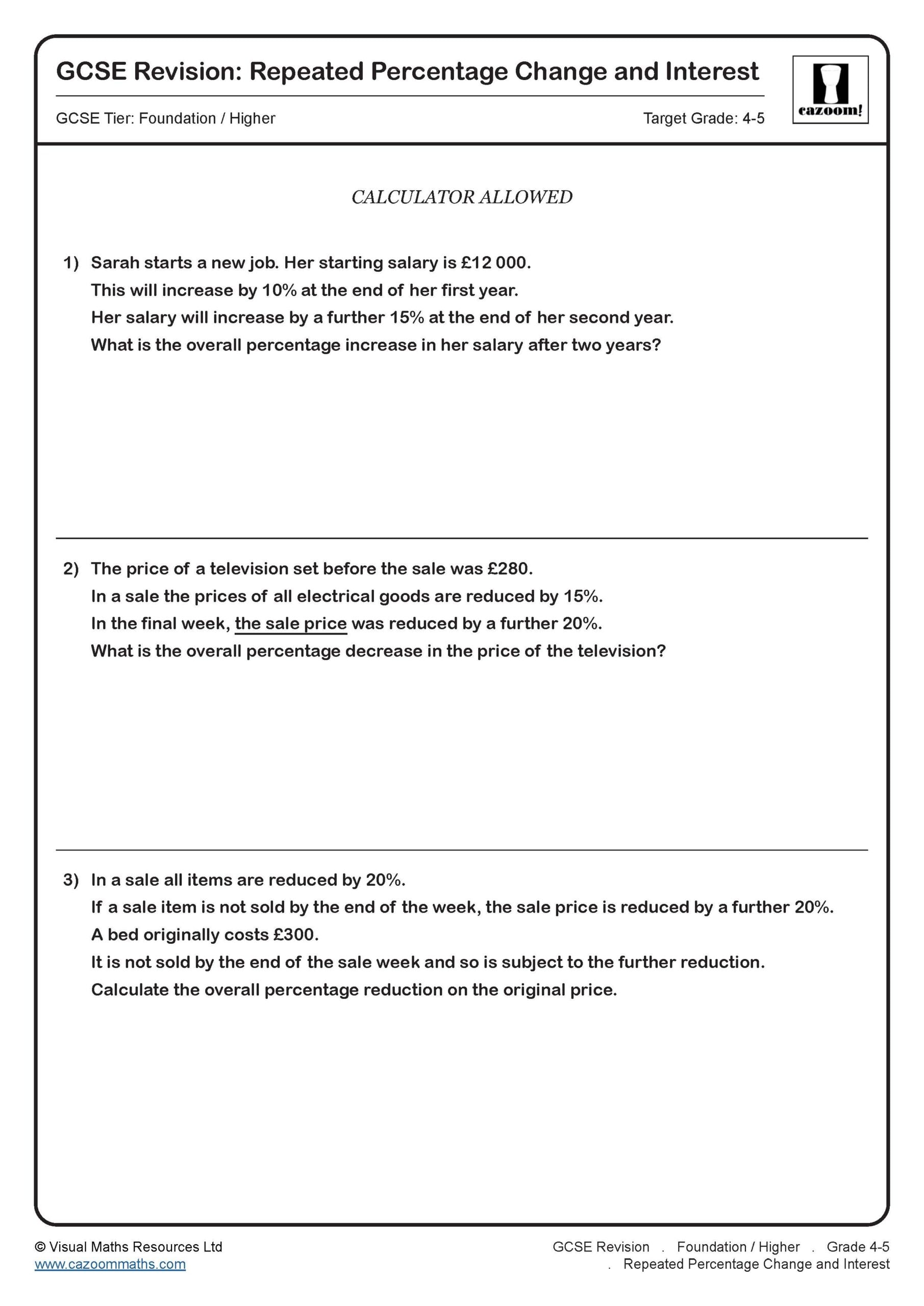
Foundation percentage questions focus on direct calculations and straightforward applications, often with numbers chosen to make non-calculator work manageable. Higher tier introduces compound percentage change, reverse percentages with decimal multipliers, and problems requiring algebraic manipulation. Foundation students rarely encounter multipliers beyond simple contexts, whereas Higher tier expects fluency with the multiplier method from grade 6 onwards.
The Foundation approach matters because students at this tier benefit from building confidence through repeated practice of core methods before attempting more abstract concepts. Mastering percentage increase and decrease with clear, written steps prepares students for the grade 4-5 questions that separate middle and higher Foundation grades, and provides a foundation for those considering a move to Higher tier later.
How should students revise Percentages for Foundation GCSE maths?
Students should begin with the basic percentage worksheets, practising until they can confidently find common percentages without hesitation. Once comfortable, they should move to percentage change questions, focusing on showing all working and clearly labelling increases or decreases. Using the answer sheets to identify mistakes immediately helps students correct misconceptions before they become ingrained. Timed practice replicates exam conditions and builds the fluency needed for non-calculator questions.
Teachers often set these worksheets as homework after introducing each percentage skill in class, allowing students to consolidate learning independently. In lessons, the worksheets work well for differentiated practice, with some students focusing on securing grades 2-3 while others tackle the grade 4-5 material. The answer sheets make peer marking straightforward and encourage students to discuss methods.