GCSE Foundation Powers Revision Worksheets
All worksheets are created by the team of experienced teachers at Cazoom Maths.
What Powers questions appear on the GCSE Foundation paper?
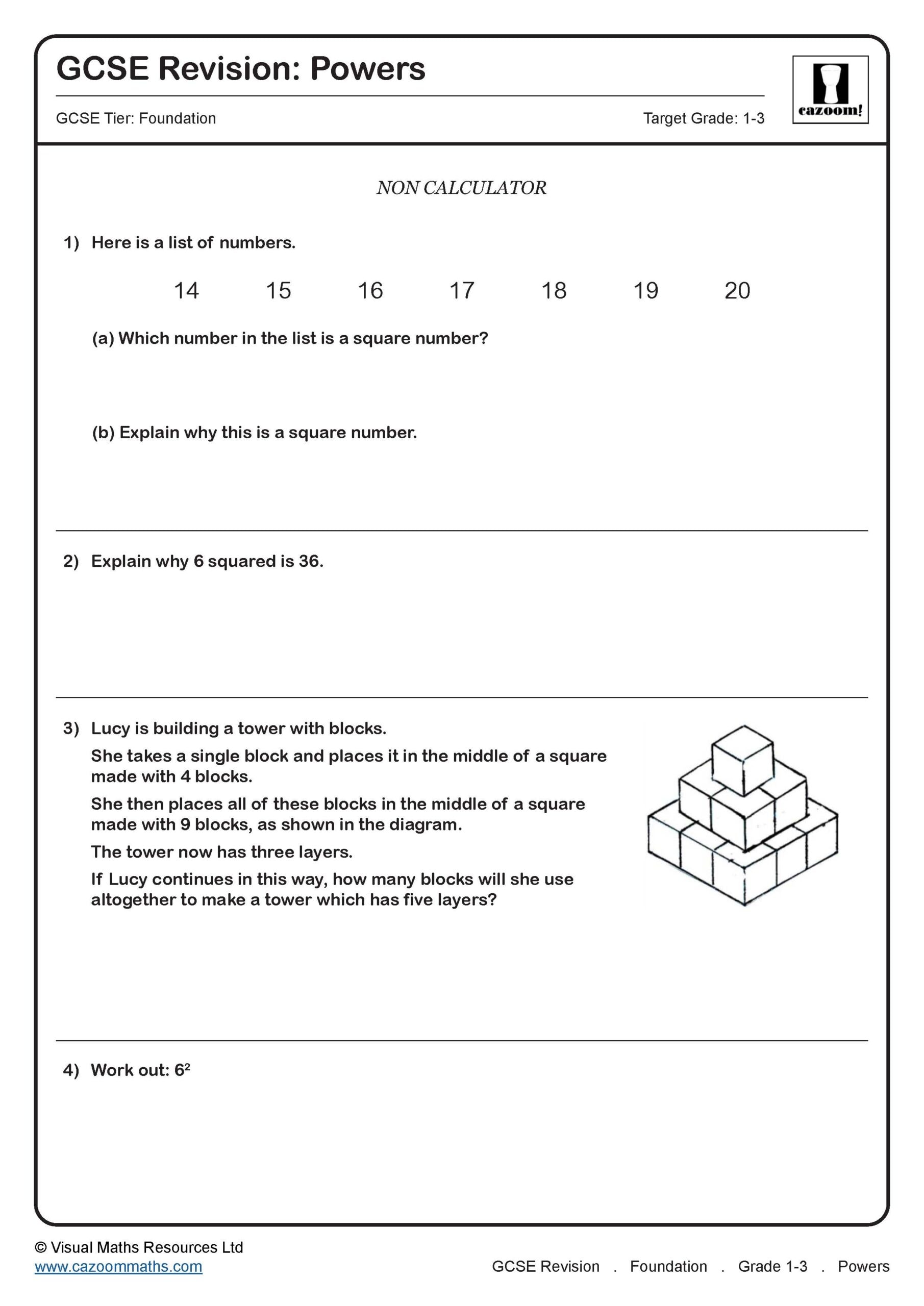
Foundation papers typically include 3-5 marks directly testing powers, plus further marks where powers appear within broader questions. Students face calculations like 4³ or 7², identifying square and cube numbers from lists, writing repeated multiplication in index form, and working backwards from 64 to find which number cubed gives that answer. Questions also embed powers within order of operations, requiring students to evaluate expressions like 5 + 2³ correctly.
Exam mark schemes penalise students who show 3⁴ = 12 rather than 81, a mistake that costs easy marks. Teachers notice this error stems from multiplying the numbers together rather than understanding repeated multiplication. Working through graded practice before the exam prevents this common misconception from costing Foundation students grade 4 or 5 boundaries.
What grade are Powers questions on Foundation GCSE maths?
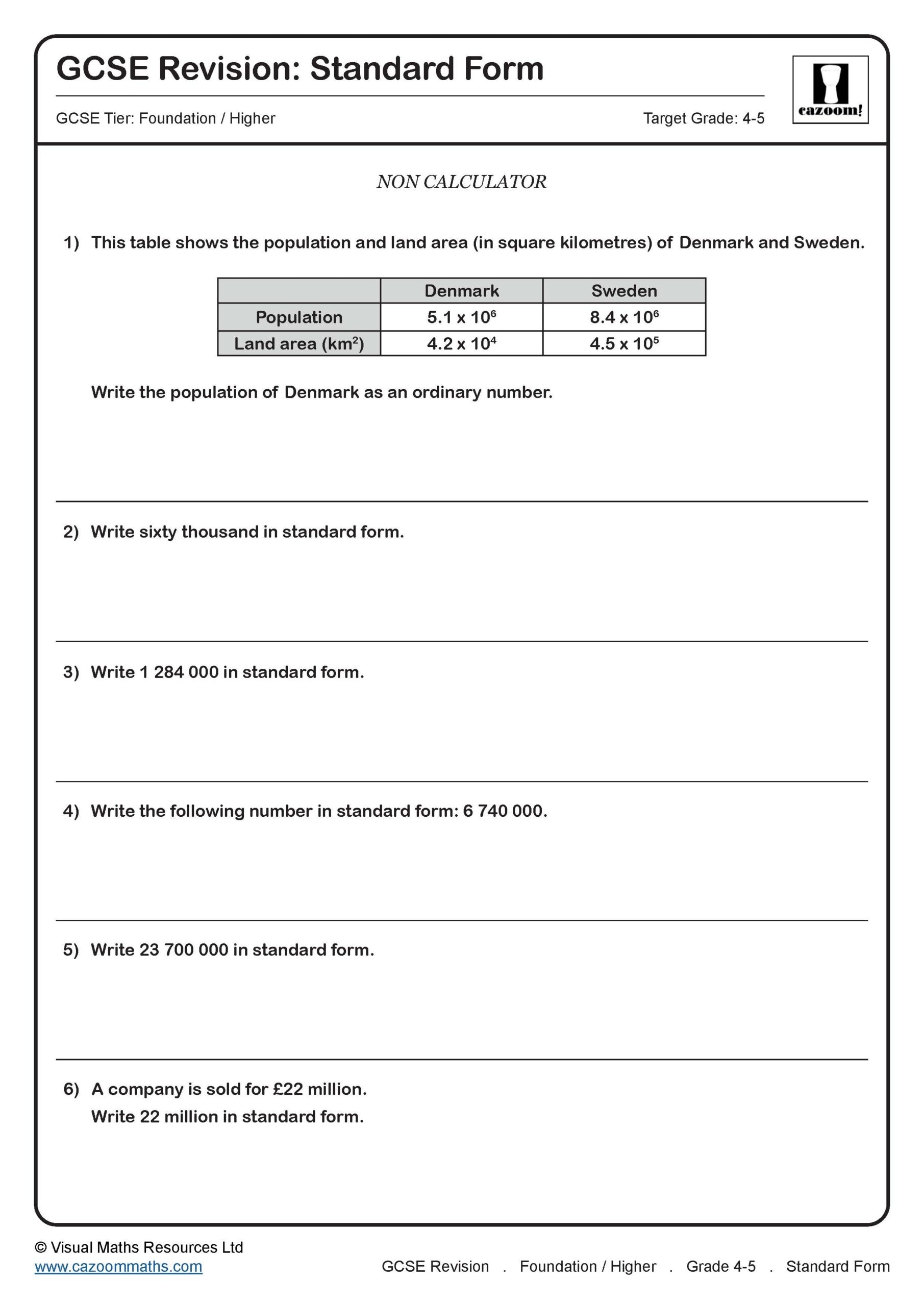
Grade 1-3 questions ask students to calculate simple squares and cubes, recognise common values like 5² = 25, and write repeated multiplication using index notation. Grade 4-5 questions require fluency with larger bases, working with powers in multi-step problems, and applying powers within algebraic expressions or standard form contexts. These higher Foundation grades separate students who can recall facts from those who understand the underlying structure.
Students aiming for grade 5 should prioritise the more demanding applications once basic recall feels secure. Teachers often guide classes to master the grade 3 content first, building confidence before tackling problem-solving questions. This layered approach prevents overwhelm whilst ensuring students can access every mark available within their target grade on exam day.
How is Powers tested differently on Foundation compared to Higher?
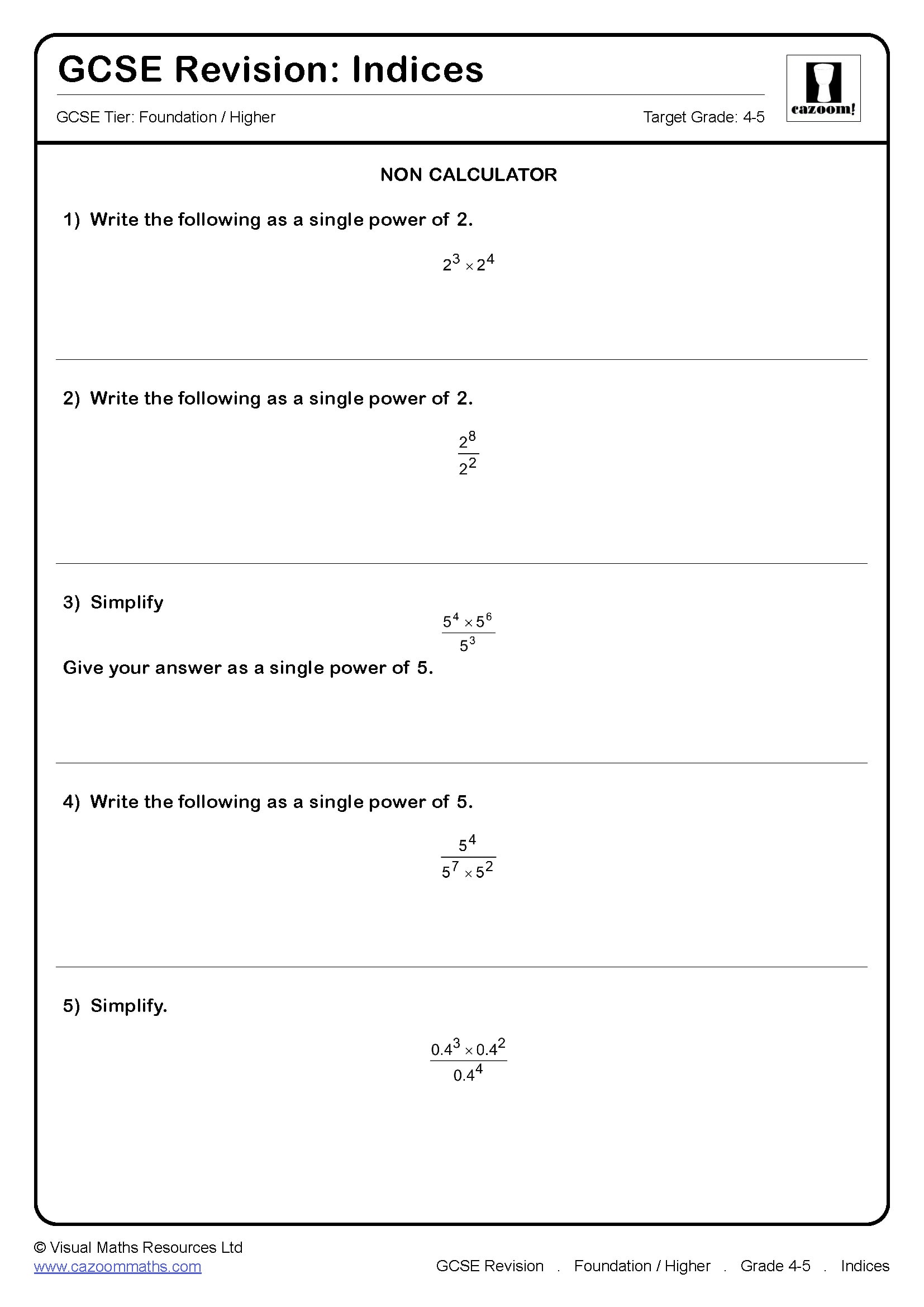
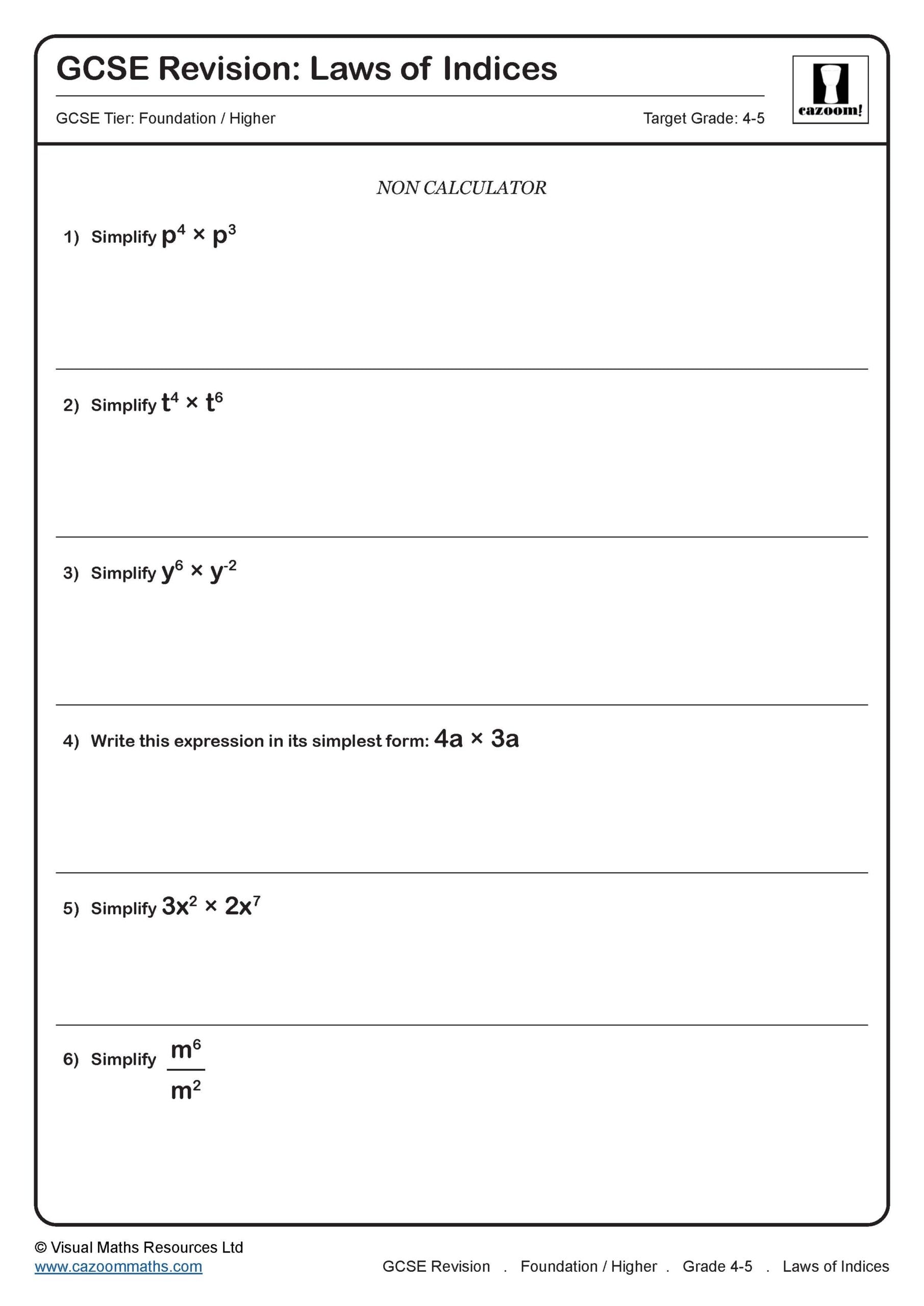
Foundation papers focus on positive integer powers, particularly squares and cubes, with straightforward evaluation questions that reward accurate calculation. Higher papers extend to negative and fractional powers, laws of indices including multiplication and division of powers, and algebraic manipulation requiring index rules. Foundation students rarely see powers combined algebraically, whilst Higher students must simplify expressions like x⁵ ÷ x² fluently.
This difference matters because Foundation students need rock-solid recall of square and cube values up to 15² and 5³, rather than learning abstract index laws. Teachers notice Foundation candidates lose marks through basic errors with small numbers, not through lacking advanced techniques. Focused practice on accurate calculation and recognising common powers delivers far better results than attempting Higher-tier content prematurely.
How should students revise Powers for Foundation GCSE maths?
Students should begin by testing their recall of square numbers up to 15² and cubes up to 5³, using worksheets to identify gaps. Working through questions in order builds from basic calculation towards problem-solving applications, mirroring how papers increase in difficulty. Checking answers immediately after each worksheet prevents practising errors repeatedly. Timing later attempts replicates exam pressure, helping students gauge whether they can access these marks within realistic time constraints.
Teachers often use these worksheets as low-stakes starters, allowing every student to experience success before tackling harder content. Setting targeted homework focused on a specific grade band helps students address weaknesses methodically. Classes benefit from discussing common errors together, particularly the base-power confusion, before independent practice cements correct methods for exam conditions.