GCSE Foundation Probability Revision Worksheets
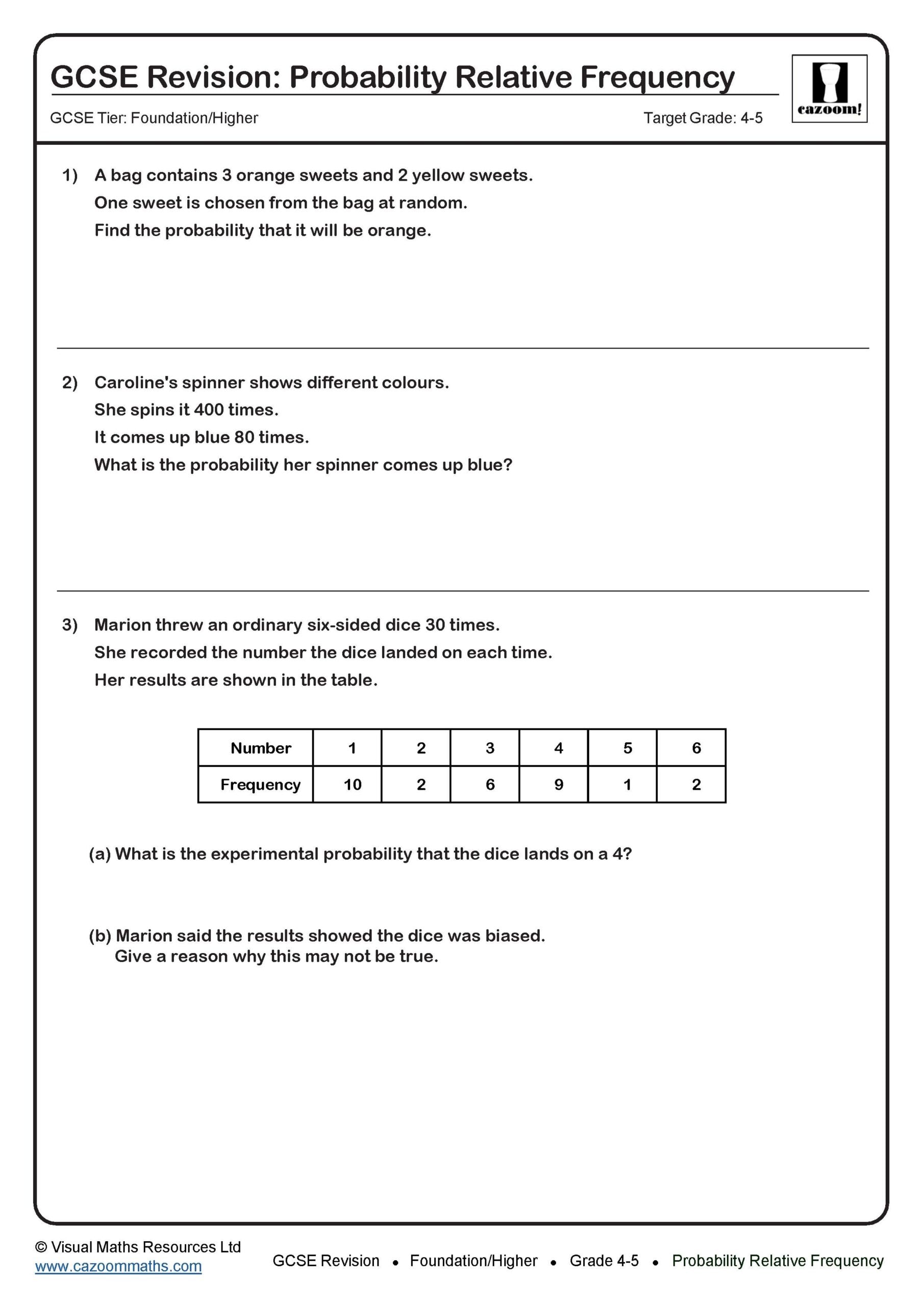
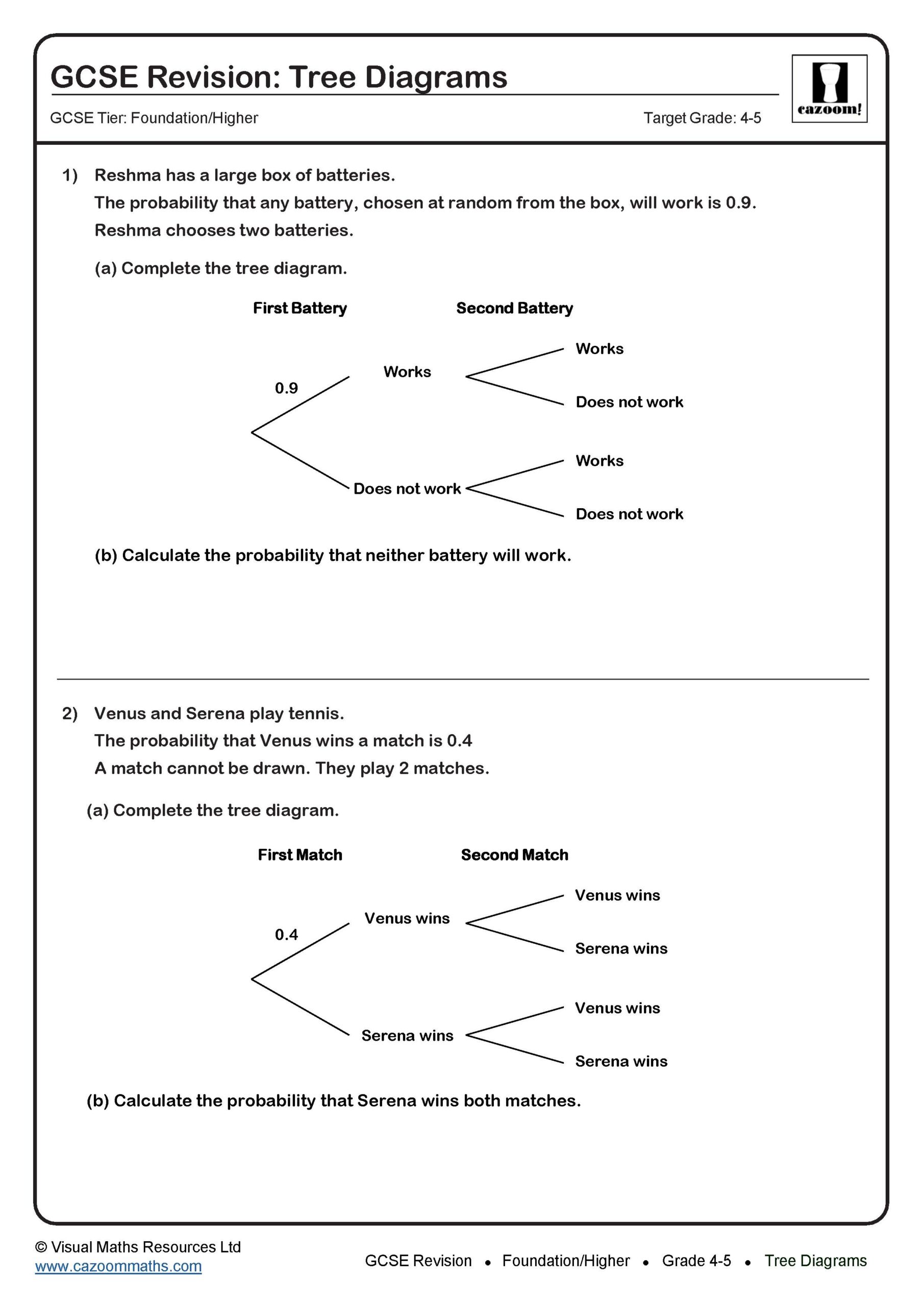
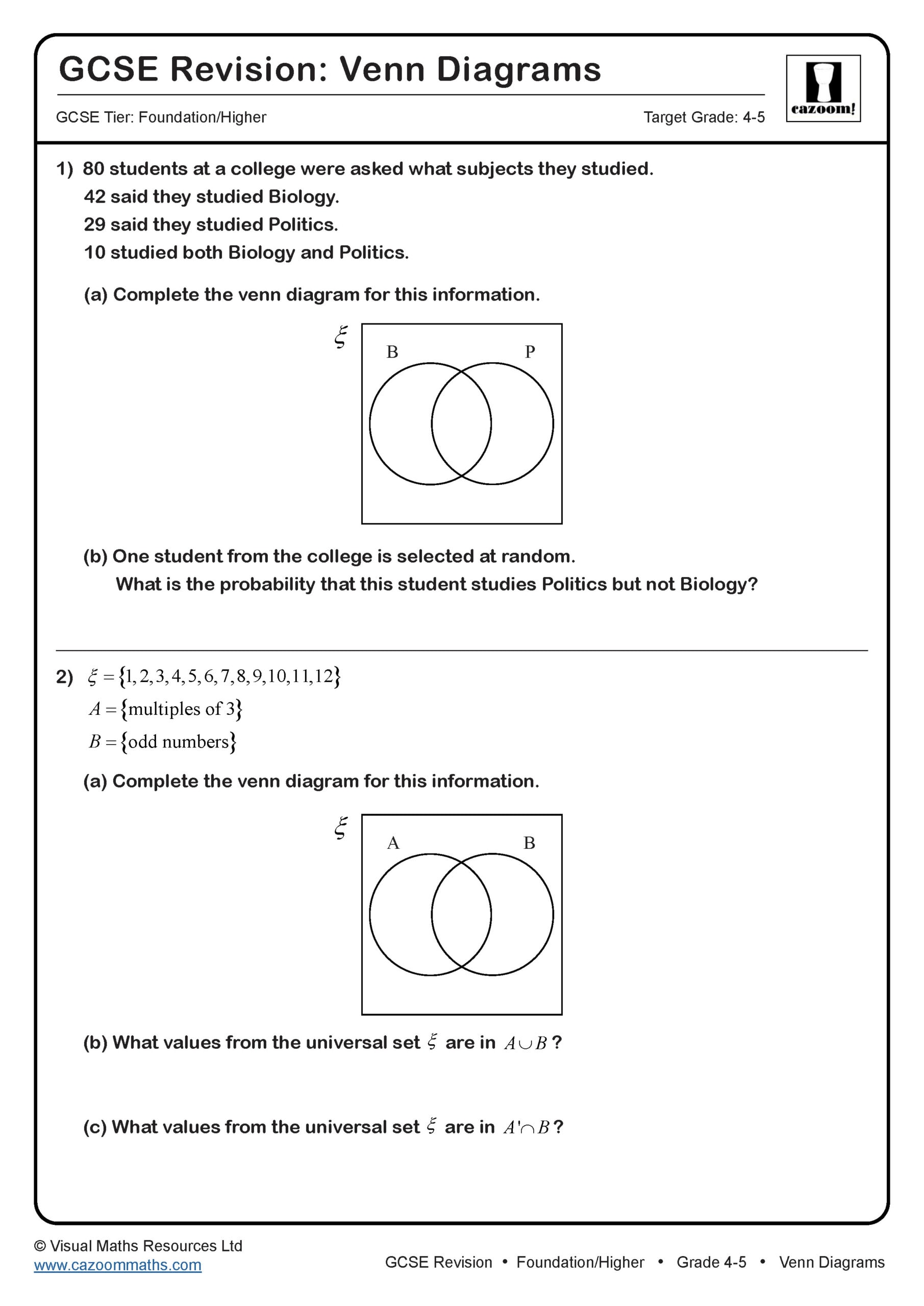
All worksheets are created by the team of experienced teachers at Cazoom Maths.
What Probability questions appear on the GCSE Foundation paper?
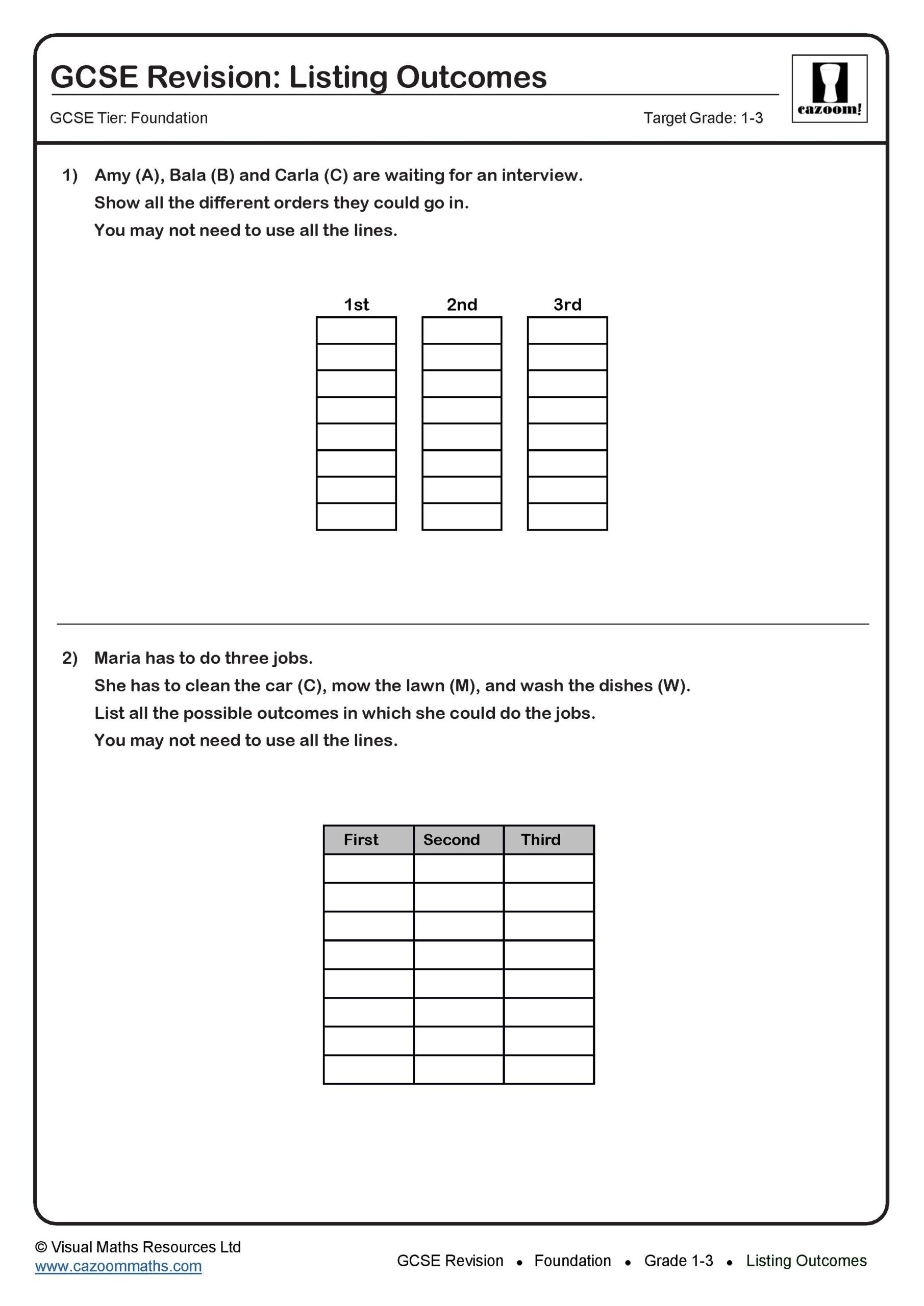
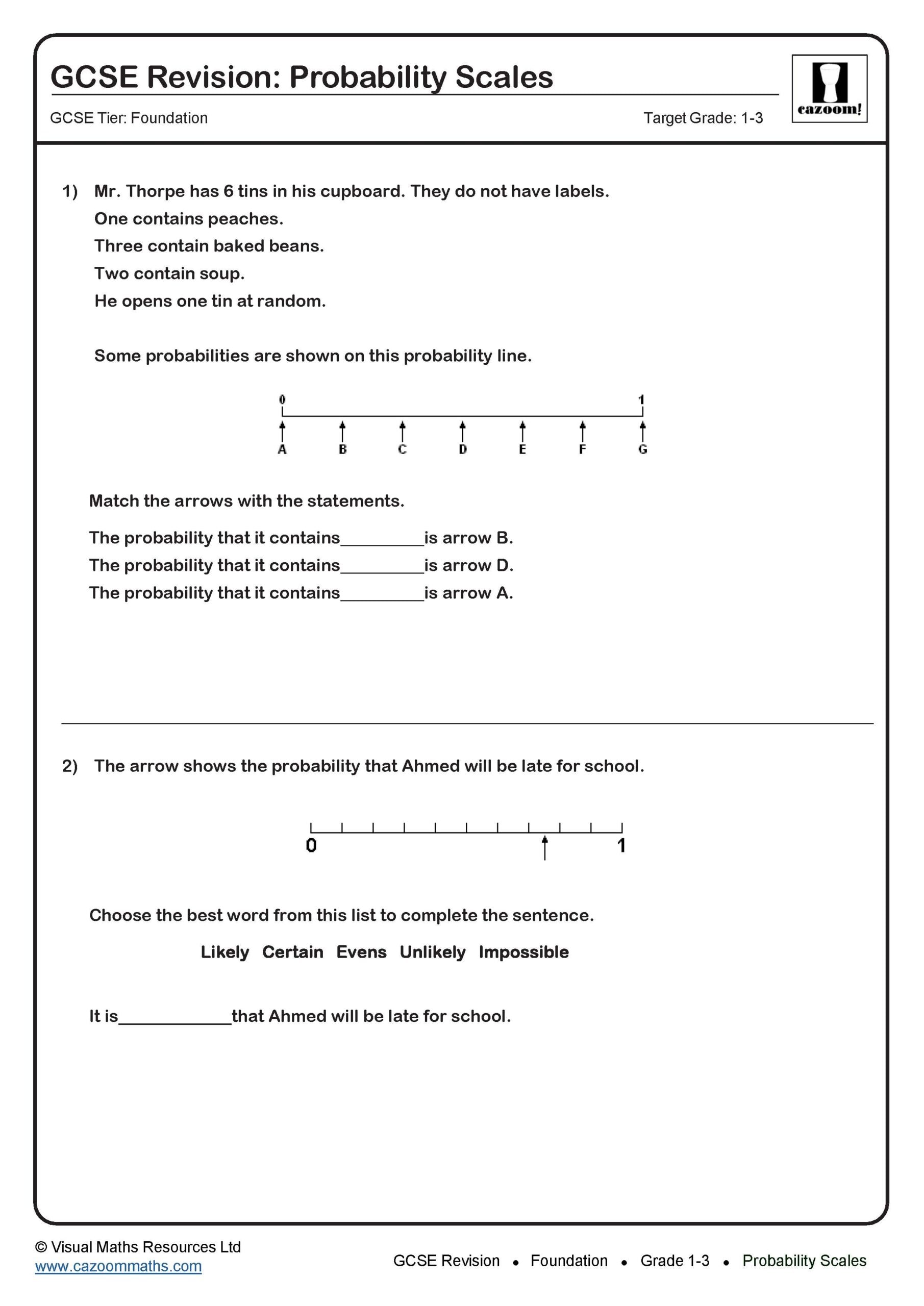
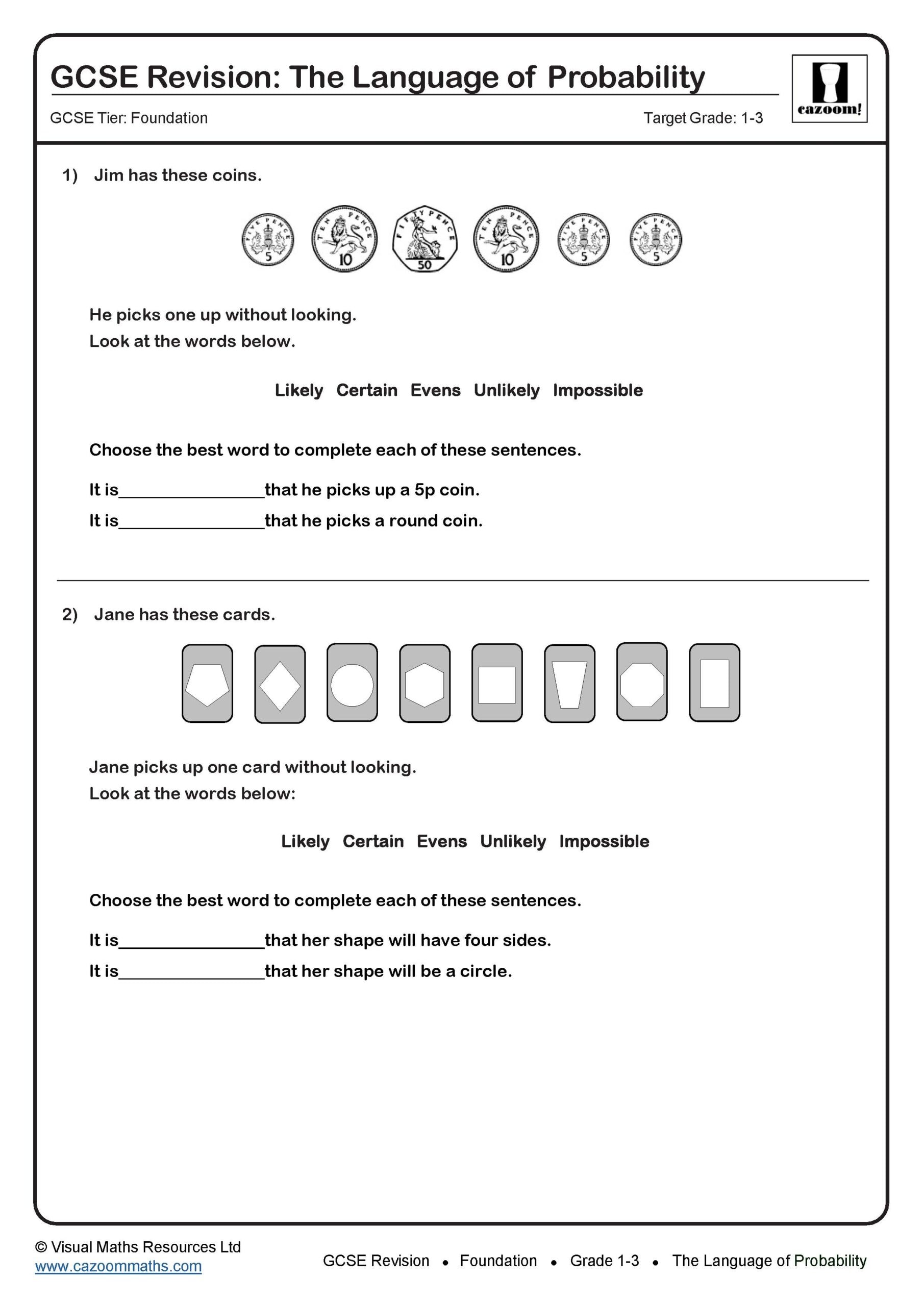
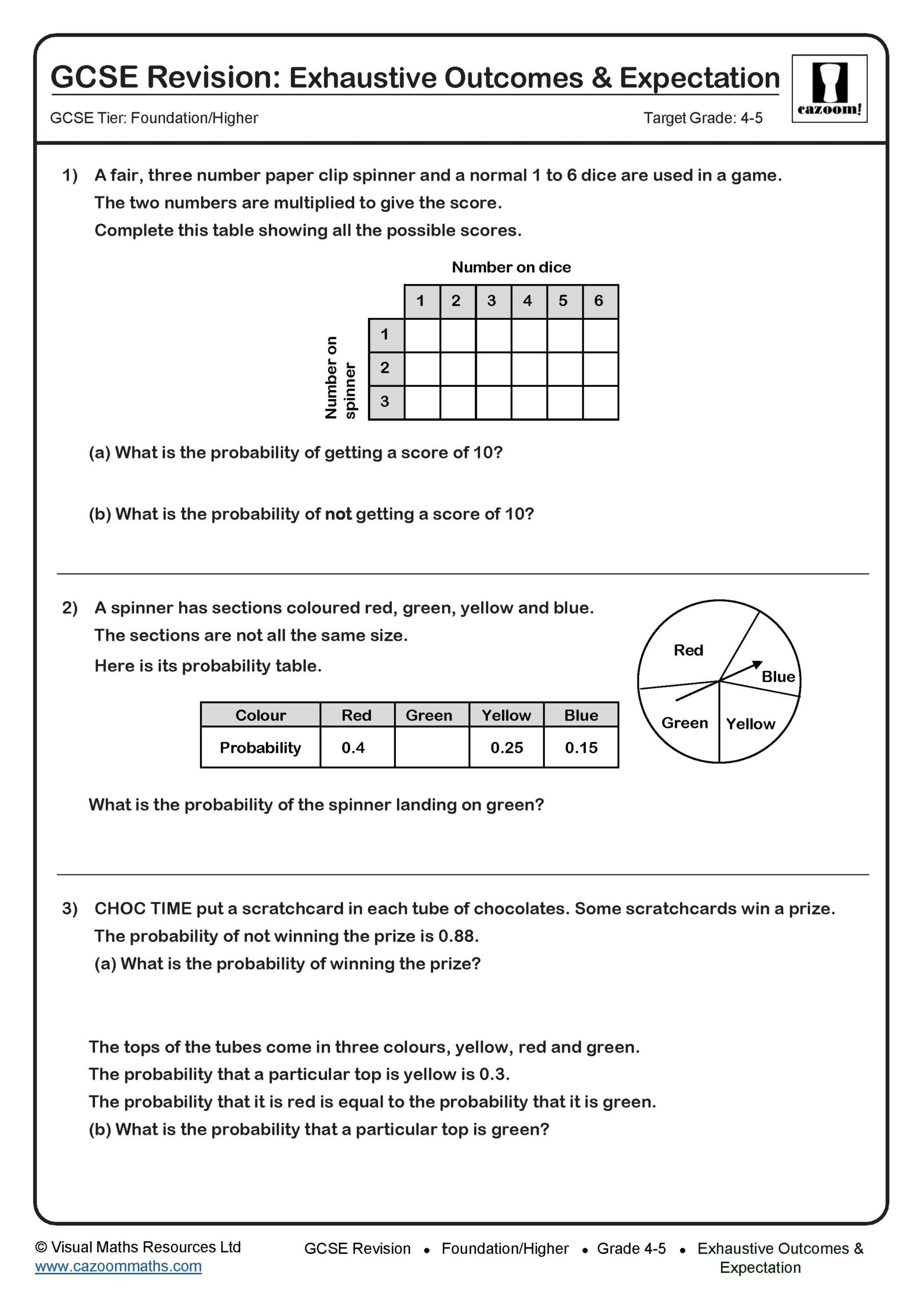
Foundation papers typically include 8-12 marks across probability questions. Students face tasks like marking probabilities on scales, choosing appropriate probability words (impossible, unlikely, even chance, likely, certain), and calculating simple probabilities from equally likely outcomes such as dice, spinners, or coloured counters. Questions often ask students to list all possible outcomes or find the probability of a single event expressed as a fraction, decimal, or occasionally a percentage.
A common error occurs when students write probabilities greater than 1 or less than 0, particularly when working with fractions. Mark schemes penalise answers like 5/4 or negative values. Teachers frequently notice students losing marks by not simplifying fractions, especially when the question explicitly asks for the probability "in its simplest form". Checking that all probabilities fall between 0 and 1 prevents careless errors.
What grade are Probability questions on Foundation GCSE maths?
Grade 1-3 probability questions test basic language and scale work: marking 0, 0.5, and 1 on probability scales, matching events to words like "certain" or "impossible", and recognising that probabilities cannot exceed 1. Grade 4-5 questions require calculating probabilities from equally likely outcomes, simplifying fractions, converting between fractions and decimals, and sometimes identifying which event is more likely by comparing probabilities numerically.
Students aiming for grade 5 should focus first on securing grade 3 skills, particularly accurate probability vocabulary and correct scale placement. Once these foundations are secure, practising fraction simplification and outcome listing builds confidence with grade 4-5 questions. Teachers often advise students to master probability scales thoroughly before attempting calculation questions, as scale understanding underpins more complex work.
How is Probability tested differently on Foundation compared to Higher?
Foundation probability focuses on single events and clear outcomes: one dice roll, one spinner, picking one counter. Questions use accessible contexts and expect straightforward fraction or decimal answers. Higher tier introduces combined events (two dice, tree diagrams), conditional probability, set notation, and probability that requires algebraic manipulation or equation-solving. Foundation papers avoid Venn diagrams, relative frequency calculations, and multi-step reasoning about dependent events.
This Foundation approach allows students to build confidence with core probability principles without algebraic complexity. Mastering probability scales, accurate language, and basic fraction calculations at Foundation level provides the groundwork students need. Teachers notice that students who secure these fundamentals at Foundation can access grade 4-5 overlap questions reliably, whereas rushing into Higher-level content without these basics causes confusion and lost marks.
How should students revise Probability for Foundation GCSE maths?
Students should work through probability scales first, practising marking fractions, decimals, and percentages accurately before moving to calculation questions. Timed practice helps build exam pace, particularly for listing outcomes systematically without missing possibilities. Checking answers immediately after each worksheet allows students to identify whether errors stem from calculation mistakes, incorrect simplification, or misunderstanding probability language. Keeping a list of common mistakes (probabilities above 1, unsimplified fractions) helps avoid repeated errors.
Teachers can use these worksheets for starter activities, homework tasks, or targeted intervention with students working towards grade 4 or 5. Setting specific worksheets based on recent assessment data allows focused practice on weaker areas. The answer sheets enable independent learning during revision lessons, freeing teachers to support students who need additional explanation with vocabulary or fraction skills.