GCSE Foundation Problem Solving Revision Worksheets
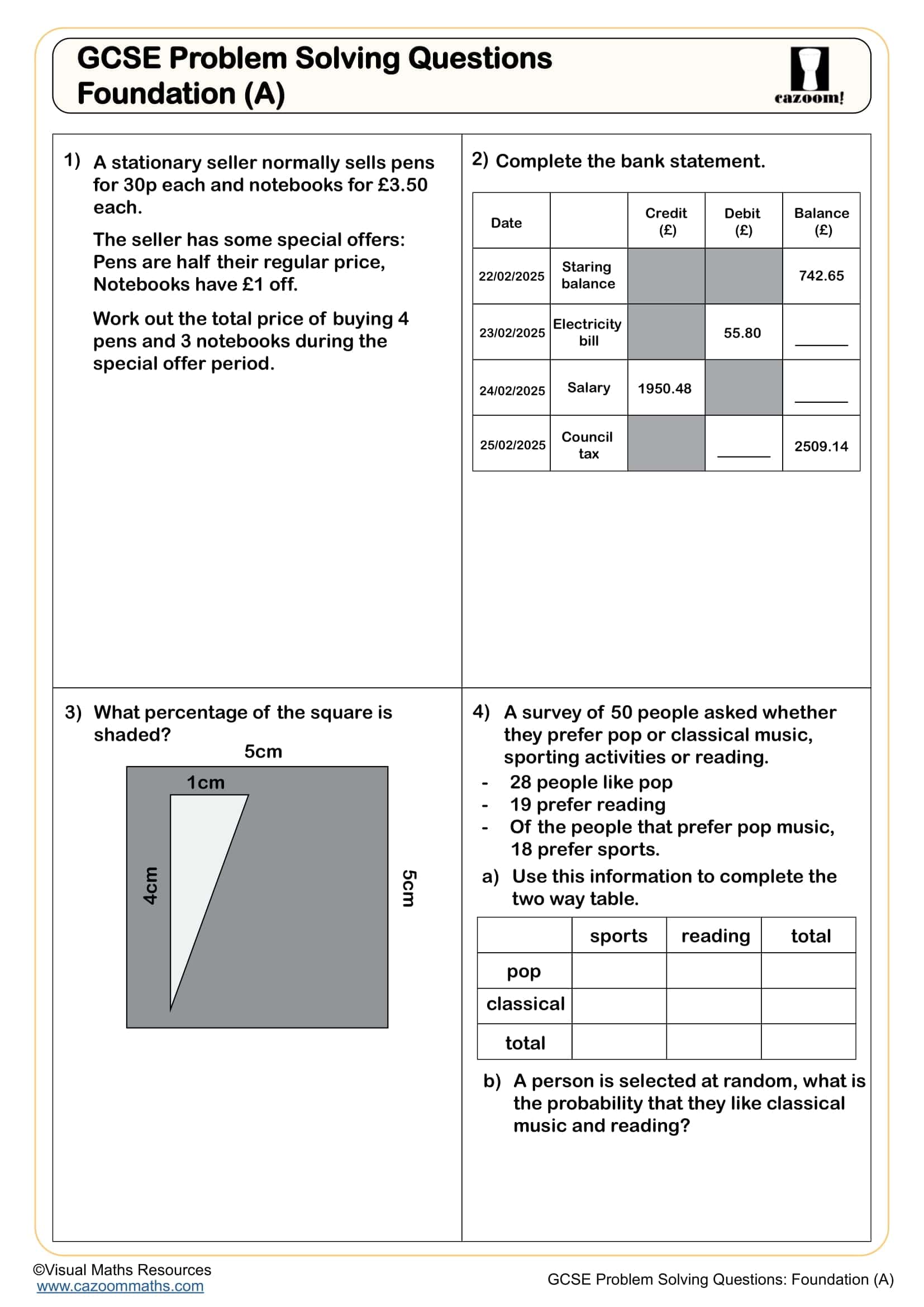
GCSE Problem Solving Questions: Foundation (A)
Target Grade: 1-3
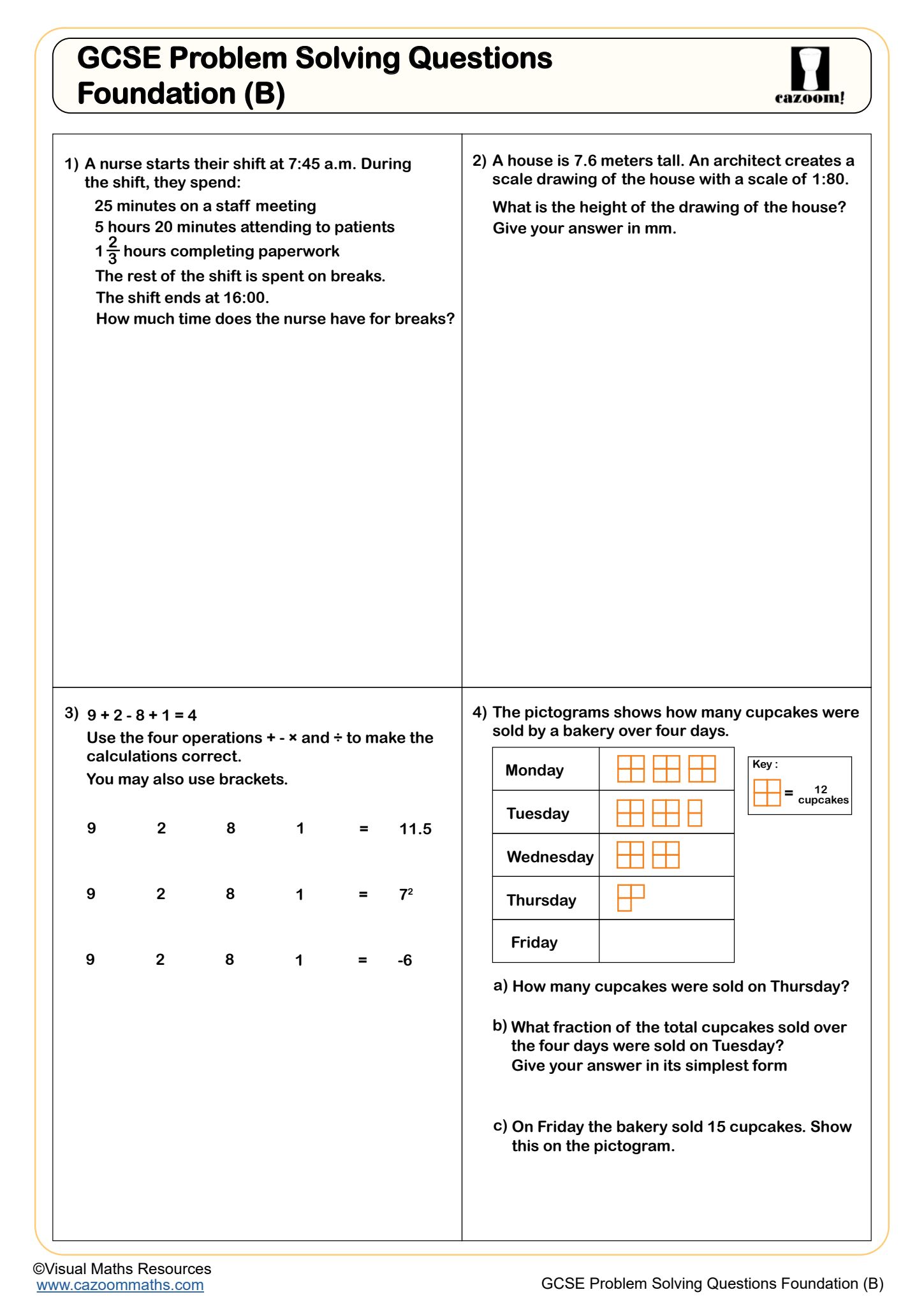
GCSE Problem Solving Questions: Foundation (B)
Target Grade: 1-3
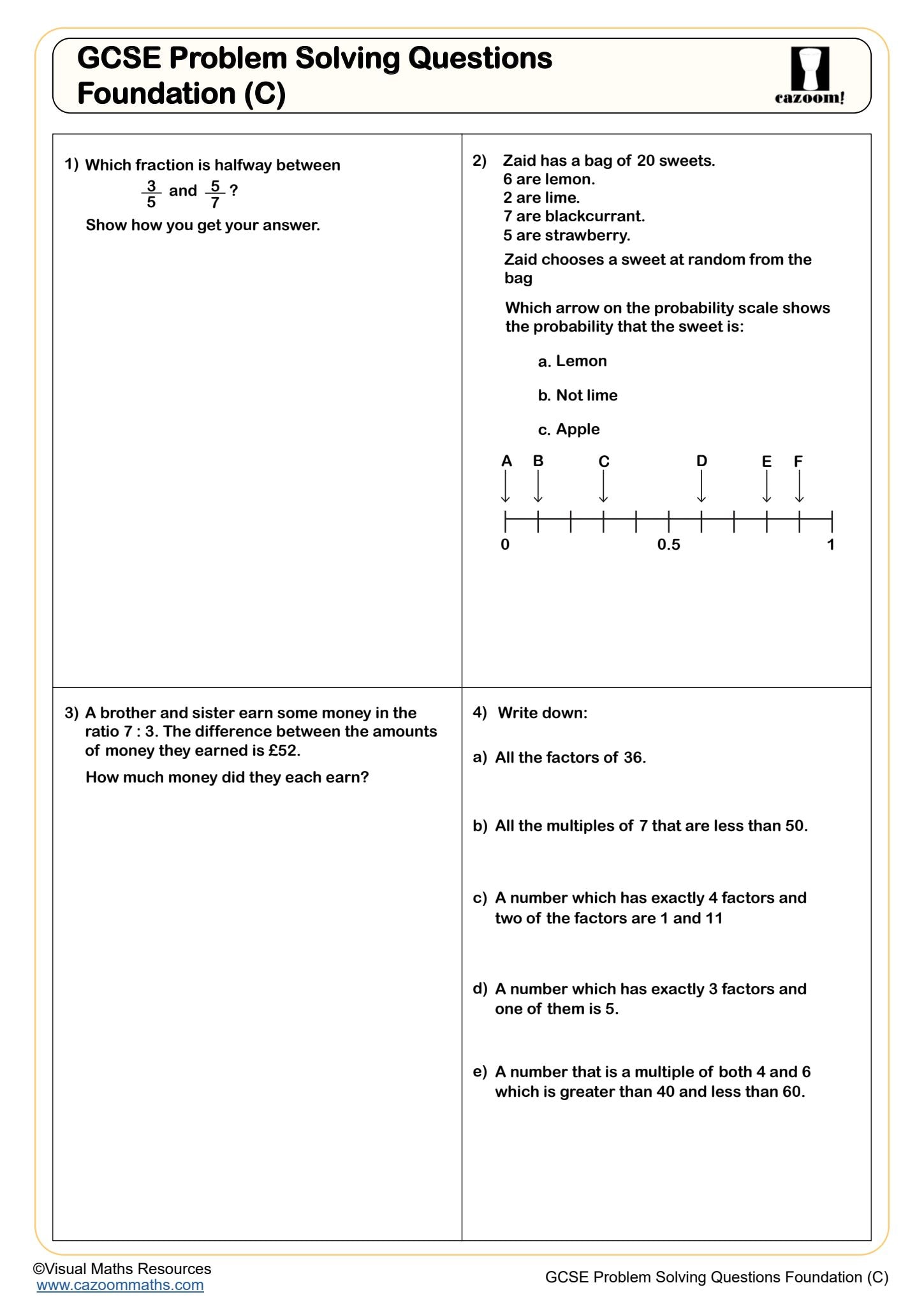
GCSE Problem Solving Questions: Foundation (C)
Target Grade: 1-3
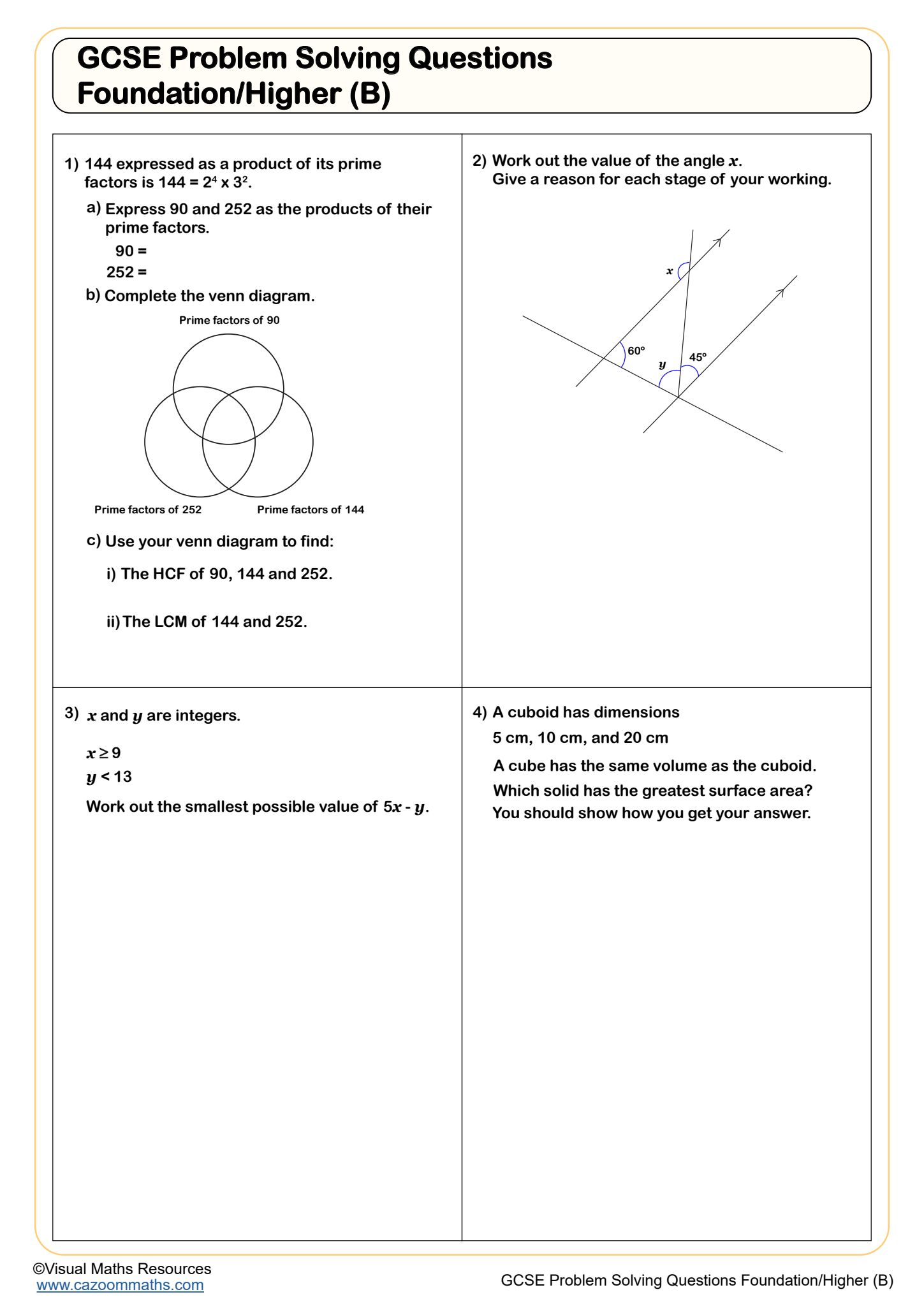
GCSE Problem Solving Questions Foundation/Higher (B)
Target Grade: 4-5
GCSE Problem Solving Questions Foundation/Higher (C)
Target Grade: 4-5
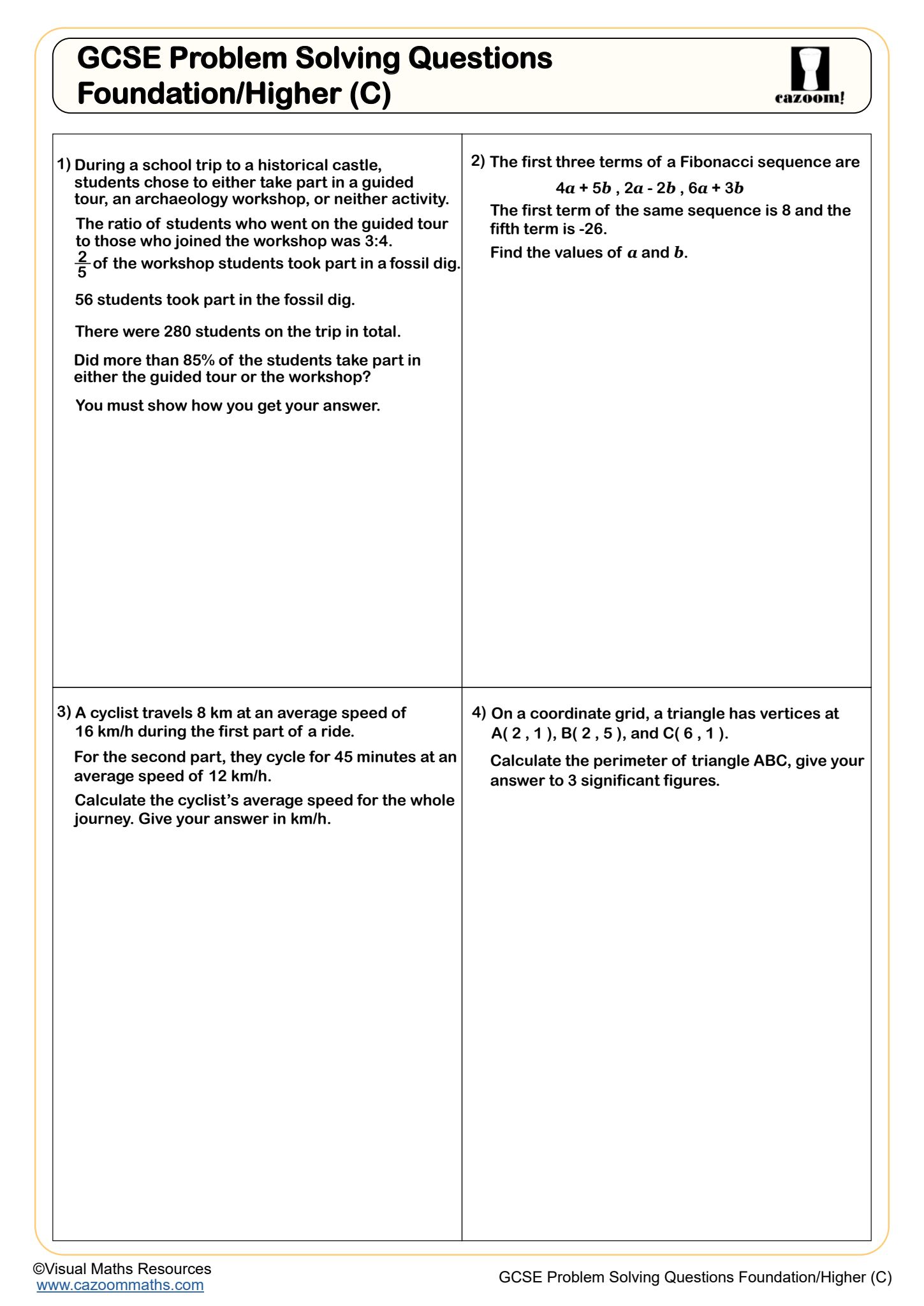
All worksheets are created by the team of experienced teachers at Cazoom Maths.
What Problem Solving questions appear on the GCSE Foundation paper?
Foundation papers typically include 4-6 problem solving questions worth between 3-6 marks each, often appearing as the final question in a section or as standalone multi-step problems. Students encounter scenarios involving money, measurement, percentages of amounts, simple ratio sharing, basic area problems, and interpreting straightforward graphs or tables. These questions deliberately combine two or three mathematical skills rather than testing a single topic in isolation.
A common error at this tier involves students performing calculations without checking whether their answer makes sense in context. Exam mark schemes consistently award a method mark even when arithmetic errors occur, but students who don't show clear working miss these marks entirely. Teachers frequently notice that students who underline numbers and write down what they represent before calculating score significantly higher.
What grade are Problem Solving questions on Foundation GCSE maths?
Problem solving questions span the entire Foundation grade range. Questions targeting grades 1-3 typically involve one or two clear steps with familiar contexts like shopping bills or simple timetables, often worth 2-3 marks. Questions aimed at grades 4-5 require students to extract information from more complex scenarios, combine three or more operations, or work backwards from a given answer, usually carrying 4-6 marks.
Students revising for a grade 4 or 5 should identify which grade band currently challenges them most. Teachers often suggest mastering straightforward two-step problems before attempting those requiring reverse calculations or unfamiliar contexts. Targeting worksheets at the grade boundary students aim for builds both skill and confidence more effectively than randomly attempting mixed difficulty questions.
How is Problem Solving tested differently on Foundation compared to Higher?
Foundation problem solving focuses on applying core skills to accessible contexts with clearly stated information. Questions use straightforward language and familiar scenarios, testing whether students can identify which operations to use and carry them out correctly. Higher tier problems involve more abstract contexts, require students to form and solve equations, or demand multi-step reasoning where the method isn't immediately obvious from the question wording.
This distinction matters because Foundation students need confidence recognising problem types and selecting appropriate methods. Teachers notice that Foundation candidates who've practised categorising questions by the skills required (percentage calculations, ratio methods, area formulae) perform far better than those attempting every problem from scratch. Fluency with the method matters as much as reaching the correct answer at this tier.
How should students revise Problem Solving for Foundation GCSE maths?
Students should work through problems in difficulty order, starting with grade 3 questions to build confidence before tackling grade 4-5 material. Using the answer sheets to understand mark schemes helps students see that showing method always matters, even when final answers contain errors. Teachers often recommend students highlight numbers and write what they represent before calculating, as this reduces errors and demonstrates understanding to examiners.
Teachers can use these worksheets for starter activities that recap previous topics in problem contexts, or set them as homework with answer sheets for self-assessment. Pairing students to explain their methods to each other often reveals misunderstandings that silent independent work misses. Regular short bursts of mixed problem solving prove more effective than occasional long practice sessions for Foundation students building exam confidence.