GCSE Foundation Rounding Revision Worksheets
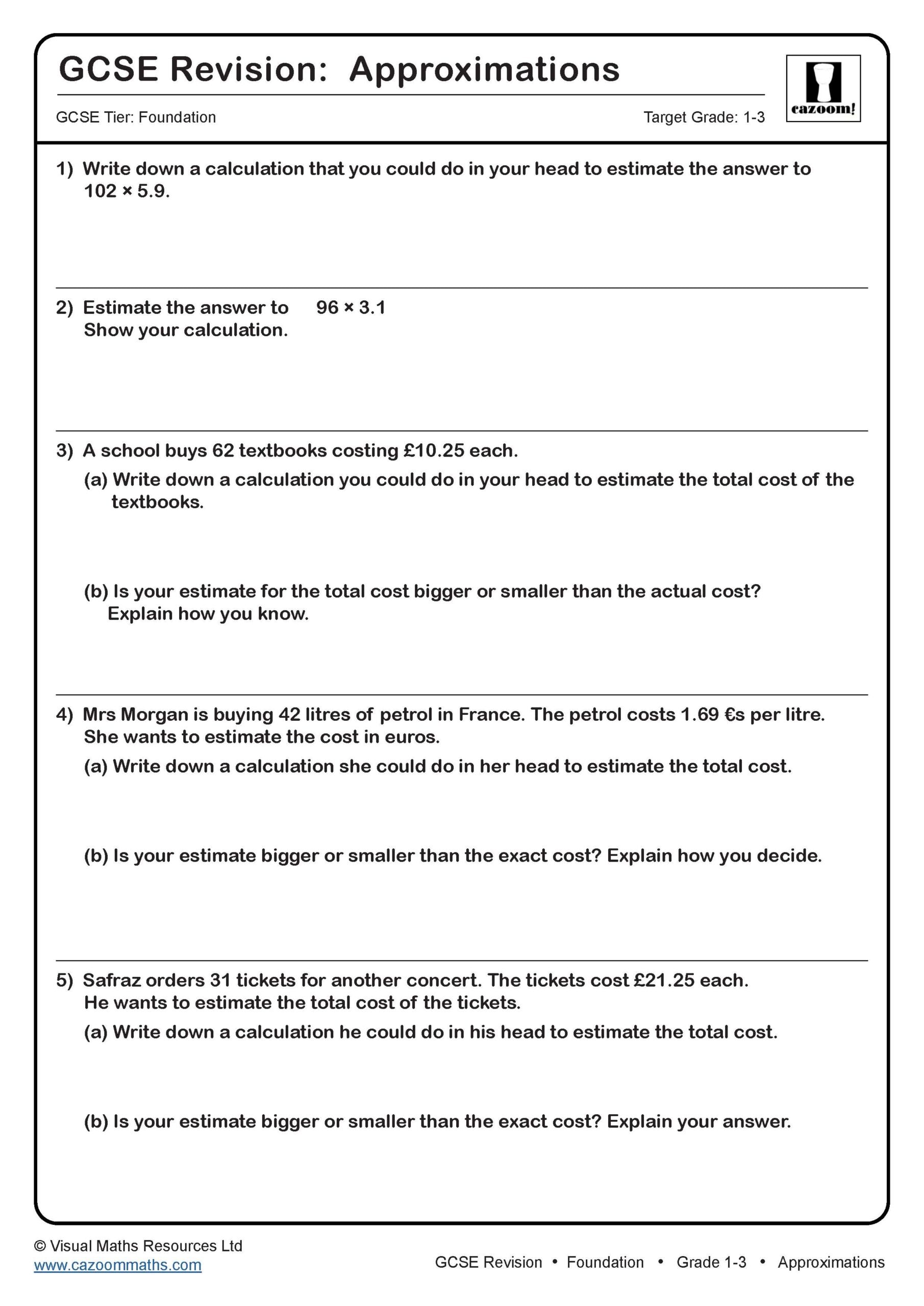
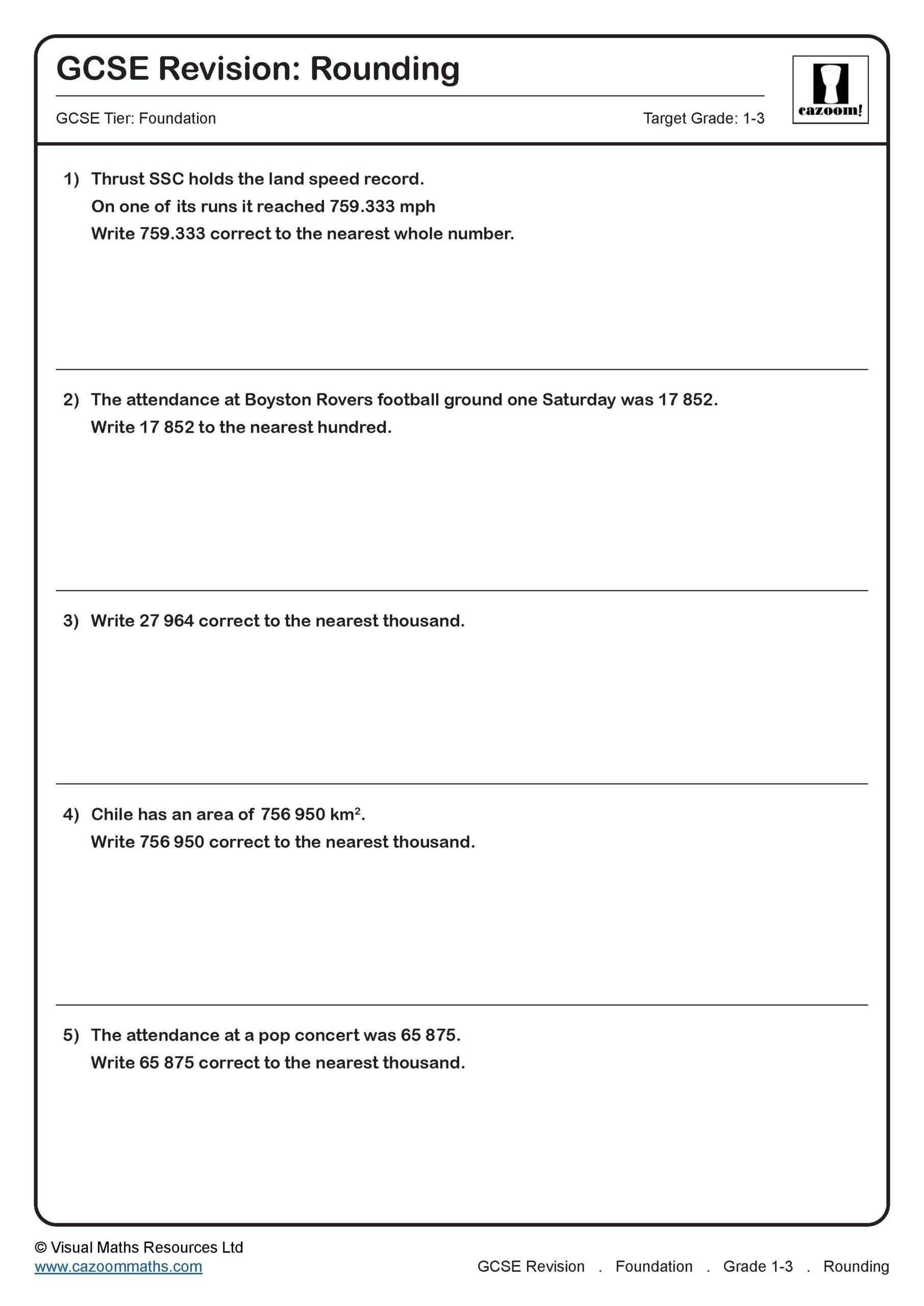
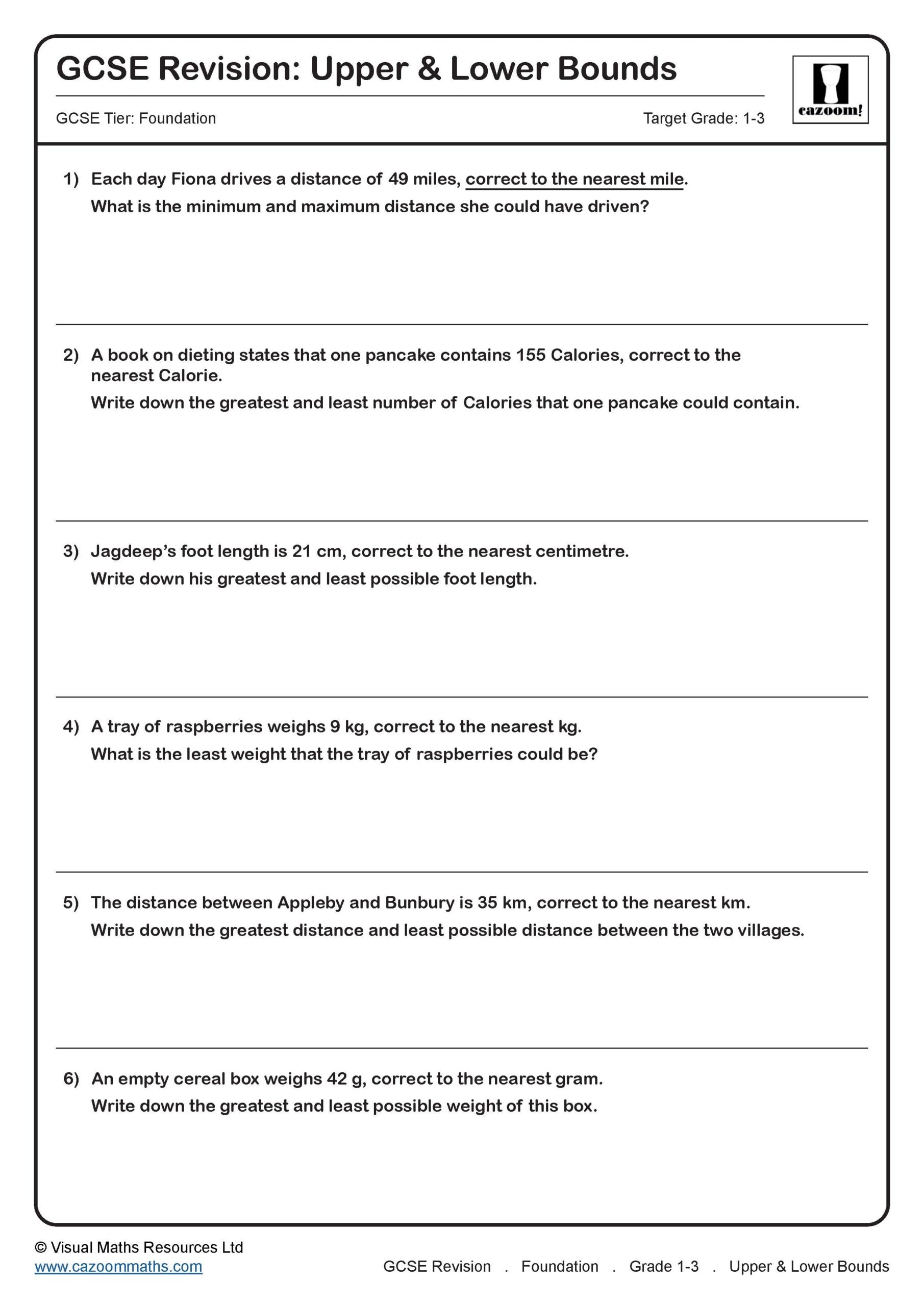
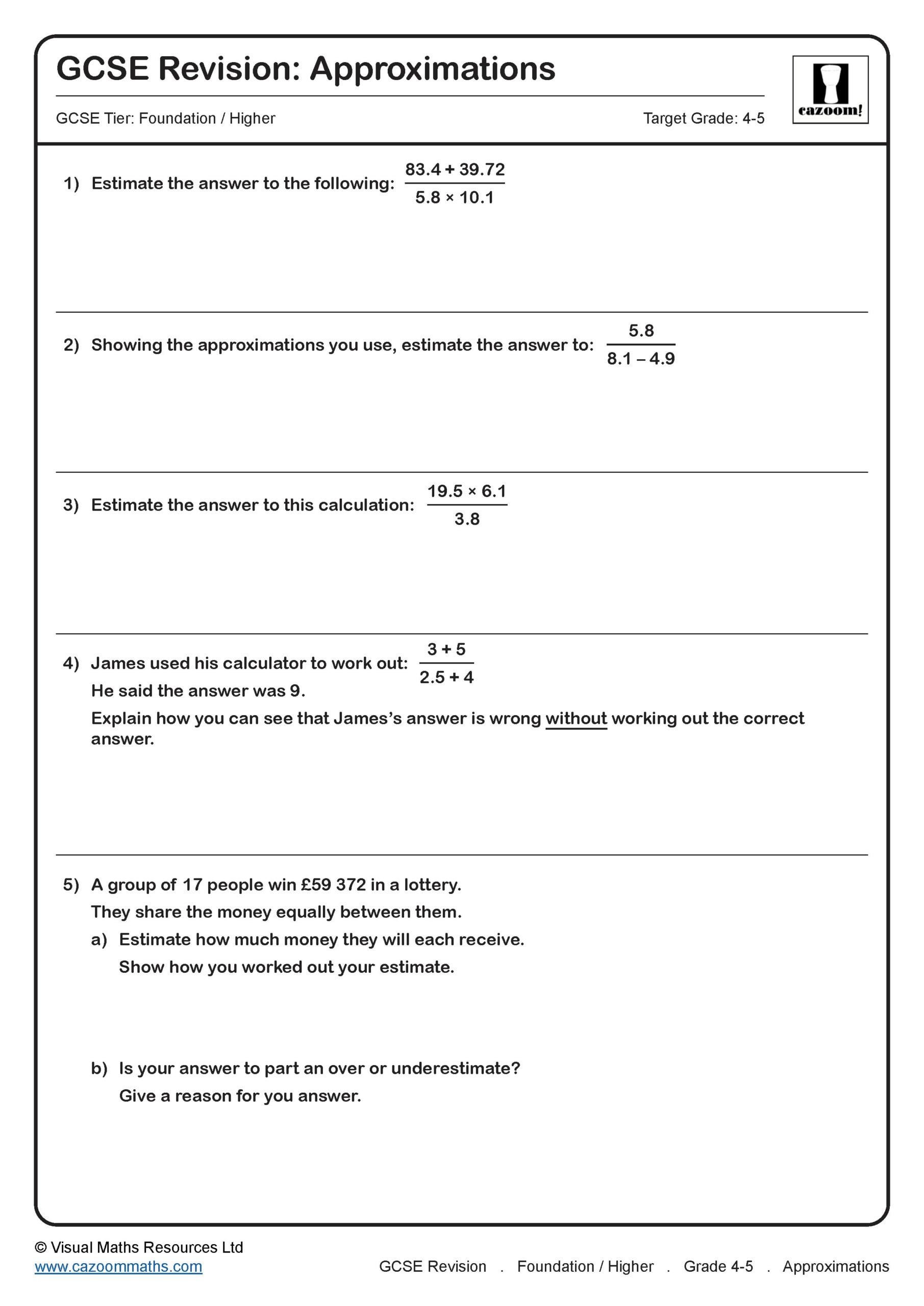
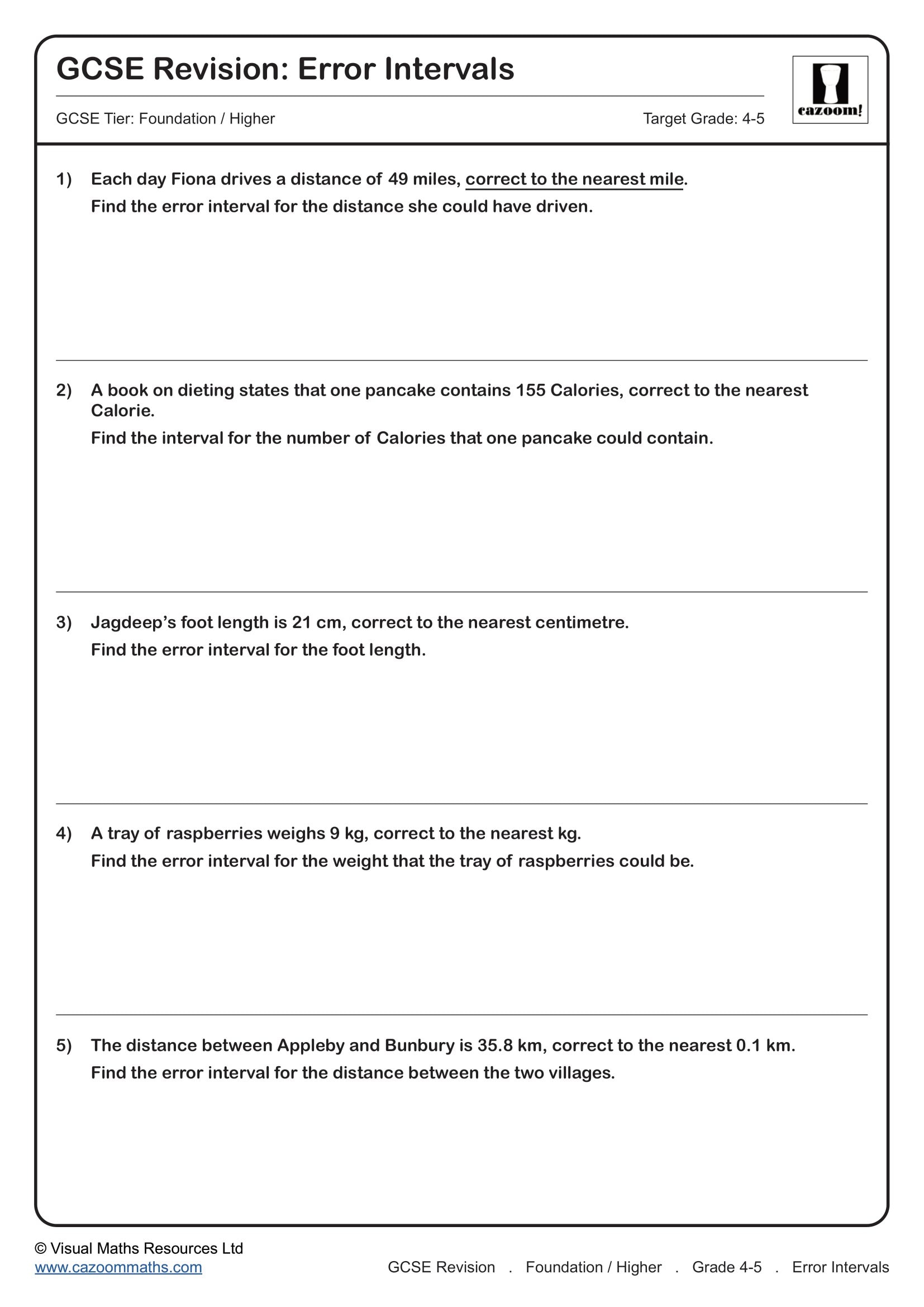
All worksheets are created by the team of experienced teachers at Cazoom Maths.
What Rounding questions appear on the GCSE Foundation paper?
Foundation papers typically include 3-5 rounding questions worth 1-2 marks each, testing whole numbers to various places, decimal places (usually 1 or 2), and significant figures. Students face straightforward single-step questions like rounding 4,562 to the nearest hundred, or rounding 3.874 to one decimal place. Grade 4-5 questions might involve deciding which place value to round to, or applying rounding in context such as estimating costs or measurements.
Mark schemes expect students to show the rounded answer clearly. A common error that loses marks: writing 3.9 when the question asks for one decimal place and the answer is 4.0. Students must write the zero to demonstrate they understand the required accuracy. Exam questions often test whether students can identify the critical digit without writing extra working.
What grade are Rounding questions on Foundation GCSE maths?
Rounding whole numbers to the nearest 10, 100 or 1000 typically appears at grades 1-3, testing basic place value understanding. Rounding decimals to one or two decimal places sits around grades 3-4, whilst significant figures questions target grades 4-5. The highest-grade Foundation rounding questions involve decision-making, such as choosing appropriate accuracy for real-world contexts or explaining why rounding up matters for quantities like boxes or coaches.
Students revising for a grade 4 or 5 should practise decimal and significant figure rounding until automatic, as these skills underpin estimation questions worth 3-4 marks elsewhere on the paper. Teachers notice that securing grades 1-3 rounding first builds the place value confidence needed for harder questions. Students can use answer sheets to identify which types still cause errors, then focus revision there.
How is Rounding tested differently on Foundation compared to Higher?
Foundation papers test rounding as a standalone skill with clear instructions: round this number to the nearest hundred, or to two decimal places. Questions remain single-step, focusing on accuracy rather than application within complex problems. Significant figures typically appear with straightforward whole numbers or simple decimals. Higher tier embeds rounding within multi-step problems, expects bounds calculations, and tests significant figures with standard form or challenging decimals.
This Foundation approach matters because it builds the confidence and accuracy needed for grade 4-5 success. Students at this tier need fluency with the mechanical process before applying rounding in context. Teachers often observe that Foundation students who rush past basic whole number rounding struggle later with decimals. Mastering the core skill here prevents errors that cascade through calculator estimation and measurement questions worth significantly more marks.
How should students revise Rounding for Foundation GCSE maths?
Start with whole number rounding worksheets, aiming for speed and accuracy before progressing to decimals and significant figures. Students should practise each type until they can identify the deciding digit without hesitation, then move to mixed questions that require choosing the method. Using the answer sheets to mark their own work helps students spot patterns in their errors, whether consistently misidentifying place value or forgetting trailing zeros in decimal answers.
Teachers can set these as low-stakes homework to build routine confidence, or use them for targeted intervention when mock papers reveal rounding weaknesses. Short bursts of 10-15 questions work better than long sessions for Foundation students. Pairing worksheet practice with real-world examples, like rounding supermarket bills or distances, helps students see why accuracy matters and reinforces the grade 4-5 contextual questions they will face.