GCSE Foundation Transformations Revision Worksheets
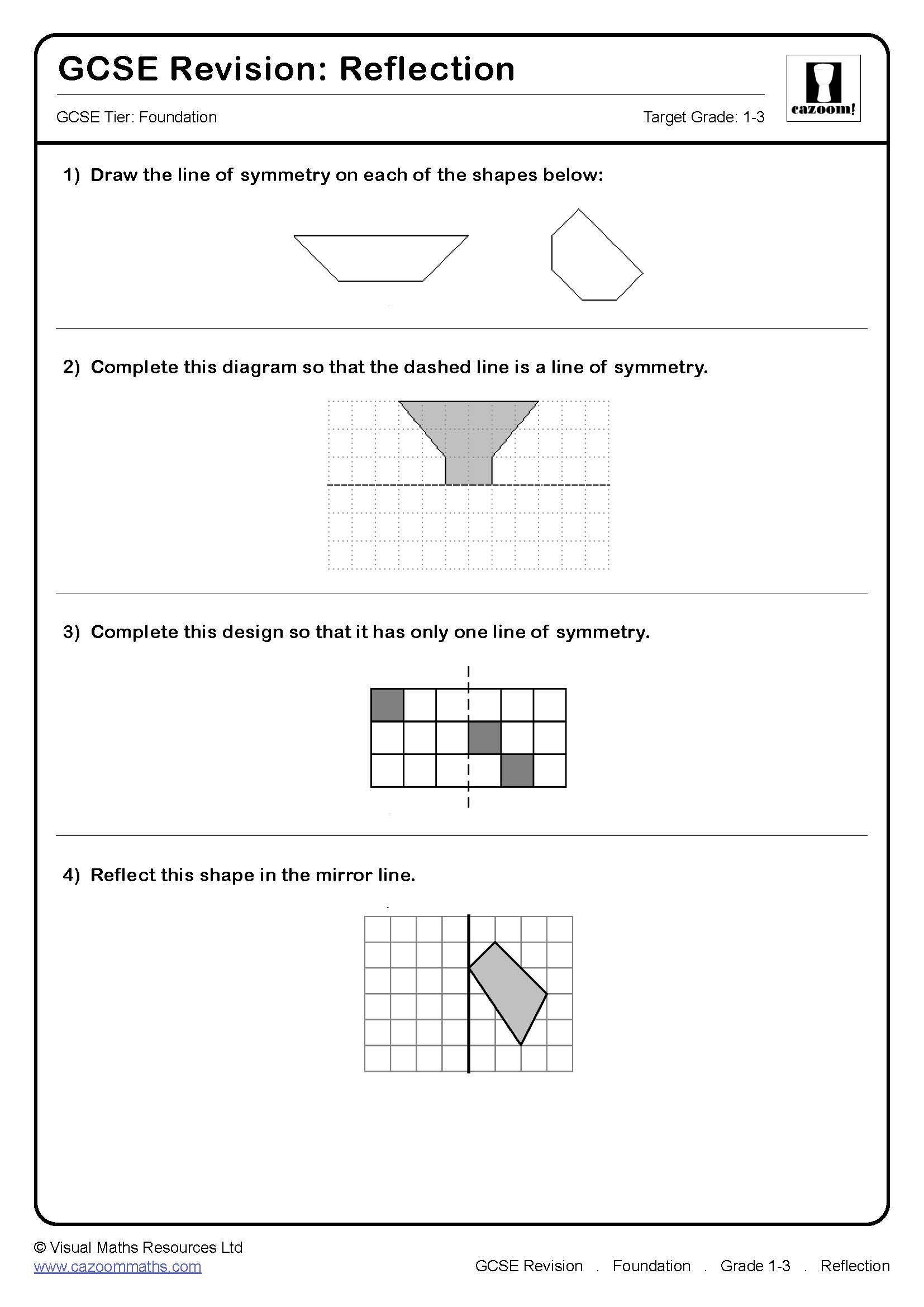
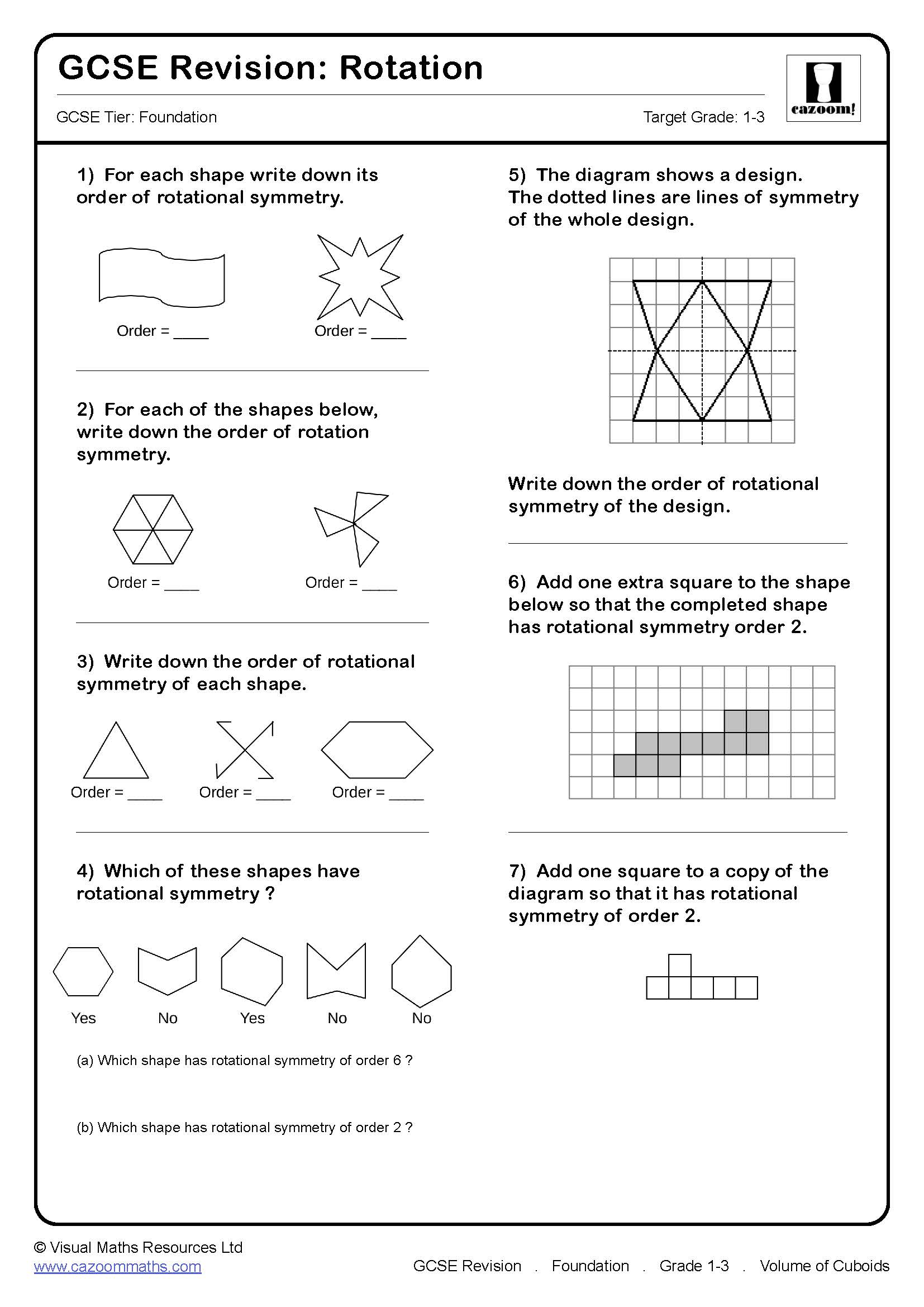
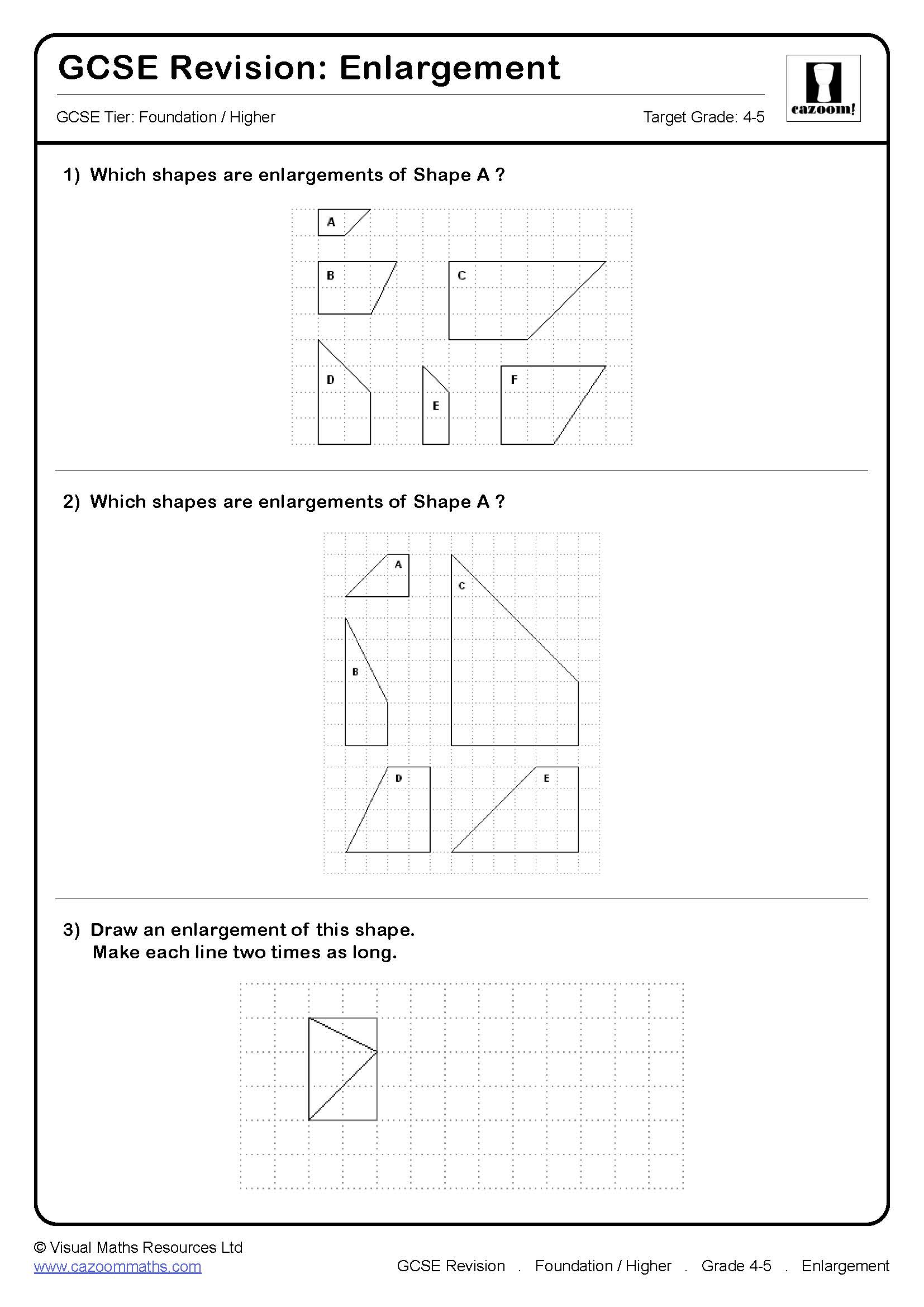
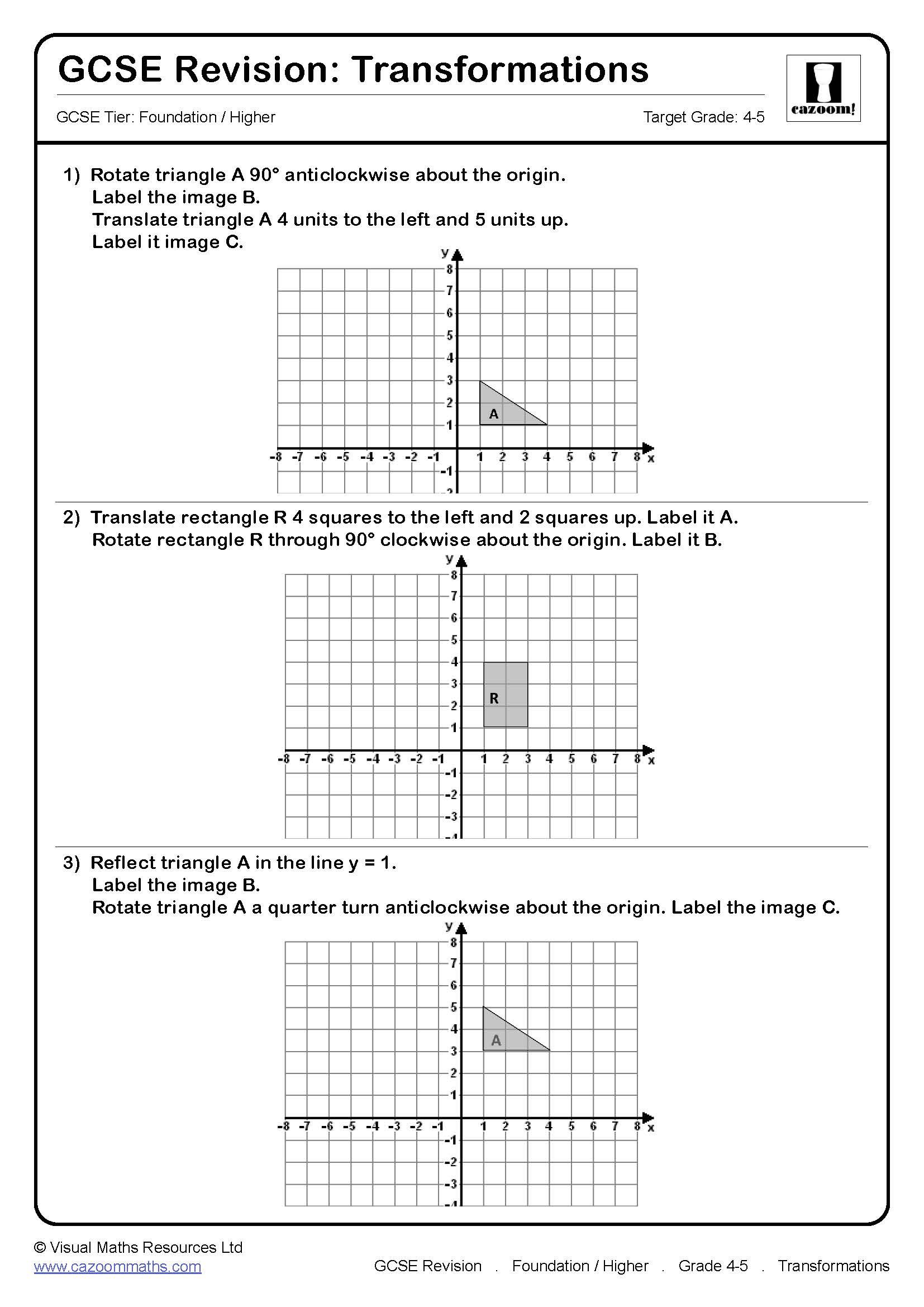
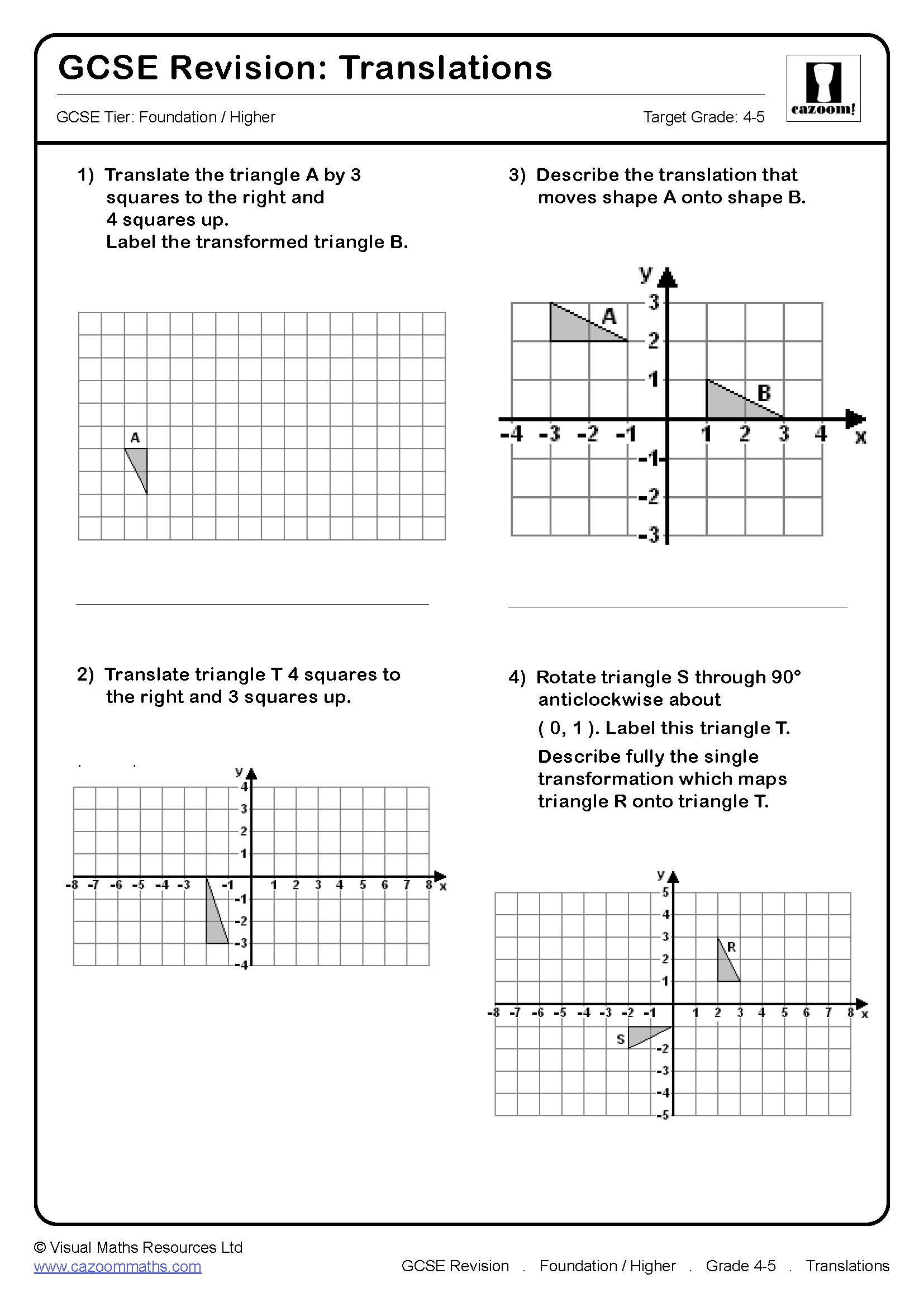
All worksheets are created by the team of experienced teachers at Cazoom Maths.
What Transformations questions appear on the GCSE Foundation paper?
Foundation papers typically include 8-12 marks of Transformations questions across both papers. Students will describe single transformations using correct notation, perform reflections in vertical, horizontal, and diagonal lines (y=x most commonly), carry out rotations of 90° and 180° about given centres, translate shapes using column vectors, and enlarge from a centre with positive integer scale factors. Grade 4-5 questions often combine transformations or ask students to find a centre of enlargement by working backwards.
Exam mark schemes penalise incomplete descriptions heavily. Teachers notice that students who write 'rotation 90°' without specifying clockwise or anticlockwise, or who omit the centre of rotation coordinates, drop marks immediately. Practising full descriptions using these worksheets prevents this common error and builds exam technique that examiners reward.
What grade are Transformations questions on Foundation GCSE maths?
Grades 1-3 questions focus on single transformations with clear instructions: reflect a shape in the x-axis, rotate 90° clockwise about the origin, or translate using a simple column vector like (3, 2). These build core skills and account for roughly 4-6 marks across both papers. Grades 4-5 questions require students to describe transformations from diagrams, find centres of rotation or enlargement, work with fractional scale factors between 0 and 1, or apply combinations of transformations.
Students should use these graded worksheets to identify their current working grade, then focus revision on the band just above. A student secure at grade 3 should concentrate on describing transformations fully and finding centres, rather than revisiting basic translations. This targeted approach builds confidence whilst stretching towards grade 5 systematically.
How is Transformations tested differently on Foundation compared to Higher?
Foundation Transformations questions use integer coordinates and centres on grid intersections, with scale factors typically between 0.5 and 3. Higher tier extends to fractional and negative scale factors, centres at fractional coordinates, and combined transformations described algebraically. Foundation students describe transformations using everyday language ('reflect in the line x=2'), whilst Higher students encounter vector notation for reflections and combined transformation matrices at grade 8-9.
The Foundation approach matters because these are marks students can secure with careful practice. Teachers observe that students who master the four transformation types, learn the required descriptions, and check their answers methodically can consistently score 10+ marks on this topic. These worksheets provide exactly that structured practice, moving from supported examples through to exam-style questions that replicate Foundation paper demands.
How should students revise Transformations for Foundation GCSE maths?
Students should work through worksheets systematically, starting with single transformation types before attempting mixed questions. Timed practice replicates exam pressure: allow roughly one minute per mark. After completing each worksheet, students must check answers carefully, paying particular attention to how full descriptions are written. If a reflection answer requires 'reflection in the line y=1', simply writing 'reflection' scores zero. Practising complete notation builds muscle memory for exams.
Teachers can use these worksheets for starter activities on specific transformation types, homework to consolidate classwork, or intervention sessions targeting students on grade 3-4 borderlines. Setting worksheets in grade order allows differentiation within mixed-ability groups. The answer sheets enable students to self-assess during independent study, freeing teachers to support individuals who need guidance on centres of rotation or scale factors.