GCSE Foundation Volume and Surface Area Revision Worksheets
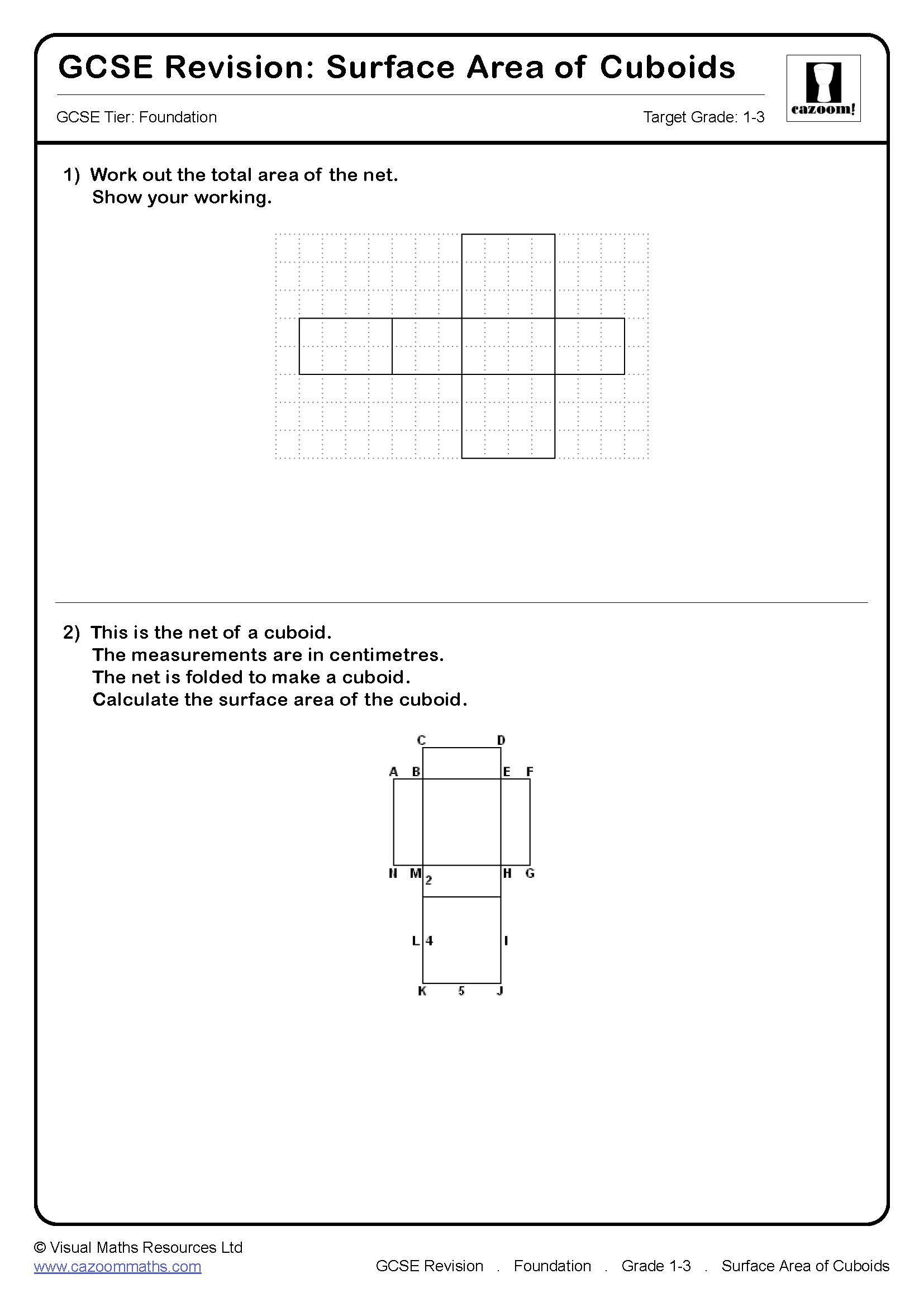
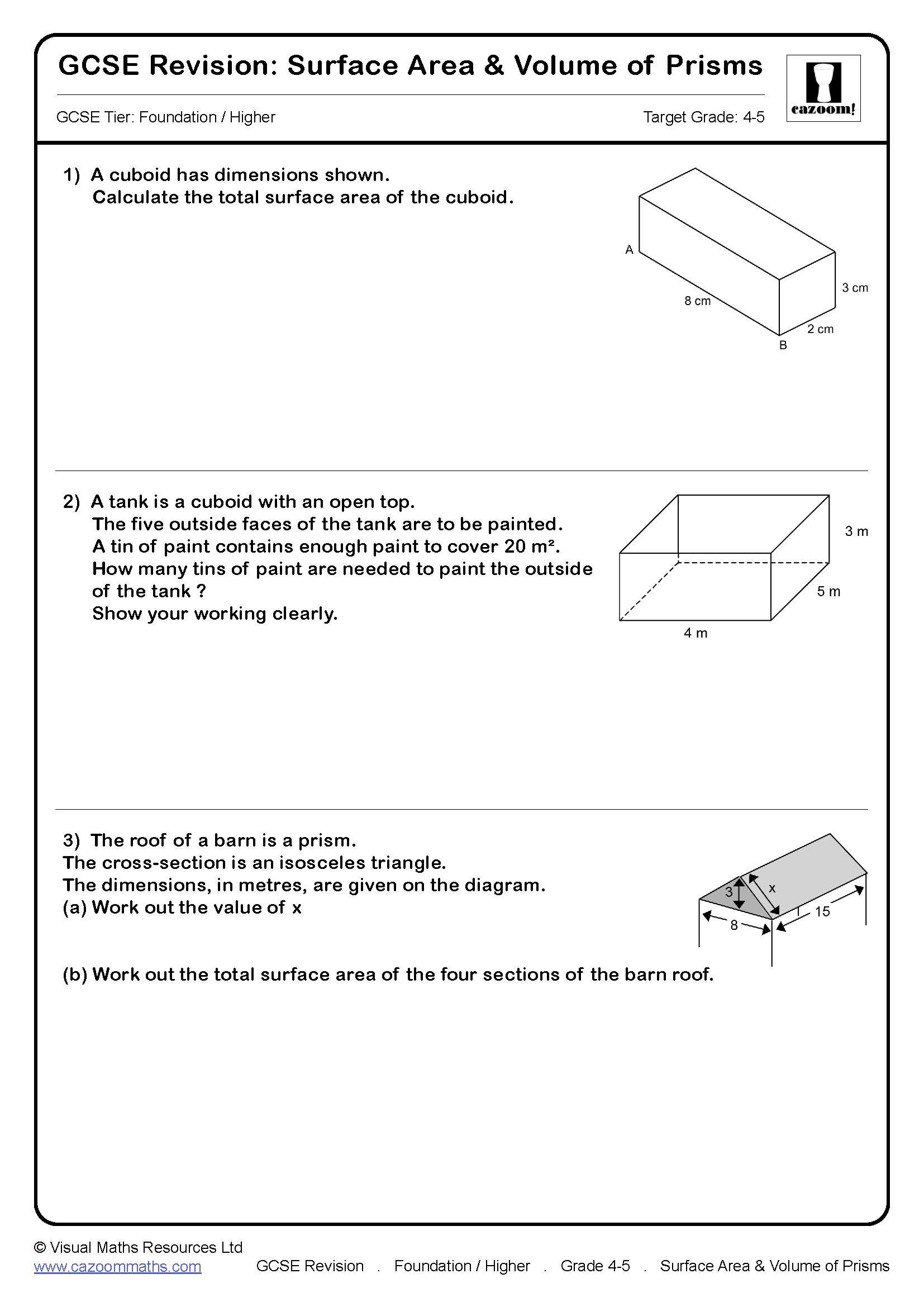
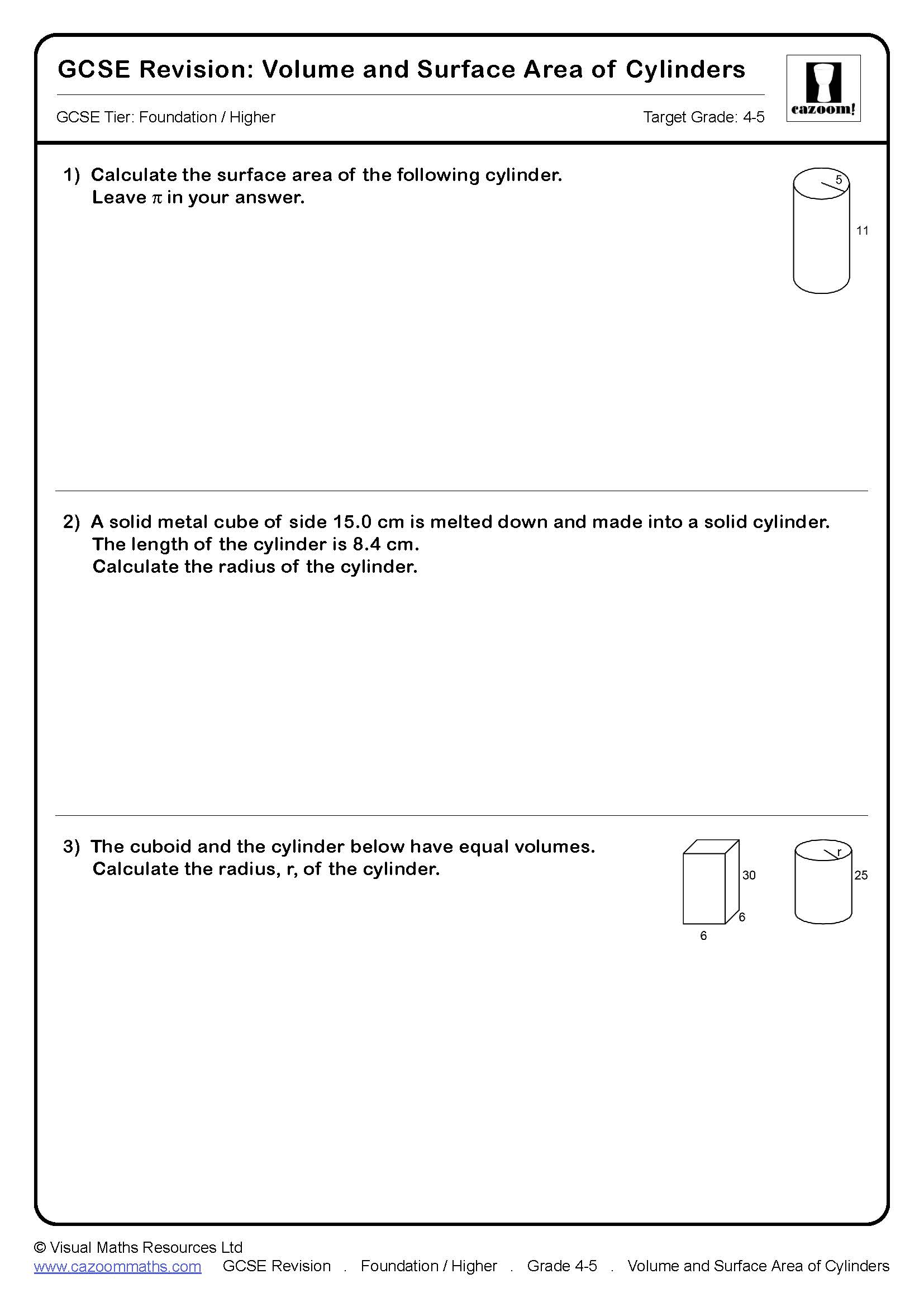
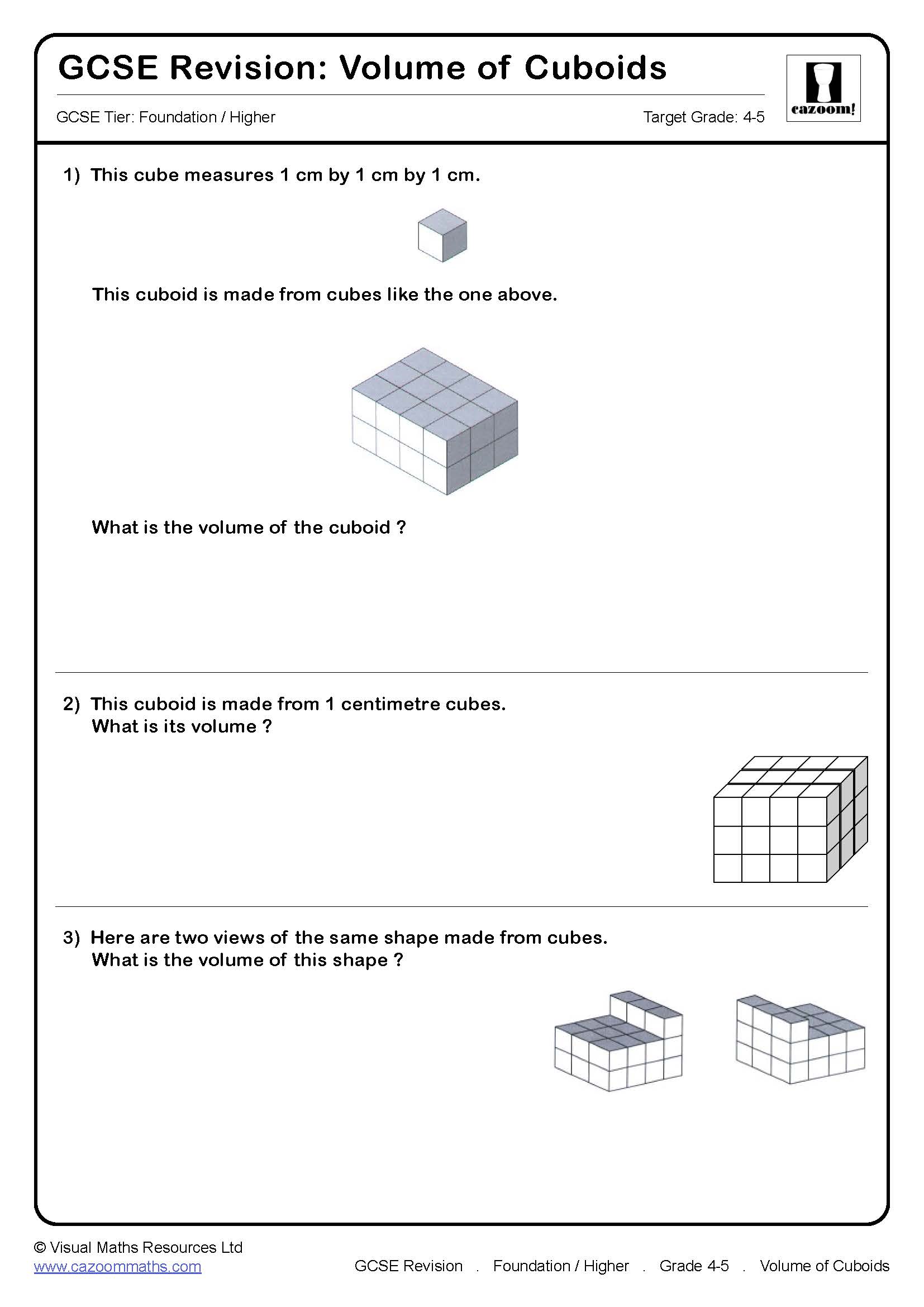
All worksheets are created by the team of experienced teachers at Cazoom Maths.
What Volume and Surface Area questions appear on the GCSE Foundation paper?
Foundation papers typically include three to five volume and surface area questions worth between two and four marks each. Students calculate volumes and surface areas of cuboids and prisms using given formulae, find missing dimensions when volume is known, and work with cylindrical shapes. Questions at grades 4-5 combine multiple steps, such as calculating the volume of water in a container then converting units, or finding surface area when not all dimensions are provided directly.
Exam mark schemes expect clear substitution into formulae before calculation. Students lose marks when they write only a final answer without showing which formula they used or how values were substituted. Teachers notice that writing out the formula first, even when provided on the paper, significantly reduces careless errors.
What grade are Volume and Surface Area questions on Foundation GCSE maths?
Questions span the entire Foundation grade range. Grades 1-3 questions test direct volume calculations for cubes and cuboids with all dimensions given in the same units. Grades 3-4 questions introduce prisms with cross-sections like trapeziums or triangles, requiring area calculation first. Grades 4-5 questions involve surface area of compound shapes, converting between cubic units, or working backwards from volume to find a missing dimension, often requiring rearrangement of formulae.
Students revising for a grade 4 should prioritise securing all basic volume calculations before attempting compound shapes. Those targeting grade 5 need fluency with cylindrical volumes and surface areas of combined solids. Working systematically through grade bands builds the confidence needed for exam conditions rather than attempting harder questions prematurely.
How is Volume and Surface Area tested differently on Foundation compared to Higher?
Foundation papers provide formulae and focus on applying them accurately to standard shapes, whereas Higher tier expects students to recall formulae from memory and apply them to unfamiliar composite solids. Higher papers include spheres, cones, and frustums, which never appear on Foundation. Foundation questions use straightforward numerical values and clear diagrams, whilst Higher tier involves algebraic dimensions, similar shapes reasoning, and proof elements.
The Foundation approach matters because it establishes the methodical working required for success at this tier. Students need absolute security with basic shapes and unit conversions before facing GCSE papers. Teachers observe that students who rush past Foundation content often lack the formula confidence needed even for overlap grade 4-5 questions, where accuracy under pressure determines results.
How should students revise Volume and Surface Area for Foundation GCSE maths?
Effective revision starts with mastering one shape type completely before moving forward. Students should practise cuboid volumes until automatic, then add prisms, then cylinders, checking answers after each worksheet to identify specific errors. Timed practice replicates exam pressure, particularly for multi-step questions where students must decide which formula applies. Working through answer sheets shows the expected method layout, helping students understand how mark schemes reward clear substitution and working.
Teachers can set worksheets as targeted homework following classroom teaching, or use them for retrieval practice weeks later to check retention. Grouping students by grade target allows differentiated worksheet selection. In intervention sessions, working through answers together reveals whether errors stem from formula confusion, unit conversion mistakes, or calculation slips, enabling precise support.