GCSE Higher Circles Revision Worksheets
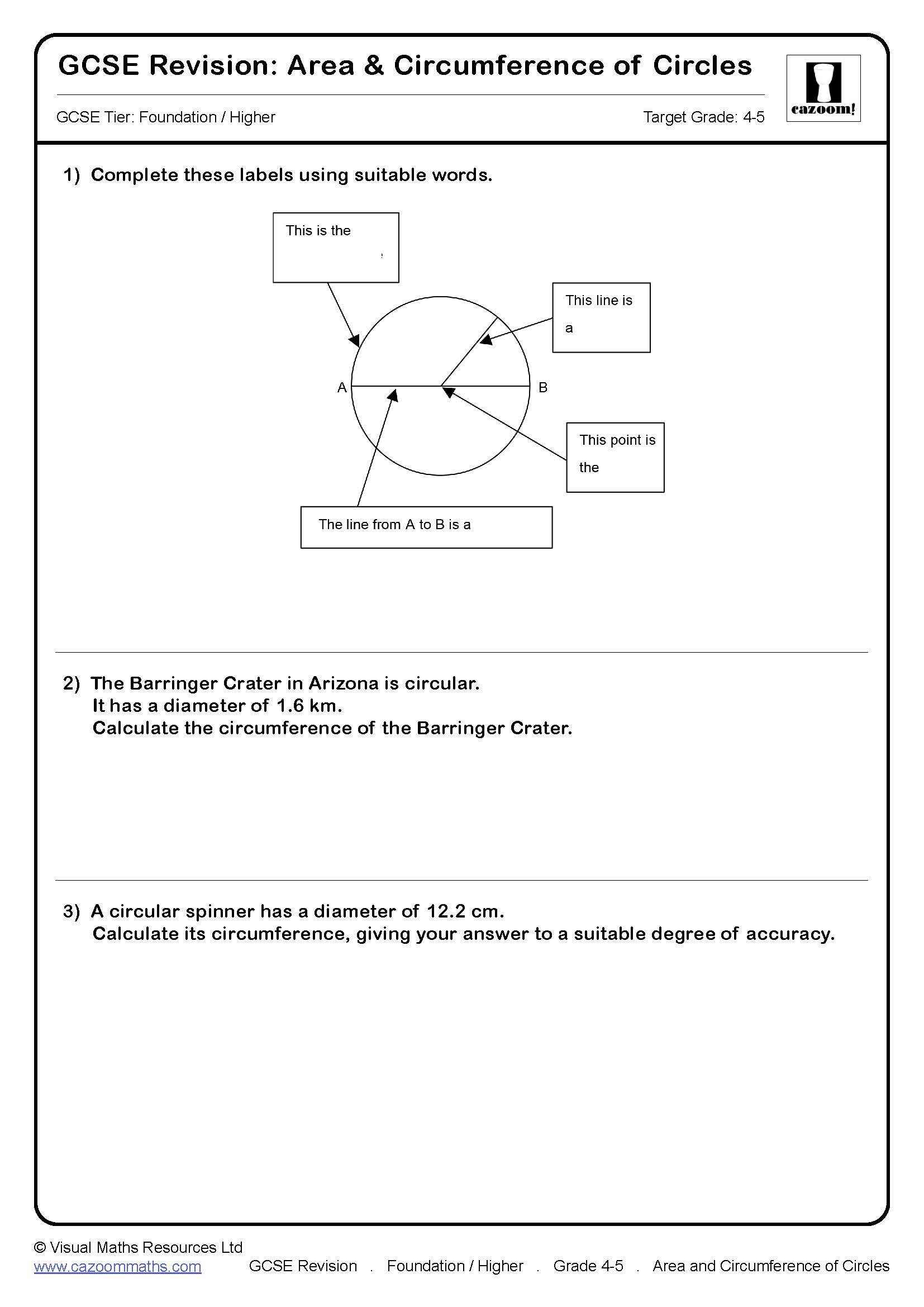
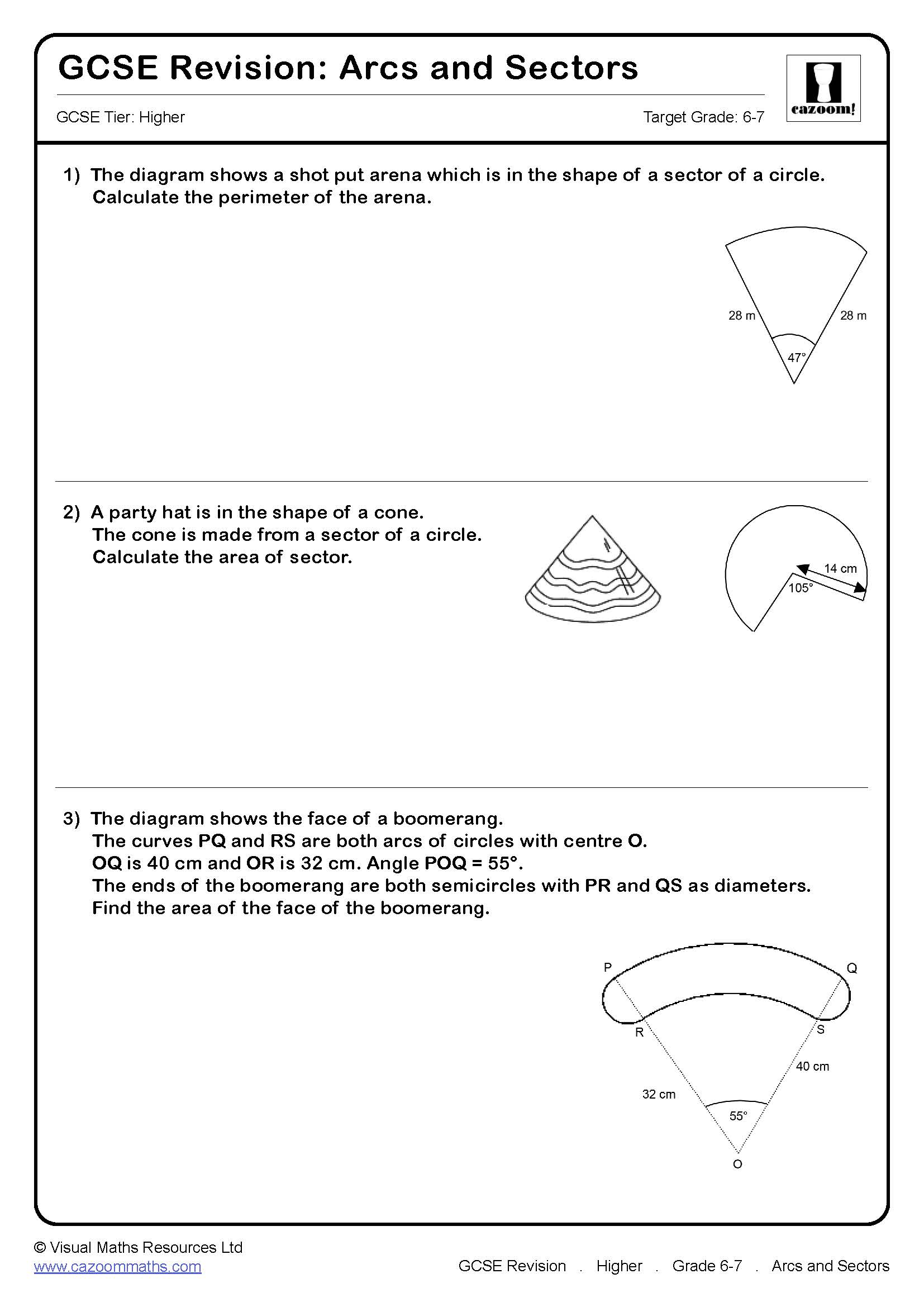
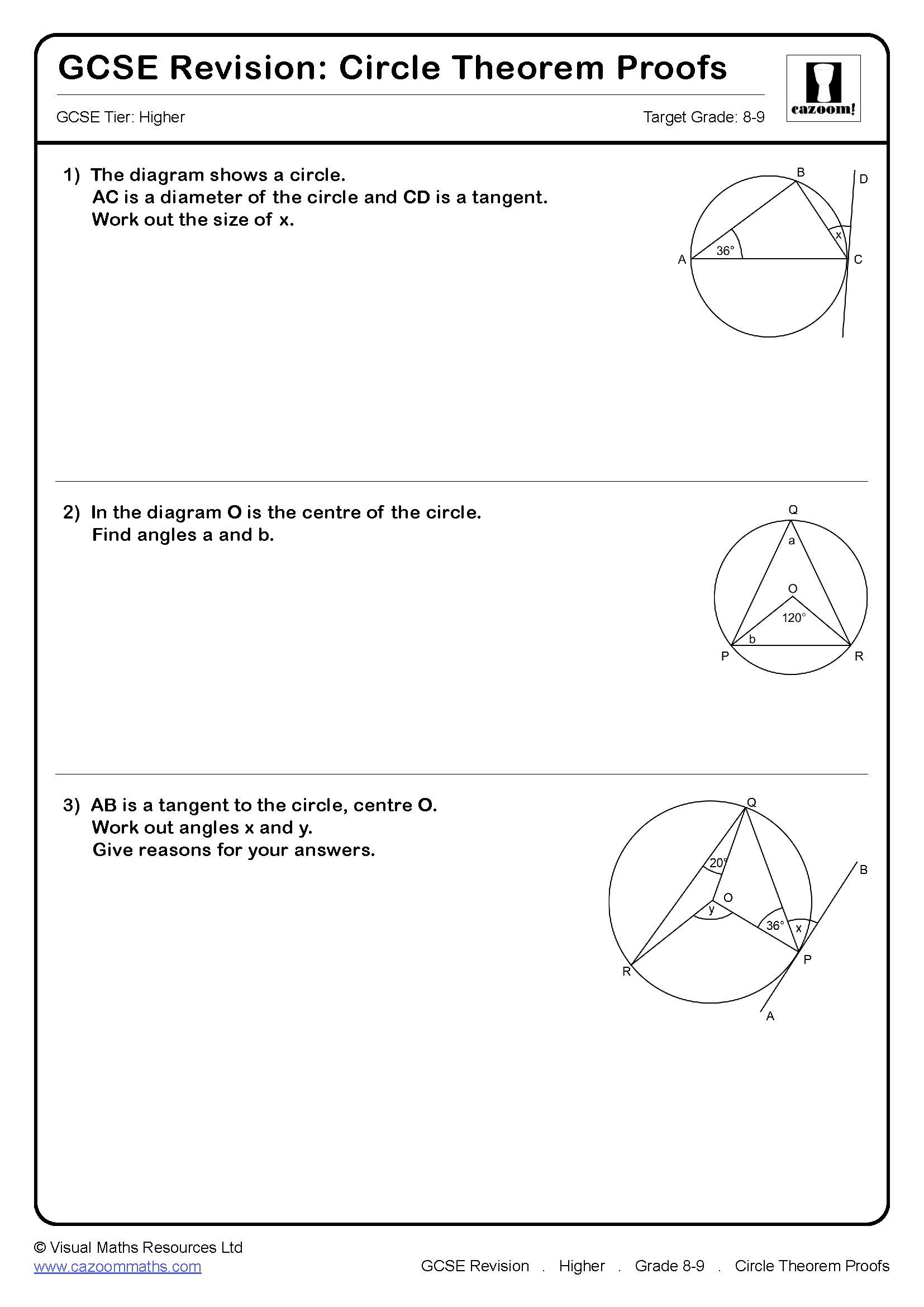
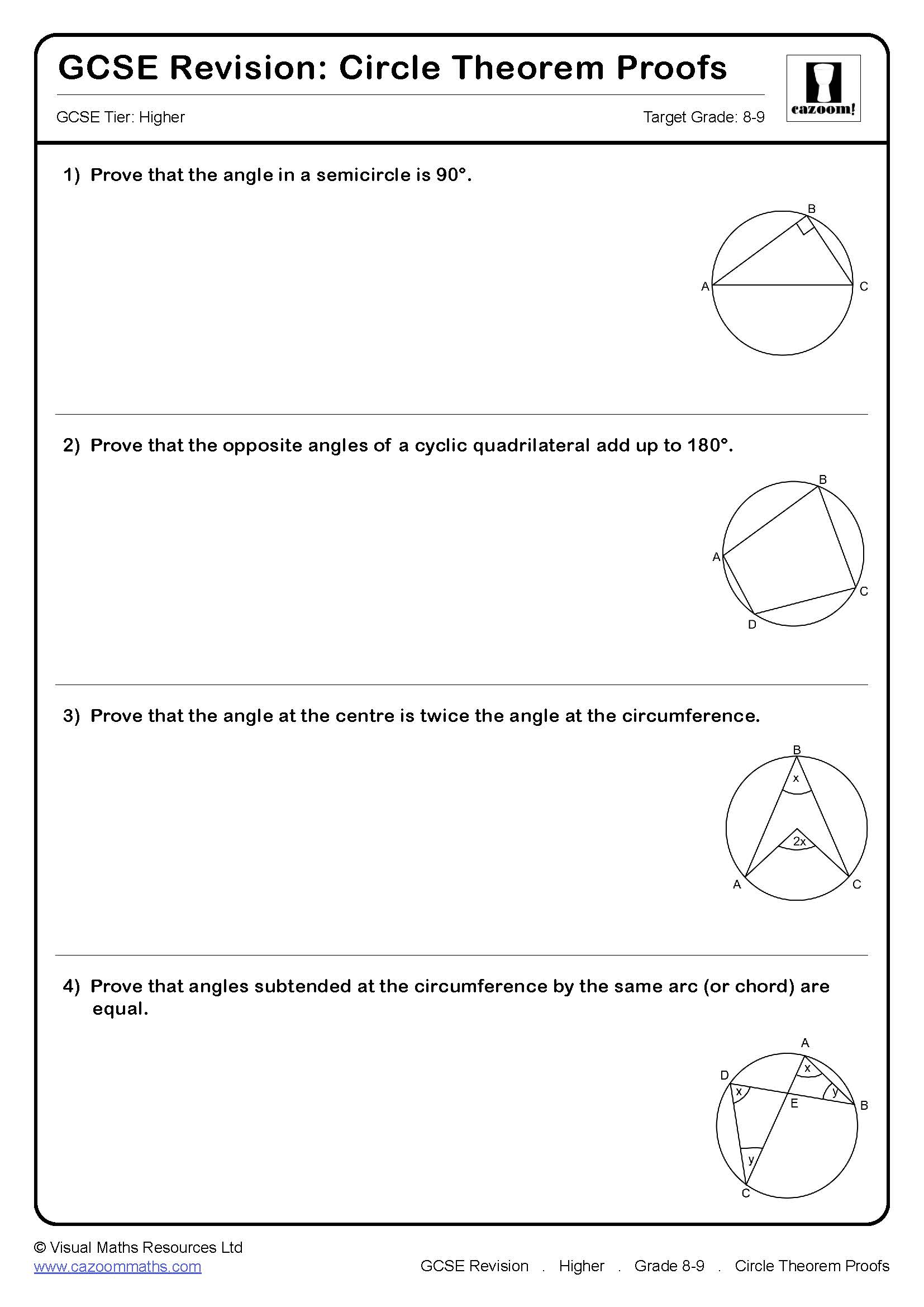
All worksheets are created by the team of experienced teachers at Cazoom Maths.
What Circles questions appear on the GCSE Higher paper?
Higher papers typically include 8-12 marks across circles content, distributed between circle theorem problems requiring angle proofs and calculation questions involving arc length, sector area, and segments. Students face multi-step problems where they must identify which theorem applies, justify their reasoning with geometric properties, then calculate missing angles or lengths. Questions often combine multiple theorems within one diagram or embed circles within coordinate geometry contexts, requiring students to find equations or intersection points.
Exam mark schemes consistently penalise candidates who state conclusions without showing which theorem they applied or why it's valid. Higher students must write formal justifications like "angle in a semicircle equals 90°" rather than simply labelling angles. Teachers notice that candidates who practise verbalising their geometric reasoning secure significantly more method marks, even when final answers contain arithmetic slips.
What grade are Circles questions on Higher GCSE maths?
Grade 4-5 questions test straightforward circle theorem applications with clearly labelled diagrams, requiring students to find one or two missing angles using alternate segment theorem or angles subtended by the same arc. Grade 6-7 material introduces problems combining multiple theorems, calculating arc lengths and sector areas with rearrangement, and working with circle equations in the form (x−a)²+(y−b)²=r². Grade 8-9 questions demand formal proof of circle properties, solving simultaneous equations involving circles and lines, and applying theorems within unfamiliar geometric configurations where the relevant property isn't immediately obvious.
Students revising for grade 7 should consolidate all theorem applications before attempting coordinate geometry extensions. Those targeting grade 9 benefit from focusing on proof-writing technique and problems requiring algebraic manipulation of circle equations, since these discriminate at the highest grades where geometric insight combines with algebraic fluency.
How is Circles tested differently on Higher compared to Foundation?
Foundation papers limit circles to basic parts vocabulary, simple circumference and area calculations, and occasionally one accessible theorem like "angle in a semicircle." Questions provide heavily scaffolded steps and avoid combined theorem applications. Higher tier expects confident recall of all circle theorems, including alternate segment, cyclic quadrilaterals, and tangent-radius properties, often within diagrams requiring students to identify which theorem applies without prompting. Higher papers also introduce arc length, sector area with rearrangement, equations of circles, and geometric proof.
This tier difference matters because Higher students must develop theorem fluency and proof-writing skills that Foundation doesn't assess. Teachers observe that students who've accelerated onto Higher sometimes struggle with formal justification, having learned theorems as calculation tools rather than provable geometric relationships. Higher revision must emphasise when and why theorems hold, not just how to apply them mechanically.
How should students revise Circles for Higher GCSE maths?
Effective revision starts with theorem recall under timed conditions, then progresses to mixed problems requiring theorem identification without hints. Students should work through worksheets by grade band, ensuring confidence with grade 5-6 theorem applications before attempting grade 8-9 proofs and coordinate geometry. Checking answers immediately after attempting each question helps identify whether errors stem from misidentifying theorems, incorrect geometric reasoning, or arithmetic mistakes within arc length and sector calculations. Practising written justifications for every angle found builds the formal communication that mark schemes require.
Teachers can assign specific worksheets targeting weak areas identified through assessment, using answer sheets for peer marking where students critique each other's geometric reasoning. Setting timed sections replicates exam pressure on multi-step problems. Regular low-stakes retrieval practice with circle theorems prevents the common issue where students recognise theorems during revision but can't recall them spontaneously under exam conditions.