GCSE Higher Functions Revision Worksheets
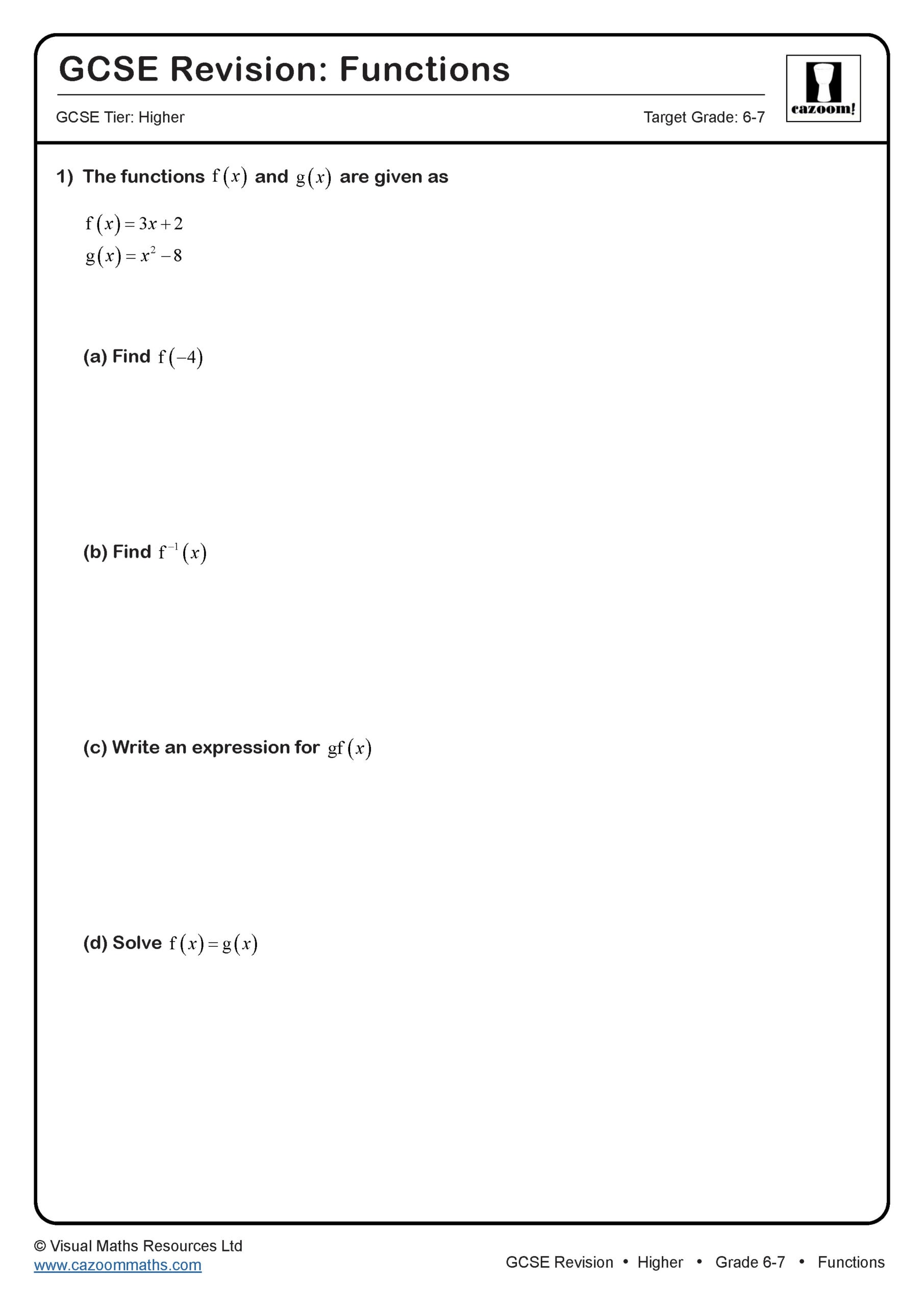
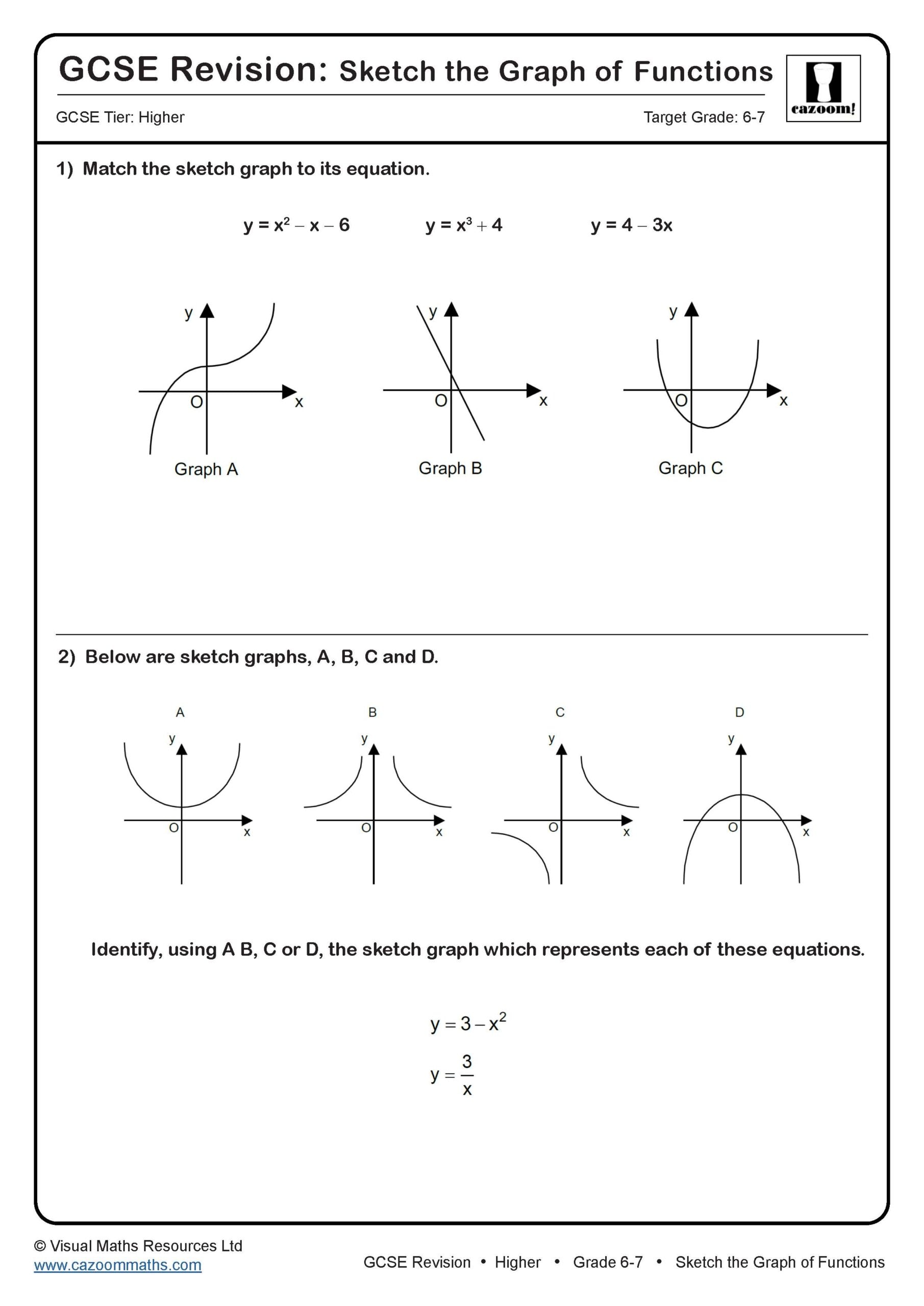
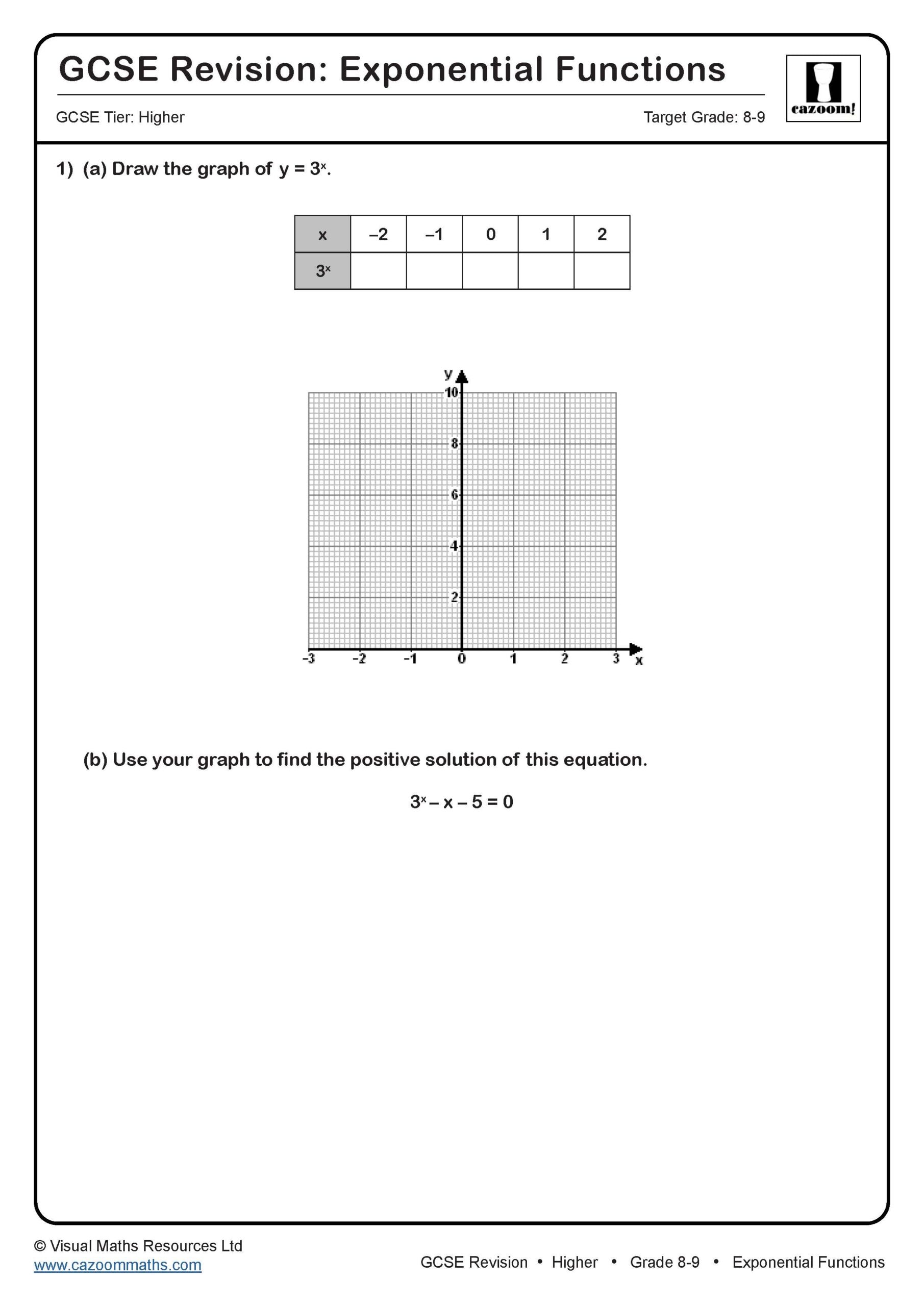
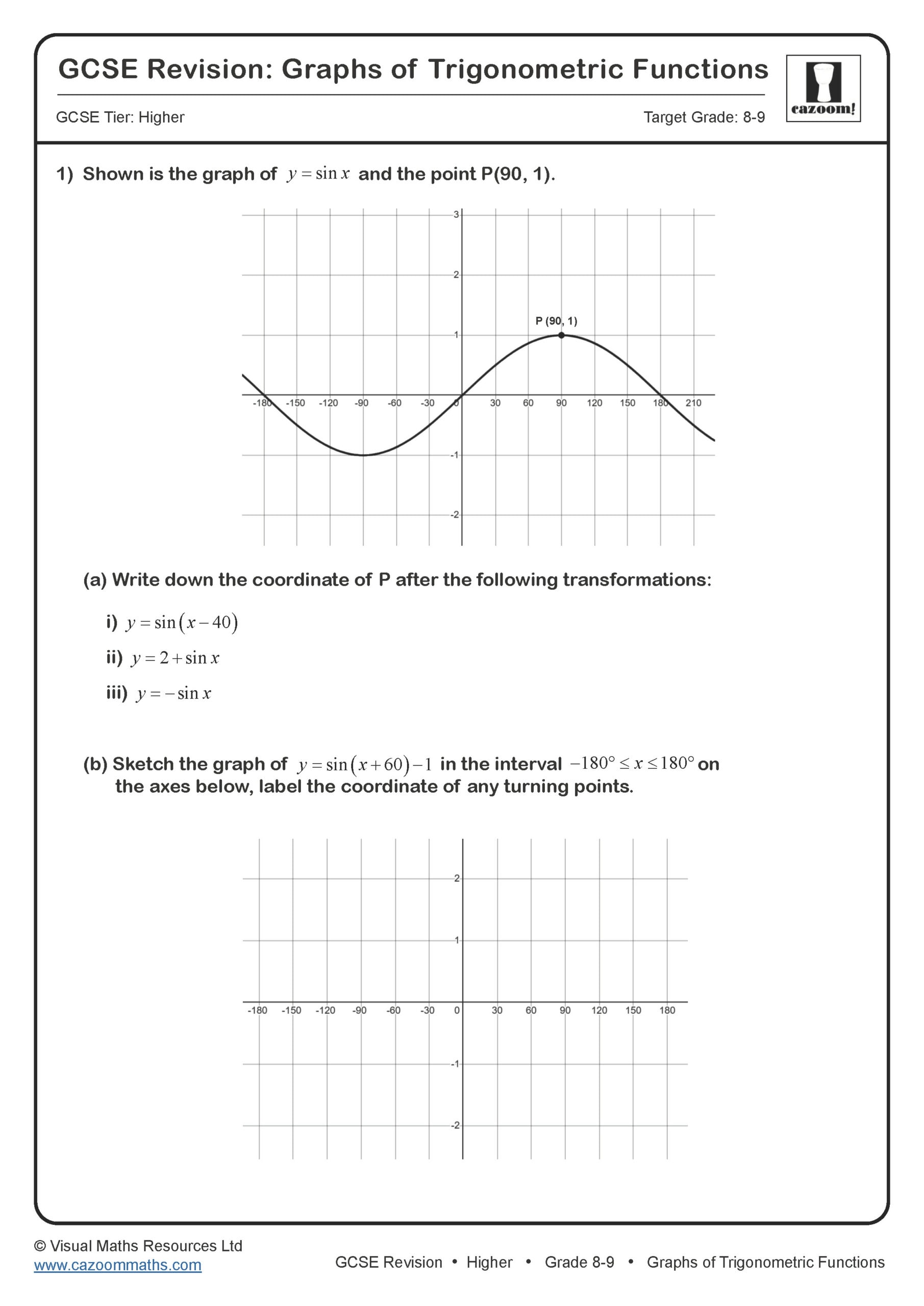
All worksheets are created by the team of experienced teachers at Cazoom Maths.
What Functions questions appear on the GCSE Higher paper?
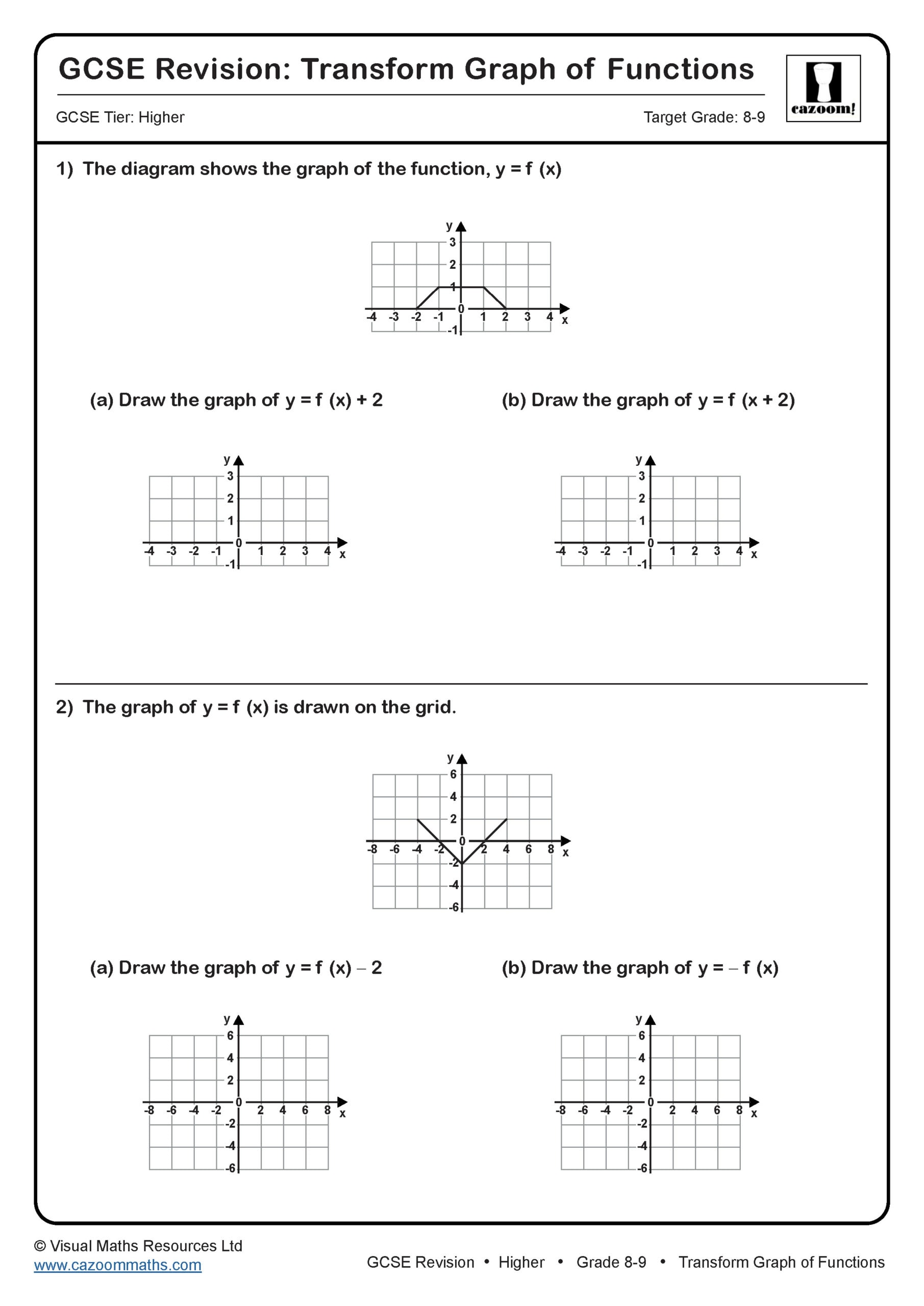
Higher papers typically include 8-12 marks on functions across both papers, testing composite functions fg(x), inverse functions f⁻¹(x), domain and range, and graph transformations. Students face questions requiring them to find f(3) or solve f(x) = 7, compose two functions in either order, find inverses algebraically, and apply transformations like y = f(x + 2) or y = 2f(x) to sketch graphs. Exam questions often combine function work with coordinate geometry or trigonometric graphs, expecting students to interpret notation precisely.
A common error at this tier is confusing fg(x) with gf(x), particularly when one function is given as a table or graph rather than algebraically. Students lose marks when they assume function composition is commutative or fail to show substitution steps clearly, which mark schemes explicitly reward.
What grade are Functions questions on Higher GCSE maths?
Functions questions on Higher papers span grades 6-9. Grade 6 questions typically ask students to evaluate f(x) for given inputs, find simple composite functions, or sketch transformations of y = x². Grade 7-8 questions require finding inverses algebraically, solving equations involving composite functions, or applying multiple transformations to trigonometric or exponential graphs. Grade 9 questions often combine functions with proof, asking students to show that fg(x) = gf(x) for specific functions or determine domains where inverses exist.
Students should target their weakest grade band first when revising. Those securing grade 6 should practise composite functions and single transformations until notation becomes automatic, then progress to inverse functions and layered transformations for grades 7-8. Aiming for grade 9 means mastering domain restrictions and justifying function properties algebraically.
How is Functions tested differently on Higher compared to Foundation?
Foundation tier introduces function notation and simple substitution, with students evaluating f(3) or solving f(x) = 5 for linear or quadratic functions. Questions remain single-step, often supported by tables or graphs. Higher tier expects algebraic manipulation of composite functions, finding inverses by rearranging, and understanding transformations of graphs beyond simple translations. Students must interpret f(2x), 3f(x), and f(x − 1) applied to trigonometric, exponential, and reciprocal graphs, requiring deep understanding of how transformations affect shape and position.
This depth matters because Higher questions assess mathematical reasoning, not just procedural skills. Students need to explain why fg(x) differs from gf(x), determine domains where inverses exist, and sketch transformed graphs without plotting points. Teachers notice that students who memorise transformation rules without understanding horizontal versus vertical changes struggle with grade 8-9 questions combining multiple shifts or stretches.
How should students revise Functions for Higher GCSE maths?
Students should begin by working through worksheets on composite and inverse functions under timed conditions, checking answers immediately to identify recurring mistakes like sign errors or incorrect substitution order. Practising graph transformations systematically helps: sketch y = sin x, then apply y = sin(x + 30), y = 2sin x, and combined transformations separately. Teachers observe that students who annotate sketches with key points (intercepts, turning points, asymptotes) build confidence faster than those attempting transformations abstractly. Reviewing mark schemes reveals how examiners reward clear notation and labelled graphs.
Teachers can use these worksheets for differentiated starters, setting grade 6-7 questions for retrieval practice and grade 8-9 problems for extension. Assigning specific worksheets as homework after teaching composite functions or graph transformations allows targeted consolidation. Students benefit from returning to earlier worksheets before mock exams to maintain fluency across all function types.