GCSE Higher Percentages Revision Worksheets
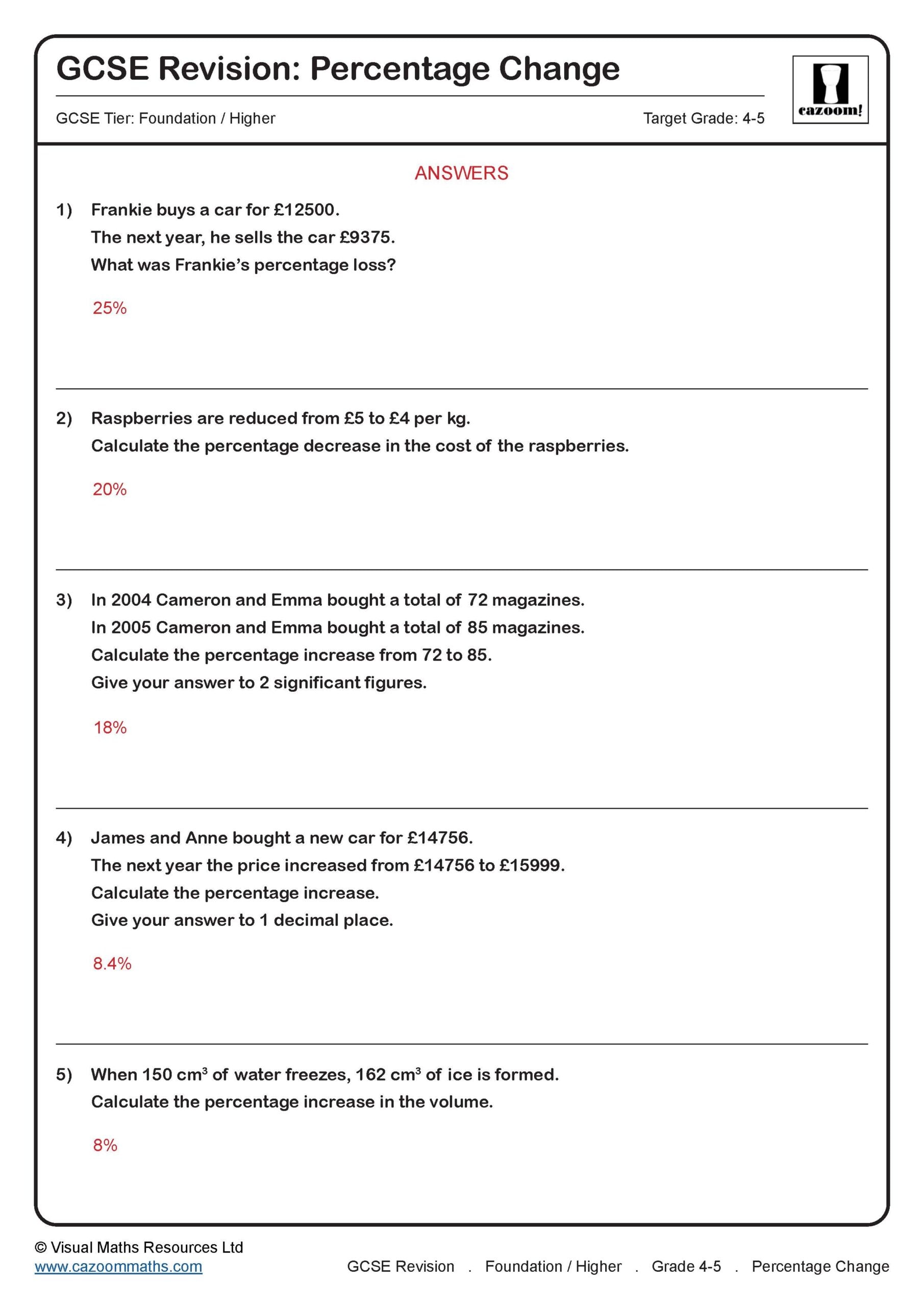
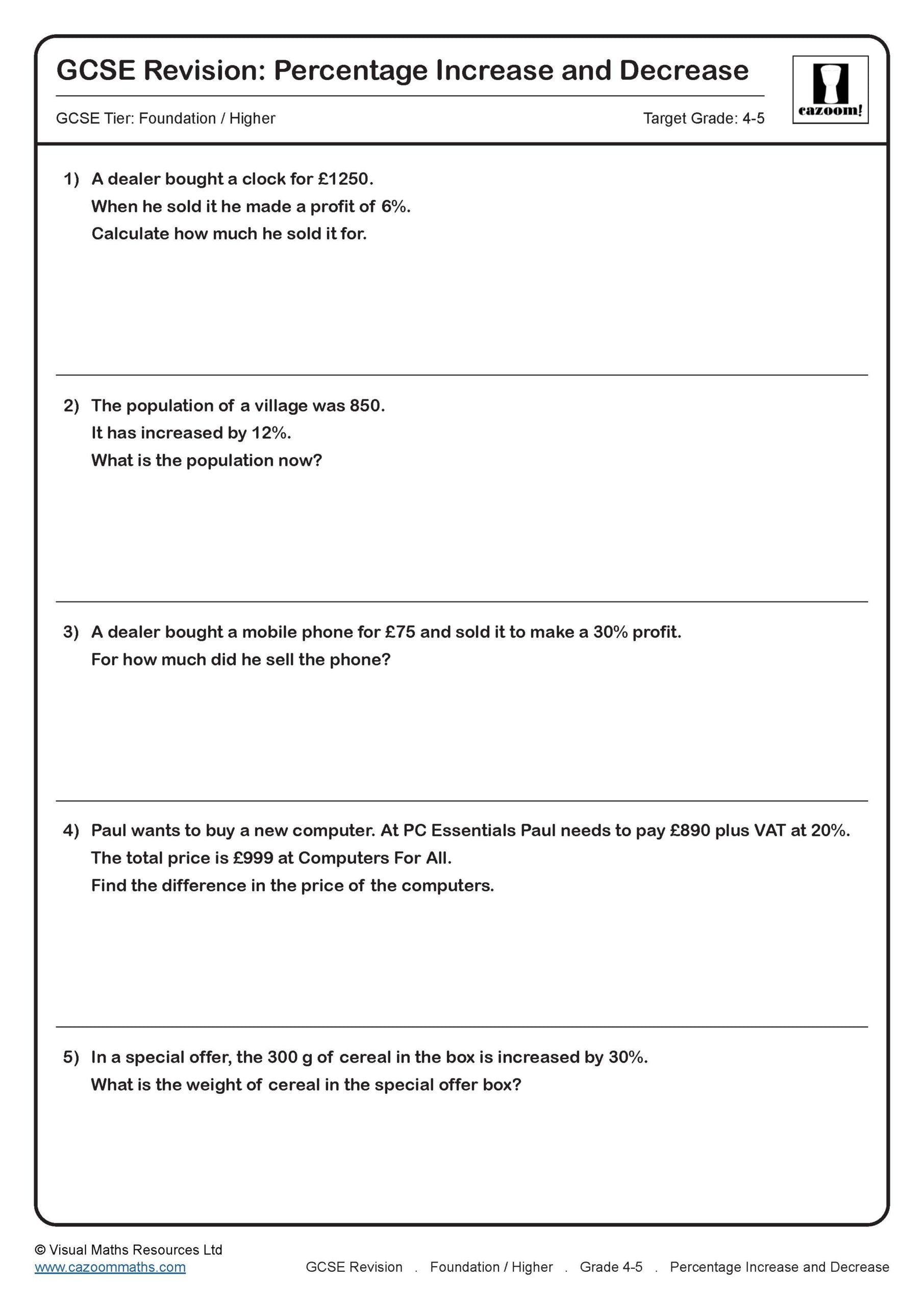
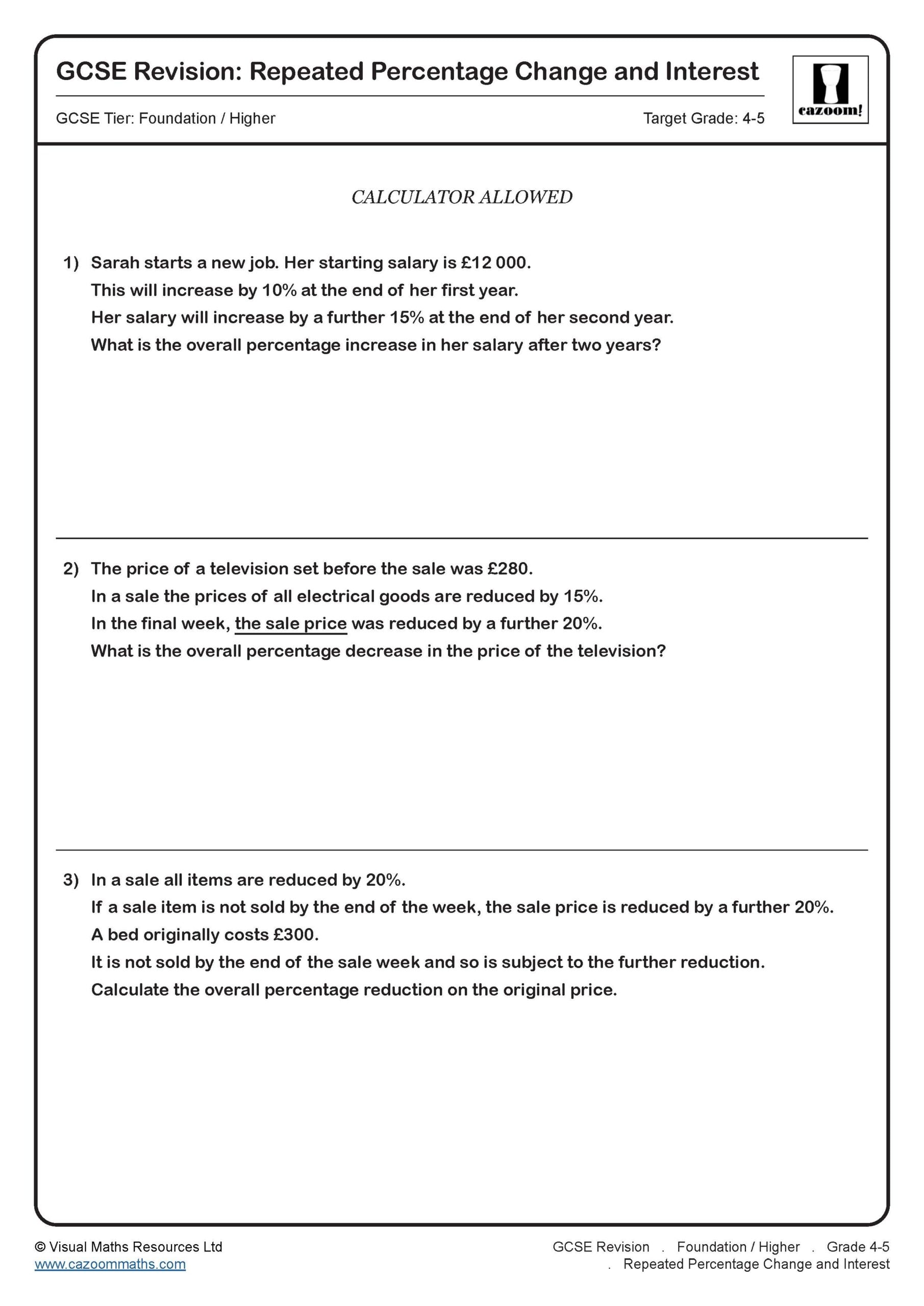
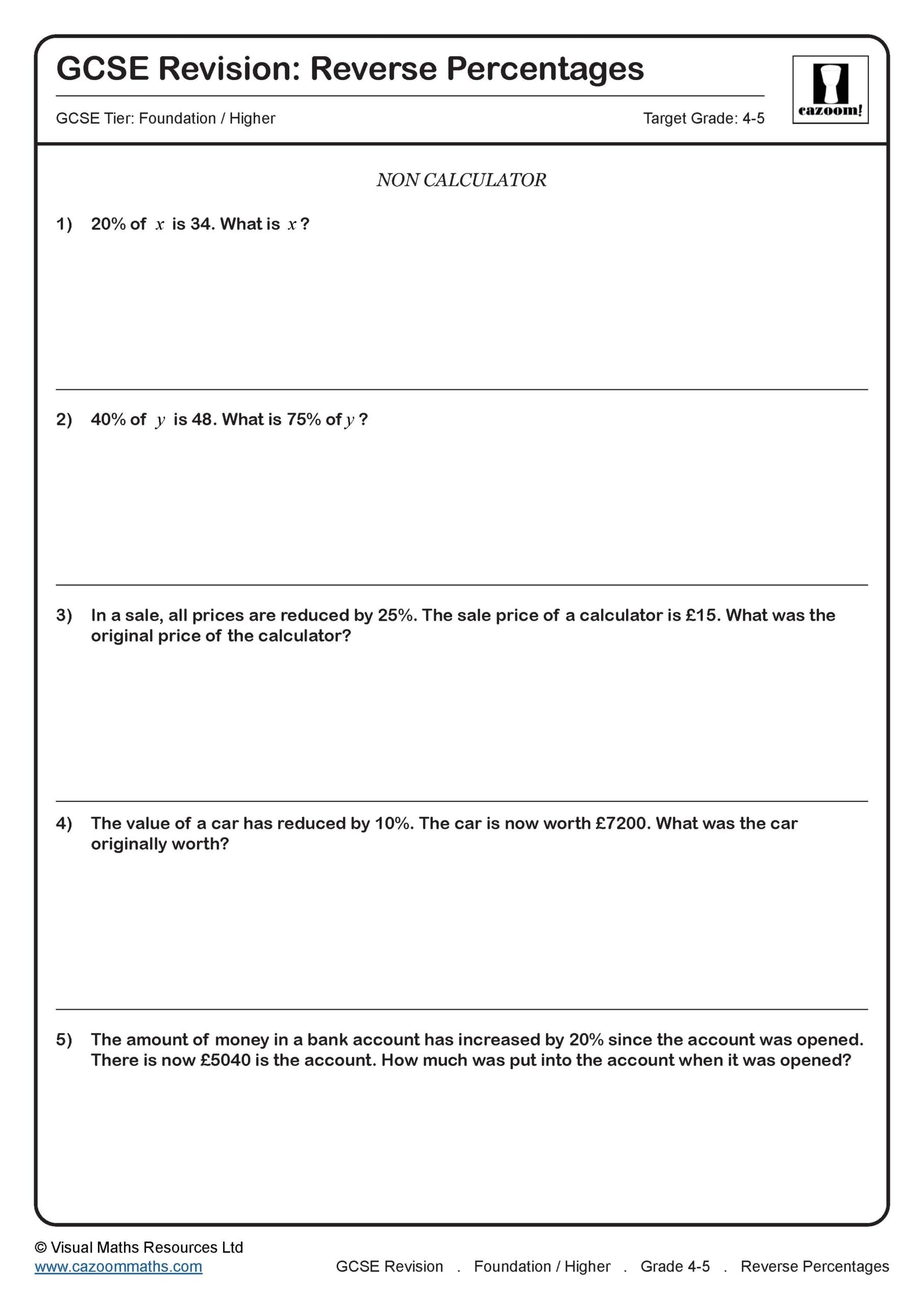
All worksheets are created by the team of experienced teachers at Cazoom Maths.
What percentages questions appear on the GCSE Higher paper?
Higher papers typically include four to six percentage questions worth between 10 and 15 marks total. Students face reverse percentage problems, compound growth and decay calculations, percentage change with multiple stages, and percentage error questions. Algebraic percentages appear regularly, asking students to write expressions or form equations involving percentage increases. Questions often embed percentages within other topics like ratio, standard form, or problem-solving contexts requiring interpretation.
Exam mark schemes expect clear multiplier working rather than step-by-step percentage calculations. Students lose marks when they round intermediate values too early in compound calculations or fail to show how they derived their multiplier. The most accessible marks come from straightforward percentage change; the challenge lies in multi-step problems where percentages appear alongside other mathematical demands.
What grade are percentages questions on Higher GCSE maths?
Foundation-level percentage skills (calculating percentages of amounts, simple increase and decrease) target grades 4-5 on the Higher paper. Mid-tier questions involving reverse percentages, compound interest over several years, and percentage change calculations typically secure grades 5-7. The most demanding questions, worth grades 7-9, combine percentages with algebraic manipulation, require proof or justification, or embed percentage reasoning within unfamiliar problem-solving contexts that demand interpretation.
Students aiming for grade 6 should prioritise mastering reverse percentages and compound calculations with confidence before attempting the algebraic extensions. Those targeting grades 8-9 need fluency with forming and solving equations involving percentage multipliers, and recognising when percentage methods offer the most efficient route through complex problems involving proportional change.
How is percentages tested differently on Higher compared to Foundation?
Foundation papers focus on calculating percentages of amounts, straightforward increase and decrease, and simpler reverse percentage problems using accessible numbers. Higher papers assume fluency with these basics and immediately move to compound calculations, algebraic representations, and multi-step problems. Where Foundation might ask for a 15% increase on £240, Higher embeds percentages within ratio contexts, requires students to work backwards through multiple changes, or presents percentage error calculations demanding precision.
This difference matters because Higher students cannot rely on arithmetic methods alone. They need algebraic thinking, recognising that percentage problems often require forming equations or using multipliers systematically. Teachers notice that students who struggle with Higher percentages usually lack confidence with decimal multipliers or attempt to solve everything using step-by-step methods that become unwieldy in complex questions.
How should students revise percentages for Higher GCSE maths?
Students should work through worksheets systematically by question type, starting with reverse percentages and compound calculations before attempting algebraic problems. Timed practice under exam conditions helps develop fluency with multipliers. Checking answers immediately after completing each sheet identifies specific weaknesses, whether in calculation accuracy, algebraic manipulation, or interpreting problem contexts. Students targeting grades 7-9 should focus on explaining their method clearly, as mark schemes reward systematic working even when final answers contain errors.
Teachers can use these worksheets for starter activities recapping previous learning, homework assignments targeting specific skills, or intervention sessions with students approaching grade boundaries. Setting different worksheets to different groups allows differentiated practice within mixed-attainment classes, with answer sheets enabling peer marking and immediate discussion of common errors during lessons.