GCSE Higher Powers Revision Worksheets
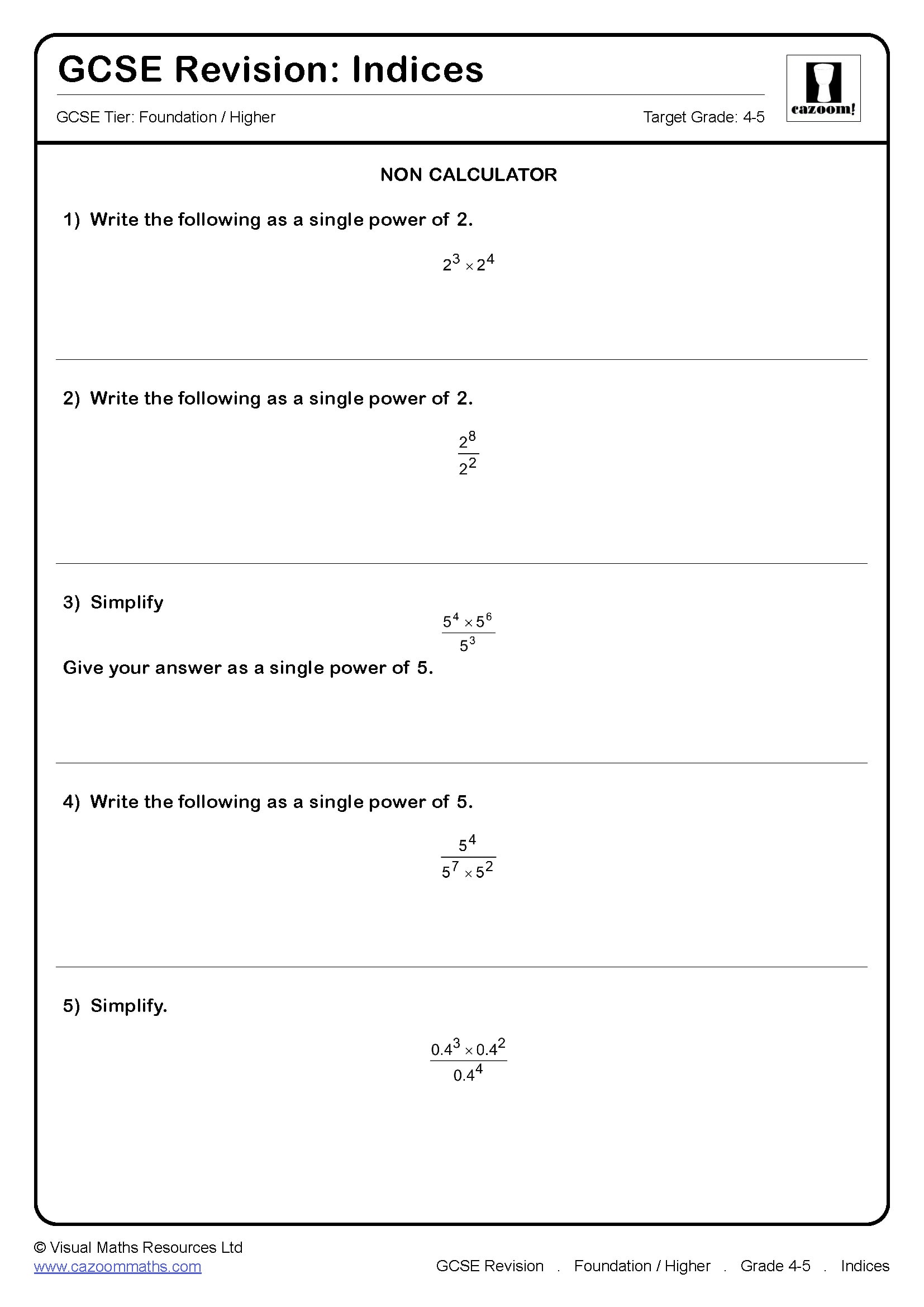
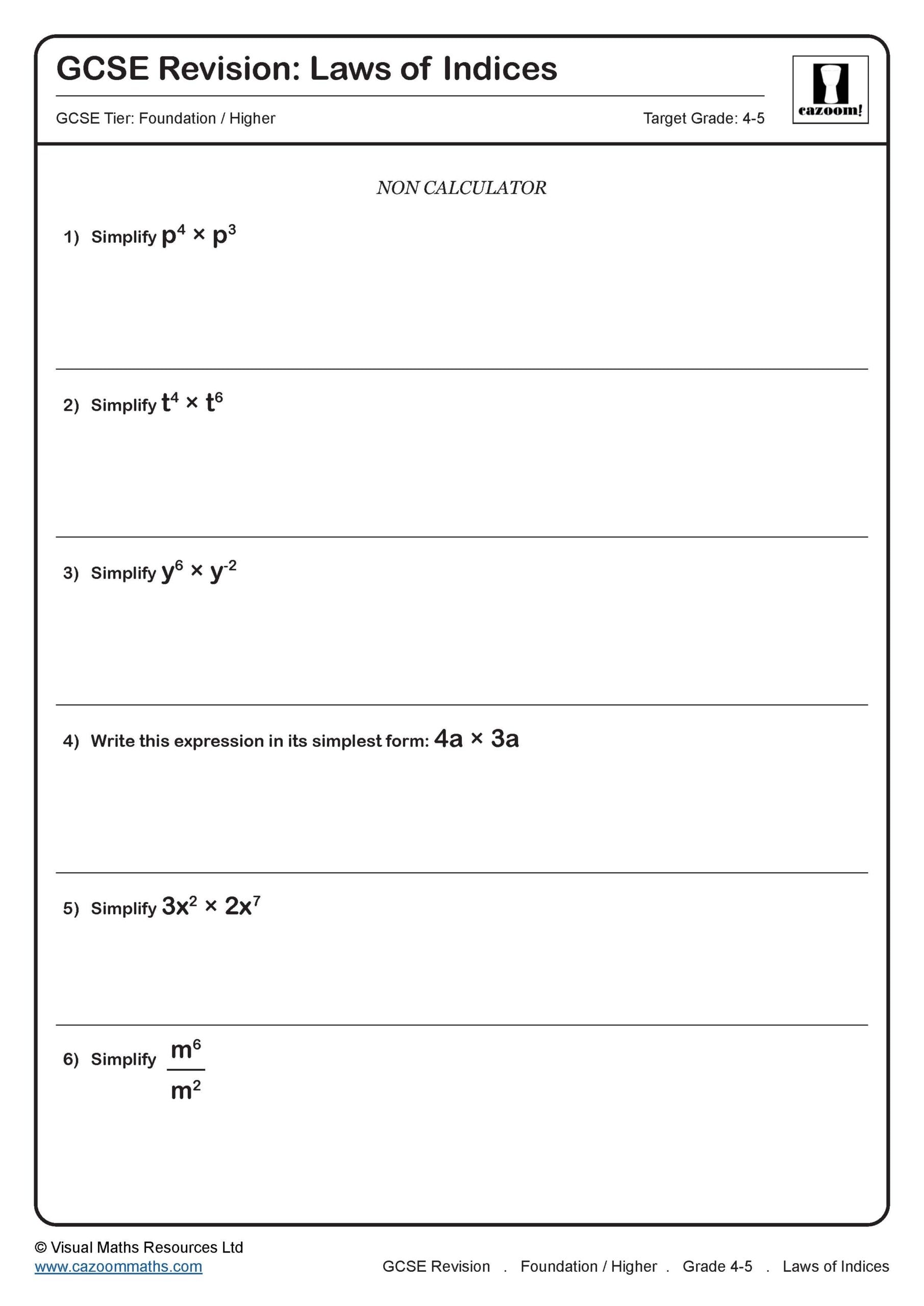
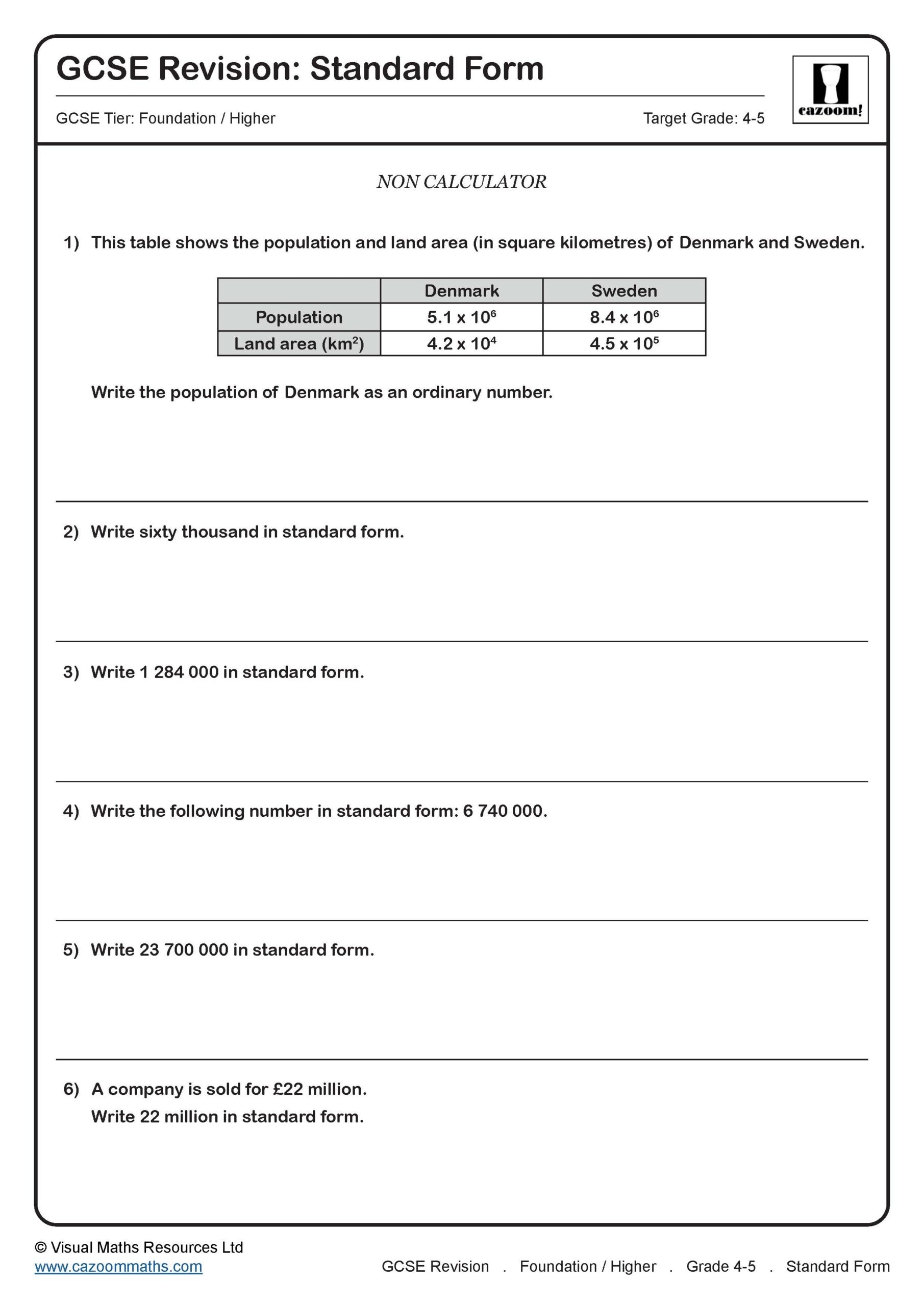
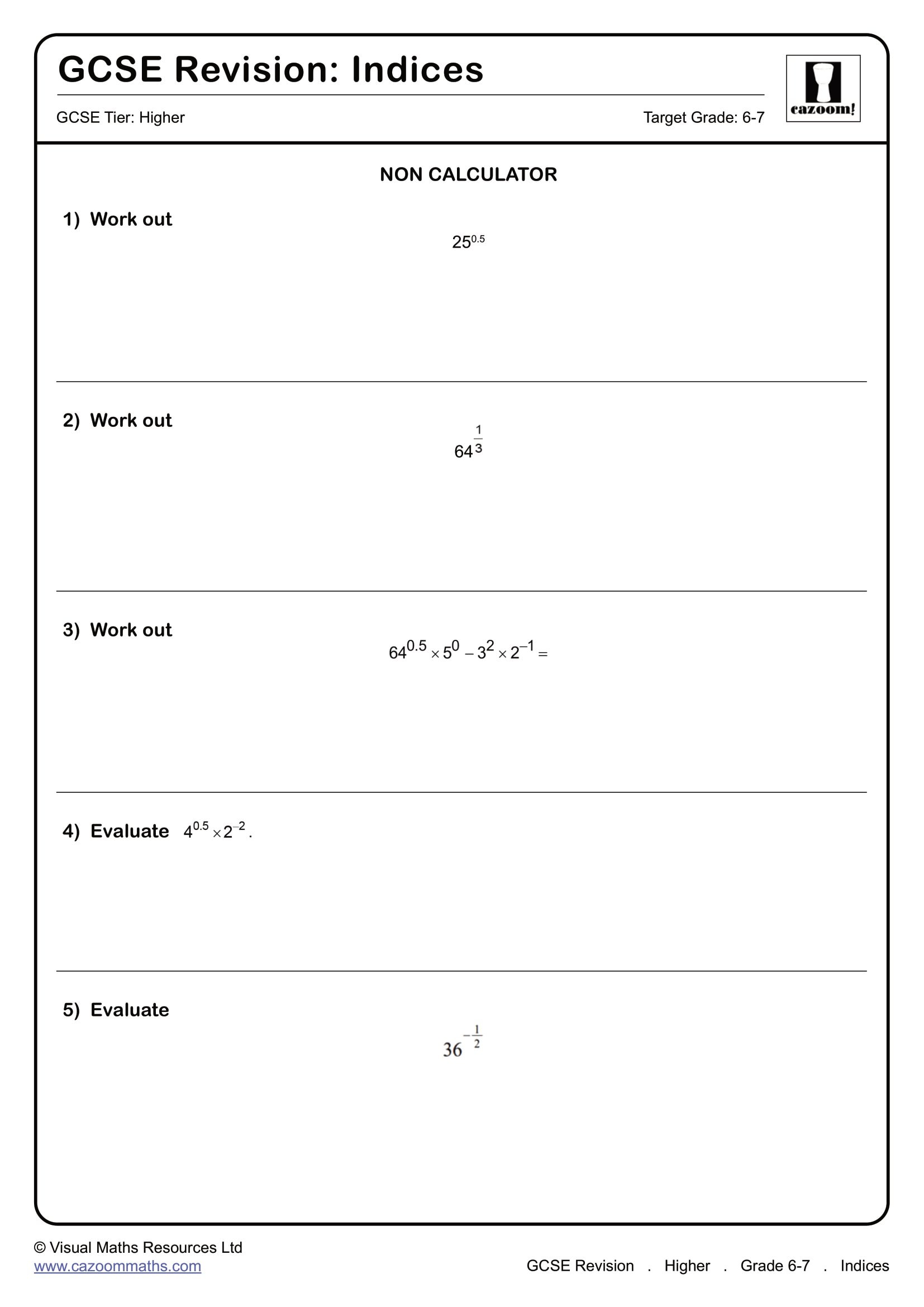
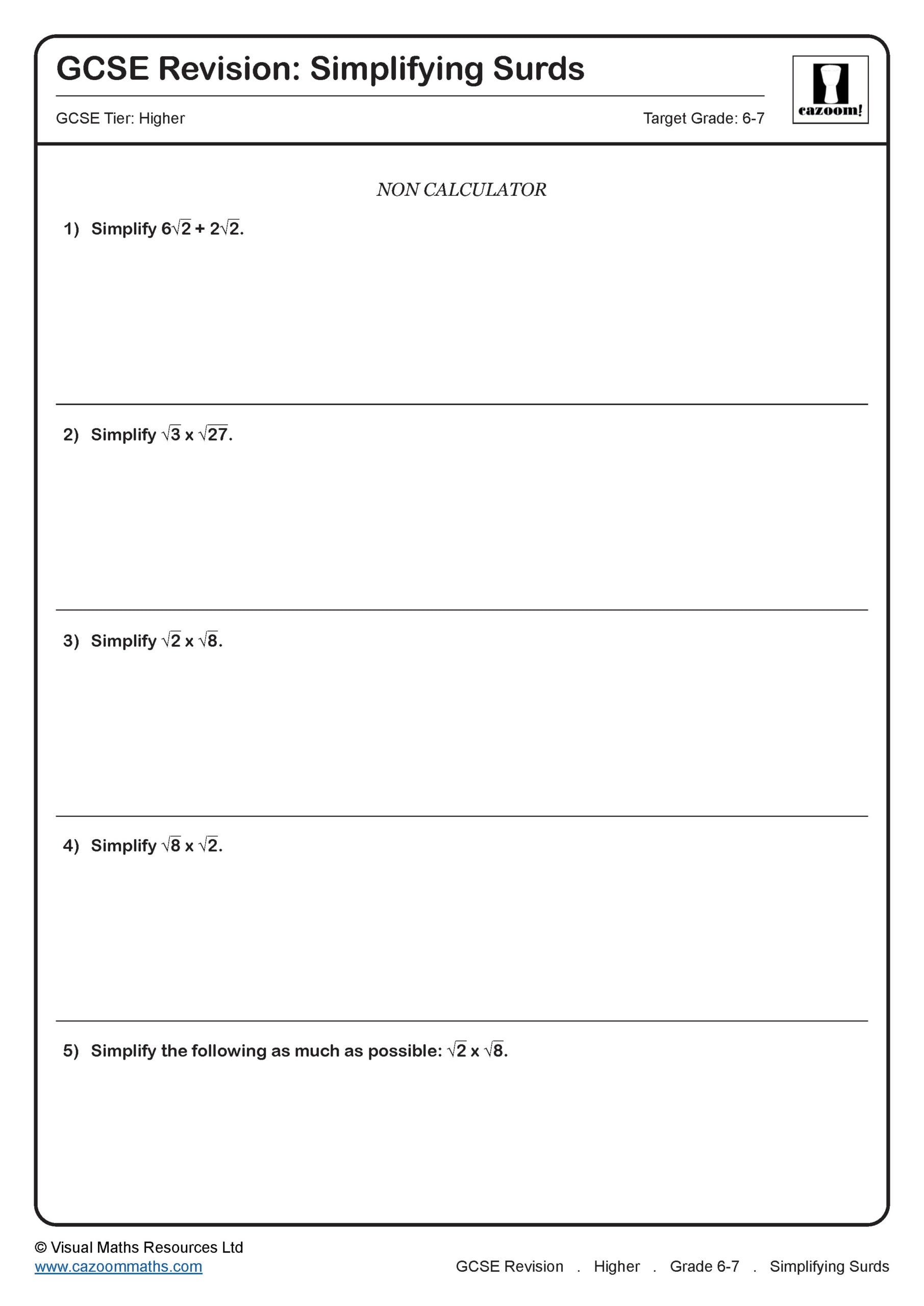
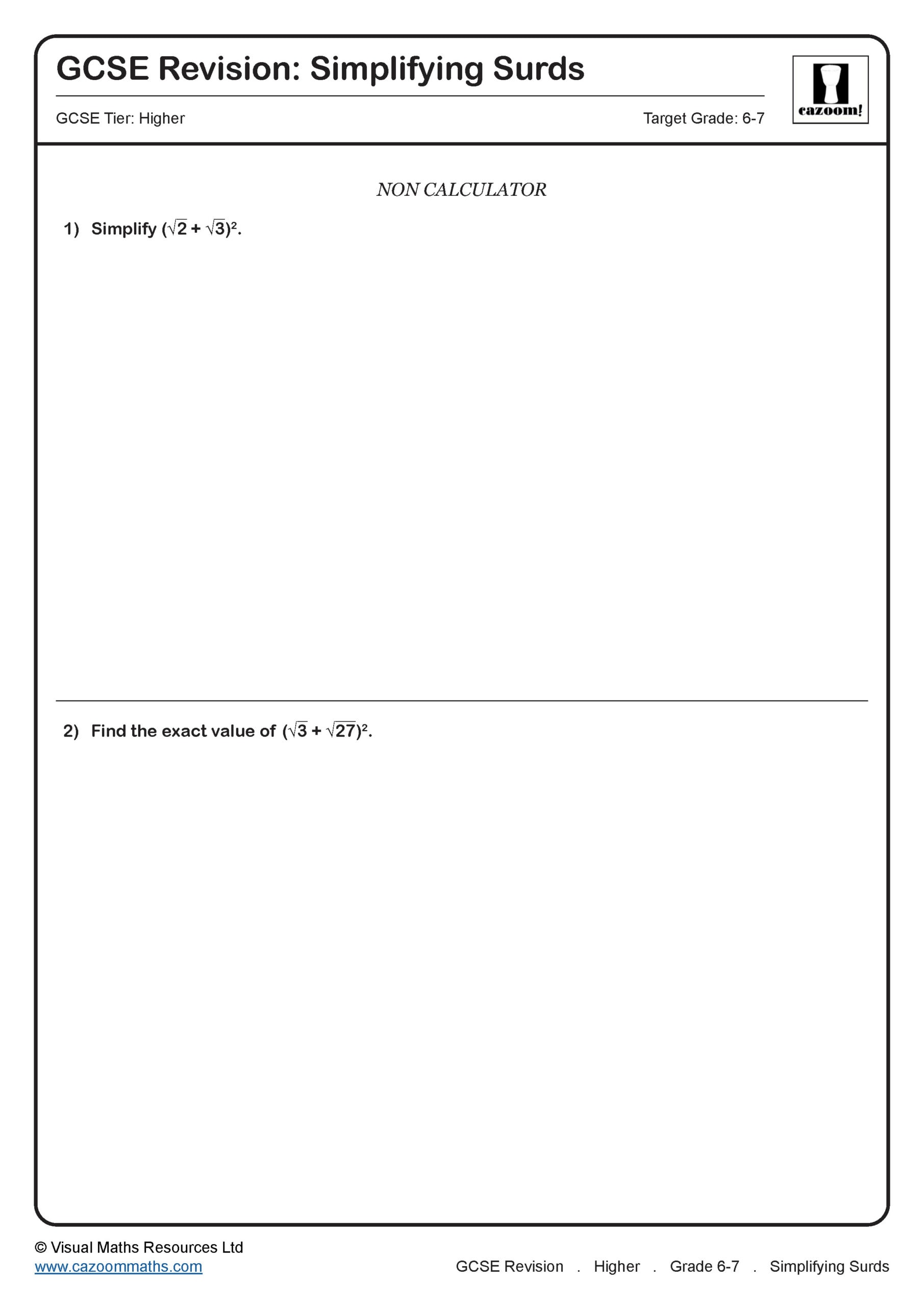
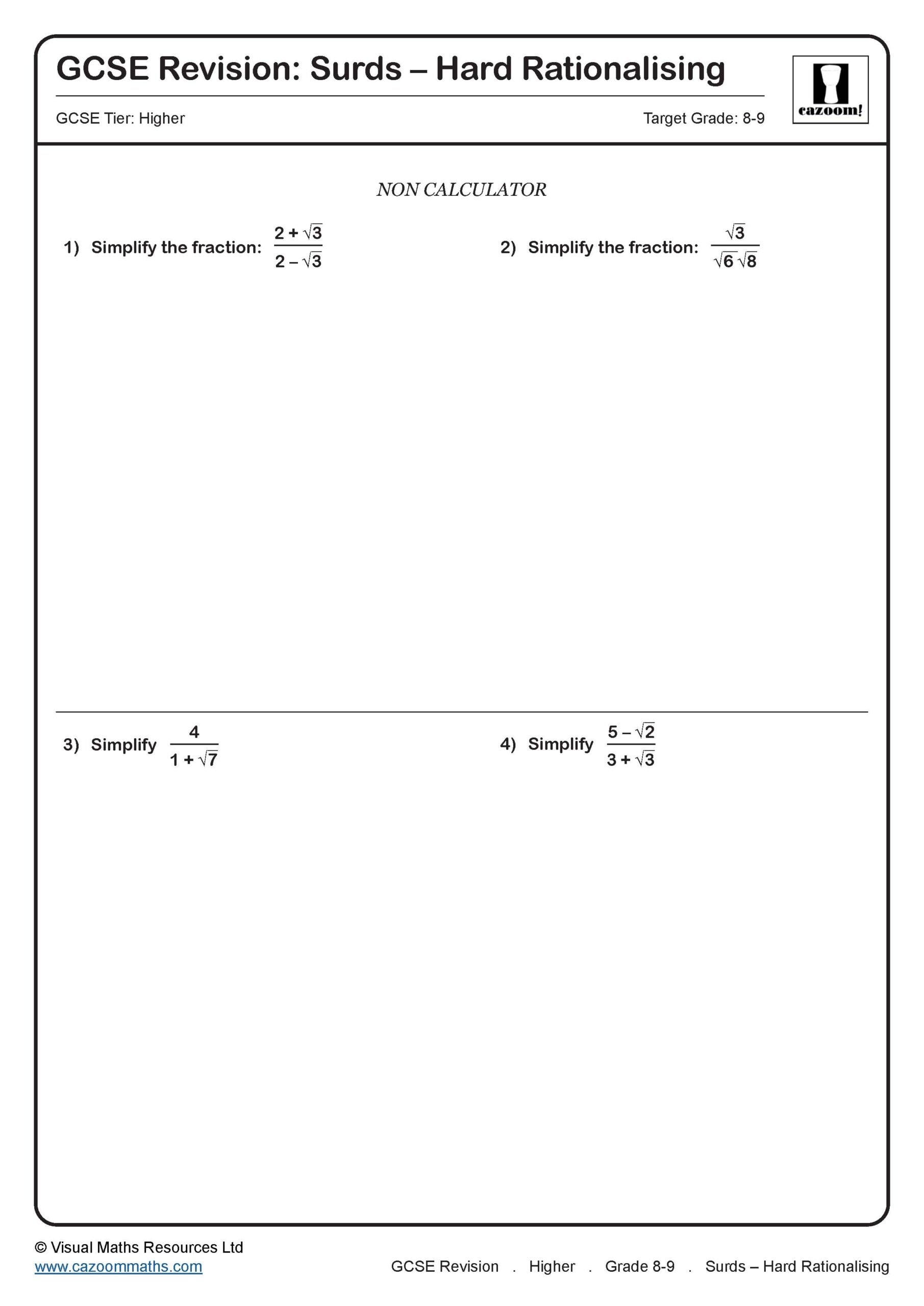
All worksheets are created by the team of experienced teachers at Cazoom Maths.
What Powers questions appear on the GCSE Higher paper?
Higher papers typically include 4-6 marks across multiple questions testing index laws, with questions ranging from straightforward simplification worth 1-2 marks to multi-step algebraic manipulation worth 3-4 marks. Students encounter powers within broader algebra questions rather than isolated index problems, such as simplifying expressions before solving equations or working with standard form in context. Questions demand fluency with all index laws, including zero and negative indices, fractional powers as roots, and combining multiple operations within single expressions.
Exam mark schemes penalise incomplete simplification heavily. Students who correctly apply index laws but leave answers as 3x⁻² instead of 3/x² lose method marks. Teachers notice this particularly affects grade 6-7 students who understand the mechanics but miss mark scheme expectations about final form, especially when algebraic fractions or surds remain in denominators.
What grade are Powers questions on Higher GCSE maths?
Grade 4-5 questions test applying individual index laws to numerical or simple algebraic bases, such as simplifying x⁵ ÷ x² or evaluating 16^(3/4). These questions check fluency with multiplication, division, and power laws separately. Grade 6-7 questions combine multiple index laws within expressions like (2a³b⁻²)⁴ ÷ (4a⁵b), requiring students to identify which operations apply where. Grade 8-9 questions embed powers within complex problem-solving, such as proof questions involving indices or manipulating expressions with mixed algebraic and numerical bases across several steps.
Students should identify their current secure grade, then practise one band higher. A student comfortable with grade 5 work gains more from attempting grade 6 questions repeatedly than scattered practise across all levels. Teachers can diagnose gaps quickly by observing which index law students apply incorrectly when multiple laws could apply, particularly power of a power versus multiplication rules.
How is Powers tested differently on Higher compared to Foundation?
Foundation tier focuses on positive integer indices and straightforward applications of multiplication and division laws with numerical bases. Questions rarely combine more than two operations. Higher tier expects fluency with fractional indices as alternative root notation, negative indices as reciprocals, and zero indices, often within algebraic expressions containing multiple variables. Questions embed index laws within broader algebraic manipulation rather than testing them in isolation, requiring students to recognise when simplification using powers creates progress towards a solution.
This difference matters because Higher students must treat index laws as tools within problem-solving rather than standalone procedures. Grade 7+ questions assume automatic recognition of which law applies and assess whether students can chain multiple applications correctly. Teachers notice that students who memorise index laws without understanding reciprocal and root equivalence struggle when expressions like (8x⁶)^(-2/3) appear, unable to connect fractional powers to root extraction.
How should students revise Powers for Higher GCSE maths?
Students should work through worksheets in grade order, timing themselves on grade 5-6 questions to build fluency before tackling grade 8-9 problems untimed. Checking answers immediately after each worksheet matters more than completing multiple sheets, as index law errors compound across steps. When mistakes appear, students should identify which specific law caused the error rather than reworking entire questions, then attempt similar questions immediately. Fractional and negative indices need deliberate practise converting between index form and root or fraction equivalents until recognition becomes automatic.
Teachers can set targeted homework by assigning worksheets matching students' current secure grade plus one band higher, using answer sheets for peer marking during starter activities. This identifies whether students apply laws correctly under pressure. Mixed-topic questions work better after isolated index practise secures each law individually, as students then learn to recognise which law the question structure demands.