GCSE Higher Probability Revision Worksheets
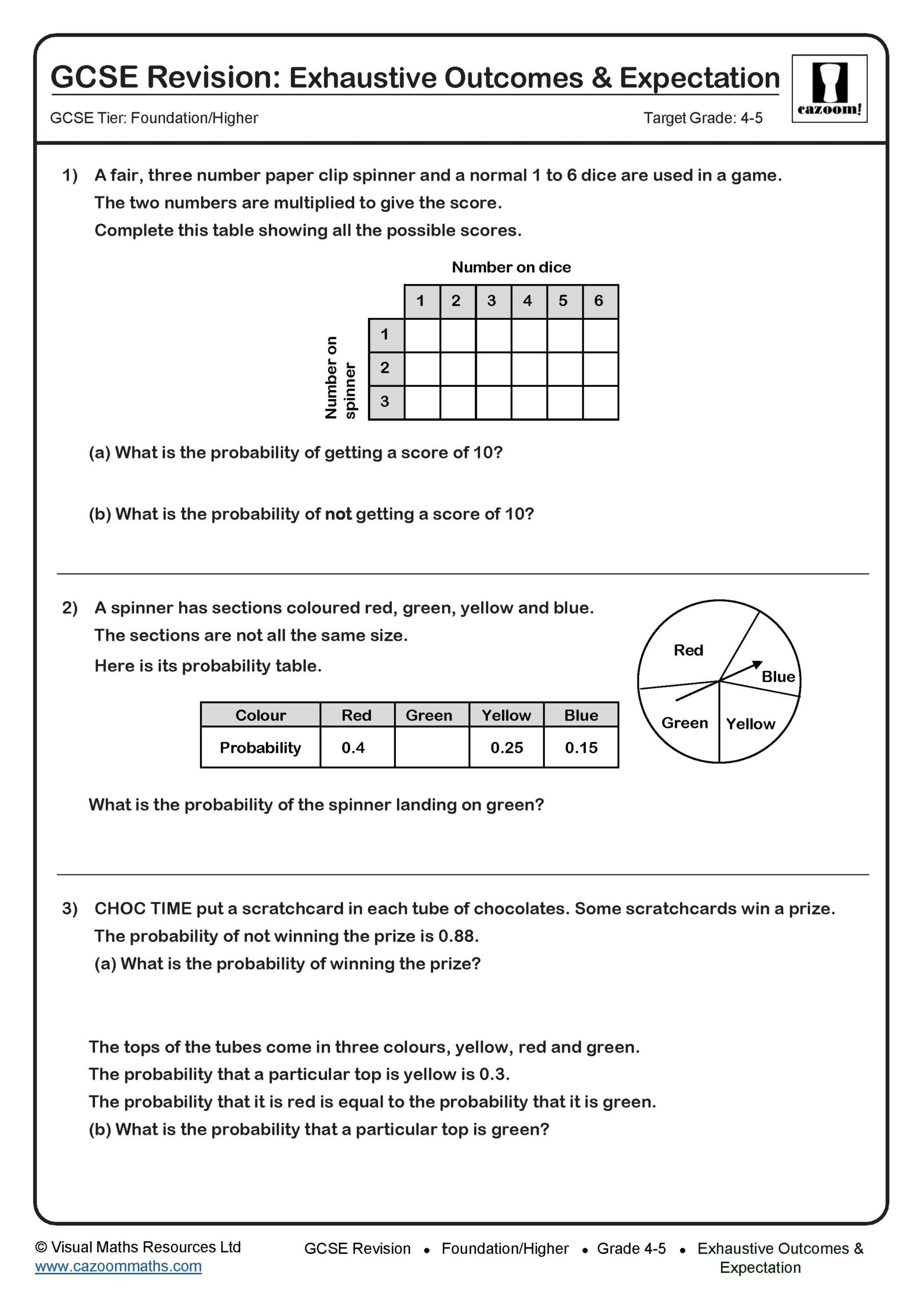
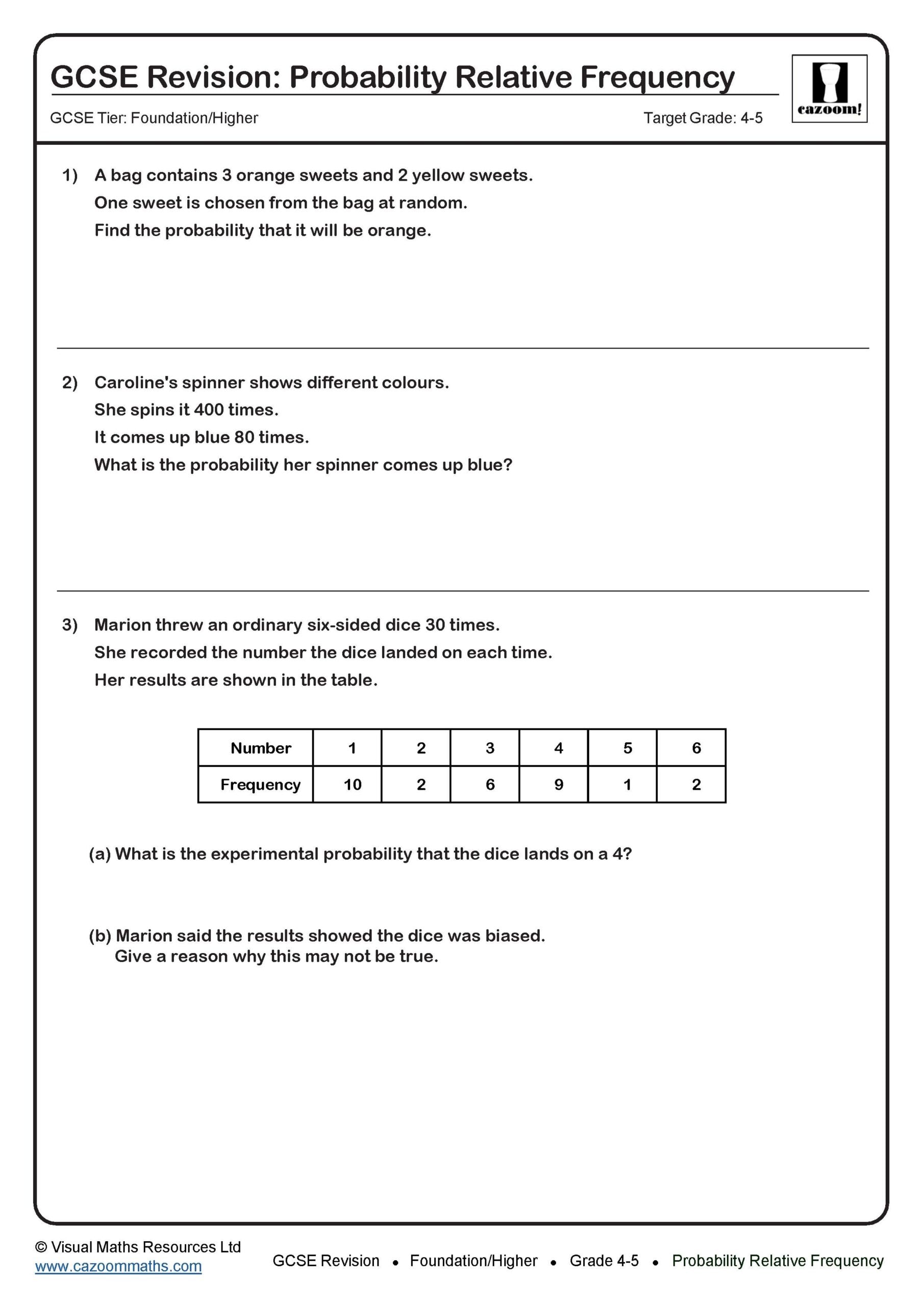
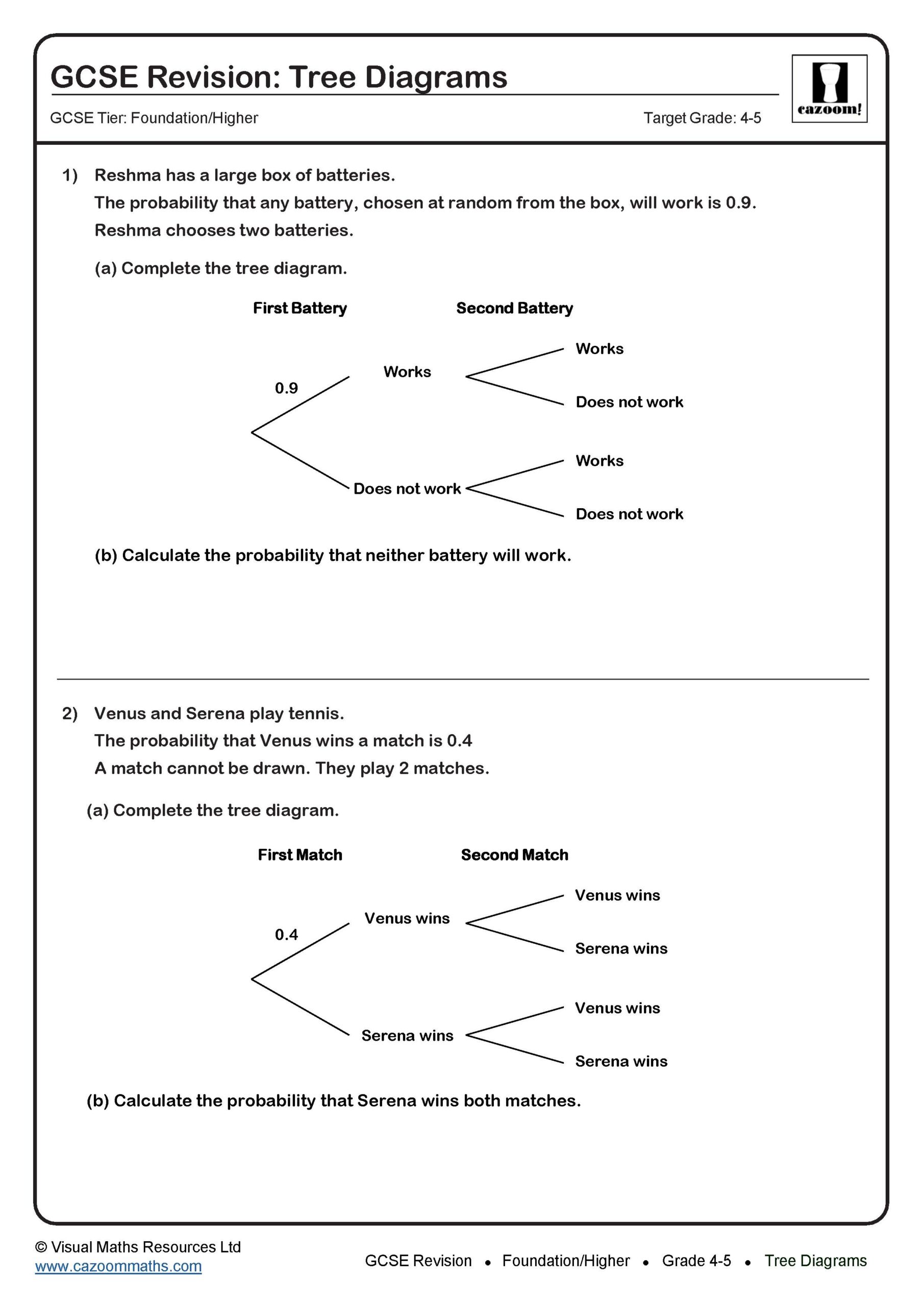
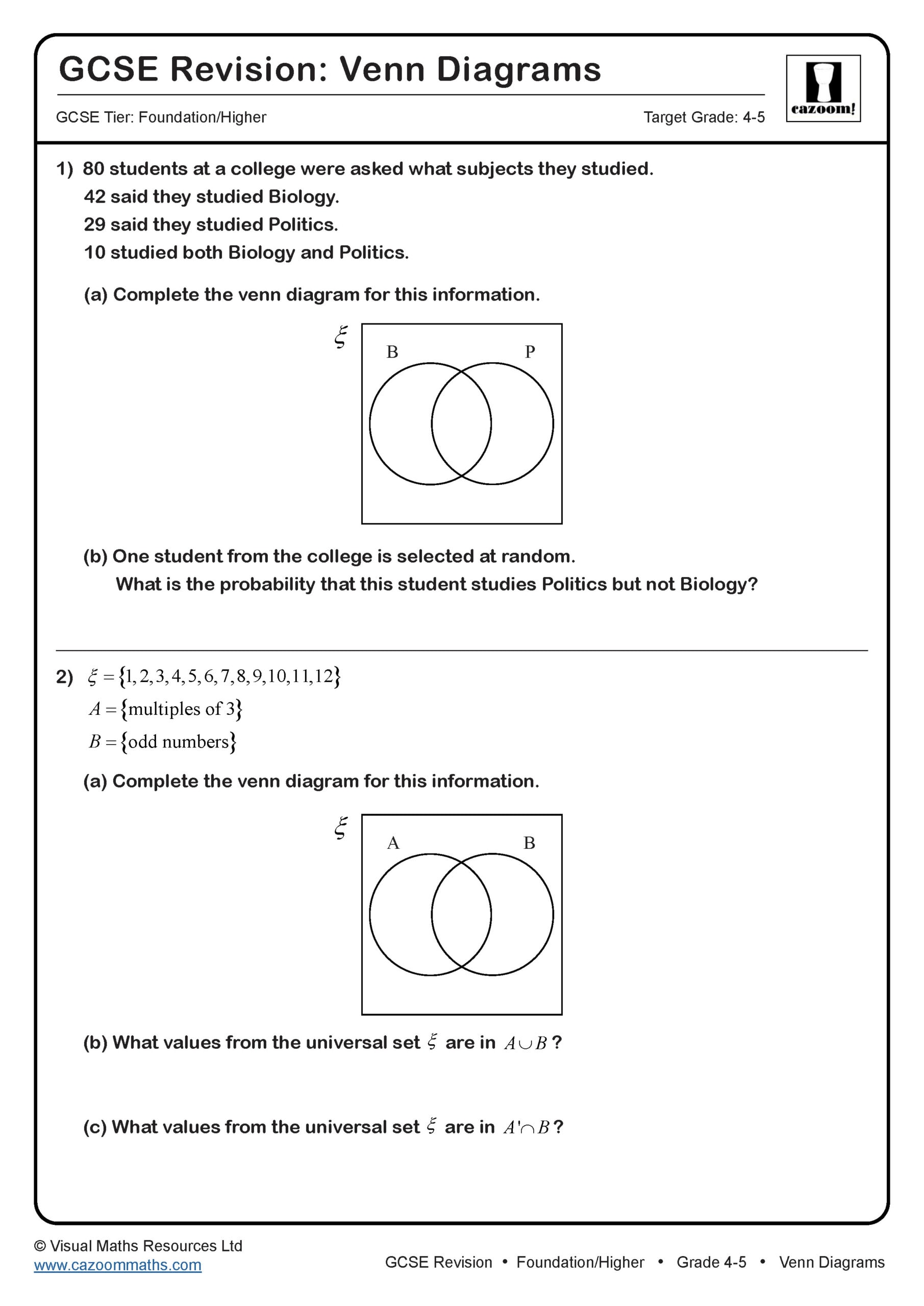
All worksheets are created by the team of experienced teachers at Cazoom Maths.
What Probability questions appear on the GCSE Higher paper?
Higher papers typically allocate 10-15 marks to probability across both papers, weighted towards grades 6-8 questions. Students face conditional probability scenarios requiring tree diagrams with dependent events, Venn diagrams with algebraic unknowns, and probability problems embedded within other topics like algebra or geometry. Questions often require forming and solving equations from probability statements, or proving results using formal probability notation. The most challenging questions combine multiple concepts, such as conditional probability within set notation or optimisation problems involving probability distributions.
Exam mark schemes penalise students who jump straight to answers without demonstrating their probability reasoning. Teachers frequently see candidates lose method marks because they haven't explicitly shown which branches of a tree diagram they've multiplied, or failed to define events clearly when working with conditional probability. Showing each calculation step becomes essential at this tier.
What grade are Probability questions on Higher GCSE maths?
Probability questions span the entire Higher grade range. Grades 4-5 questions test basic probability rules, simple tree diagrams with independent events, and straightforward Venn diagram interpretations. Grades 6-7 questions introduce conditional probability, algebraic tree diagrams where probabilities contain unknowns, and combined probability with other mathematical concepts. Grade 8-9 questions demand formal probability proofs, complex conditional scenarios across multiple stages, and problems requiring students to spot non-obvious approaches, such as using complementary probability or recognising when events are mutually exclusive versus independent.
Students aiming for grade 7 should prioritise conditional probability fluency before attempting grade 8-9 content. Teachers often recommend mastering tree diagrams with algebraic expressions first, as this foundation supports the more abstract reasoning required for top-grade questions. Targeted practice at each grade band builds confidence more effectively than attempting random questions.
How is Probability tested differently on Higher compared to Foundation?
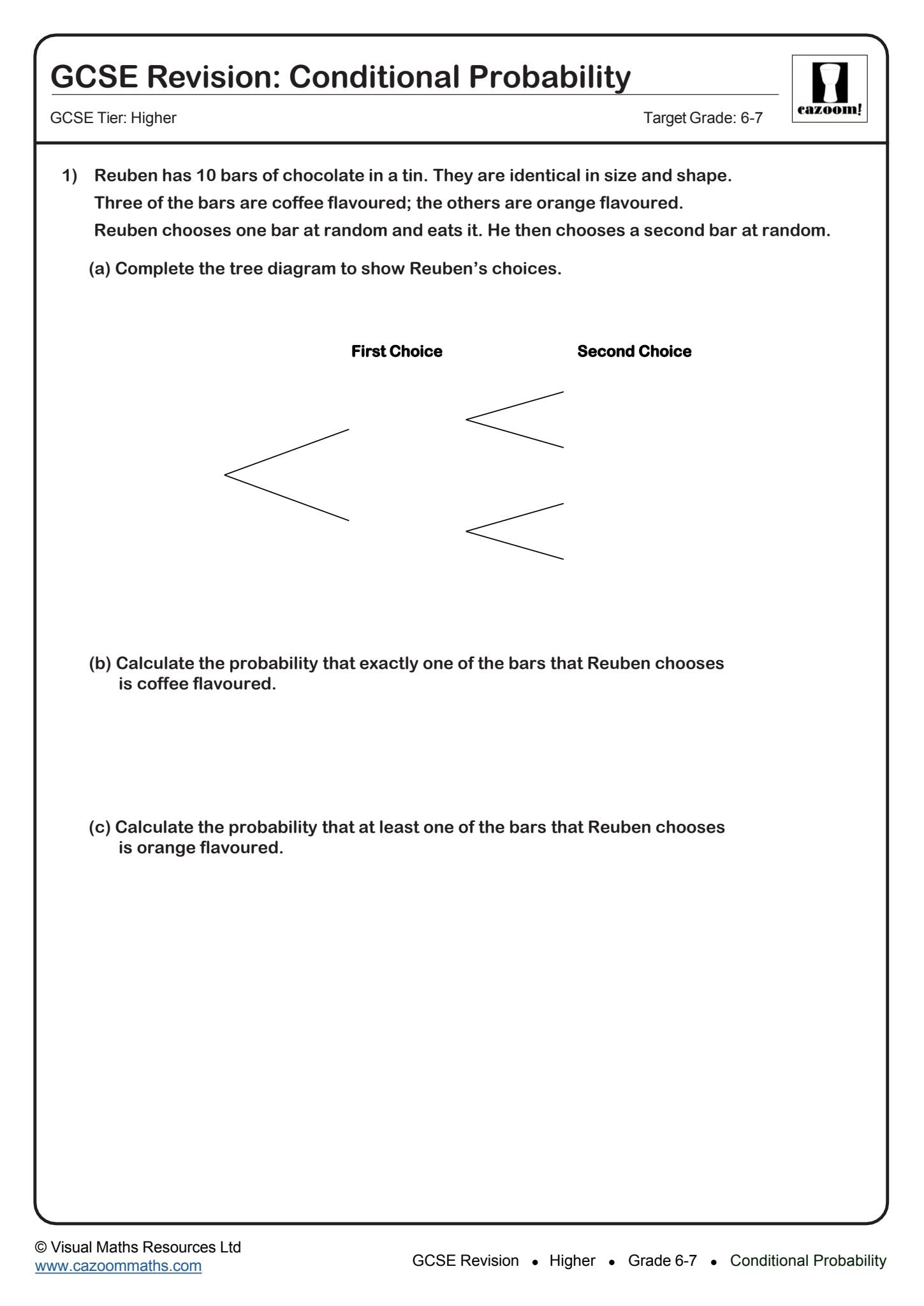
Foundation probability focuses on calculating basic probabilities, listing outcomes, and interpreting simple two-stage tree diagrams. Higher tier extends this significantly: students must handle conditional probability where events affect subsequent outcomes, manipulate algebraic expressions within probability contexts, and provide formal justifications using correct mathematical notation. Where Foundation might ask students to complete a tree diagram, Higher requires constructing diagrams from written scenarios, then using them to solve multi-step problems involving dependent events.
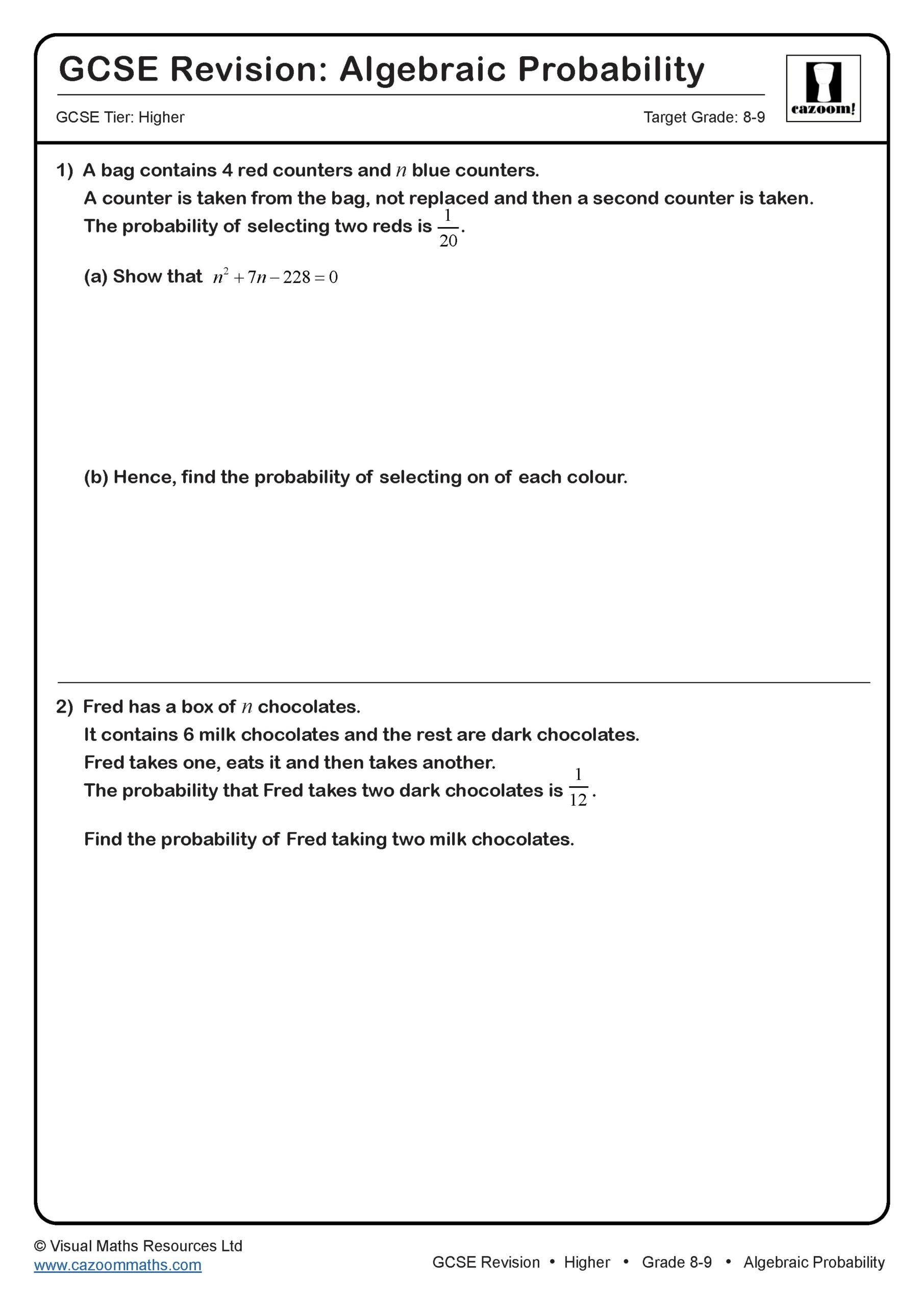
This algebraic fluency distinguishes Higher candidates. Students must form equations when probabilities are given as unknowns, solve for missing values, and prove whether events are independent by comparing P(A∩B) with P(A)×P(B). Teachers notice that students who've moved from Foundation often struggle initially because they've memorised procedures without understanding underlying probability principles. Higher tier rewards mathematical reasoning over mechanical calculation.
How should students revise Probability for Higher GCSE maths?
Students should work systematically through grade bands, spending time on conditional probability before attempting grade 8-9 questions. Practise drawing tree diagrams from written descriptions rather than completing partially-filled examples, as this builds the interpretation skills exams test. After attempting each worksheet, students must check their working against answer sheets, focusing not just on final answers but on whether their method would earn marks under exam conditions. Setting 30-minute timed sessions replicates exam pressure whilst allowing enough time for full solutions.
Teachers can use these worksheets for differentiated homework, assigning grade 6-7 content to students consolidating their target grades whilst stretching higher-attainers with grade 8-9 material. In lessons, worked examples from answer sheets help students understand mark scheme expectations around showing reasoning. Regularly revisiting probability throughout Year 11 prevents the skill fade that teachers frequently observe with this topic.