GCSE Higher Problem Solving Revision Worksheets
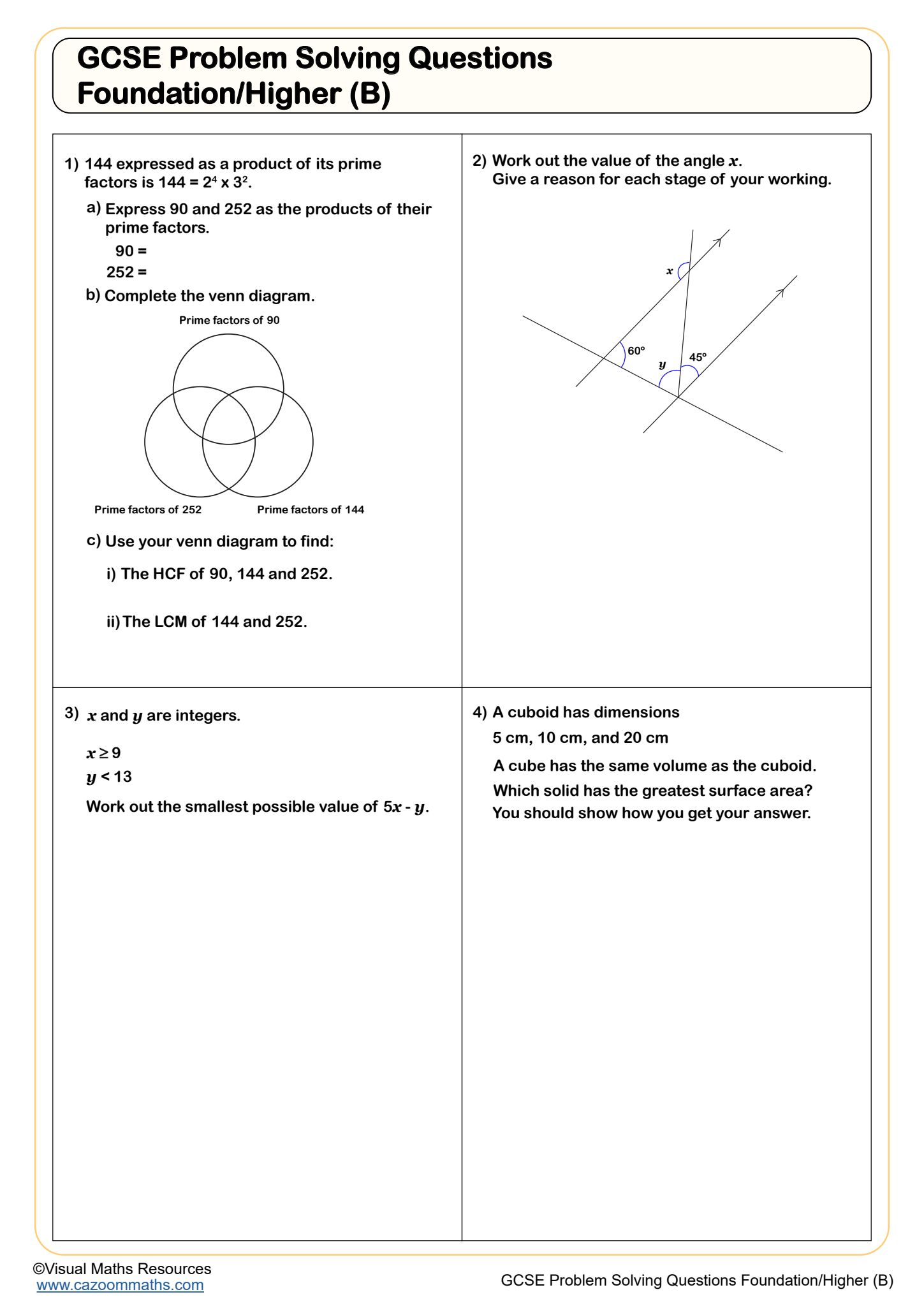
GCSE Problem Solving Questions Foundation/Higher (B)
Target Grade: 4-5
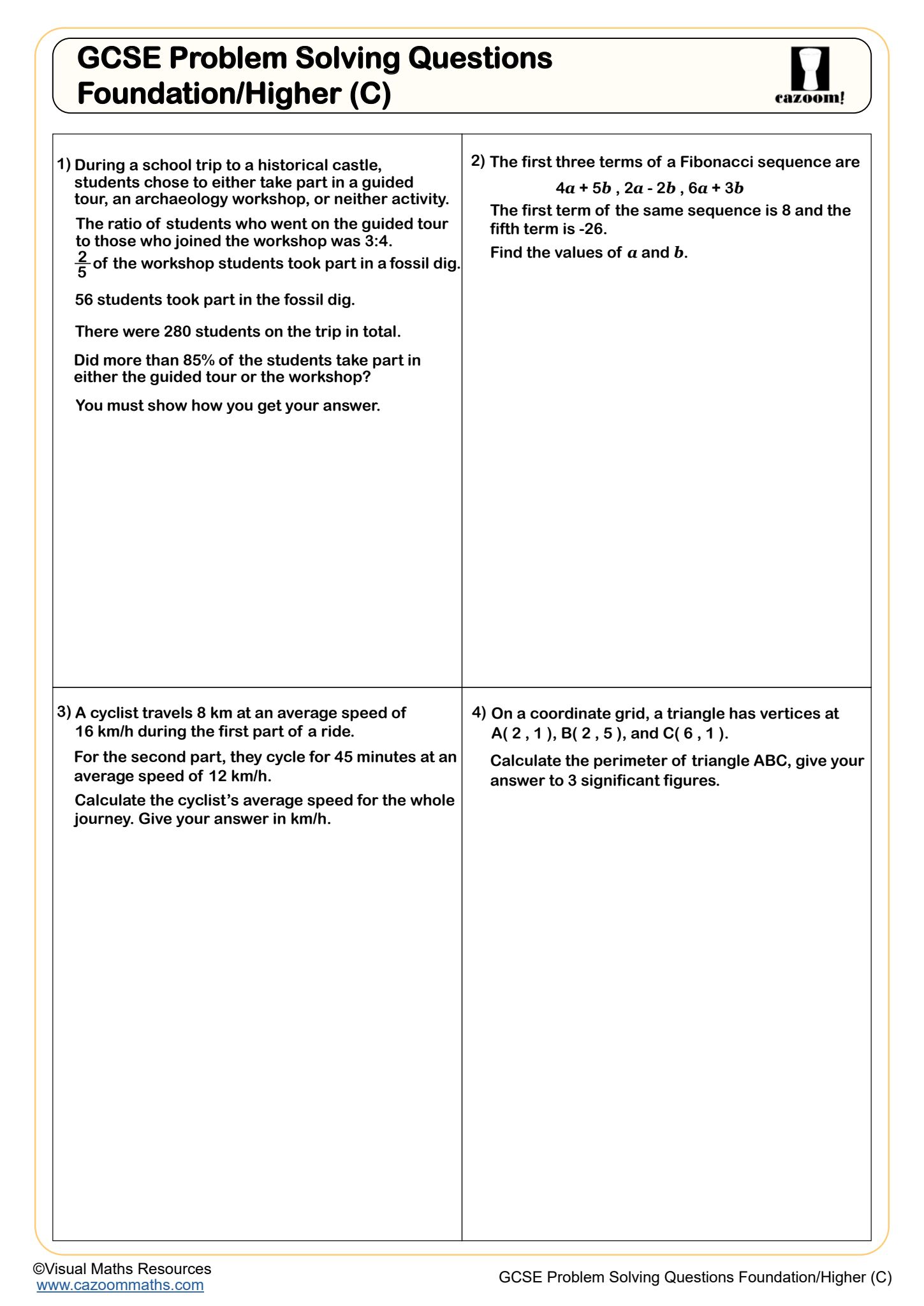
GCSE Problem Solving Questions Foundation/Higher (C)
Target Grade: 4-5
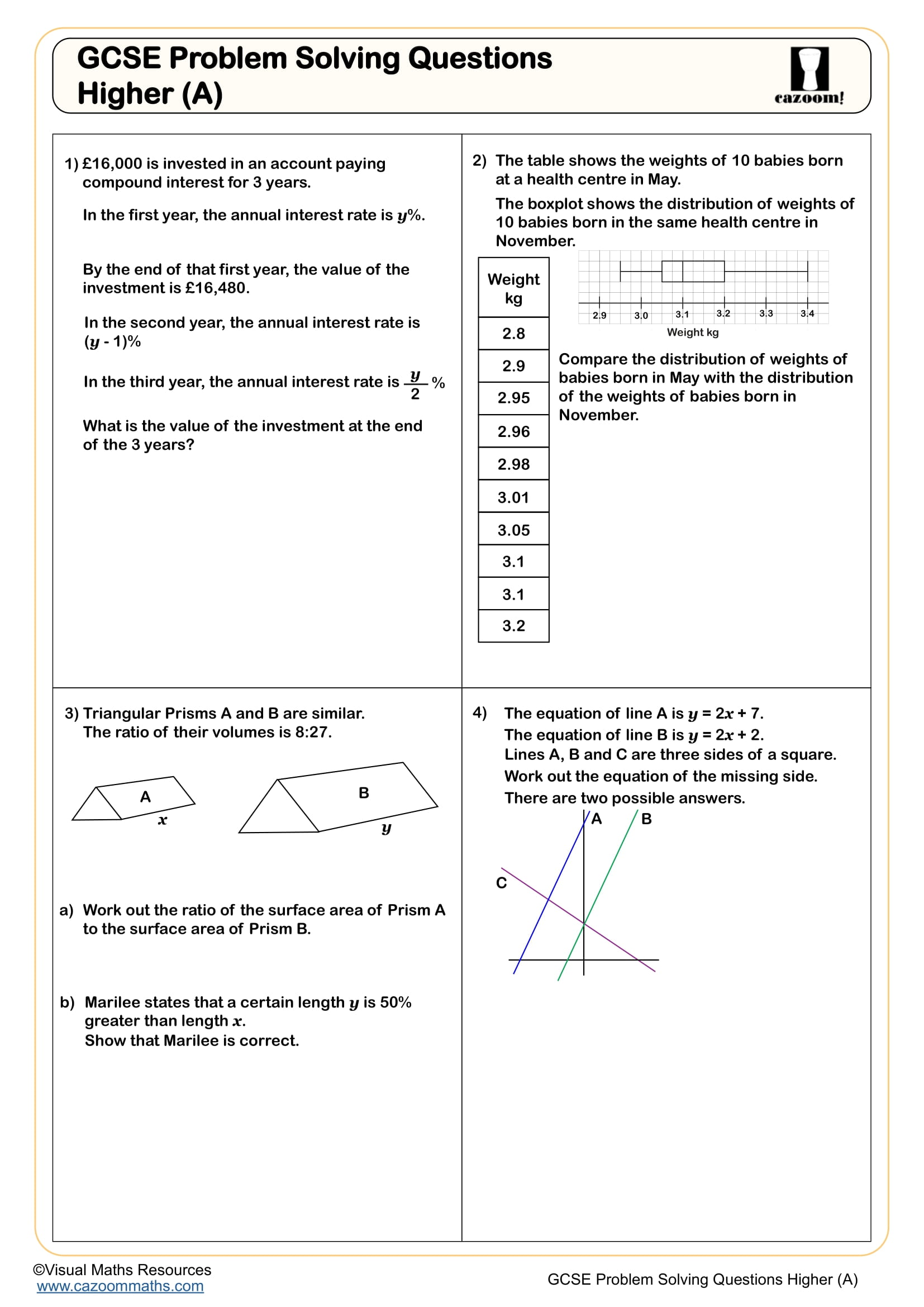
GCSE Problem Solving Questions Higher (A)
Target Grade: 6-7
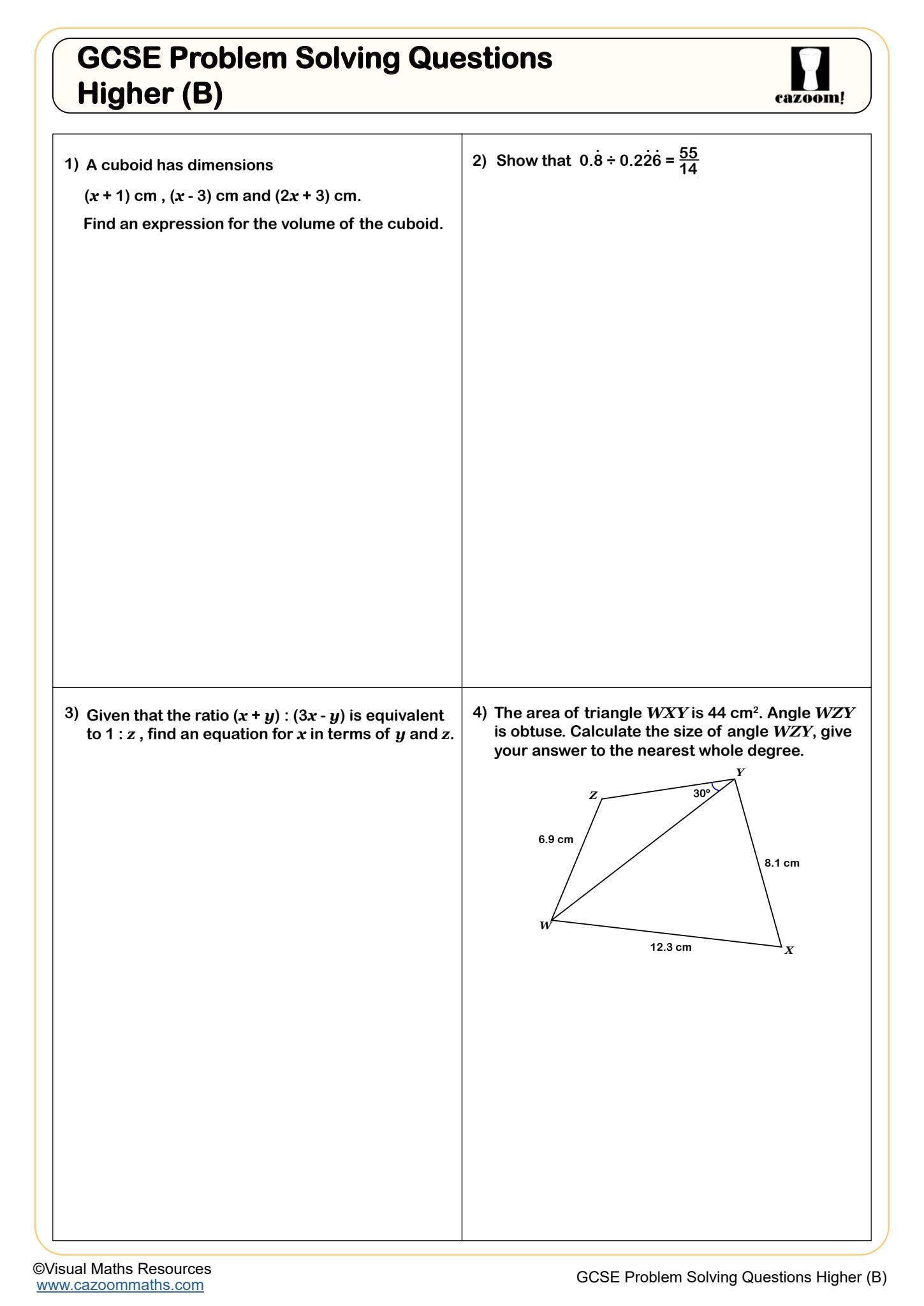
GCSE Problem Solving Questions Higher (B)
Target Grade: 6-7
GCSE Problem Solving Questions Higher (C)
Target Grade: 6-7
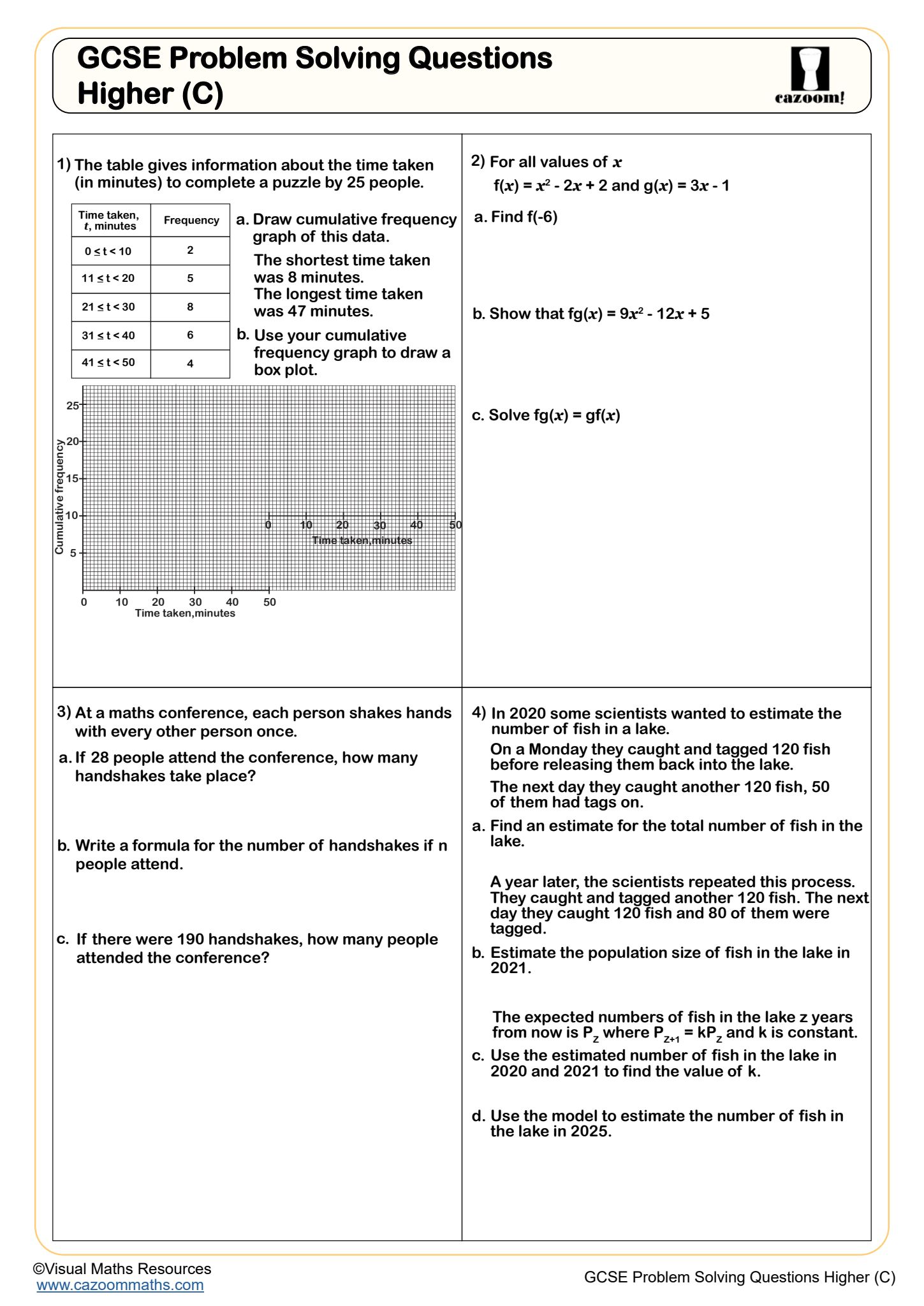
GCSE Problem Solving Questions Higher Plus (A)
Target Grade: 8-9
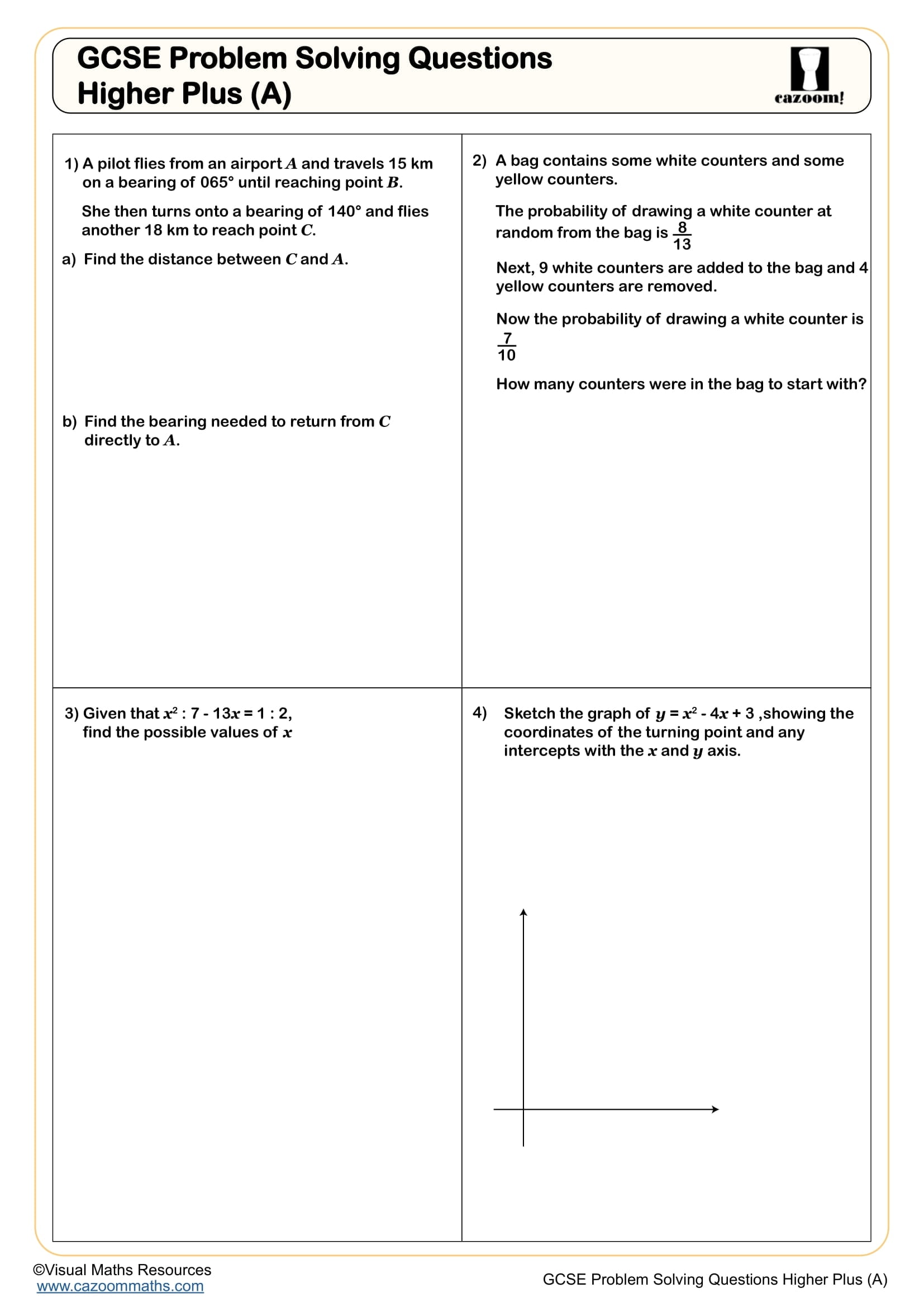
GCSE Problem Solving Questions Higher Plus (B)
Target Grade: 8-9
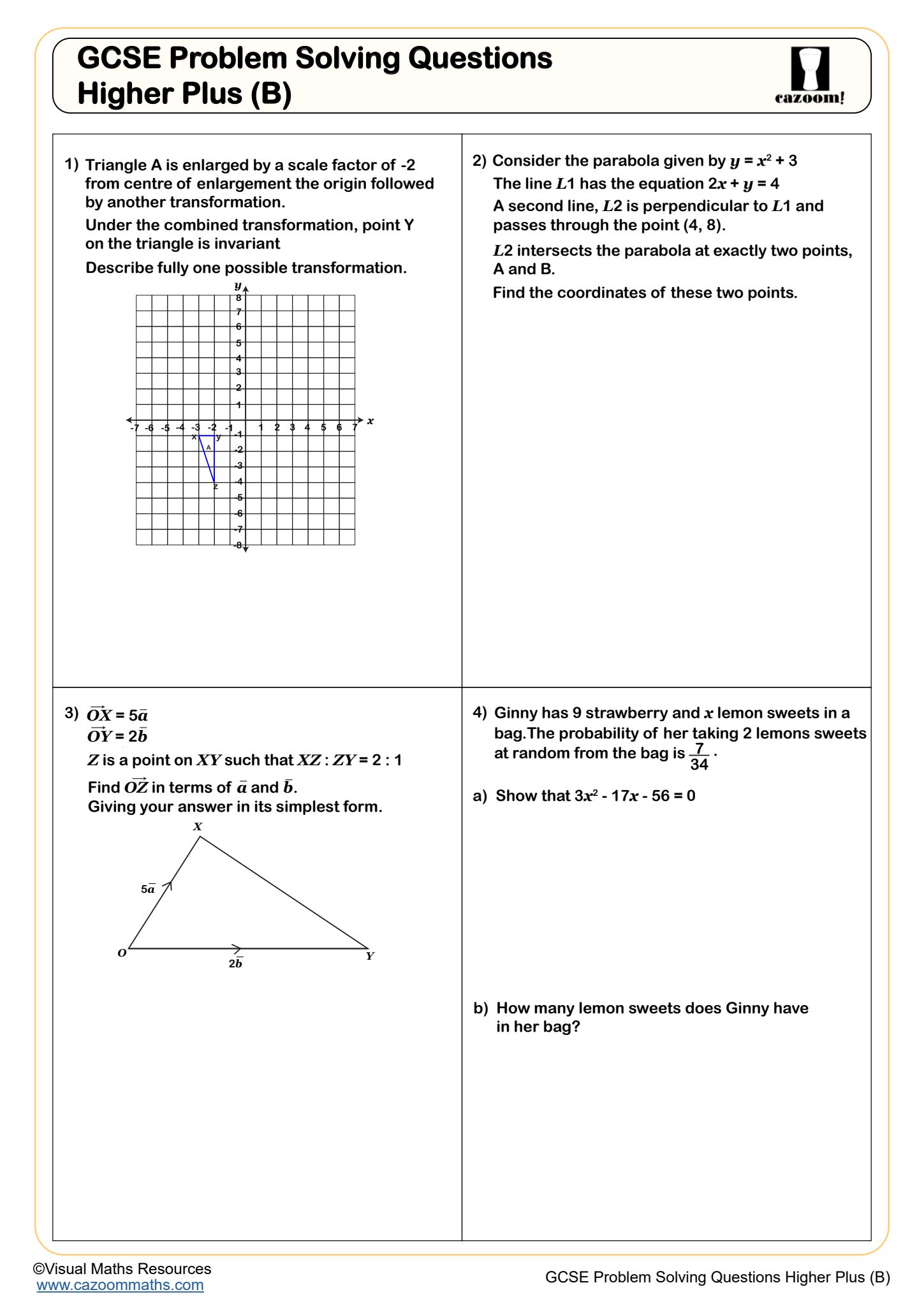
GCSE Problem Solving Questions Higher Plus (C)
Target Grade: 8-9
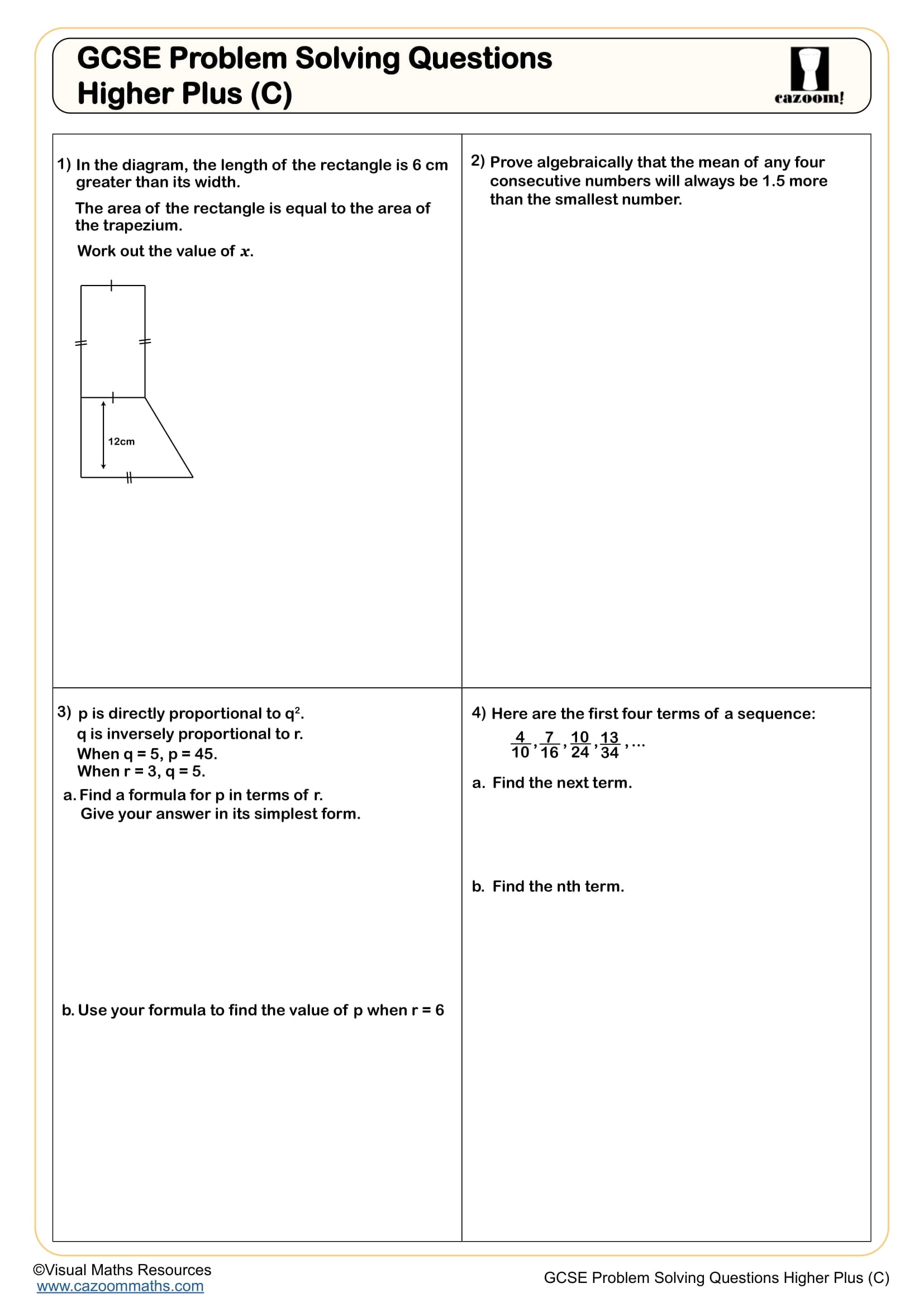
All worksheets are created by the team of experienced teachers at Cazoom Maths.
What Problem Solving questions appear on the GCSE Higher paper?
Higher papers embed problem solving across all topic areas rather than isolating it as a standalone section. Questions worth 4-6 marks typically require forming and solving equations from real-world contexts, proving geometric relationships, or interpreting graphs with multiple variables. Grade 7-9 questions often combine topics unexpectedly, such as ratio within algebraic contexts or reverse percentage calculations involving surds.
Students lose marks by rushing to calculations without defining variables or stating assumptions clearly. Exam mark schemes reward systematic approaches, awarding method marks even when final answers contain arithmetic slips. Teachers notice that students who annotate diagrams and write brief justifications consistently score higher than those presenting bare calculations.
What grade are Problem Solving questions on Higher GCSE maths?
Problem solving spans grades 4-9 on Higher papers, with grade 4-5 questions testing straightforward applications like forming single equations or interpreting data from tables. Grade 6-7 problems demand multi-step reasoning, perhaps combining percentages with algebra or requiring iterative approaches. Grade 8-9 questions involve proof, generalisation, or problems with minimal scaffolding where students must determine their own strategy.
Targeting revision by grade band helps students build confidence systematically. Working through grade 6-7 worksheets first secures foundational problem-solving techniques before tackling Higher Plus materials. Teachers often suggest students attempt questions one grade above their current working level to identify gaps without becoming discouraged by questions significantly beyond reach.
How is Problem Solving tested differently on Higher compared to Foundation?
Foundation problem solving focuses on single-step applications with clear signposting, such as calculating best value or interpreting straightforward graphs. Higher papers remove scaffolding, expecting students to recognise which mathematical tools apply without explicit prompts. Questions combine topics fluidly, demanding algebraic fluency where Foundation might use arithmetic, and requiring justifications rather than accepting bare answers.
This difference matters because Higher students must develop mathematical independence. They need to translate ambiguous scenarios into equations, select appropriate methods from their full toolkit, and communicate reasoning precisely. Teachers observe that students transitioning from Foundation often struggle initially with the lack of explicit instruction within questions, requiring deliberate practice to develop this strategic thinking.
How should students revise Problem Solving for Higher GCSE maths?
Effective revision involves attempting problems untimed initially, focusing on identifying what mathematics each question requires before calculating. Students should annotate worksheets, noting which topic areas appear and where they needed to pause. Using answer sheets to check method rather than just final answers helps identify reasoning gaps. Progressing from Higher to Higher Plus worksheets builds stamina for grade 8-9 stretch questions.
Teachers can deploy these worksheets strategically throughout revision cycles. Setting mixed Higher worksheets as homework after covering multiple topics helps students practise selecting appropriate methods. In lessons, worked examples from Higher Plus materials demonstrate grade 8-9 standard reasoning before students attempt similar problems independently, making top grades feel achievable rather than abstract.