GCSE Higher Rounding Revision Worksheets
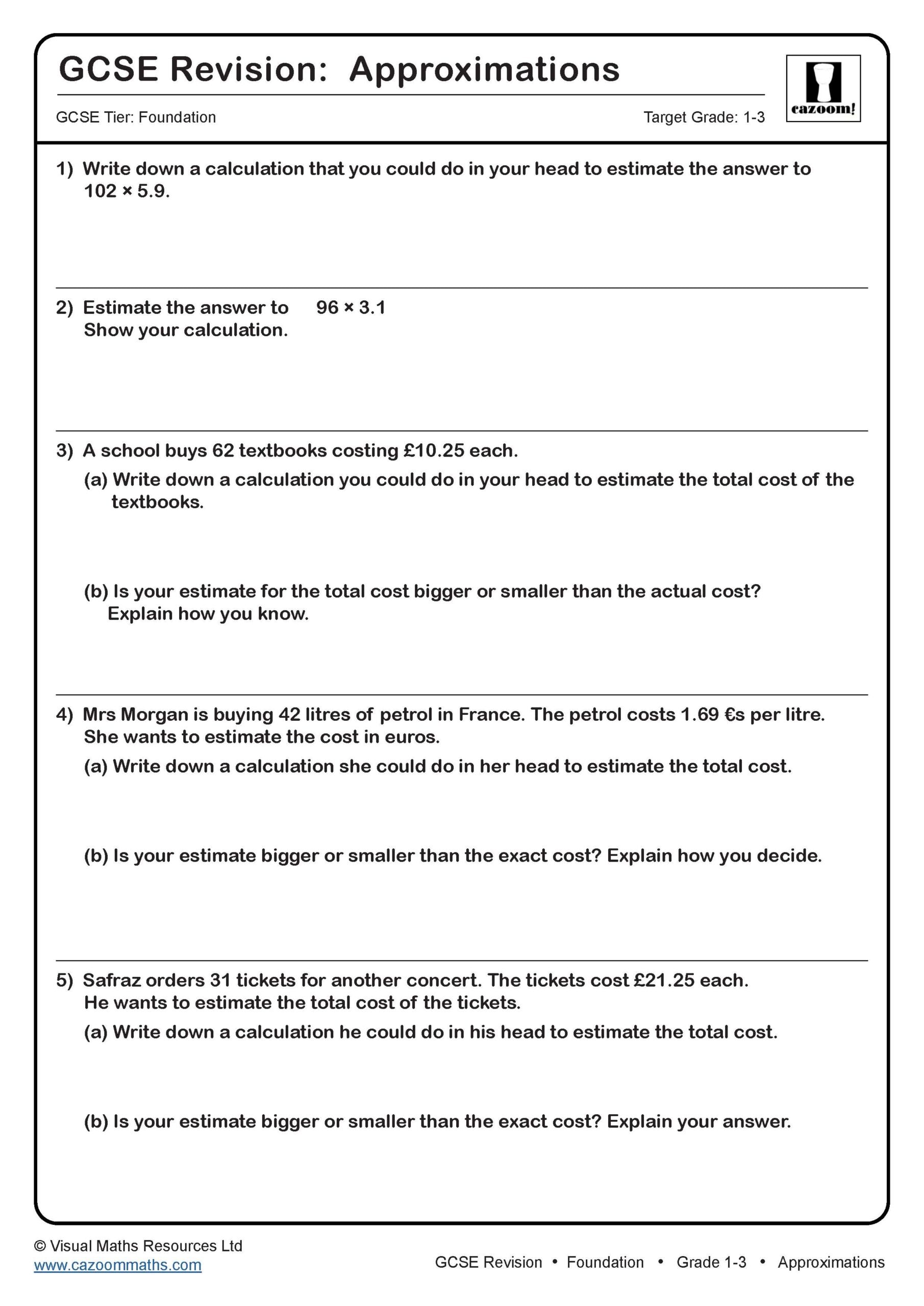
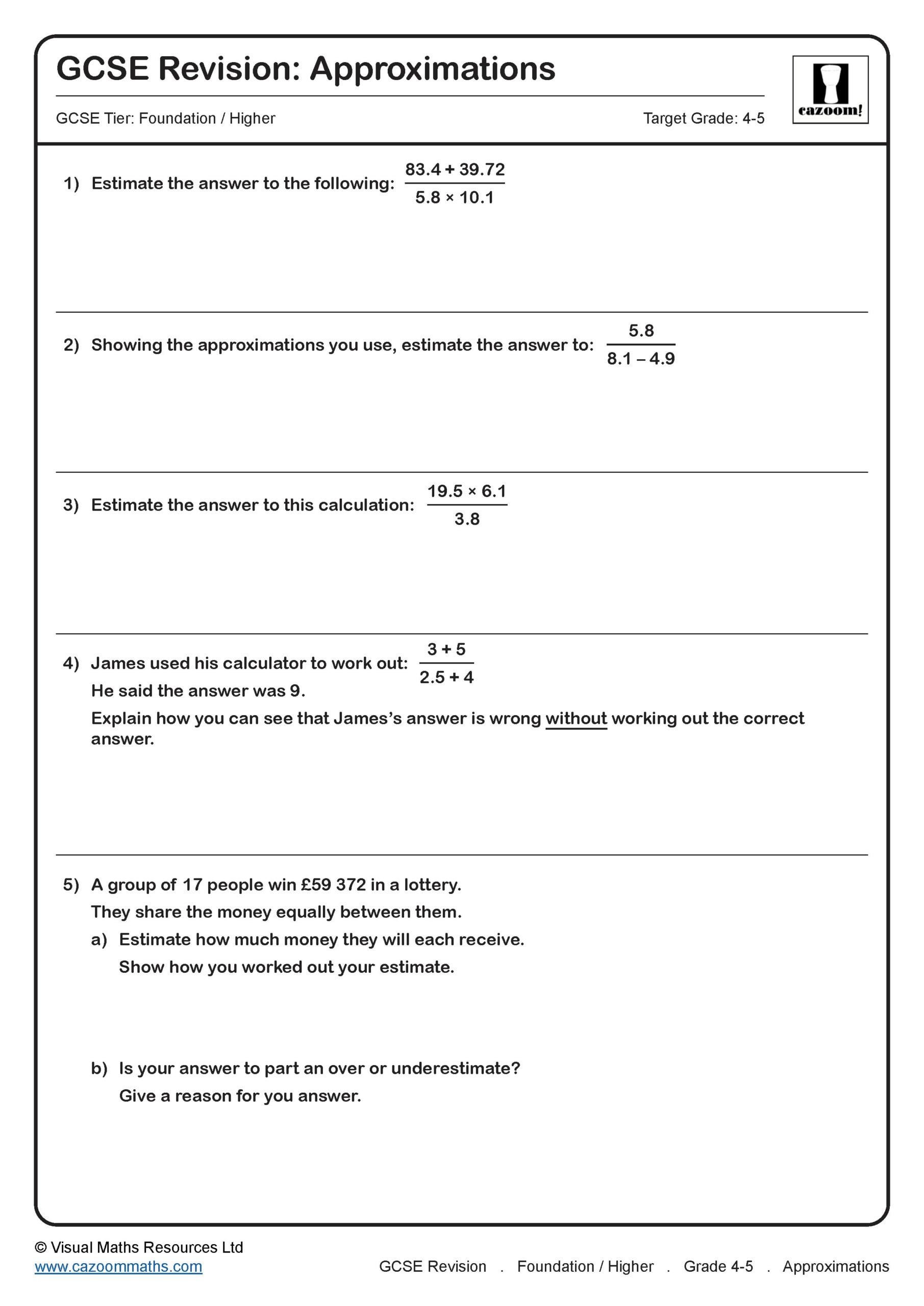
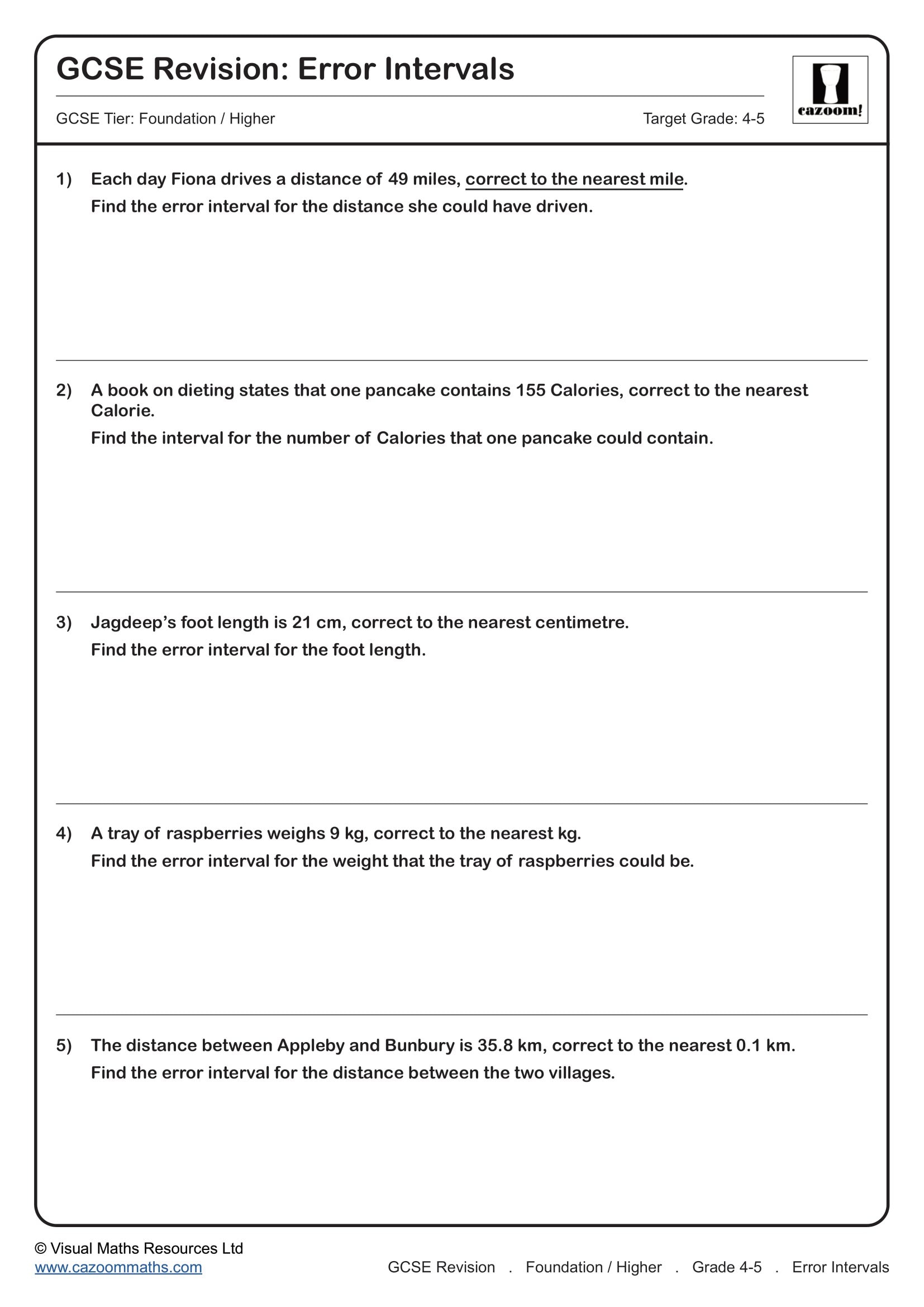
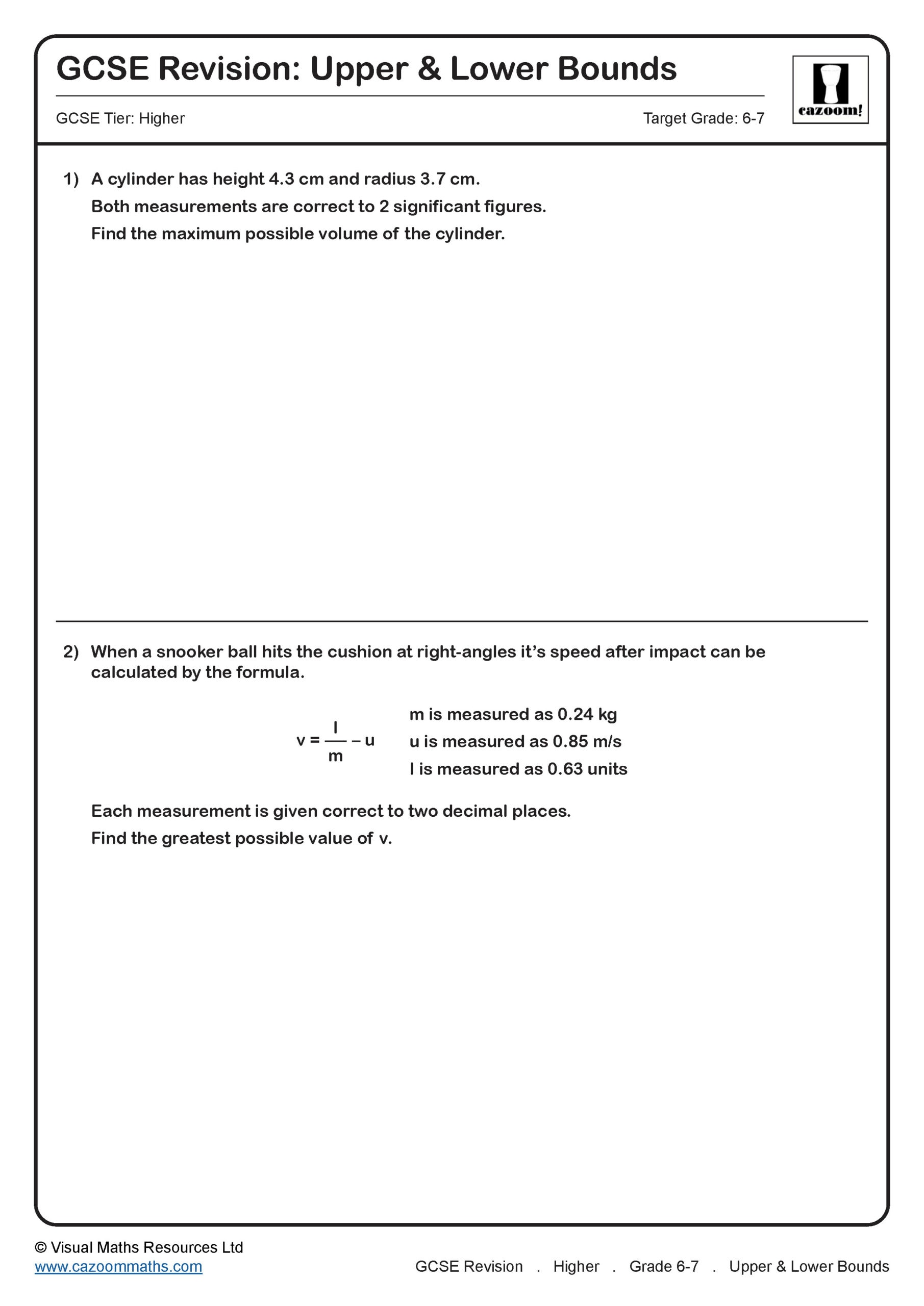
All worksheets are created by the team of experienced teachers at Cazoom Maths.
What Rounding questions appear on the GCSE Higher paper?
Higher papers typically include 4-6 marks on rounding across both papers. Questions range from straightforward decimal place or significant figure rounding (usually grade 4-5) to bounds questions worth 2-3 marks at grades 6-7. Multi-step problems might ask students to calculate the maximum possible area when dimensions are given to varying degrees of accuracy, or to use bounds within compound measures. Error interval notation appears regularly, requiring students to write inequalities rather than just stating upper and lower values.
Mark schemes penalise premature rounding heavily. Students who round mid-calculation before reaching a final answer lose accuracy marks, even if their method is sound. Examiners expect answers to at least one more degree of accuracy than requested until the final step, particularly in calculator papers where full calculator displays should be used throughout multi-stage calculations.
What grade are Rounding questions on Higher GCSE maths?
Basic rounding to decimal places or significant figures typically appears at grades 4-5 on Higher papers, often embedded within larger calculation questions. Error intervals and simple bounds problems sit around grades 5-6, whilst applying bounds to calculate maximum or minimum values in formulae stretches into grades 7-8. The most demanding questions, asking students to combine bounds with percentage error or to justify whether a calculation is valid given rounded measurements, target grades 8-9.
Students aiming for grade 7 or above should prioritise bounds work, as this distinguishes secure from exceptional understanding. Those targeting grades 5-6 benefit from consolidating significant figures and decimal place fluency before tackling error intervals. Working systematically through grade bands builds confidence and ensures foundational skills don't cost marks under exam pressure.
How is Rounding tested differently on Higher compared to Foundation?
Foundation papers focus on rounding to decimal places, significant figures and the nearest 10, 100 or 1000, usually as standalone skills. Higher papers assume this fluency and move to bounds work: students must identify error intervals, calculate using upper and lower bounds, and apply rounding within algebraic or geometric contexts. Whilst Foundation might ask students to round 47.385 to two decimal places, Higher asks them to find the maximum possible perimeter when each side length is given to one decimal place.
This shift matters because Higher students must understand rounding as a source of uncertainty in calculations, not just a number skill. Questions require recognising that measurements are inexact and using inequality notation accurately. Students comfortable with Foundation-style rounding often struggle initially with bounds because the conceptual demand increases: they're reasoning about ranges of possible values rather than performing a mechanical process.
How should students revise Rounding for Higher GCSE maths?
Students should begin by confirming fluency with decimal places and significant figures under timed conditions, aiming for accuracy within 30 seconds per question. Once secure, move to error interval notation, practising writing inequalities for rounded values before attempting bounds calculations. Work through multi-step problems methodically, writing out upper and lower bounds separately and checking which combination gives maximum or minimum results. Use the answer sheets to identify whether errors stem from misunderstanding bounds or from arithmetic slips during calculation.
Teachers can set these worksheets as retrieval practice starters, spacing rounding questions across a term to maintain fluency. Alternatively, use them for targeted intervention with students whose mock papers reveal bounds weaknesses. Setting homework that mixes straightforward rounding with bounds problems mirrors exam paper structure and helps students recognise question types quickly, reducing time lost during actual examinations.