GCSE Higher Solving Equations Revision Worksheets
Forming and Solivng Equations with Shape
Target Grade: 4-5
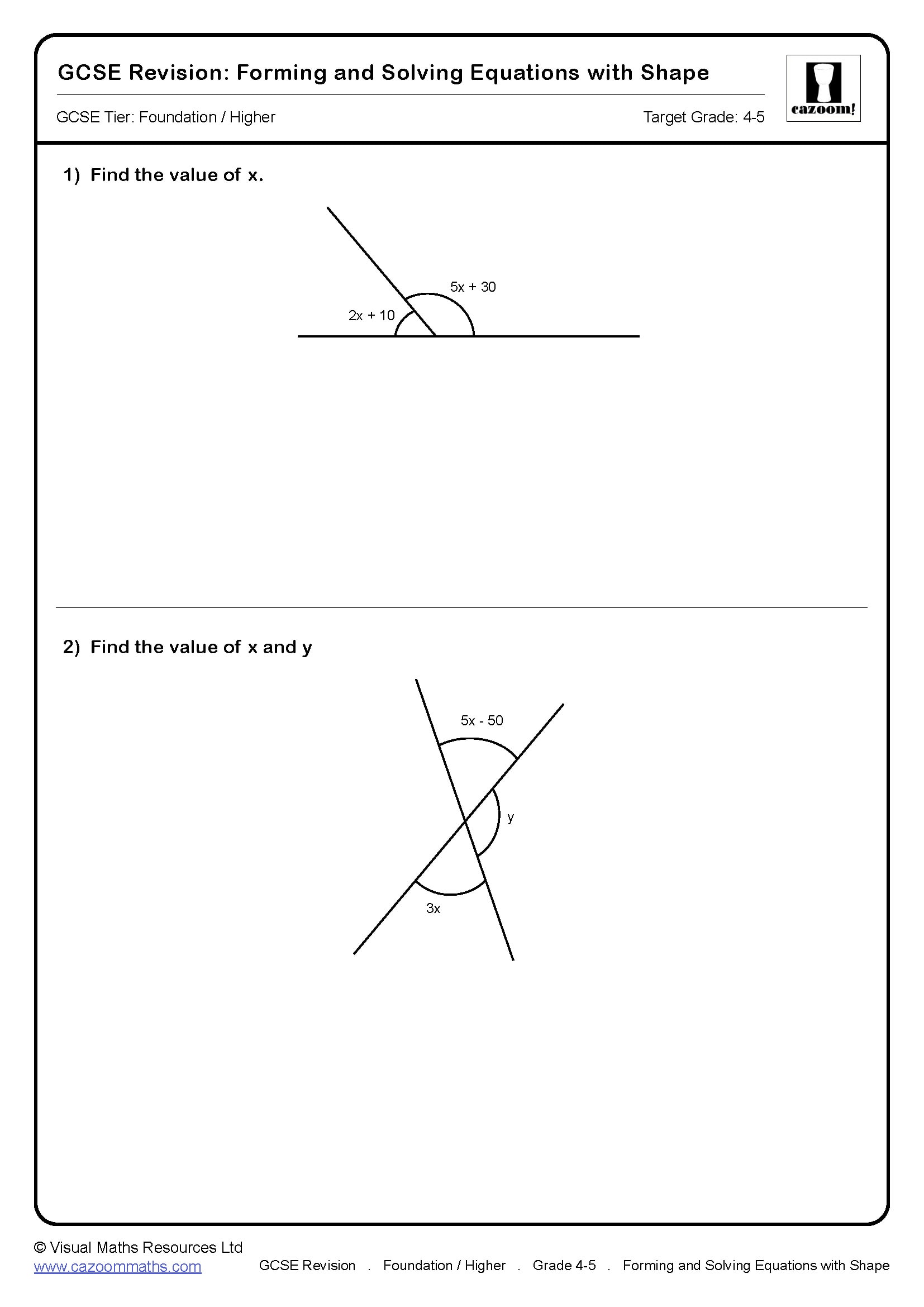
Forming and Solving Equations
Target Grade: 4-5
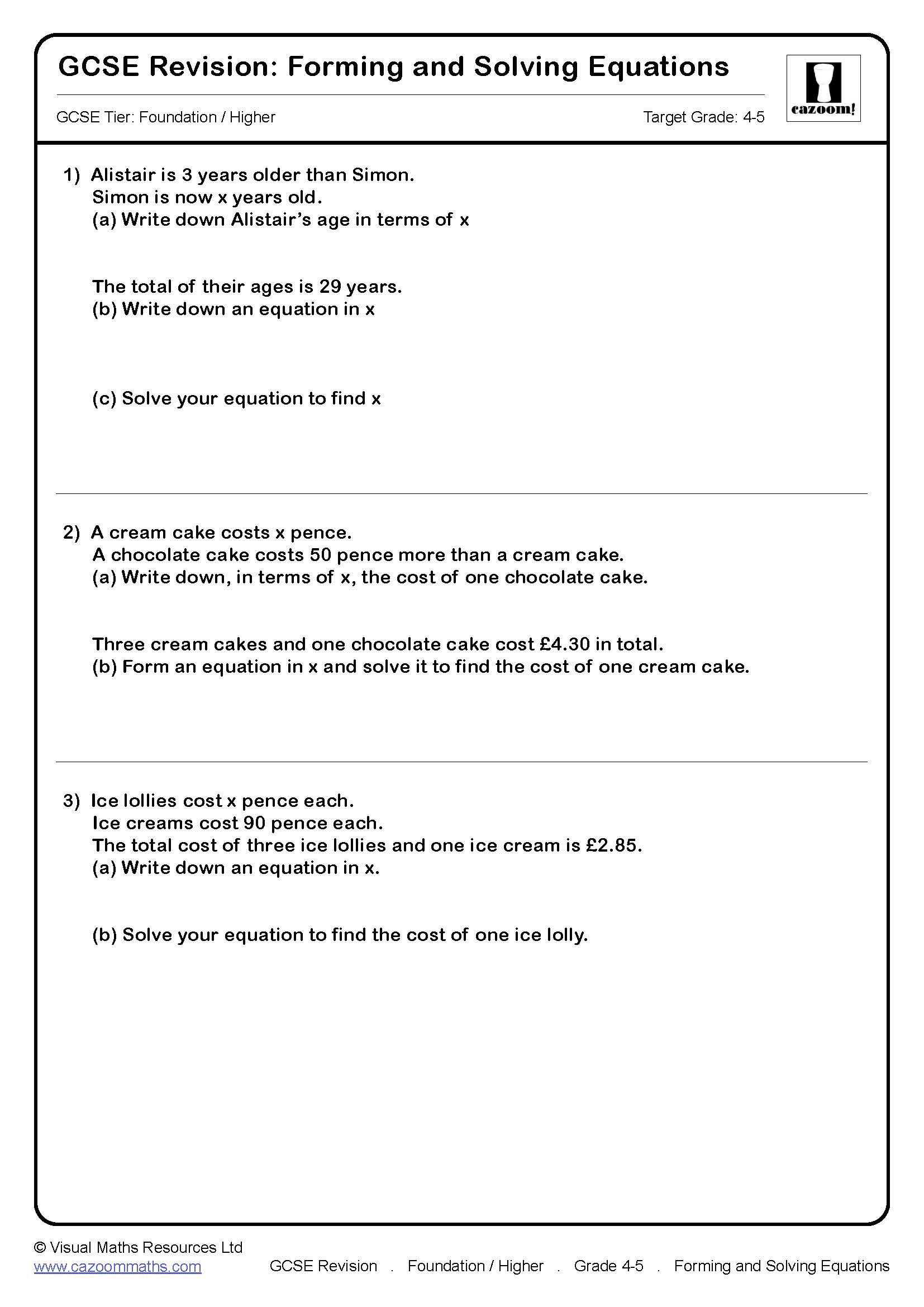
Solving Equations with Brackets and Unknowns on both sides
Target Grade: 4-5
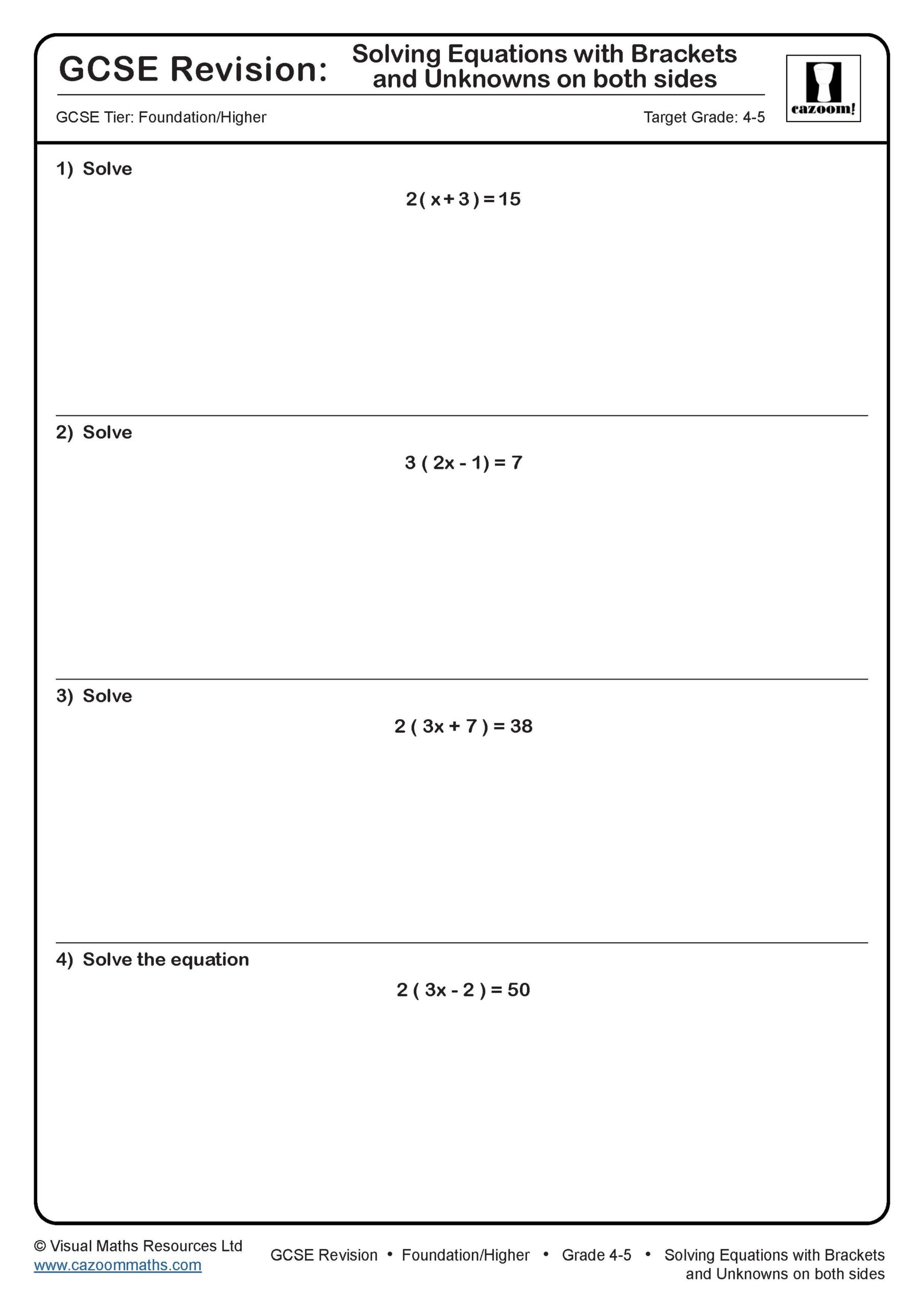
Solving Quadratic Equations by Factorising
Target Grade: 4-5
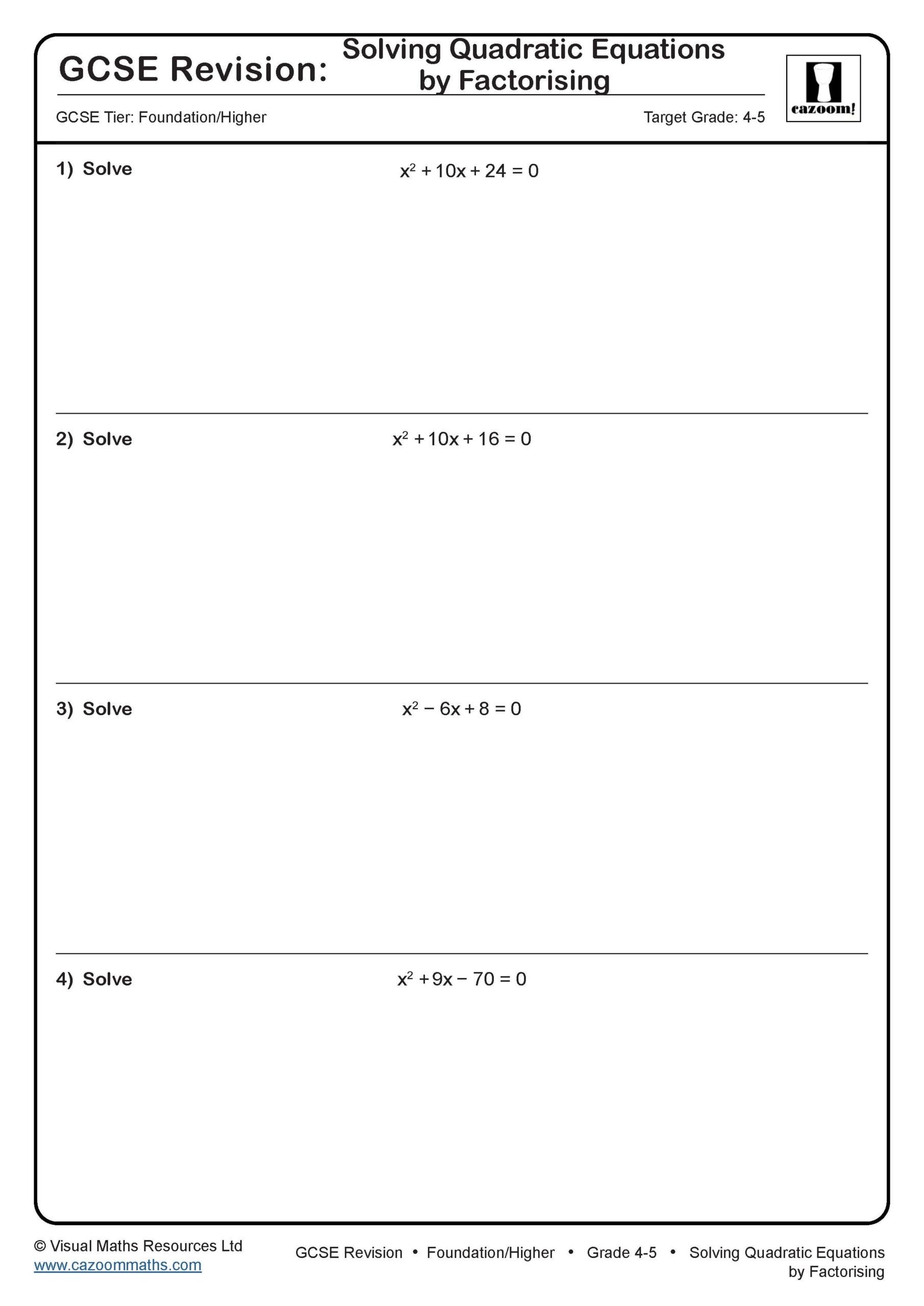
Solving Simultaneous Equations
Target Grade: 4-5
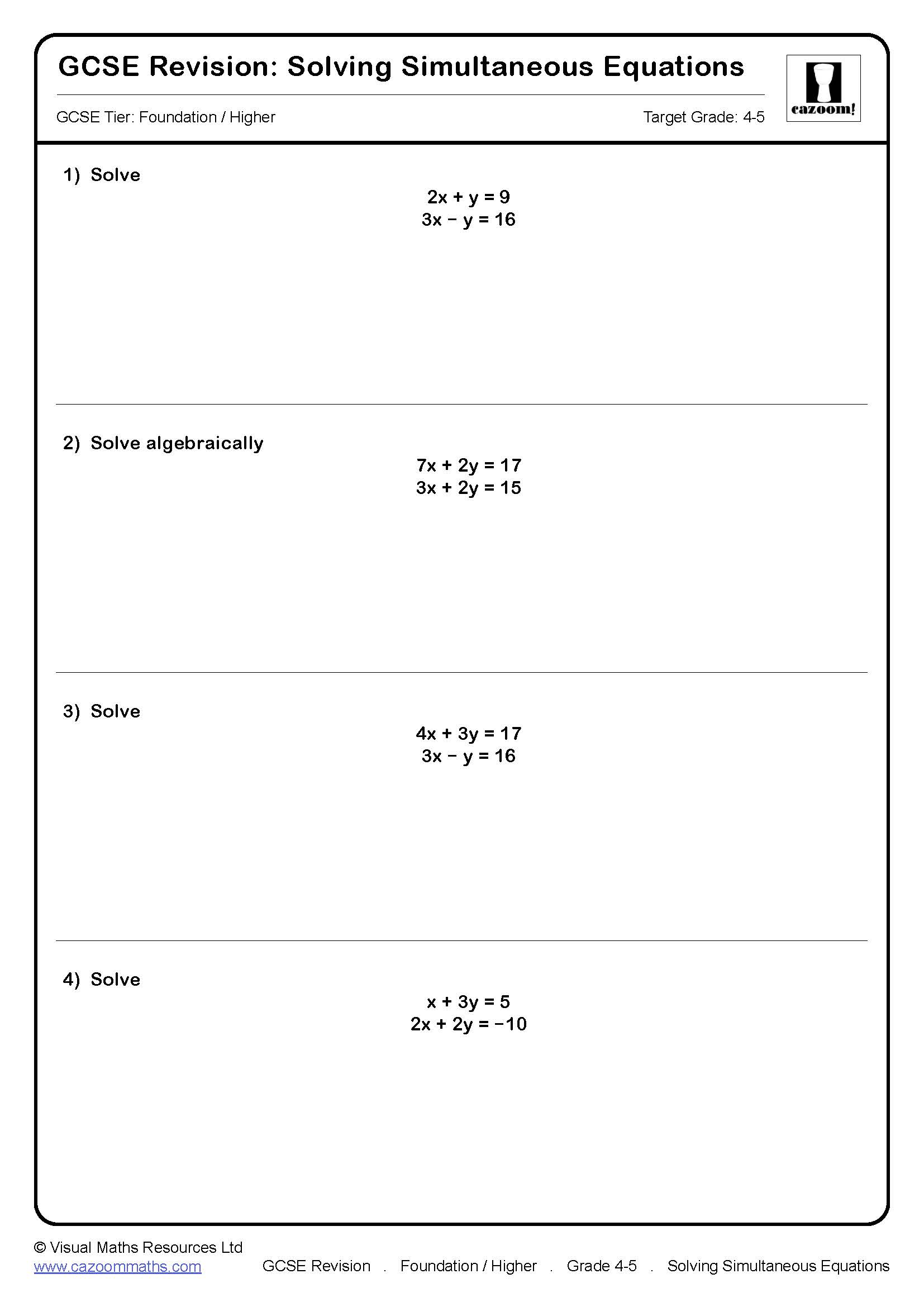
Solving Simultaneous Equations Graphically
Target Grade: 4-5
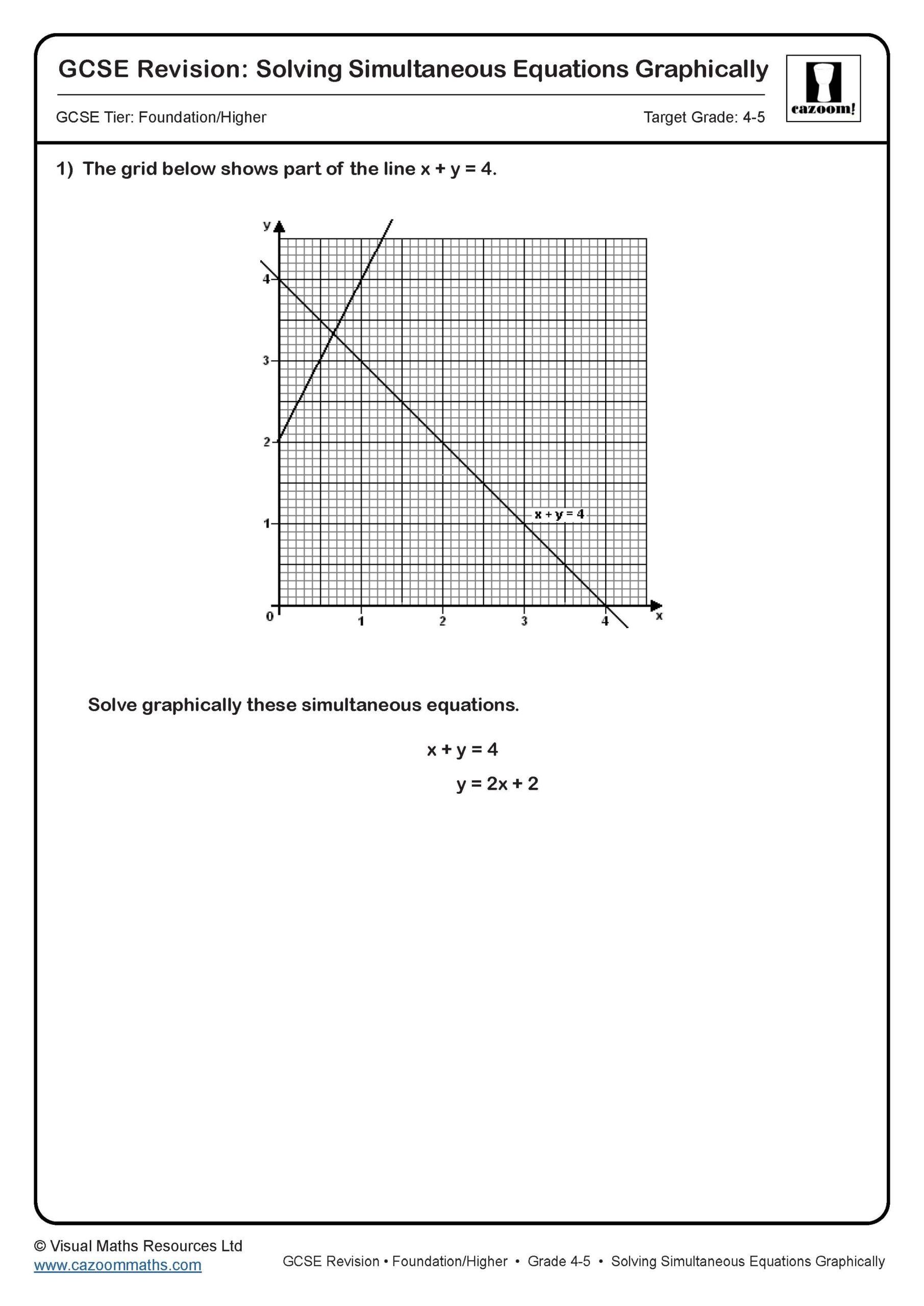
Solving Quadratic Equations by Factorising (B)
Target Grade: 6-7
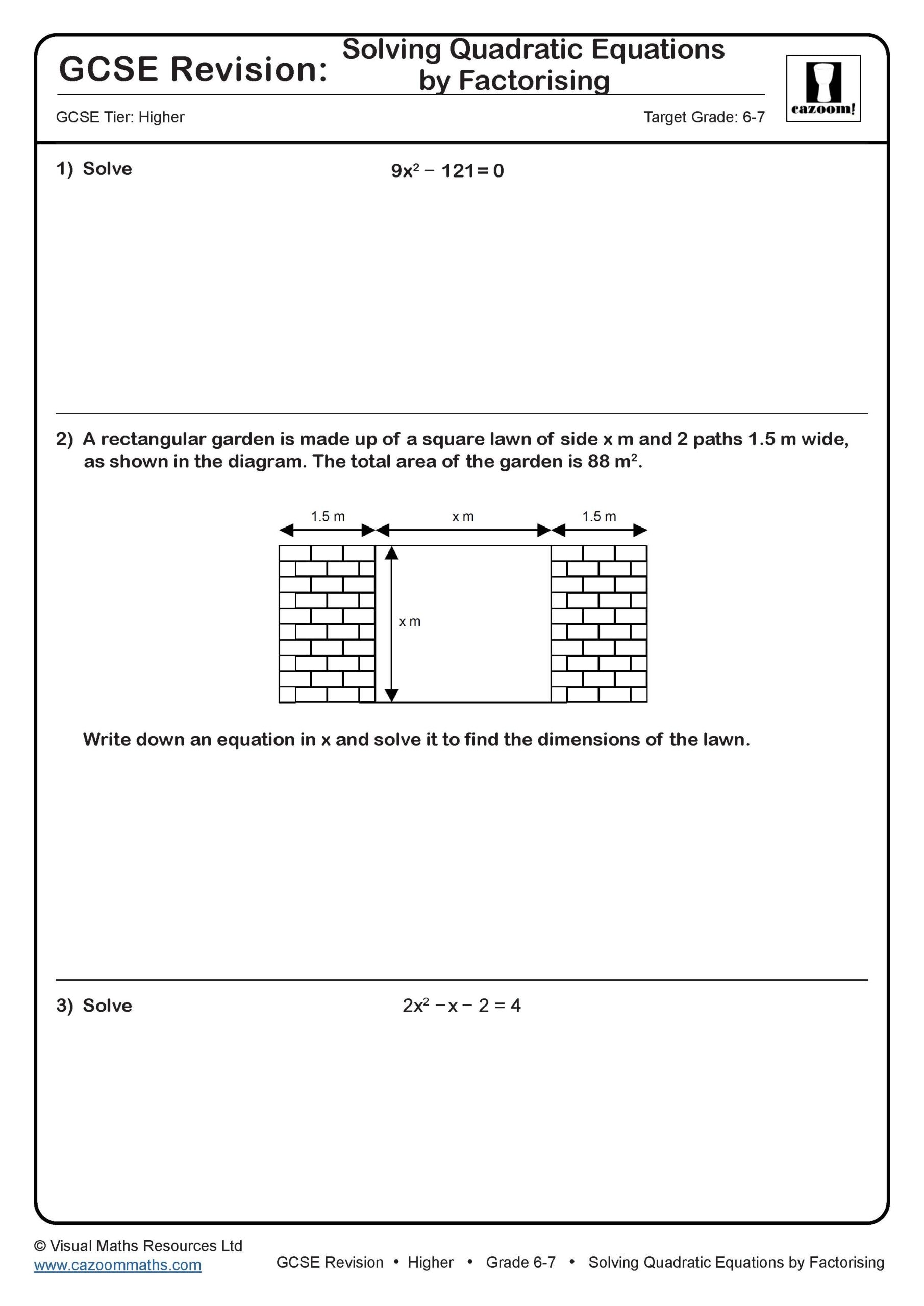
Solving Simultaneous Equations Graphically (B)
Target Grade: 6-7
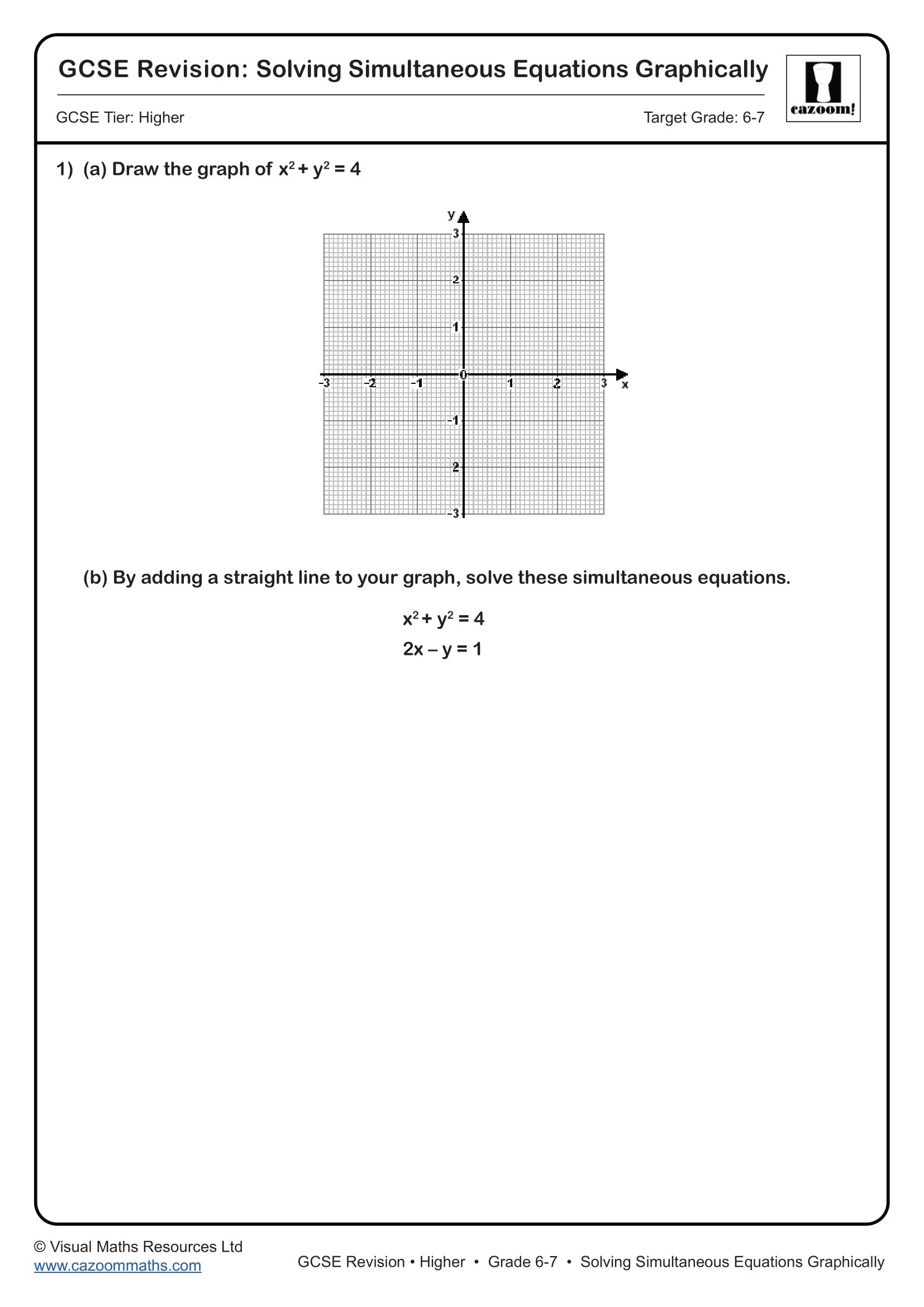
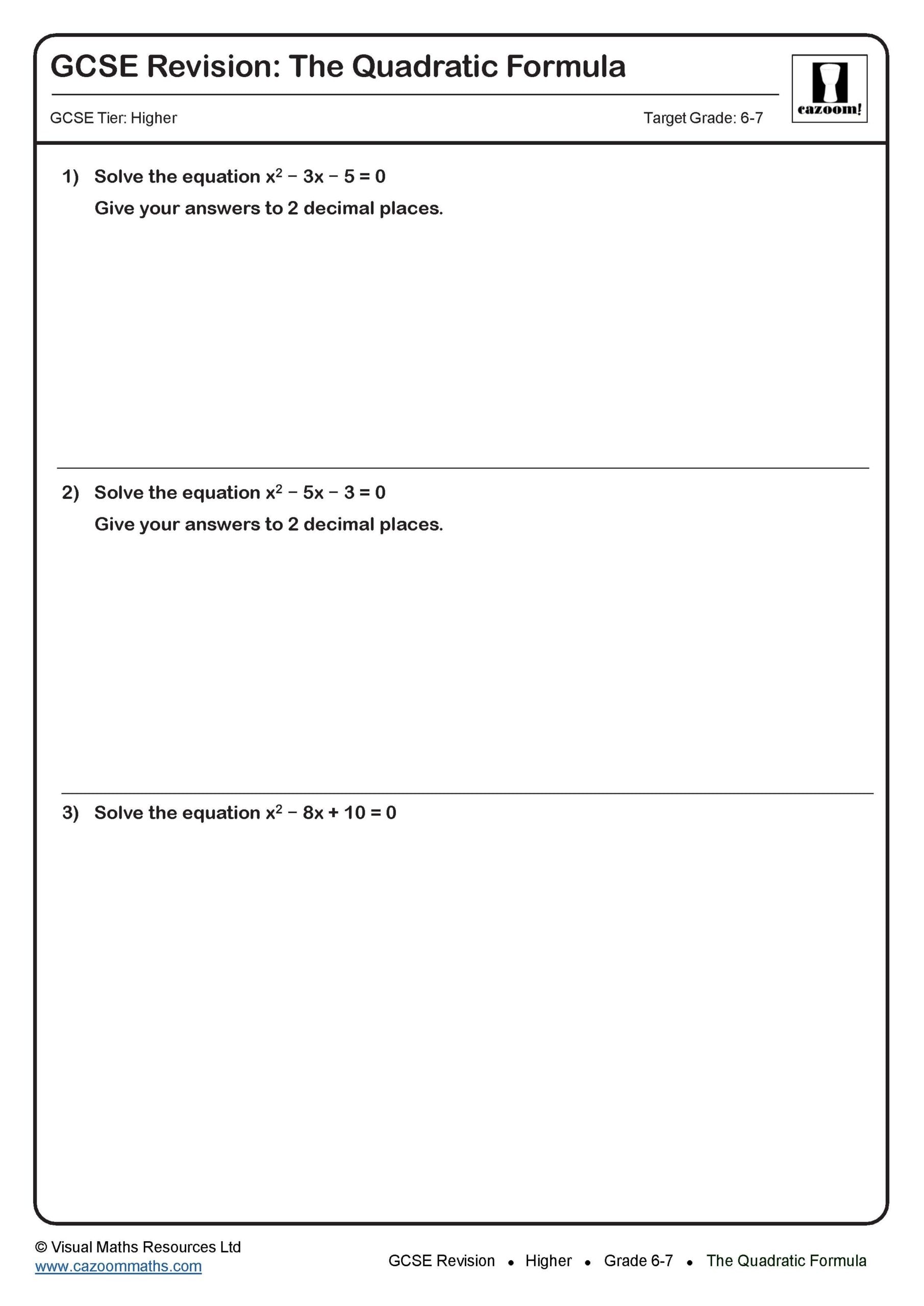
The Quadratic Formula
Target Grade: 6-7
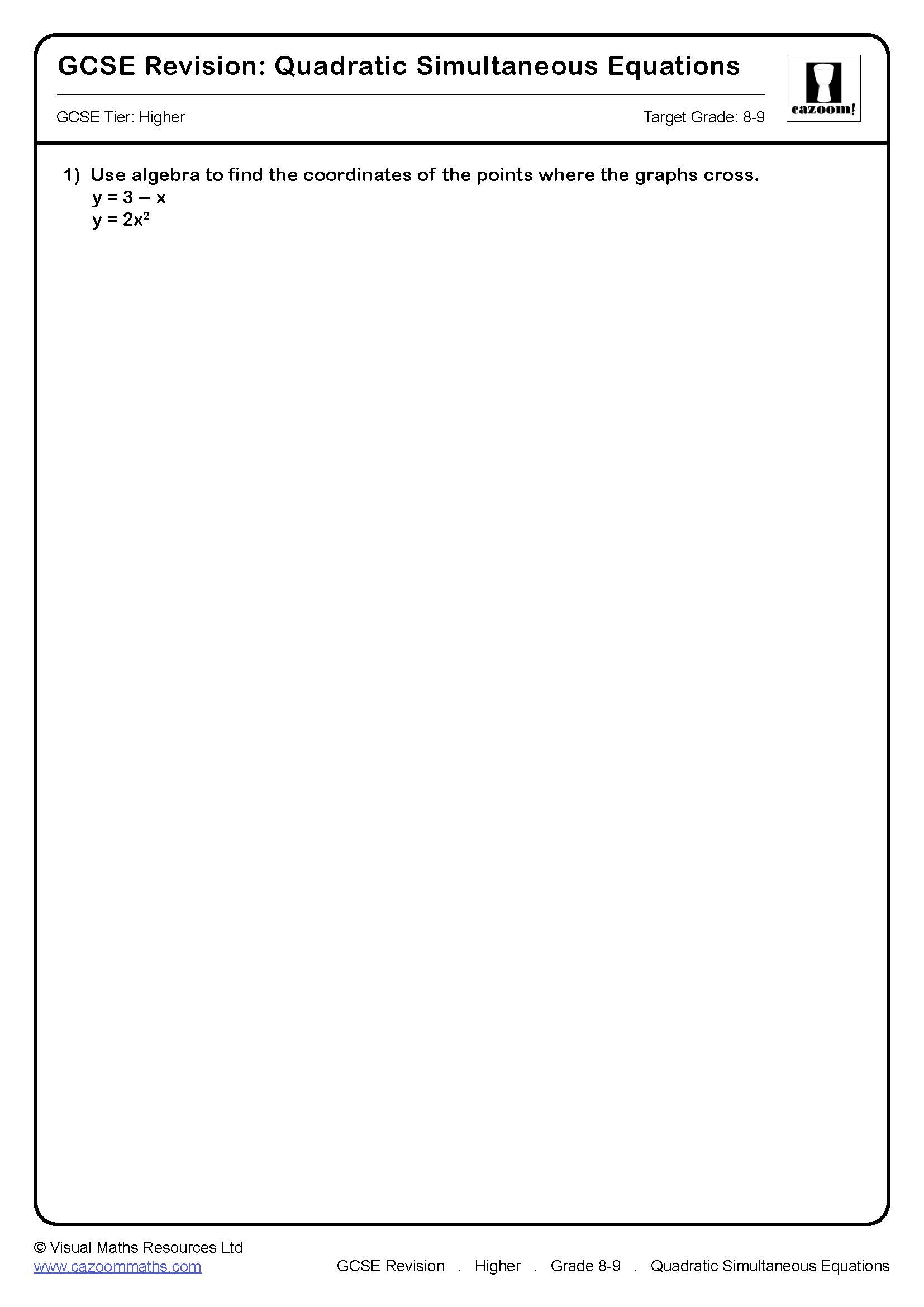
Quadratic Simultaneous Equations
Target Grade: 8-9
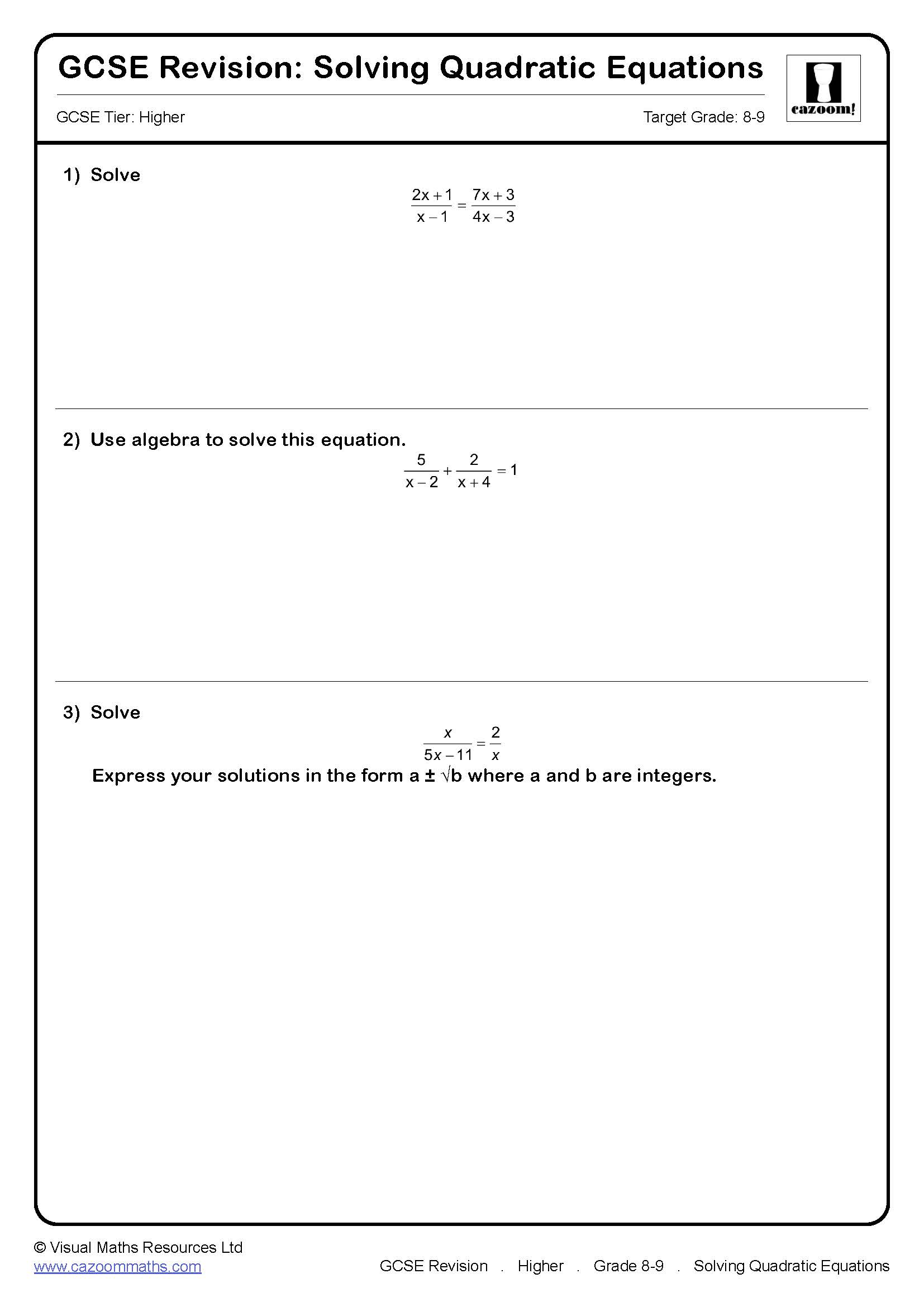
Solving Quadratic Equations
Target Grade: 8-9
All worksheets are created by the team of experienced teachers at Cazoom Maths.
What Solving Equations questions appear on the GCSE Higher paper?
Higher papers typically include around four to six equations questions worth between 10 and 15 marks in total. Students face linear equations with brackets and fractions, equations with unknowns on both sides, and quadratic equations requiring factorisation or the quadratic formula. Grade 7-9 questions introduce equations with algebraic fractions, forming and solving from contexts, and occasionally equations requiring substitution or rearrangement before solving. Simultaneous equations also appear, linking this topic to problem-solving across algebra.
Exam mark schemes penalise students who skip intermediate steps in algebraic fractions. Teachers frequently see marks lost when students fail to multiply every term by the common denominator or don't show clear rearrangement stages. Writing each step visibly matters, particularly when equations involve negative coefficients or fractional solutions that require verification.
What grade are Solving Equations questions on Higher GCSE maths?
Grades 4-5 questions on Higher papers involve straightforward linear equations with brackets or fractions, often worth two or three marks each. Grade 6 questions require solving equations with unknowns on both sides and simple quadratic equations through factorisation. Grades 7-8 questions introduce algebraic fractions, equations requiring substitution into formulas, and multi-step rearrangements before solving. Grade 9 questions combine several techniques, such as forming equations from geometric contexts or solving complex rational equations that demand careful algebraic manipulation.
Students aiming for grade 7 or above should focus revision on algebraic fractions and forming equations from worded contexts, as these consistently challenge even confident mathematicians. Those targeting grades 5-6 benefit from securing accuracy with brackets and fractional coefficients before attempting harder examples, building fluency through repeated practice across grade bands.
How is Solving Equations tested differently on Higher compared to Foundation?
Foundation tier equations rarely extend beyond simple linear examples with one or two steps, avoiding algebraic fractions entirely. Higher papers assume fluency with these basics and immediately progress to equations with unknowns appearing multiple times, fractional coefficients, and denominators containing variables. Quadratic equations on Foundation typically involve straightforward factorisation, whilst Higher demands recognition of when to apply the formula, complete the square, or rearrange into standard form first. Simultaneous equations also appear more frequently at Higher, often embedded within problem-solving contexts.
This increased complexity at Higher tier develops algebraic reasoning essential for A Level mathematics. Students must recognise underlying structures quickly and select appropriate methods confidently. Teachers notice that Higher candidates who struggle with equations often lack automaticity in manipulating algebraic fractions or fail to check solutions in original equations, skills rarely tested rigorously at Foundation level.
How should students revise Solving Equations for Higher GCSE maths?
Effective revision involves working systematically through worksheets organised by question type and difficulty. Students should begin with linear equations to confirm fluency, then progress to quadratics, simultaneous equations, and algebraic fractions. Timed practice helps build speed, whilst checking answers against complete worked solutions reveals recurring errors in method or algebraic manipulation. Teachers observe that students benefit from annotating mistakes, particularly sign errors or missed steps when clearing fractions, creating personalised revision notes from incorrect attempts.
Teachers can set differentiated homework using these worksheets, assigning grade-appropriate questions to target individual student gaps. In lessons, selected questions make excellent starter activities or assessment points before moving to problem-solving contexts. The included answer sheets allow students to self-mark during independent study, developing the habit of checking algebraic work rigorously before considering solutions finalised.