GCSE Higher Volume and Surface Area Revision Worksheets
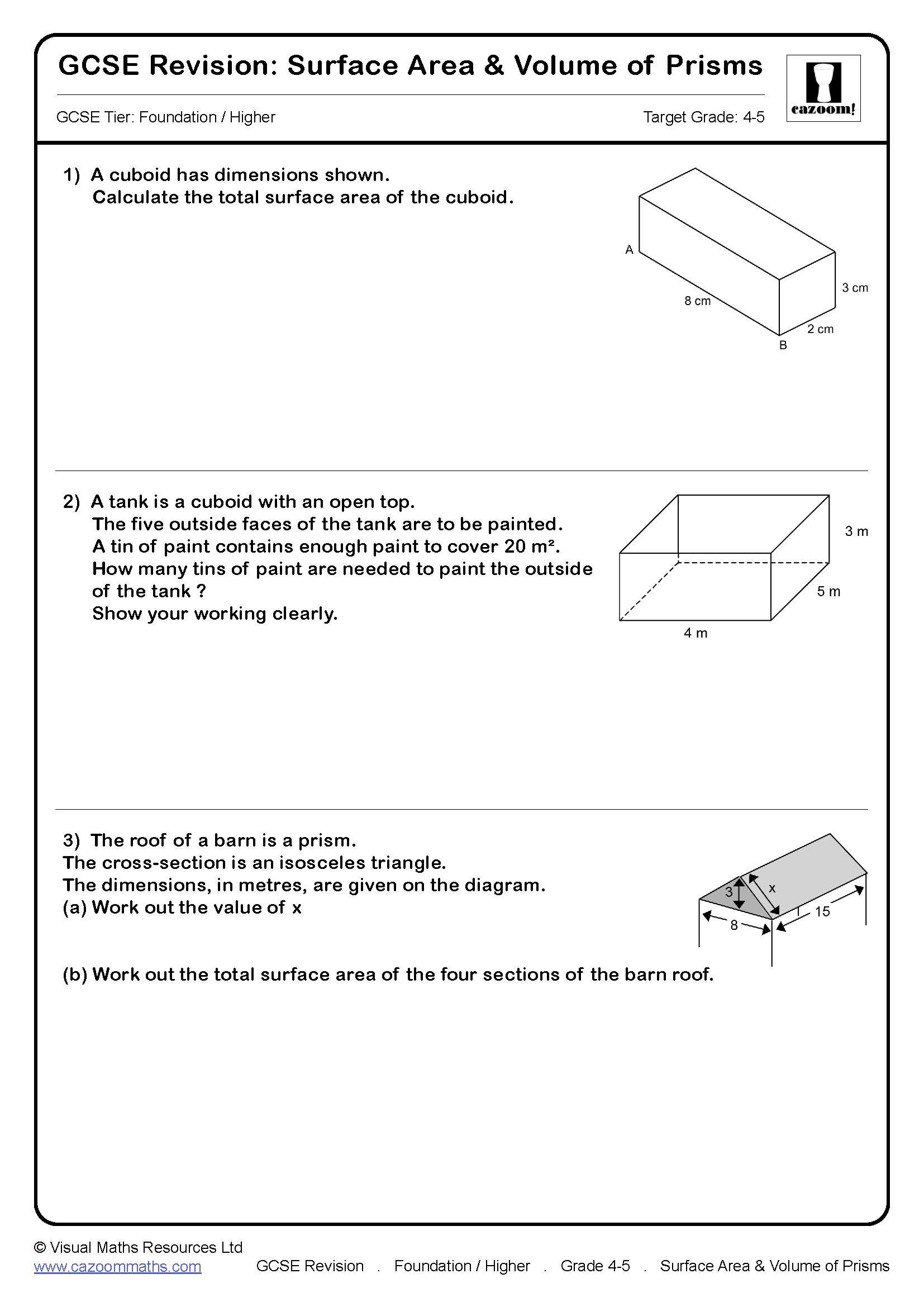
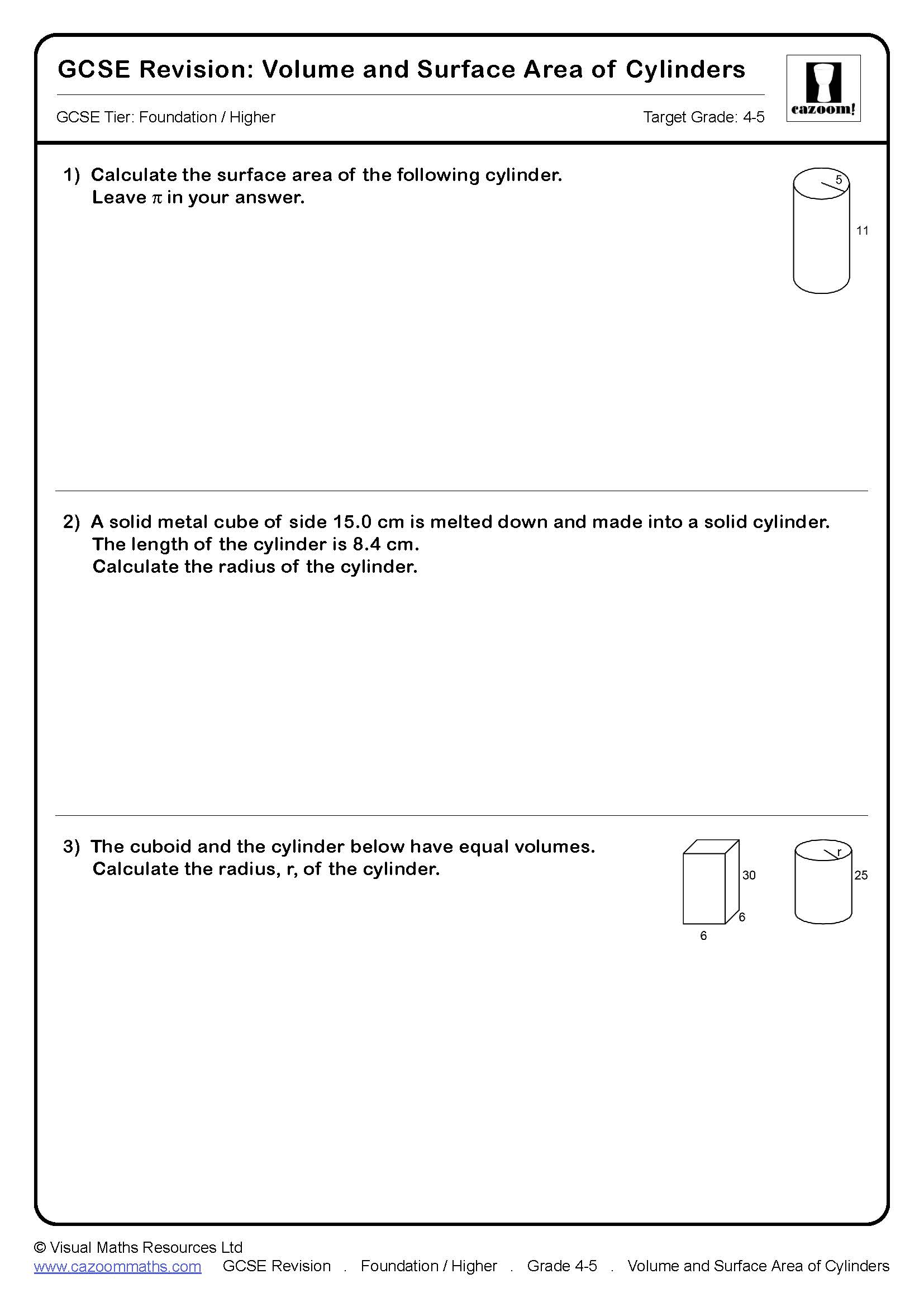
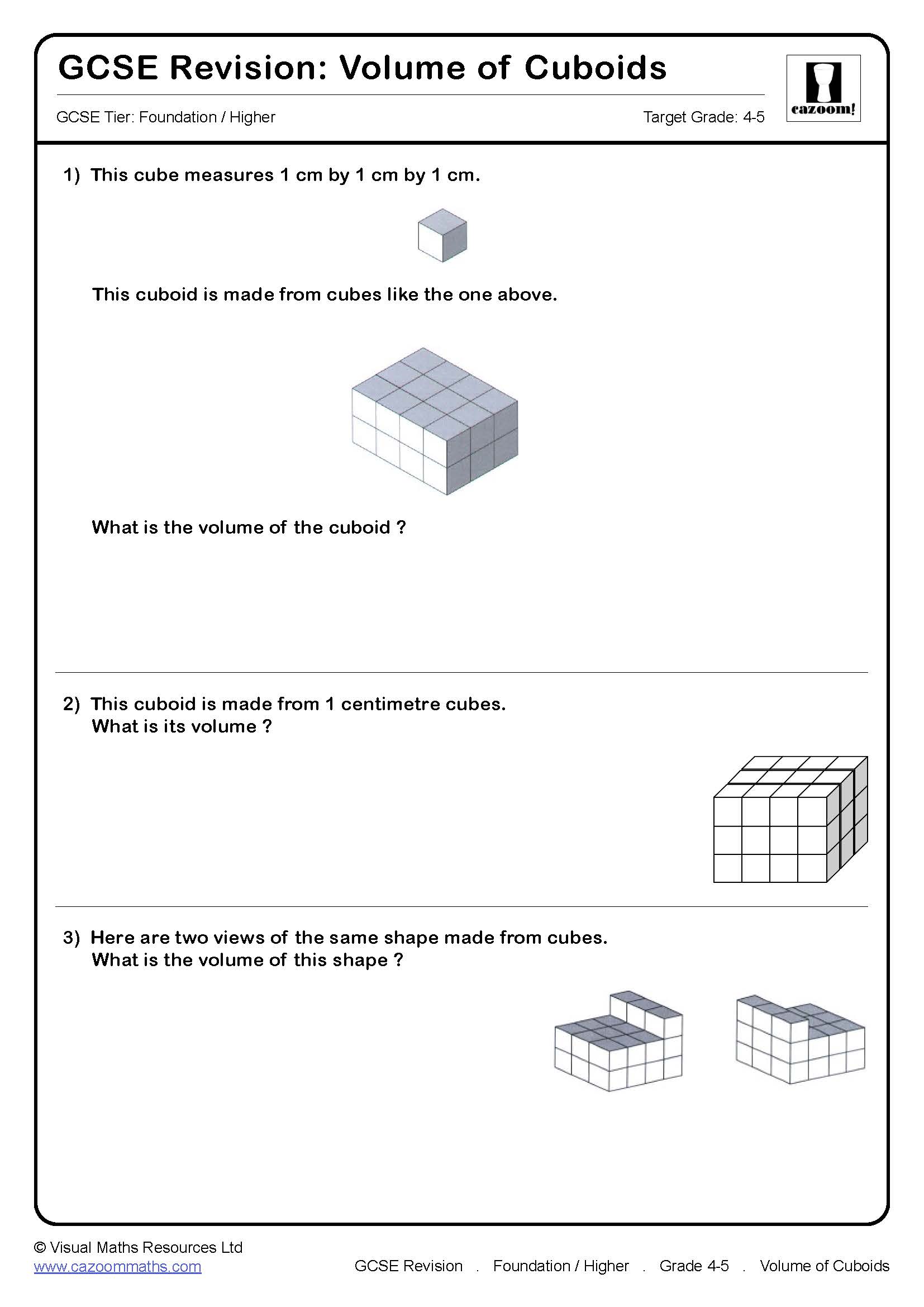
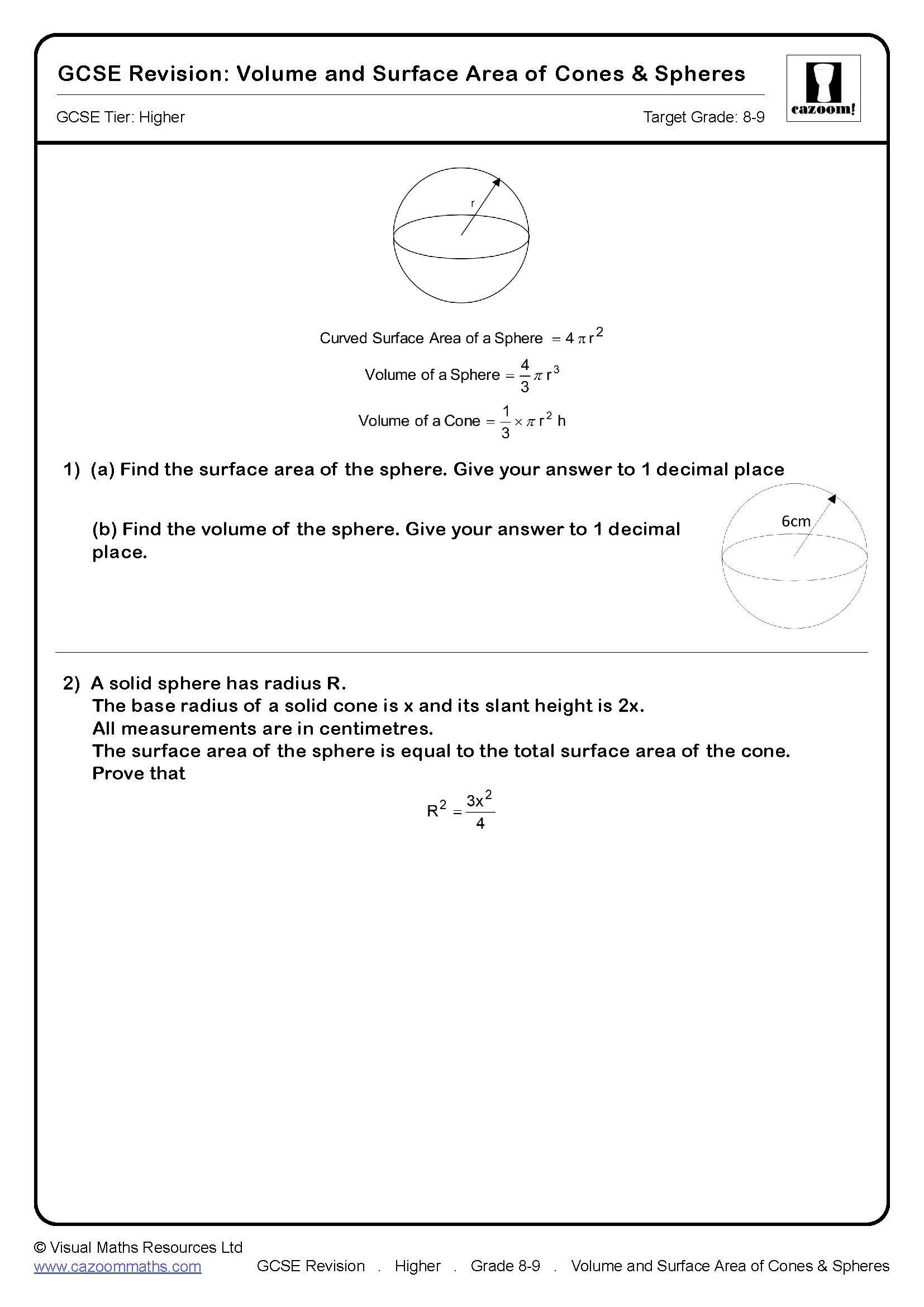
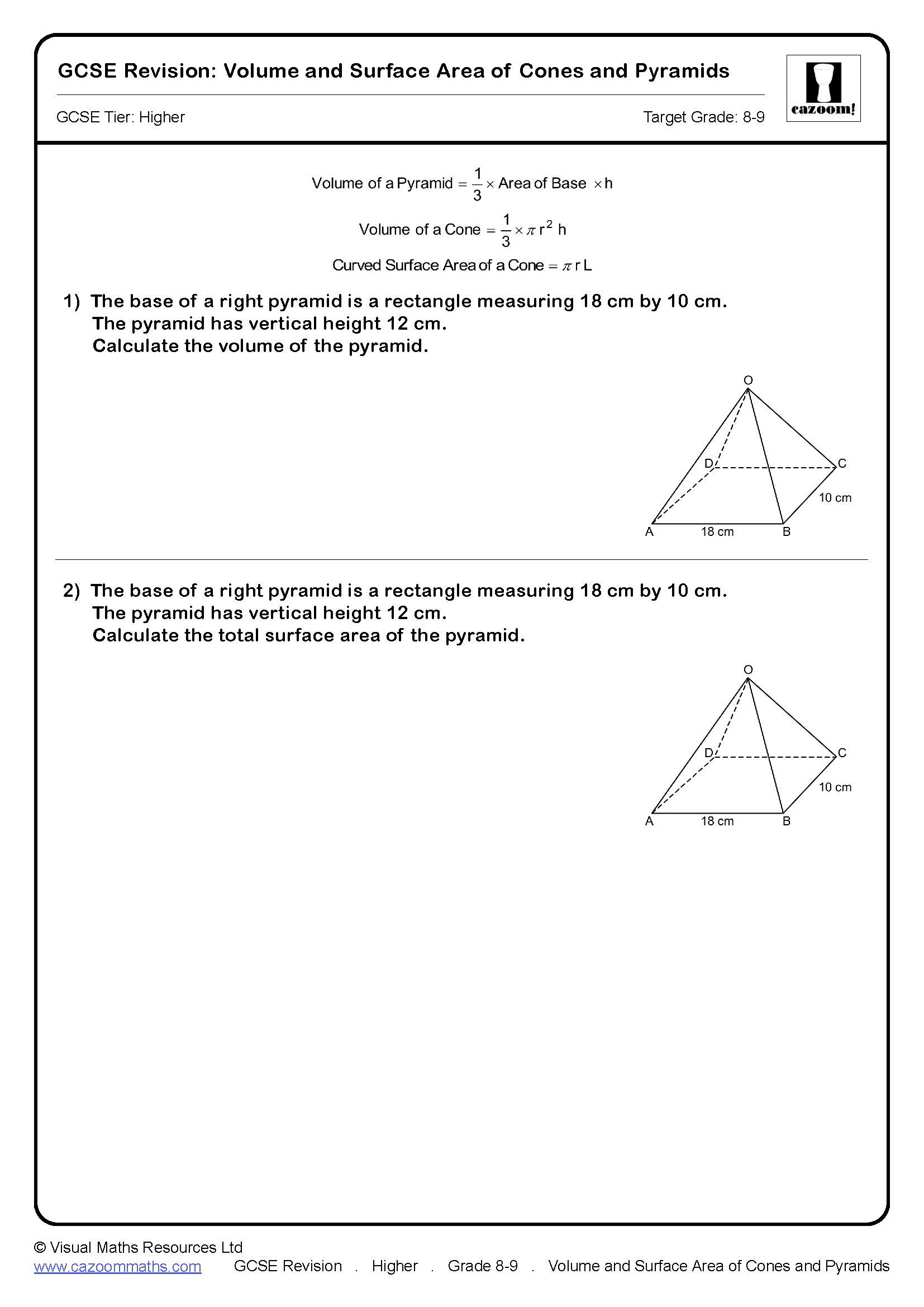
All worksheets are created by the team of experienced teachers at Cazoom Maths.
What Volume and Surface Area questions appear on the GCSE Higher paper?
Higher papers typically include 8-12 marks across volume and surface area questions. Students face cones, spheres, pyramids, frustums and composite shapes formed from multiple solids. Questions often embed volume and surface area within worded contexts requiring dimensional analysis or optimisation. Grade 7-9 questions combine algebraic manipulation with geometry, asking students to work backwards from a given volume to find missing dimensions, or to form and solve equations involving surds or π expressed algebraically.
Exam mark schemes penalise heavily when students fail to show intermediate steps in multi-stage calculations. Teachers notice marks lost when working isn't clearly structured, particularly in questions requiring conversion between units or where the final answer needs expressing in simplified surd form rather than rounded decimals.
What grade are Volume and Surface Area questions on Higher GCSE maths?
Grade 4-5 questions involve straightforward calculations using standard formulae for prisms, cylinders, cones and spheres, typically with dimensions given directly. Grade 6-7 problems introduce composite shapes, frustums formed by removing smaller solids, or contexts requiring students to identify which formula applies. Grade 8-9 questions demand algebraic reasoning, working with expressions for dimensions, forming equations from given volumes or surface areas, or combining volume calculations with Pythagoras or trigonometry to find missing measurements.
Targeted revision means addressing gaps systematically. Students aiming for grade 7 should consolidate frustum problems and reverse calculations before attempting algebraic volume questions. Those securing grade 9 need fluency rearranging complex formulae and recognising when problems require calculus-level reasoning about rates of change, though differentiation itself sits beyond GCSE.
How is Volume and Surface Area tested differently on Higher compared to Foundation?
Foundation focuses on prisms, cylinders, cones and spheres with numerical dimensions, rarely venturing beyond two-step calculations. Higher introduces frustums, compound shapes requiring addition or subtraction of volumes, and problems embedding geometry within real-world optimisation contexts. Crucially, Higher expects algebraic manipulation: students form equations when volumes are given but dimensions unknown, or work with expressions like radius r leading to surface area formulae in terms of r.
This algebraic demand separates tiers fundamentally. Higher students must rearrange formulae confidently, recognise when Pythagoras provides a missing dimension within a solid, and handle exact answers involving π and surds. Teachers observe that students entering Higher unprepared for this algebraic layer struggle significantly, even when geometrical understanding seems sound. Fluency with formula manipulation becomes non-negotiable.
How should students revise Volume and Surface Area for Higher GCSE maths?
Effective revision starts with consolidating formulae for all solids, then applying them under timed conditions. Students should work through worksheets progressively, tackling grade 4-5 questions first to secure fundamentals before attempting multi-step problems. Checking answers immediately after each worksheet helps identify whether errors stem from formula misapplication, algebraic mistakes or misreading questions. Teachers notice breakthroughs when students annotate diagrams with known and unknown values systematically, treating each problem as an exercise in identifying what formula connects given information to required answers.
In lessons, teachers can differentiate by assigning specific grade-targeted sections, using answer sheets for peer marking and discussion. Setting worksheets as homework with tight deadlines mimics exam pressure. Regularly revisiting frustum and composite solid questions prevents knowledge fade, particularly important since volume and surface area appears across both papers.