KS3 Fraction Wall Worksheets
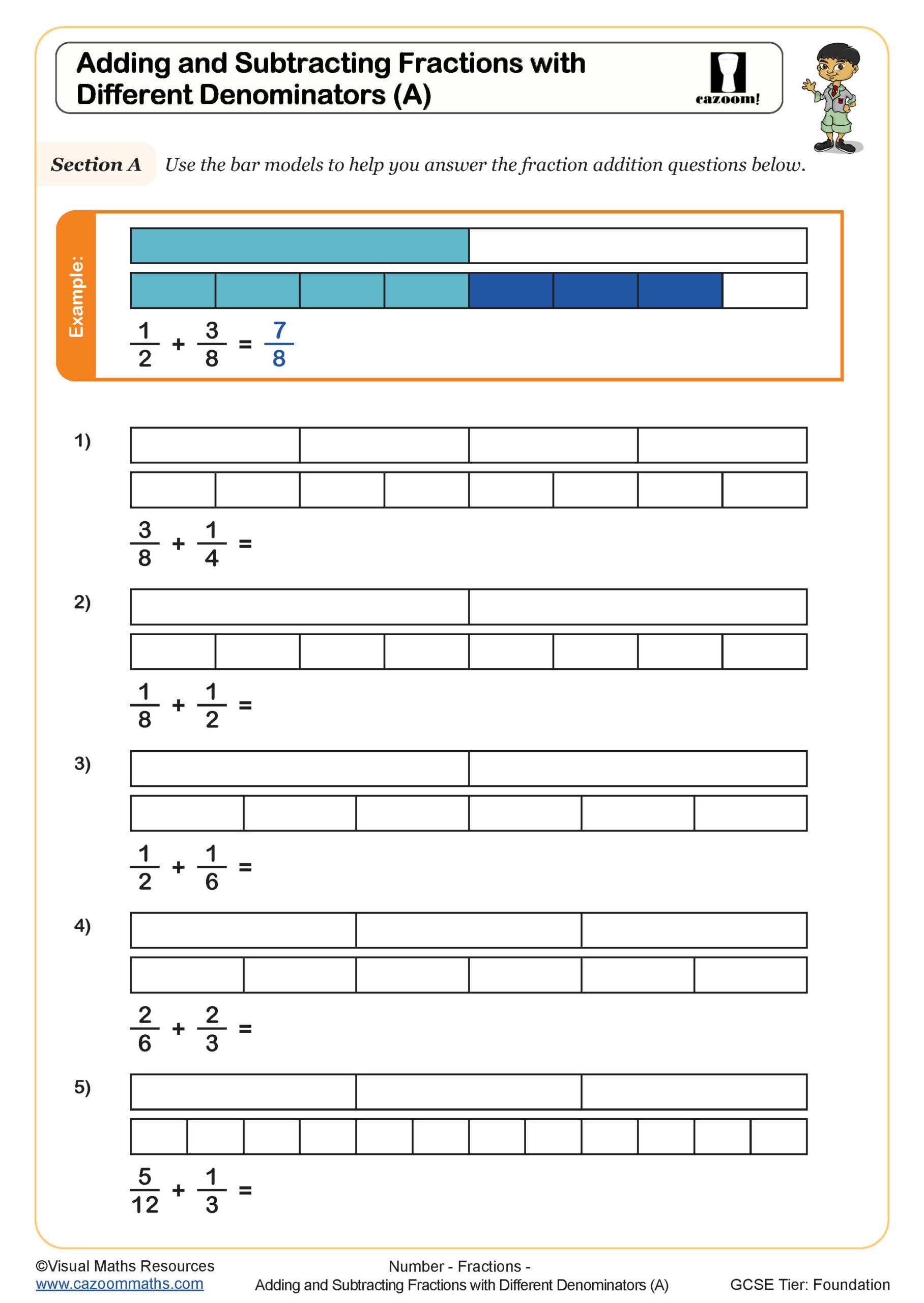
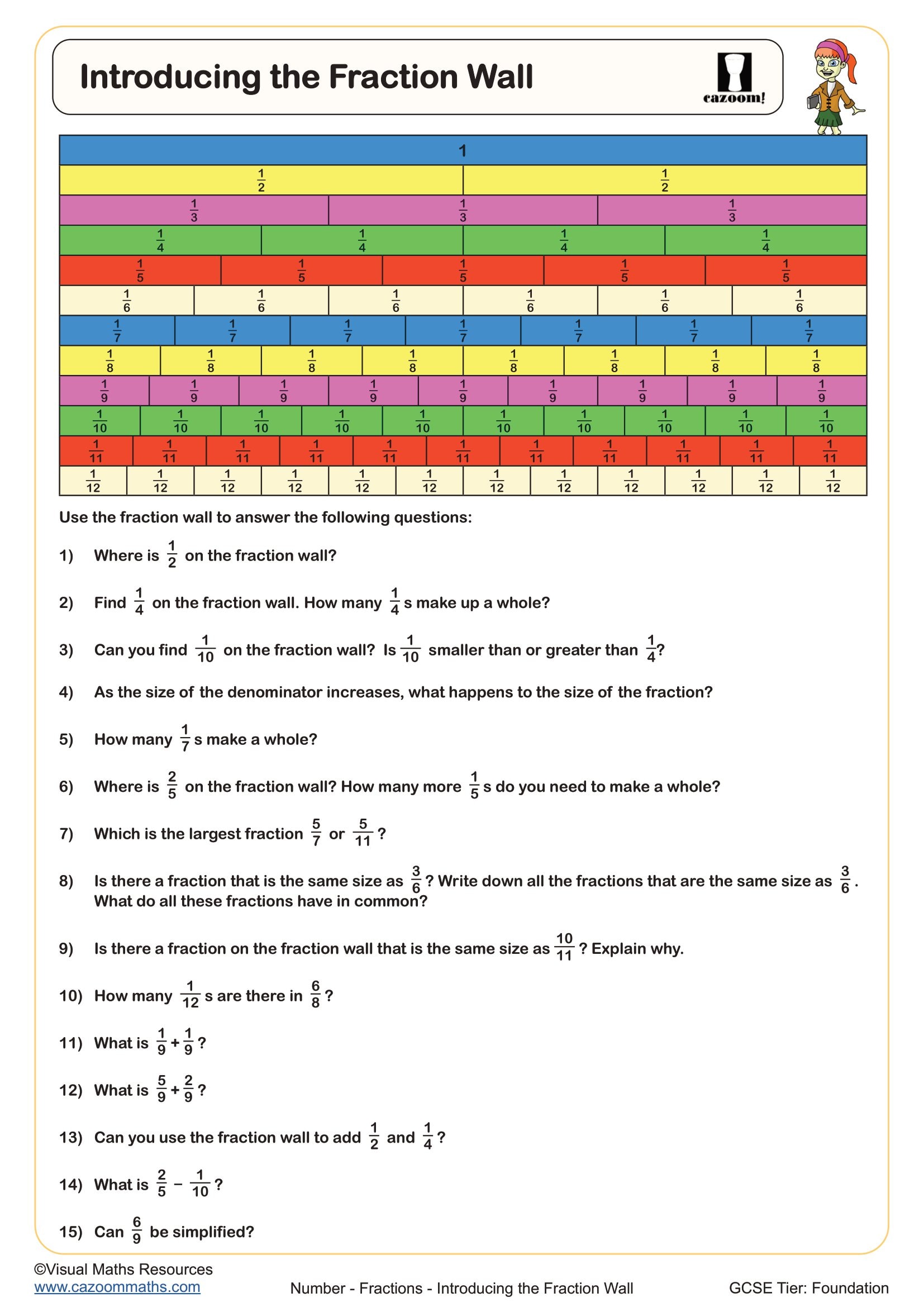
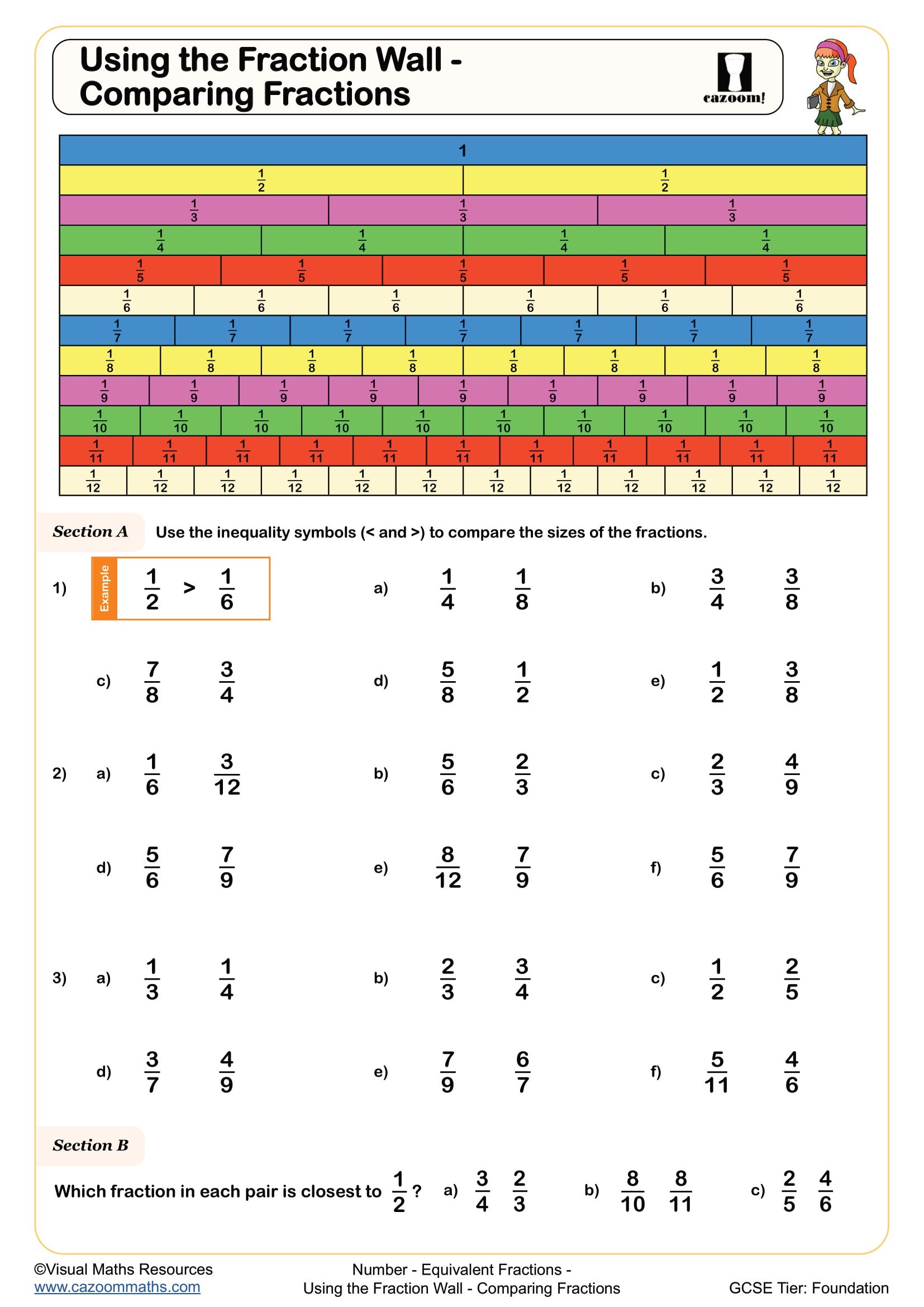
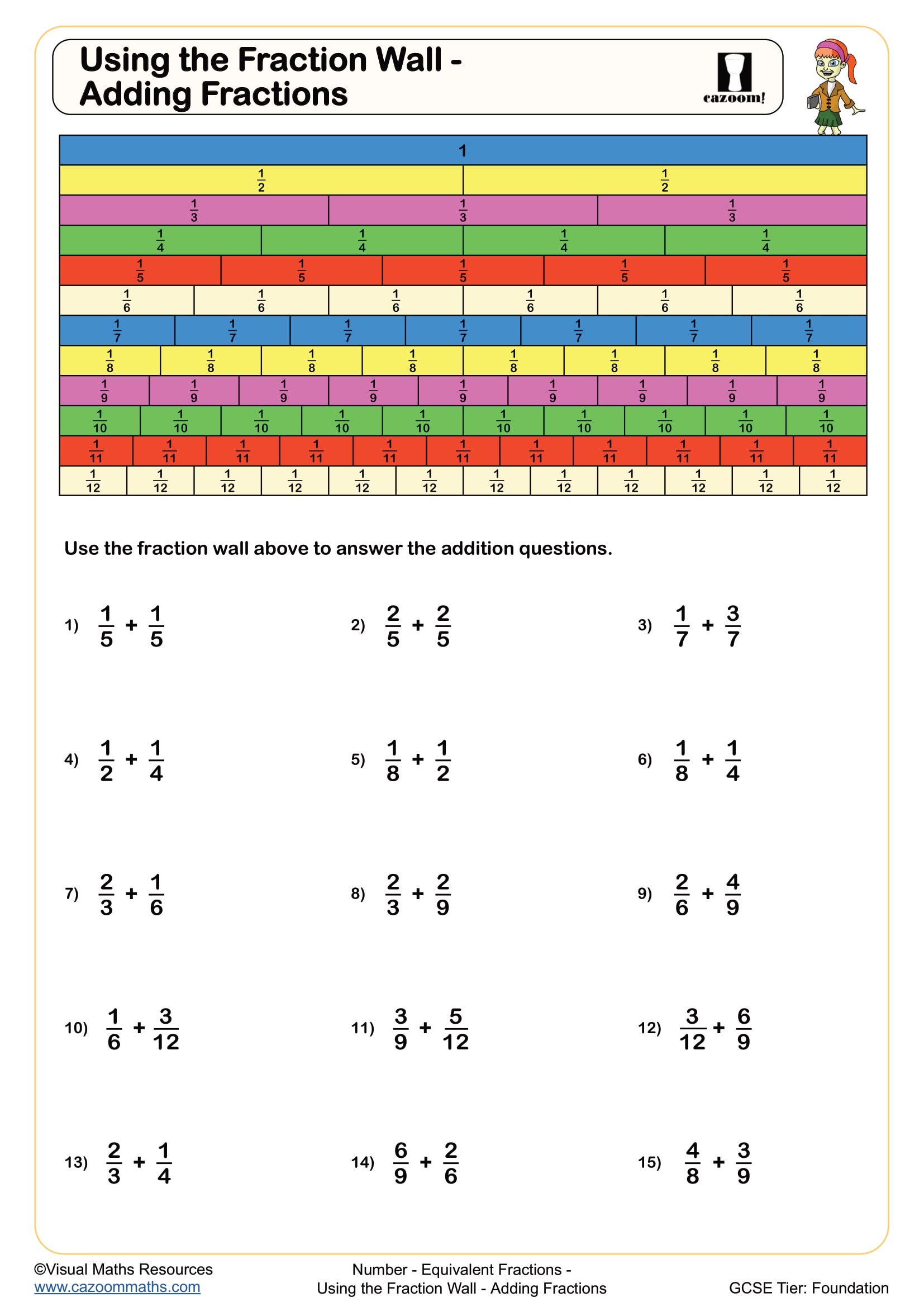
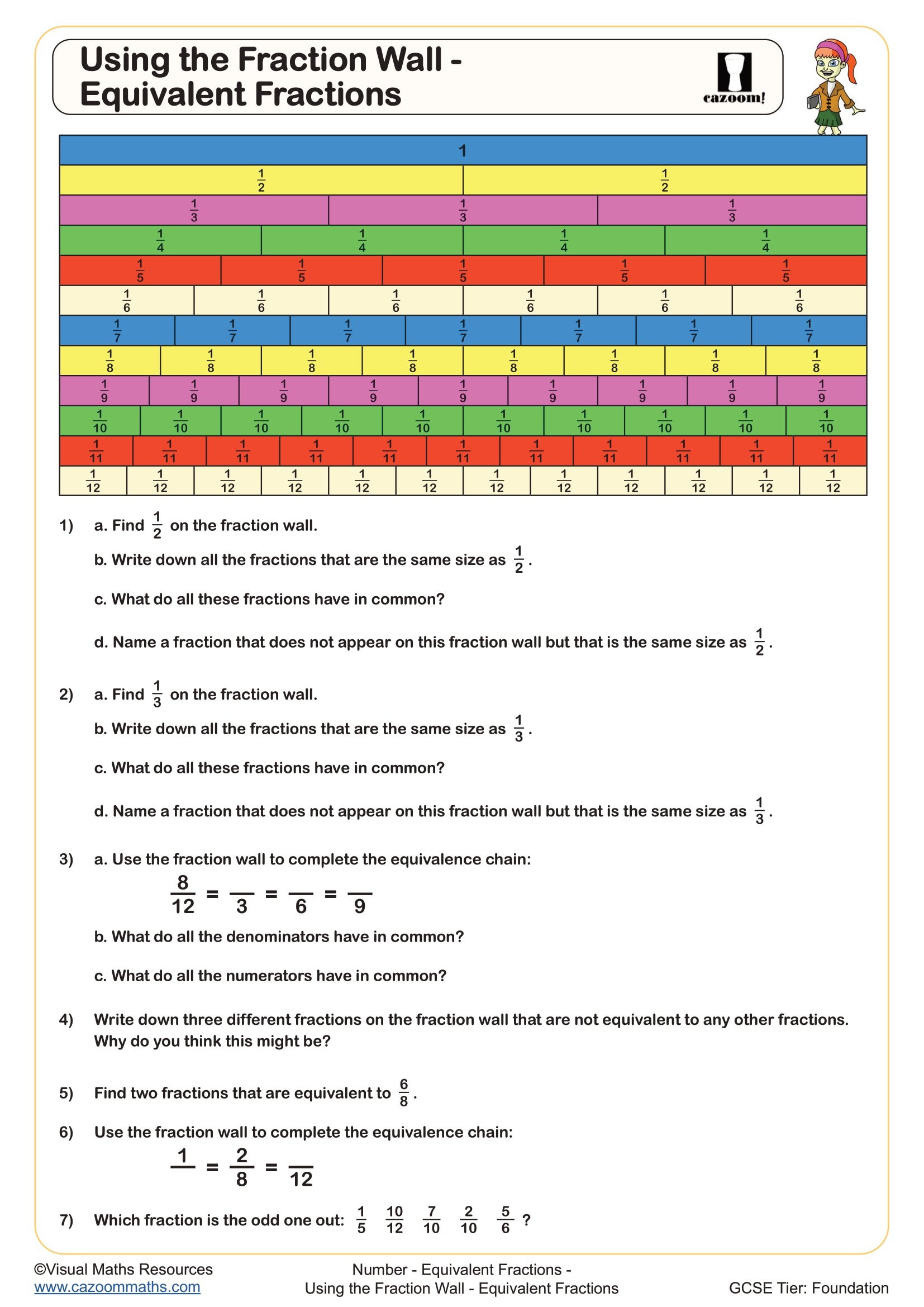
All worksheets are created by the team of experienced teachers at Cazoom Maths.
What is a fraction wall and how does it help students?
A fraction wall is a visual model that divides a whole into horizontal bars showing different denominators aligned vertically, allowing students to see how fractions relate to one another. It's particularly effective at KS3 for students who need concrete representations before moving to abstract fraction calculations, helping them understand why ½ equals 2/4 or why 2/3 is larger than 5/8.
Many teachers find that students who rely purely on rules like 'find common denominators' often forget why the method works. When comparing 3/5 and 2/3, students commonly convert incorrectly because they haven't internalised what the fractions actually represent. The fraction wall makes these relationships visible, so students see that 9/15 and 10/15 are the equivalent forms, and understand why 10/15 is larger rather than just following a procedure mechanically.
Which year groups use fraction wall worksheets?
These worksheets are designed for Year 7 and Year 8 students at KS3, where the National Curriculum expects pupils to consolidate their understanding of fractions from primary school and apply this knowledge to increasingly complex problems. Whilst fraction walls are often introduced in KS2, many secondary students benefit from revisiting this visual tool when they encounter difficulty with fraction operations or need to bridge gaps in understanding.
Progression across these year groups moves from using the fraction wall to establish equivalent fractions in Year 7 towards applying this understanding to add and subtract fractions with different denominators in Year 8. Students also develop comparison skills needed for ordering fractions, which becomes essential later when working with probability, ratio, and solving equations involving fractional coefficients at GCSE.
How do fraction walls help with adding fractions?
Fraction walls support addition by making common denominators visual rather than abstract. When students need to calculate 1/4 + 1/3, they can use the wall to identify that twelfths work as a common denominator because both quarters and thirds align with the twelfths row. This visual checking prevents the common error of adding numerators and denominators separately (incorrectly getting 2/7) because students see the actual pieces they're combining.
This skill connects directly to real-world applications in construction and engineering, where measurements frequently require adding fractional amounts. A carpenter working with timber lengths of 2/3 metre and 3/4 metre needs to find the total material required, making fraction addition a practical STEM skill. Understanding through fraction walls gives students confidence that 17/12 (or 1 5/12) makes mathematical and practical sense, rather than just being an answer from a procedure.
How should teachers use these fraction wall worksheets?
The worksheets build understanding through scaffolded questions that start with fraction walls already drawn, then progress to students creating their own representations before solving problems. This structure works well because students first interpret the visual model, then reproduce it independently, developing the conceptual understanding needed for abstract work. The answer sheets allow teachers to set these as independent practice whilst students self-check their visual representations, not just their final answers.
Teachers often use these worksheets during intervention sessions with Year 8 or 9 students who struggle with fraction operations, as the visual approach helps diagnose whether difficulties stem from conceptual gaps or procedural errors. They're also effective for homework following initial teaching, or as paired activities where students explain their reasoning to one another. When students articulate why 3/8 sits where it does on the fraction wall, they consolidate understanding in ways that silent individual practice doesn't achieve.