KS3 Number Lines Worksheets
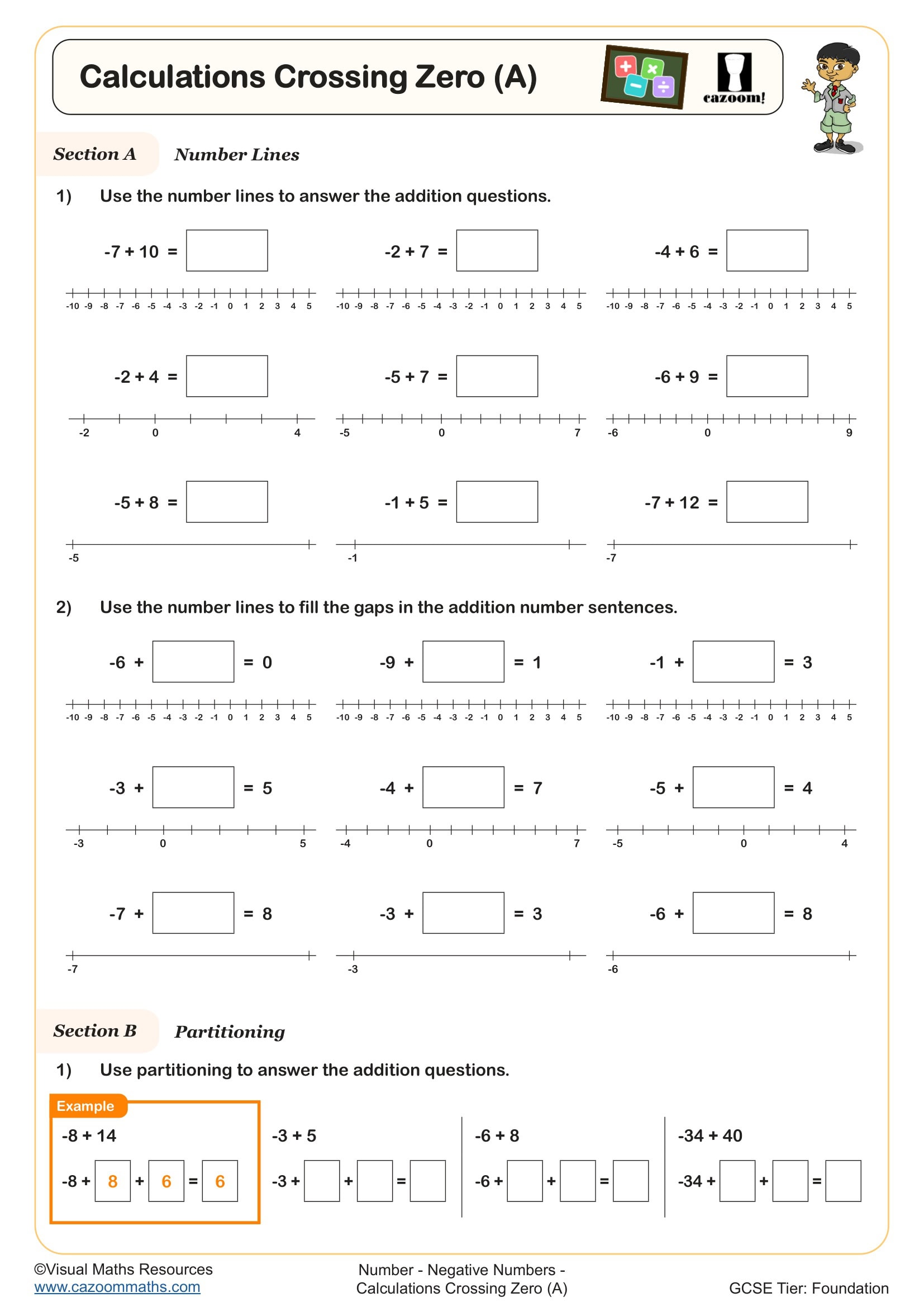
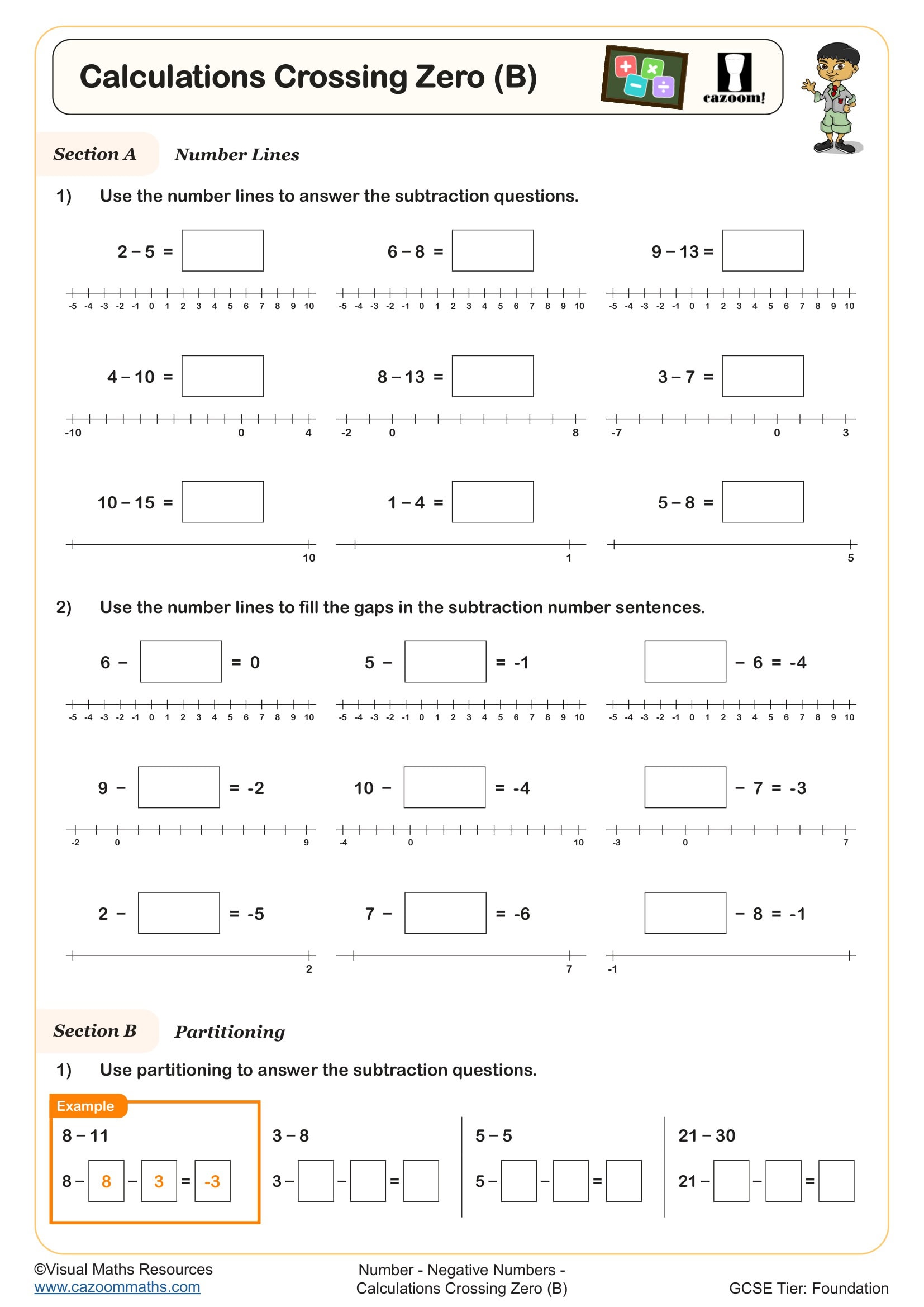
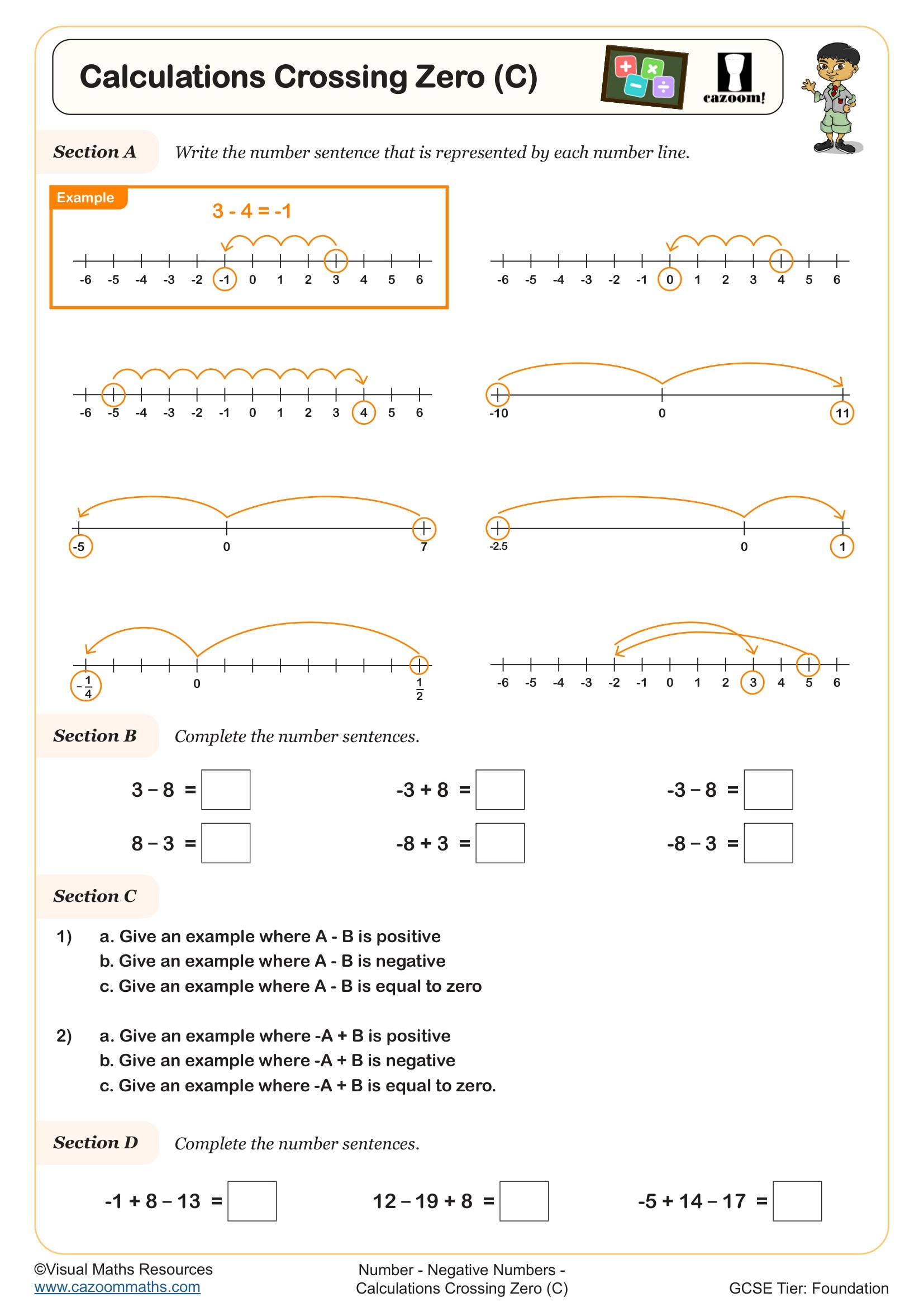
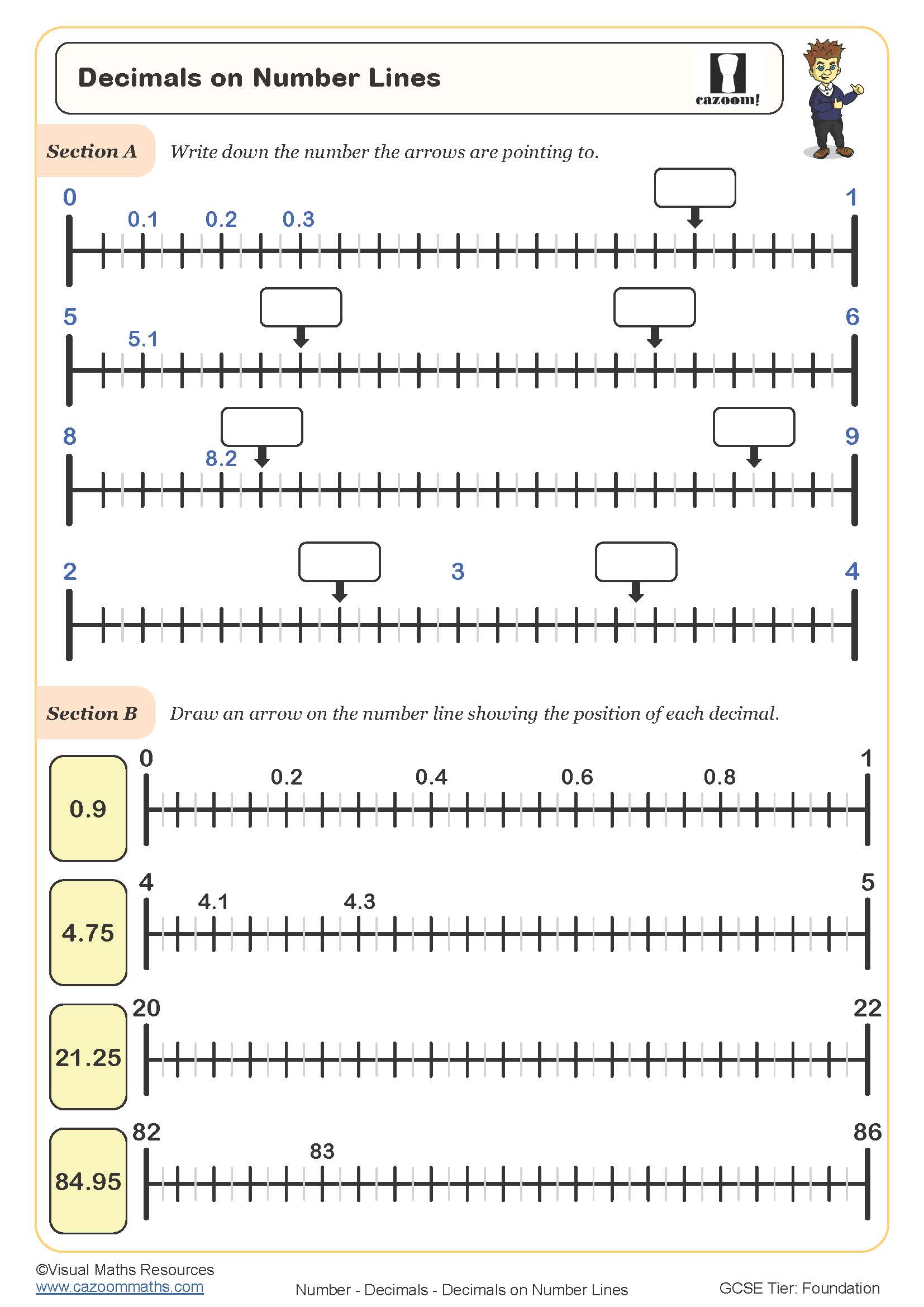
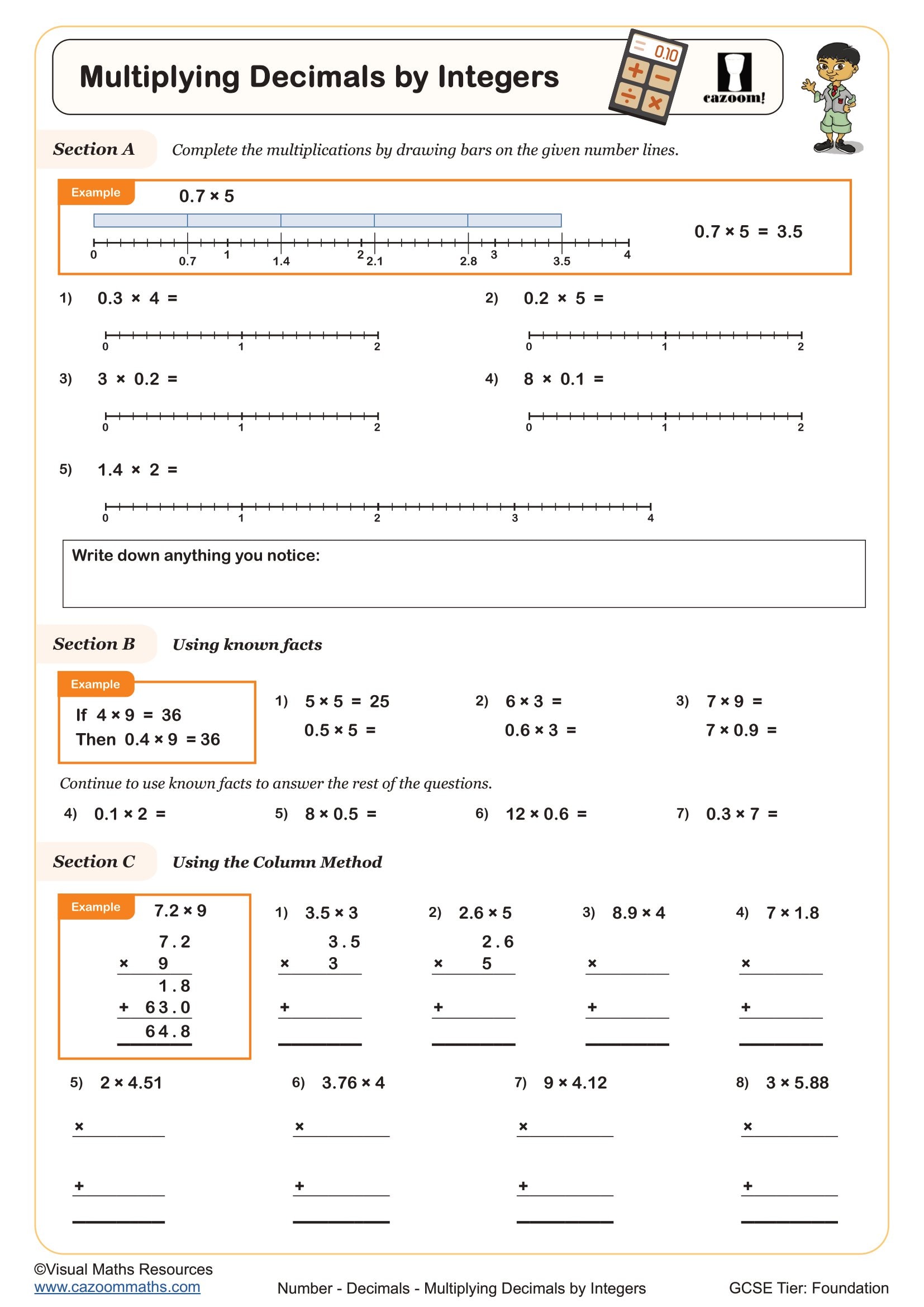
All worksheets are created by the team of experienced teachers at Cazoom Maths.
What makes a good number line worksheet for KS3 students?
A quality number line worksheet should provide clear scales with consistent intervals, helping students recognise patterns in numerical sequences. For KS3 level, the best number line worksheets incorporate both positive and negative numbers, decimal values, and varied scales to challenge students appropriately while building foundational skills needed for algebra and coordinate geometry.
Teachers frequently observe that students make errors when the scale changes between questions, often assuming each division represents one unit. The most effective number lines worksheet materials include explicit scale markers and gradually increase complexity, starting with whole numbers before introducing fractional intervals that prepare students for more advanced mathematical concepts.
Which year groups benefit most from number line worksheets?
Number lines printable resources work exceptionally well for Year 7 and Year 8 students who are consolidating their understanding of integers and preparing for algebraic concepts. At this stage, students need to visualise number relationships clearly before moving into abstract mathematical thinking required for GCSE preparation.
Year 9 students often return to number line work when tackling inequalities and solution sets, where visual representation helps them understand which values satisfy given conditions. Teachers notice that even higher-achieving students benefit from this visual approach when dealing with compound inequalities or representing solutions to quadratic equations graphically.
How do number lines help with negative number calculations?
Number lines provide a visual scaffold that helps students understand why subtracting a positive number means moving left, whilst adding moves right. This concrete representation makes abstract rules about negative numbers much clearer, particularly when students are learning to subtract negative numbers or work with directed numbers in various contexts.
Many teachers observe that students who struggle with negative number arithmetic show significant improvement after using number line activities. The visual element helps them see that -3 + 5 involves starting at -3 and moving 5 positions right to reach +2, making the concept tangible rather than relying on memorised rules that often get confused.
How should teachers use these number line questions effectively?
The most effective approach involves starting each lesson with a quick number line warm-up, allowing students to practise placing numbers accurately before moving to more complex tasks. Teachers find that displaying enlarged versions of the number line worksheets on the board helps demonstrate positioning techniques and common error patterns to the whole class.
Using the answer sheets strategically allows for peer marking activities where students can discuss their reasoning and identify mistakes together. This collaborative approach helps students articulate their mathematical thinking whilst building confidence in checking their own work, particularly valuable for students who lack confidence in numerical accuracy.