KS3 Rounding Worksheets
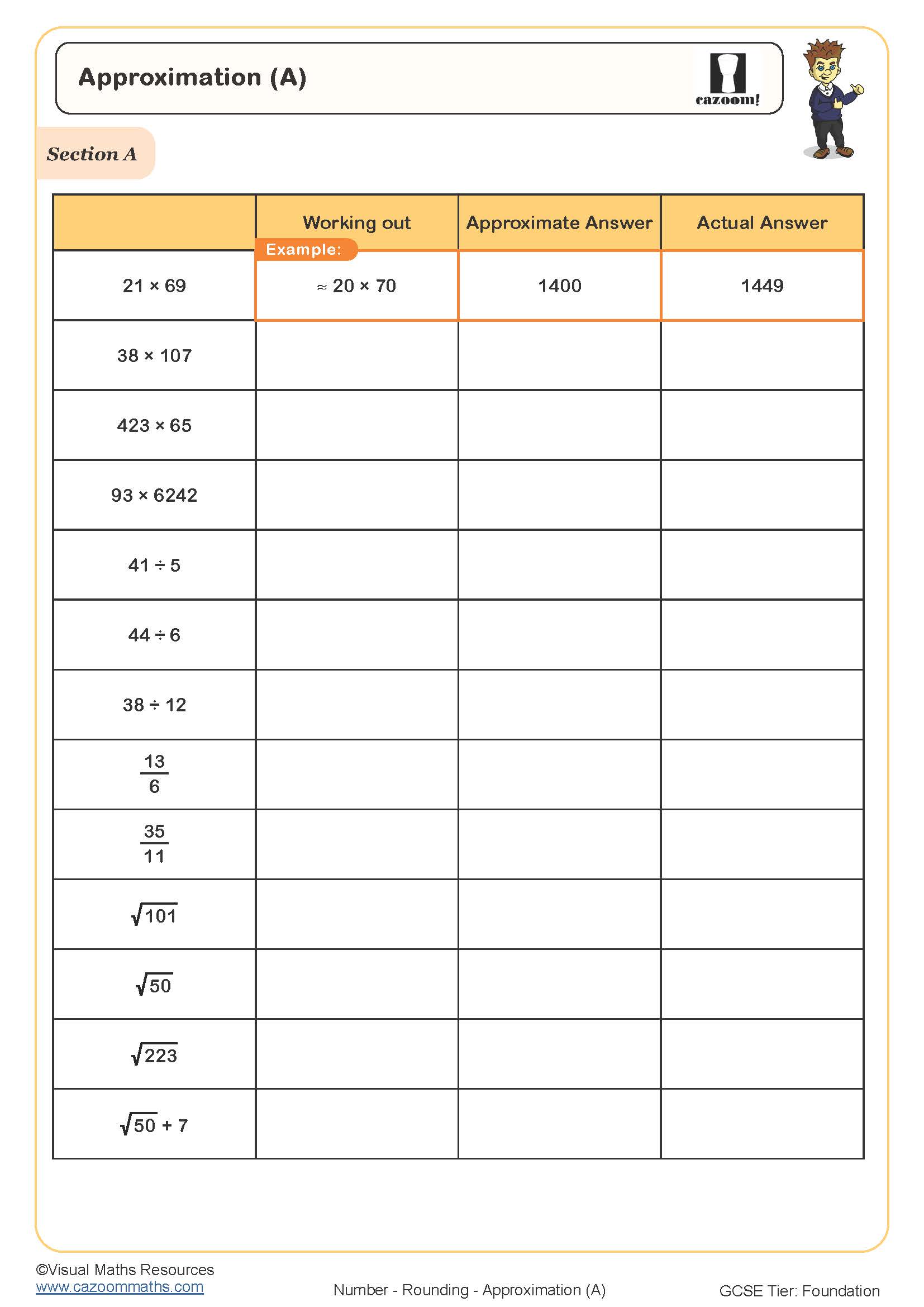
Approximation (A)
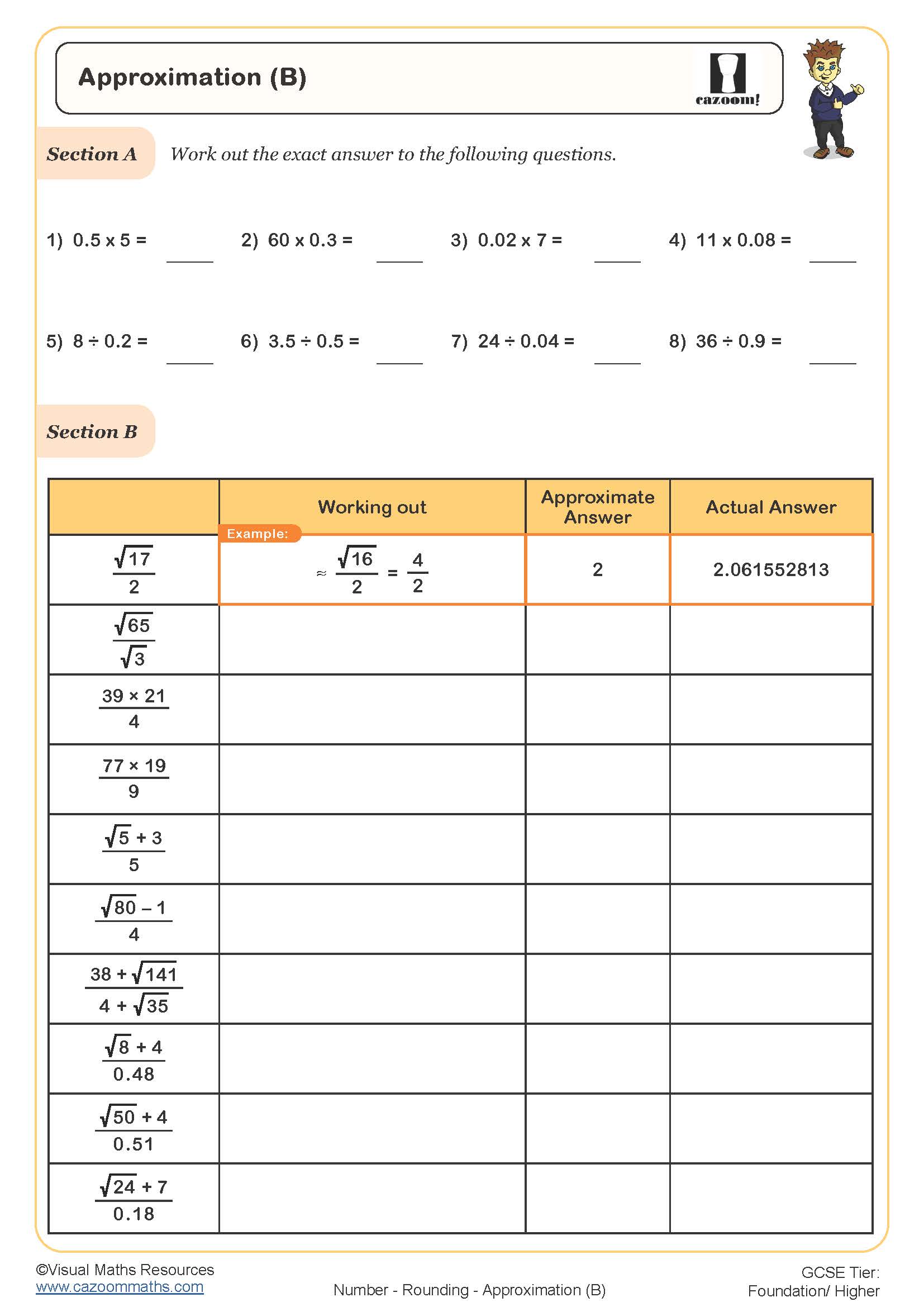
Approximation (B)
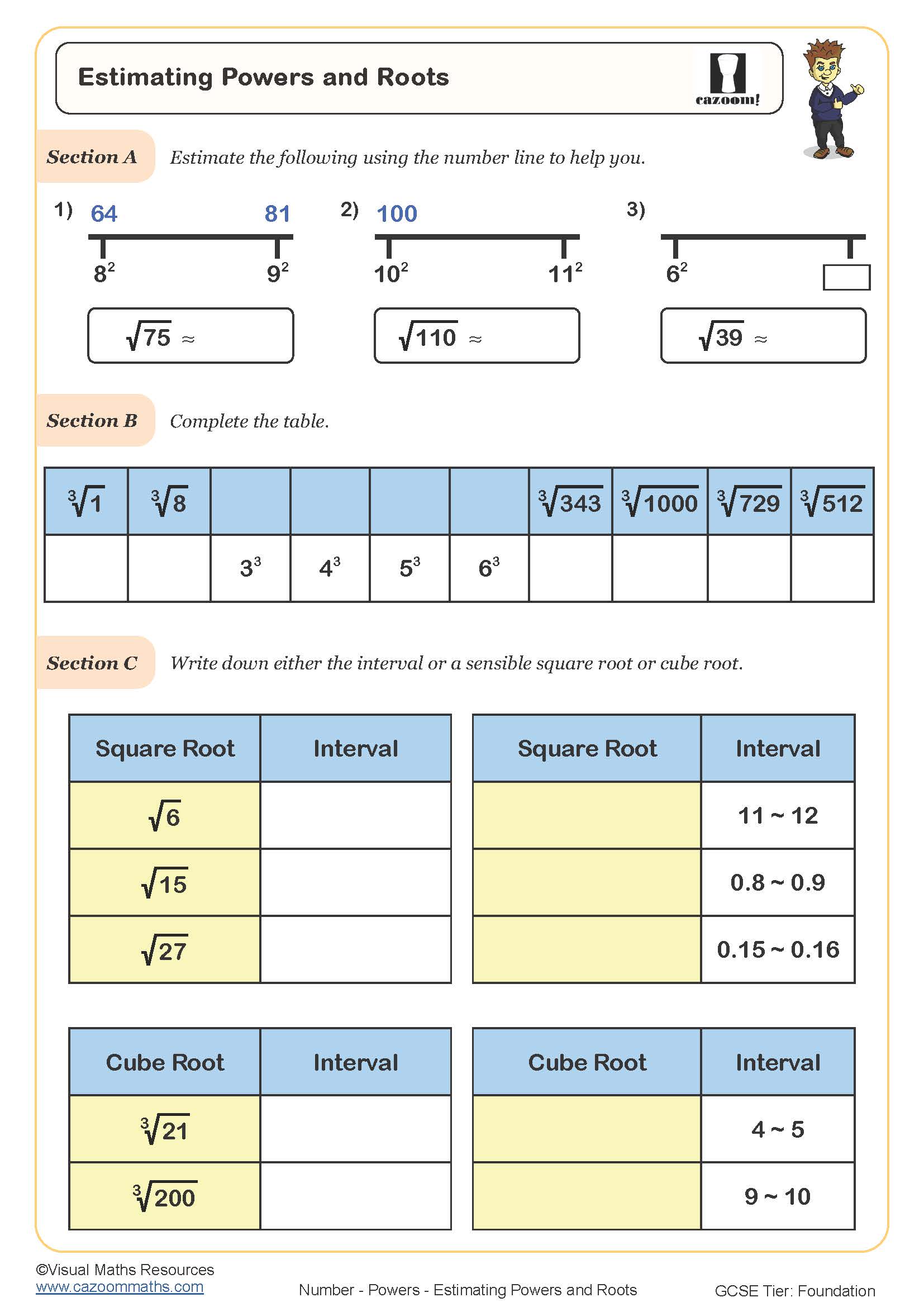
Estimating Powers and Roots
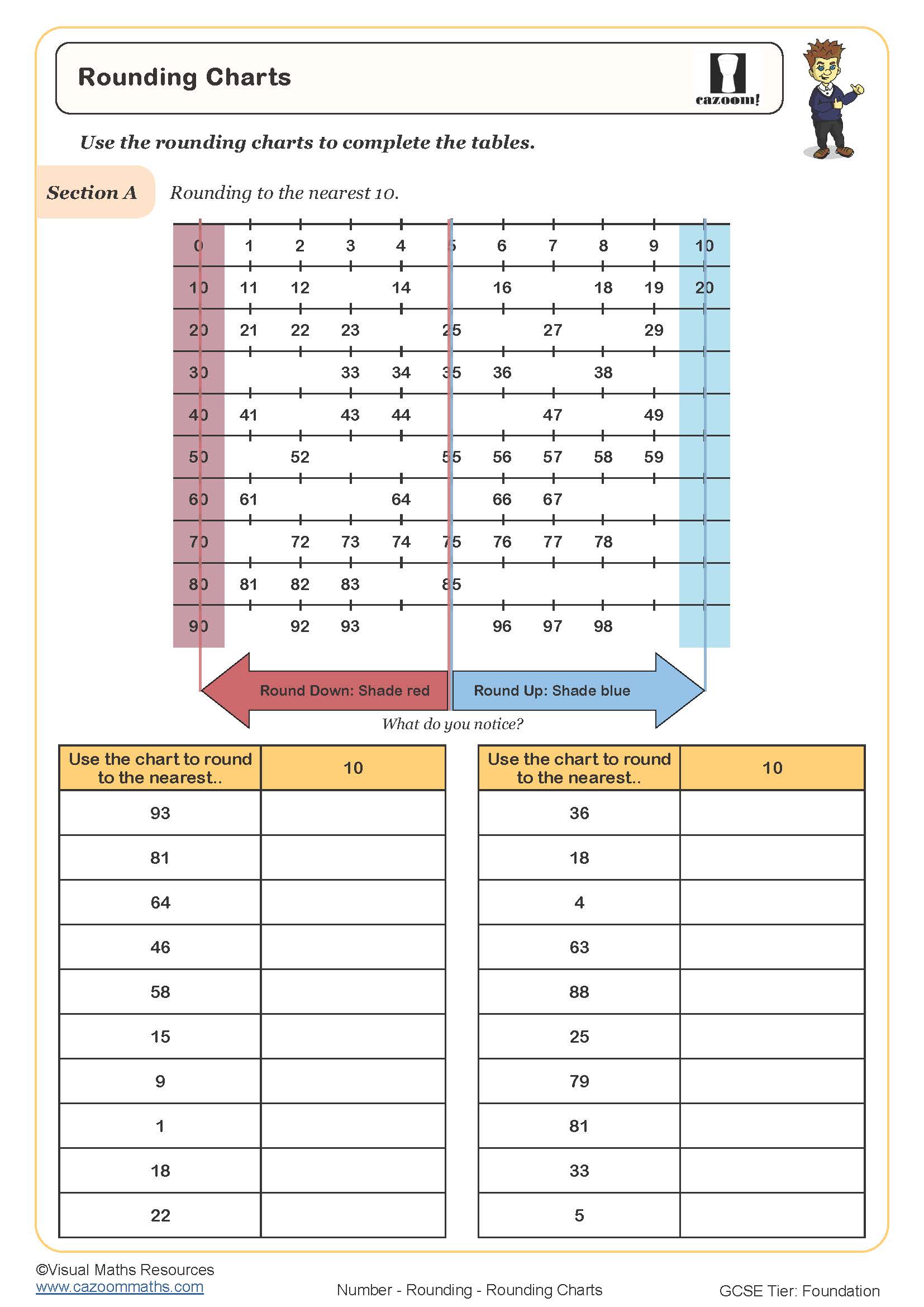
Rounding Charts
Rounding Mixed Exercise
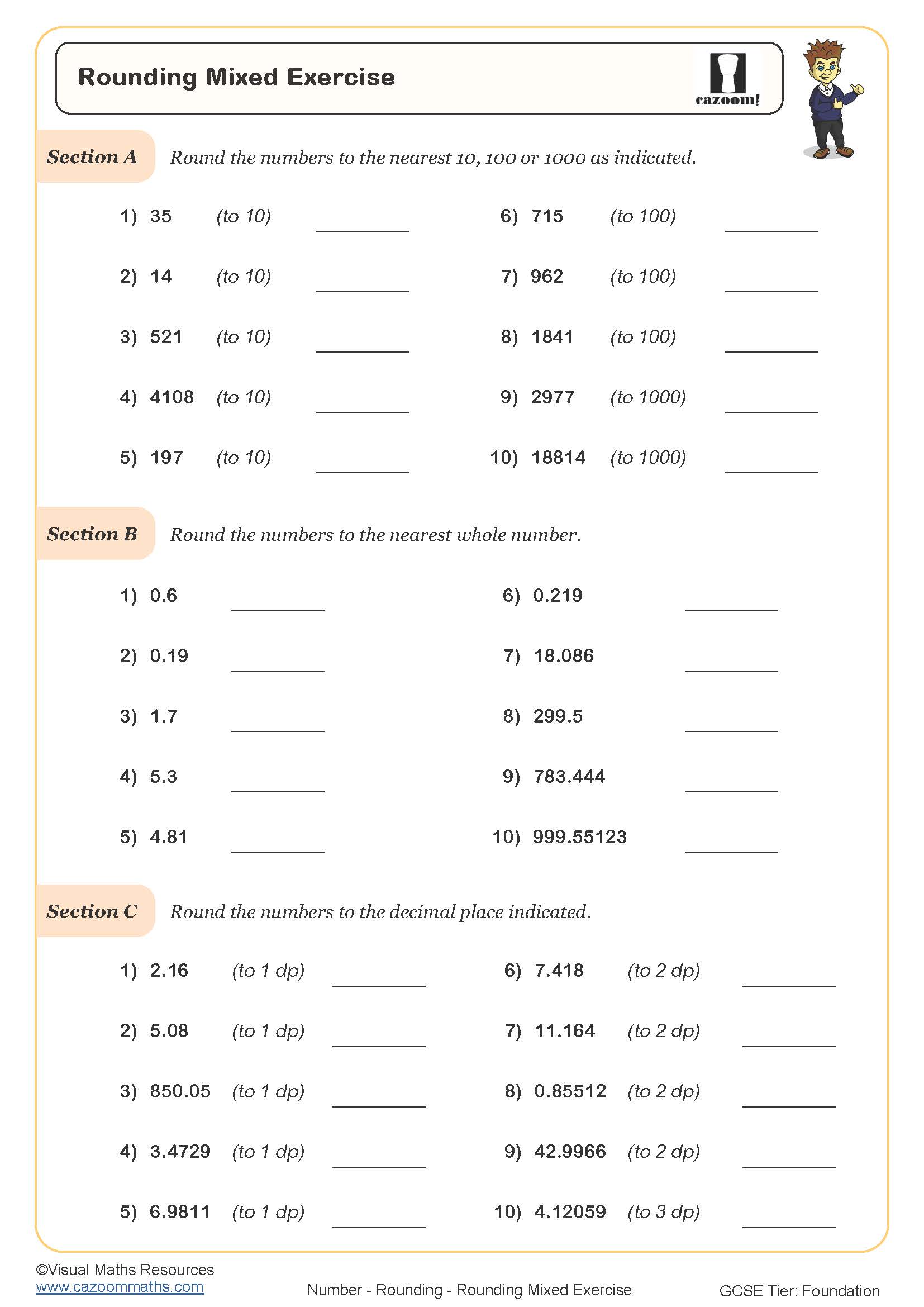
Rounding to Decimal Places
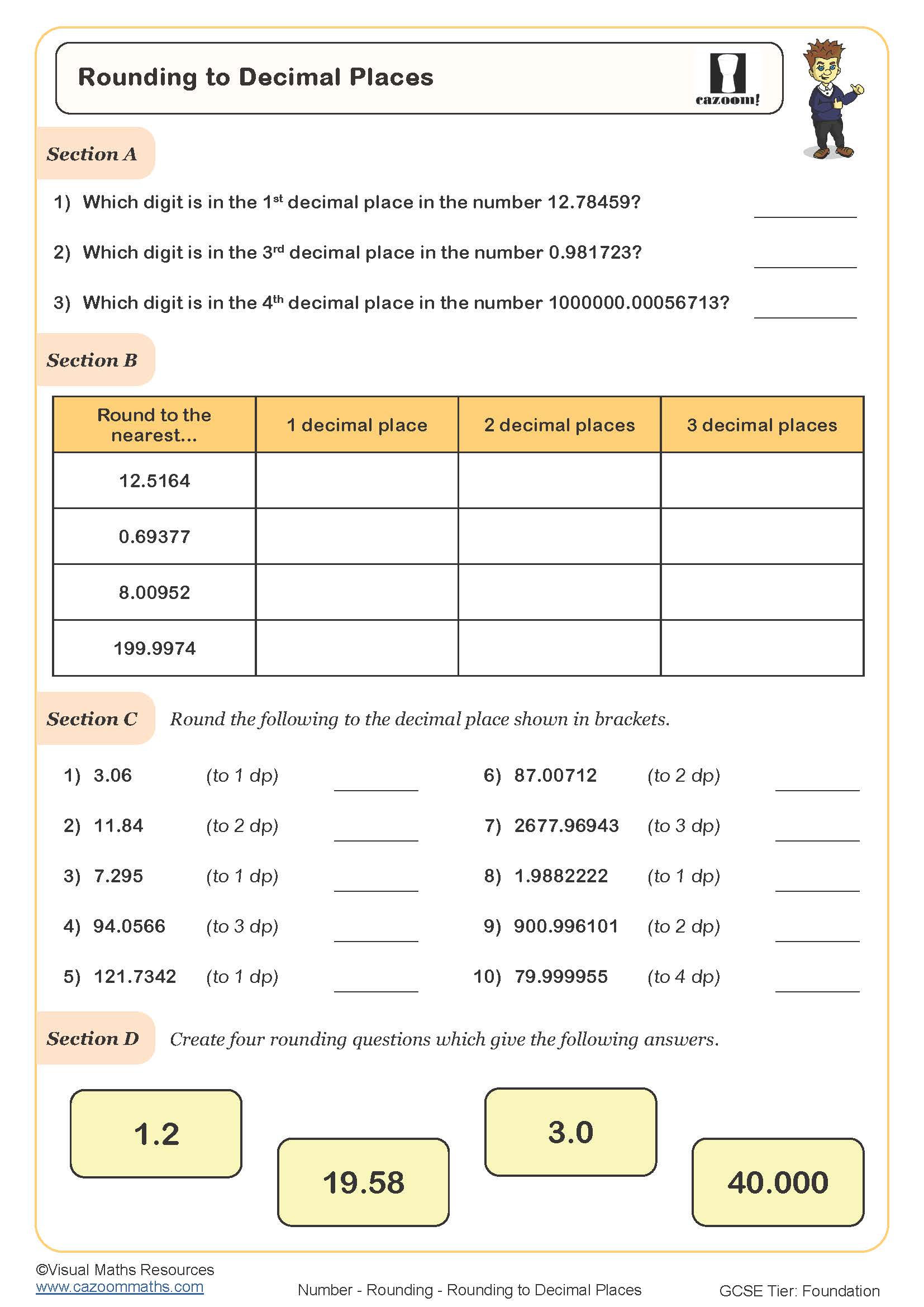
Rounding to One Decimal Place
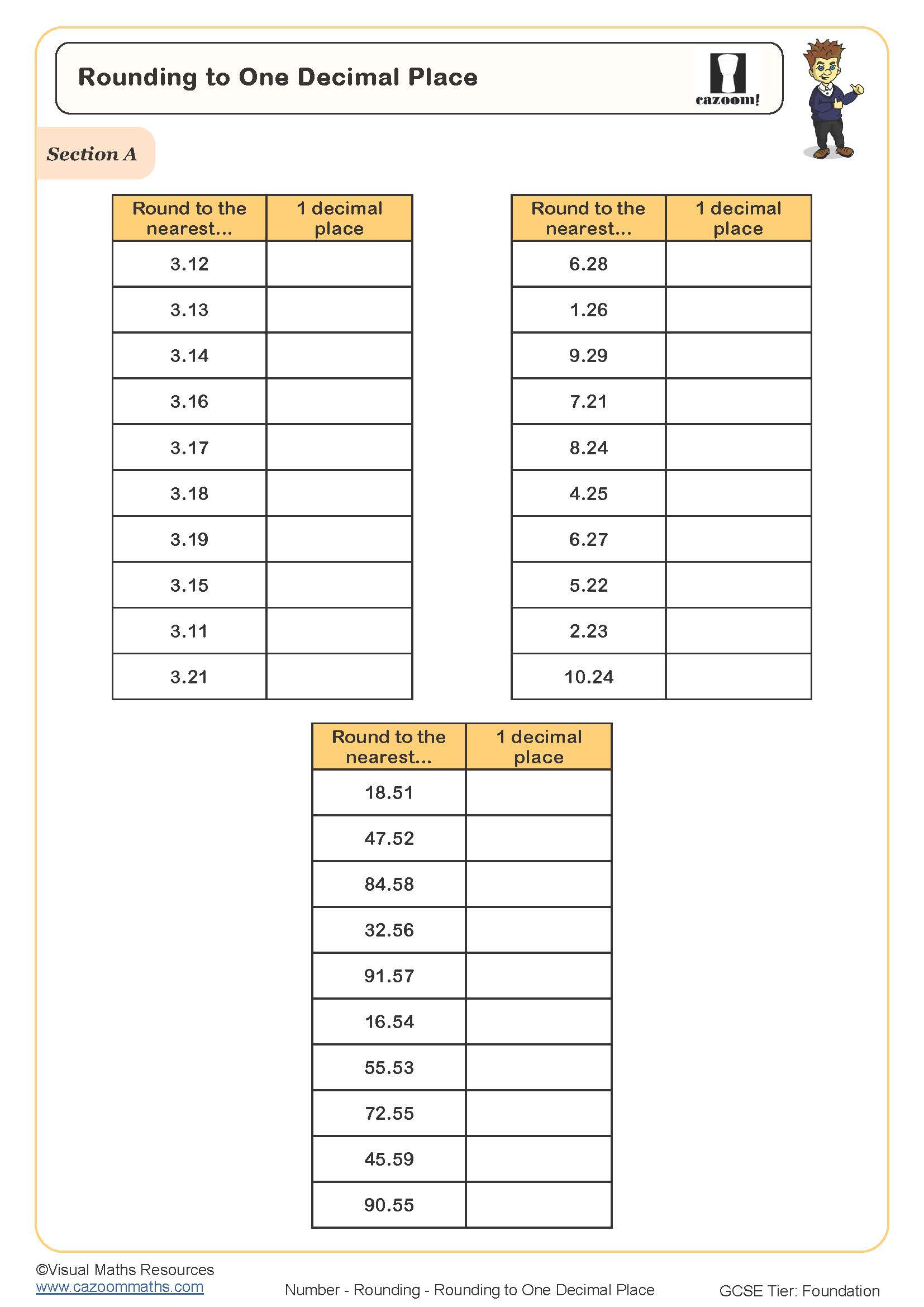
Rounding to the Nearest Hundred
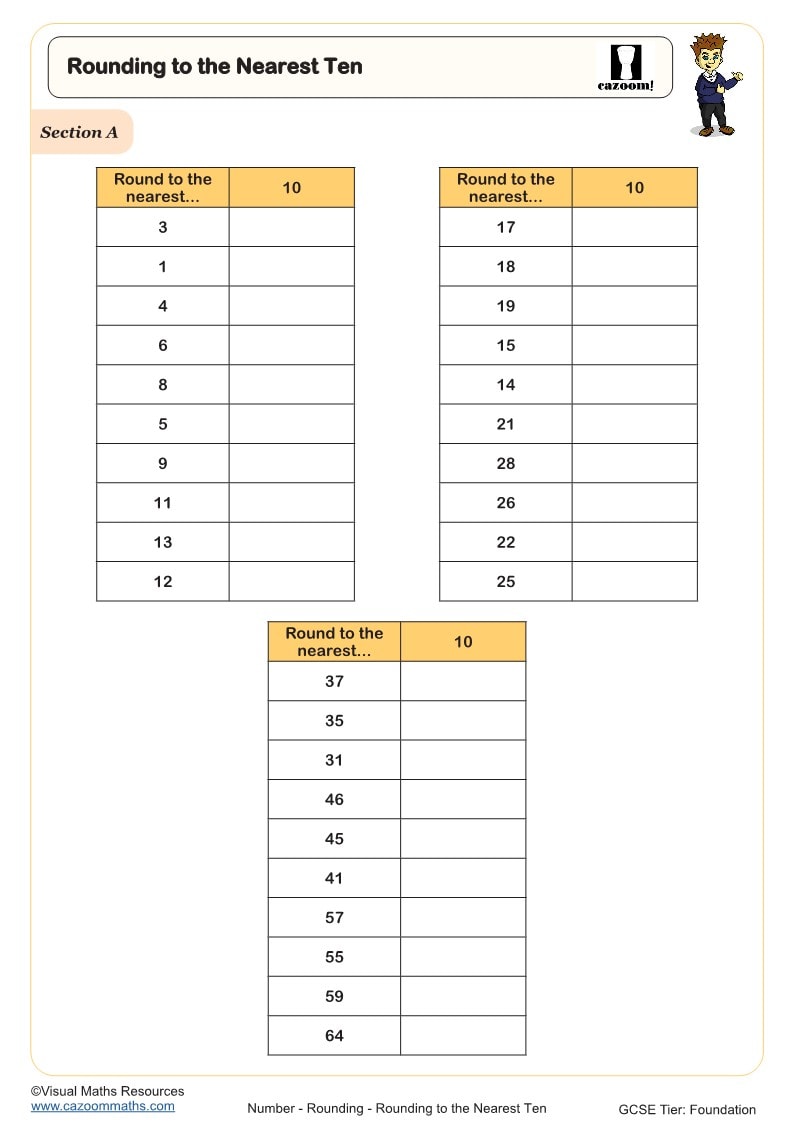
Rounding to the Nearest Ten
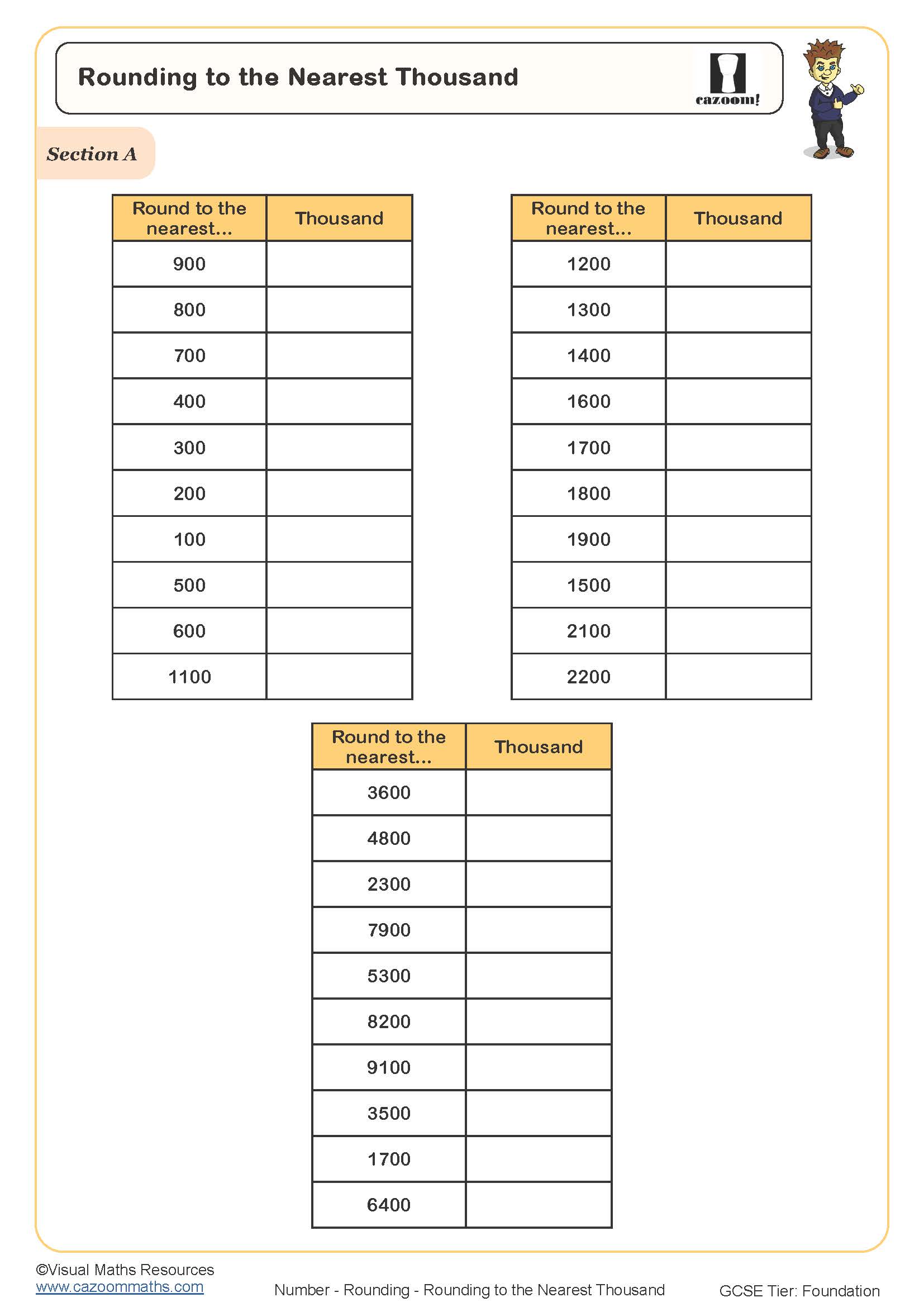
Rounding to the Nearest Thousand
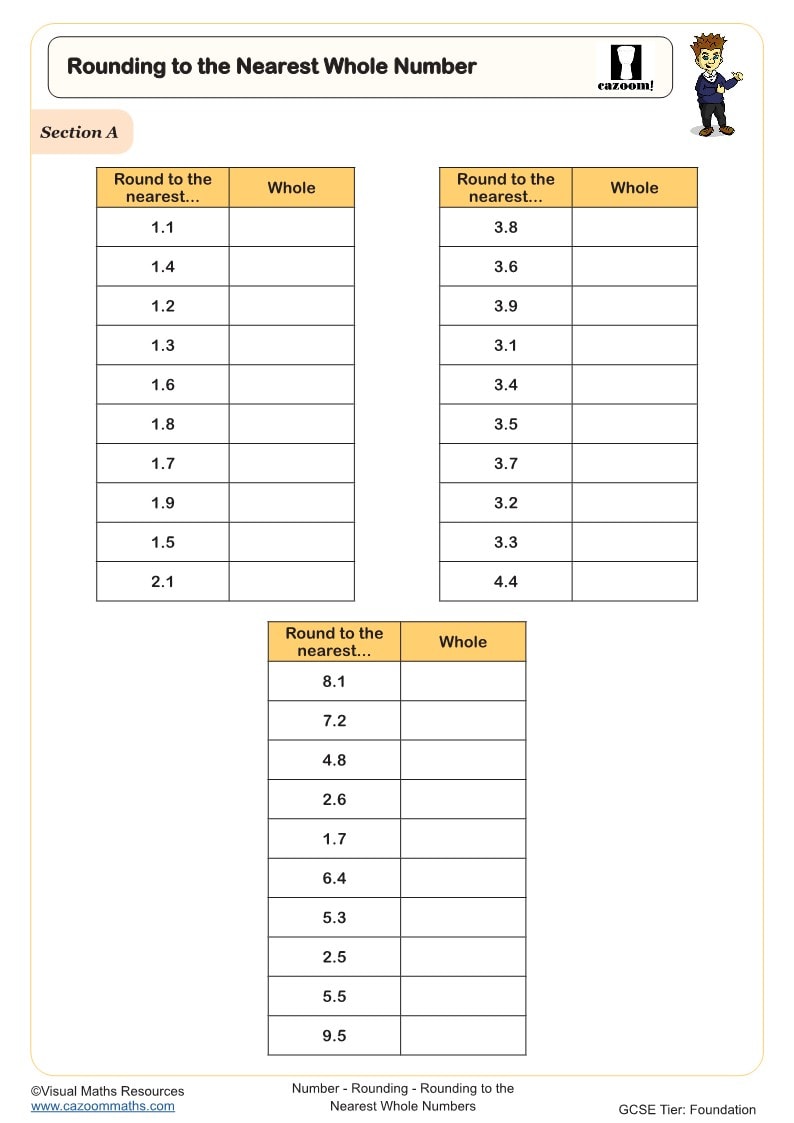
Rounding to the Nearest Whole Number
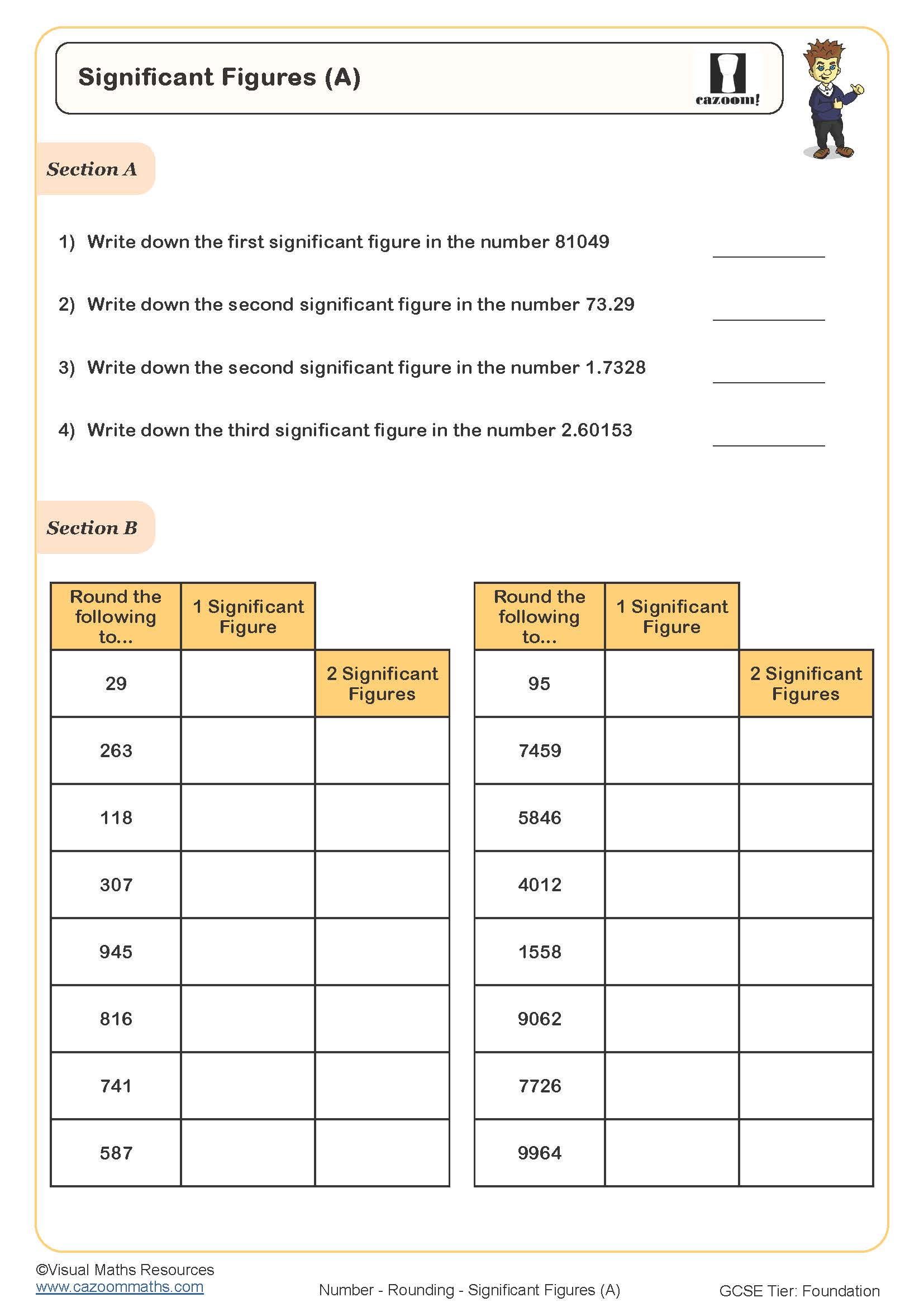
Significant Figures (A)
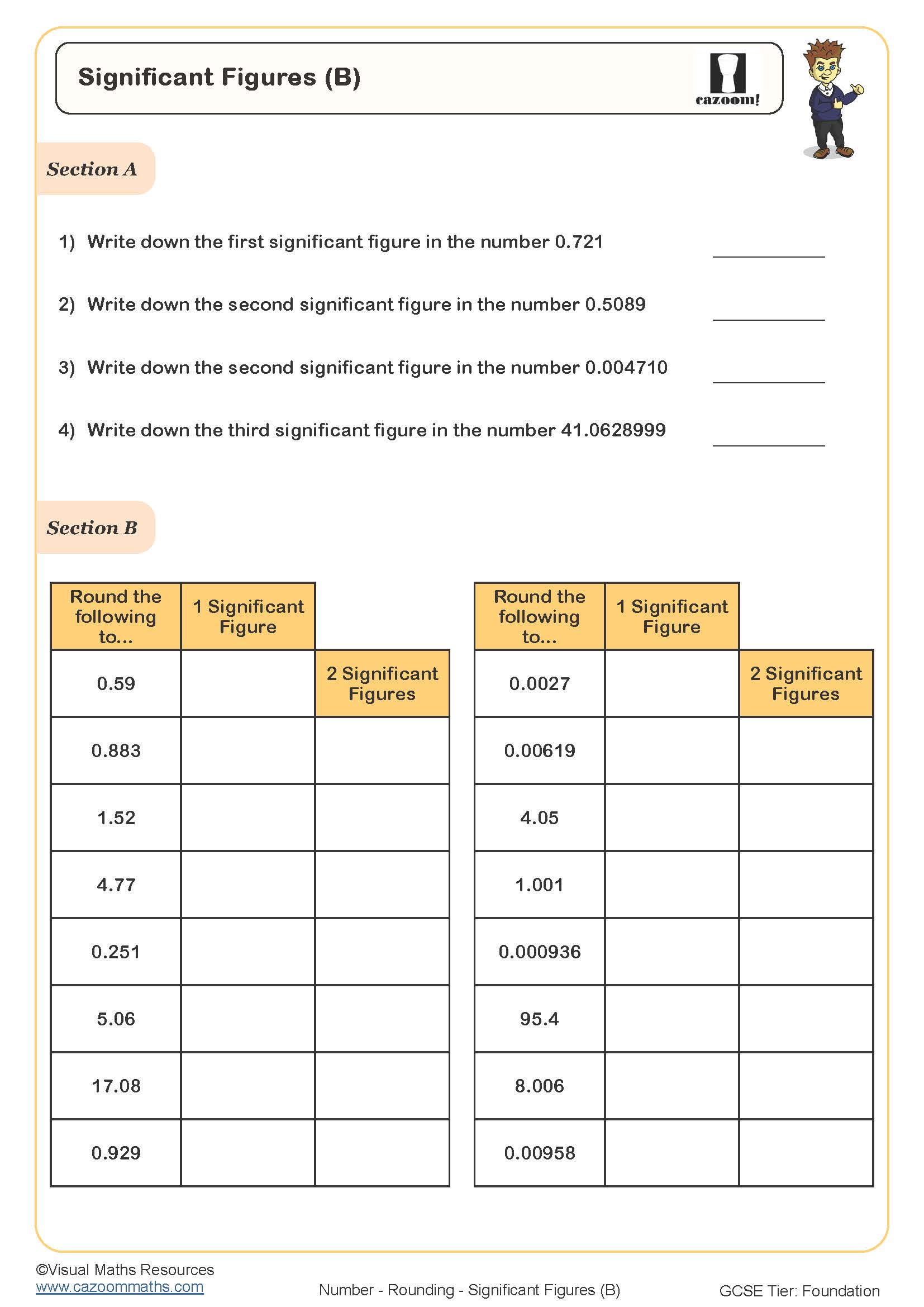
Significant Figures (B)
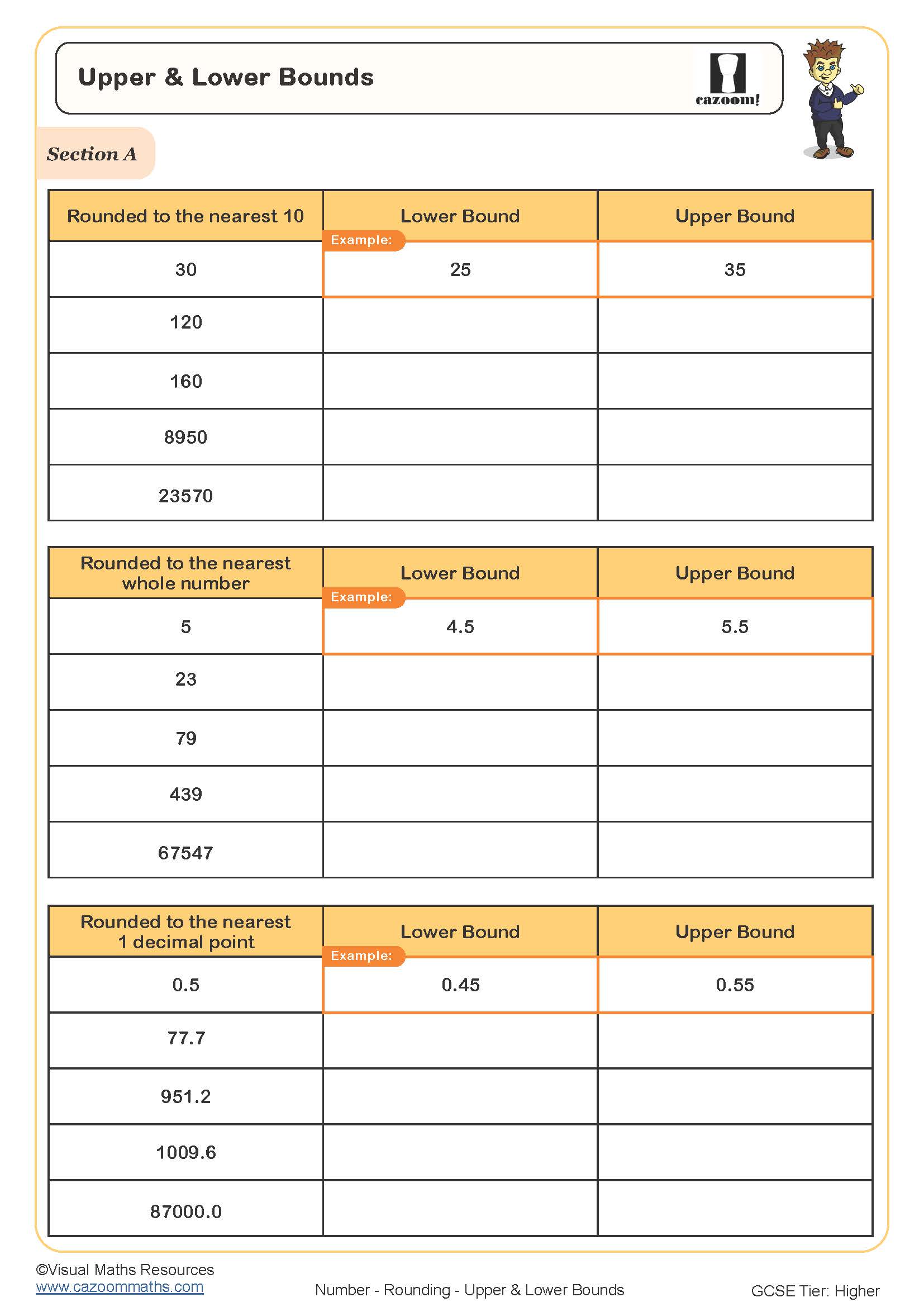
Upper and Lower Bounds
All worksheets are created by the team of experienced teachers at Cazoom Maths.
What are the rules for rounding in KS3 maths?
The fundamental rule for rounding is to look at the digit immediately to the right of the place value you're rounding to. If that digit is 5 or greater, round up; if it's 4 or less, round down. For decimal places, students identify the required decimal place and examine the next digit along. For significant figures, they count from the first non-zero digit, which becomes more complex with numbers written in standard form or those containing multiple zeros.
A common error occurs when students confuse rounding to one decimal place with rounding to the nearest ten. Teachers often see 4.87 incorrectly rounded to 5.0 (keeping the decimal point but treating it like whole number rounding) rather than 4.9. Exam mark schemes specifically penalise answers that show the correct numerical value but incorrect notation, such as writing 5 instead of 5.0 when the question asks for one decimal place.
Which year groups study rounding at KS3?
Rounding appears across Year 7, Year 8, and Year 9 as part of the Number strand in the National Curriculum. Year 7 students consolidate rounding to the nearest 10, 100, and 1000, then develop proficiency with decimal places. The focus shifts to significant figures in Year 8, where students must understand which digit counts as the first significant figure, particularly in numbers like 0.00456 or 2003.
By Year 9, students apply rounding within multi-step calculations, including giving answers to appropriate degrees of accuracy in algebra, geometry, and data handling contexts. GCSE questions regularly embed rounding within problem-solving tasks rather than asking for it in isolation, so Year 9 worksheets typically include questions where students must decide for themselves when and how to round appropriately.
Why do we round to significant figures instead of decimal places?
Significant figures provide a consistent way to express accuracy regardless of the size of a number. Rounding to two significant figures gives the same relative precision whether working with 0.0034 (becoming 0.0034) or 3400 (becoming 3400). Decimal places, by contrast, give absolute precision that varies wildly: two decimal places in 0.0034 and 3400.00 represent completely different levels of accuracy. This makes significant figures particularly useful in science and engineering where measurements span multiple scales.
Students encounter significant figures extensively in GCSE Science practicals, where apparatus accuracy dictates how results should be reported. A burette reading of 23.45 cm³ contains four significant figures because the equipment measures to 0.05 cm³. If students calculate a titre value and write 24.8765 cm³ (six significant figures), they're claiming greater precision than their equipment actually provided, something that loses marks in both Science and Maths examinations.
How do these worksheets help students master rounding?
The worksheets build fluency through carefully structured practice that isolates specific rounding skills before combining them. Early questions focus on identifying the correct digit to examine, while later problems require students to round the same number to different degrees of accuracy, highlighting how the choice affects the result. Worked examples demonstrate the decision-making process, particularly for numbers where the critical digit is 5, and where zeros must be included as placeholders.
Teachers use these worksheets for morning starter activities to maintain regular practice, as rounding accuracy directly impacts marks across all GCSE calculator and non-calculator papers. They work effectively for homework because the answer sheets allow students to self-assess and identify exactly where their method breaks down. Many teachers set differentiated tasks by assigning different sections to different groups, then use paired checking to develop students' ability to spot rounding errors in each other's work.