KS3 Surveys and Sampling Worksheets

All worksheets are created by the team of experienced teachers at Cazoom Maths.
What are the key skills in surveys and sampling for KS3?
KS3 surveys and sampling focuses on designing effective data collection methods, recognising bias, and understanding why sampling techniques matter. Students learn to write clear, unbiased questions with appropriate response options, identify leading or ambiguous wording, and select sampling methods like random, systematic, stratified, and quota sampling. The National Curriculum requires students to apply statistical reasoning to real-world contexts, making this topic foundational for GCSE Statistics and the handling data components of GCSE Maths.
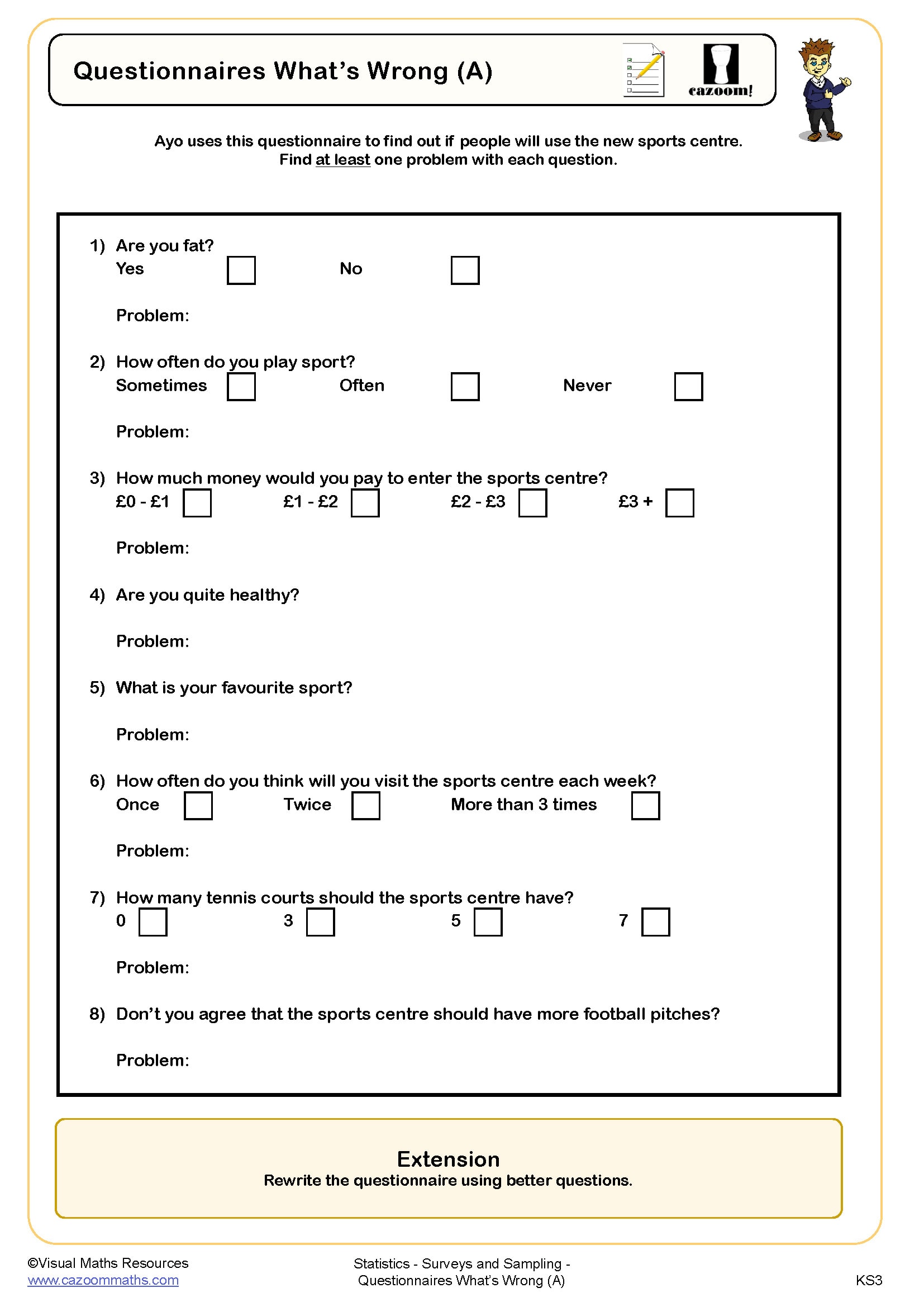
Teachers often notice students struggle most with spotting overlapping response categories, such as age ranges that include the same number twice (10-15, 15-20). Students also commonly miss why convenience sampling introduces bias, assuming that asking people nearby produces representative data. Mark schemes at GCSE explicitly require students to explain how bias affects conclusions, not just identify that it exists.
Which year groups study surveys and sampling?
These worksheets cover surveys and sampling for Year 7, Year 8, and Year 9, aligning with the KS3 Statistics curriculum. The topic typically introduces in Year 7 with evaluating simple questionnaires and identifying obvious bias, then develops through Year 8 and Year 9 as students encounter more sophisticated sampling methods and design their own data collection instruments. This groundwork supports the Data Handling and Statistics strand that carries significant weight in GCSE Foundation and Higher papers.
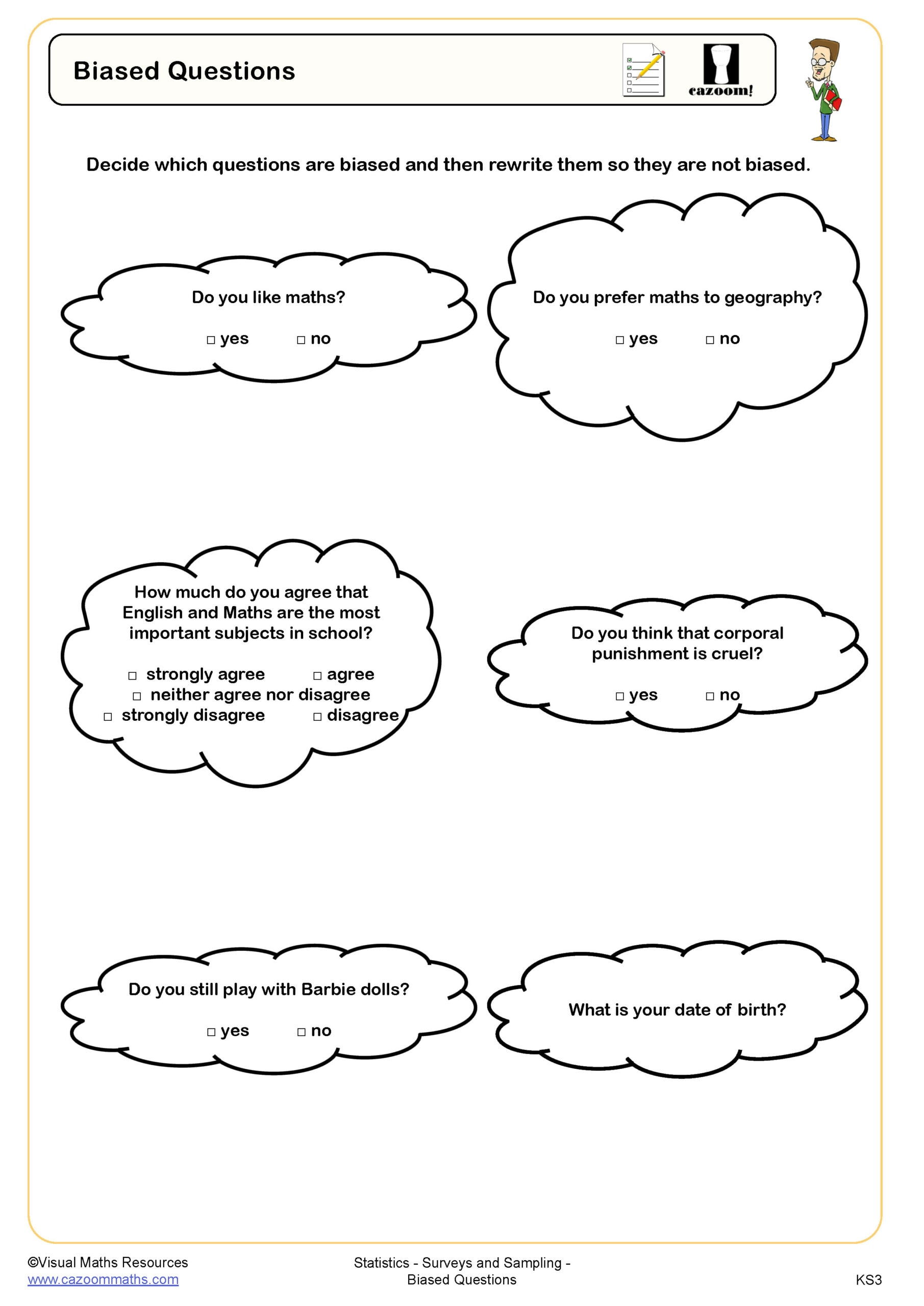
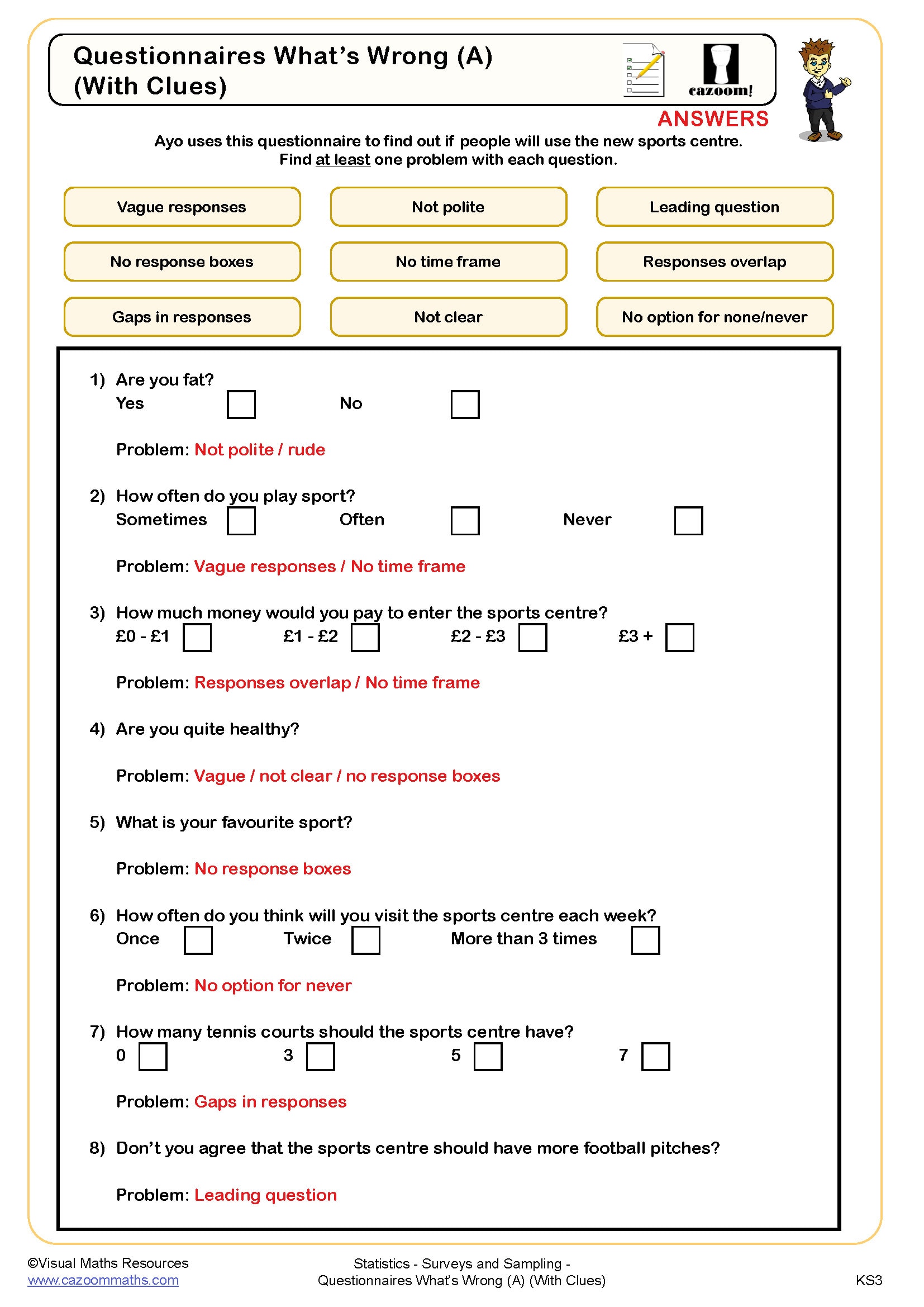
Progression across KS3 moves from recognising flawed questions toward designing complete surveys with justified sampling strategies. Year 7 students might identify why "Don't you agree that...?" leads respondents, whilst Year 9 students explain why stratified sampling better represents a population than random sampling in specific contexts. By Year 9, students should connect sample size to reliability and recognise when sampling methods produce biased or unrepresentative data.
How do different sampling methods work?
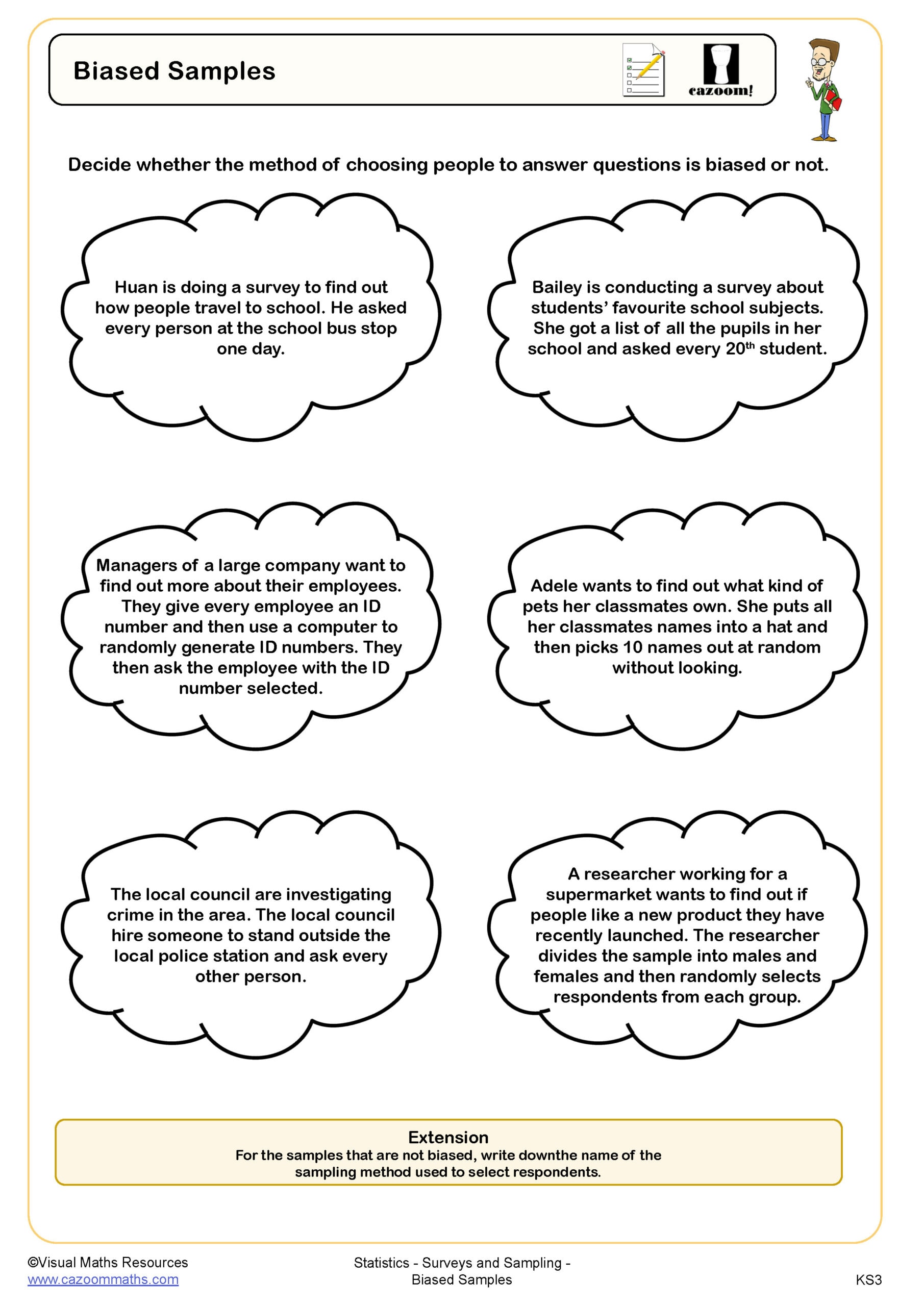
Random sampling gives every member of a population an equal chance of selection, often using random number generators or drawing names. Systematic sampling selects every nth person from a list, whilst stratified sampling divides the population into groups (strata) and samples proportionally from each. Quota sampling sets targets for specific characteristics but doesn't use random selection within those groups. Students need to match sampling methods to contexts and explain why certain approaches suit particular scenarios better than others.
Understanding sampling methods connects directly to careers in market research, public health, and quality control in manufacturing. Pharmaceutical trials use stratified sampling to ensure different age groups and medical conditions appear proportionally in drug testing. Quality control engineers apply systematic sampling on production lines, testing every 50th component rather than examining millions of items. Recognising which method produces representative data affects decisions from government policy to product development.
How do these worksheets support learning about surveys and sampling?
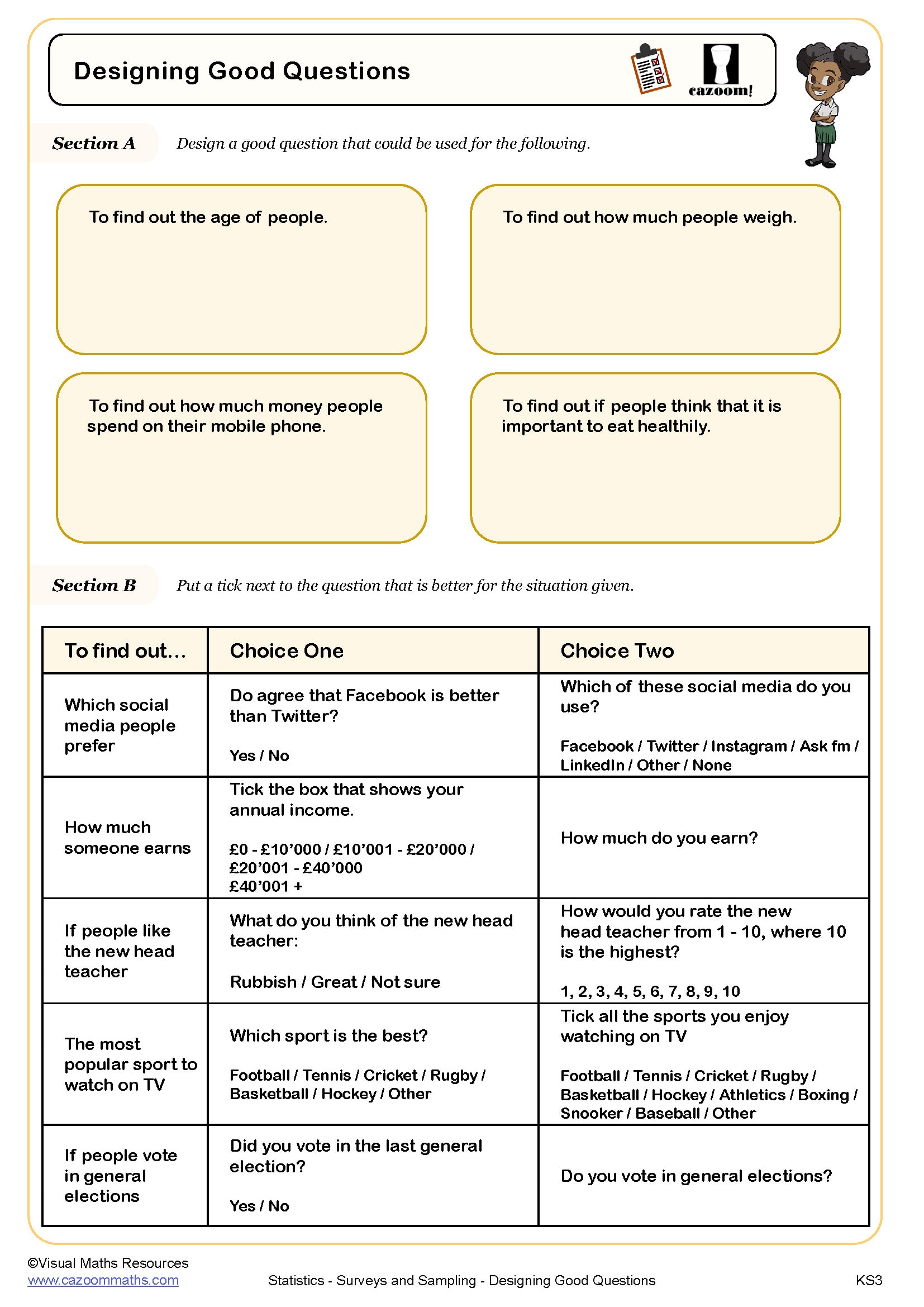
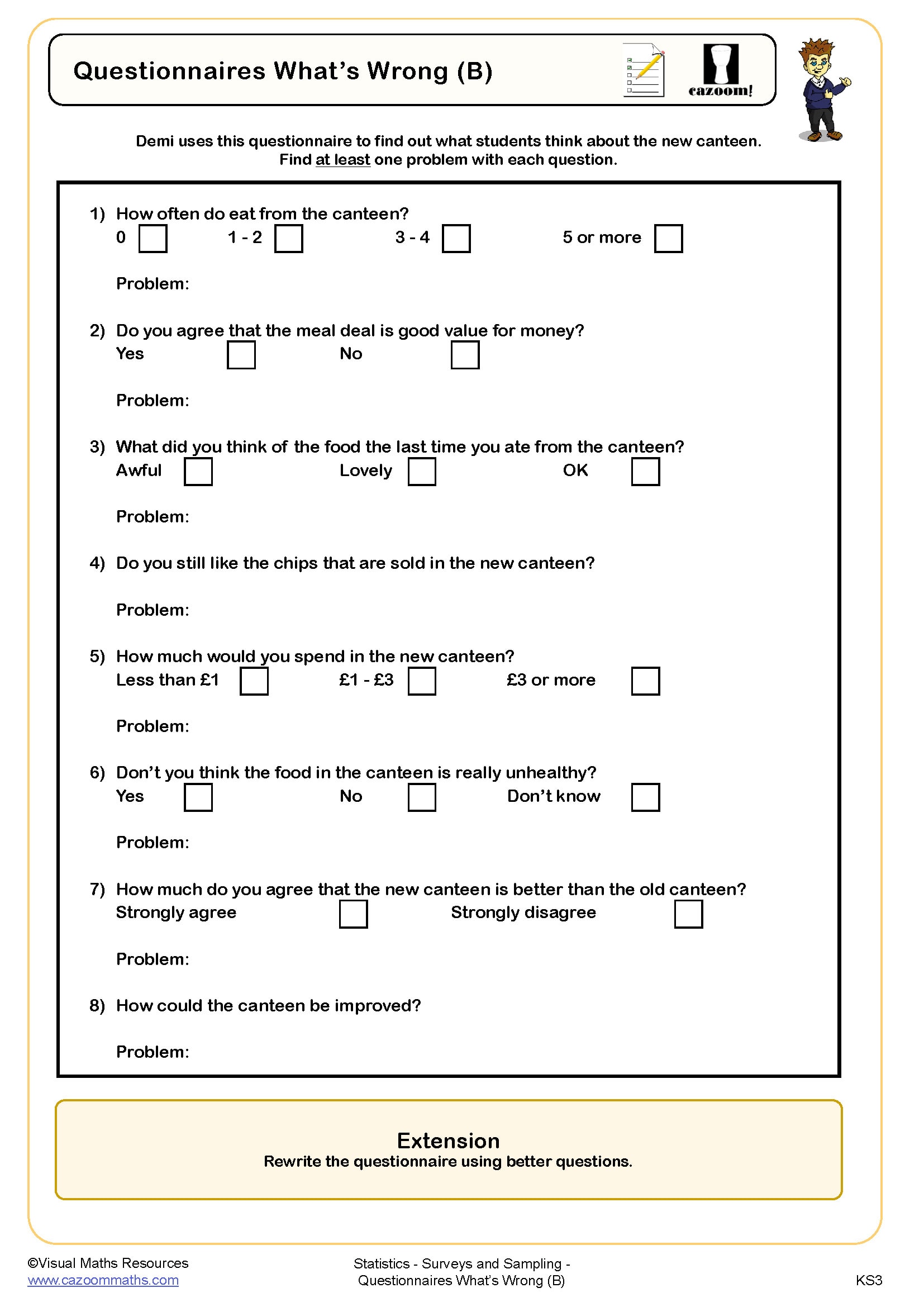
The worksheets provide worked examples showing how to evaluate questionnaires systematically, checking for bias, ambiguity, overlapping responses, and missing options. Students then apply these criteria to increasingly complex scenarios, building confidence in spotting subtle flaws that affect data reliability. Questions progress from multiple-choice identification of problems to extended responses where students must design improved questions or justify their choice of sampling method for a given population.
Teachers use these resources flexibly across different settings. They work well for paired discussions where students debate whether a question is biased, developing the analytical skills that GCSE mark schemes reward. The answer sheets make them suitable for independent homework or revision, whilst the structured progression supports intervention for students who need additional practice identifying bias before moving to designing surveys. Many teachers find them valuable before coursework or investigation tasks that require students to collect primary data.