KS3 Written Methods Worksheets
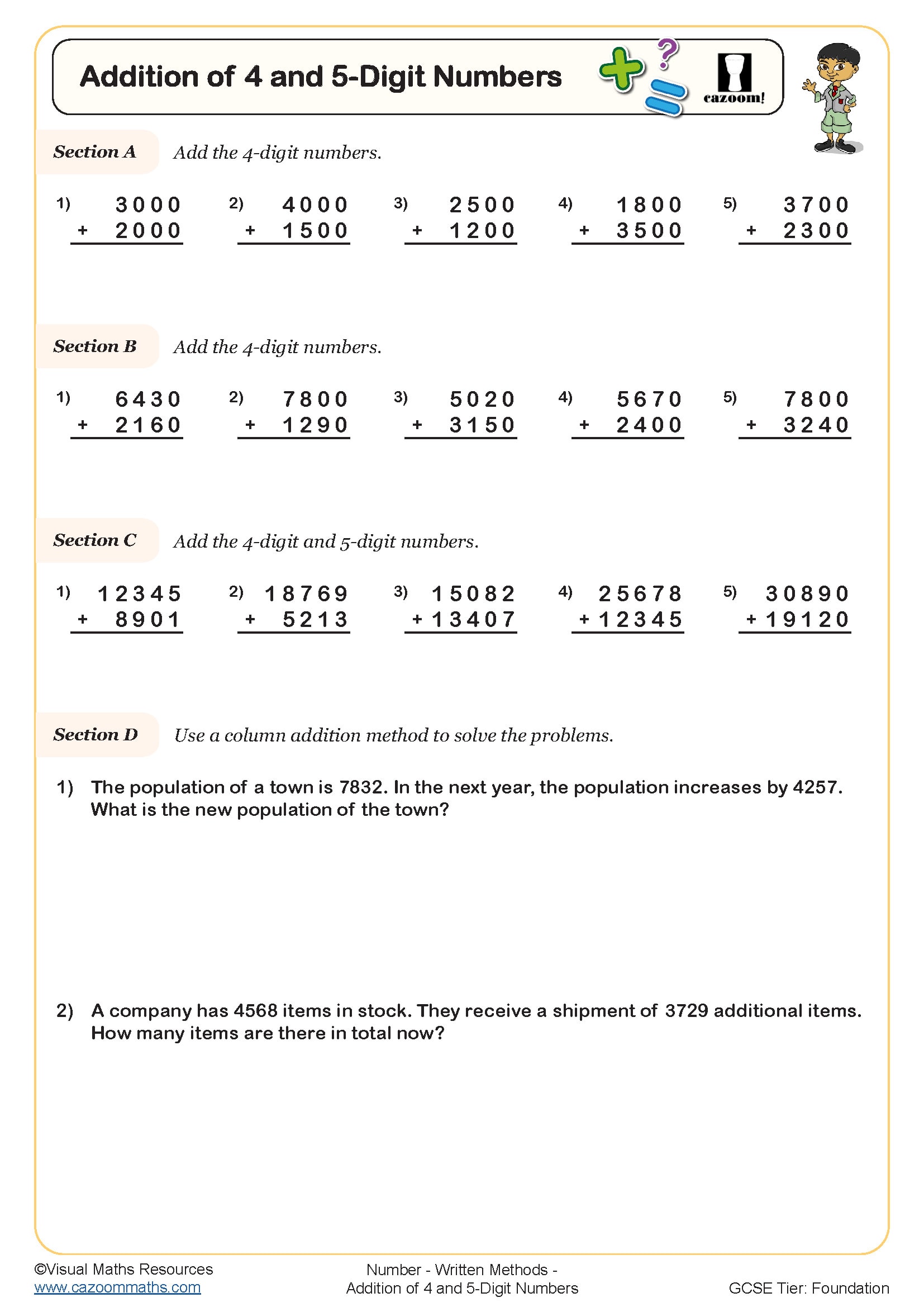
Addition of 4 and 5-digit Numbers
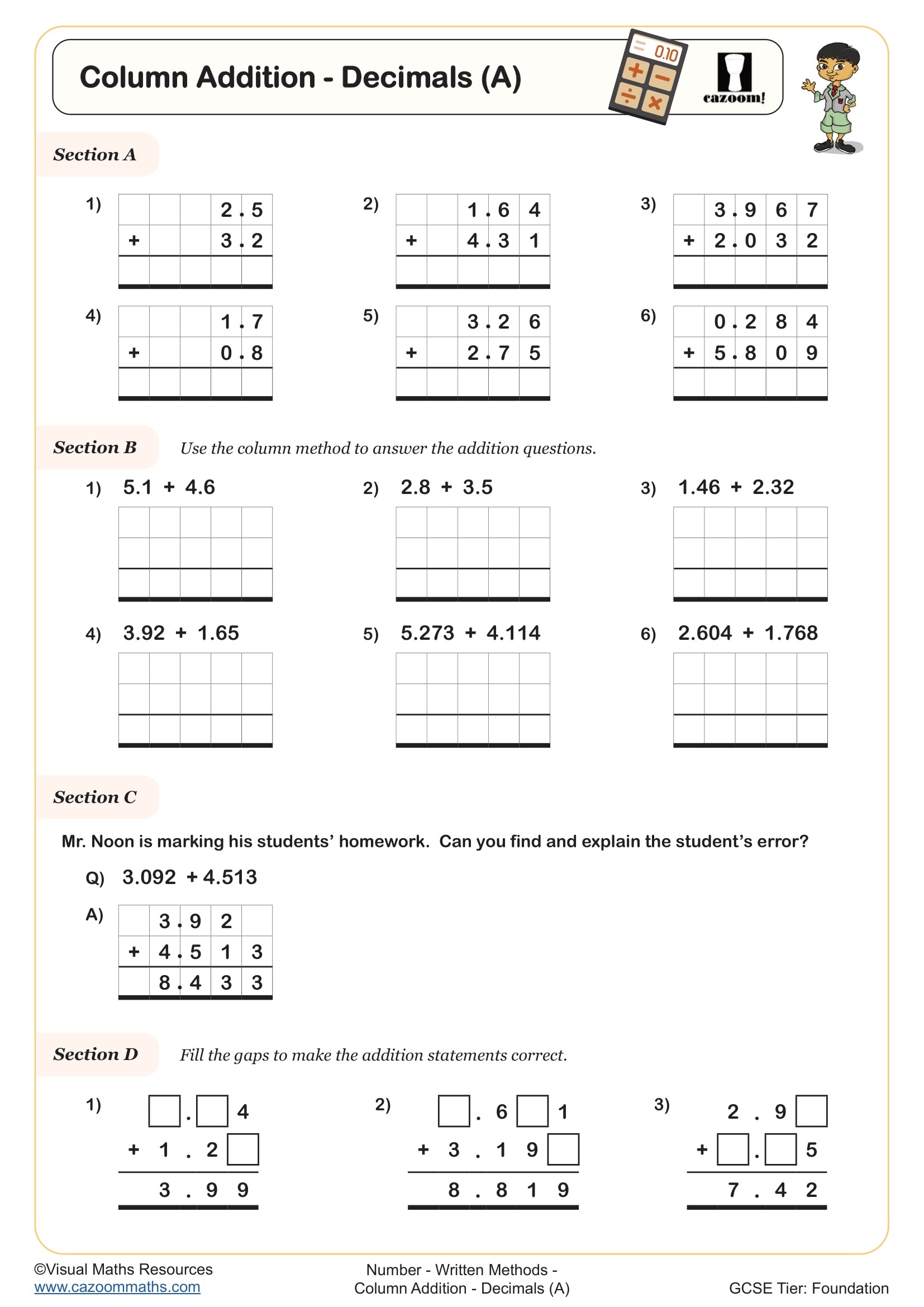
Column Addition - Decimals (A)
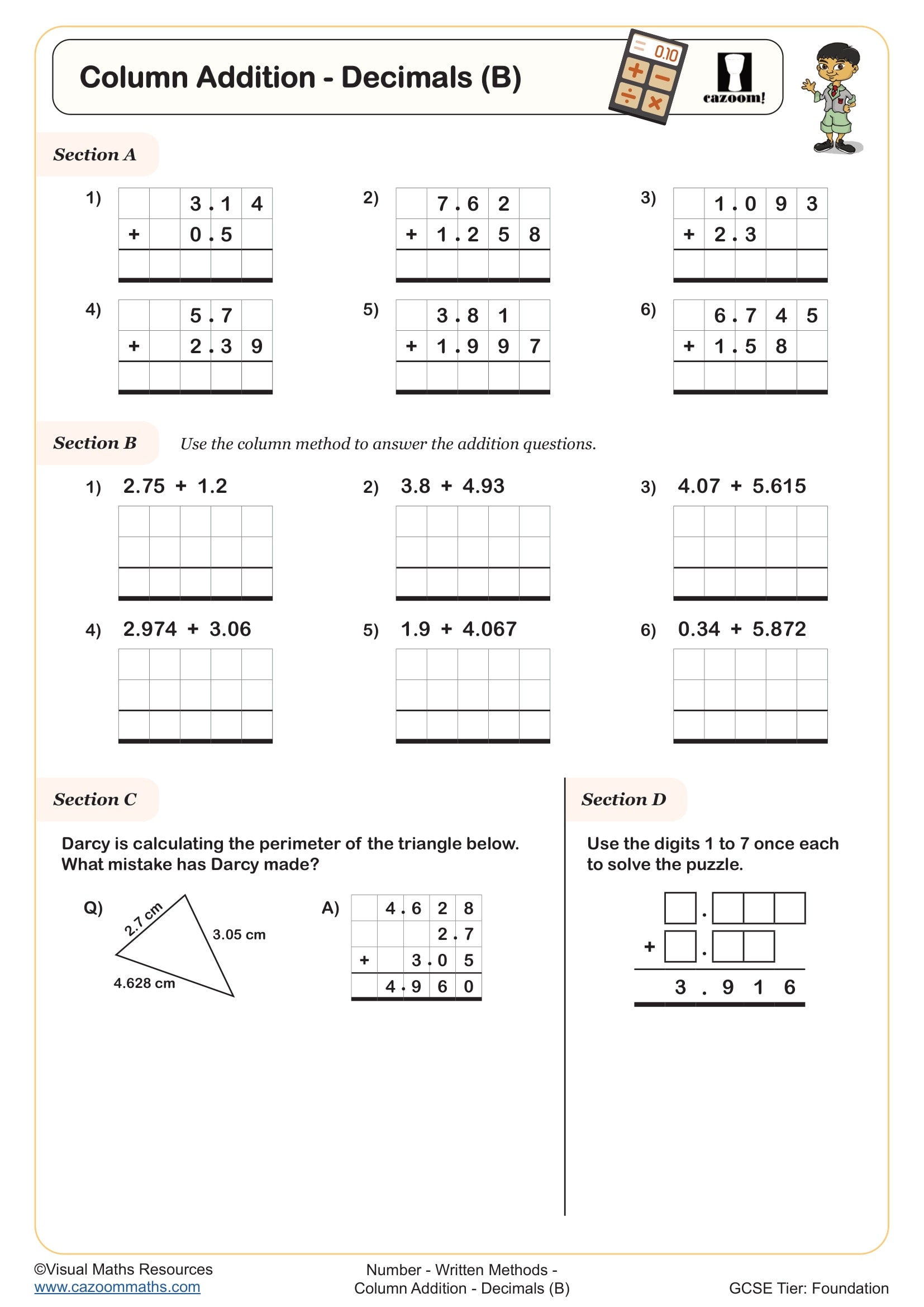
Column Addition - Decimals (B)
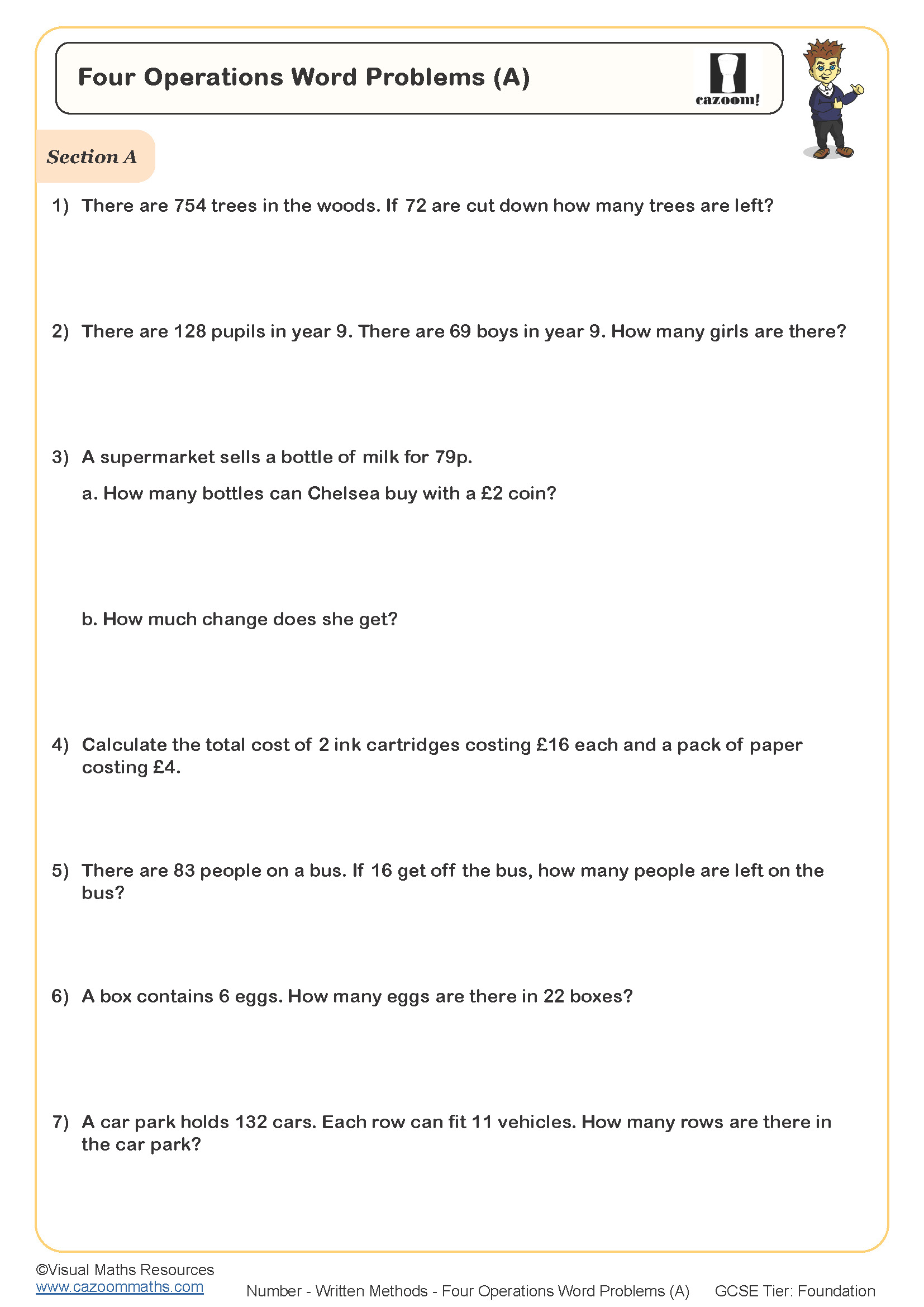
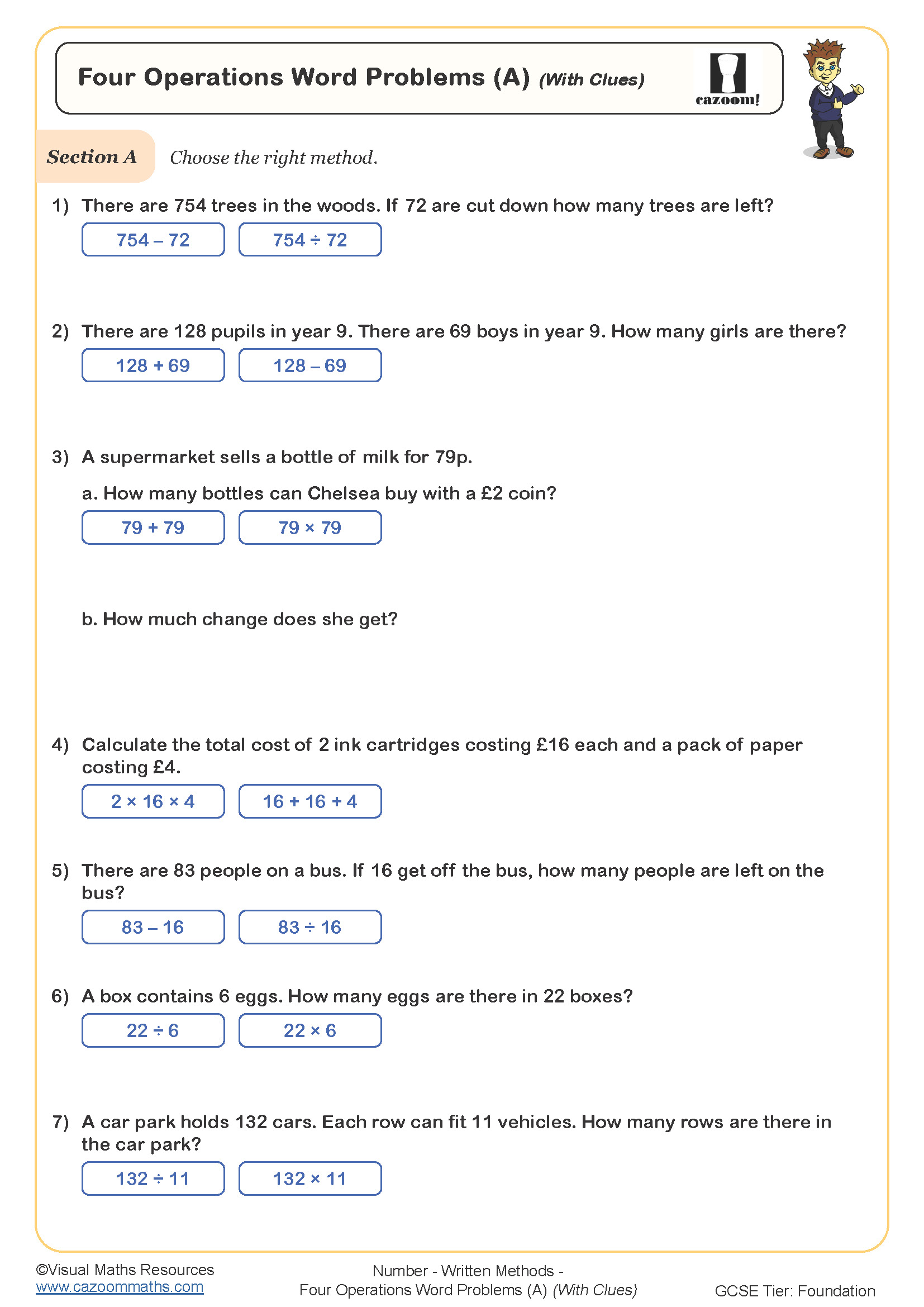
Four Operations Word Problems (A)
Four Operations Word Problems (A) (With Clues)
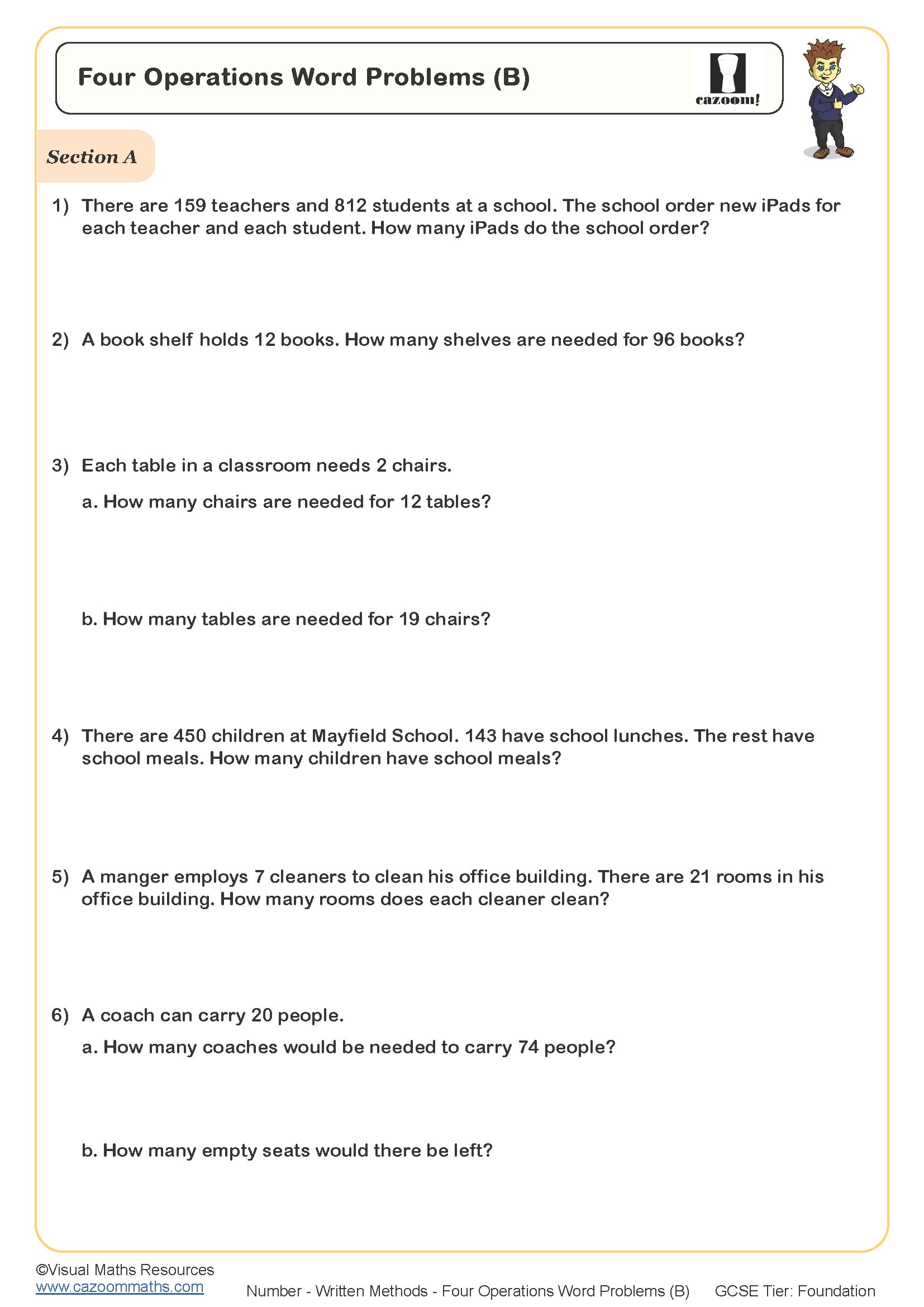
Four Operations Word Problems (B)
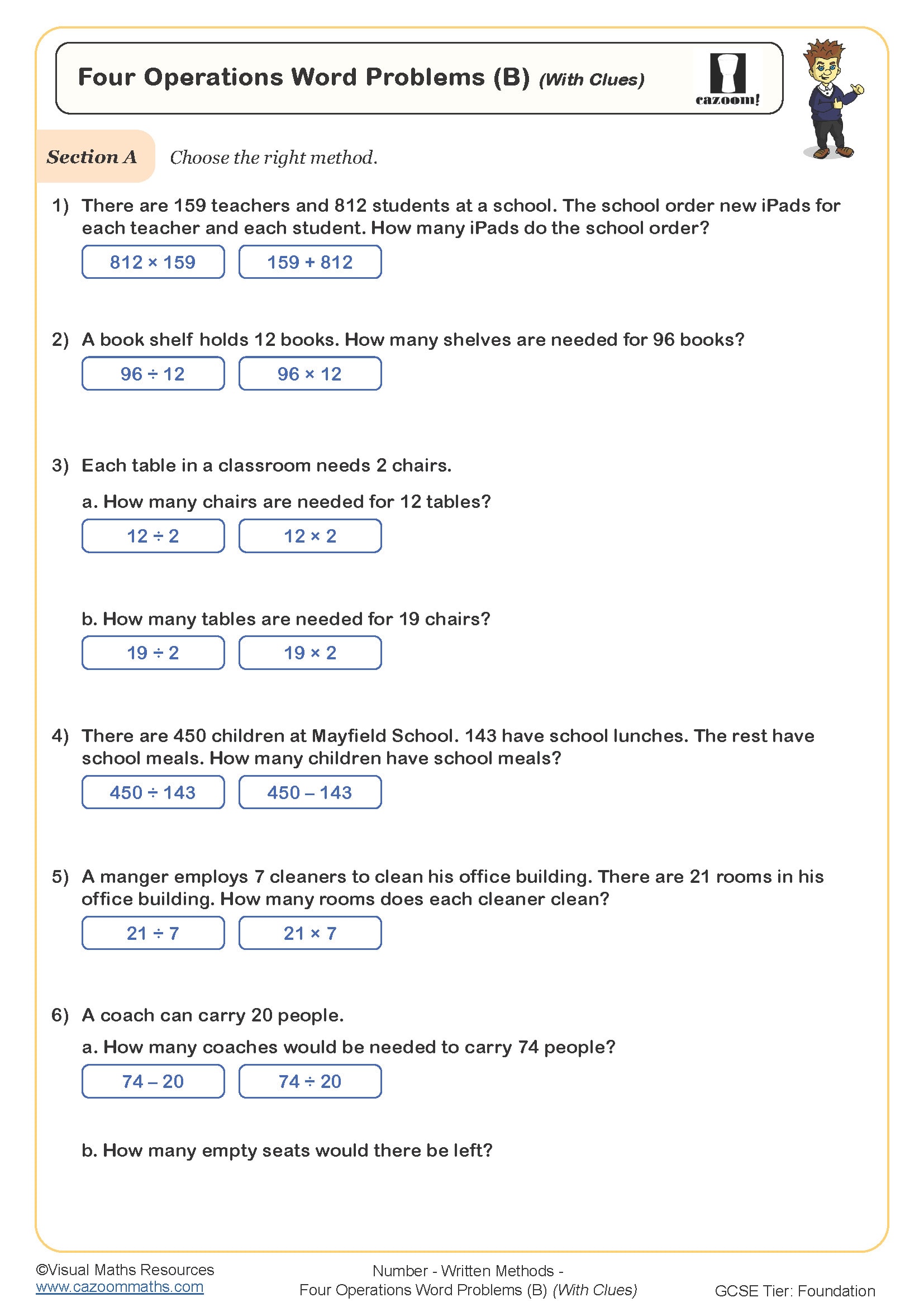
Four Operations Word Problems (B) (With Clues)
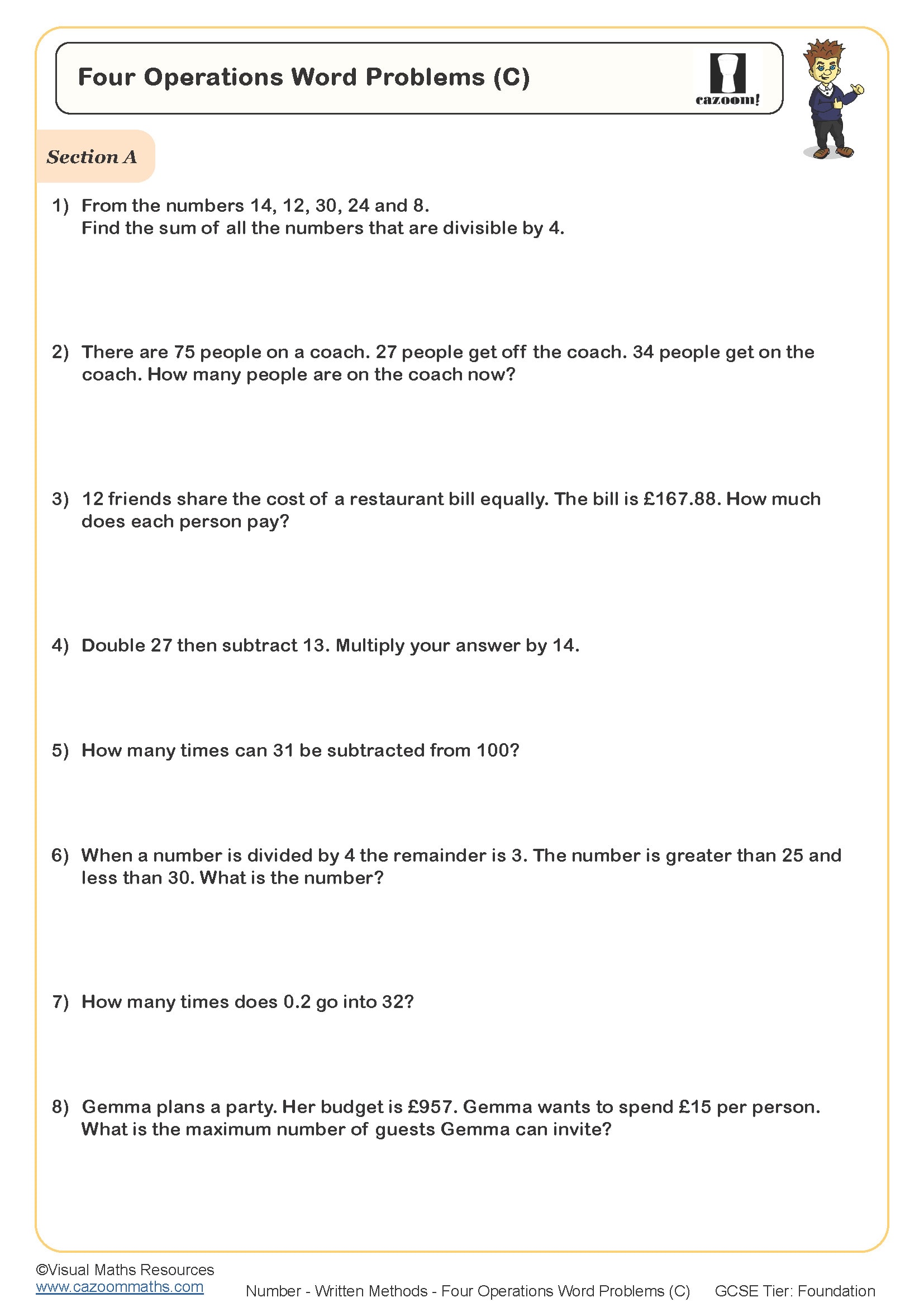
Four Operations Word Problems (C)
Long and Short Division (A)
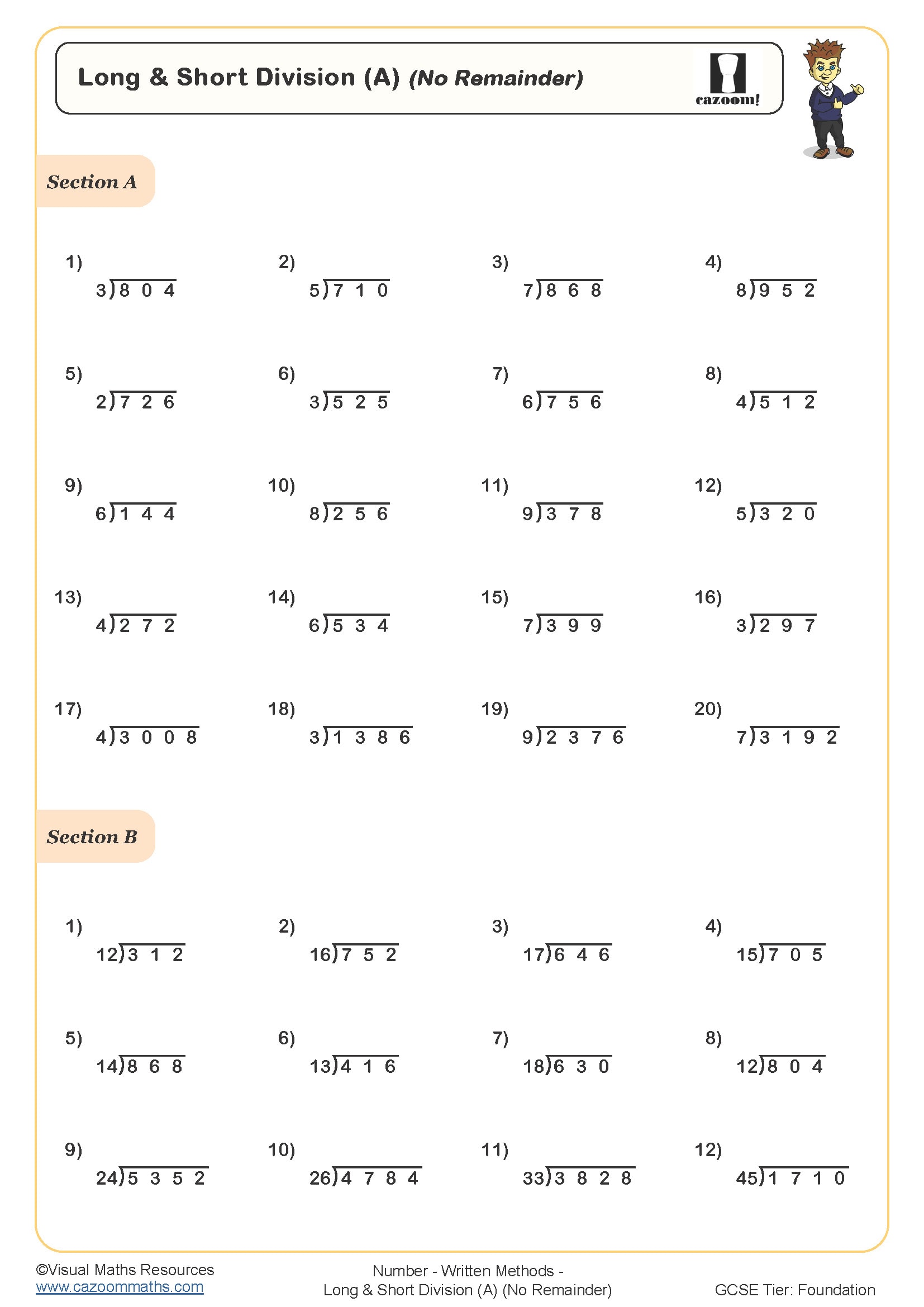
Long and Short Division (B)
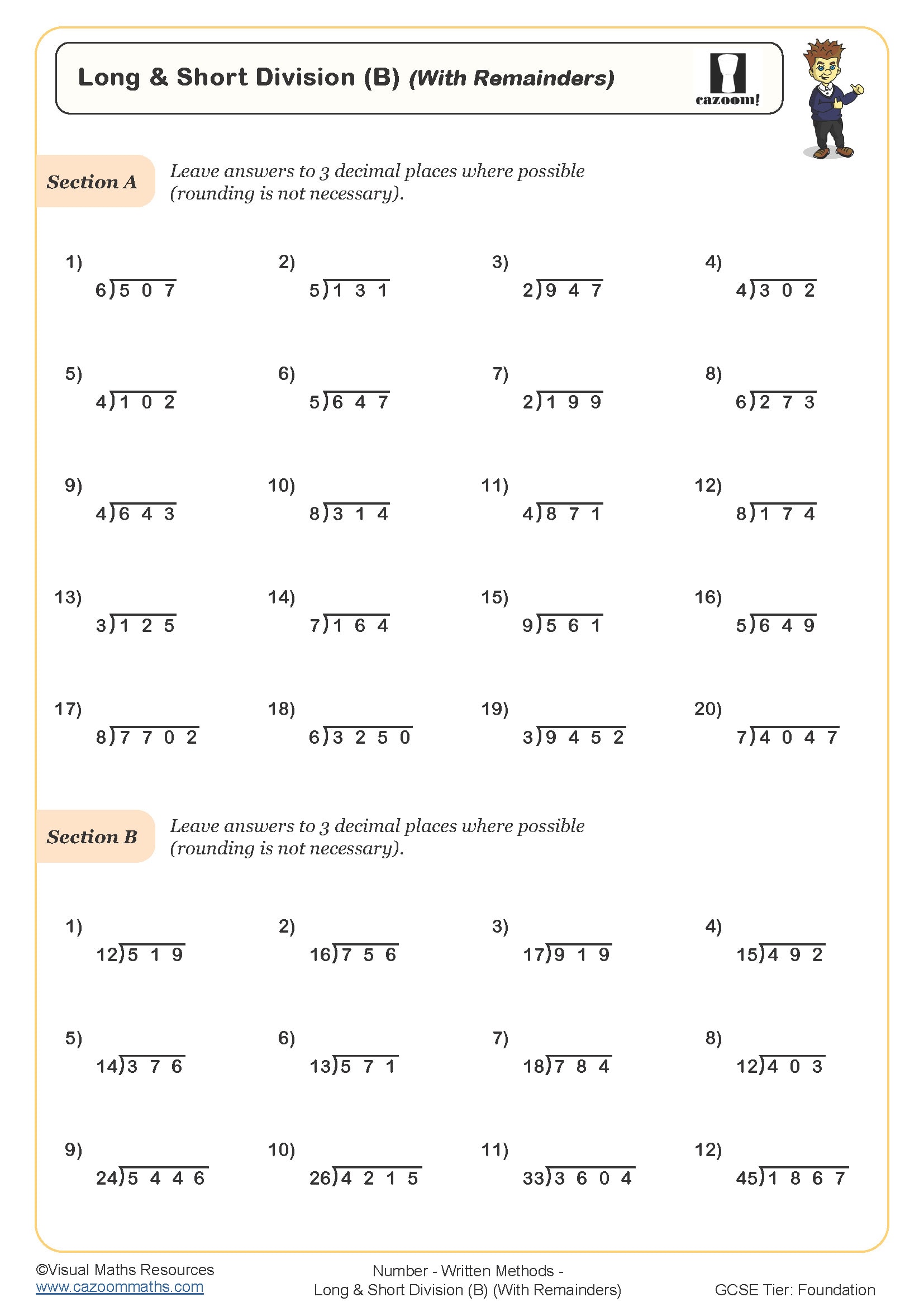
Money Problems (A)
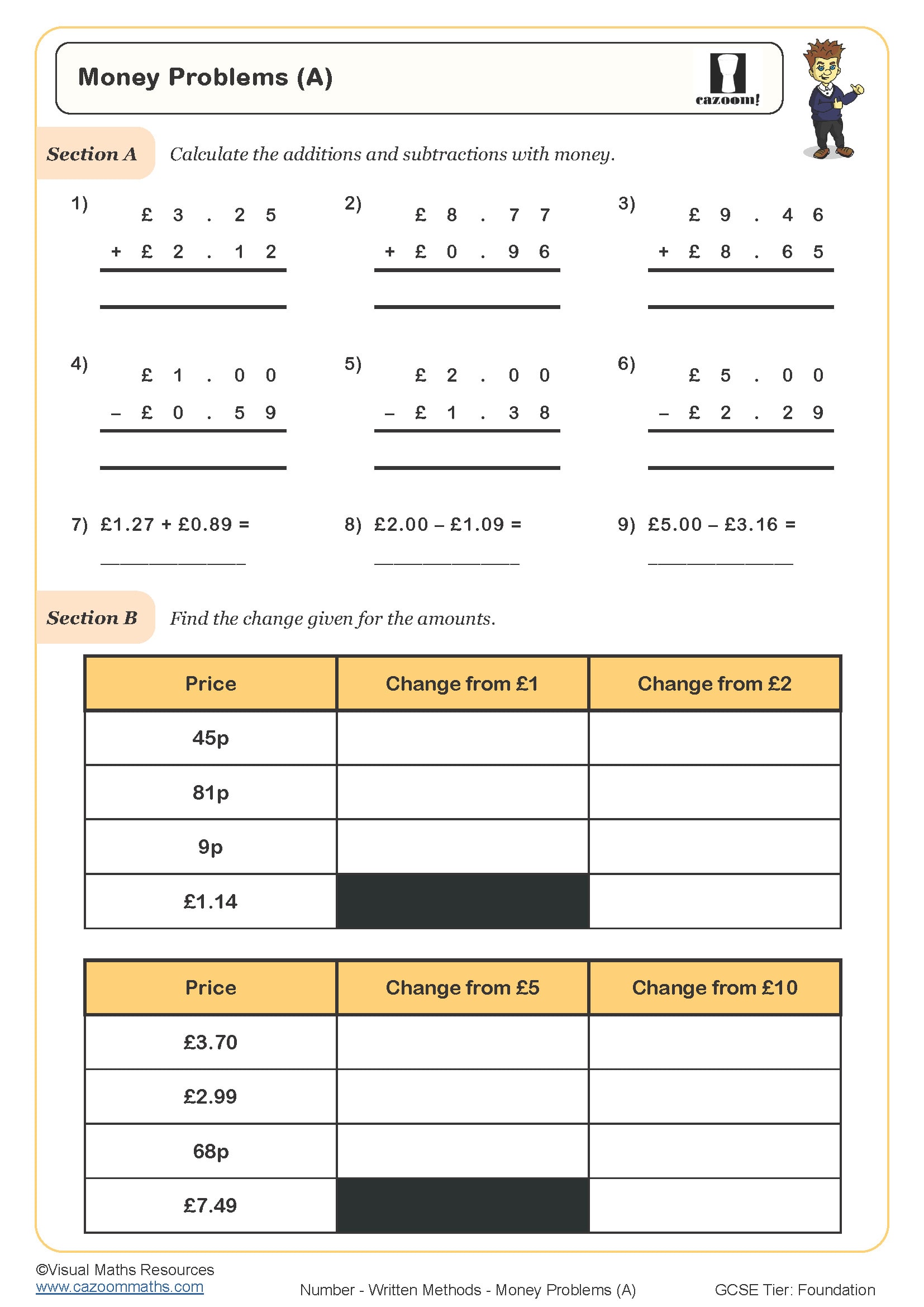
Money Problems (B)
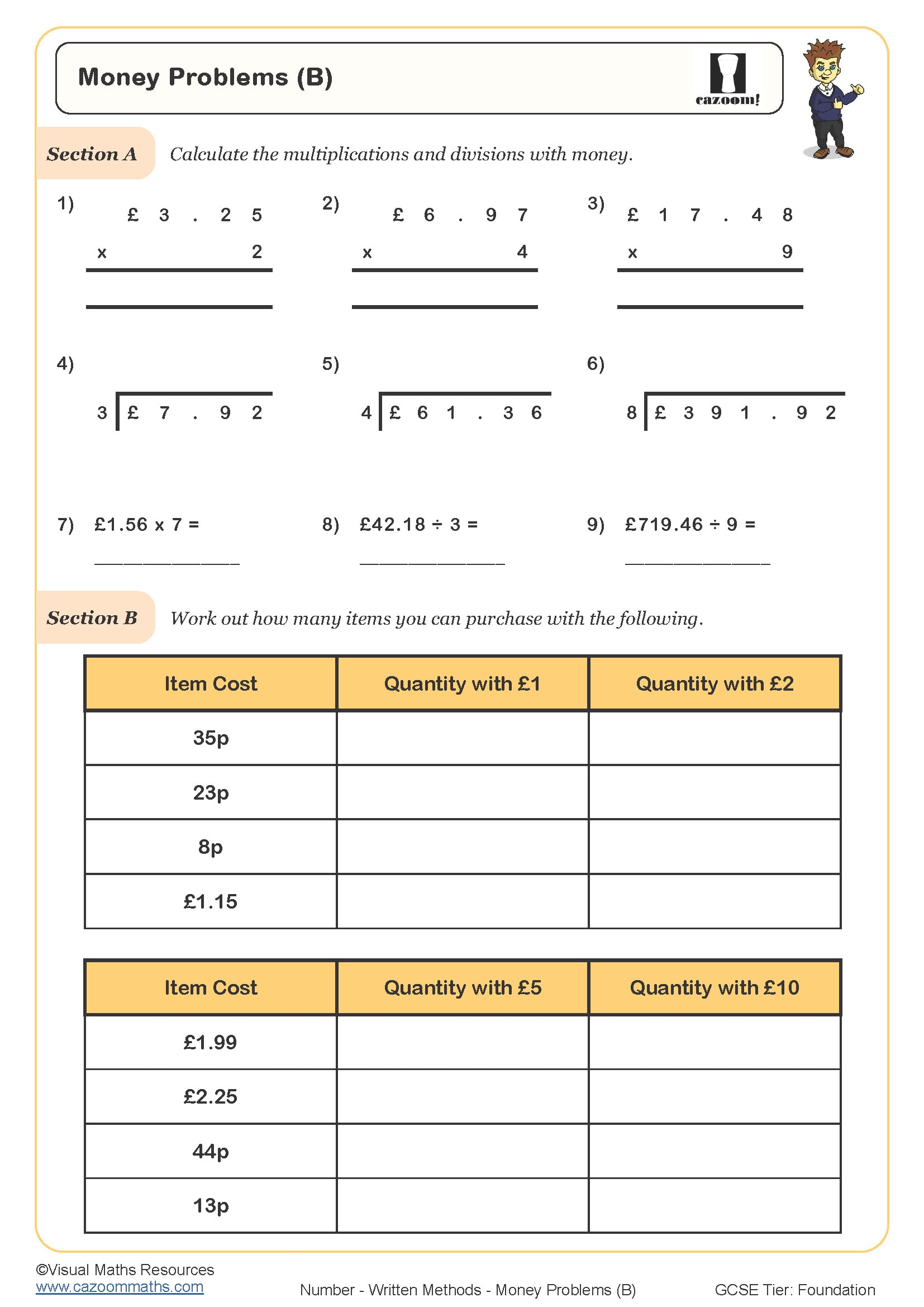
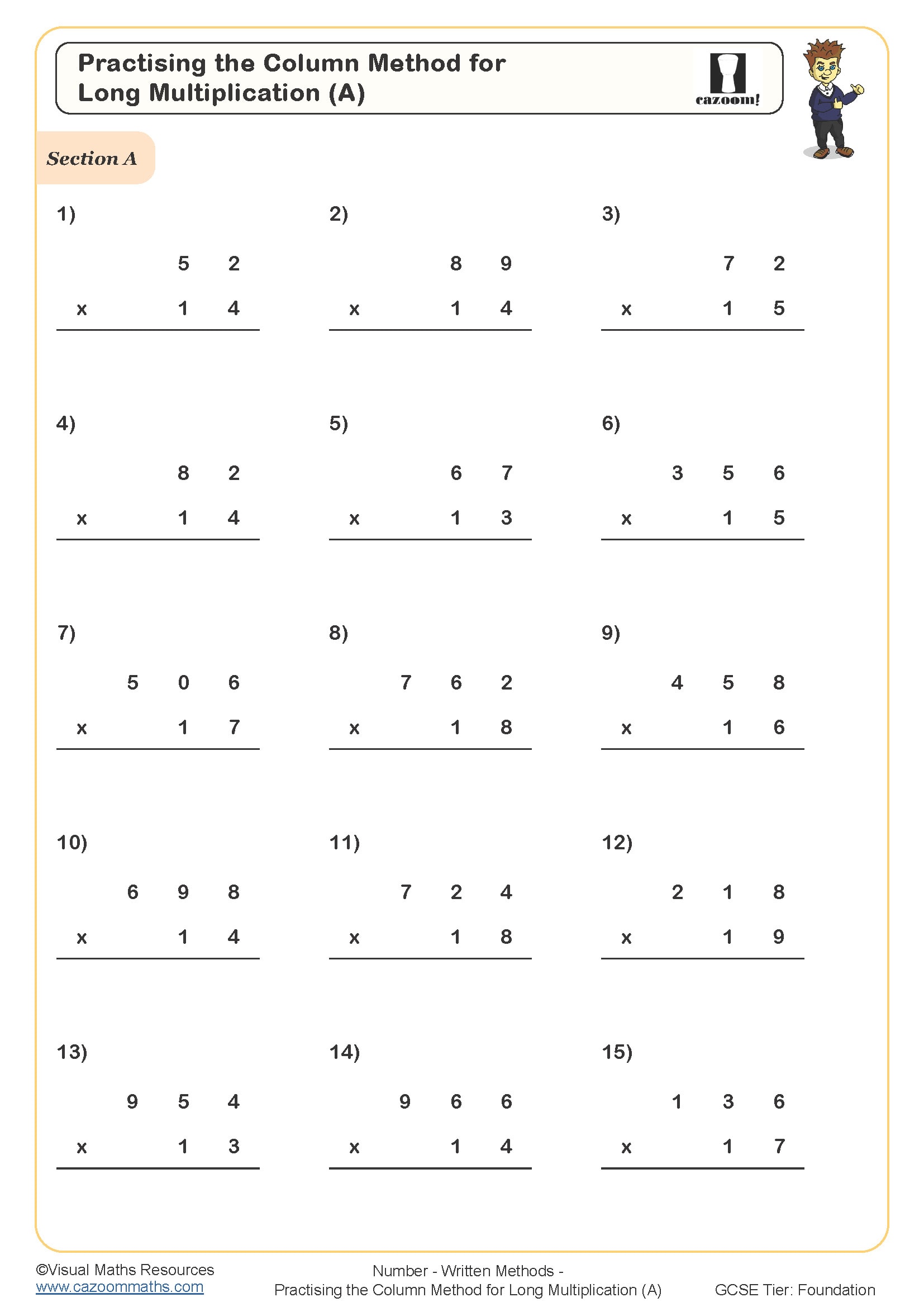
Practising the Column Method for Long Multiplication (A)
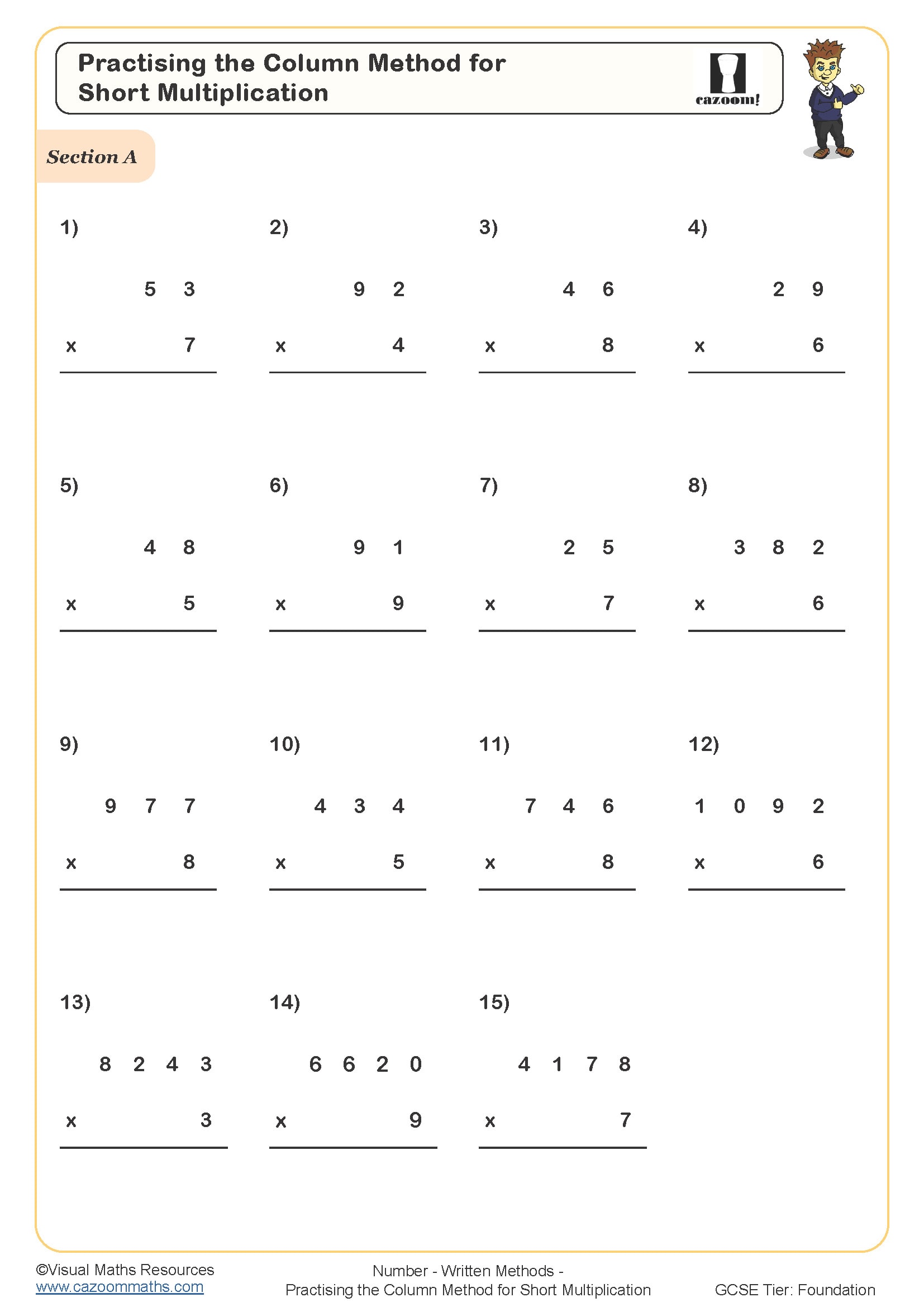
Practising the Column Method for Short Multiplication
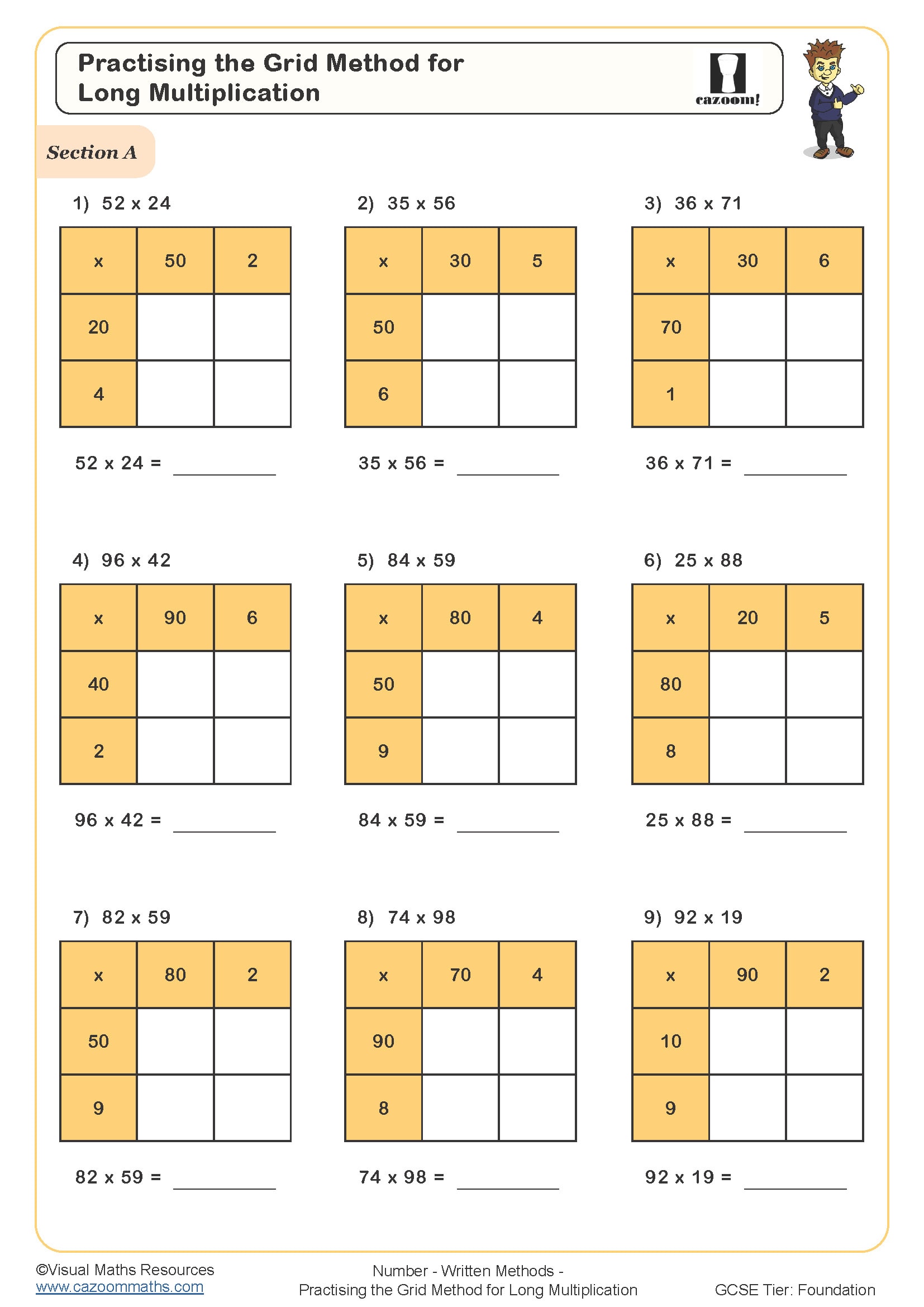
Practising the Grid Method for Long Multiplication
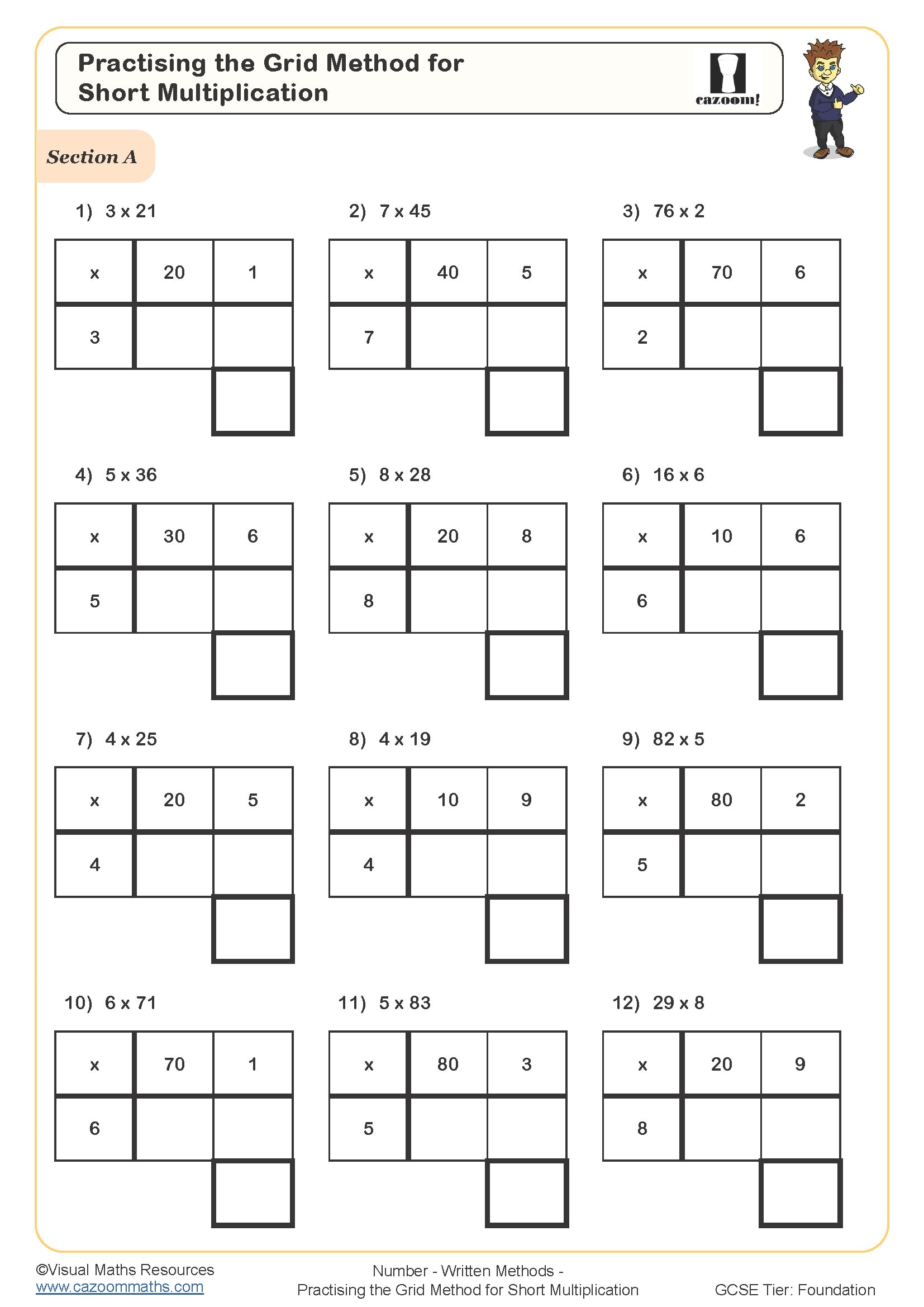
Practising the Grid Method for Short Multiplication (A)
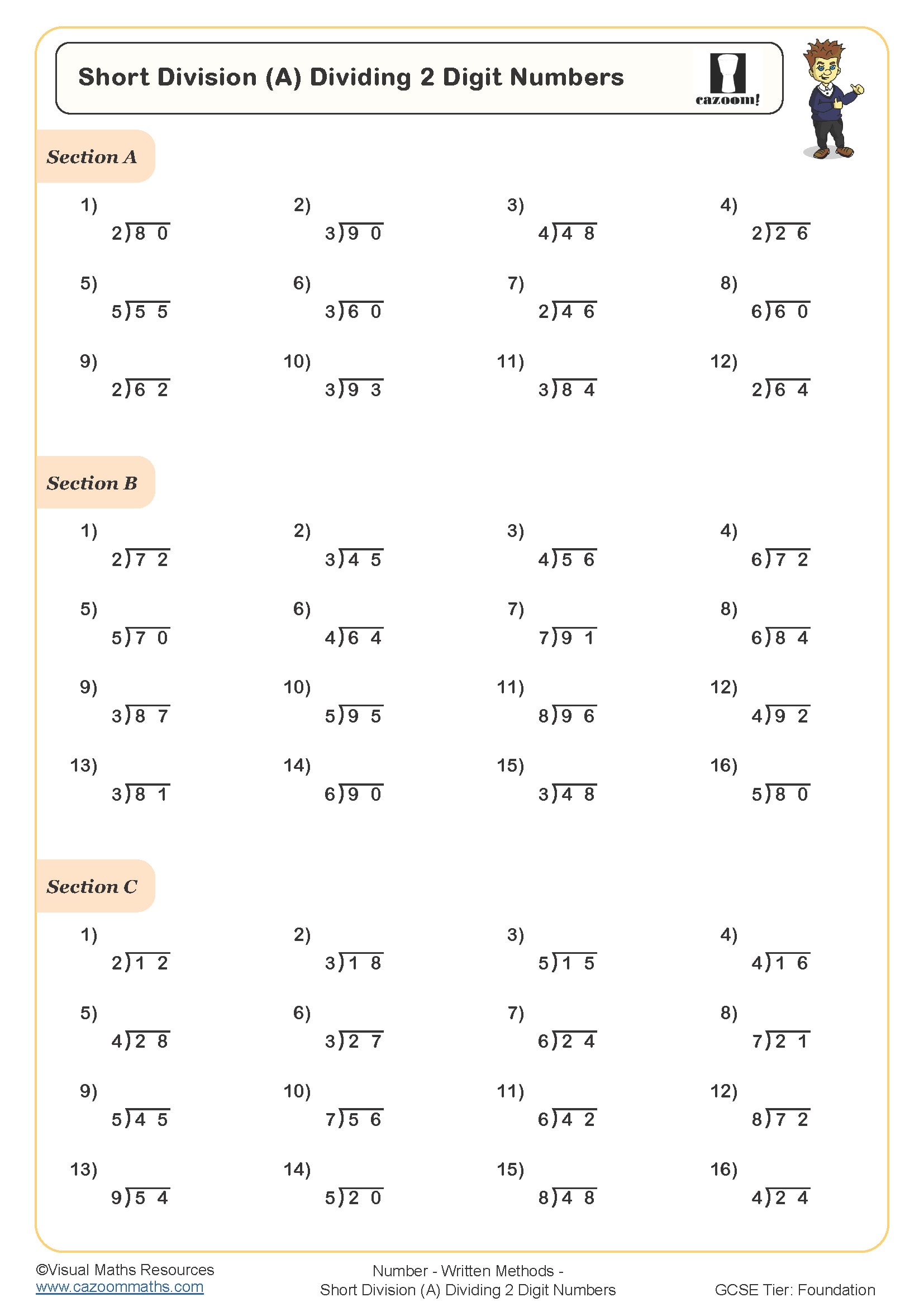
Short Division (A) Dividing 2 Digit Numbers
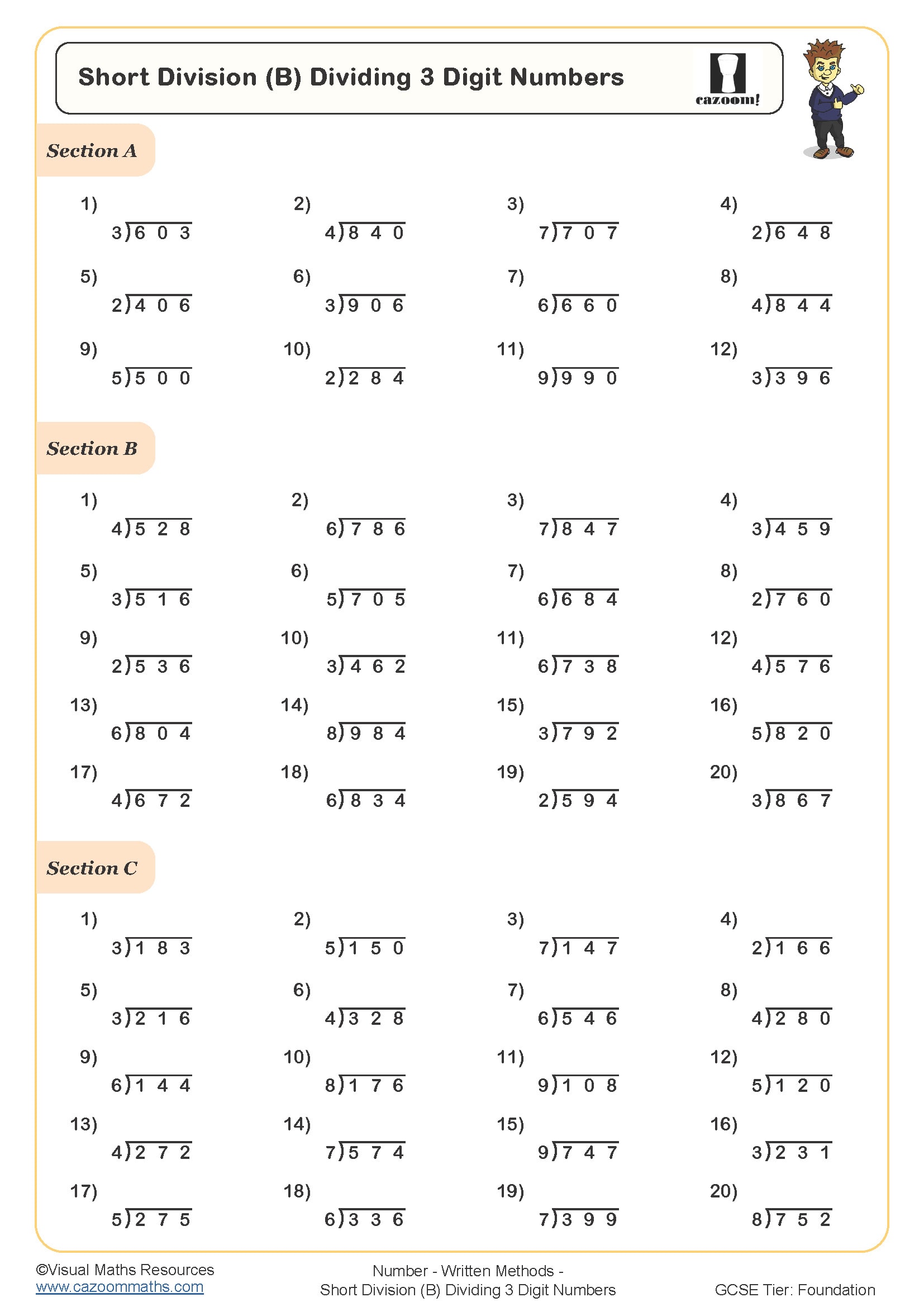
Short Division (B) Dividing 3 Digit Numbers
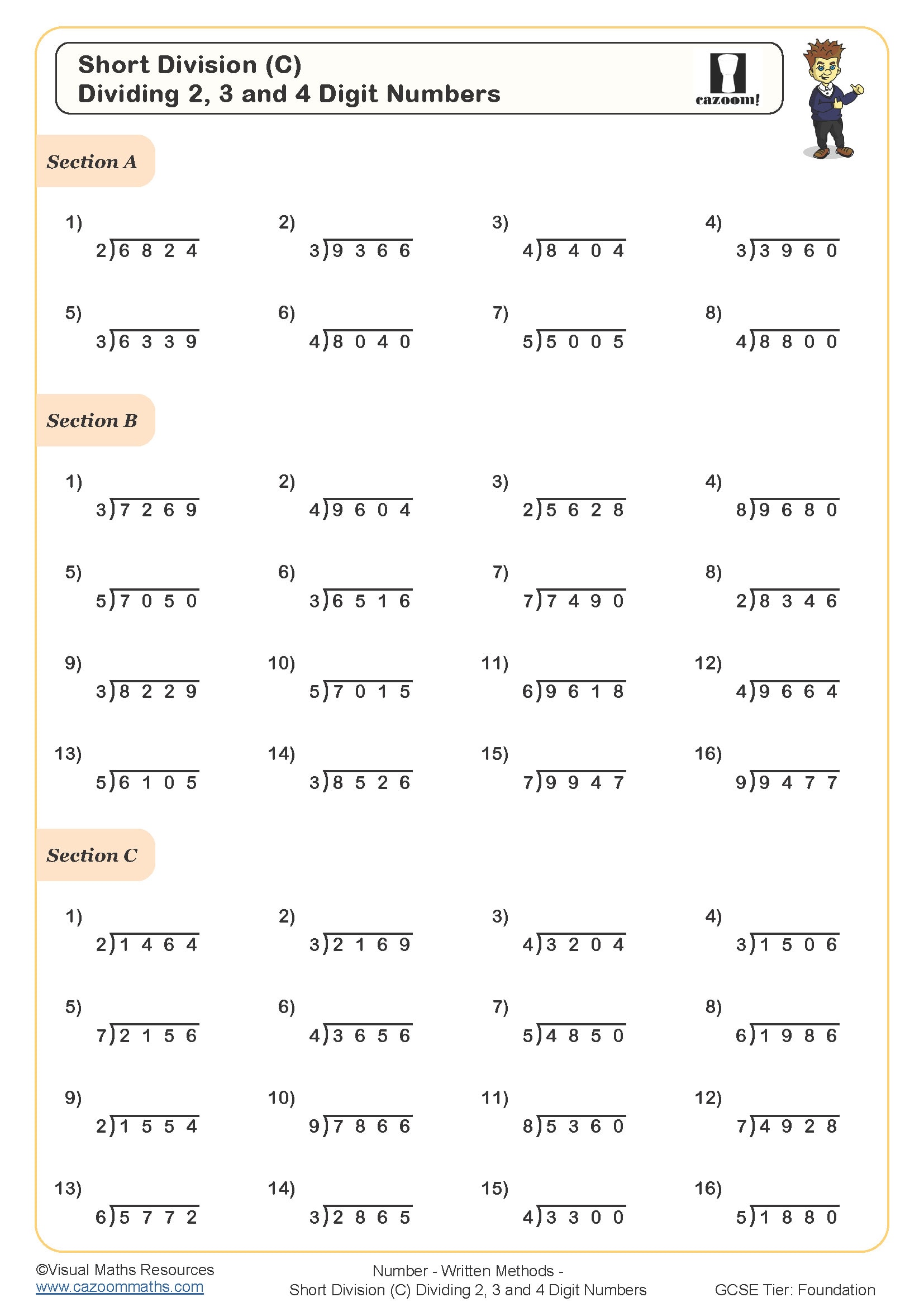
Short Division (C) Dividing 2, 3 and 4 Digit Numbers
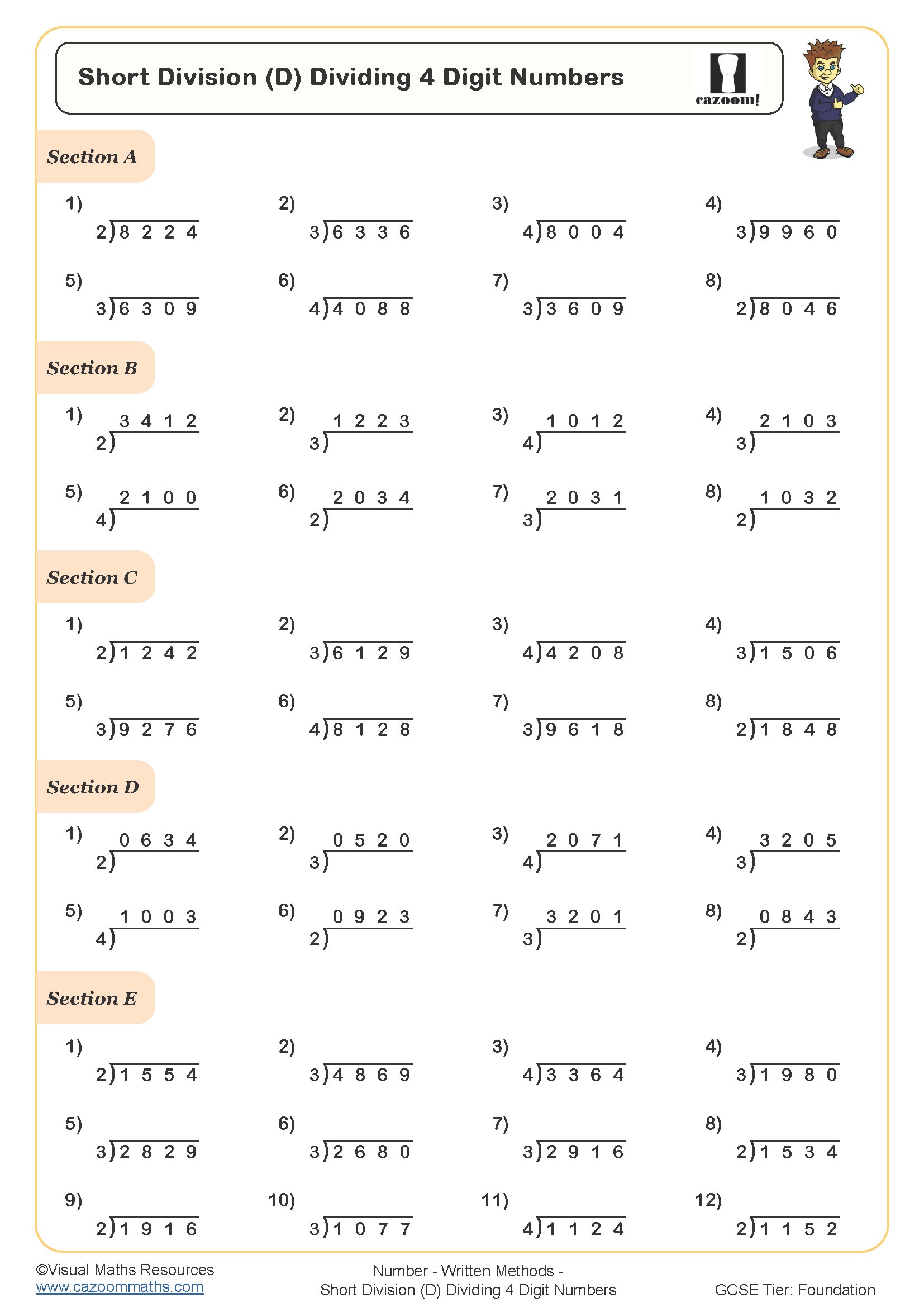
Short Division (D) Dividing 4 Digit Numbers
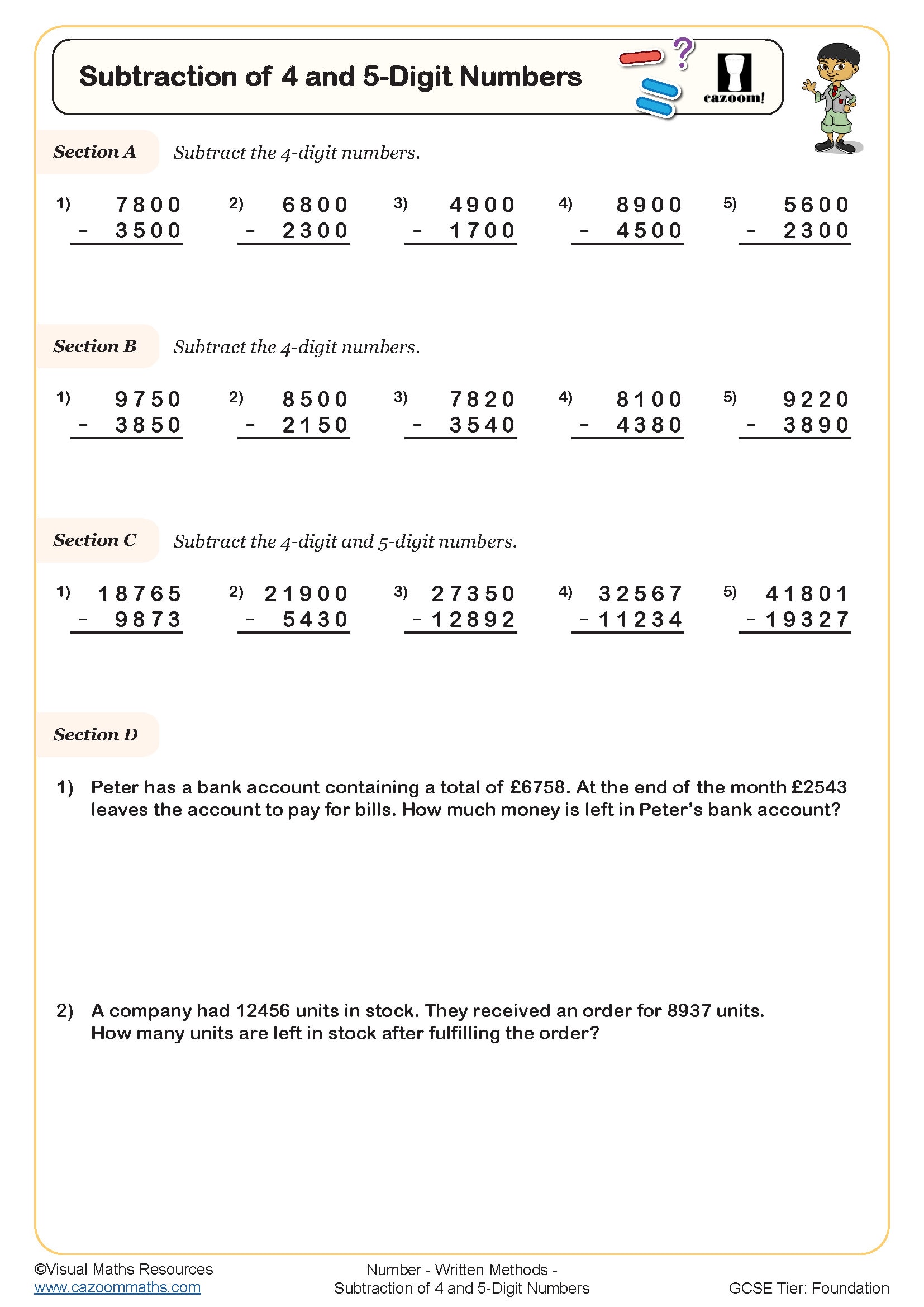
Subtraction of 4 and 5-digit Numbers
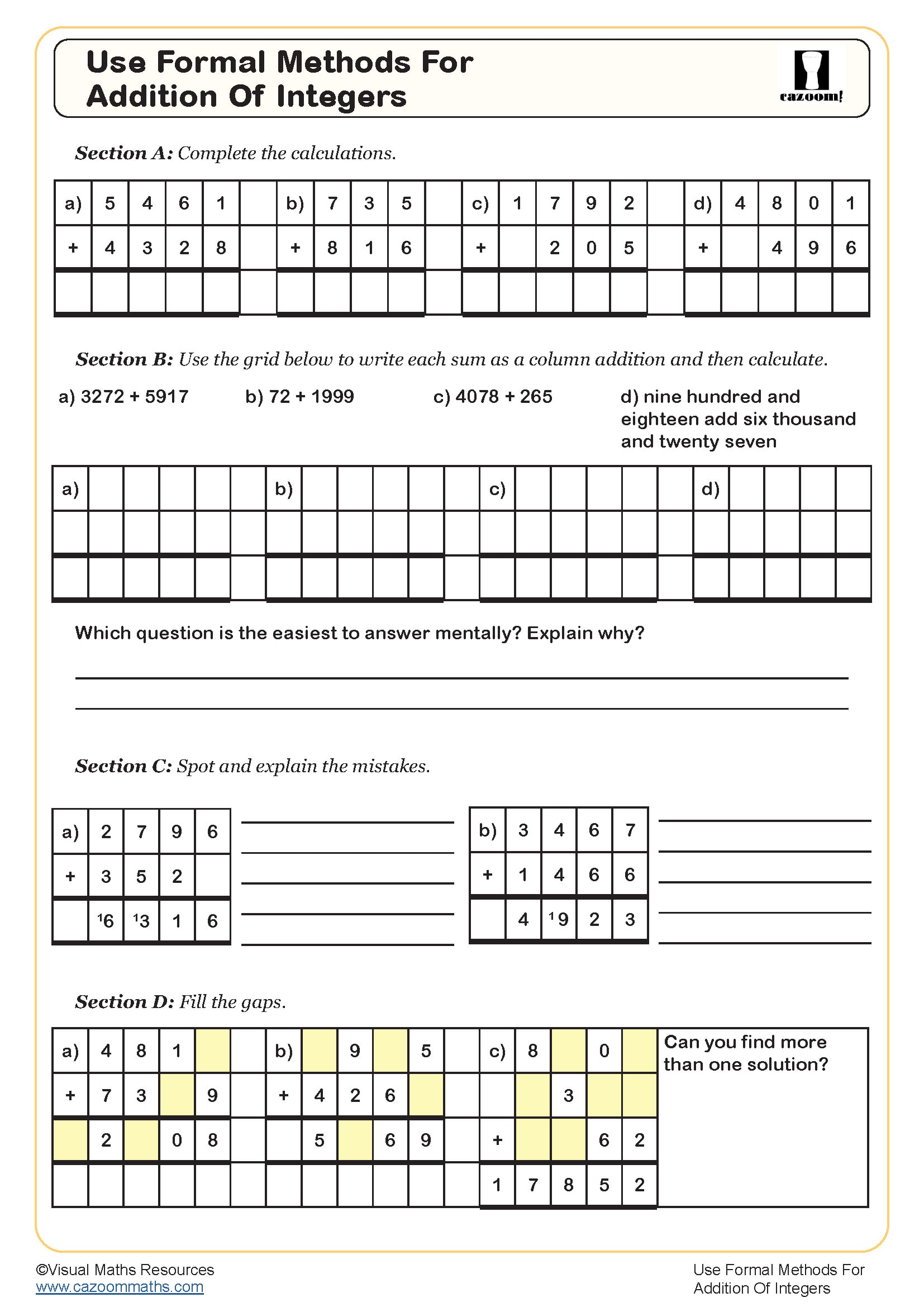
Use Formal Methods For Addition of Integers
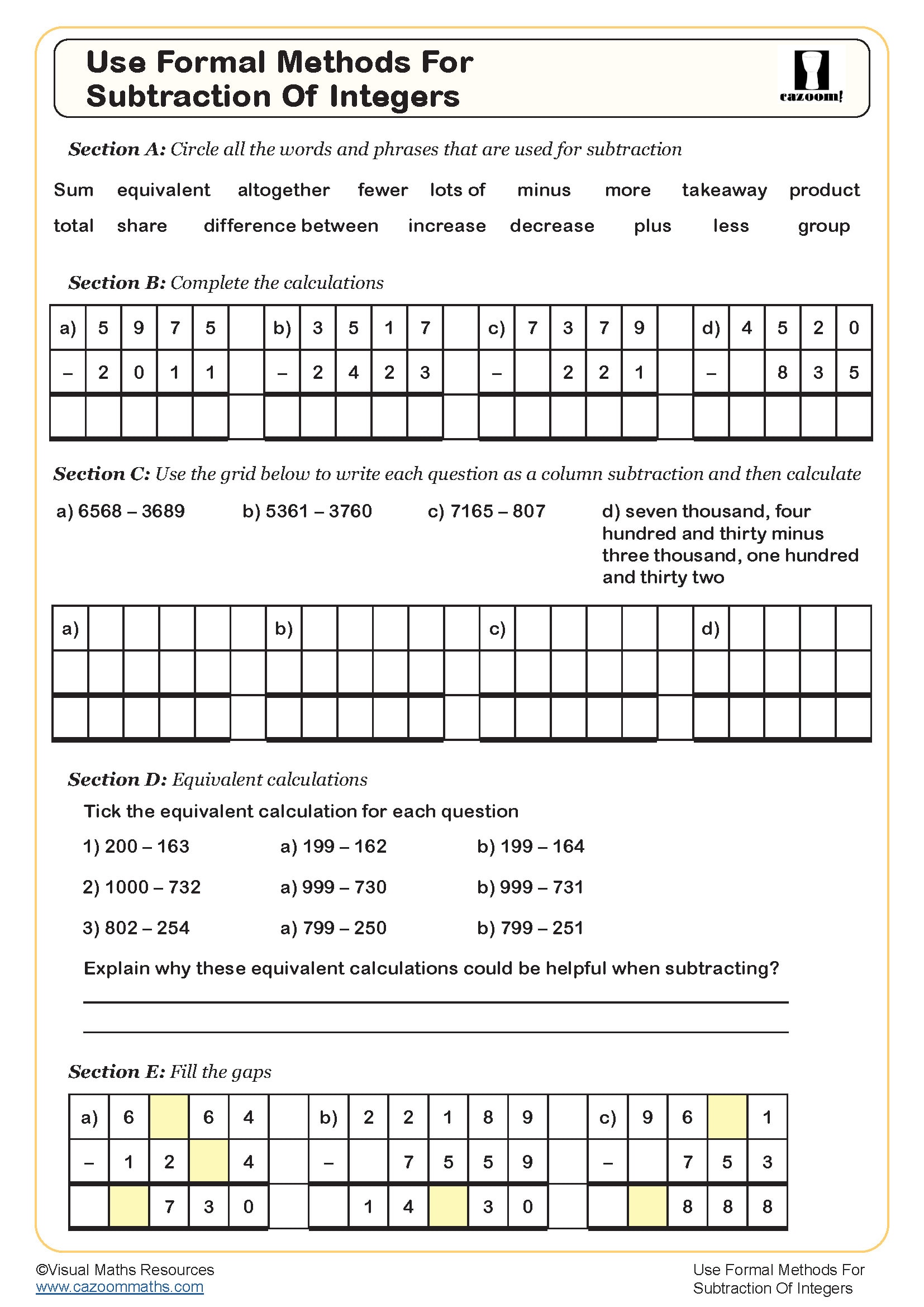
Use Formal Methods For Subtraction of Integers
All worksheets are created by the team of experienced teachers at Cazoom Maths.
What are written methods in KS3 maths?
Written methods are formal algorithms for calculating addition, subtraction, multiplication and division on paper. At KS3, students refine the column methods learned at primary level, applying them to larger numbers, decimals and problem-solving contexts. These methods form part of the Number strand in the National Curriculum and provide the foundation for algebraic manipulation.
Students often lose marks in assessments when they misalign columns or fail to show sufficient working. A common error in long multiplication involves forgetting to add the zero placeholder when multiplying by the tens digit, resulting in answers ten times too small. Teachers notice this particularly when students attempt questions under time pressure, emphasising why methodical, well-presented working matters.
Which year groups use written methods worksheets?
These worksheets are designed for Year 7 and Year 8 students working through Key Stage 3. At Year 7, the focus is on consolidating formal written methods with whole numbers and extending them to decimals with confidence. By Year 8, students apply these methods to increasingly complex problems involving negative numbers, order of operations and multi-step calculations.
The progression across these year groups involves moving from straightforward calculations to questions embedded in context. Year 7 students typically work on accuracy and presentation, whilst Year 8 students tackle problems requiring them to select appropriate methods and check answers for reasonableness. This gradual increase in complexity prepares students for GCSE Foundation tier, where non-calculator papers still require fluent written calculation.
Why is long multiplication still important in the calculator age?
Long multiplication develops understanding of how the distributive property works and builds the number sense students need for estimation and error-checking. When students perform 47 × 23 by hand, they're actually calculating (40 + 7) × (20 + 3), which directly mirrors algebraic expansion. This connection becomes explicit when they encounter (x + 7)(x + 3) in algebra lessons.
Engineers and scientists routinely estimate calculations before using technology, a skill rooted in understanding written methods. When designing a bridge, an engineer might need to quickly verify whether a computer-generated load calculation is plausible. Students who've internalised multiplication structures can spot when an answer is orders of magnitude wrong—a decimal point error or missing zero—which prevents costly mistakes in technical fields.
How should teachers use these written methods worksheets?
The worksheets provide graduated practice, beginning with straightforward calculations to establish method accuracy before introducing problem-solving applications. Many teachers use the first few questions as worked examples on the board, explicitly modelling column alignment and placeholder positioning. The answer sheets enable students to self-check immediately after completing a section, which research shows improves retention more effectively than delayed marking.
These resources work well for intervention groups where students need to revisit calculation basics that should have been secure from primary school. Teachers also deploy them as homework following initial teaching, allowing lesson time for richer problem-solving whilst ensuring students maintain procedural fluency. Some departments use them for paired work, with one student calculating and the other checking working against the answer sheet, which develops mathematical communication skills.