KS4 Solving Equations Worksheets
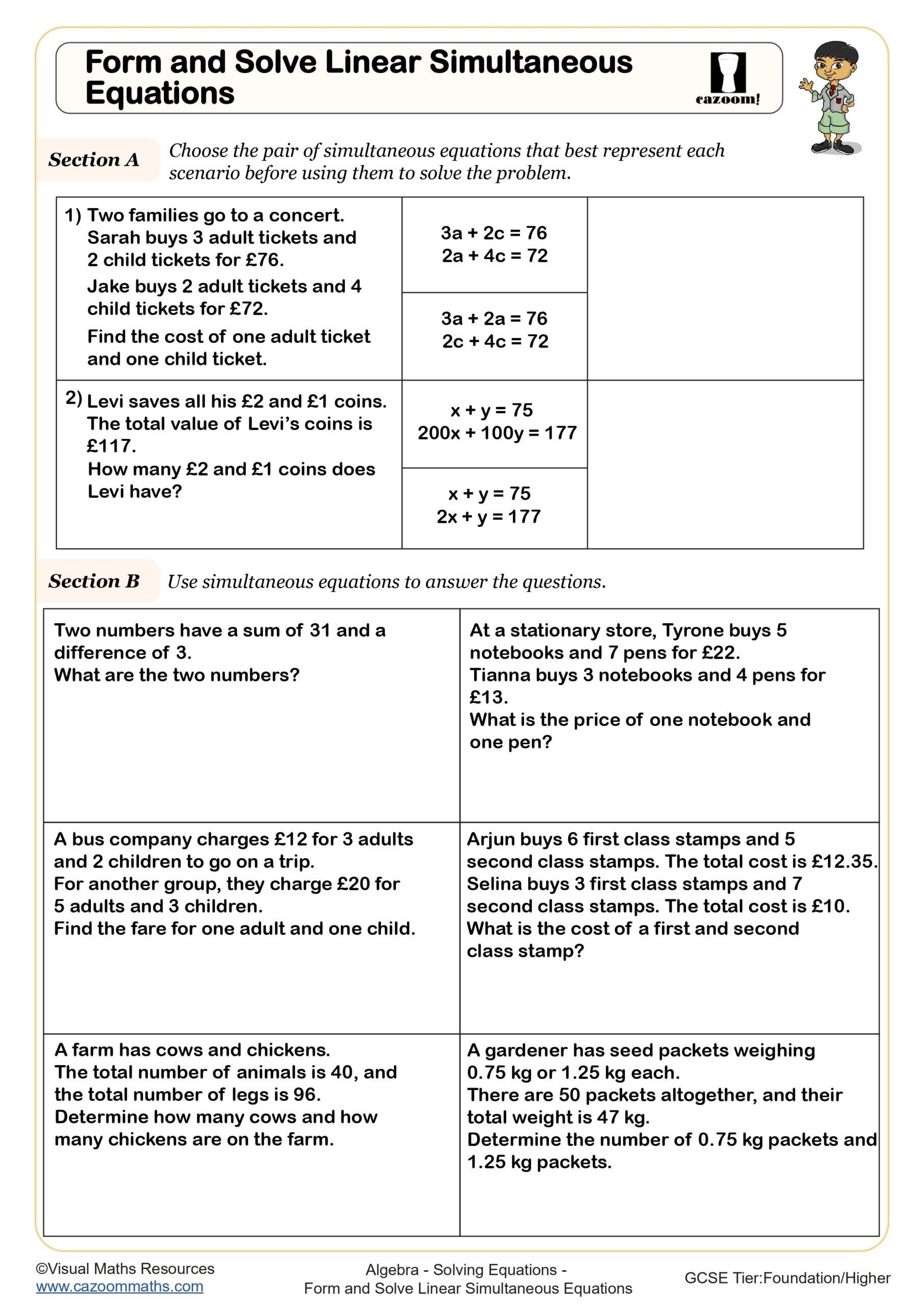
Form and Solve Linear Simultaneous Equations
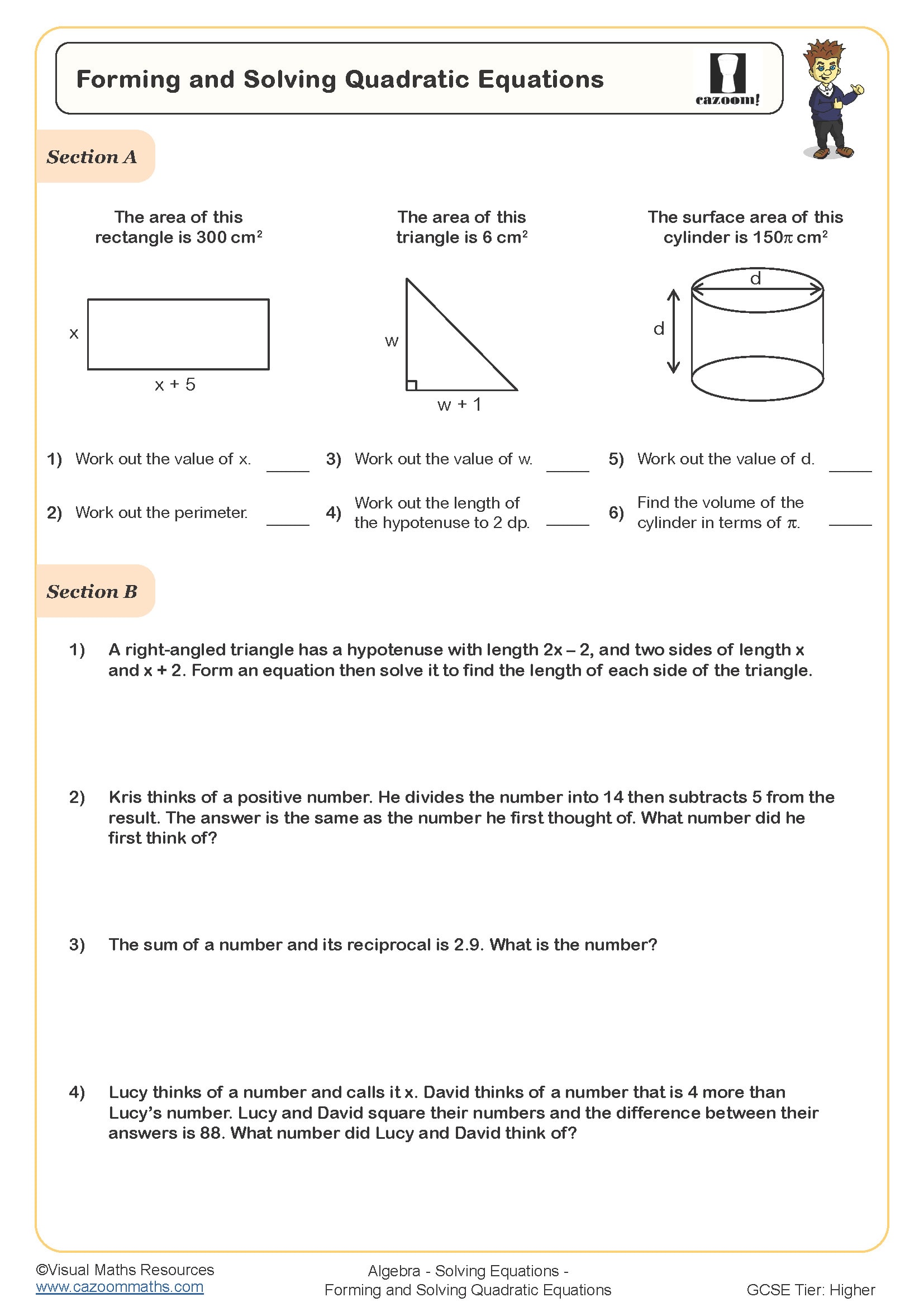
Forming and Solving Quadratic Equations
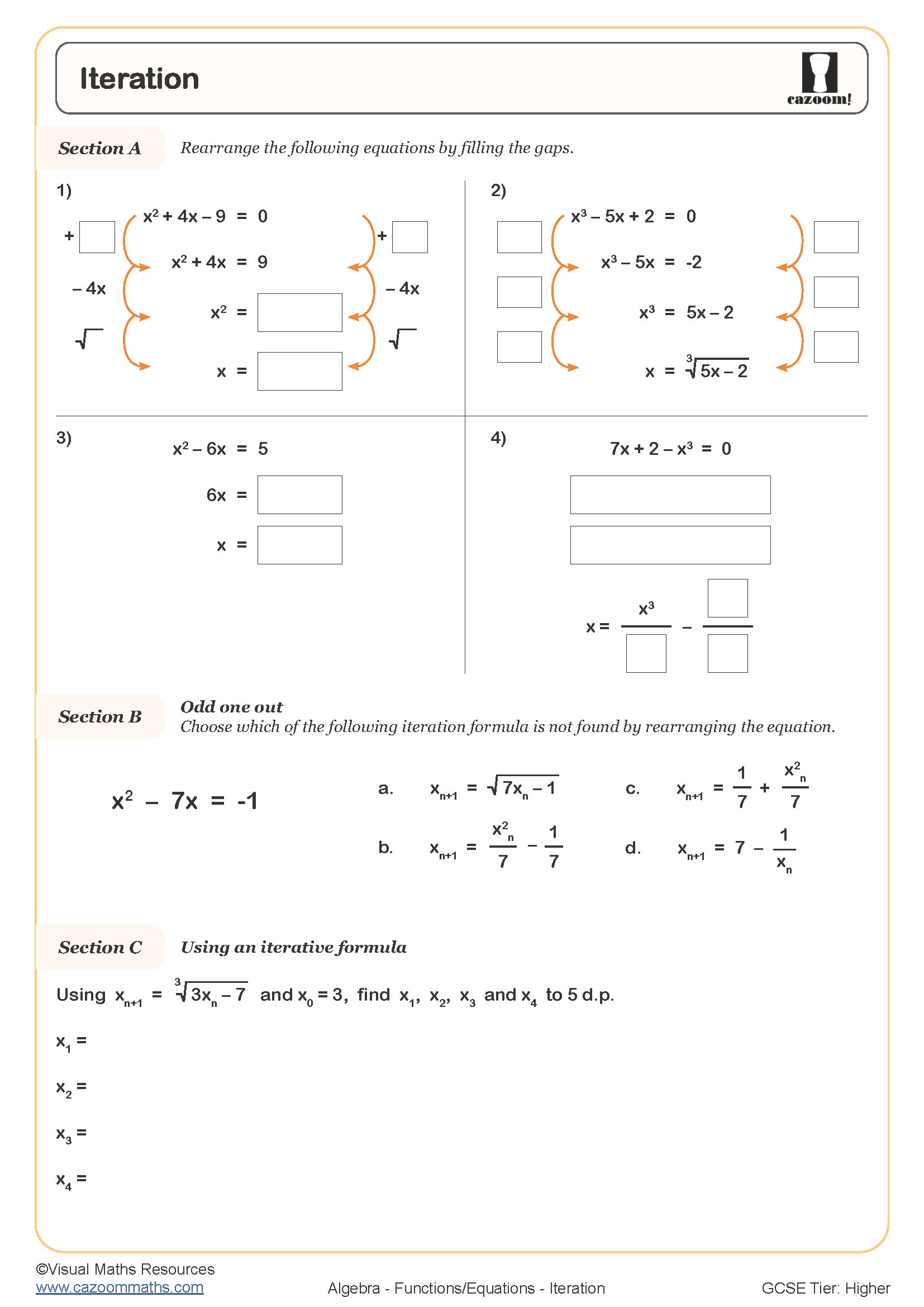
Iteration
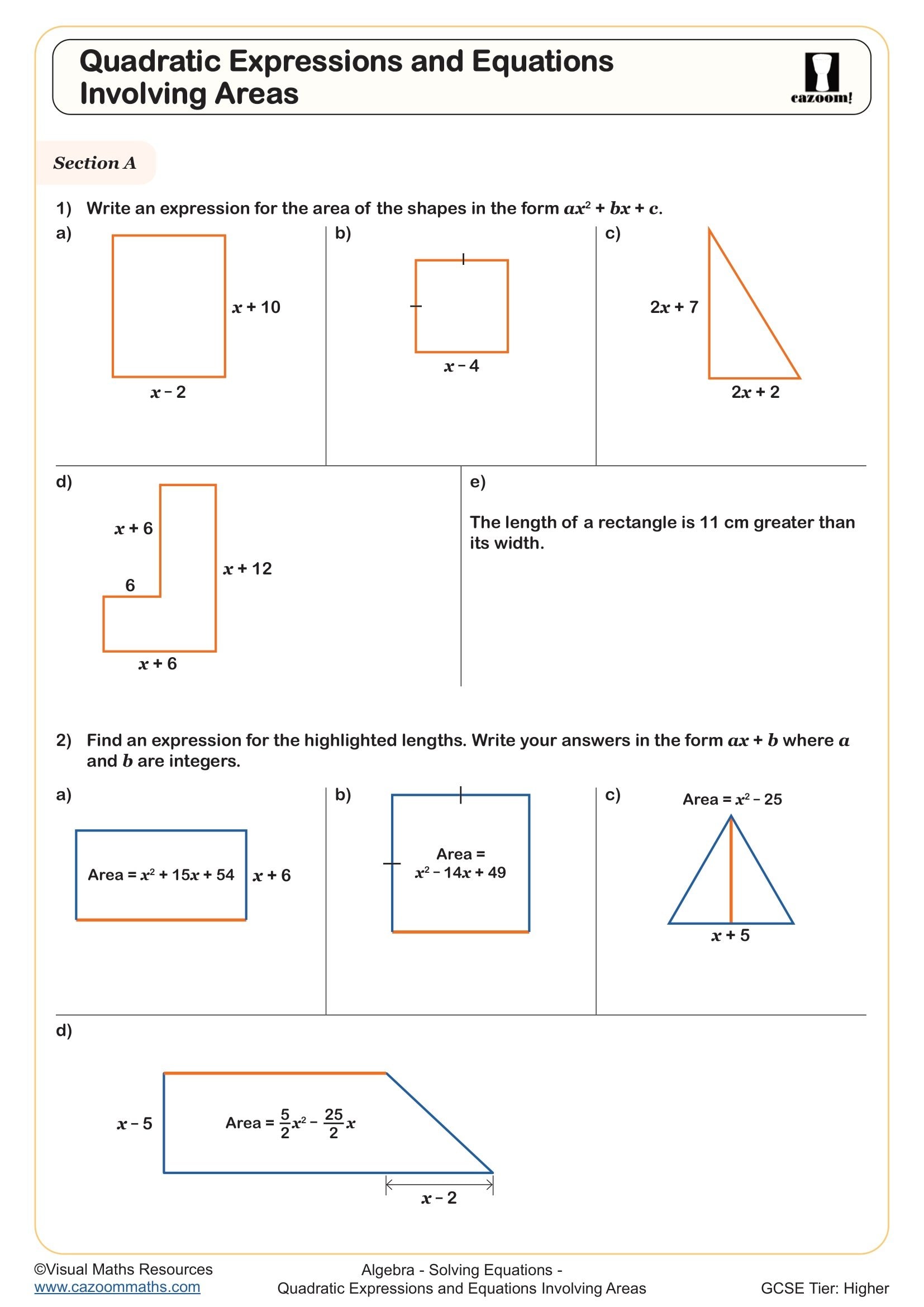
Quadratic Expressions and Equations Involving Areas
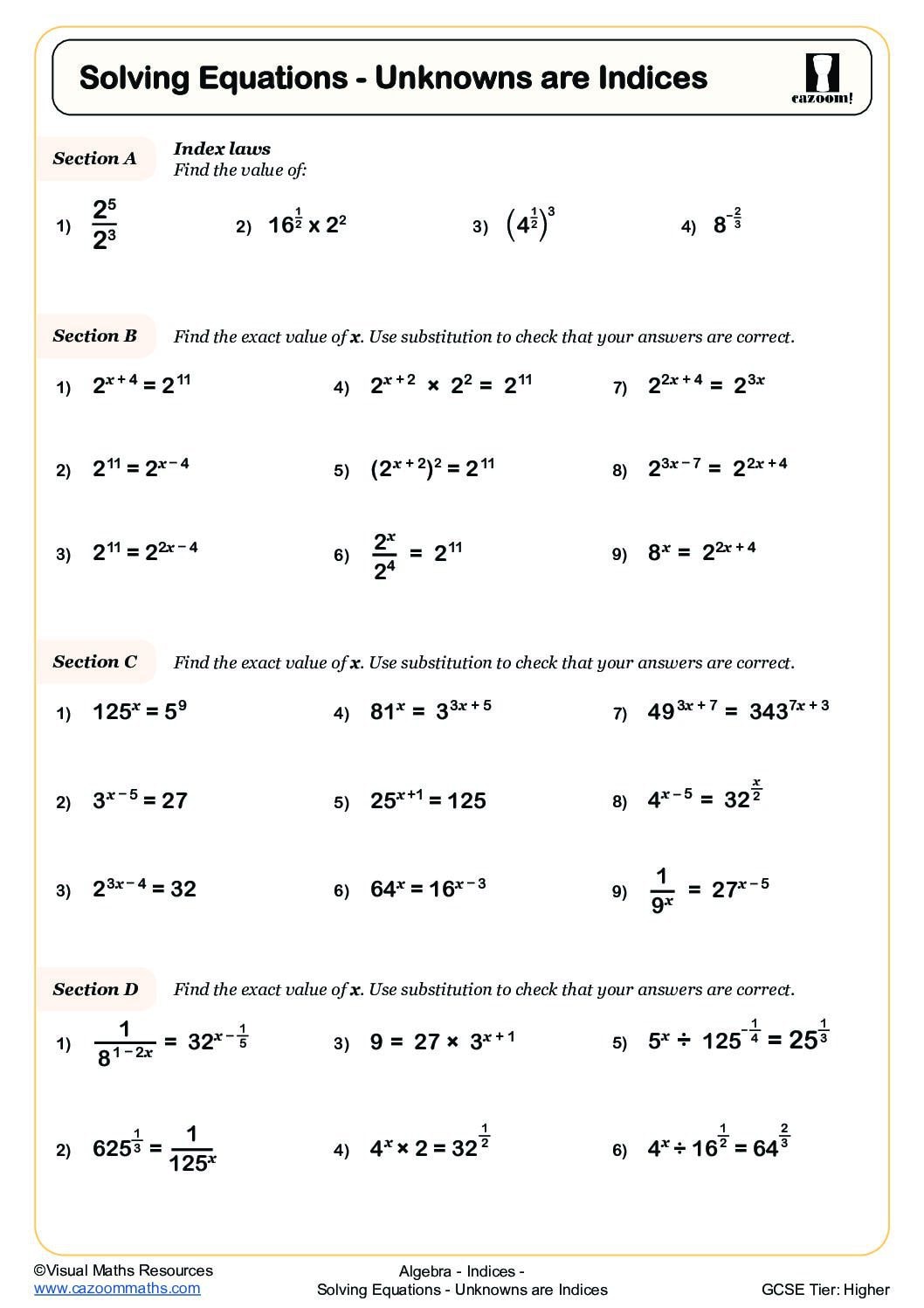
Solving Equations - Unknowns are Indices
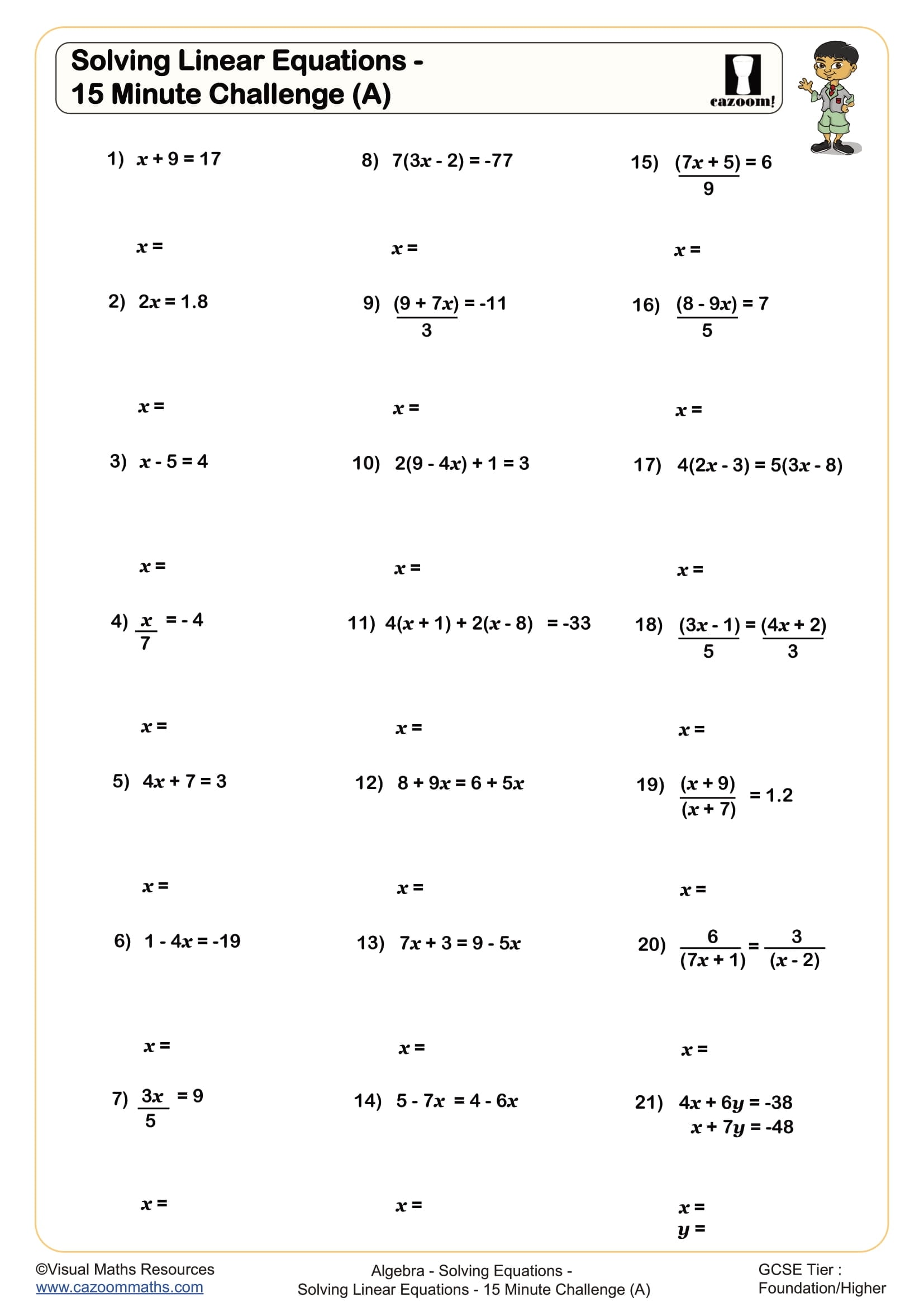
Solving Equations 15 Minute Challenge (A)
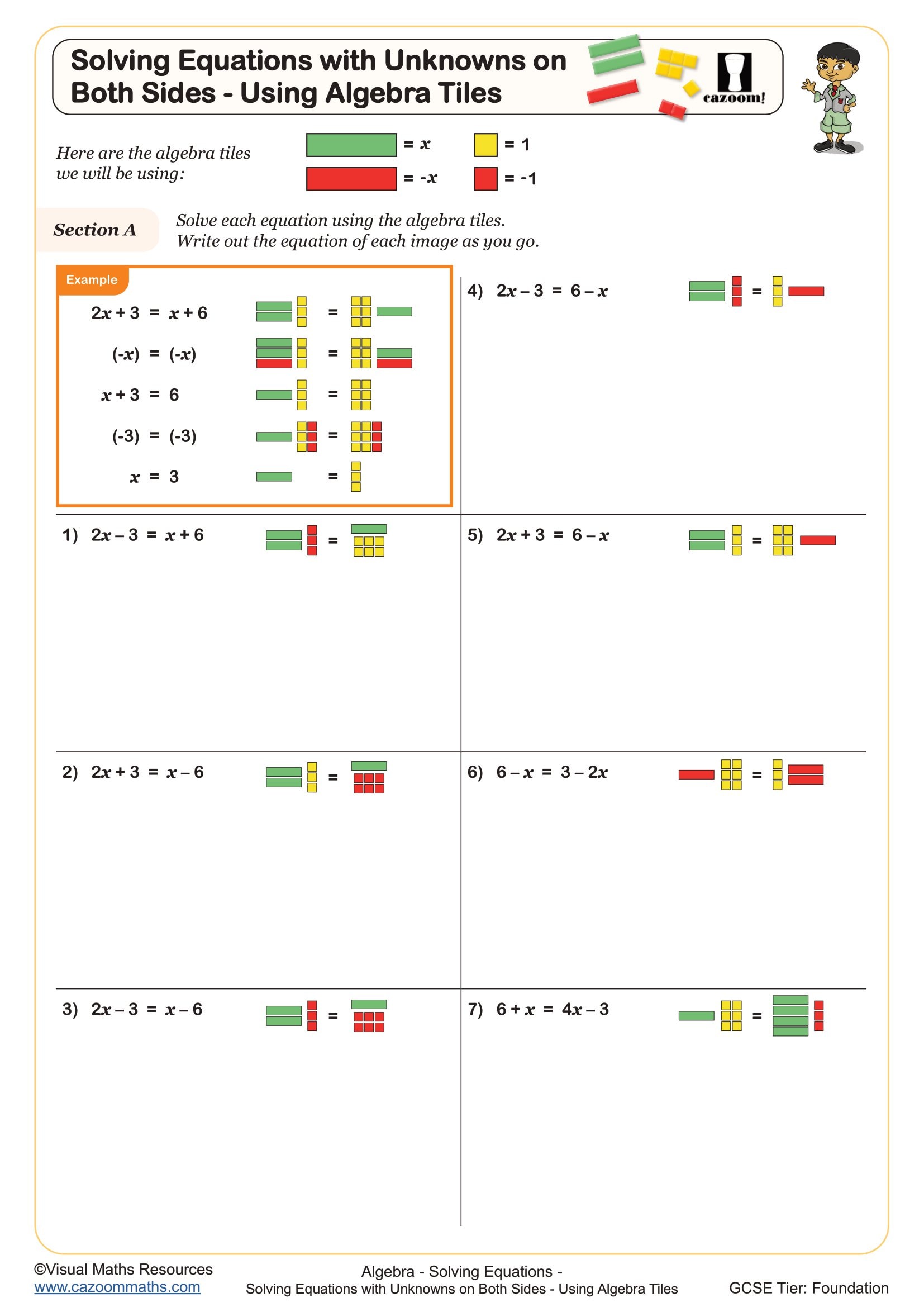
Solving Equations with Unknowns on Both Sides - Using Algebra Tiles
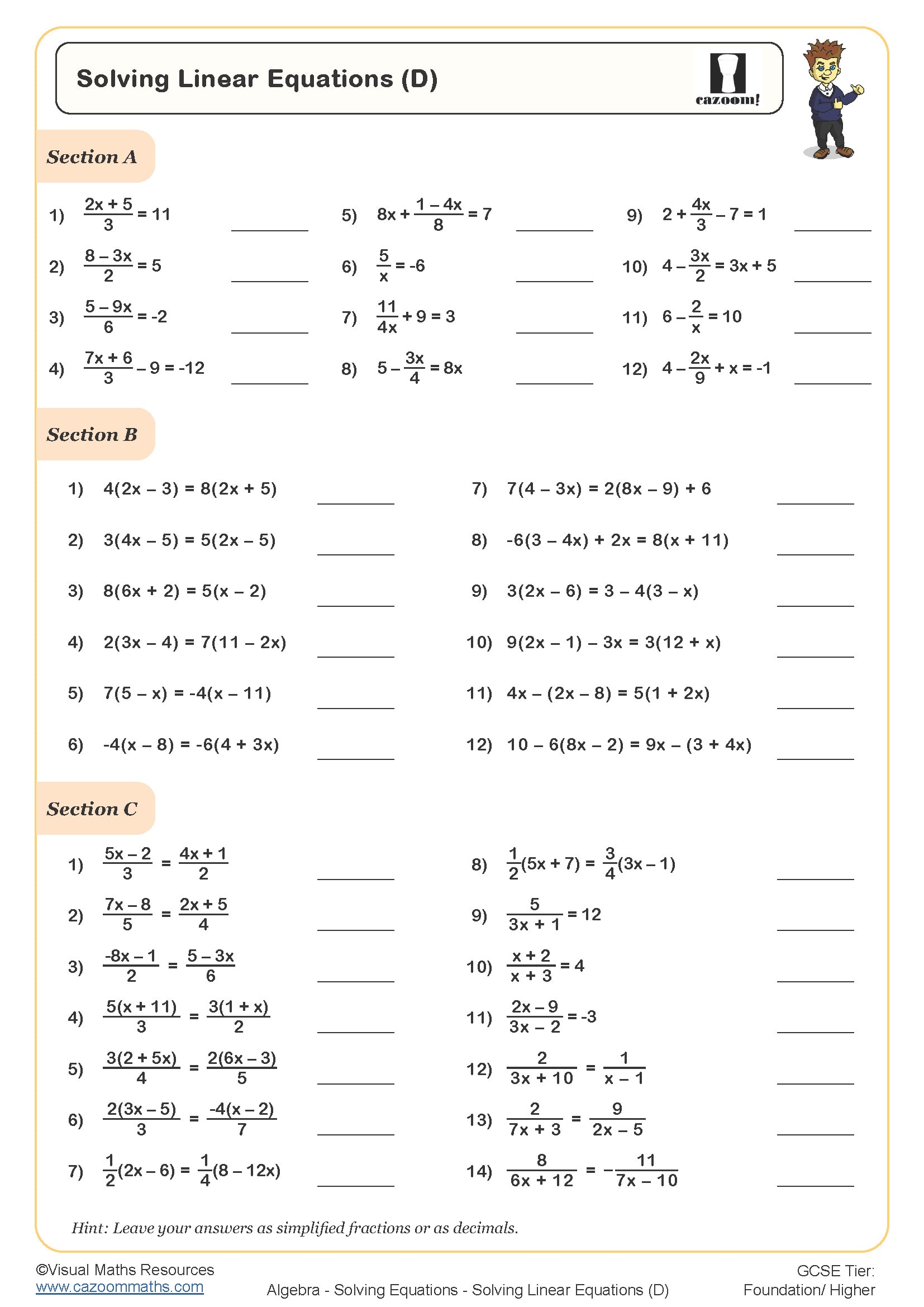
Solving Linear Equations (D)
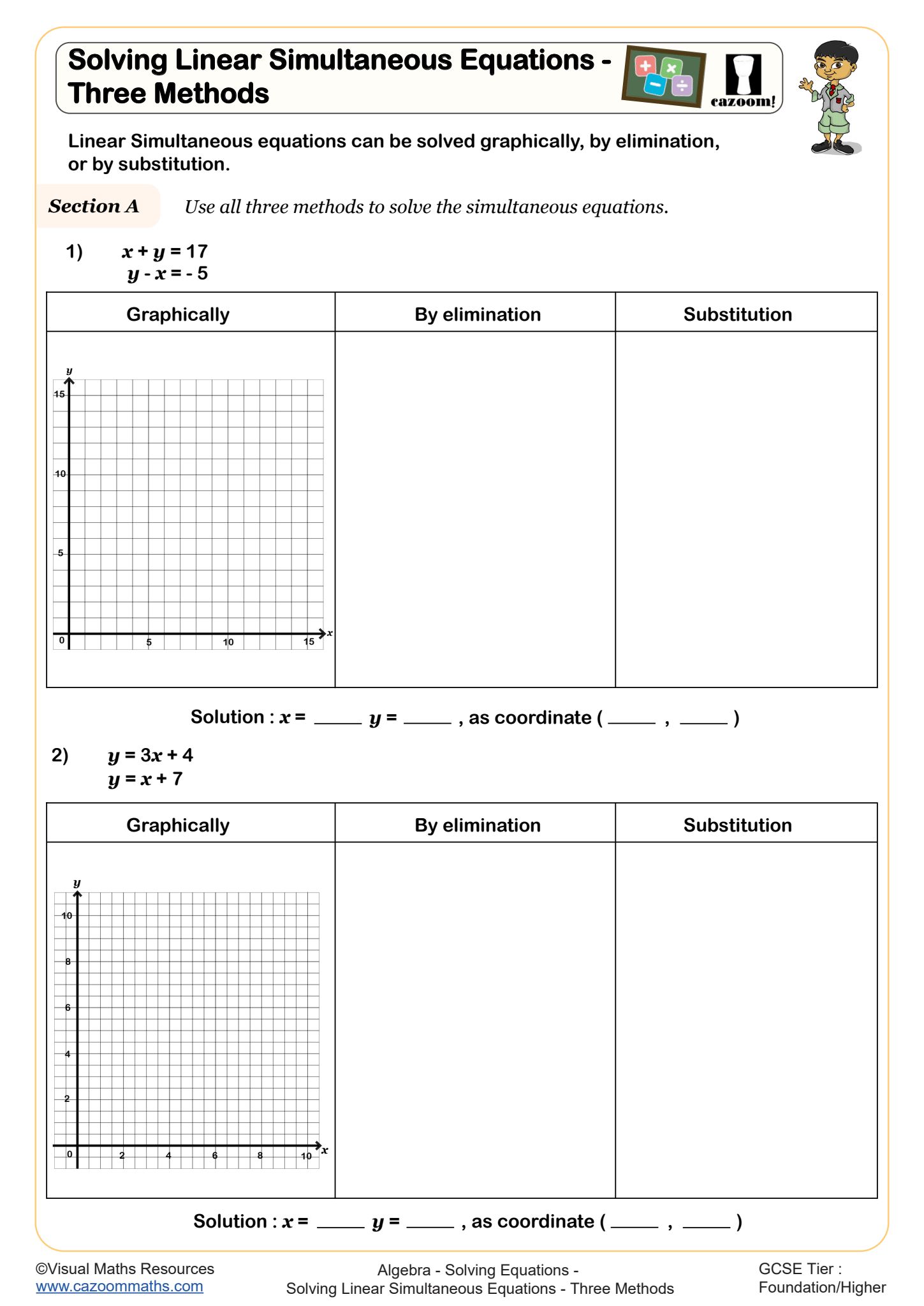
Solving Linear Simultaneous Equations
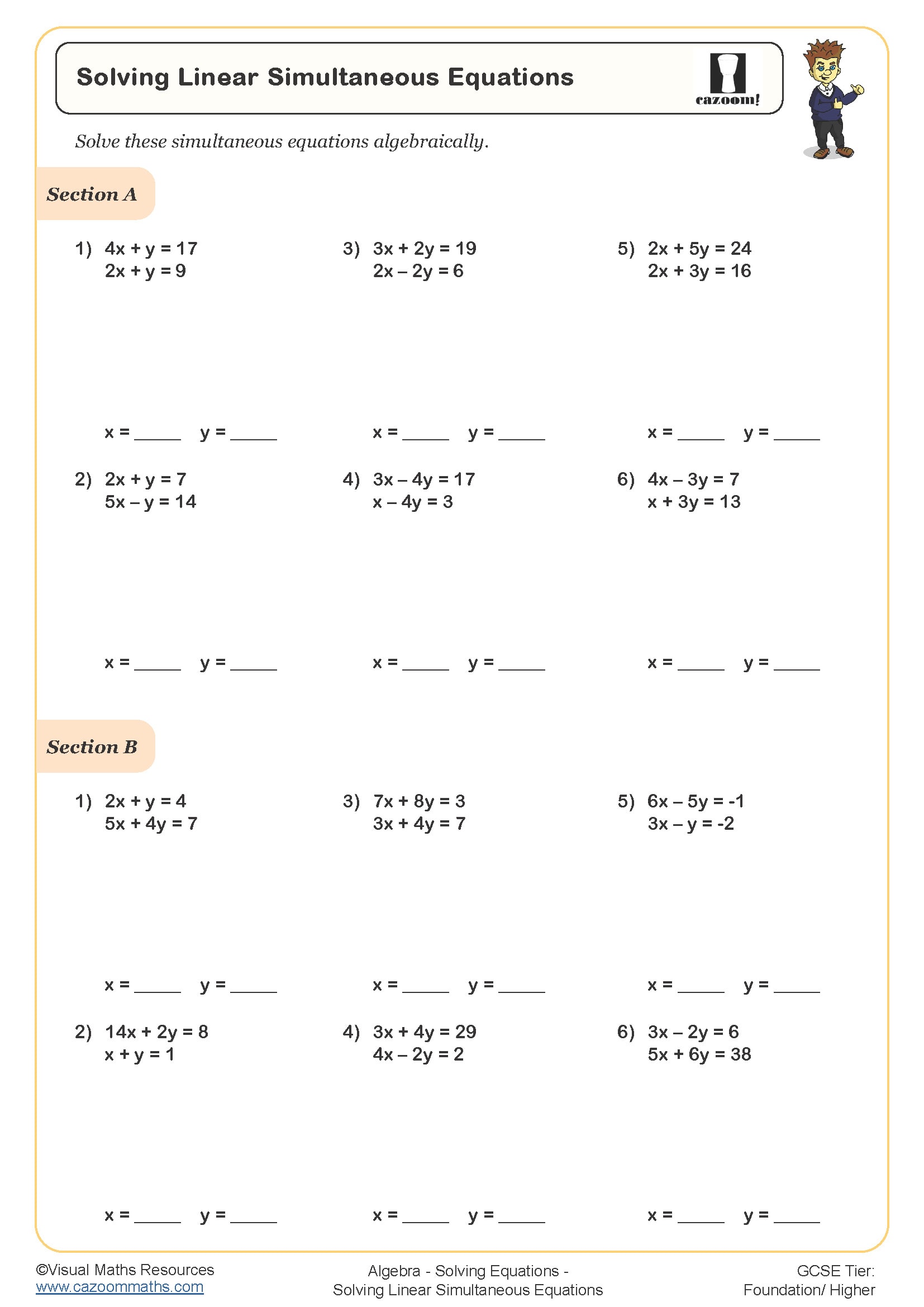
Solving Linear Simultaneous Equations - Change One Equation
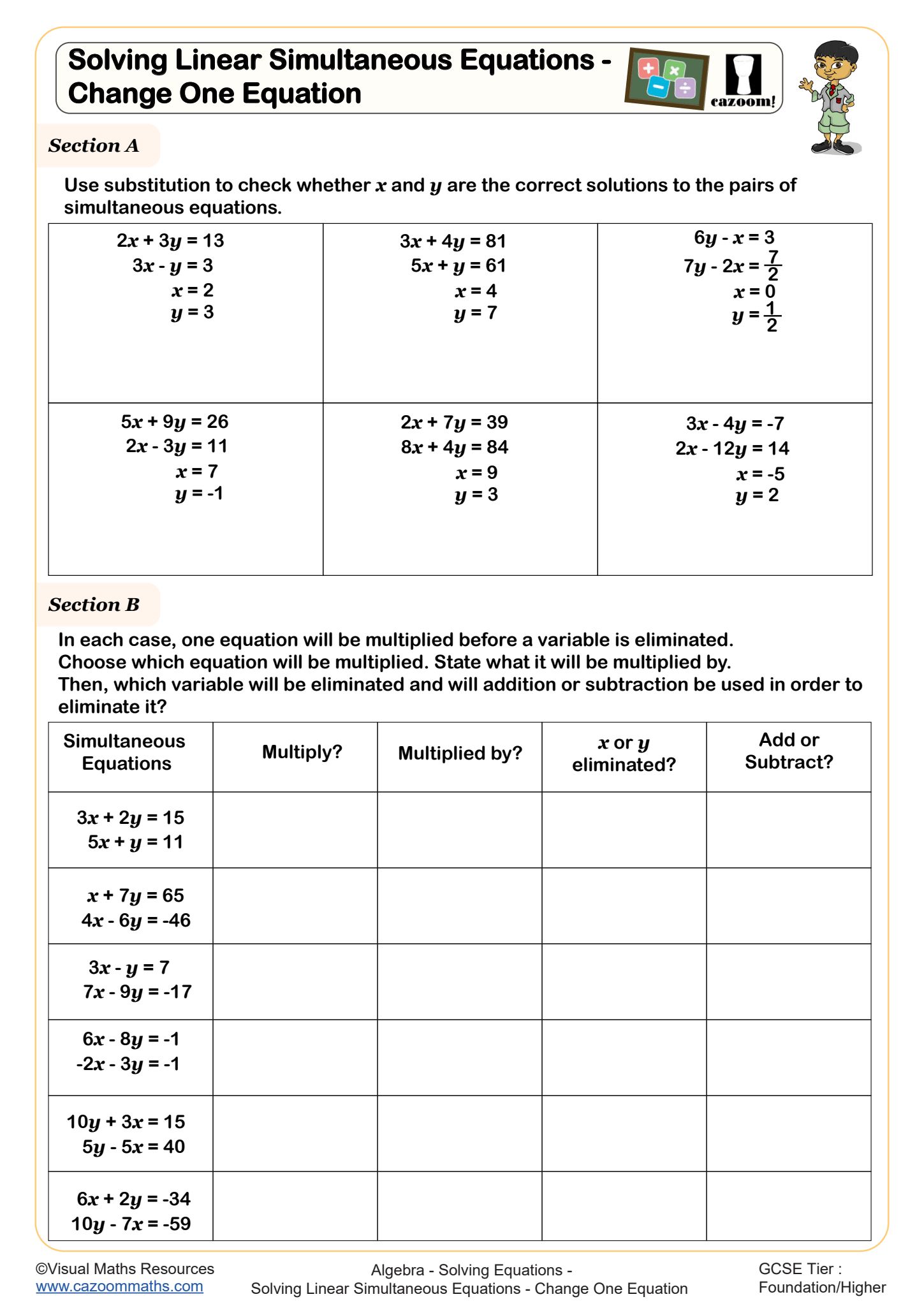
Solving Linear Simultaneous Equations - Same Coefficients
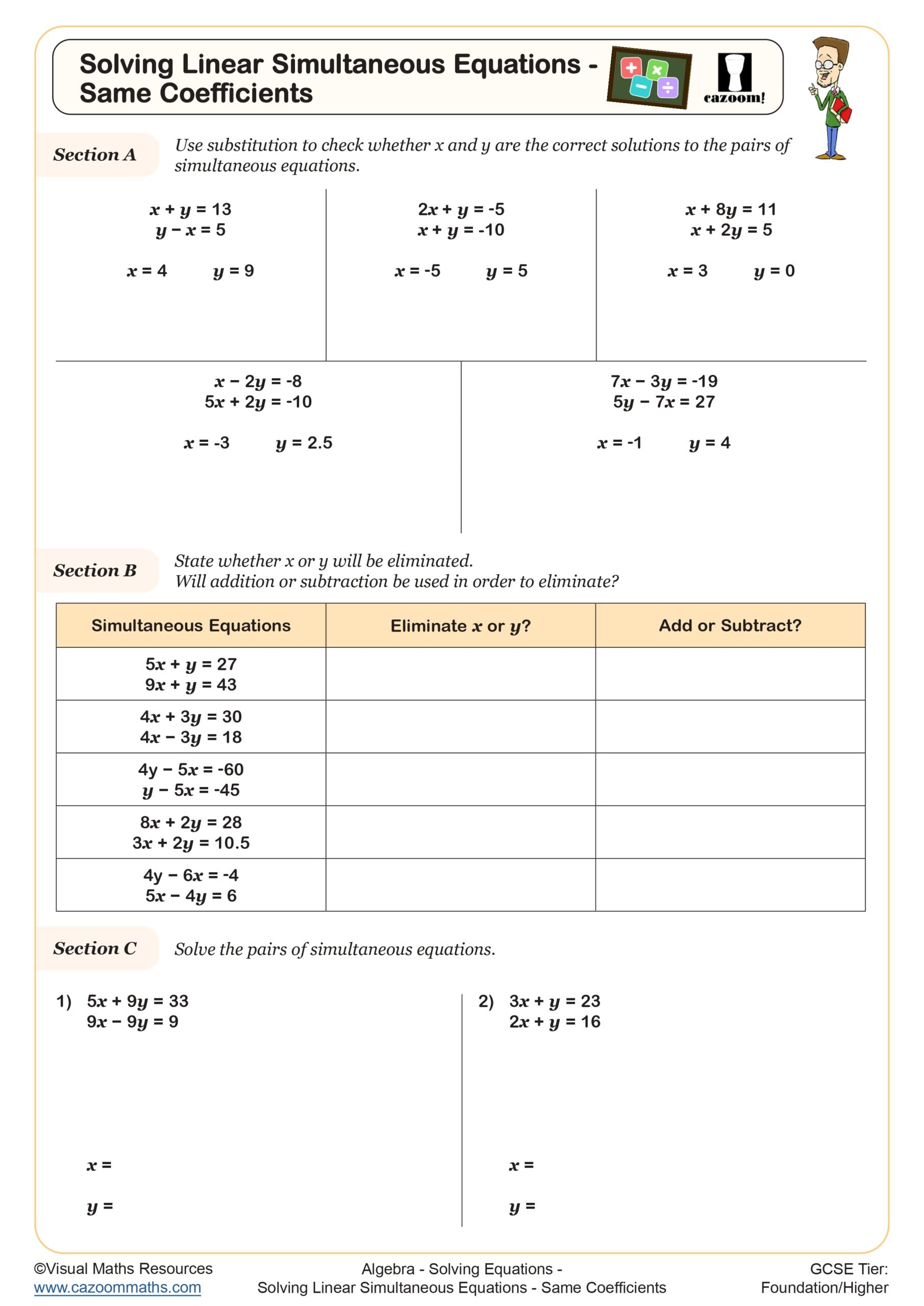
Solving Linear Simultaneous Equations - Three Methods
Solving Linear Simultaneous Equations - Using Bar Models

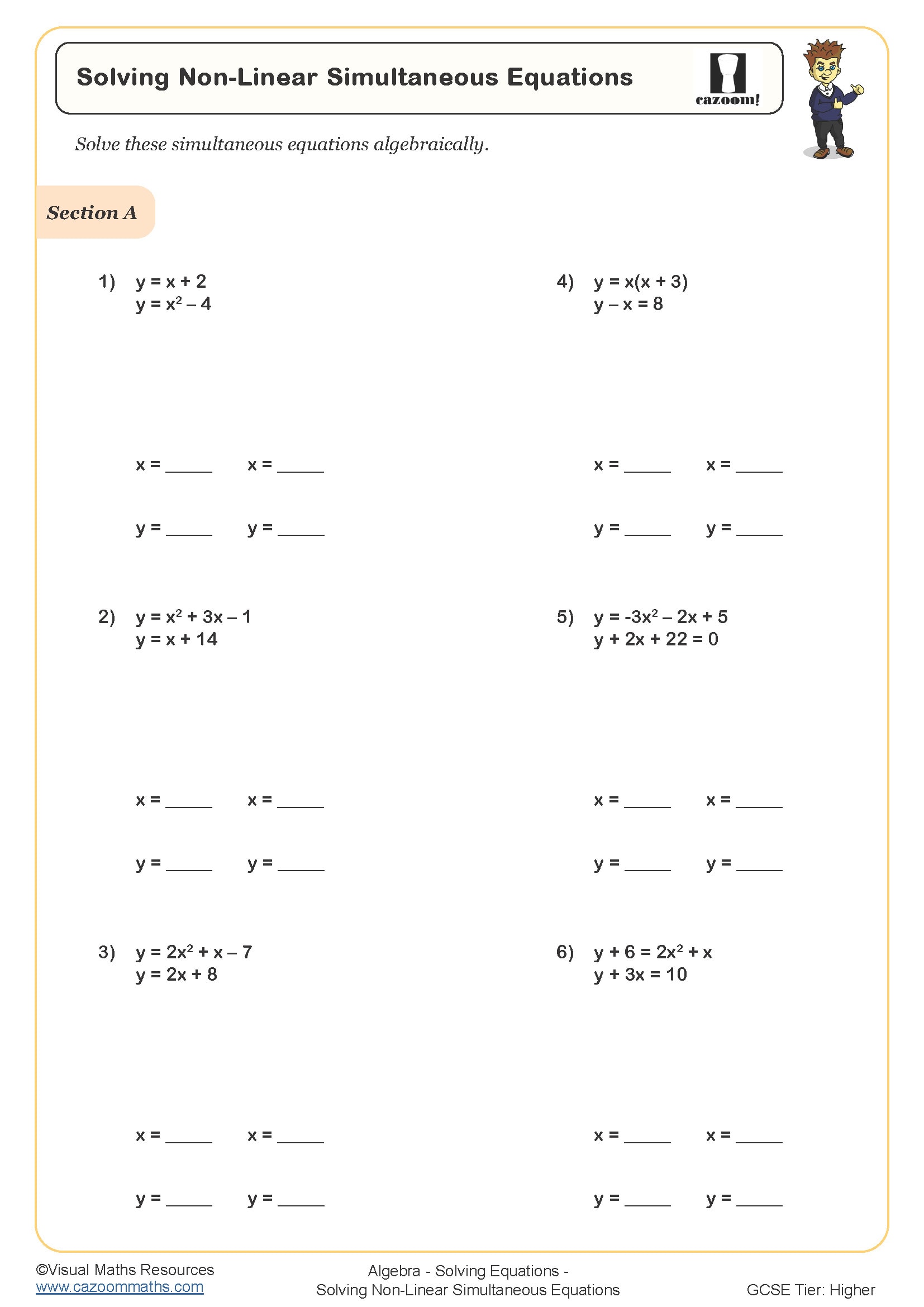
Solving Non-linear Simultaneous Equations
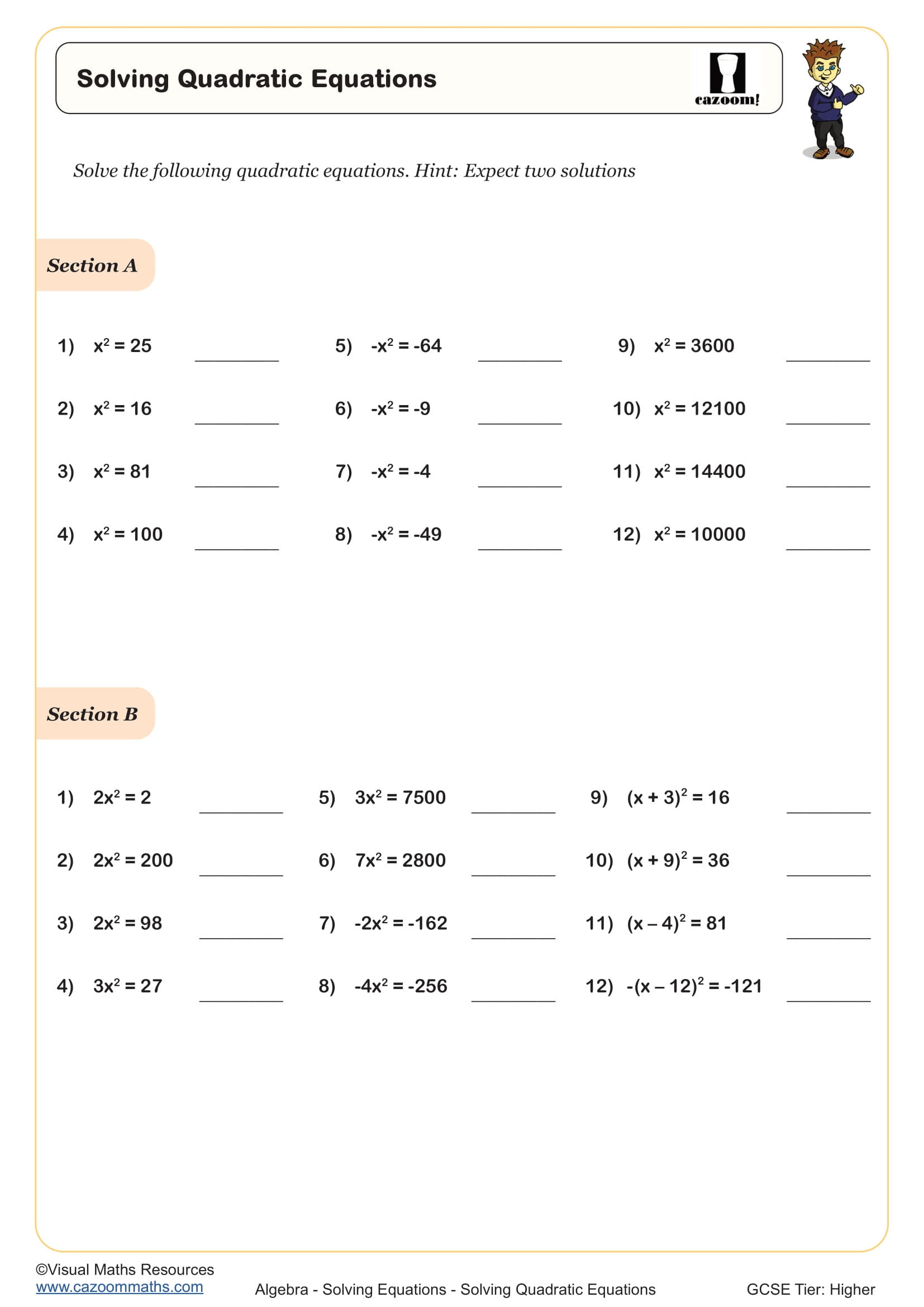
Solving Quadratic Equations
Solving Quadratic Equations by Completing the Square
.jpg?w=3840)
Solving Quadratic Equations by Factorising
.jpg?w=3840)
Solving Quadratic Equations by Formula
.jpg?w=3840)
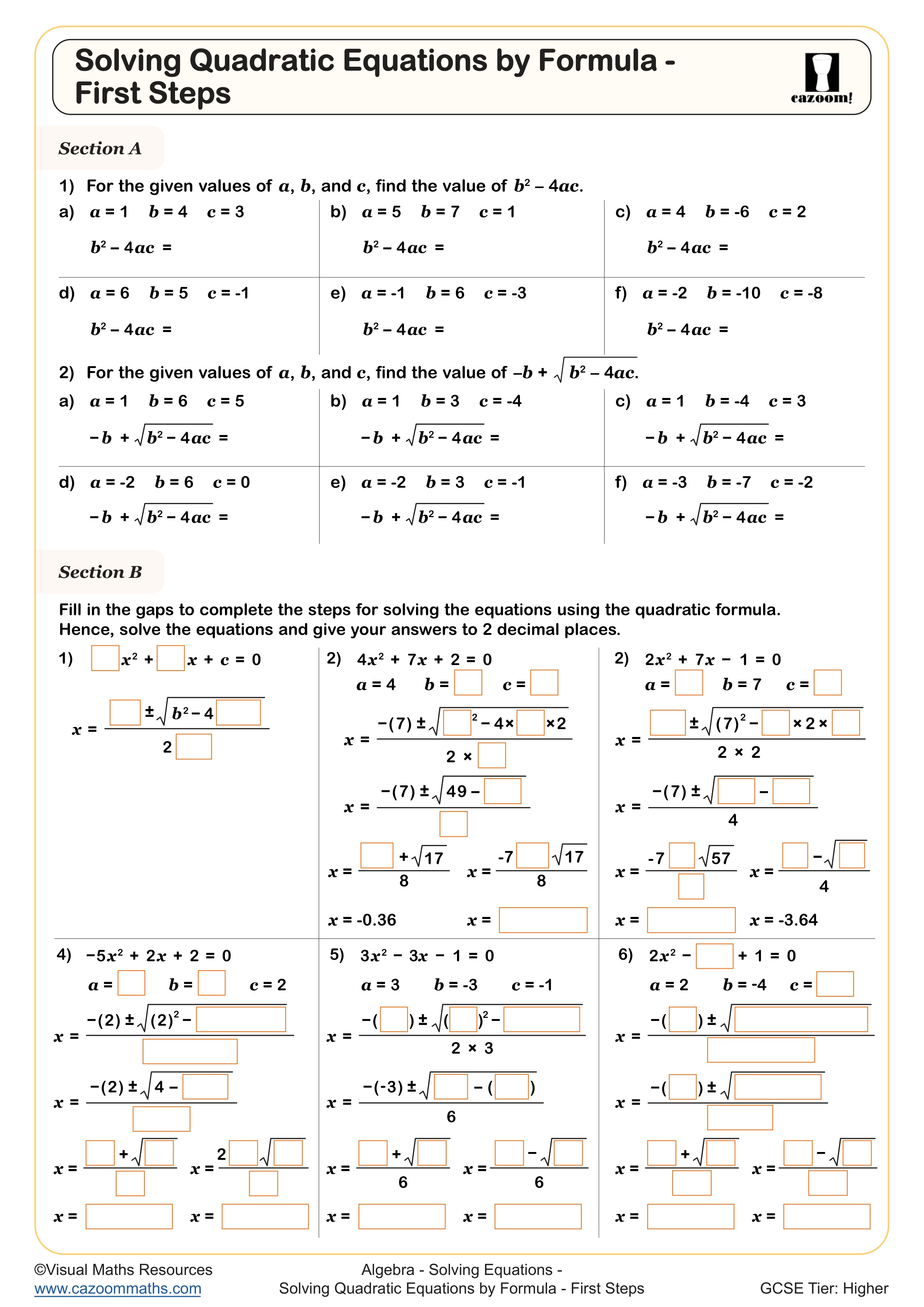
Solving Quadratic Equations by Formula - First Steps
Solving Quadratic Equations by Formula (Non-Calculator)
-Worksheet.jpg?w=3840)
Solving Quadratic Equations Involving Fractions

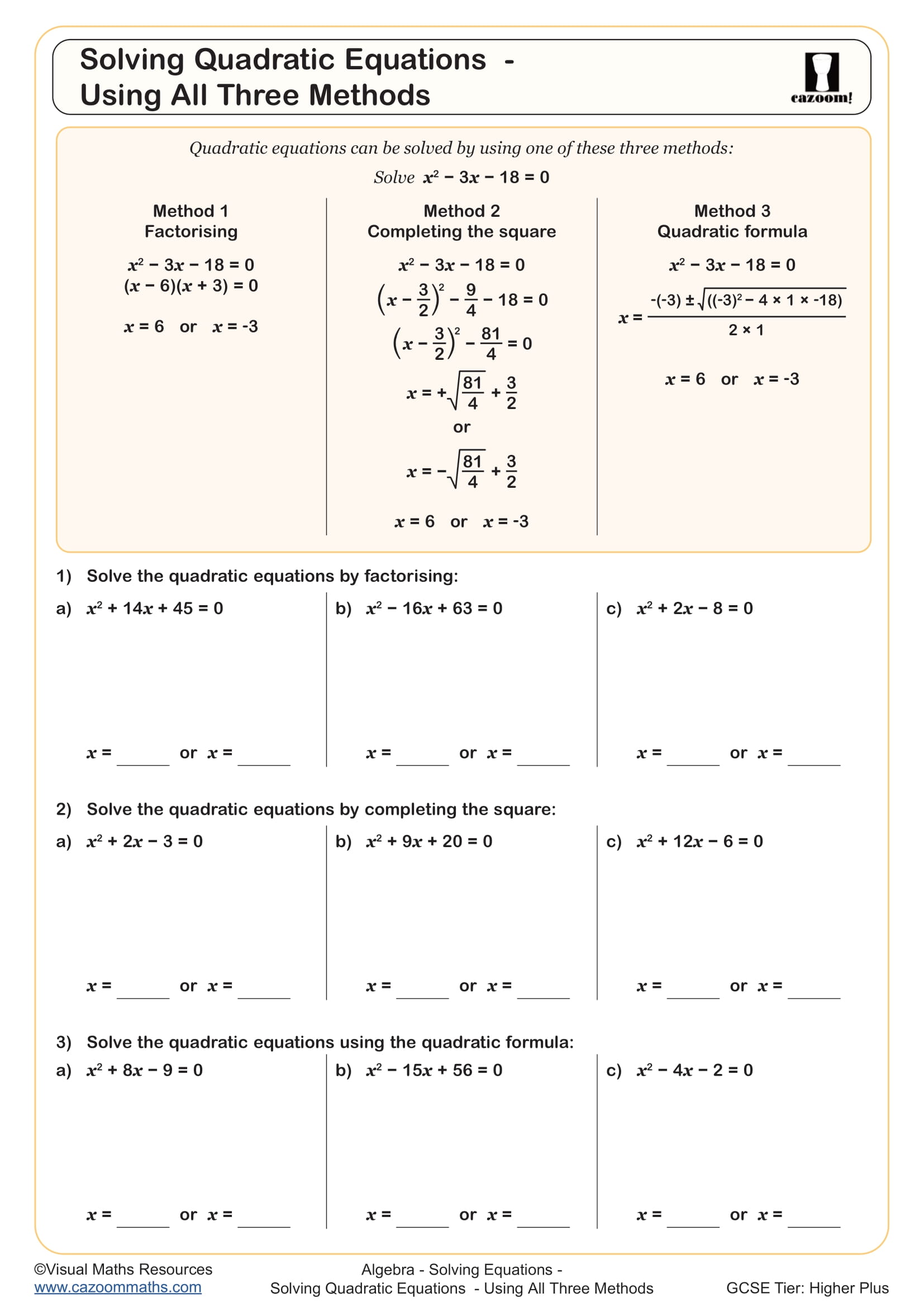
Solving Quadratic Equations Using All Three Methods
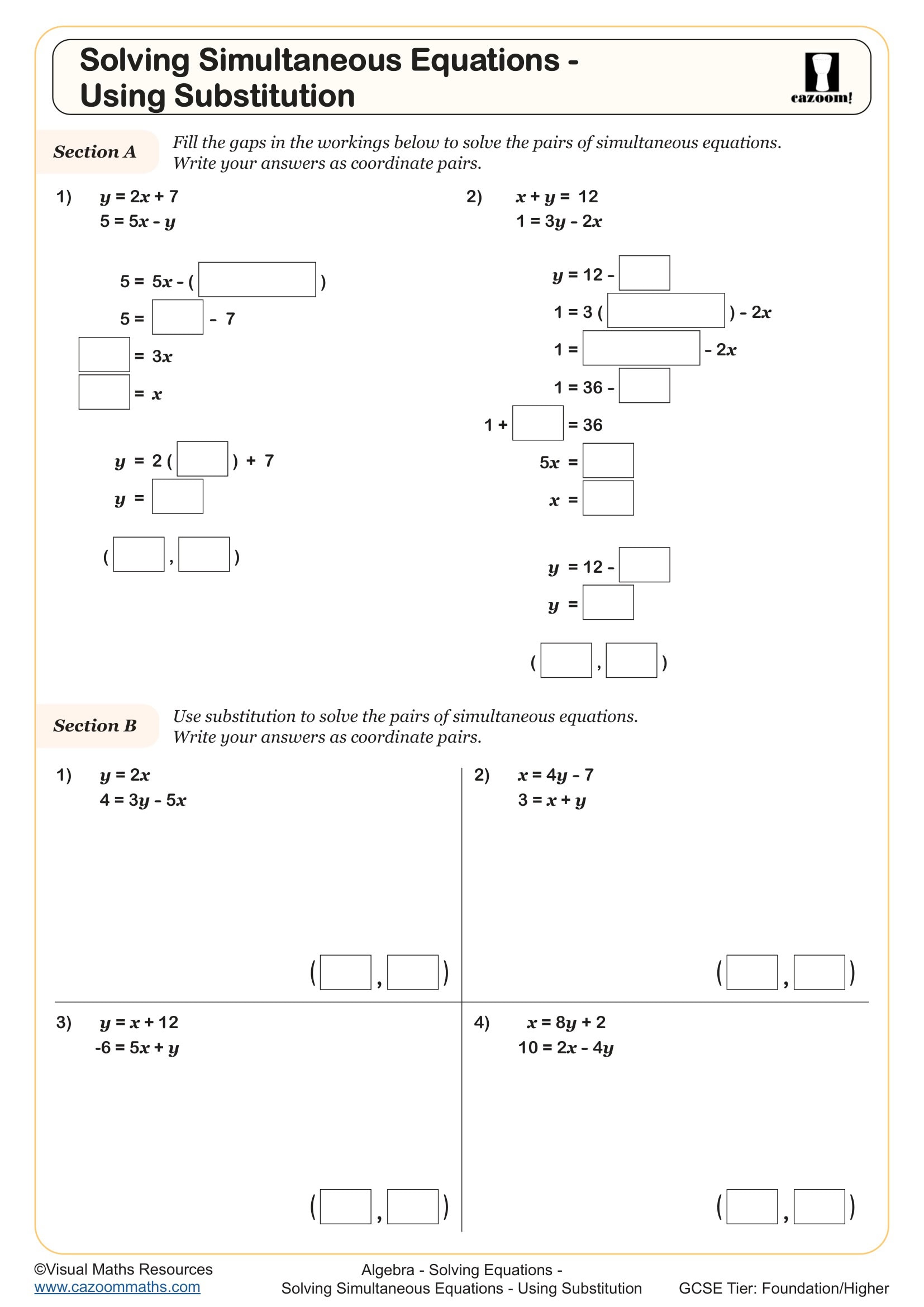
Solving Simultaneous Equations - Using Substitution
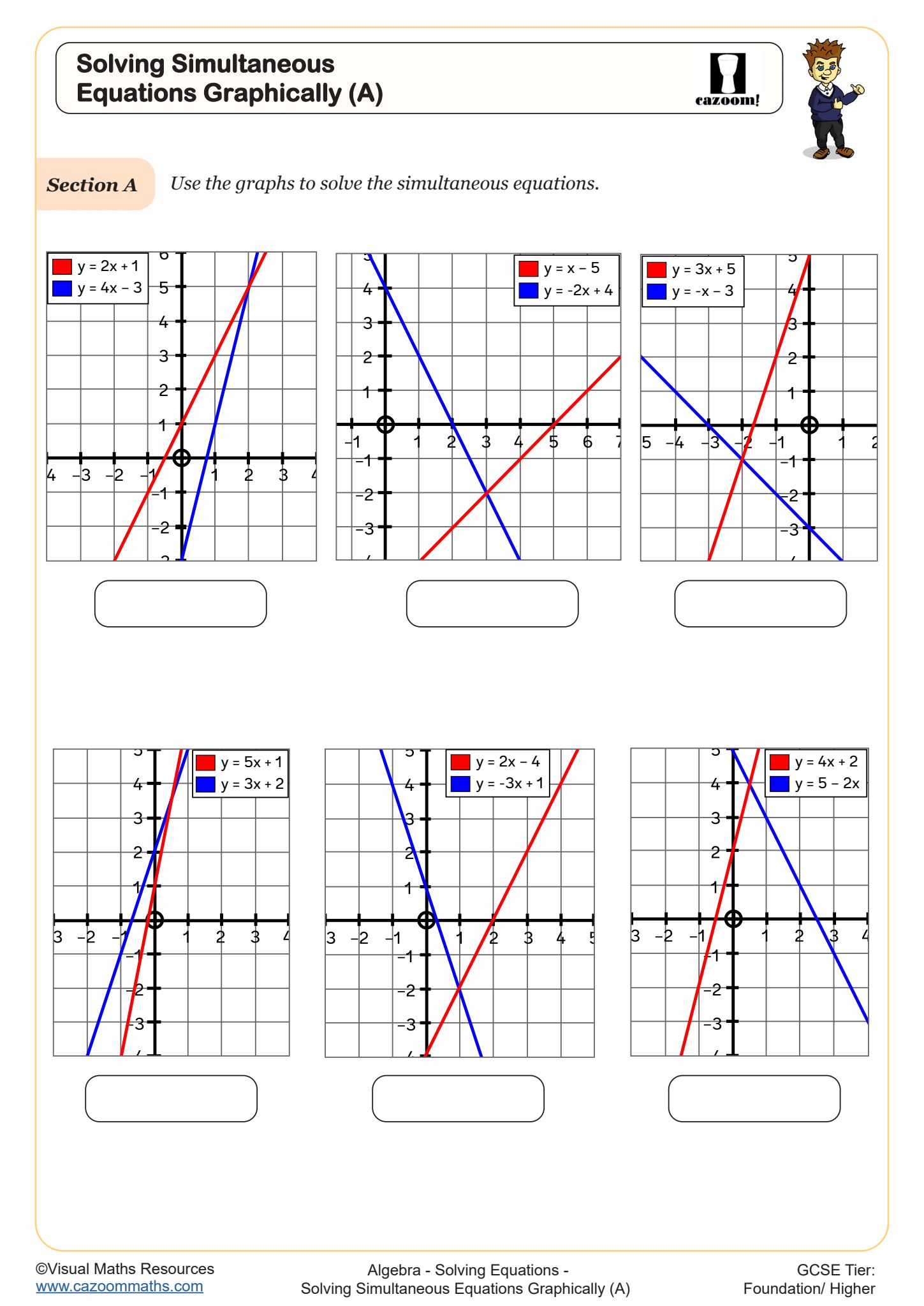
Solving Simultaneous Equations Graphically (A)
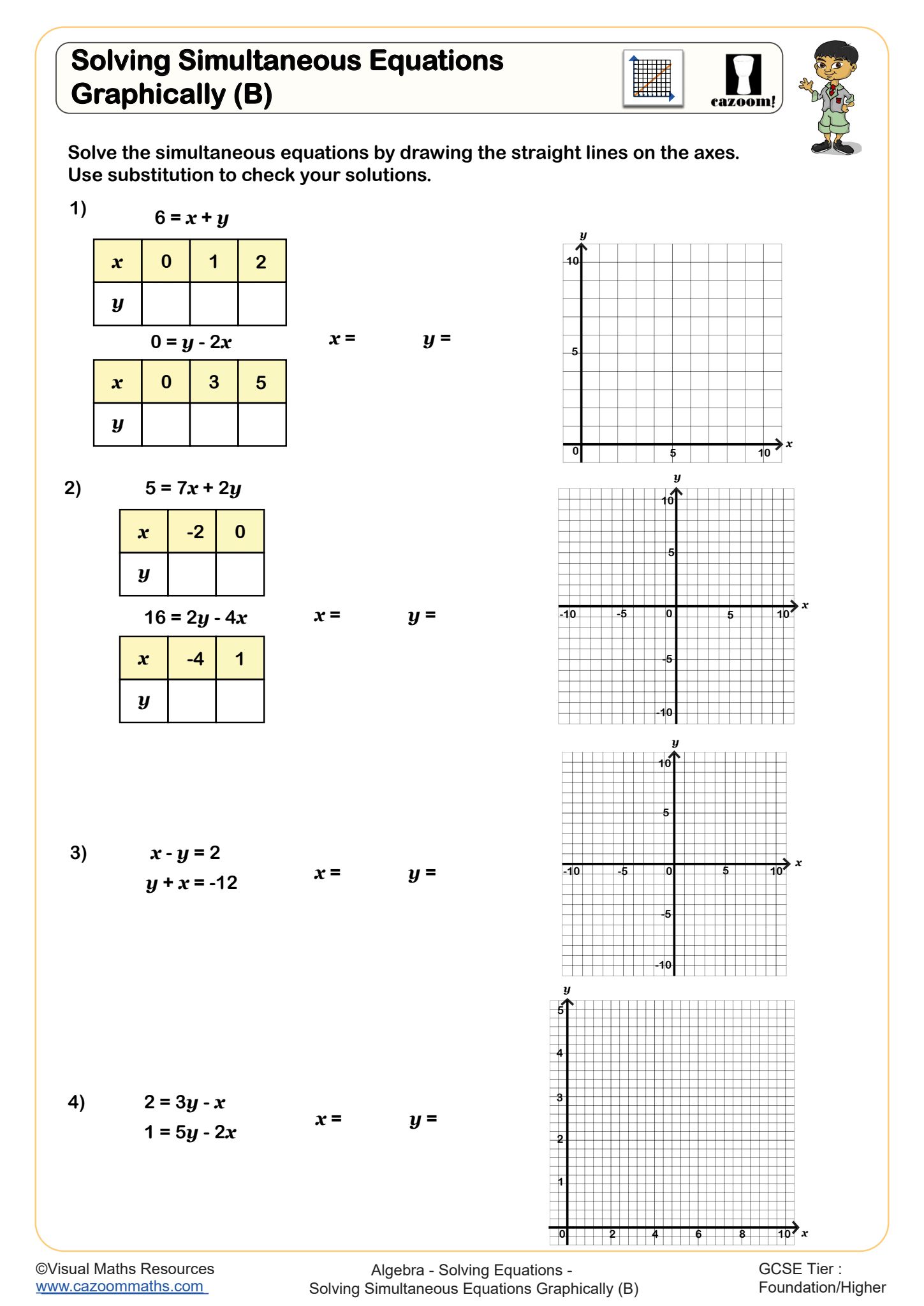
Solving Simultaneous Equations Graphically (B)
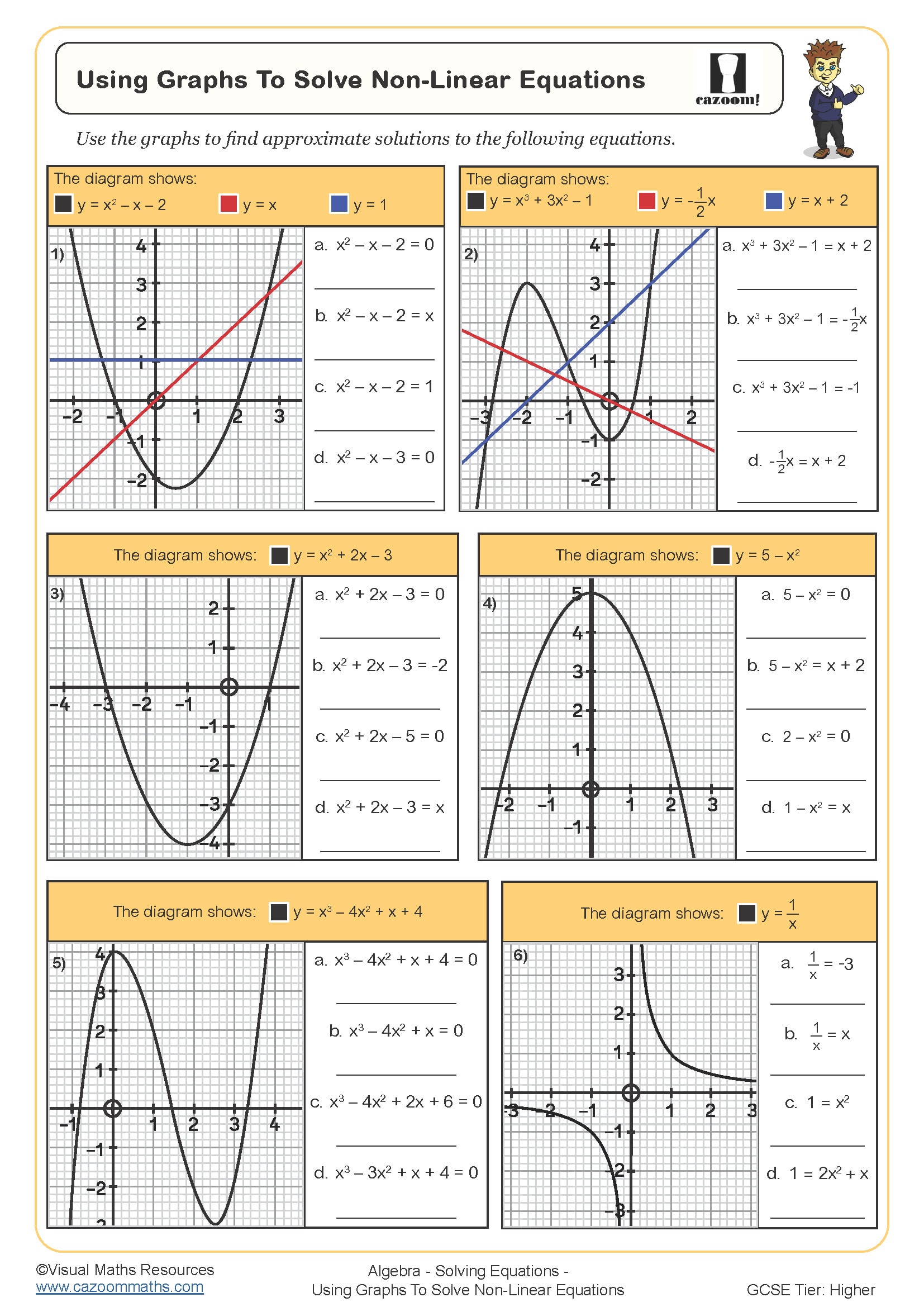
Using Graphs to Solve Non-linear Equations
All worksheets are created by the team of experienced teachers at Cazoom Maths.
What are the most common mistakes when solving equations with unknowns on both sides?
Students frequently make errors when collecting like terms across the equals sign, particularly with negative coefficients. The most persistent mistake involves subtracting a term from one side but forgetting to apply the same operation to the other side, or changing signs incorrectly when moving terms. Many students also rush to divide before fully simplifying, leading to fractional coefficients that complicate their working unnecessarily.
Exam mark schemes consistently penalise students who fail to show intermediate steps, even when their final answer is correct. Teachers find that requiring students to write each new equation on a separate line, directly below the previous one, significantly reduces careless errors. Encouraging students to check their solution by substituting it back into the original equation helps them catch mistakes before moving on, a habit that proves valuable under exam conditions.
Which year groups study solving equations at KS4?
Solving equations appears in both Year 10 and Year 11 as a foundation skill that underpins much of the GCSE specification. Students encounter these worksheets after mastering basic equation solving at KS3, now working with more complex structures involving brackets, negative coefficients, and unknowns appearing multiple times on each side. The topic connects directly to simultaneous equations, quadratics, and algebraic proof, making secure understanding non-negotiable for higher-tier students.
Progression across KS4 increases in algebraic complexity rather than introducing entirely new methods. Year 10 students typically consolidate techniques with straightforward examples before tackling equations embedded in context, such as finding dimensions from algebraic perimeters or solving problems involving two unknowns. By Year 11, students face equations requiring multiple steps of manipulation, often combined with other algebraic skills within single exam questions worth several marks.
How do algebraic perimeters relate to solving equations?
Algebraic perimeter problems present expressions for the sides of shapes and ask students to form and solve equations, often to find unknown dimensions or prove properties about the shape. Students must first construct an equation by adding all side lengths and setting this equal to a given perimeter value, then apply their solving techniques. This combines geometric understanding with algebraic manipulation, requiring careful organisation of terms before solving can begin.
Engineering and construction regularly use this exact process when designing components with specified boundary measurements but variable internal dimensions. Architects calculate room dimensions when total wall length is constrained by building regulations, whilst packaging designers determine box dimensions to minimise material whilst maintaining required edge lengths. These real applications give context to what students sometimes perceive as abstract manipulation, demonstrating why showing clear working matters when calculations inform physical construction.
How can teachers use these solving equations worksheets effectively?
The worksheets provide structured practice that builds from simpler equations toward multi-step problems, allowing teachers to assign differentiated work within the same lesson. Each answer sheet enables students to self-check after attempting problems, encouraging them to identify their own errors rather than waiting for teacher feedback. This immediate verification helps students recognise whether they've applied inverse operations correctly and maintained balance across the equals sign throughout their working.
Many teachers use these resources for targeted intervention with students who struggle to retain equation-solving methods between lessons, setting specific worksheets that address recurring errors identified through marking. The worksheets work equally well for homework consolidation, allowing students to practise independently whilst parents can support using the provided answers. Paired work proves particularly effective, with students taking turns to solve alternate questions whilst their partner checks each step, verbalising the operations being applied and catching mistakes in real time.