Year 10 Surds Worksheets
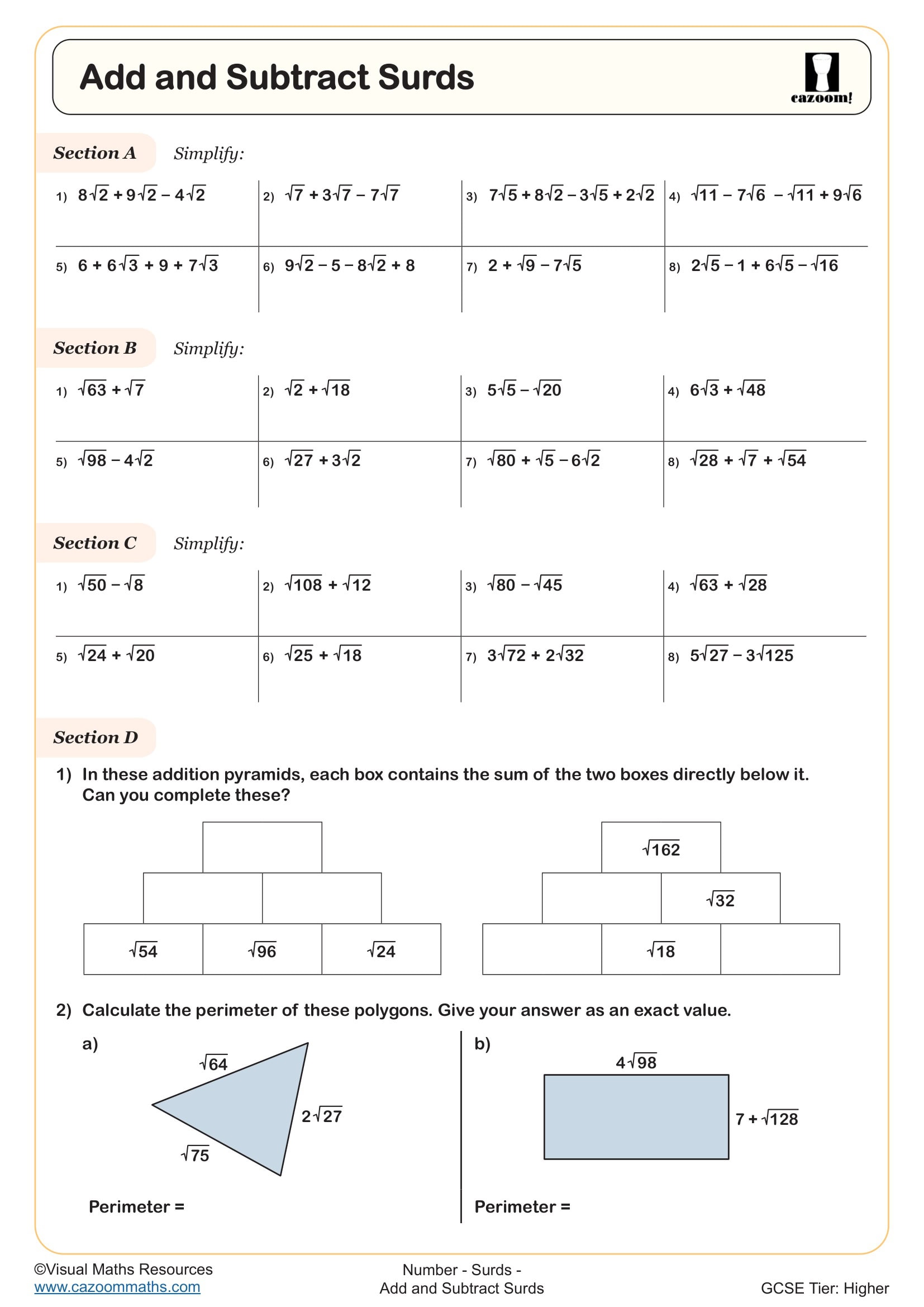
Add and Subtract Surds
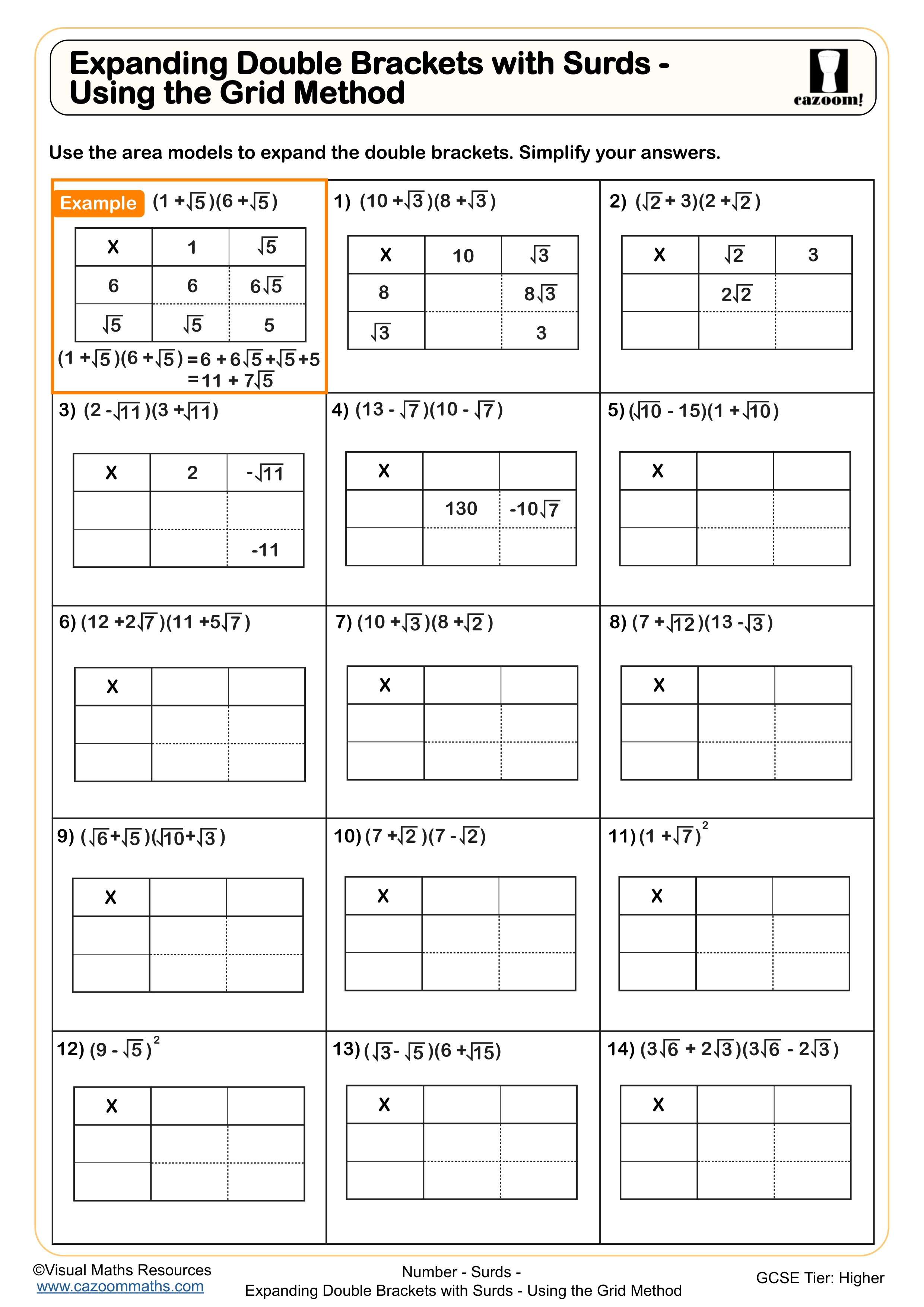
Expanding Double Brackets with Surds - Using the Grid Method
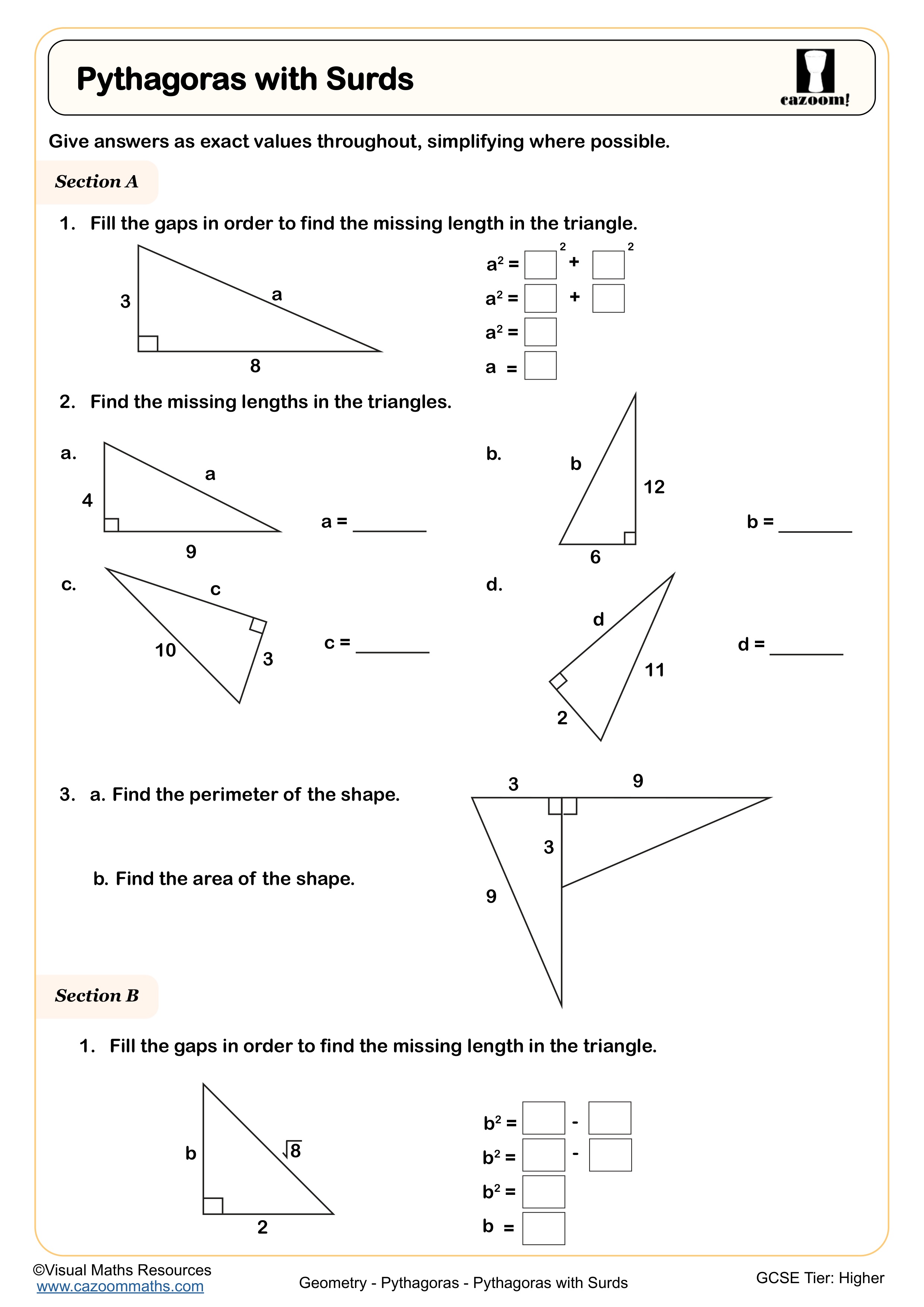
Pythagoras with Surds
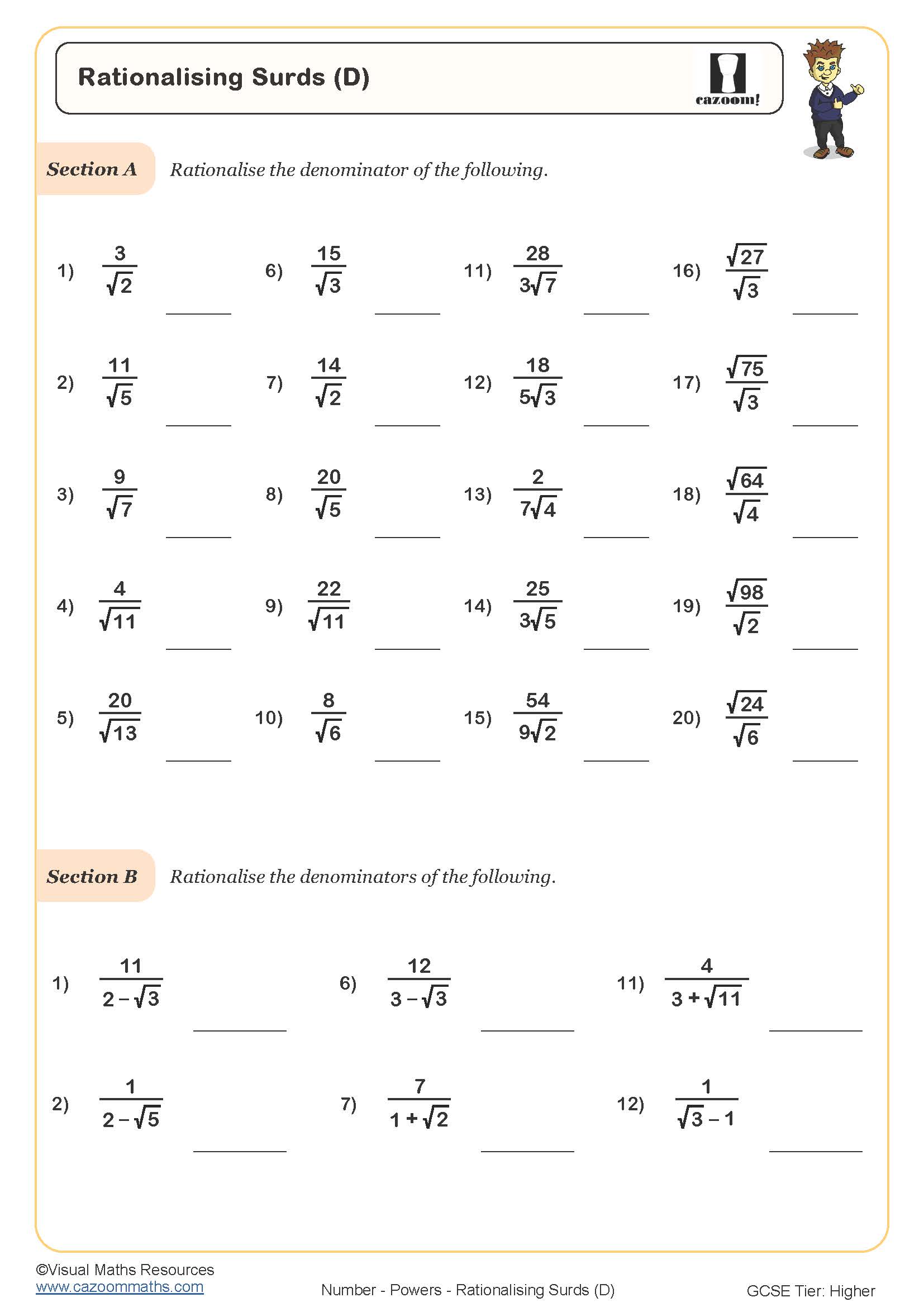
Rationalising Surds (D)
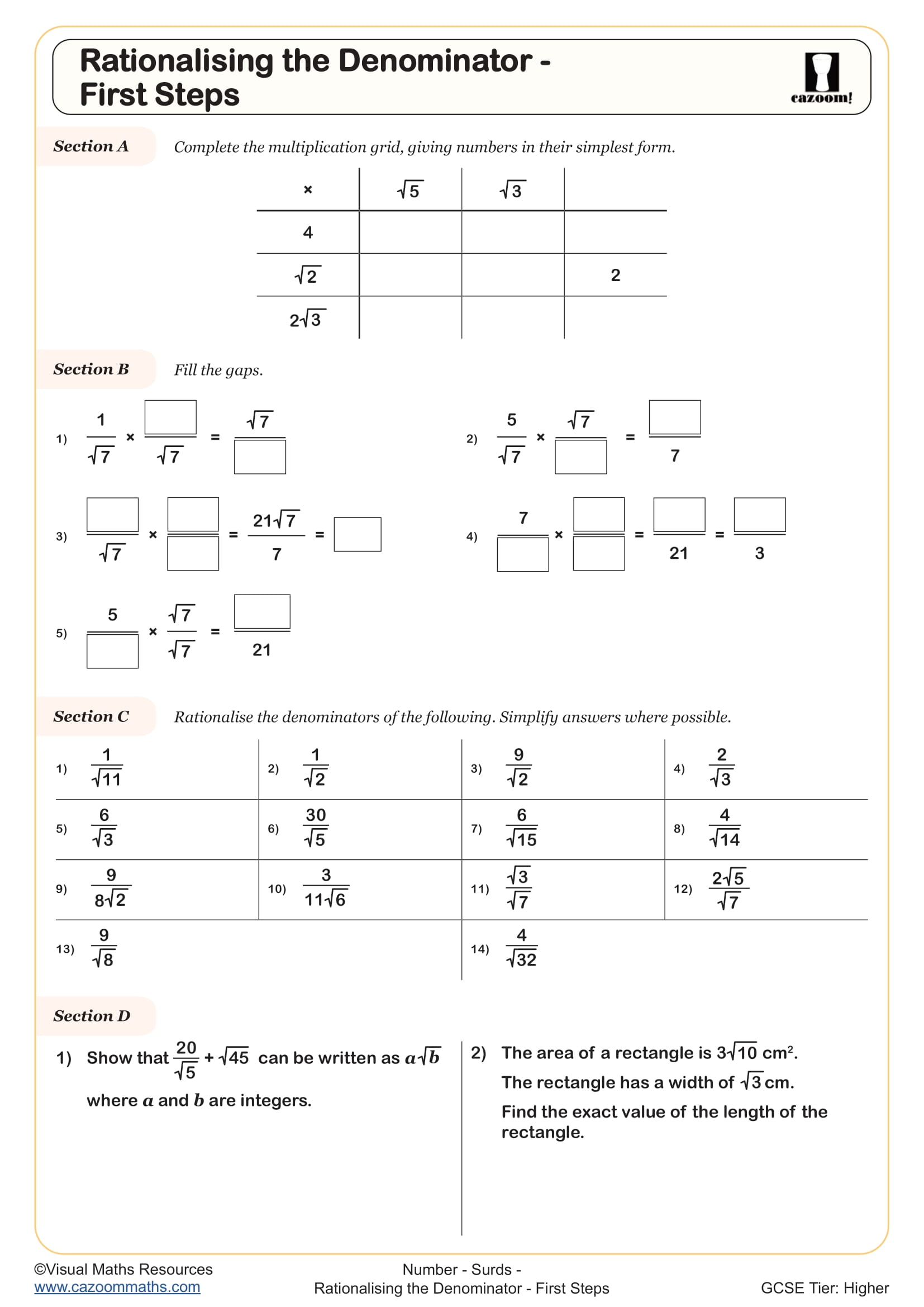
Rationalising the Denominator - First Steps
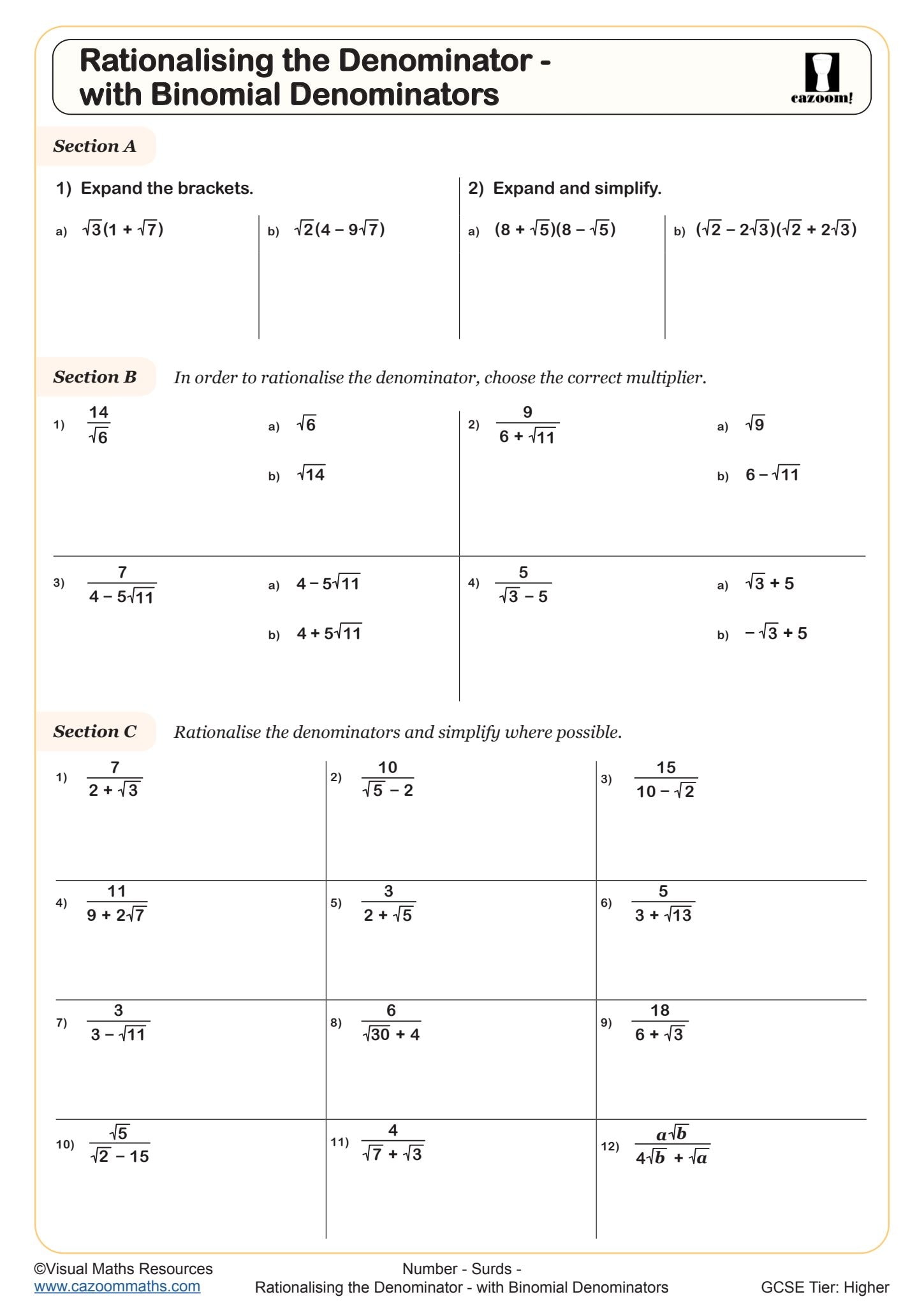
Rationalising the Denominator - with Binomial Denominators
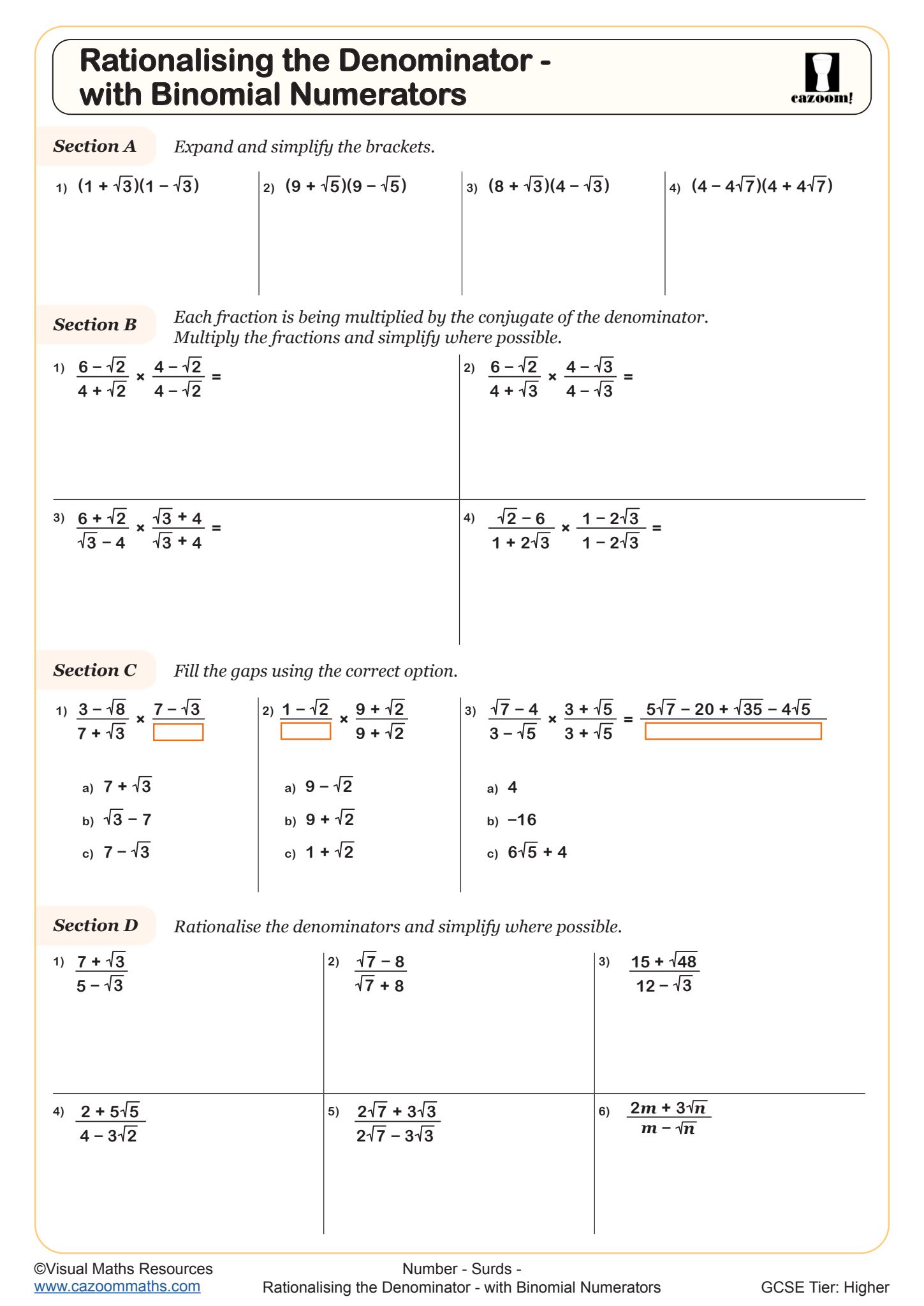
Rationalising the Denominator - with Binomial Numerators
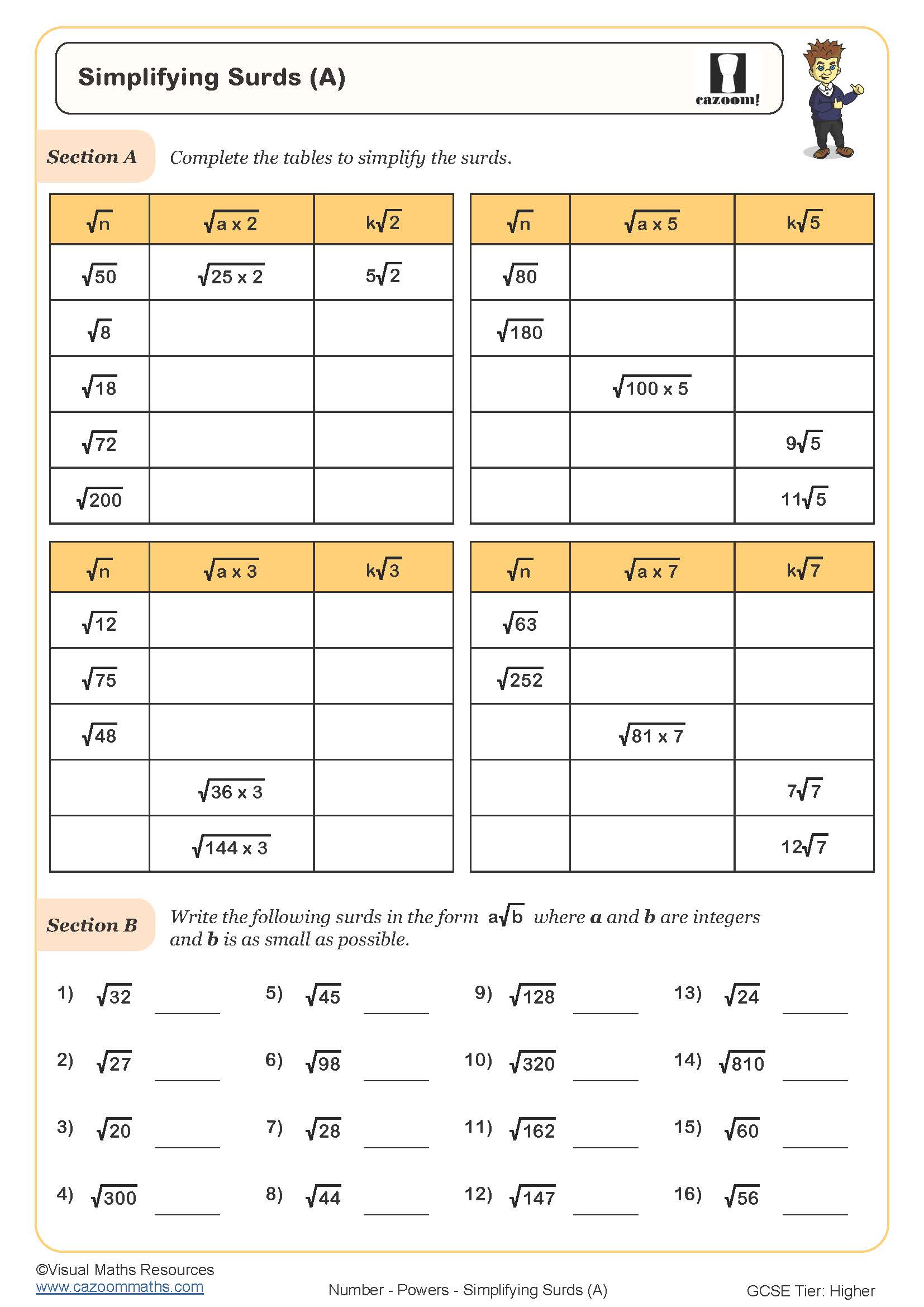
Simplifying Surds (A)
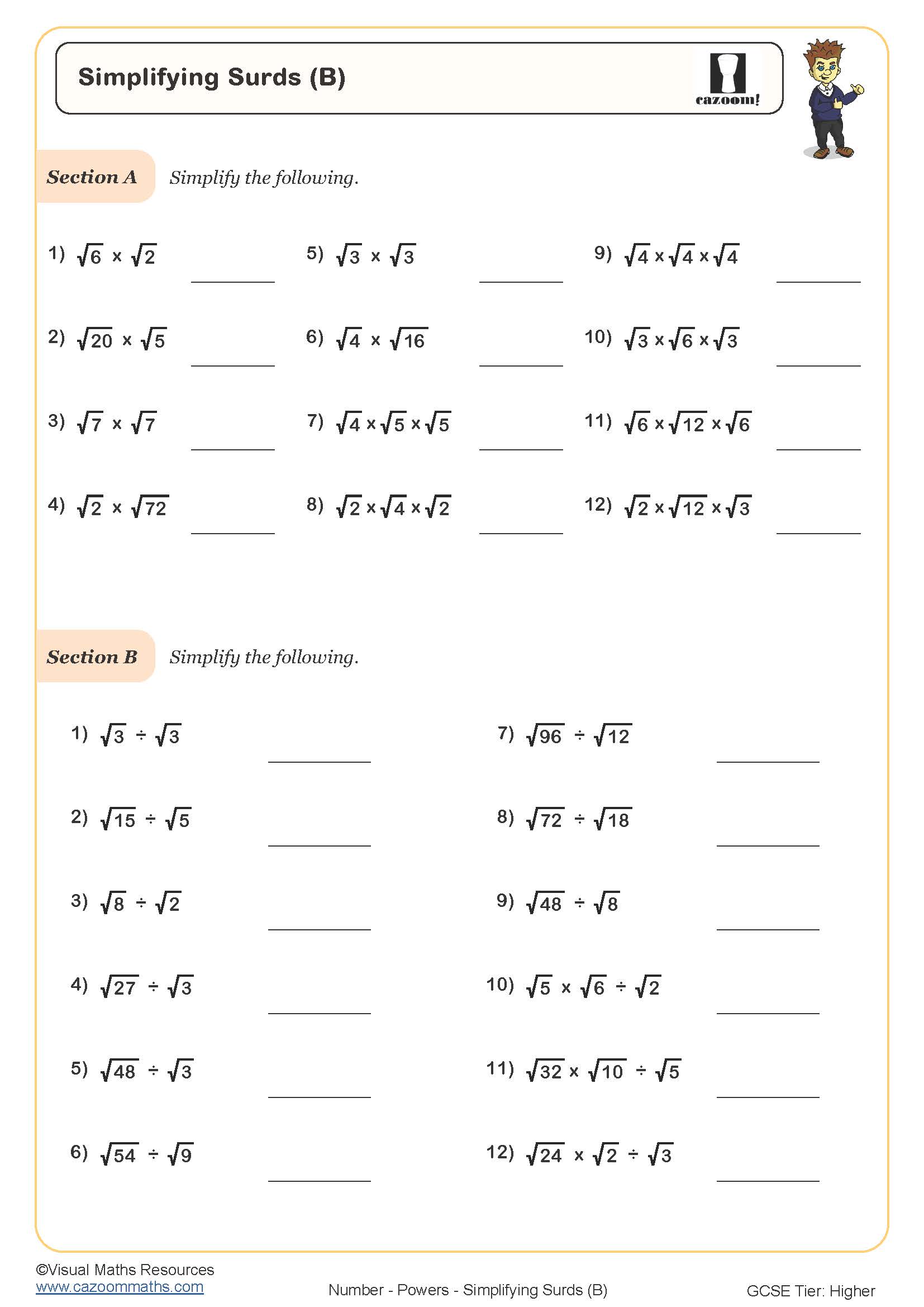
Simplifying Surds (B)
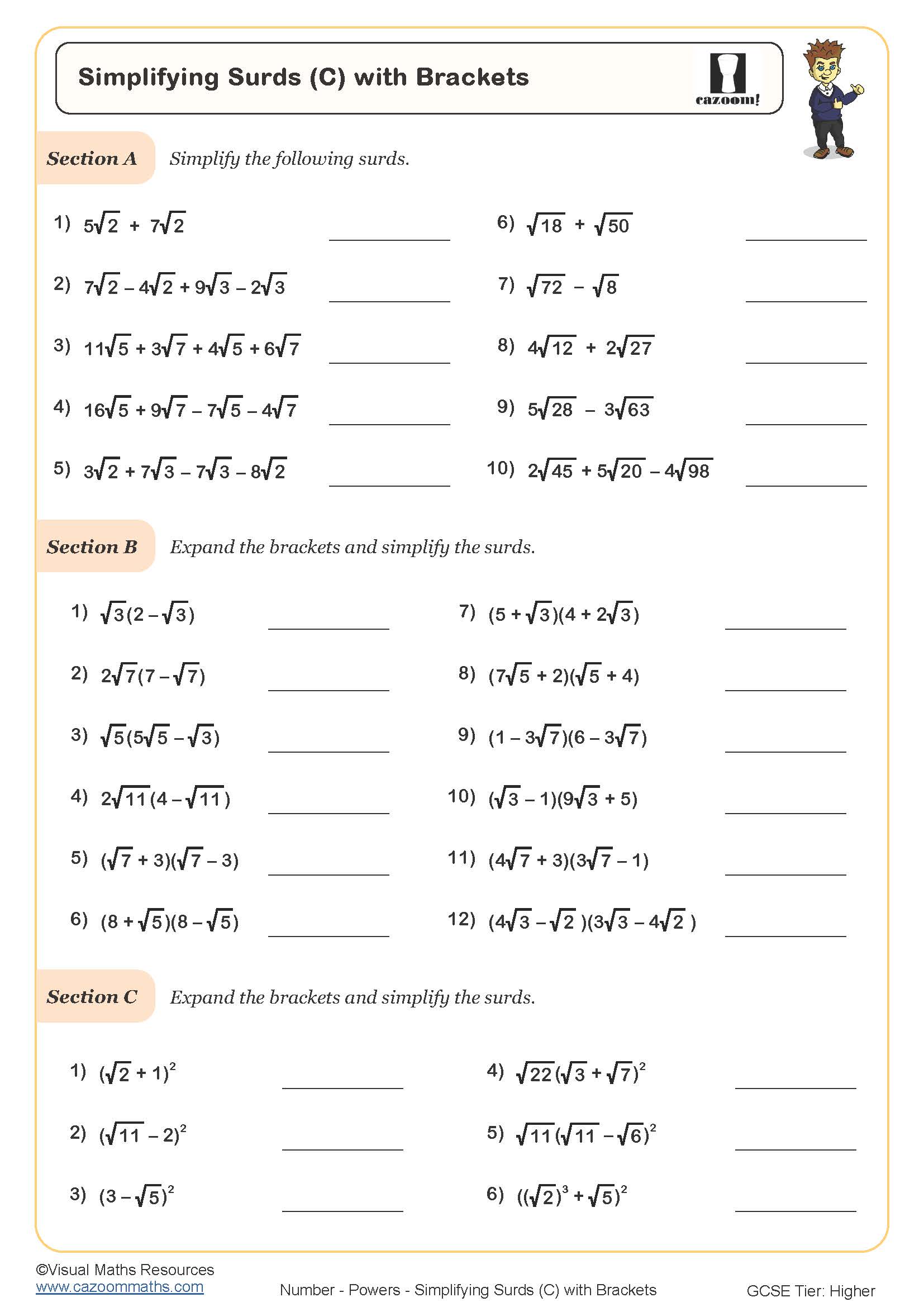
Simplifying Surds with Brackets (C)
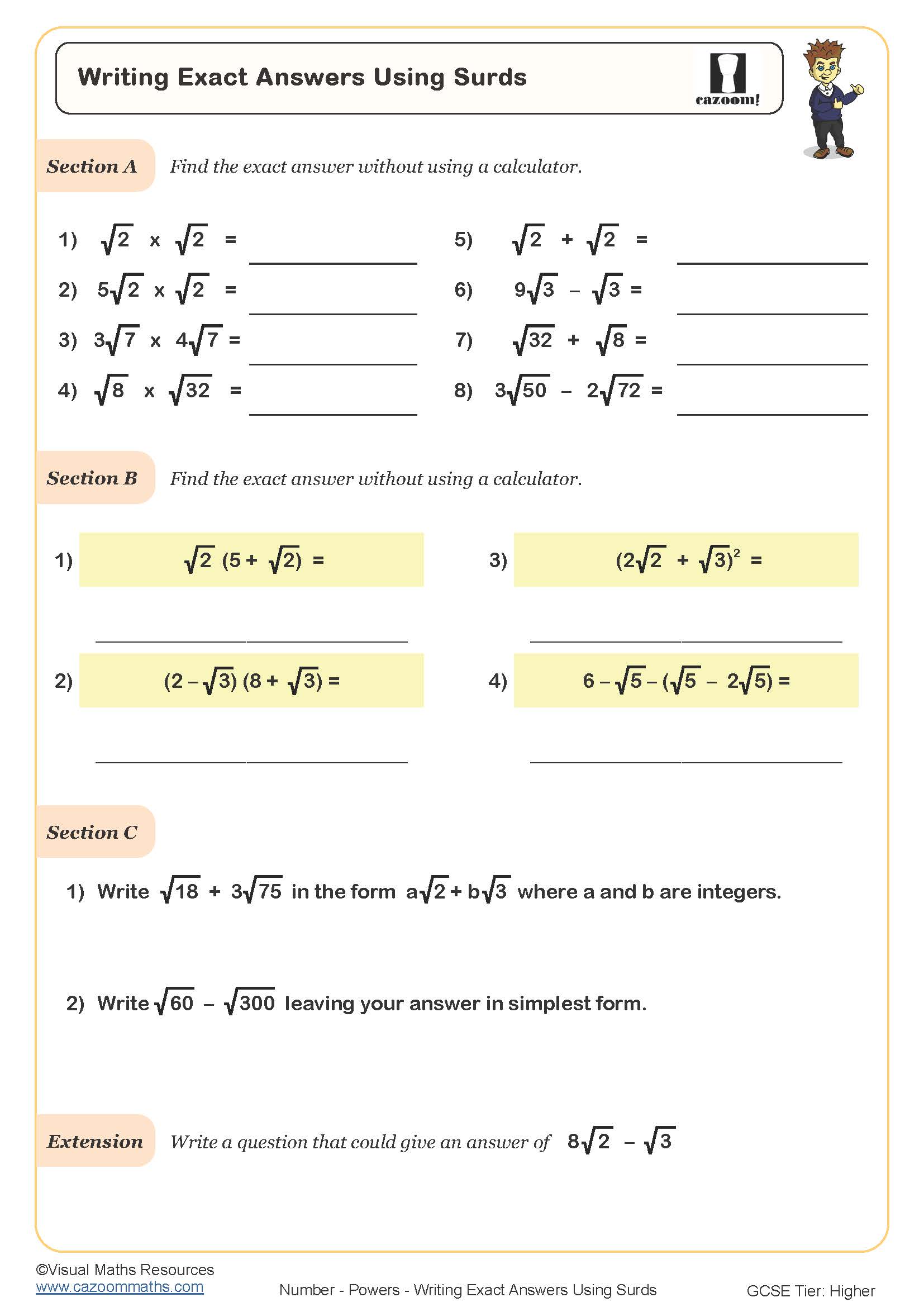
Writing Exact Answers Using Surds
All worksheets are created by the team of experienced teachers at Cazoom Maths.
What topics are covered in year 10 surds worksheet collections?
Year 10 surds worksheet collections typically cover simplifying surds by identifying perfect square factors, adding and subtracting surds with like terms, multiplying surds using the property √a × √b = √ab, and rationalising denominators with single surd terms. Students also practise expanding brackets containing surds and solving equations involving surd expressions.
Teachers notice students often confuse √9 + √16 with √25, incorrectly assuming they can add under the radical sign. The worksheets address this misconception by providing systematic practise in recognising when surds can be combined and when they remain separate terms, building the foundation needed for A-level mathematics.
Are surds appropriate for all Year 10 students or just higher ability groups?
Surds appear in the GCSE Higher tier specification, making them important for students targeting year groups 4-9. However, teachers often introduce basic surd concepts to middle-ability Year 10 groups to prepare them for potential tier decisions later. The algebraic reasoning skills developed through surd work benefit students across ability levels.
Many teachers use a scaffolded approach, starting with numerical examples before introducing algebraic surds. Students working towards Foundation tier still benefit from understanding that some square roots cannot be simplified, as this appears in problem-solving contexts and supports their understanding of exact versus approximate values in mathematical calculations.
How do students typically approach multiplying surds worksheet questions?
Students learning to multiply surds often focus too heavily on memorising the rule √a × √b = √ab without understanding the underlying mathematics. Teachers observe that many students correctly multiply simple surds like √3 × √5 = √15, but struggle when brackets or coefficients are involved, such as 2√3 × 3√5.
Multiplying surds worksheets typically progress from basic multiplication through to expanding brackets like (2 + √3)(1 - √3). Students frequently make sign errors or forget to multiply the rational parts separately from the surd parts. Practise with systematic working helps students avoid these common pitfalls while building confidence with more complex algebraic manipulation.
How can teachers use these worksheets to address common surd misconceptions?
Teachers find these worksheets most effective when used diagnostically, identifying specific misconceptions before addressing them through targeted intervention. Common errors include assuming √a + √b = √(a+b), incorrectly simplifying √8 as 4√2 instead of 2√2, and confusion over when denominators need rationalising.
Many teachers use the answer sheets to create worked examples on the board, demonstrating the step-by-step process while students follow along. This approach helps students understand not just what to do, but why each step is mathematically justified. The worksheets work particularly well for homework consolidation after introducing new concepts, allowing students to practise while the methods remain fresh.