Year 11 Surds Worksheets
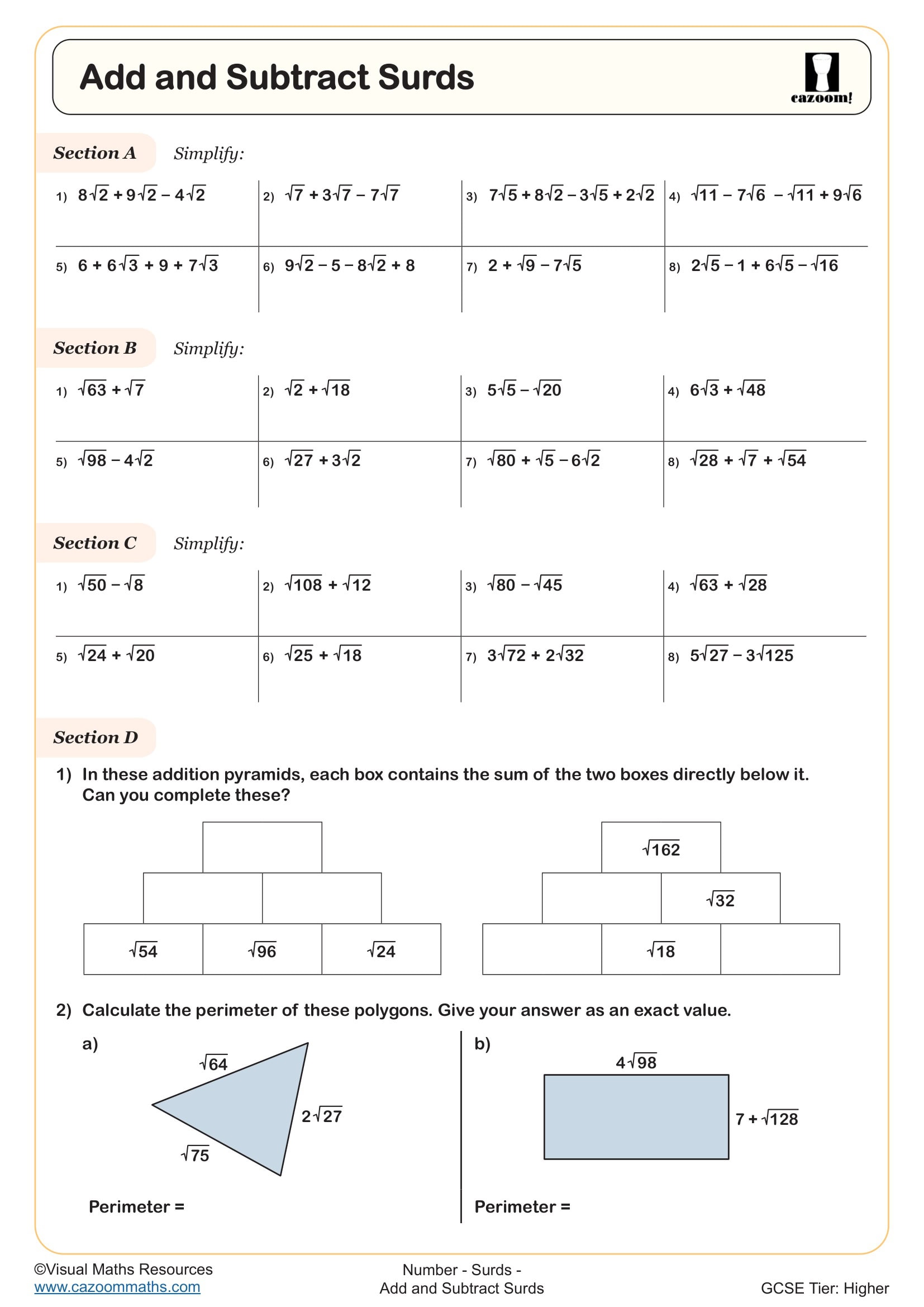
Add and Subtract Surds
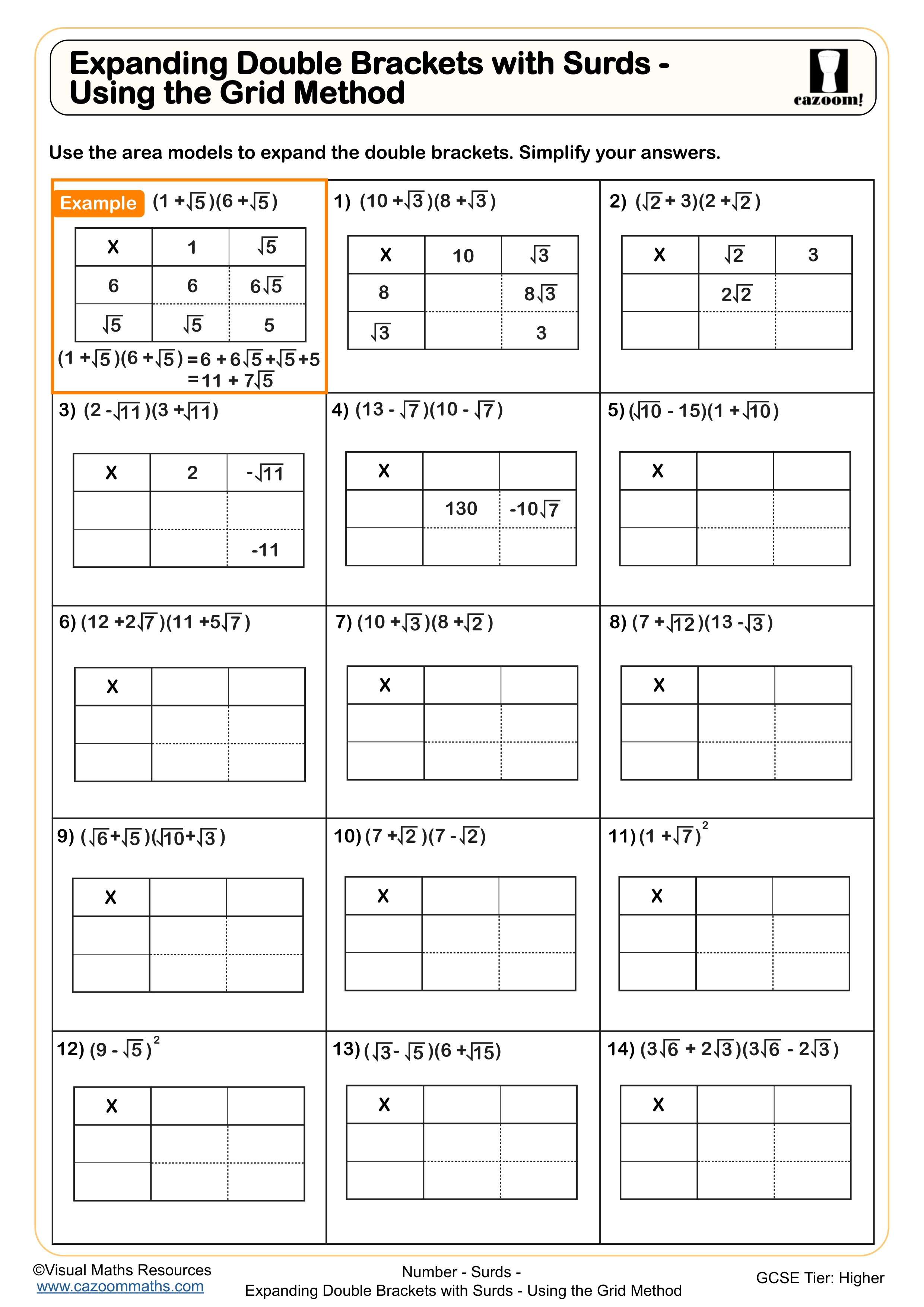
Expanding Double Brackets with Surds - Using the Grid Method
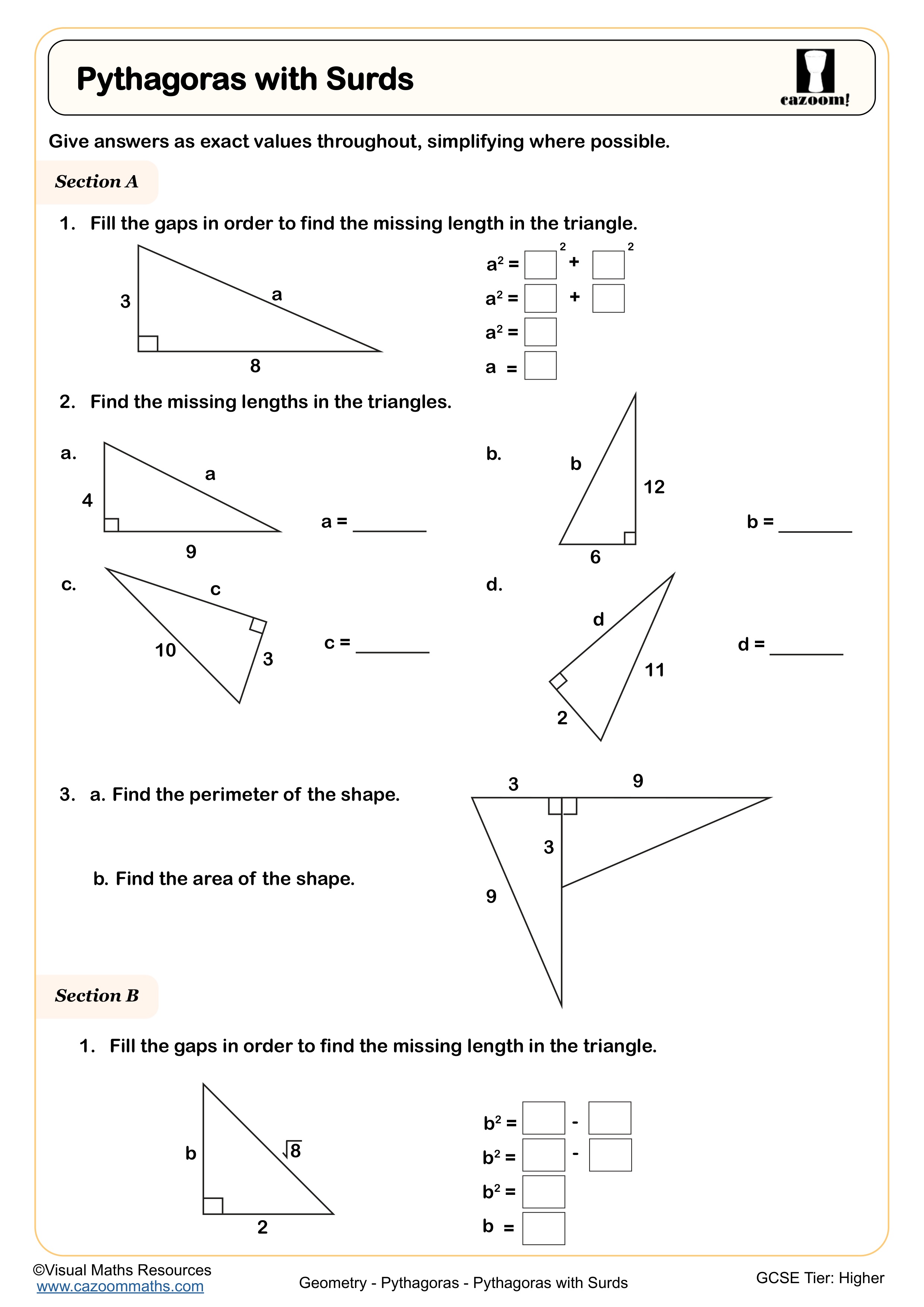
Pythagoras with Surds
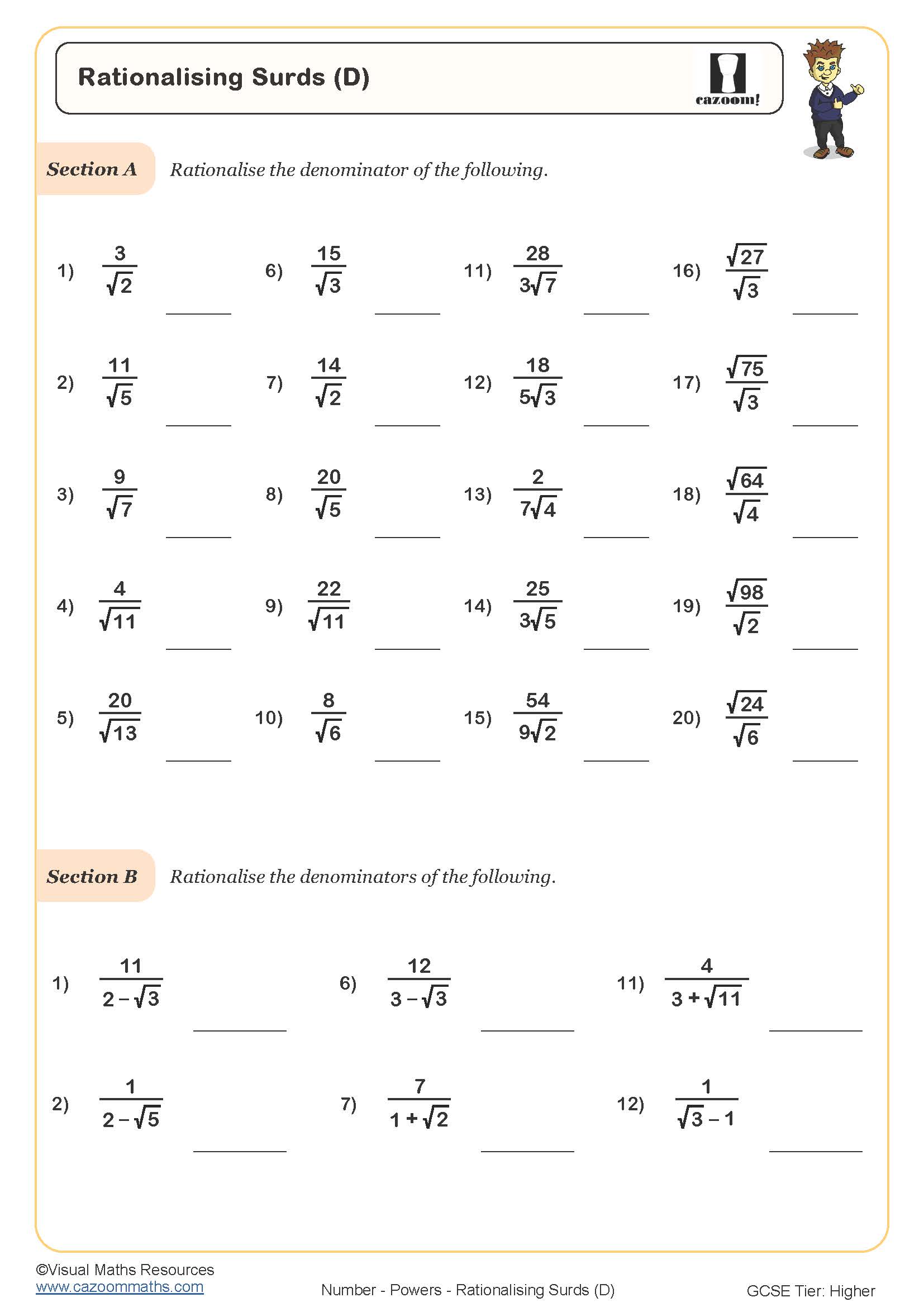
Rationalising Surds (D)
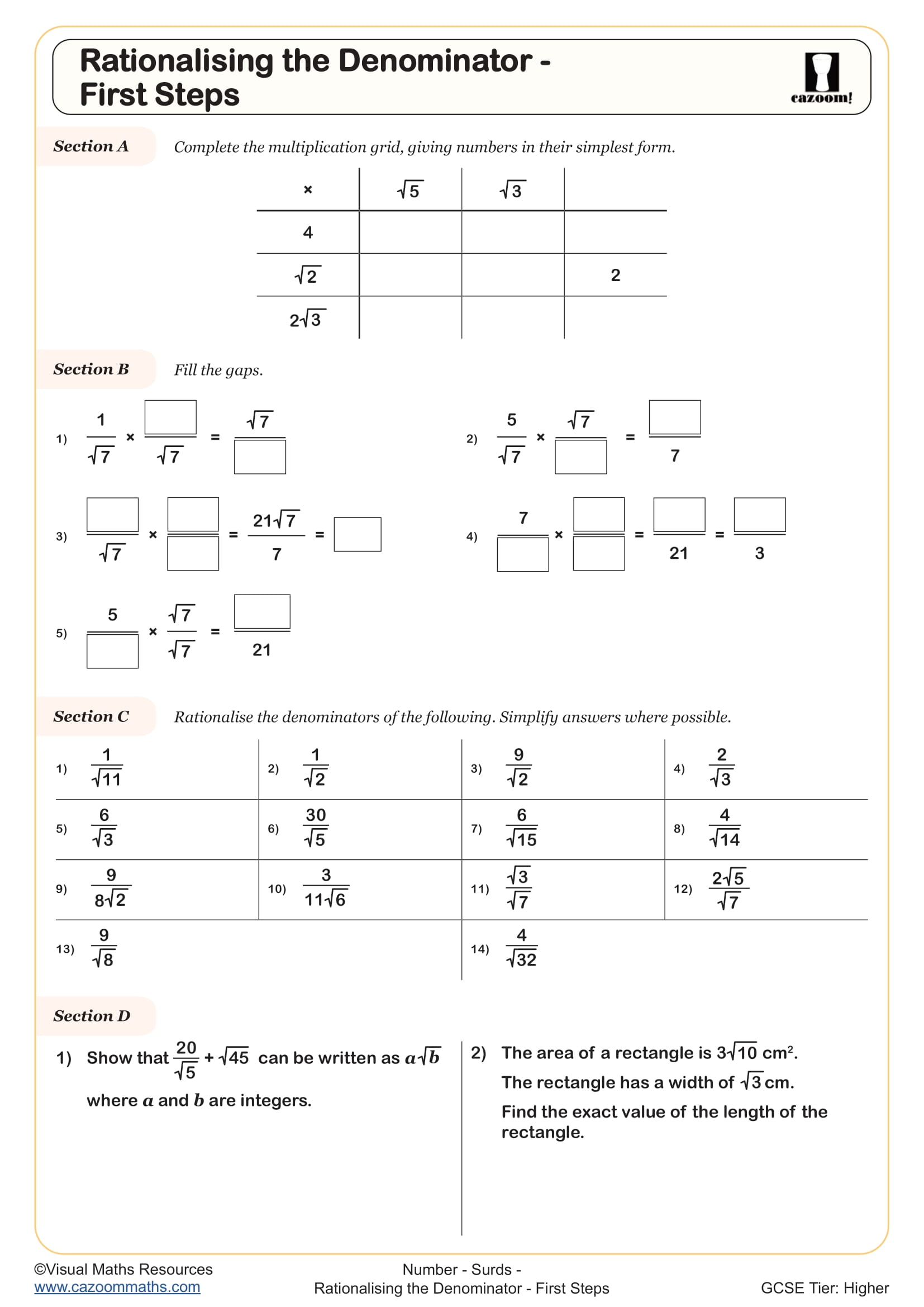
Rationalising the Denominator - First Steps
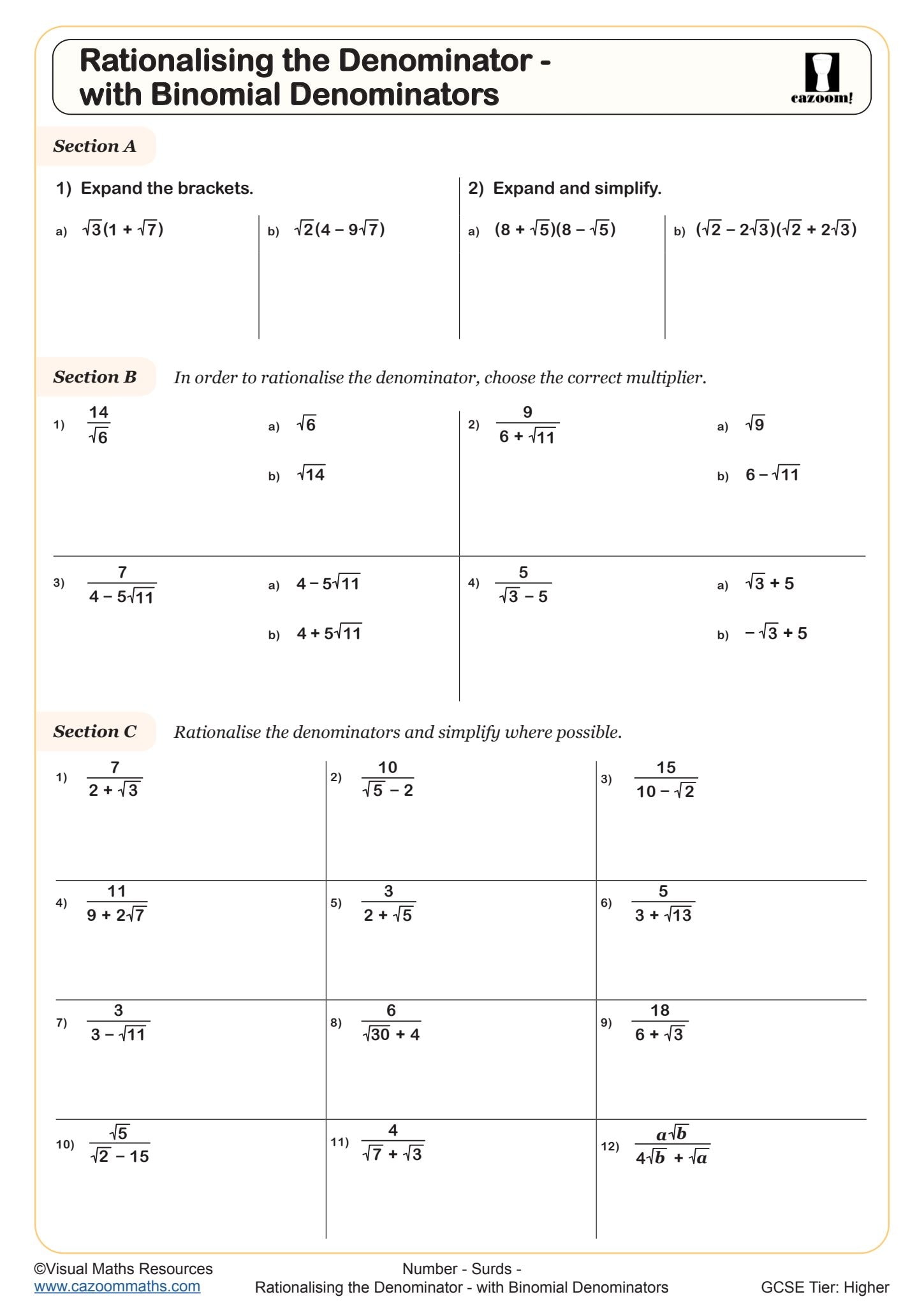
Rationalising the Denominator - with Binomial Denominators
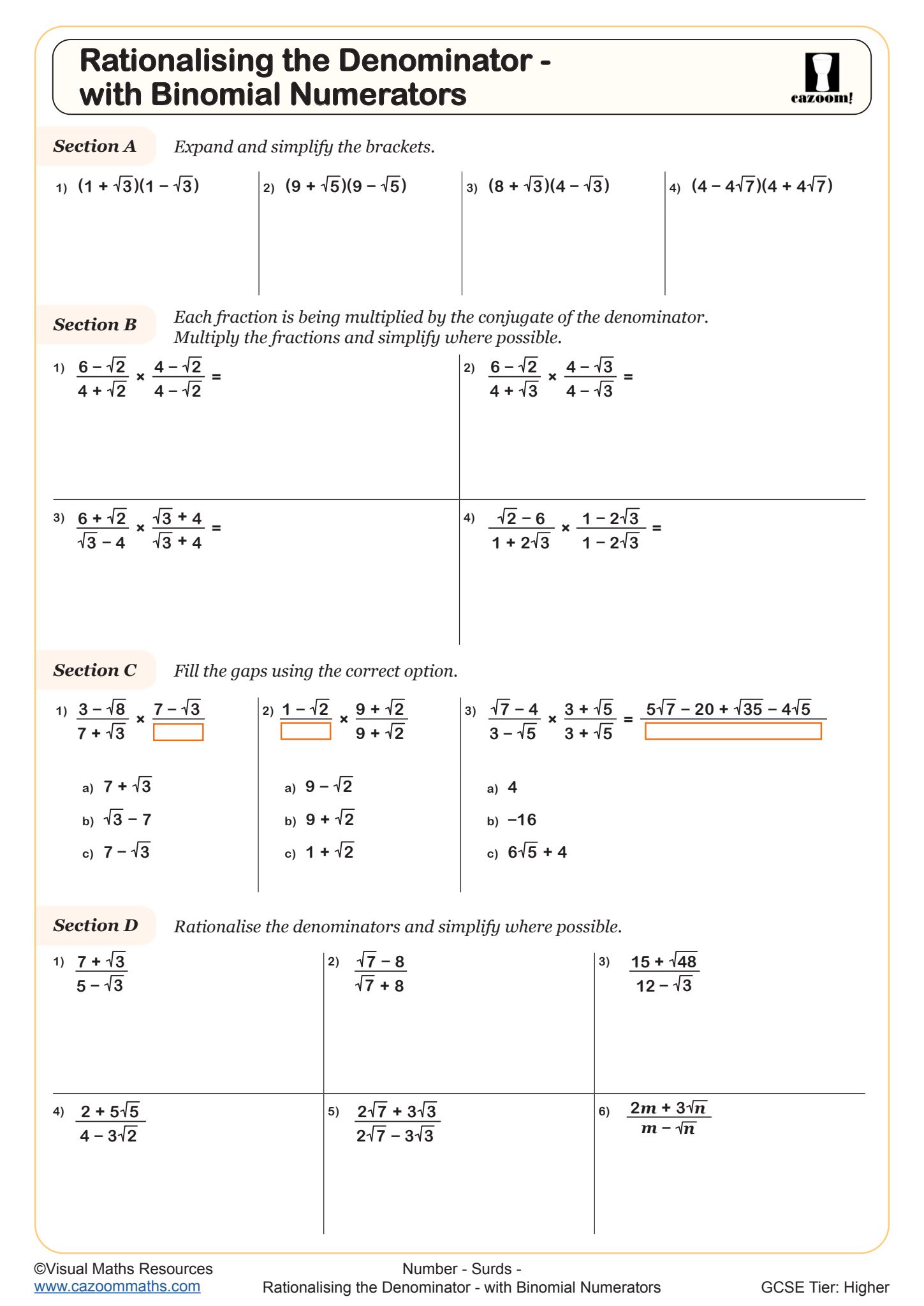
Rationalising the Denominator - with Binomial Numerators
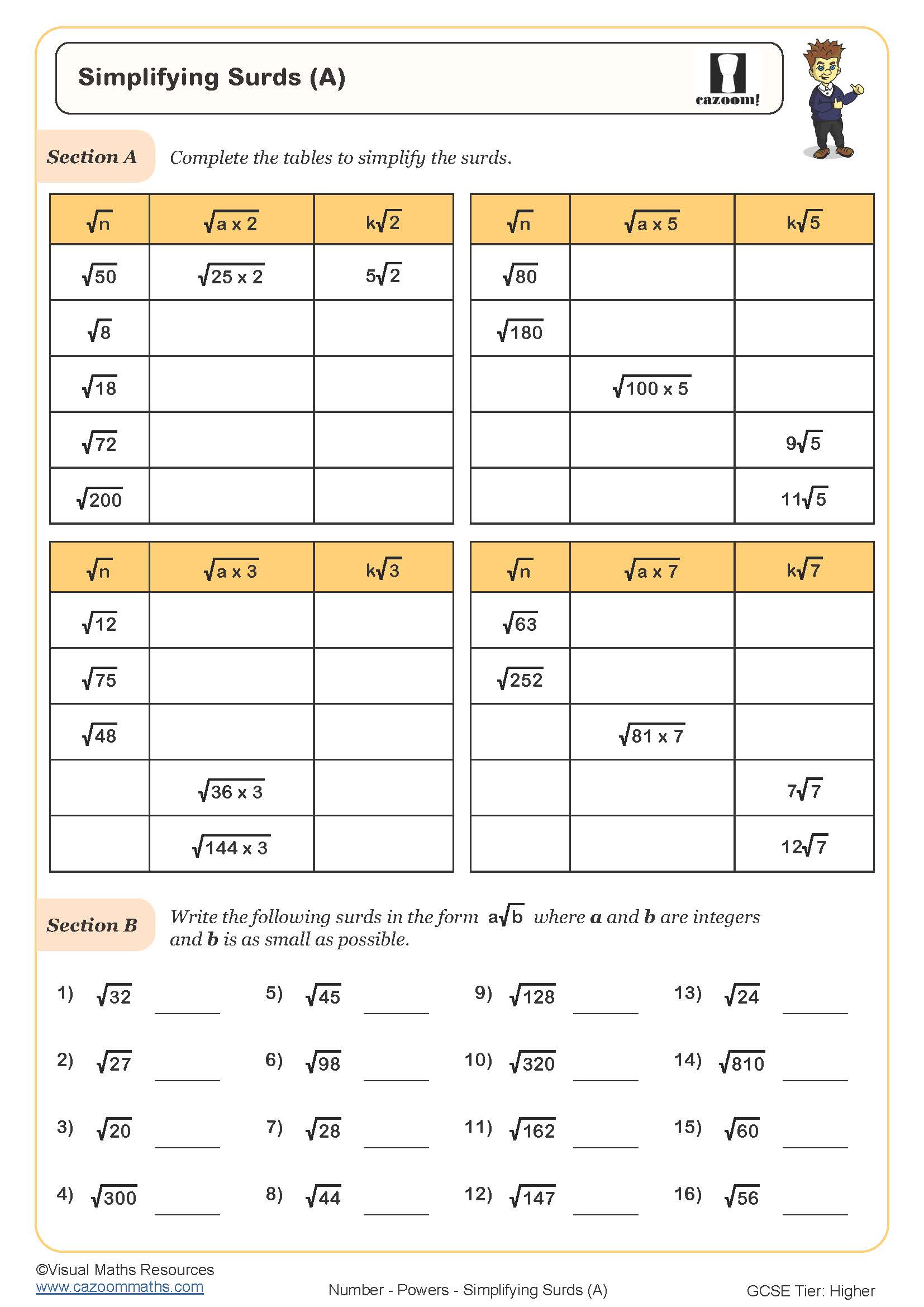
Simplifying Surds (A)
Simplifying Surds (B)
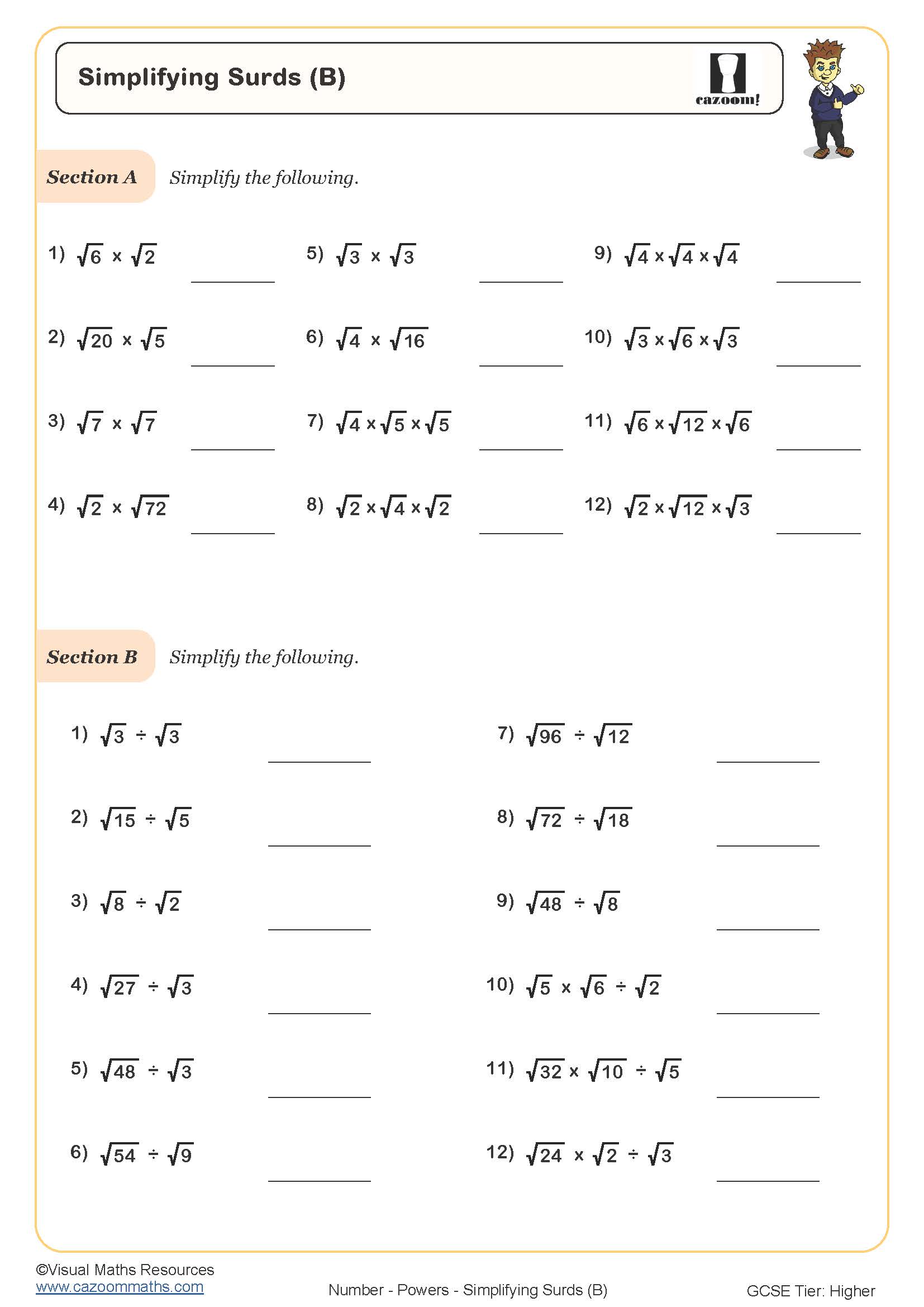
Simplifying Surds with Brackets (C)
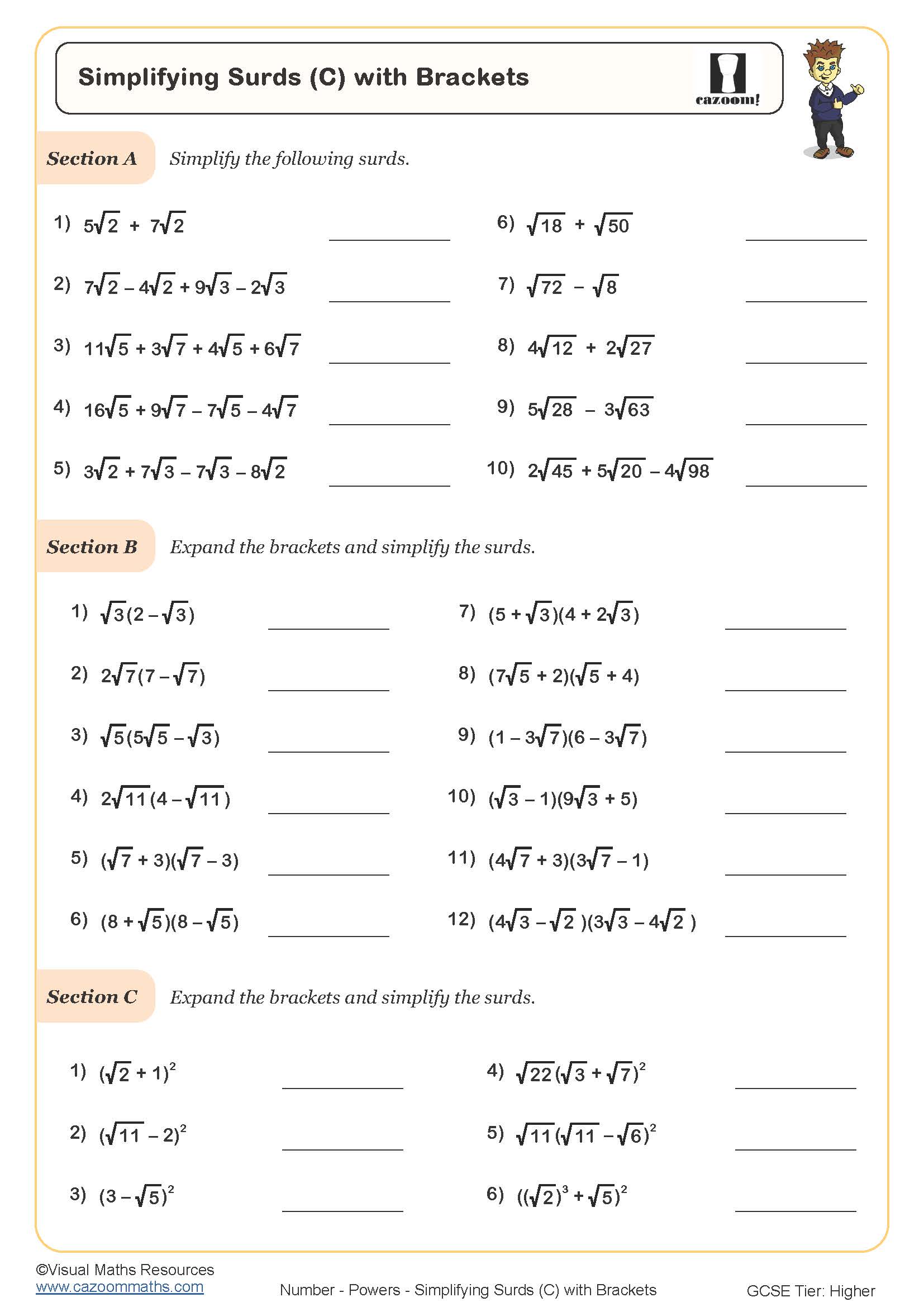
Writing Exact Answers Using Surds
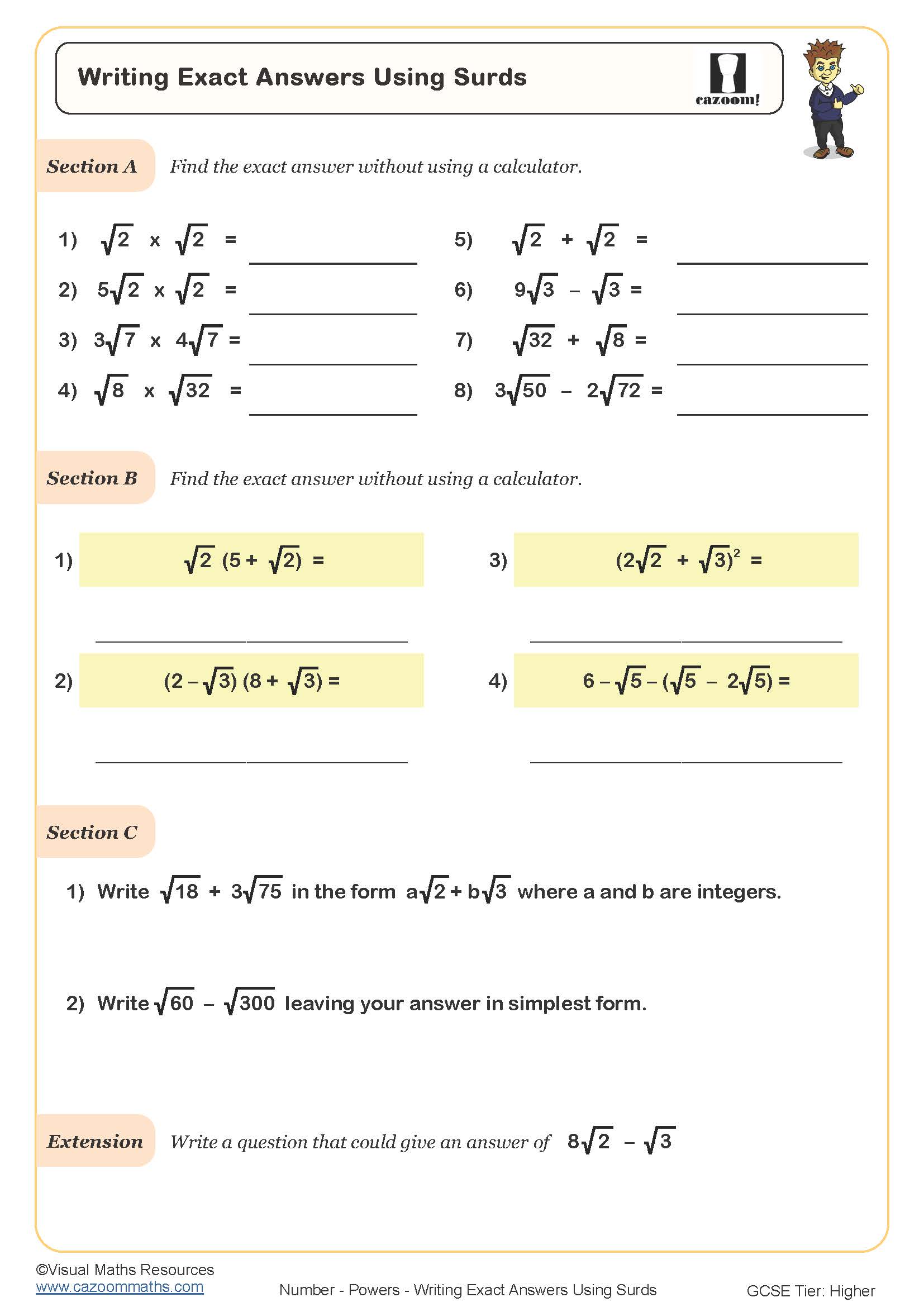
All worksheets are created by the team of experienced teachers at Cazoom Maths.
What are surds and why do students find them difficult?
Surds are irrational numbers that cannot be simplified to remove the square root (or other root). Examples include √2, √7, and expressions like 3√5 + 2√3. They appear throughout GCSE Higher mathematics, particularly in algebra, trigonometry exact values, and circle theorems. Students work with surds from Year 10 onwards as part of the KS4 number curriculum.
Many students struggle because surds require a shift in thinking: unlike decimal approximations, surds must remain exact. Teachers frequently notice that students attempt to add unlike surds (writing √2 + √3 as √5) or incorrectly multiply surds by treating them like ordinary numbers. The abstract nature of keeping answers in surd form rather than reaching a decimal often causes confusion, especially when students check answers on calculators and see different forms of the same value.
Which year groups study surds worksheets?
These surds worksheets target Year 11 students preparing for GCSE Higher tier examinations. Surds form part of the KS4 Number content domain and typically appear in papers worth 2-4 marks per question. Students need confidence with surds to access higher-grade questions across multiple topics, not just number work.
The progression within Year 11 moves from simplifying single surds to more complex operations. Students begin with adding and subtracting like surds, then tackle multiplying and dividing surds including rationalising simple denominators. The challenge increases with brackets requiring expansion (such as (2 + √3)(4 - √3)) and hard rationalising where denominators contain surd expressions with two terms, demanding multiplication by the conjugate. This scaffolded approach builds the fluency needed for grade 7-9 questions.
What is rationalising the denominator and when is it used?
Rationalising the denominator means rewriting a fraction so the denominator contains no surds. For simple cases like 1/√2, students multiply numerator and denominator by √2 to give √2/2. Hard rationalising involves denominators with two terms, such as 1/(3 + √5), requiring multiplication by the conjugate (3 - √5) to create a rational denominator through the difference of two squares.
This technique has practical applications in physics and engineering where exact values matter. When calculating impedance in electrical circuits or analysing wave interference patterns, engineers must work with irrational ratios. Rationalised forms make it easier to compare values, perform further calculations, and input expressions into computer algebra systems. GCSE mark schemes specifically require rationalised answers, and students lose marks for leaving surds in denominators even when numerically equivalent to the correct answer.
How do these surds worksheets support GCSE preparation?
The worksheets provide structured practise that mirrors GCSE question styles, moving from skills-based questions to problems requiring multiple steps. Each sheet focuses on specific techniques whilst building connections between methods, helping students recognise when to apply different approaches. The answer sheets show fully worked solutions, allowing students to identify exactly where errors occur in their method rather than just whether the final answer is correct.
Teachers use these resources flexibly across different settings. They work well for intervention sessions with students who've grasped basic surds but need additional practise with harder rationalising or bracket expansion. Many teachers assign specific sheets for independent revision before mock exams, or use them for homework following classroom teaching. The progression through subtopics also supports differentiation, with some students consolidating addition and subtraction whilst others tackle the more demanding rationalising problems that distinguish grade 8-9 responses.