Year 7 Number Lines Worksheets
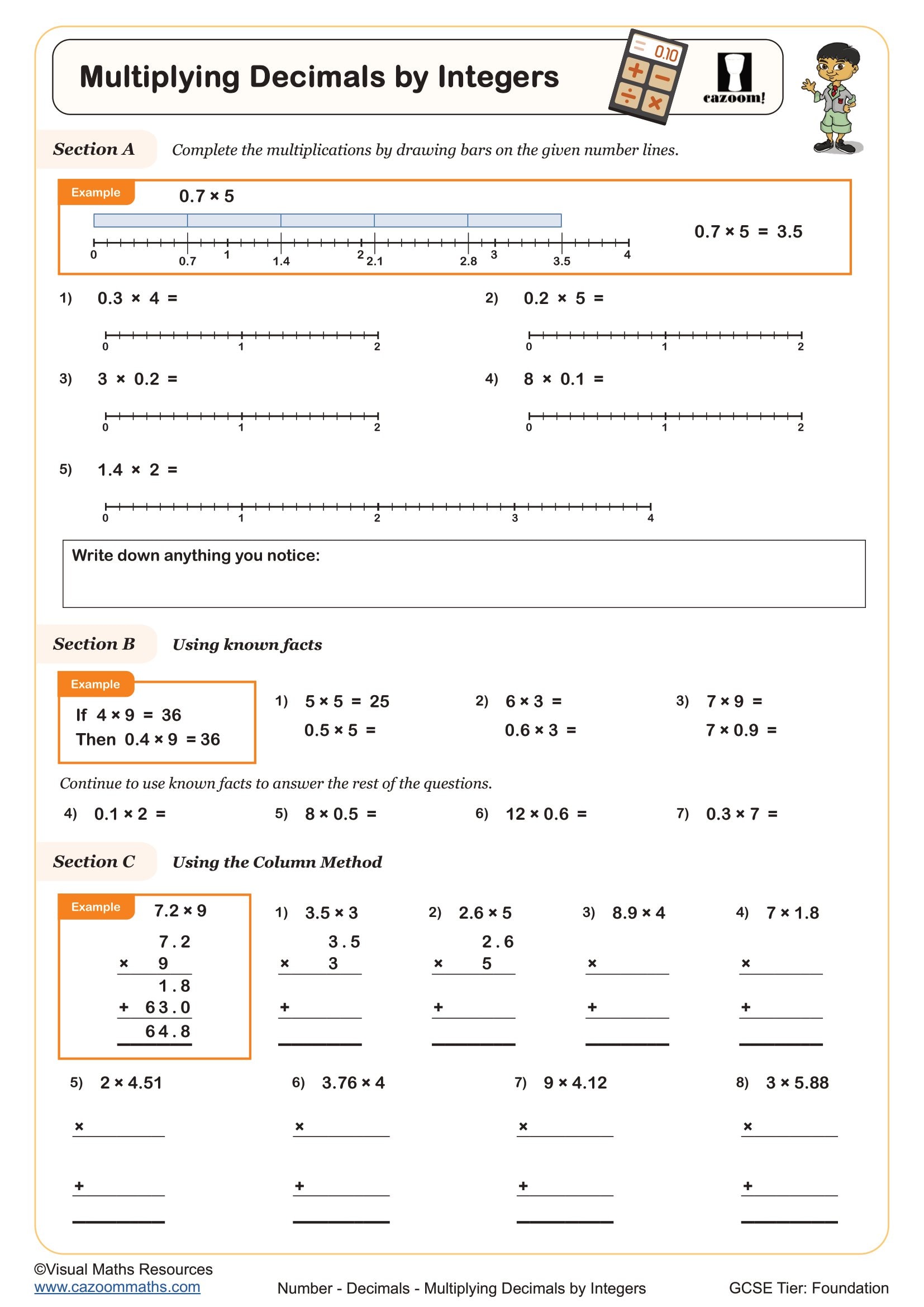
All worksheets are created by the team of experienced teachers at Cazoom Maths.
What skills do students practise with integers number line worksheets?
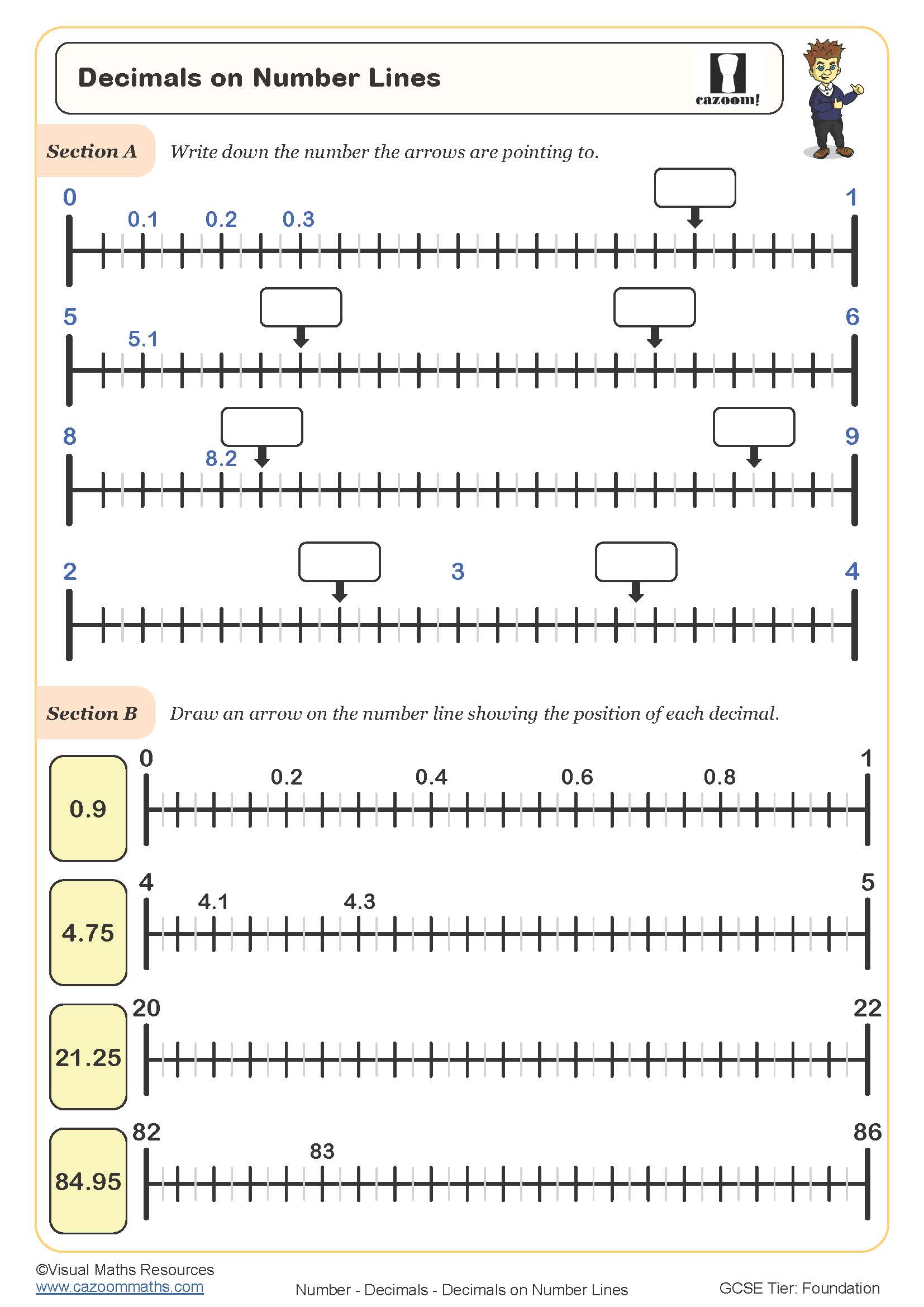
Students develop core skills including plotting positive and negative integers, identifying positions between marked points, and understanding the continuous nature of number sequences. The worksheets progress from simple whole number placement to more complex work involving decimals, fractions, and algebraic representations on number lines.
Teachers frequently observe that students initially treat number lines as discrete points rather than continuous scales. This misconception becomes apparent when pupils struggle to place numbers like -2.5 or estimate positions between marked integers. Structured practice with varied number line formats helps students recognise that every point on a line represents a specific number value.
Are these number lines worksheets suitable for different Year 7 abilities?
The worksheets cater to the full range of Year 7 mathematical abilities, from students consolidating basic integer concepts to those ready for coordinate geometry foundations. Lower attainers benefit from worksheets focusing on simple integer placement and basic directed number operations, while higher achievers can tackle complex interval work and algebraic number line problems.
Many teachers find these resources particularly useful for differentiated lessons where students work on the same core concept at appropriate challenge levels. The variety allows teachers to assign different worksheets to different groups while maintaining whole-class discussion about number line principles and problem-solving strategies.
How do number line worksheets support negative number understanding?
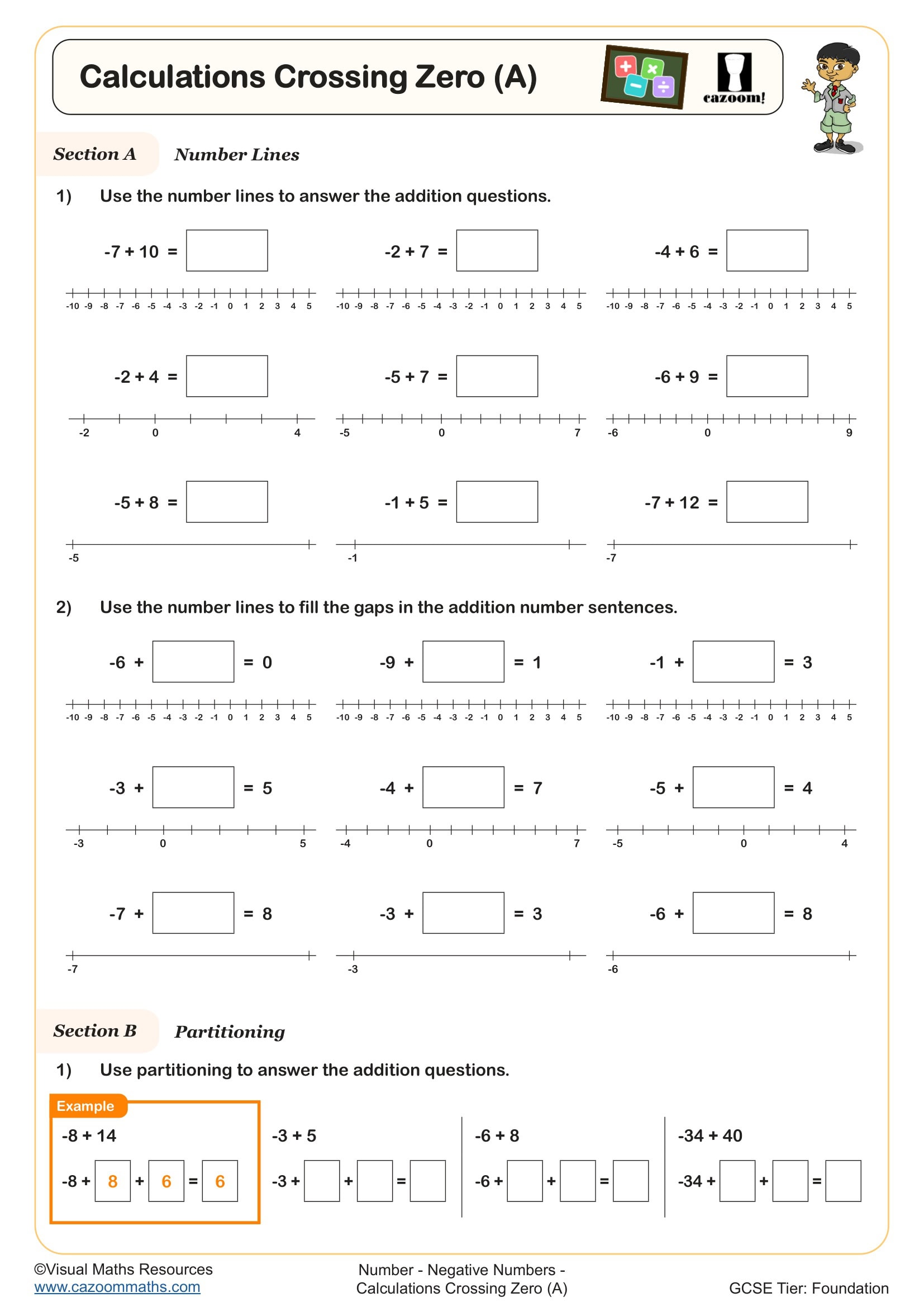
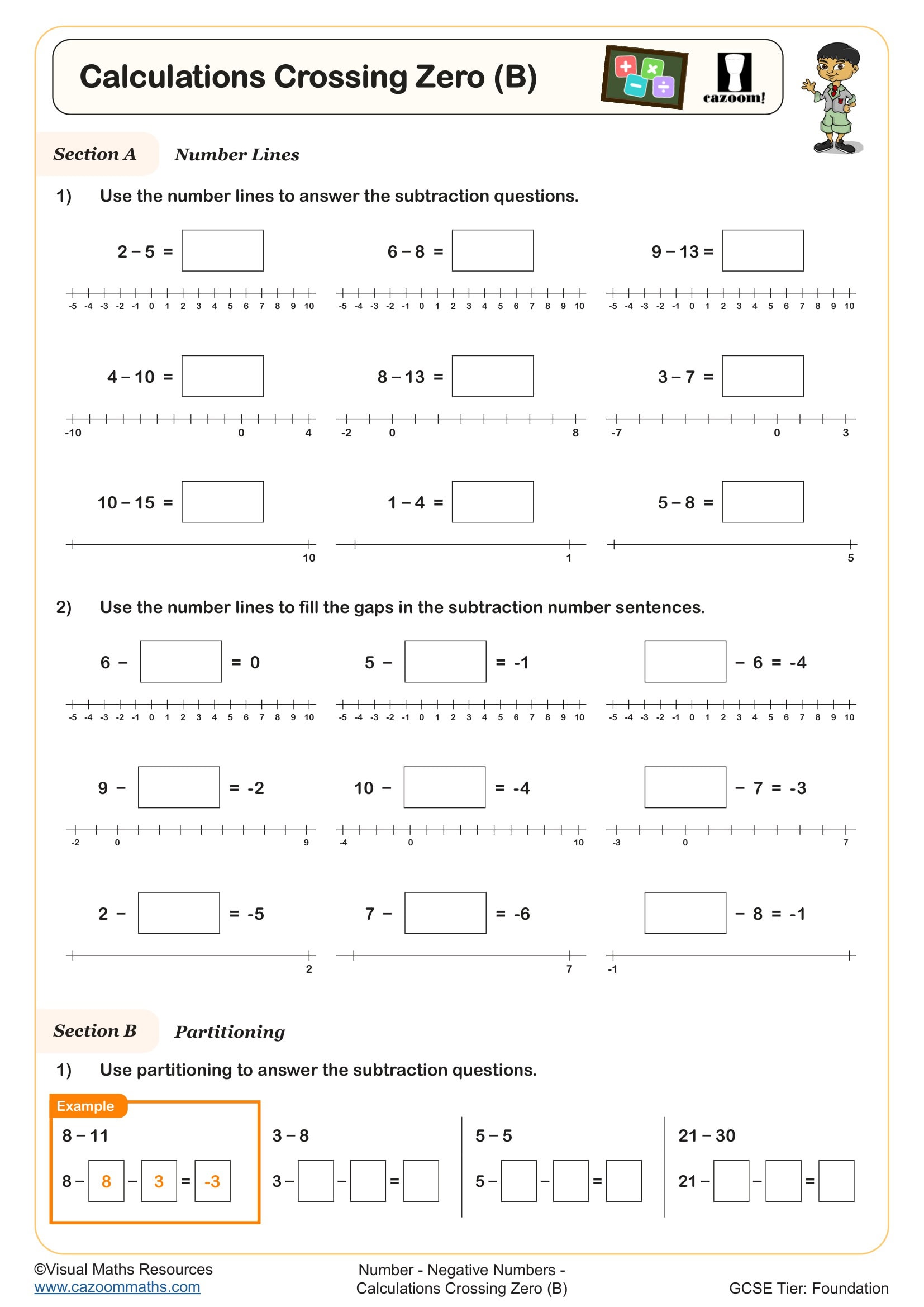
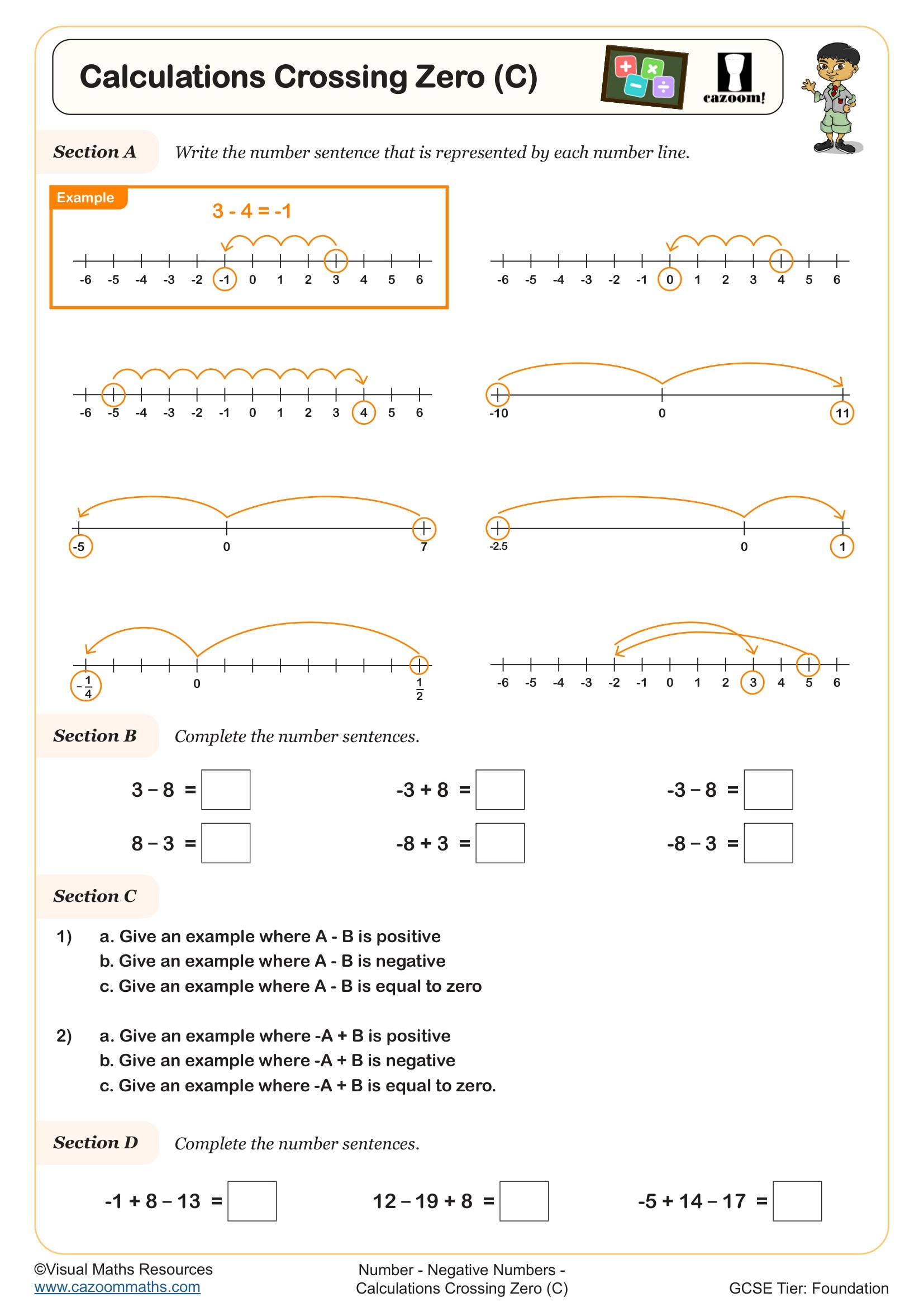
Number line worksheets provide visual representation that helps students grasp negative numbers as genuine mathematical quantities rather than just 'taking away'. Students practise moving left for subtraction and right for addition, building intuitive understanding of directed number operations that supports later algebra work.
Classroom experience shows that students who struggle with abstract negative number rules often succeed when using number line methods. The visual approach helps them see why subtracting a negative number increases the result, and why multiplying two negative numbers gives a positive answer. This concrete foundation proves invaluable for GCSE algebra topics.
How can teachers use these number line worksheet resources effectively?
Teachers find these worksheets most effective when used as part of structured sequences that build from concrete to abstract thinking. Starting lessons with physical number line activities, then moving to worksheet practice, and finishing with real-world applications creates strong conceptual understanding. The answer sheets enable quick assessment of common error patterns.
Many successful approaches involve using worksheets for both initial teaching and revision purposes. Teachers often project worksheet questions for whole-class discussion, then assign similar problems for independent practice. The variety of question types means teachers can select specific worksheets that target particular misconceptions identified during lessons or assessments.