Year 8 Fraction Wall Worksheets
All worksheets are created by the team of experienced teachers at Cazoom Maths.
What is a fraction wall and how does it help with learning fractions?
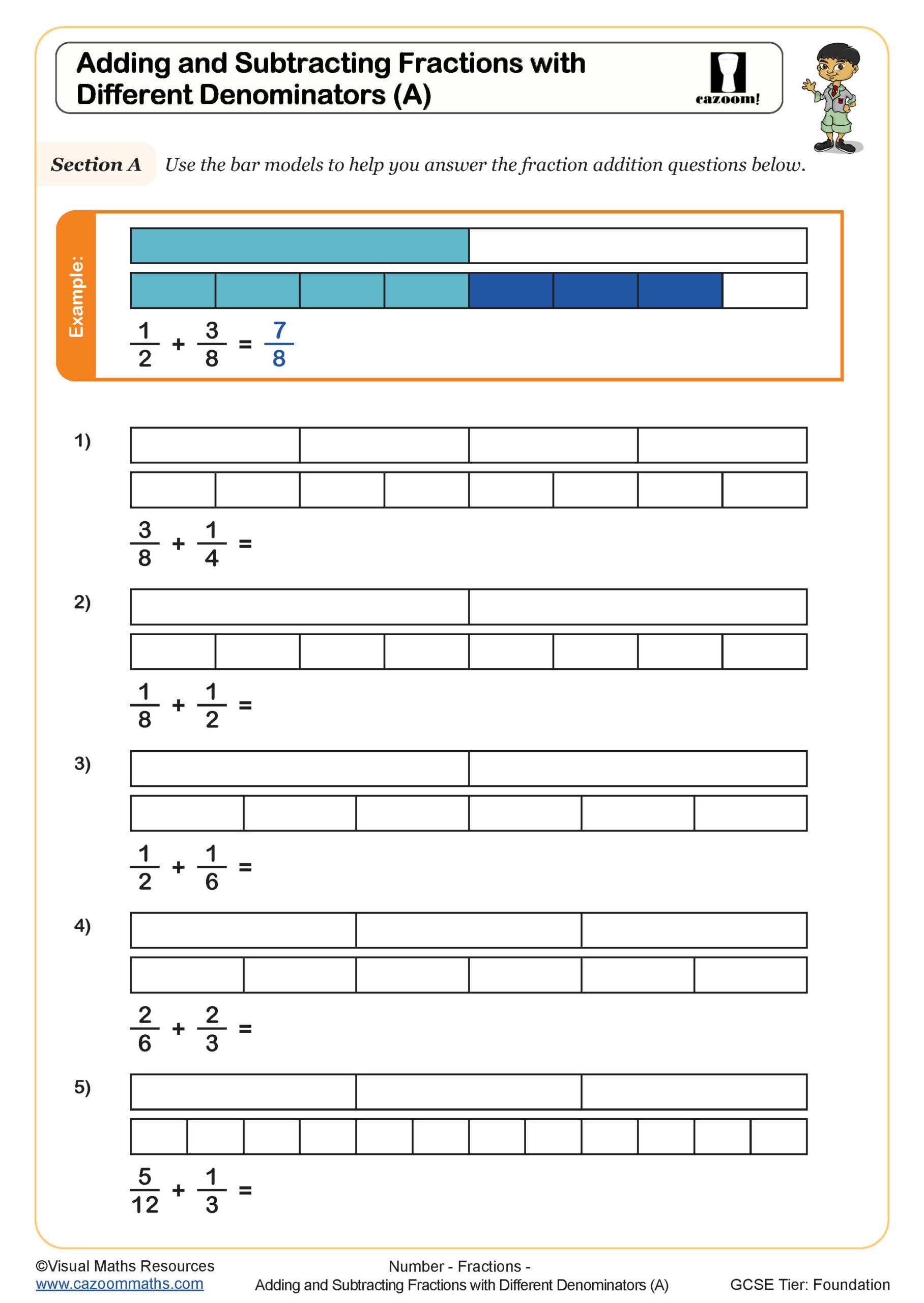
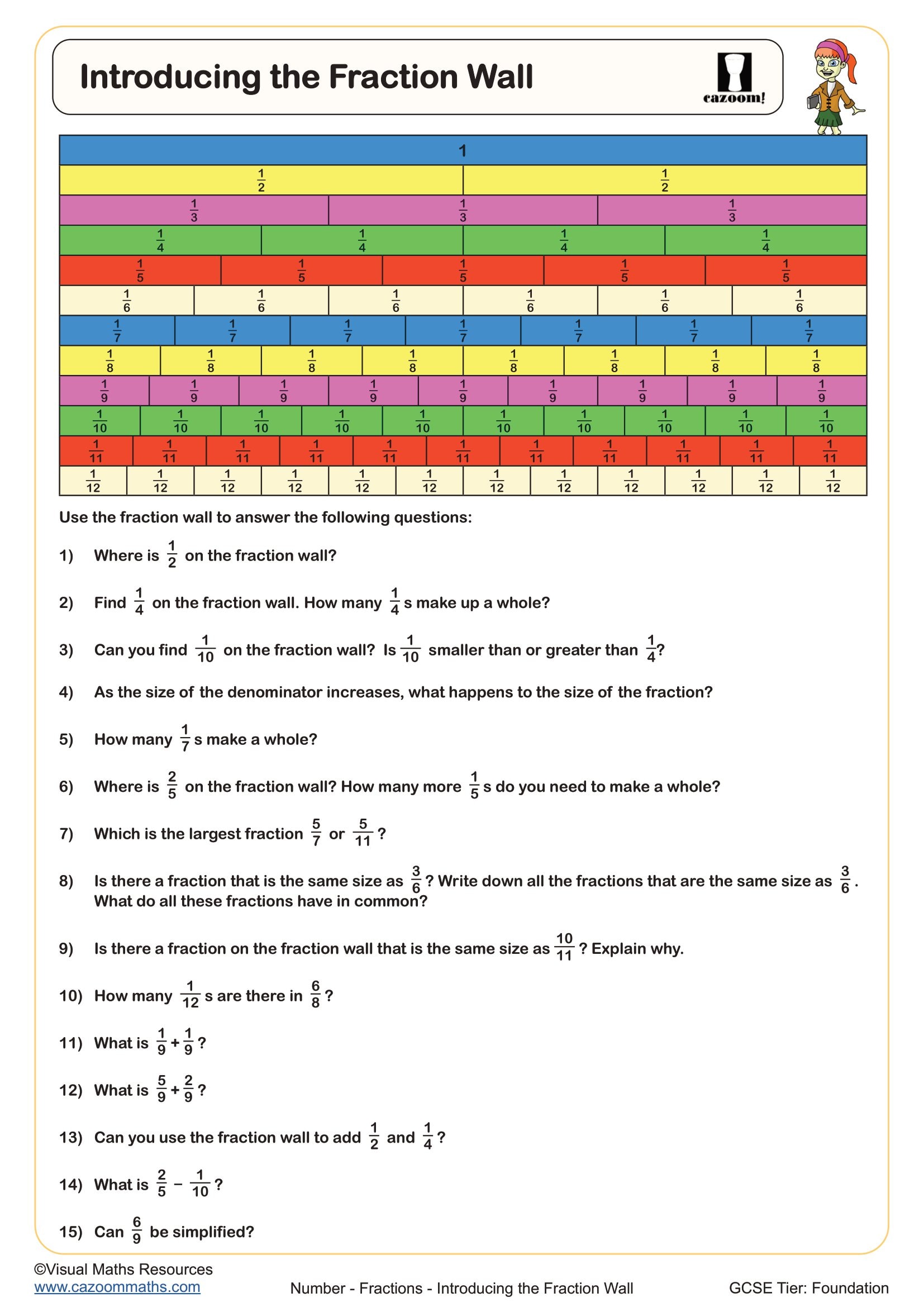
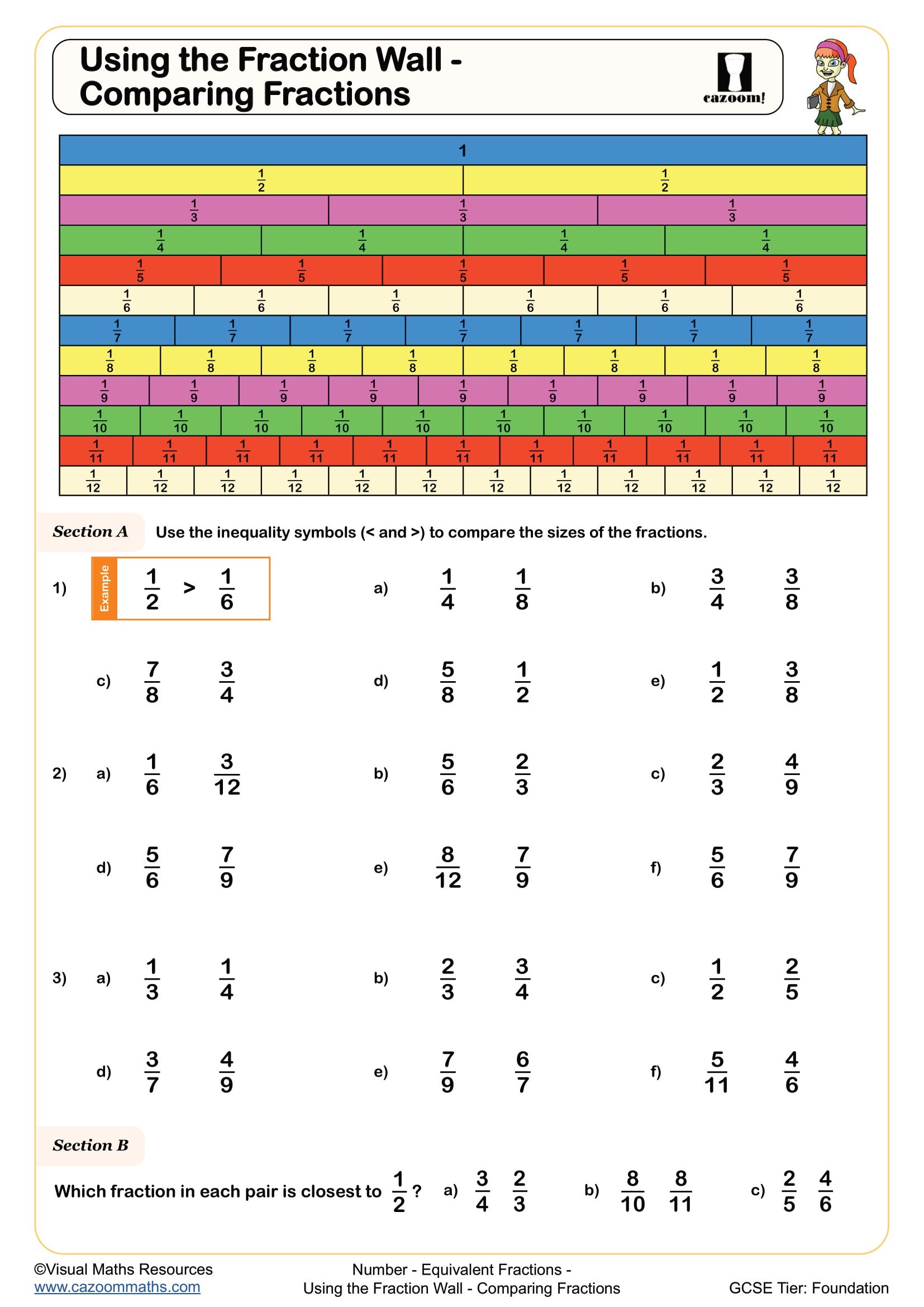
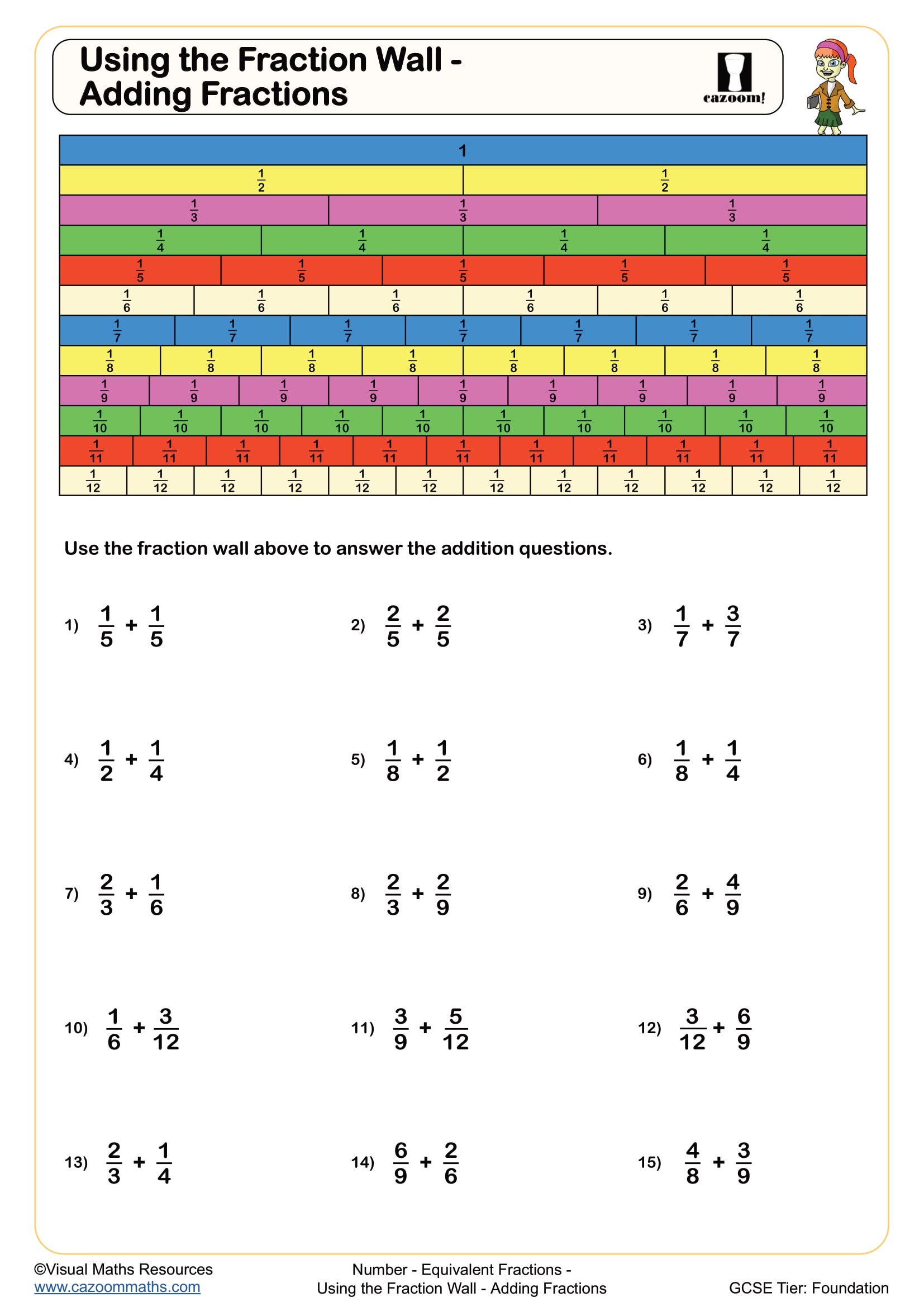
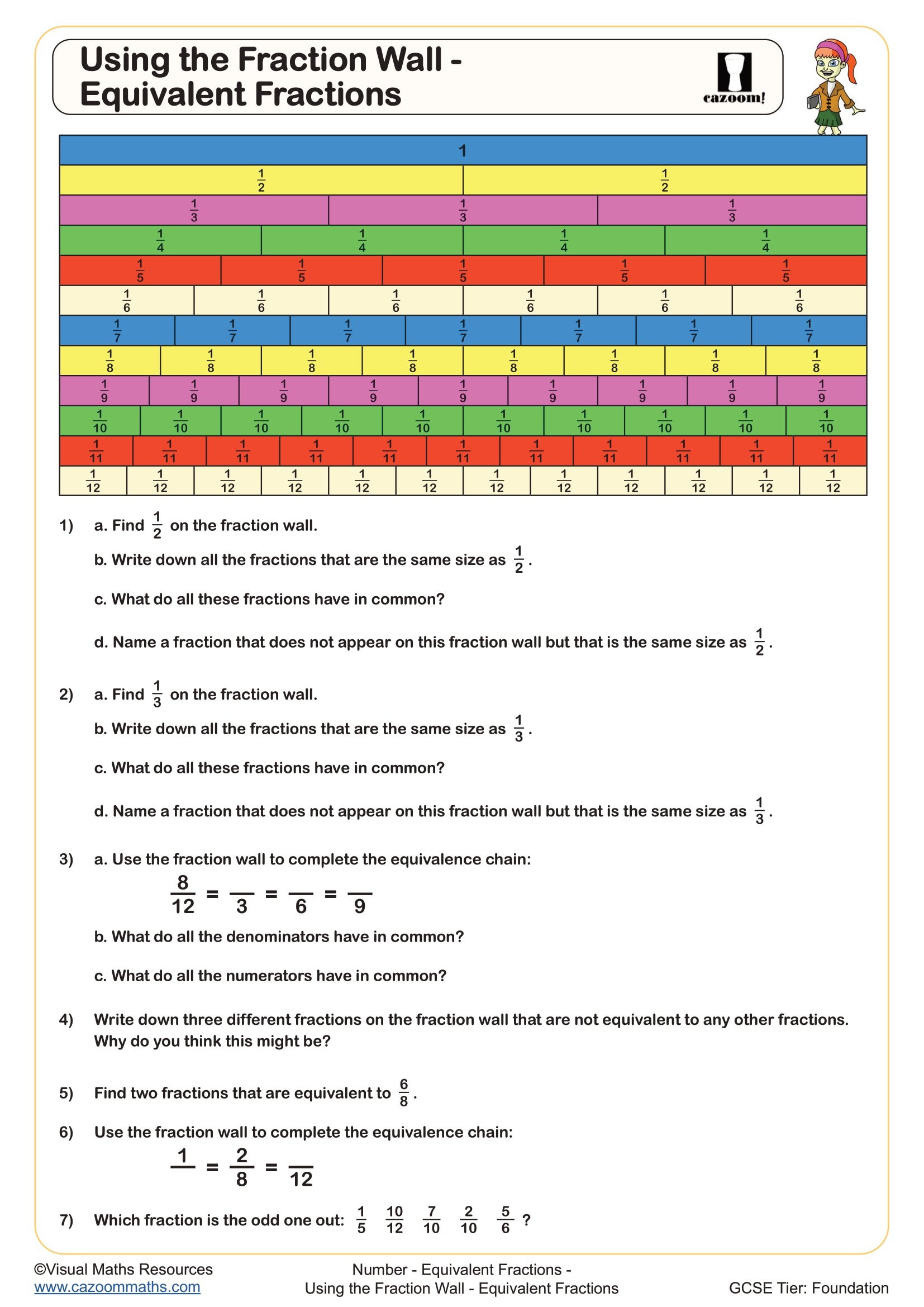
A fraction wall is a visual model that displays fractions as horizontal bars divided into equal parts, stacked vertically to show how halves, thirds, quarters, fifths, and other fractions relate to one whole. Each row represents a different denominator, allowing students to compare fractional sizes directly by aligning the bars. This concrete representation helps students understand abstract fraction concepts before moving to purely numerical work.
Teachers notice that students who use fraction bar printable resources develop stronger number sense around fractions, particularly when identifying equivalent fractions. A common error occurs when students assume that thirds are smaller than quarters because three is less than four. The visual layout of a fraction wall immediately corrects this misconception by showing that one-third occupies more space than one-quarter. This visual proof often resolves confusion more effectively than verbal explanations alone.
Which year groups study fraction walls in the UK curriculum?
Fraction walls appear throughout Key Stage 3, with these particular worksheets designed for Year 8 students working within the KS3 National Curriculum. At this stage, students build on earlier work with simple fractions, extending to more complex equivalent fractions, fraction operations, and comparisons involving larger denominators. Year 8 expectations include adding and subtracting fractions with different denominators and solving problems requiring fraction reasoning.
The progression through Year 8 involves moving from visual support towards abstract calculation. Early worksheets in the collection emphasise the fraction wall structure to identify equivalent fractions, whilst later worksheets use the visual model as a checking tool for addition and comparison. By the end of Year 8, students should be developing fluency with fraction calculations whilst still being able to sketch or recall fraction wall relationships when reasoning about unfamiliar problems.
How do fraction walls help students find equivalent fractions?
Fraction walls make equivalent fractions visible by showing which combinations of different-sized pieces occupy exactly the same length. When students align the bars, they can see that two-quarters matches one-half, or that three-sixths also equals one-half. This visual matching builds understanding of why multiplying or dividing both numerator and denominator by the same number creates an equivalent fraction. Students learn to recognise patterns, such as noticing that denominators that are multiples create simple equivalences.
This skill connects directly to ratio work in science and technology. When students later encounter scale drawings in design technology or concentration ratios in chemistry, they're applying the same principle of equivalent relationships. A 1:2 ratio of chemical solution is equivalent to 2:4 or 3:6, exactly as fractions work on the wall. Understanding equivalence through visual models provides a foundation for proportional reasoning across STEM subjects, particularly when students need to scale recipes, adjust measurements, or interpret graphs showing fractional relationships.
How can teachers use these fraction wall worksheets effectively in lessons?
The worksheets provide scaffolded practise that starts with visual identification tasks before progressing to calculations where students must apply fraction wall reasoning. Early questions typically show fraction walls with sections to label or colour, building familiarity with the structure. Later questions present fraction operations where students can sketch their own fraction wall sections to support their working, gradually reducing reliance on pre-drawn models as confidence builds.
Many teachers use these worksheets during intervention sessions with students who struggle to retain fraction rules, as the visual approach offers an alternative pathway to understanding. They work well for paired activities where one student explains their reasoning using the fraction wall whilst their partner checks the logic. The complete answer sheets allow students to self-mark during homework or revision sessions, identifying specific areas where they need further support. Some teachers display enlarged fraction walls on classroom walls, encouraging students to reference them during independent work before consulting the answer sheets.