Year 5 Number Worksheets
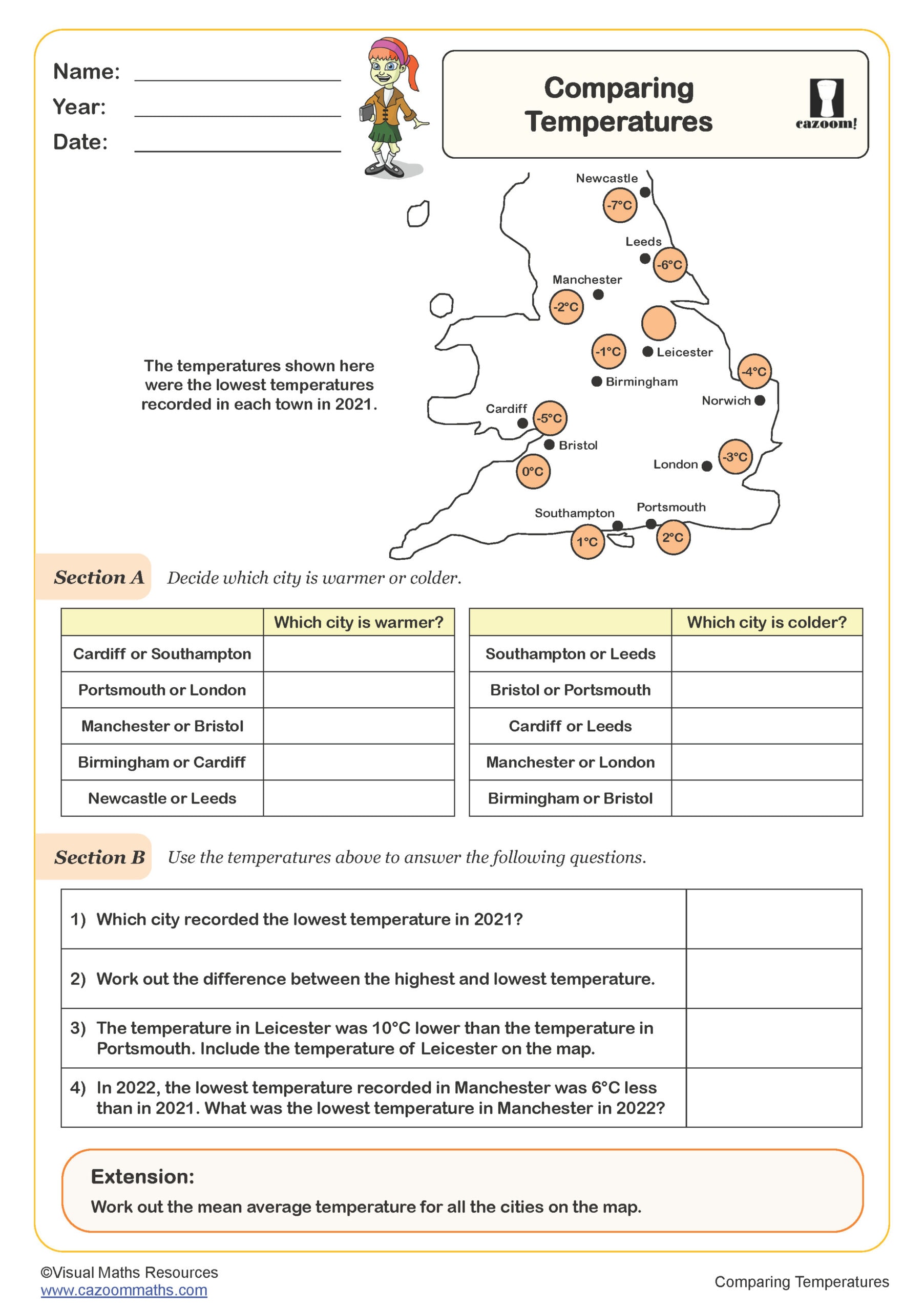
Comparing Temperatures
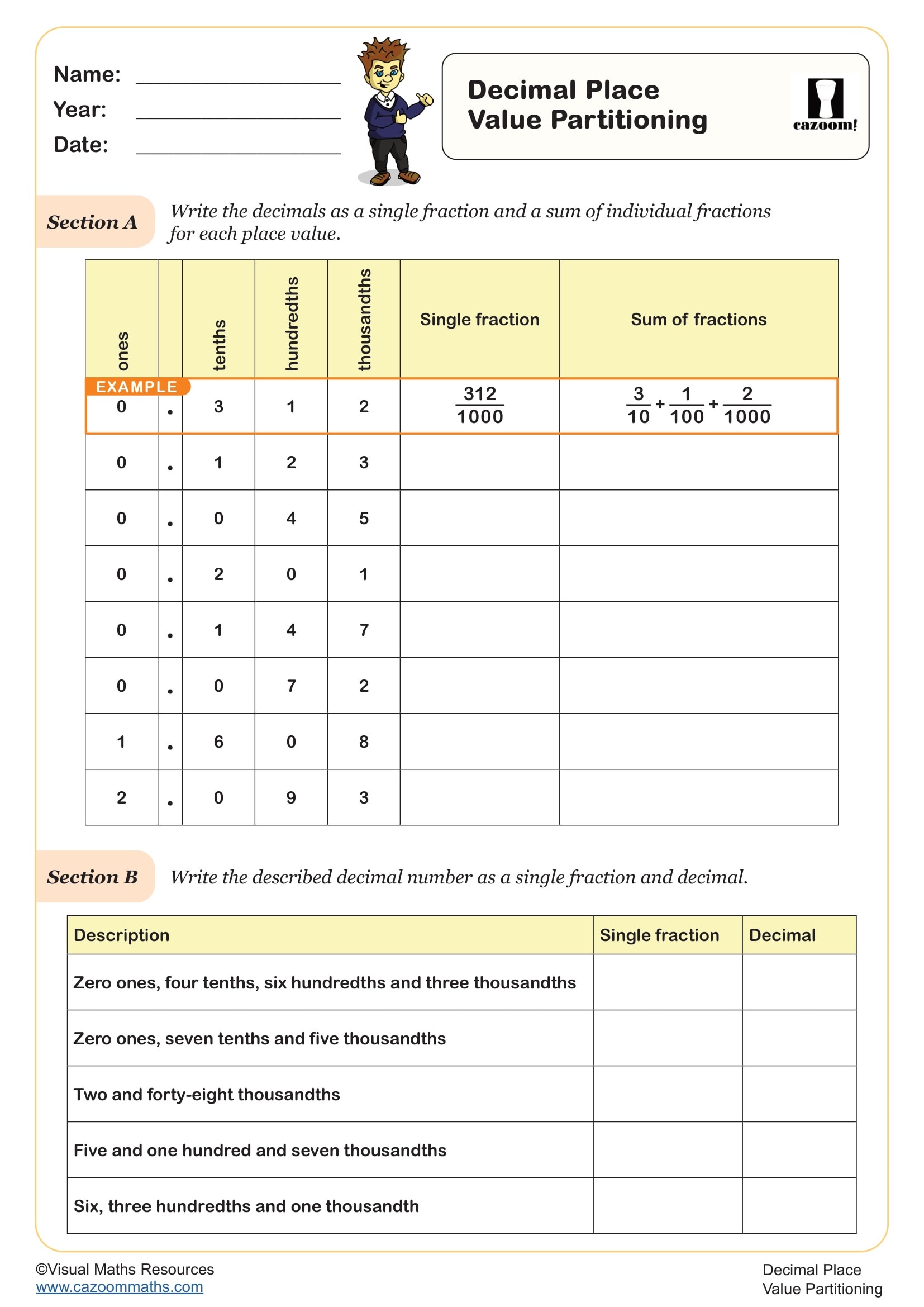
Decimal Place Partitioning
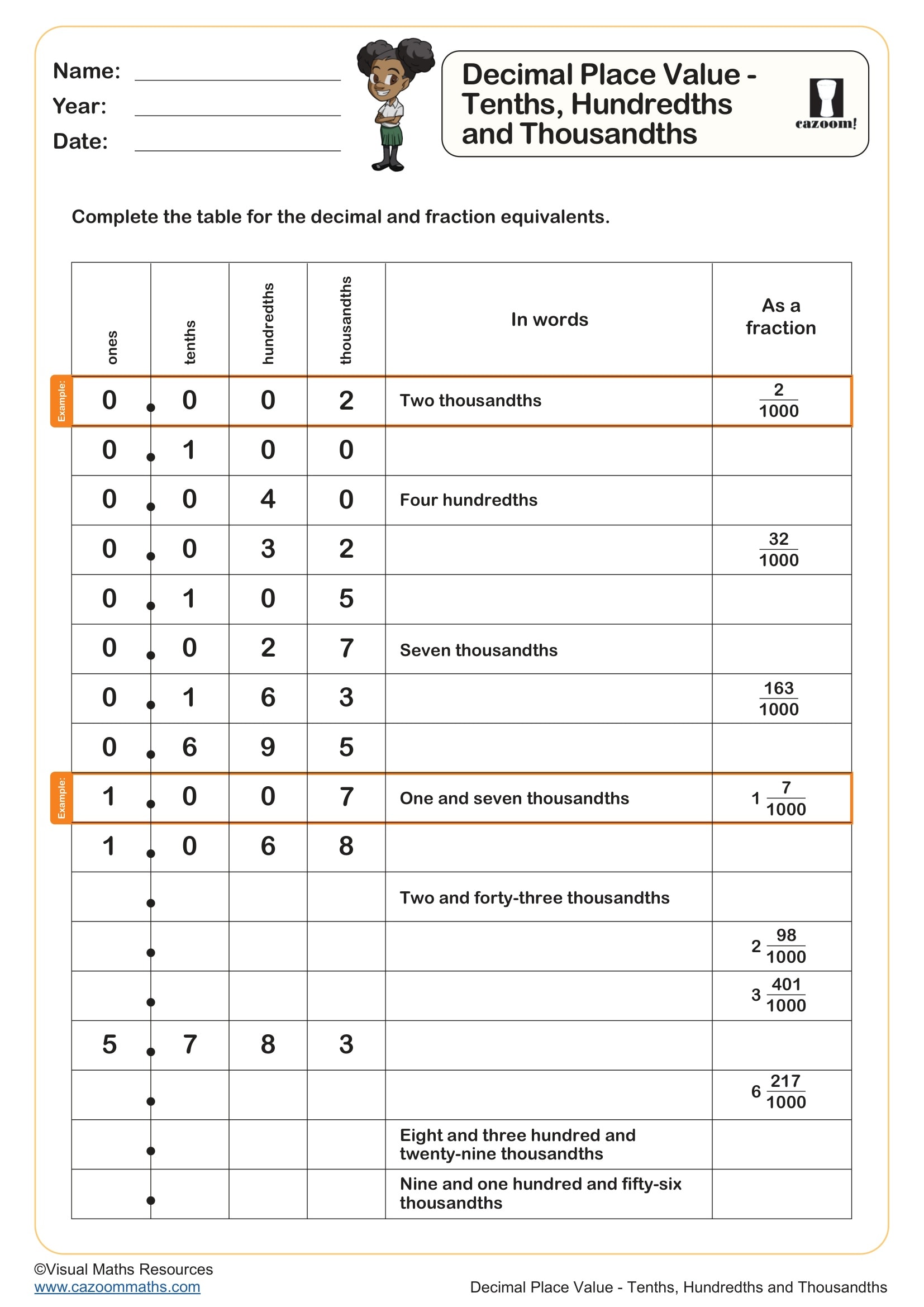
Decimal Place Value - Tenths, Hundredths and Thousandths
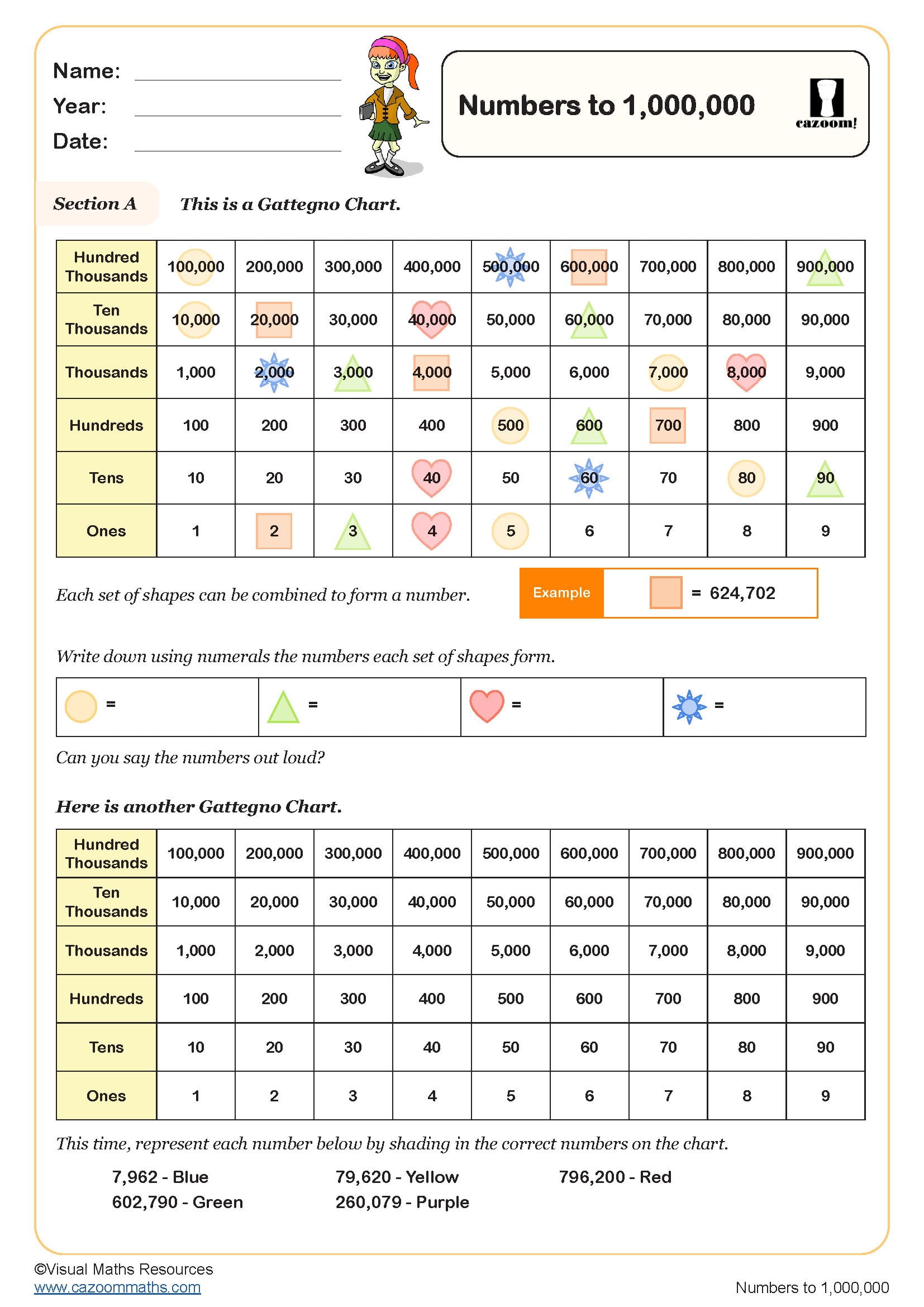
Numbers to 1,000,000
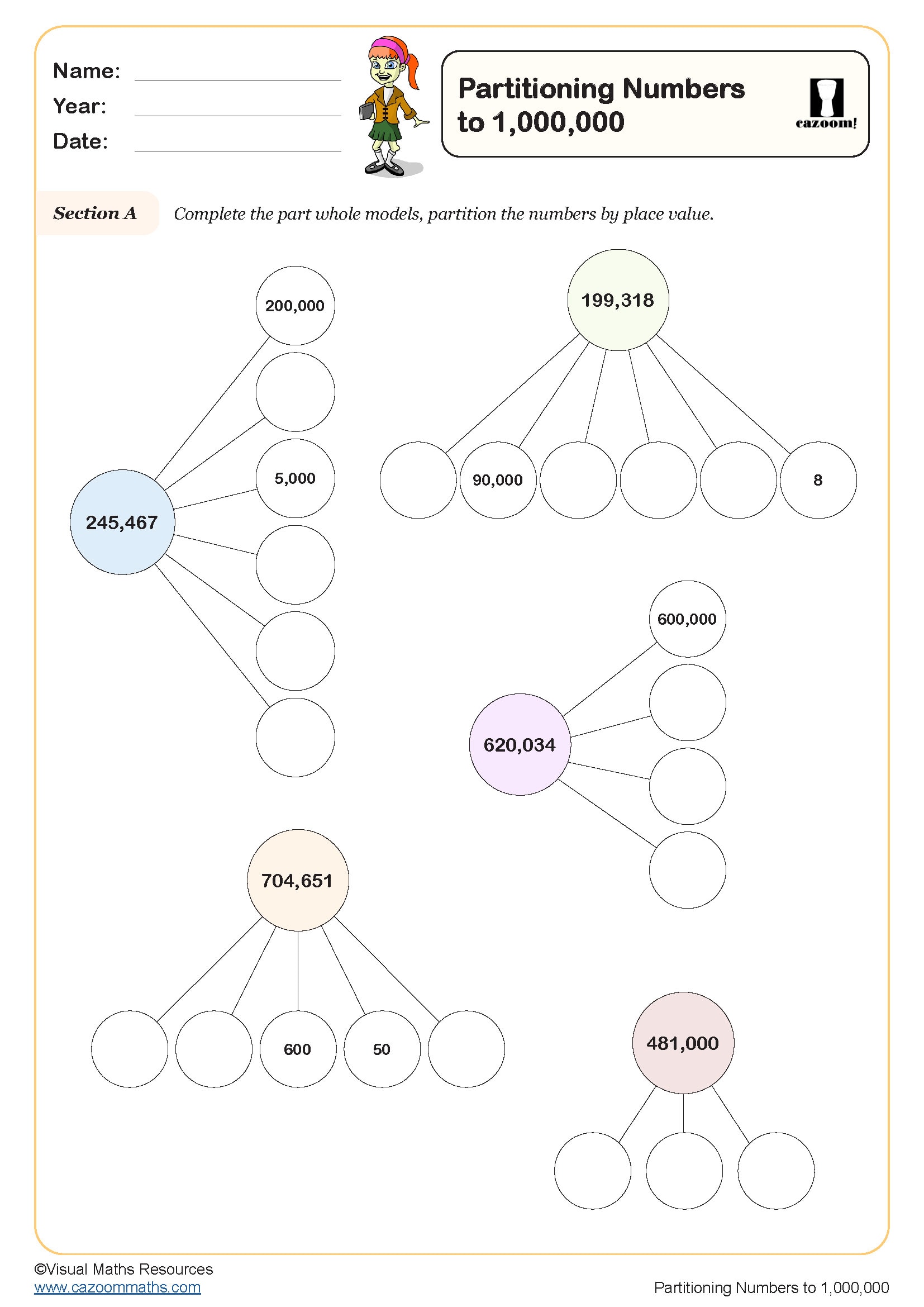
Partitioning Numbers to 1,000,000
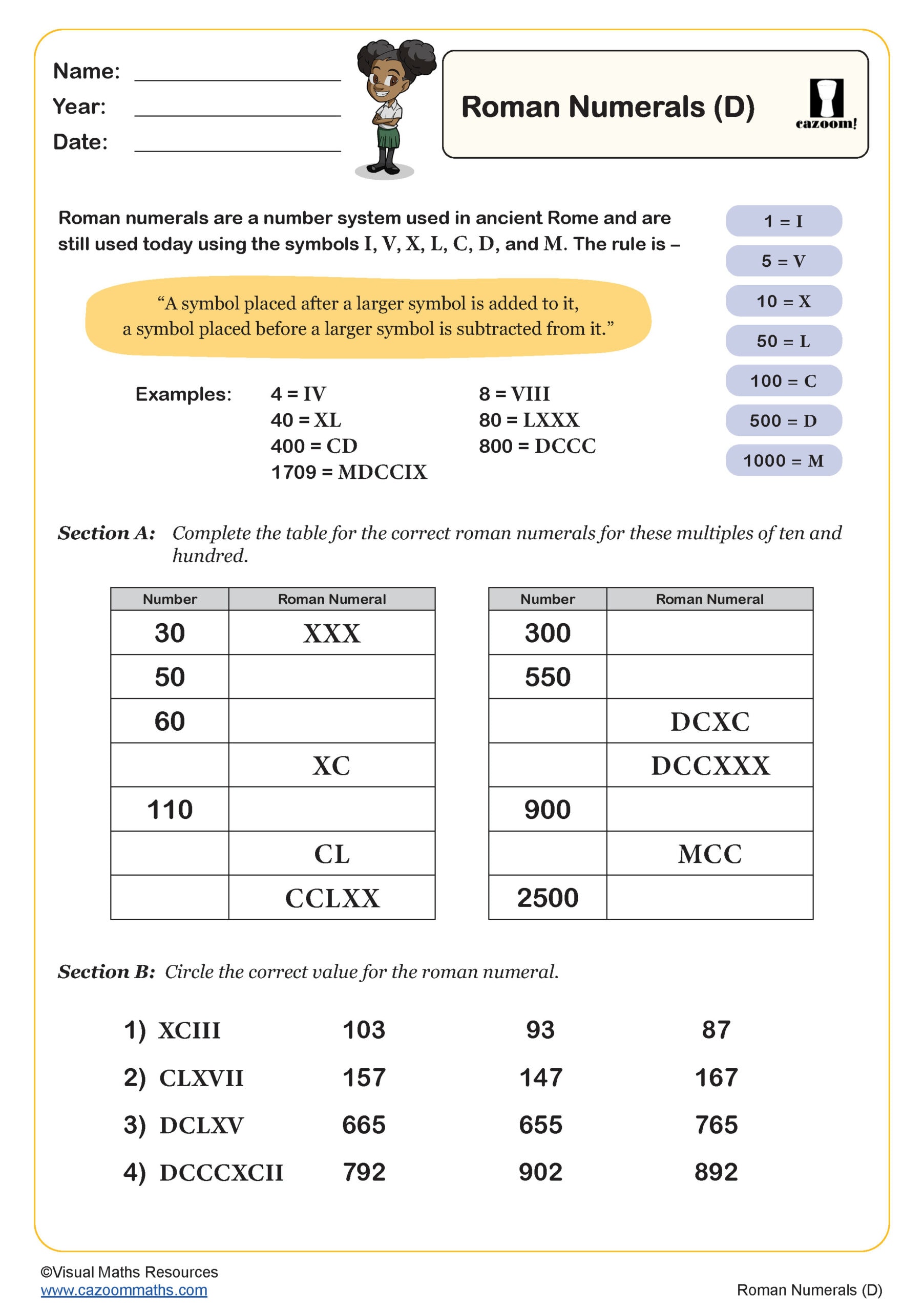
Roman Numerals (D)
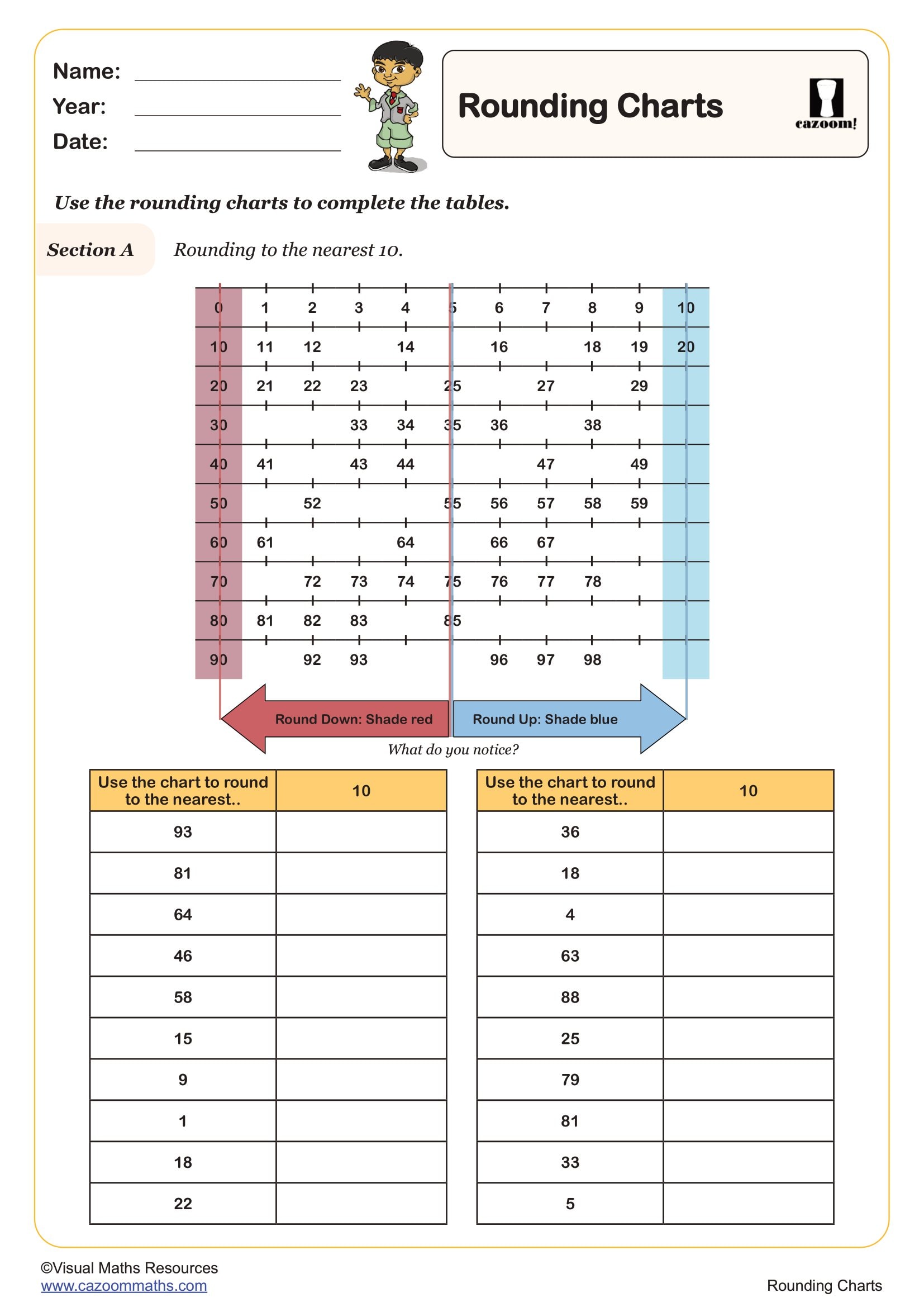
Rounding Charts
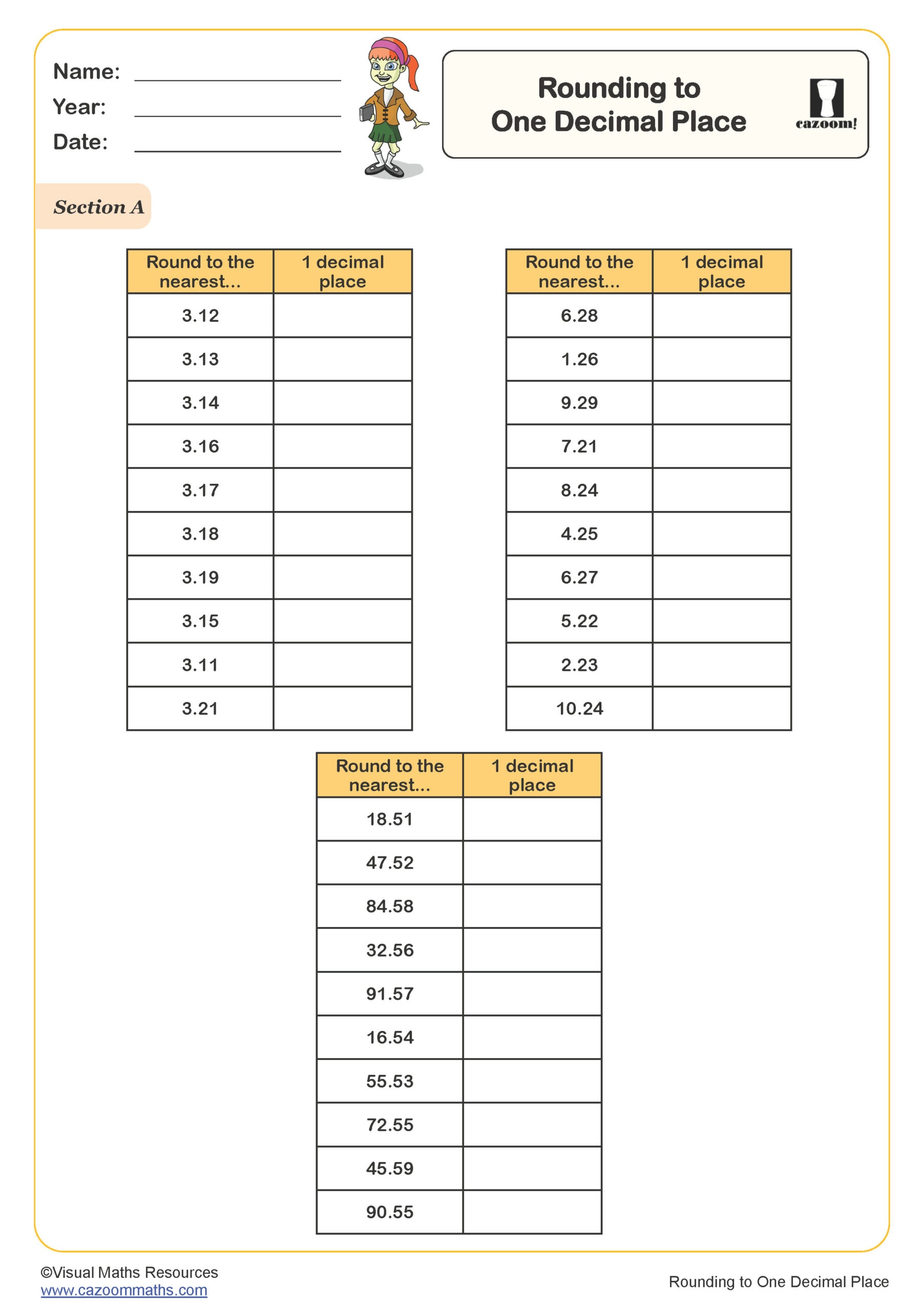
Rounding to one Decimal Place
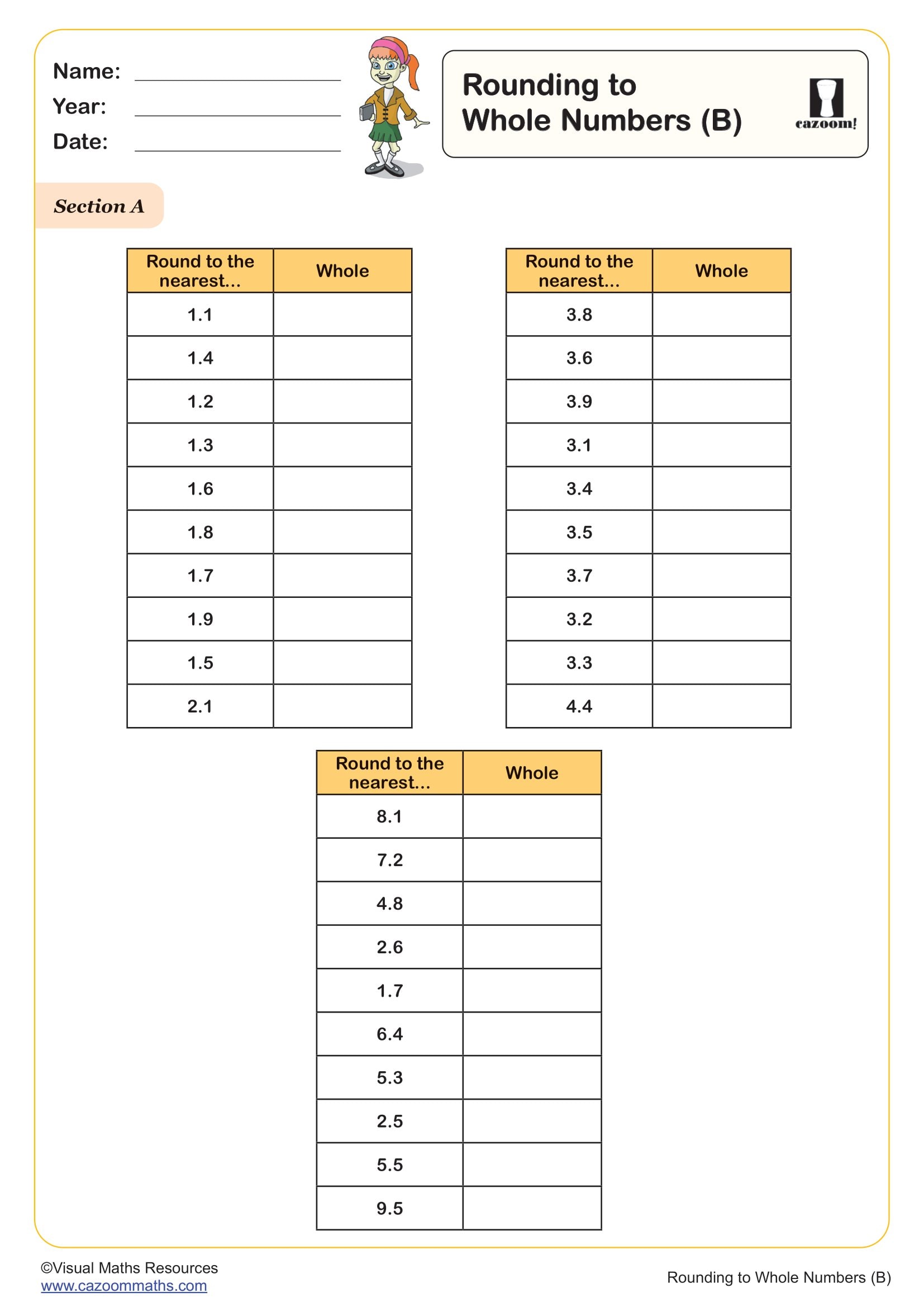
Rounding to Whole Numbers (B)
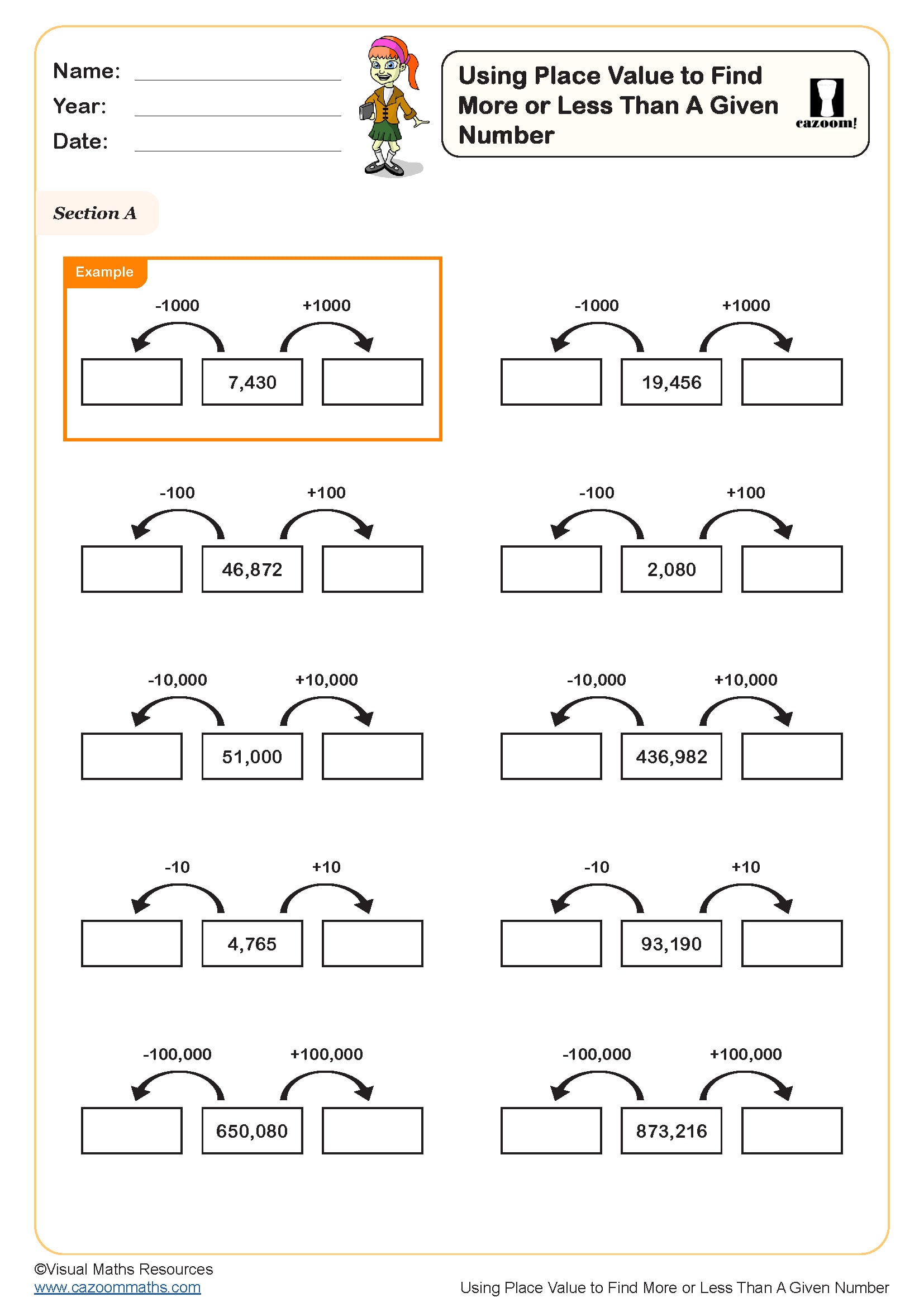
Using Place Value to Find More or Less Than A Given Number
All worksheets are created by the team of experienced teachers at Cazoom Maths.
Year 5 Number Maths Resources That Actually Work
The Cazoom Maths expert team has observed that primary school students who receive structured practice with our Year 5 number questions show visibly better performance in their end-of-year assessments. The transition from their previous knowledge expectations represents a significant mathematical leap, and consistent worksheet practice effectively bridges this gap. For this purpose, we have included concepts such as dividing decimals by Integers, the Column Method for Multiplication, Decimal Place Partitioning, Finding Unit Fractions of Amounts, Adding and Subtracting Fractions, Comparing Mixed numbers, and more. Our KS2 worksheets, created in ready-to-use, printable PDF formats, provide the repetition needed to make place value concepts automatic rather than effortful.
Which Number Skills Do Our Printable Year 5 Maths Worksheets Target?
We have packed a substantial amount of learning into these comprehensive worksheets! Finding quality maths resources for Year 5 that properly address the curriculum's increased demands can be challenging for busy educators. Our Year 5 maths worksheet collection systematically covers every essential skill progression from the national curriculum. Each worksheet includes comprehensive worked solutions that demonstrate complete mathematical reasoning, helping students grasp methodology rather than simply memorising procedures. We've carefully structured these printable resources to develop deep conceptual understanding alongside procedural fluency.
The advanced skills covered include:
• Fractions: We've found that fractions are where most Year 5 students either have their "lightbulb moment" or need the most patient support, so having this many resources is absolutely essential.
• Decimals: Decimals bridge the gap beautifully between fractions and percentages, and students love how "grown-up" they feel when working with money and measurements.
• Multiplication and Division: These operations become much more sophisticated in Year 5, and we've noticed that students who master these methods early gain real confidence for secondary school.
• Powers, Factors, Multiples, and Prime Numbers: This is where mathematics starts feeling more like detective work - students genuinely enjoy hunting for patterns and solving these number puzzles.
• Powers of Ten Operations: Once students grasp the "moving digits" pattern here, they feel like mathematical magicians and their mental maths improves dramatically.
• Place Value and Large Numbers: Working with numbers in the millions makes students feel incredibly capable, and it's surprisingly practical for understanding population figures and distances.
• Percentages and Equivalences: Students always get excited when they realise they can convert between fractions, decimals, and percentages - it's like learning a secret mathematical language.
• Word Problems: These are where students apply everything they've learned, and we love seeing them develop that crucial skill of translating real situations into mathematics.
• Rounding: Rounding might seem simple, but it's incredibly useful for helping students estimate and check that their answers make sense.
• Roman Numerals: Students are always fascinated by how the Romans counted, and it really helps them appreciate our modern number system.
• Money: Nothing makes mathematics feel more relevant than working with real money situations that students encounter in their daily lives.
• Temperature/Negative Numbers: Temperature contexts make negative numbers feel completely natural - students instantly understand why we'd have numbers below zero.
How Do Year 5 Teachers Use These Number Worksheets Effectively?
Teaching advanced number concepts requires resources that genuinely support classroom learning rather than creating additional workload. We've discovered that many available materials either lack sufficient challenge or overwhelm students with premature complexity. Our Year 5 number worksheets achieve the ideal balance - intellectually stimulating while remaining accessible to diverse learners. The comprehensive marking schemes make assessment straightforward and enable teaching assistants to provide meaningful feedback during guided practice sessions.
Students frequently mention how much they appreciate seeing complete working methods in our solutions. This transparency develops their mathematical reasoning rather than encouraging rote memorisation. Perfect for differentiated instruction, extension work, homework assignments, or intervention sessions when you need dependable, curriculum-aligned activities that actually enhance understanding.
When Do Students Actually Use These Year 5 Number Skills?
We've found that connecting mathematical learning to authentic situations makes Year 5 number work significantly more engaging and memorable. These worksheets prepare students for numerical challenges they encounter in increasingly sophisticated real-world contexts.
Practical applications include:
• Advanced money management - Calculating costs for family holidays, comparing mobile phone contracts, managing savings goals up to £10,000
• Sports statistics analysis - Understanding stadium capacities, calculating attendance figures, interpreting professional league data
• Geography and population studies - Comparing city populations, calculating distances between countries, understanding map scales
• Technology and data - Interpreting website visitor numbers, understanding file sizes, calculating storage requirements
• Environmental awareness - Understanding recycling statistics, calculating carbon footprints, interpreting climate data
• Business and enterprise - Calculating profit margins, understanding large-scale manufacturing numbers, interpreting economic indicators