KS1 Single Digit Subtraction Worksheets
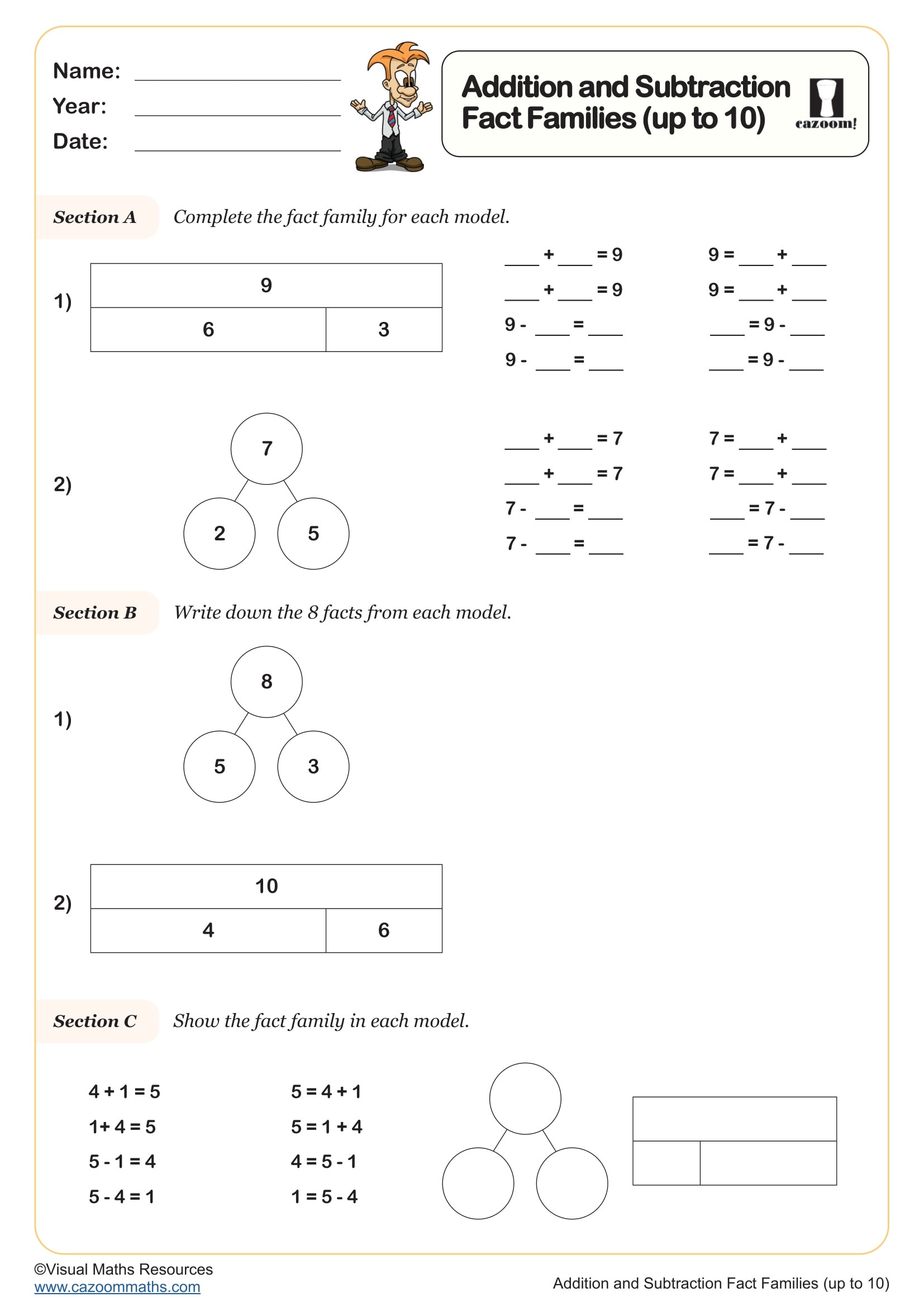
Addition and Subtraction Fact Families (up to 10)
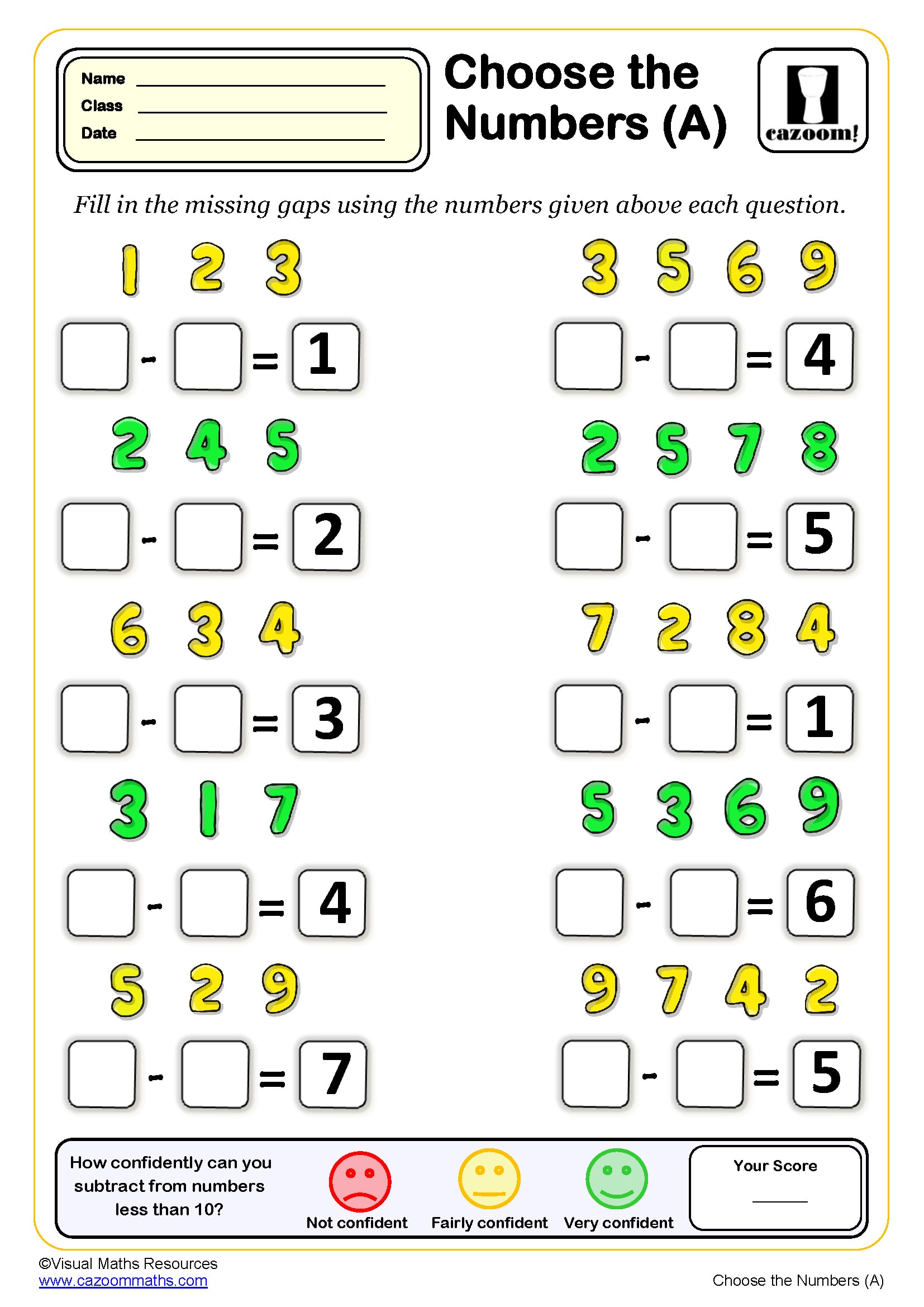
Choose the Numbers (A)
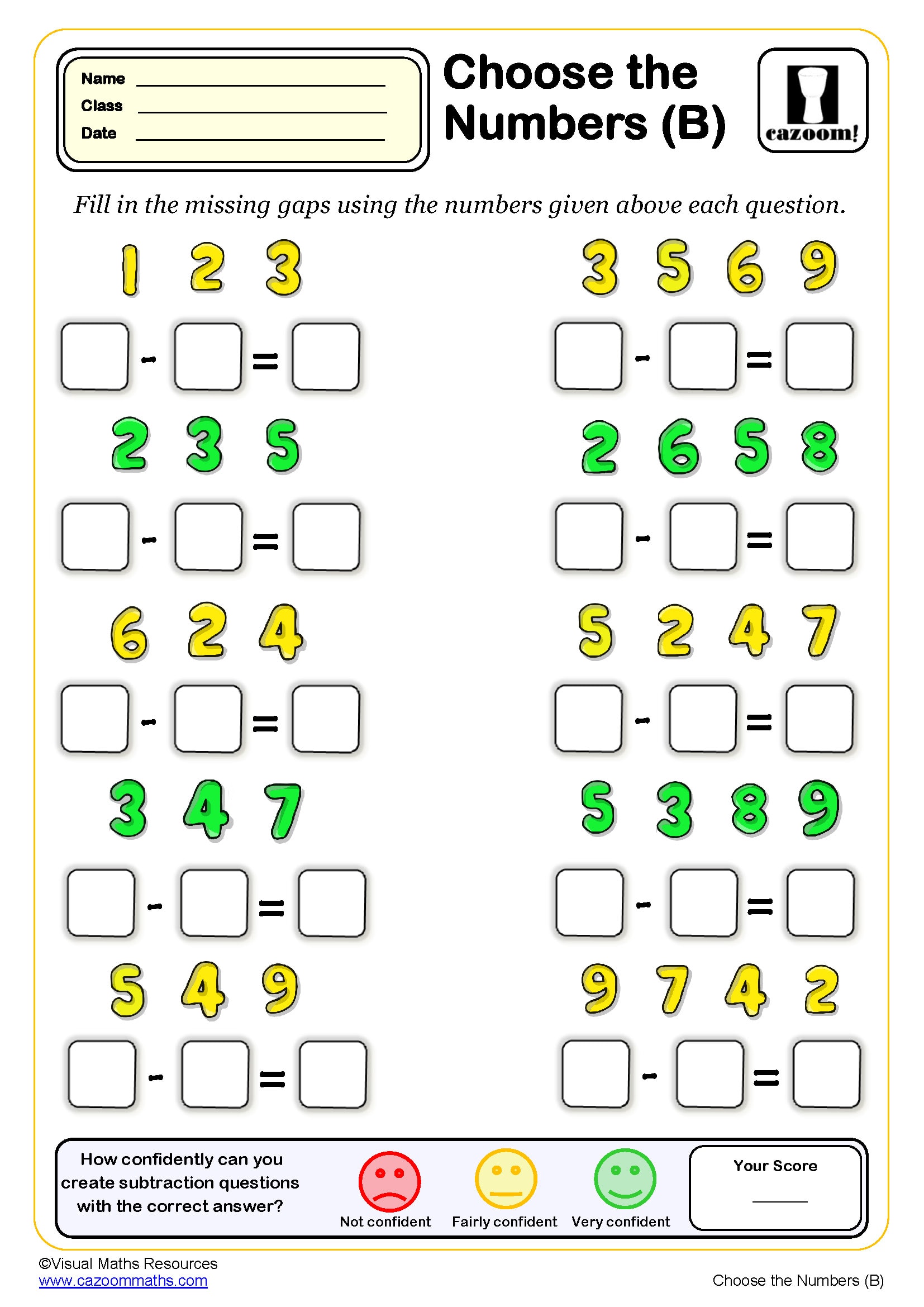
Choose the Numbers (B)
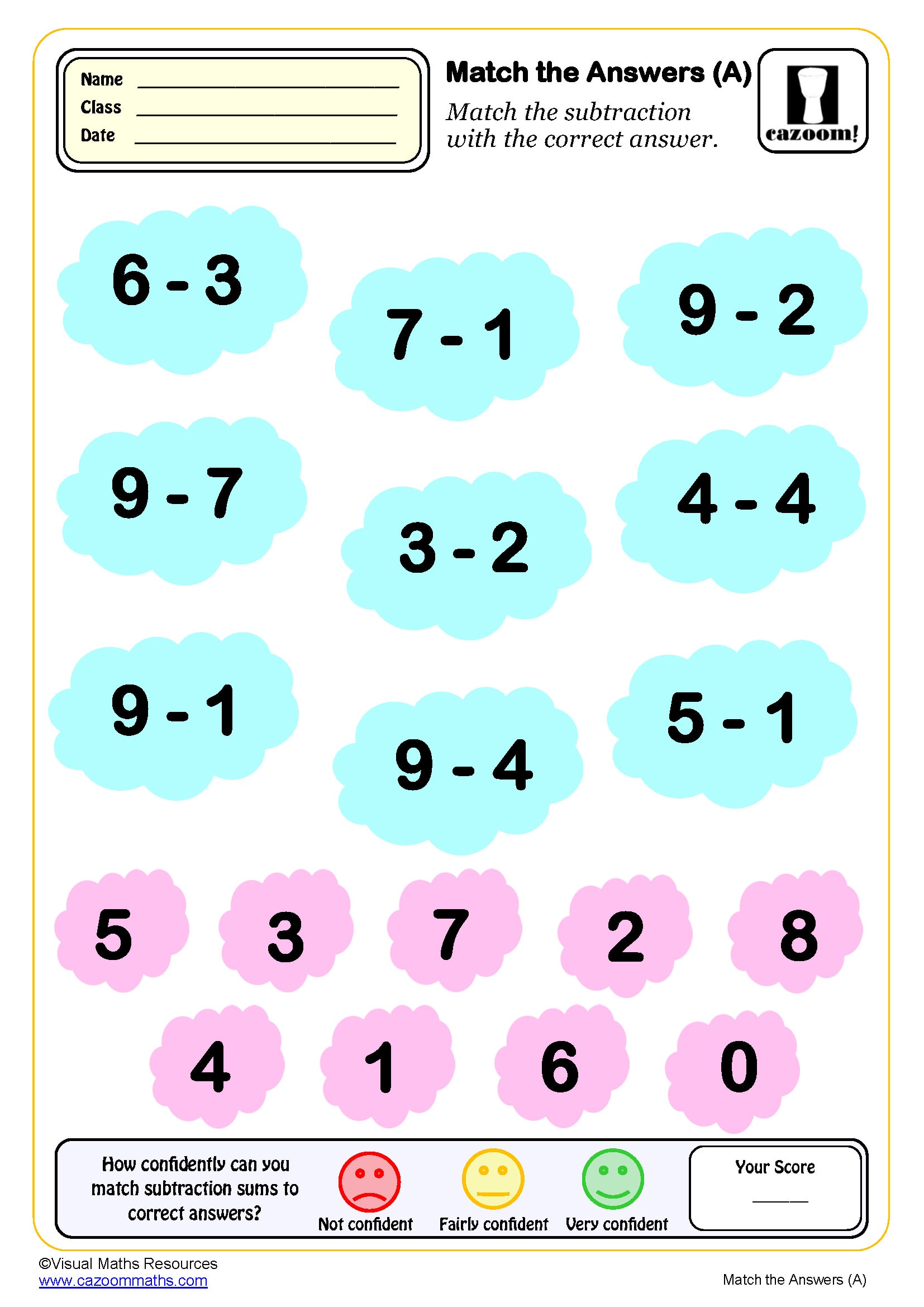
Match the Answers (A)
Match the Answers (B)
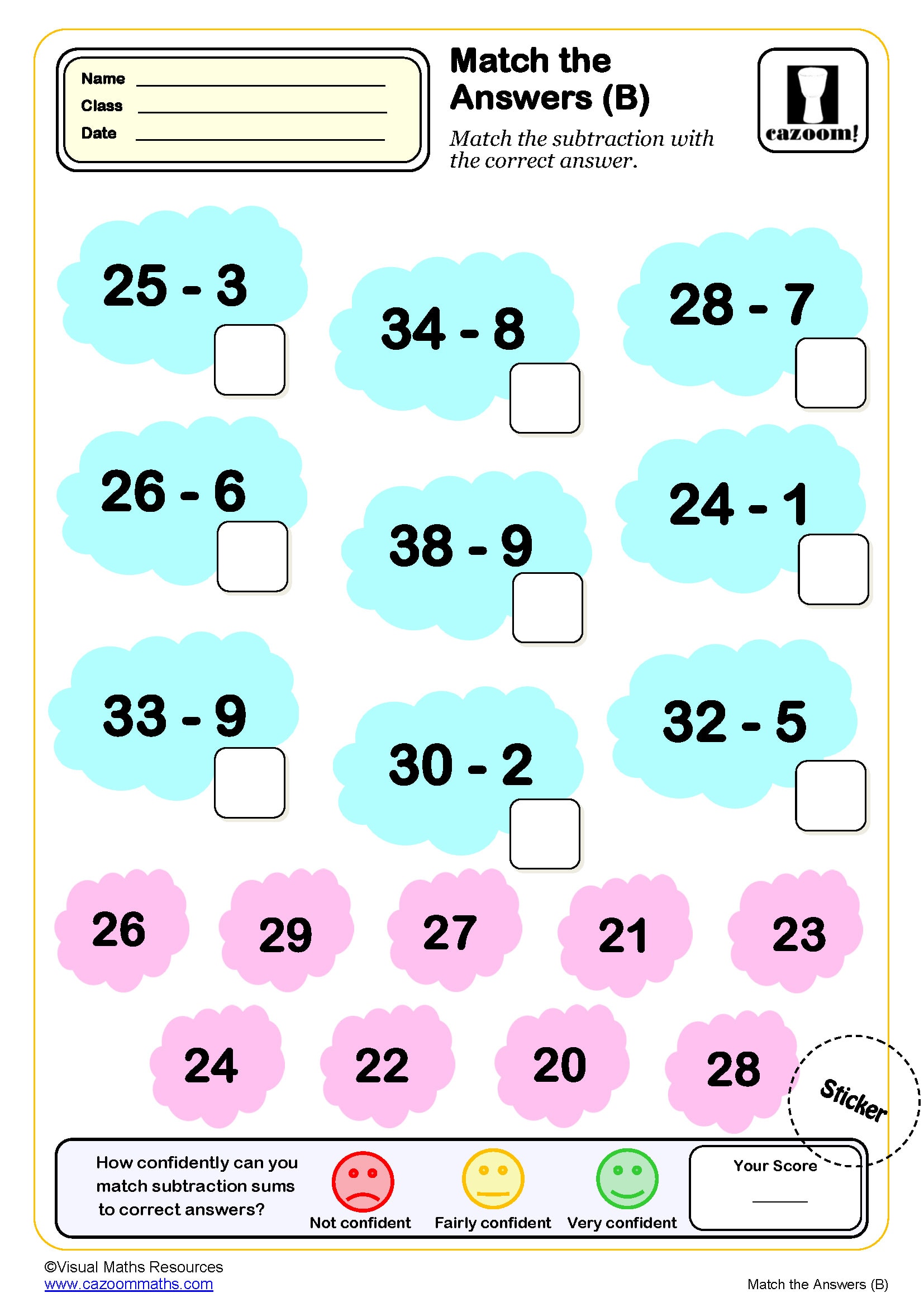
Match the Answers (C)
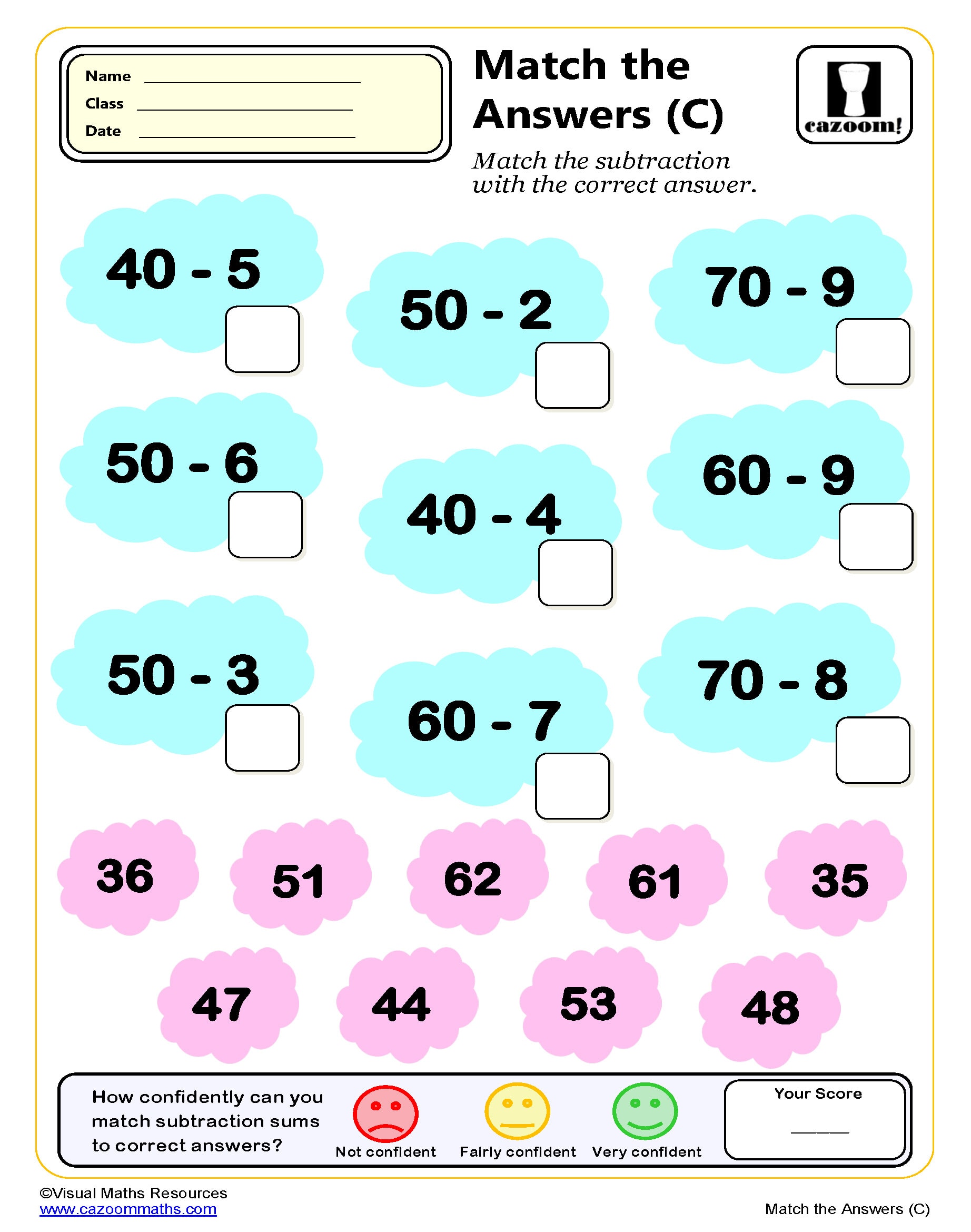
Match the Answers (D)
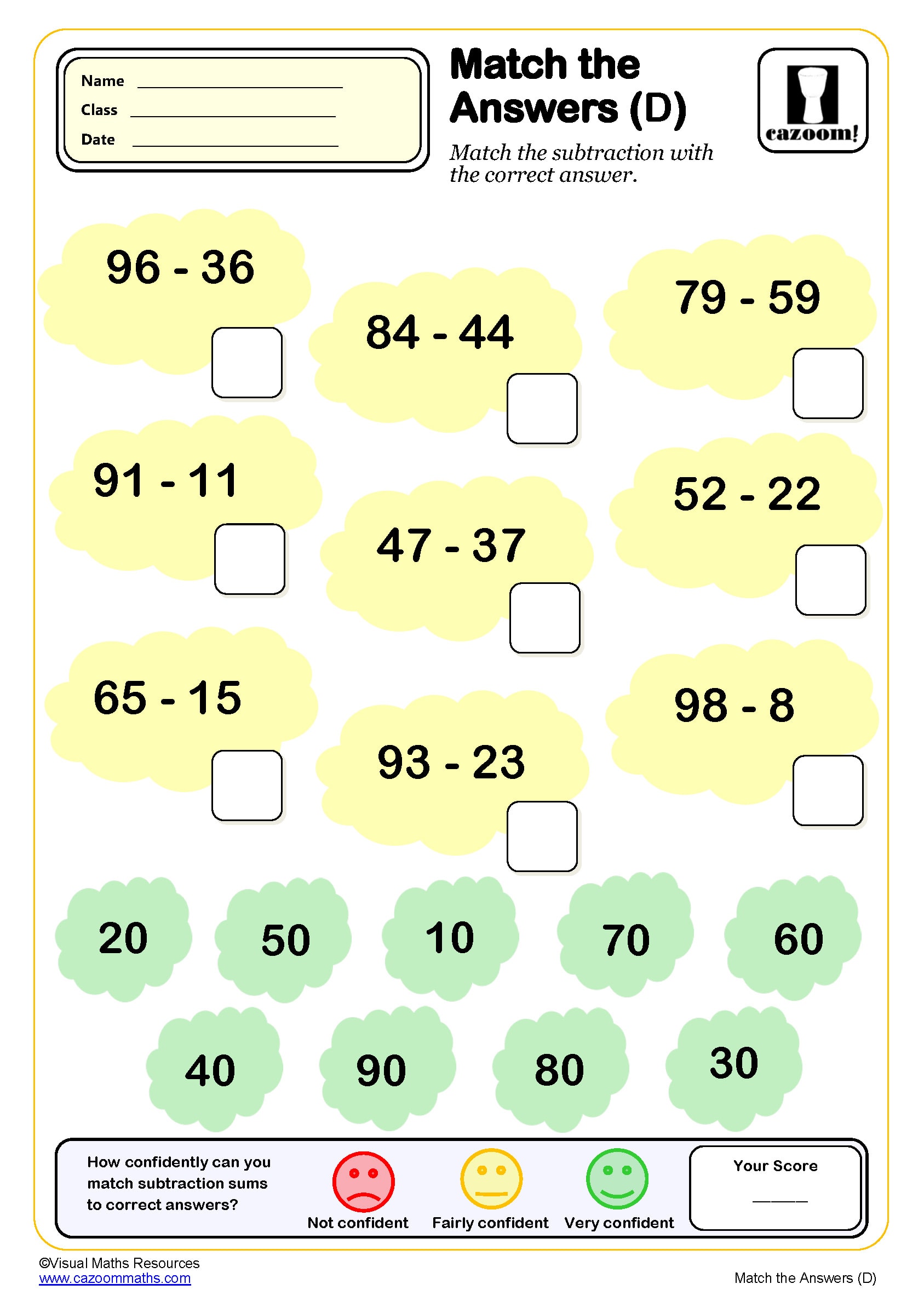
Part Whole Models - Find a Part (Within 10)
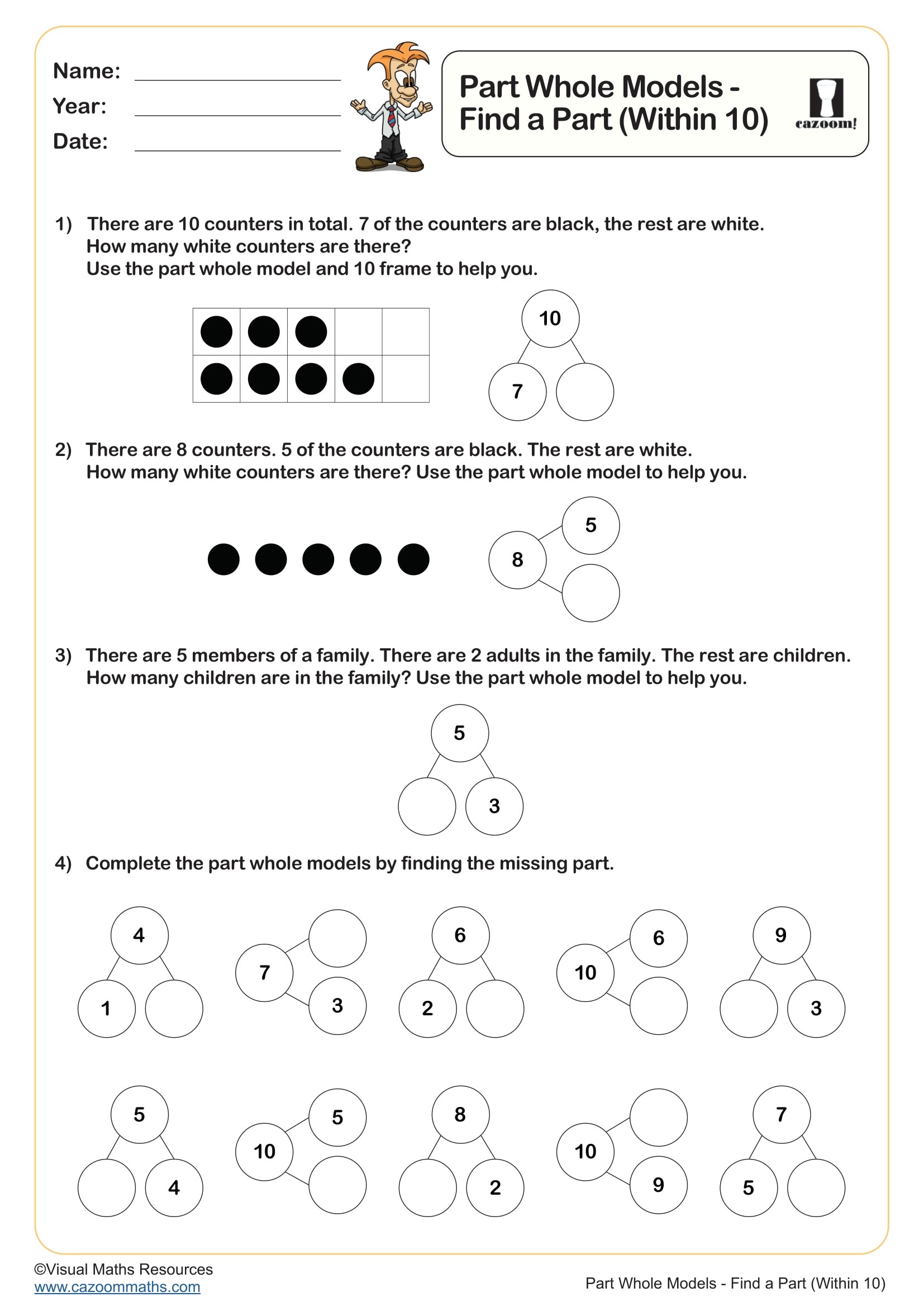
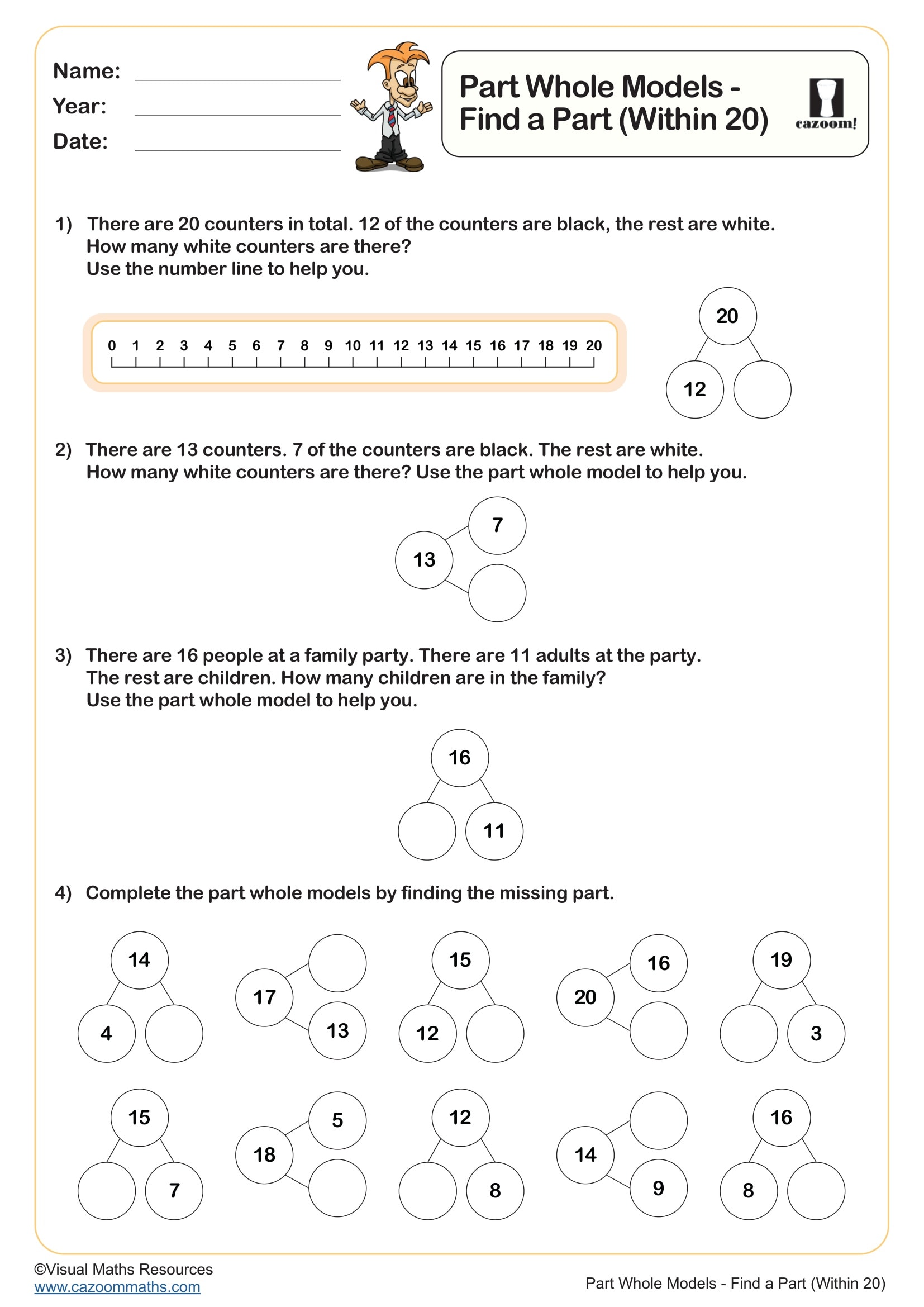
Part Whole Models - Find a Part (Within 20)
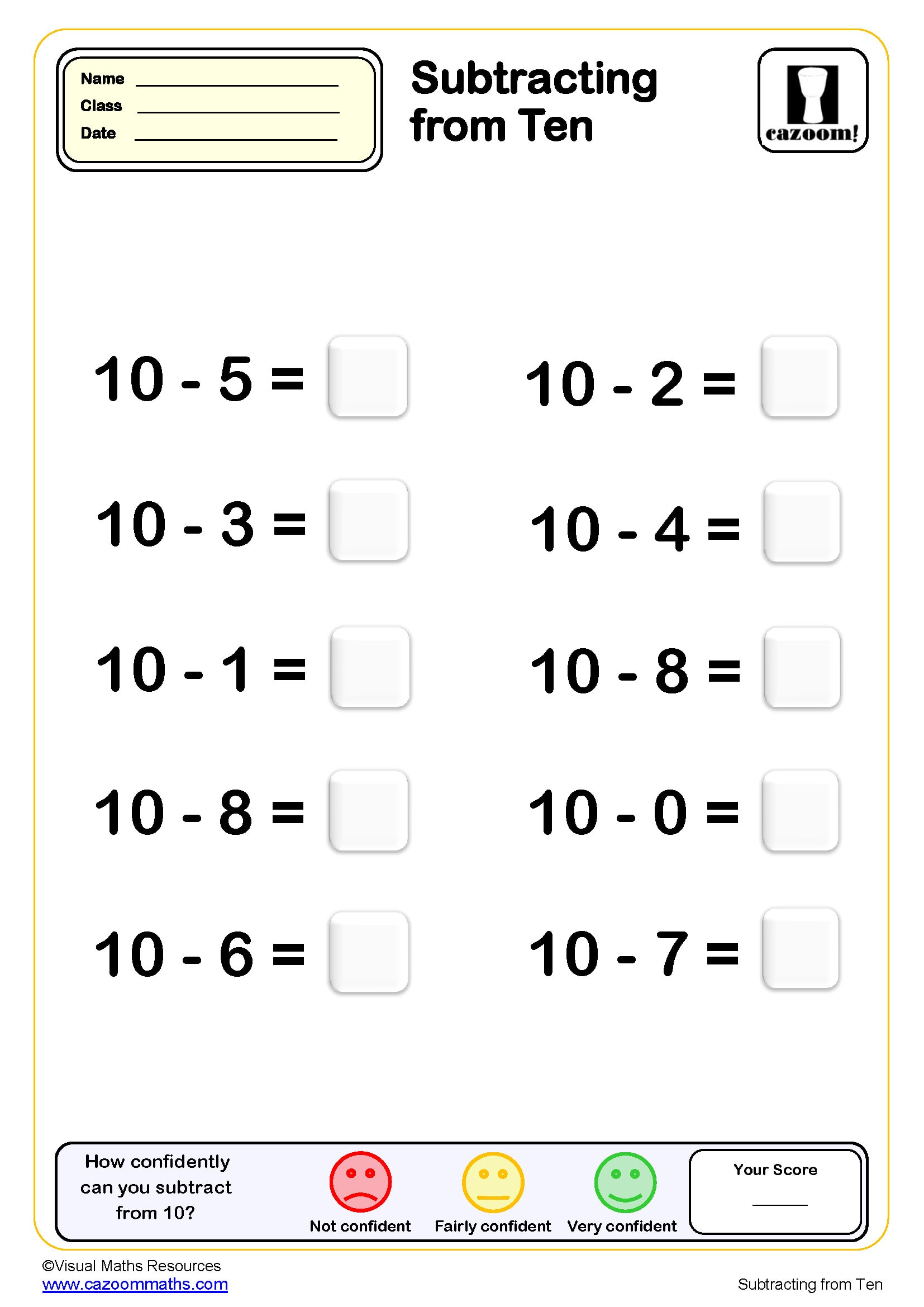
Subtracting from 10 Drills (10 questions)
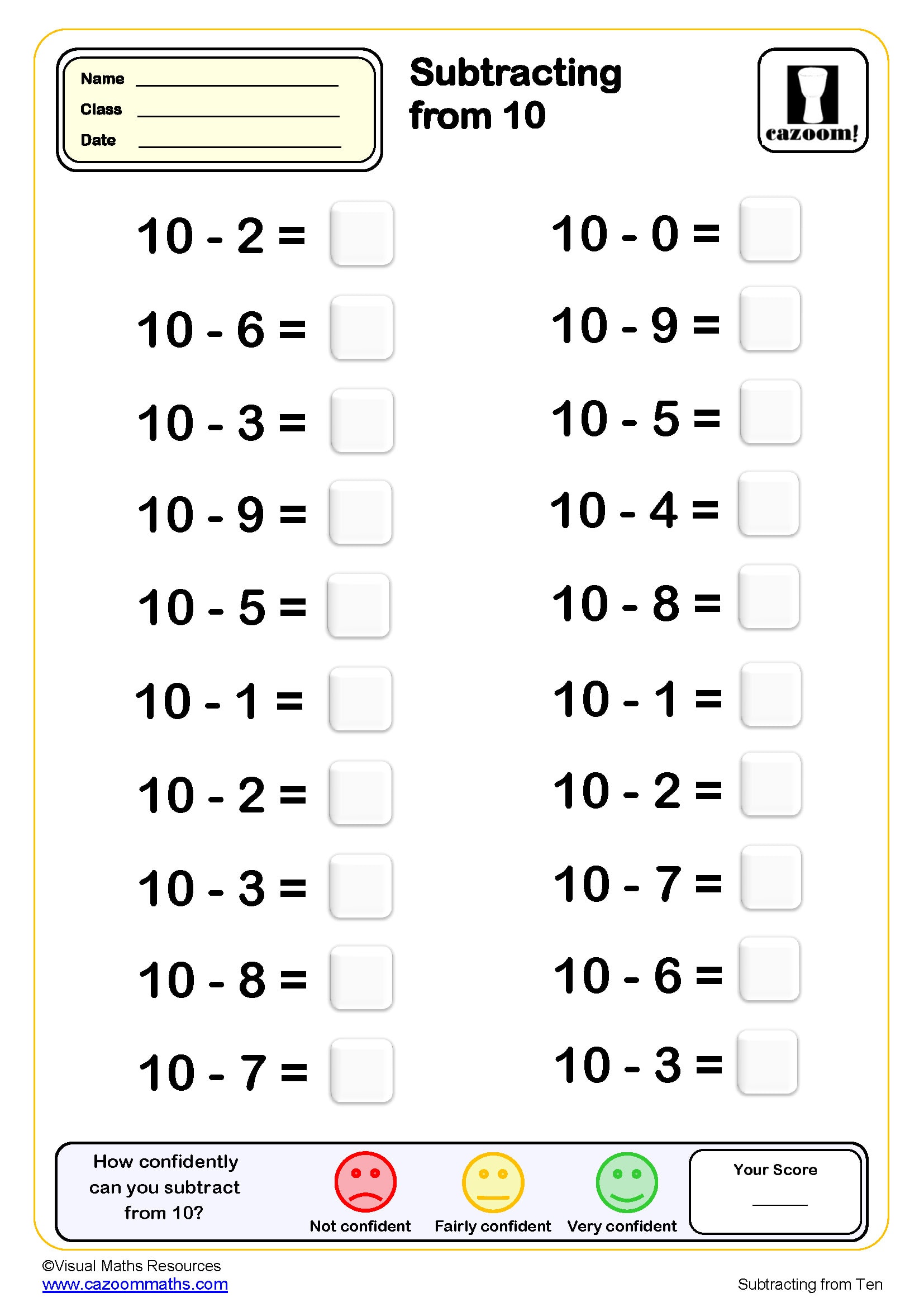
Subtracting from 10 Drills (20 questions)
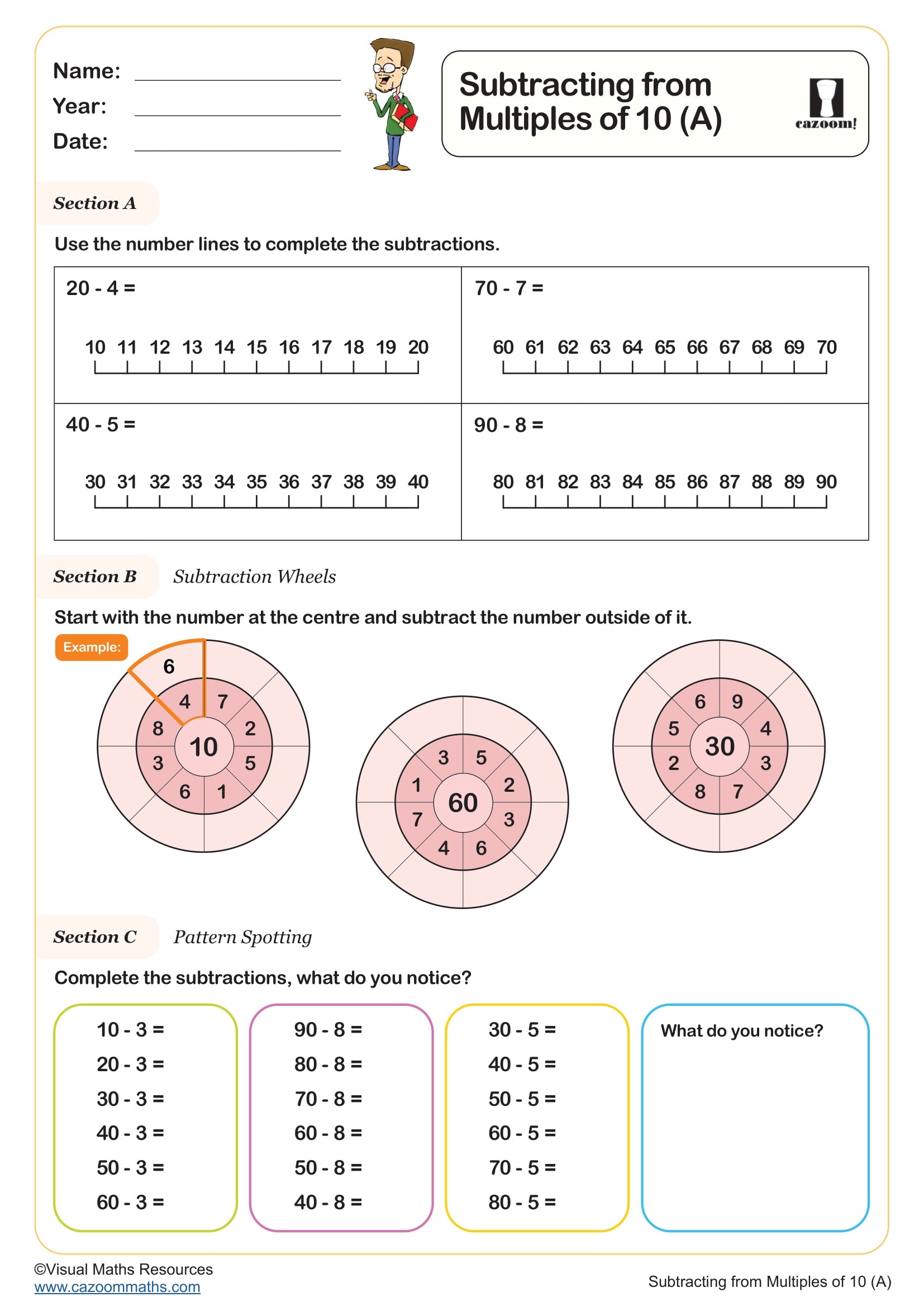
Subtracting from Multiples of 10 (A)
Subtracting Single Digits from Two Digit Numbers (Using Number Lines)
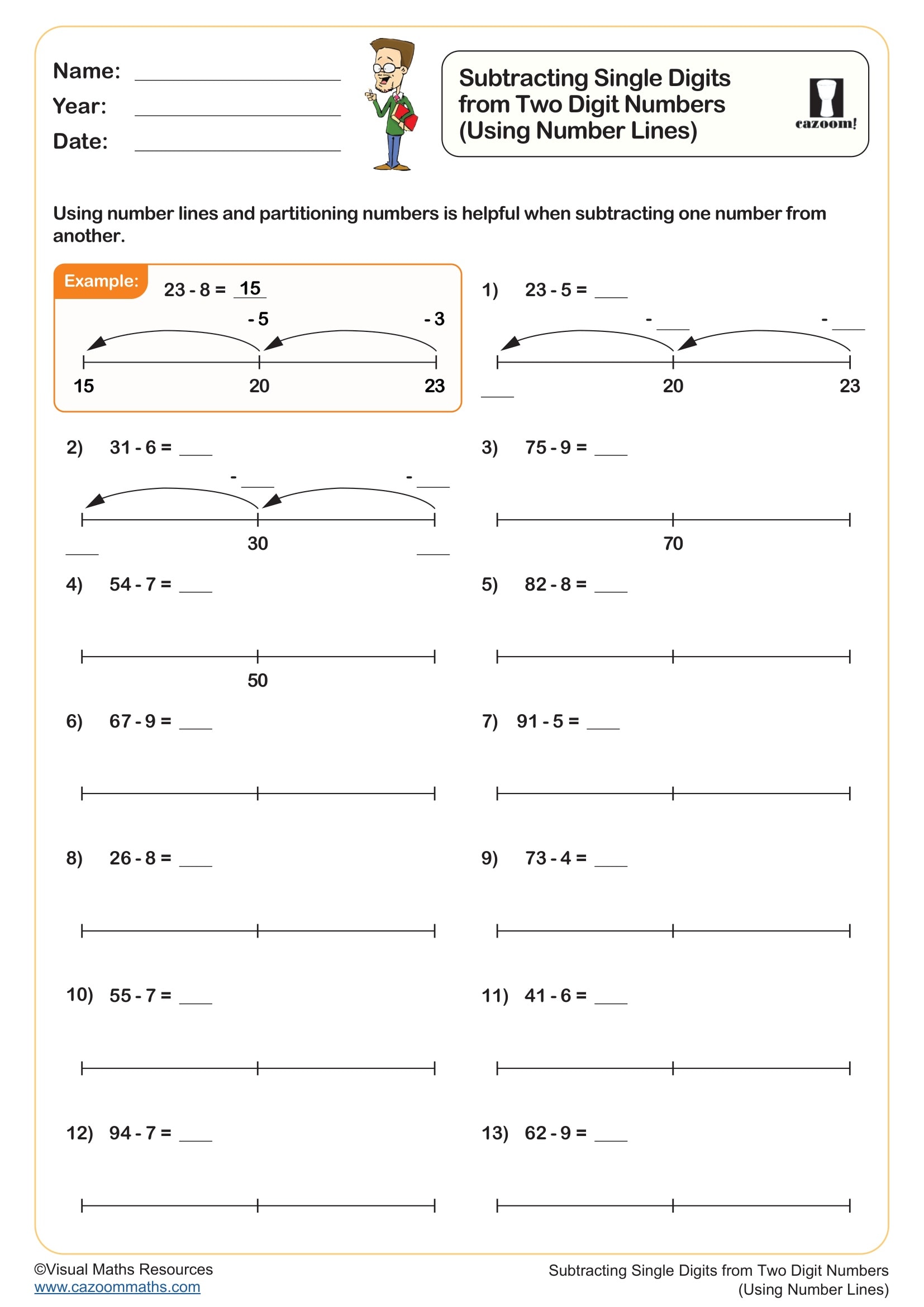
Subtraction Using Number Lines (Subtracting Single Digits from Numbers up to 20)
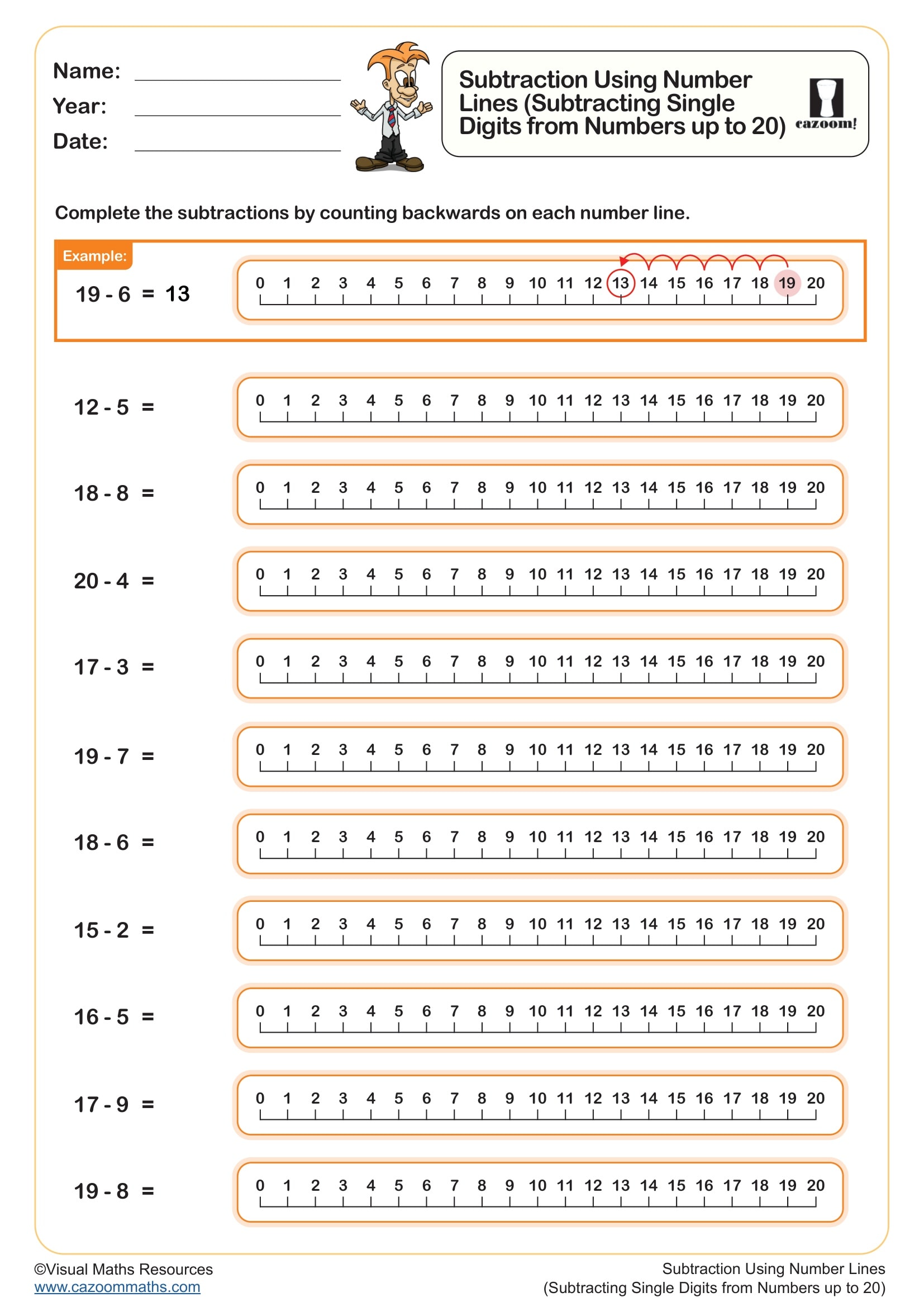
Subtraction Using Number Lines (Up to 10)
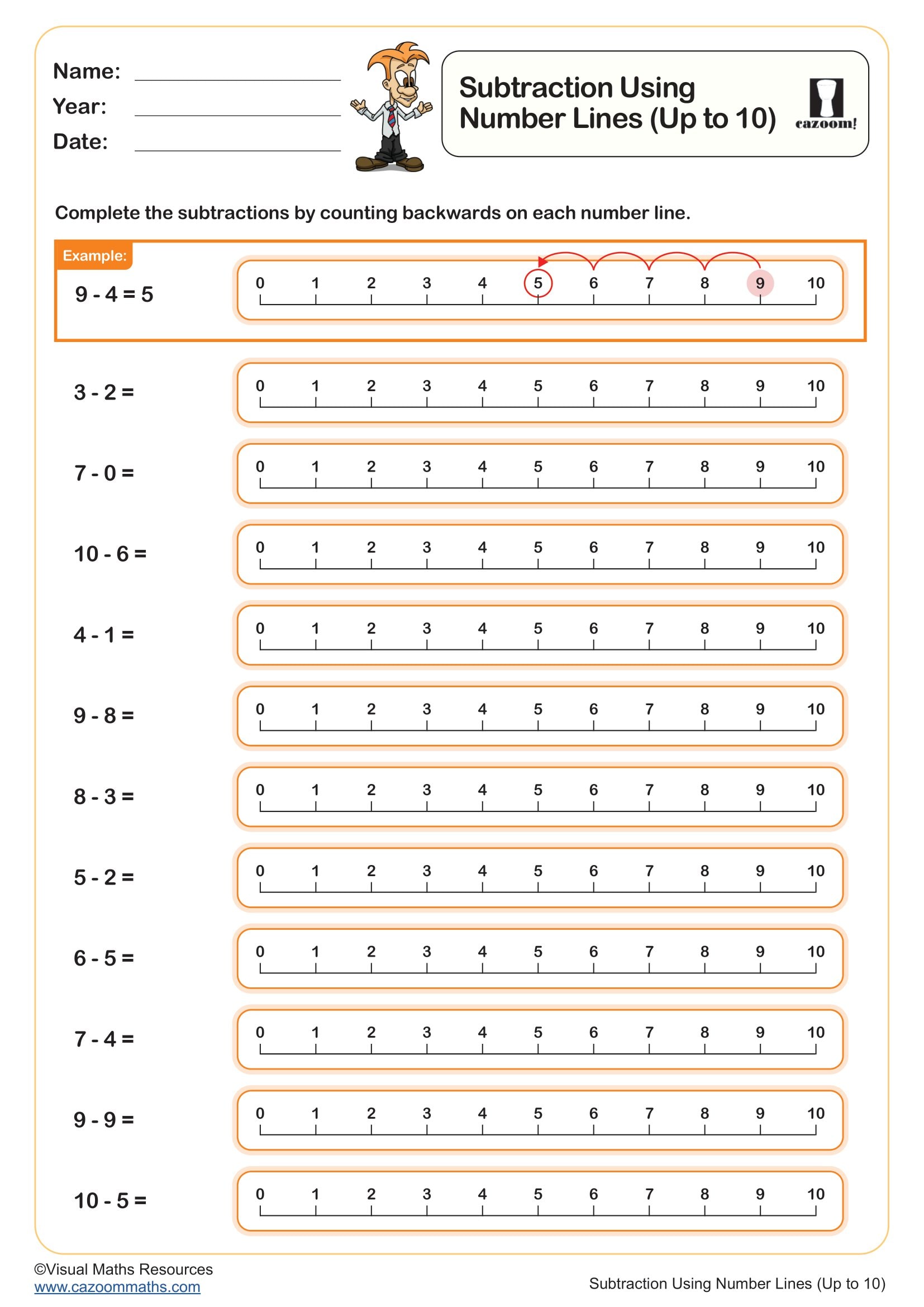
Subtraction Wheels (A) (Subtracting up to 10)
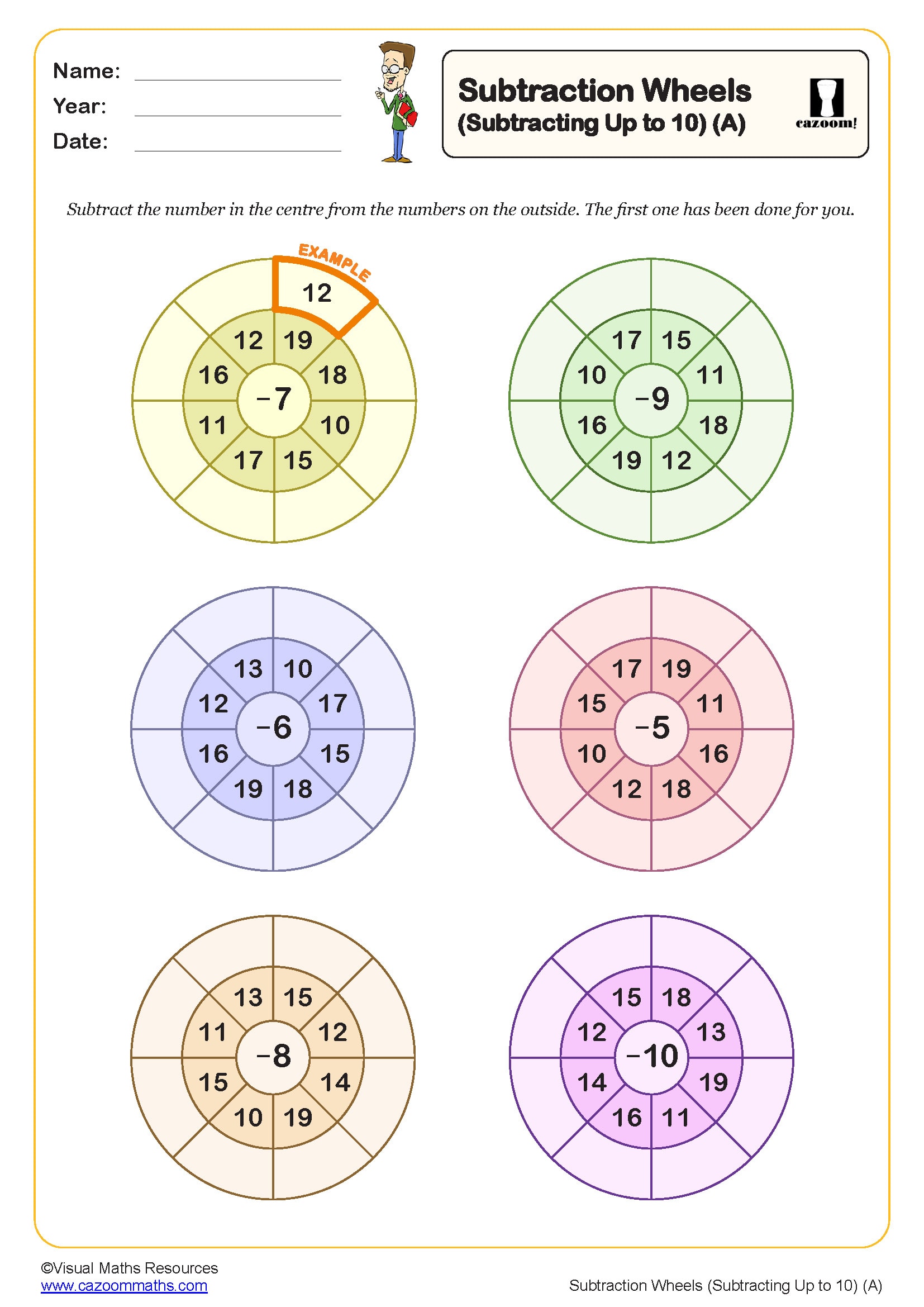
Subtraction Wheels (Subtracting 1)
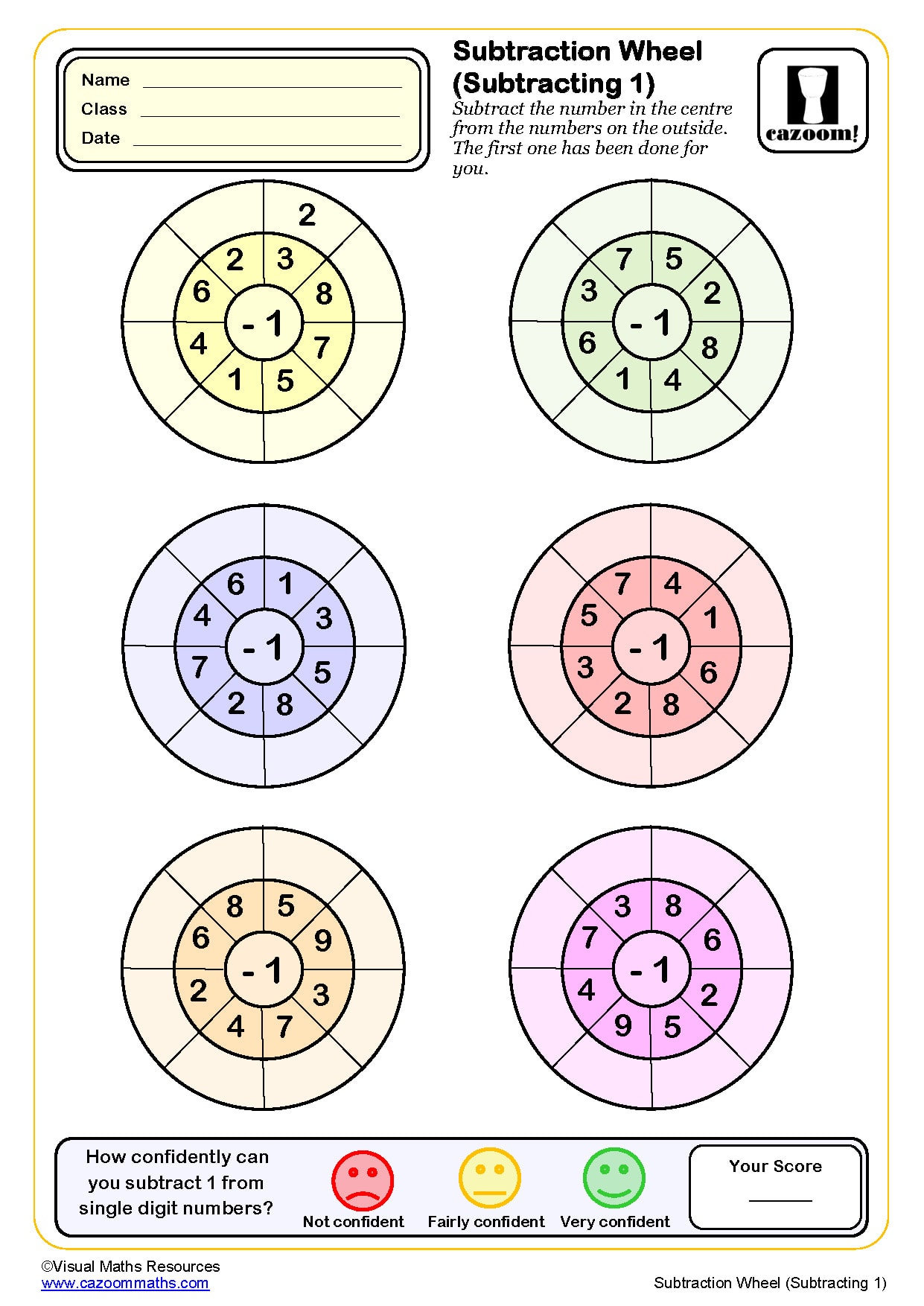
Subtraction Wheels (Subtracting 2)
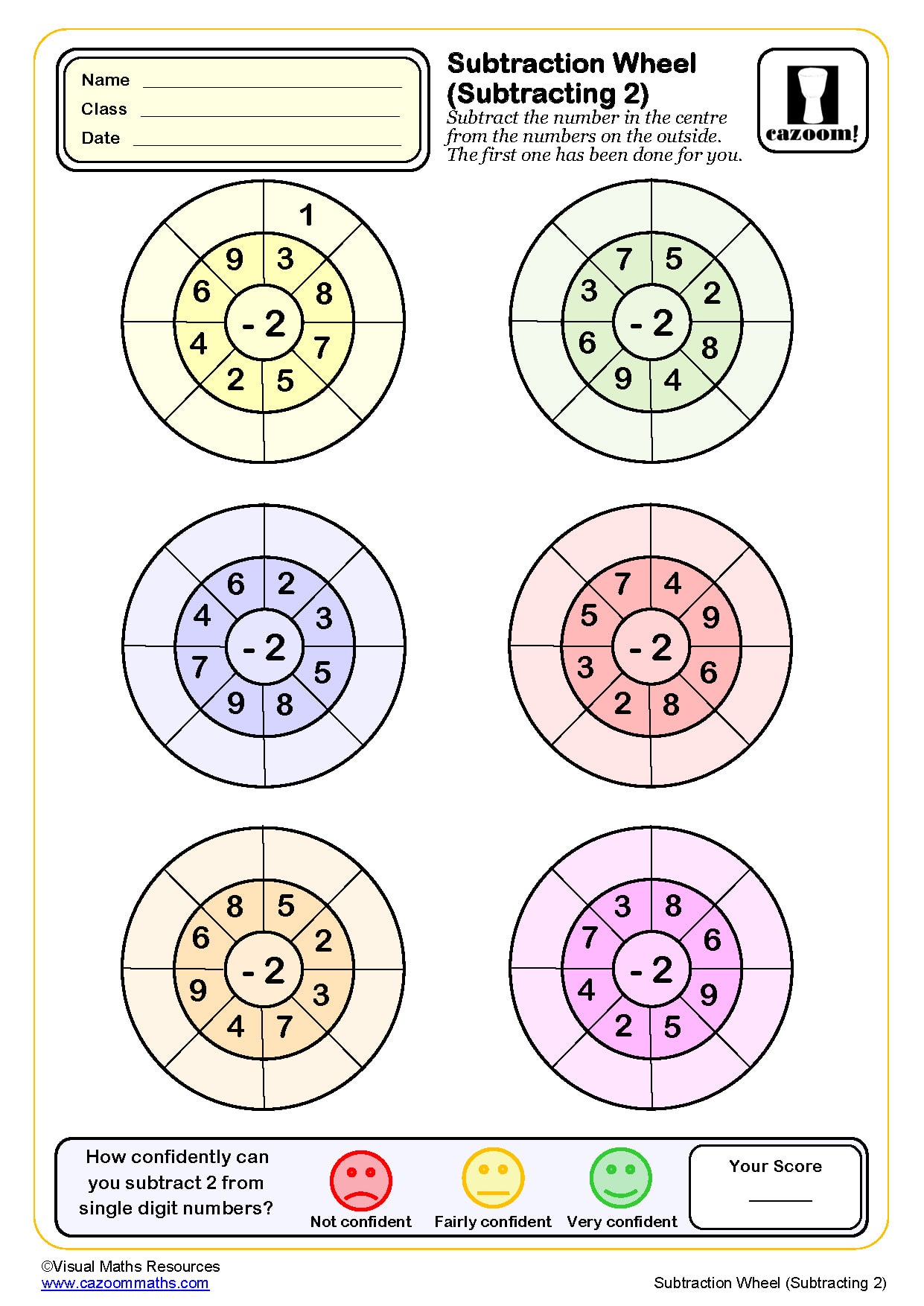
Subtraction Wheels (Subtracting 5)
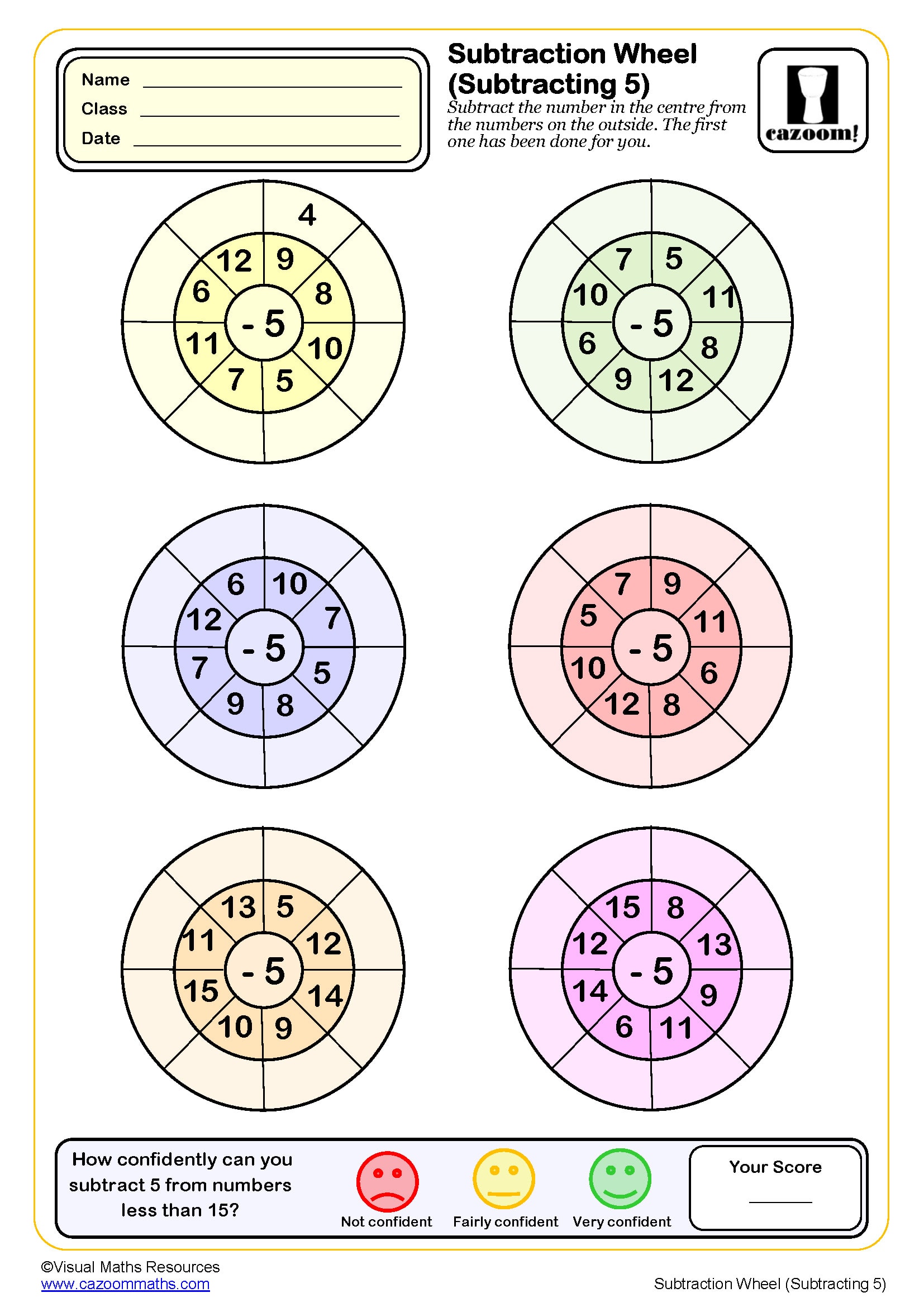
Subtraction Wheels (Subtracting up to 4)
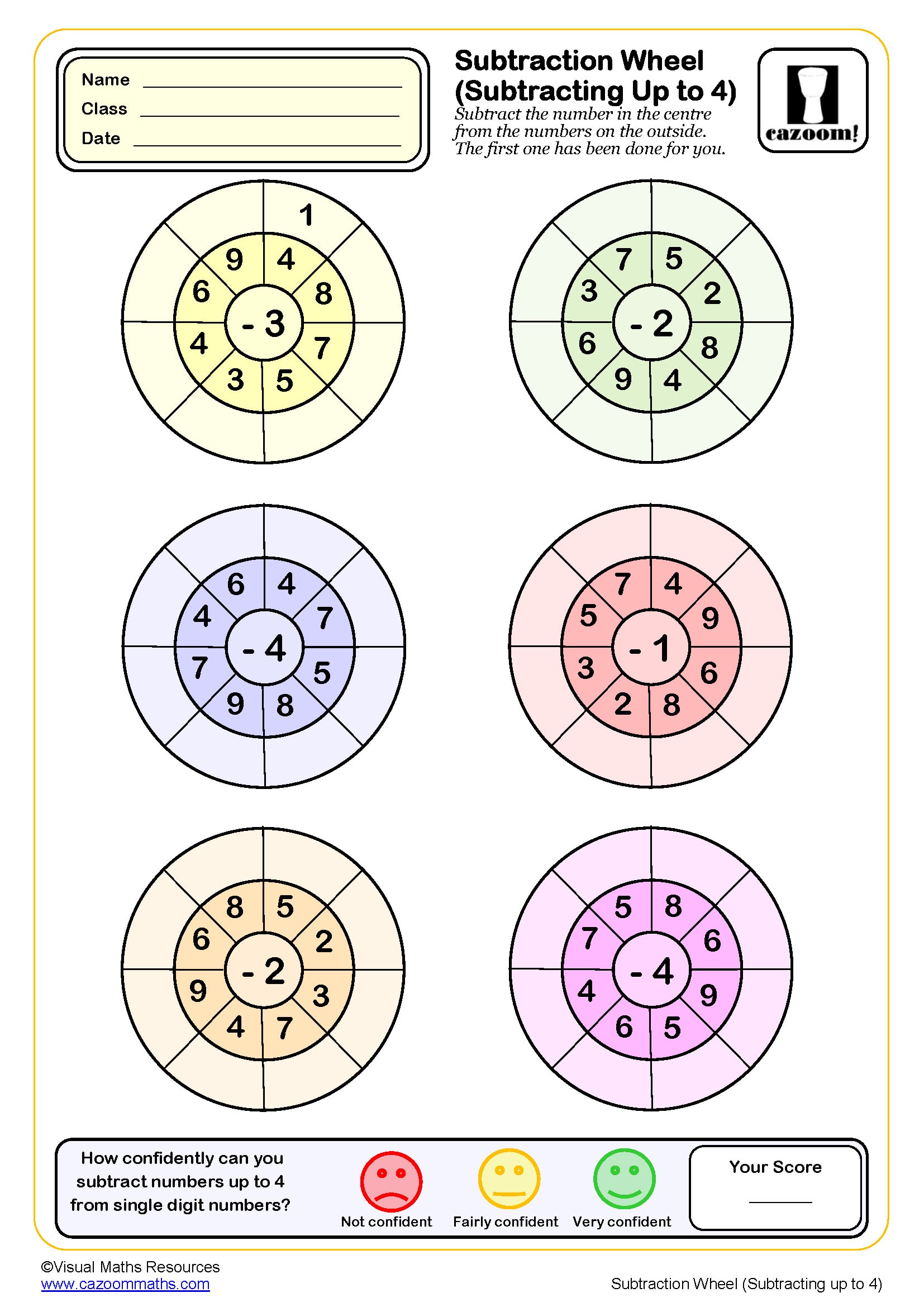
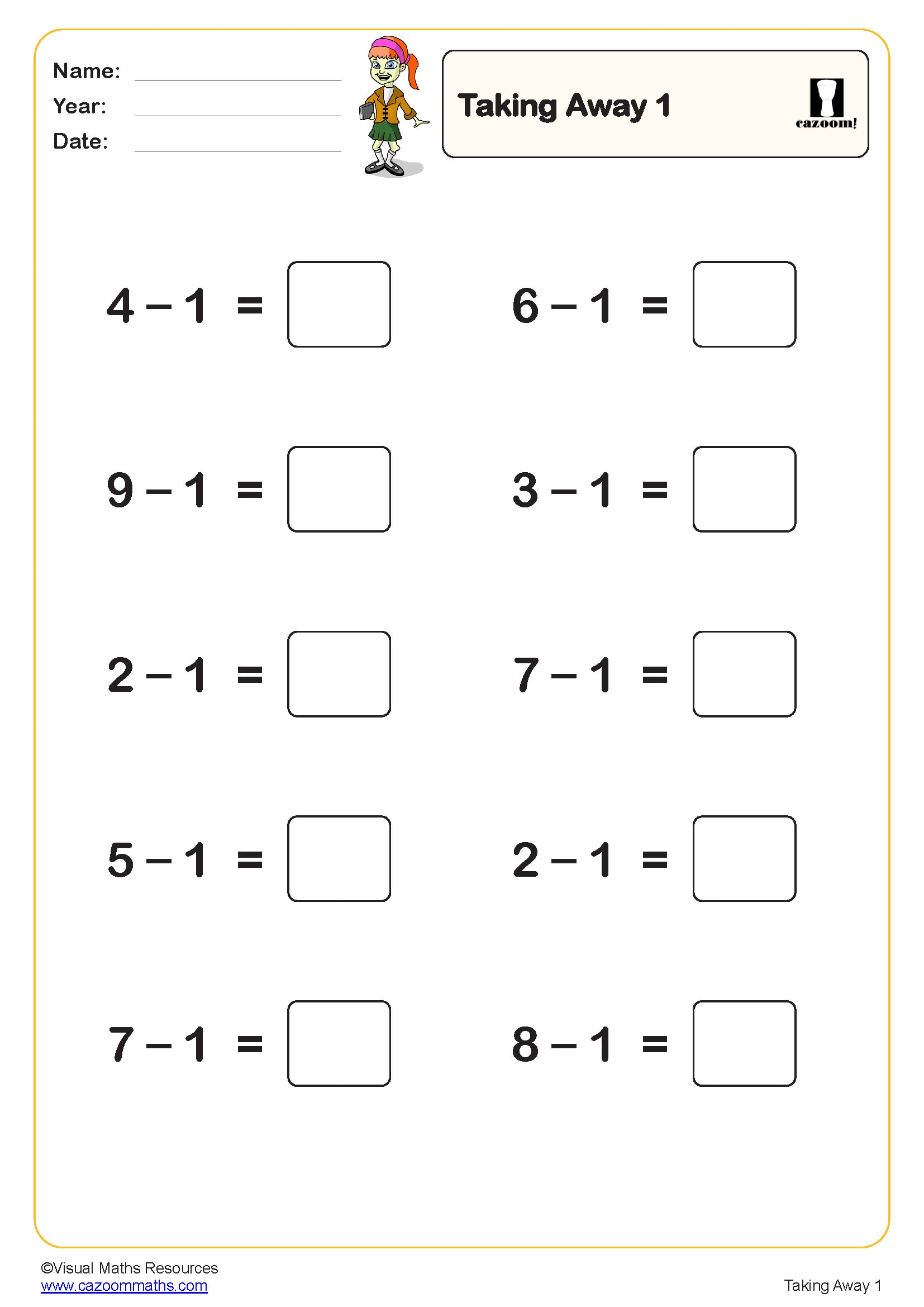
Taking Away 1 (10 questions)
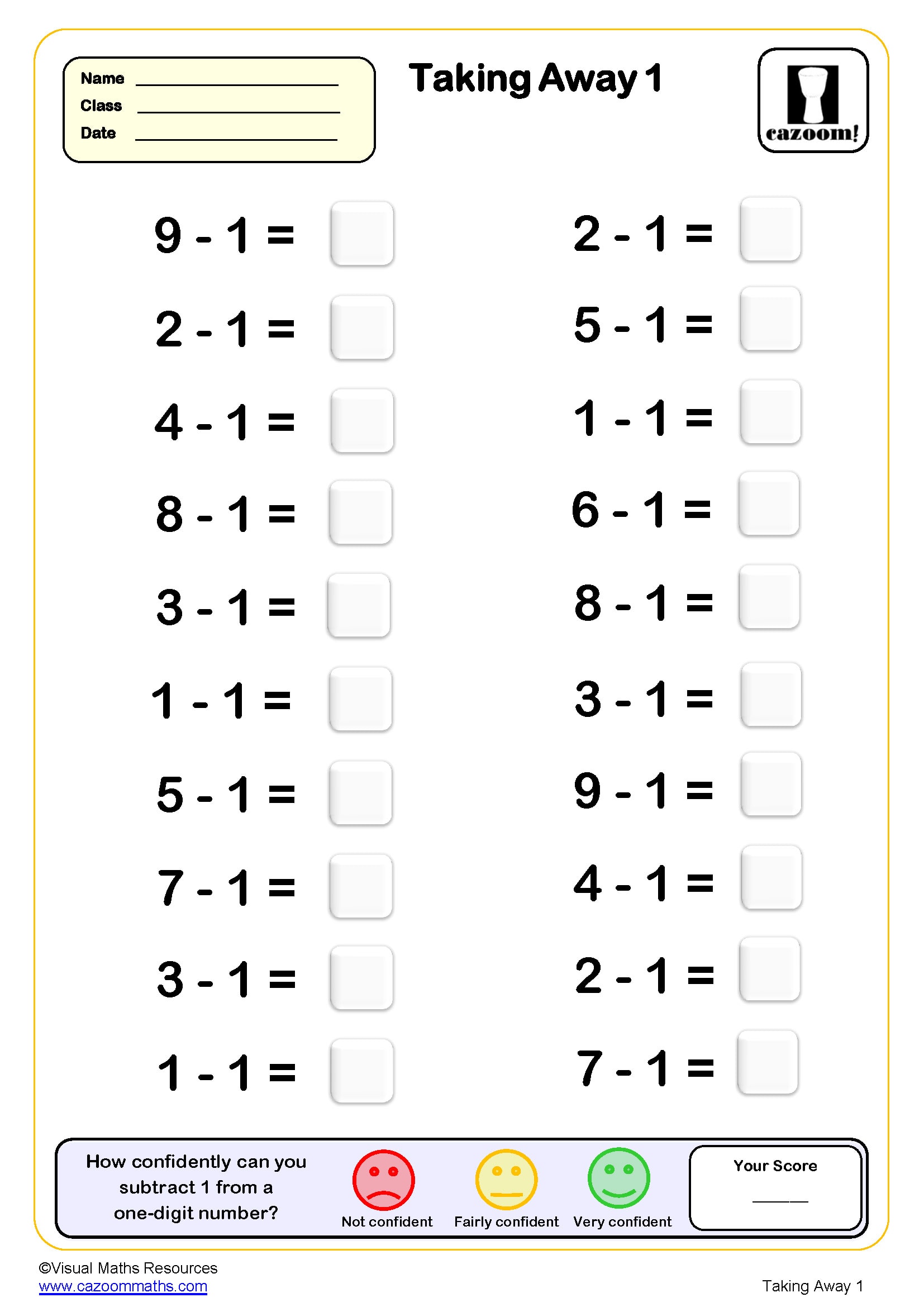
Taking Away 1 (20 questions)
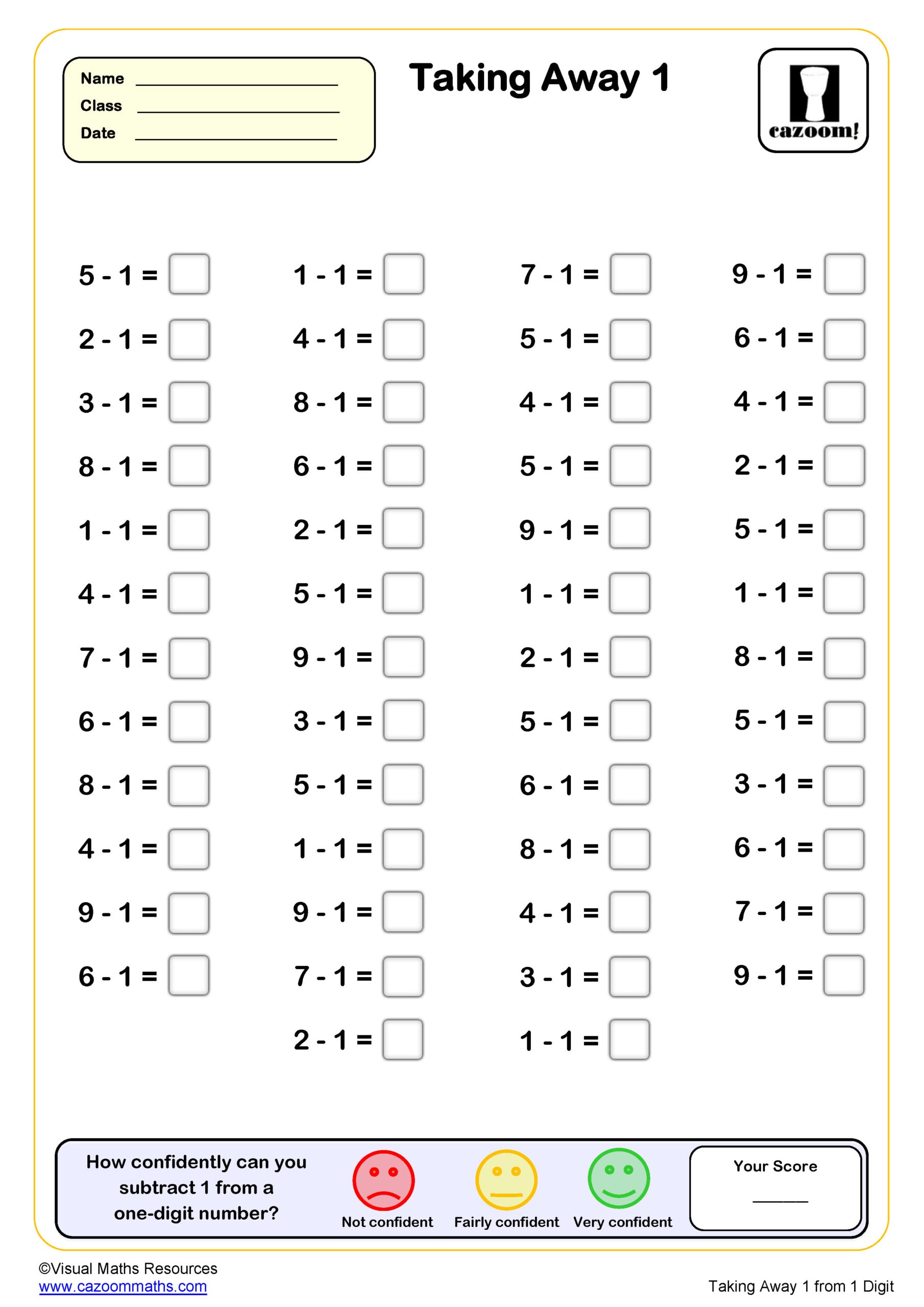
Taking Away 1 (50 questions)
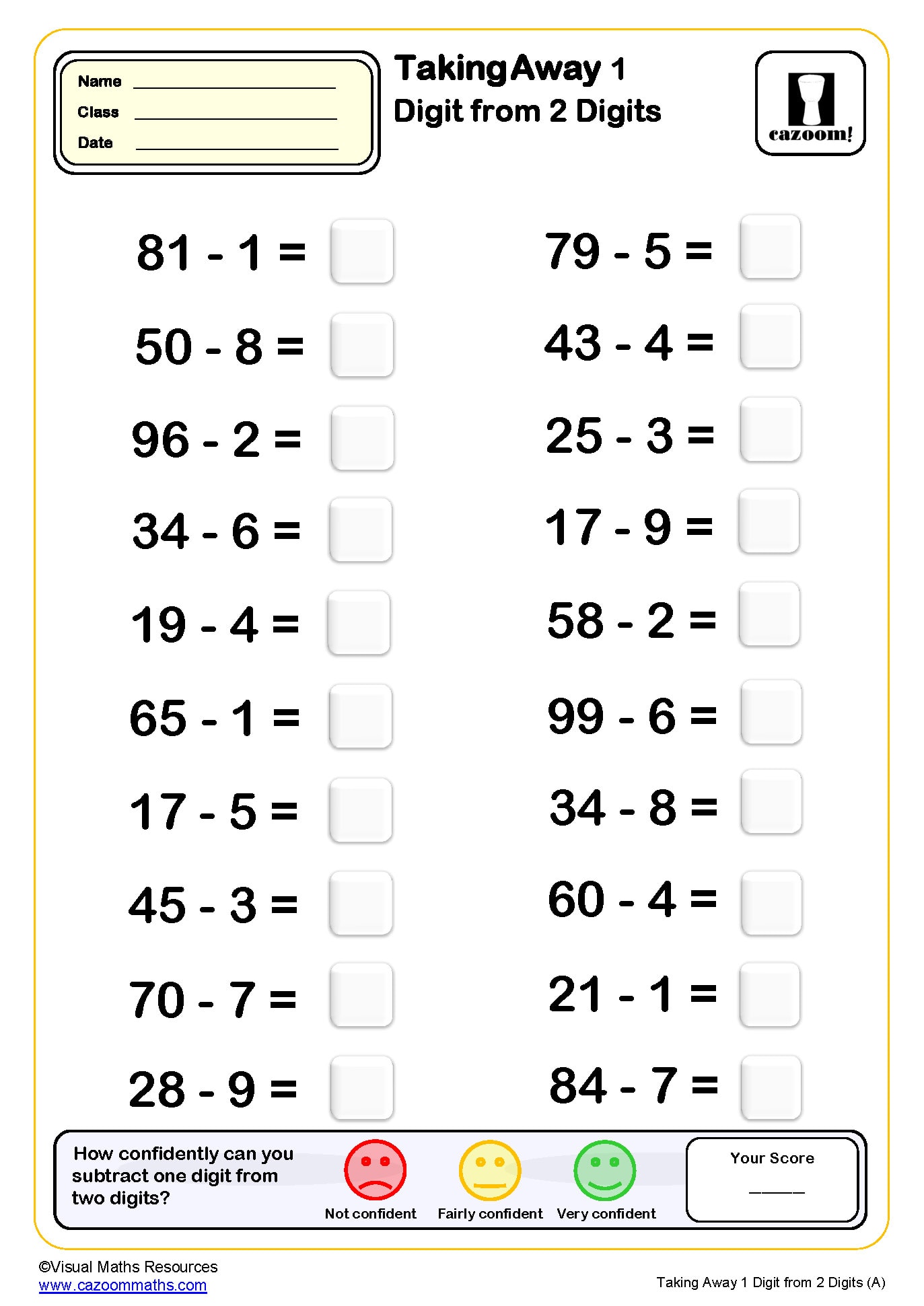
Taking Away 1 Digit from 2 Digits (A)
Taking Away 1 Digit from 2 Digits (B)
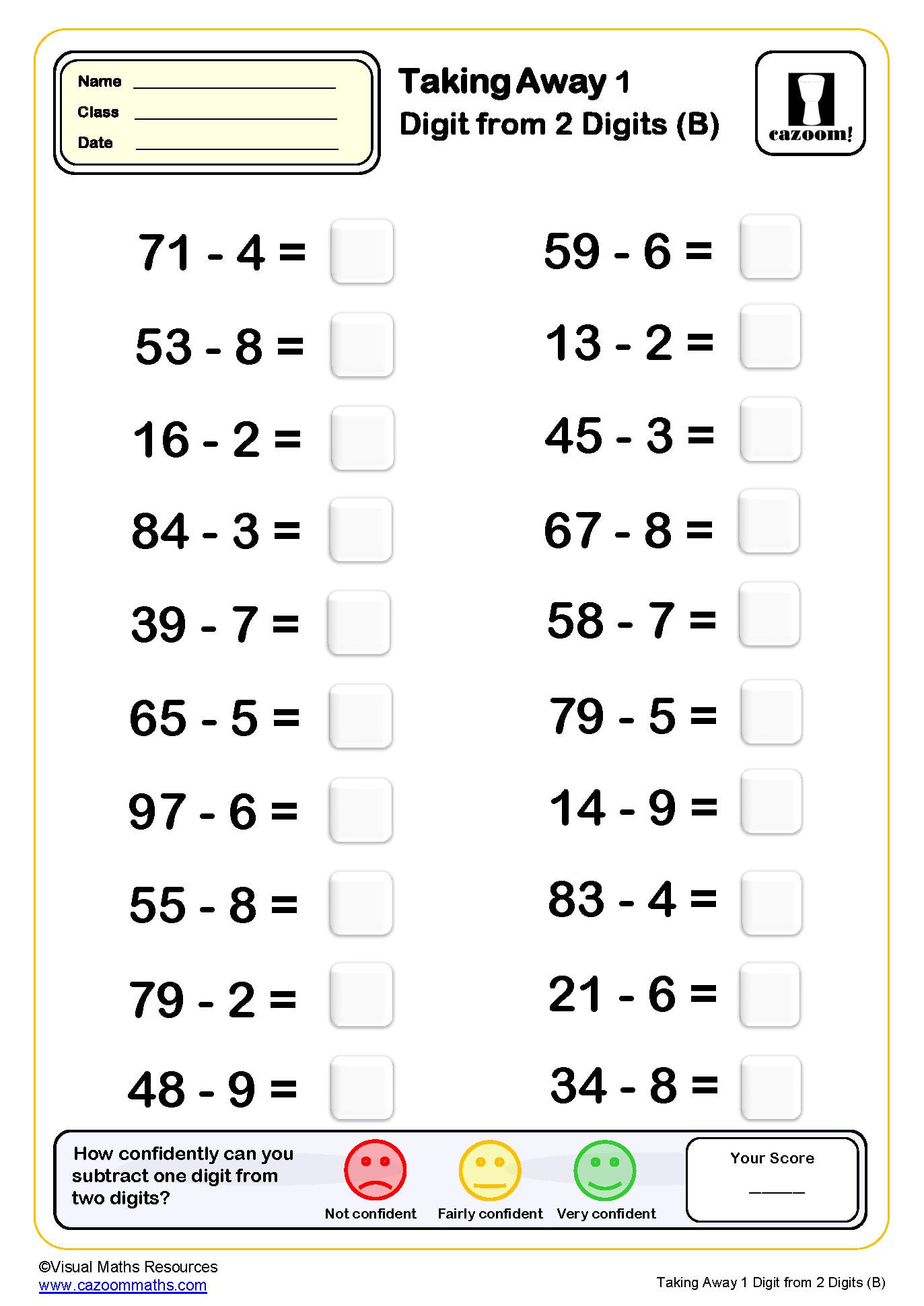
Taking Away 1 Digit from 2 Digits (C)
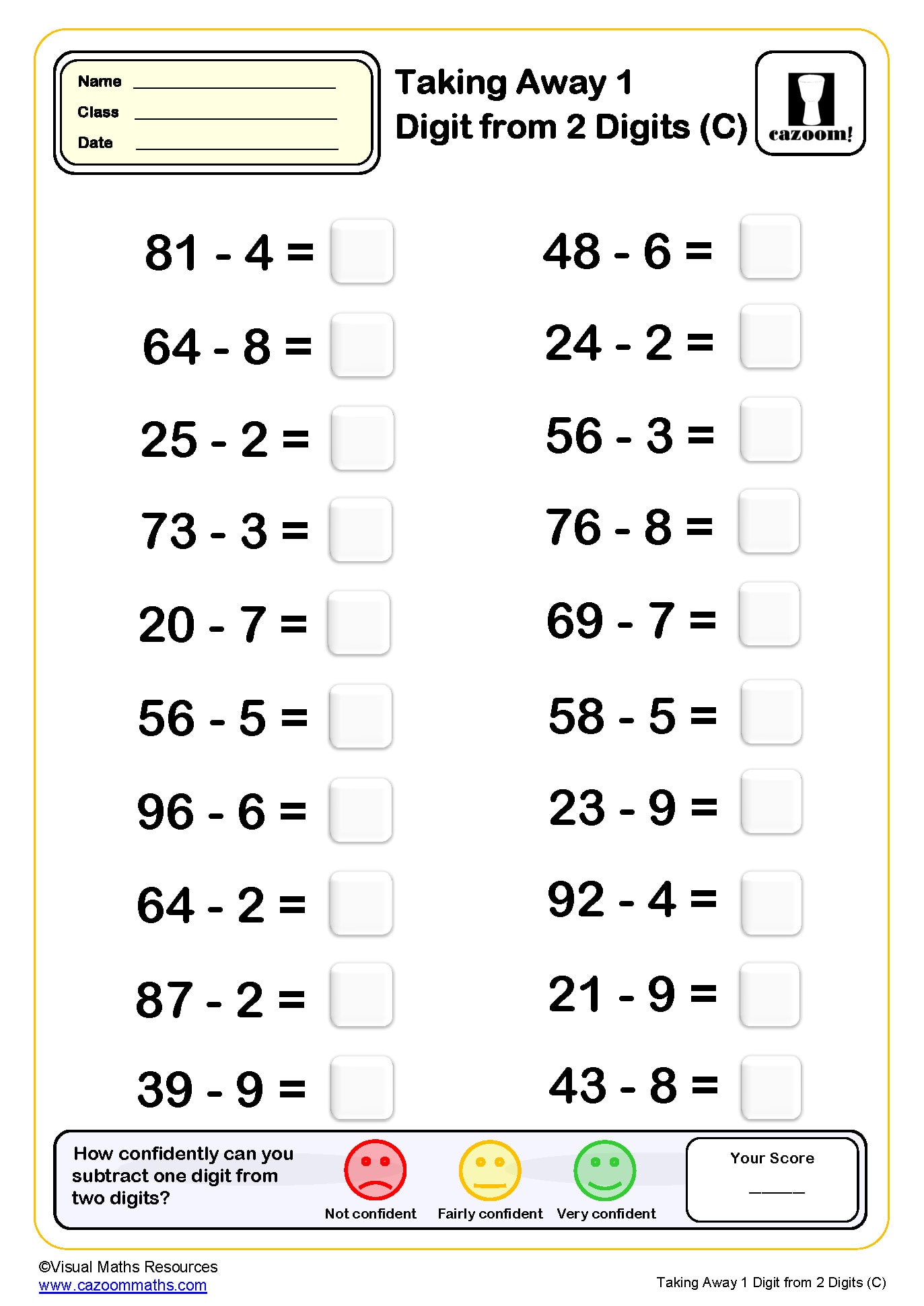
Taking Away 1 from two digit numbers (10 questions)
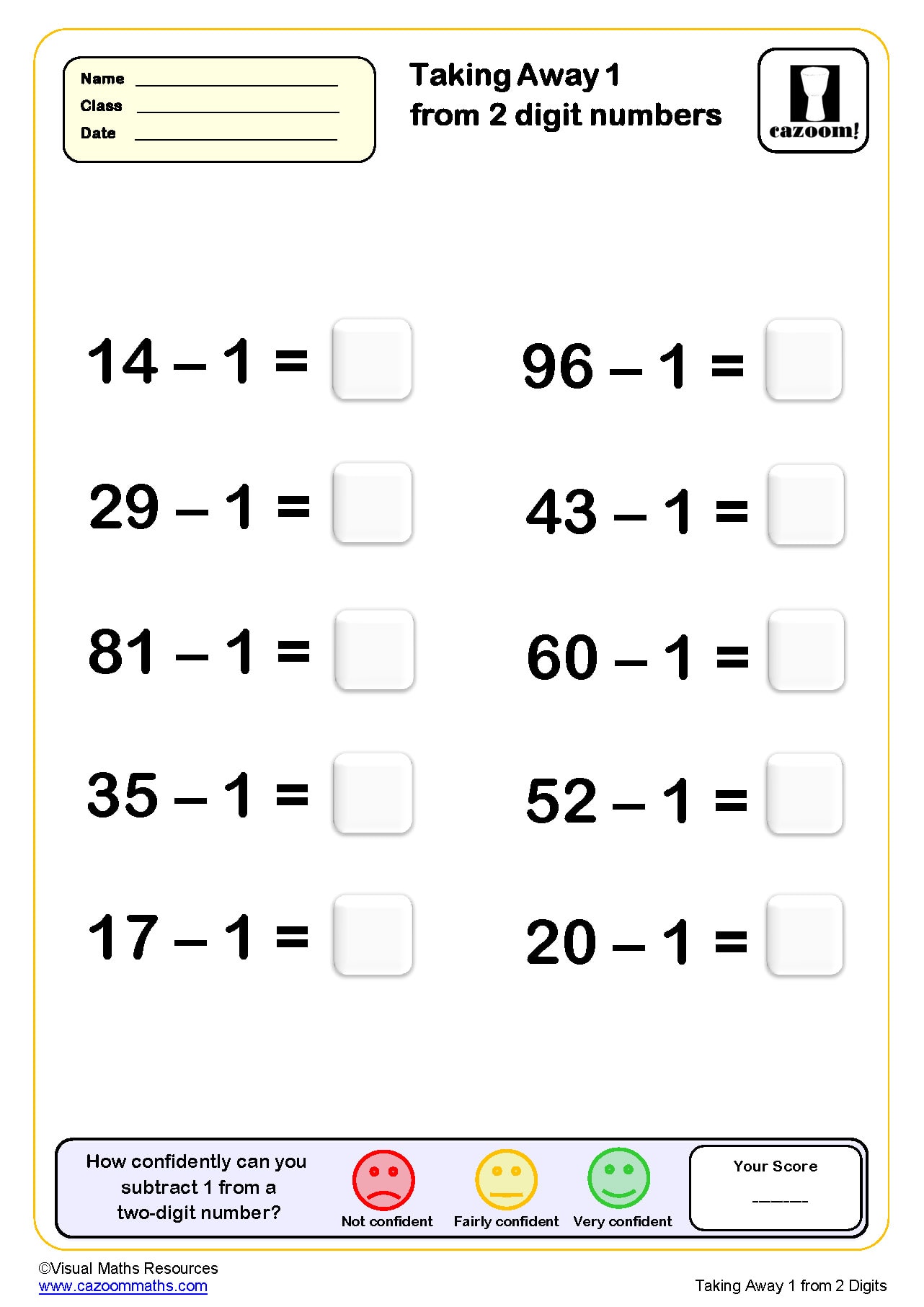
Taking Away 1 from two digit numbers (20 questions)
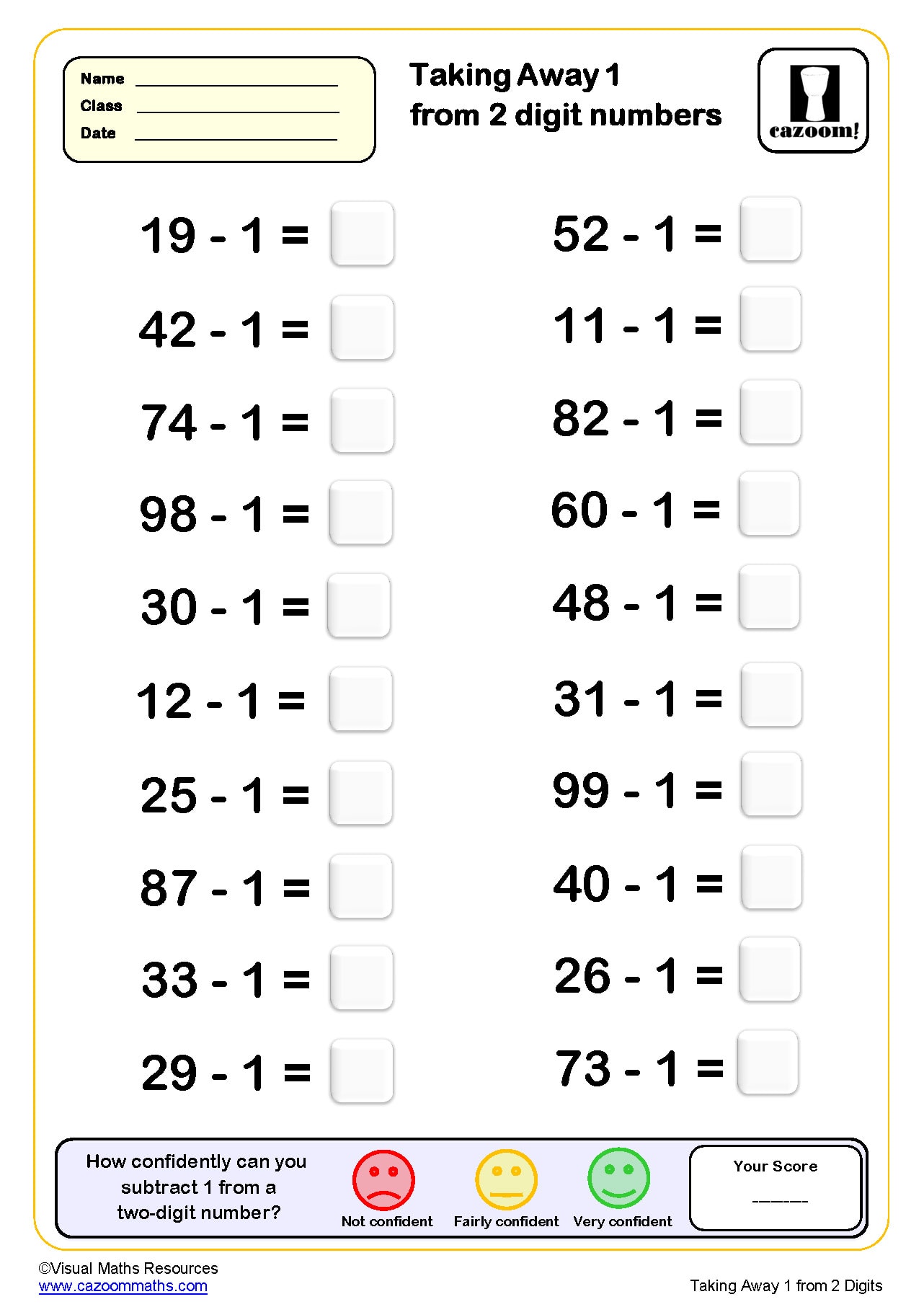
Taking Away 1 from two digit numbers (50 questions)
Taking Away 2 (10 questions)
Taking Away 2 (20 questions)
Taking Away 2 (50 questions)
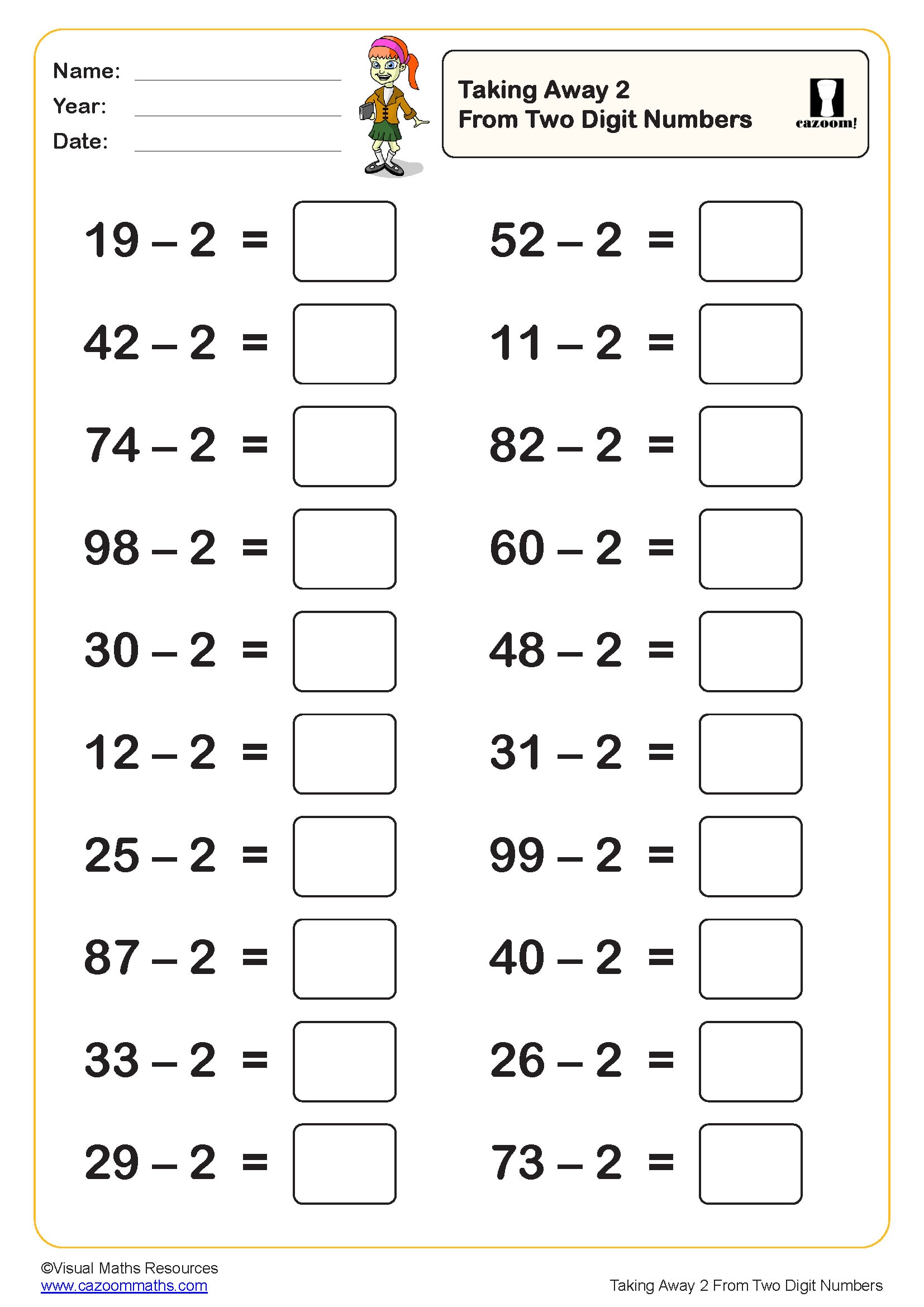
Taking Away 2 from two digit numbers (20 questions)
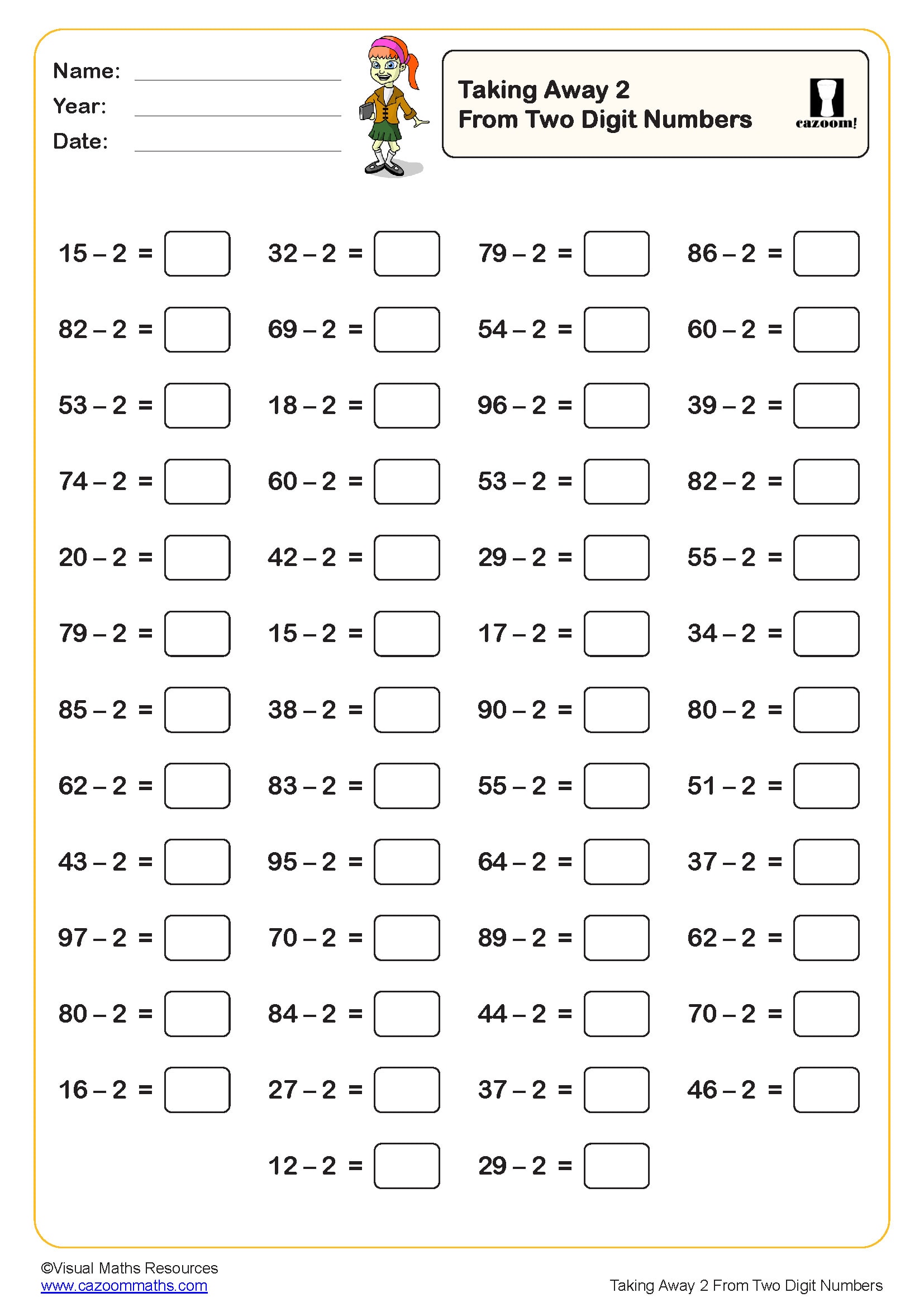
Taking Away 2 from two digit numbers (50 questions)
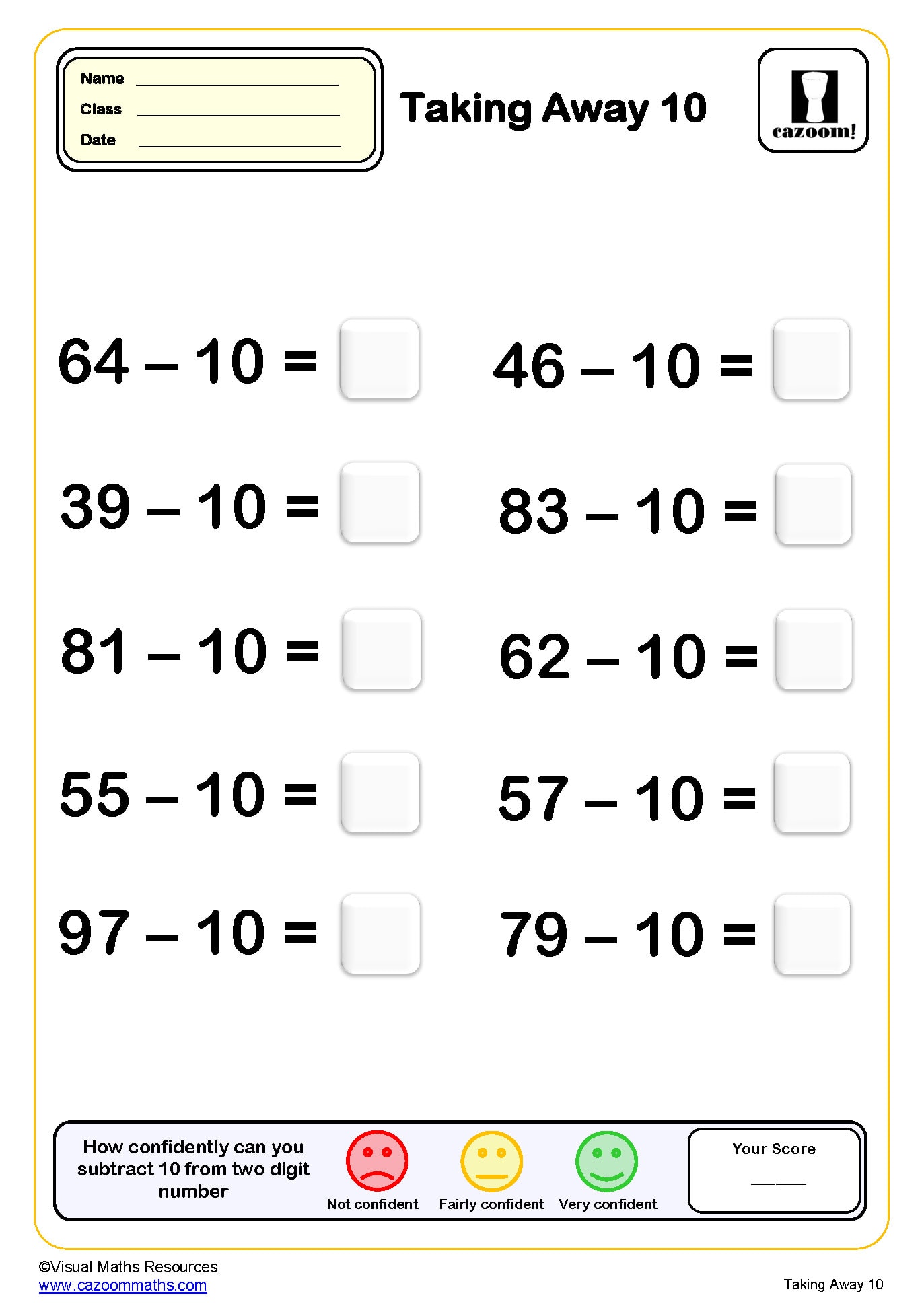
Taking Away 3 from Two Digit Numbers (10 questions)
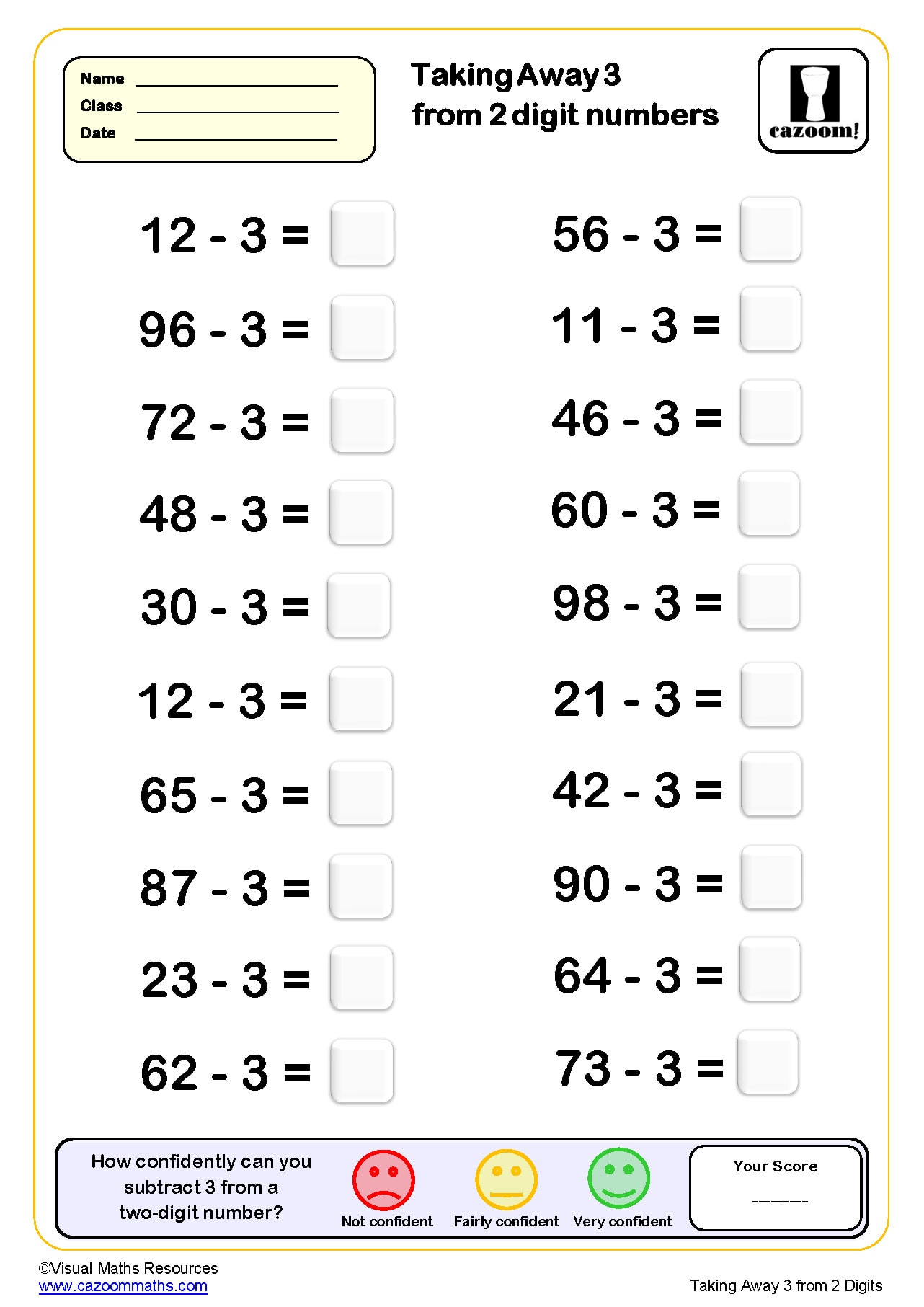
Taking Away 3 from Two Digit Numbers (20 questions)
Taking Away 3 from Two Digit Numbers (50 questions)
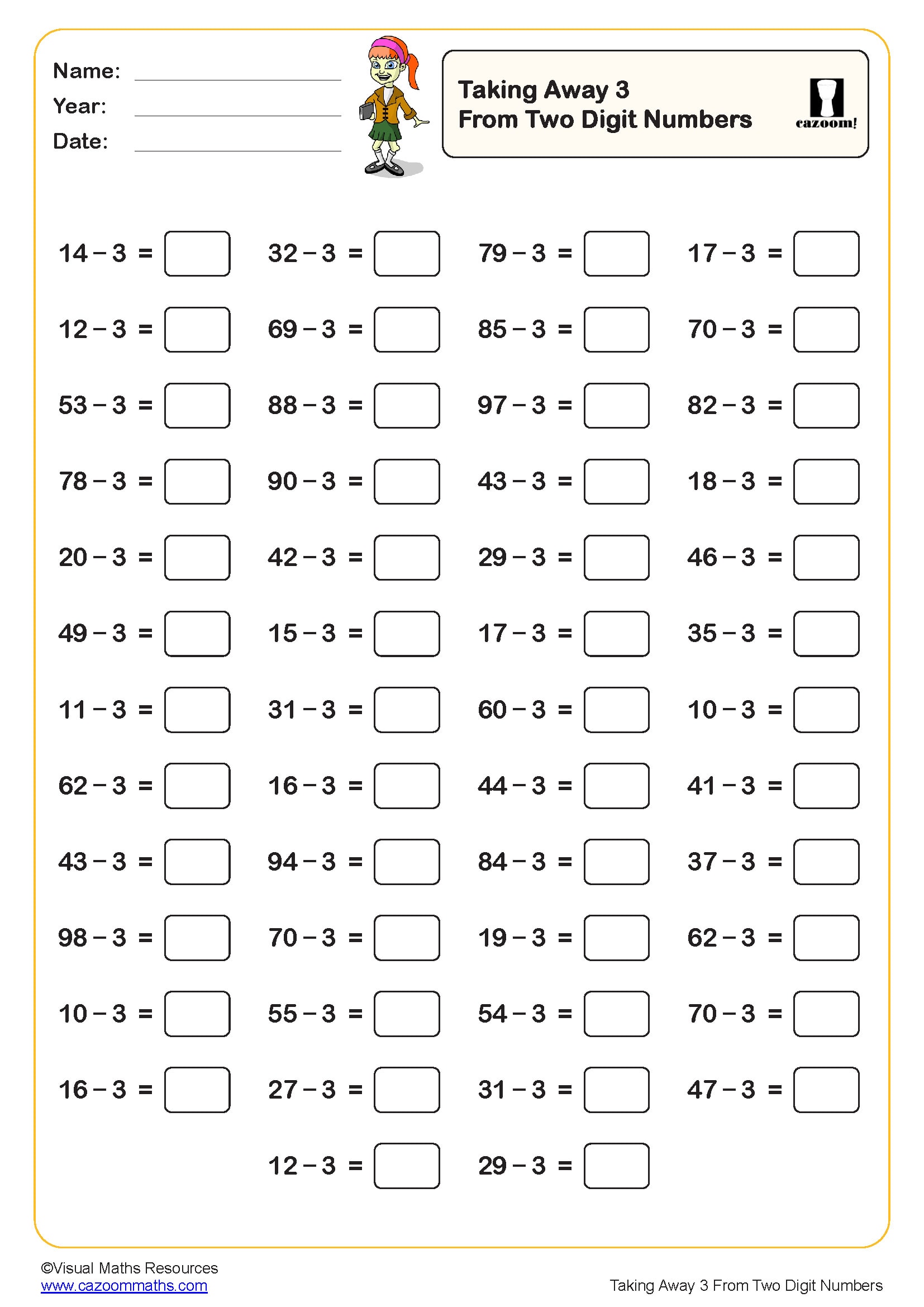
Taking Away 4 from Two Digit Numbers (10 questions)
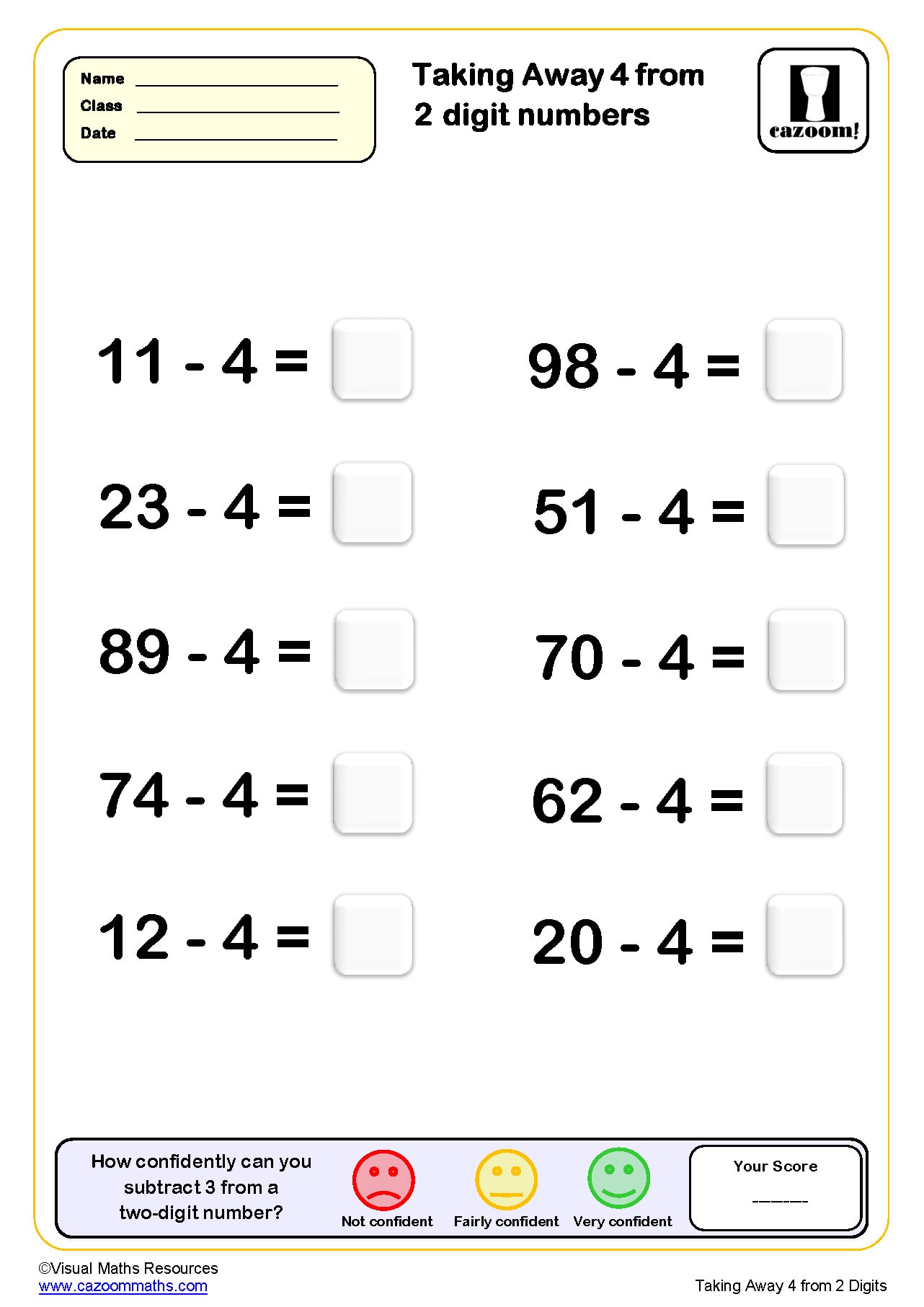
Taking Away 4 from Two Digit Numbers (20 questions)
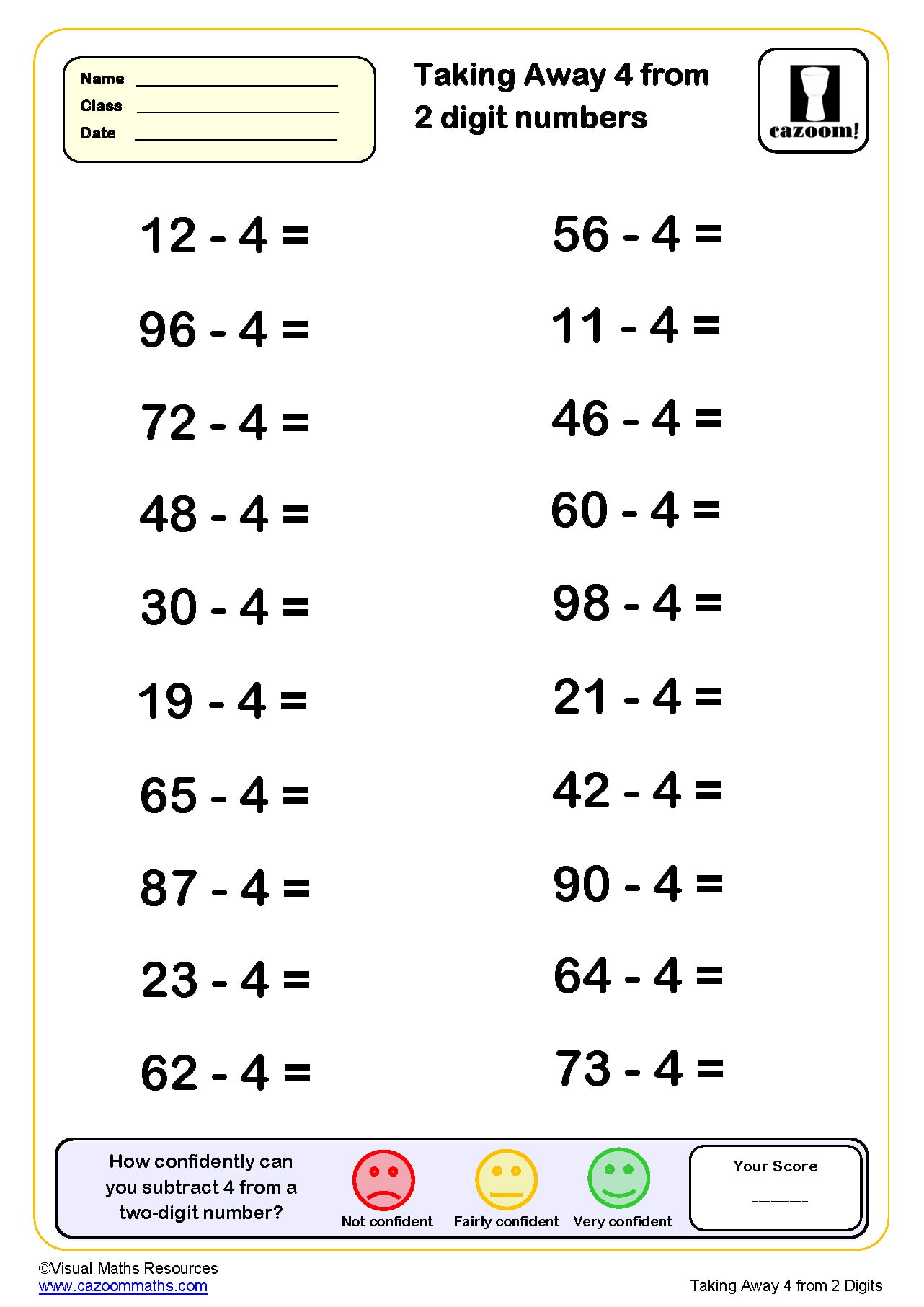
Taking Away 4 from Two Digit Numbers (50 questions)
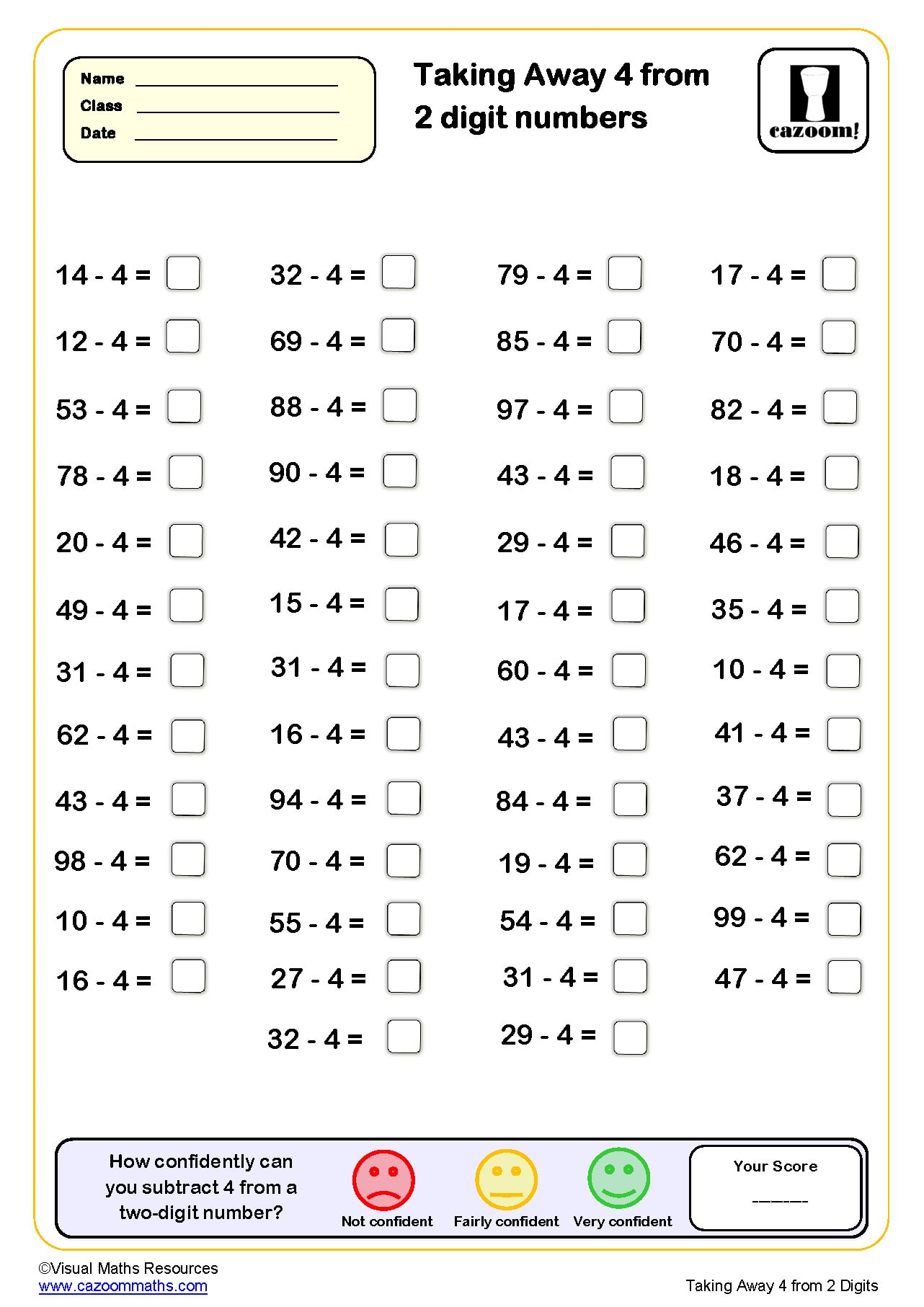
Taking Away 5 from Two Digit Numbers (10 questions)
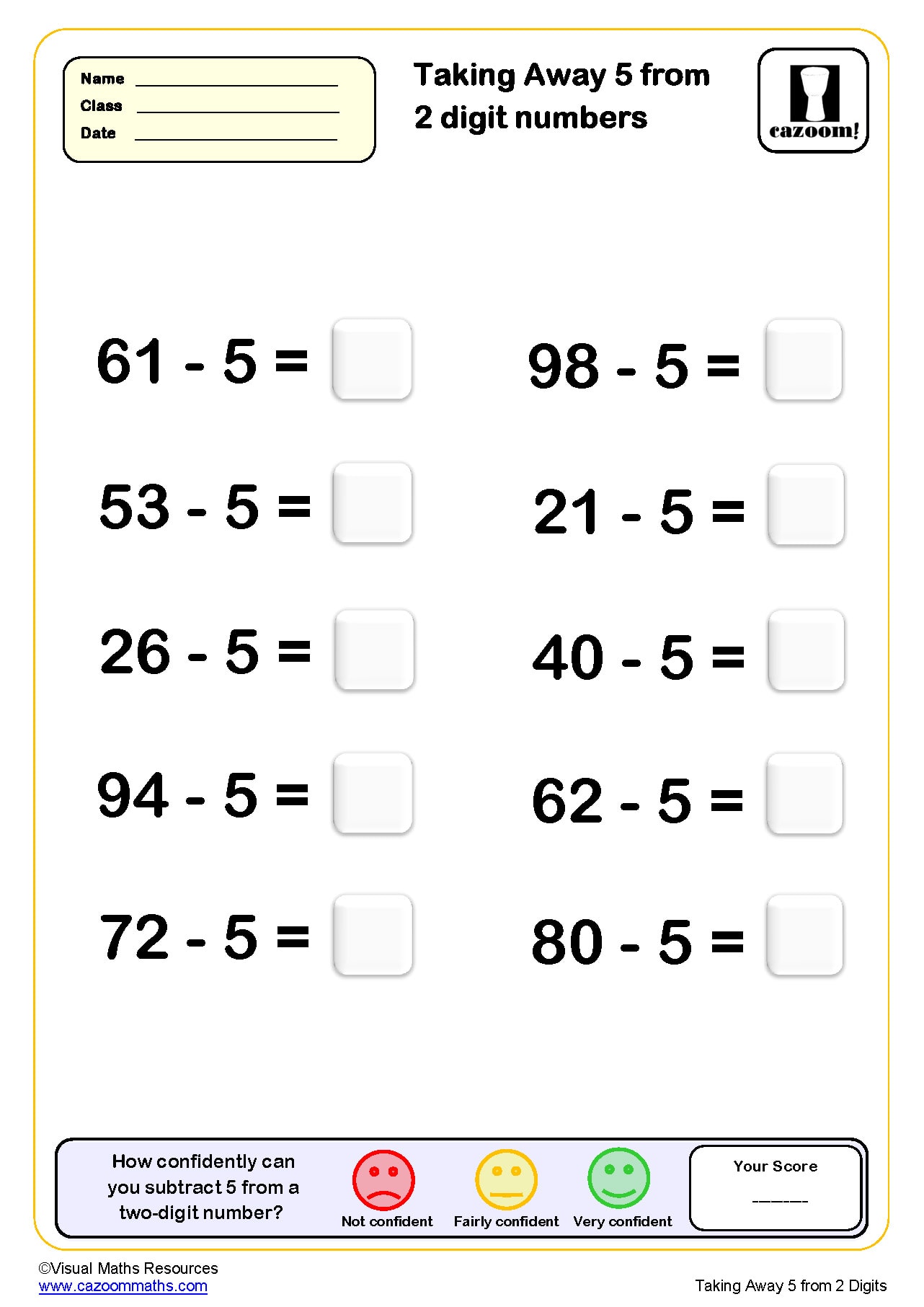
Taking Away 5 from Two Digit Numbers (20 questions)
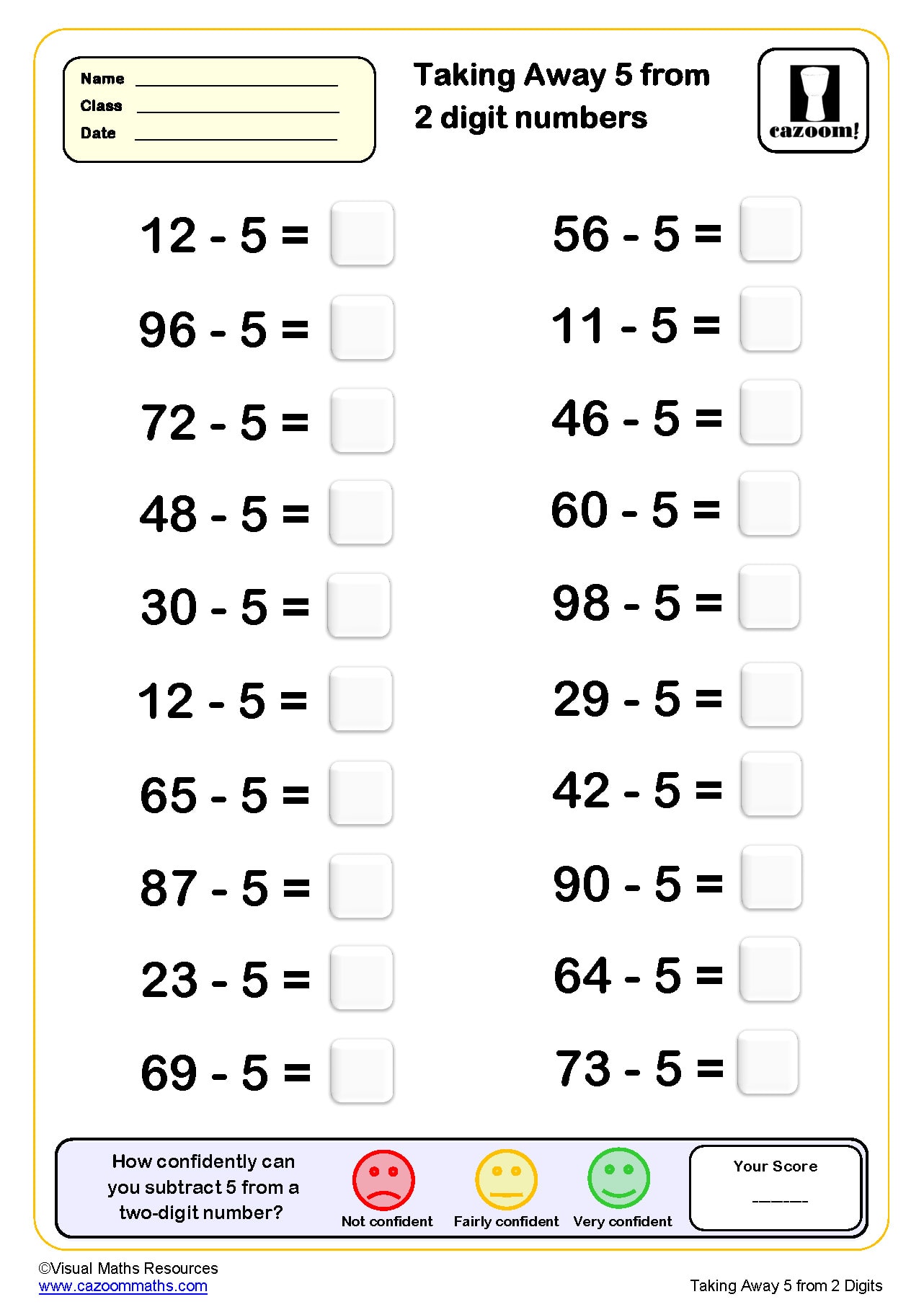
Taking Away 5 from Two Digit Numbers (50 questions)
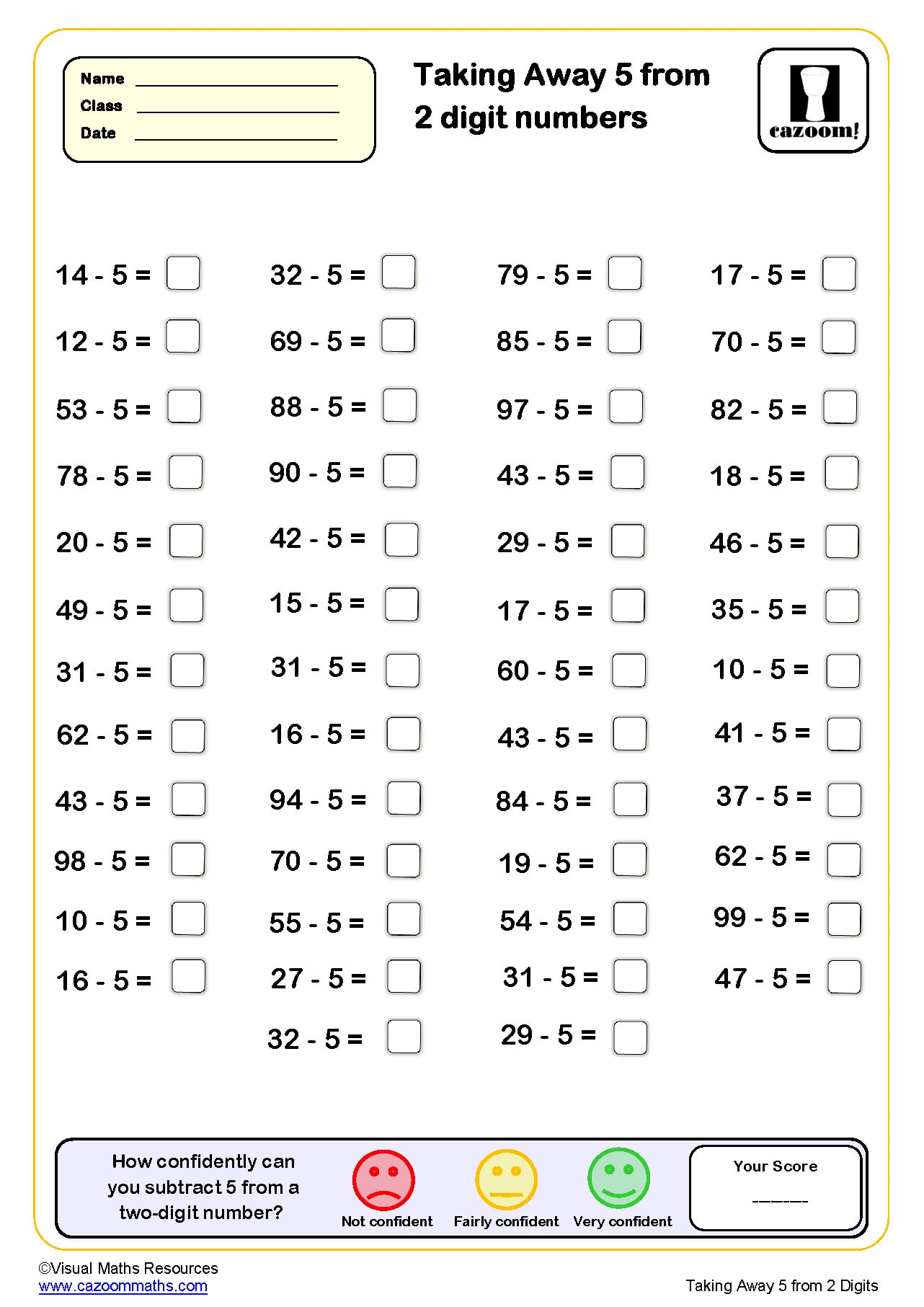
Taking Away Numbers Less Than 10 (A)
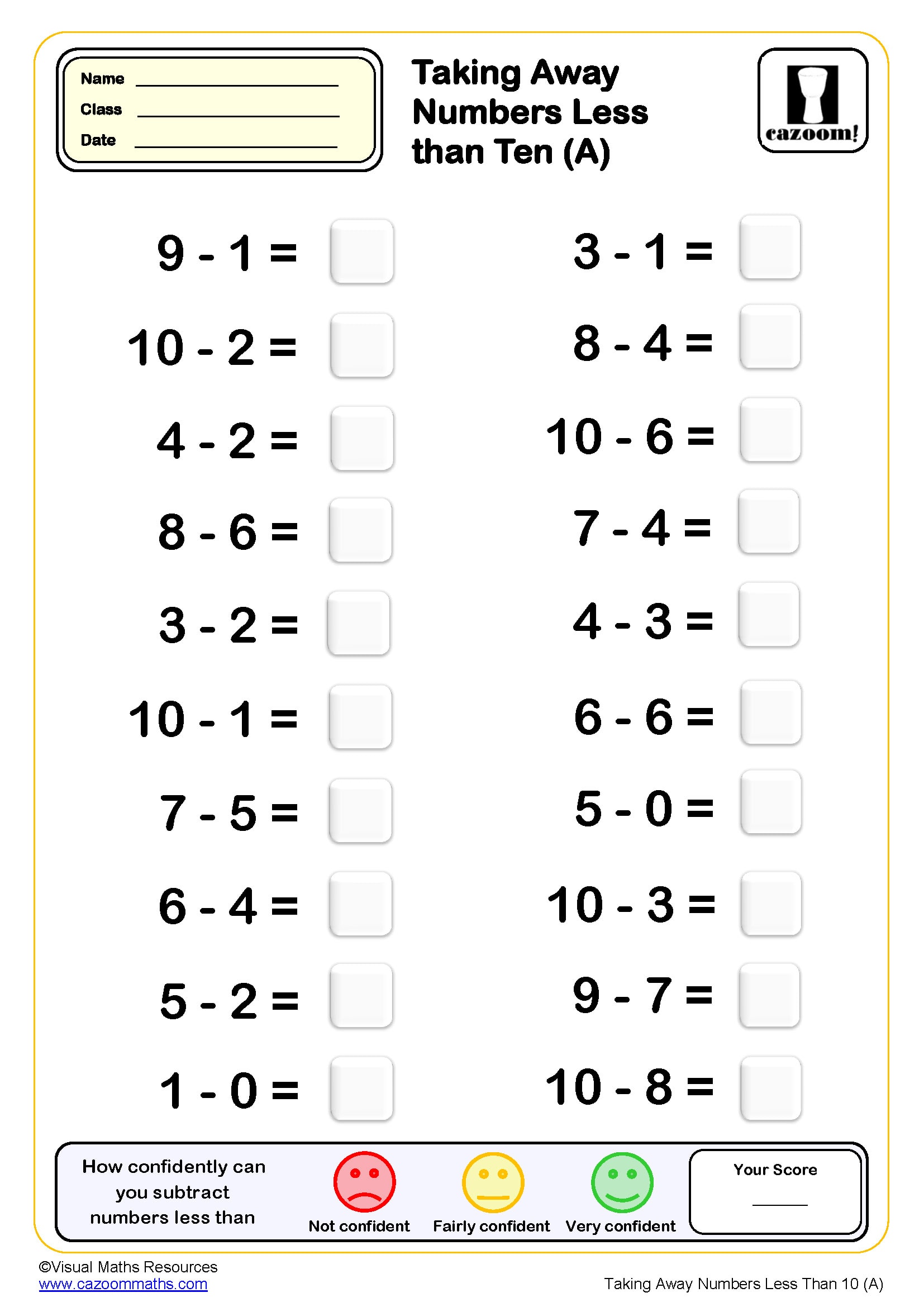
Taking Away Numbers Less Than 10 (B)
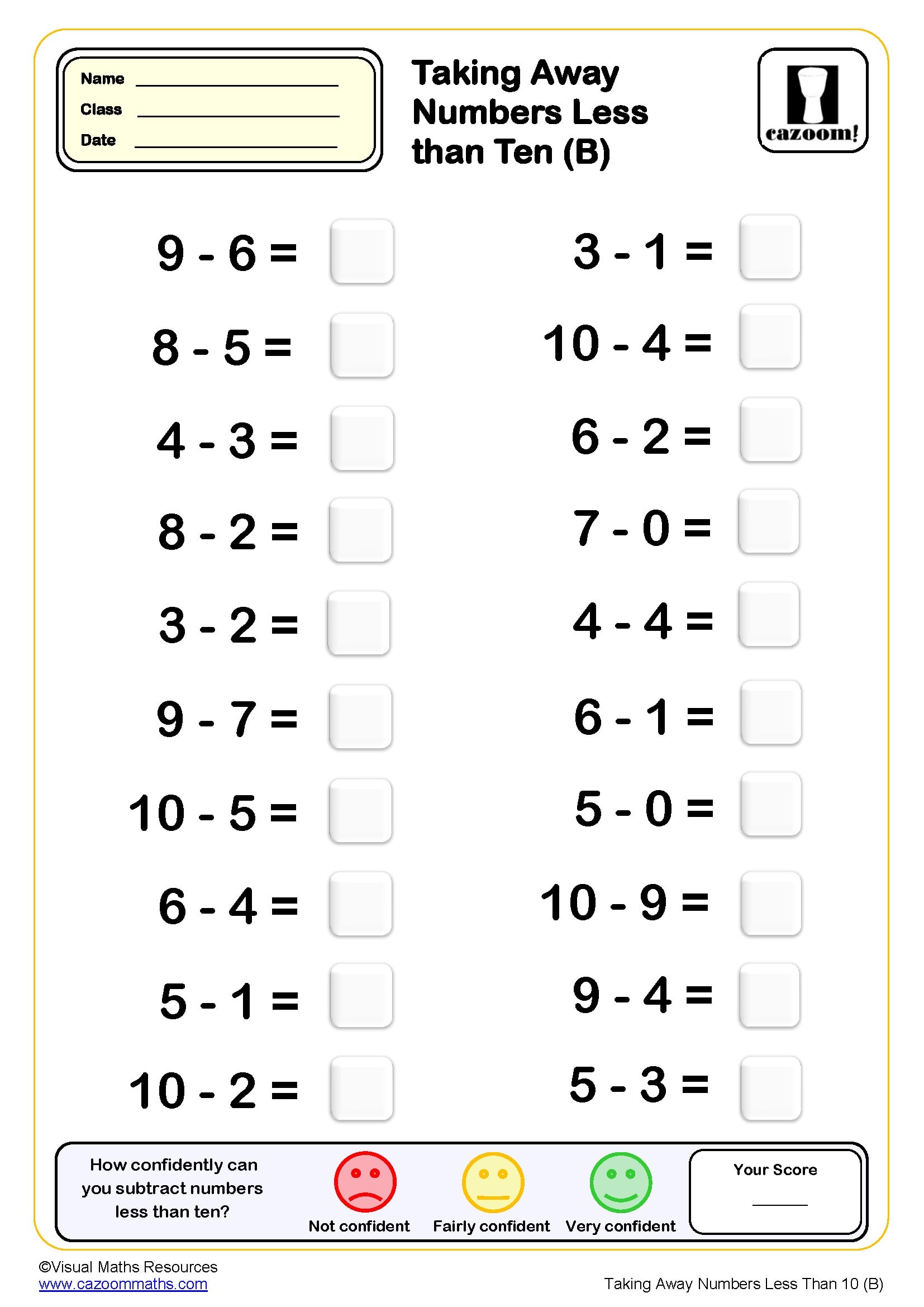
Taking Away Numbers Less Than 10 (C)
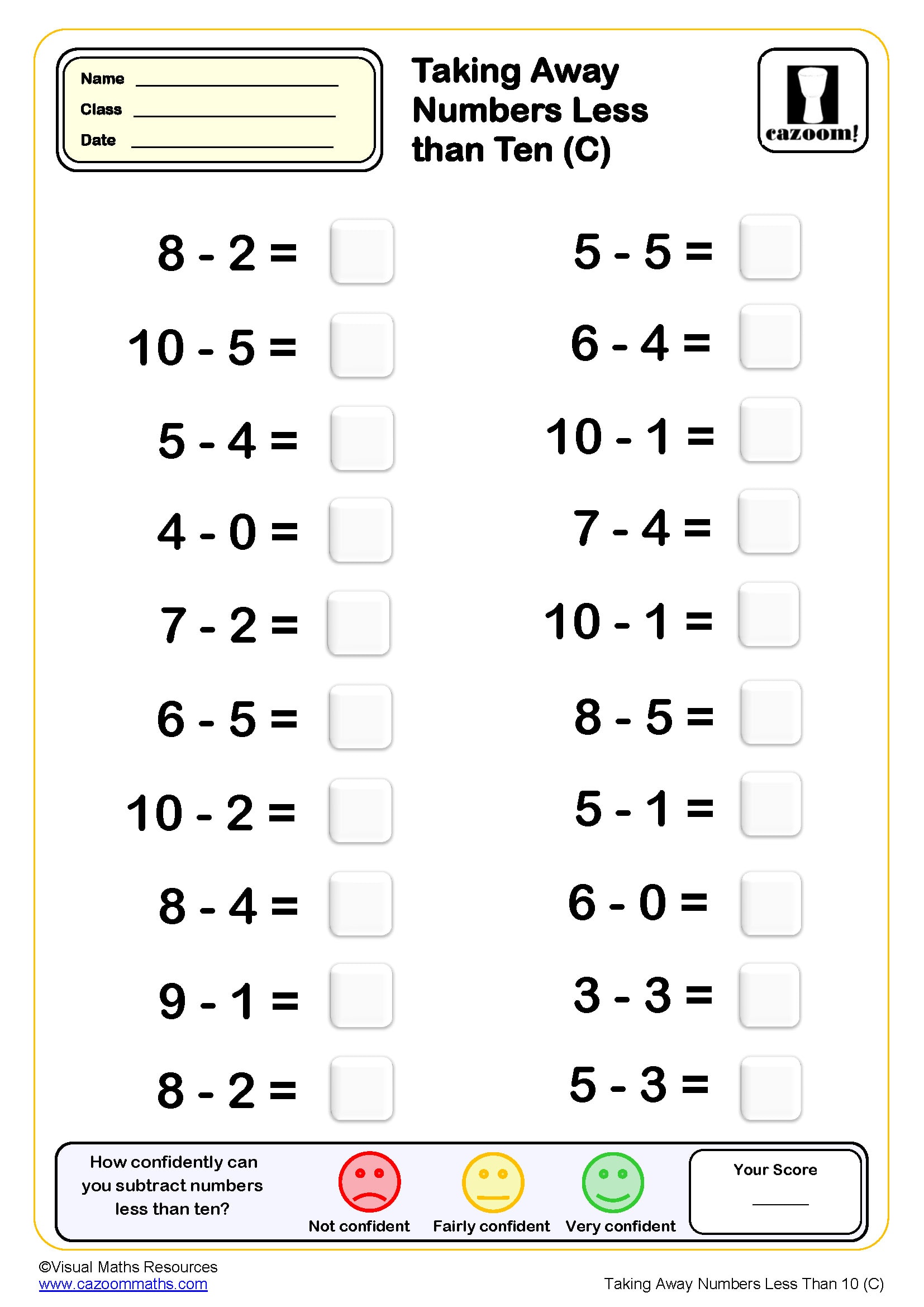
Taking Away Numbers Less Than 6 (A)
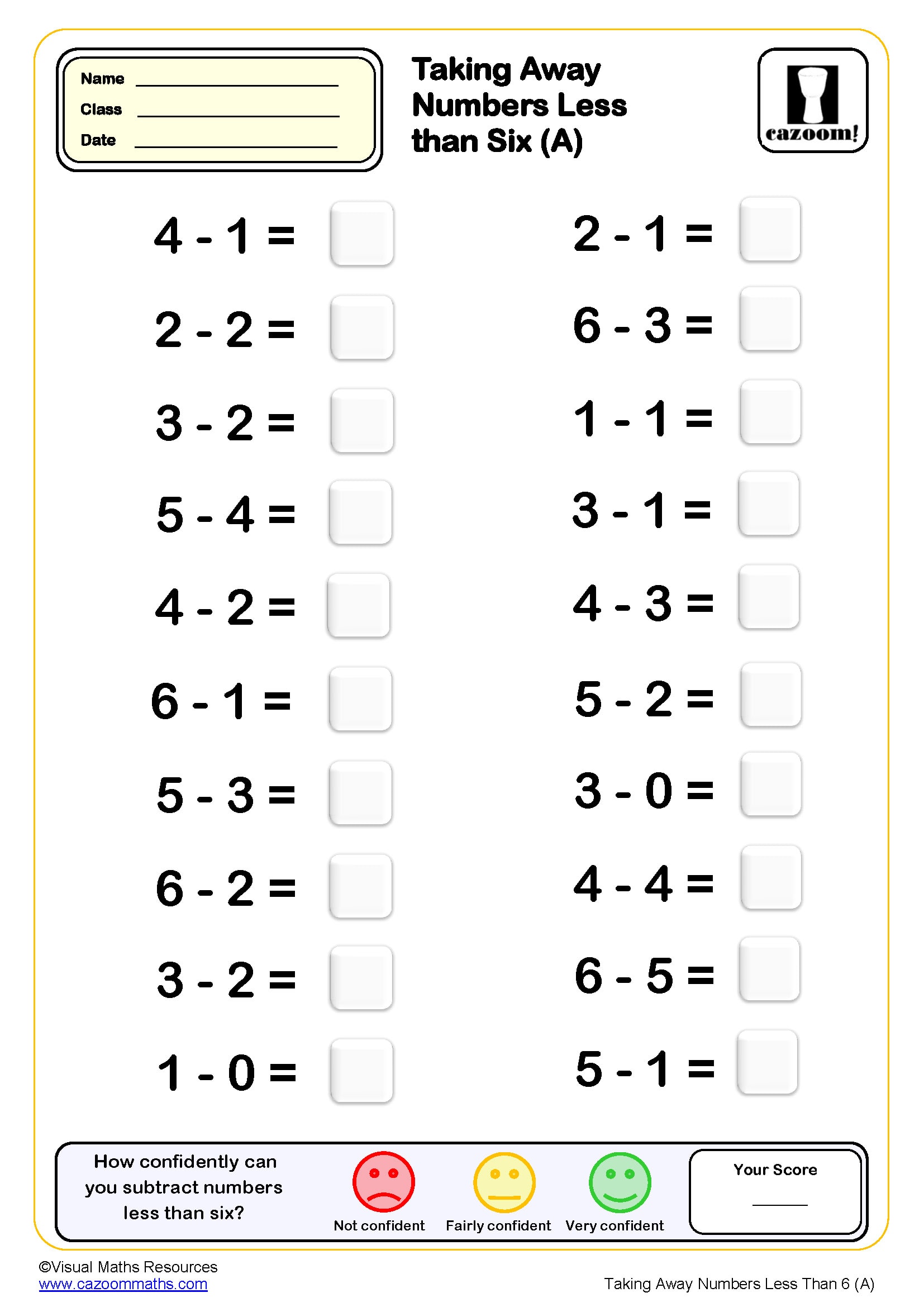
Taking Away Numbers Less Than 6 (B)
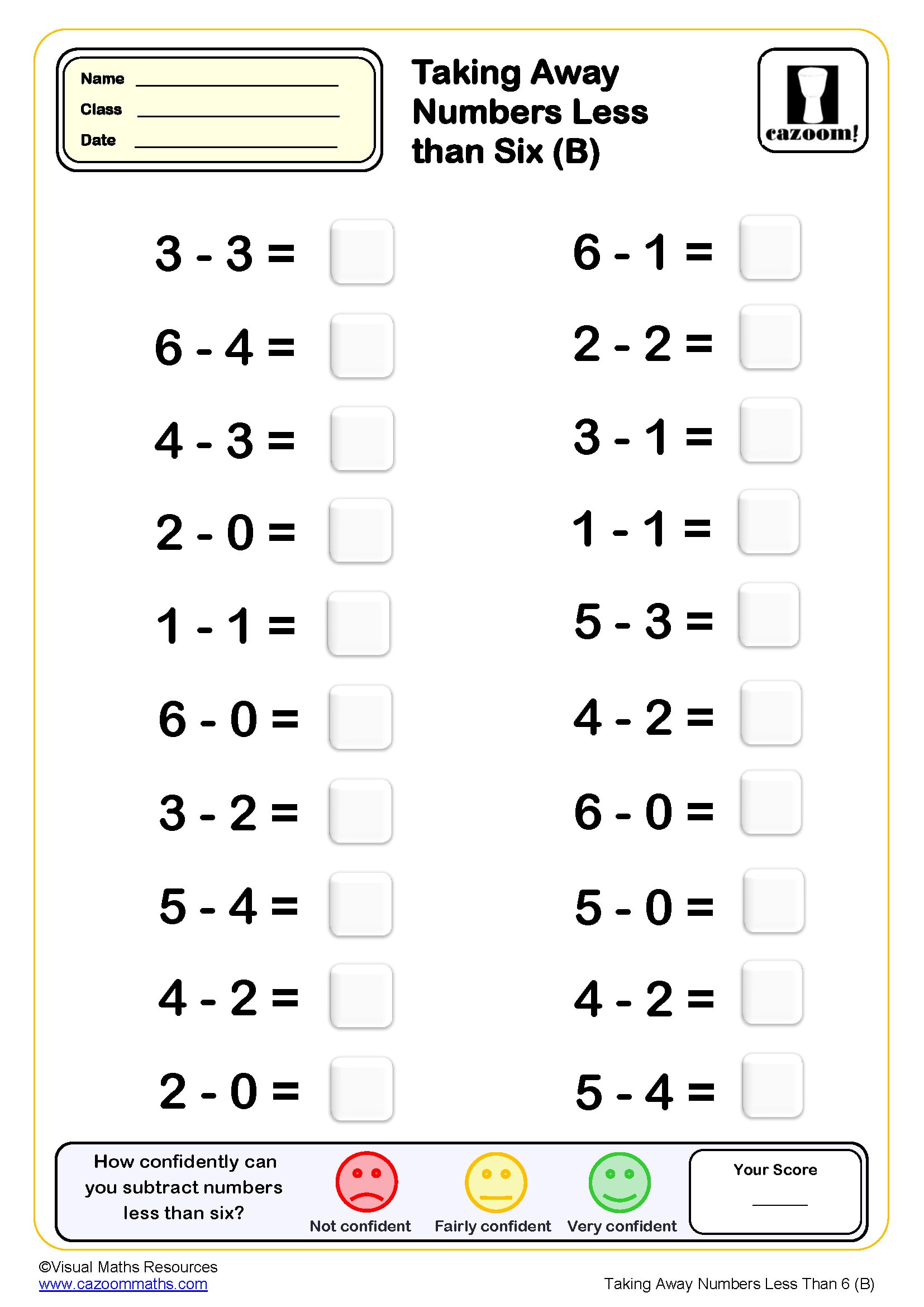
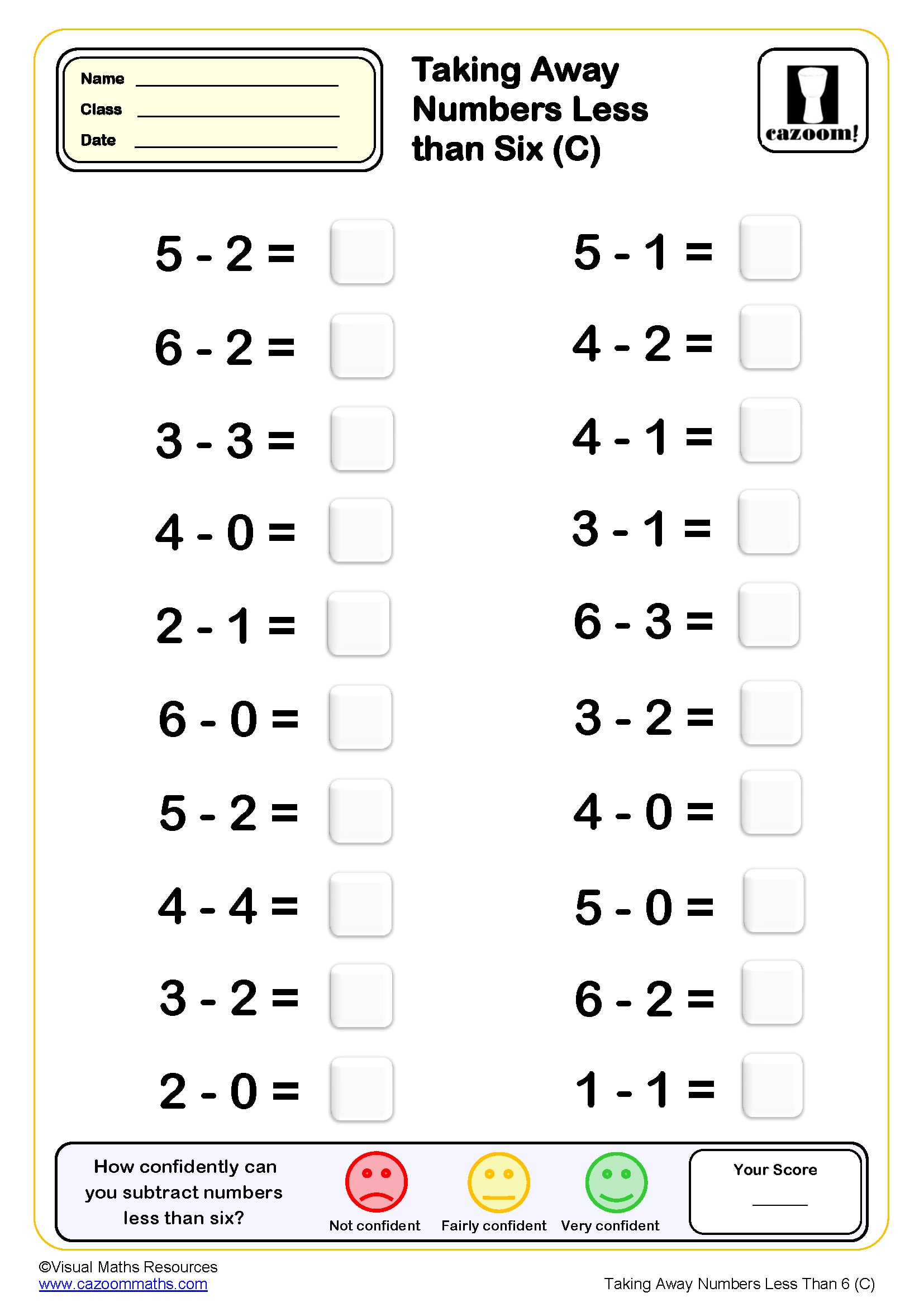
Taking Away Numbers Less Than 6 (C)
All worksheets are created by the team of experienced teachers at Cazoom Maths.
What should Year 1 pupils be able to do with single digit subtraction?
By the end of Year 1, pupils should confidently subtract one-digit numbers from numbers up to 20, and solve missing number problems involving subtraction. They begin by learning to subtract within 10, using concrete objects and pictorial representations before moving to abstract calculations. The National Curriculum expects Year 1 children to read, write and interpret mathematical statements involving the subtraction symbol, and to understand subtraction as 'taking away' and finding the difference. They should also recognise subtraction as the inverse of addition, which helps with checking calculations. Pupils work towards recalling subtraction facts within 10 automatically, though full fluency isn't expected until Year 2. Regular practice with subtraction worksheets helps consolidate these essential skills through varied question formats and contexts.
Which year groups use single digit subtraction worksheets?
Single digit subtraction worksheets are primarily used in Year 1 and Year 2, which form Key Stage 1 of the National Curriculum. Year 1 pupils focus on subtracting within 10 and then within 20, developing their understanding through practical activities before moving to written calculations. By Year 2, children build fluency with single digit subtraction and should recall subtraction facts for all numbers to 20 rapidly. They apply these skills to solve problems in various contexts and begin connecting subtraction to other operations. Whilst older pupils may revisit single digit subtraction when learning new concepts or if they need consolidation, these worksheets specifically target the KS1 curriculum objectives. The progression across both year groups ensures pupils develop automatic recall of basic subtraction facts, which forms the foundation for multi-digit calculations in Key Stage 2.
How do pictorial representations help with subtraction?
Pictorial representations form a crucial bridge between concrete manipulatives and abstract number work in subtraction. Worksheets featuring pictures, counters, number lines and bar models help pupils visualise the process of taking away or finding the difference. Year 1 children might see images of objects with some crossed out, directly representing the subtraction action. Number lines are particularly valuable, showing subtraction as counting backwards or finding the distance between two numbers. Ten frames help pupils recognise number patterns and part-whole relationships within 10. As pupils progress through Year 2, they gradually rely less on pictures and more on mental strategies, though pictorial methods remain useful for checking work and solving problems. Quality subtraction worksheets provide a careful balance of pictorial support that matches pupils' developmental stage, ensuring they build understanding rather than simply learning procedures by rote.
Do the subtraction worksheets come with answers?
Yes, every single digit subtraction worksheet includes a complete answer sheet. This feature is particularly valuable for teachers managing busy classrooms and parents supporting learning at home. The answer sheets allow for quick, accurate marking, which means pupils receive timely feedback on their work. For teachers, this saves significant preparation time and enables efficient assessment of whole-class understanding. Parents can confidently check their child's homework without needing to work through each calculation themselves. The answer sheets also support pupils' independence, as older or more confident learners can self-mark their work and identify areas where they need additional practice. All worksheets download as PDFs, with the answer sheet typically provided as a separate page or file, making them straightforward to print and distribute. This comprehensive support ensures the resources work effectively in any learning environment.