KS1 Two Digit Subtraction Worksheets
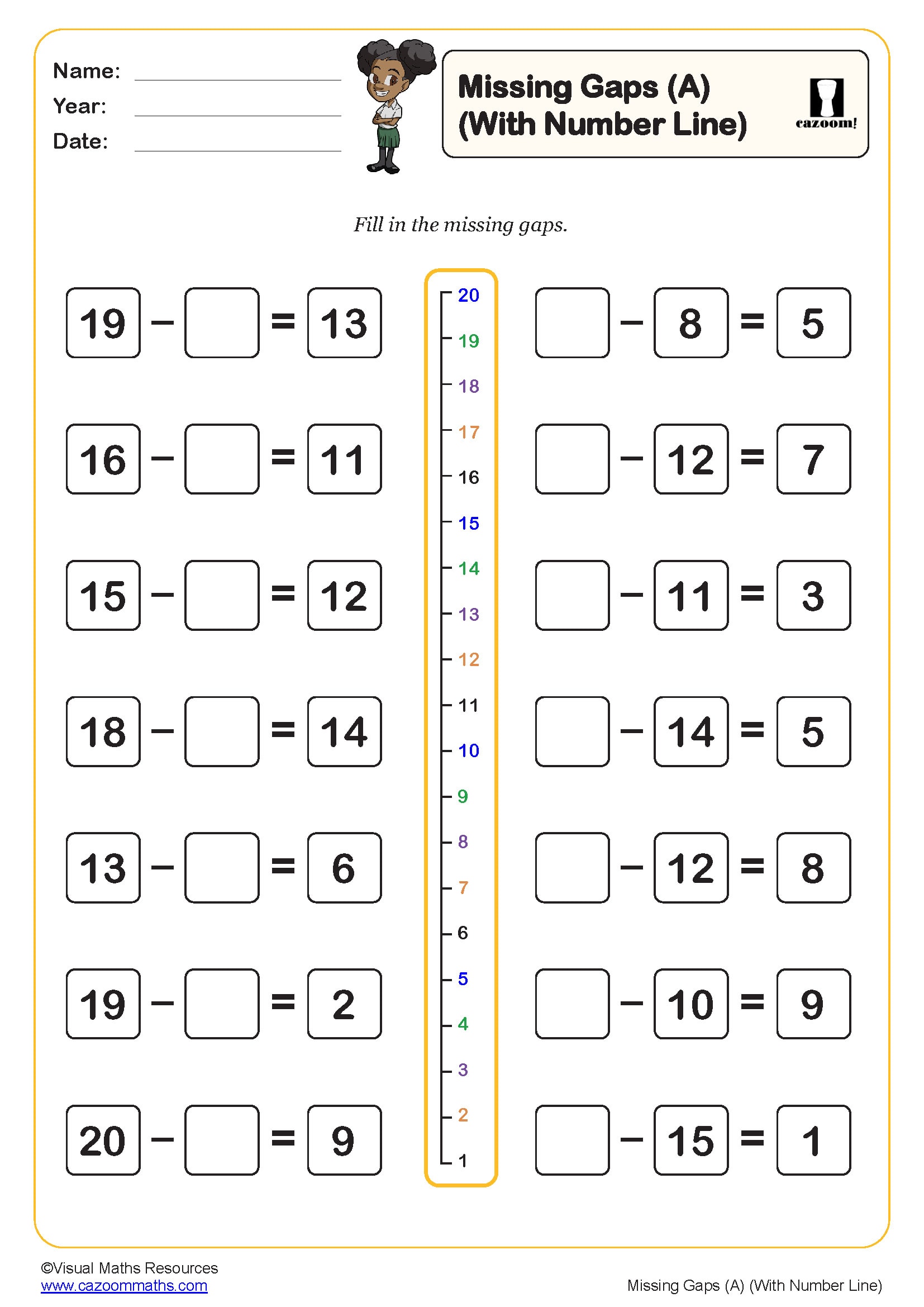
Misisng Gaps (A) (With a Number Line)
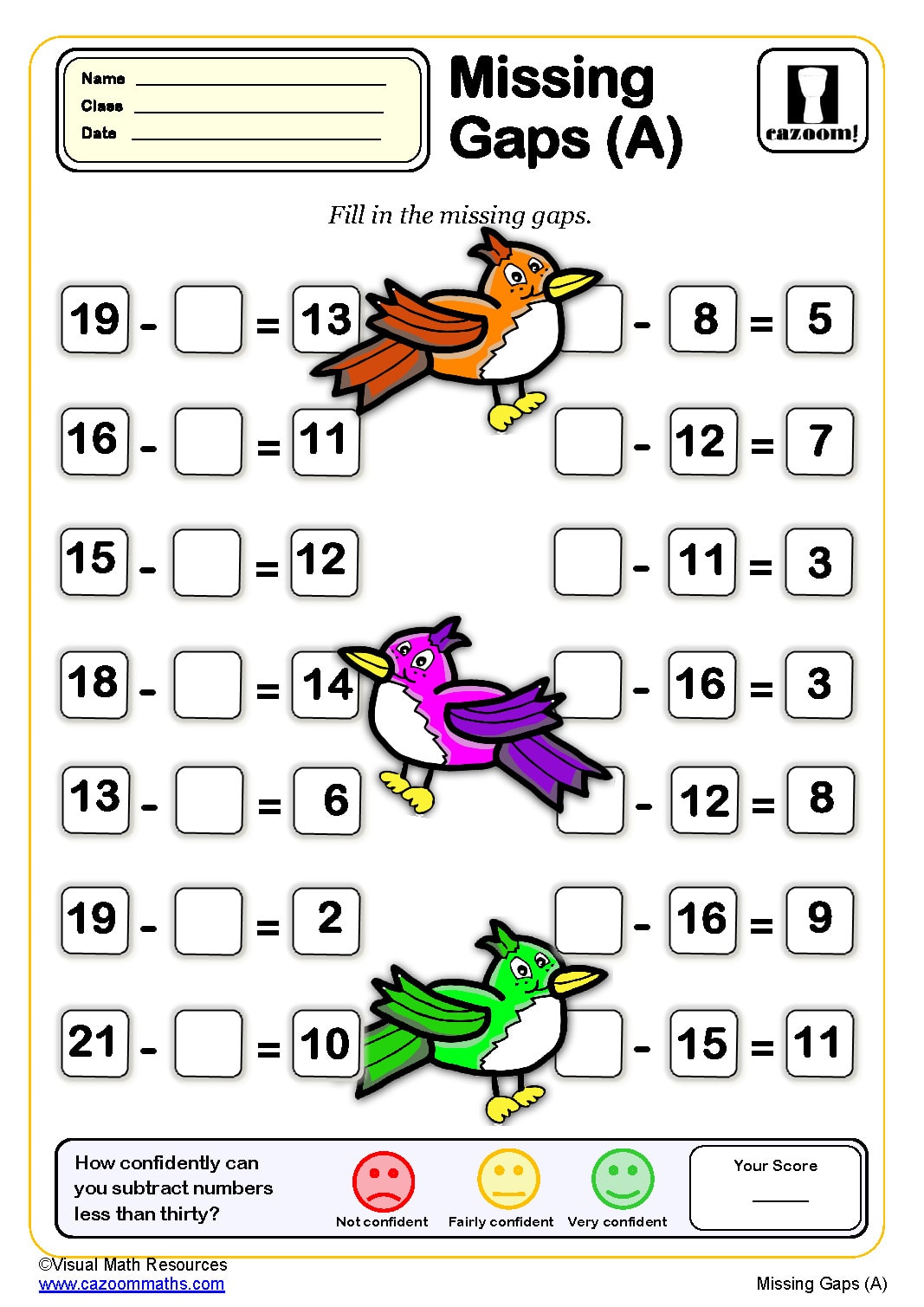
Missing Gaps (A)
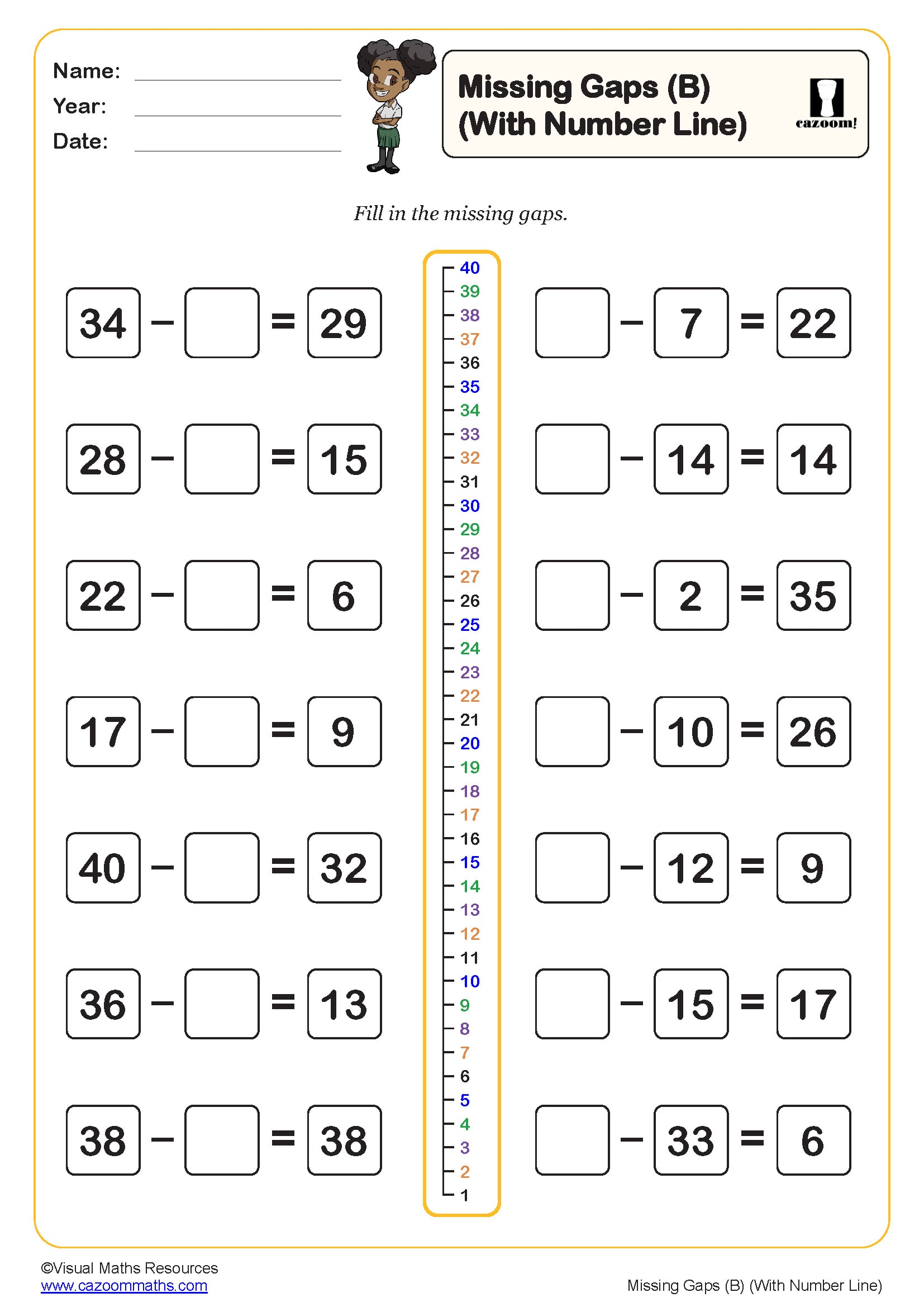
Missing Gaps (B) (With a Number Line)
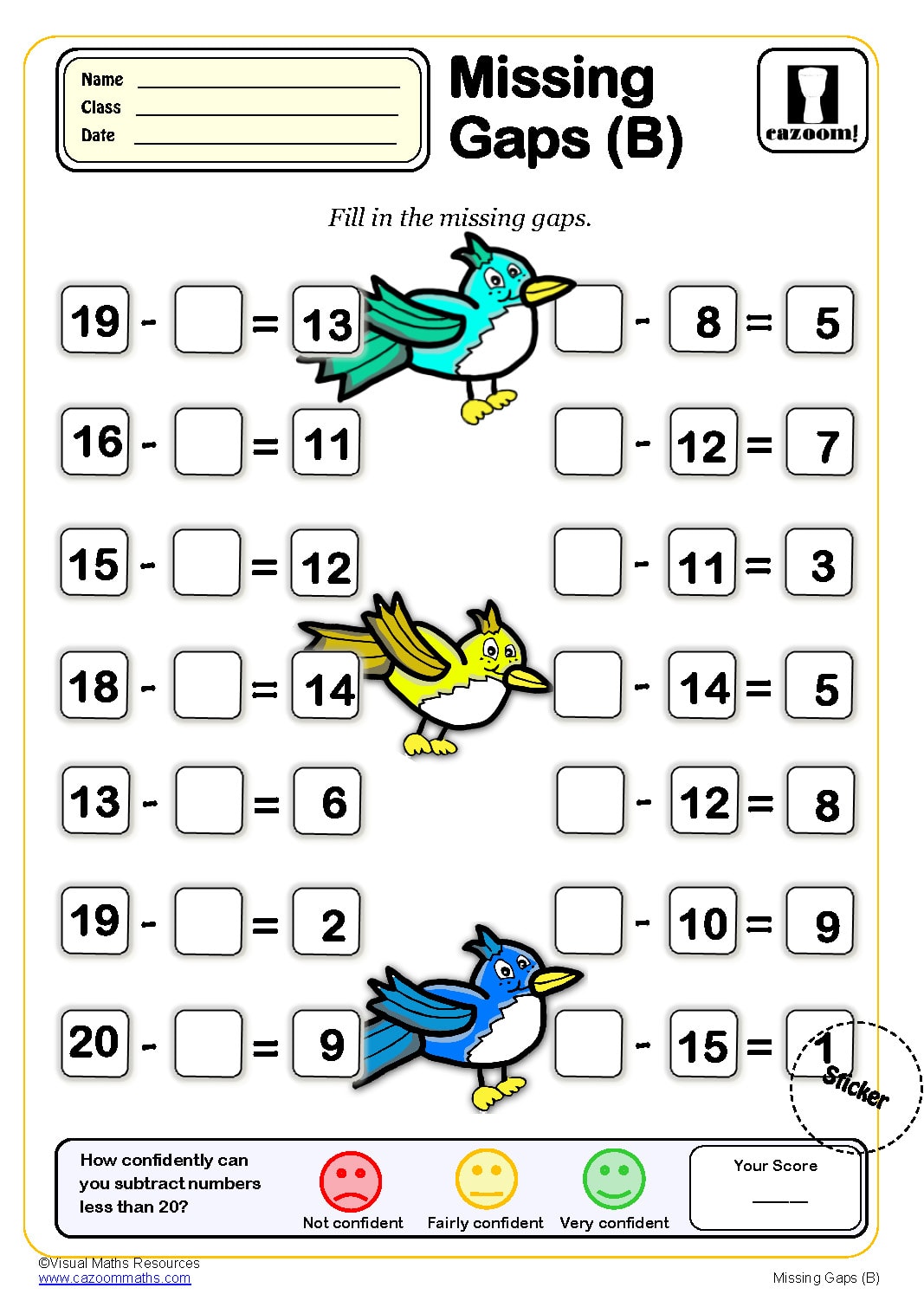
Missing Gaps (B) (Without a Number Line)
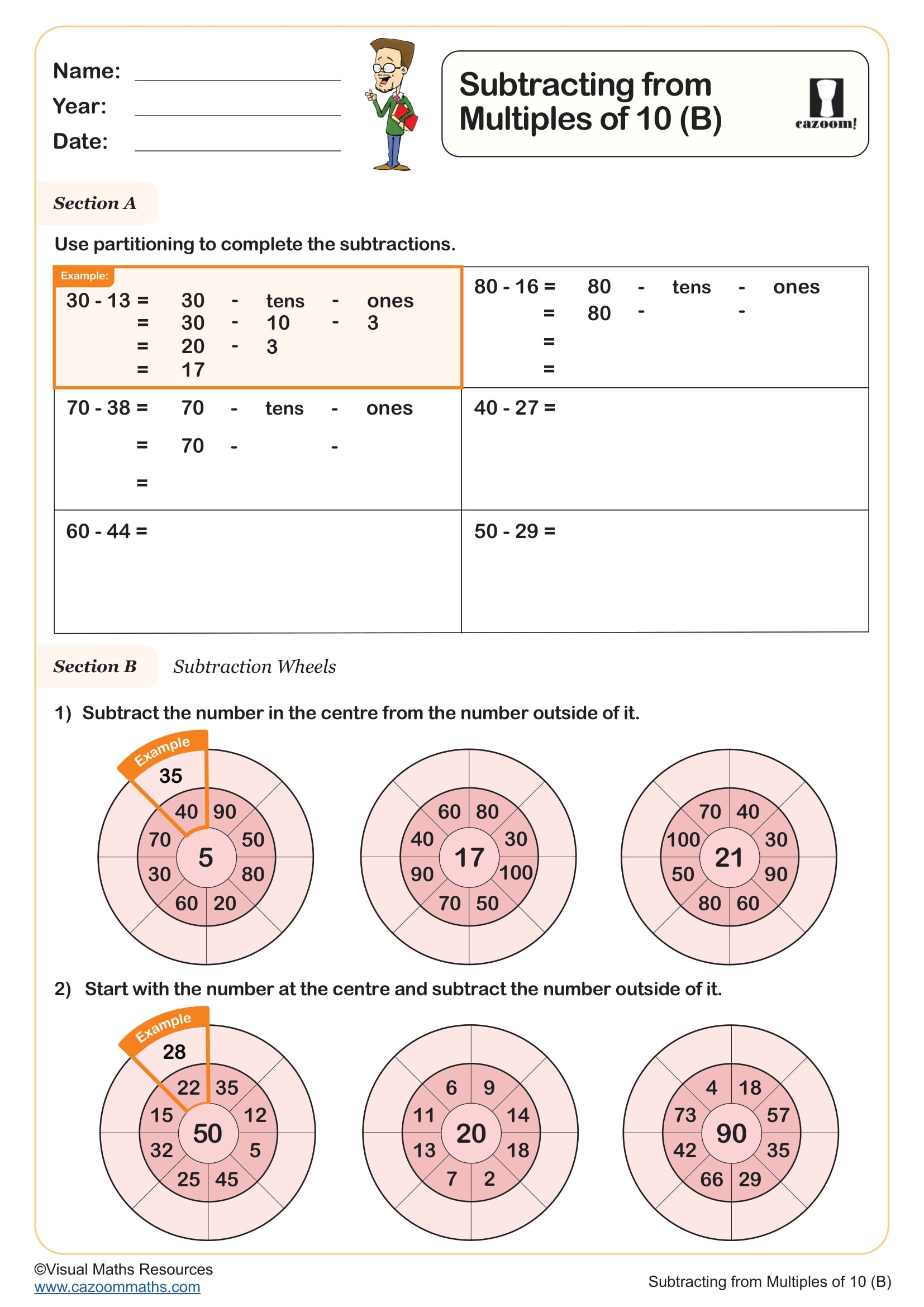
Subtracting from Multiples of 10 (B)
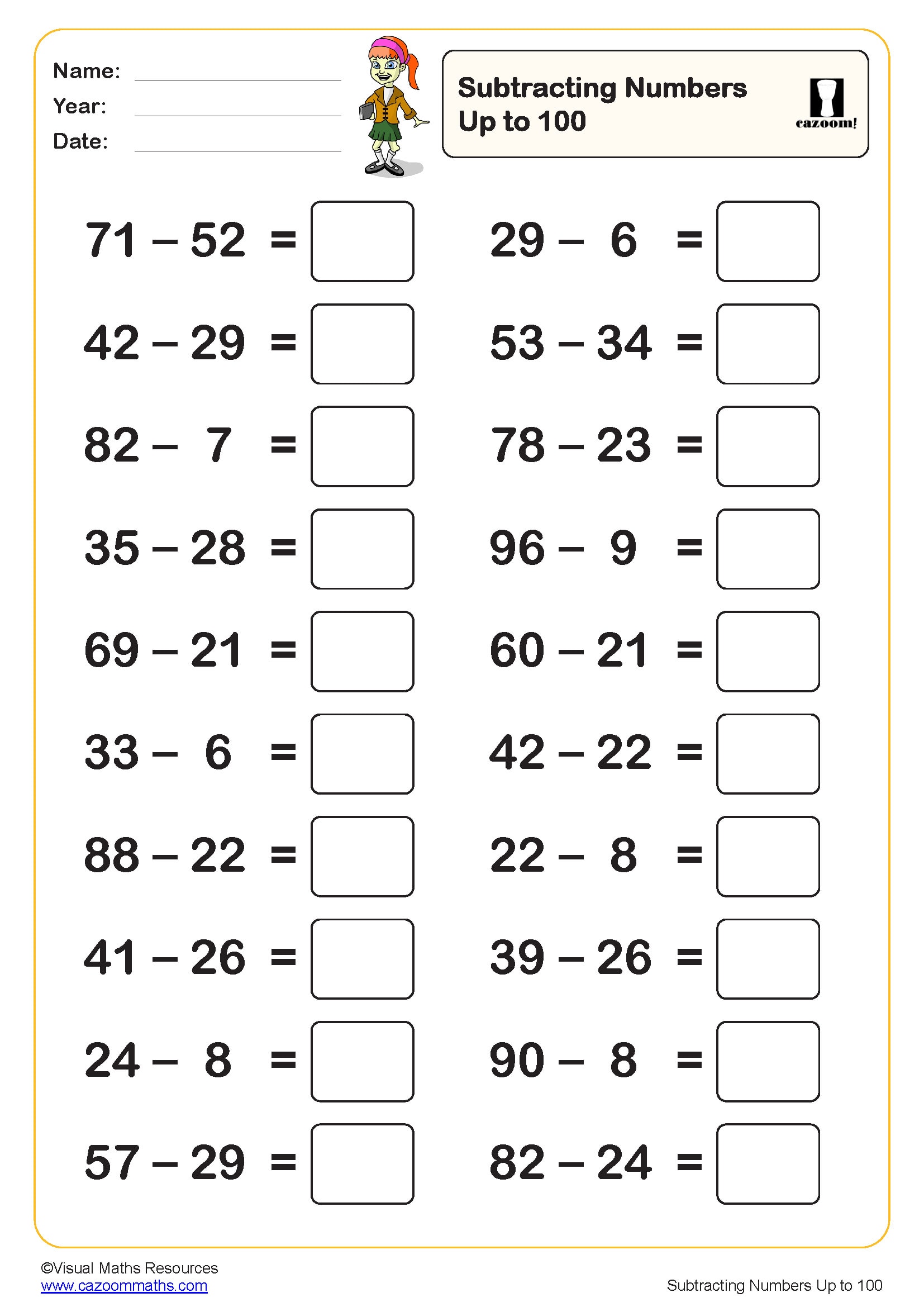
Subtracting Numbers Up to 100
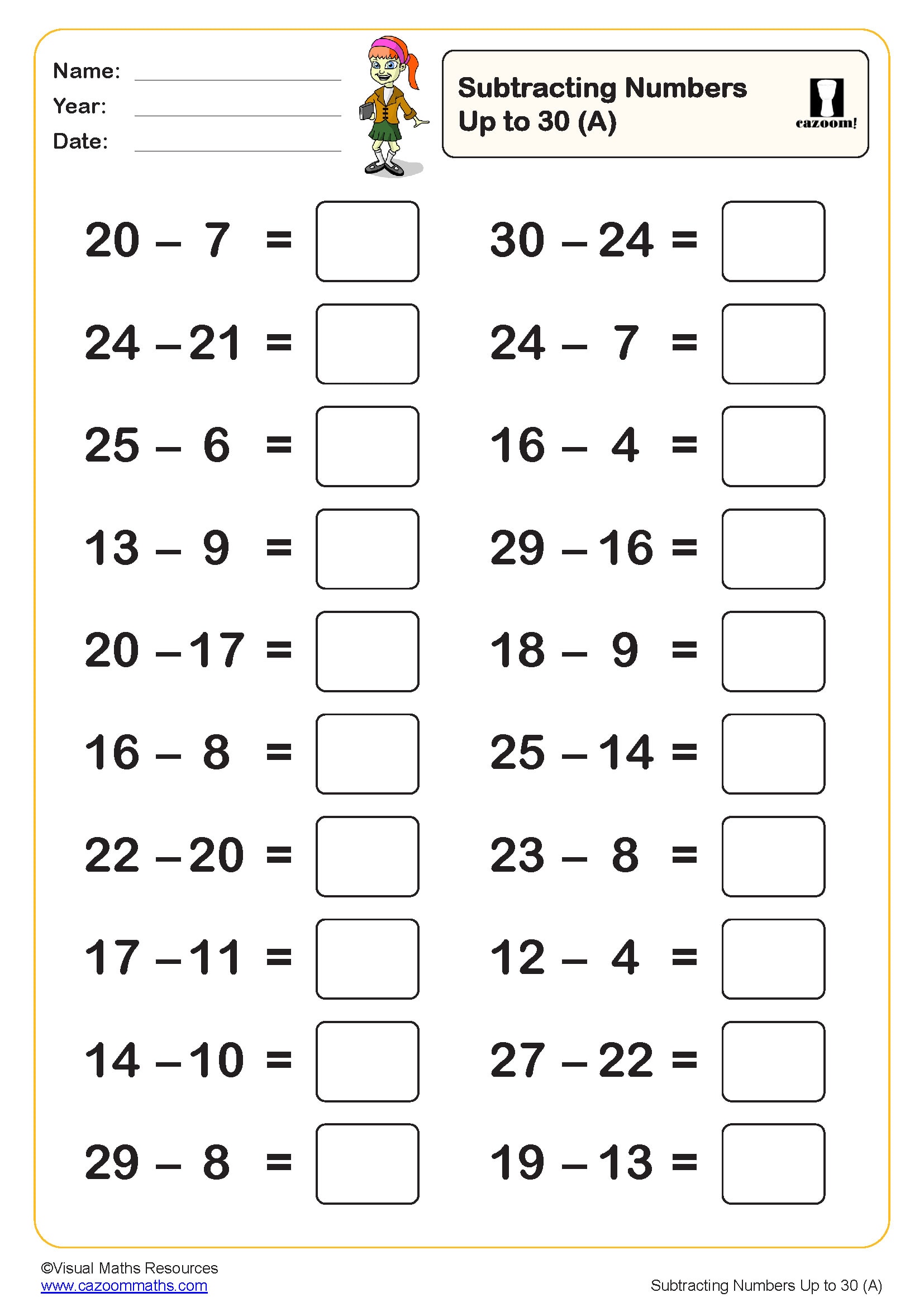
Subtracting Numbers Up to 30 (A)
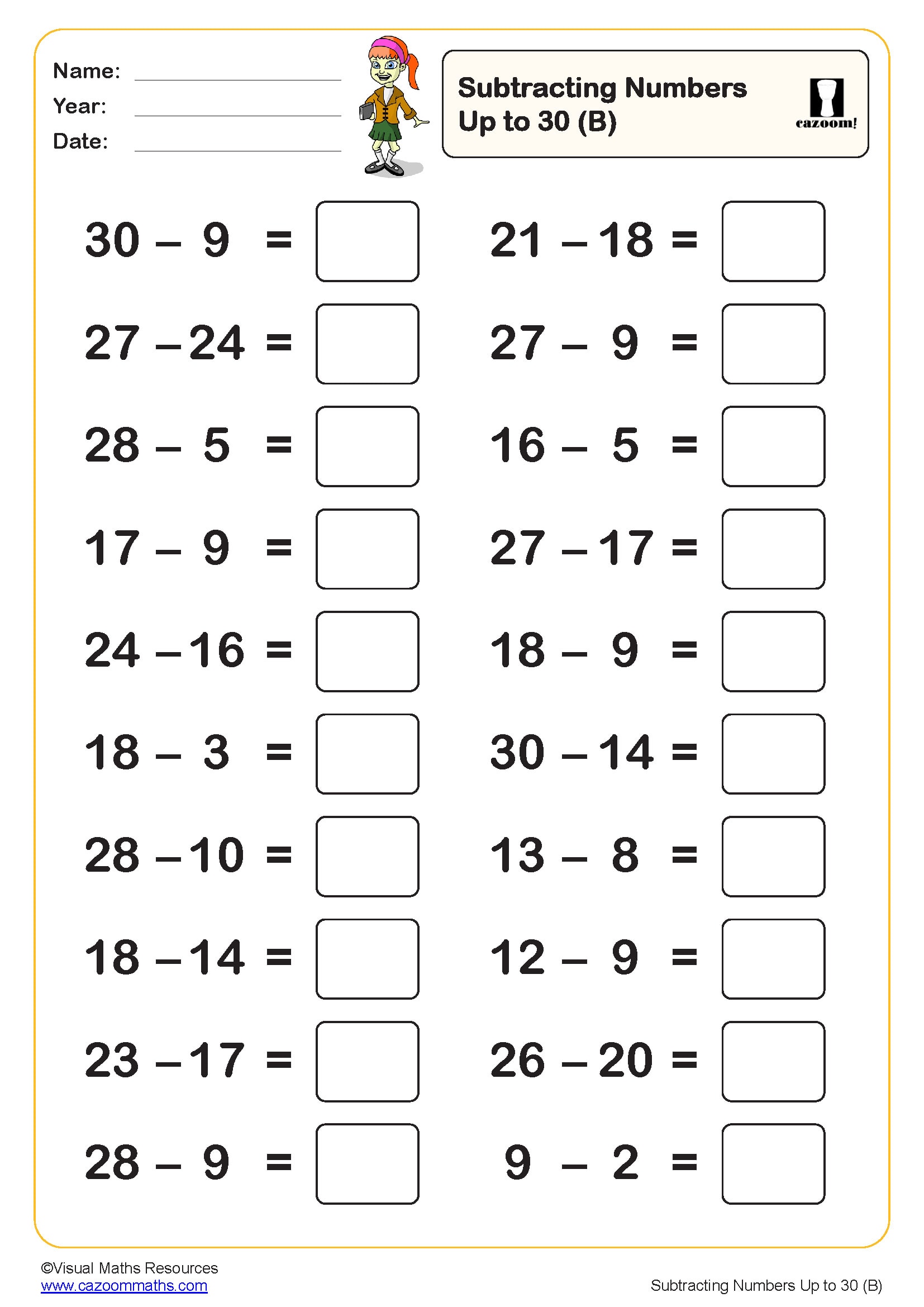
Subtracting Numbers Up to 30 (B)
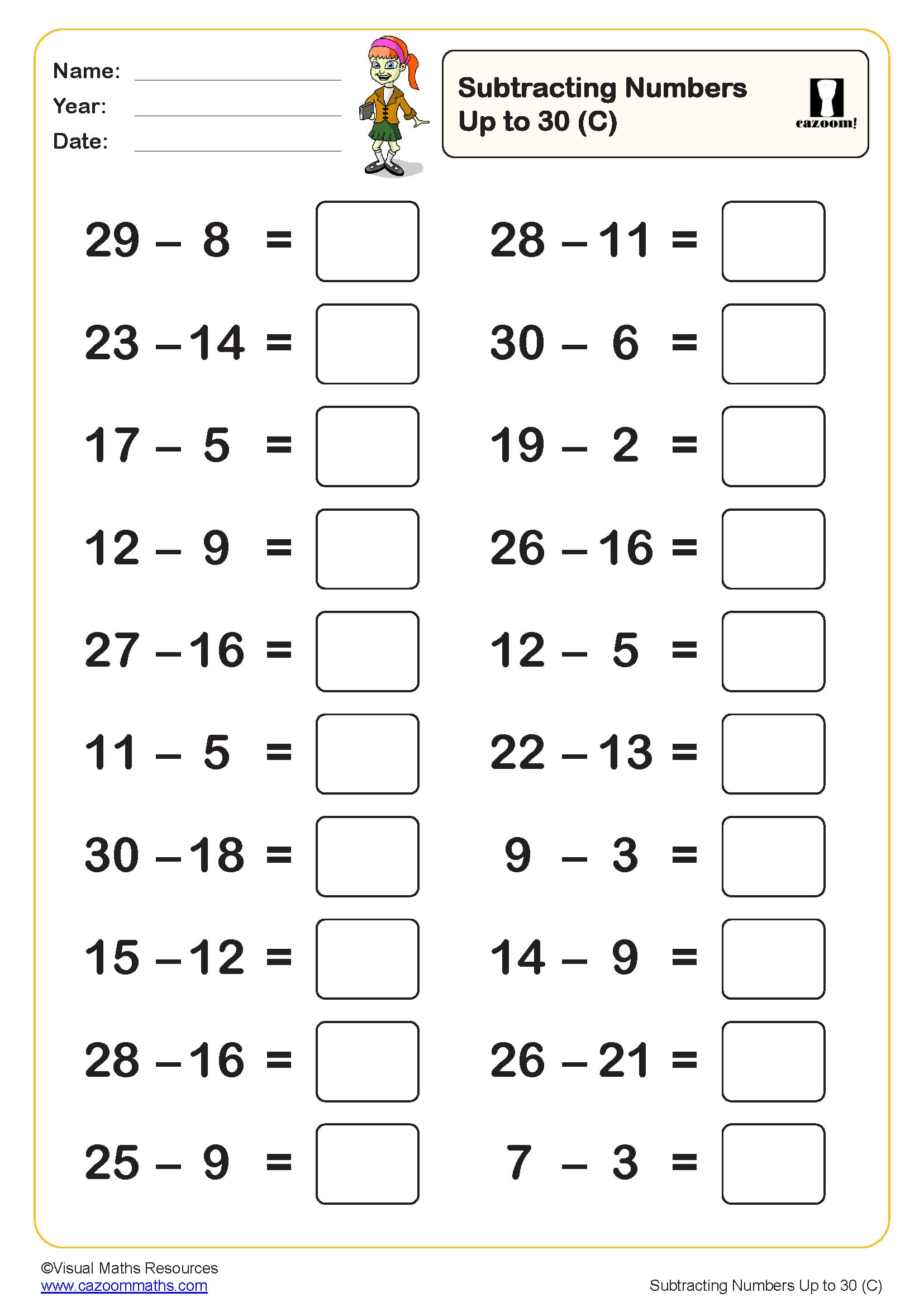
Subtracting Numbers Up to 30 (C)
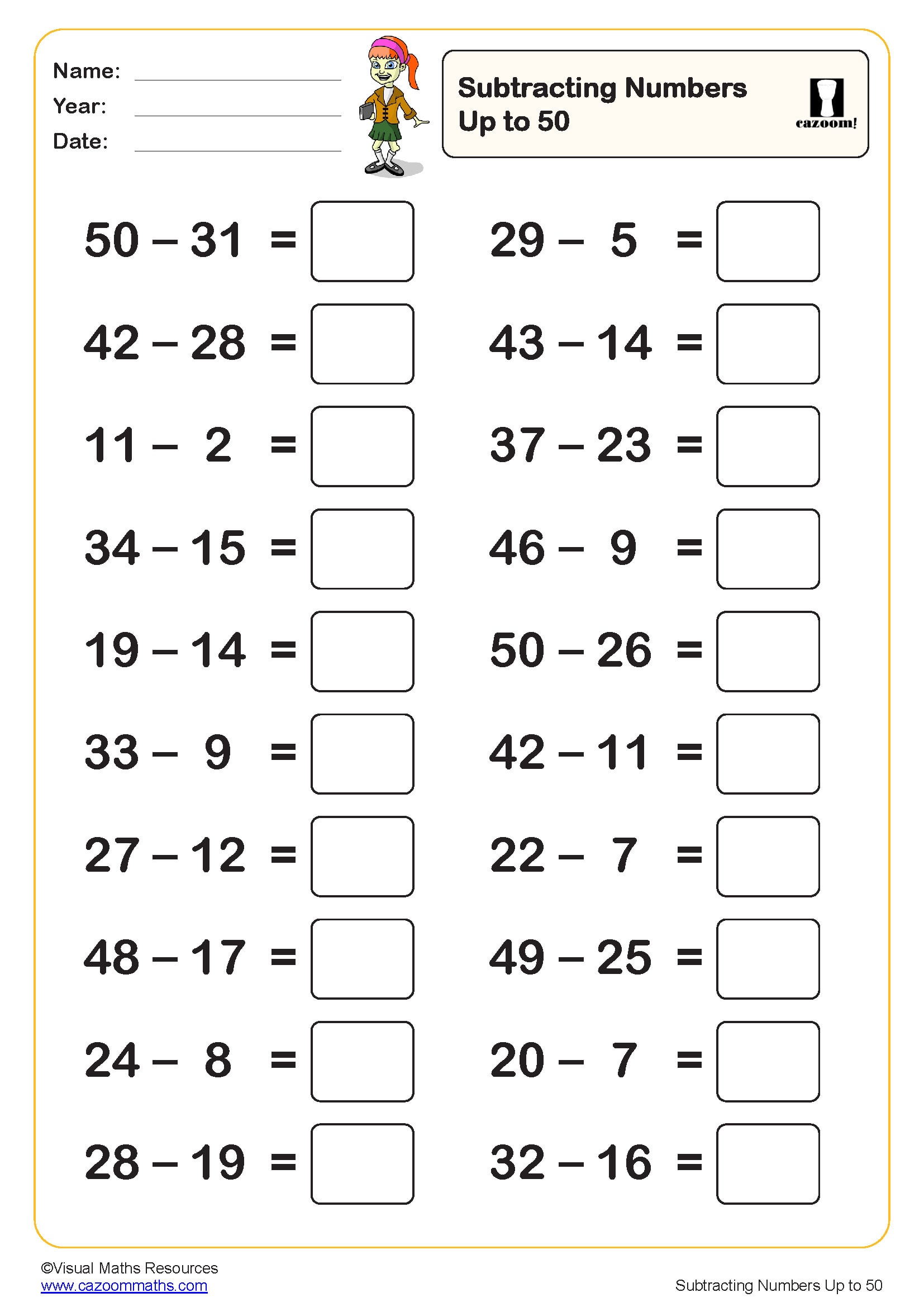
Subtracting Numbers Up to 50
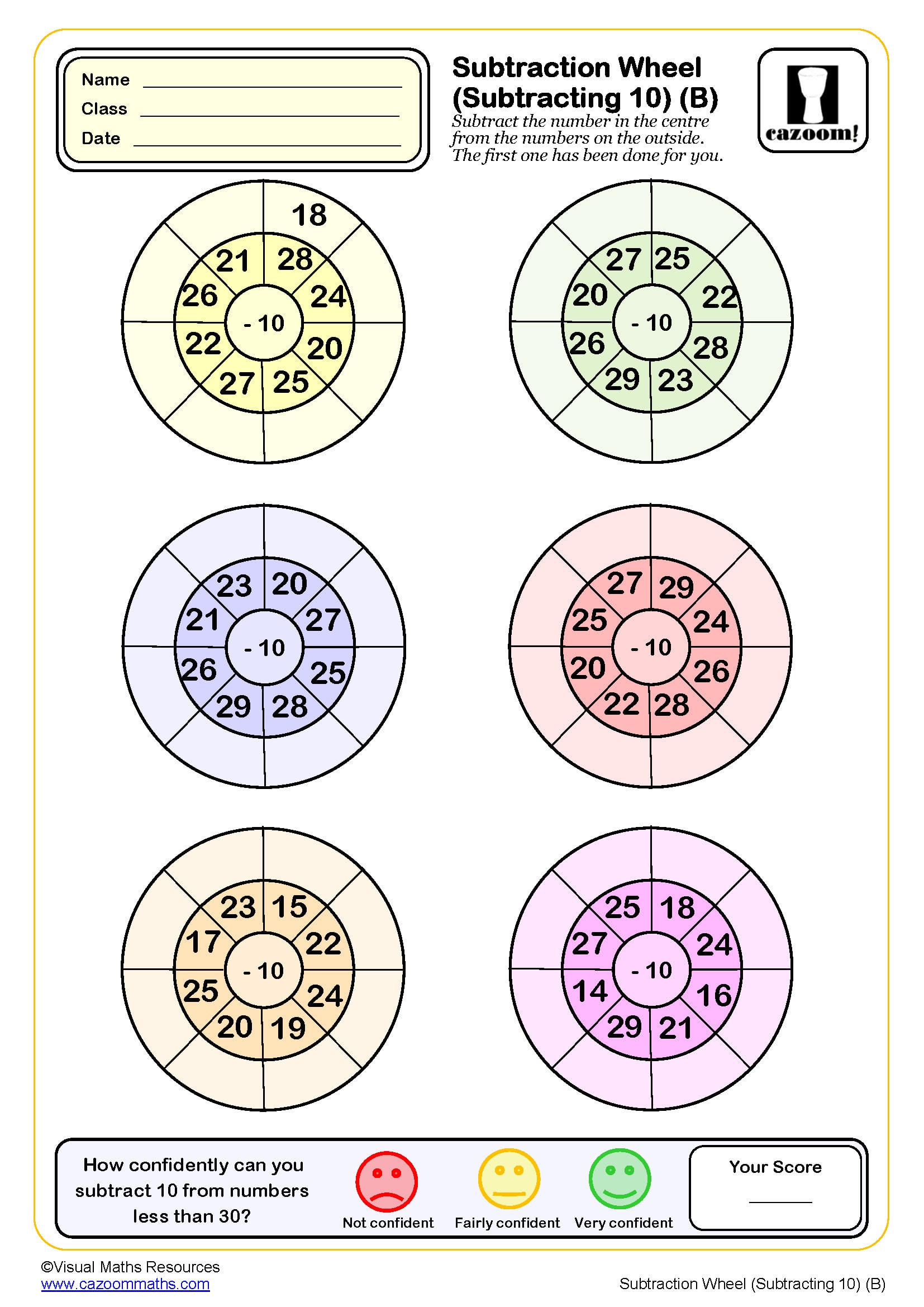
Subtraction Wheels (B) (Up to 10)
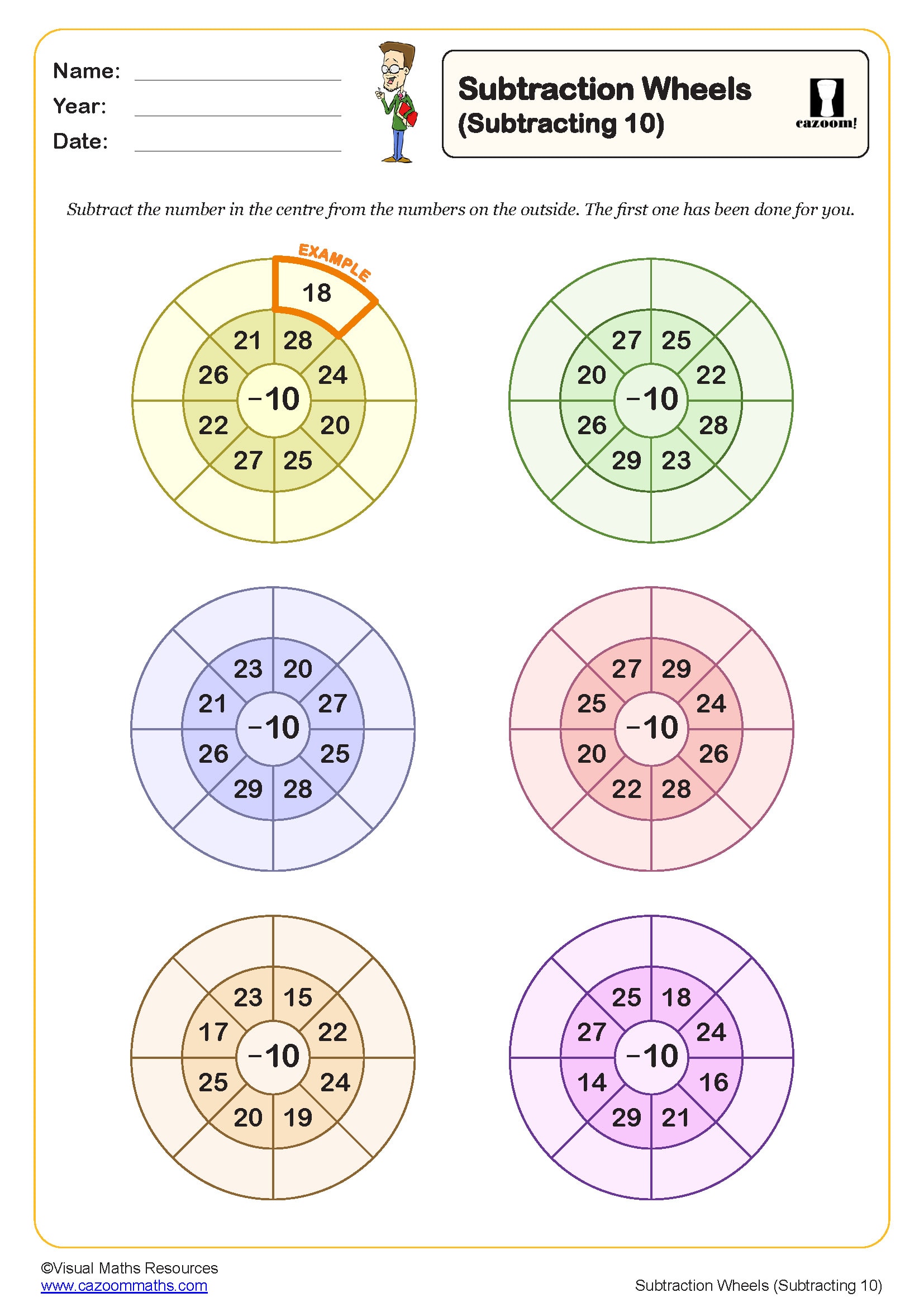
Subtraction Wheels (Subtracting 10)
Taking Away 10 (10 questions)
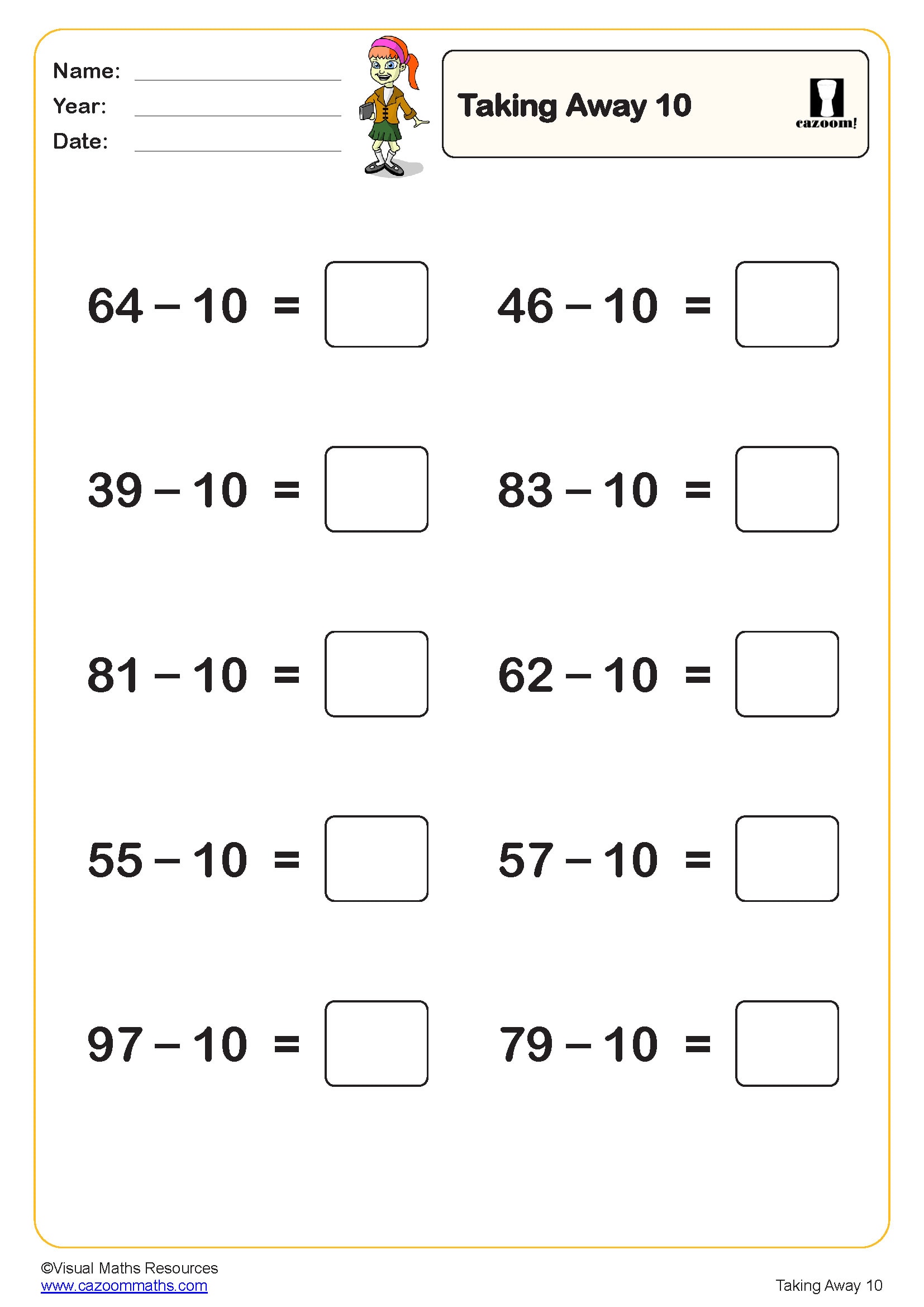
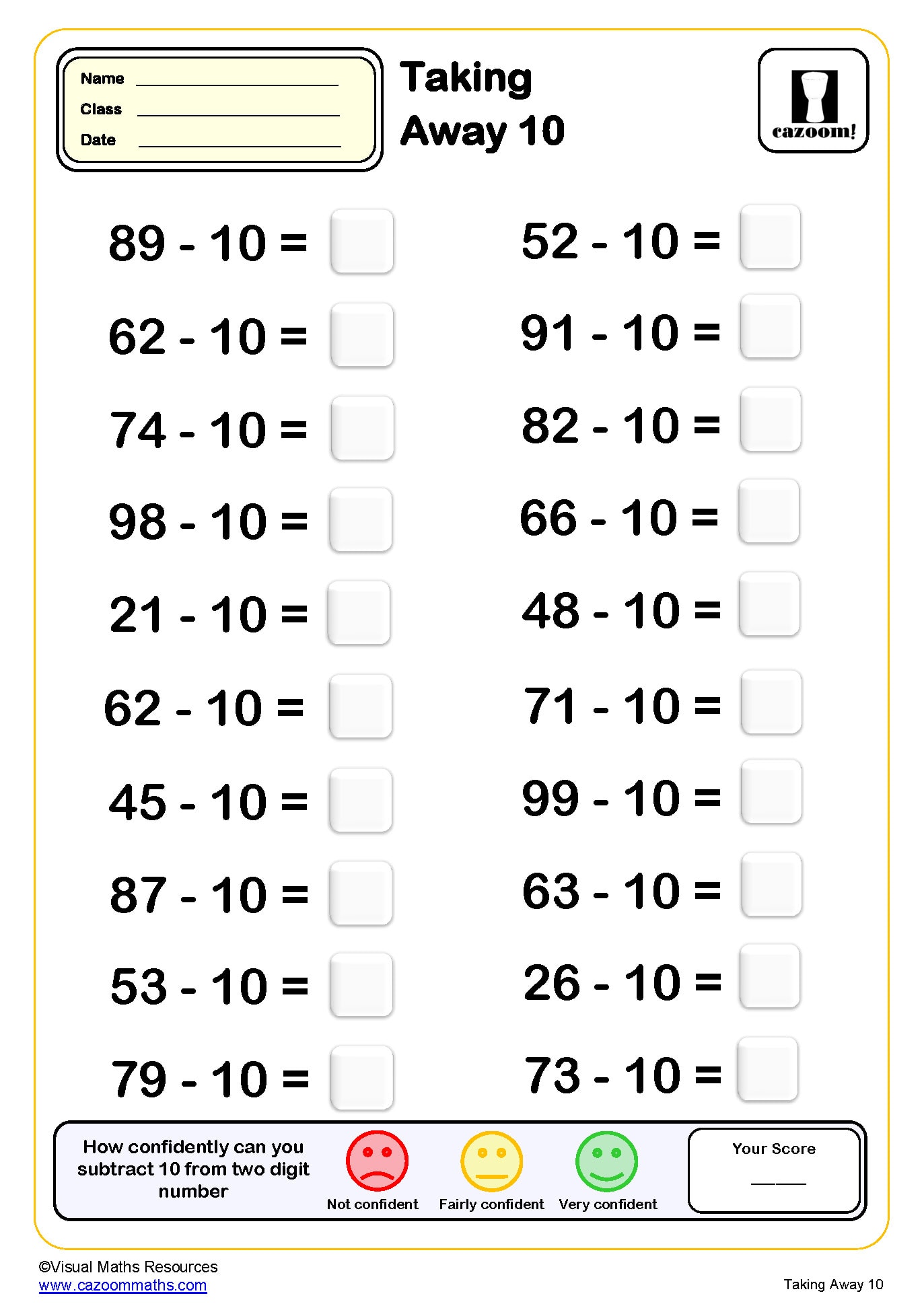
Taking Away 10 (20 questions)
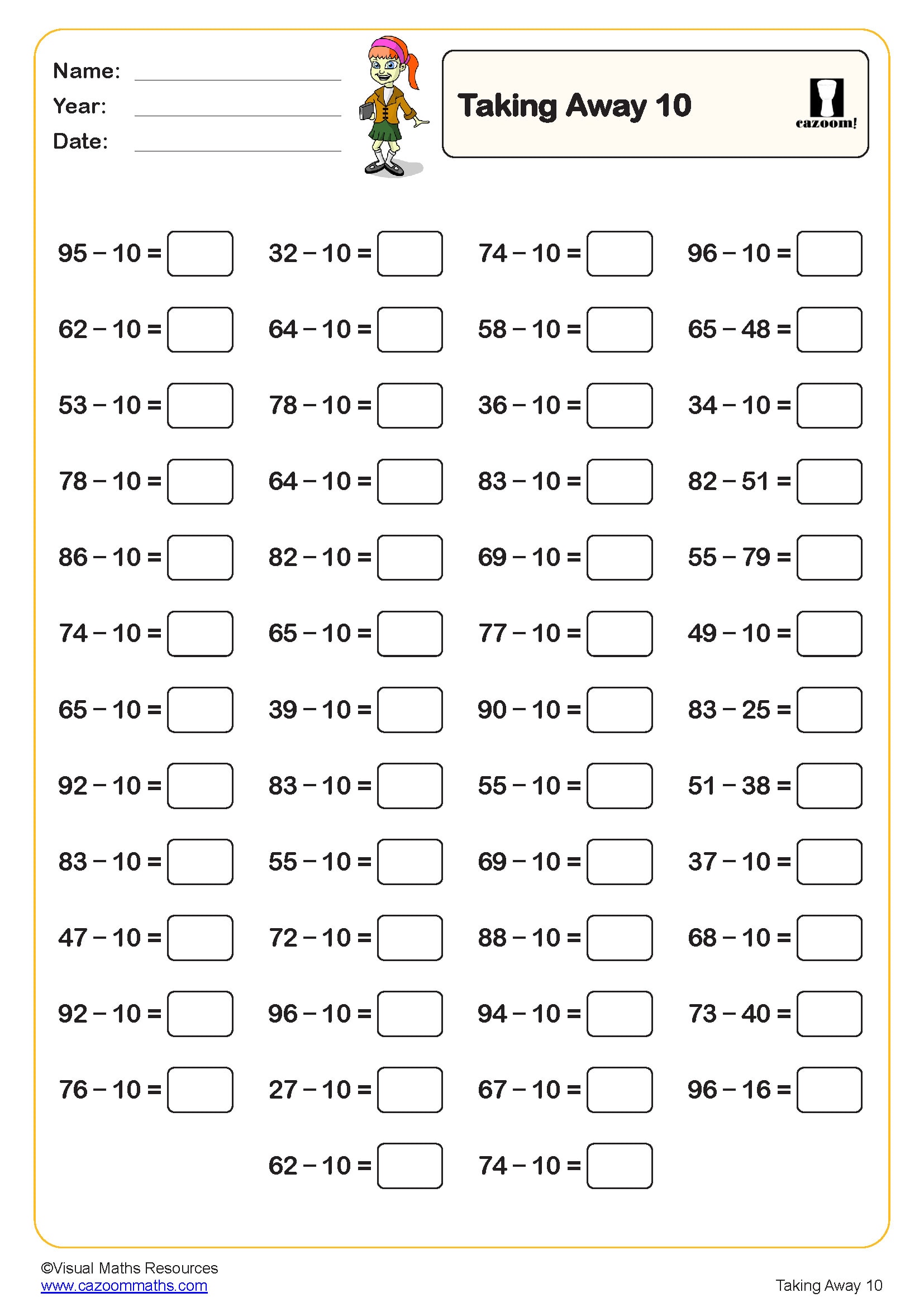
Taking Away 10 (50 questions)
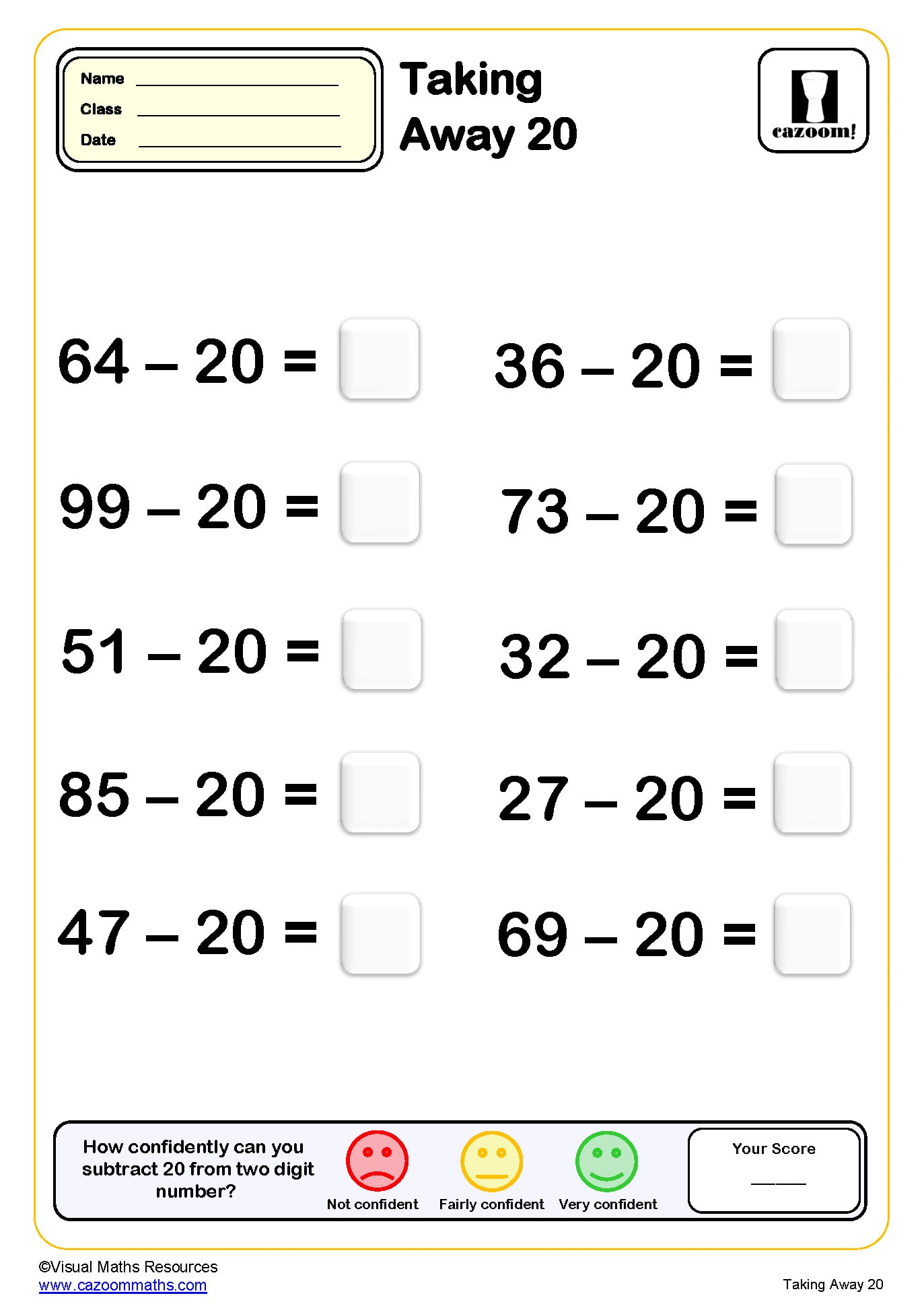
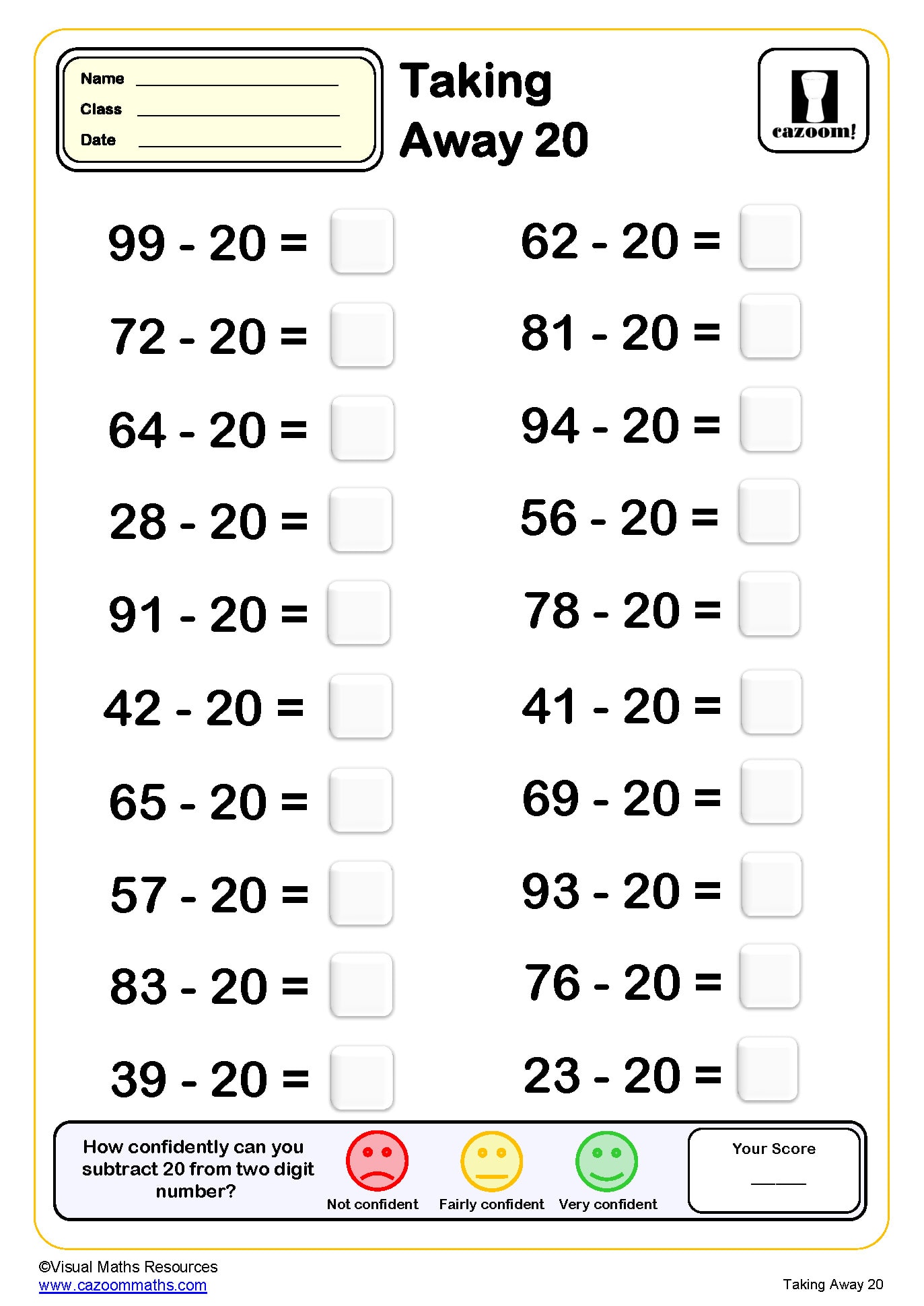
Taking Away 20 (10 questions)
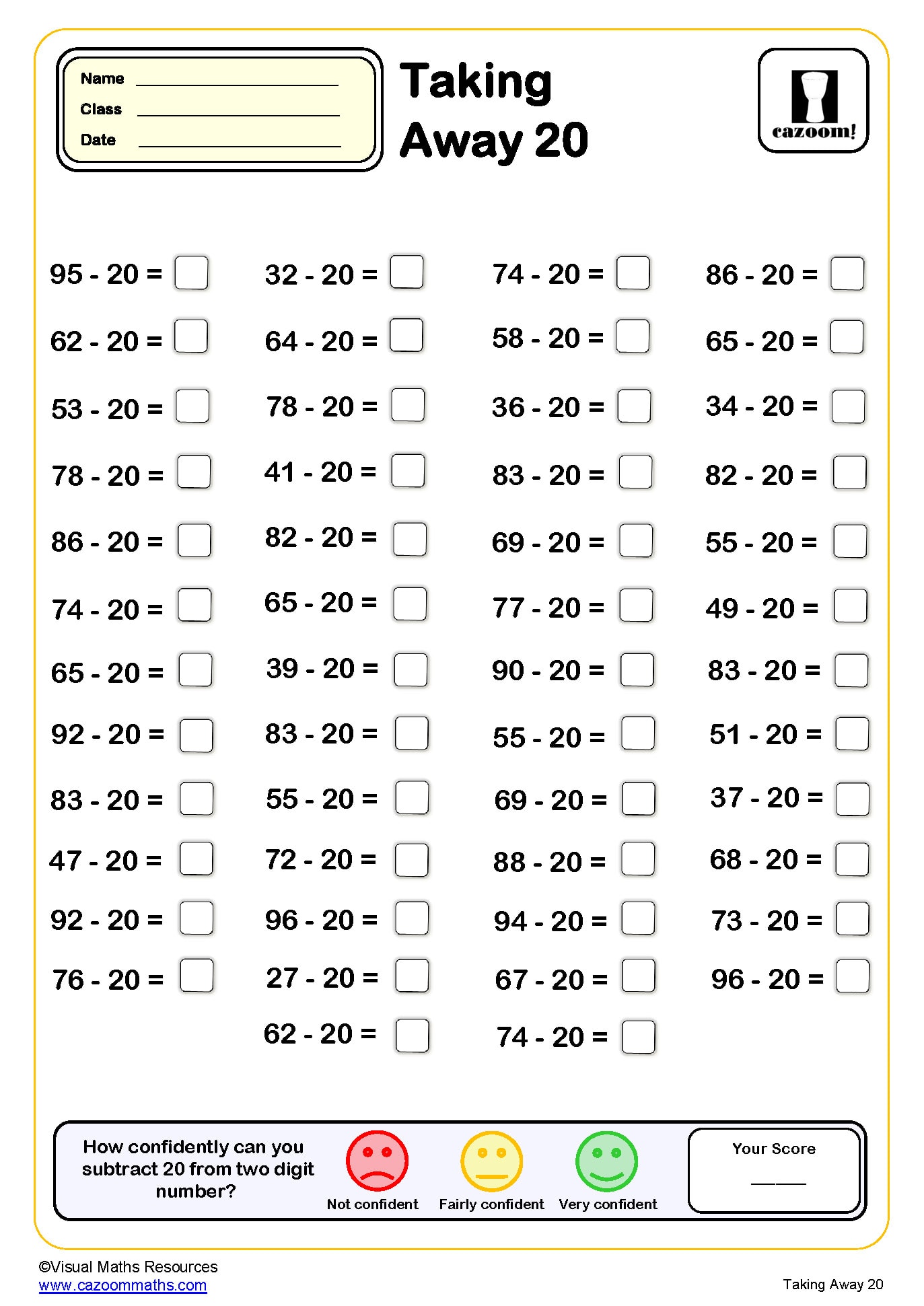
Taking Away 20 (20 questions)
Taking Away 20 (50 questions)
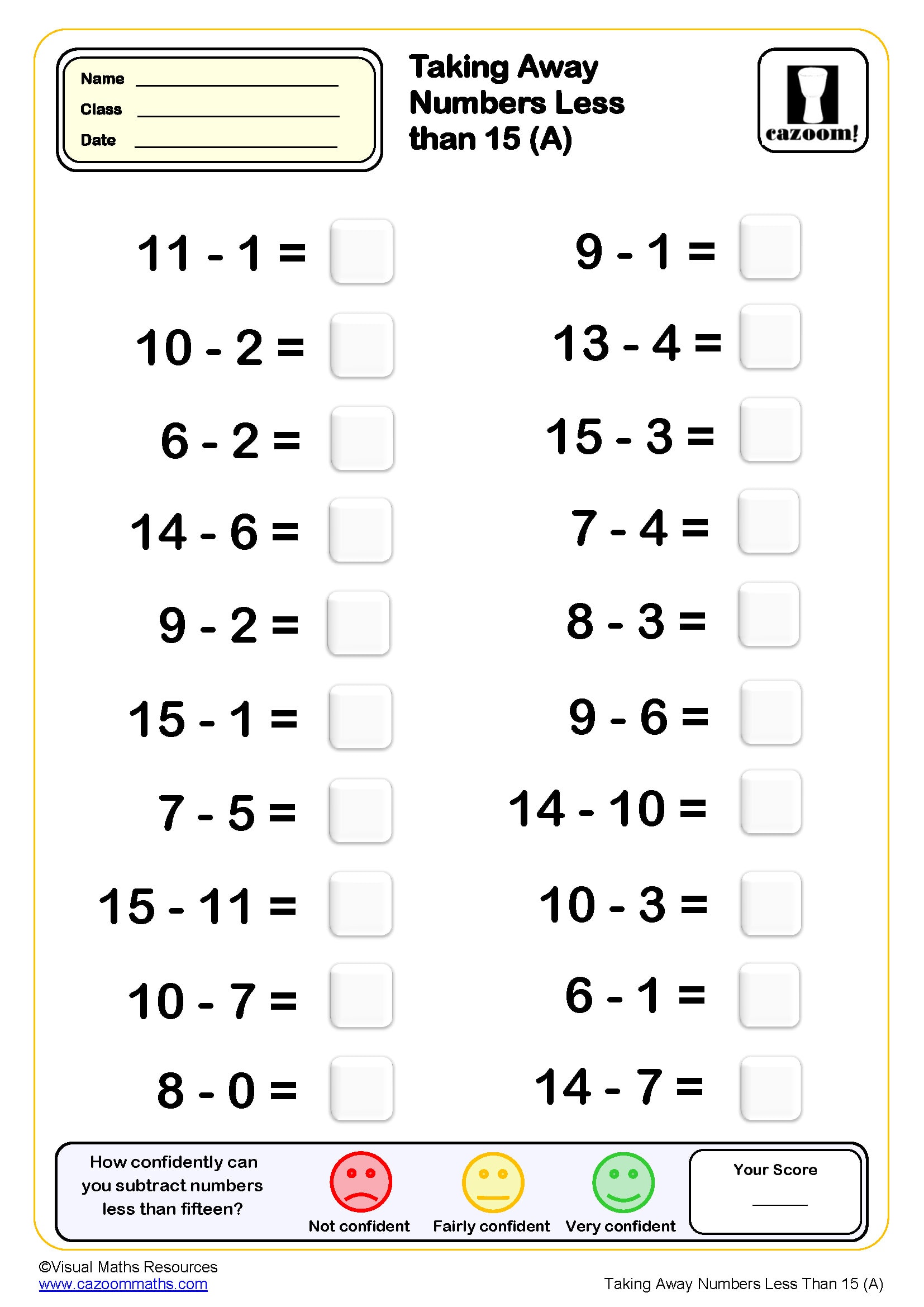
Taking Away Numbers Less Than 15 (A)
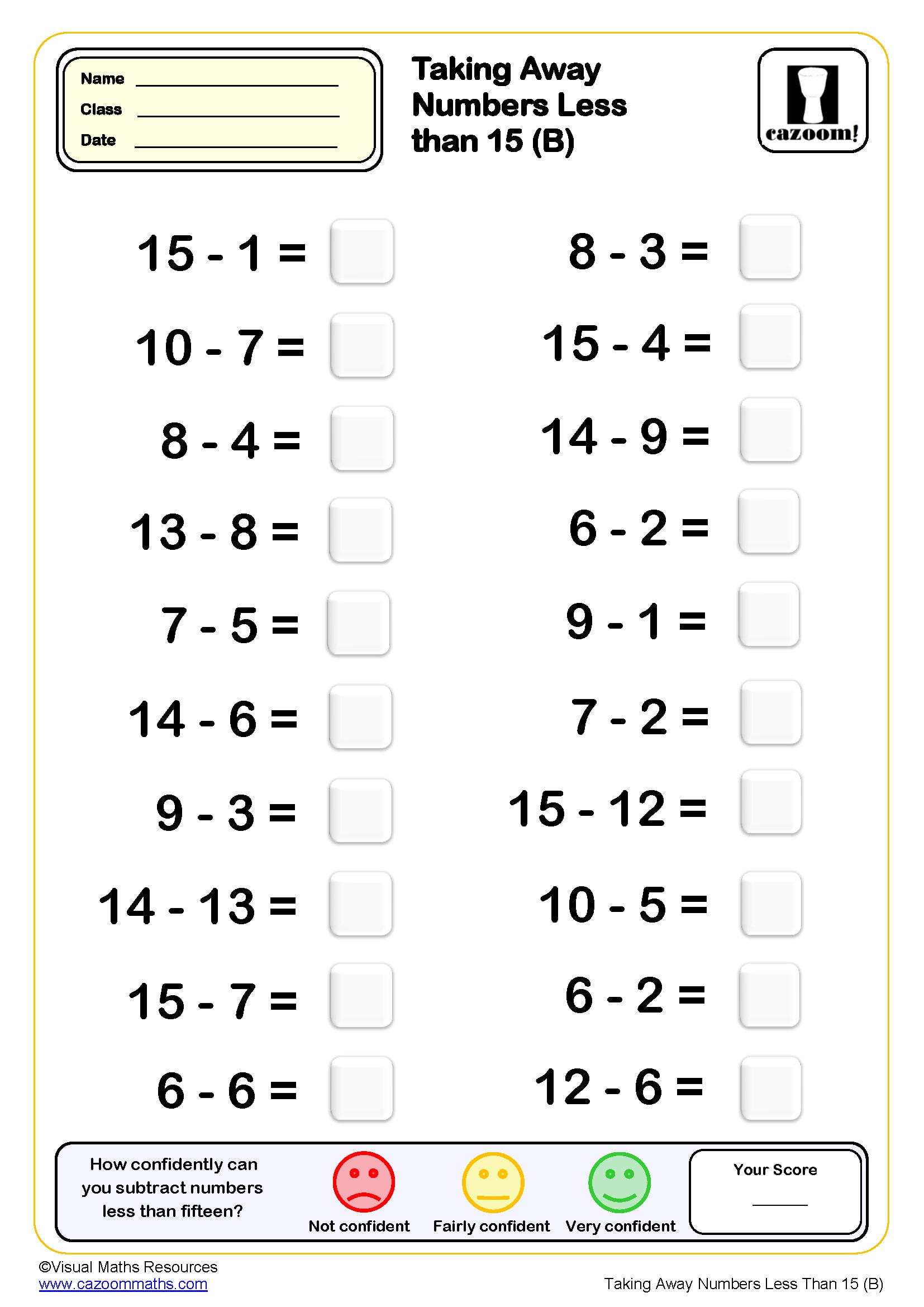
Taking Away Numbers Less Than 15 (B)
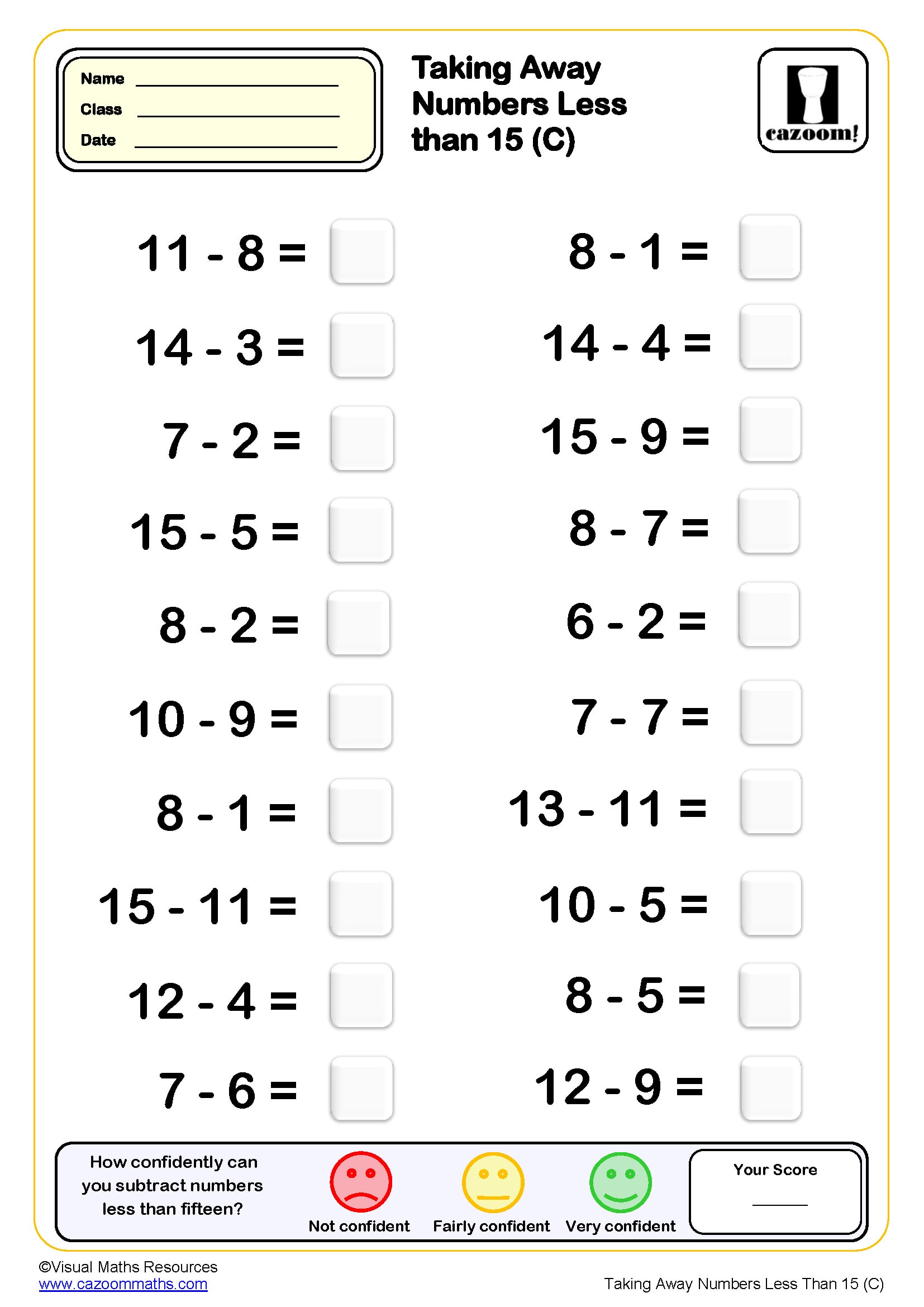
Taking Away Numbers Less Than 15 (C)
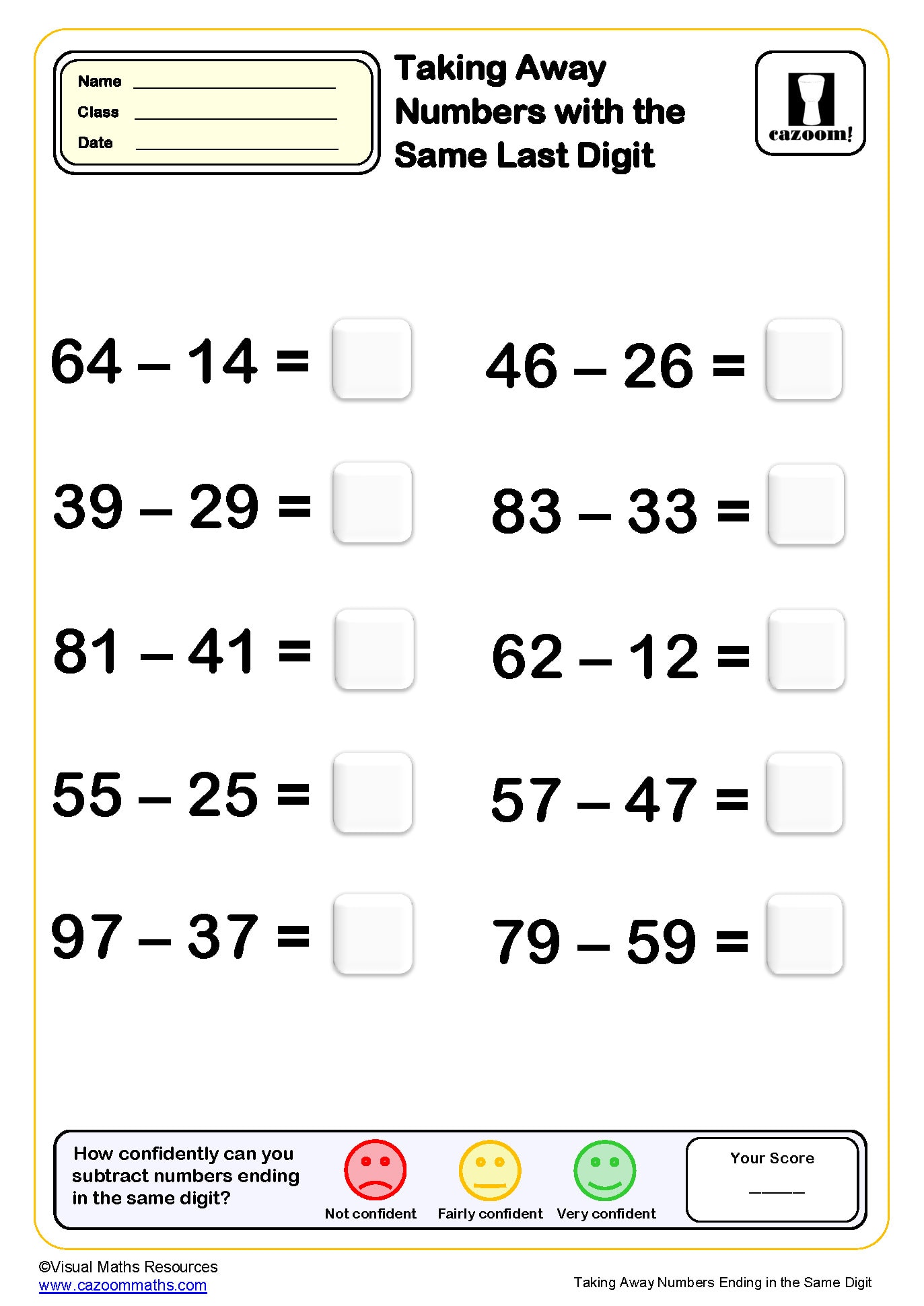
Taking Away Numbers with the Same Last Digit (10 questions)
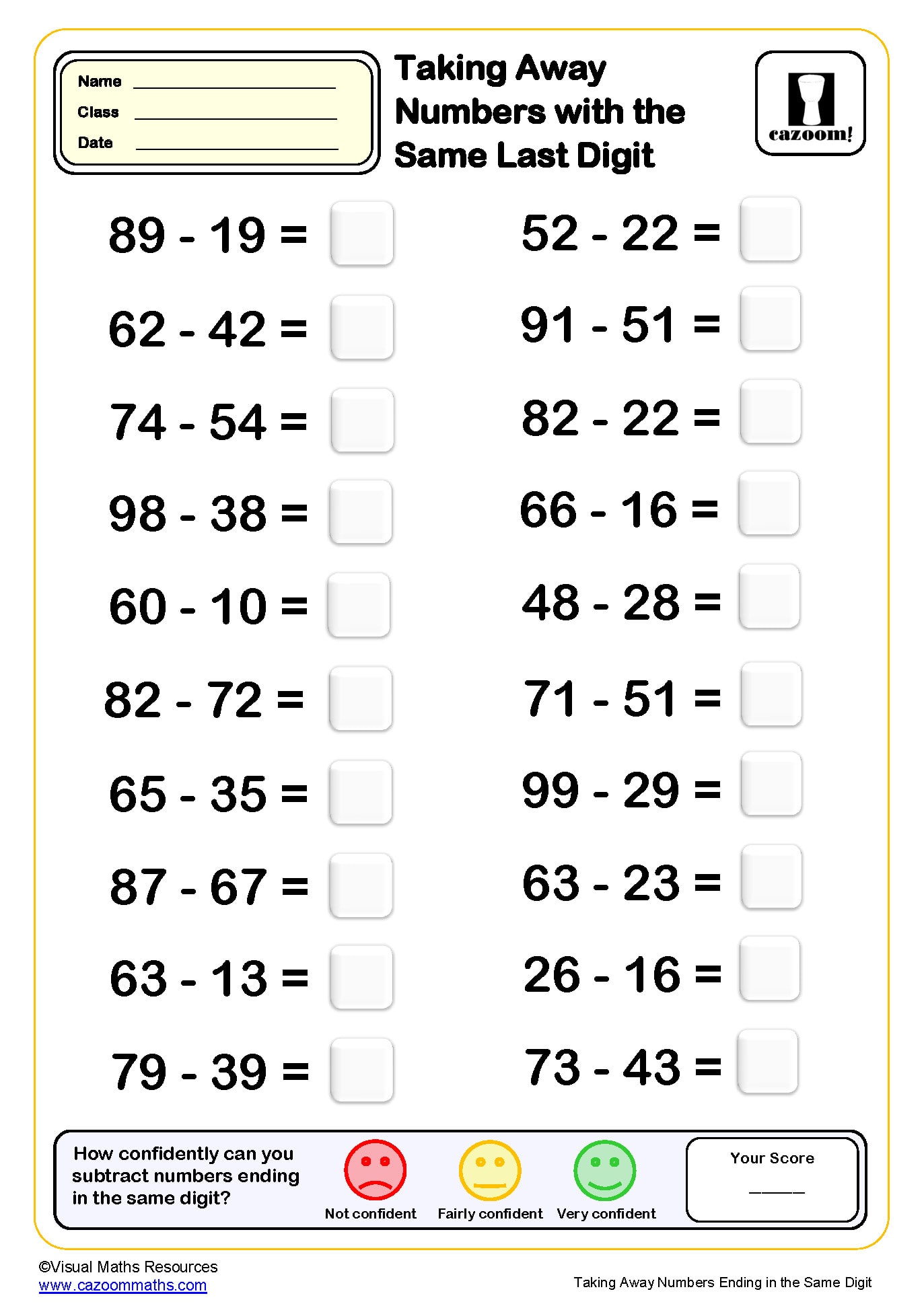
Taking Away Numbers with the Same Last Digit (20 questions)
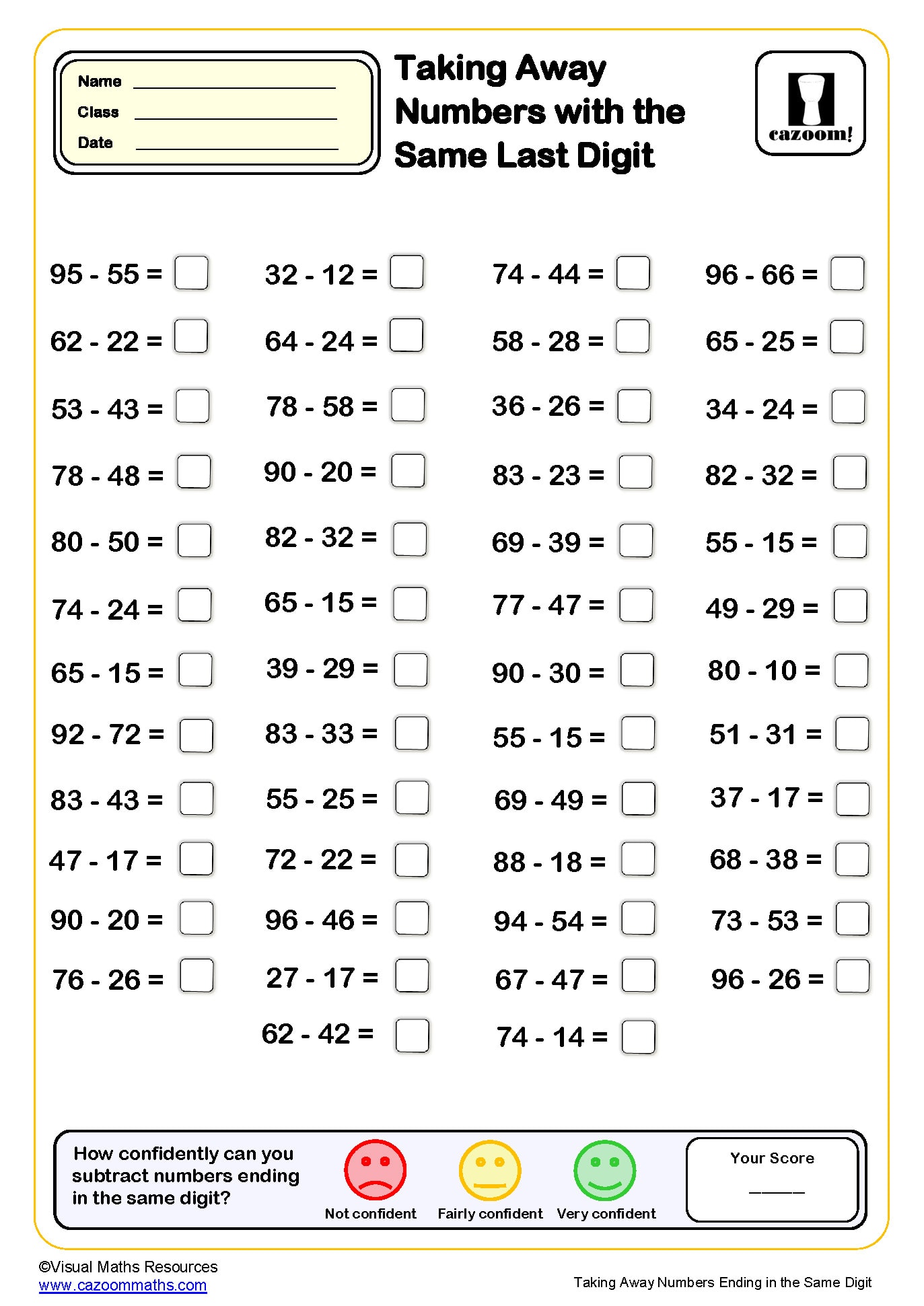
Taking Away Numbers with the Same Last Digit (50 questions)
All worksheets are created by the team of experienced teachers at Cazoom Maths.
What methods do KS1 subtraction worksheets cover?
KS1 subtraction worksheets typically introduce several calculation methods aligned with National Curriculum expectations. Children begin with counting back strategies using number tracks and number lines, which help visualise the subtraction process. As confidence builds, worksheets progress to partitioning methods where numbers are split into tens and ones before subtracting. Column subtraction appears in Year 2, teaching the formal written method that children will use throughout their school years. Many worksheets also include pictorial representations using base ten equipment or part-whole models to support conceptual understanding. Fill in the missing digits subtraction activities develop problem-solving skills by requiring children to work backwards and apply their understanding of number relationships. This varied approach ensures pupils develop both procedural fluency and deep mathematical reasoning about subtraction operations.
Which year groups are two digit subtraction worksheets suitable for?
Two digit subtraction worksheets are specifically designed for Key Stage 1, covering both Year 1 and Year 2. In Year 1, children begin subtracting two-digit numbers using concrete objects and pictorial representations, typically starting with subtracting ones from a two-digit number (such as 24 − 3). They practise counting back and use number lines to support their calculations. By Year 2, pupils progress to subtracting two two-digit numbers, including calculations that require exchanging or regrouping (such as 52 − 27). Year 2 worksheets introduce the formal column method and develop mental calculation strategies for appropriate number combinations. The worksheets scaffold learning carefully, ensuring children build secure foundations before attempting more complex subtractions. This progression aligns with National Curriculum statements for calculation, ensuring pupils meet expected standards by the end of Key Stage 1.
How do children learn subtraction with exchanging in KS1?
Subtraction with exchanging (previously called 'borrowing') is introduced in Year 2 when the ones digit being subtracted is larger than the ones digit in the original number. For example, in 42 − 17, you cannot subtract 7 from 2 without exchanging. Worksheets introduce this concept using concrete resources like base ten equipment, showing how one ten can be exchanged for ten ones. Visual representations help children understand that 42 can be thought of as 3 tens and 12 ones, making the subtraction possible. Column subtraction worksheets provide structured practice, with some including visual cues or partially completed examples. Many resources progress gradually from exchanges in the ones column only to calculations requiring multiple steps. Fill in the missing digits activities particularly strengthen understanding, as children must recognise when exchanging has occurred and apply the process in reverse.
Do two digit subtraction worksheets include answers?
Yes, all our two digit subtraction worksheets include complete answer sheets. Each worksheet comes with a separate answer page showing full solutions to every question, making marking efficient for teachers and parents. This is particularly valuable for two digit subtraction where children may use different methods to reach the answer—the answer sheets allow you to verify the final result whilst still discussing the working out with pupils. Having answers readily available means worksheets work effectively for independent practice, homework tasks, or intervention sessions where immediate feedback supports learning. The answer sheets maintain the same layout as the question pages, making it straightforward to identify which questions pupils found challenging. For assessments or timed activities, you can choose whether to provide answers immediately or use them purely for marking purposes. This flexibility makes the worksheets adaptable to various teaching situations and learning needs across Key Stage 1.