KS2 Adding to 3 or more digits Worksheets
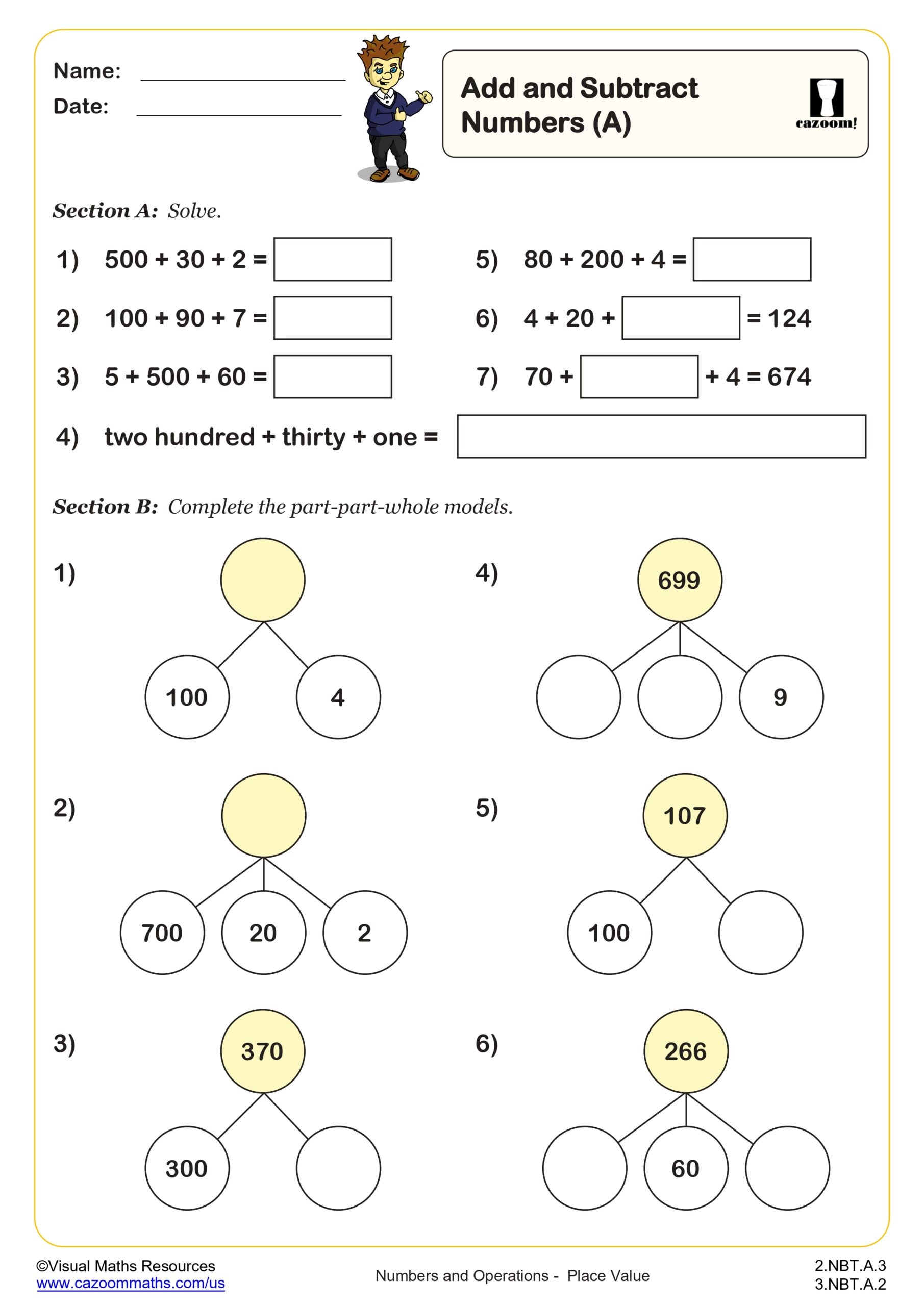
Add and subtract numbers mentally (A)
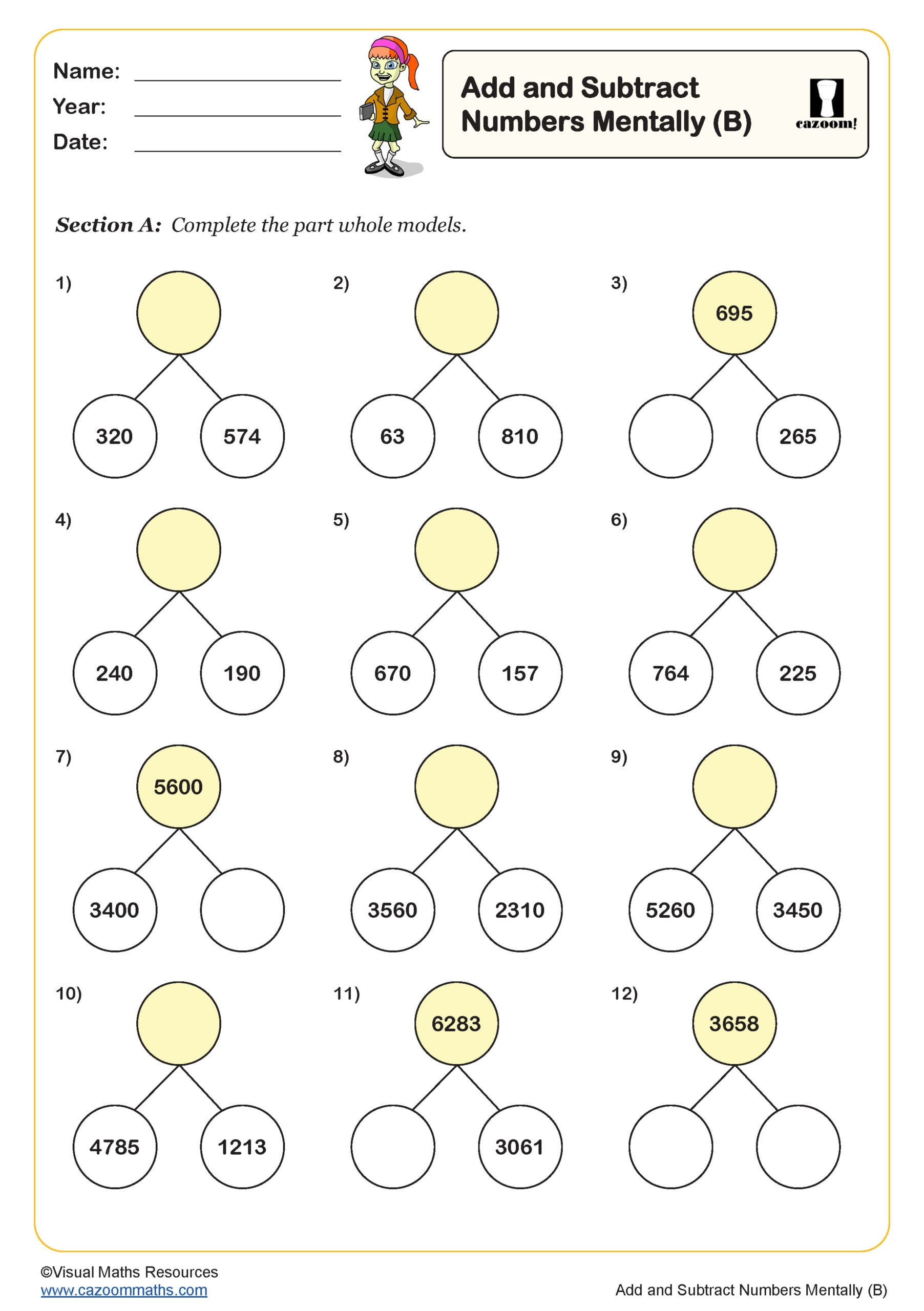
Add and subtract numbers mentally (B)
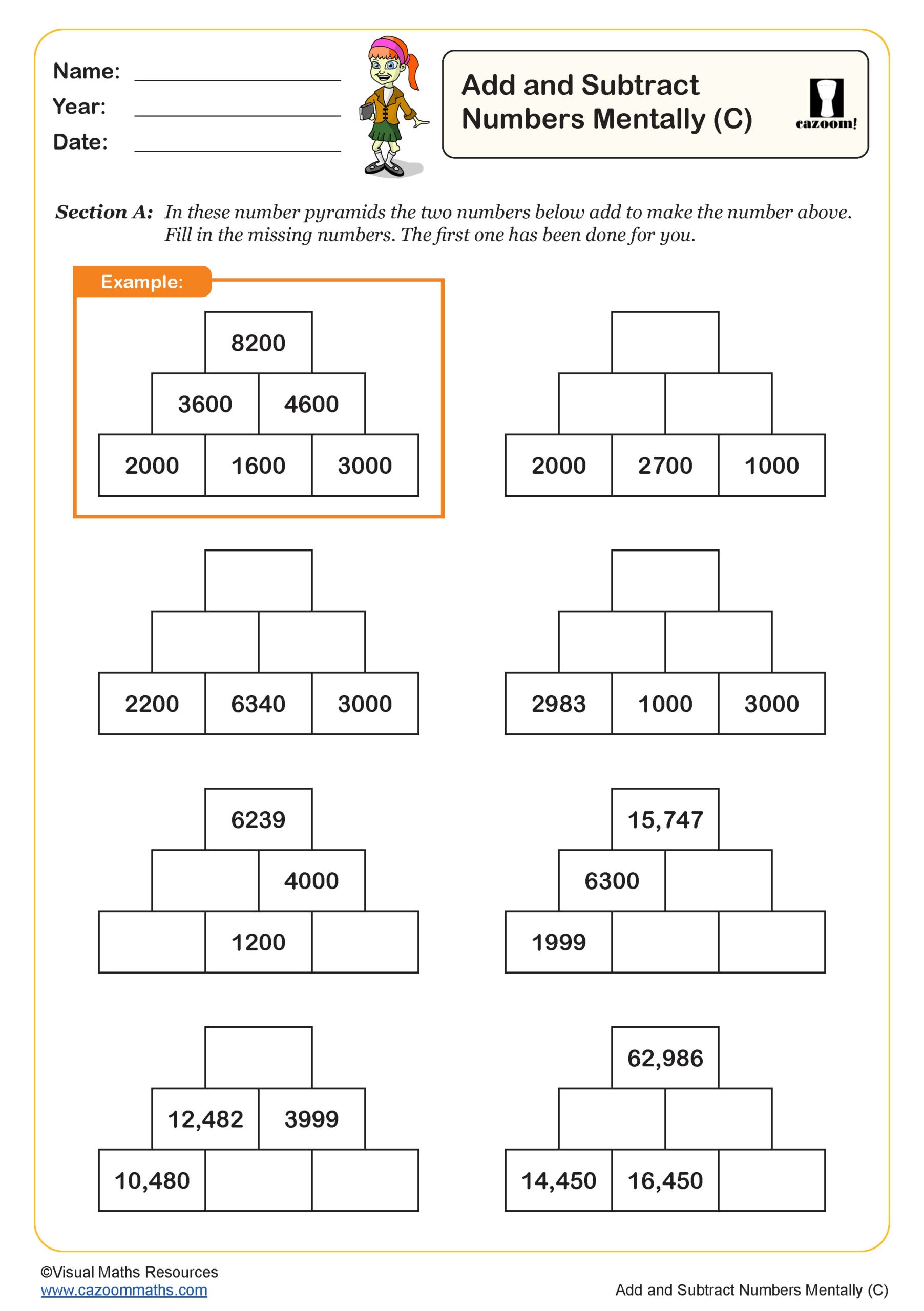
Add and subtract numbers mentally (C)
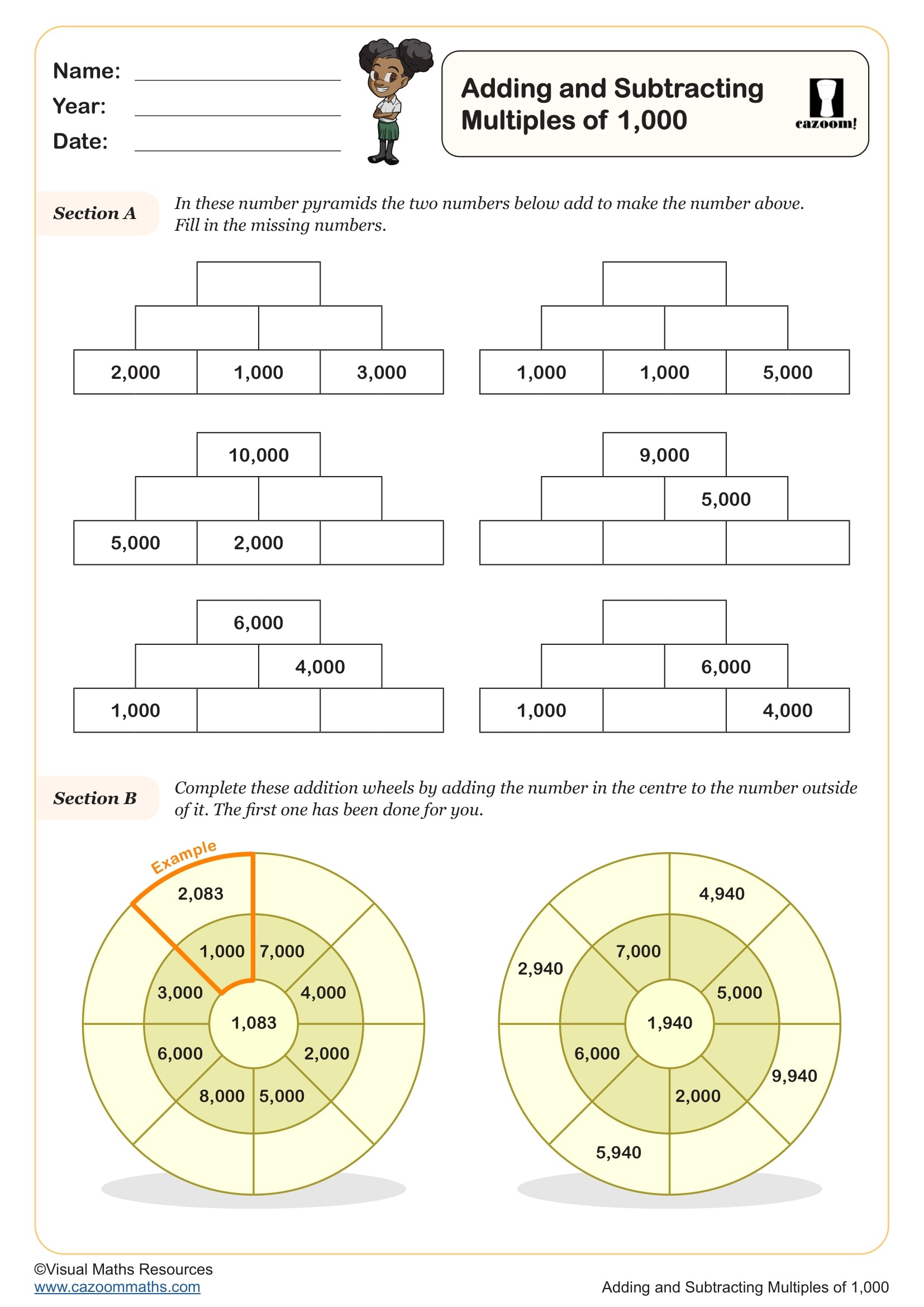
Adding and Subtracting Multiples of 1,000
Addition grids (adding hundreds to a 3 digit number)
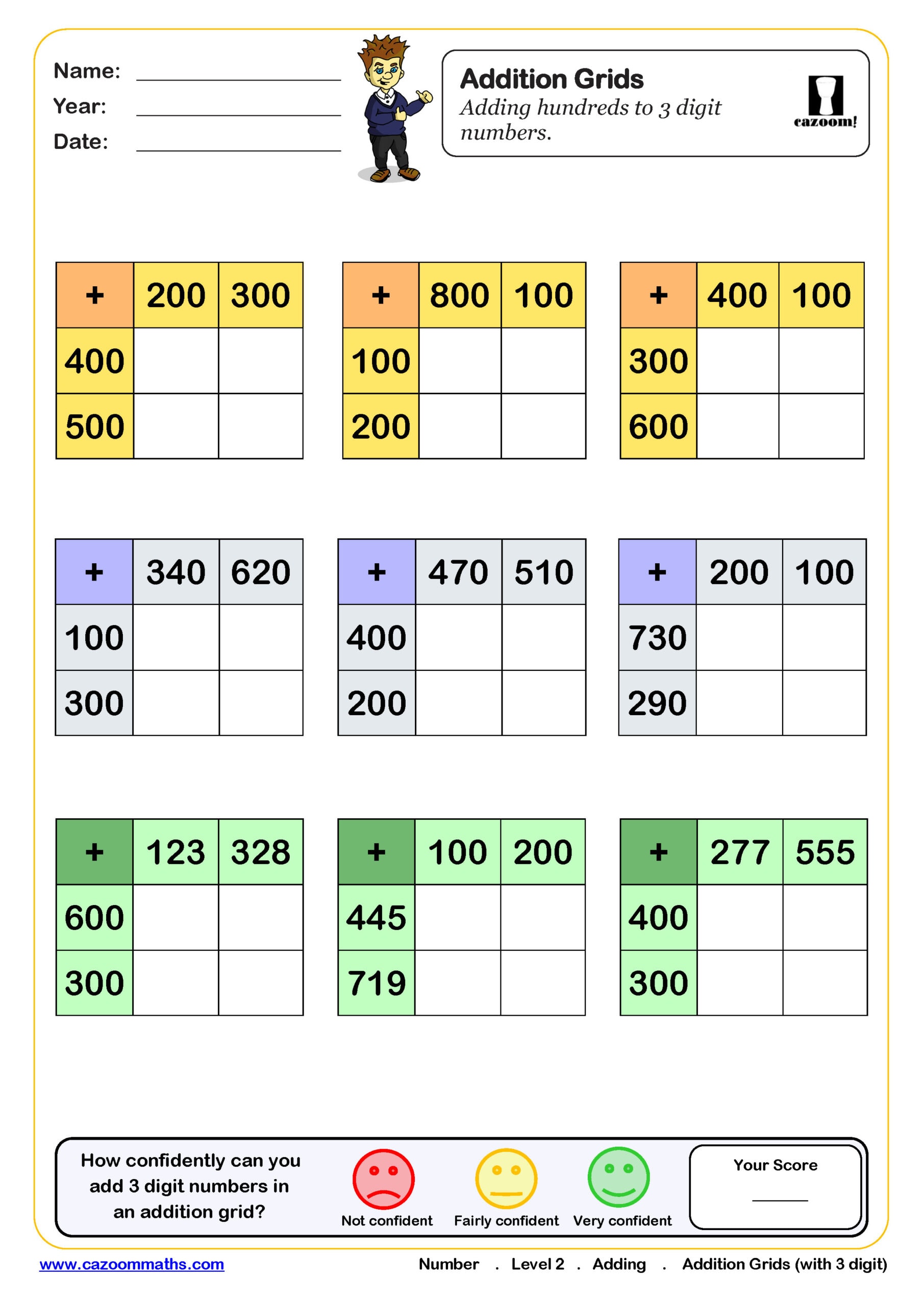
Addition grids (adding ones to a 3 digit number)
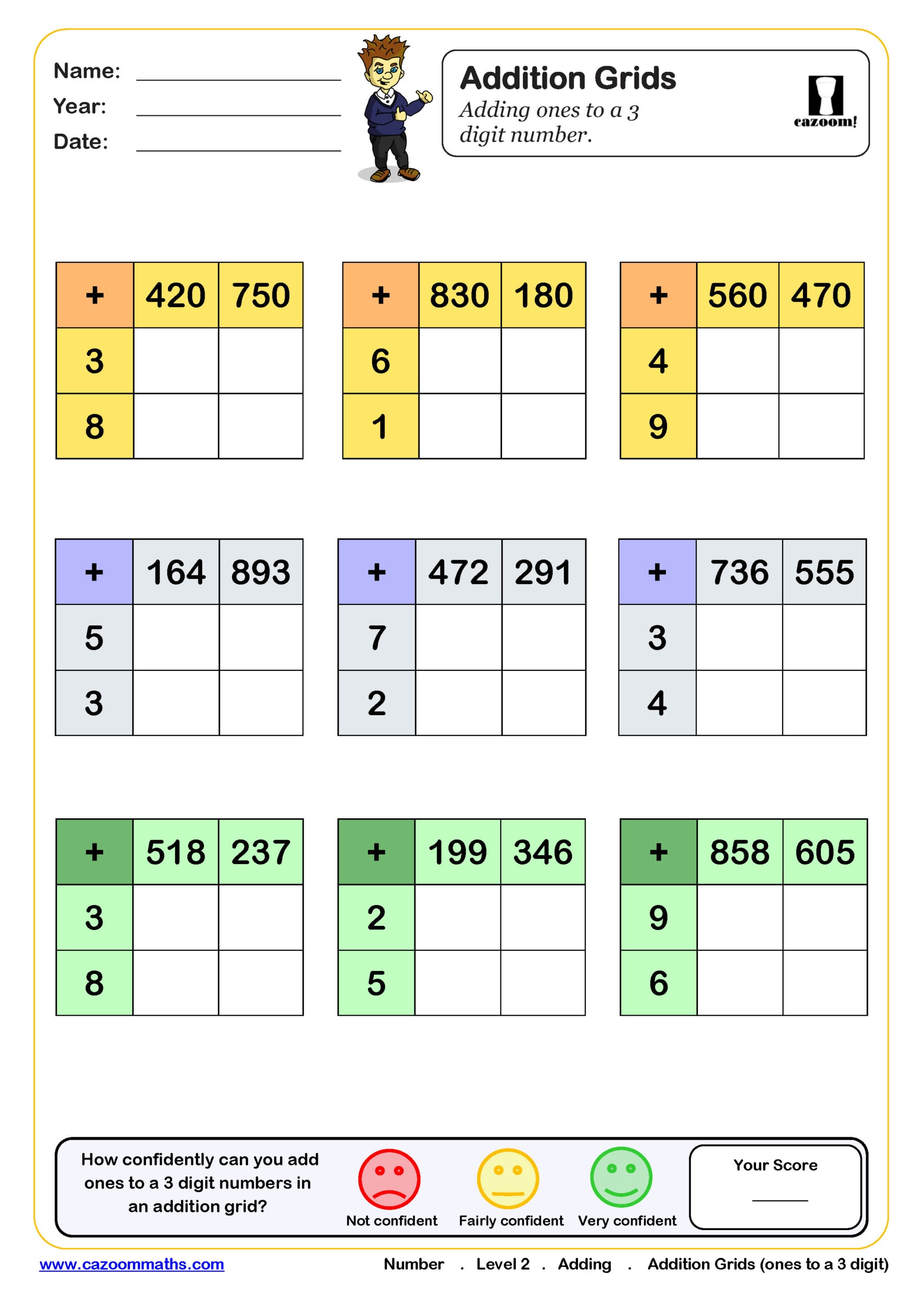
Addition grids (adding ones, tens and hundreds to 3 digit numbers)
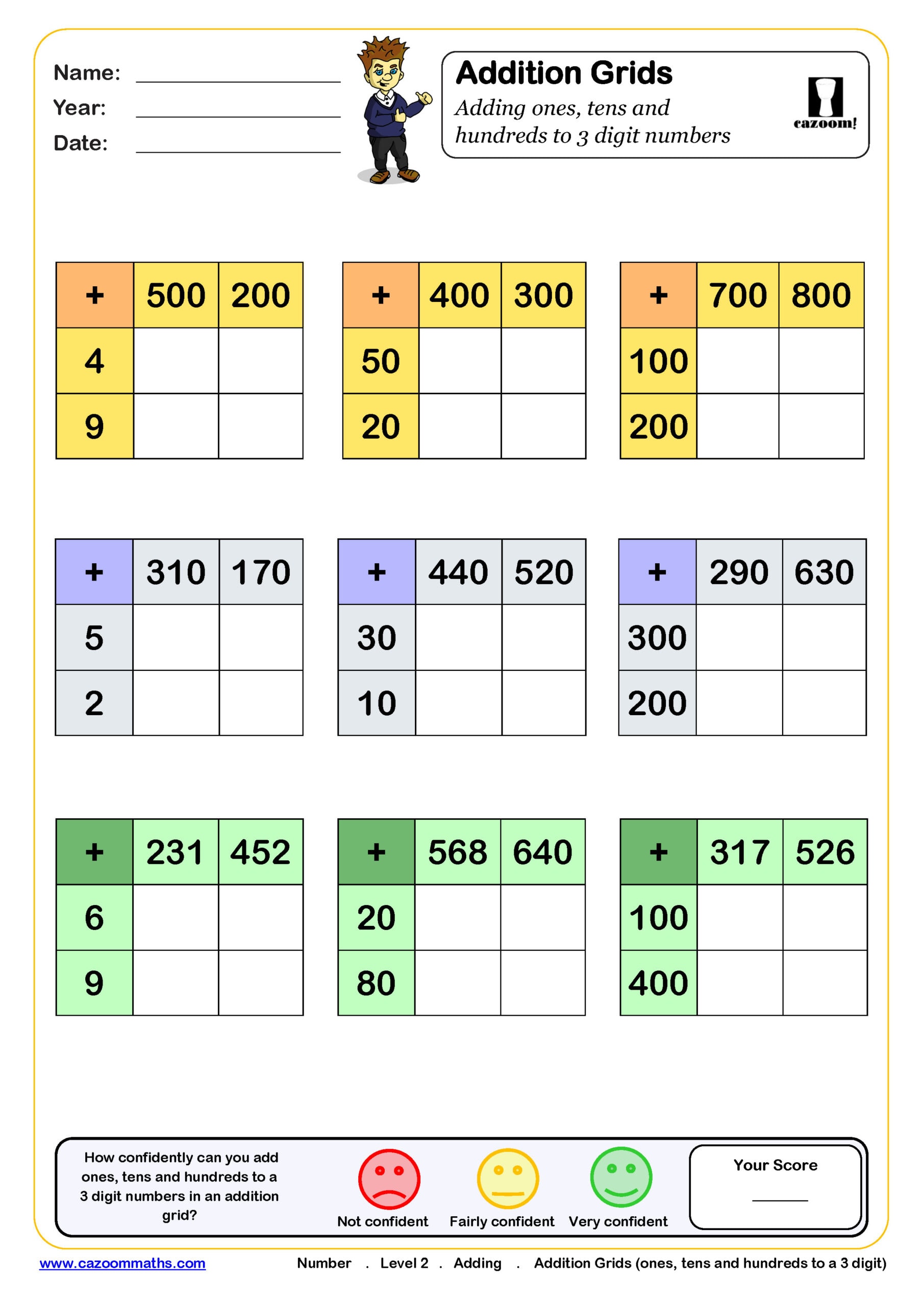
Addition grids (adding tens to 3 digit numbers)
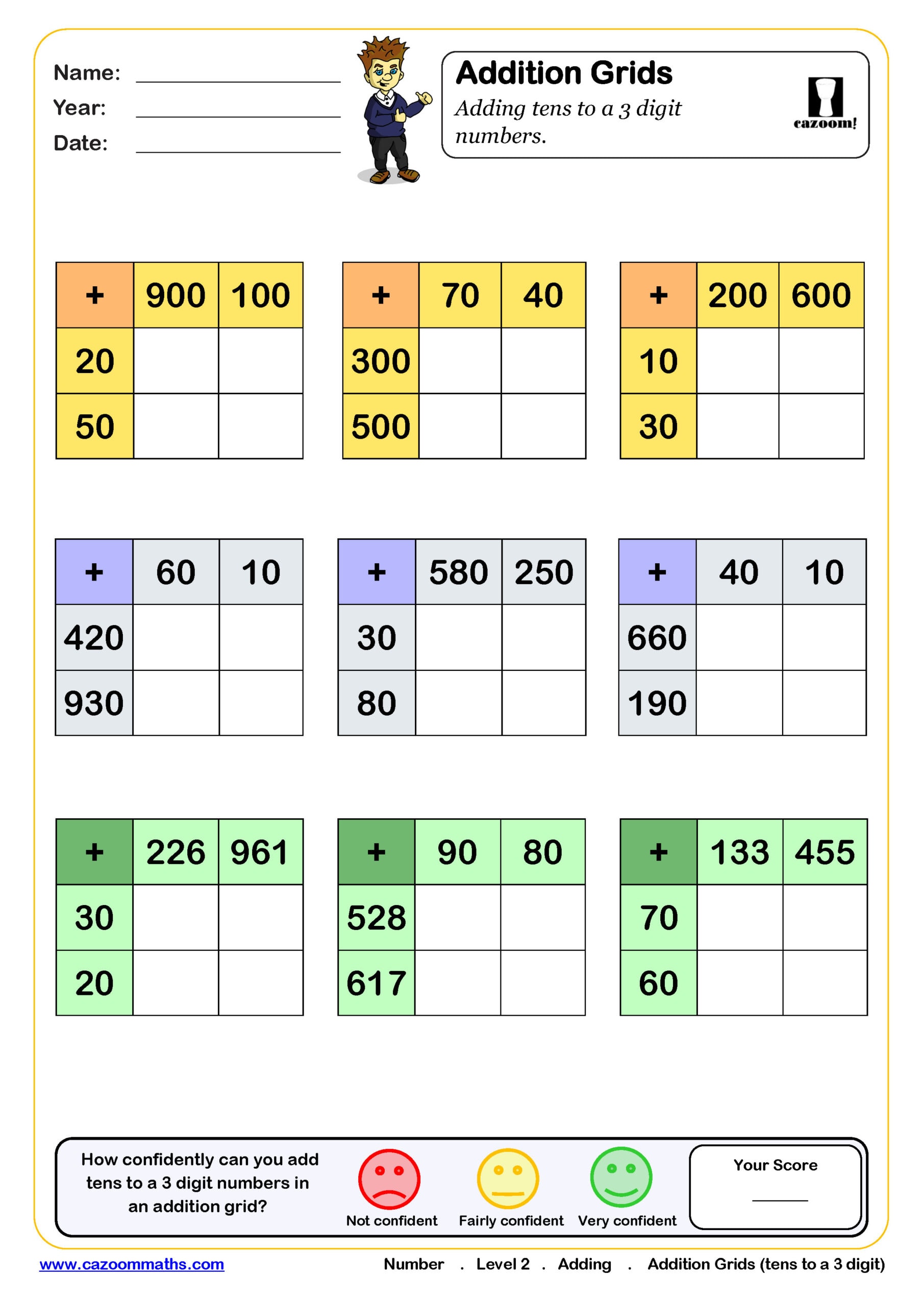
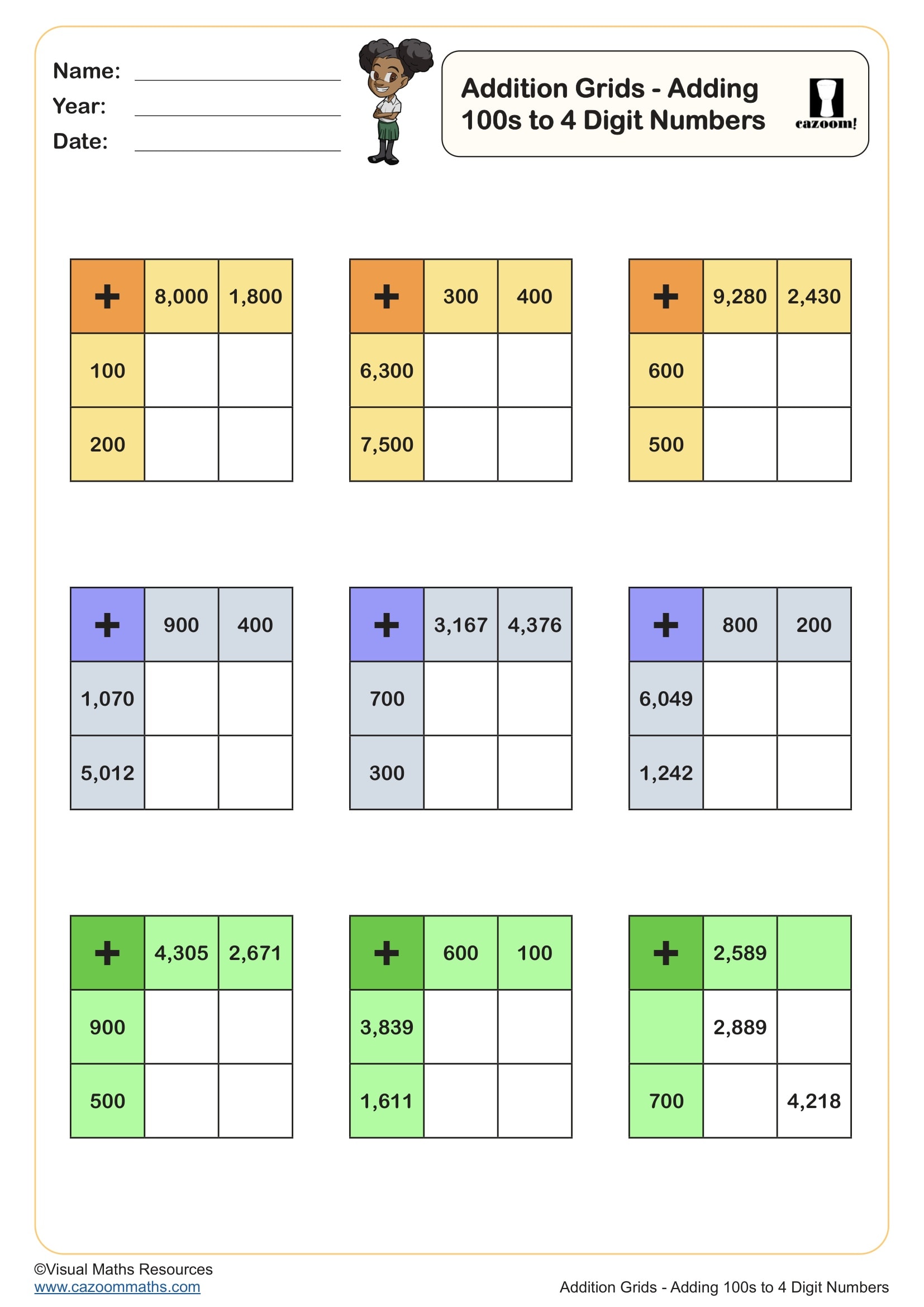
Addition Grids Adding 100s to 4 Digit Numbers
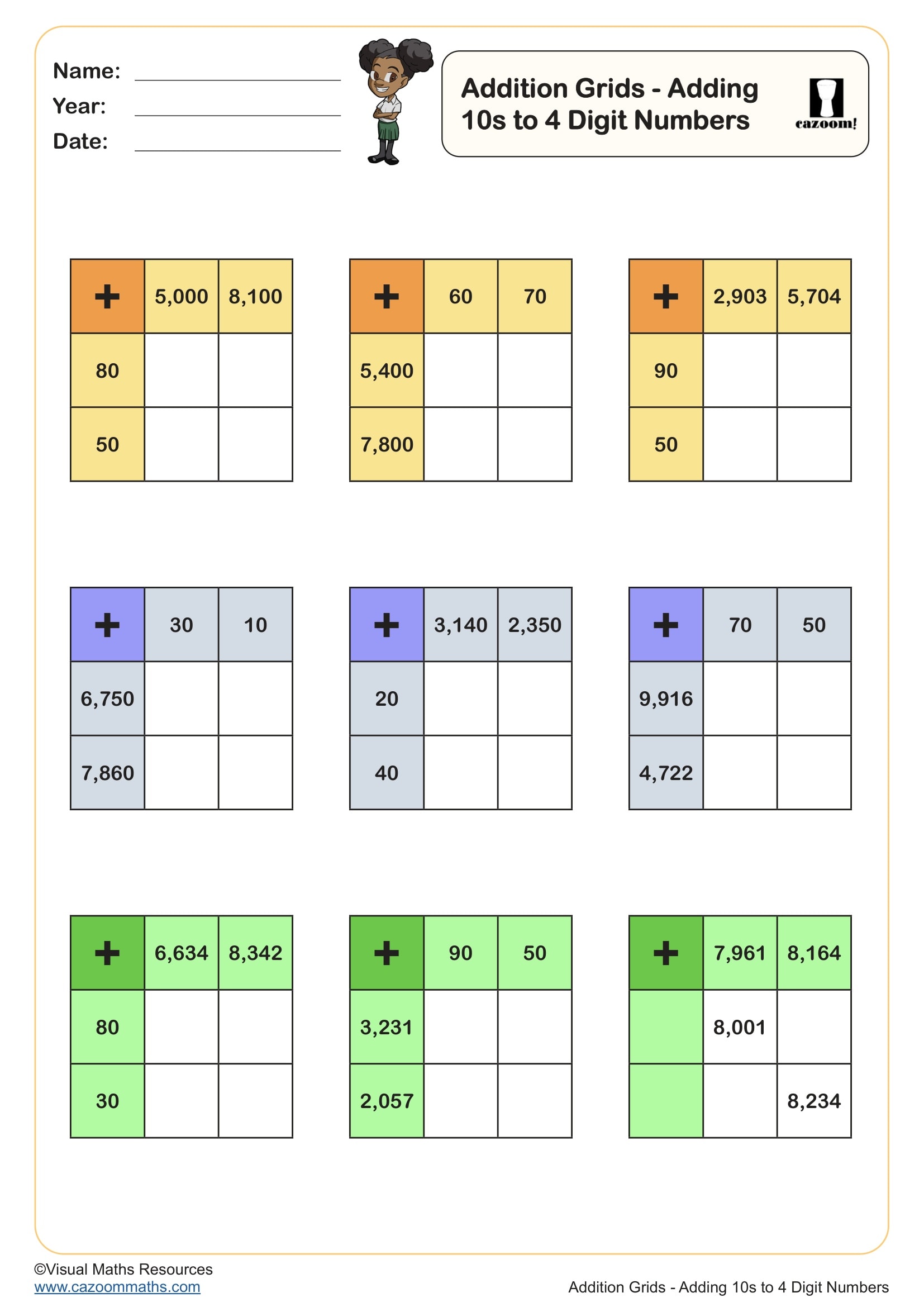
Addition Grids Adding 10s to 4 Digit Numbers
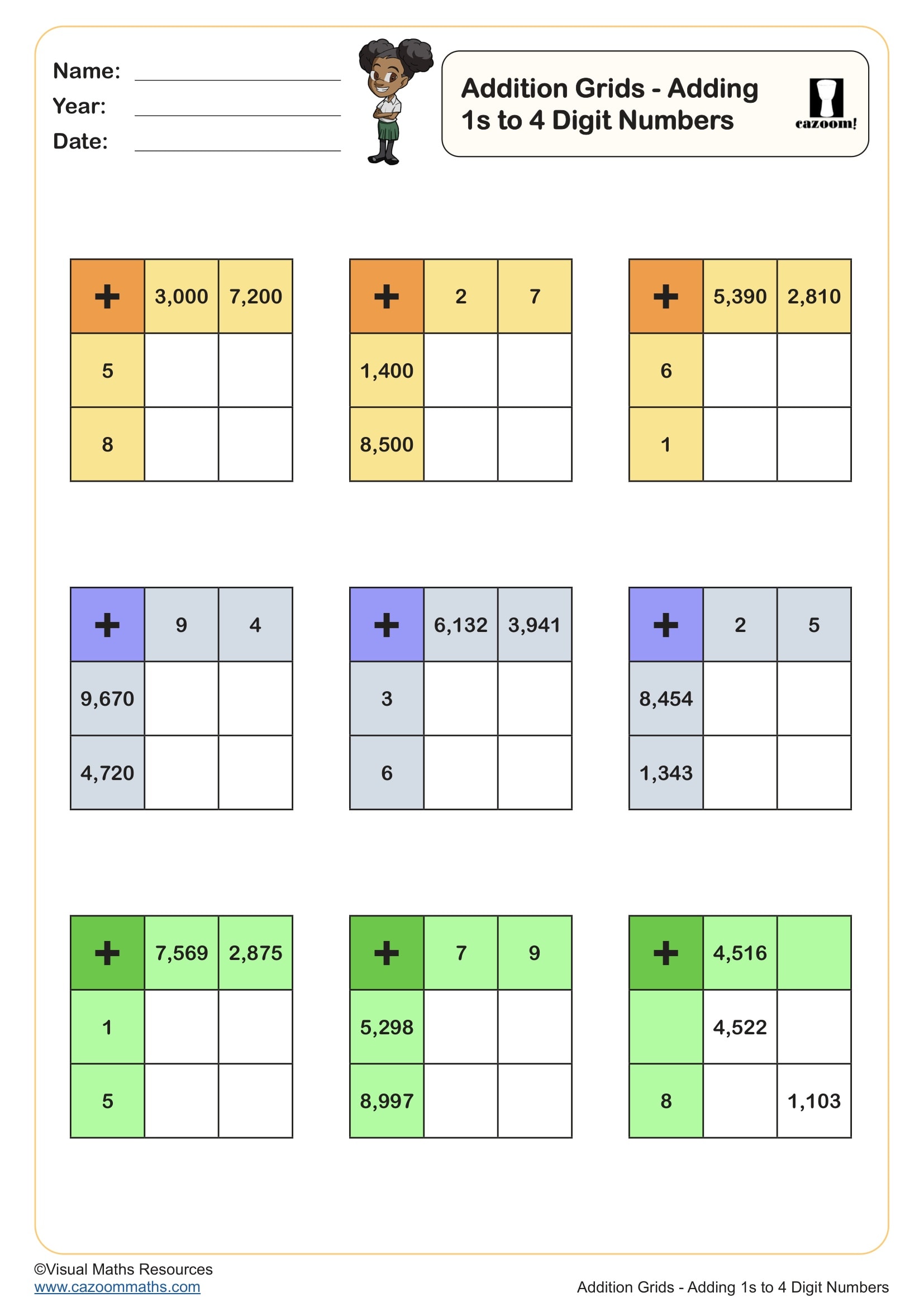
Addition Grids Adding 1s to 4 Digit Numbers
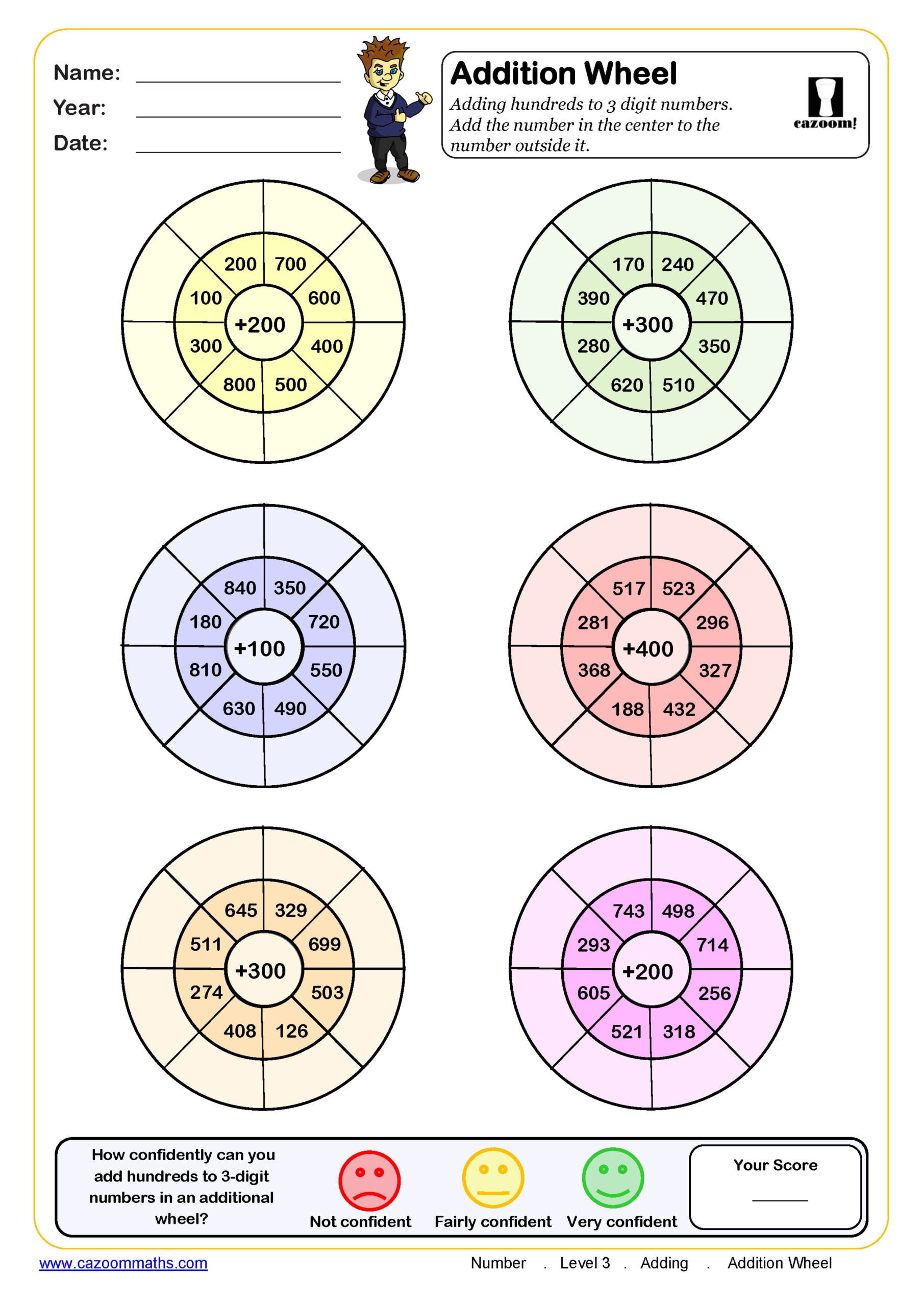
Addition Wheels (adding hundreds to 3 digit numbers)
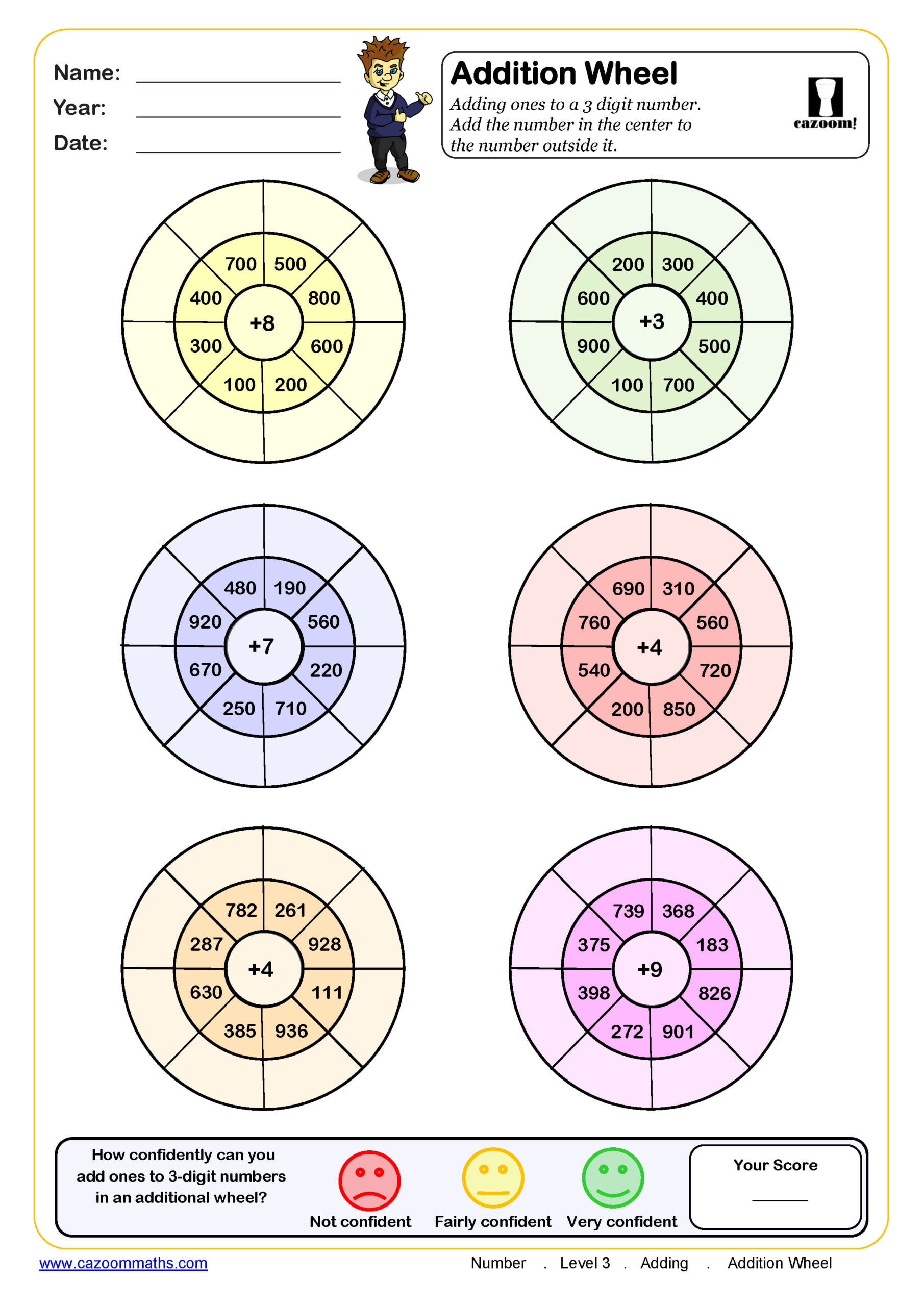
Addition Wheels (adding ones to 3 digit numbers)
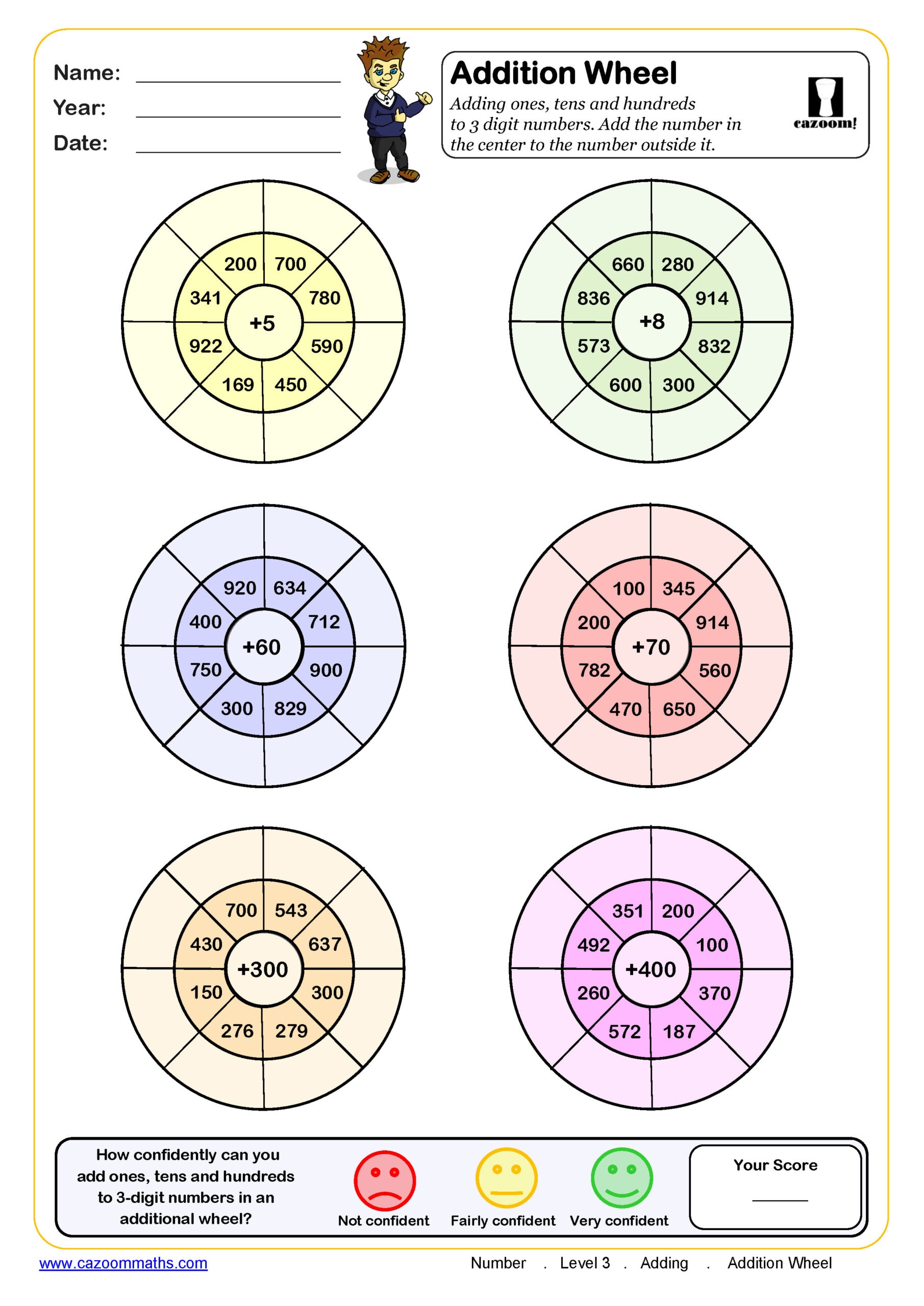
Addition Wheels (adding ones, tens and hundreds to 3 digit numbers)
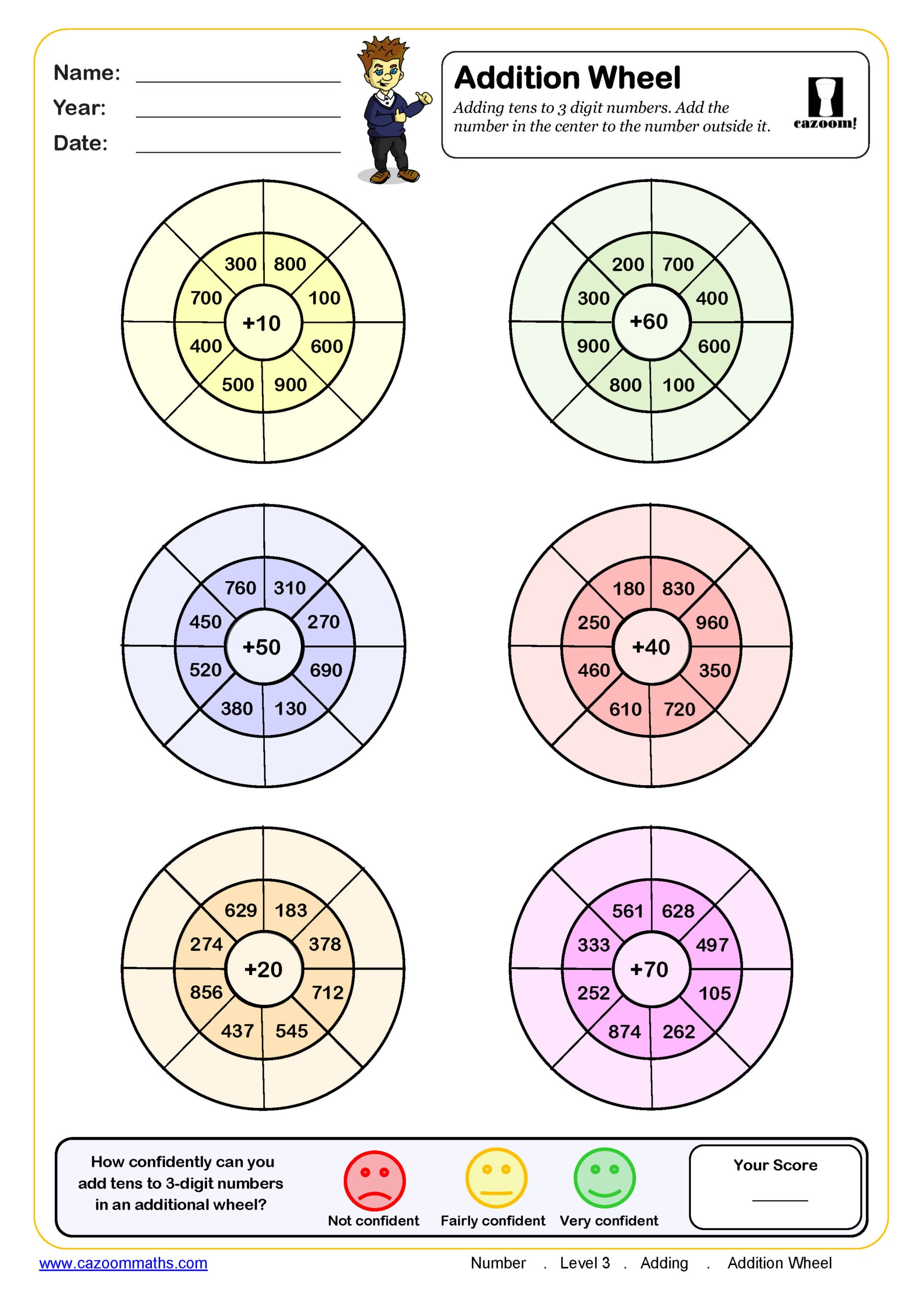
Addition Wheels (adding tens to 3 digit numbers)
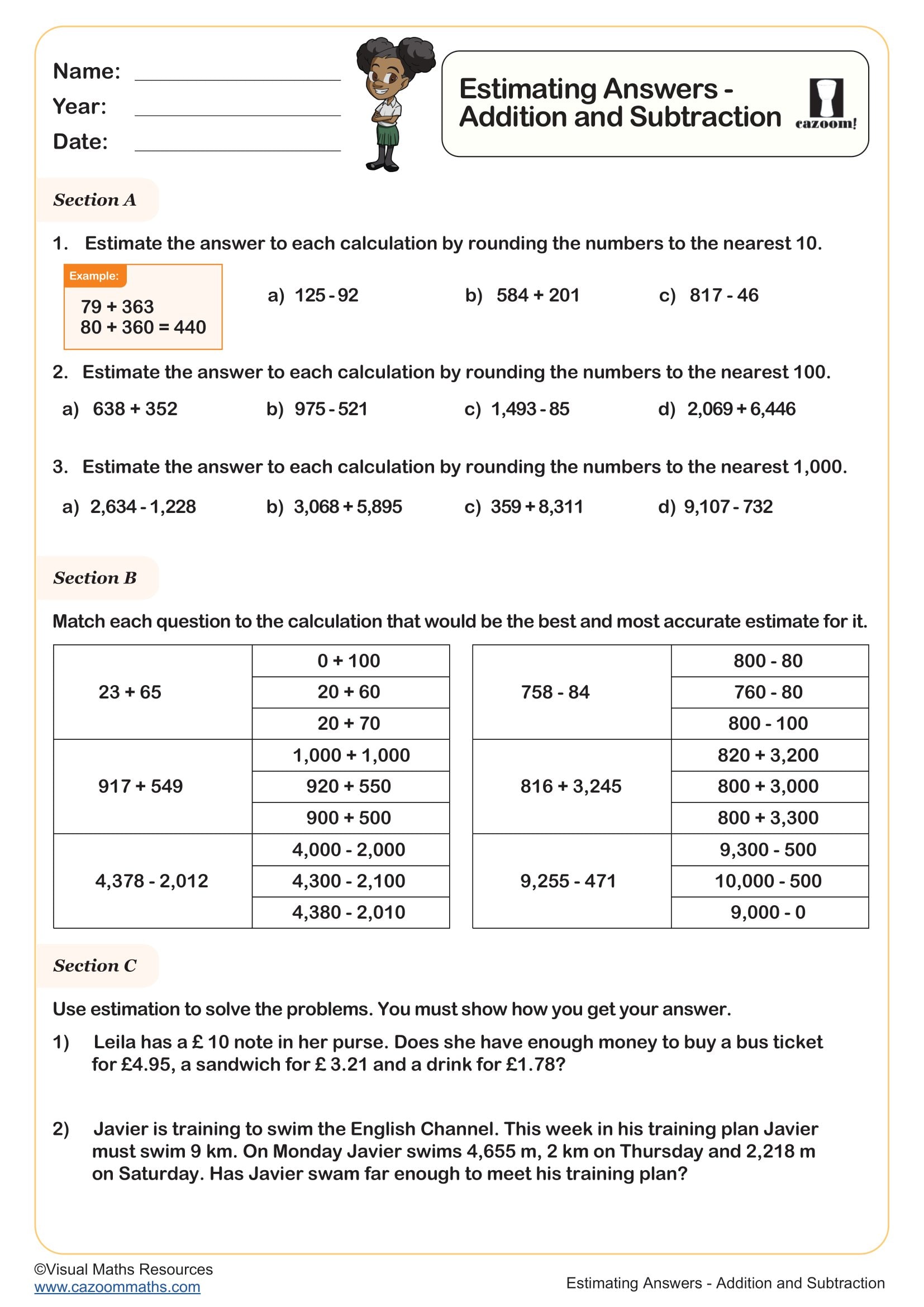
Estimating Answers Addition and Subtraction
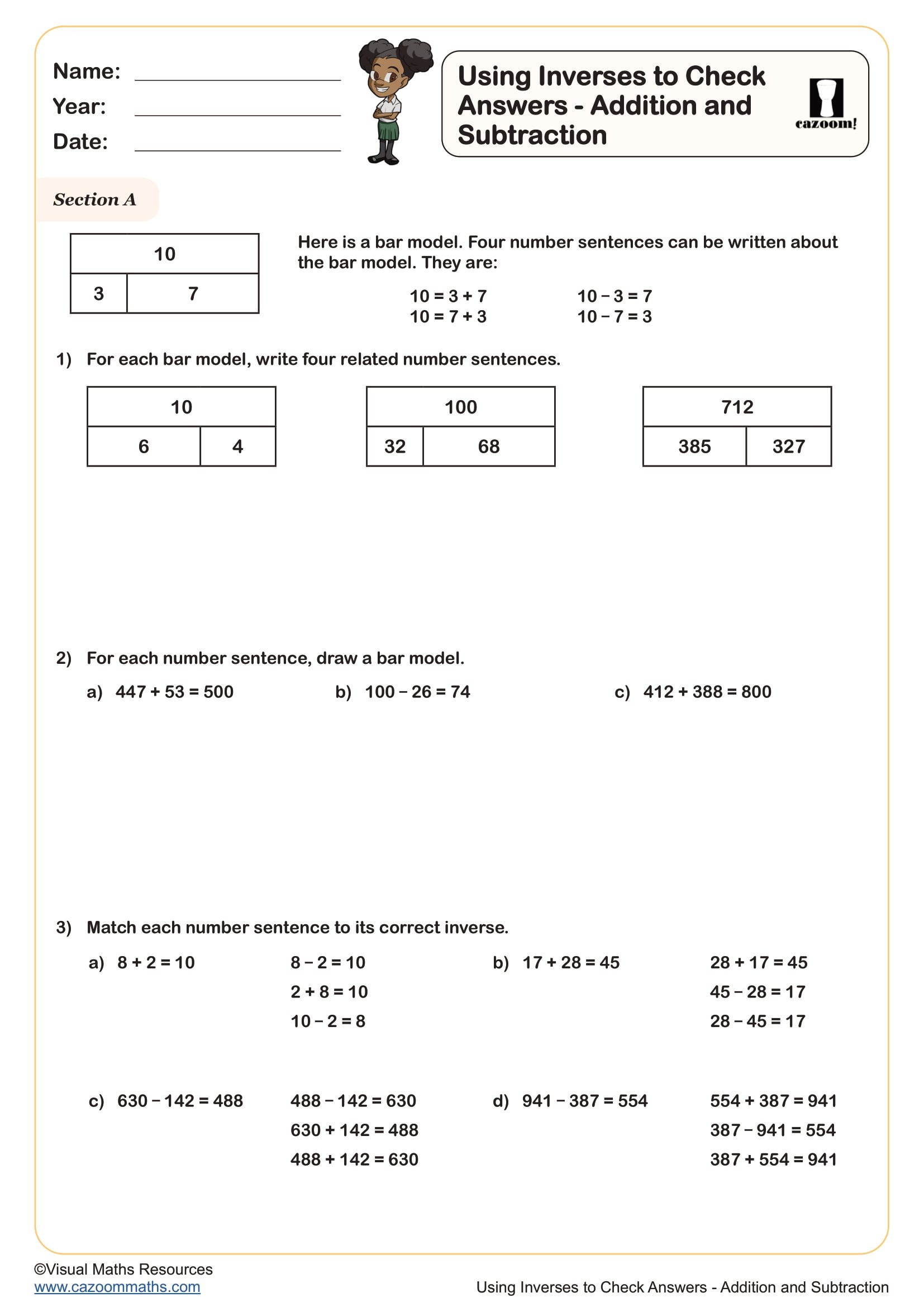
Using Inverses to Check Answers Addition and Subtraction
All worksheets are created by the team of experienced teachers at Cazoom Maths.
What methods do these addition worksheets teach?
The worksheets focus on formal column addition, the standard written method required by the National Curriculum for adding three-digit numbers and beyond. Students arrange numbers vertically by place value, adding from right to left and regrouping when totals exceed nine in any column. This systematic approach builds understanding of how place value operates in larger calculations.
As students progress through the year groups, they encounter increasingly complex problems requiring multiple regrouping steps across thousands, hundreds, tens and ones. The worksheets include both straightforward column additions and contextual problems, helping pupils apply their calculation skills to real-world scenarios and mathematical reasoning questions.
Which year groups are these worksheets suitable for?
These worksheets are designed for KS2, specifically covering Year 3, Year 4 and Year 5. Year 3 pupils typically begin with secure three-digit addition, whilst Year 4 students progress to four-digit numbers with confidence in regrouping across multiple columns. Year 5 worksheets extend to five and six-digit calculations, preparing pupils for the demands of upper Key Stage 2.
The progression across these year groups aligns with National Curriculum expectations, allowing teachers to select worksheets that match their pupils' current attainment. Whether consolidating skills from an earlier year or providing extension work for more confident mathematicians, the range supports differentiation within mixed-ability classrooms.
How do students tackle regrouping in larger numbers?
Regrouping, or carrying, becomes more demanding when working with numbers containing four or more digits. Students must track multiple exchanges simultaneously—for example, when adding 3,567 and 4,896, they regroup from ones to tens, tens to hundreds, and hundreds to thousands. The worksheets provide systematic practice in managing these cascading exchanges without losing track.
Successful regrouping relies on secure place value knowledge and careful recording. Pupils learn to write small digits above columns to show what's been carried, maintaining accuracy throughout multi-step calculations. Regular practice with varied number combinations builds fluency and reduces computational errors in assessments and problem-solving contexts.
Do the worksheets include answer sheets?
Yes, every worksheet in this collection includes a complete answer sheet. This allows teachers to mark work efficiently during lessons or set homework that parents can check at home. The answer sheets show all final answers clearly, making it straightforward to identify which calculations students have mastered and where further support might be needed.
Having answers readily available supports independent learning too. Pupils working through intervention sessions or practising at home can self-mark their work, receiving immediate feedback on their accuracy. This helps them identify errors in their method whilst the mathematics is still fresh in their minds, making corrections more meaningful.