KS2 Place Value Counters Worksheets
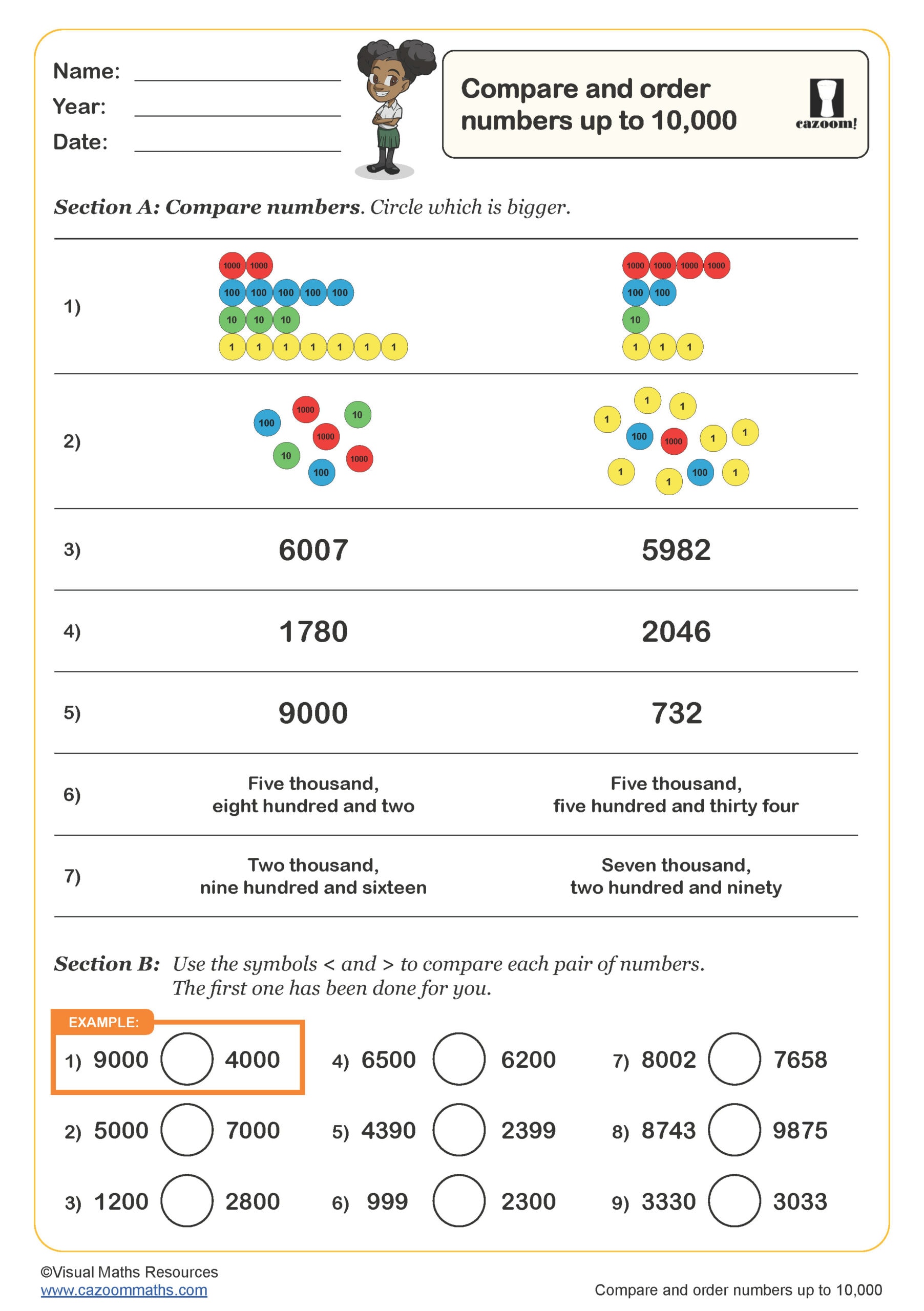
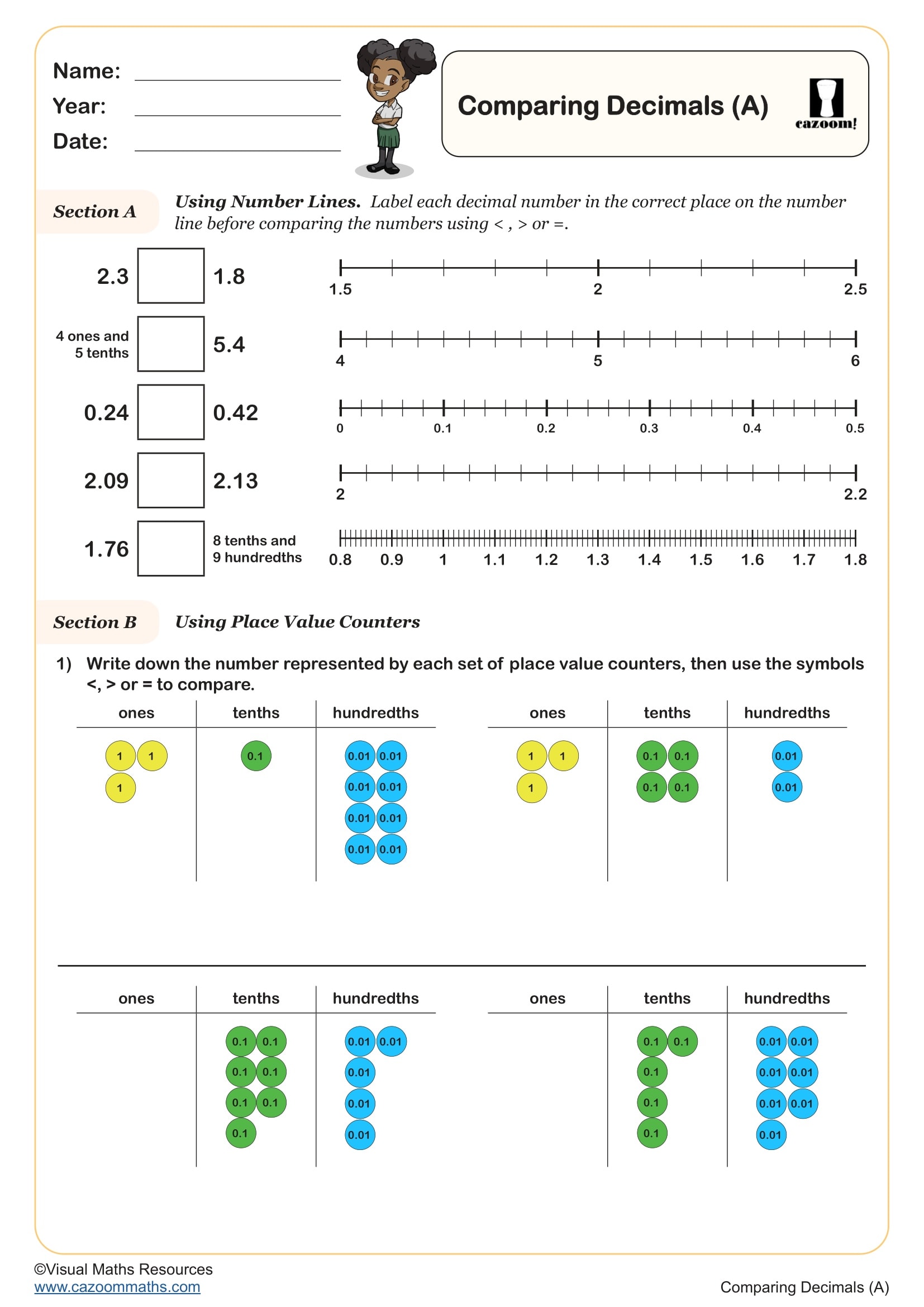
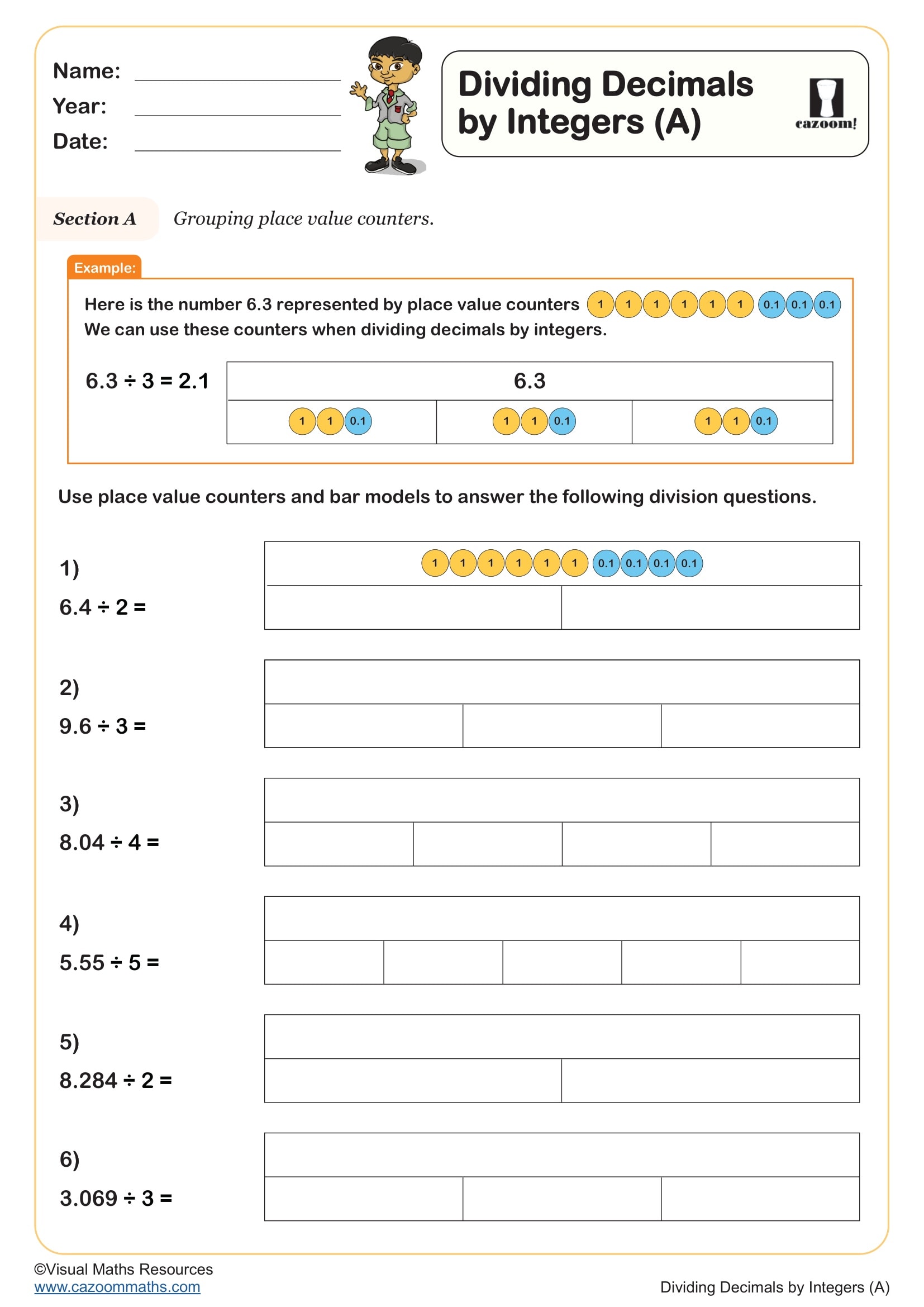
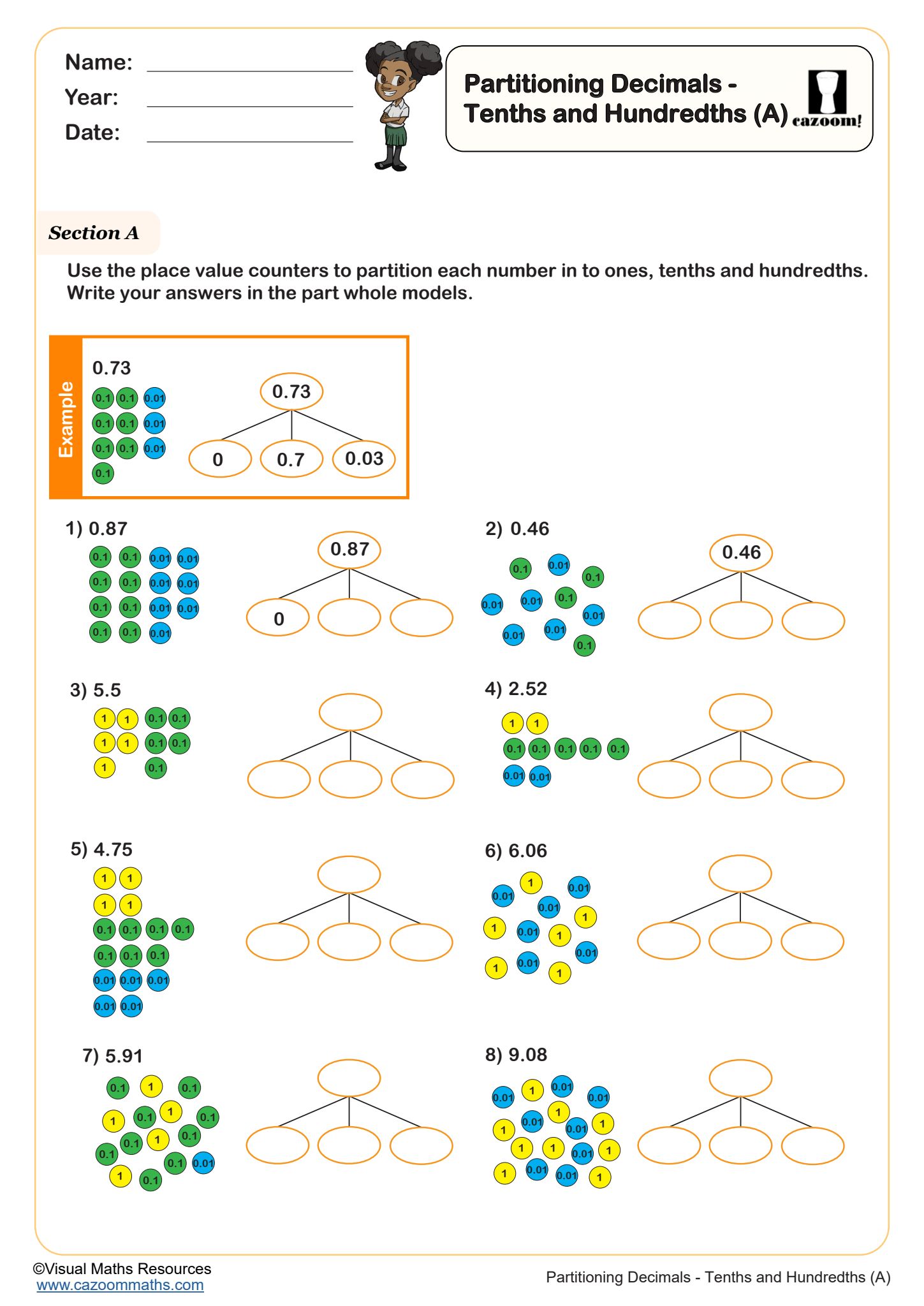
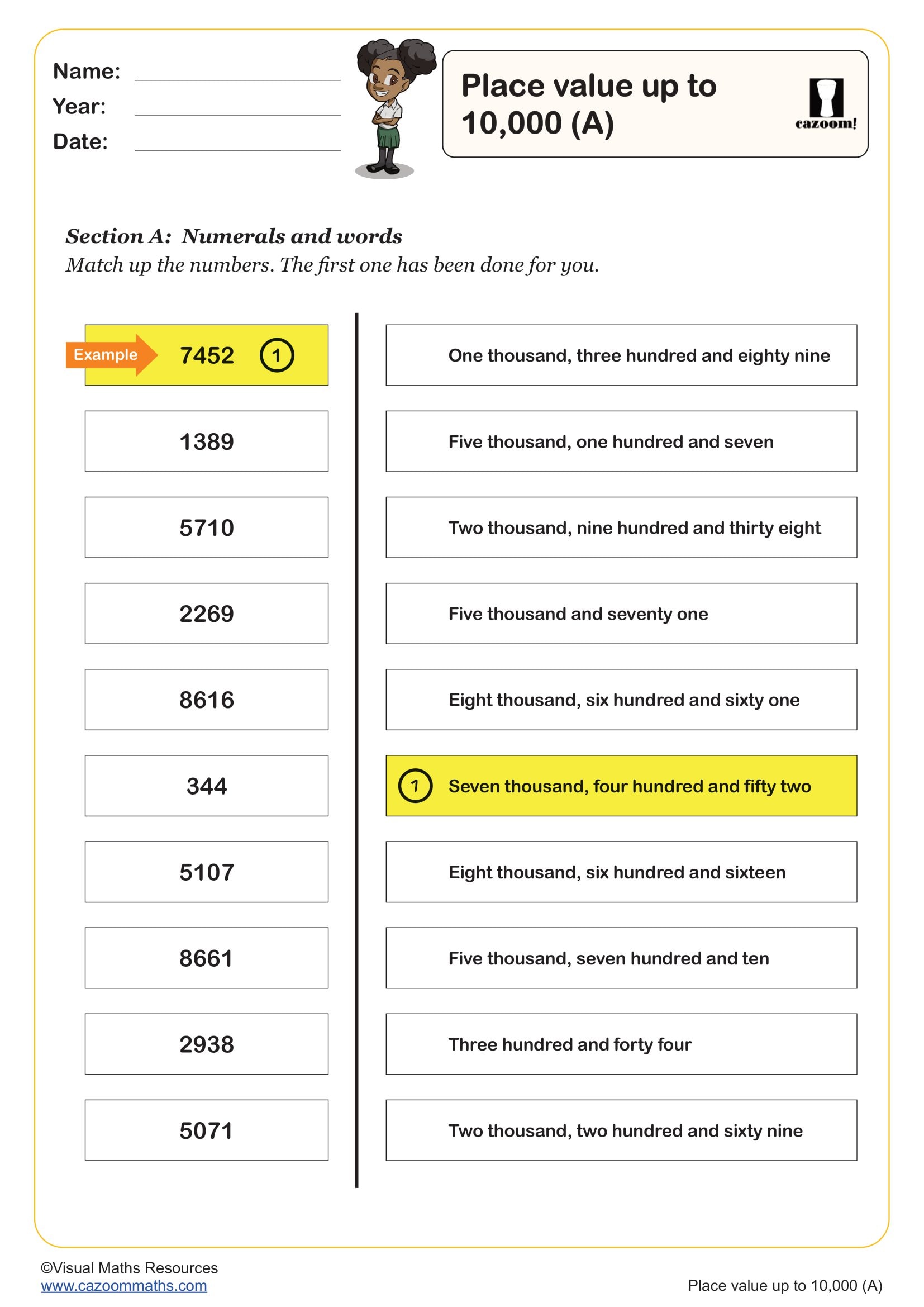
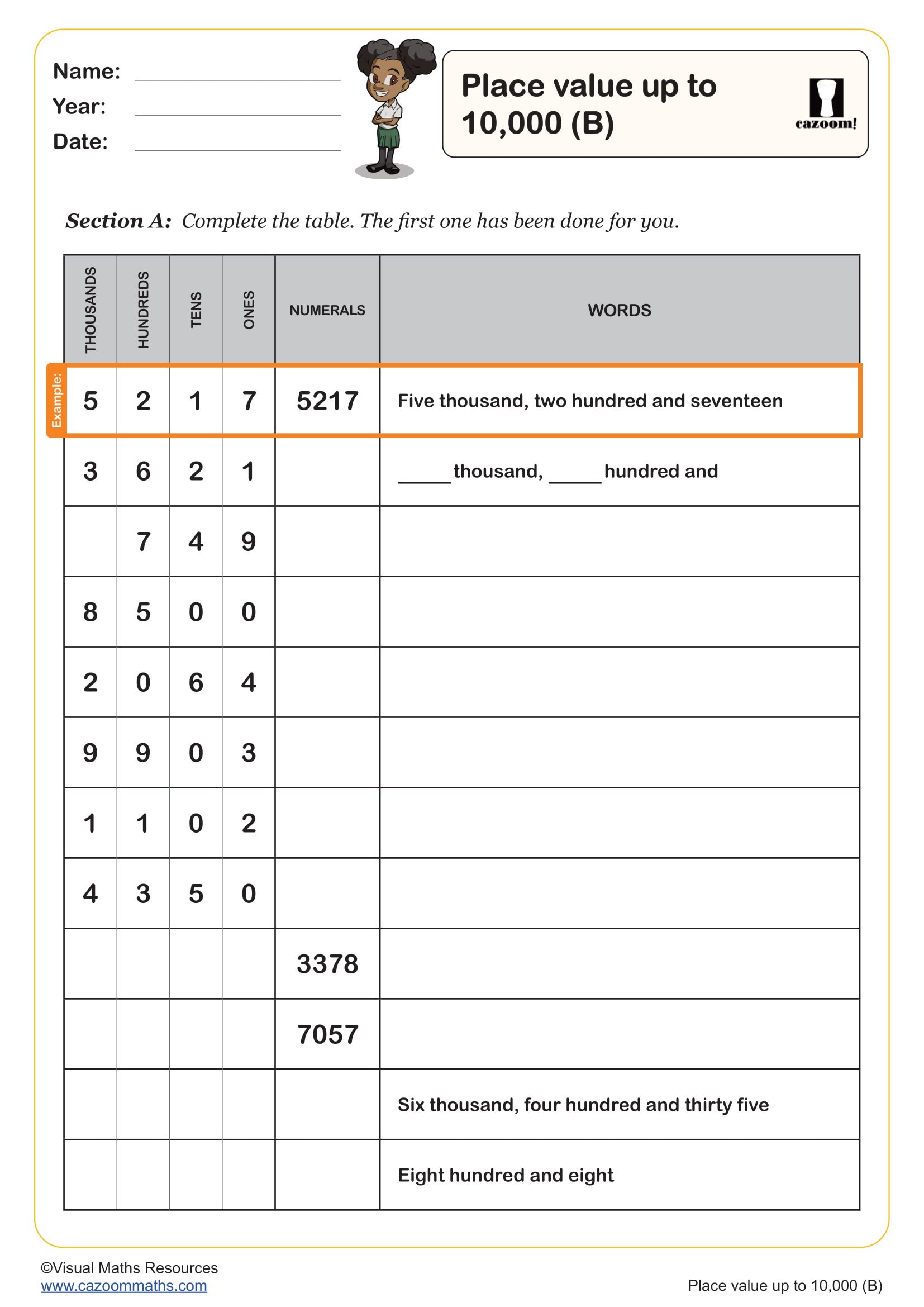

All worksheets are created by the team of experienced teachers at Cazoom Maths.
What are place value counters and how do they support learning?
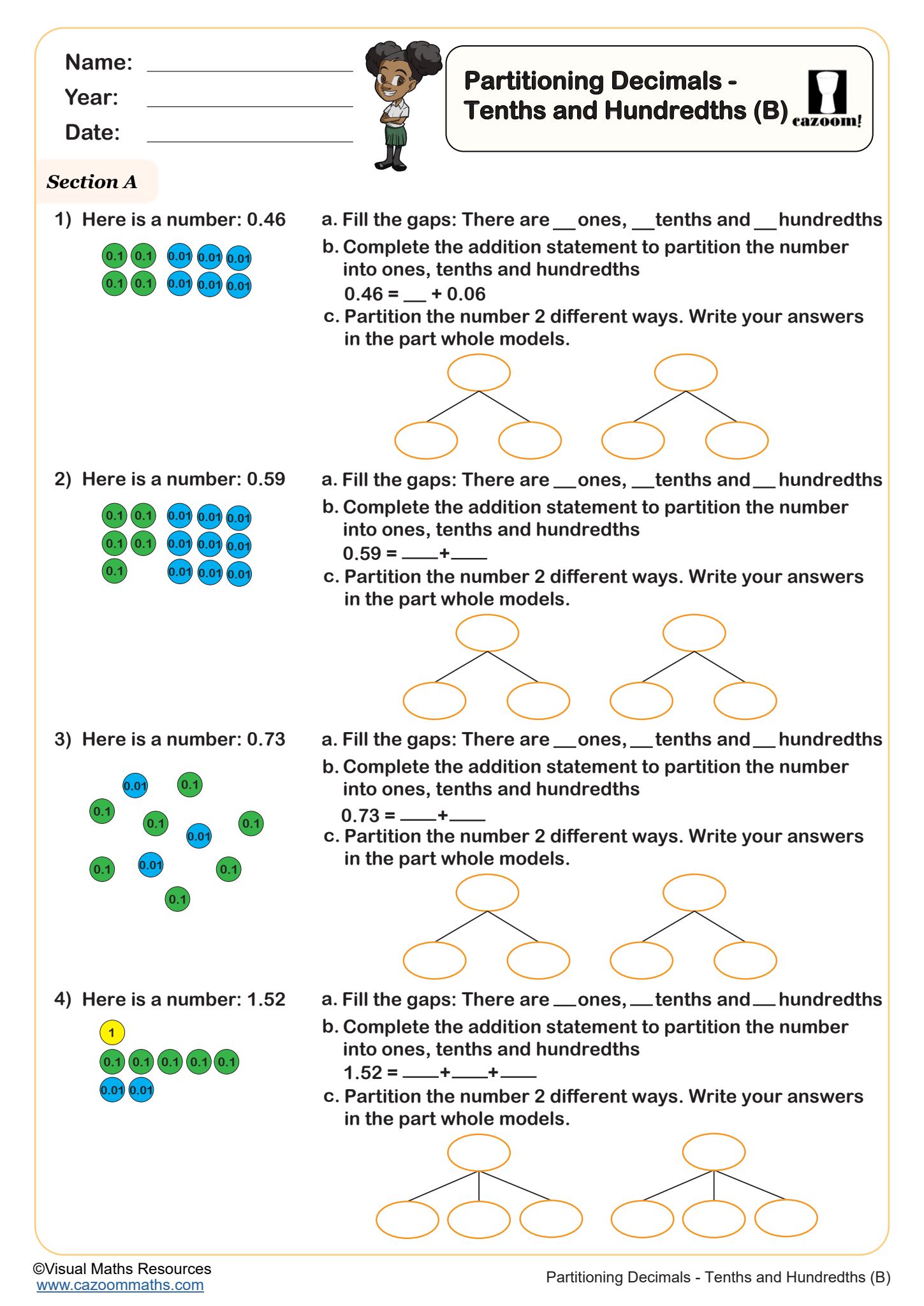
Place value counters are circular manipulatives representing different powers of ten—ones, tens, hundreds, thousands, and beyond. Each counter displays its value clearly, allowing pupils to build numbers physically and understand how digits change value depending on their position. This concrete representation bridges the gap between abstract number notation and actual quantity, particularly supporting children who struggle with conceptual understanding.
The worksheets translate this hands-on approach to paper, showing counter diagrams that pupils must interpret or create. Students practise representing numbers in multiple ways, exchanging ten ones for one ten, or ten tens for one hundred. This reinforces the multiplicative relationship between place value columns and prepares pupils for written calculation methods that rely on regrouping and partitioning.
Which year groups use place value counters worksheets?
Place value counters are primarily used throughout KS2, with our worksheets specifically designed for Year 4, Year 5, and Year 6. Year 4 pupils typically work with counters up to four digits, representing thousands, hundreds, tens, and ones. They use counters to support column addition and subtraction, particularly when exchanging is required.
Year 5 and Year 6 extend this work to larger numbers, including decimals. Pupils represent numbers with up to six digits and use counters to understand decimal place value—tenths, hundredths, and thousandths. The visual representation remains valuable even as numbers become more complex, helping students maintain conceptual understanding alongside procedural fluency in calculations.
How do place value counters help with exchanging and regrouping?
Exchanging is fundamental to understanding column methods for addition, subtraction, multiplication, and division. Place value counters make this process visible: when you have ten ones counters, you physically exchange them for one tens counter, demonstrating why we 'carry' or regroup in written calculations. This concrete action prevents exchanging from becoming a mechanical rule students follow without understanding.
Our worksheets include exercises where pupils must show exchanges using counter diagrams, particularly when adding numbers that total more than nine in any column, or subtracting when there aren't enough in a column. By repeatedly drawing and interpreting these representations, students develop mental models they can refer to when working abstractly, reducing errors and building confidence in formal written methods.
What's included with the place value counters worksheets?
Each worksheet comes with a complete answer sheet showing worked solutions, making marking straightforward and enabling pupils to check their own work during independent practice. The worksheets include a variety of question types: representing given numbers with counters, reading values shown in counter diagrams, and solving problems that require exchanging between columns.
Questions progress in difficulty within each worksheet, starting with straightforward representation and building to multi-step problems. Some worksheets incorporate reasoning questions where pupils must explain their thinking or spot mistakes in counter representations. All resources download as PDF files, formatted for easy printing, and work equally well for whole-class teaching, intervention groups, or homework tasks.