KS2 Properties of Shapes Worksheets
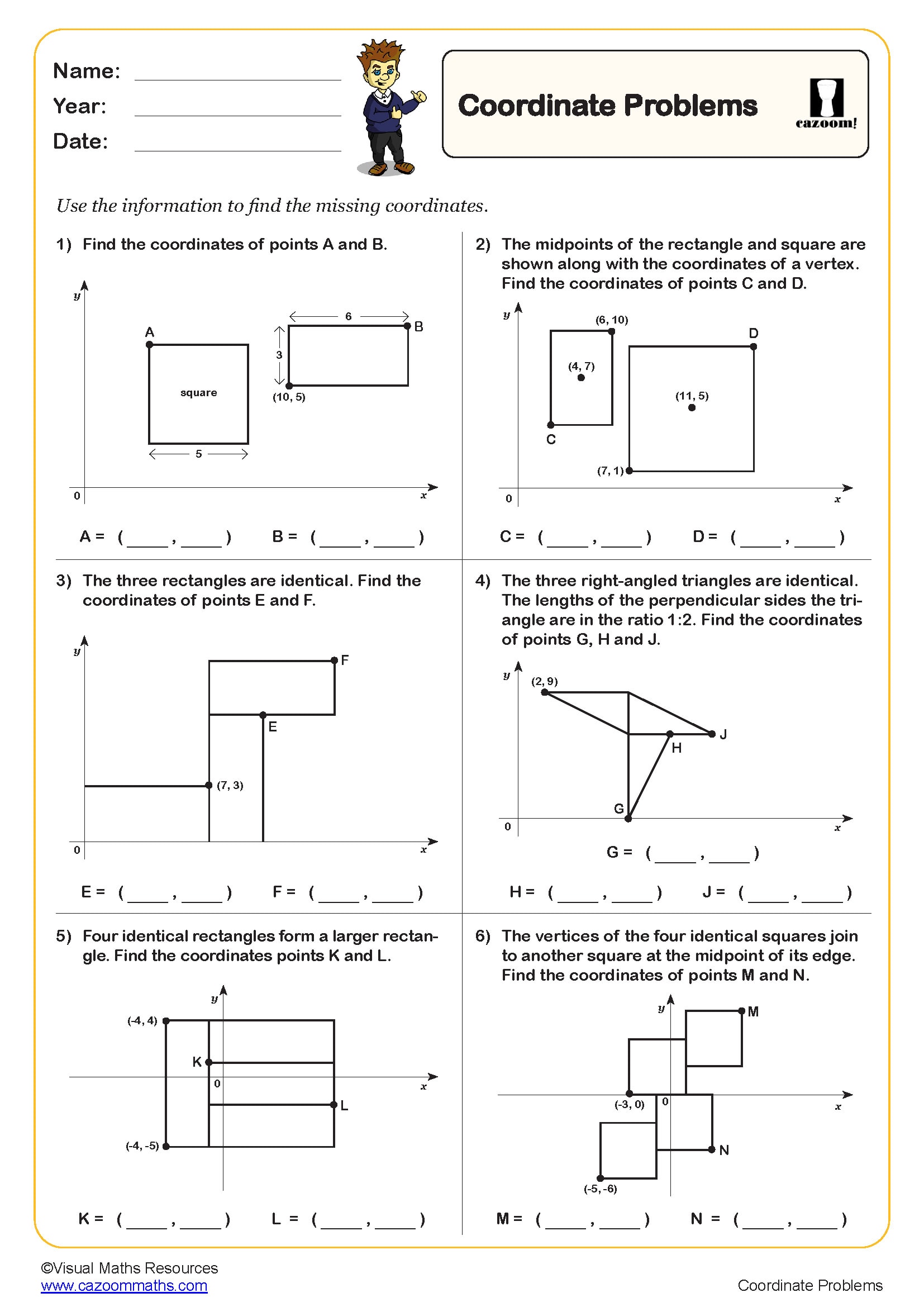
Coordinate Problems
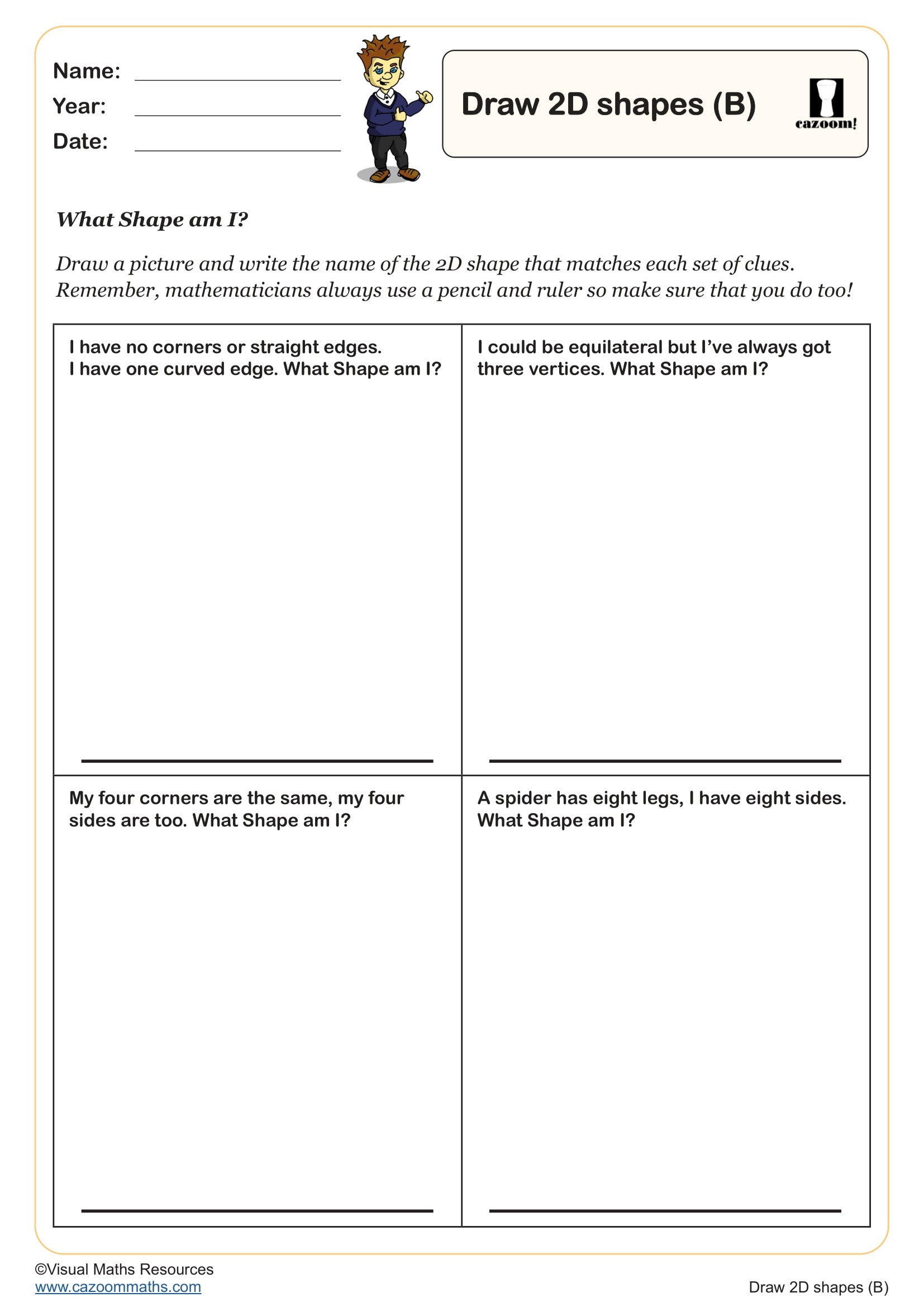
Drawing 2D Shapes (B)
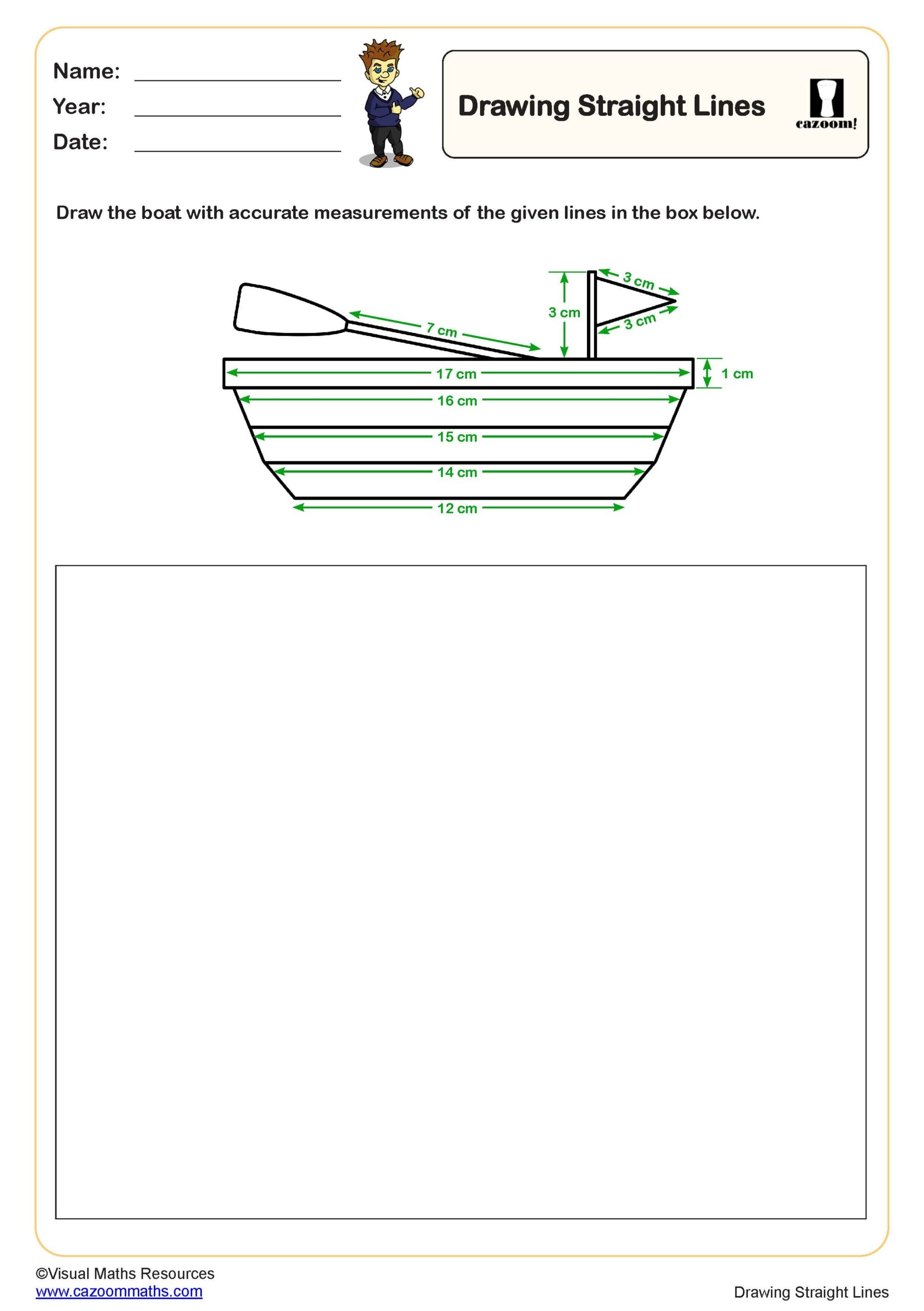
Drawing Straight Lines
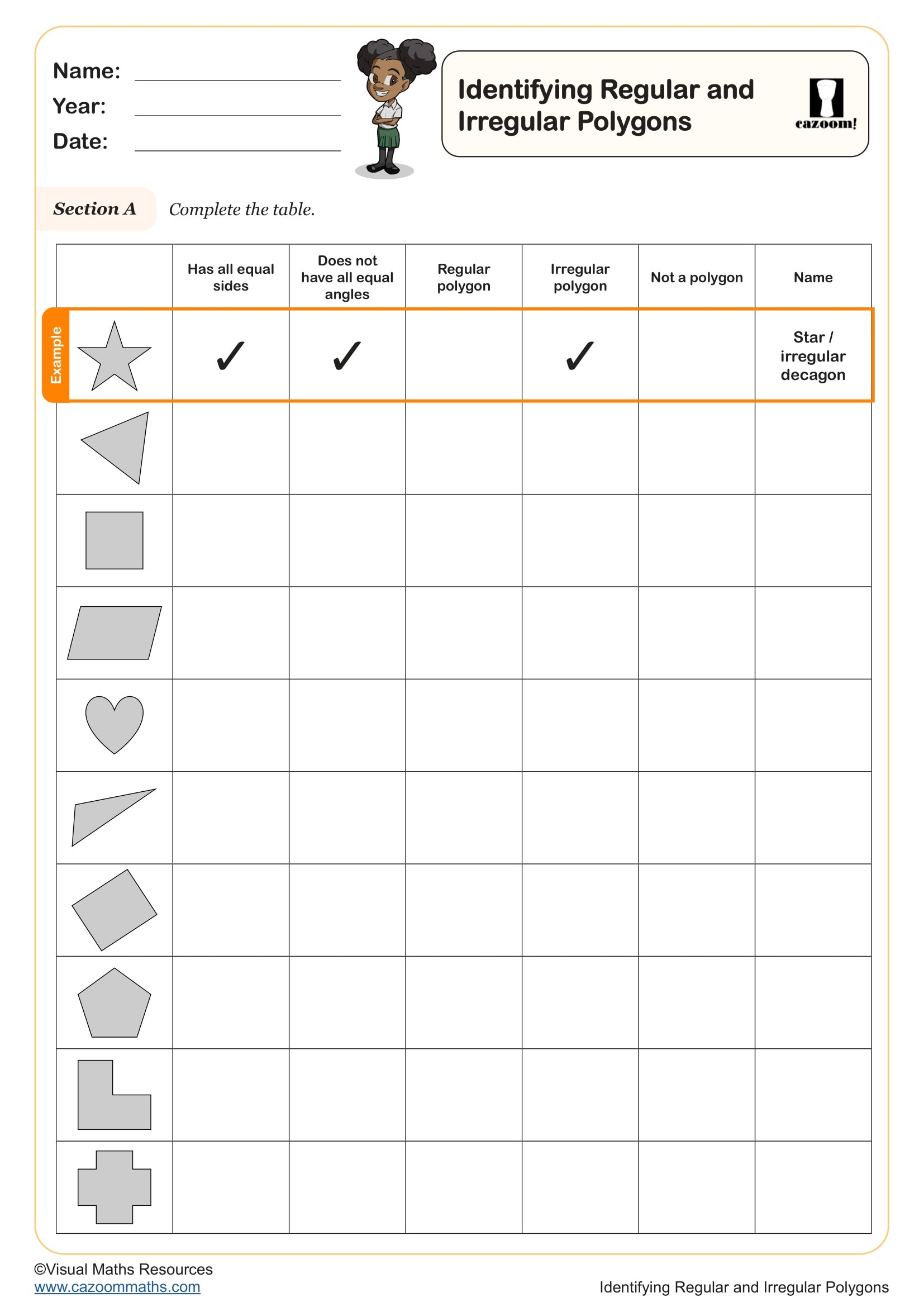
Identifying Regular and Irregular Polygons
Lines of Symmetry (A)
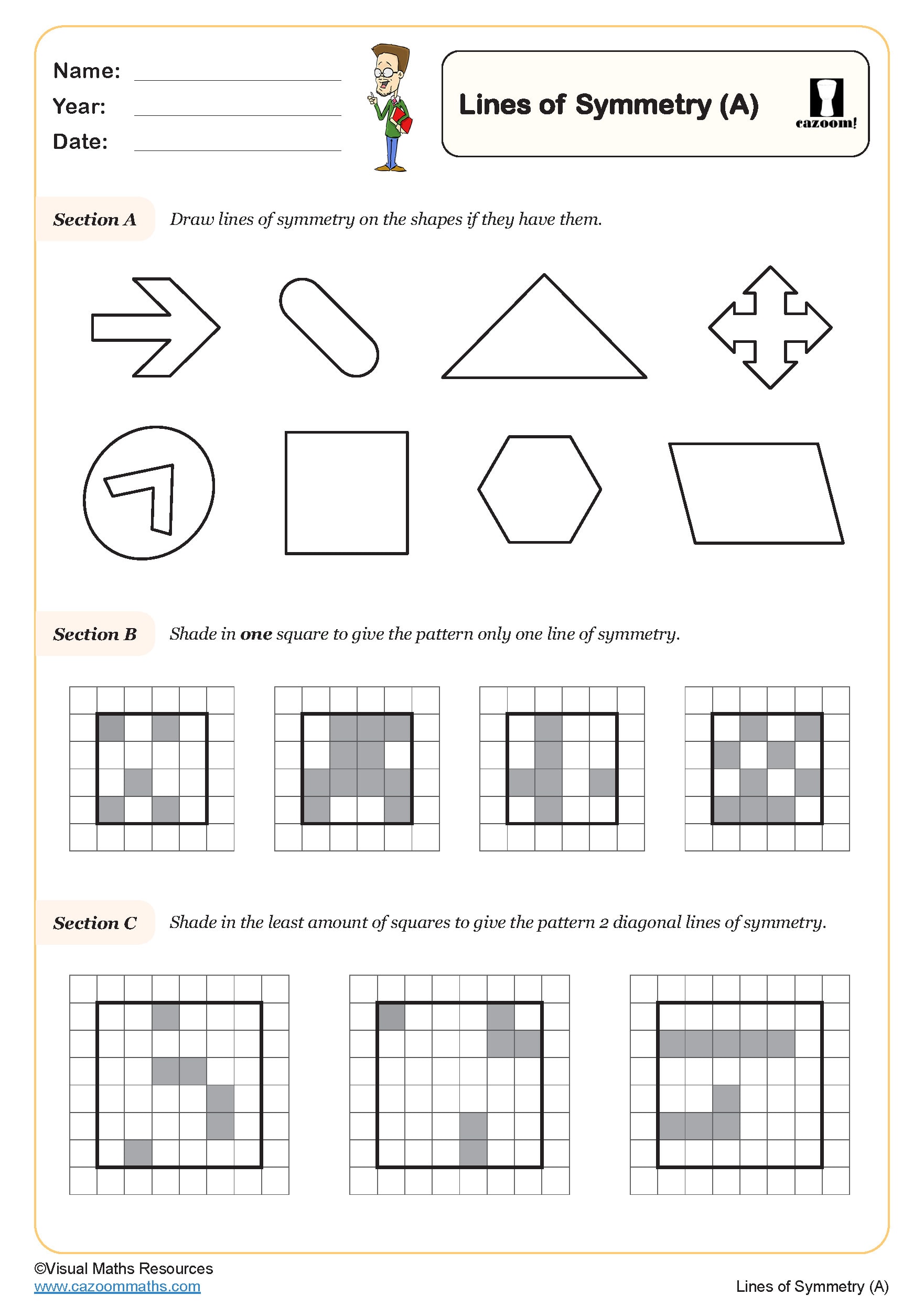
Measure Straight Lines (A)
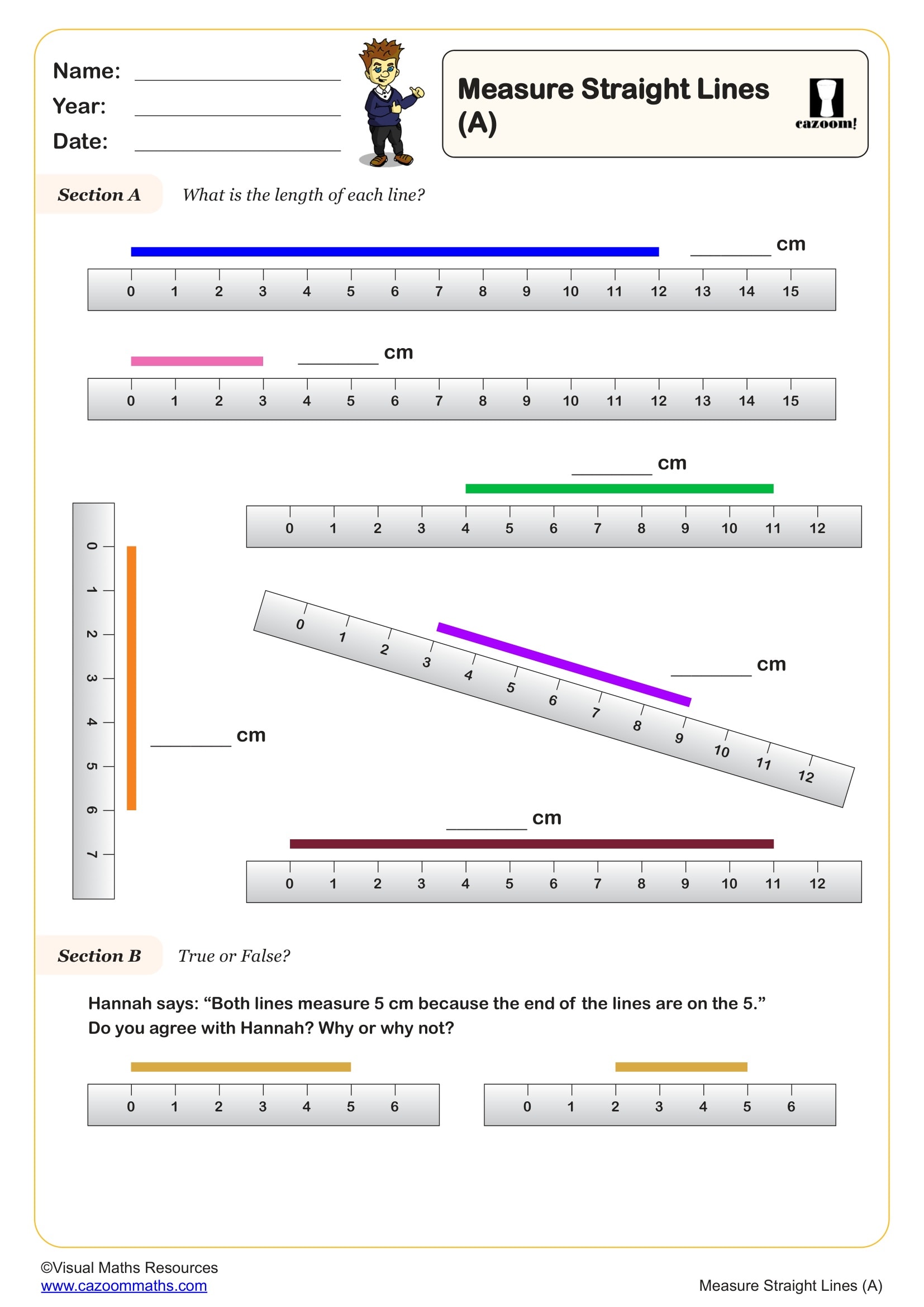
Measure Straight Lines (B)
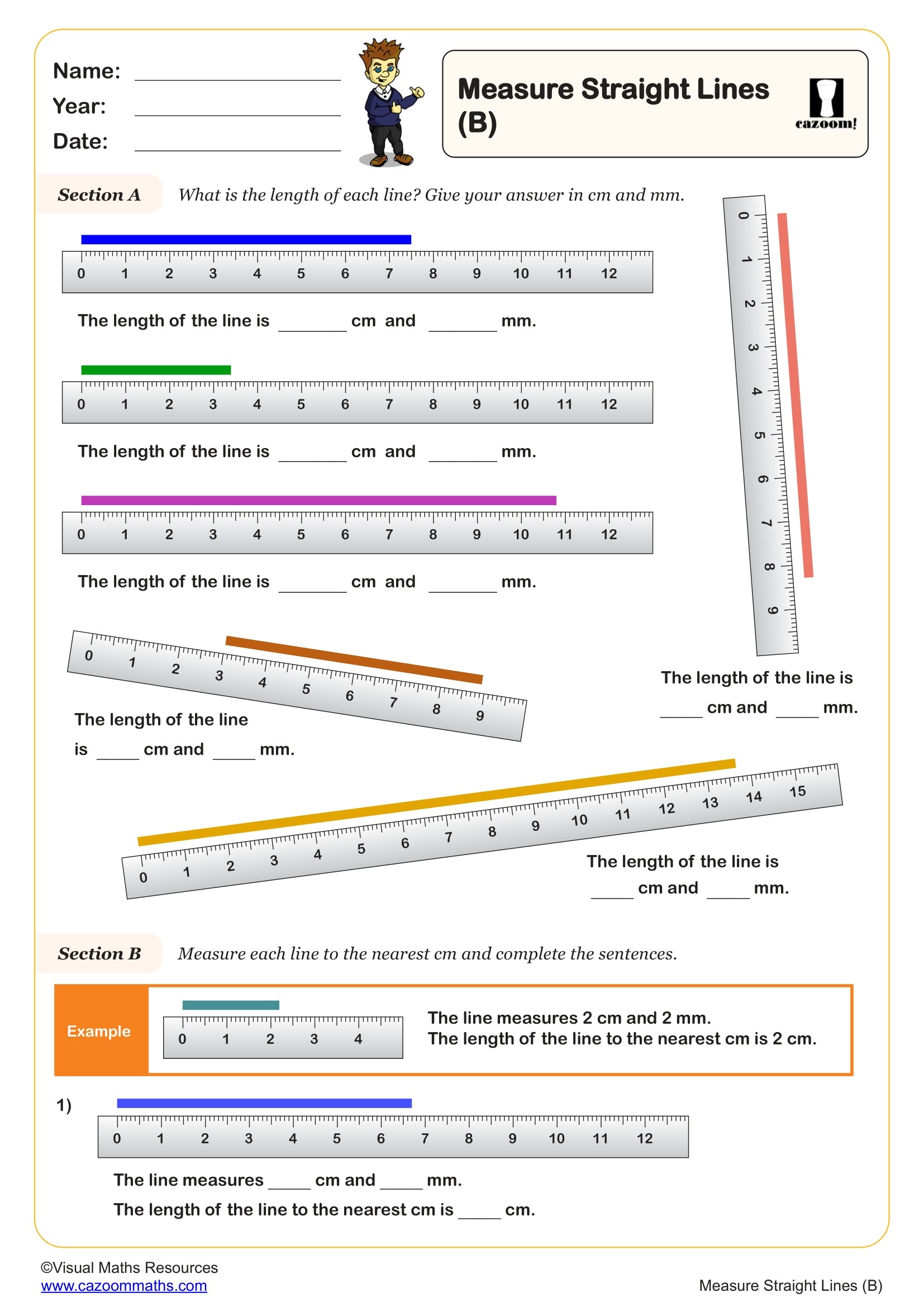
Nets
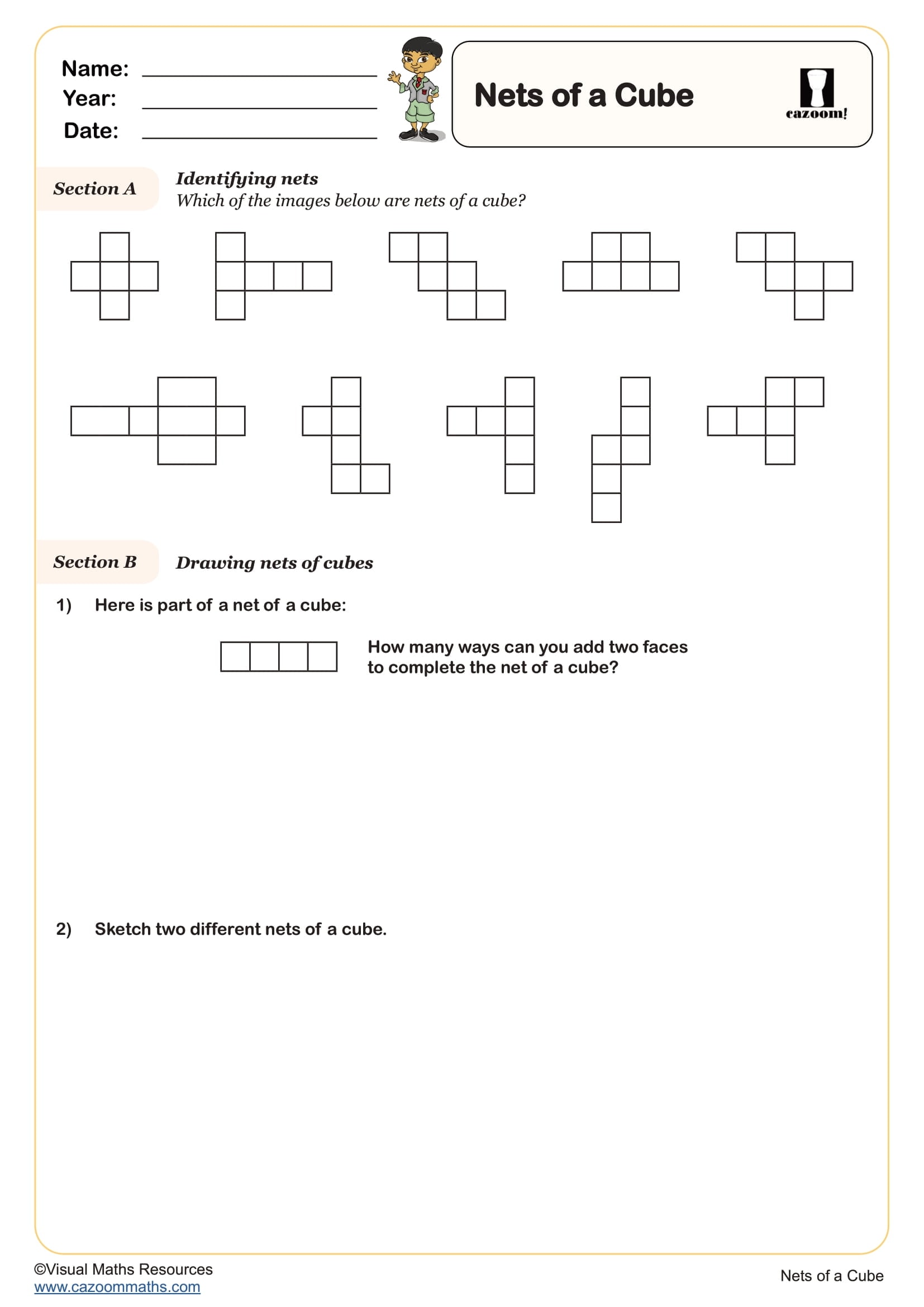
Nets of a Cube
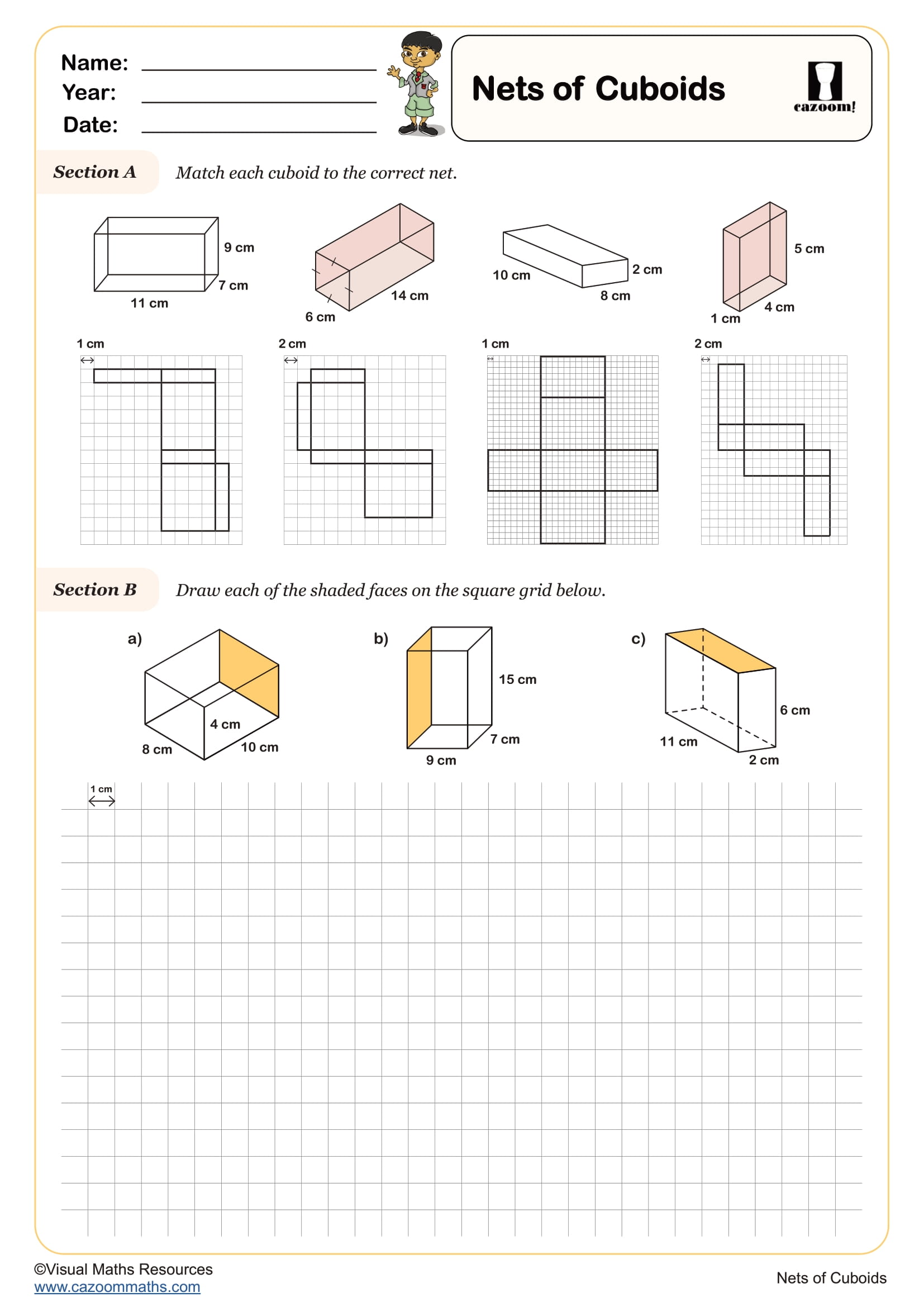
Nets of Cuboids
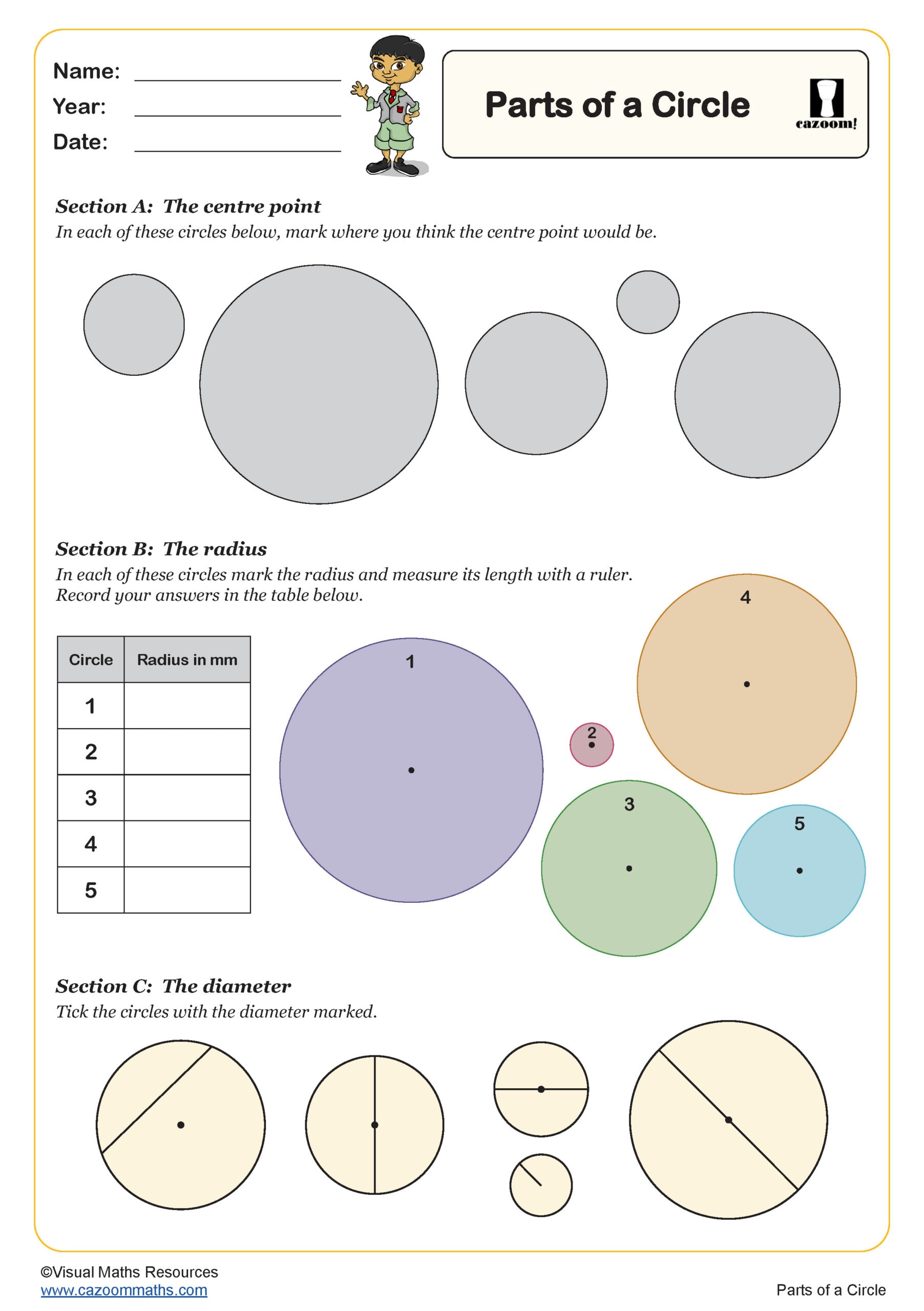
Parts of a Circle
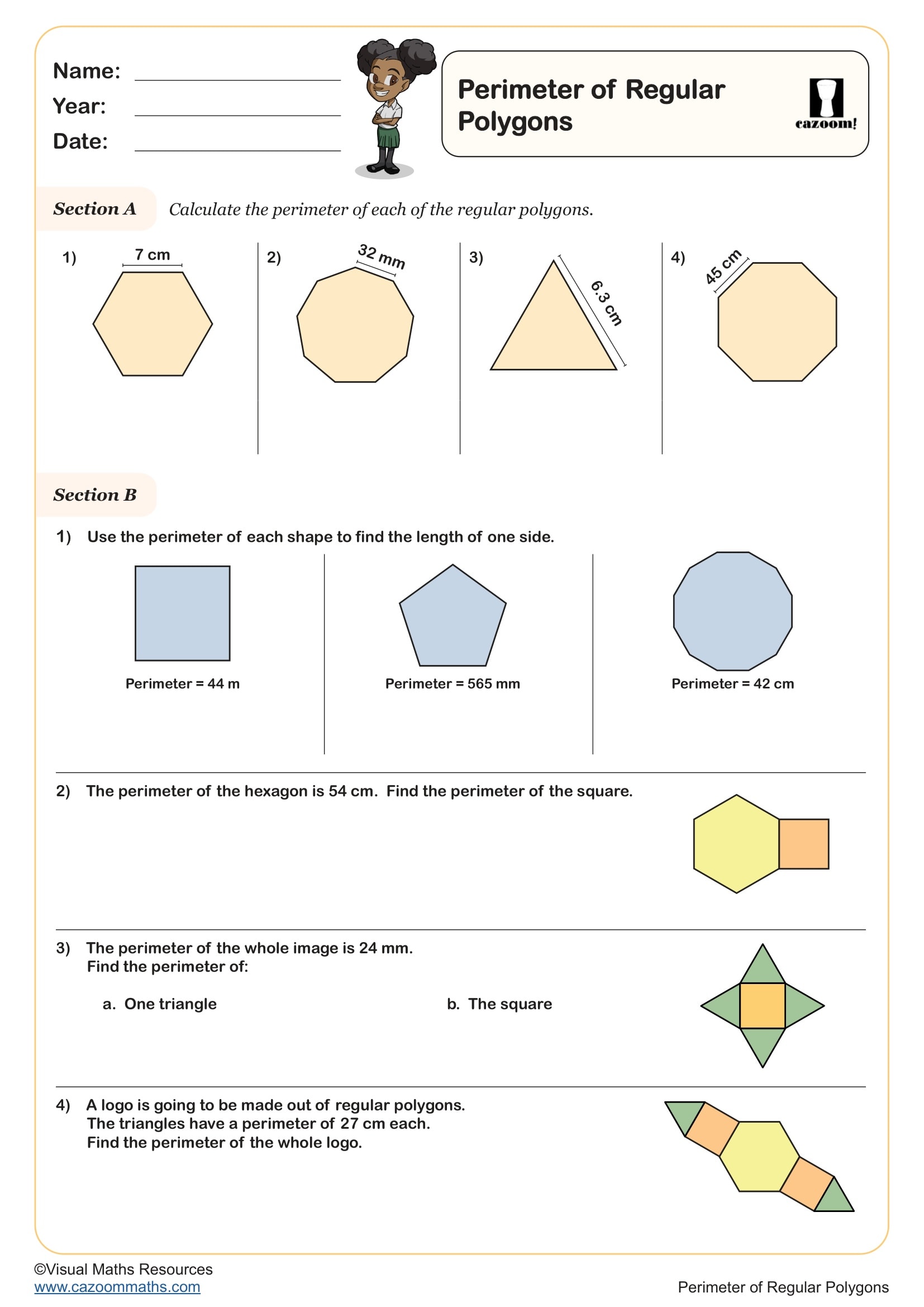
Perimeter of Regular Polygons
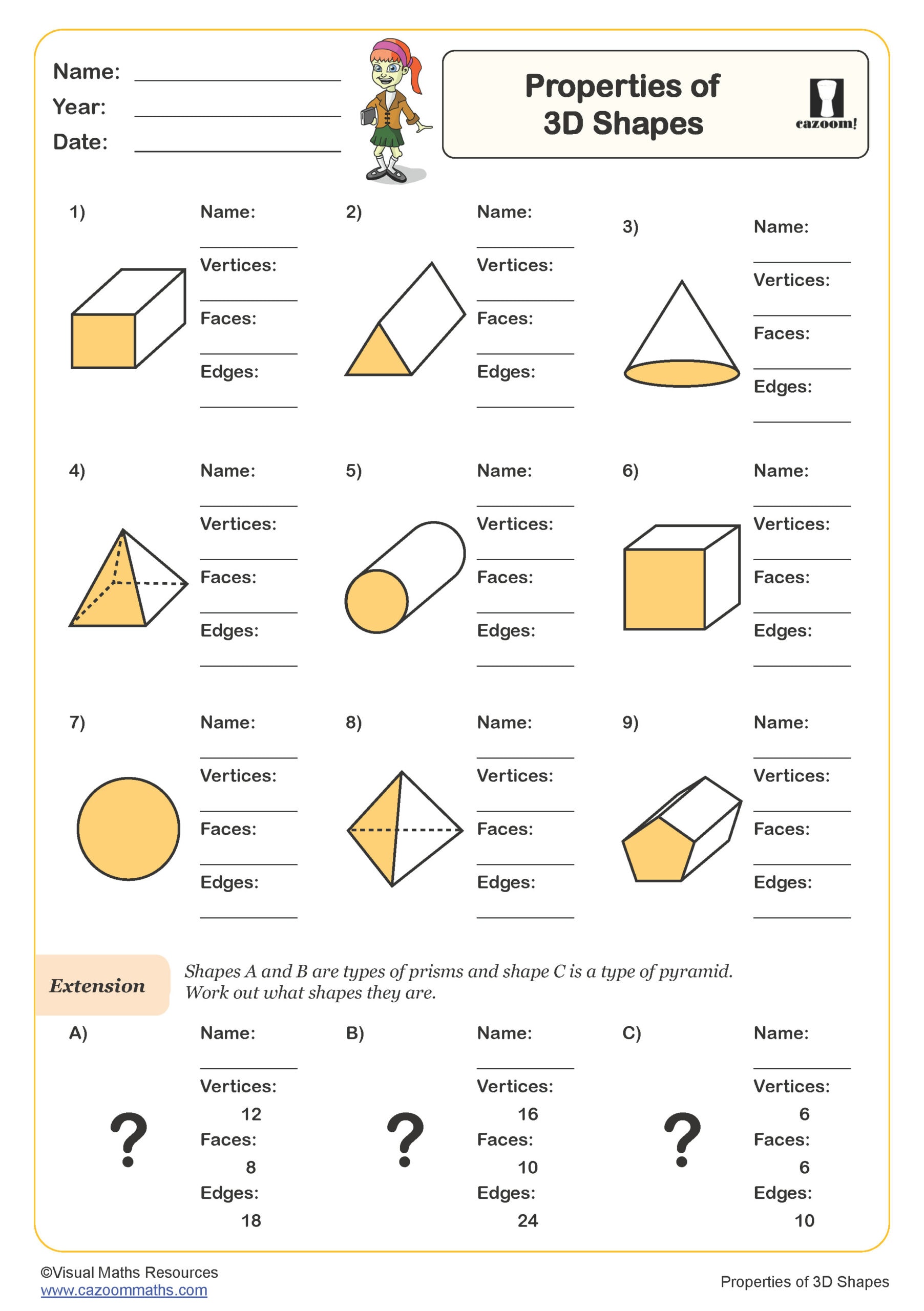
Properties of 3D Shapes (B)
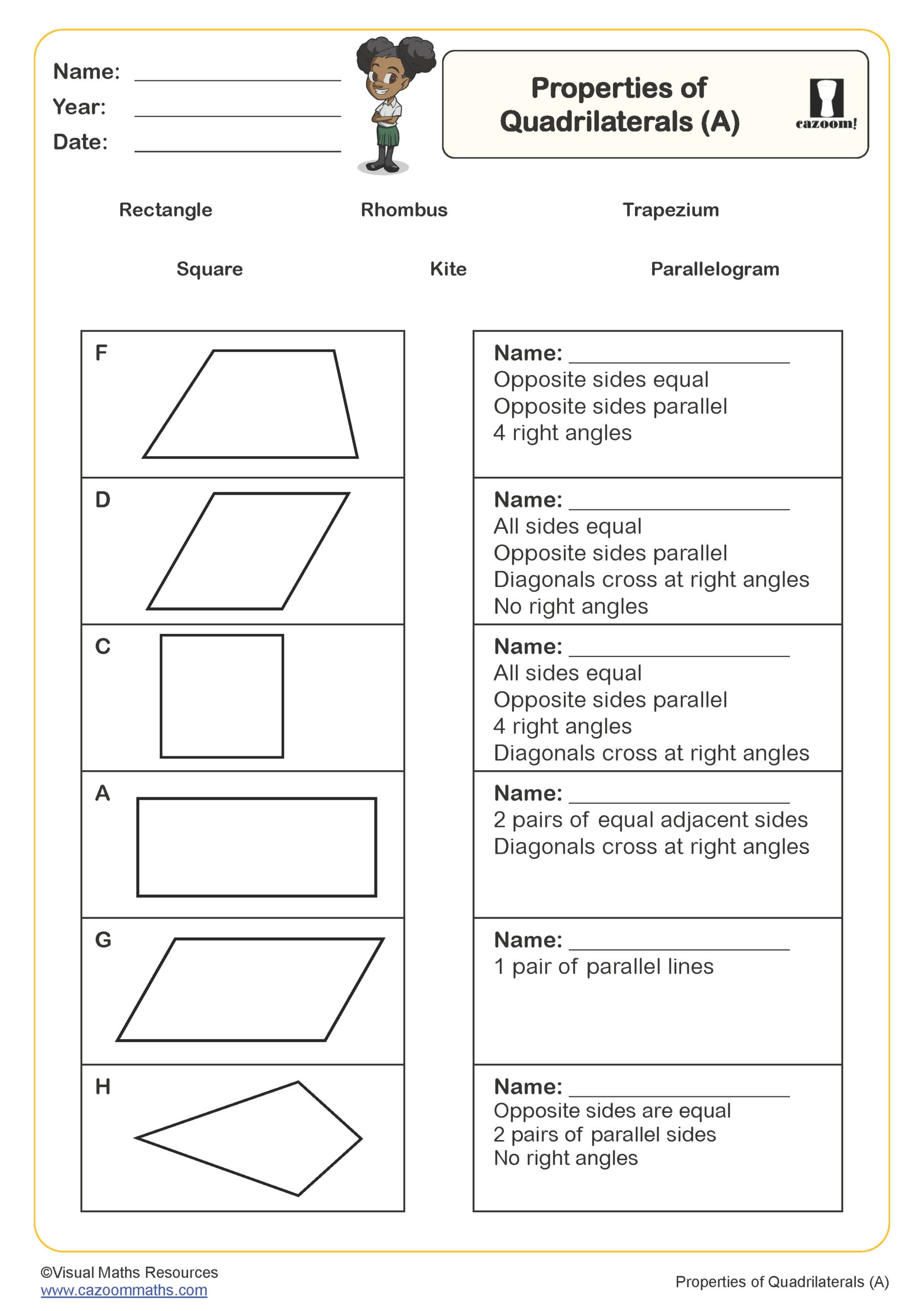
Properties of Quadrilaterals (A)
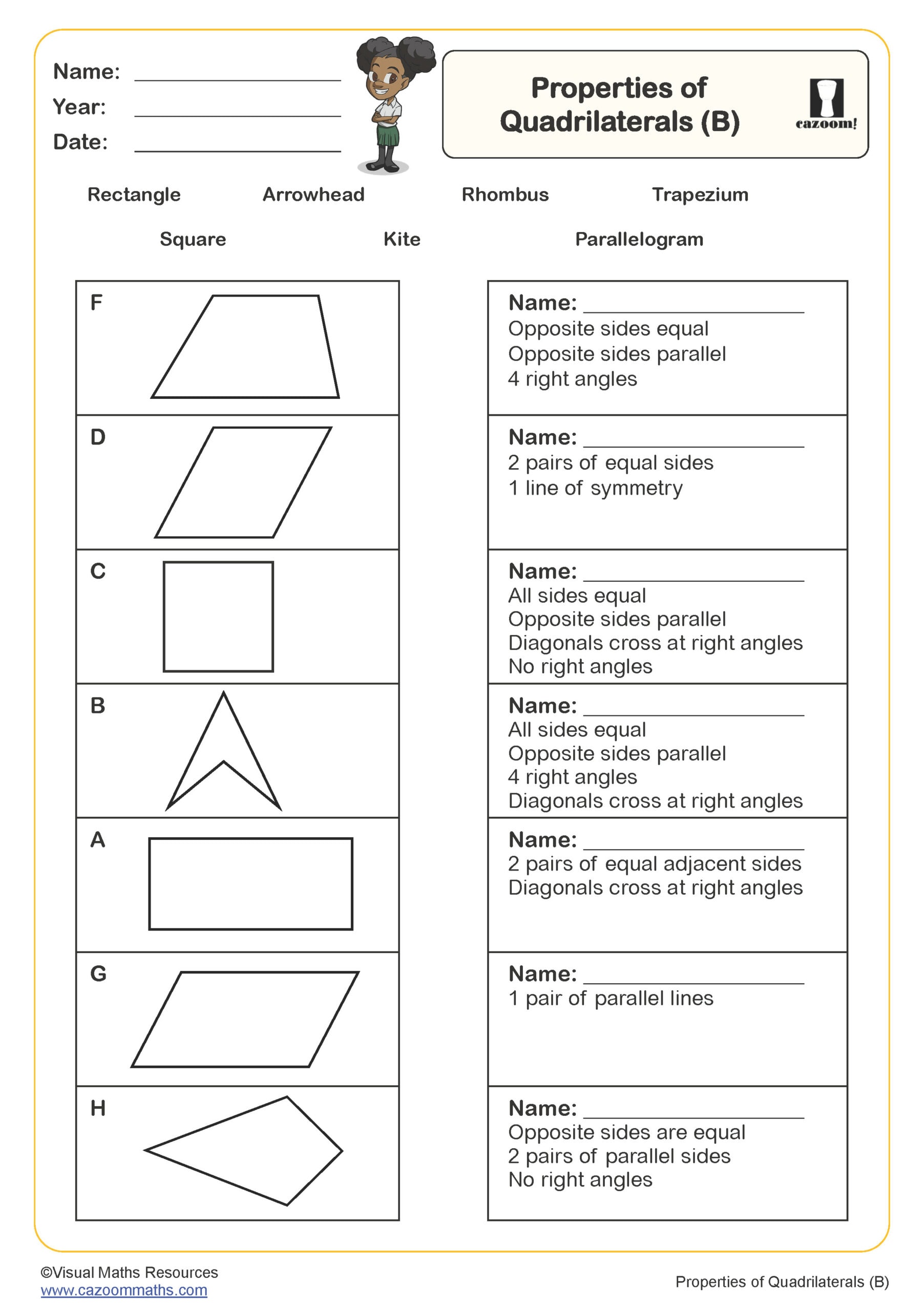
Properties of Quadrilaterals (B)
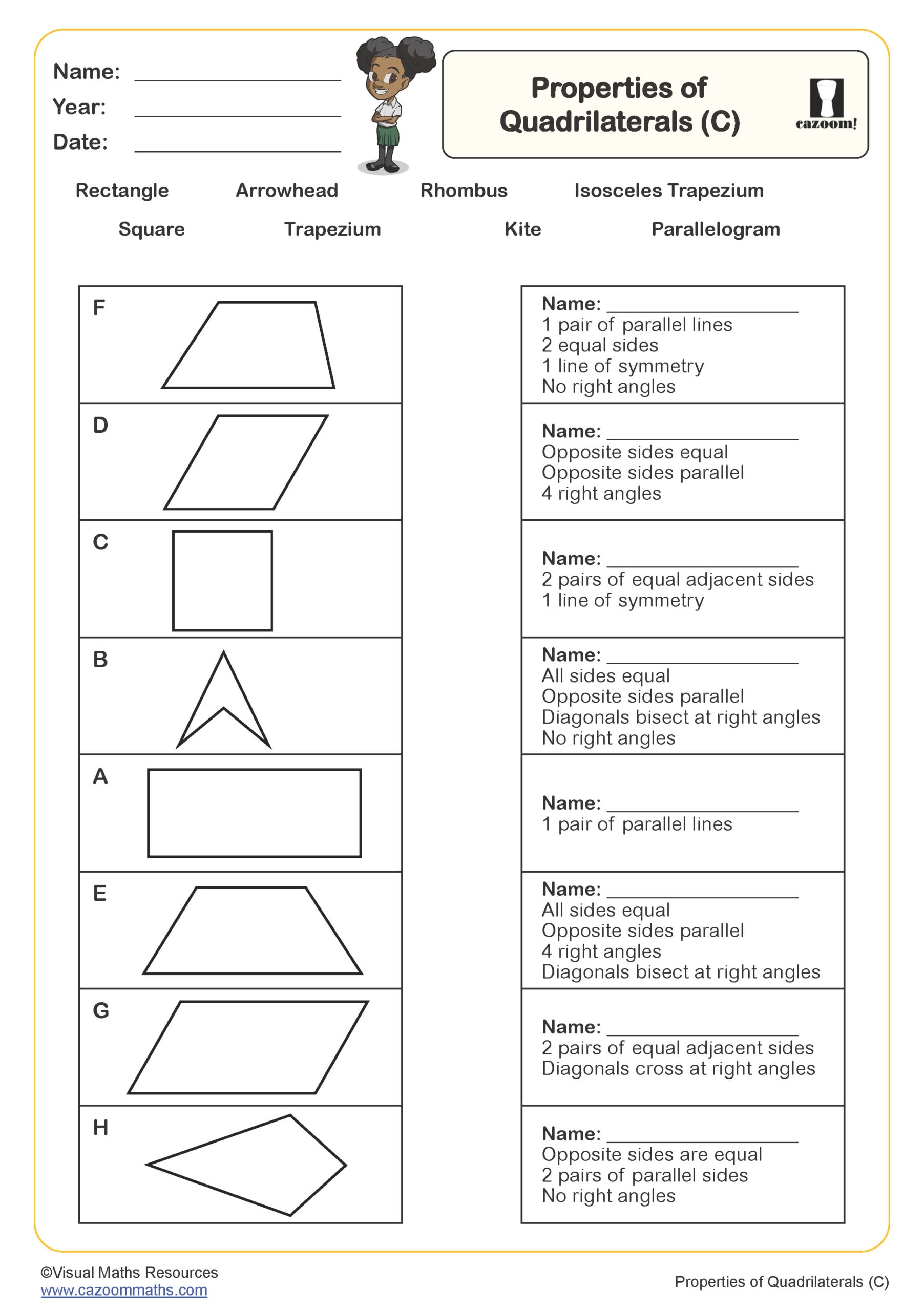
Properties of Quadrilaterals (C)
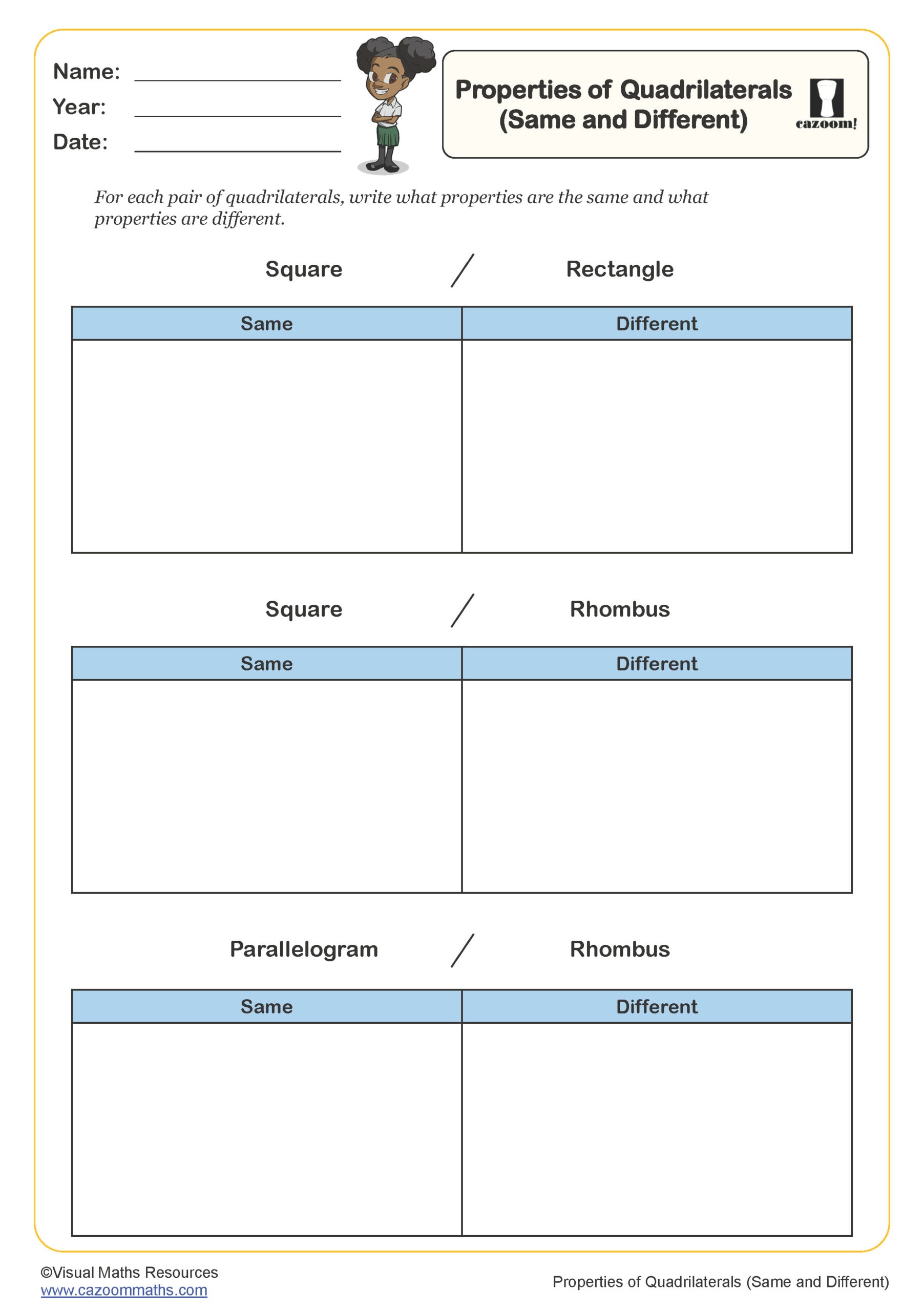
Properties of Quadrilaterals (Same and Different)
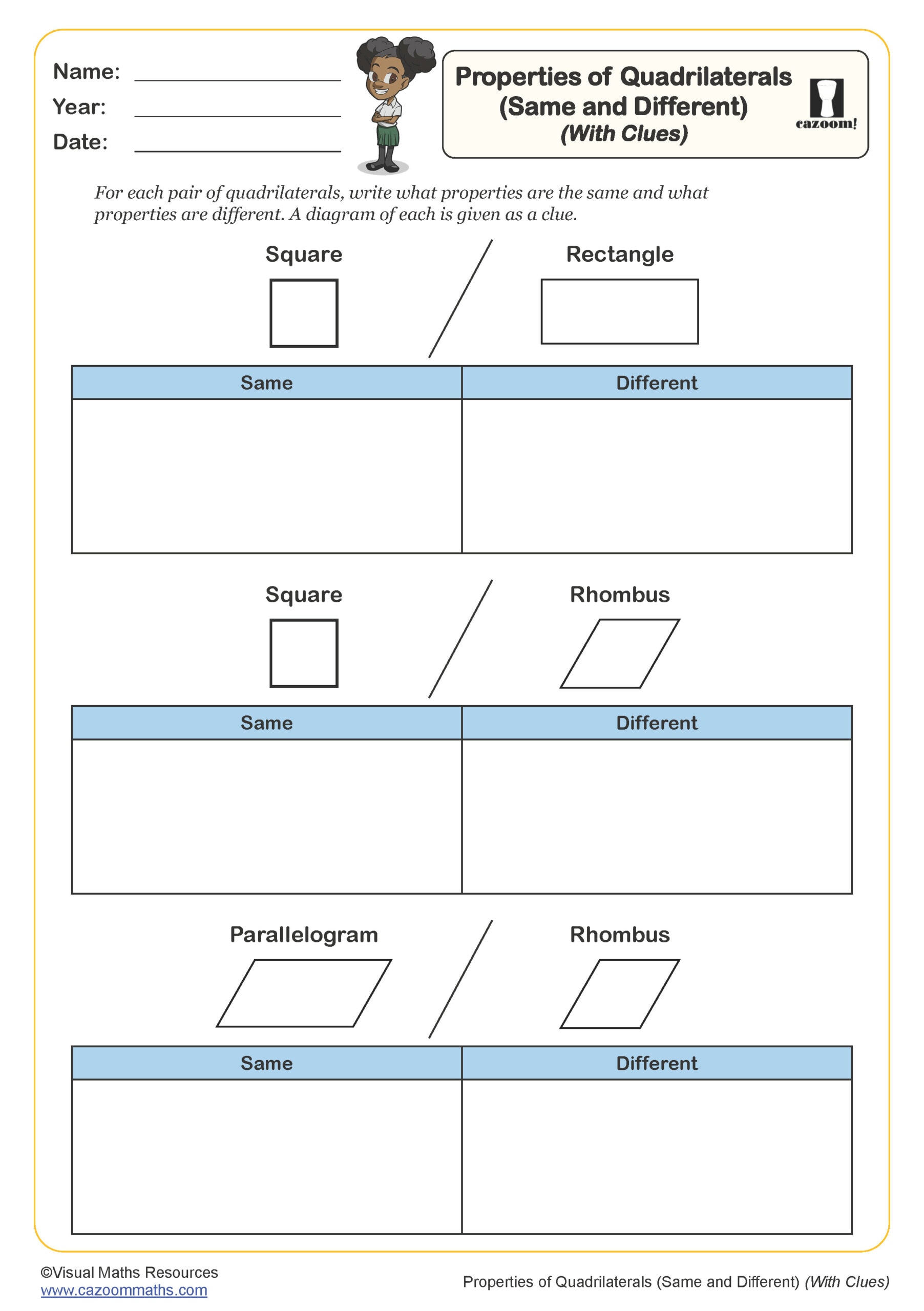
Properties of Quadrilaterals (Same and Different) (with clues)
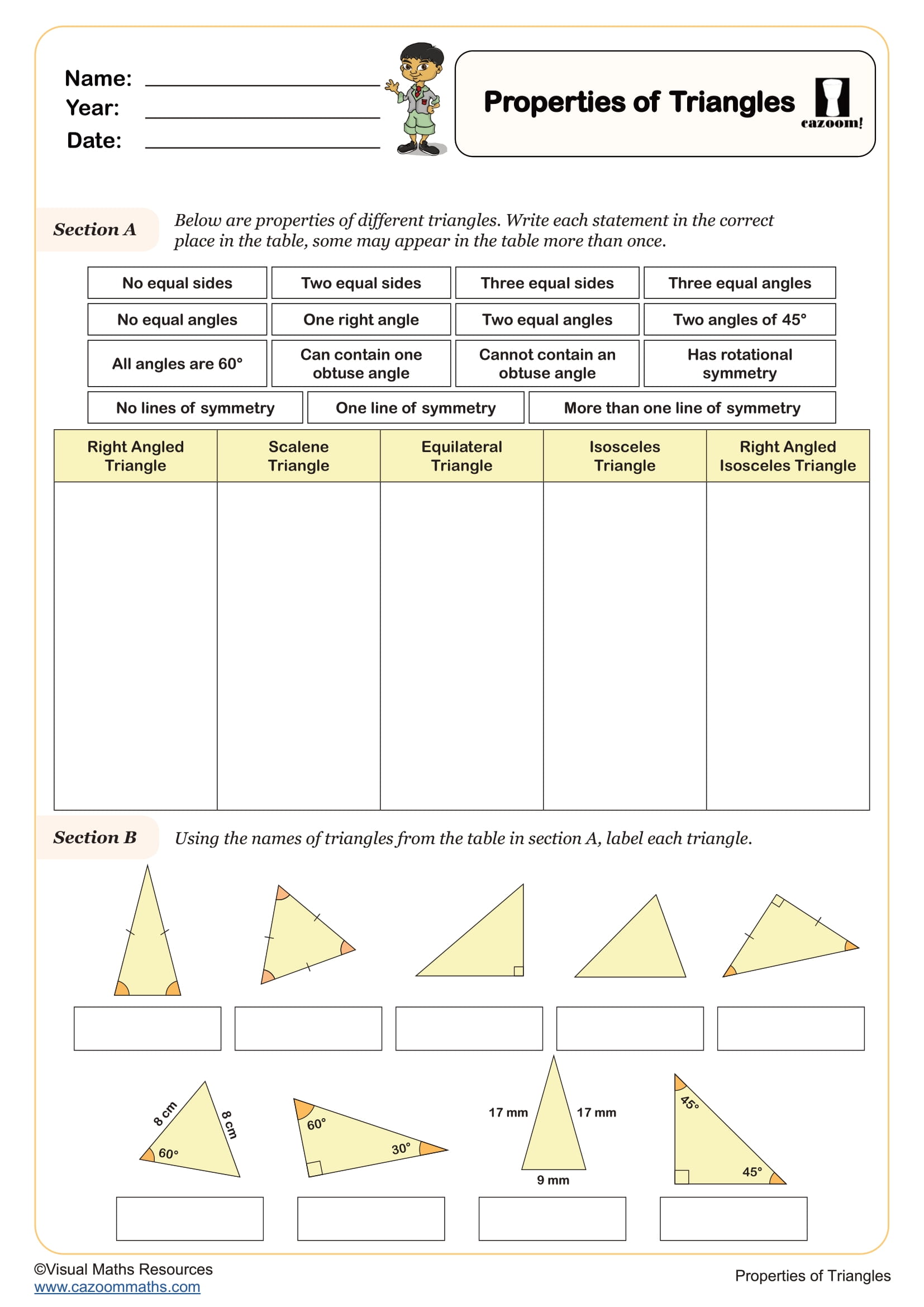
Properties of triangles
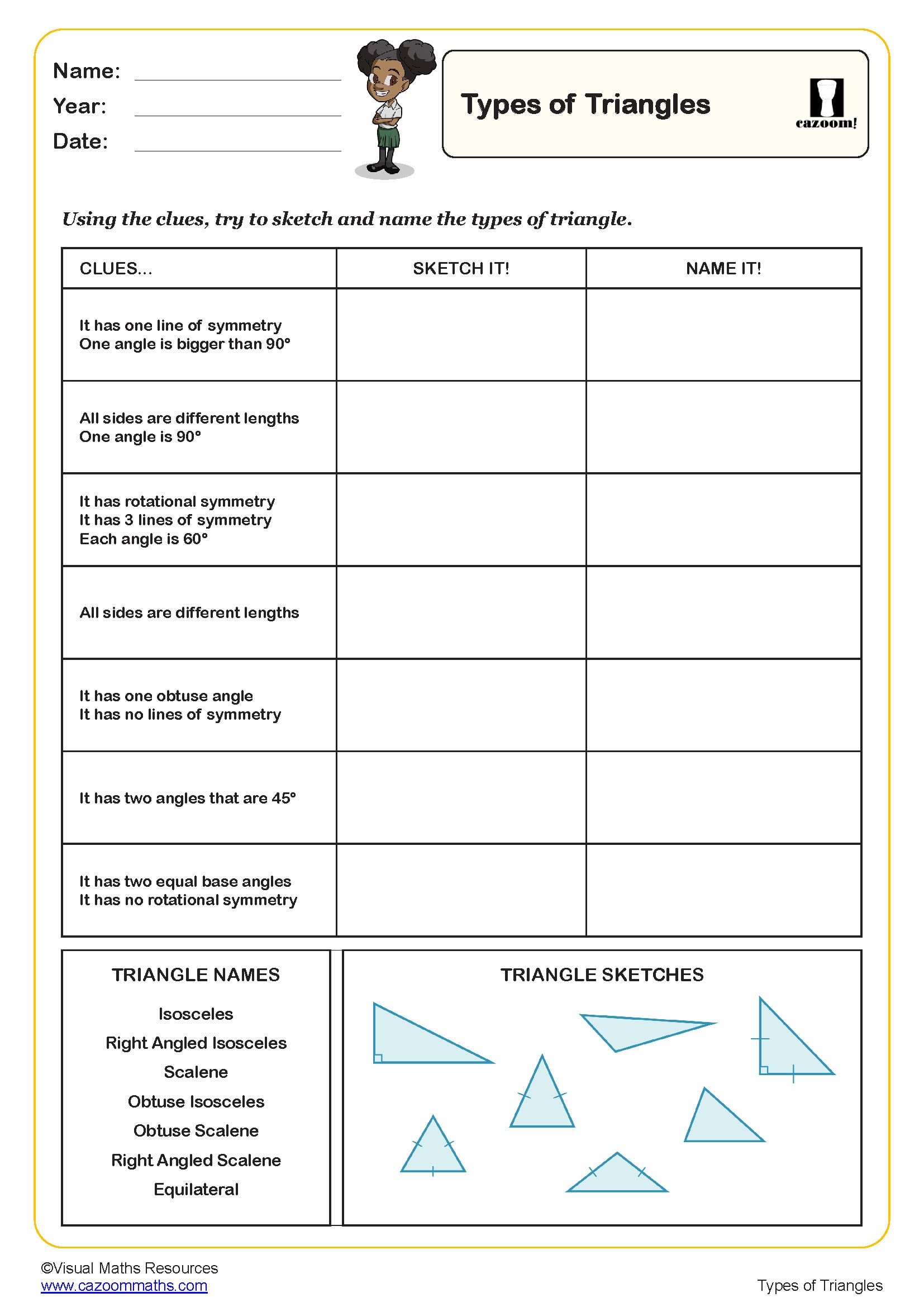
Types of Triangles
All worksheets are created by the team of experienced teachers at Cazoom Maths.
What are properties of shapes in KS2 maths?
Properties of shapes refers to the specific characteristics that define and distinguish different geometric figures. In KS2, pupils learn to identify and describe these features systematically, including the number of sides, vertices, edges and faces. They explore angle properties, understanding right angles, acute and obtuse angles within shapes. Line properties such as parallel and perpendicular lines become important for classifying quadrilaterals and other polygons.
The National Curriculum requires pupils to progress from simple shape recognition to analysing relationships between properties. Year 3 pupils might identify shapes with specific numbers of sides, whilst Year 6 pupils compare and classify shapes based on multiple properties simultaneously. Understanding these properties provides essential foundation for reasoning about shapes and solving geometric problems throughout secondary mathematics.
Which year groups study properties of shapes?
Properties of shapes appears throughout Key Stage 2, with content specifically designed for Years 3, 4, 5 and 6. Each year group builds upon previous knowledge with increasing complexity. Year 3 introduces basic properties of 2D and 3D shapes, whilst Year 4 develops classification of triangles and quadrilaterals. Year 5 extends understanding to regular and irregular polygons, and Year 6 tackles more sophisticated reasoning about geometric properties.
The progression ensures pupils develop deep understanding rather than simply memorising facts. Younger pupils focus on counting and identifying features, whilst older pupils analyse relationships between properties and use precise mathematical language. This spiral curriculum approach means that properties of shapes remains relevant throughout KS2, with our worksheets matched to the specific expectations of each year group within the National Curriculum framework.
How do pupils classify different types of triangles?
Triangles are classified in two ways: by their sides and by their angles. When looking at sides, pupils identify equilateral triangles (three equal sides), isosceles triangles (two equal sides) and scalene triangles (no equal sides). Classification by angles introduces right-angled triangles, acute triangles (all angles less than 90°) and obtuse triangles (one angle greater than 90°). Understanding that triangles can belong to multiple categories simultaneously develops logical reasoning.
Our worksheets provide structured practice in identifying triangles from diagrams, drawing triangles with specific properties, and explaining classifications using correct mathematical vocabulary. Pupils learn to use tick marks to show equal sides and angle notation to indicate right angles. These skills support later work in geometry, particularly when calculating missing angles and working with congruent shapes in secondary school mathematics.
Do the worksheets include answers?
Yes, every properties of shapes worksheet includes a complete answer sheet. These aren't just brief solutions—they show all working and explanations where relevant, helping you understand the reasoning behind each answer. This makes marking quick and accurate, whilst also providing a useful teaching tool if pupils need additional support understanding particular concepts or questions.
The answer sheets are particularly valuable for parents supporting home learning, as they provide confidence when checking work and explaining geometric properties. Teachers can use them for peer marking activities or self-assessment, encouraging pupils to check their own understanding. All materials are provided as downloadable PDFs, so you can print multiple copies for whole-class use or individual intervention work without restriction.