Experimental Probability WORKSHEET
Experimental Probability WORKSHEET DESCRIPTION
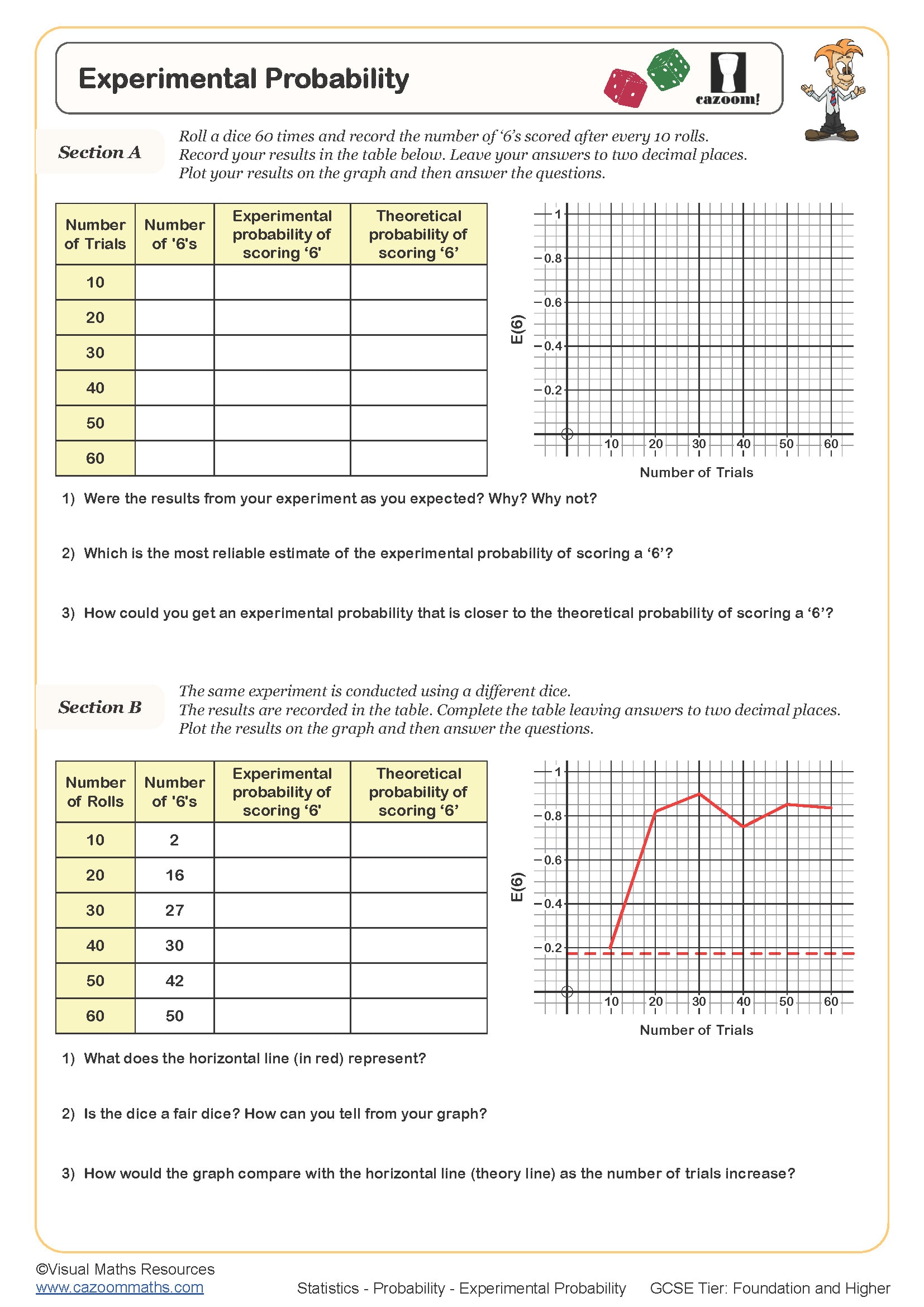
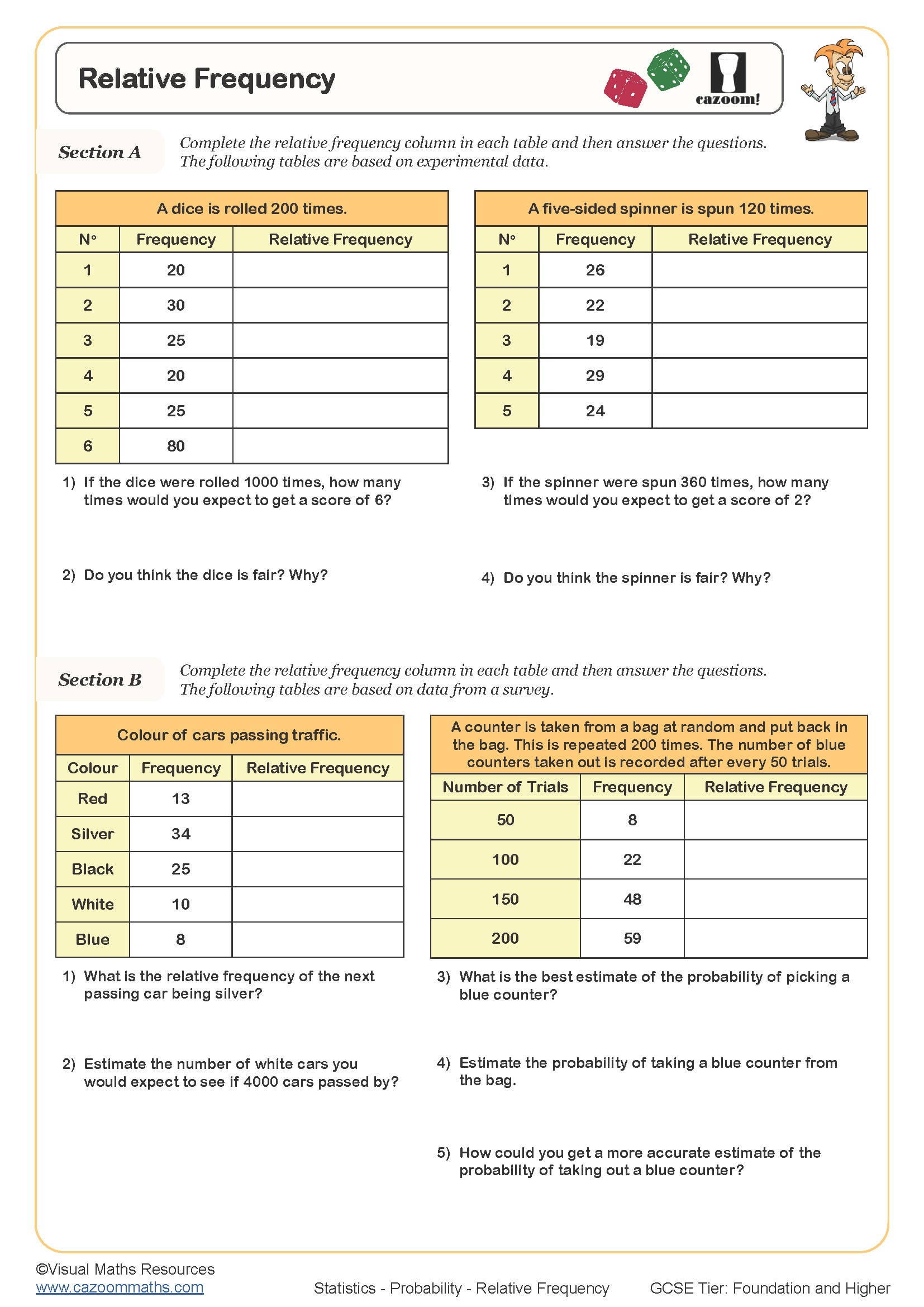
Students will conduct their own dice experiment and compare their results with theoretical probability in section A. In section A, pupils must roll a dice 60 times and record the number of ‘6’s scored after every 10 rolls in the table provided and plot their results on a graph (axes provided). Pupils will compare their results with the theoretical probability of rolling a fair dice and could also compare their results with their peers.
In section B, the same experiment has been carried out, but this time the results have been provided. Students will again work out the experimental probability of these results, plot them on a graph and discuss by answering questions about the data.
All worksheets are created by the team of experienced teachers at Cazoom Maths.
RELATED TO Experimental Probability WORKSHEET
Frequently Asked Questions
Pupils should already be comfortable calculating both experimental and theoretical probability before attempting this activity. They'll also need to know how to plot results from experiments on a graph, as they'll be creating visual representations of their dice rolling data. These foundational skills are essential for successfully analysing how their experimental results compare to what we'd expect theoretically.