KS3 Bar Models Worksheets
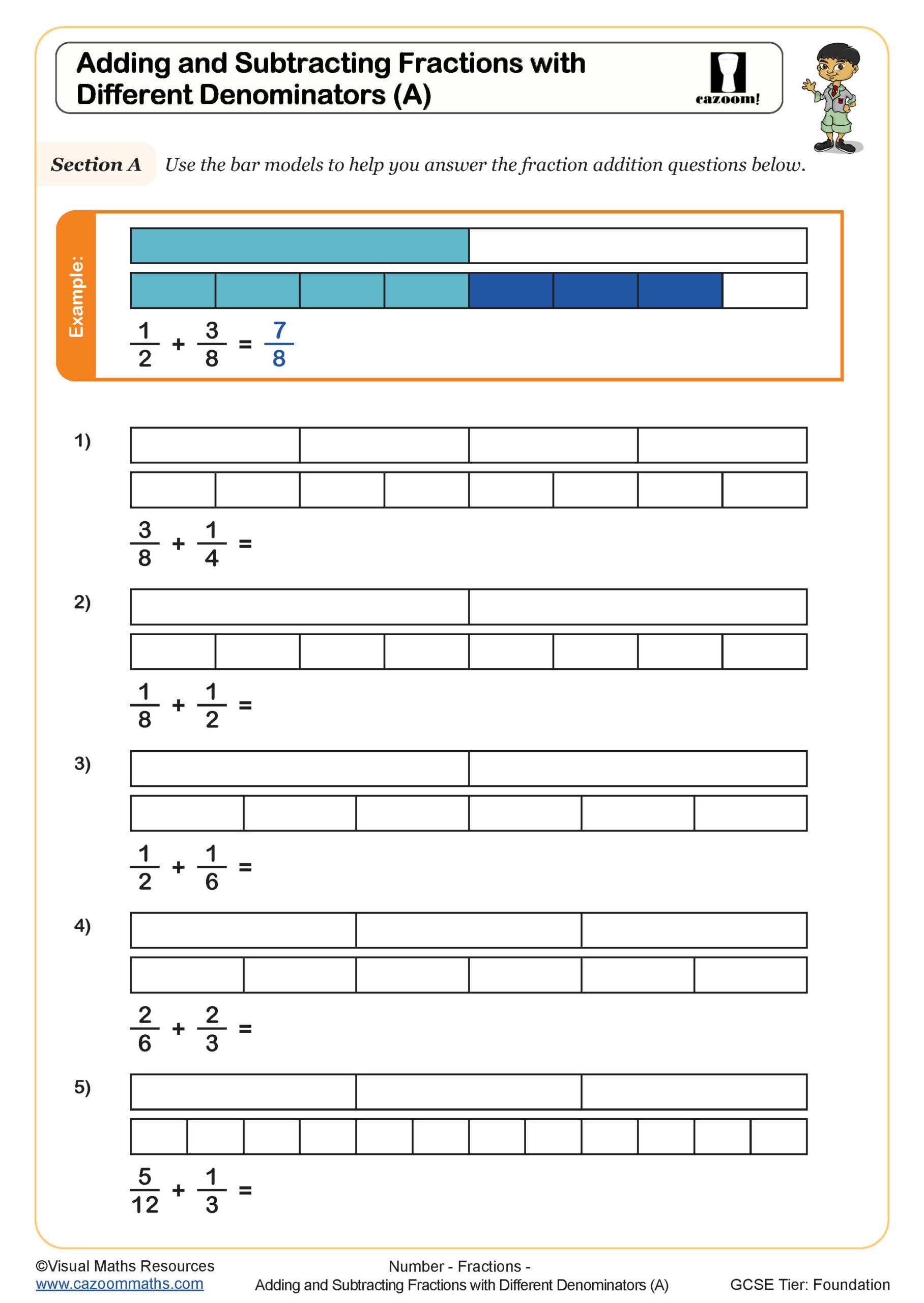
Adding and subtracting fractions with different denominators (A)
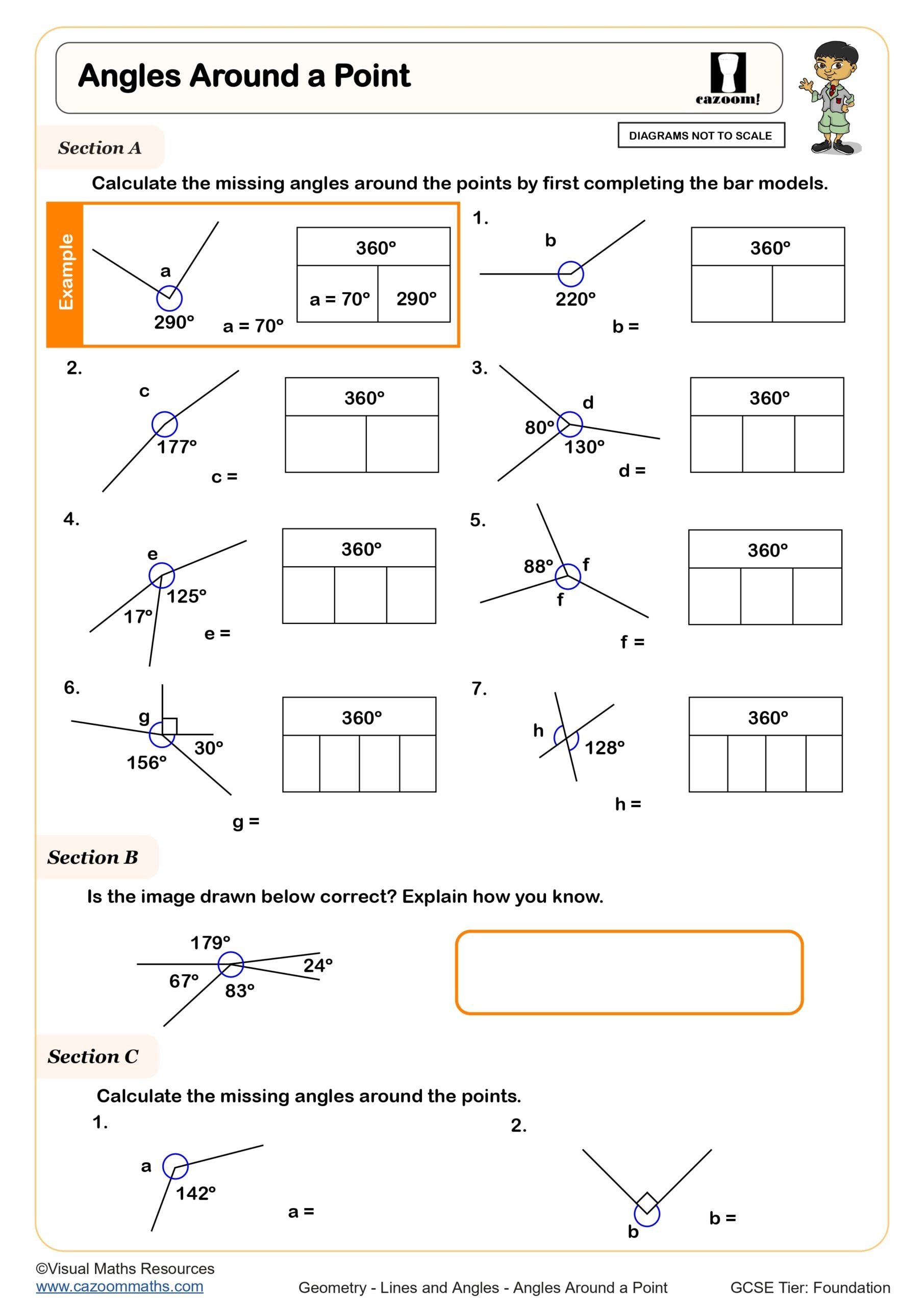
Angles Around a Point
Angles in Triangles (A)
-Worksheet.jpg?w=3840)
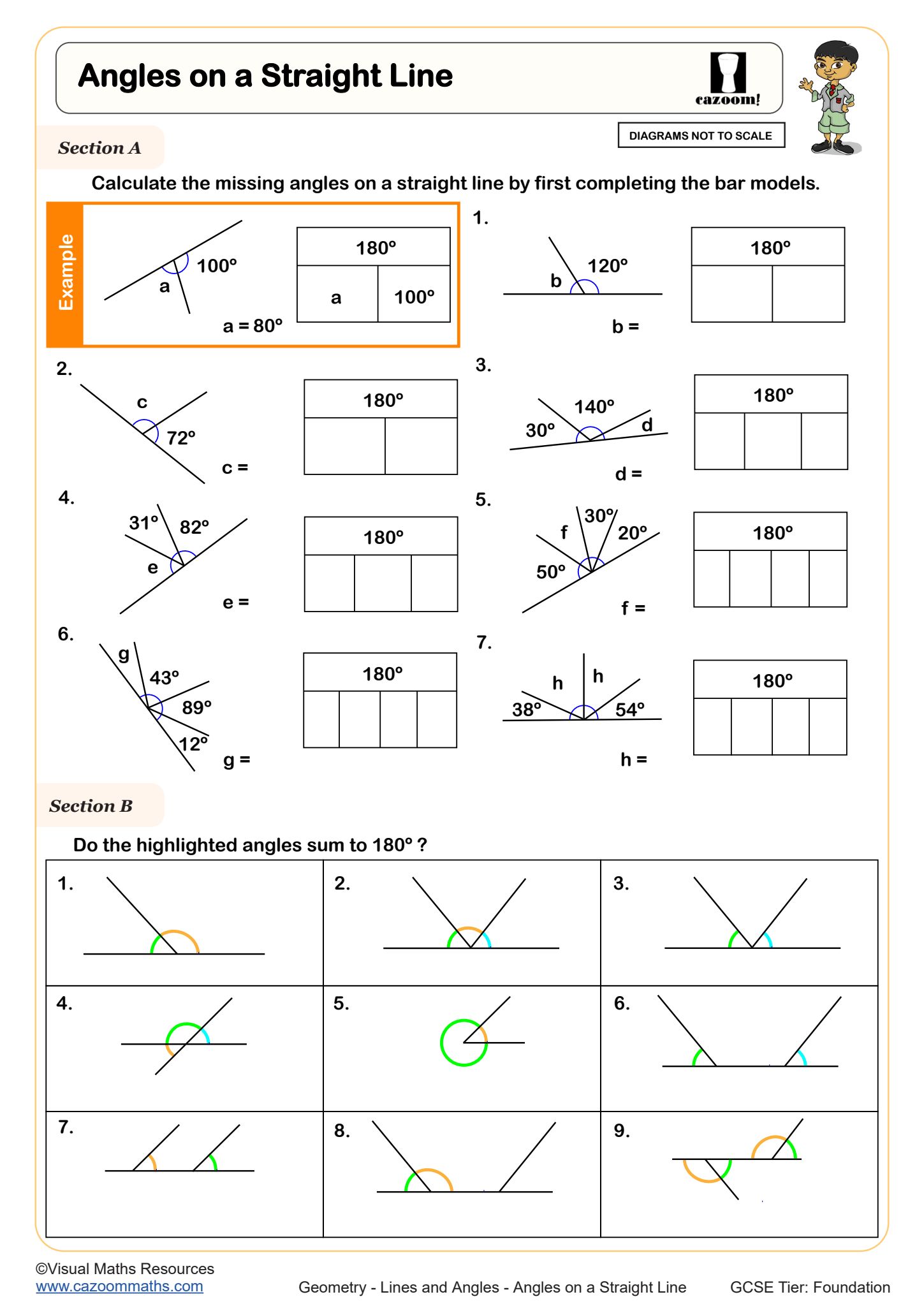
Angles on a Straight Line
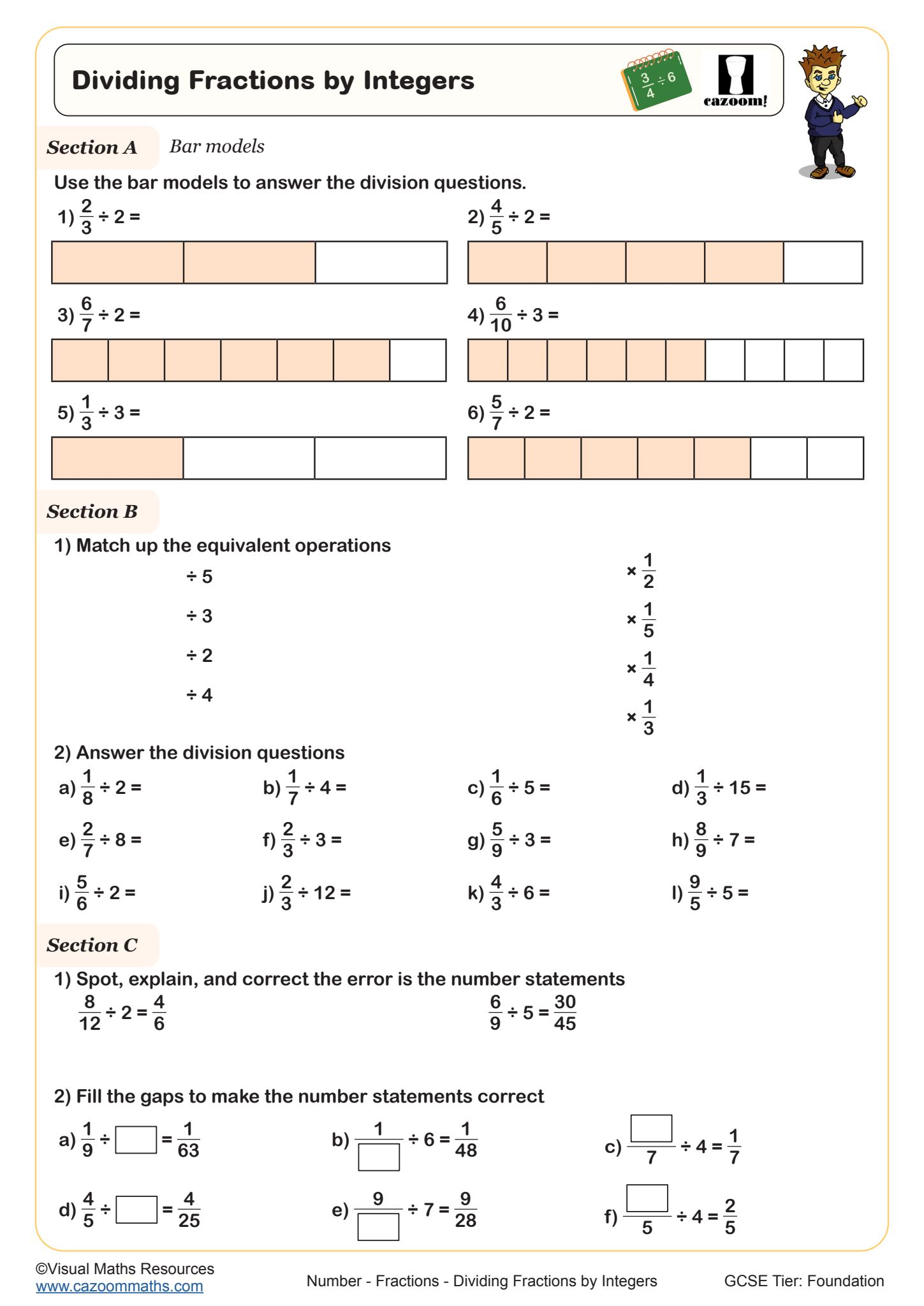
Dividing Fractions by Integers
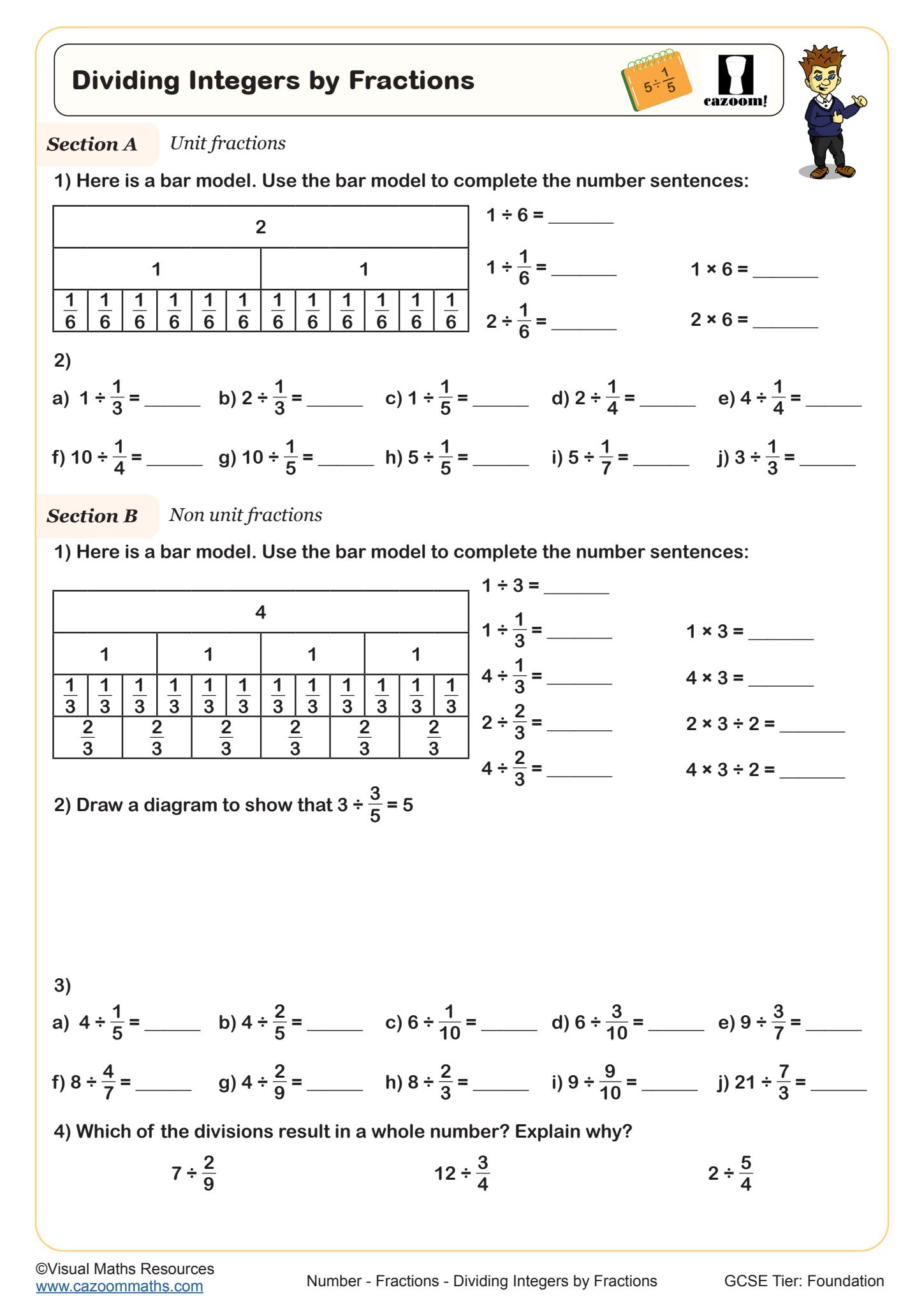
Dividing Integers by Fractions
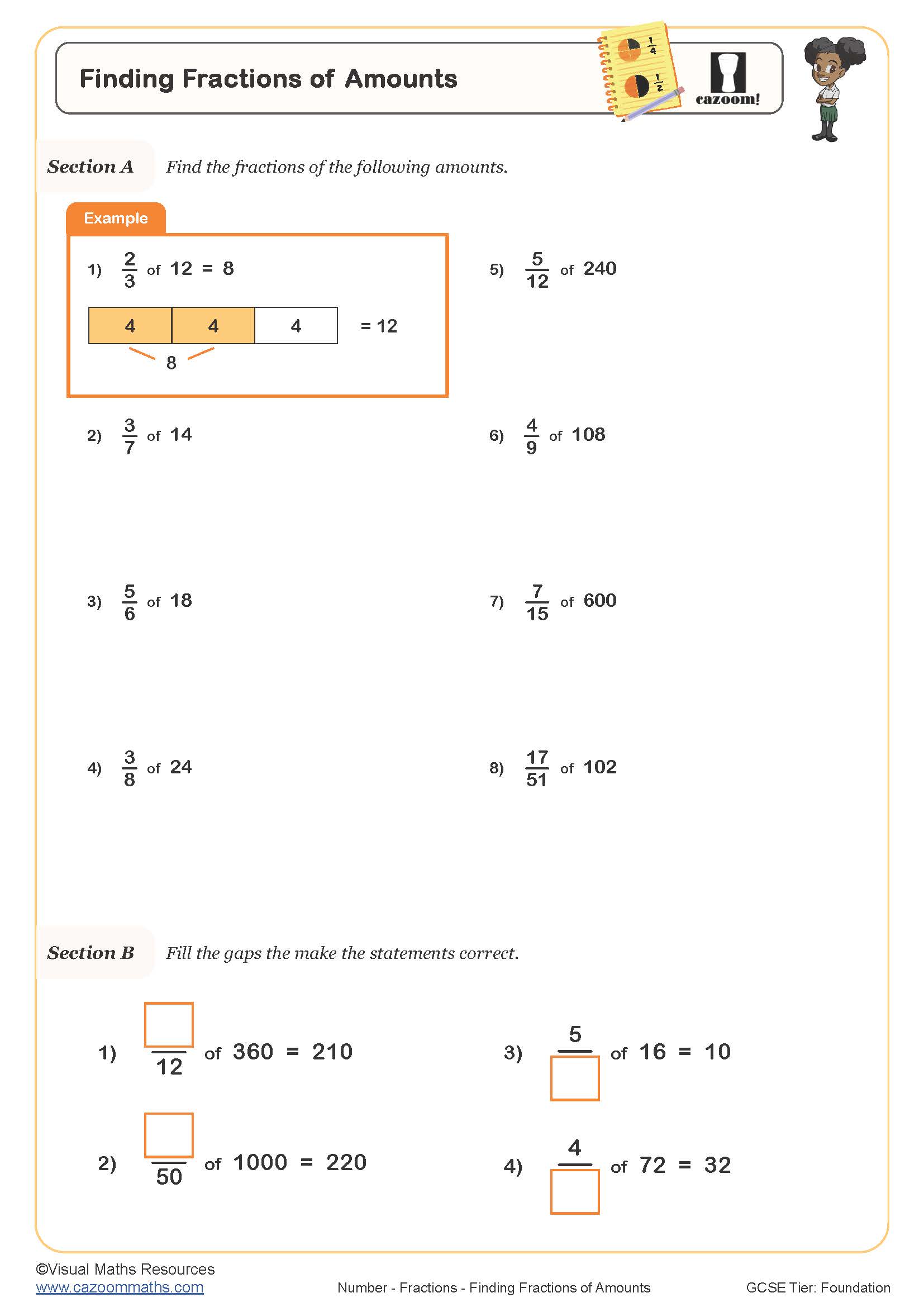
Finding Fractions of Amounts
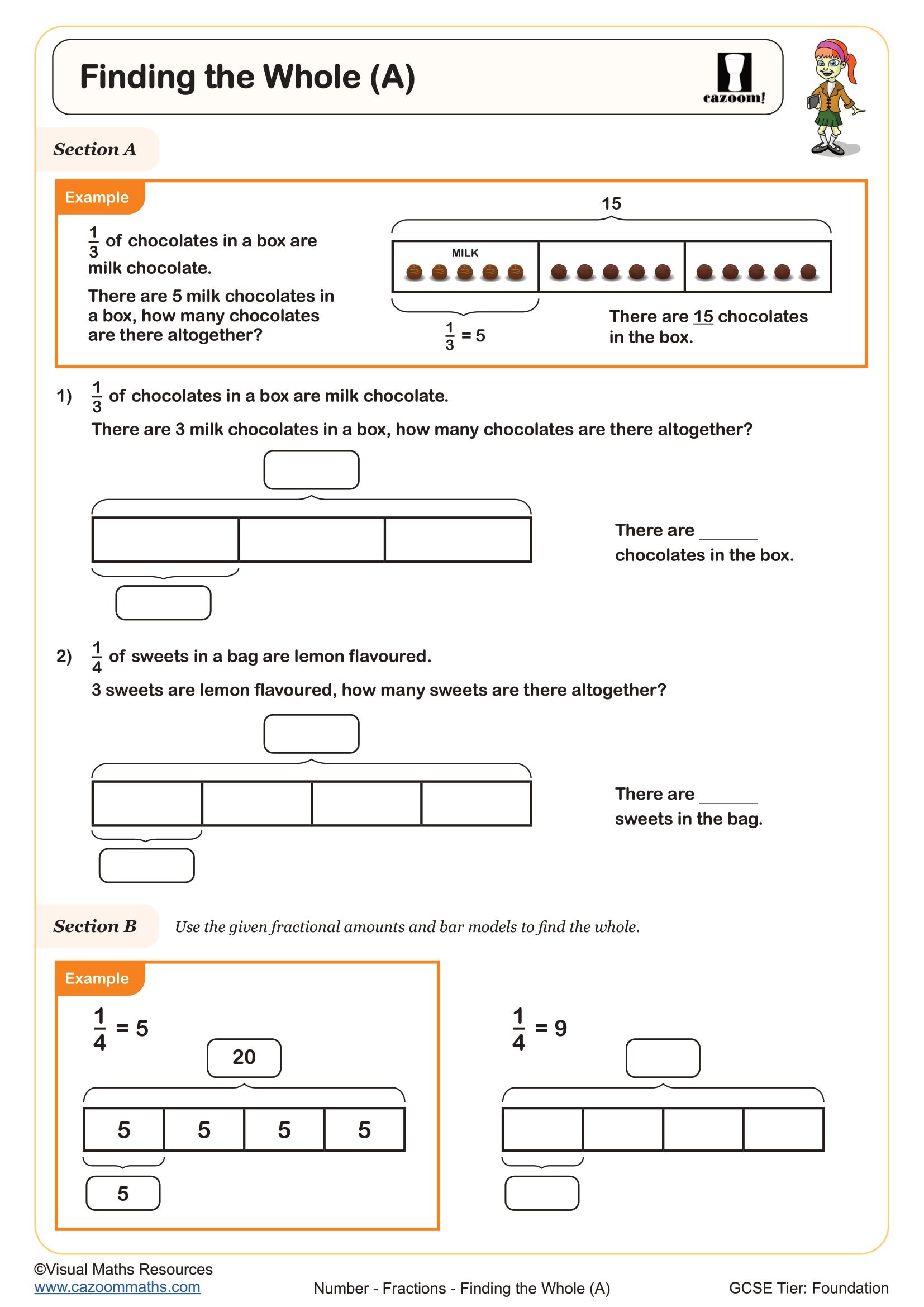
Finding the Whole (A)
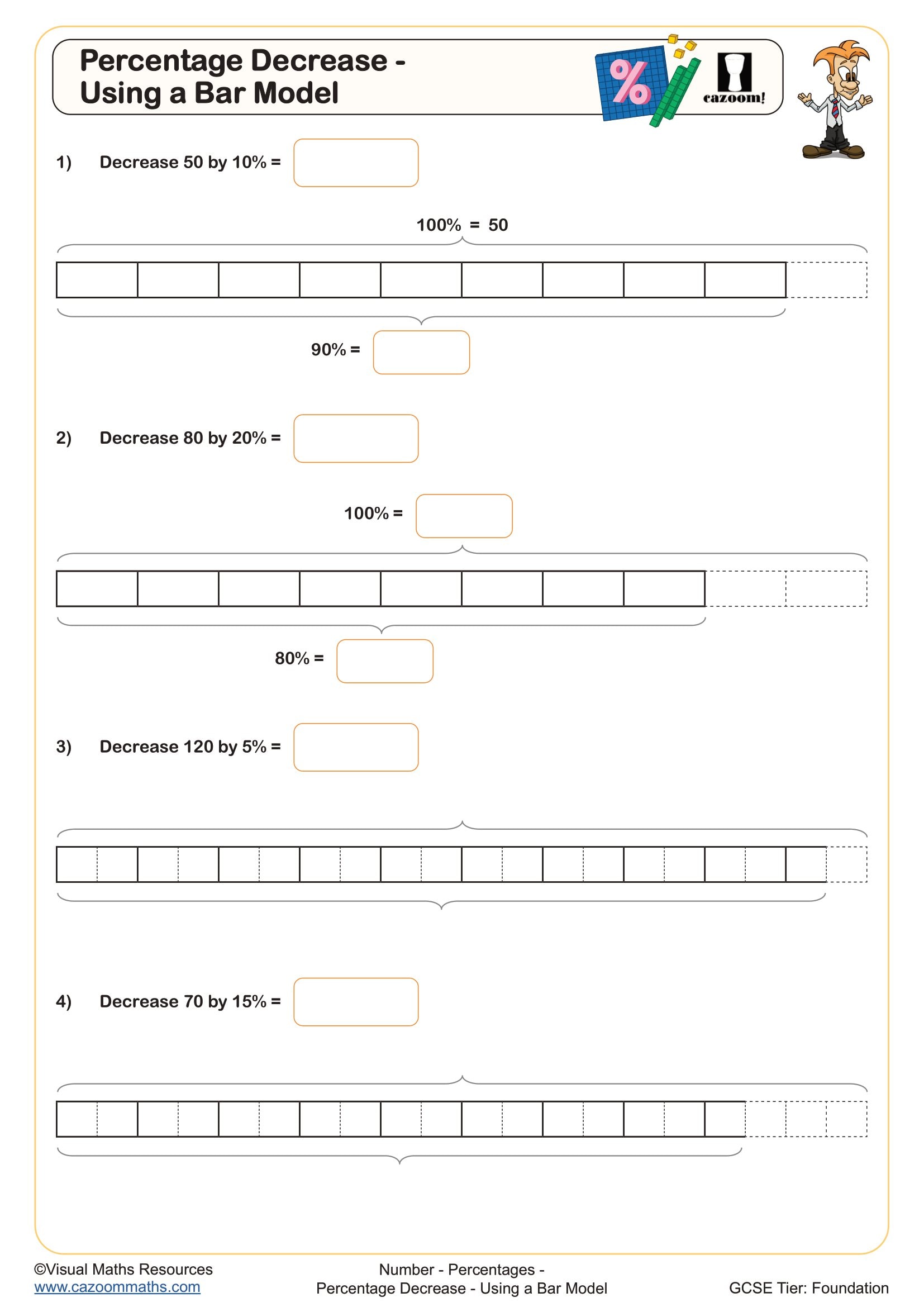
Percentage Decrease - Using a Bar Model
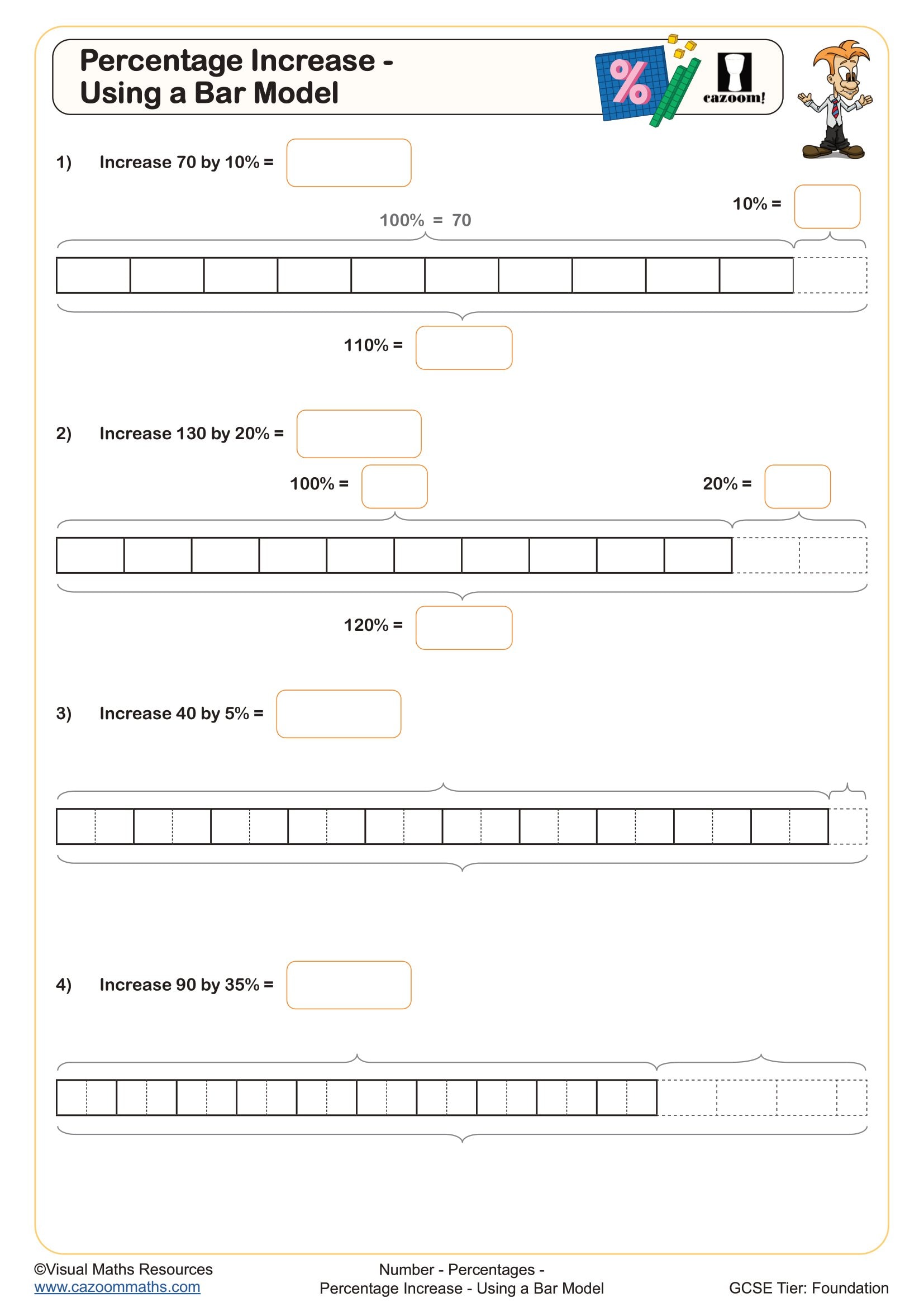
Percentage Increase - Using a Bar Model
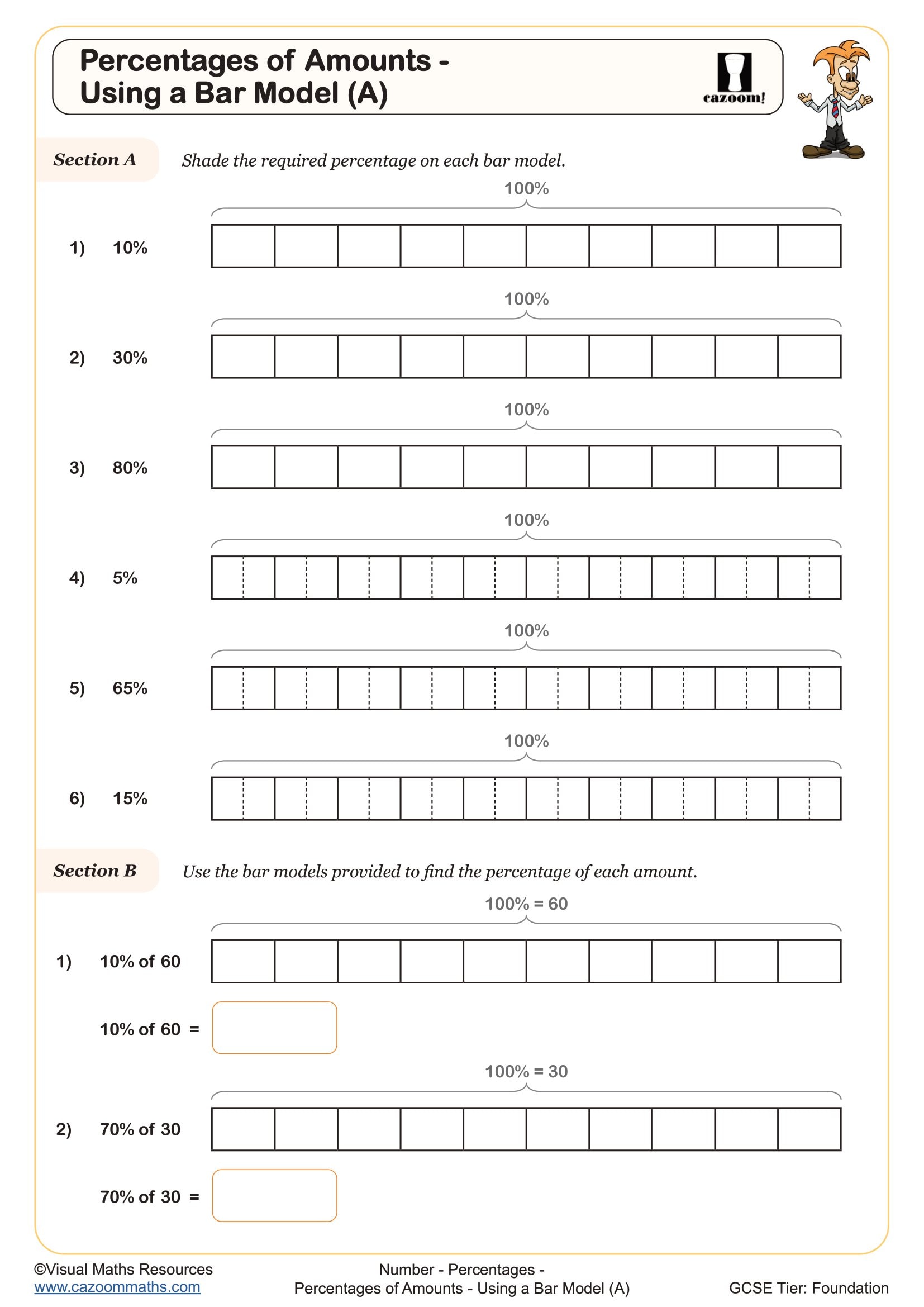
Percentages of Amounts - Using a Bar Model (A)
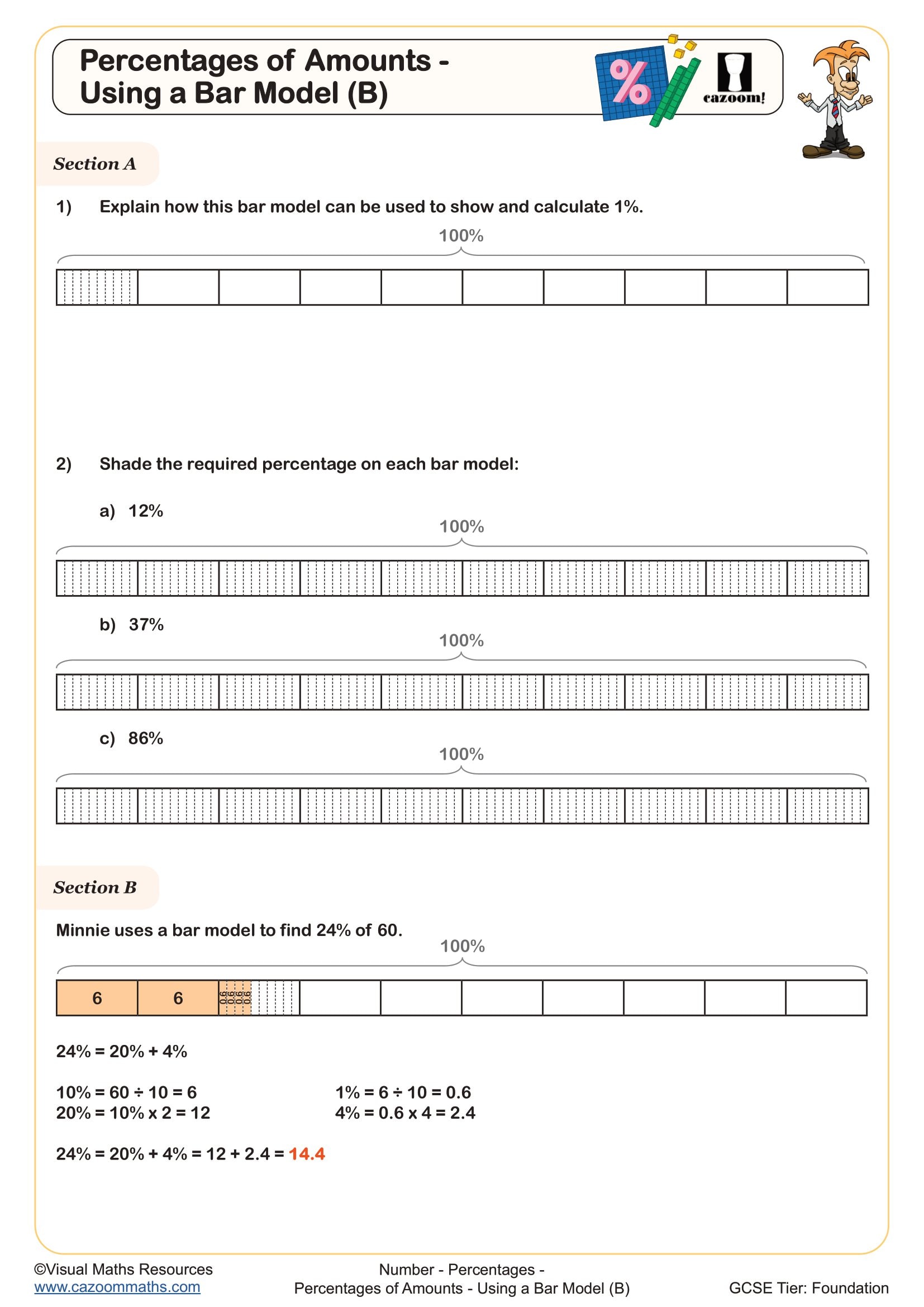
Percentages of Amounts - Using a Bar Model (B)
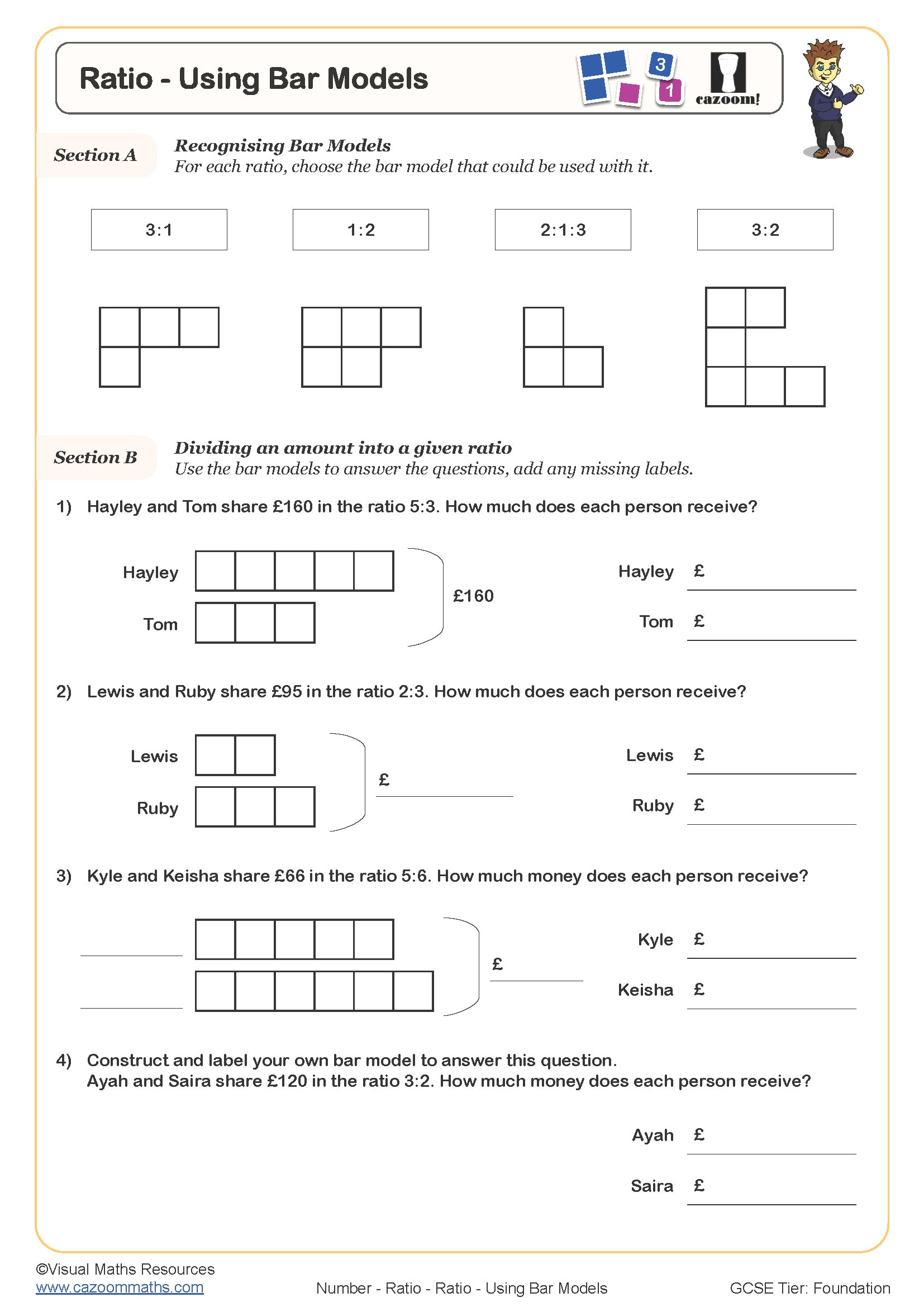
Ratio - Using Bar Models
Reverse Percentages - Using a Bar Model (A)
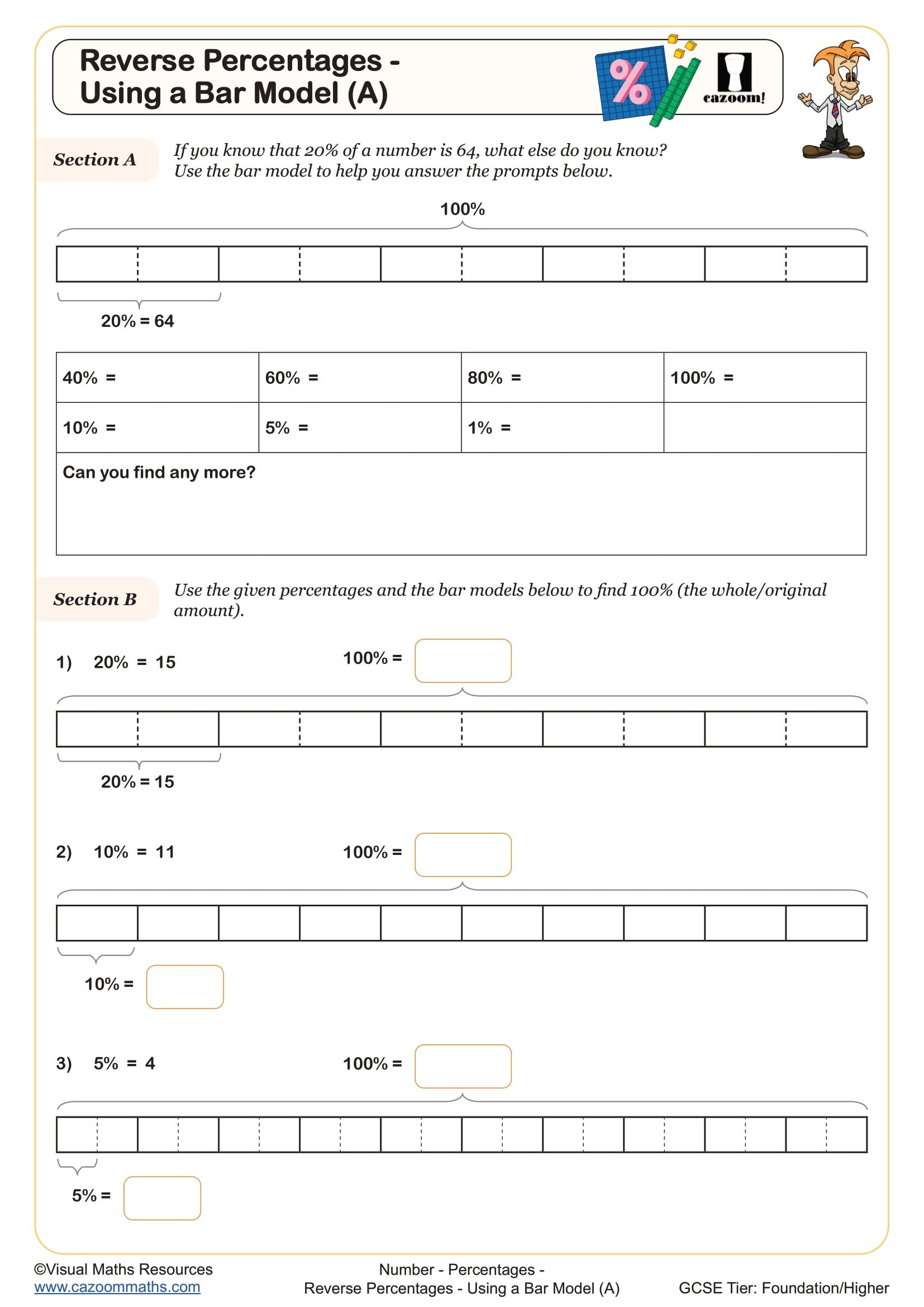
Reverse Percentages - Using a Bar Model (B)
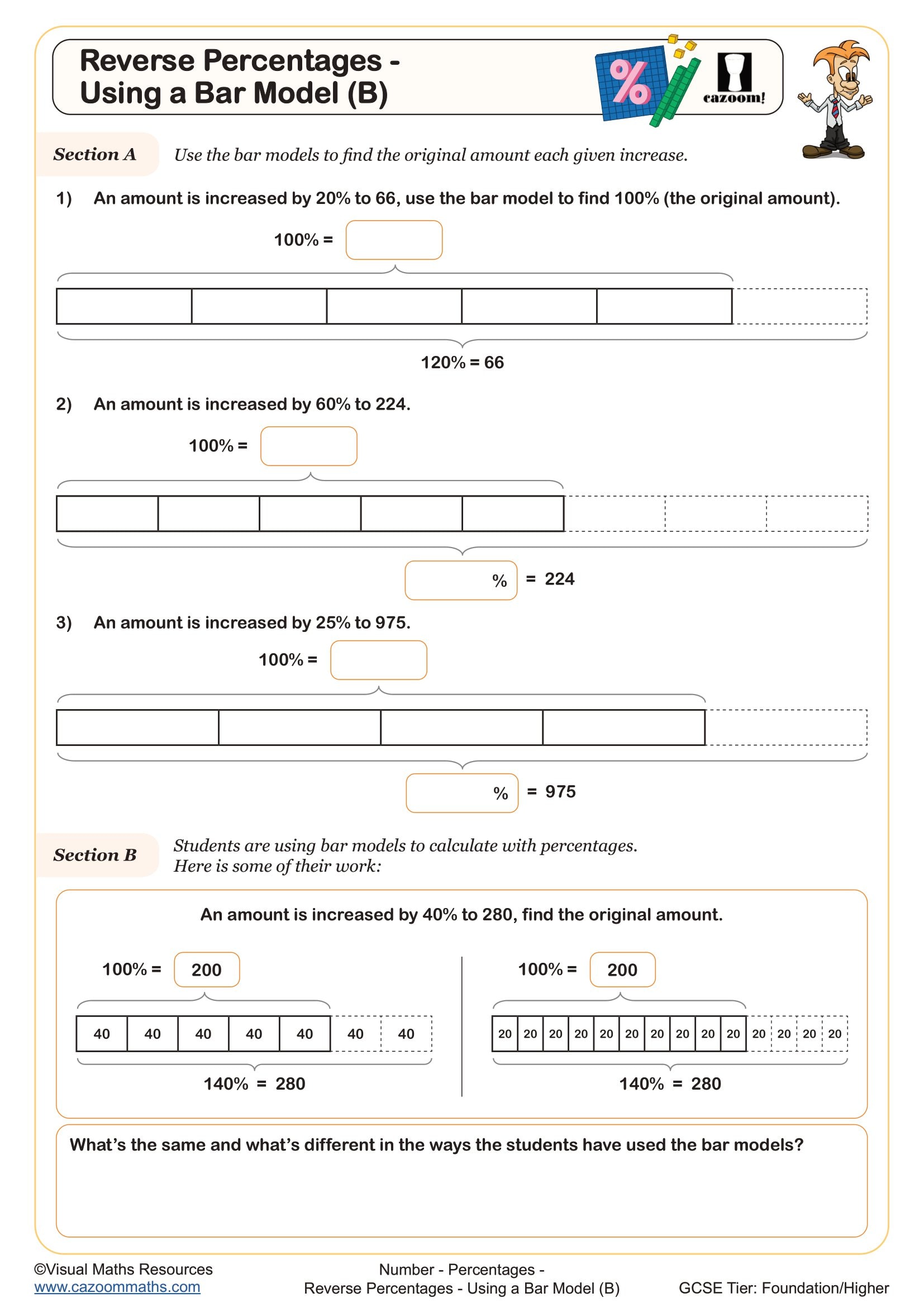
Solving One Step Linear Equations
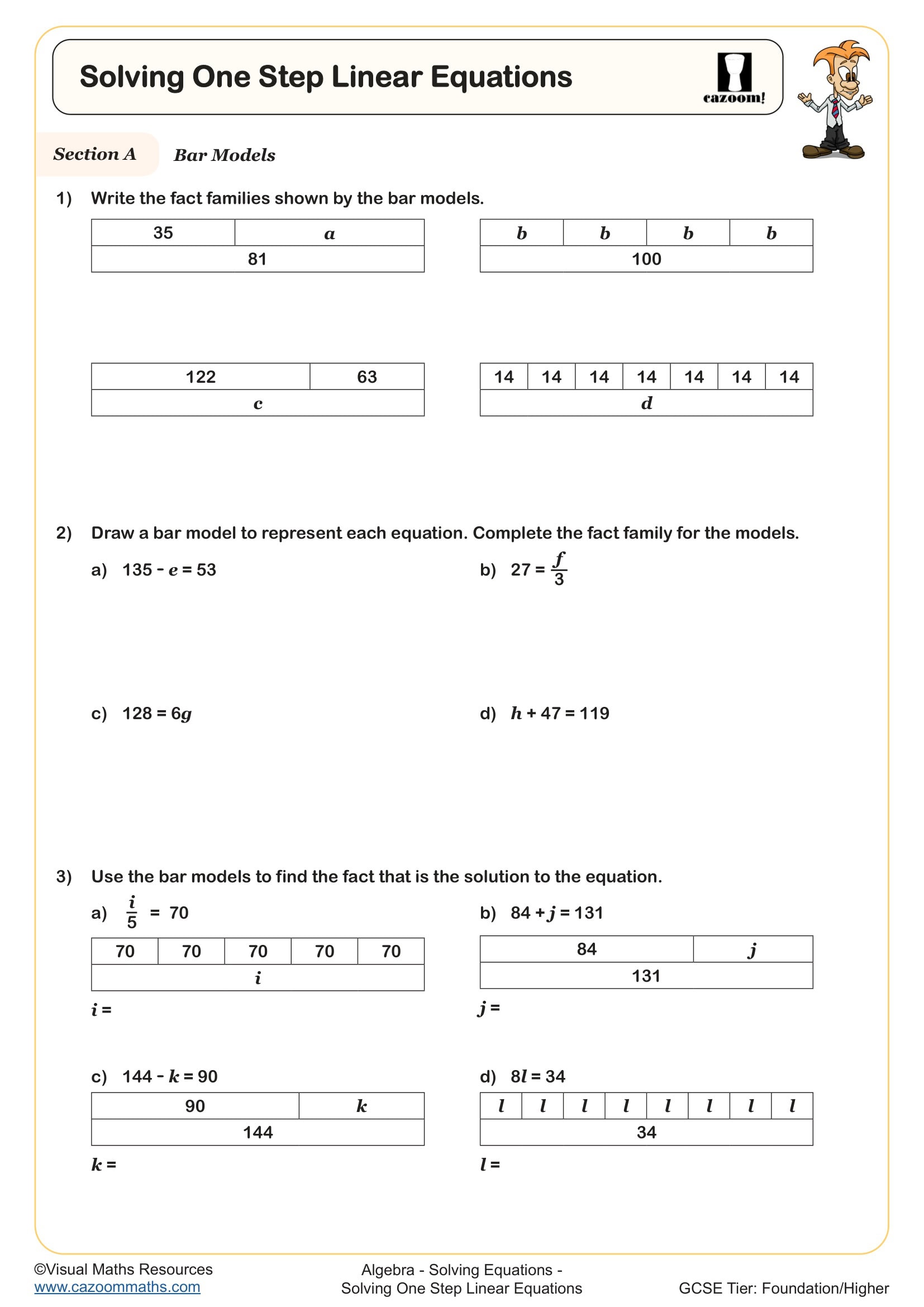
All worksheets are created by the team of experienced teachers at Cazoom Maths.
What are bar models and why are they useful in KS3 maths?
Bar models are visual representations that use rectangular bars divided into sections to show relationships between quantities. At KS3, they become powerful tools for solving complex ratio problems, forming algebraic equations, and understanding proportional relationships that students will encounter throughout GCSE. The visual structure helps students organise information before calculating, reducing the cognitive load of multi-step problems.
Teachers frequently notice that students lose marks on exam questions not because they cannot calculate, but because they misidentify what the question is asking. Bar models address this by forcing students to represent the problem visually first. A common error occurs when students draw bars of incorrect relative sizes, for example making a bar representing '3 parts' the same length as one representing '5 parts', which undermines the entire model's usefulness.
Which year groups study bar models at KS3?
Bar models feature in the National Curriculum from Year 7 through Year 9, though many students will have encountered simpler versions at primary level. Year 7 typically focuses on using bar models for basic ratio problems and finding unknown quantities, whilst Year 8 extends this to more complex proportional reasoning and percentage problems. By Year 9, students apply bar models to algebraic situations and multi-step problems involving combined ratios.
The progression across KS3 mirrors increasing abstraction. Year 7 students might use bar models where each section has a clear numerical value, whilst Year 9 students work with algebraic expressions represented within the bars. Teachers observe that students who master bar models in Year 7 develop stronger algebraic reasoning by Year 9, as they've built a mental framework for understanding how expressions relate to one another before manipulating symbols.
How do bar models connect to algebra and equations?
Bar models provide the conceptual foundation for forming and solving equations by showing visually what algebraic notation represents symbolically. When a problem states 'John has three times as many coins as Sarah', drawing a bar model with one section for Sarah and three equal sections for John naturally leads to the equation J = 3S. This visual-to-symbolic translation helps students understand why certain operations are needed, rather than just following procedural rules.
The connection to real-world applications becomes particularly relevant in fields requiring proportional reasoning. Engineers use similar visual representations when calculating material ratios in construction projects, whilst pharmacists apply proportional thinking when scaling medication dosages. Scientists analysing experimental data often sketch bar comparisons before writing mathematical relationships. These professional contexts demonstrate why developing this skill matters beyond passing exams, as proportional reasoning underpins countless STEM calculations that professionals make daily.
How should teachers use these bar model worksheets in lessons?
The worksheets provide structured practise that moves from guided examples to independent problem-solving, allowing teachers to model the drawing process before students attempt questions themselves. Each worksheet includes worked solutions showing not just the final answer but the bar model construction, which helps students understand the thinking process. Teachers can use the answer sheets for immediate feedback or allow students to self-mark, promoting metacognition about where their model differs from the correct approach.
Many teachers find bar model worksheets particularly effective for intervention sessions with students who struggle with algebraic abstraction, as the visual approach offers an alternative entry point. They work well for paired activities where one student draws the model whilst their partner verifies the representation matches the problem, developing communication skills alongside mathematical reasoning. The worksheets also serve as homework that parents can support more easily than abstract algebra, since the visual method is intuitive even for those without strong mathematical backgrounds themselves.