KS3 Circles Worksheets
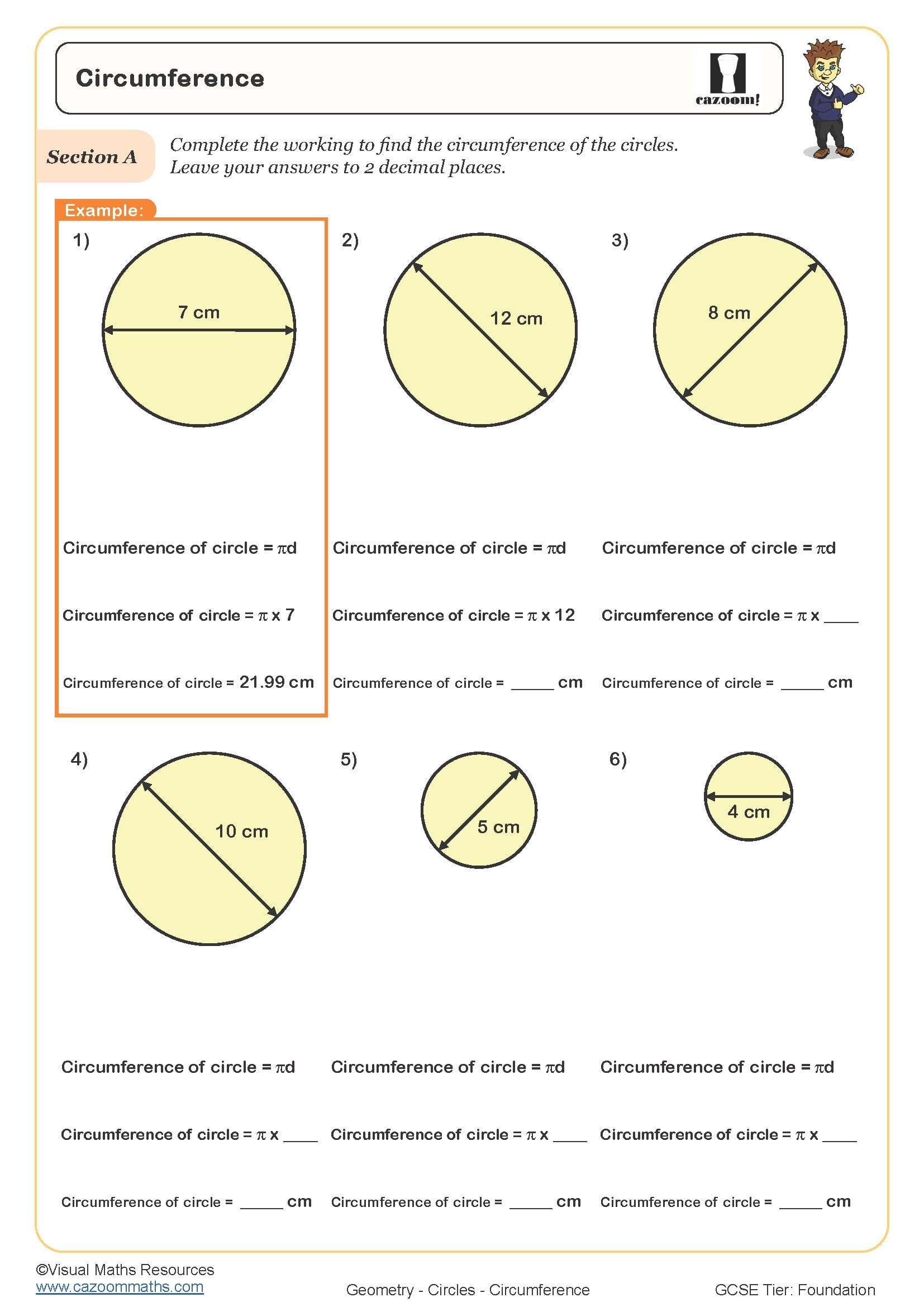
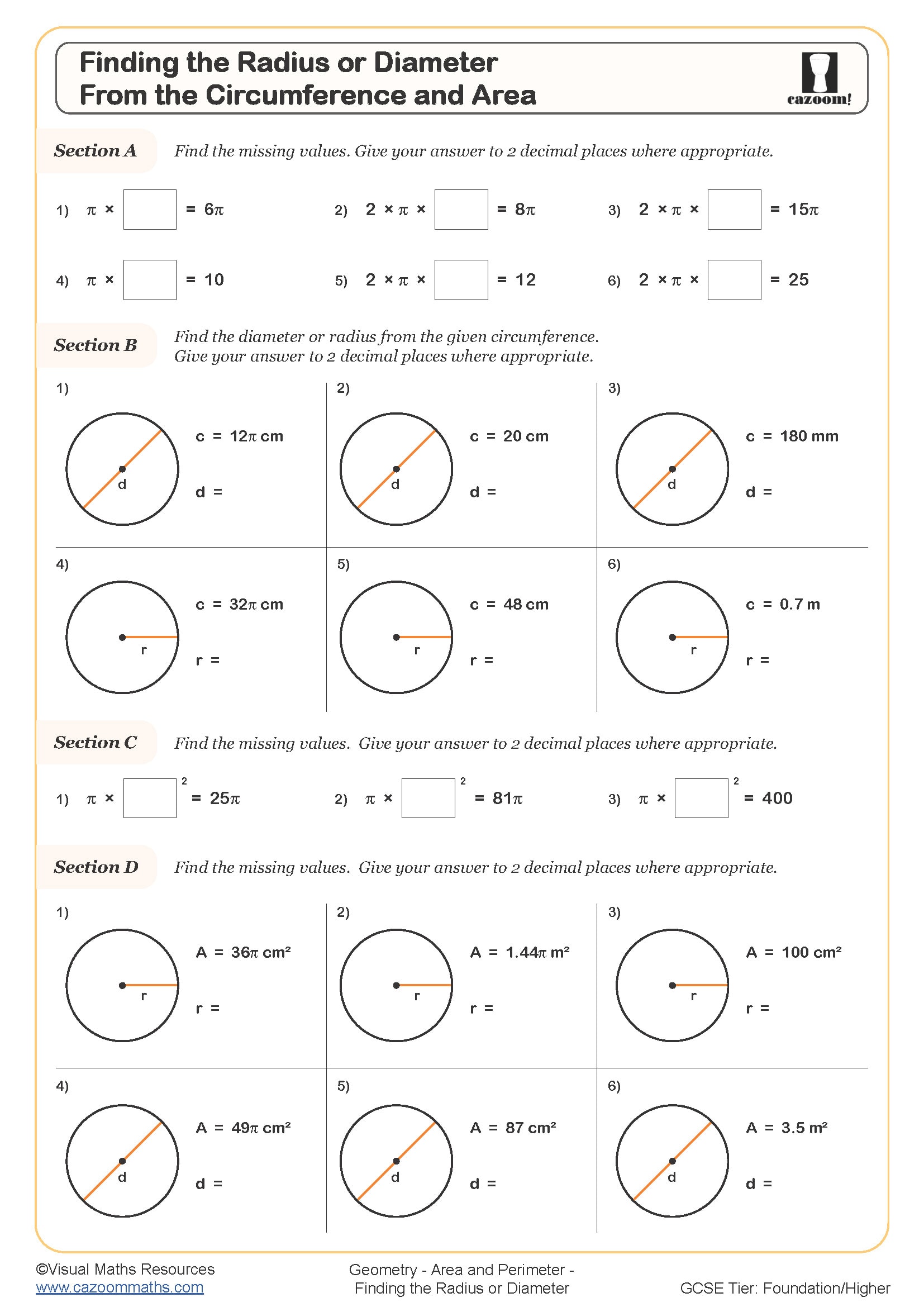
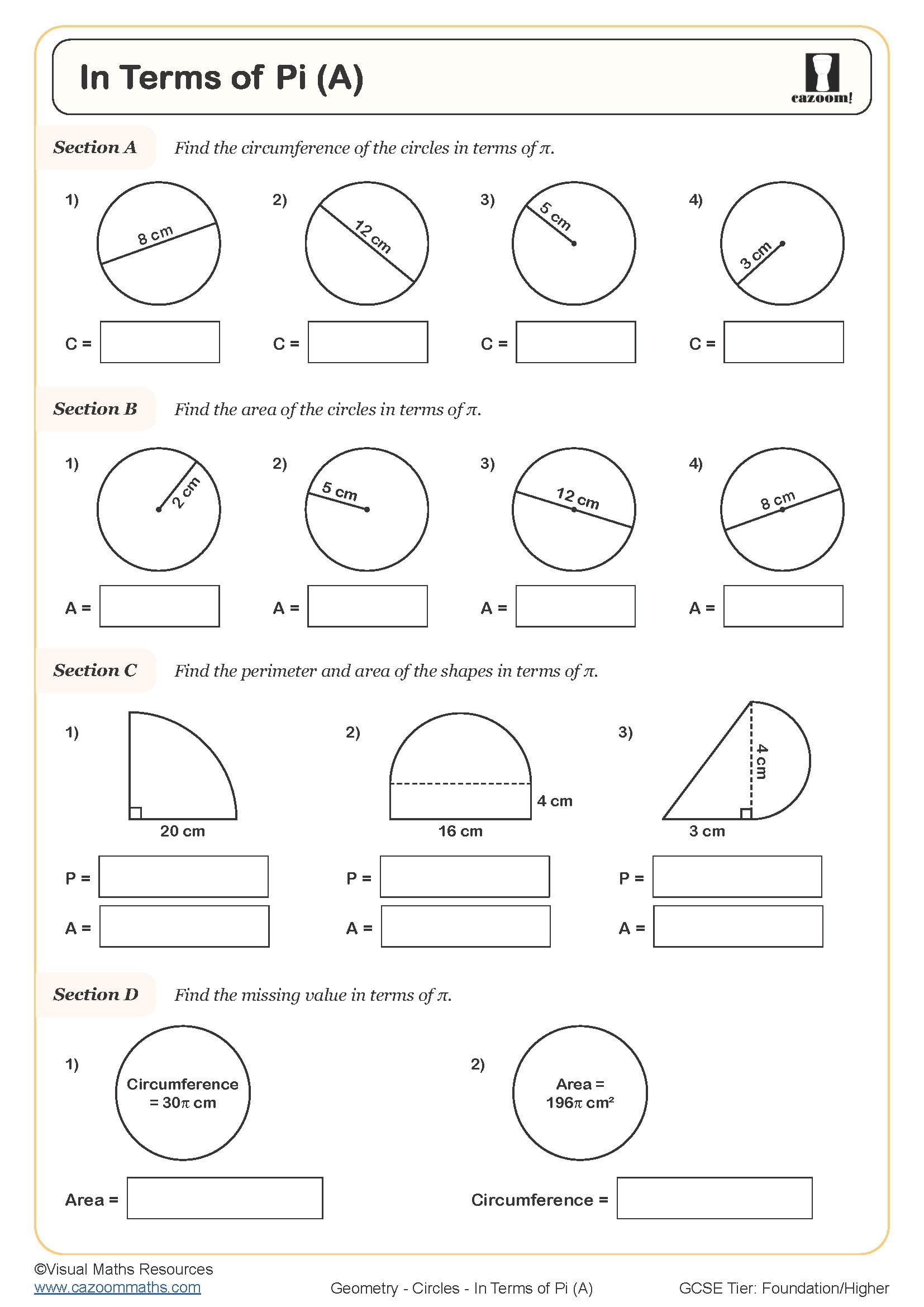
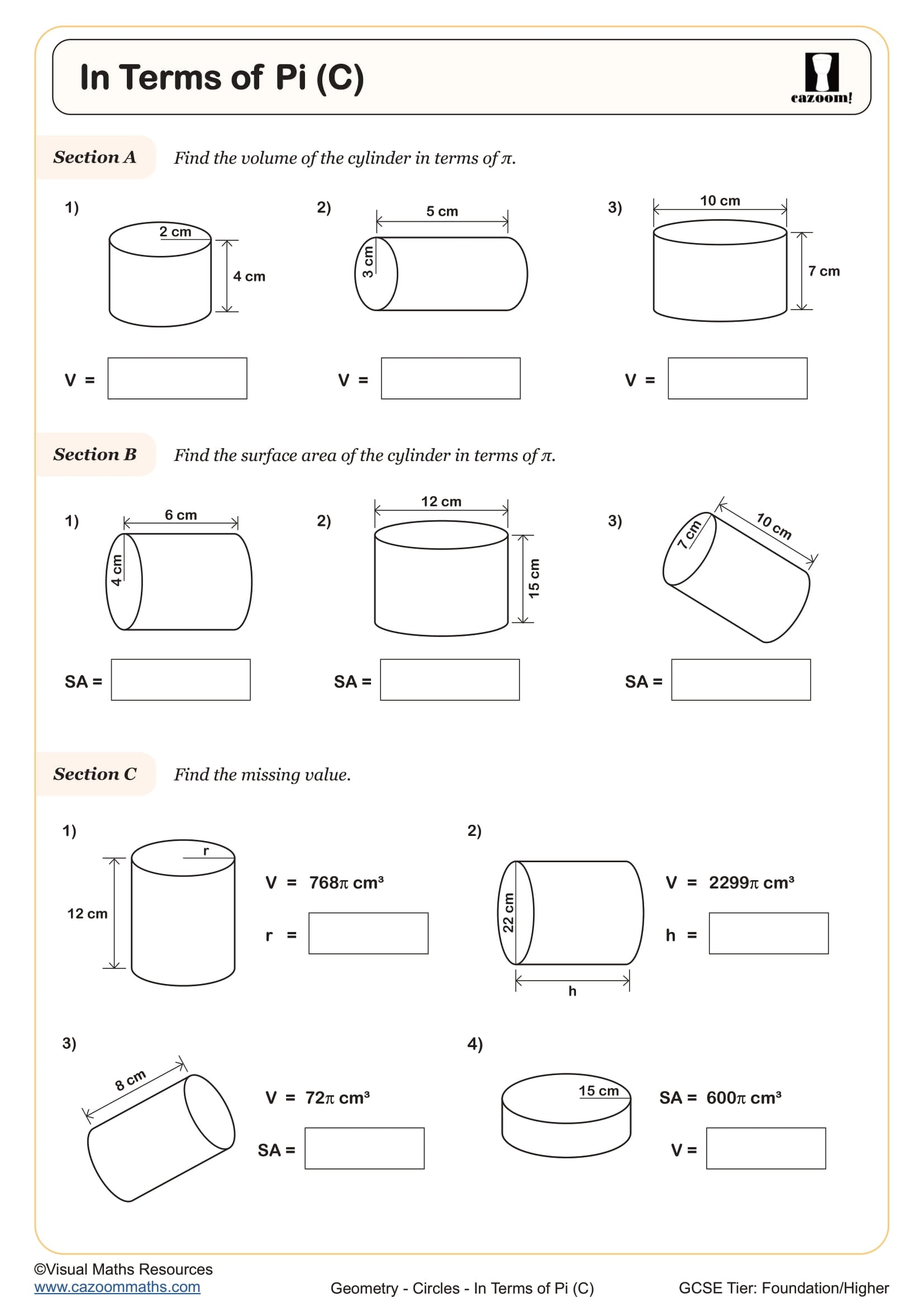
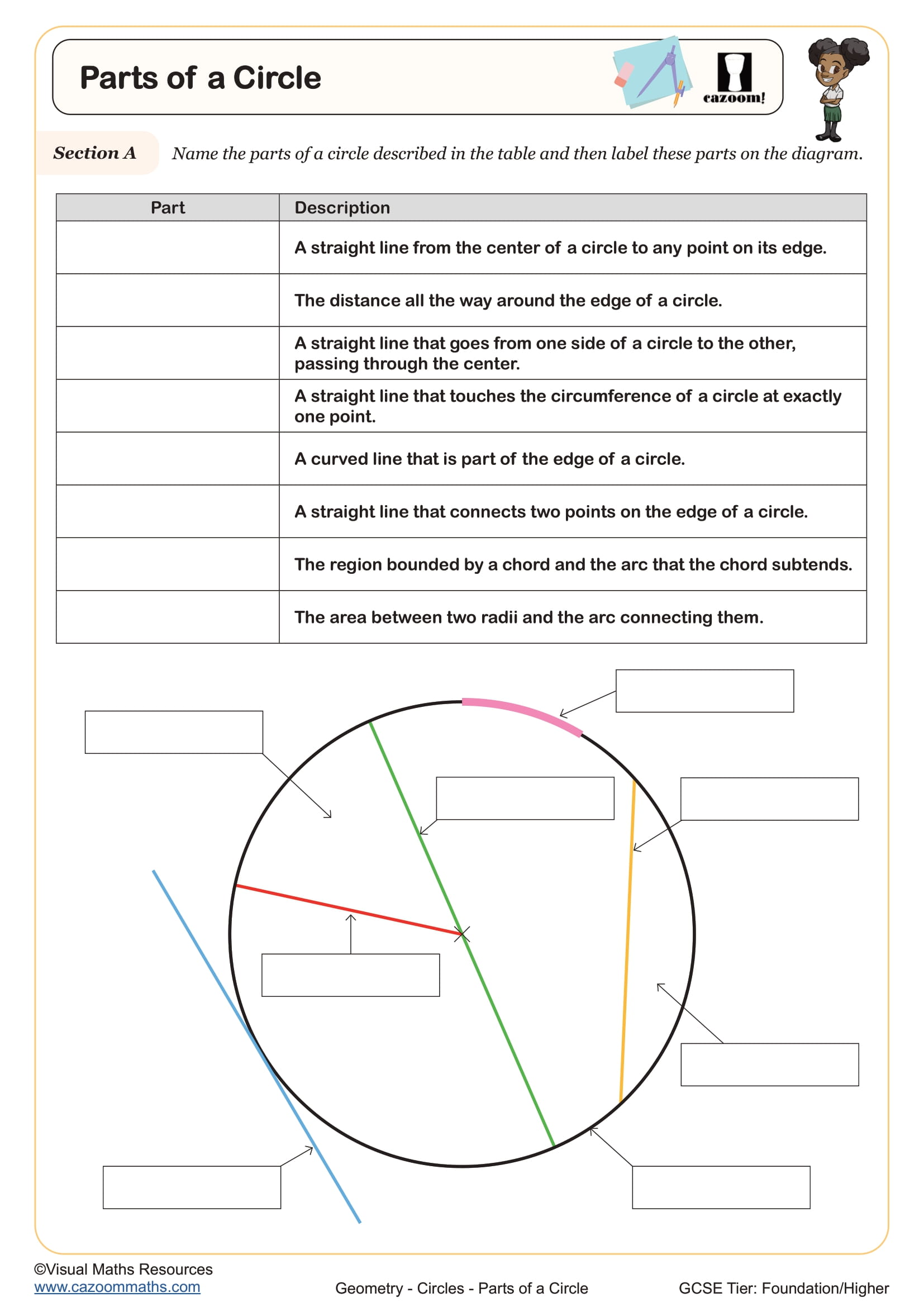
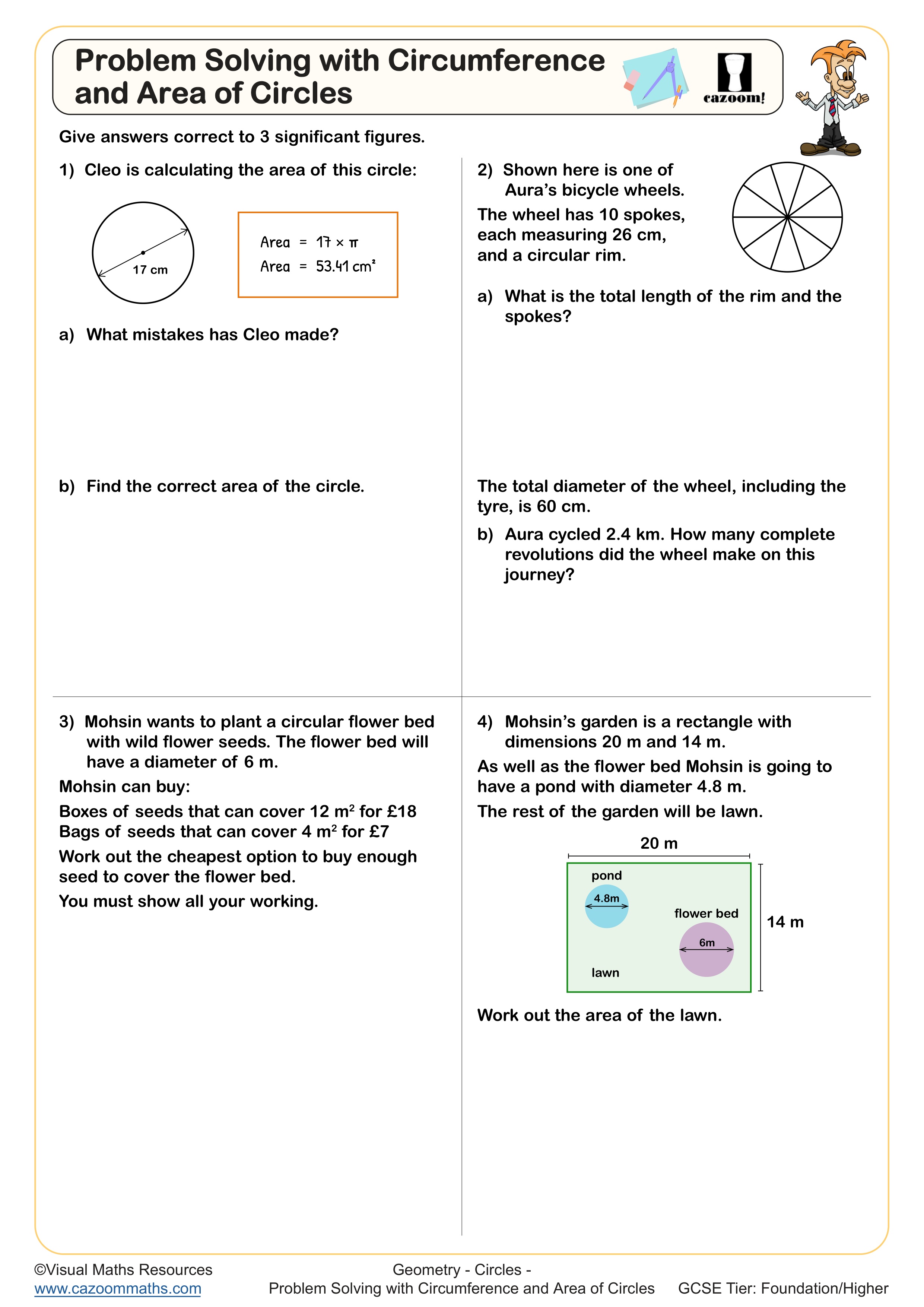
All worksheets are created by the team of experienced teachers at Cazoom Maths.
What are inscribed triangles in circles?
An inscribed triangle (also called a cyclic triangle) has all three vertices lying on the circumference of a circle. This configuration creates specific angle relationships governed by circle theorems, particularly the angle subtended by an arc at the centre being twice the angle subtended at the circumference. At KS3, students encounter these triangles when learning about basic circle properties and begin to recognise patterns that underpin formal circle theorem work at GCSE.
A common error occurs when students measure angles incorrectly or assume all triangles inscribed in circles are equilateral. Many teachers find that providing circles with marked centre points helps students distinguish between central angles and angles at the circumference. Students also lose marks when they fail to justify their answers using geometric properties rather than simply measuring with a protractor, which becomes critical as they progress towards formal proof work.
Which year groups study circles at KS3?
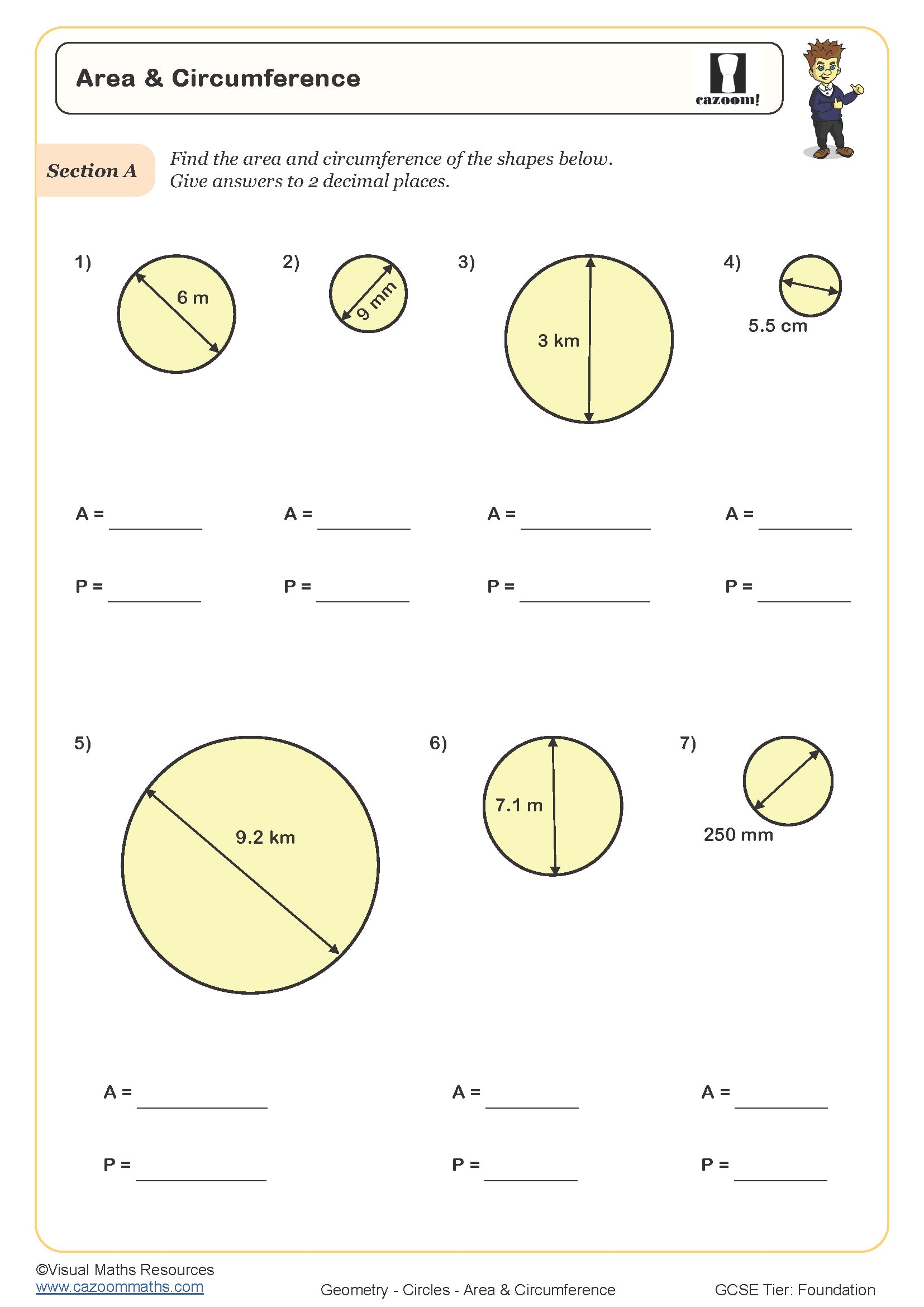
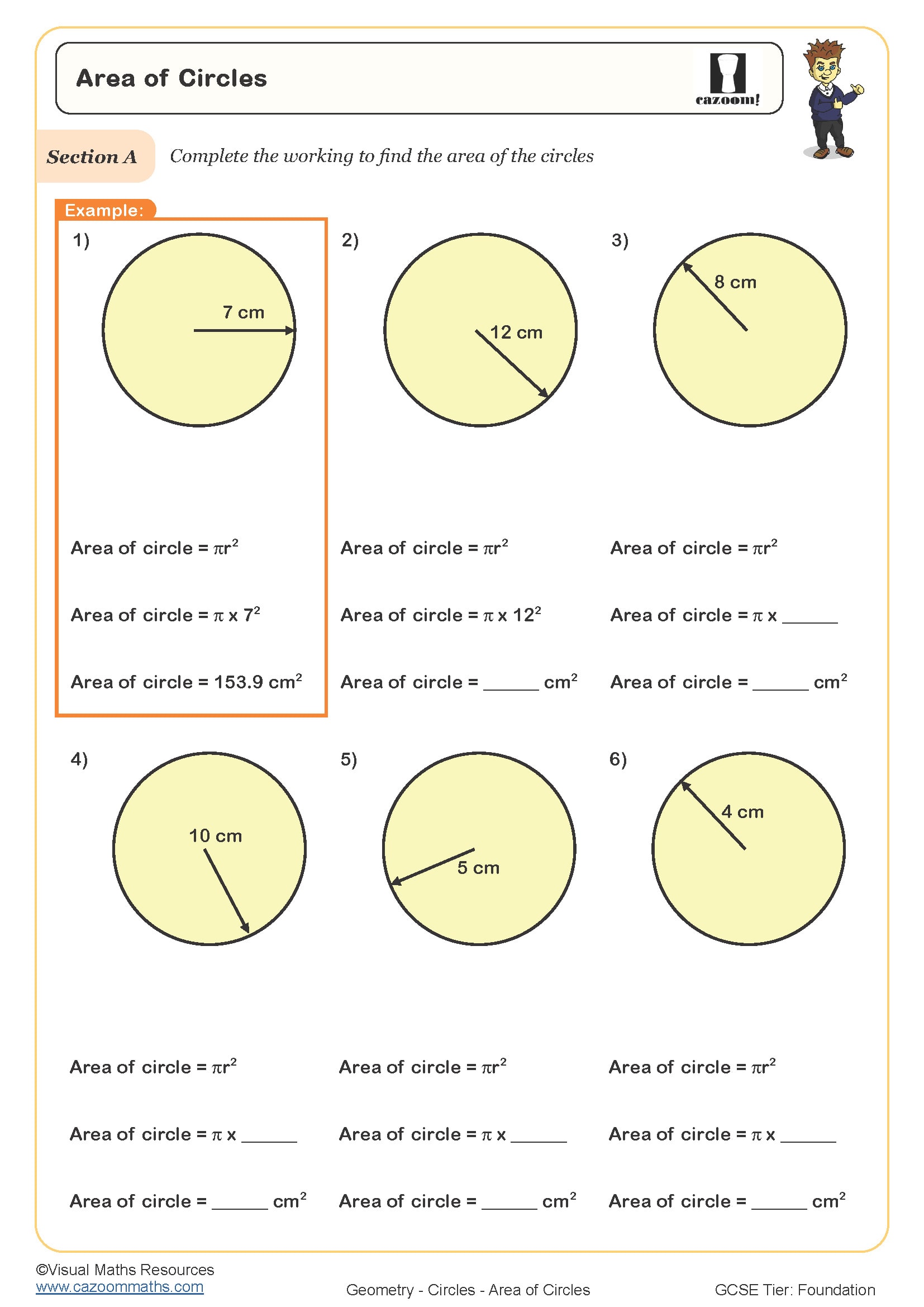
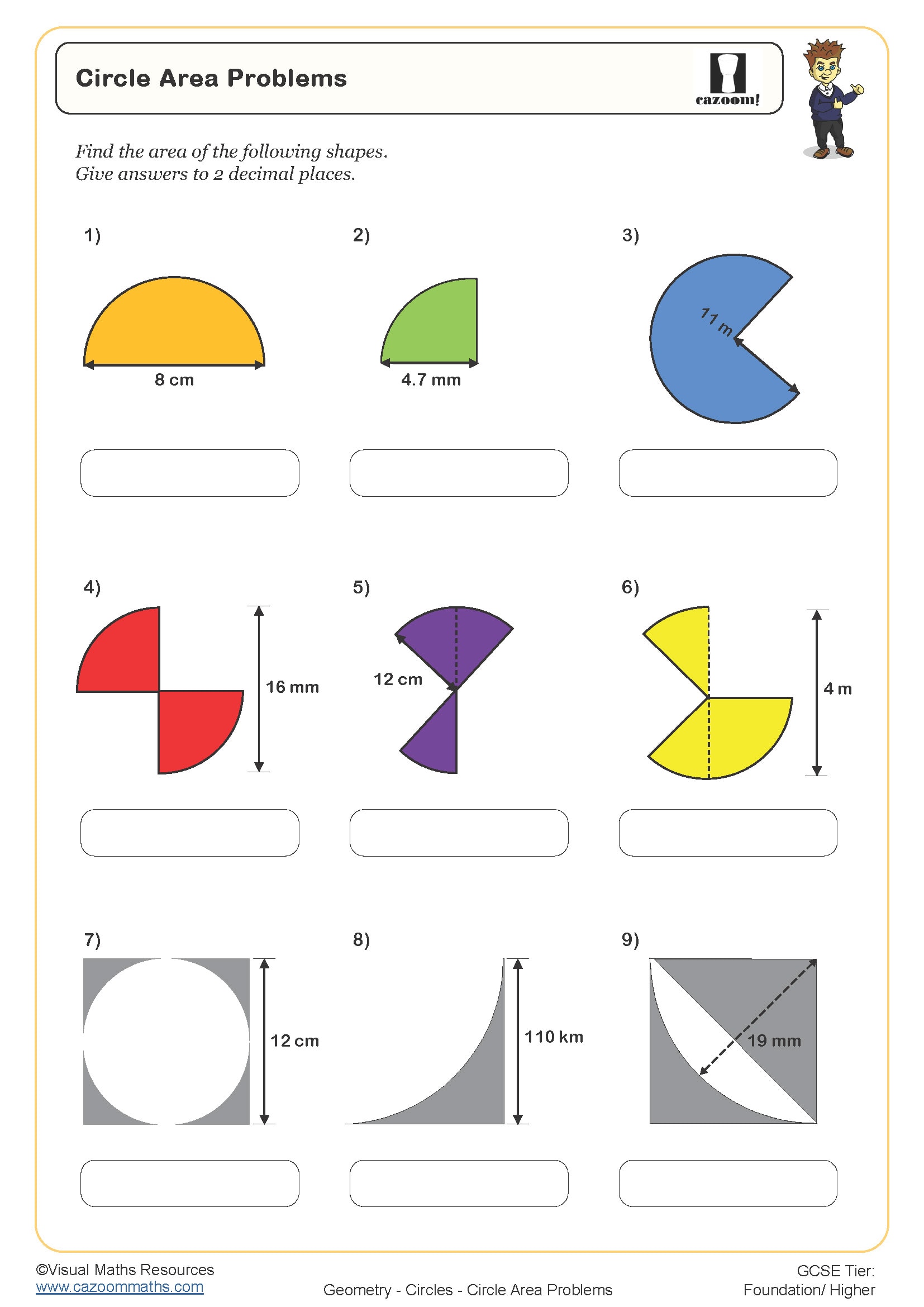
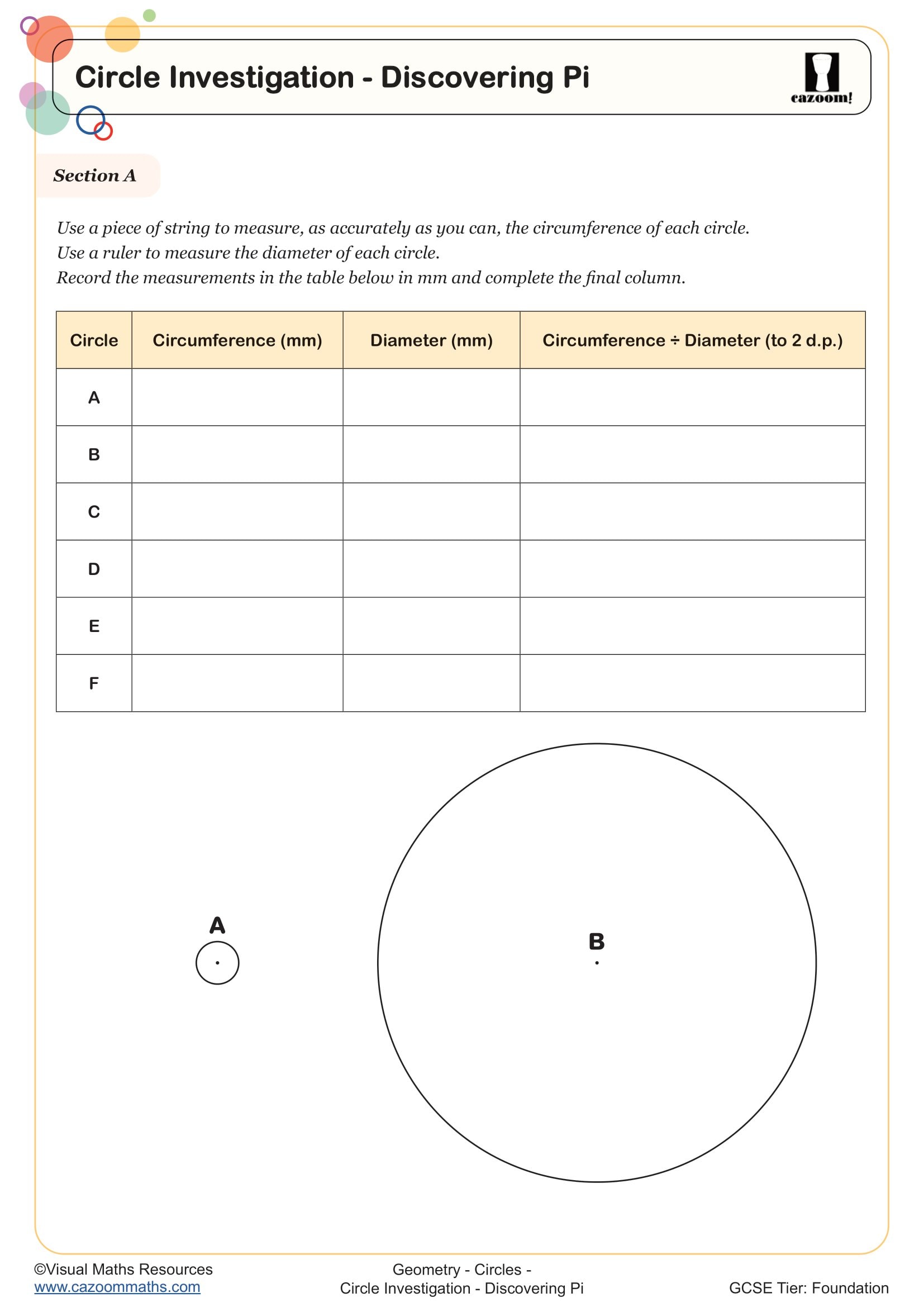
These circles worksheets cover Years 7, 8, and 9, spanning the full KS3 curriculum. In Year 7, students typically begin with basic circle vocabulary (radius, diameter, circumference) and simple properties. Year 8 introduces angles in circles and inscribed shapes, whilst Year 9 consolidates these concepts and begins connecting them to the formal circle theorems required for GCSE Foundation and Higher tiers.
The progression across these year groups moves from identifying and measuring properties to applying geometric reasoning. Year 7 worksheets focus on recognition and basic calculations, Year 8 materials introduce angle relationships within inscribed triangles, and Year 9 resources require students to solve multi-step problems that combine several geometric properties. This scaffolded approach ensures students develop both procedural fluency and conceptual understanding before tackling GCSE exam-style questions.
How do triangles inscribed in circles connect to real-world applications?
Triangles inscribed in circles appear frequently in engineering and design contexts where circular structures need internal supports or frameworks. The geometric properties of these inscribed triangles ensure structural stability and optimal load distribution. Students learning about these relationships develop spatial reasoning skills that transfer to technical drawing, architectural planning, and mechanical engineering where circular components interact with angular frames.
In navigation and surveying, inscribed triangles within circles help calculate positions and distances when working with curved boundaries or spherical surfaces. GPS technology relies on similar geometric principles when triangulating positions on Earth's curved surface. Understanding how triangles relate to their circumscribing circles provides students with foundational knowledge for STEM fields including robotics, where circular motion paths must account for angular positioning, and astronomy, where planetary orbits and telescope alignments depend on these geometric relationships.
How can teachers use these circles worksheets effectively?
The worksheets provide structured practise that moves from identifying inscribed triangles to calculating unknown angles and lengths using circle properties. Questions typically scaffold from straightforward angle identification to multi-step problems requiring students to combine several geometric rules. The included answer sheets allow for quick marking during lessons or enable students to self-assess when working independently, building confidence before attempting more challenging exam-style questions.
Many teachers use these resources for targeted intervention with students who struggle to visualise geometric relationships, pairing students to discuss their reasoning before checking answers. The worksheets work well as homework to consolidate classroom teaching or as starter activities to retrieve prior knowledge about angle properties. During revision periods, they provide focused practise on specific circle concepts without overwhelming students with full mixed topics. Teachers also find them valuable for differentiation, selecting appropriate year group materials to support or challenge students working at different levels within the same class.