KS3 Coordinates Worksheets
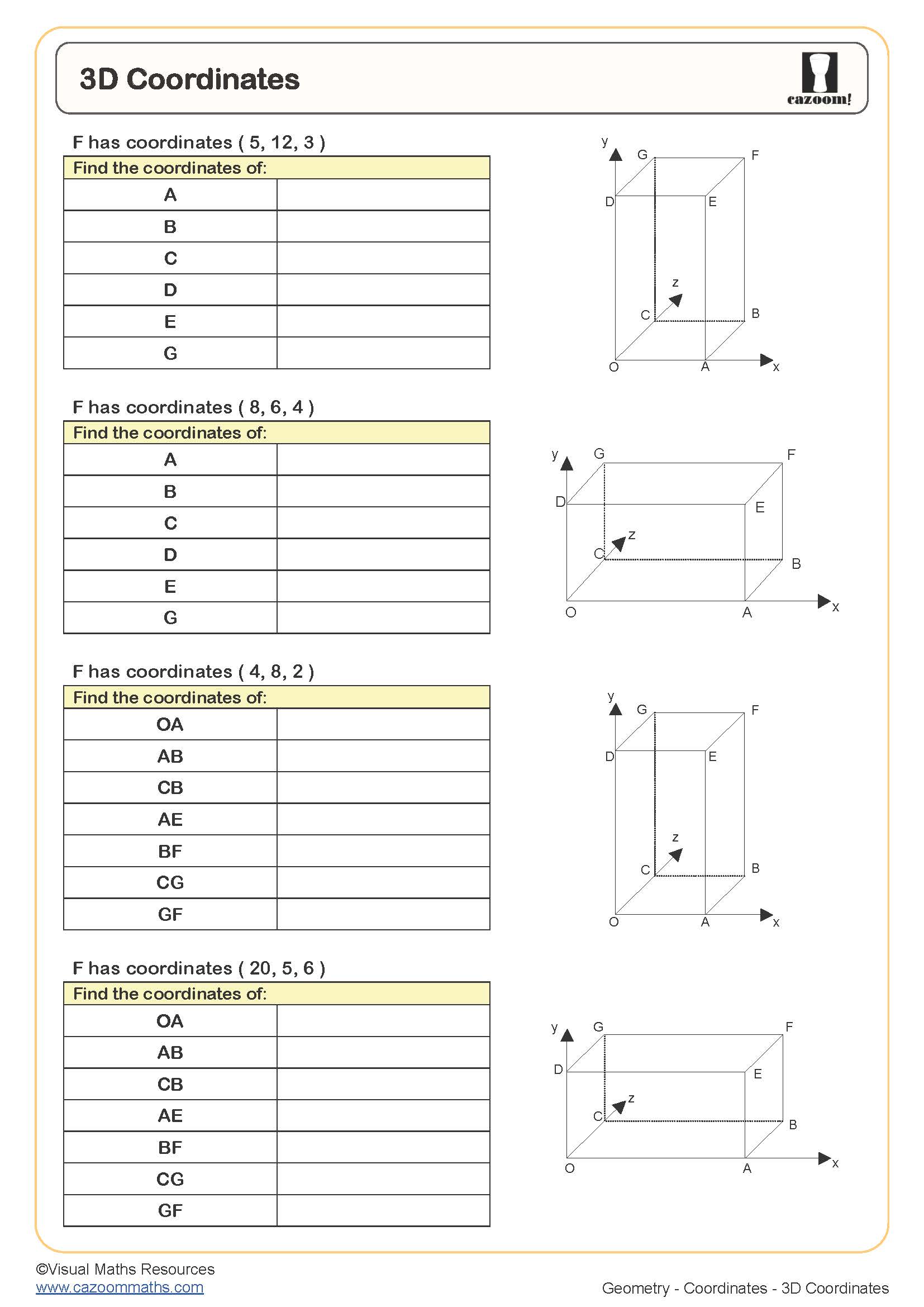
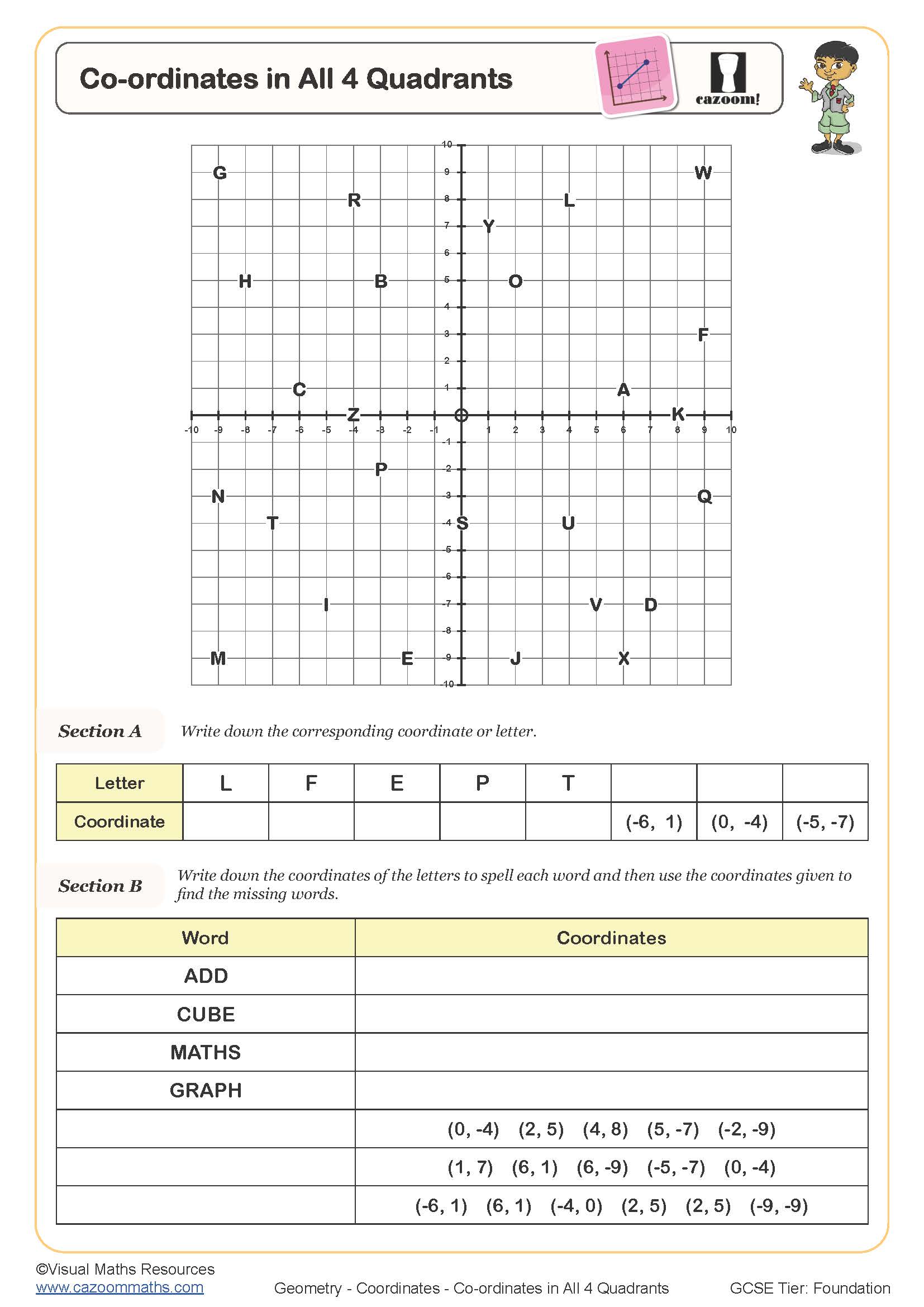
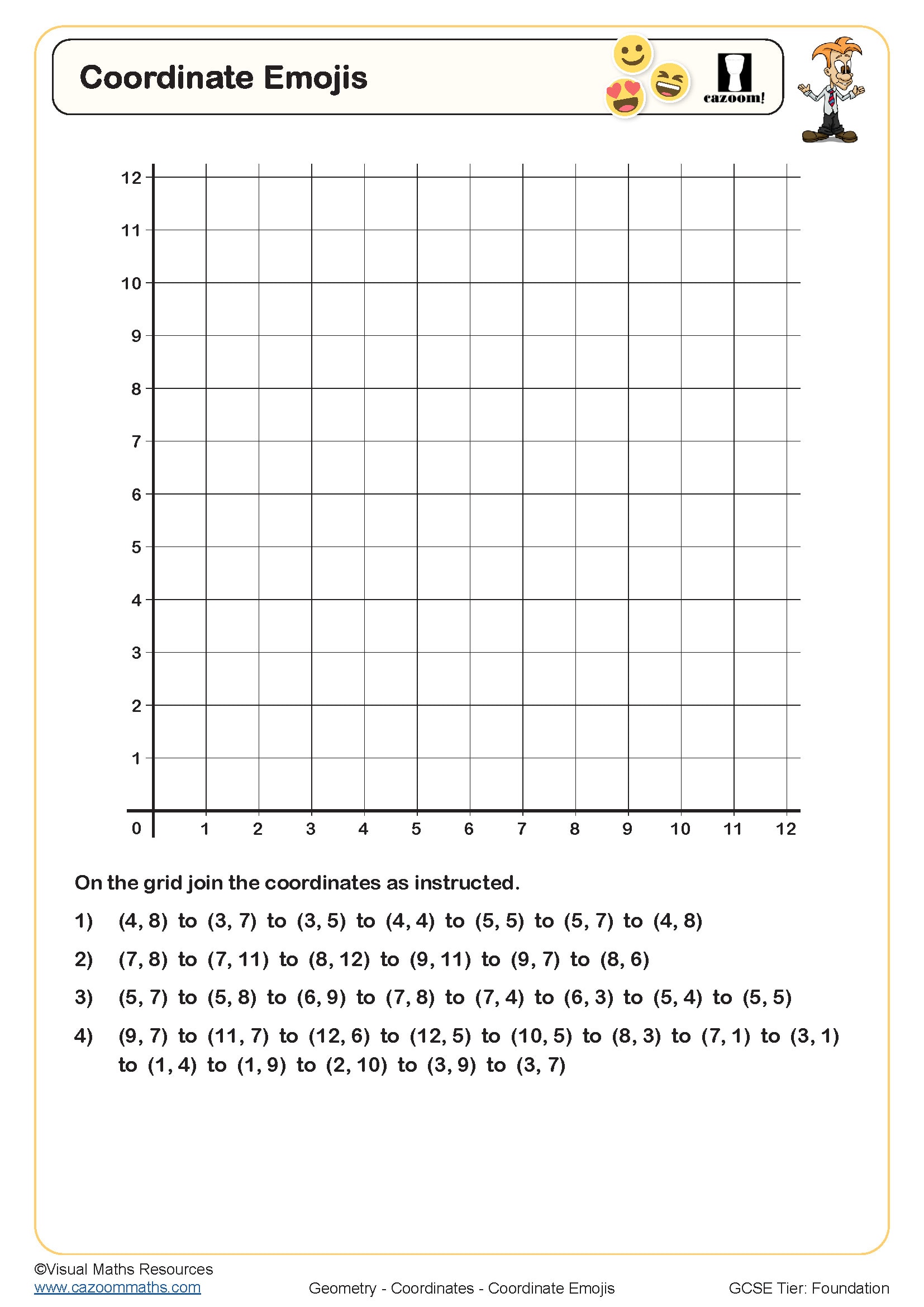
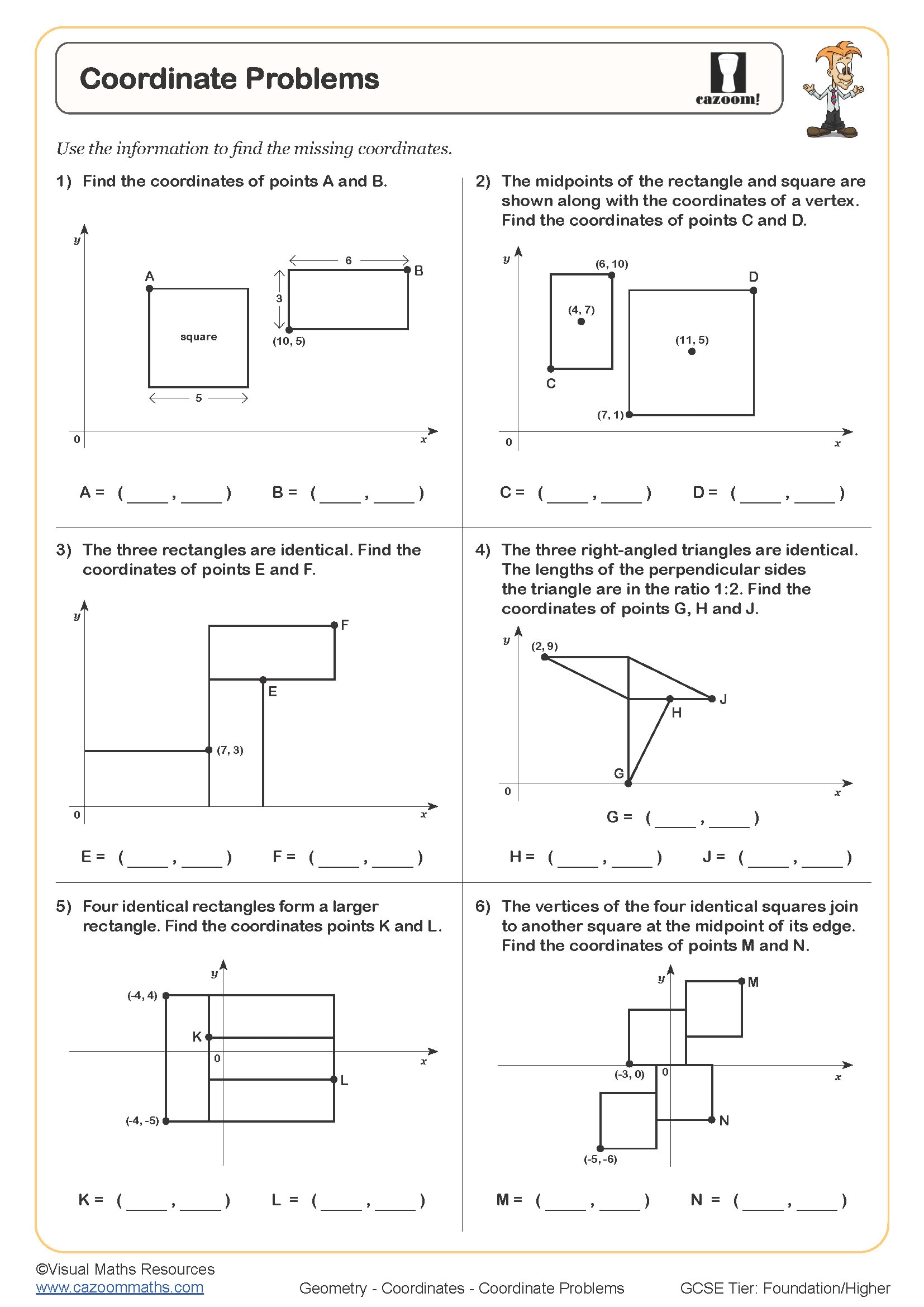
All worksheets are created by the team of experienced teachers at Cazoom Maths.
What are coordinates in maths?
Coordinates are pairs of numbers that identify the exact position of a point on a grid using the format (x, y). The x-coordinate shows horizontal distance from the origin, and the y-coordinate shows vertical distance. In KS3, students extend their understanding from positive coordinates only to working across all four quadrants, where coordinates can be negative.
A common misconception occurs when students reverse the order, writing the y-value first because they read from top to bottom. This error often persists into GCSE, particularly when working with midpoints or gradients. Reinforcing the phrase 'along the corridor, up the stairs' or 'x comes before y in the alphabet' helps embed the correct sequence.
Which year groups study coordinates at KS3?
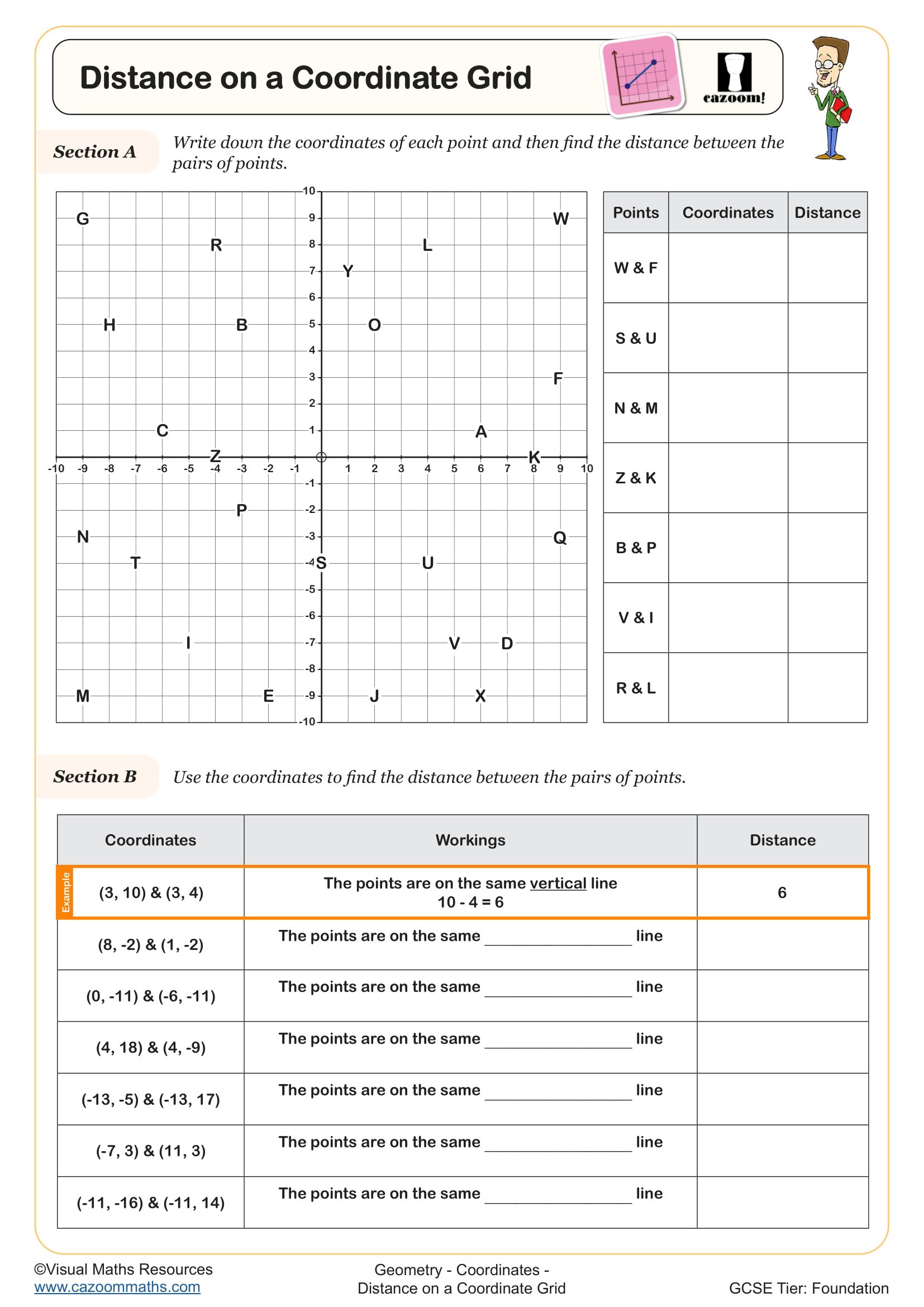
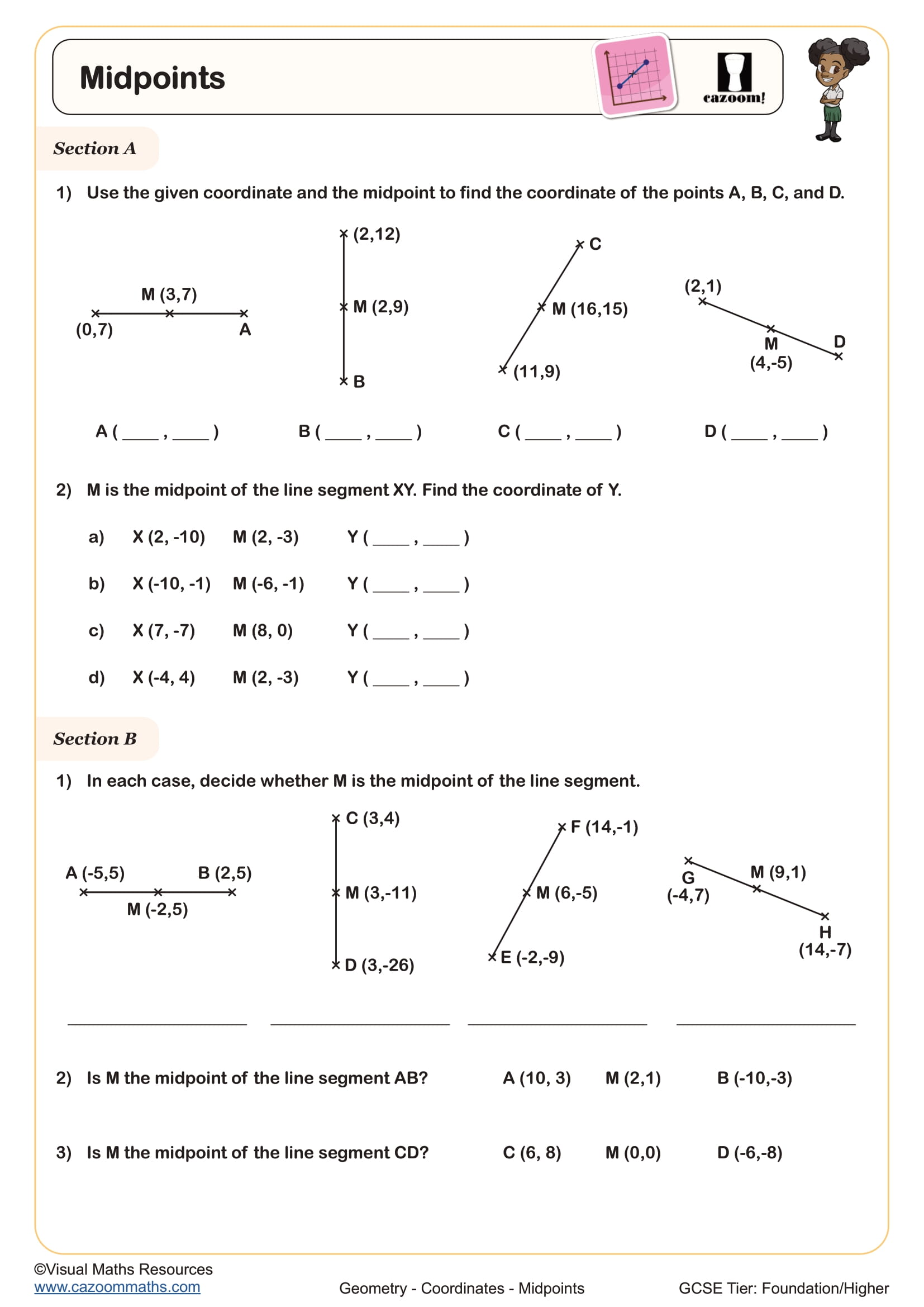
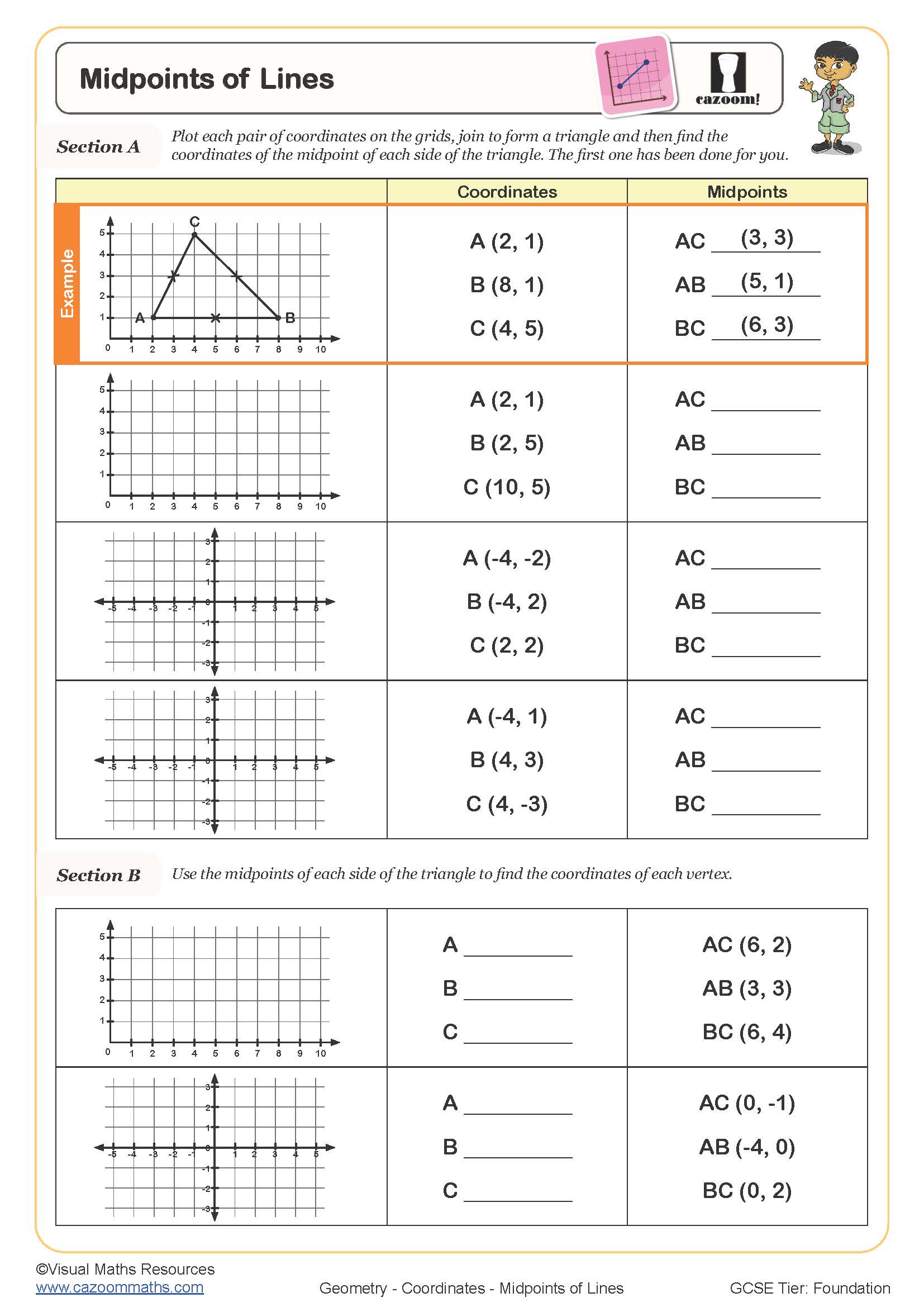
Coordinates appear in Year 7, Year 8, and Year 9 as part of the geometry and algebra strands in the National Curriculum. Year 7 typically focuses on secure plotting and reading in all four quadrants, while Year 8 introduces applications such as midpoints and simple transformations using coordinate notation. Year 9 extends this to more complex problems involving gradients, distance between points, and connections to algebraic graphs.
The progression moves from mechanical plotting towards analytical thinking. Students begin recognising patterns in coordinates, such as points on vertical or horizontal lines sharing one coordinate value, or understanding how coordinate pairs relate to equations of lines. This analytical approach becomes crucial for GCSE algebra topics.
How do coordinates connect to real-world applications?
Coordinate systems underpin GPS navigation, computer graphics, engineering design, and data visualisation. Every location on mapping apps uses latitude and longitude as coordinates, while game developers use three-dimensional coordinate systems to position characters and objects in virtual environments. Understanding how coordinates represent position forms the foundation for programming, CAD software, and robotics.
In STEM careers, architects use coordinates to specify exact positions in building designs, whilst data scientists plot coordinates to identify trends and patterns in datasets. Even weather forecasting relies on coordinate grids to track storm systems and predict their paths. This real-world relevance helps students see coordinates as more than abstract notation, but as a universal language for describing position and movement.
How can teachers use these coordinate worksheets effectively?
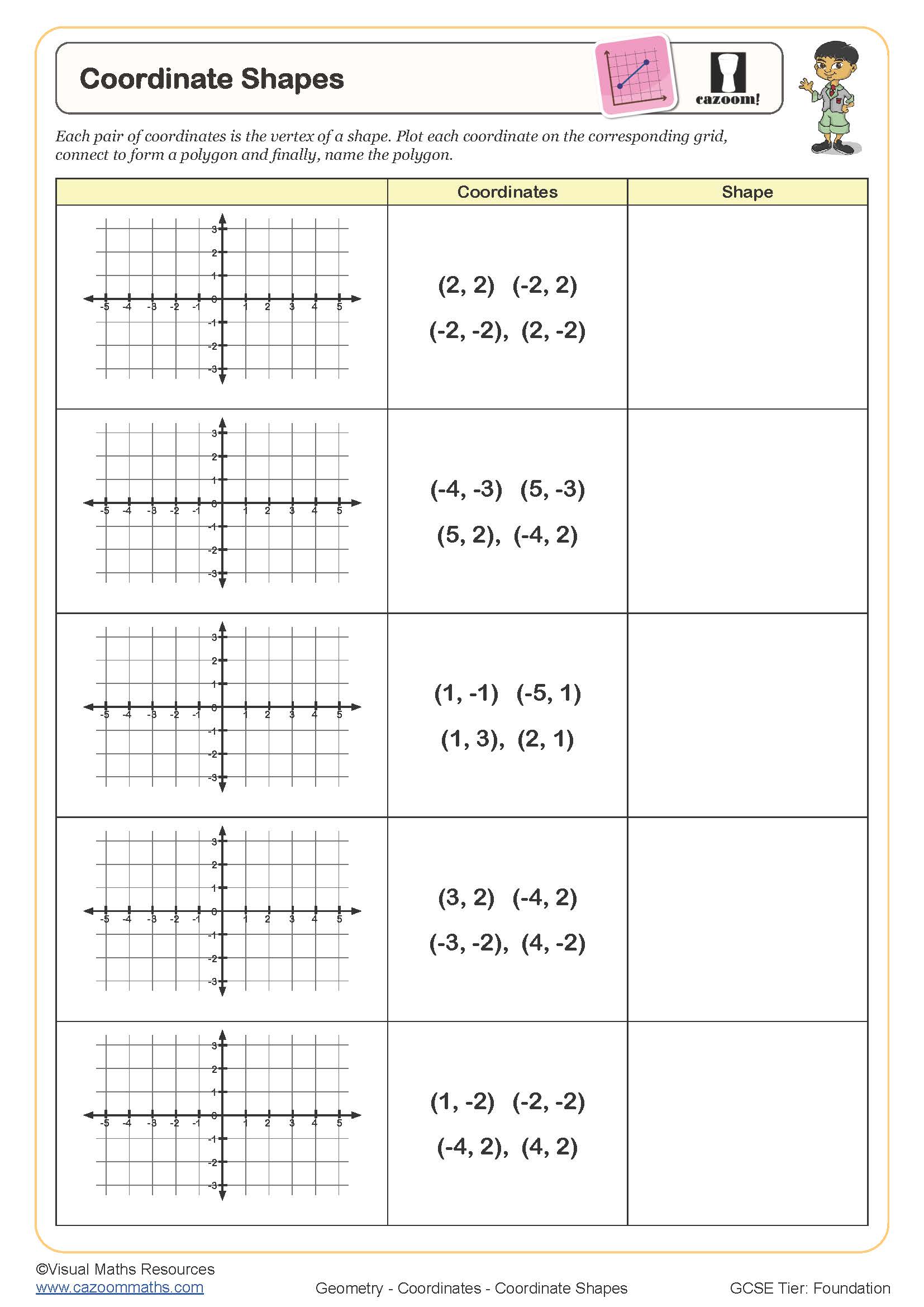
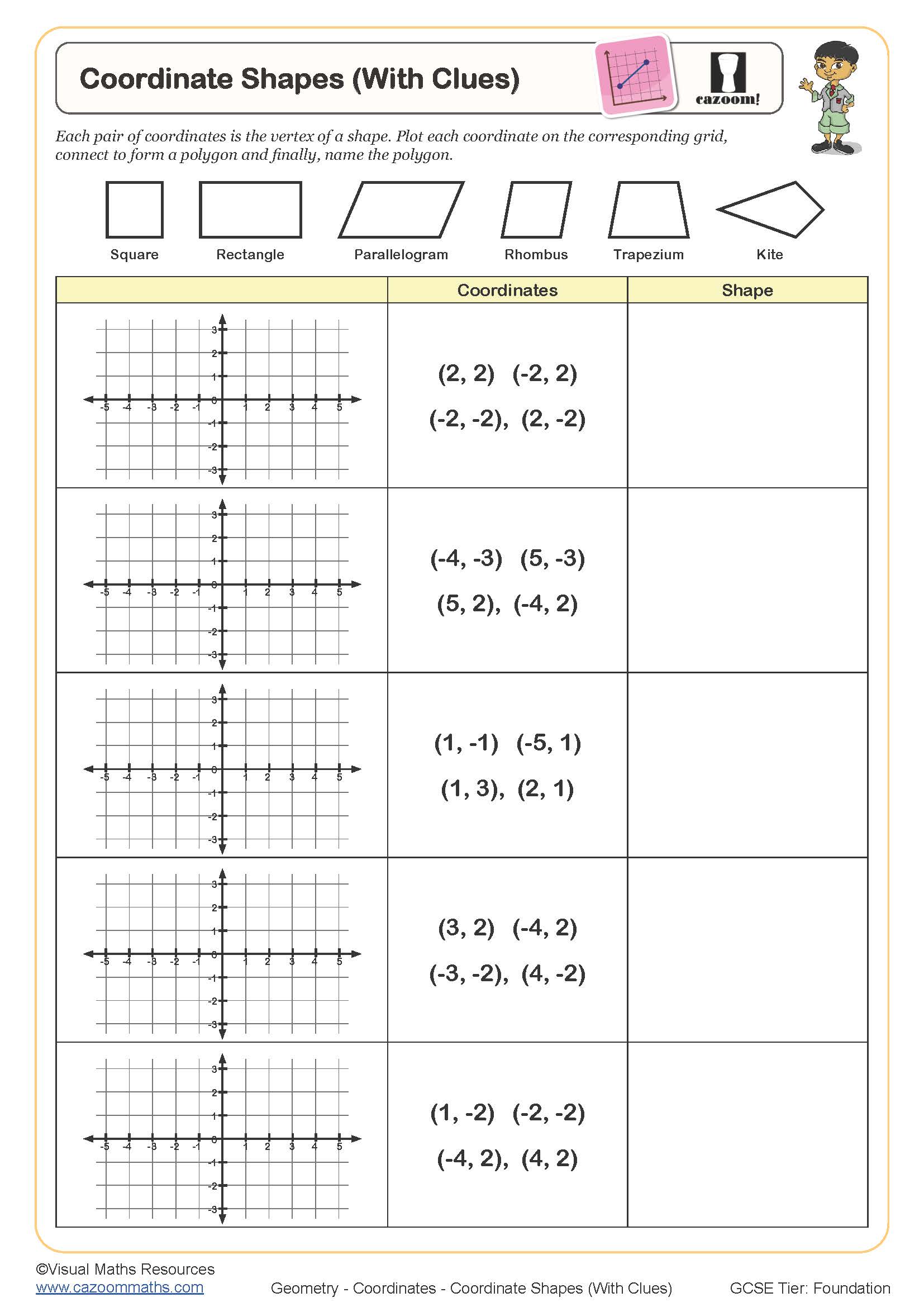
The worksheets provide structured practice with clear progression, allowing students to build confidence before tackling examination-style questions. Each sheet includes varied question types, from straightforward plotting exercises to problem-solving tasks that require students to find missing coordinates or identify shapes from given vertices. The answer sheets enable students to self-assess, making these resources valuable for independent learning or flipped classroom approaches.
Many teachers use coordinate worksheets during intervention sessions to address specific gaps, particularly when students struggle with negative numbers in context. They work well as homework tasks following introductory lessons, or as starter activities to maintain fluency. Paired work can be particularly effective: one student plots coordinates whilst the other checks accuracy using the answer sheet, then they swap roles, promoting mathematical discussion and peer support.