KS4 Fractions Worksheets

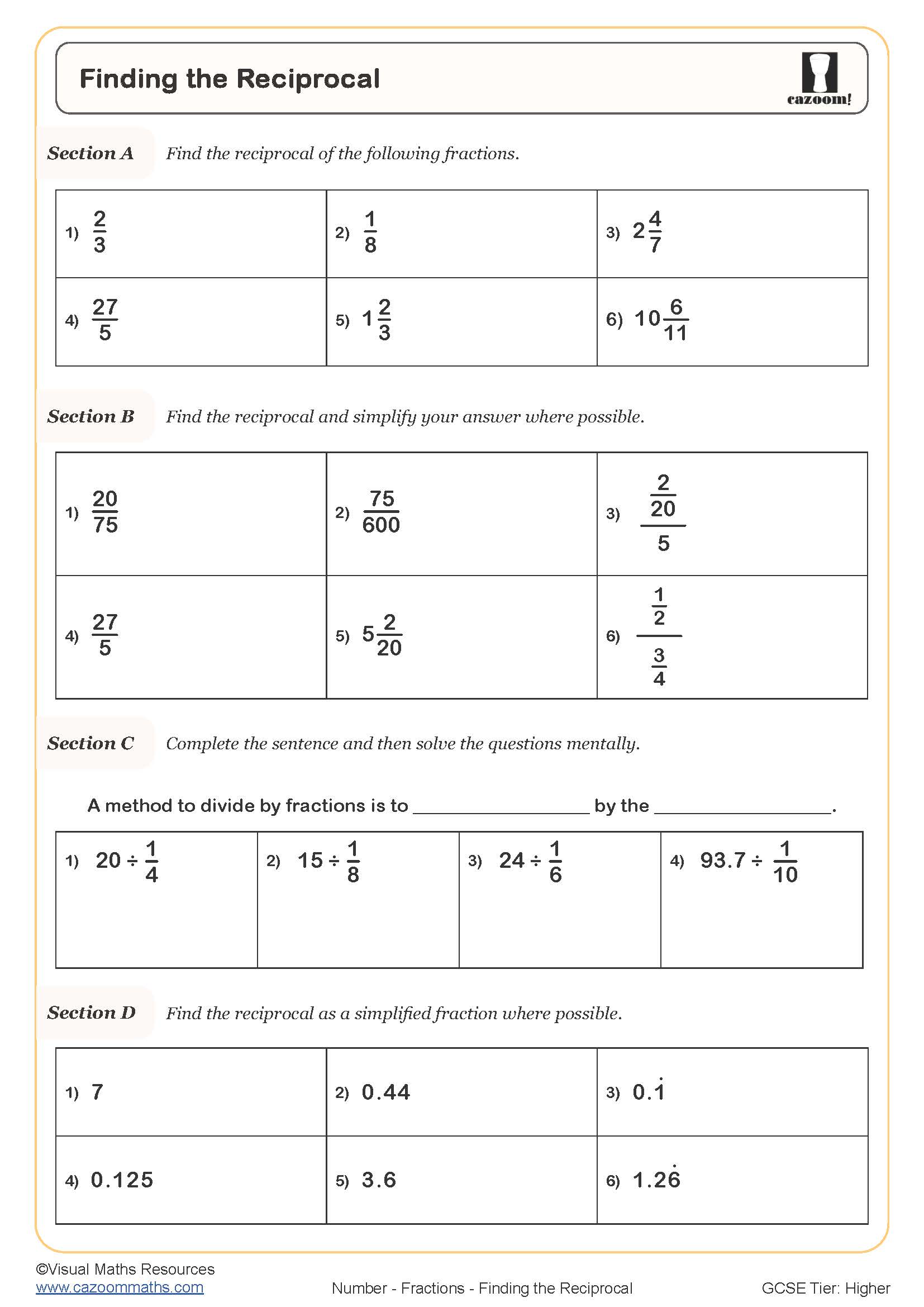
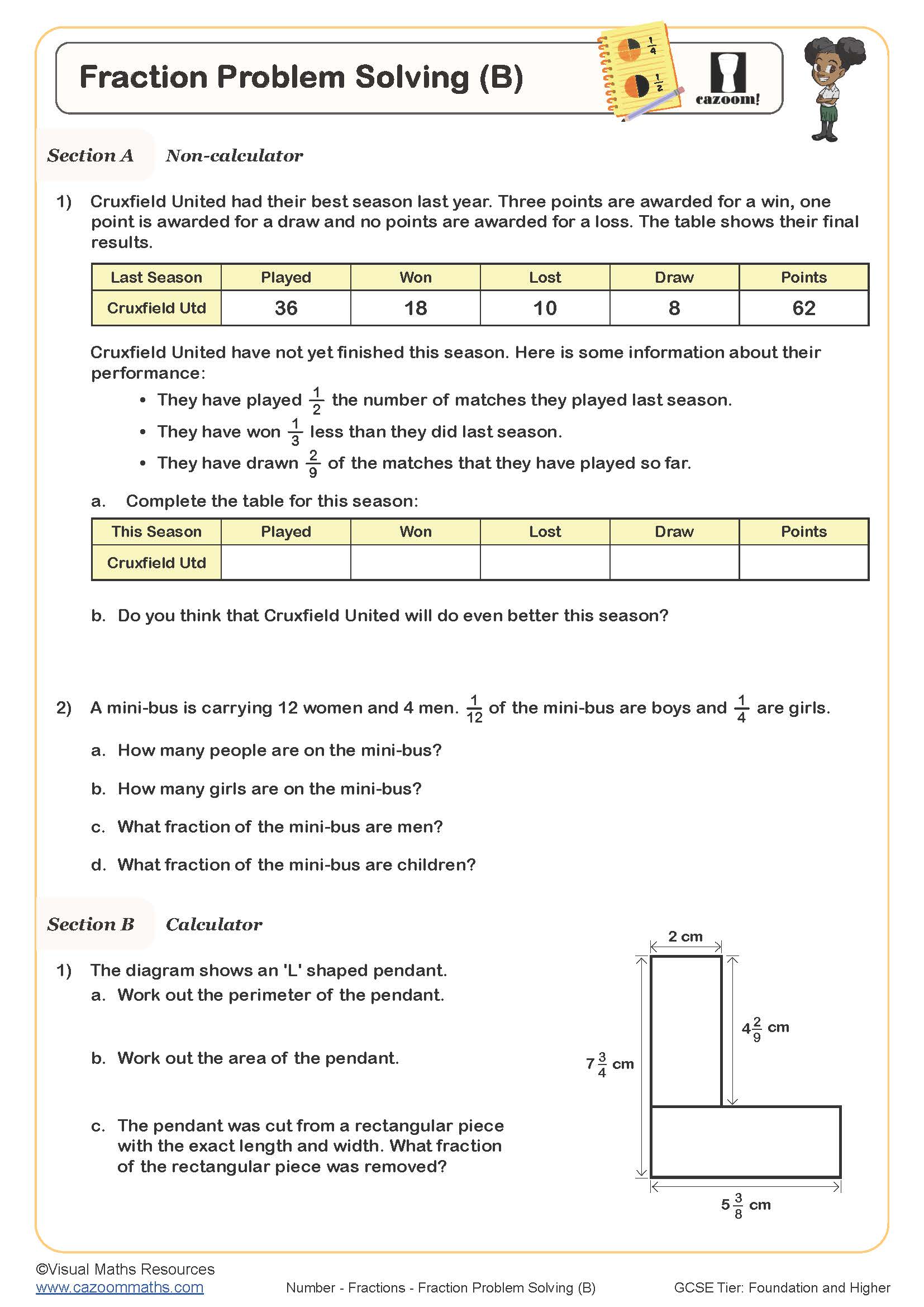
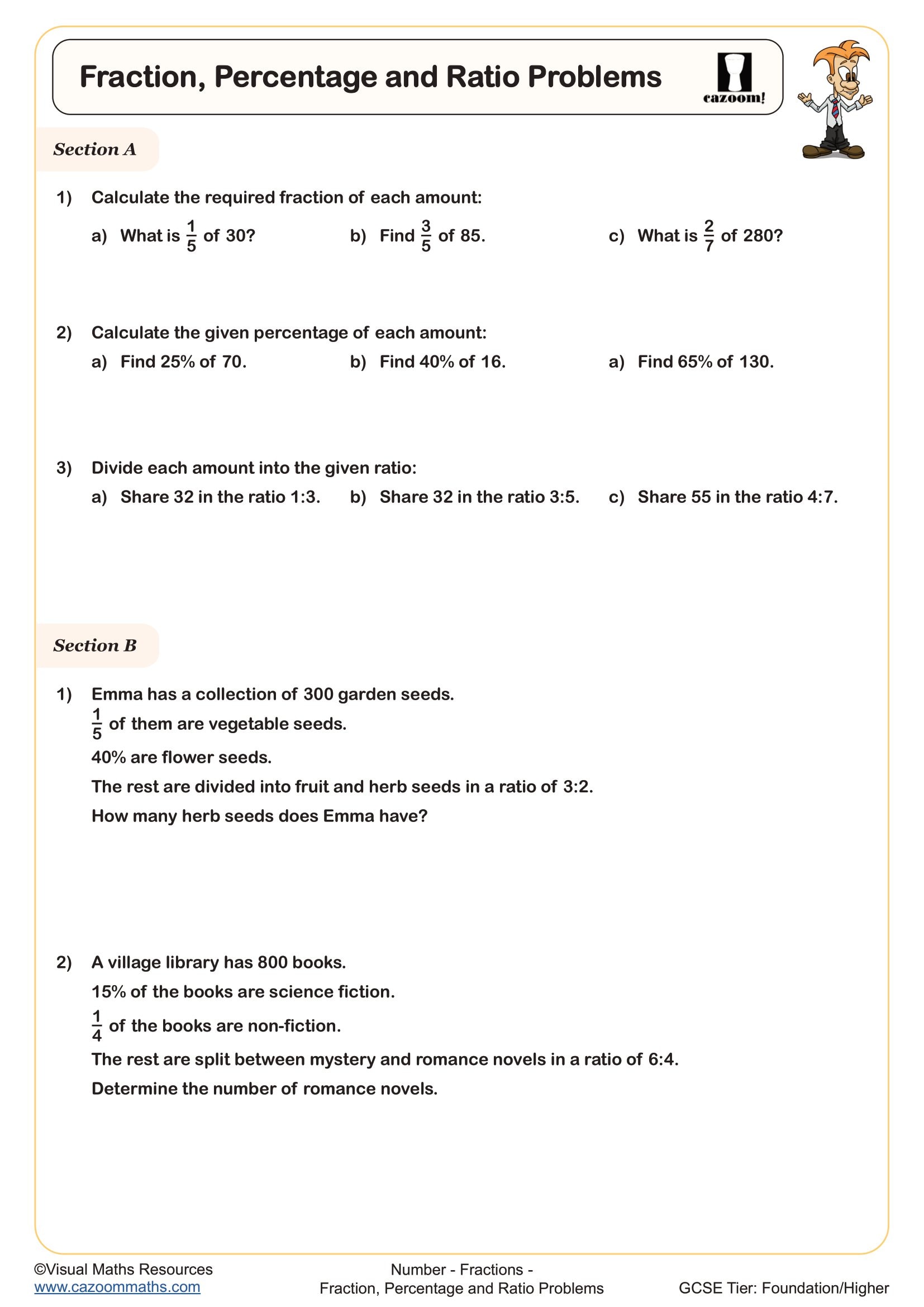
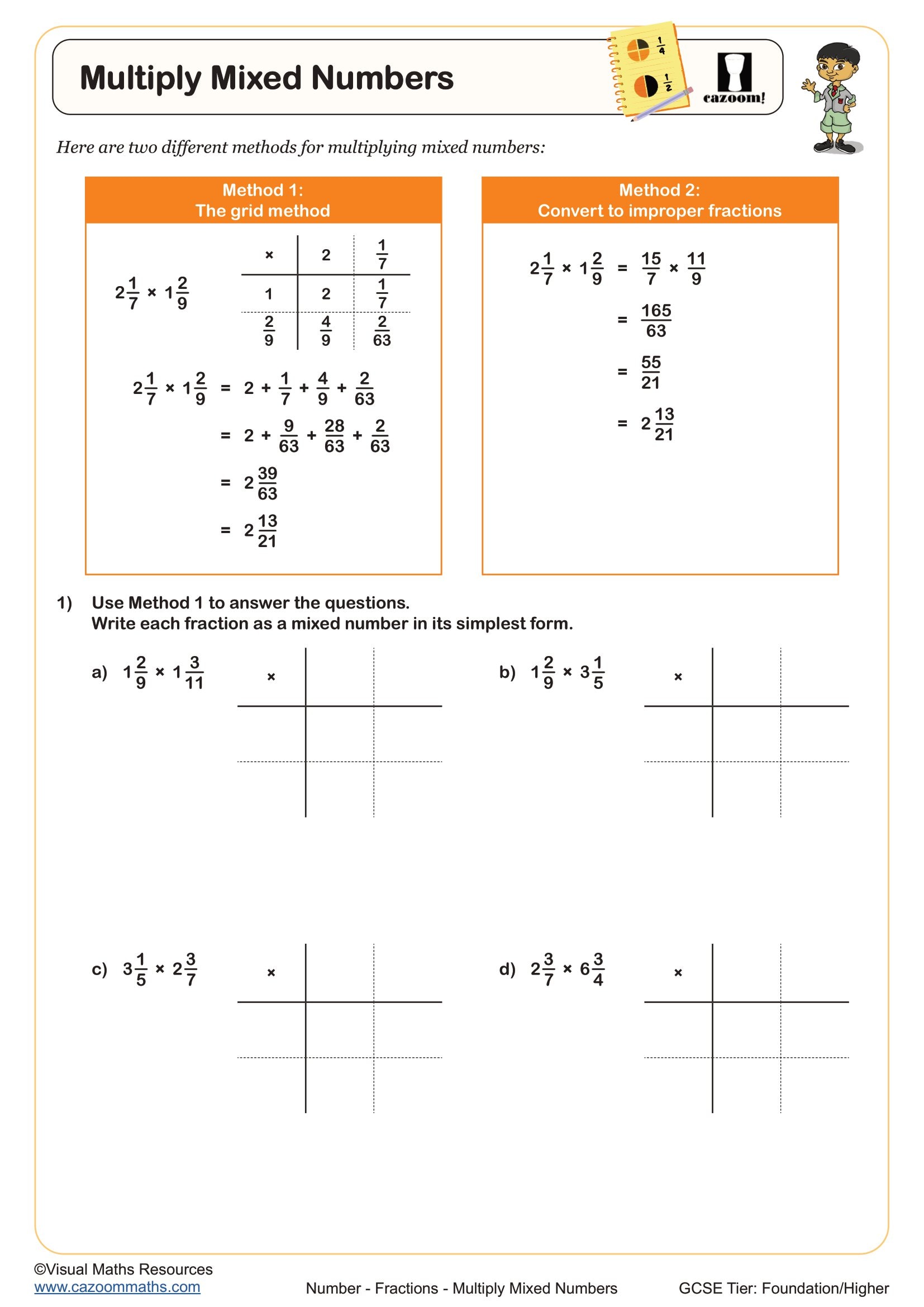
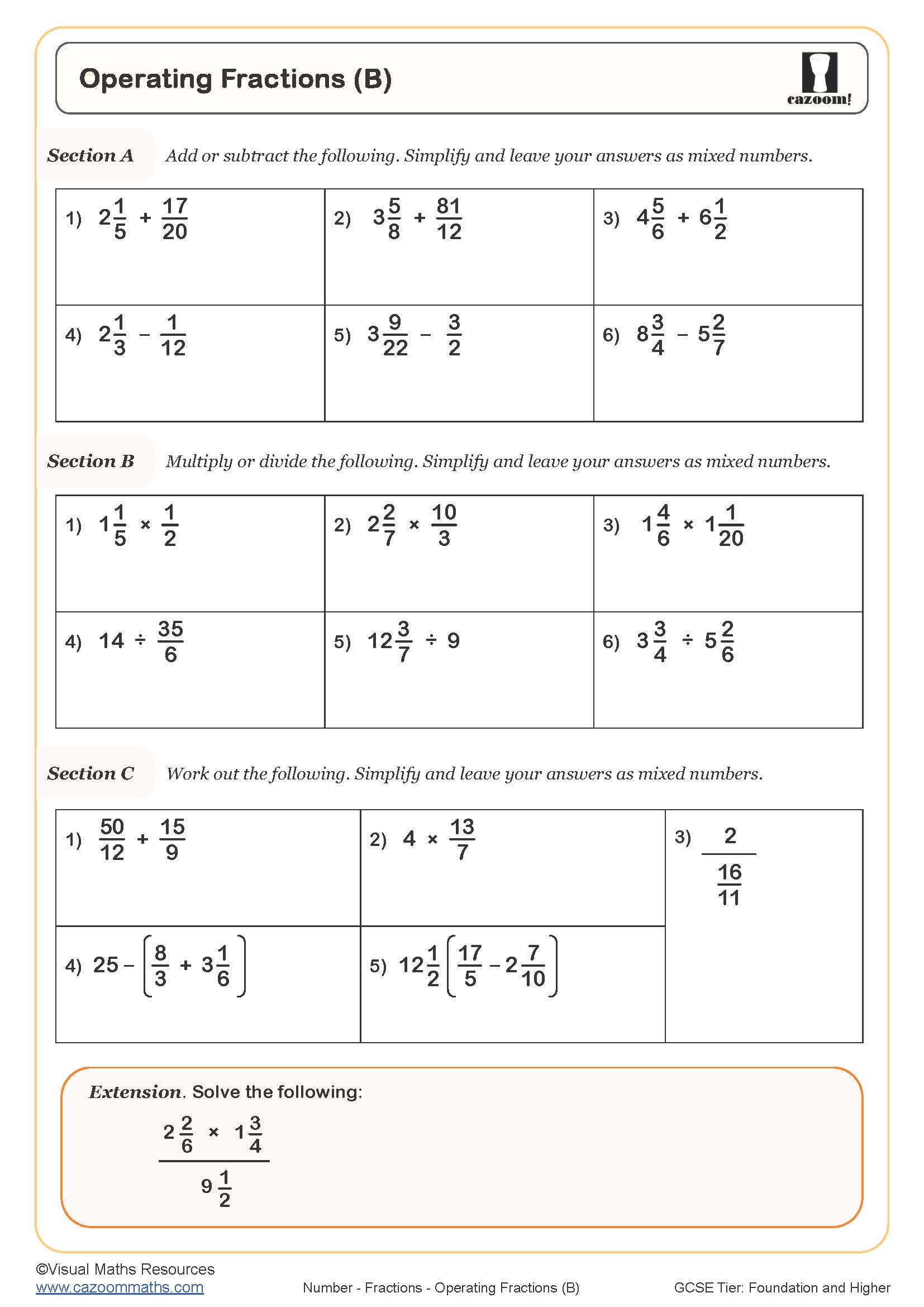
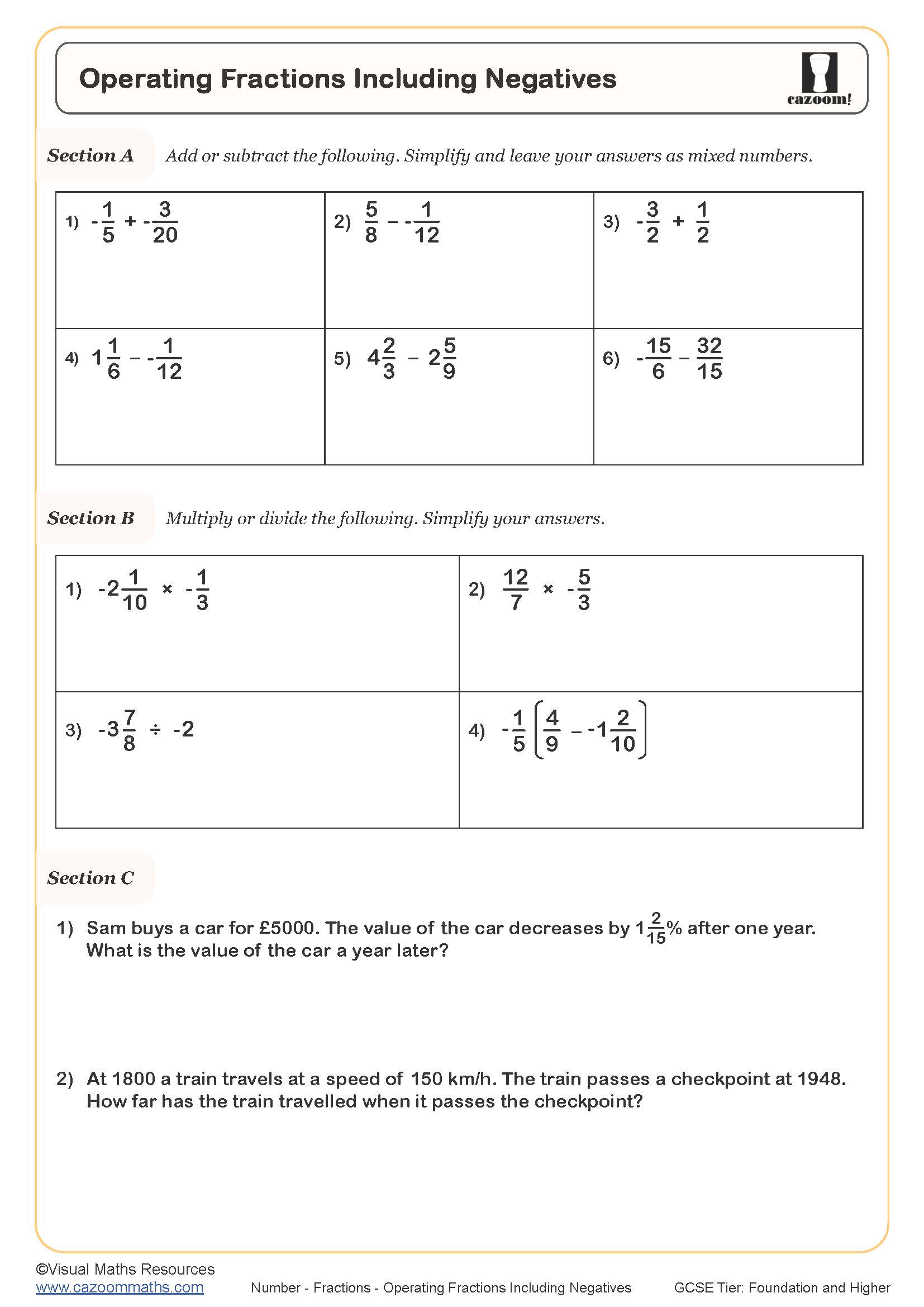
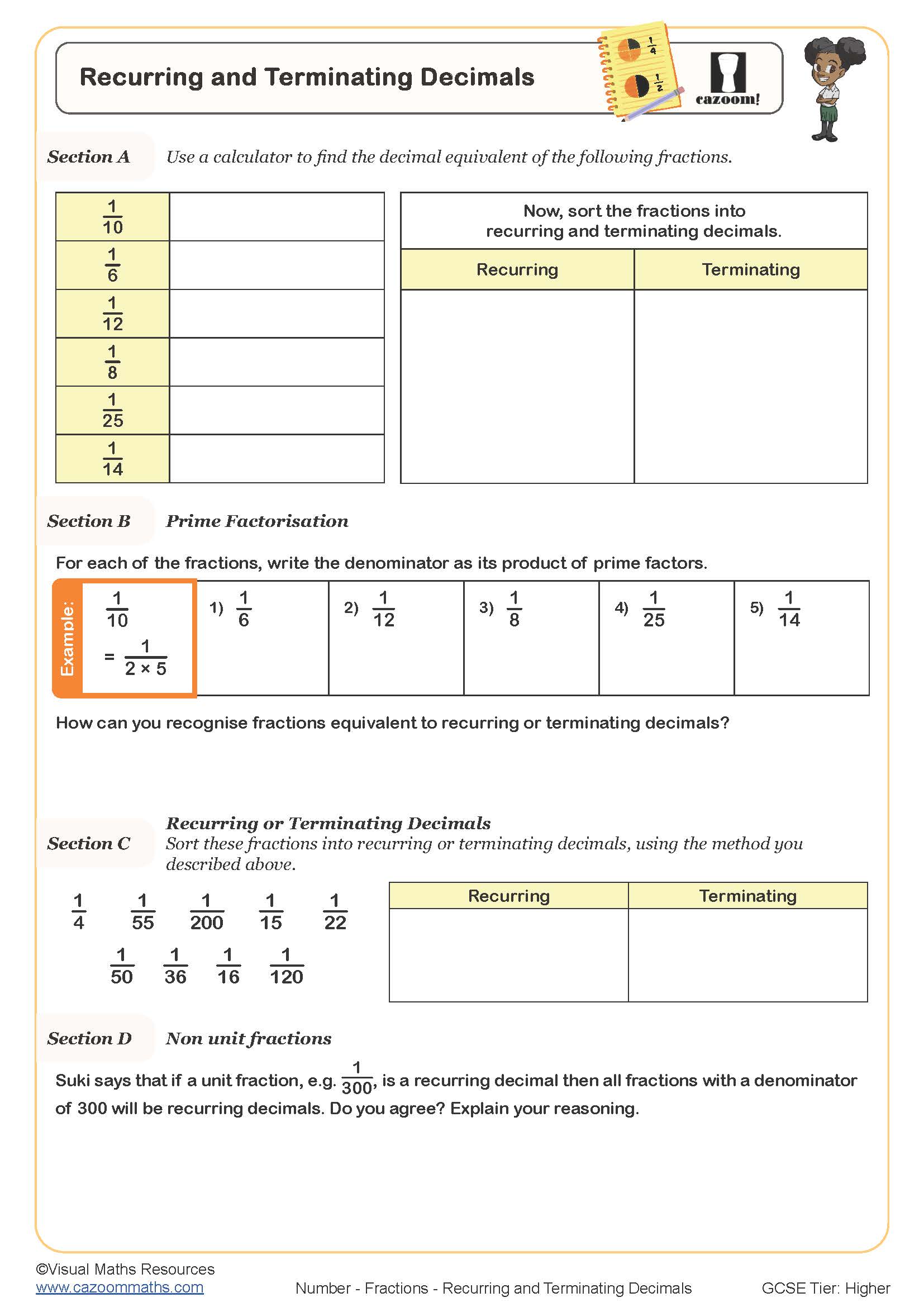
All worksheets are created by the team of experienced teachers at Cazoom Maths.
What fraction skills do Year 10 and Year 11 students need for GCSE maths?
At KS4, students need fluency in converting between mixed numbers and improper fractions, ordering fractions of different denominators, and performing all four operations with fractions confidently. The GCSE specification also requires students to work with algebraic fractions, including simplifying, adding, and subtracting them, and to move seamlessly between fractions, decimals, and percentages in problem-solving contexts. These skills appear across both Foundation and Higher tier papers, often embedded within multi-step questions.
Mark schemes regularly penalise students who fail to show their working when finding common denominators or who don't simplify their final answers. A common error occurs when students attempt to divide algebraic fractions by multiplying both numerator and denominator by the same expression rather than flipping and multiplying. Students also lose marks when they convert fractions to decimals prematurely in exact-answer questions, particularly those involving surds or recurring decimals.
Which year groups use these fractions worksheets?
This collection targets Year 10 and Year 11 students working at KS4 level, either consolidating foundation topics or preparing for Higher tier GCSE content. Fractions feature prominently across both GCSE tiers, with Foundation focusing on confident calculation with numerical fractions and straightforward conversions, whilst Higher extends to complex algebraic fractions and fraction manipulation within algebraic proof. These worksheets support both tiers by reinforcing the core skills that underpin more complex applications.
Across these year groups, the progression moves from ensuring numerical fluency with all fraction operations to applying these techniques in increasingly abstract contexts. Year 10 students typically focus on securing accuracy and efficiency with mixed calculations, whilst Year 11 students often need targeted revision on the specific fraction skills that appear in their tier's past papers, particularly algebraic fractions on Higher tier and multi-step percentage-fraction problems on Foundation.
How do you subtract fractions with different denominators?
To subtract fractions with different denominators, students must first find a common denominator (typically the lowest common multiple of the denominators), convert each fraction to an equivalent fraction with this shared denominator, then subtract the numerators whilst keeping the denominator the same. For example, 5/6 - 2/9 requires finding that 18 is the lowest common multiple: 15/18 - 4/18 = 11/18. When subtracting mixed numbers, students can either convert to improper fractions first or subtract whole numbers and fractions separately, though the latter requires regrouping if the first fraction is smaller than the second.
This skill connects directly to real-world applications in construction and engineering, where measurements often need combining from different unit systems. Architects routinely subtract fractional dimensions when calculating remaining materials or adjusting specifications, whilst engineers working with imperial measurements (still common in UK construction alongside metric) must add and subtract fractions like 7/16" and 3/8" when fabricating components. Understanding fraction operations ensures precision in these professional contexts where decimal approximations aren't sufficiently accurate.
How do these worksheets help students improve their fraction skills?
The worksheets provide structured practice that builds from straightforward conversions and operations to more complex multi-step problems, allowing students to develop both procedural fluency and problem-solving confidence. Each sheet isolates specific skills like ordering fractions or working with algebraic fractions, making it easier to identify where gaps exist and target intervention accordingly. The answer sheets enable students to self-assess and identify errors in their methods, which is particularly valuable when preparing independently for GCSE exams.
Teachers often use these resources for differentiated homework tasks, assigning different sheets based on whether students are working towards Foundation or Higher tier. They work well for intervention sessions with small groups who need to revisit fraction operations before tackling more complex topics like ratio or probability. Many teachers also find them useful as starter activities to maintain fluency or as part of revision carousels where students rotate through different fraction skills, checking their work as they progress.