Year 8 Bar Models Worksheets
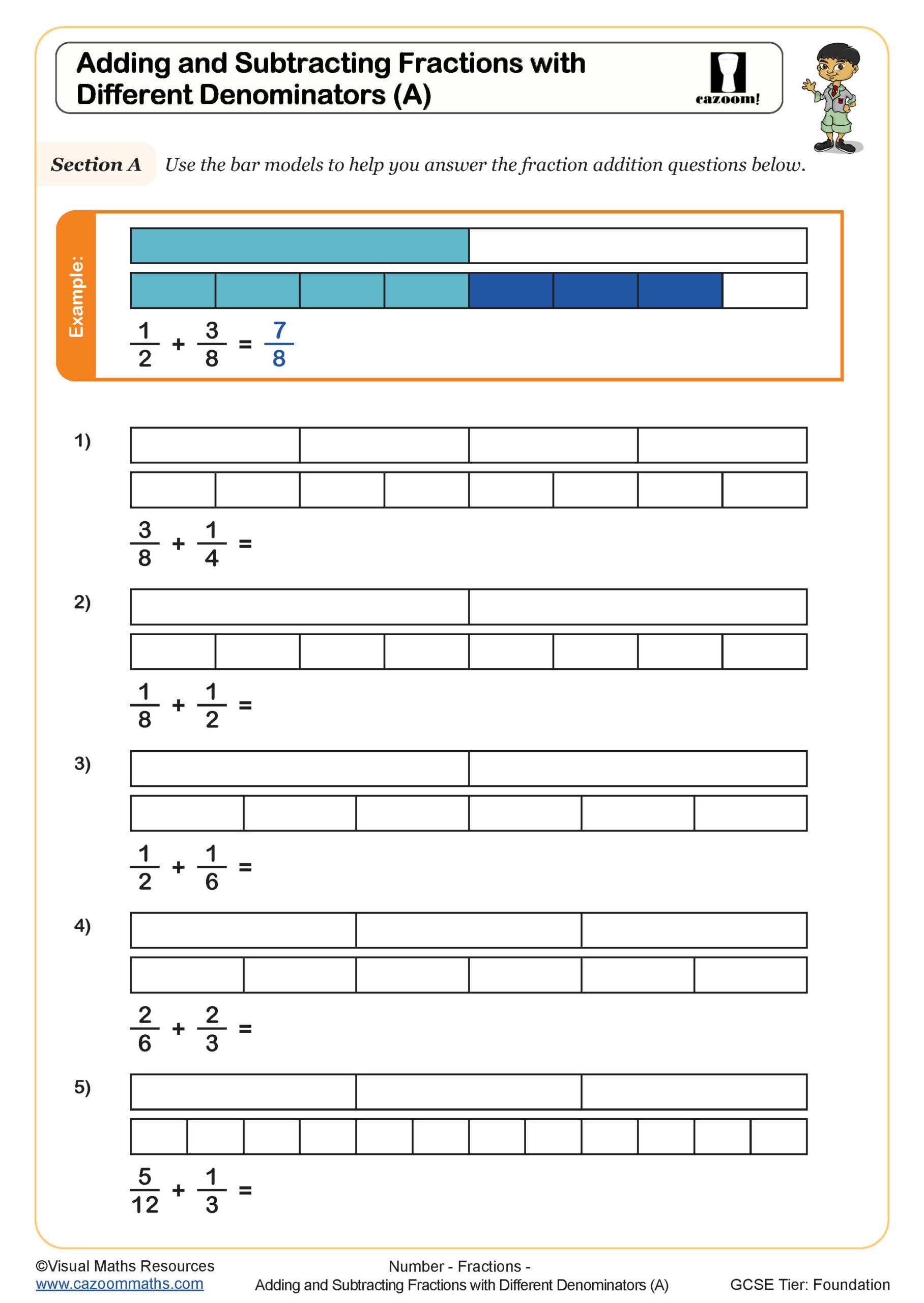
Adding and subtracting fractions with different denominators (A)
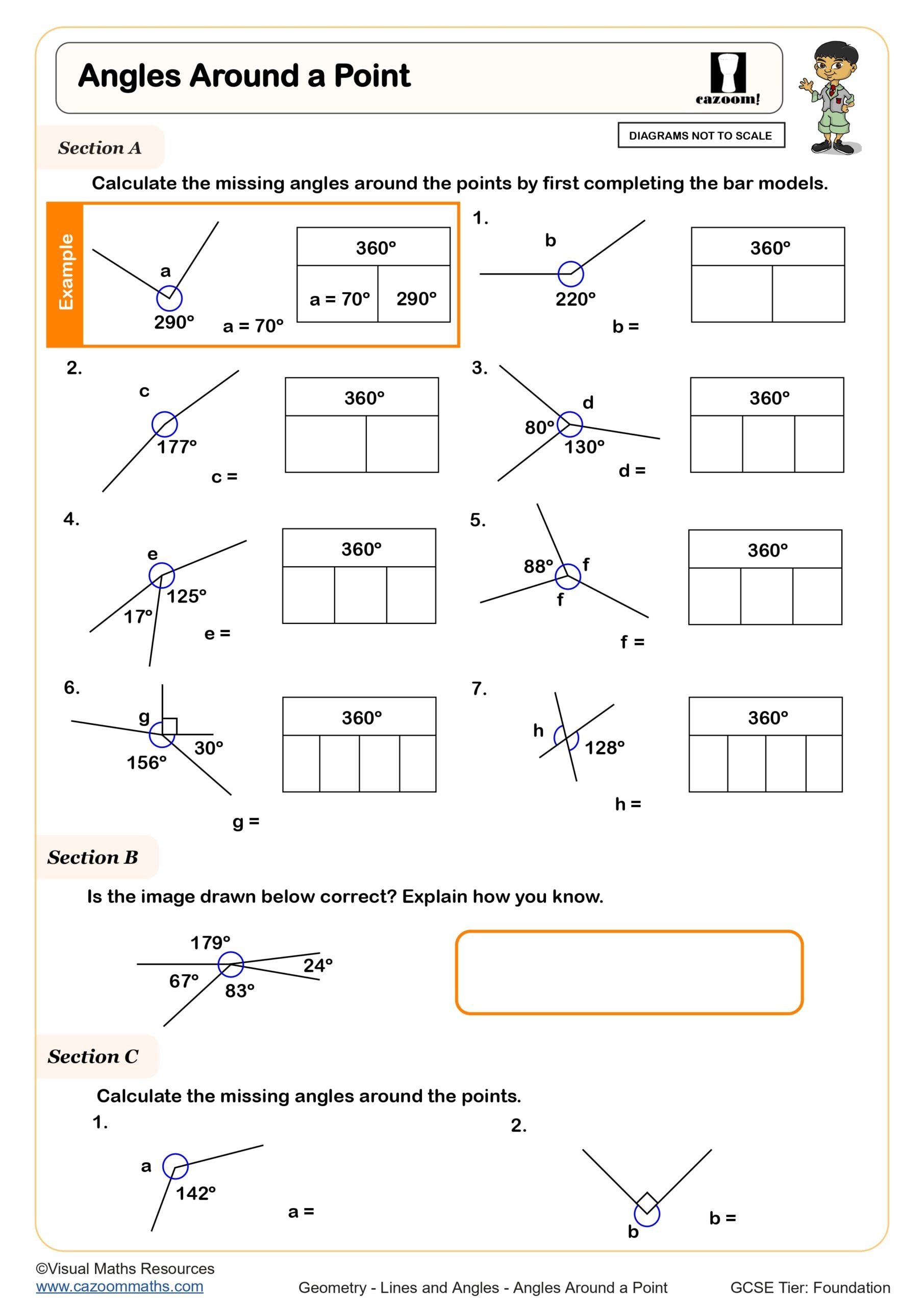
Angles Around a Point
Angles in Triangles (A)
-Worksheet.jpg?w=3840)
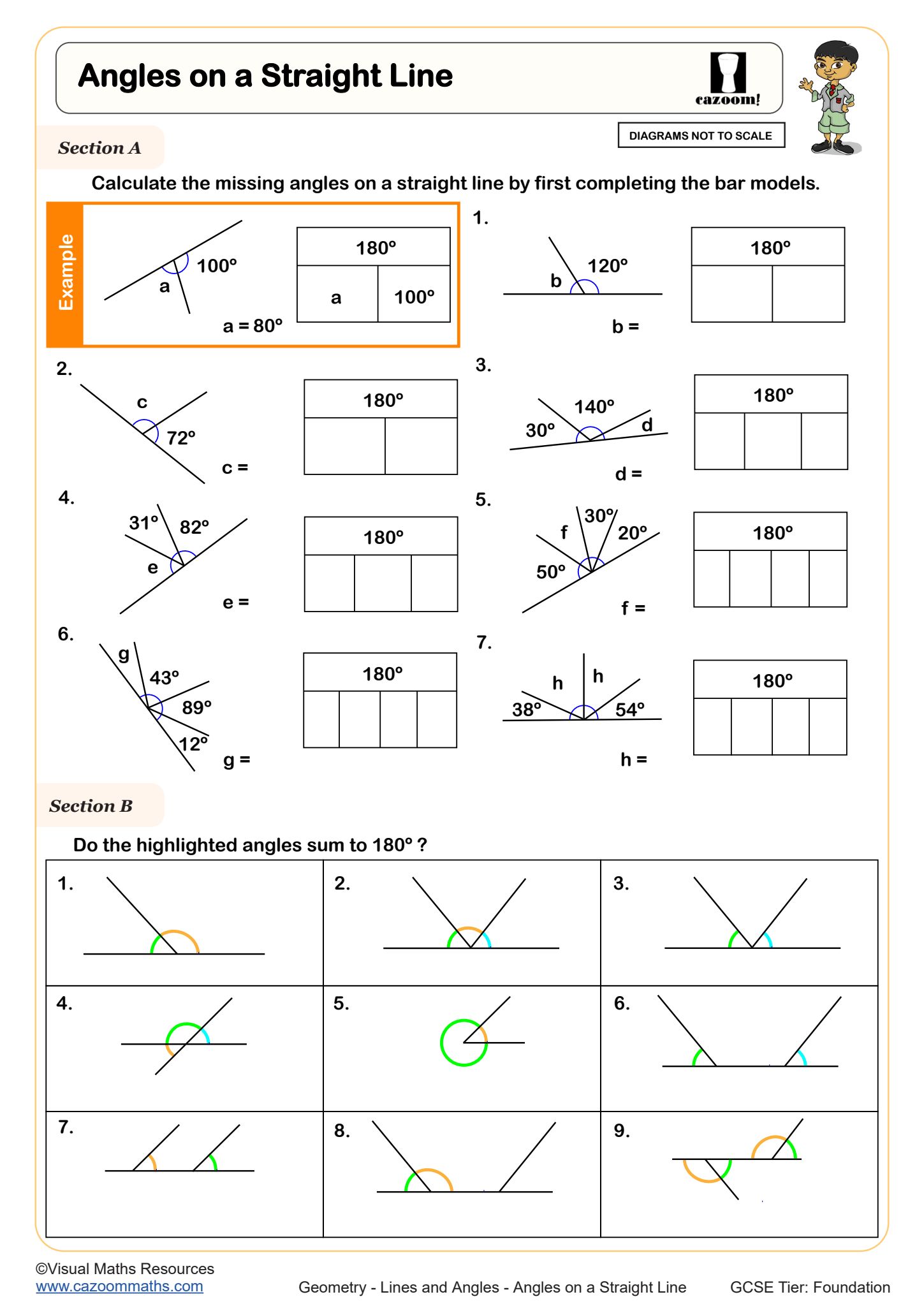
Angles on a Straight Line
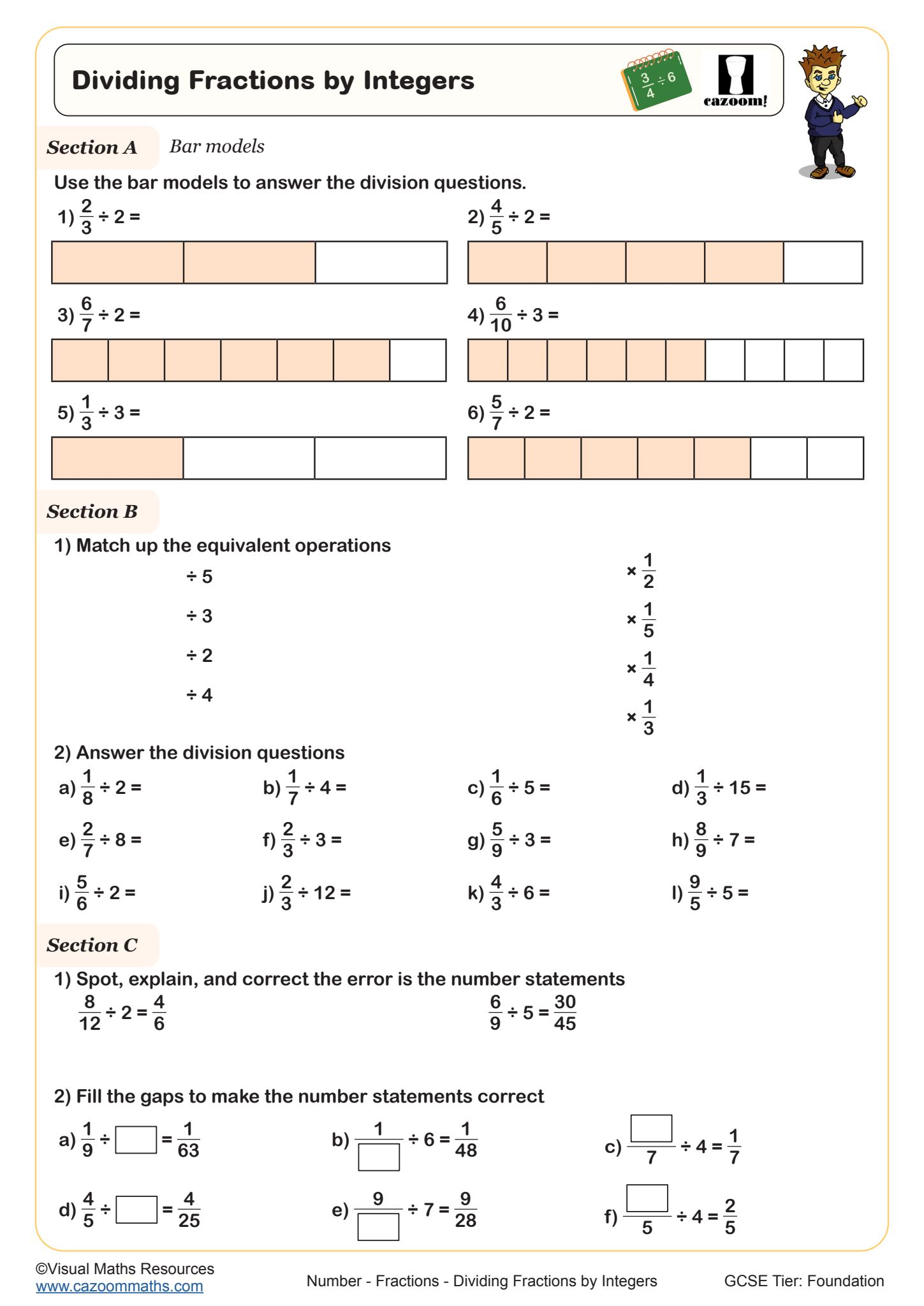
Dividing Fractions by Integers
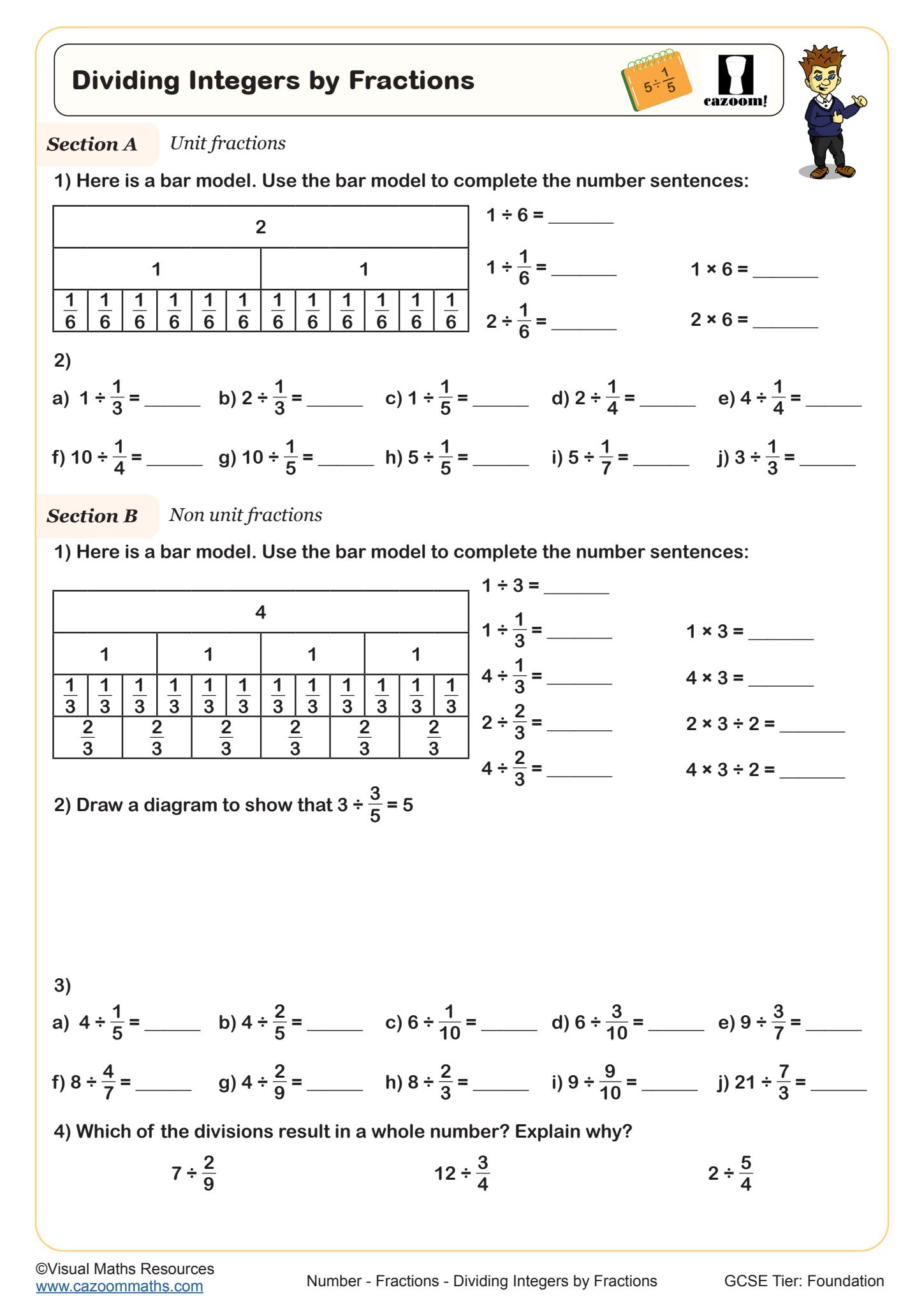
Dividing Integers by Fractions
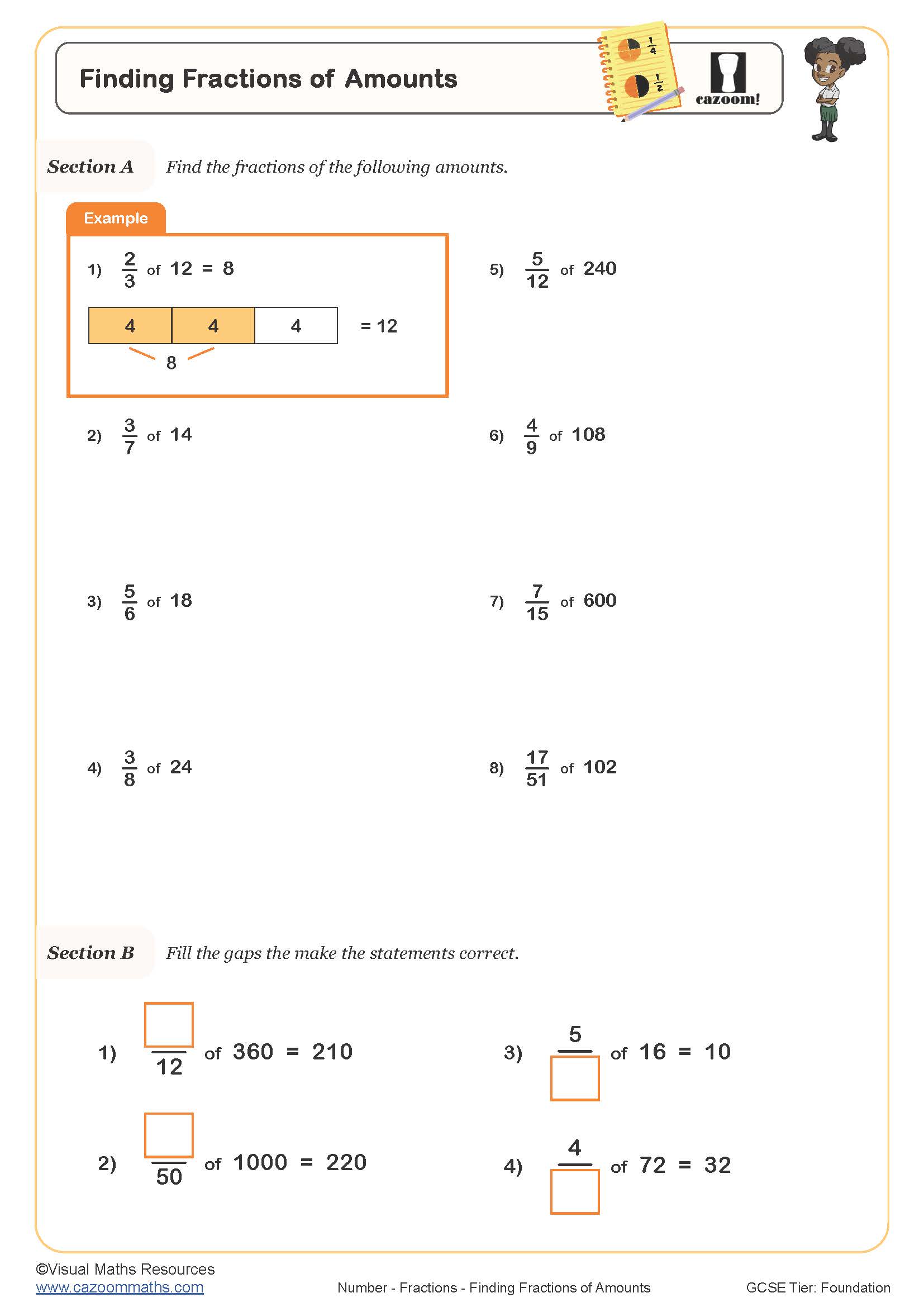
Finding Fractions of Amounts
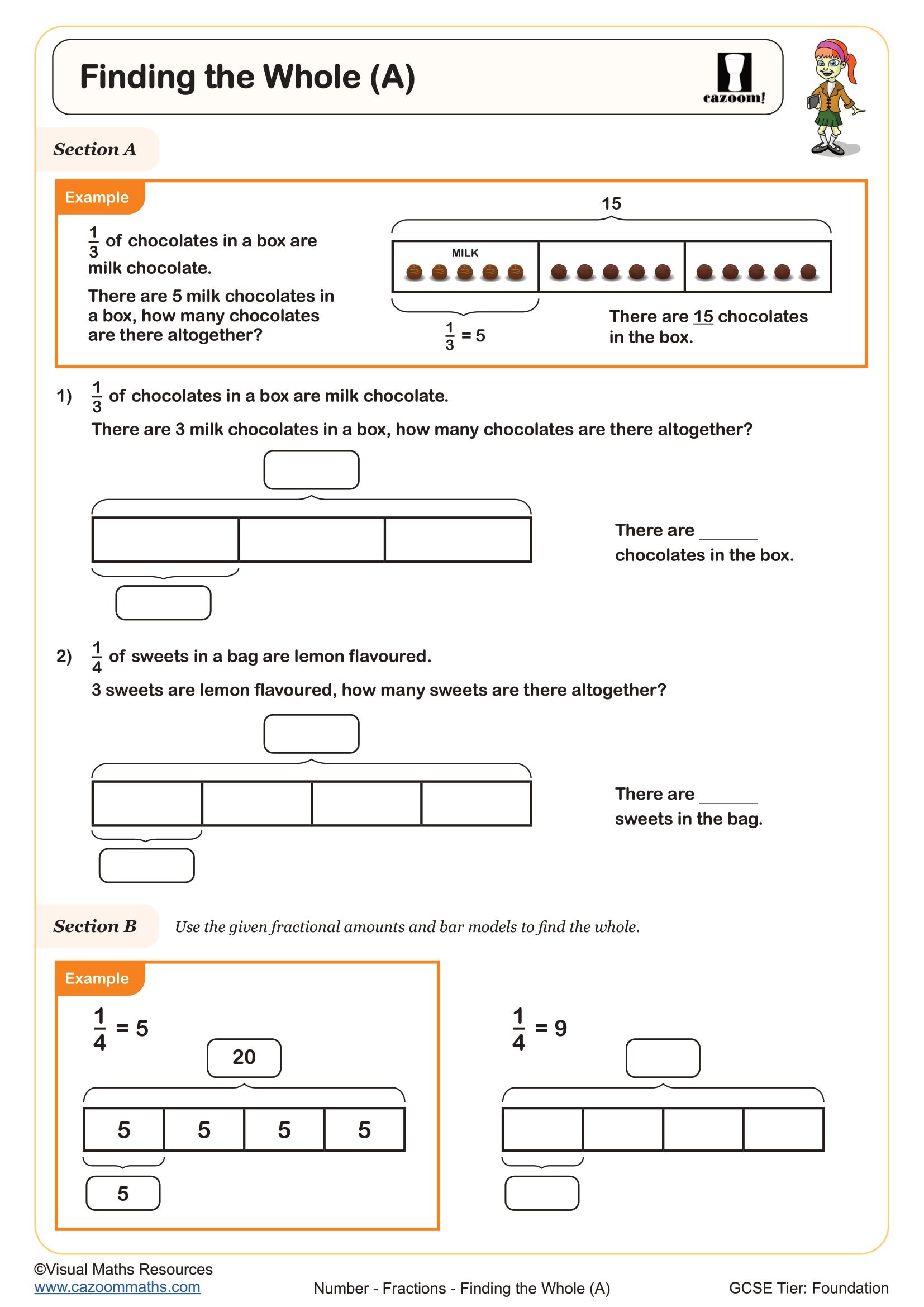
Finding the Whole (A)
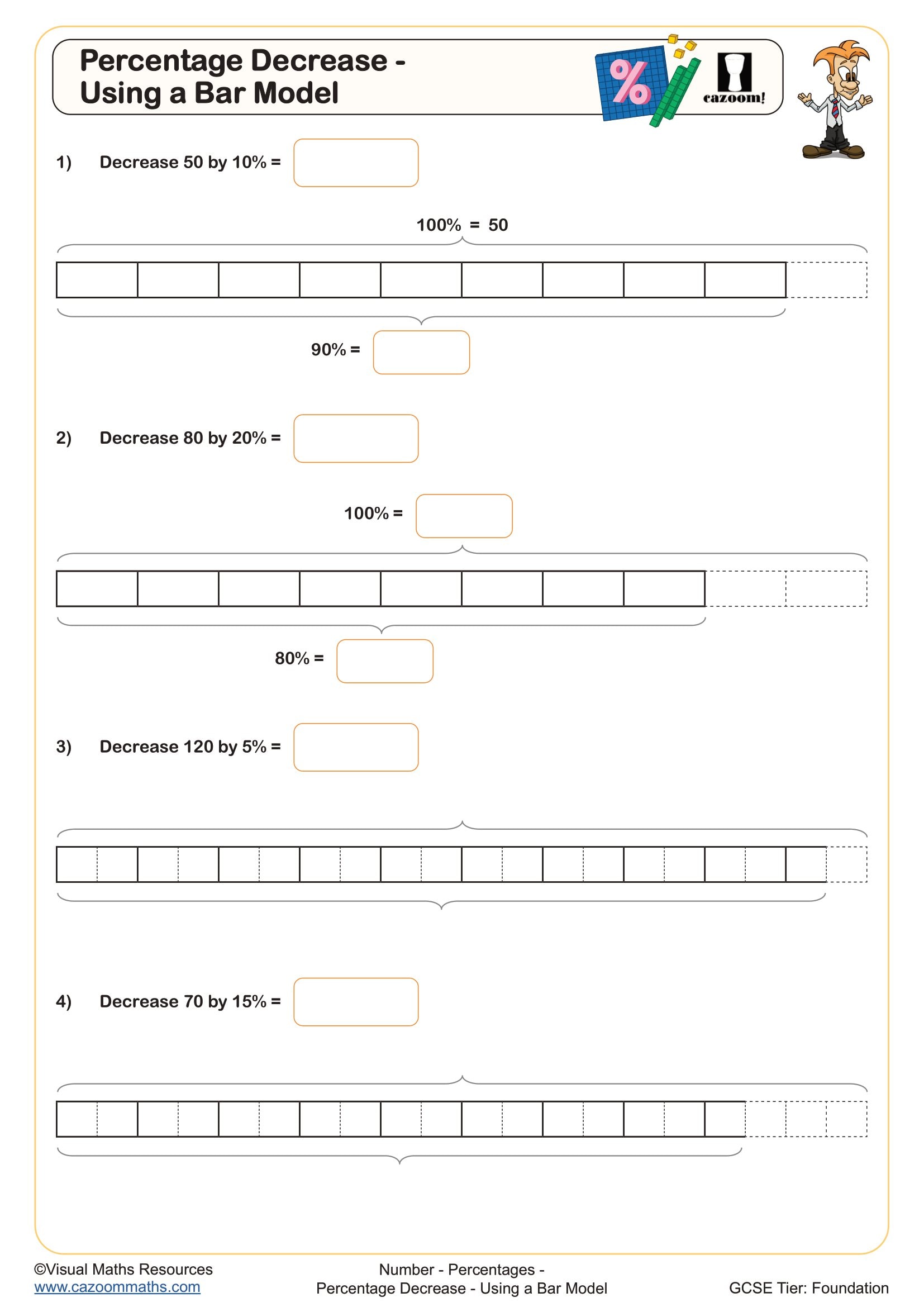
Percentage Decrease - Using a Bar Model
Percentage Increase - Using a Bar Model
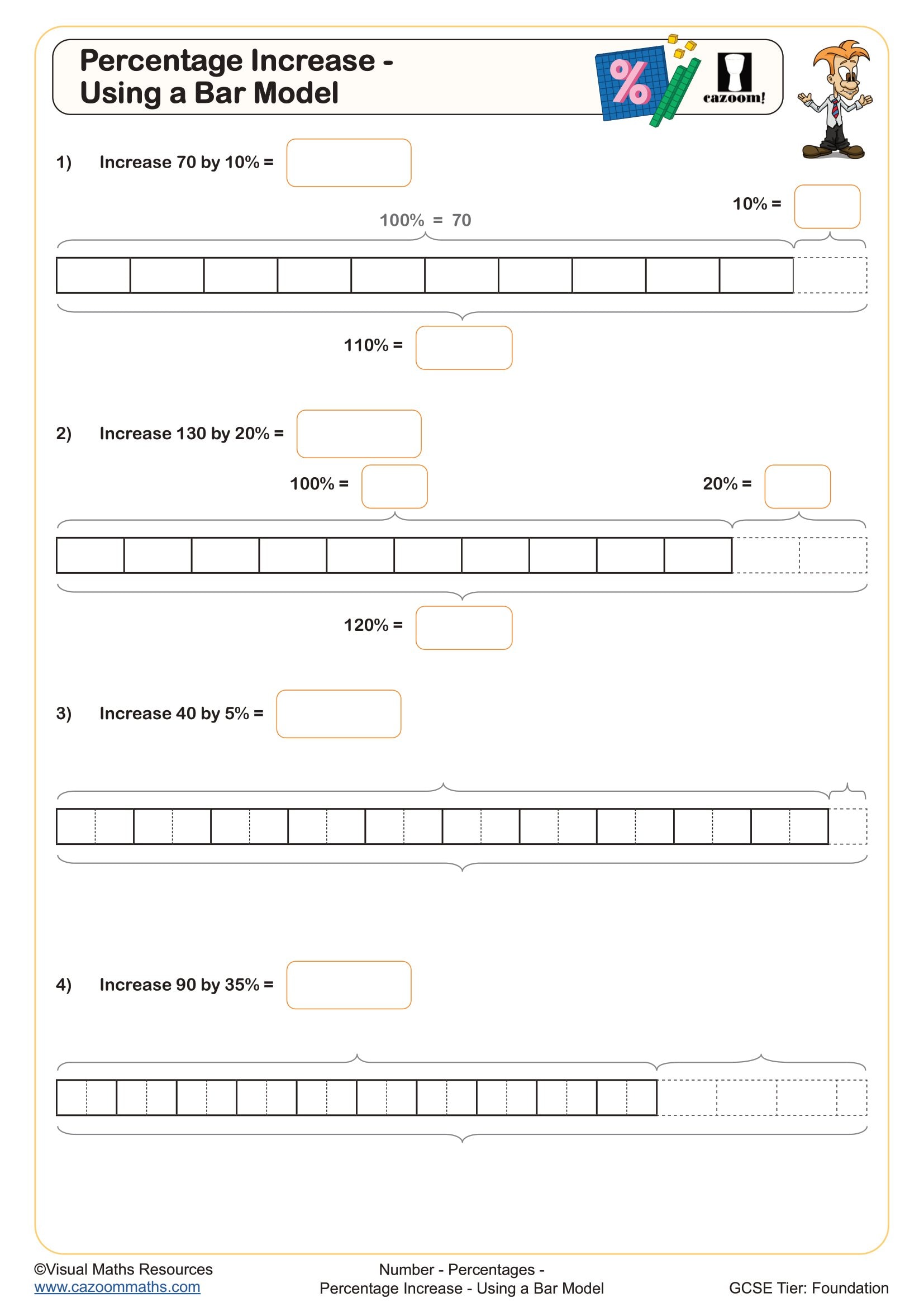
Percentages of Amounts - Using a Bar Model (A)
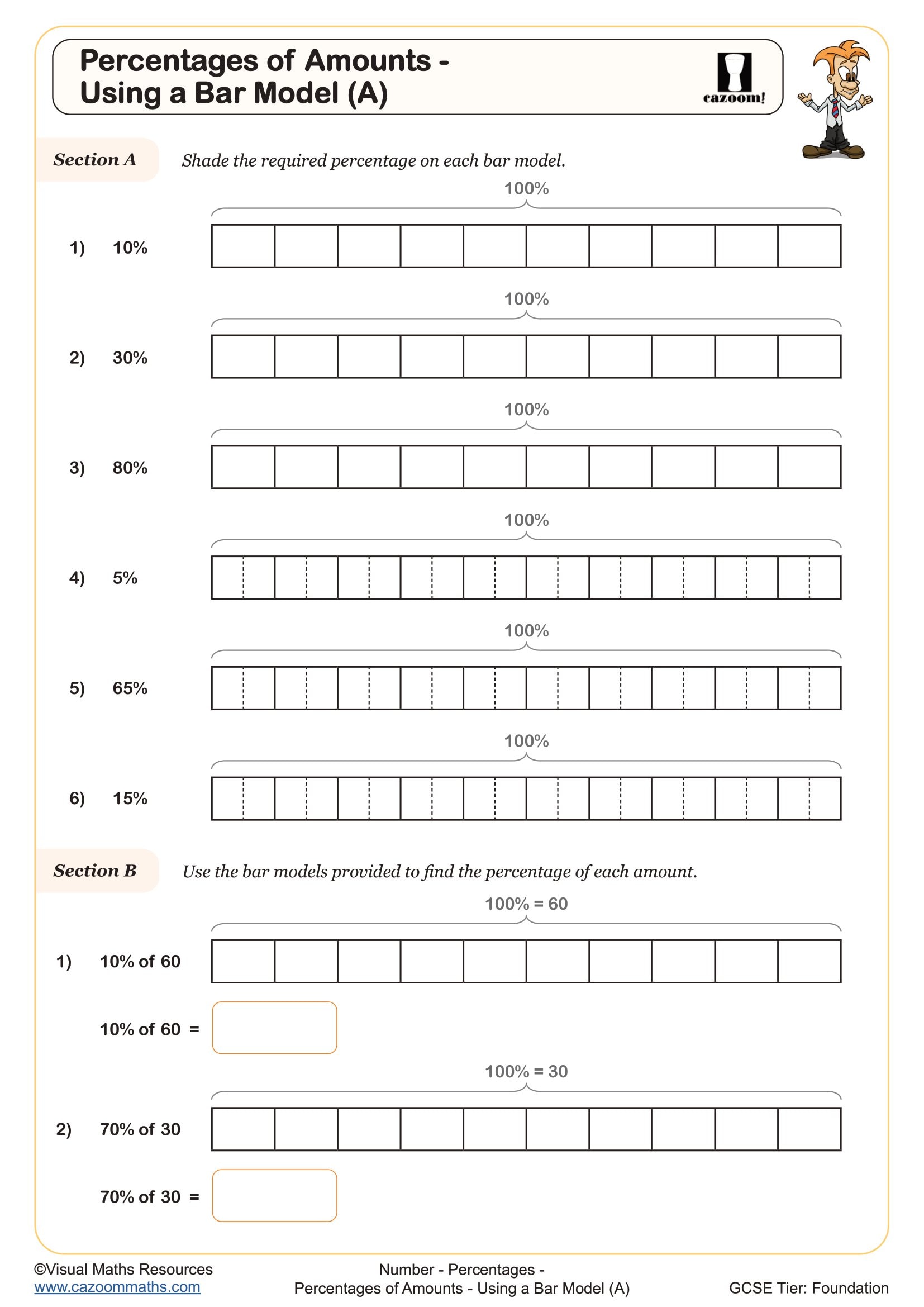
Percentages of Amounts - Using a Bar Model (B)
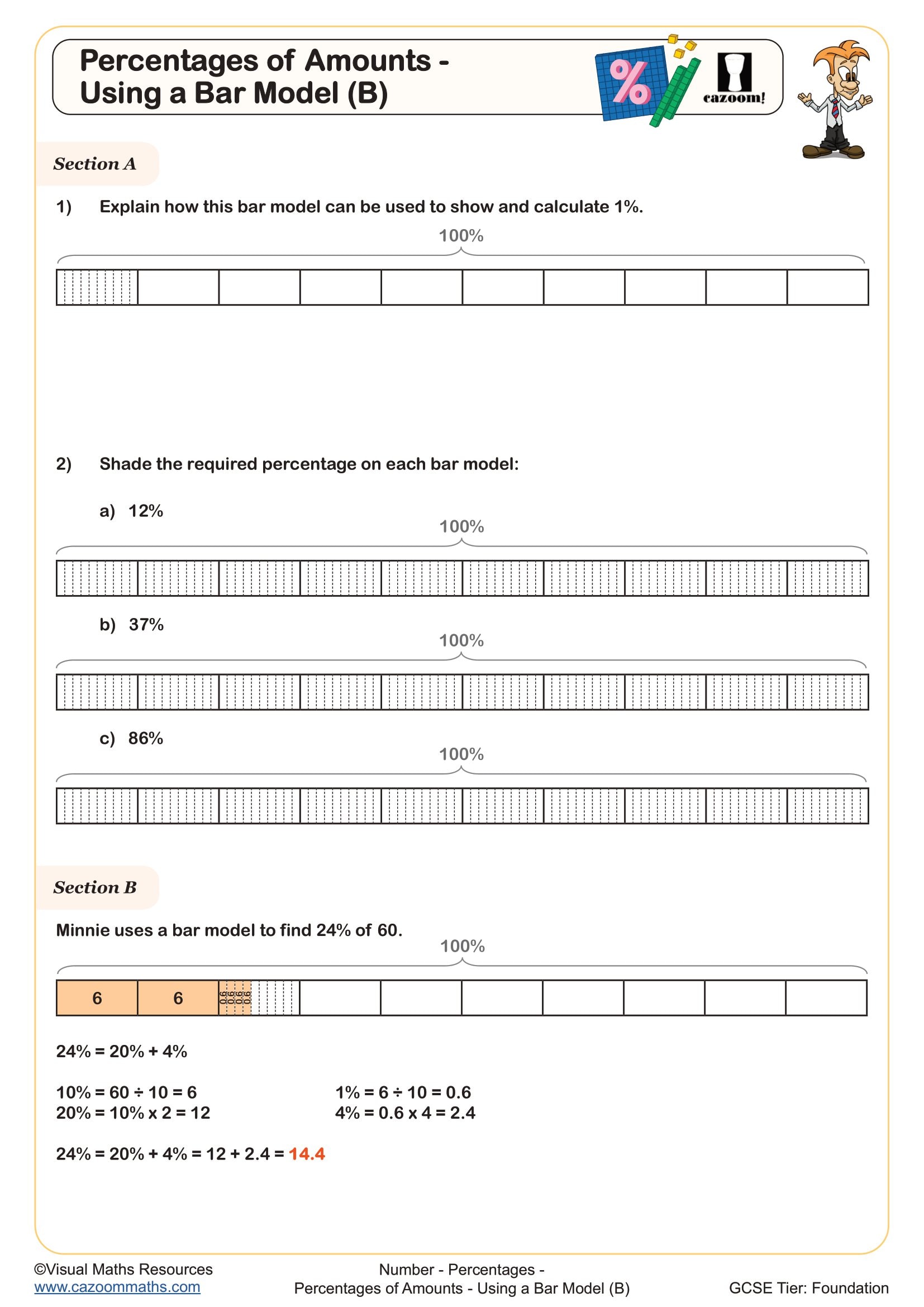
Ratio - Using Bar Models
All worksheets are created by the team of experienced teachers at Cazoom Maths.
What are bar models in maths?
Bar models are visual diagrams that represent mathematical relationships using rectangular bars divided into sections. Students use these diagrams to solve problems involving the four operations, fractions, ratio, proportion, and increasingly at KS3, algebraic equations. The method originated in Singapore maths teaching and has become embedded in UK curricula because it bridges concrete understanding and abstract calculation.
A common misconception is that bar models are only for primary pupils or struggling students. Actually, Year 8 students use bar models to tackle sophisticated problems involving algebraic unknowns and multi-step reasoning. Teachers notice that students who dismiss bar models as 'too easy' often make careless errors in proportion problems that a quick diagram would prevent, particularly when working with inverse relationships or complex ratio questions.
Which year groups use bar models?
These worksheets are designed specifically for Year 8 students working within the KS3 National Curriculum. At this stage, bar modelling extends beyond basic arithmetic to support algebraic thinking, ratio problems, and percentage calculations. Students should already be familiar with basic bar model structures from KS2, but Year 8 work demands more sophisticated diagram construction and interpretation.
The progression at Year 8 involves using bar models to represent algebraic equations (where one bar represents an unknown value), multi-step ratio problems with more than two quantities, and reverse percentage problems. Teachers observe that students who can independently choose when to use a bar model, rather than being directed to do so, demonstrate stronger problem-solving skills overall. This metacognitive step is a key development in Year 8 mathematical thinking.
How do bar models support algebraic thinking?
Bar models provide a visual bridge between arithmetic and algebra by representing unknown quantities as unlabelled or variable-labelled sections. When students draw a bar showing 'three times x plus 5 equals 23', they can see the relationship spatially before writing the equation 3x + 5 = 23. This visual approach helps students understand why inverse operations work, as they can literally 'remove' sections of the diagram to isolate the unknown.
This algebraic application connects directly to problem-solving in engineering and data science, where professionals regularly use visual representations to model relationships between variables before calculating solutions. Civil engineers use similar diagrammatic thinking when distributing loads across structures, whilst computer programmers use bar-style flowcharts to visualise conditional logic. Developing this visual-to-symbolic translation skill in Year 8 builds foundations for A-level mathematics and STEM careers requiring spatial reasoning alongside numerical accuracy.
How can teachers use these bar model worksheets effectively?
The worksheets progress from guided examples where bar structures are partially drawn, through to questions requiring students to construct their own diagrams from word problems. This scaffolding allows teachers to identify precisely where students struggle: is it reading comprehension, choosing appropriate bar divisions, or translating the diagram into calculations? The answer sheets show complete worked solutions with correctly drawn bar models, helping teachers demonstrate accurate representation during whole-class feedback.
Many teachers use these worksheets during intervention sessions for students approaching GCSE who still find algebraic word problems challenging. The visual method often succeeds where repeated practice with equations alone hasn't worked. The worksheets also work well for paired problem-solving, where one student draws the bar model whilst their partner suggests calculations, encouraging mathematical discussion. Some teachers assign specific worksheet questions for homework following a lesson on ratio or algebra, using the visual approach to reinforce abstract concepts taught earlier.