KS1 Fractions Decimals Percentages Worksheets
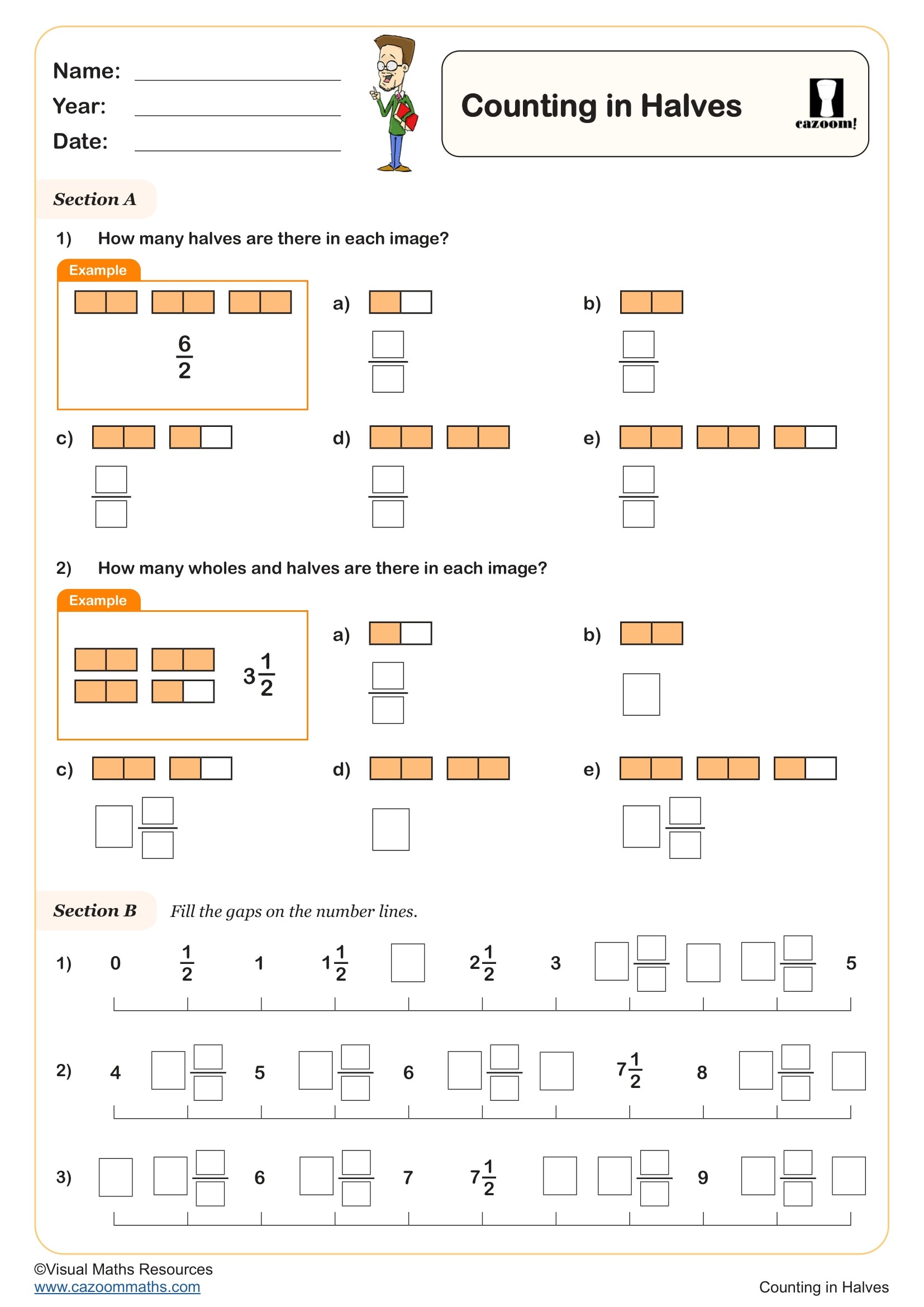
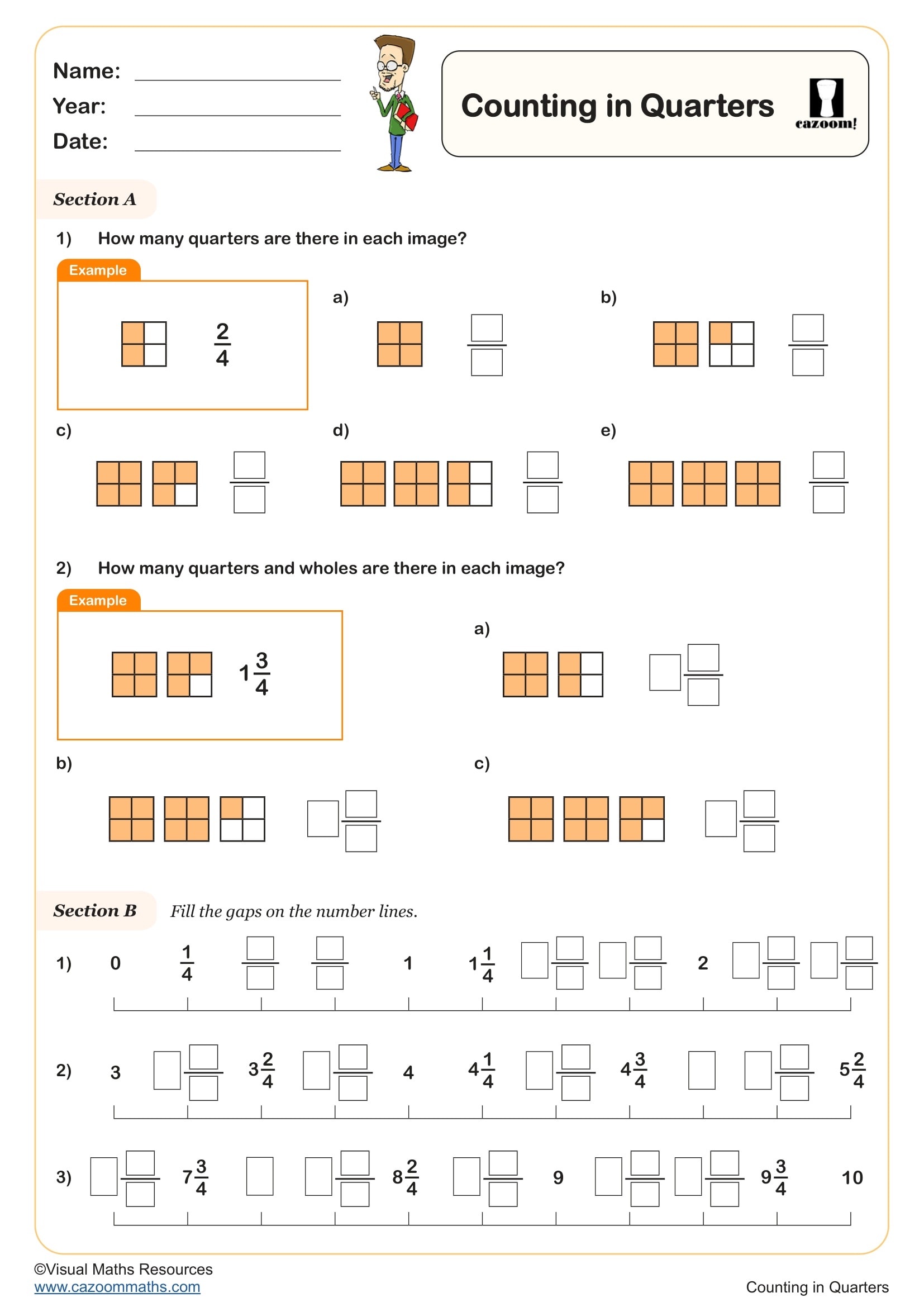
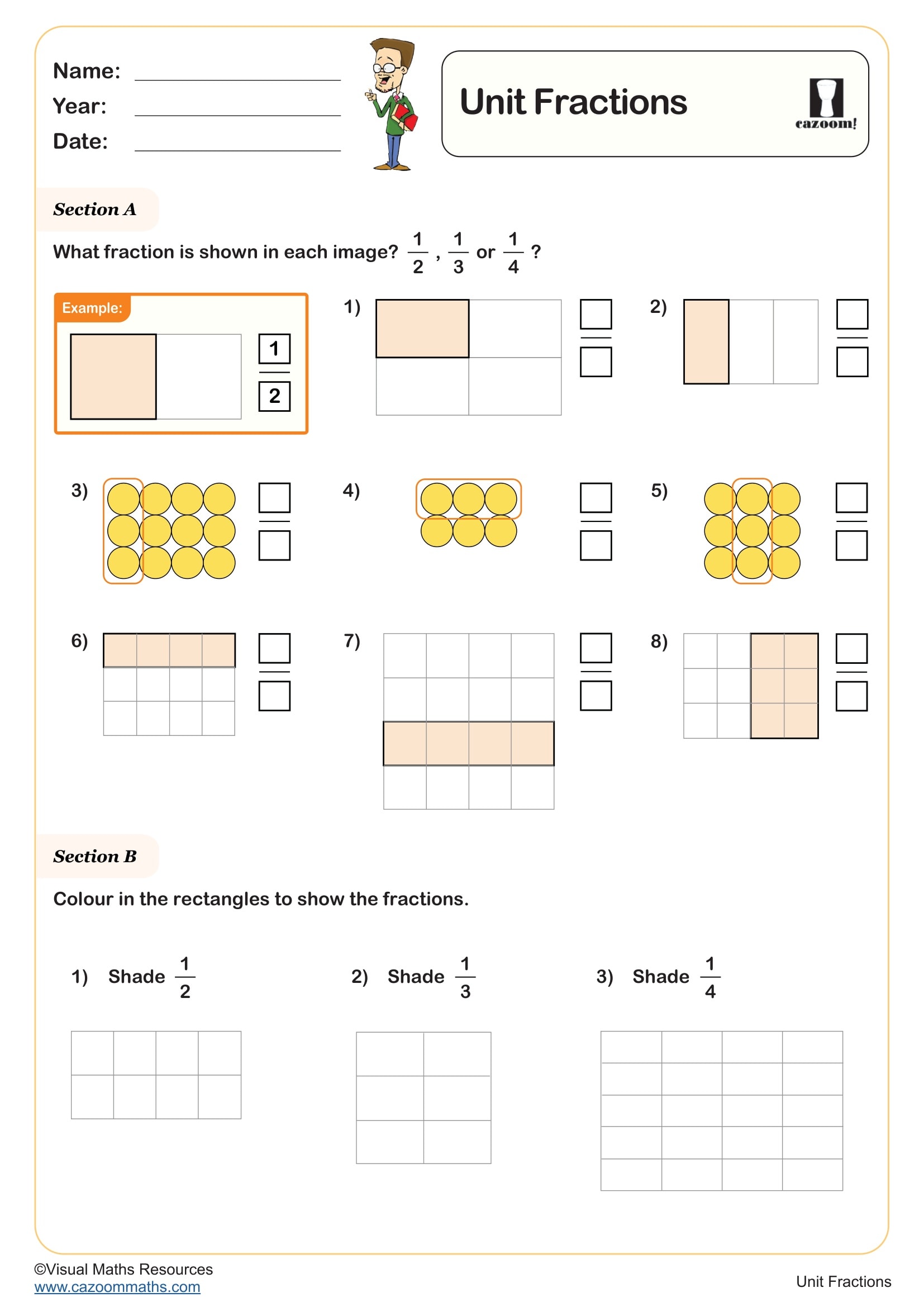
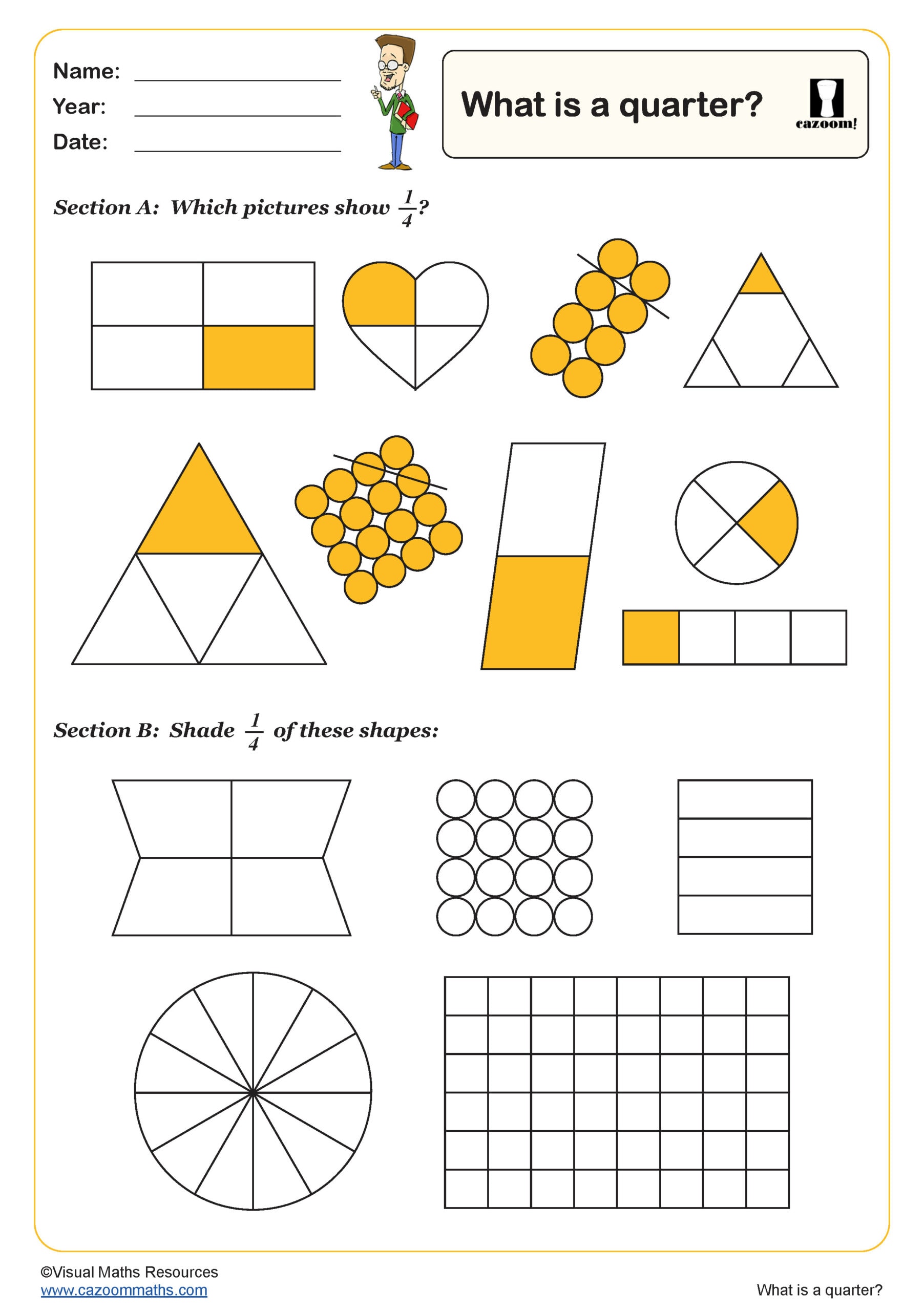
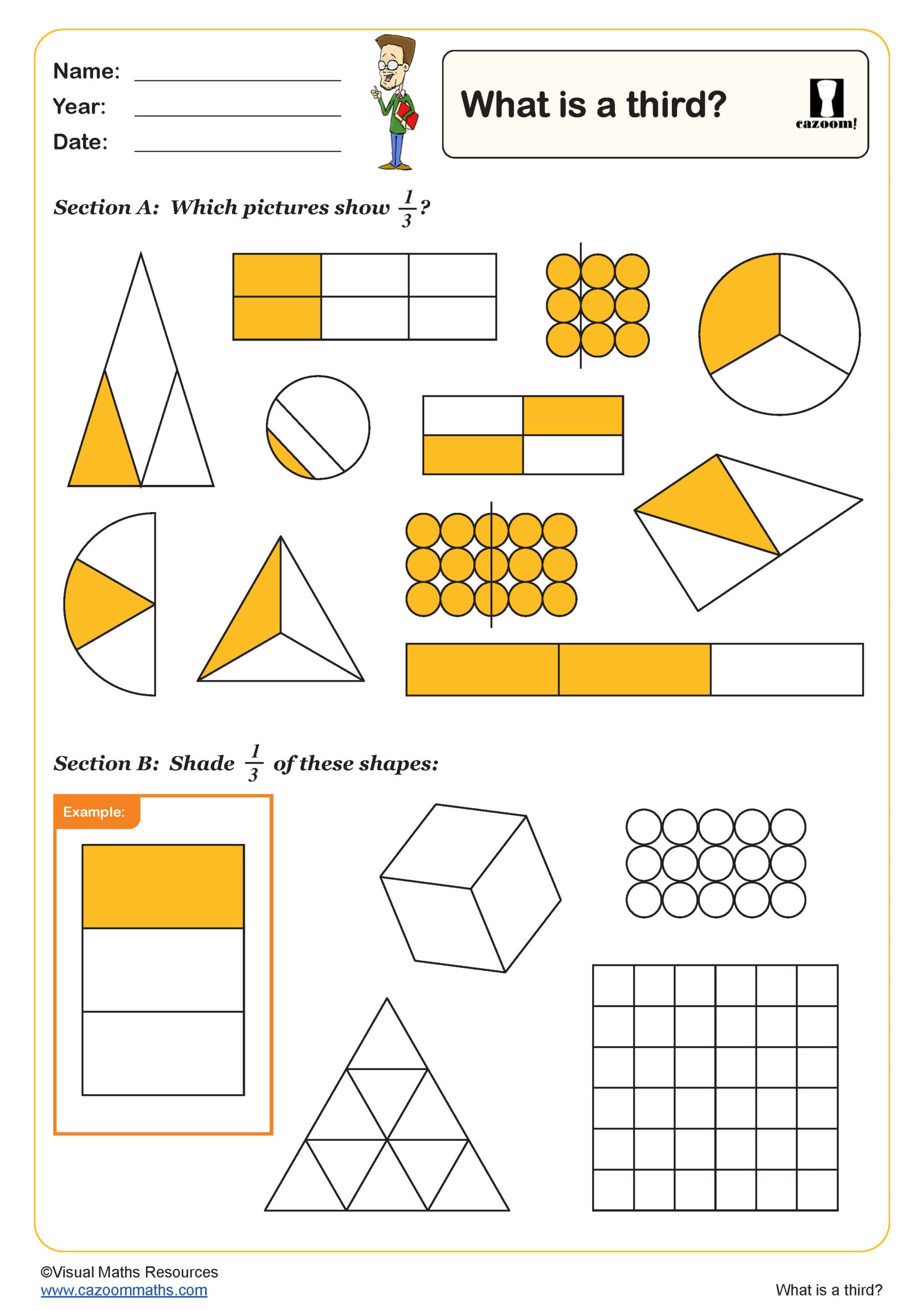
All worksheets are created by the team of experienced teachers at Cazoom Maths.
What fractions do Year 2 children learn?
Year 2 pupils focus on recognising, finding, and naming simple fractions. The National Curriculum requires children to work with halves, quarters, and thirds of shapes, objects, and quantities. They learn that fractions represent equal parts of a whole and develop understanding through practical, visual activities.
Which year group are these fraction worksheets suitable for?
These worksheets are specifically designed for Year 2 pupils working within the KS1 curriculum. The content matches the statutory requirements for fractions at this stage, focusing on concepts appropriate for six and seven-year-olds. The visual approach and question styles suit children developing their understanding of equal parts and basic fraction notation.
How do children find fractions of shapes?
Finding fractions of shapes requires children to identify whether a shape has been divided into equal parts. They learn to count the total number of parts, then determine how many parts are shaded or being referred to. This process helps pupils understand the denominator (bottom number) as the total parts and the numerator (top number) as the parts being described.
Do the worksheets include answers?
Every worksheet includes a complete answer sheet showing all solutions clearly marked. This allows teachers to mark work efficiently and enables parents to support home learning with confidence. The answer sheets display worked solutions where appropriate, helping adults understand the methods children should use.