KS1 Position and Direction Worksheets
All worksheets are created by the team of experienced teachers at Cazoom Maths.
What do children learn in Position and Direction at KS1?
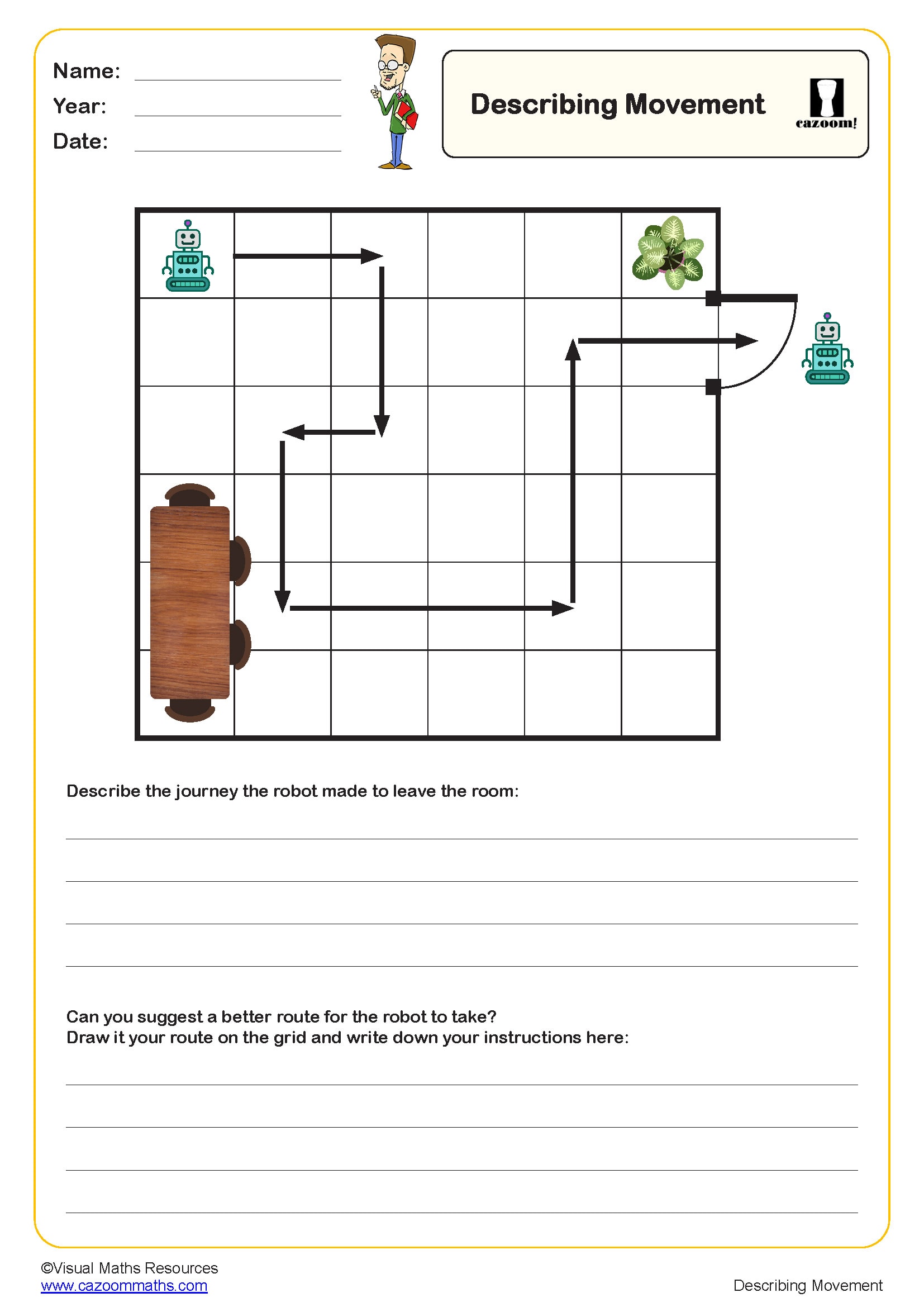
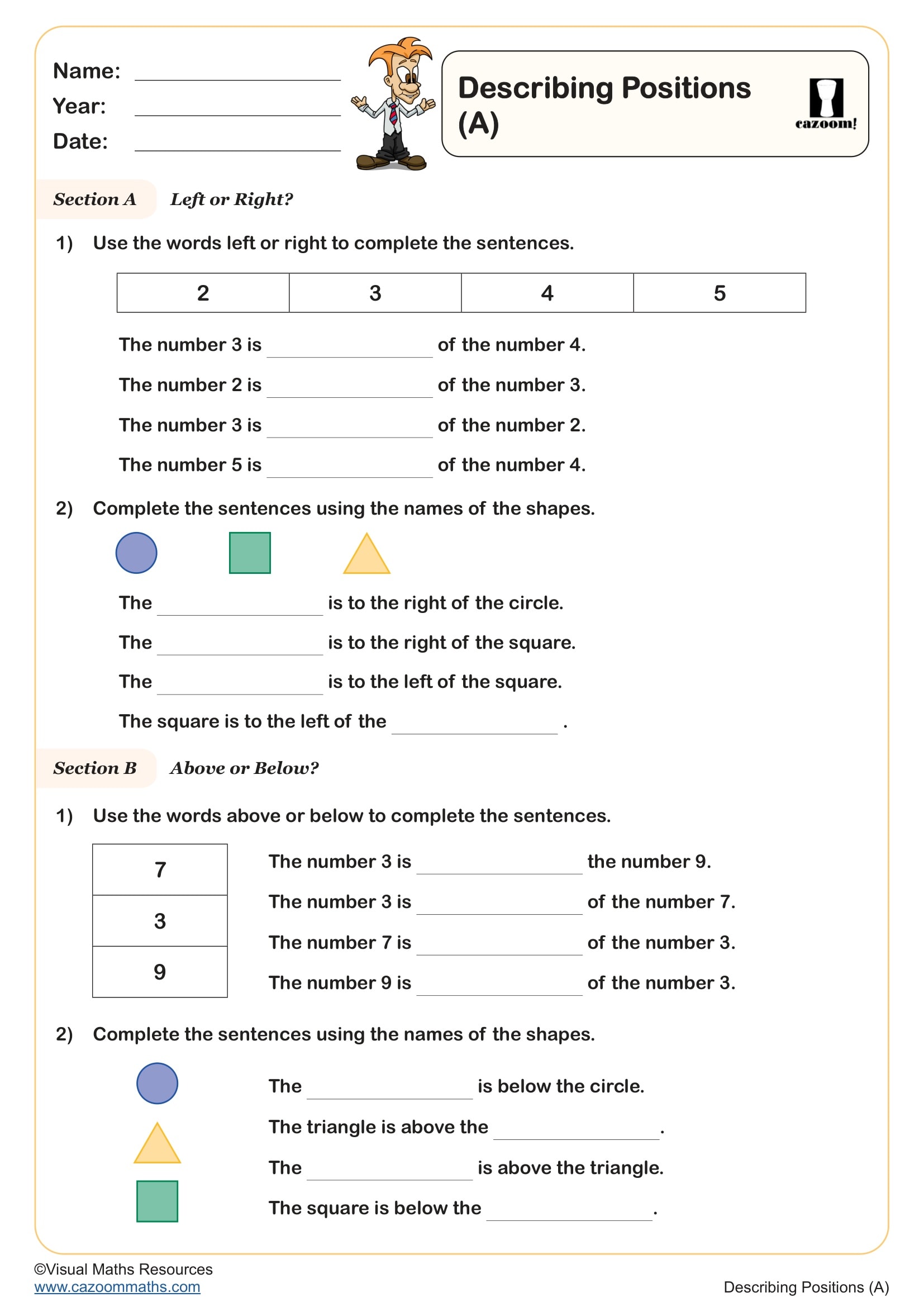
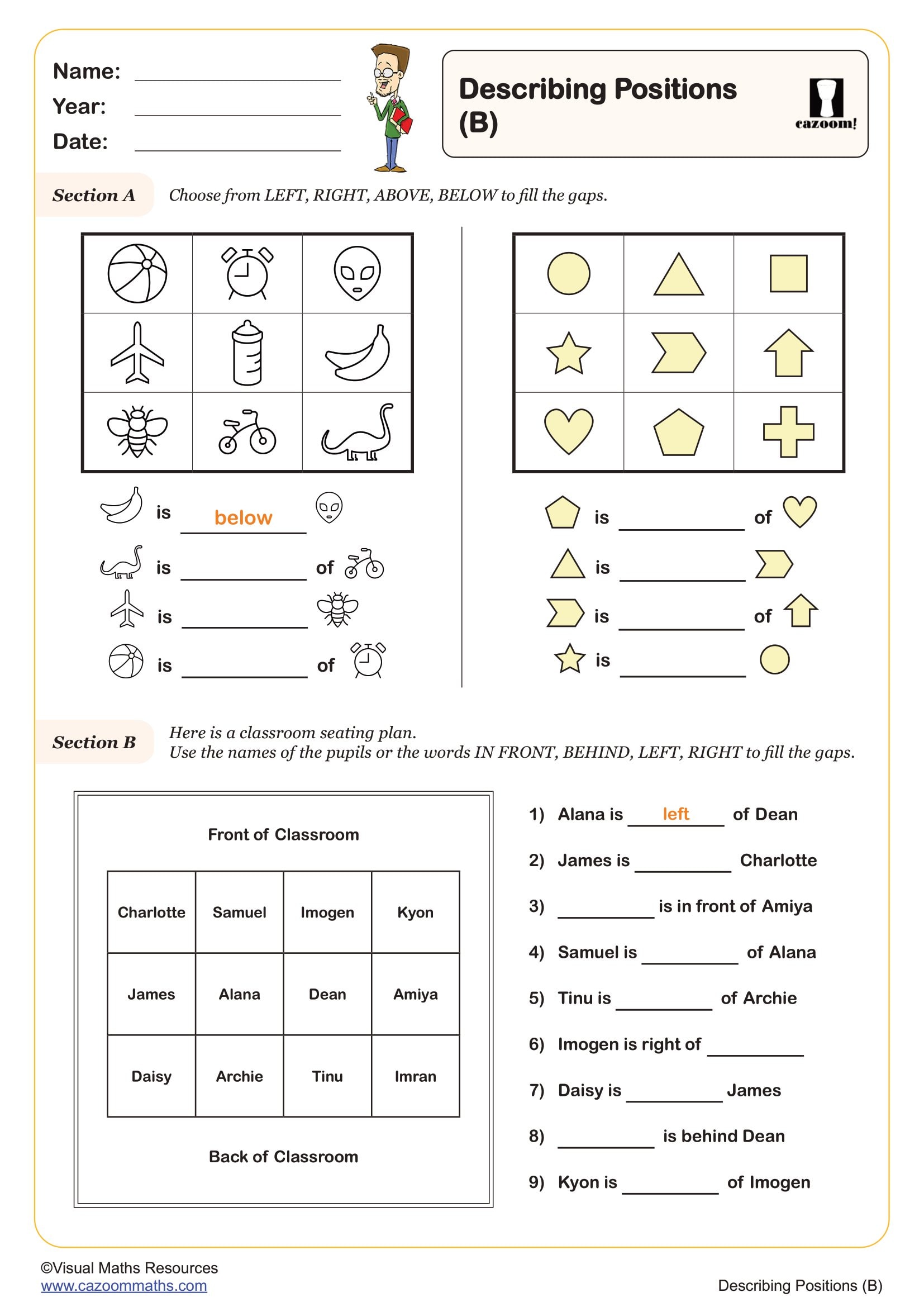
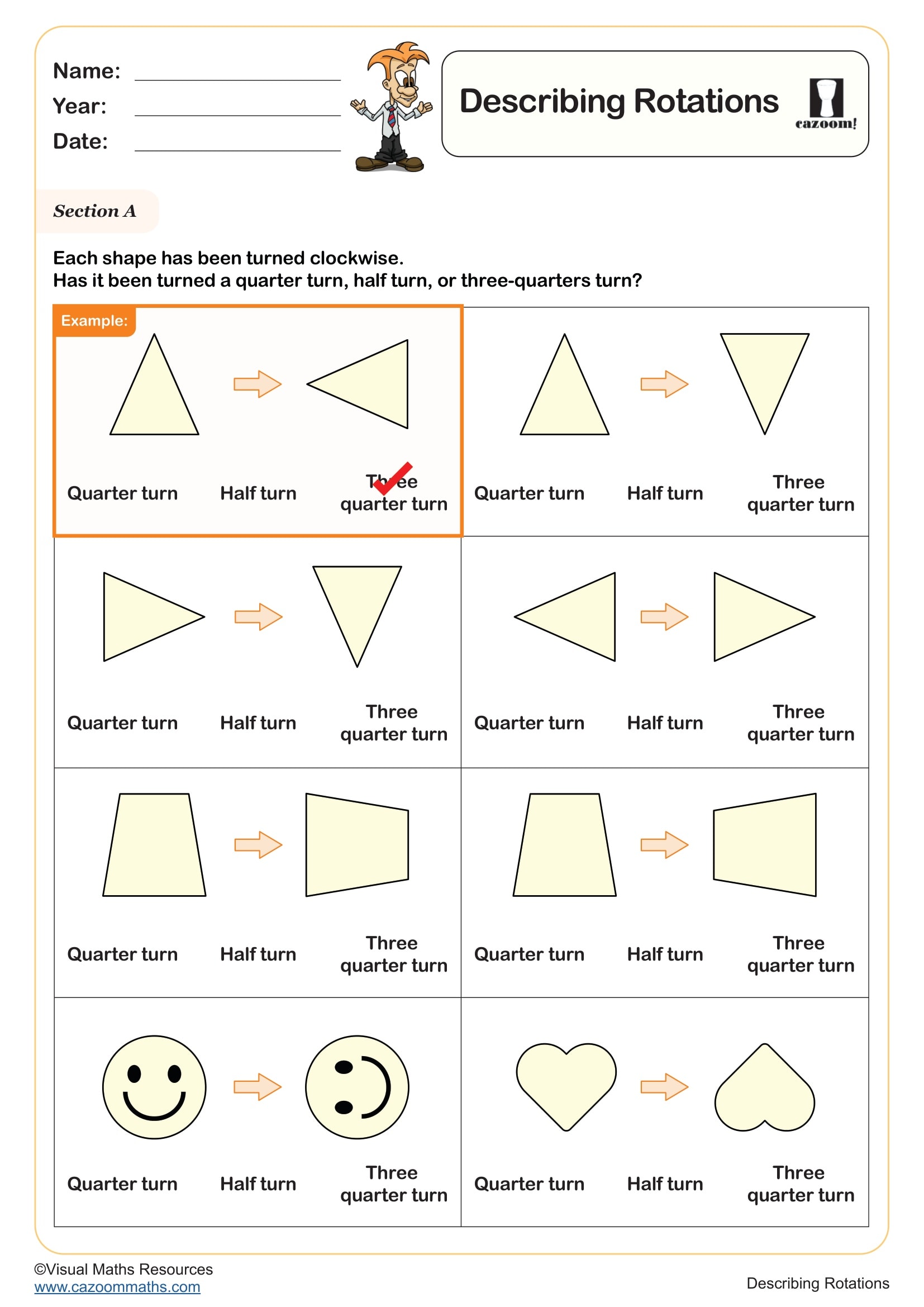
Position and Direction forms part of the geometry strand in the National Curriculum for KS1. In Year 1, children learn positional language to describe where objects are in relation to each other, using vocabulary such as above, below, next to, beside, between, in front of, behind, and on top of. They also make whole, half, and quarter turns in both directions. By Year 2, pupils build on this foundation by using mathematical language to describe position more precisely and exploring movement in straight lines. They learn to distinguish between clockwise and anticlockwise turns, and begin to understand rotation as a form of movement. This topic develops spatial reasoning skills that are crucial for reading maps, following instructions, and understanding coordinates in later key stages. The hands-on nature of position and direction makes it accessible whilst building important mathematical vocabulary.
Which year groups are these Position and Direction worksheets suitable for?
These Position and Direction worksheets are specifically designed for KS1 pupils in Year 1 and Year 2. The collection includes resources differentiated to match the progression within the National Curriculum across these year groups. Year 1 worksheets focus on using and understanding positional vocabulary such as above, below, next to, and between, alongside making whole, half, and quarter turns. Year 2 resources extend this learning by introducing more precise mathematical language for describing position, direction, and movement. Pupils at this level work with clockwise and anticlockwise rotation and apply their understanding to practical contexts. The worksheets provide appropriate challenge for each year group whilst ensuring pupils develop confident use of position and direction vocabulary. Teachers can select resources that match their class's current understanding, whether consolidating Year 1 concepts or building towards end of KS1 expectations.
How do children learn about turns and rotation in KS1?
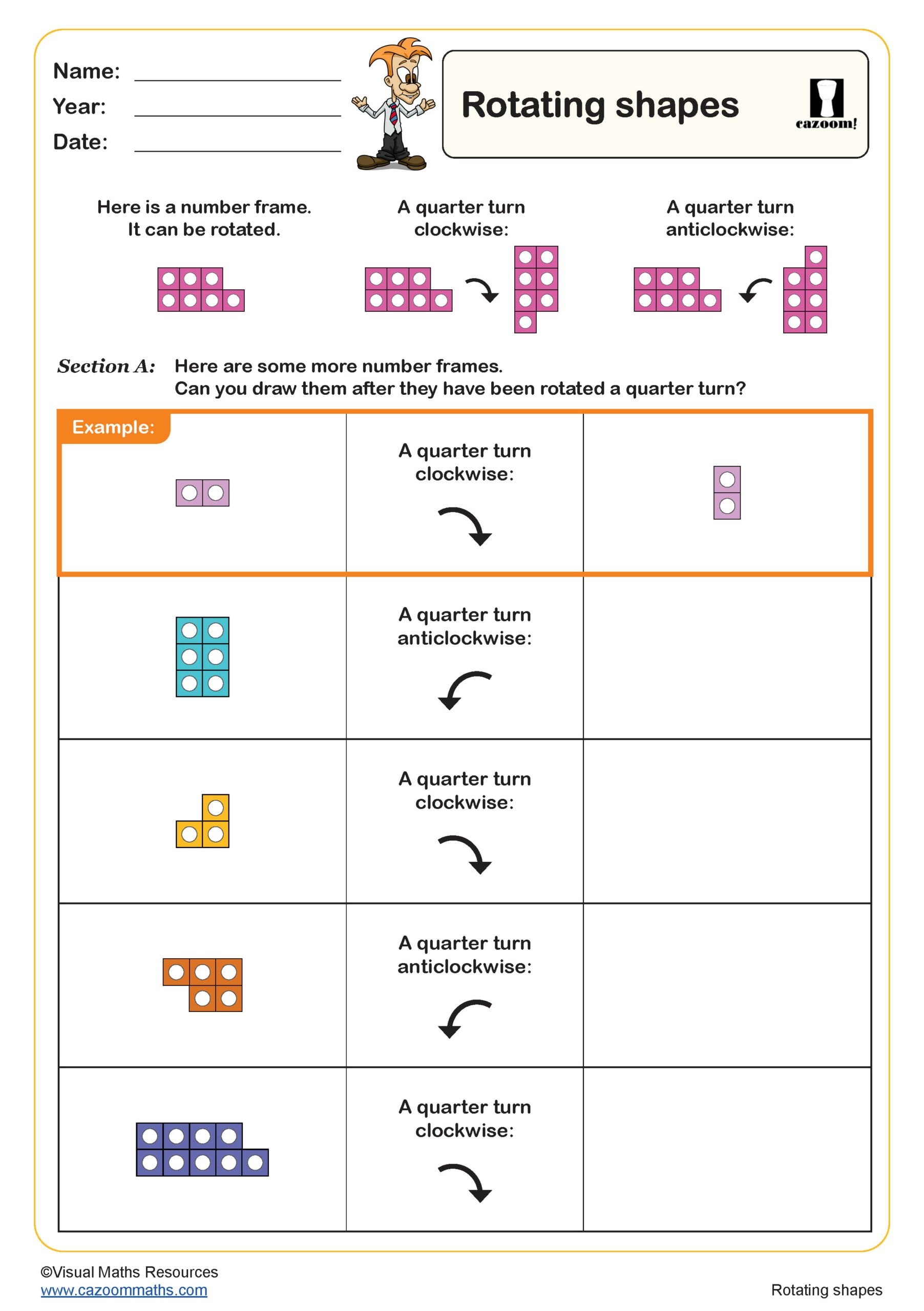
Learning about turns and rotation in KS1 begins with practical, physical experiences before moving to representations on paper. Year 1 pupils start by making whole turns, half turns, and quarter turns themselves, often in PE lessons or through games. They learn that a whole turn brings them back to where they started, whilst a half turn faces them in the opposite direction. In Year 2, children are introduced to the terms clockwise and anticlockwise, often by linking rotation to the movement of clock hands. Our worksheets support this learning through clear visual representations, showing objects before and after turns, and asking pupils to describe or predict rotation. Activities might include rotating shapes, following turning instructions to reach a destination, or identifying which direction an object has turned. This practical topic helps children understand that turns can be described mathematically and prepares them for later work with angles.
What's included with these Position and Direction worksheets?
Every Position and Direction worksheet in this collection comes with a complete answer sheet, saving you valuable preparation and marking time. The worksheets are provided as downloadable PDFs, which means you can access them immediately after subscribing and print as many copies as you need for your class or home learning. Each resource has been carefully designed to match National Curriculum requirements for KS1, with clear instructions and age-appropriate activities. Visual elements support understanding, particularly important for spatial concepts where diagrams clarify positional relationships and movement. The worksheets progress in difficulty, allowing you to select resources that match your pupils' current confidence and provide appropriate challenge. Whether you're introducing new vocabulary, consolidating understanding through independent practice, or assessing pupils' ability to describe position and direction accurately, these resources provide structured support. The answer sheets enable pupils to self-check their work, promoting independent learning.