KS2 Ratio and Proportion Worksheets
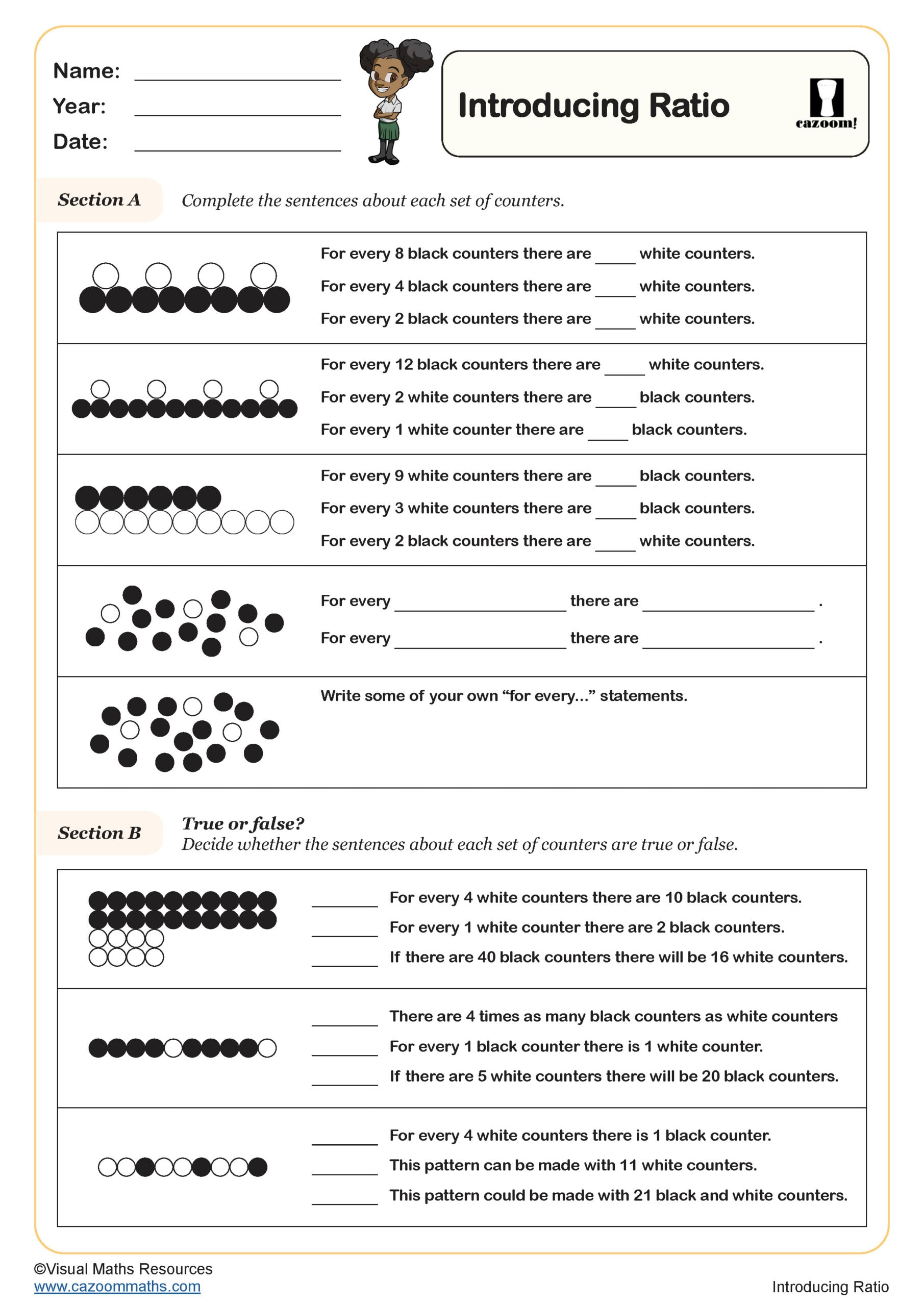
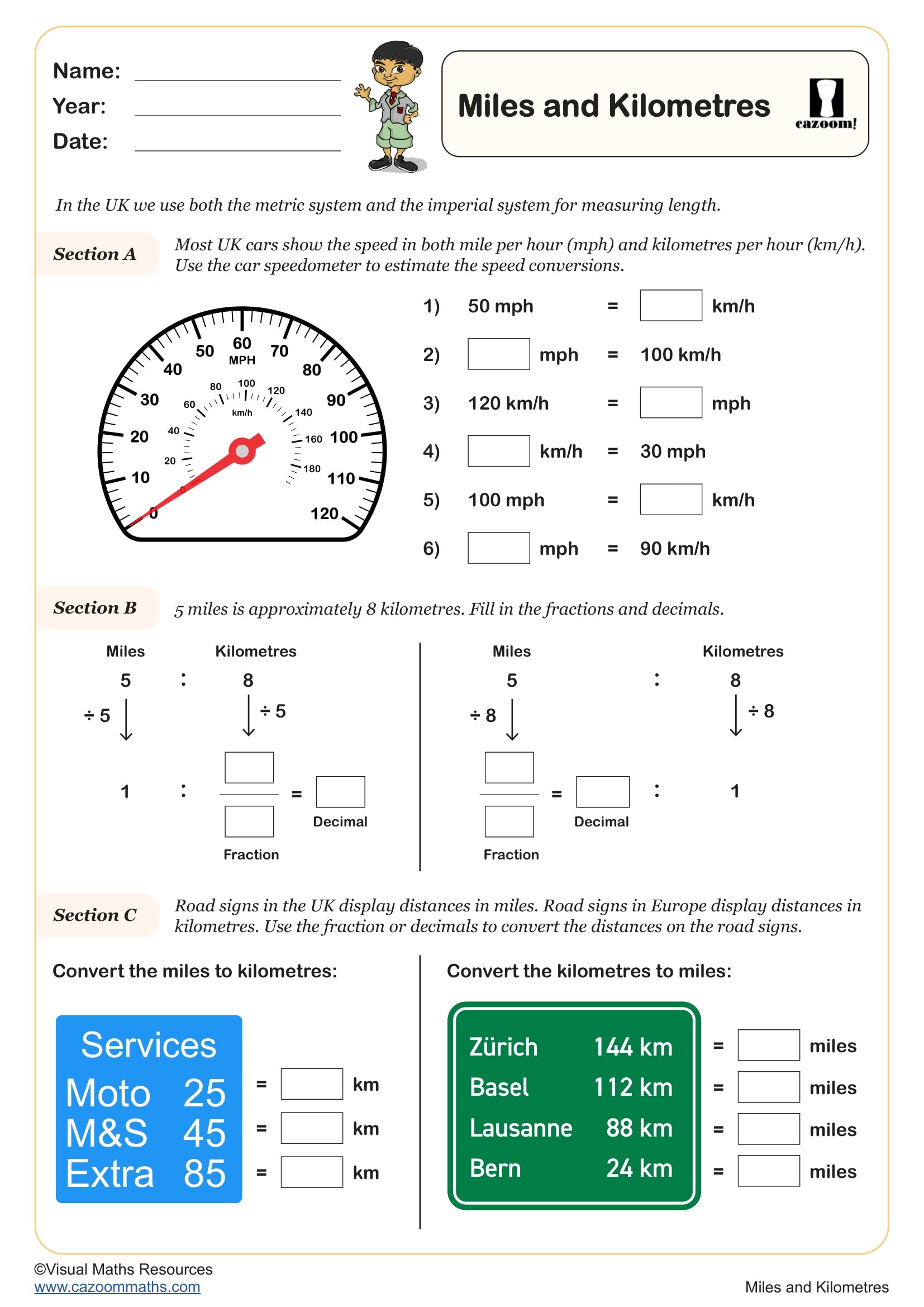
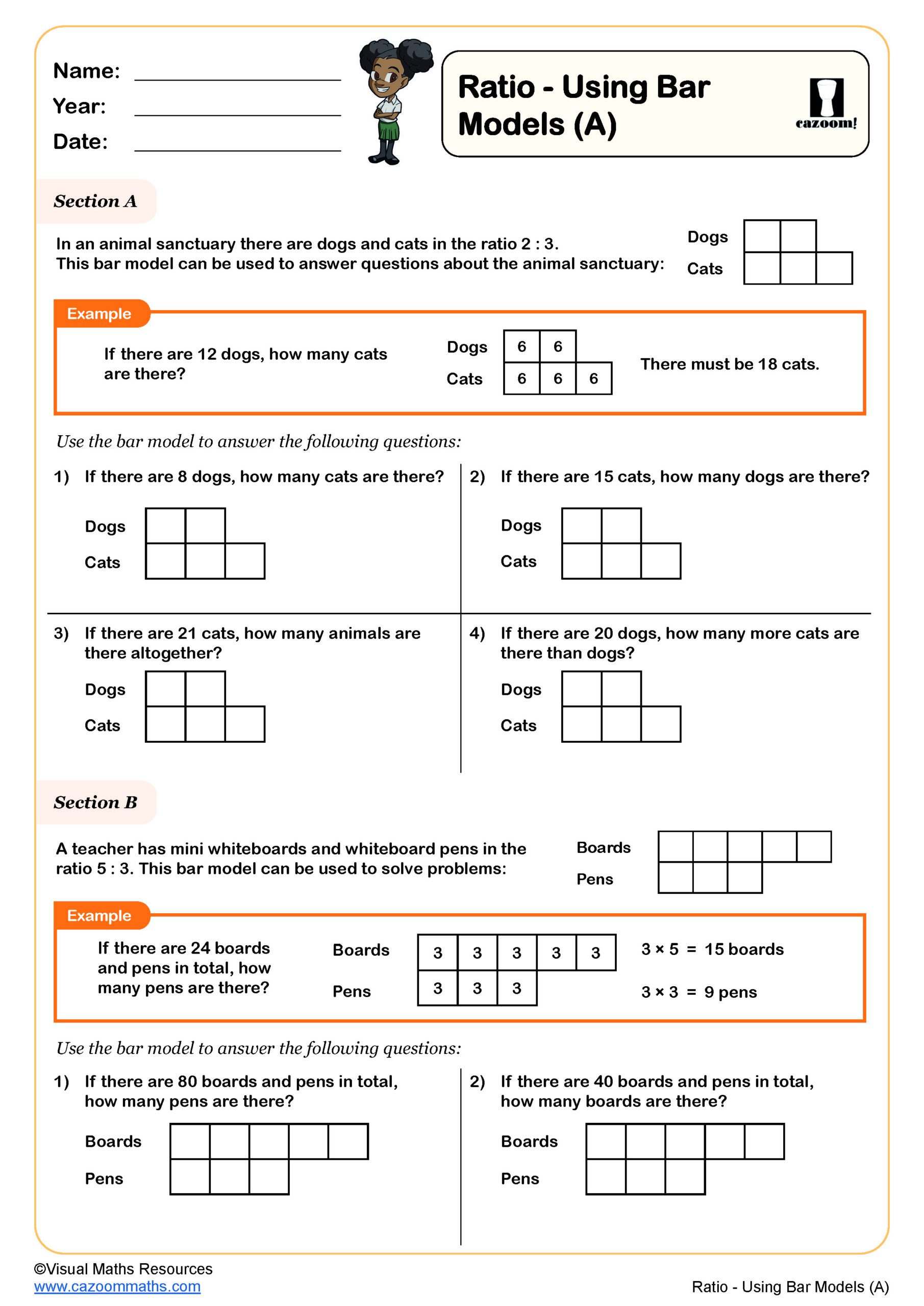
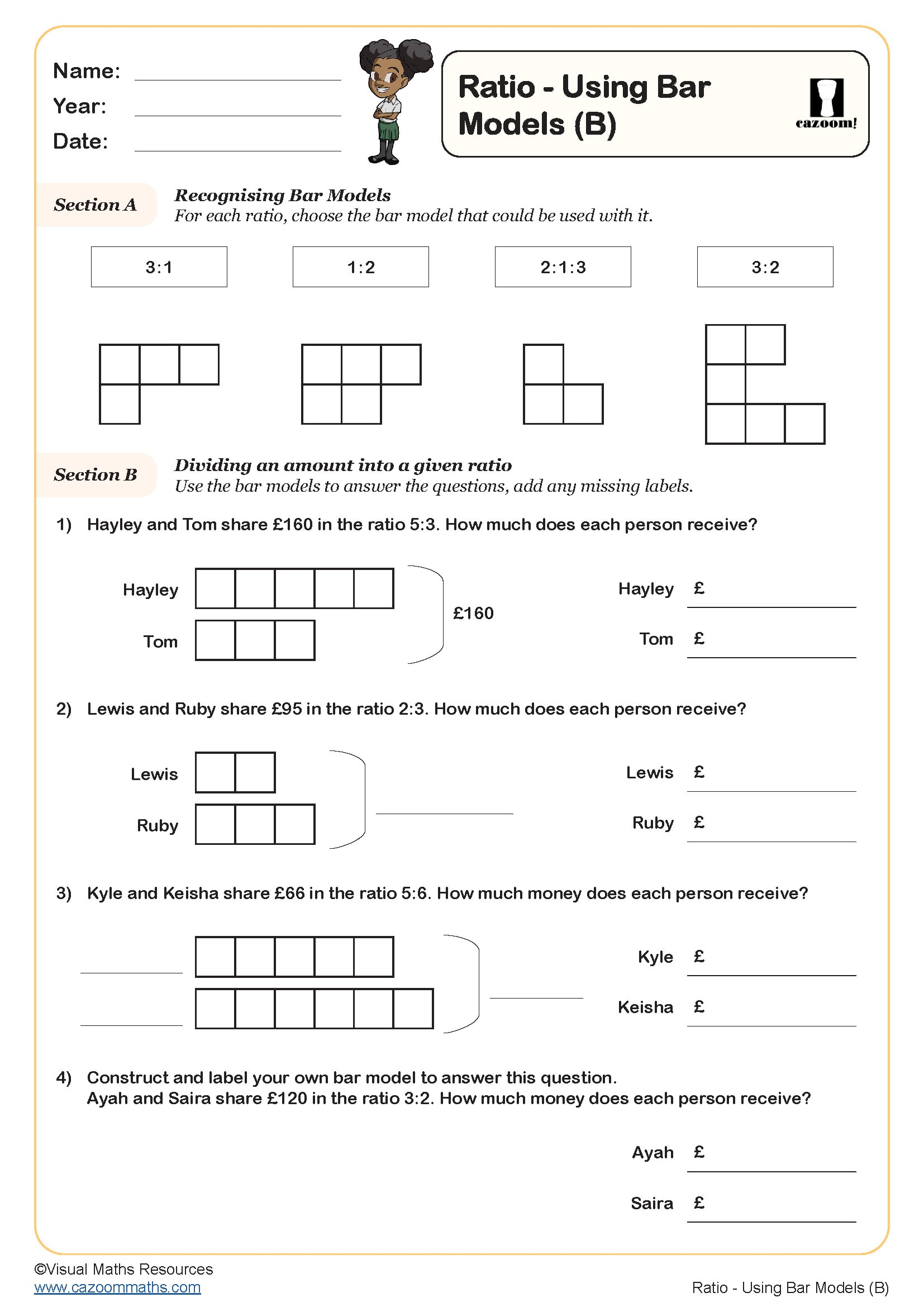
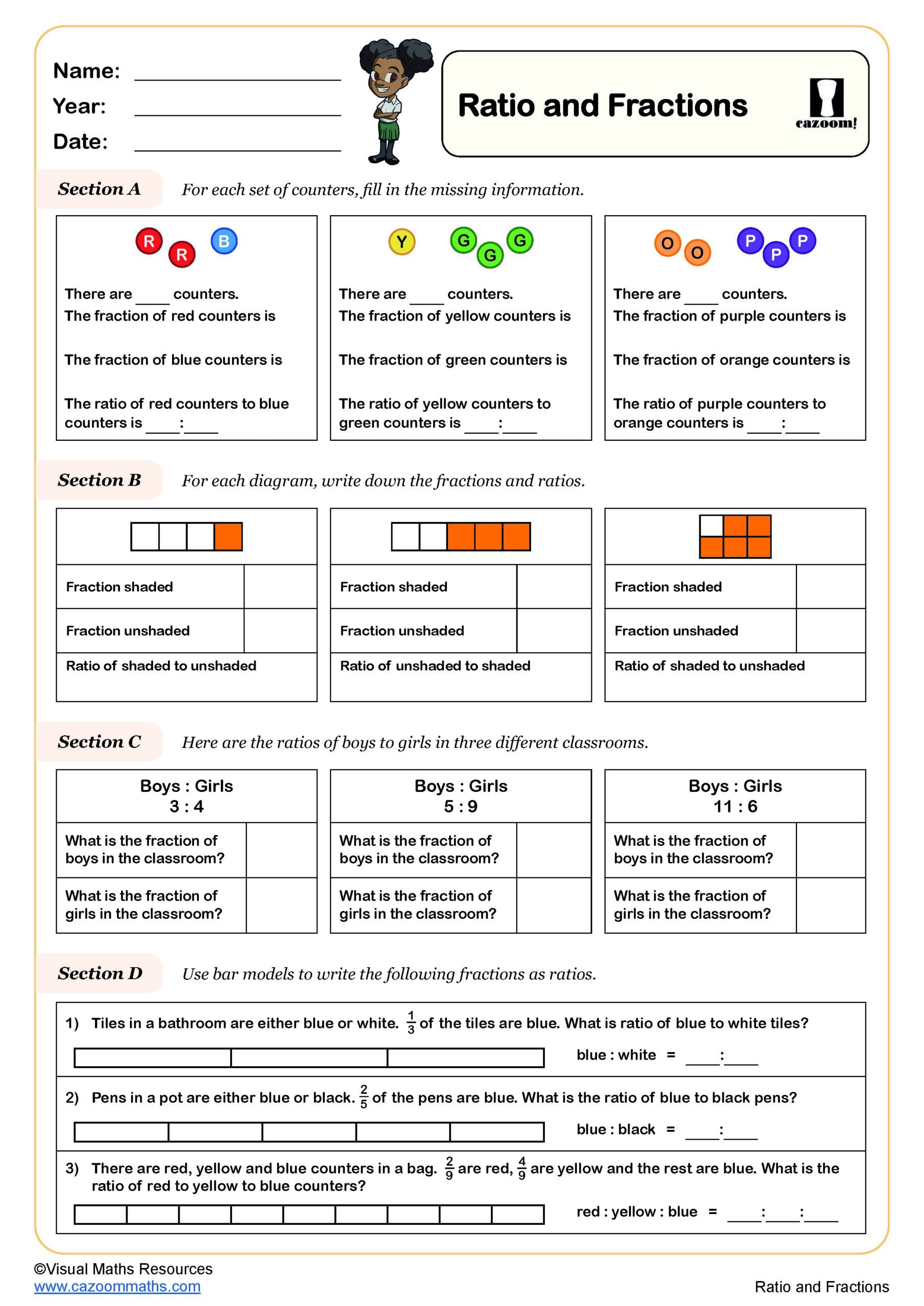
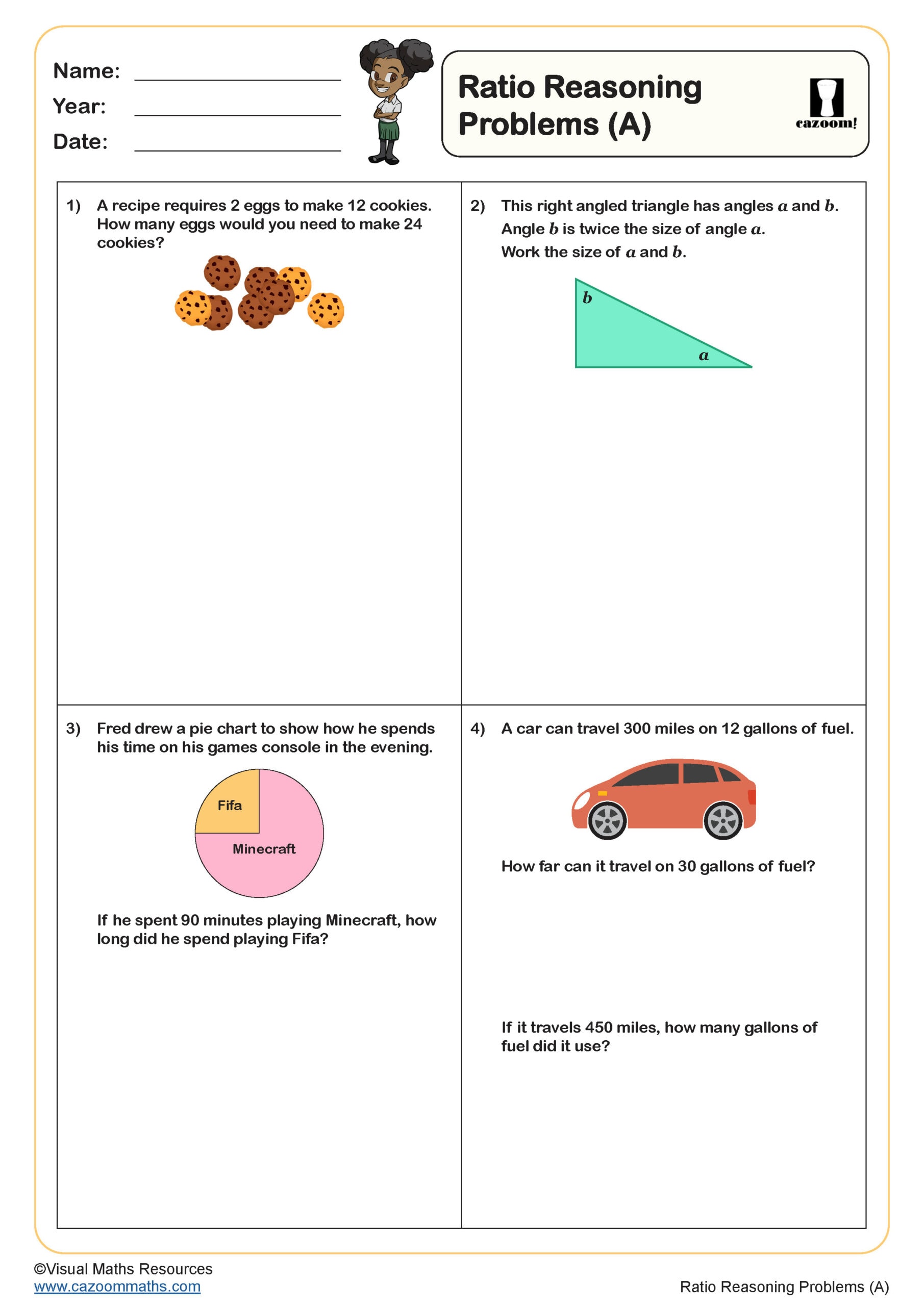
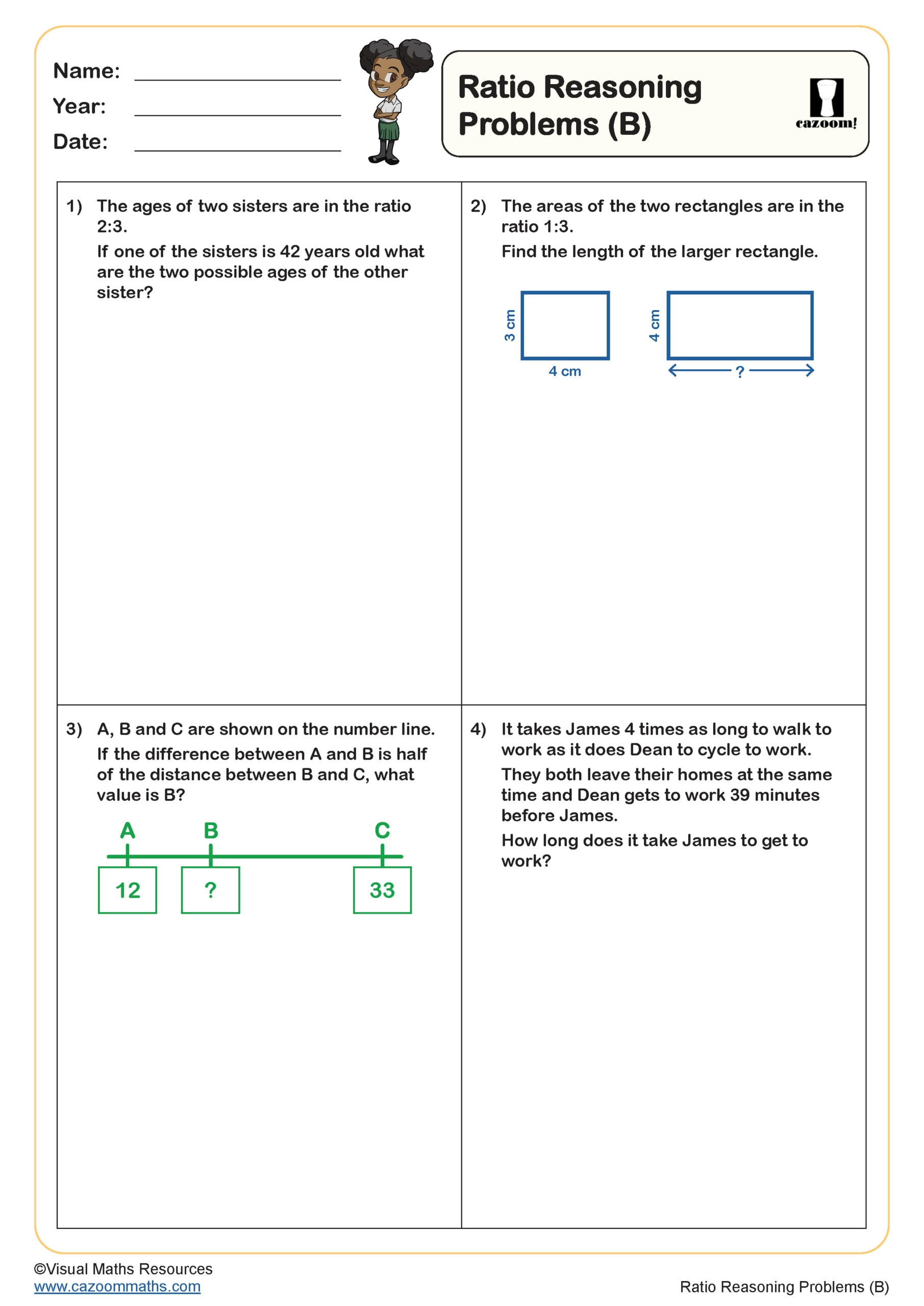
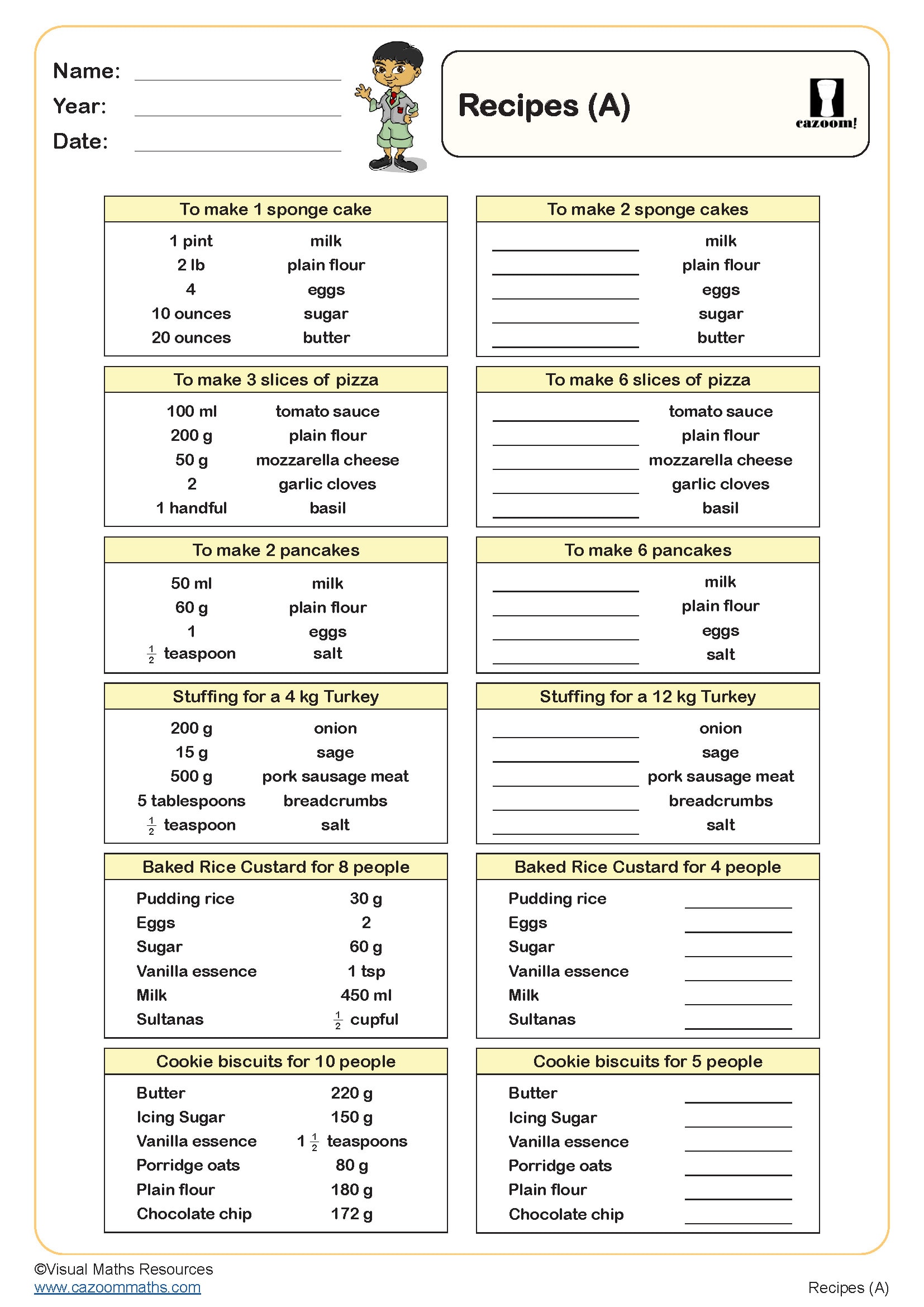
All worksheets are created by the team of experienced teachers at Cazoom Maths.
What ratio questions do KS2 students need to practise?
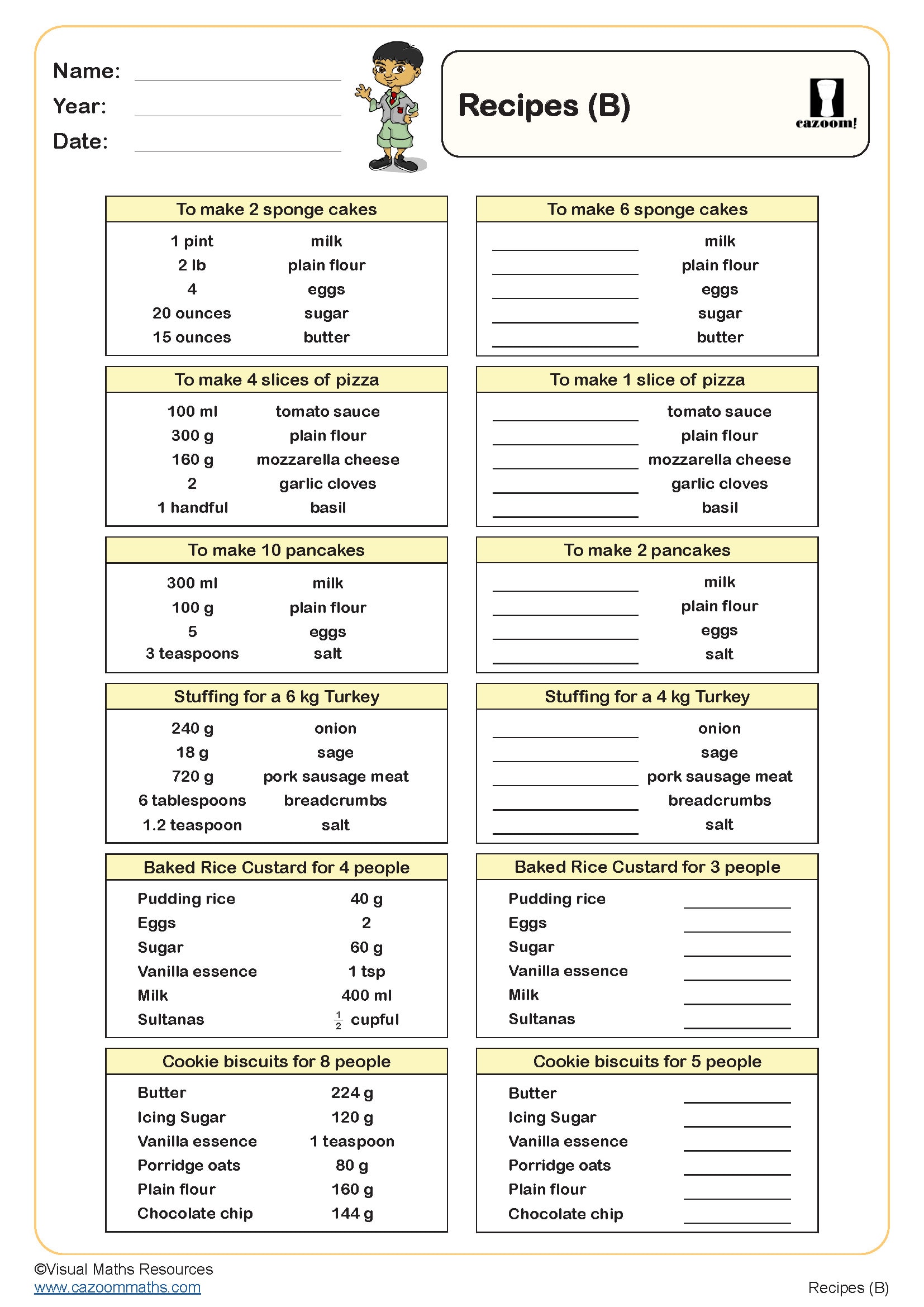
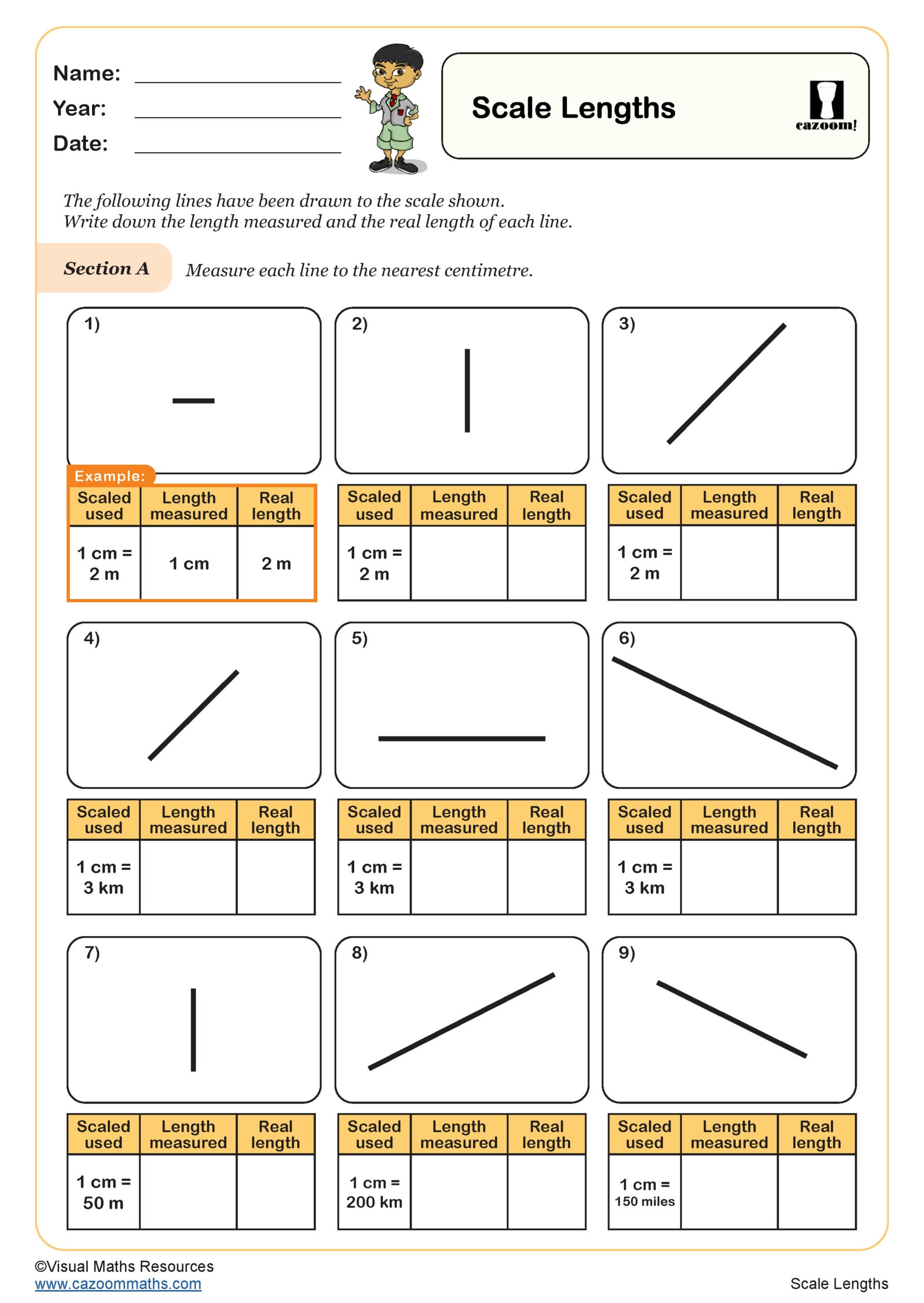
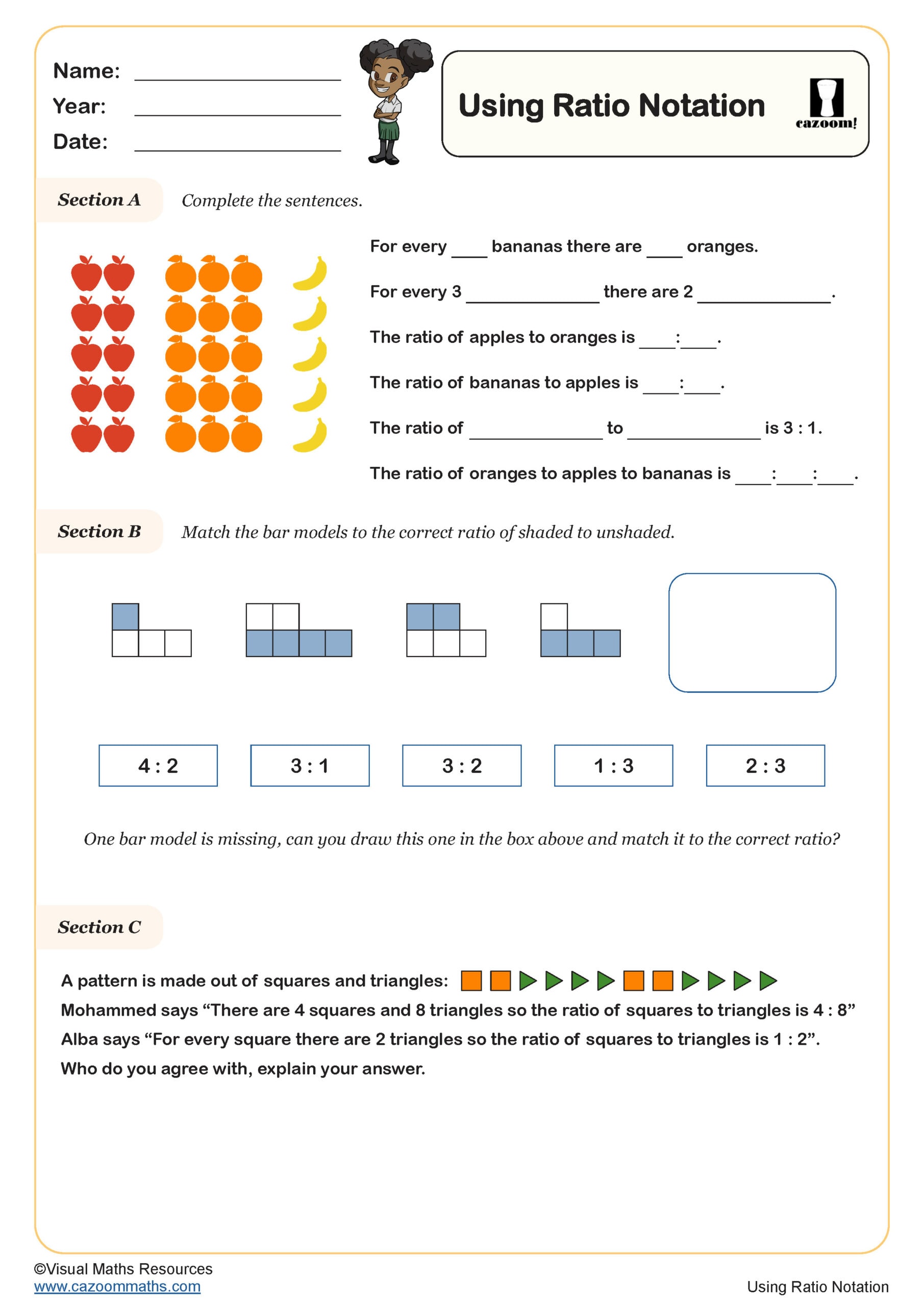
KS2 ratio questions focus on understanding the relationship between quantities and expressing these as ratios using correct notation. Year 6 students learn to solve problems involving the relative sizes of two quantities, where missing values need to be calculated. This includes scaling quantities up or down whilst maintaining the same proportional relationship, and working with ratio in practical contexts like recipes or mixing problems.
Ratio work at KS2 also requires pupils to understand unequal sharing and distribution based on given ratios. Students must interpret ratio notation accurately, recognise when quantities are in direct proportion, and use multiplication and division to find unknown values. These foundational skills form the basis for more complex ratio and proportion work in Key Stage 3.
Which year groups study ratio and proportion in KS2?
Ratio and proportion is formally introduced in Year 6 as part of the KS2 National Curriculum for mathematics. Prior to this, pupils develop the underlying concepts through work on multiplication, division, fractions, and scaling in earlier year groups, but the explicit teaching of ratio notation and proportion problems begins in Year 6. This timing reflects the mathematical maturity needed to understand relative quantities and proportional relationships.
Our ratio worksheets are specifically designed for Year 6 students, supporting them as they encounter this new area of mathematics. The resources align with curriculum expectations for upper KS2, ensuring pupils develop secure understanding before transitioning to secondary school, where ratio and proportion becomes significantly more demanding throughout KS3 and into GCSE mathematics.
How do proportion examples help students understand ratio?
Proportion examples demonstrate how ratios remain constant when quantities scale up or down, helping students see the multiplicative relationship between values. By working through concrete examples—such as recipes that serve different numbers of people or mixing paint in consistent colours—pupils recognise that doubling one quantity means doubling the other to maintain proportion. This visual and contextual approach makes abstract ratio notation more meaningful.
Using proportion examples also bridges the gap between ratio work and prior learning about multiplication and fractions. Students realise that finding proportional amounts involves familiar operations applied in new contexts. Clear worked examples show the reasoning process, allowing pupils to model their own problem-solving approaches and develop flexibility when tackling ratio questions that require them to find missing values or compare quantities.
What's included with these ratio worksheets?
Each ratio worksheet comes as a downloadable PDF with a complete answer sheet included. The questions progress through different problem types, ensuring students practise the full range of ratio skills required in Year 6. You'll find problems involving ratio notation, unequal sharing, scaling quantities, and finding missing values in proportional relationships, all presented with clear instructions and age-appropriate contexts.
The answer sheets show all solutions, allowing students to check their work independently or enabling teachers and parents to mark efficiently. This makes the resources suitable for homework assignments, intervention sessions, or classroom practice where immediate feedback supports learning. The PDF format means you can print worksheets as needed or distribute them digitally, providing flexibility for different teaching situations and home learning environments.