KS2 Subtracting from 3 or more digits Worksheets
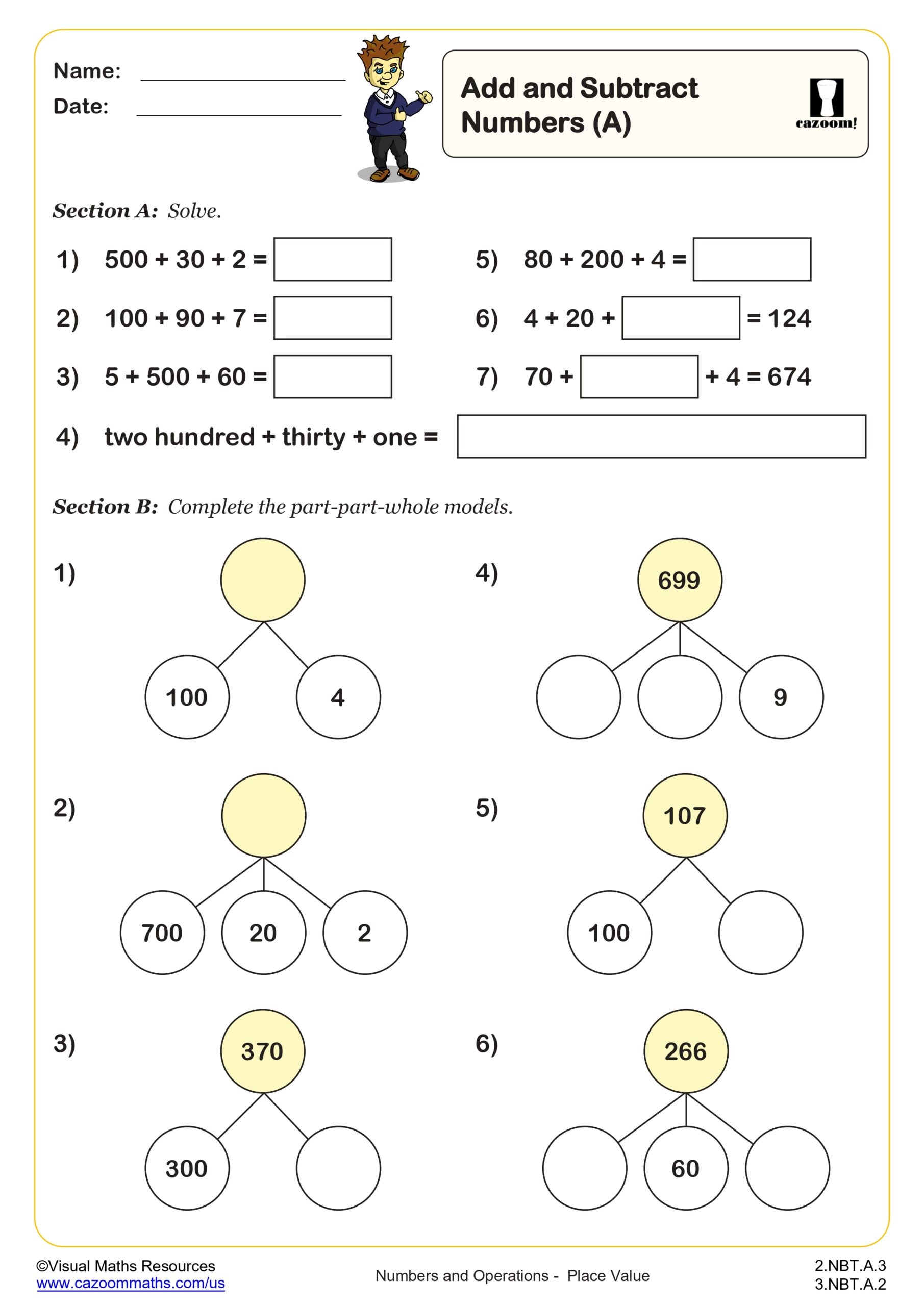
Add and subtract numbers mentally (A)
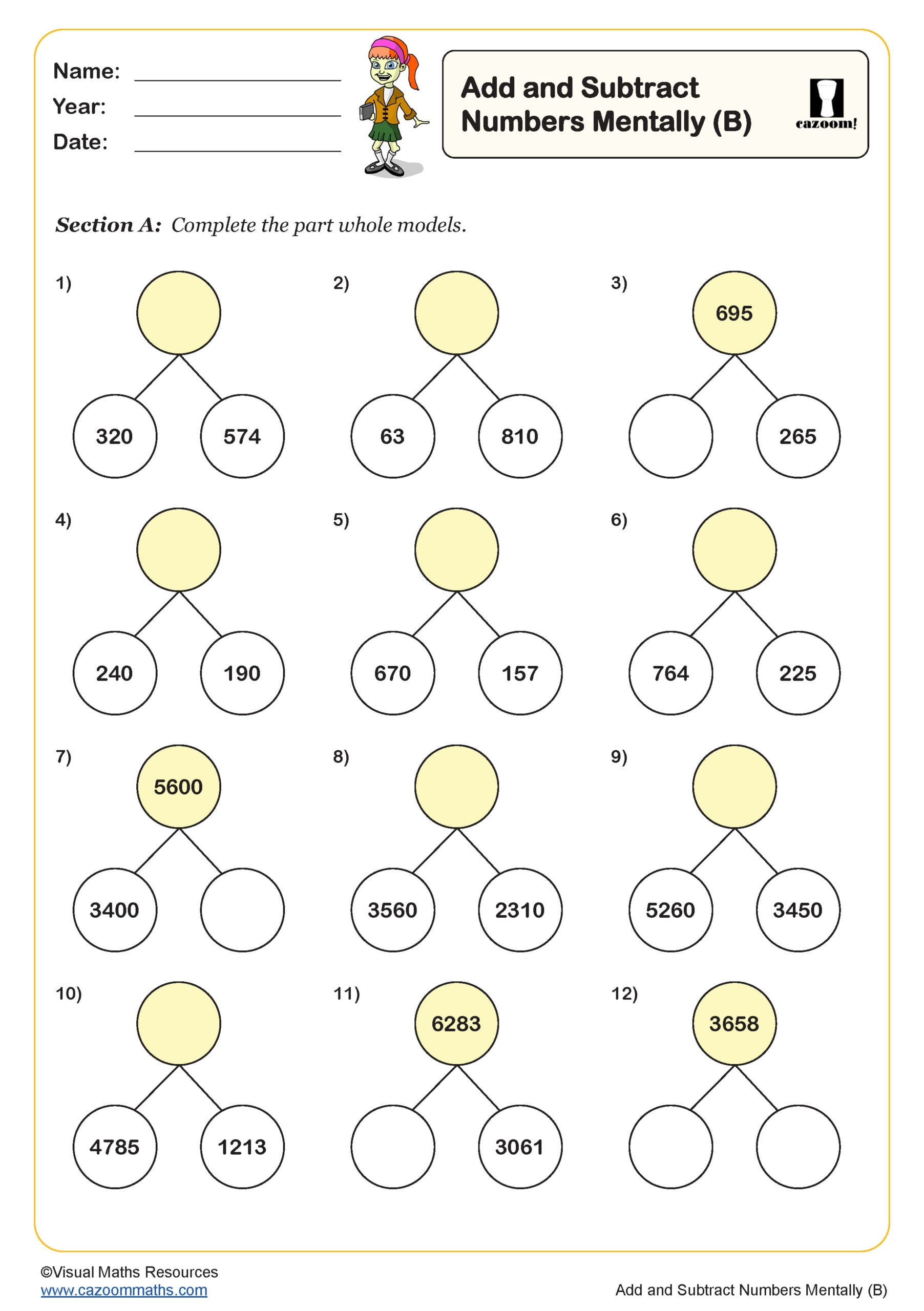
Add and subtract numbers mentally (B)
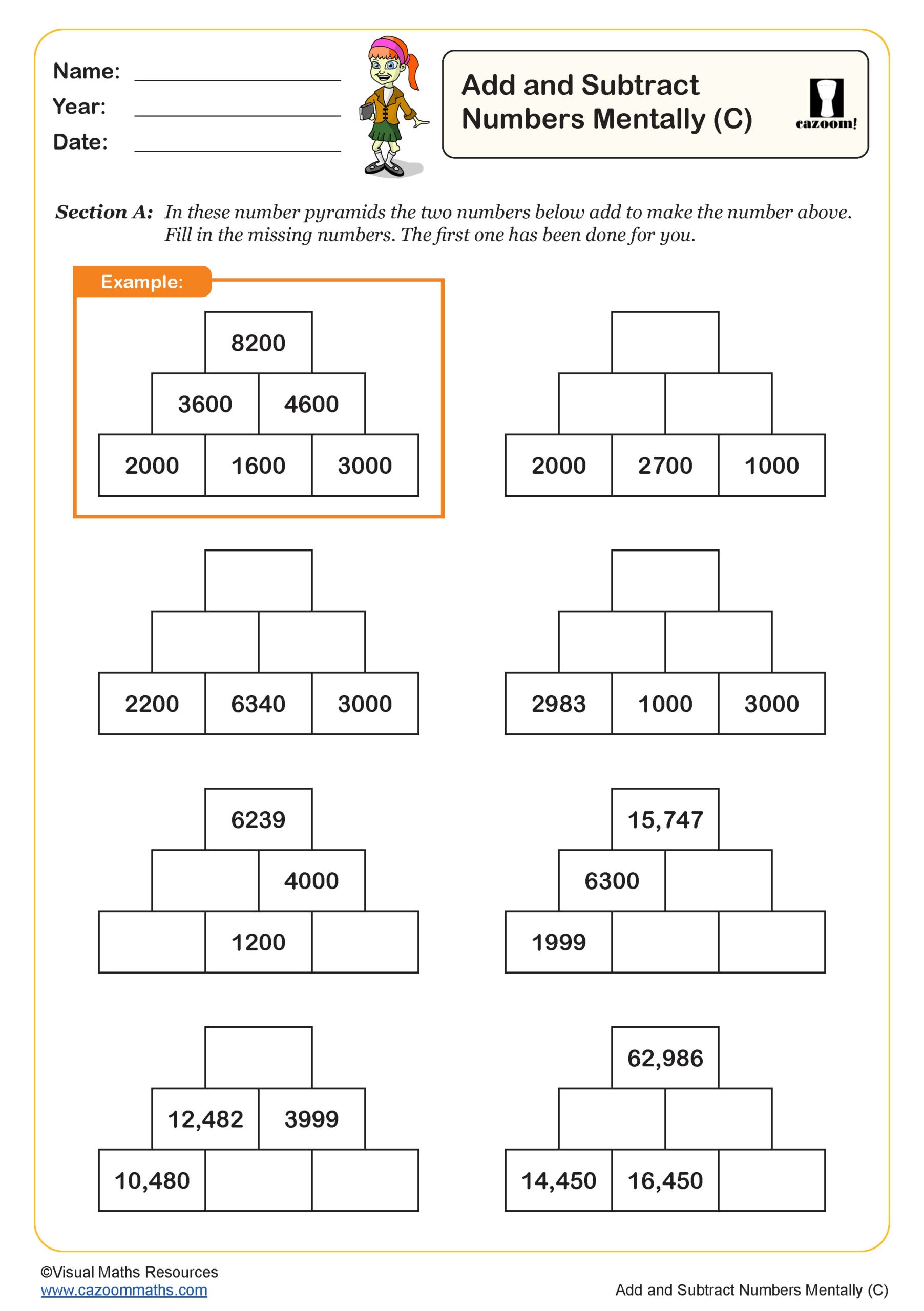
Add and subtract numbers mentally (C)
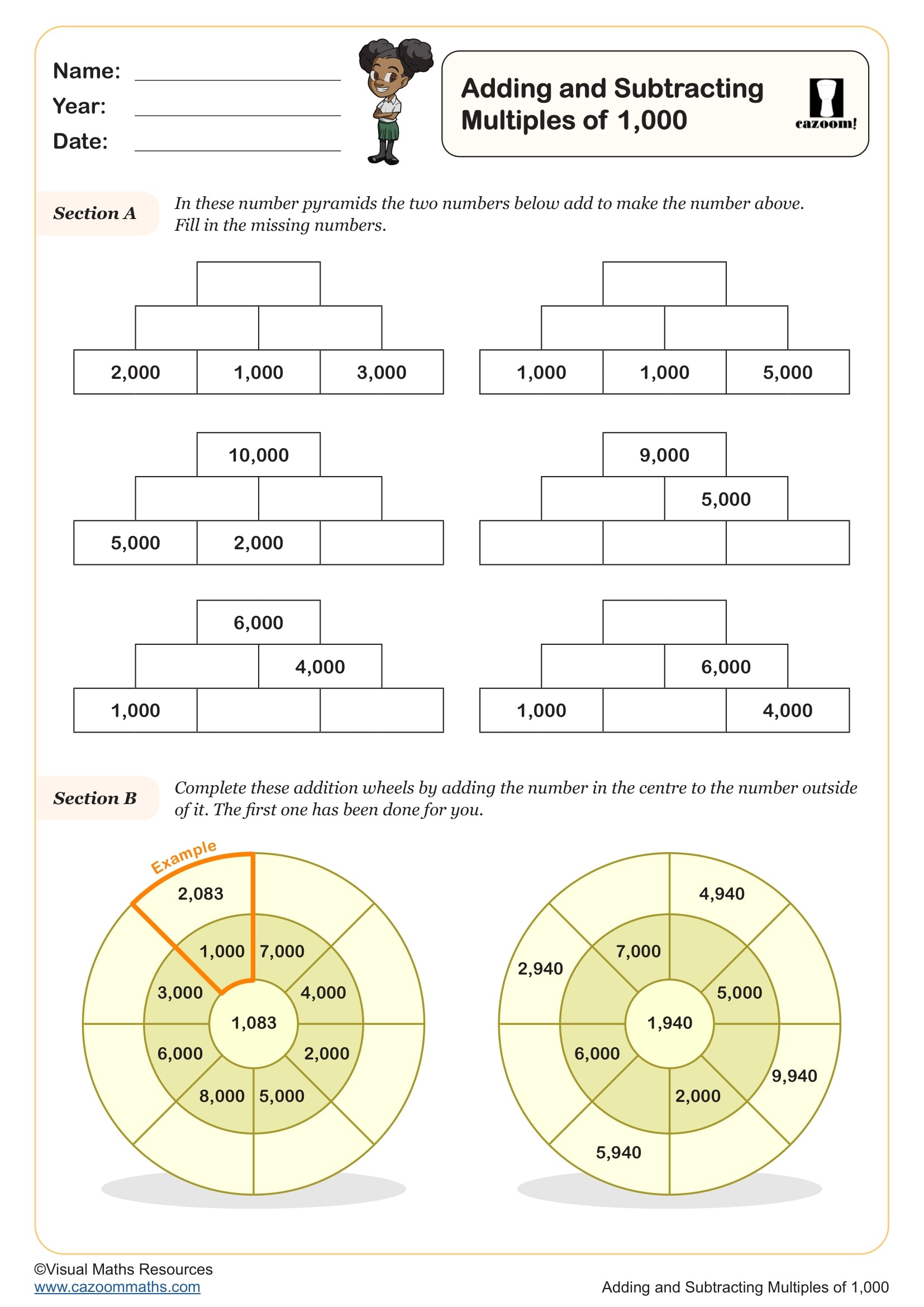
Adding and Subtracting Multiples of 1,000
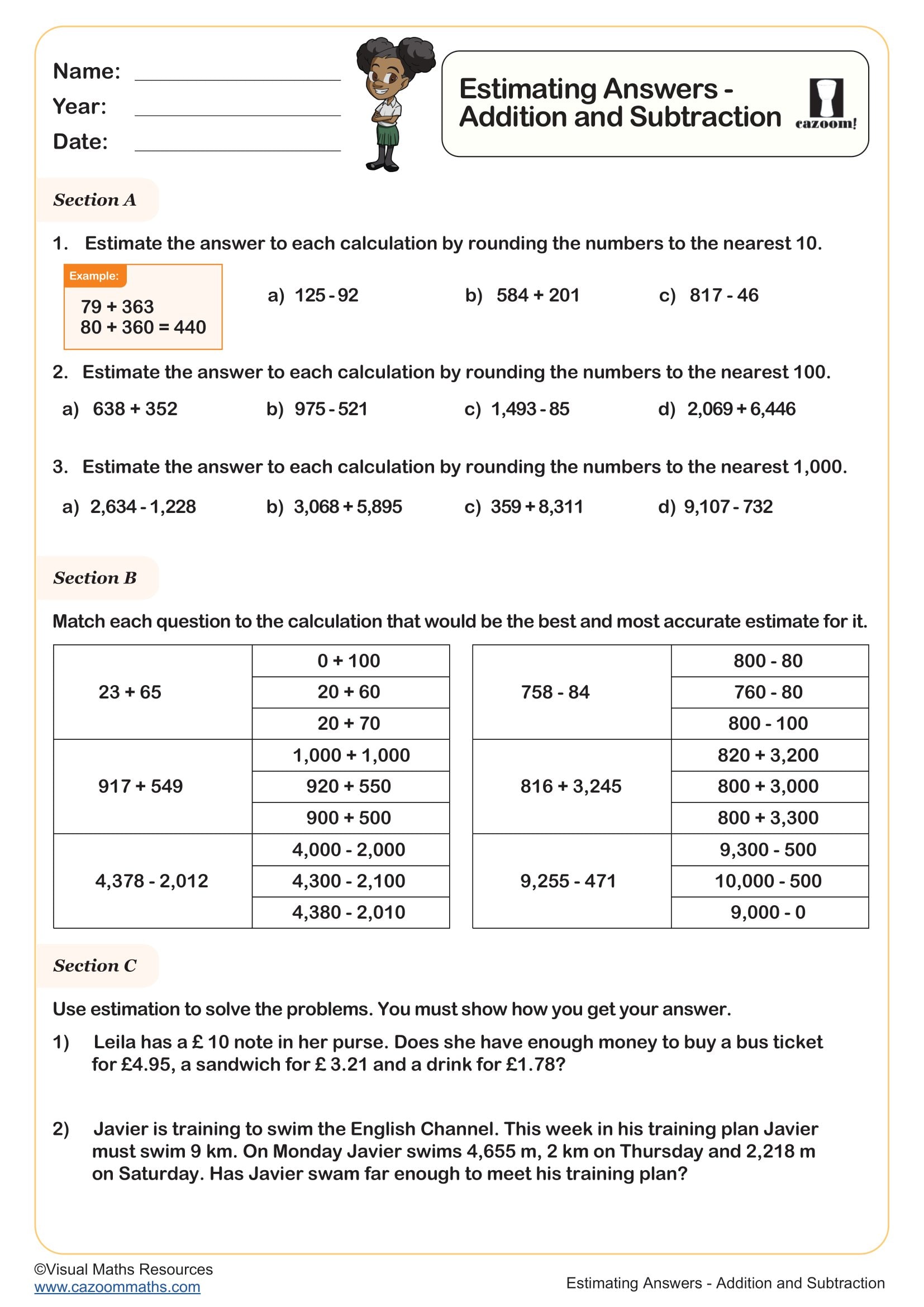
Estimating Answers Addition and Subtraction
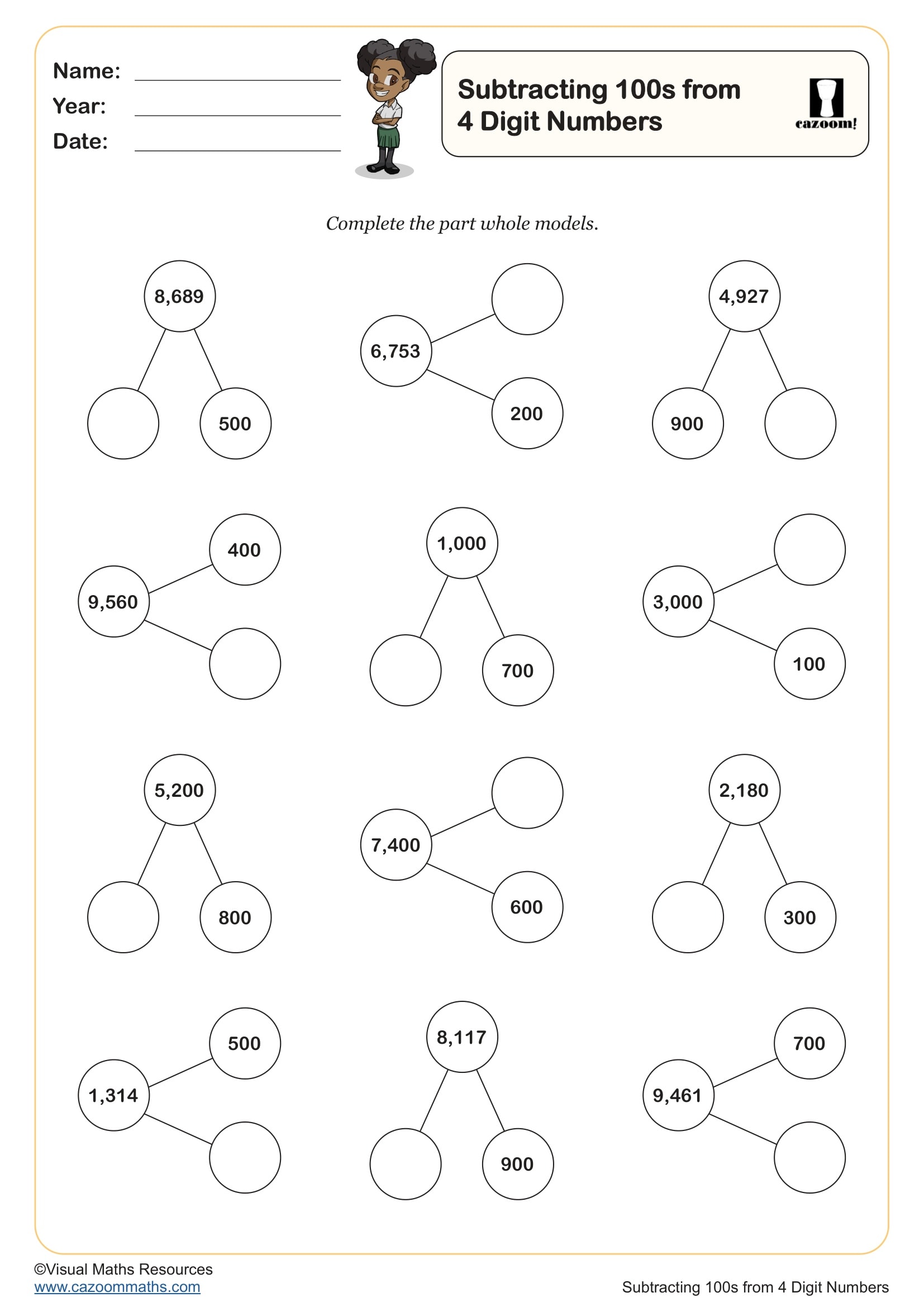
Subtracting 100s from 4 Digit Numbers
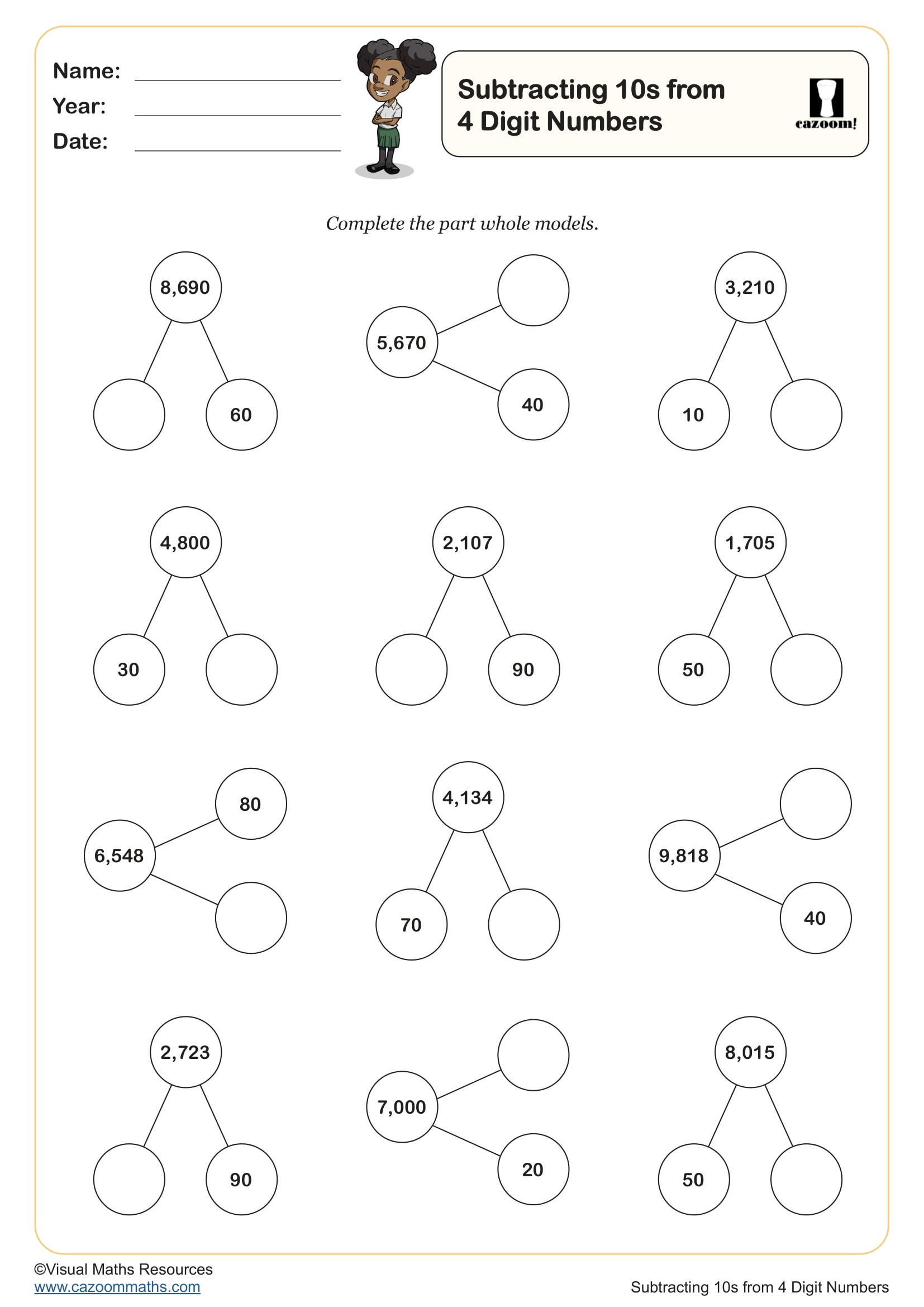
Subtracting 10s from 4 Digit Numbers
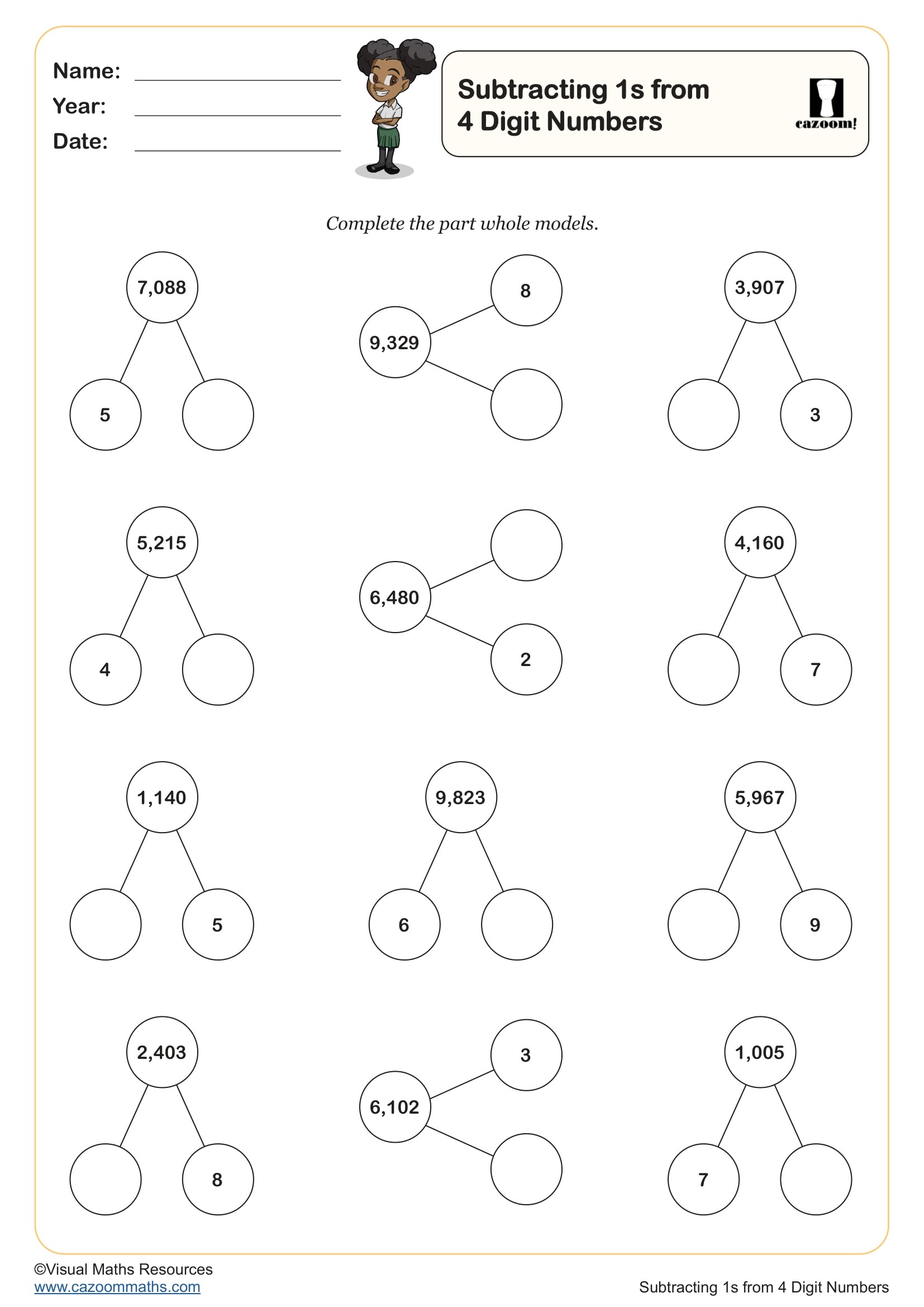
Subtracting 1s from 4 Digit Numbers
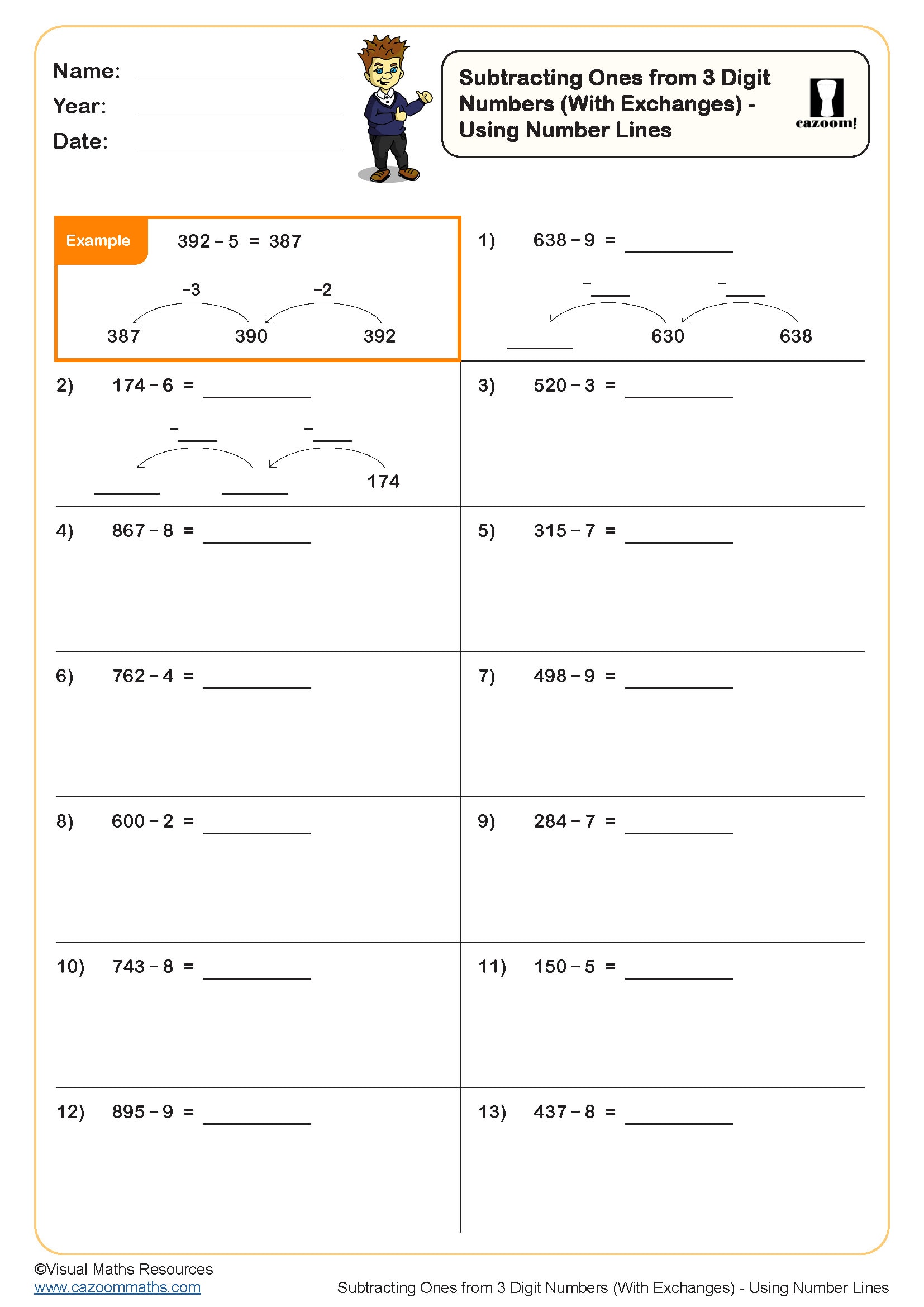
Subtracting Ones from 3 Digit Numbers (With Exchanges) - Using Number Lines
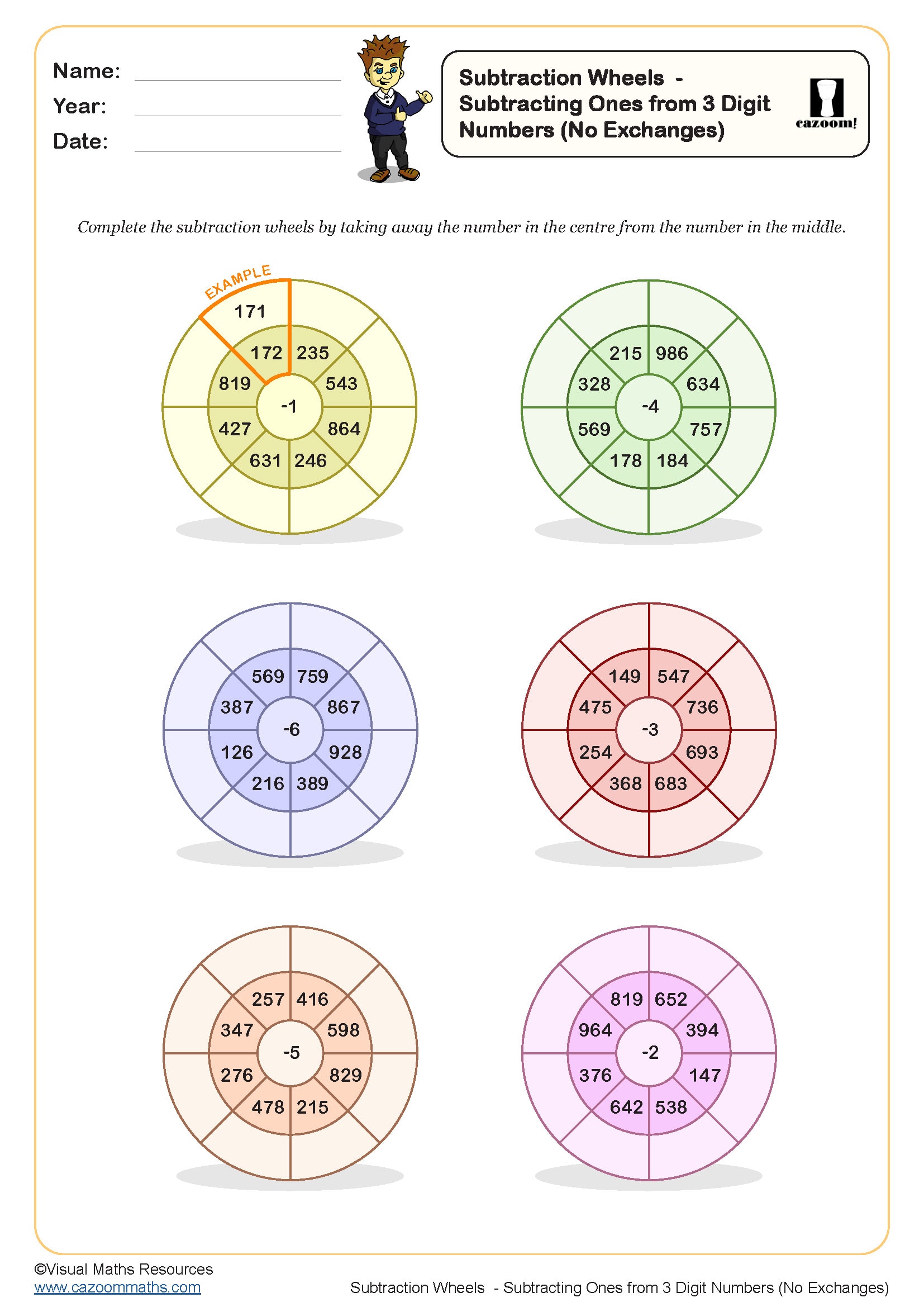
Subtraction Wheels - Subtracting Ones from 3 Digit Numbers (No Exchanges)
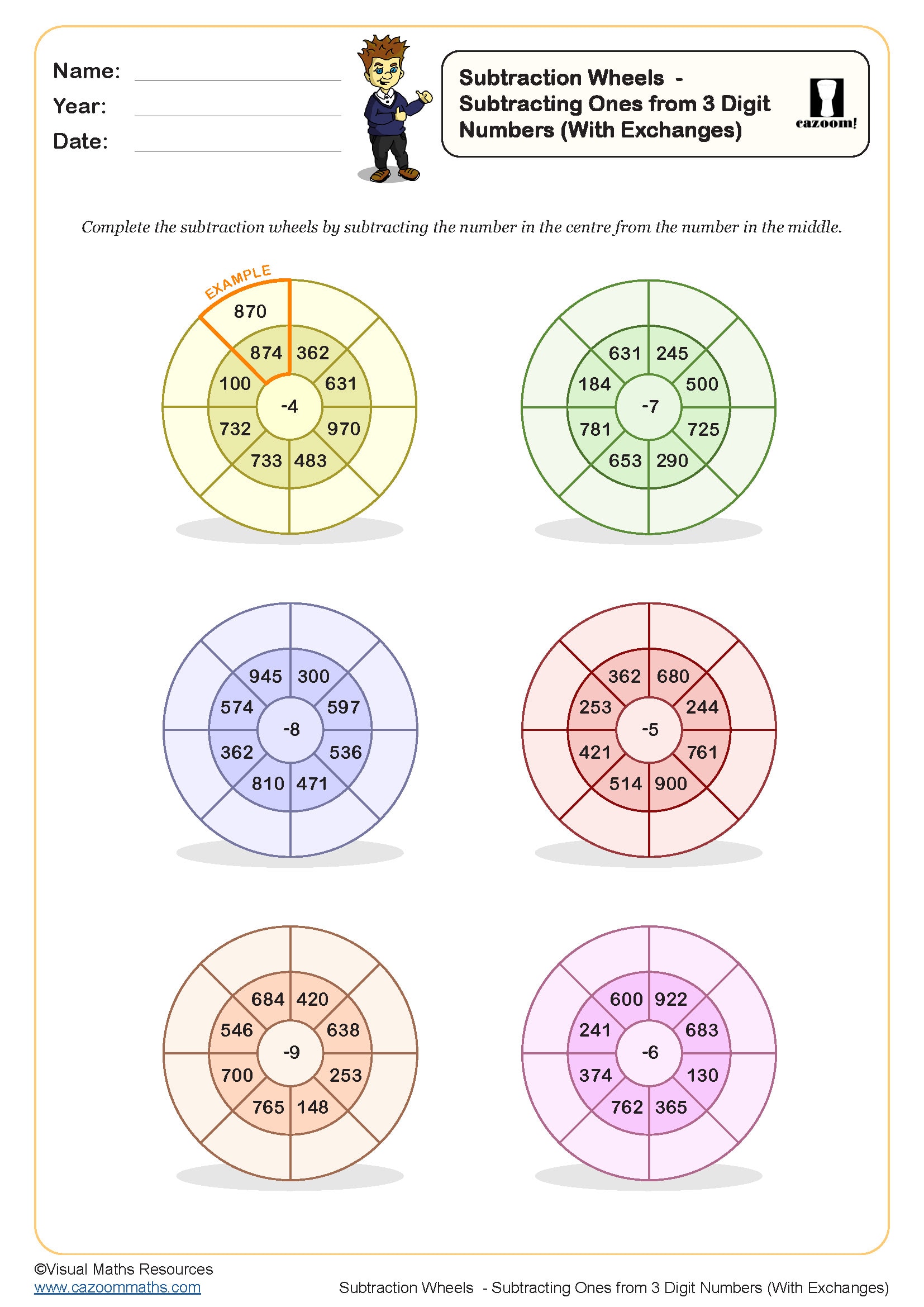
Subtraction Wheels - Subtracting Ones from 3 Digit Numbers (With Exchanges)
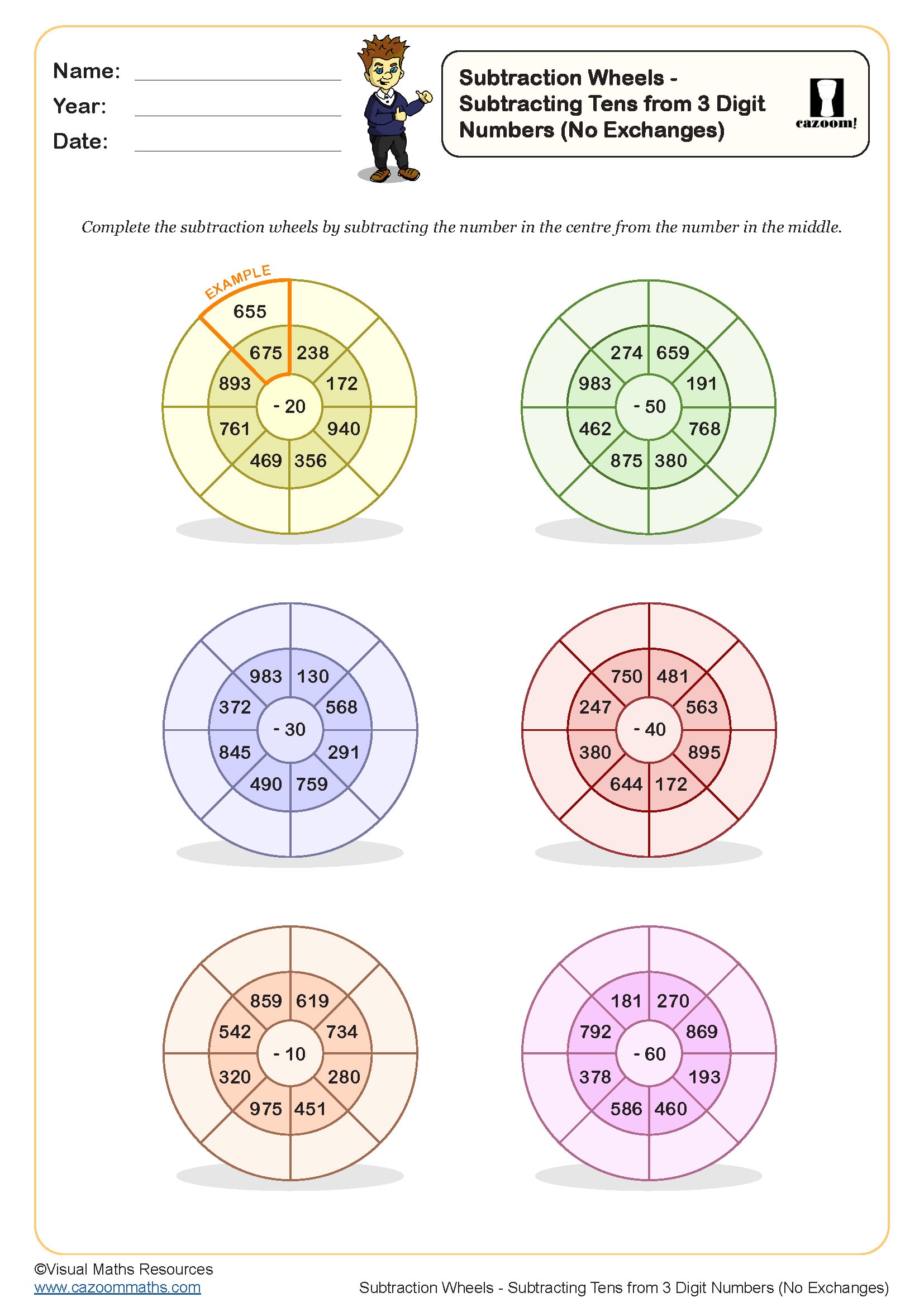
Subtraction Wheels - Subtracting Tens from 3 Digit Numbers (No Exchanges)
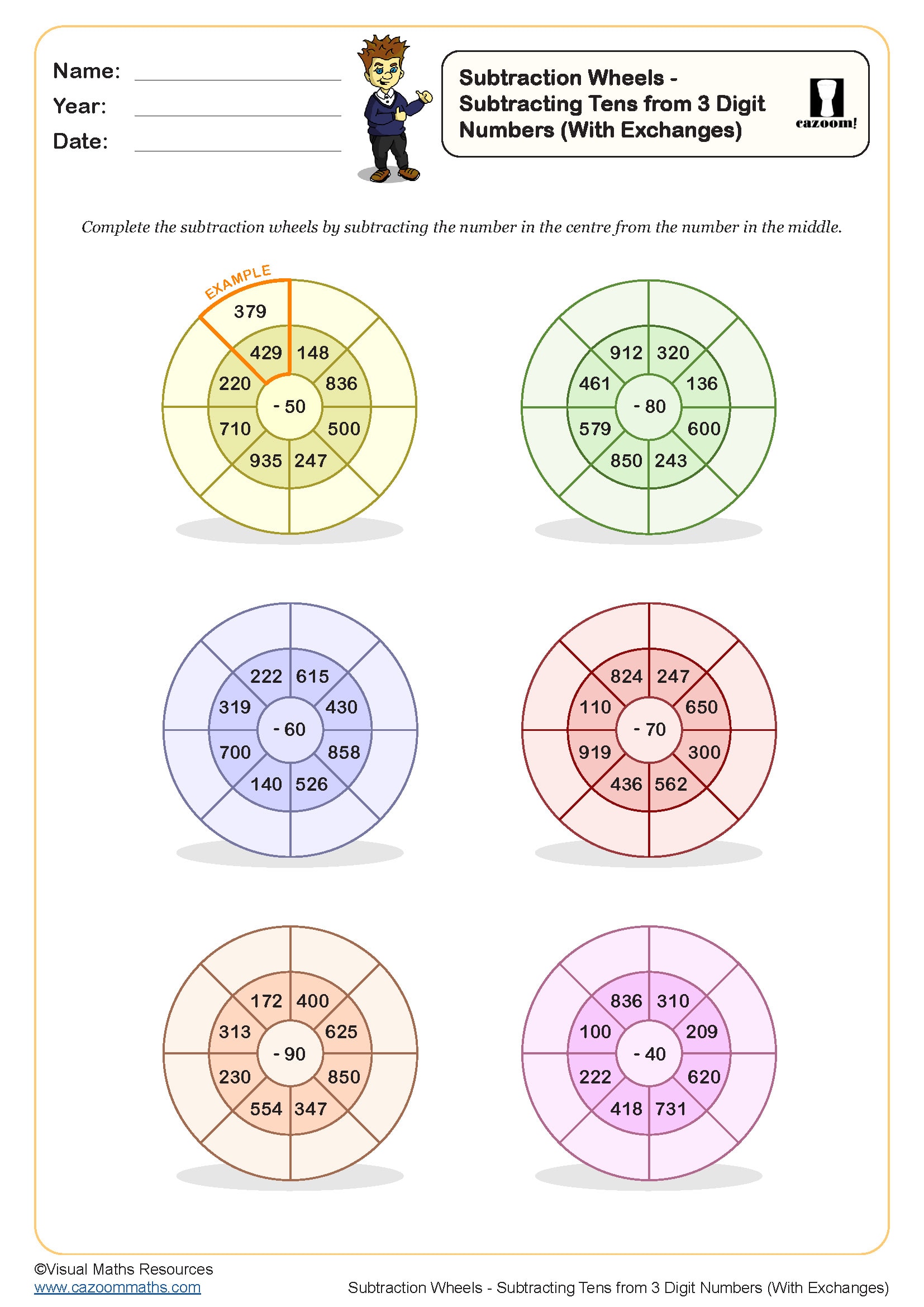
Subtraction Wheels - Subtracting Tens from 3 Digit Numbers (With Exchanges)
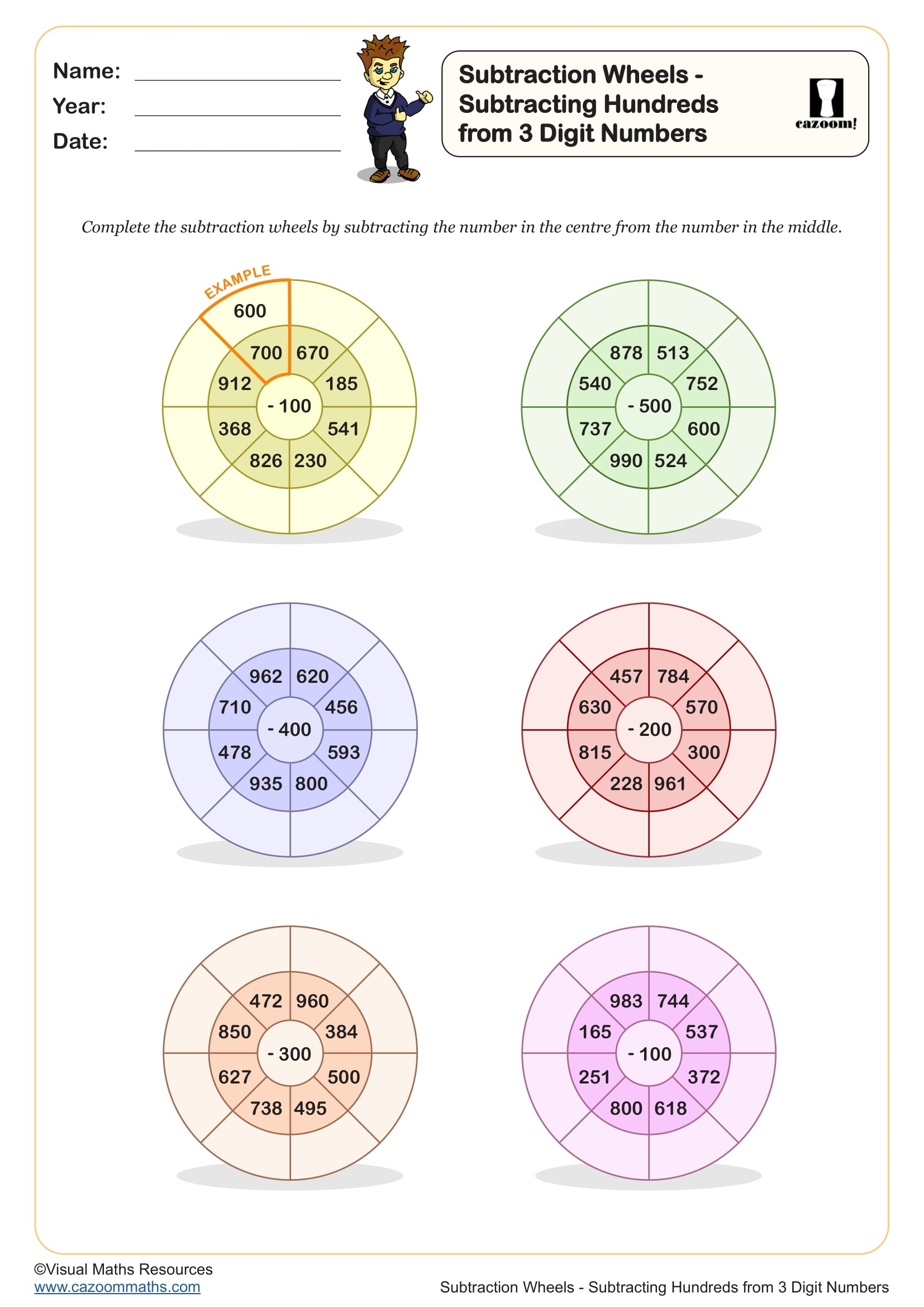
Subtraction Wheels - Subtracting Hundreds from 3 Digit Numbers
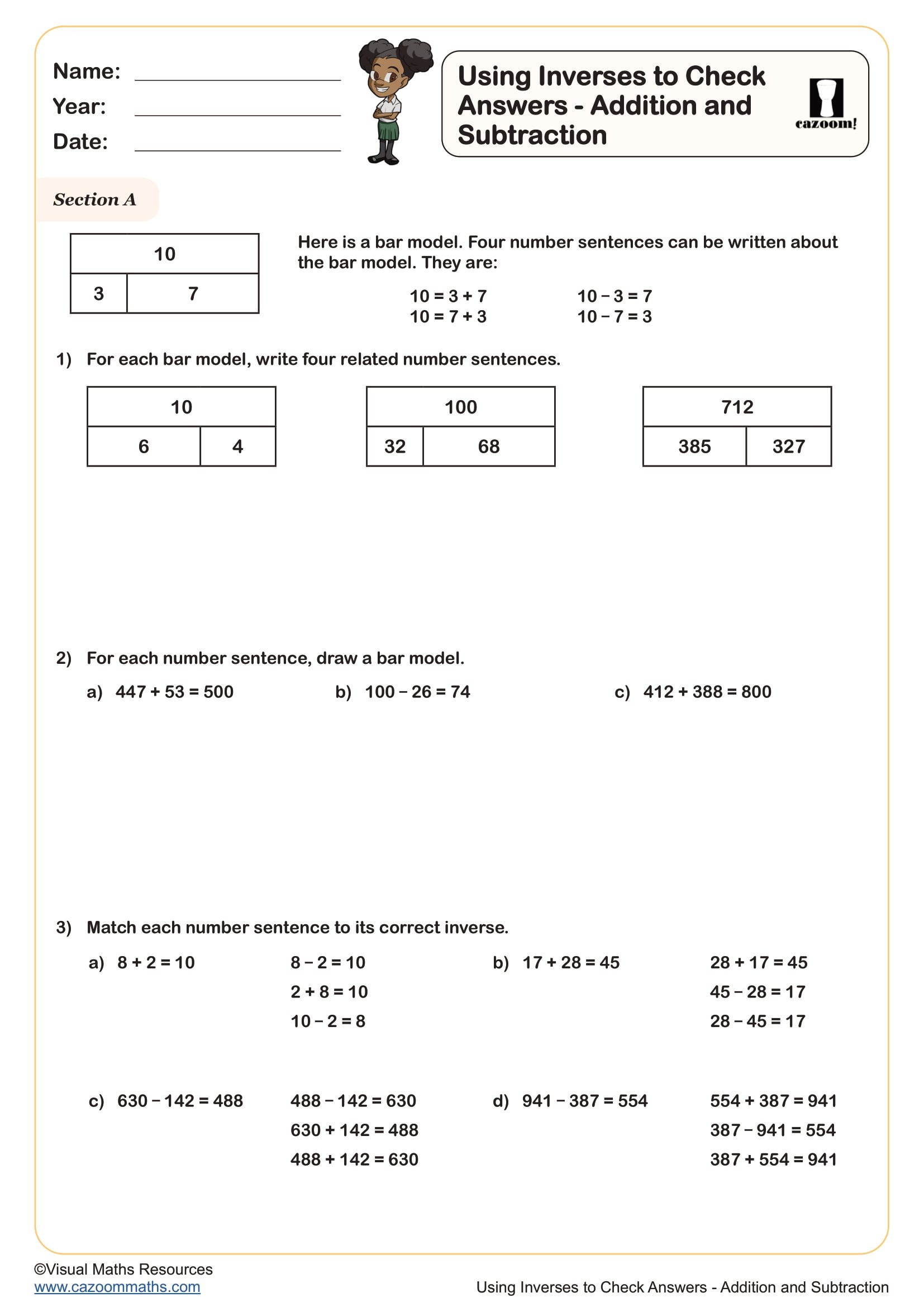
Using Inverses to Check Answers Addition and Subtraction
All worksheets are created by the team of experienced teachers at Cazoom Maths.
What methods do these subtraction worksheets teach?
The worksheets focus on the formal written method of column subtraction, which is the expected approach in the KS2 National Curriculum. Pupils practise setting out calculations vertically, aligning digits by place value, and working systematically from right to left. Questions progress from straightforward calculations to those requiring exchanging (borrowing) across multiple columns, including scenarios where zeros appear in the minuend.
Worksheets also incorporate problem-solving contexts where pupils must apply subtraction to worded questions, helping them recognise when to use this operation. This combination of procedural fluency and reasoning ensures pupils develop both computational skills and mathematical thinking required for GCSE foundations.
Which year groups are these subtraction worksheets suitable for?
These worksheets are designed specifically for KS2, covering Year 3, Year 4, and Year 5. Year 3 pupils typically work with 3-digit numbers, building confidence with the column method and exchanging across one or two place values. Year 4 worksheets introduce 4-digit calculations with increased complexity in exchanging patterns, whilst Year 5 materials extend to 5 and 6-digit numbers.
The progressive structure means teachers can select worksheets matched to their class's current attainment, whether consolidating earlier year group objectives or challenging more confident mathematicians. This flexibility supports differentiation and ensures all pupils access appropriate practice for their stage of development.
How do these worksheets help with exchanging across zeros?
Subtracting across zeros is a common stumbling block, and these worksheets provide targeted practice with this challenging skill. Pupils encounter calculations like 4003 − 1867 where multiple exchanges are needed, helping them understand that zeros represent actual place values that must be considered during the exchanging process.
Worksheets scaffold this skill carefully, beginning with single zeros before progressing to multiple consecutive zeros. Answer sheets show the working clearly, which helps pupils check their exchanging process and identify exactly where errors occur. Regular practice with these patterns builds the procedural fluency needed to tackle any subtraction confidently.
Do these worksheets include answer sheets?
Yes, every worksheet in this collection includes a complete answer sheet. This makes marking efficient for teachers and allows pupils to self-assess their work, developing independence and metacognitive skills. Answer sheets are particularly valuable for subtraction as pupils can check not just their final answer but also identify where exchanging errors occurred in their working.
For parents supporting home learning, the answer sheets provide confidence that they can help effectively, even if they're unsure about the formal method themselves. All worksheets download as PDFs, so they're ready to print and use immediately without additional preparation or resources required.