KS3 2D Shapes Worksheets
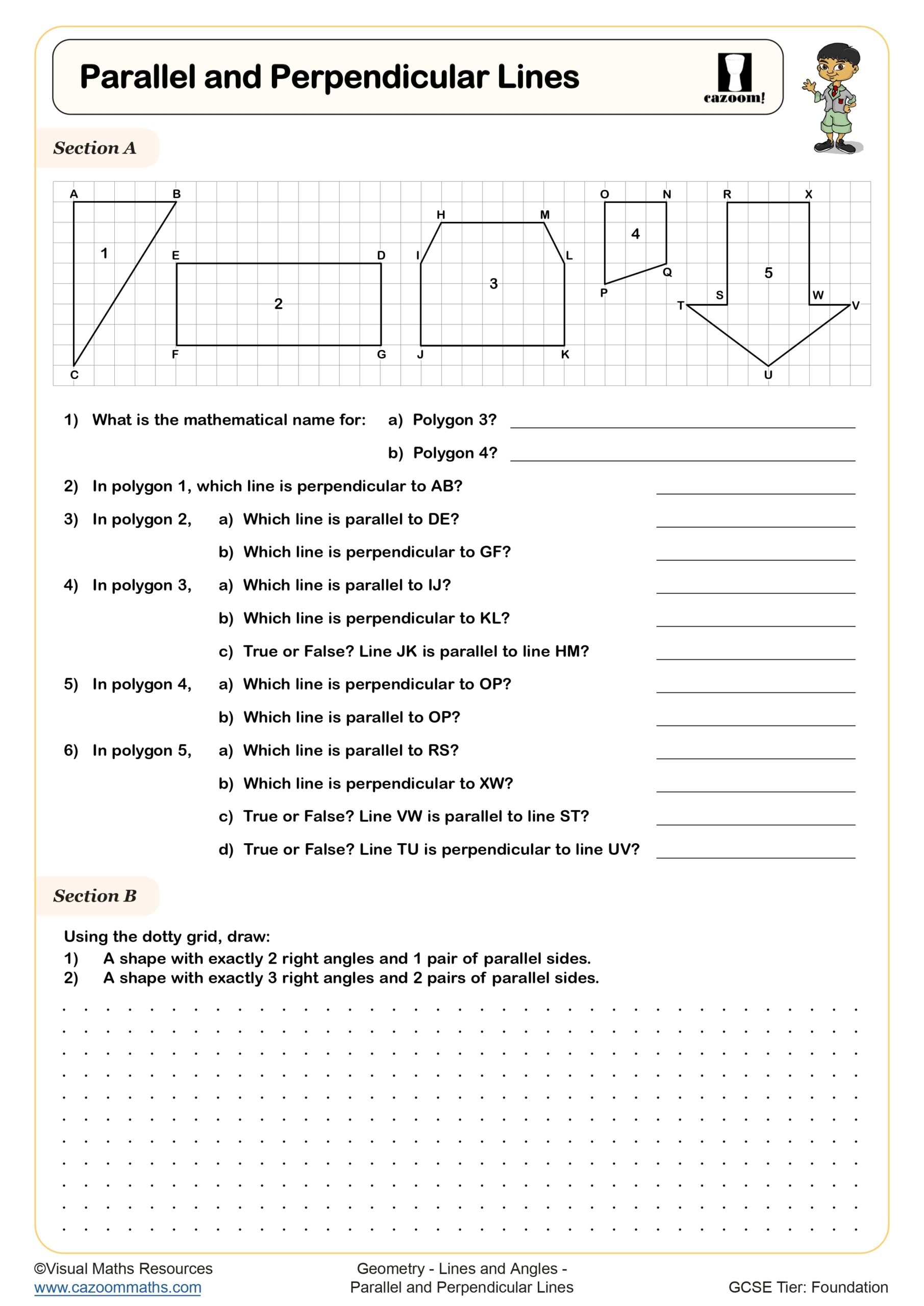
Parallel and Perpendicular Lines
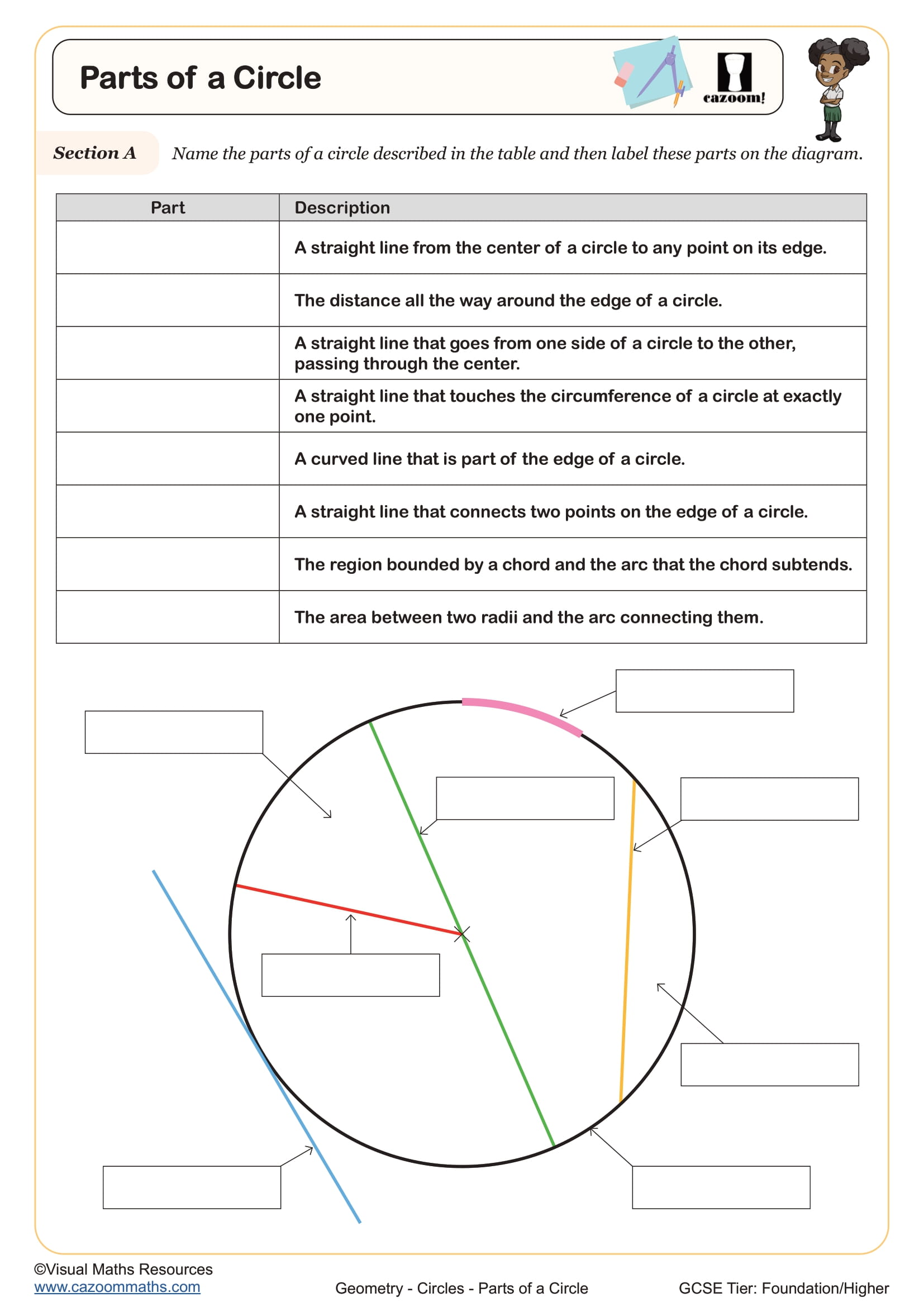
Parts of a Circle
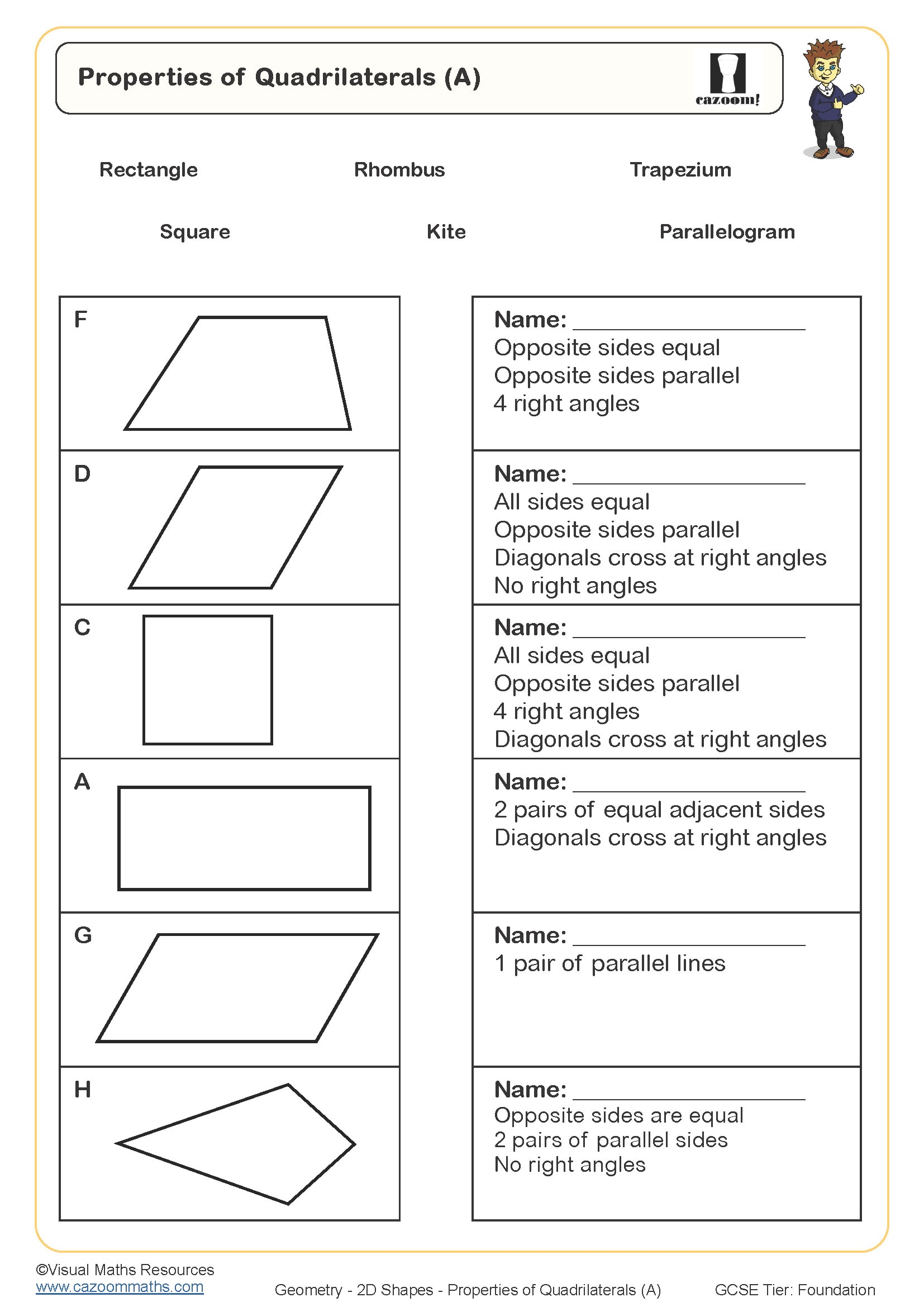
Properties of Quadrilaterals (A)
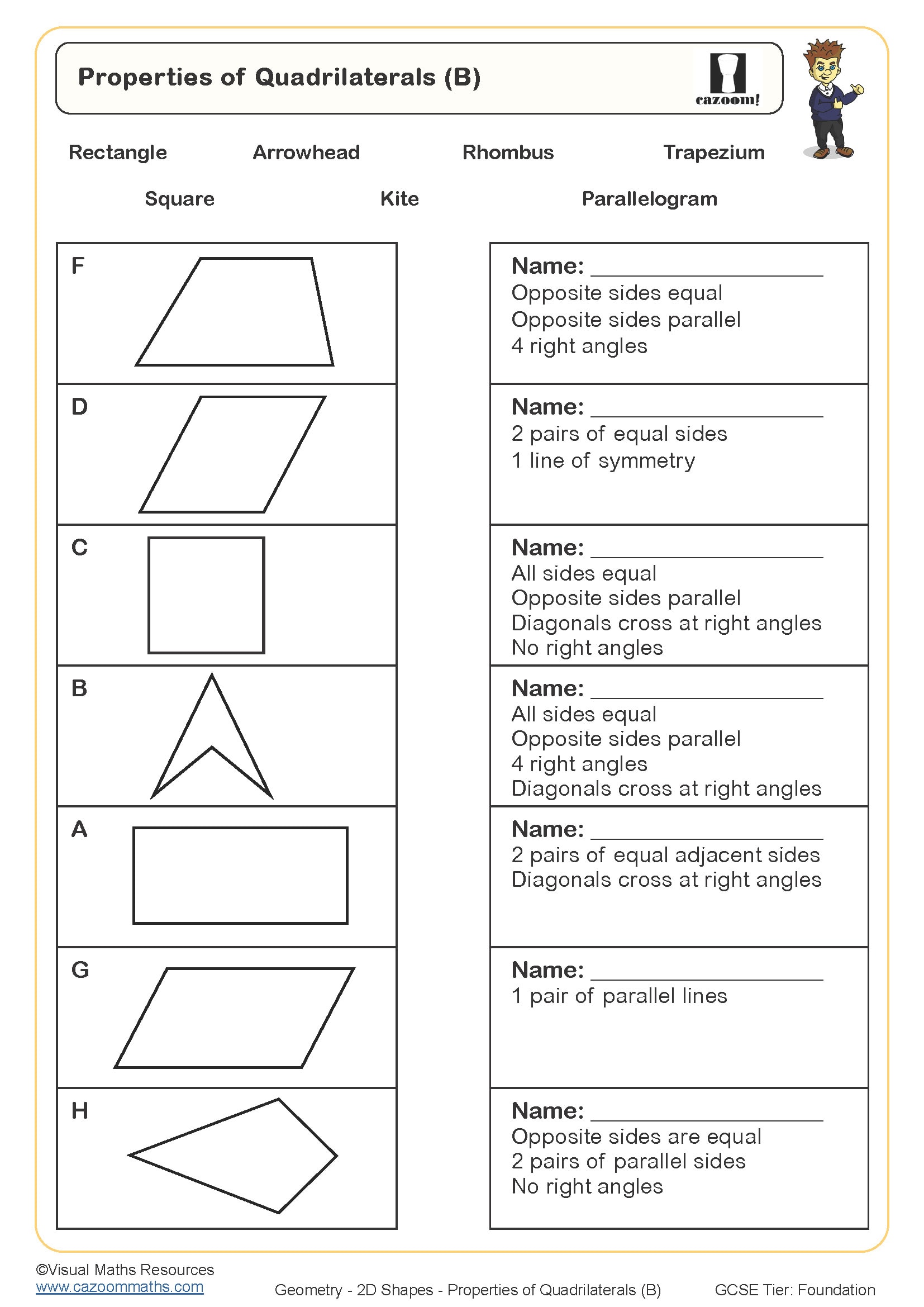
Properties of Quadrilaterals (B)
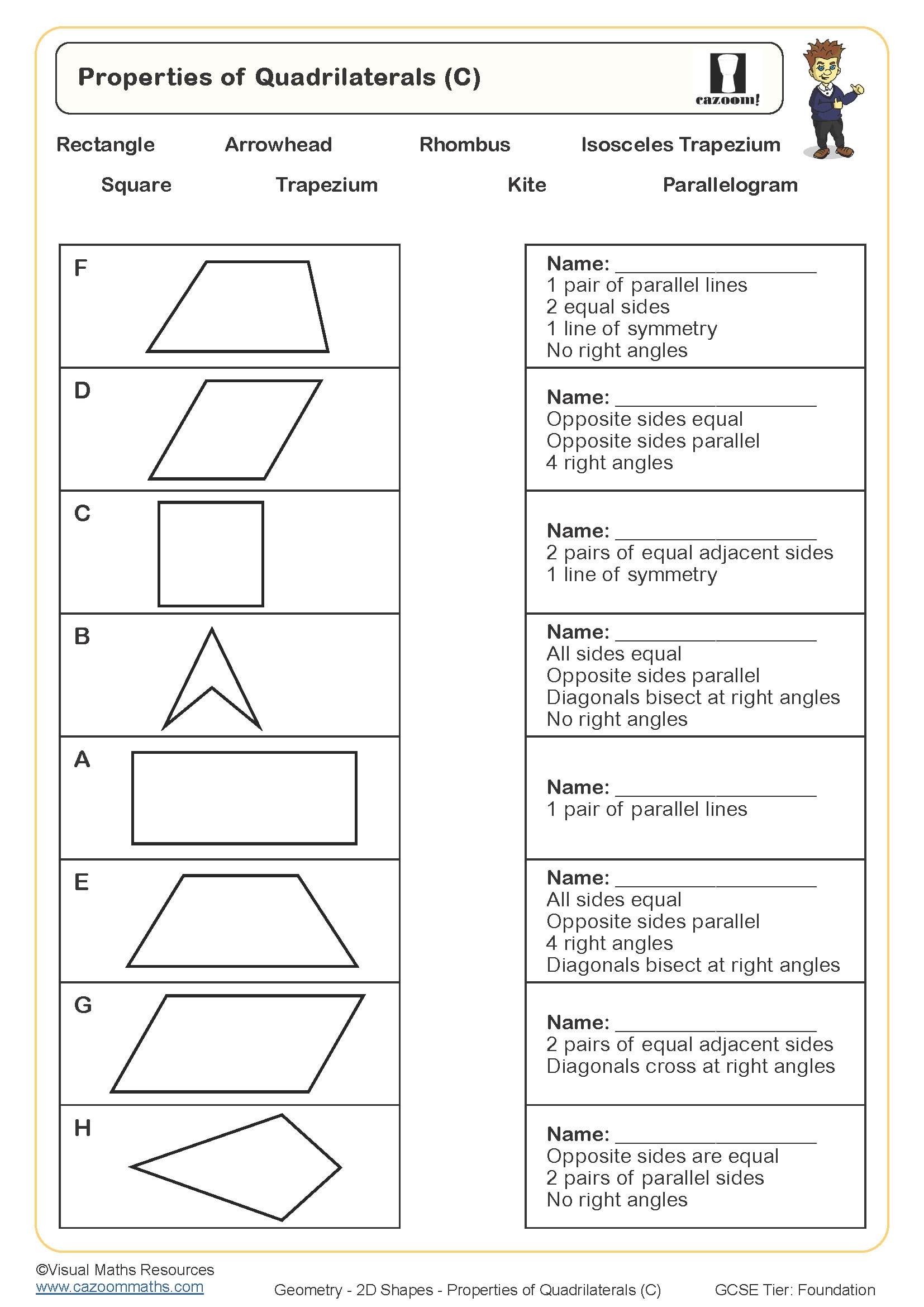
Properties of Quadrilaterals (C)
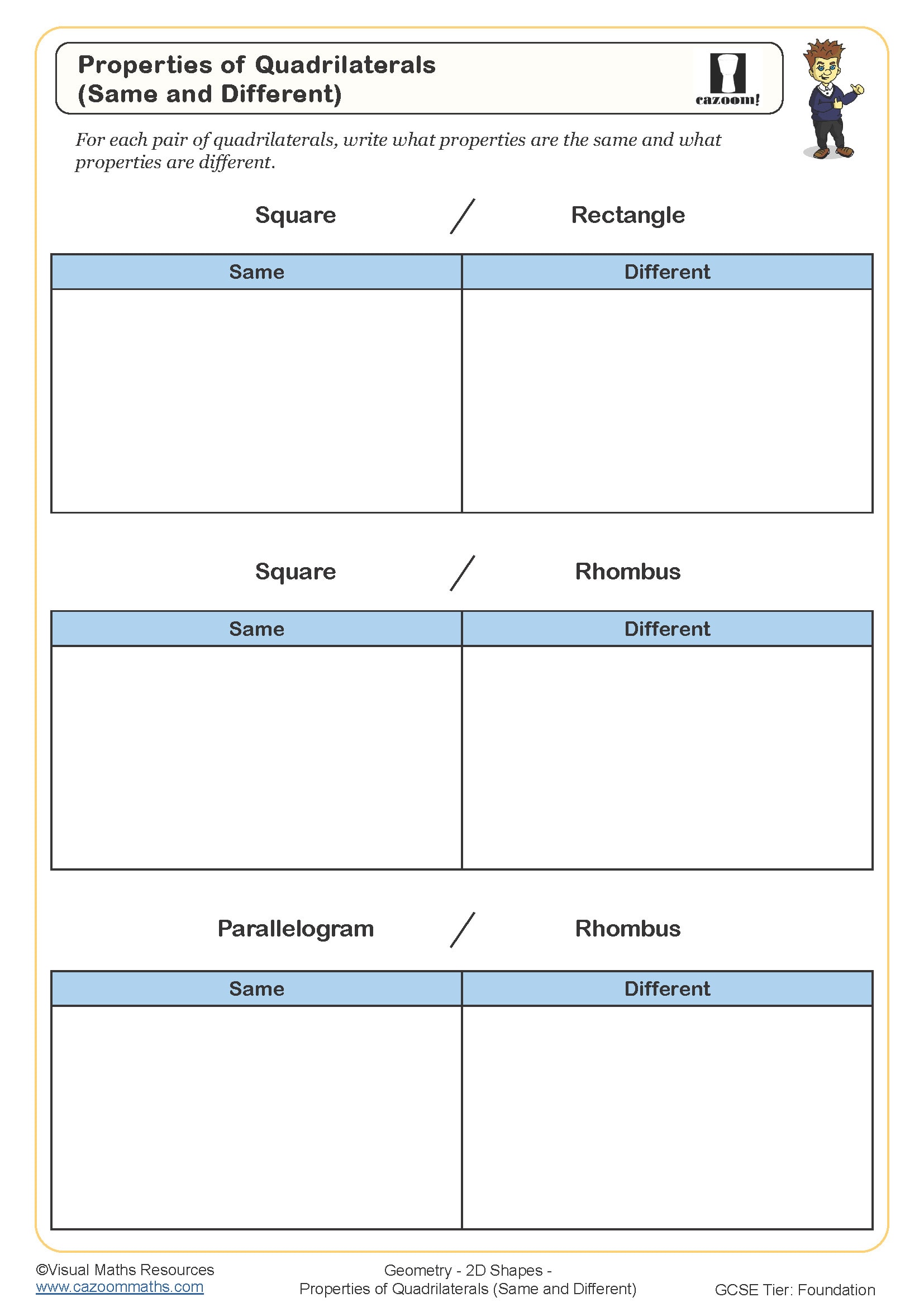
Properties of Quadrilaterals (Same and Different)
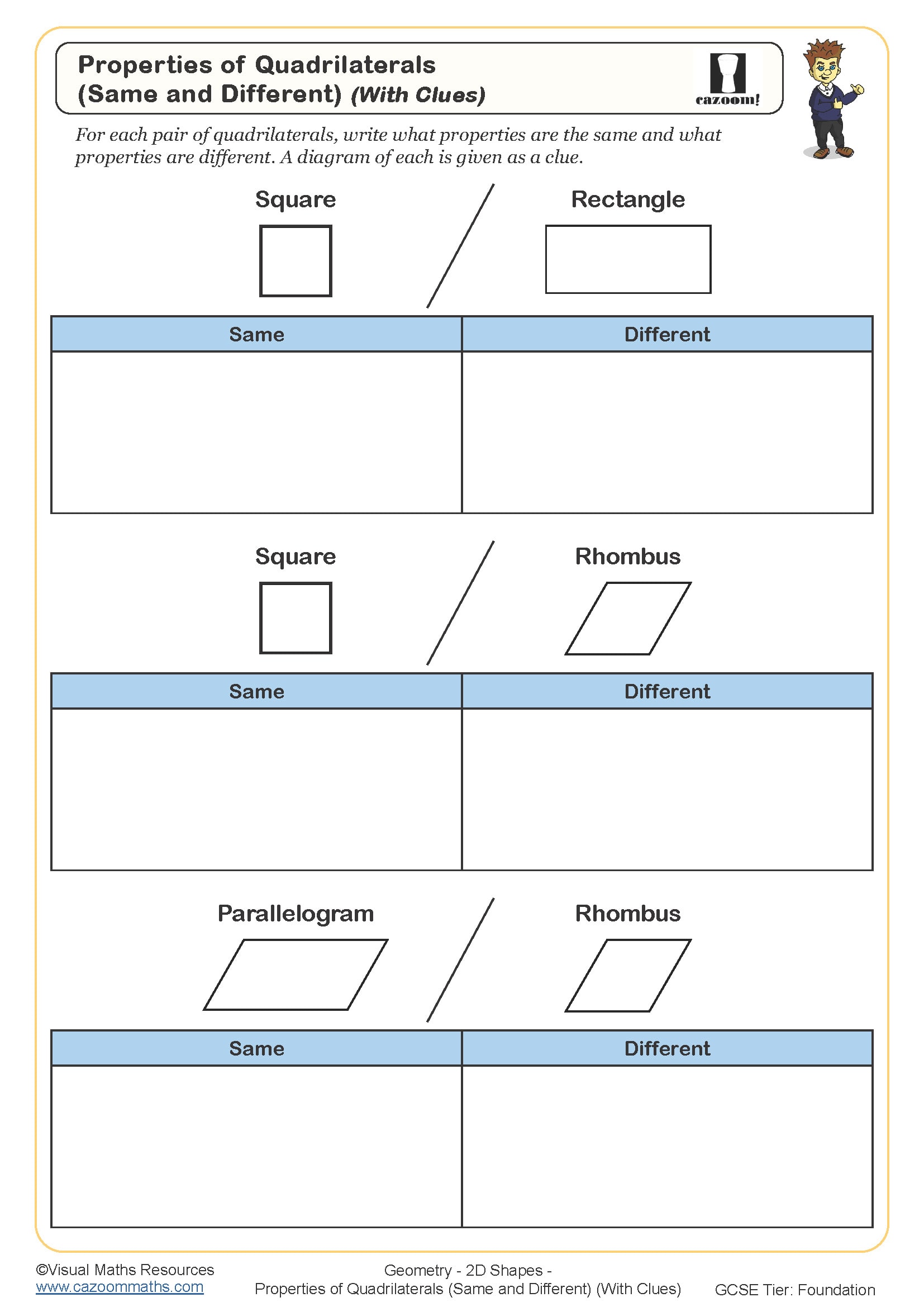
Properties of Quadrilaterals (Same and Different) (With Clues)
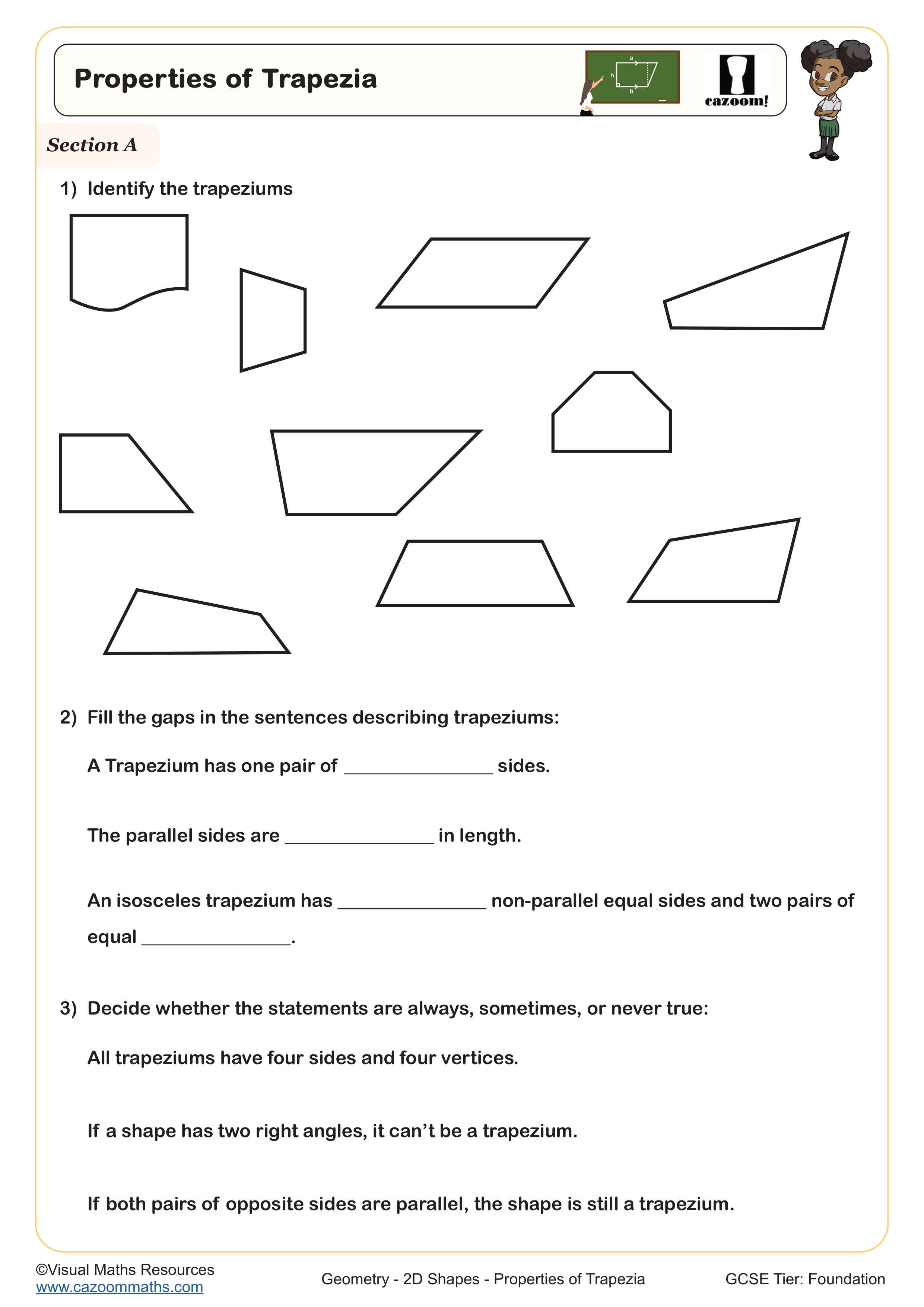
Properties of Trapezia
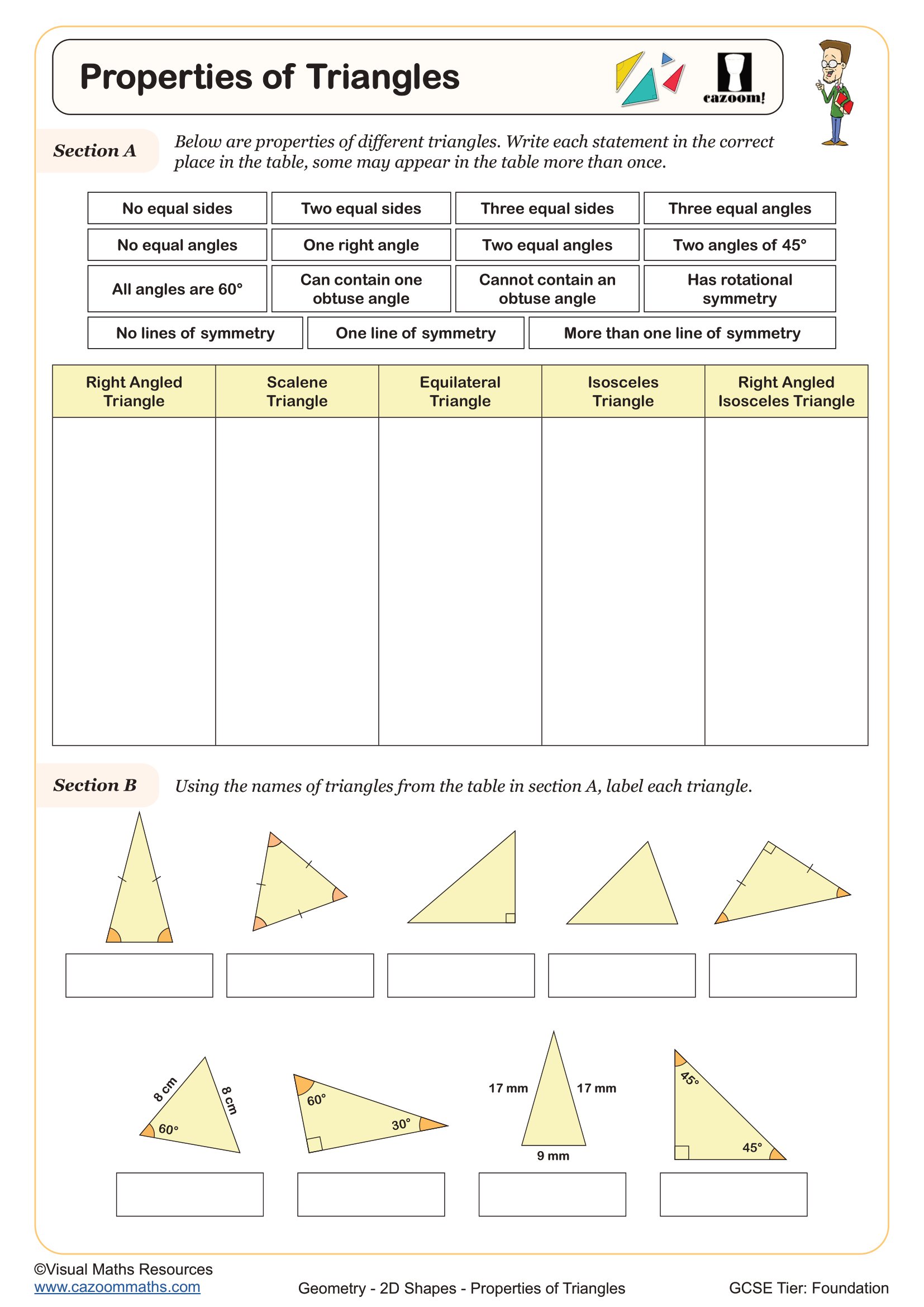
Properties of Triangles
All worksheets are created by the team of experienced teachers at Cazoom Maths.
What do students learn with KS3 shapes worksheets?
KS3 shapes worksheets focus on properties of 2D polygons including triangles, quadrilaterals, pentagons, hexagons, and circles. Students work on identifying shapes from their properties (rather than just visual recognition), calculating missing angles using geometric facts, finding perimeters, and understanding relationships between different polygon families. This connects directly to the National Curriculum requirements for geometry and measures at Key Stage 3.
A common error pattern emerges when students calculate angles in regular polygons. Many teachers notice students correctly recall that interior angles of a triangle sum to 180° but then struggle to extend this reasoning to other polygons, often attempting to memorise individual facts rather than understanding the underlying structure. Worksheets that require students to explain their reasoning help address this misconception.
Which year groups study 2D shapes at KS3?
These worksheets cover 2D shapes across Year 7, Year 8, and Year 9. In Year 7, students consolidate primary knowledge and begin working more formally with properties and classifications. Year 8 typically introduces angle relationships in polygons and more complex compound shapes. By Year 9, students apply shape knowledge to problem-solving contexts that combine multiple geometric concepts.
The progression focuses on increasingly sophisticated reasoning. Year 7 work emphasises accurate identification and basic property application, whilst Year 8 introduces algebraic thinking about angles and perimeters. Year 9 challenges students with unfamiliar contexts where they must select appropriate geometric facts independently, mirroring GCSE question styles where information isn't explicitly signposted.
How do students work with colour 2D shapes?
Colour 2D shape activities help students visually distinguish between different geometric properties and classifications. Using colour to highlight specific features (such as parallel sides in one colour, equal sides in another) supports students in analysing composite shapes and identifying relationships that might otherwise be overlooked. This visual approach particularly benefits students who struggle with purely abstract geometric reasoning.
Colour coding appears extensively in design and engineering contexts. Architects use colour-differentiated floor plans to indicate room functions, whilst engineers colour-code technical drawings to show different materials or stress levels in structures. Students who understand how colour can convey geometric information develop stronger spatial reasoning skills that transfer directly to these STEM applications, making abstract geometry feel more tangible and purposeful.
How can teachers use these 2D shapes worksheets in lessons?
The worksheets work well for differentiated practice once a concept has been introduced, allowing teachers to target specific skills students found challenging during whole-class teaching. The included answer sheets mean students can self-mark during paired work, with partners discussing any discrepancies before asking for teacher support. This approach encourages mathematical discussion and helps students develop checking strategies.
Many teachers use these resources for targeted intervention with small groups who need additional practice on particular shape properties, or as structured homework that parents can support confidently thanks to the answer sheets. The worksheets also suit revision sessions before assessments, where students need focused practice on geometric reasoning rather than lengthy explanations. Some teachers report success using individual questions as starter activities to retrieve prior knowledge before introducing related concepts.