KS3 Time Worksheets
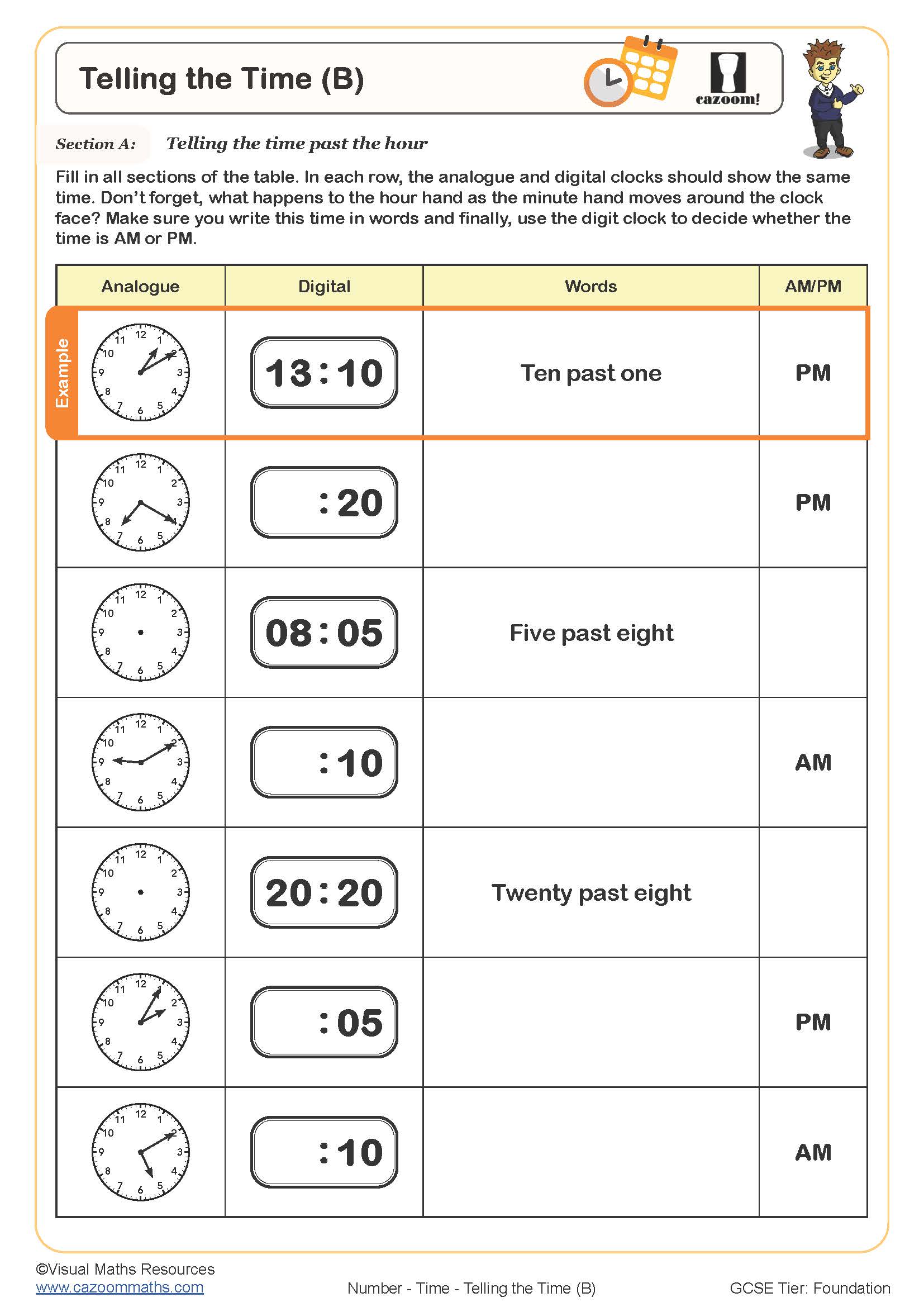
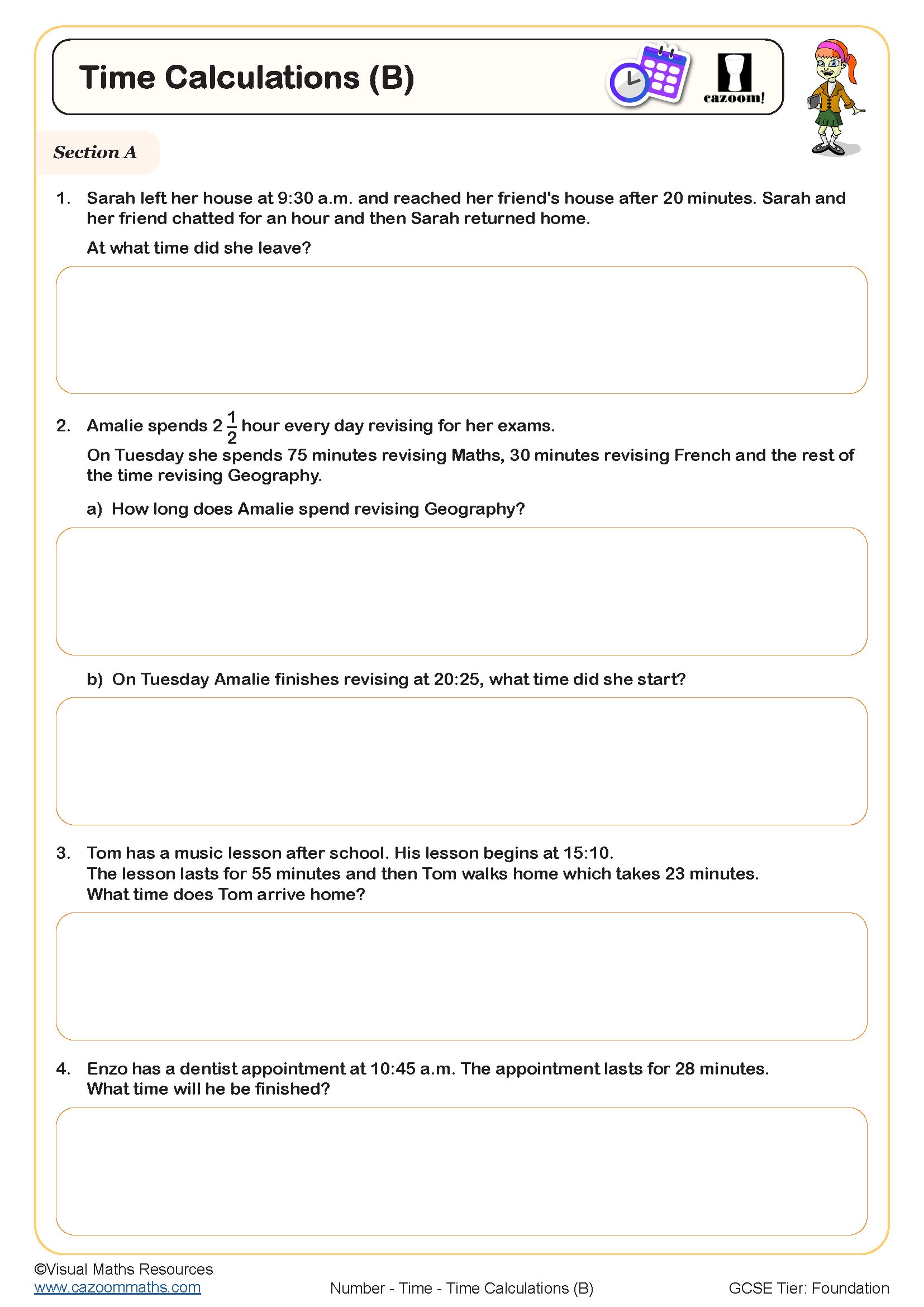
All worksheets are created by the team of experienced teachers at Cazoom Maths.
What are KS3 time worksheets and why are they important?
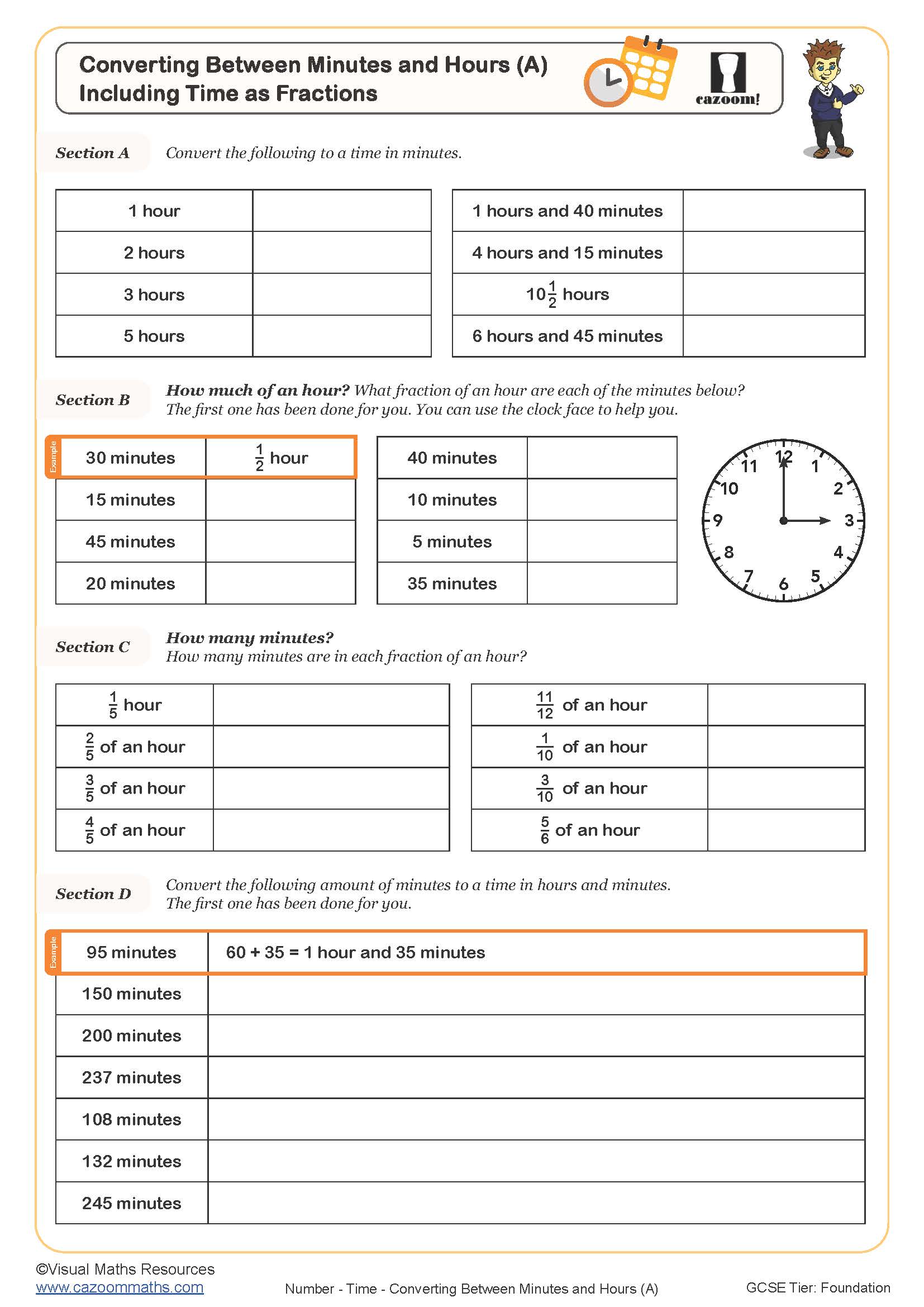
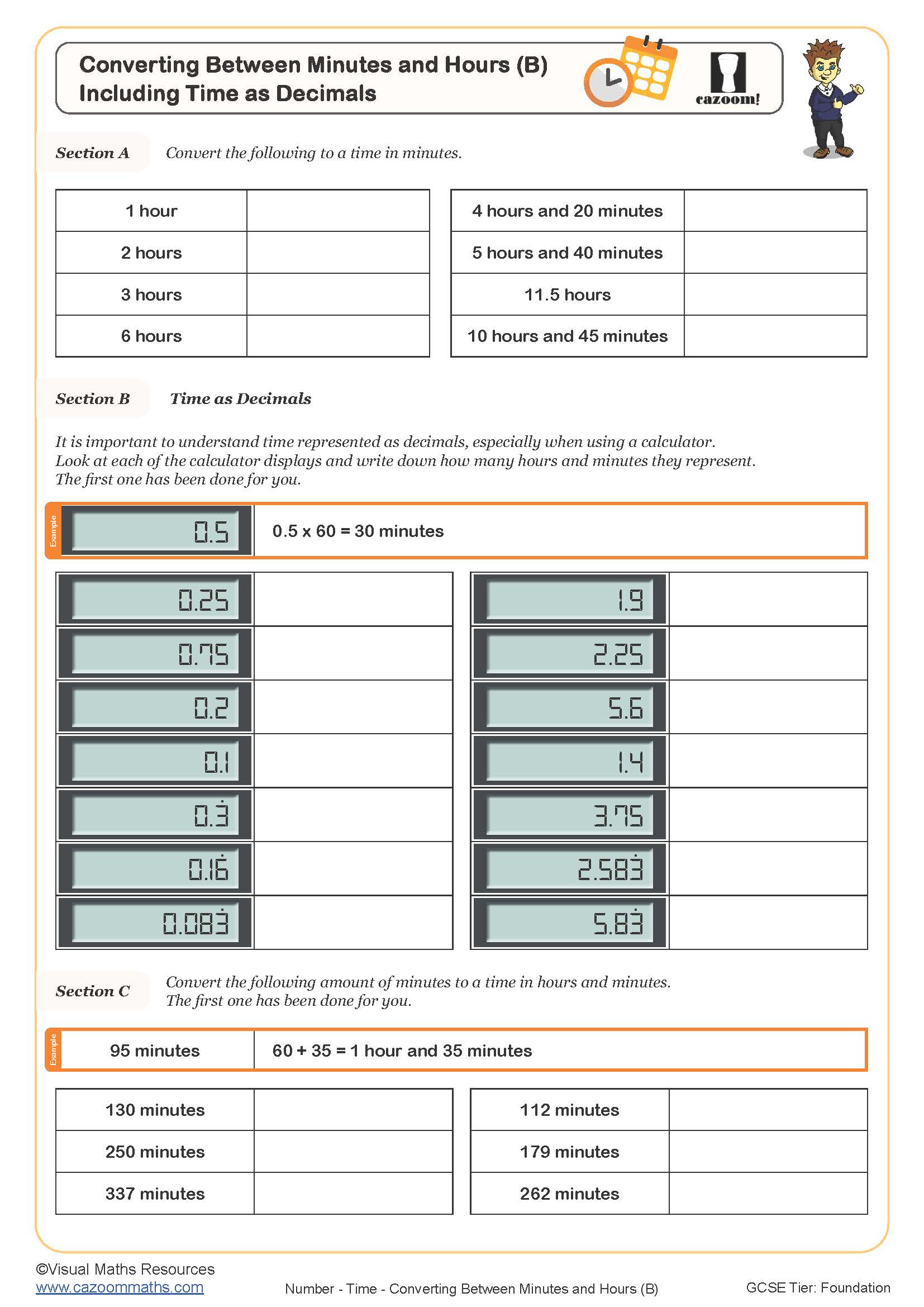
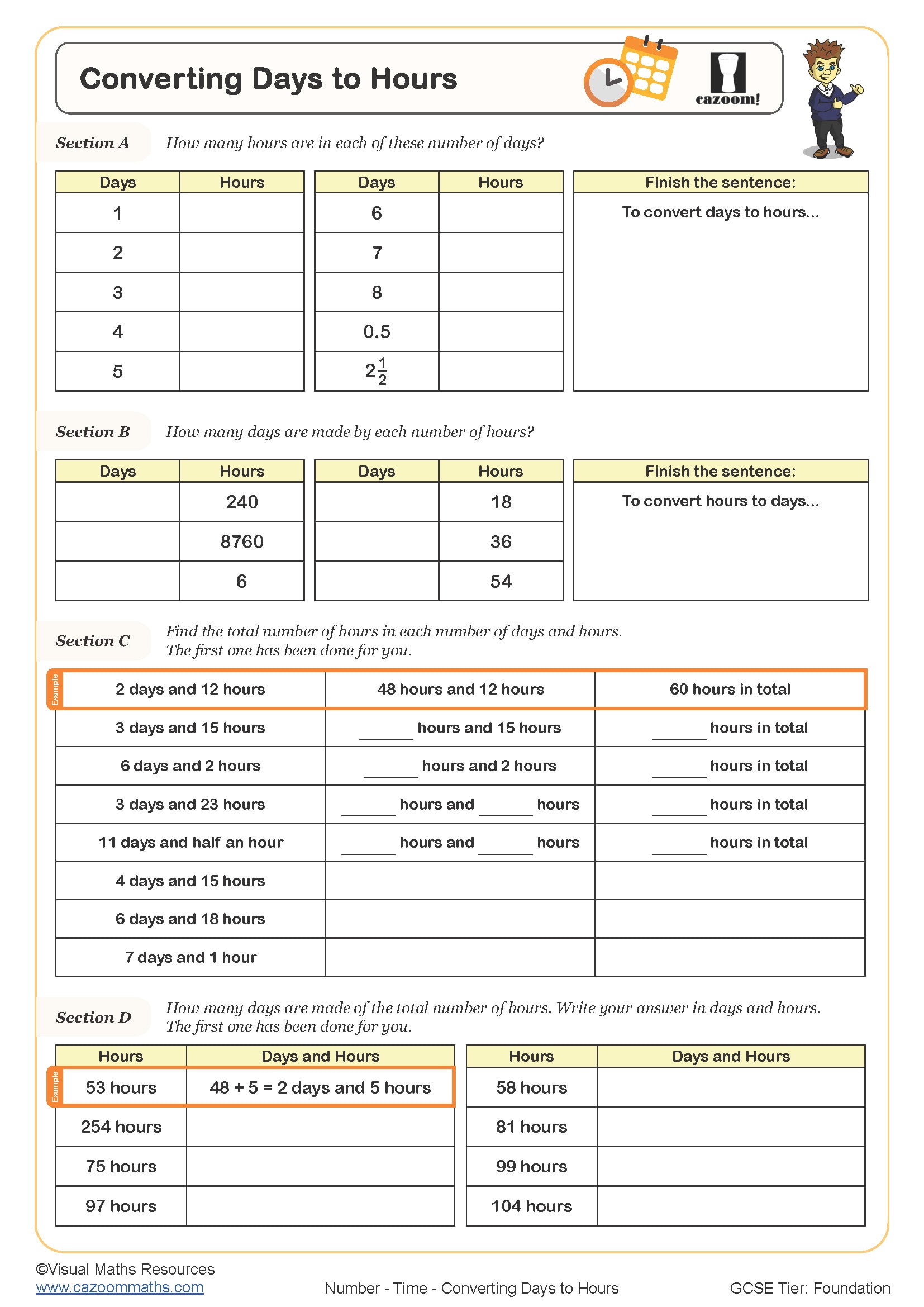
KS3 time worksheets focus on developing students' ability to work confidently with time in various contexts, from converting between 12-hour and 24-hour clock formats to calculating time intervals and solving real-world problems. These KS3 worksheets printable resources align with National Curriculum requirements for ratio, proportion, and rates of change, where time calculations underpin speed-distance-time problems and other rate-based questions that appear throughout Key Stage 3 and into GCSE.
Teachers often notice that students lose marks on multi-stage time problems because they fail to show intermediate steps clearly, making it difficult to track where calculations go wrong. A typical error involves adding 2 hours 45 minutes to 10:30 by calculating 10 + 2 = 12, then 30 + 45 = 75, leading to an incorrect answer of 12:75 rather than converting to 1:15pm through proper understanding of the 60-minute structure of an hour.
Which year groups use these time worksheets?
These worksheets cover time concepts across Year 7, Year 8, and Year 9, building on the foundation work completed at Key Stage 2. In Year 7, students consolidate their understanding of 12-hour and 24-hour time formats and work with straightforward time interval calculations, whilst Year 8 and 9 students tackle increasingly complex multi-stage problems that require converting between different time units and applying time calculations in context.
Progression across KS3 sees students move from procedural fluency with time conversions to solving problems embedded within real-world contexts such as timetables, time zones, and scheduling scenarios. By Year 9, students should confidently handle problems requiring multiple conversions and demonstrate clear working that shows their understanding of both the mathematical structure and practical application of time calculations, preparing them for the speed, distance, and time problems that feature prominently at GCSE.
How do students work with 24-hour clock formats?
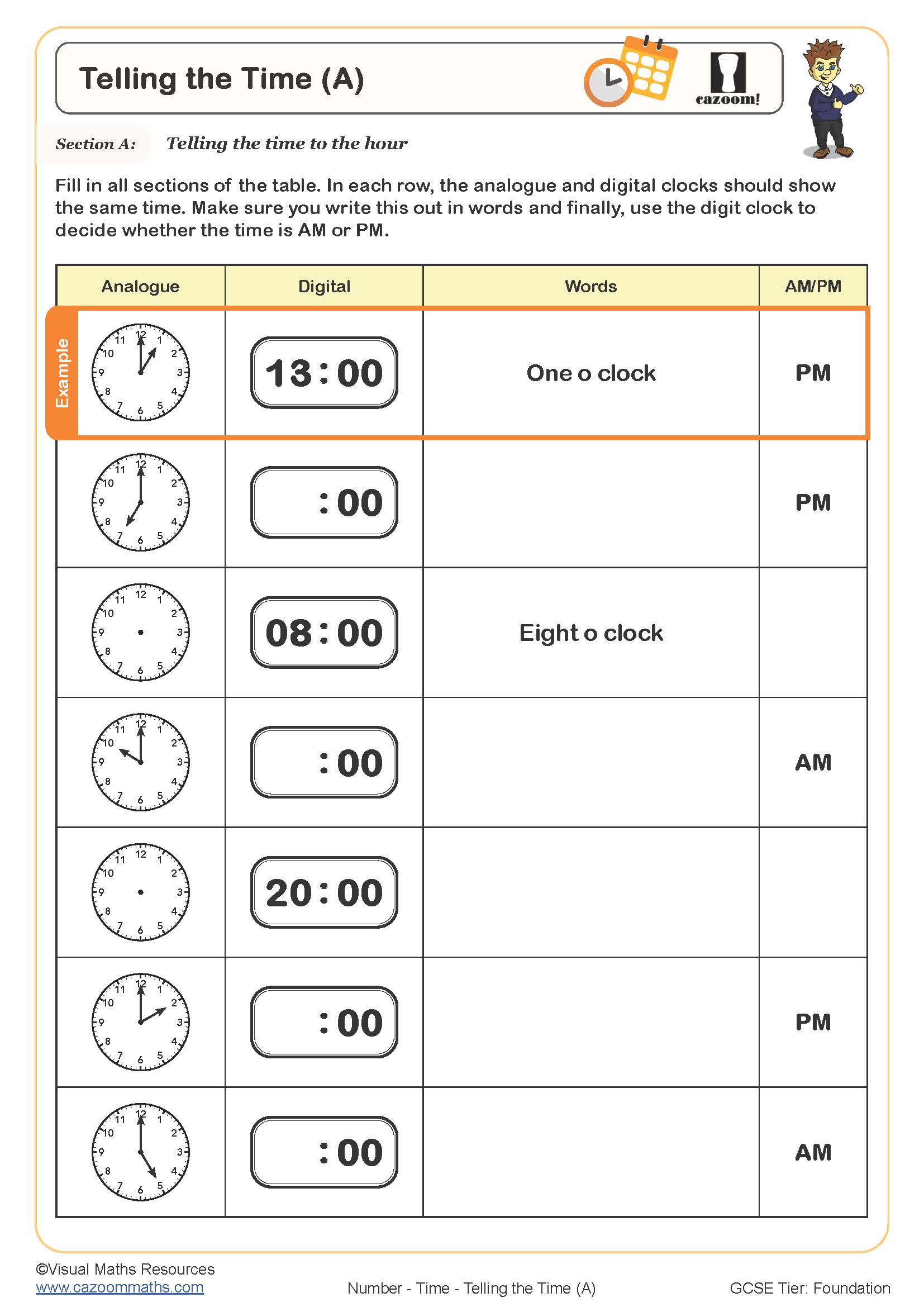
The 24-hour clock removes the need for am/pm notation by continuing to count hours from 00:00 (midnight) through to 23:59, with any time after 12:59 represented by subtracting 12 from the hour value to find the equivalent pm time. Students must recognise that 14:30 is calculated as 14 minus 12 equals 2:30pm, whilst converting from 12-hour to 24-hour requires adding 12 to any pm time except 12pm itself, which becomes 12:00 in 24-hour format.
Many transport systems, hospitals, and international organisations use 24-hour time specifically because it eliminates ambiguity, a crucial consideration in healthcare where medication timing errors could prove dangerous. Aviation relies entirely on 24-hour time across all scheduling and flight operations, making this skill essential for students considering careers in logistics, healthcare, transport management, or any field requiring precise time coordination across different locations and time zones.
How can teachers use these worksheets effectively?
The worksheets scaffold time concepts through carefully structured questions that progress from straightforward conversions to multi-stage problems, with answer sheets enabling students to identify exactly where their method breaks down. Each worksheet addresses specific aspects of time calculations, allowing teachers to target particular misconceptions such as crossing midnight, converting between units, or working backwards from a known end time to find a start time.
These resources work particularly well for intervention groups where students need focused practise on time without the cognitive load of mixed topic work, and as homework tasks that parents can support because the answer sheets show complete working. Teachers frequently use individual worksheets as starters to diagnose whether students have retained time calculation skills when revisiting speed-distance-time problems in Year 8 and 9, or as structured revision for students approaching foundation GCSE where time appears in functional problem-solving questions.