KS3 Types of Number Worksheets
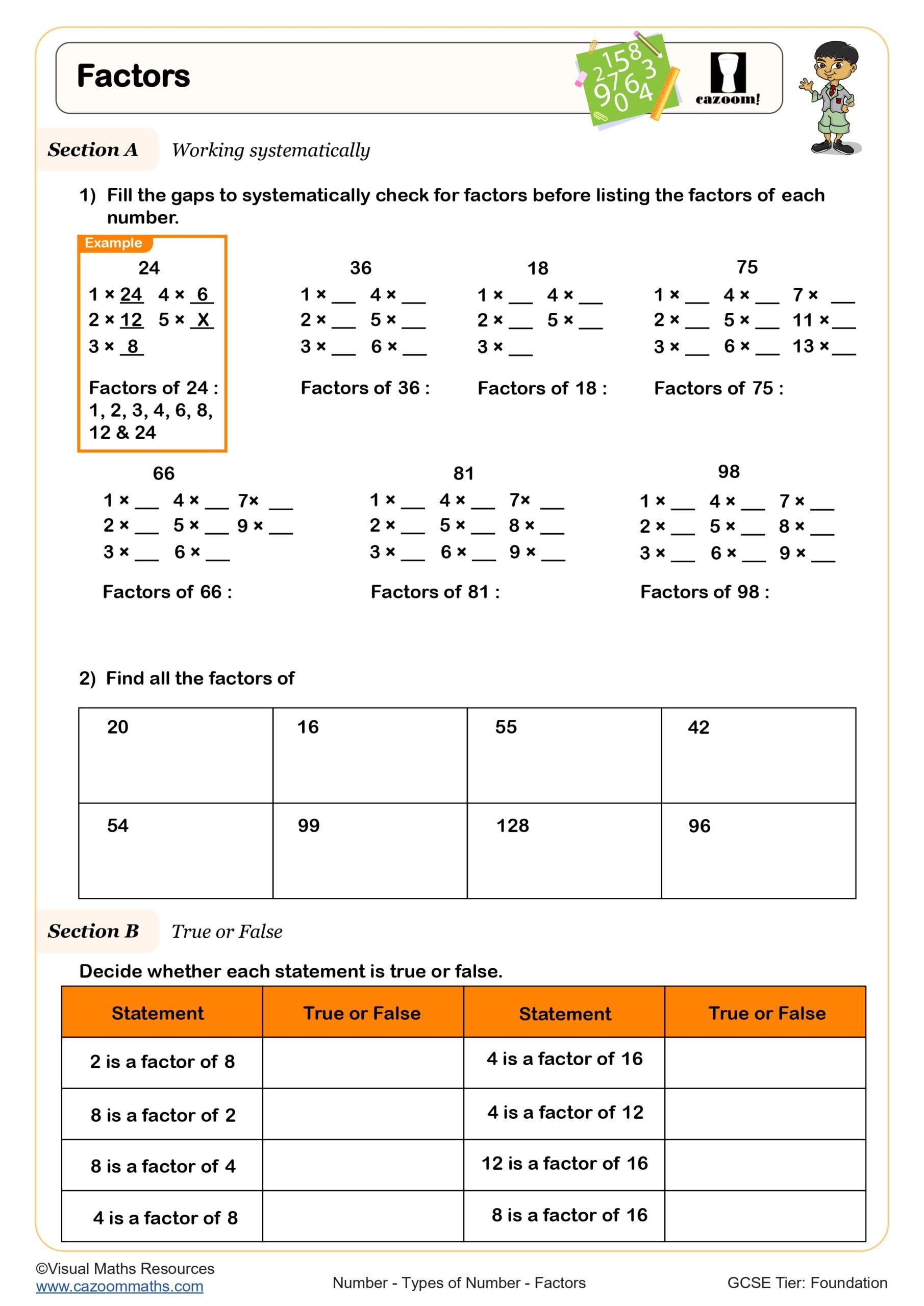
Factors
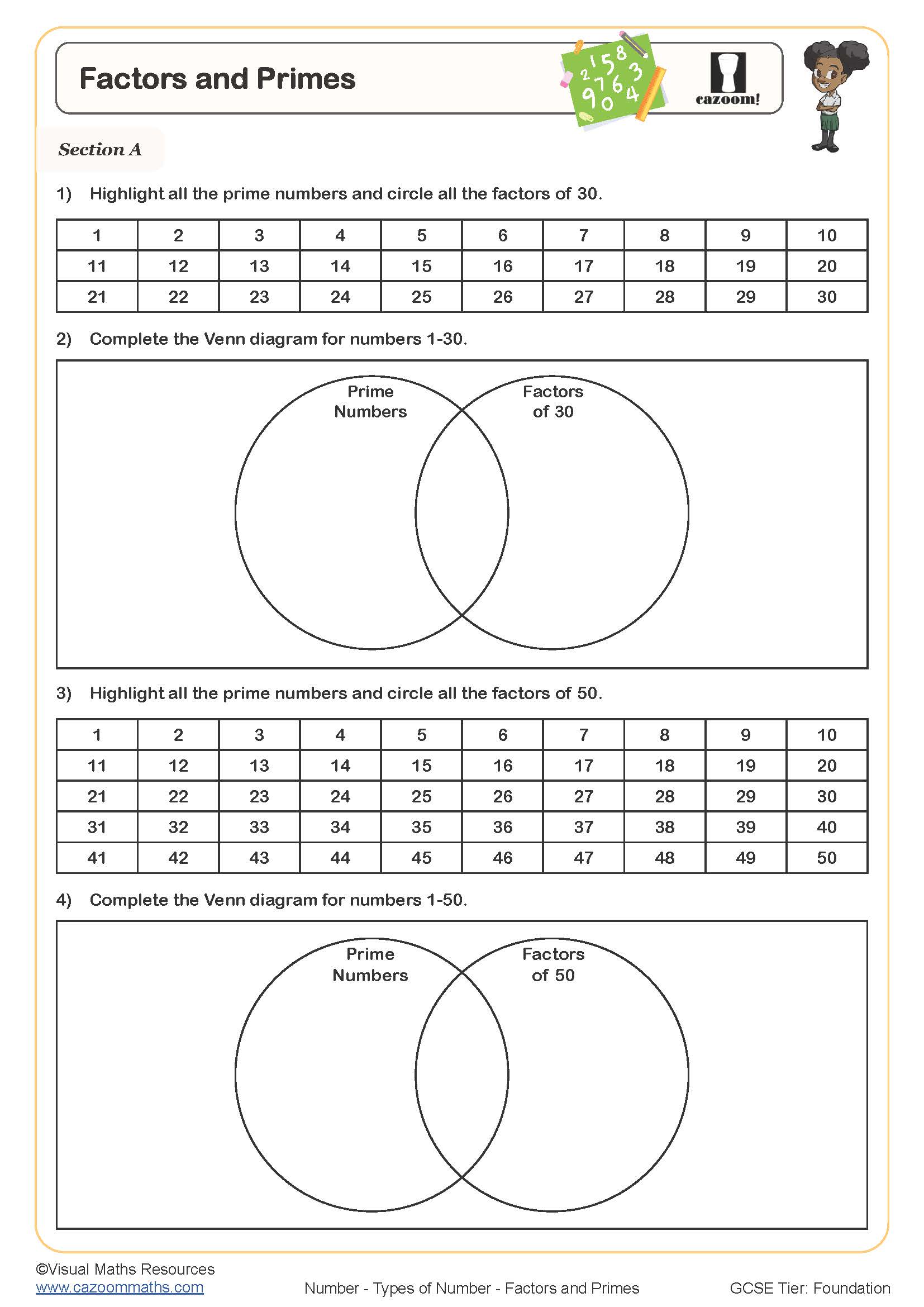
Factors and Primes
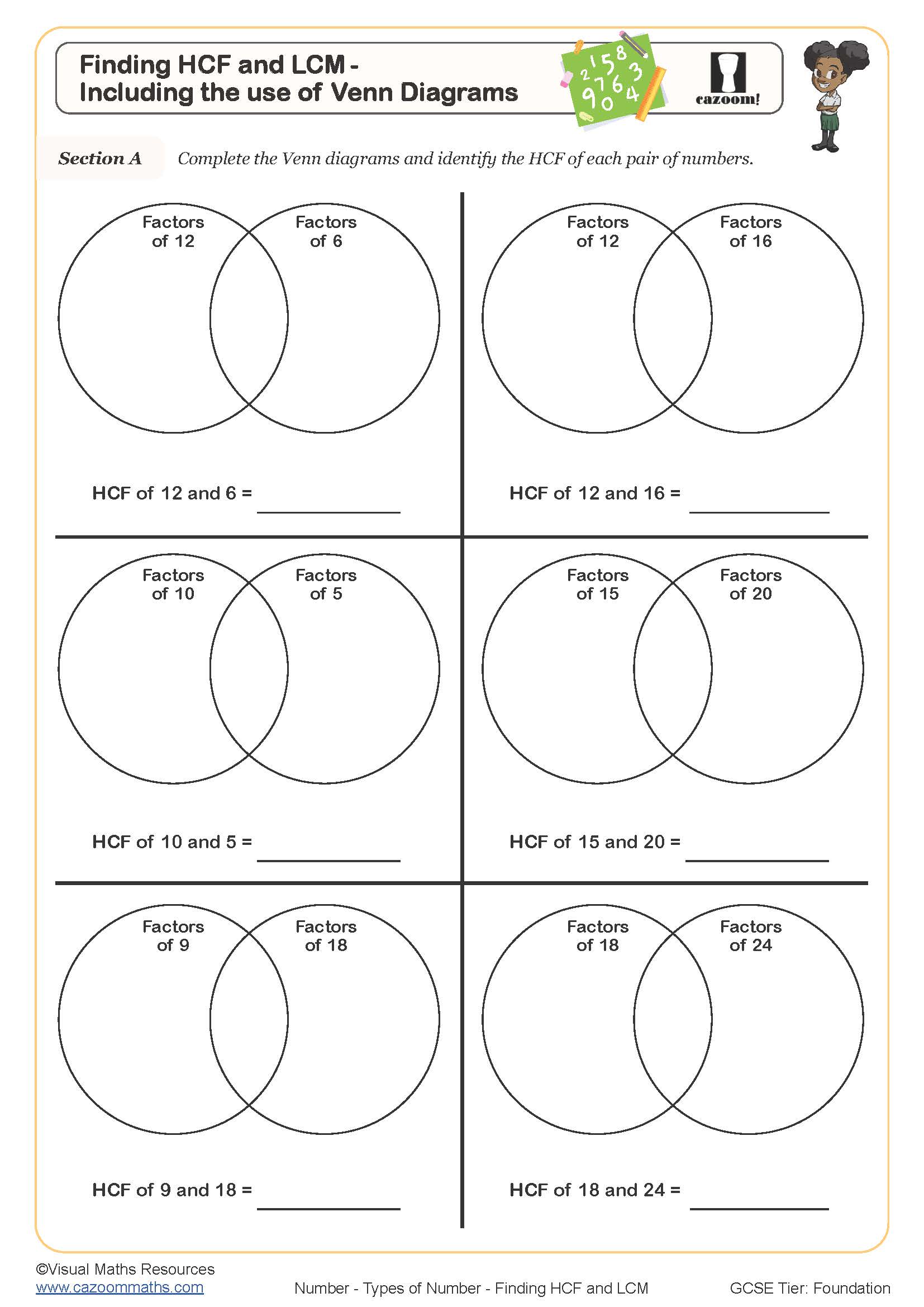
Finding HCF and LCM - Including the Use of Venn Diagrams
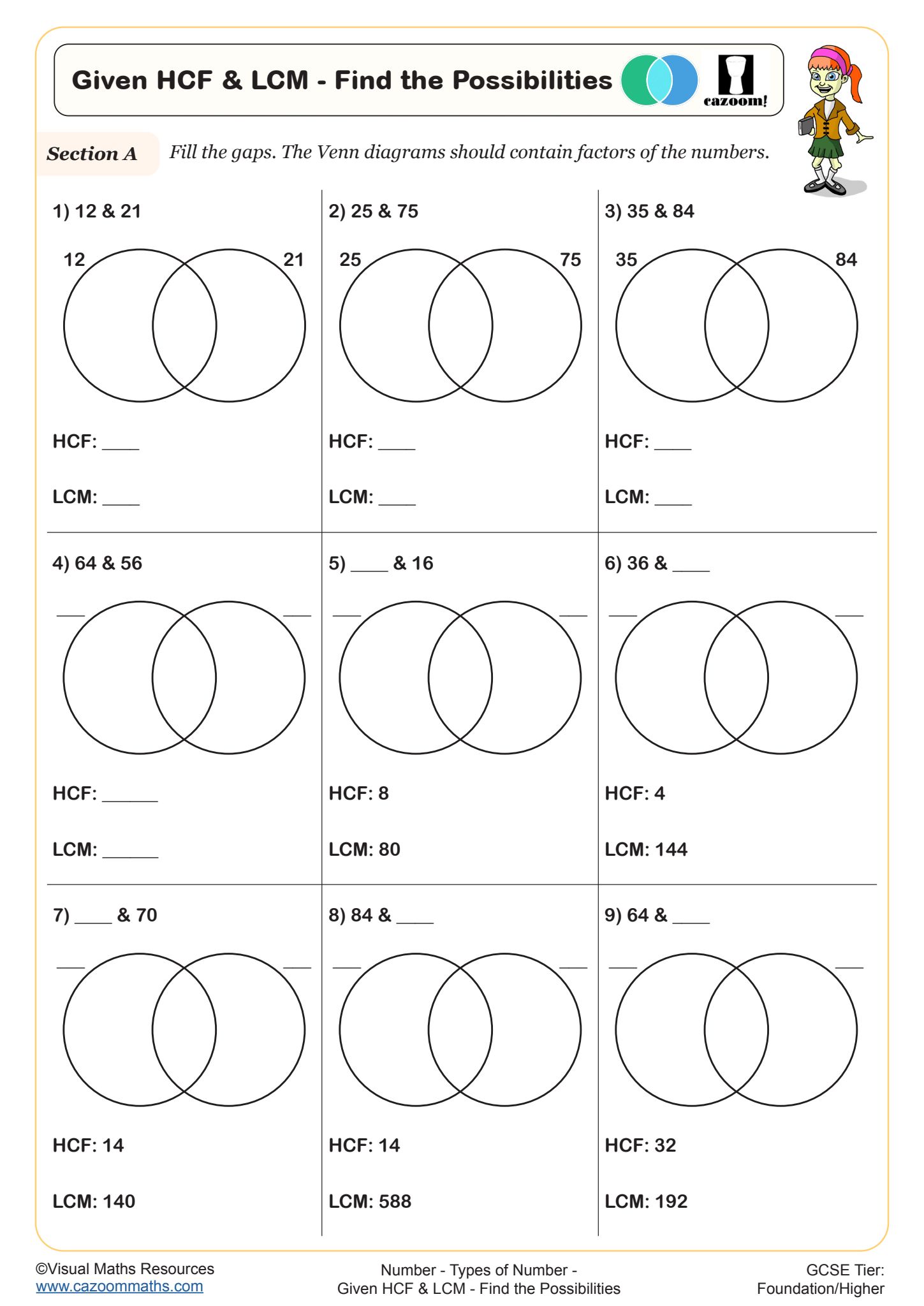
Given HCF & LCM - Find Possible Numbers
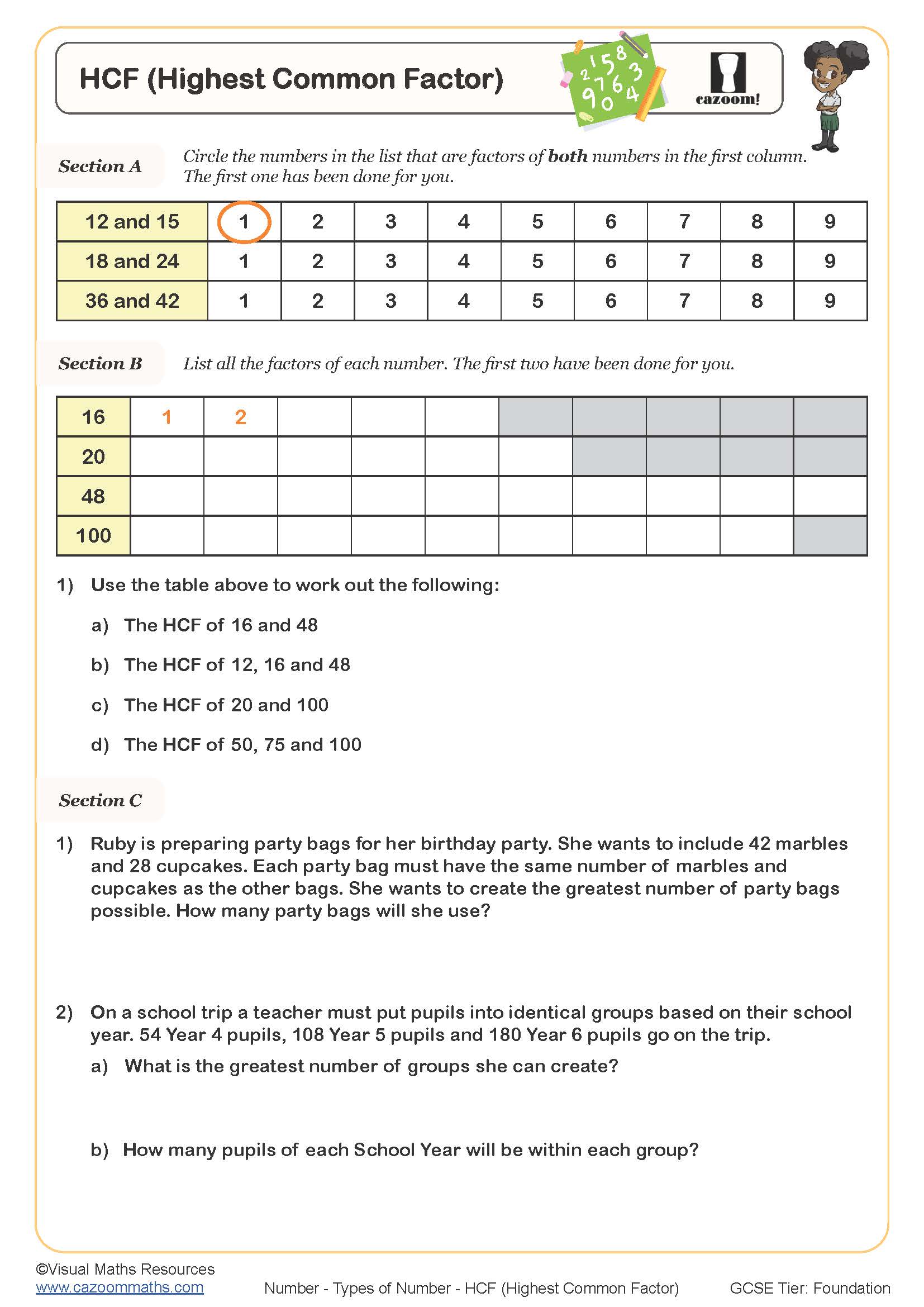
Highest Common Factor
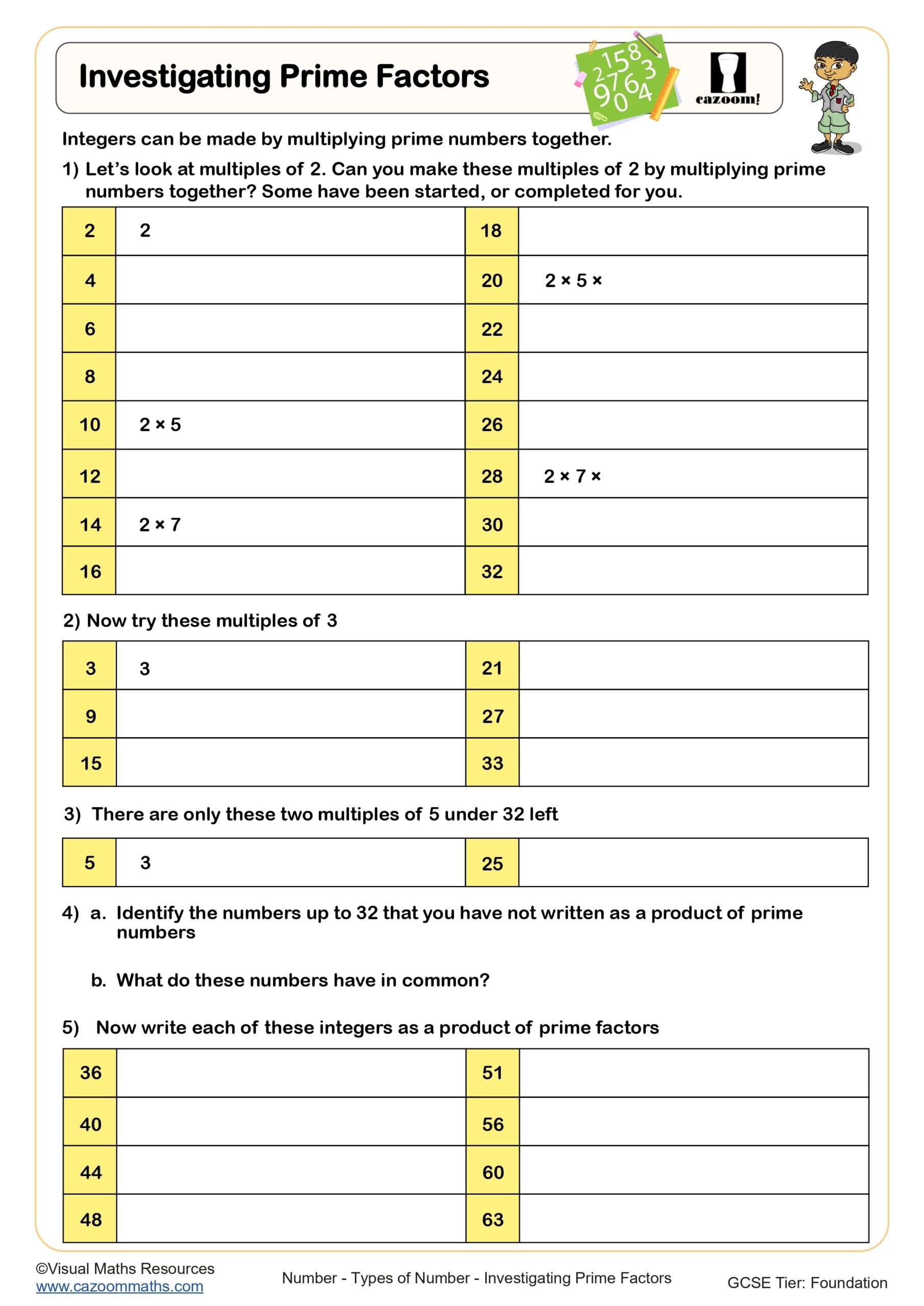
Investigating Prime Factors
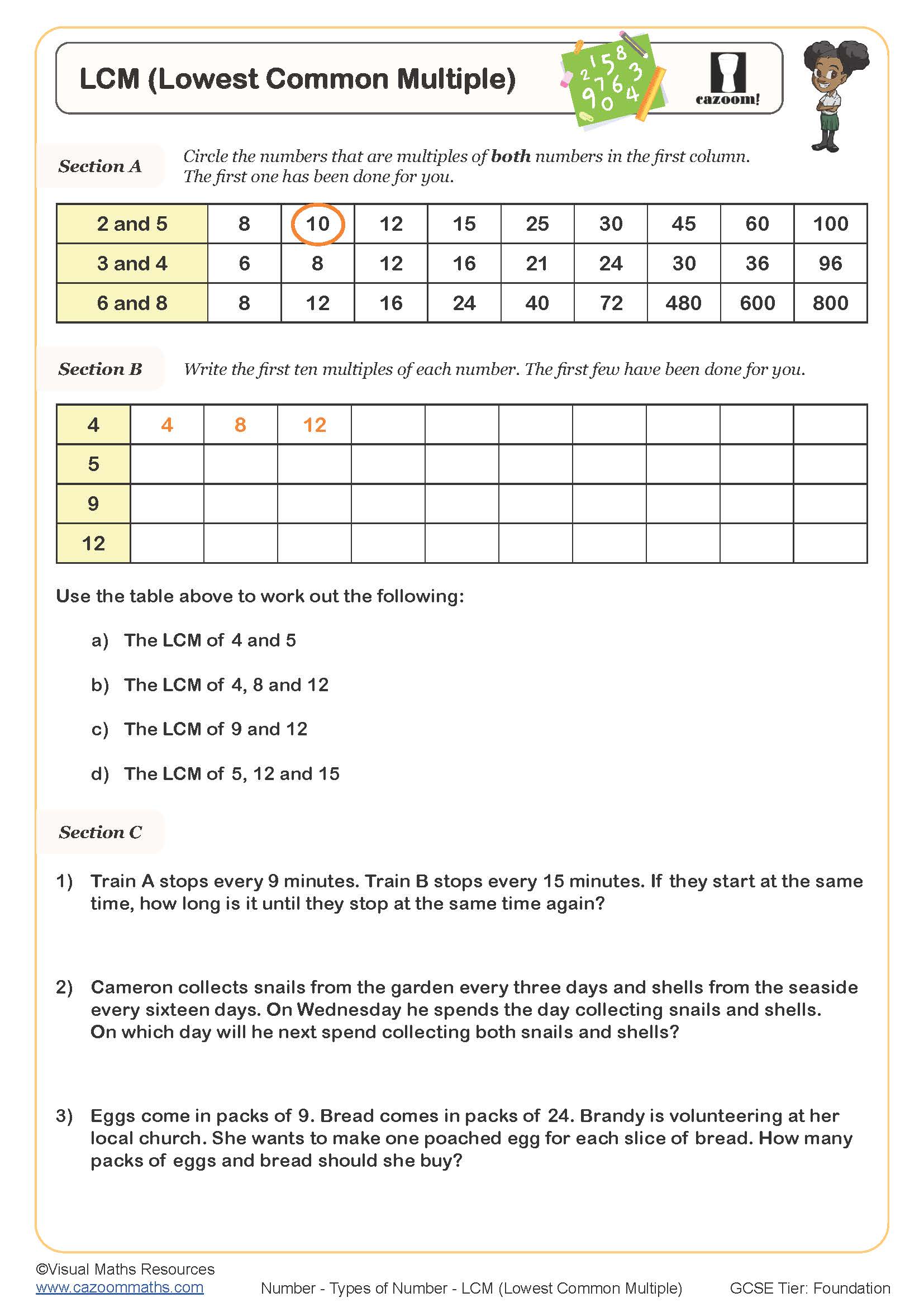
Lowest Common Multiple
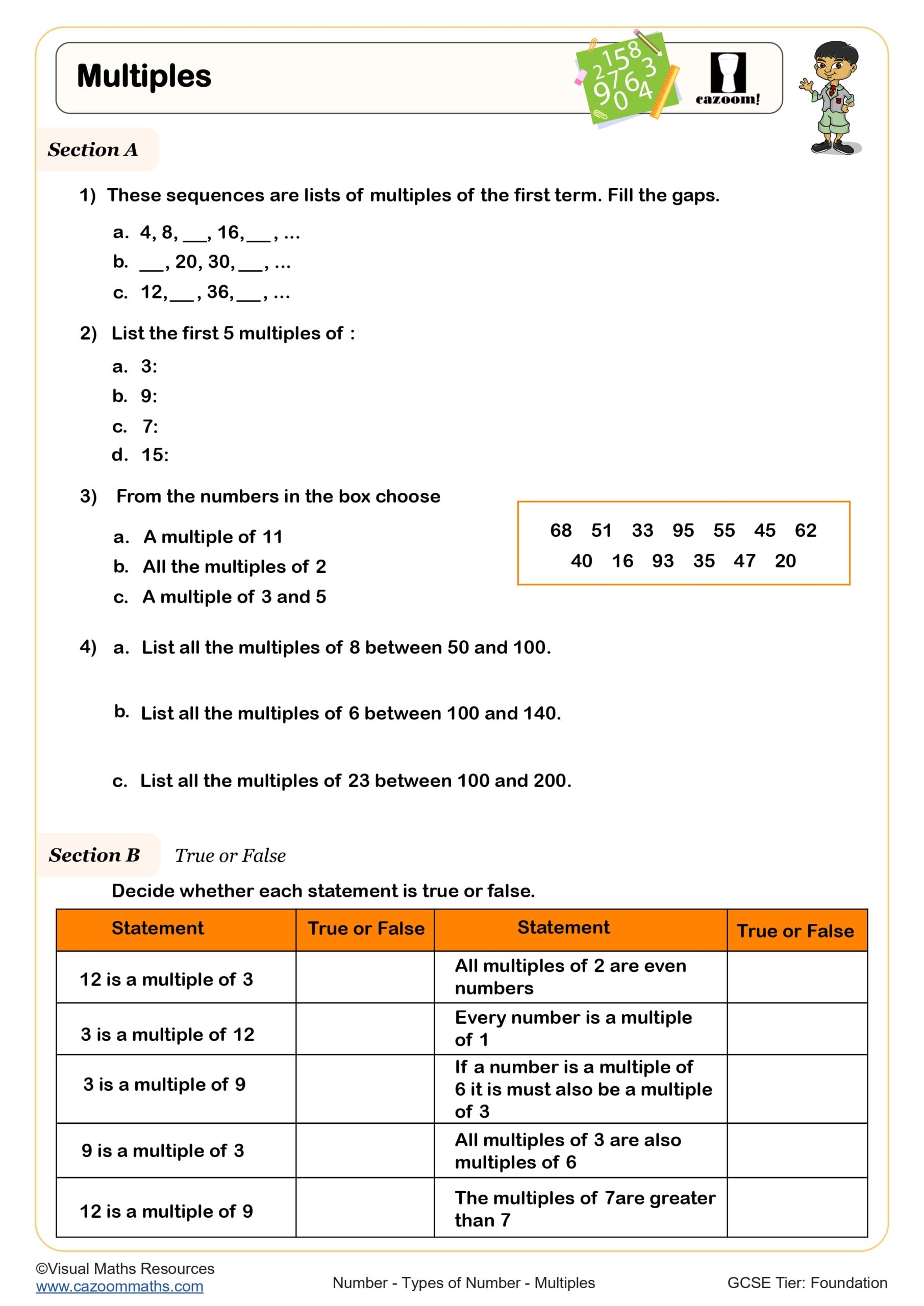
Multiples
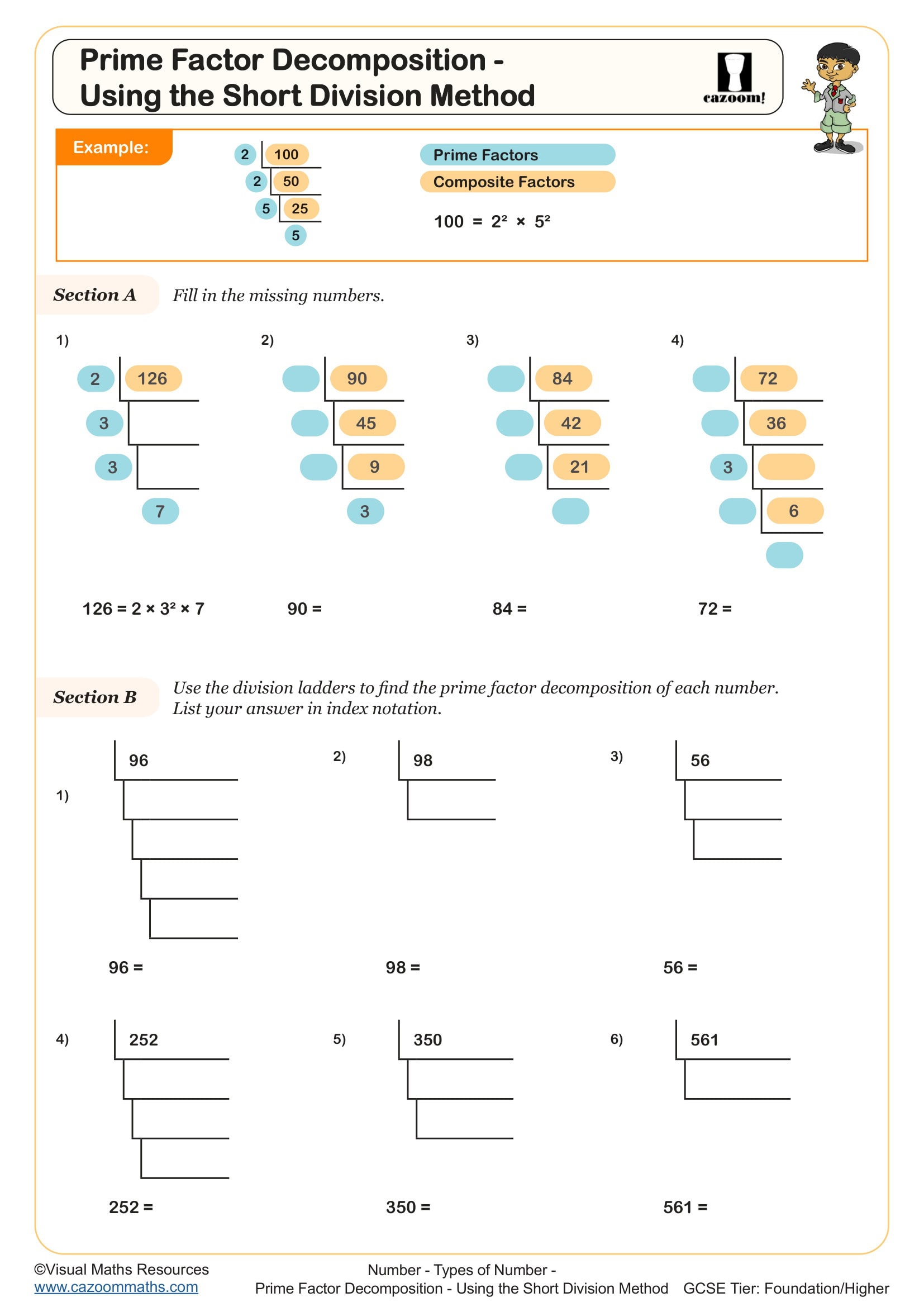
Prime Factor Decomposition - Using the Short Division Method
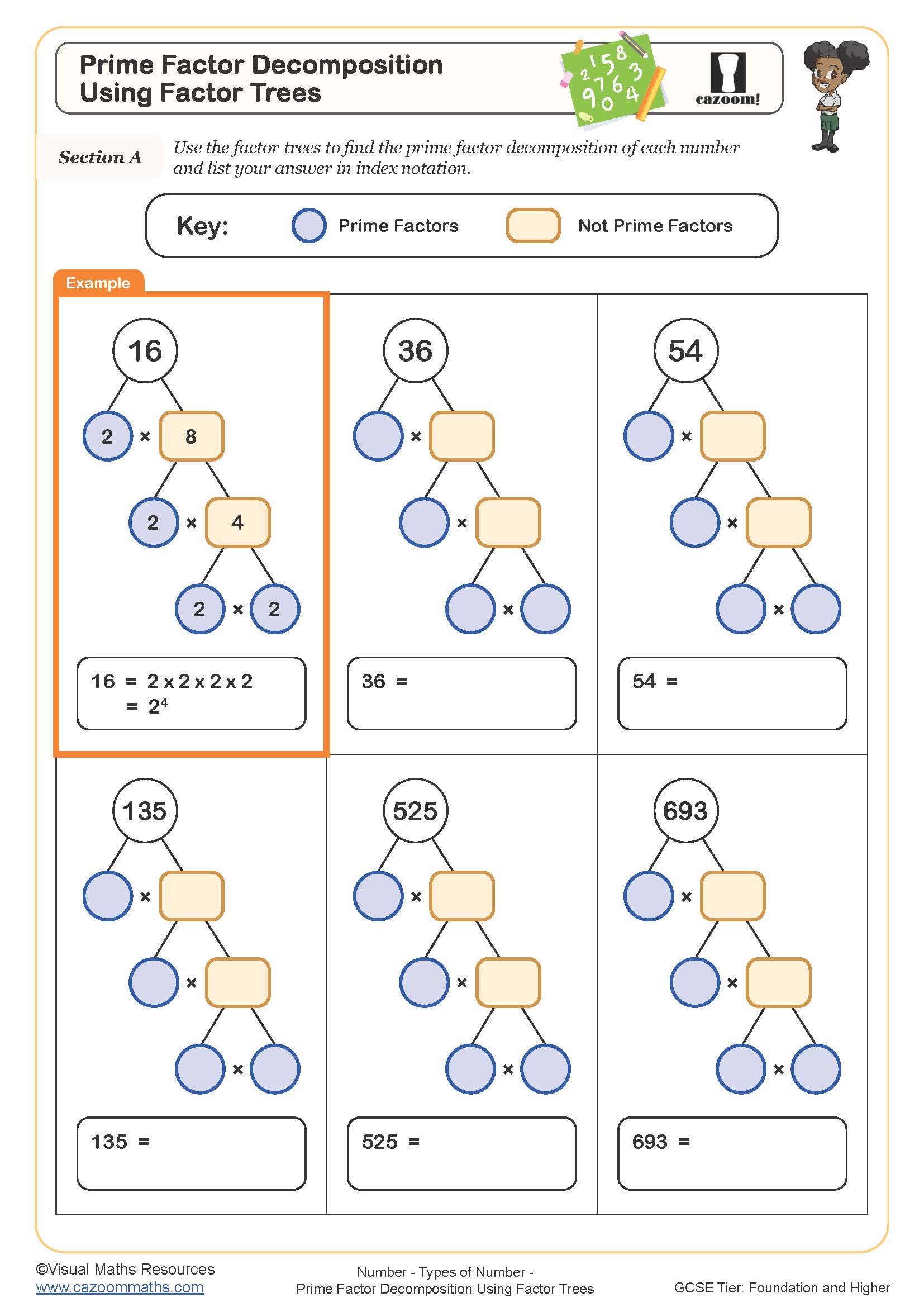
Prime Factor Decomposition Using Factor Trees
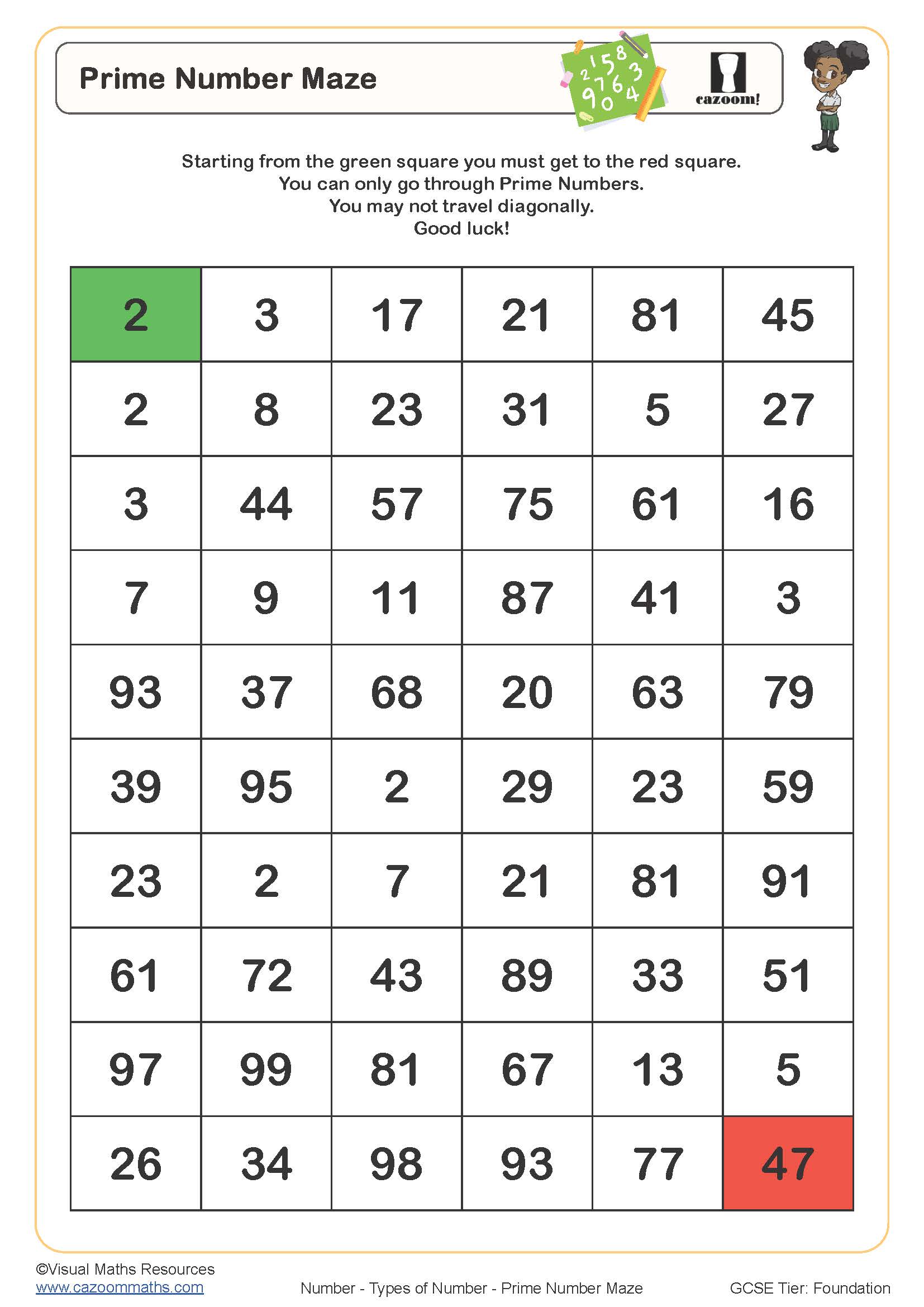
Prime Number Maze
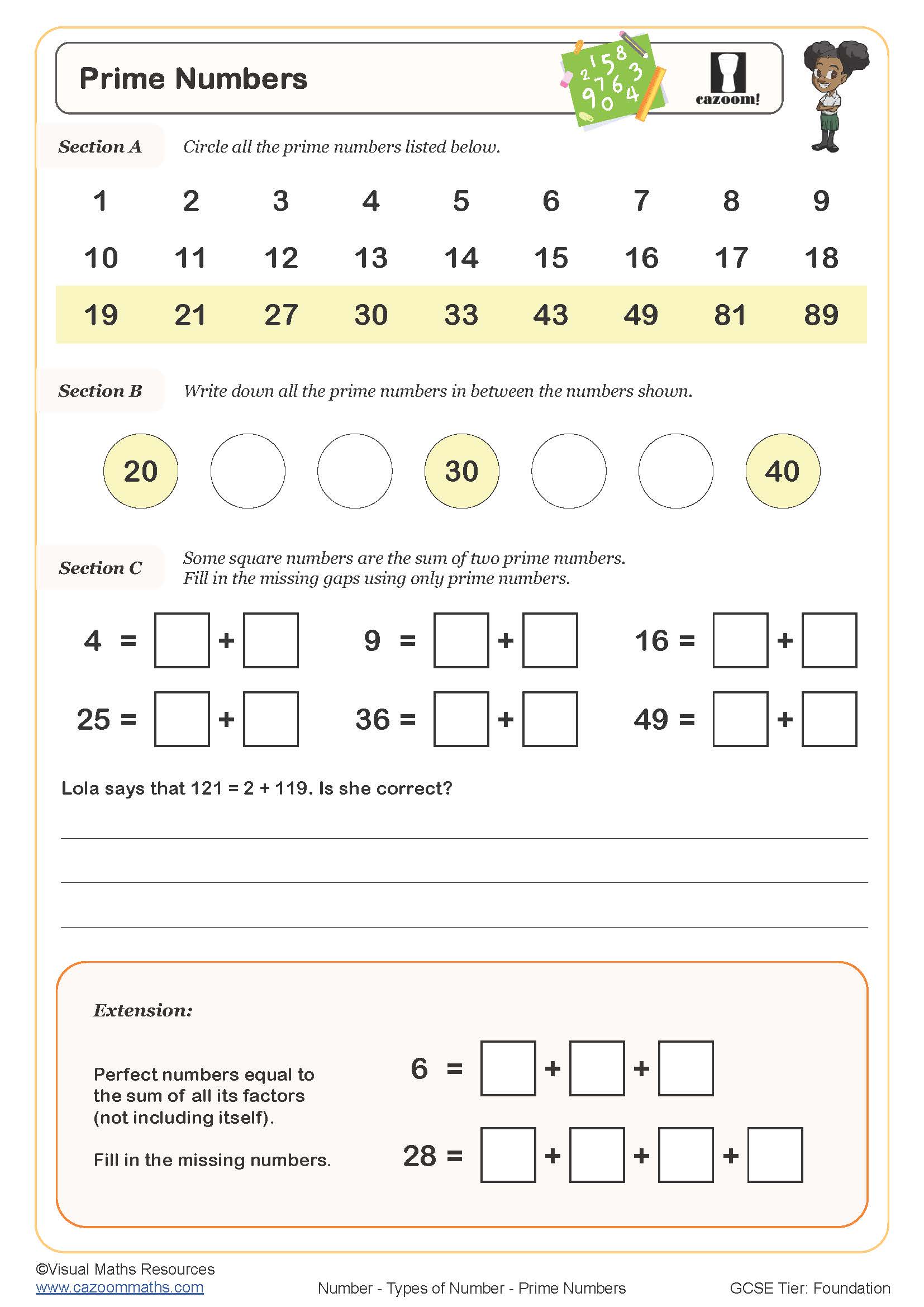
Prime Numbers
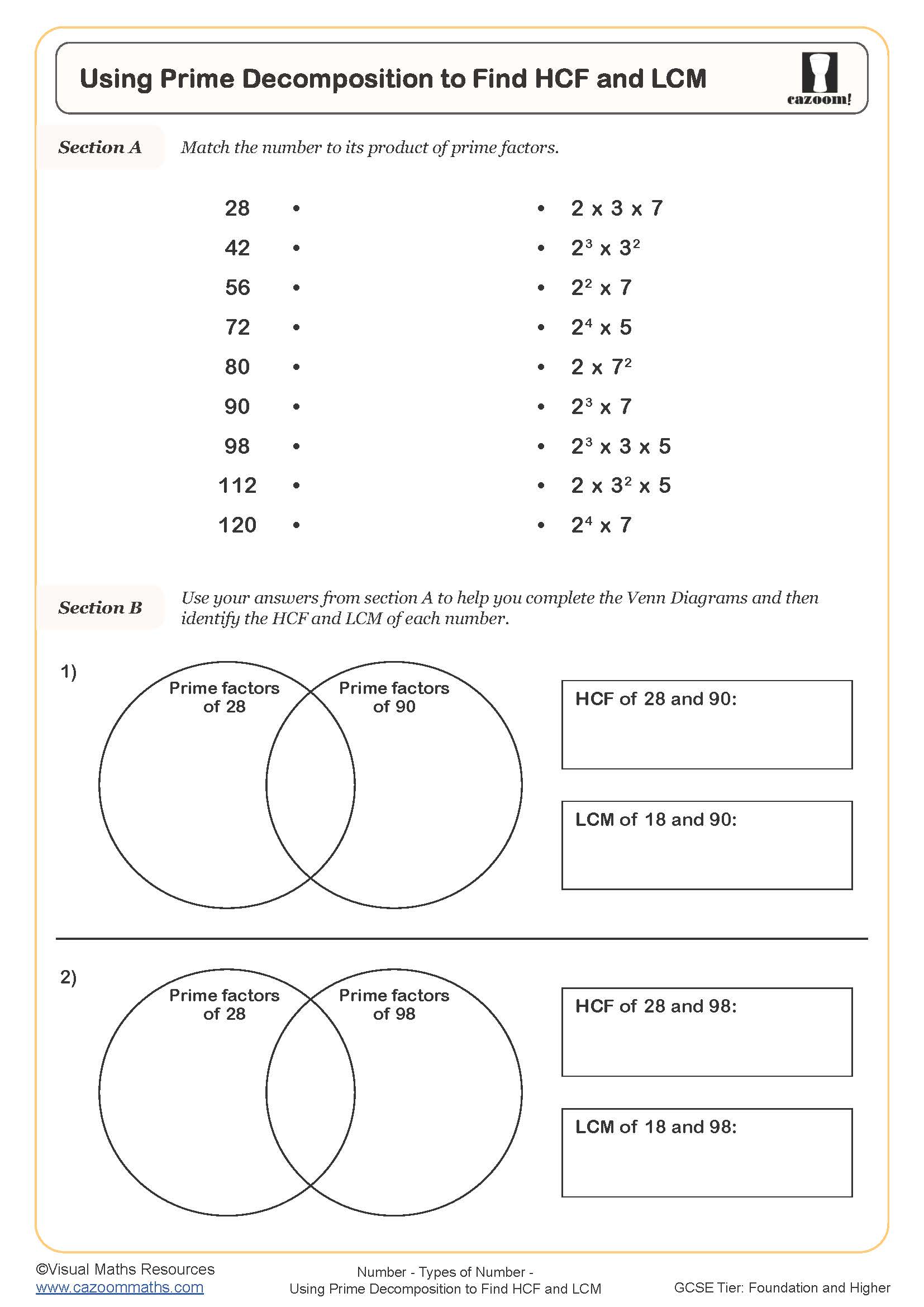
Using Prime Decomposition to Find HCF and LCM (A)
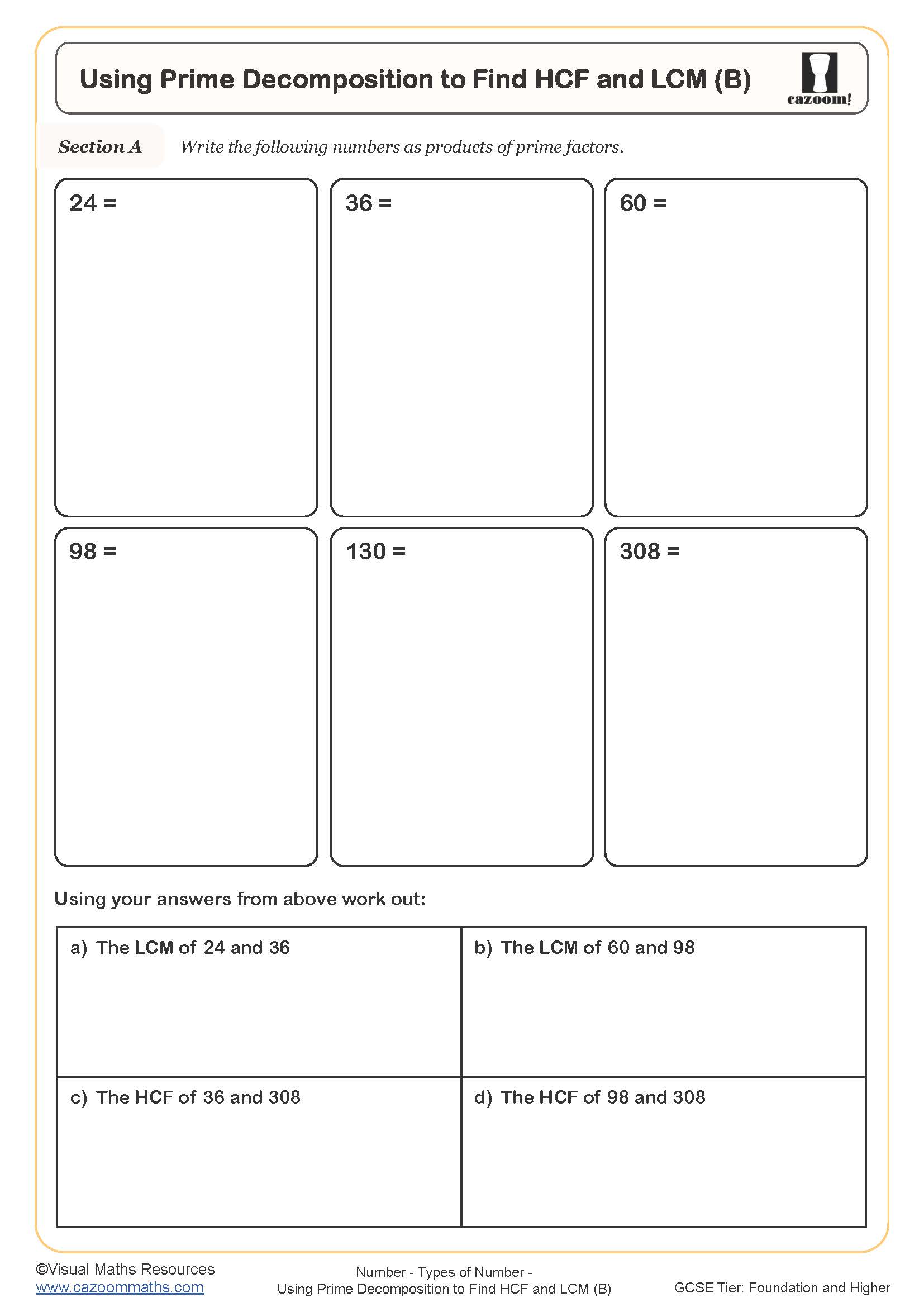
Using Prime Decomposition to Find HCF and LCM (B)
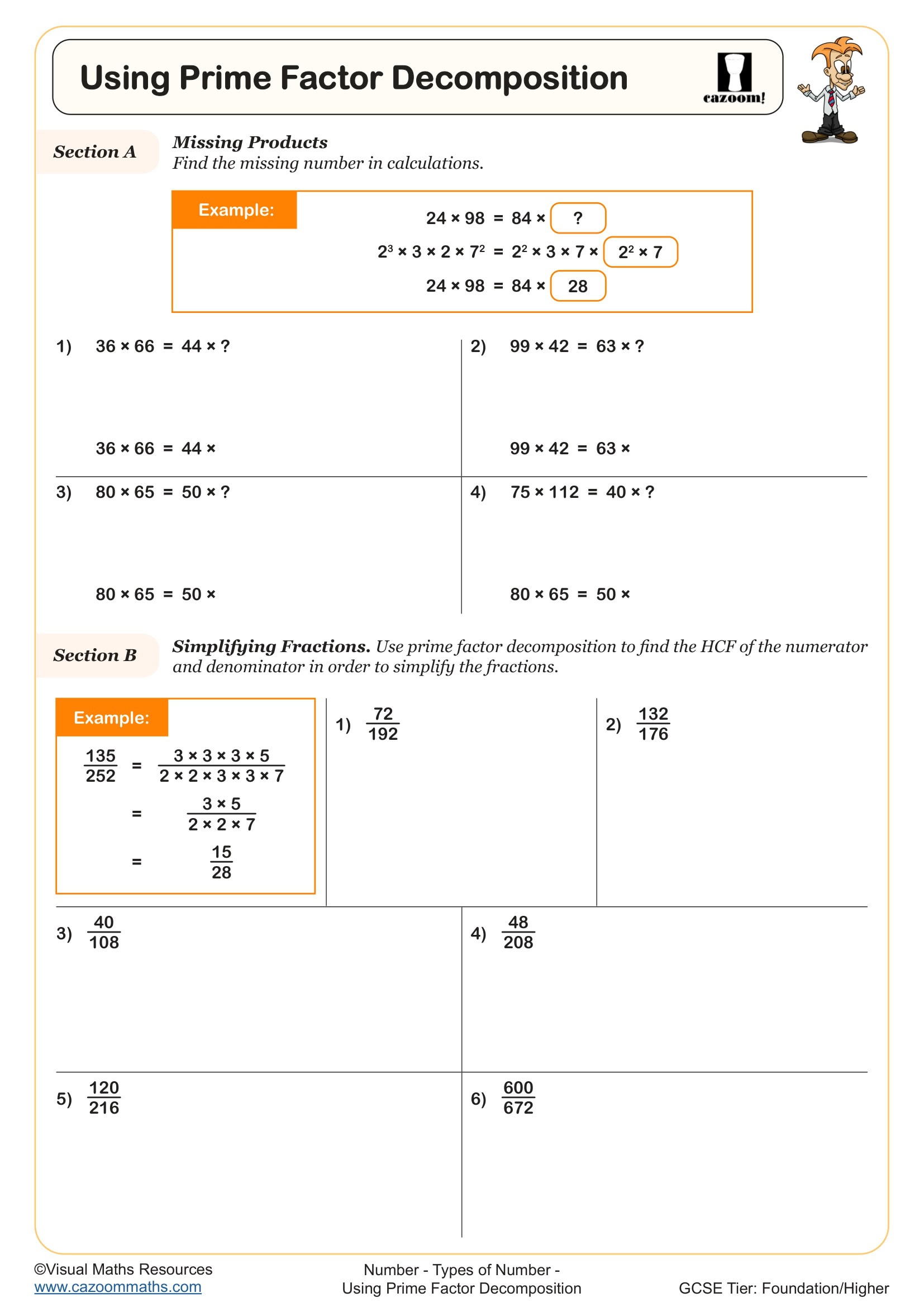
Using Prime Factor Decomposition
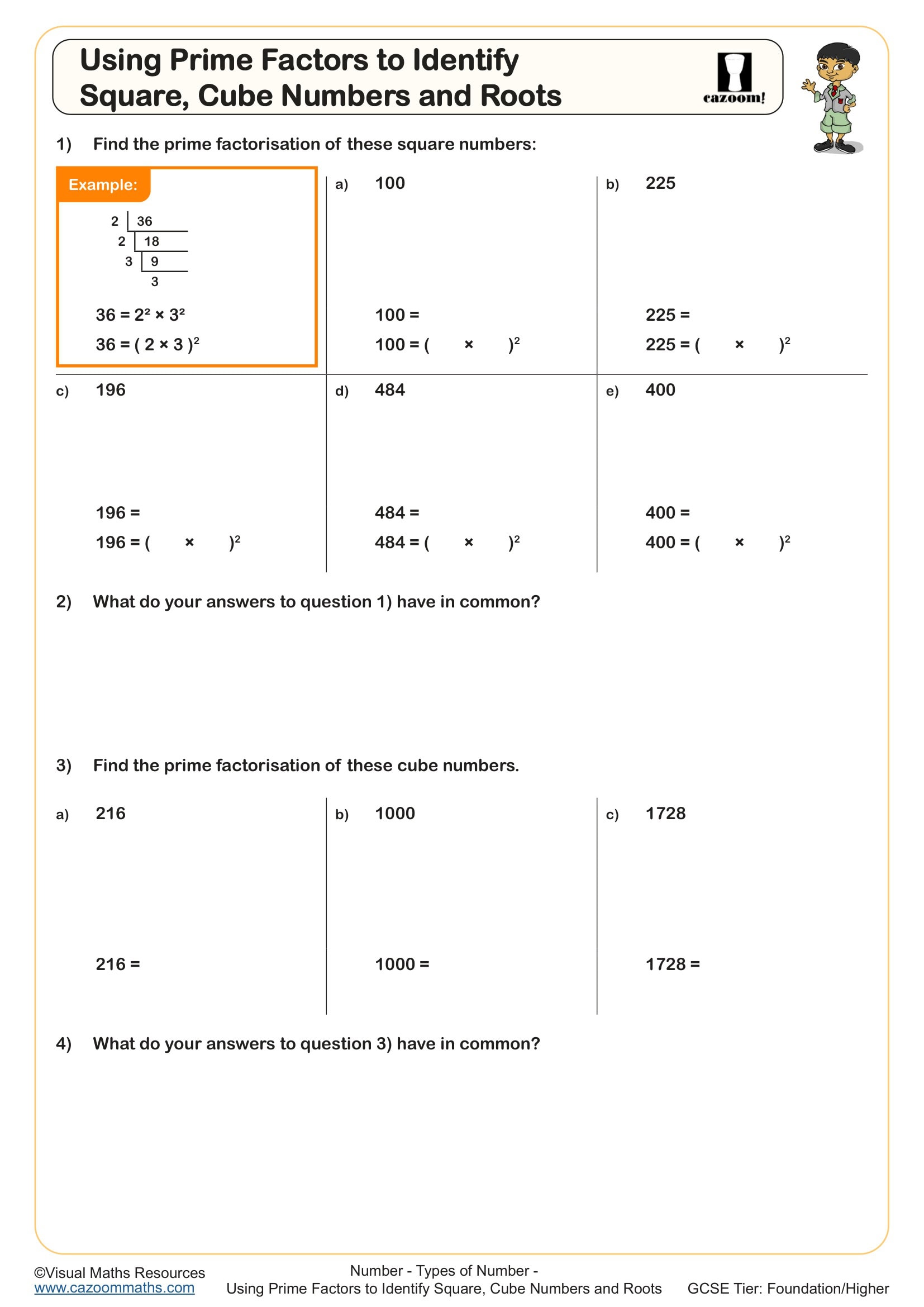
Using Prime Factors to Identify Square, Cube Numbers and Roots
All worksheets are created by the team of experienced teachers at Cazoom Maths.
What are the different types of numbers in KS3 maths?
At KS3, students learn to classify numbers into categories including natural numbers (counting numbers), integers (positive and negative whole numbers), rational numbers (fractions and decimals that terminate or recur), irrational numbers (such as π and √2), prime numbers, composite numbers, square numbers, cube numbers, triangular numbers, and Fibonacci sequences. The National Curriculum expects Year 7 and Year 8 students to become fluent with these classifications, as they form the vocabulary needed for algebraic reasoning and higher-level problem-solving.
Students often lose marks in assessments when they misidentify 1 as a prime number or fail to recognise that all integers are rational numbers. Teachers observe that concrete examples help: asking students whether 0.333... is rational (yes, because it equals 1/3) or whether √9 is irrational (no, because it simplifies to 3) clarifies the definitions through classification tasks that require justification rather than simple recall.
Which year groups cover types of number worksheets?
These worksheets are designed for Year 7, Year 8 and Year 9 students following the KS3 National Curriculum. Types of number typically introduces formal classification in Year 7, where students build on primary understanding of multiples and factors to explore prime numbers, square numbers and the relationships between different number sets. The topic requires regular revisiting as students deepen their number sense and prepare for algebraic manipulation.
Progression across KS3 moves from identifying and listing number types in Year 7 towards applying properties to solve problems in Year 8 and Year 9. For instance, Year 7 students might list the factors of 24, whilst Year 9 students use prime factorisation to find the highest common factor of algebraic expressions. The worksheets reflect this progression through increasingly complex problem contexts, including multi-step questions that combine several number classifications within a single investigation.
Why do students need to understand prime factorisation?
Prime factorisation expresses any integer as a product of prime numbers, written in index form such as 72 = 2³ × 3². This technique provides the most efficient method for finding highest common factors and lowest common multiples, which students need for simplifying fractions, solving ratio problems, and manipulating algebraic fractions at GCSE. Understanding that every composite number has a unique prime factorisation also introduces students to fundamental mathematical structure and proof.
Prime factorisation has direct applications in computer science and data security. Encryption algorithms used for online banking and secure communications rely on the difficulty of factorising very large numbers back into their prime components. When students understand that finding two prime numbers that multiply to give 15 is straightforward, but finding the prime factors of a 200-digit number could take supercomputers years, they see why this pure number theory underpins modern digital security systems they use daily.
How do these worksheets help students master number classification?
The worksheets build understanding through structured practice that moves from identifying single number types to questions requiring students to compare and contrast multiple classifications. Questions typically include Venn diagrams where students sort numbers into overlapping categories, reinforcing that a number can be both square and prime (impossible except for special cases), or both a multiple of 3 and a factor of 36. This approach develops the logical reasoning skills needed for algebraic proof and higher-tier GCSE problem-solving.
Teachers use these resources flexibly across different classroom settings. The answer sheets make them particularly effective for independent revision, allowing students to identify gaps before assessments. Many teachers assign specific worksheets for homework after introducing a new number type, then use different sheets from the collection for starter activities that spiral back to previously taught classifications. The worksheets also work well in paired activities where students check each other's classifications and discuss disagreements, strengthening mathematical vocabulary and justification skills.