KS4 Probability Worksheets
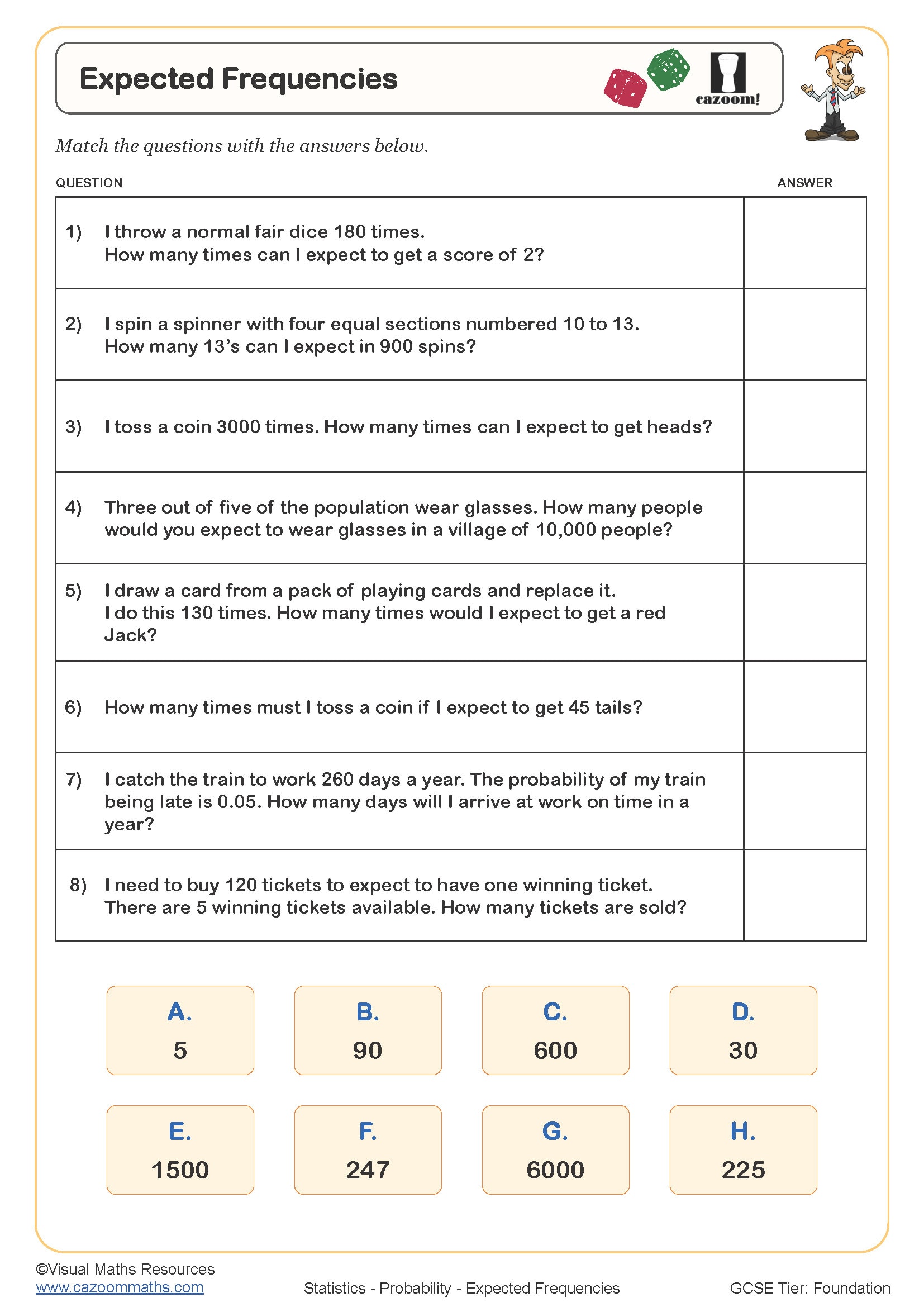
Expected Frequencies
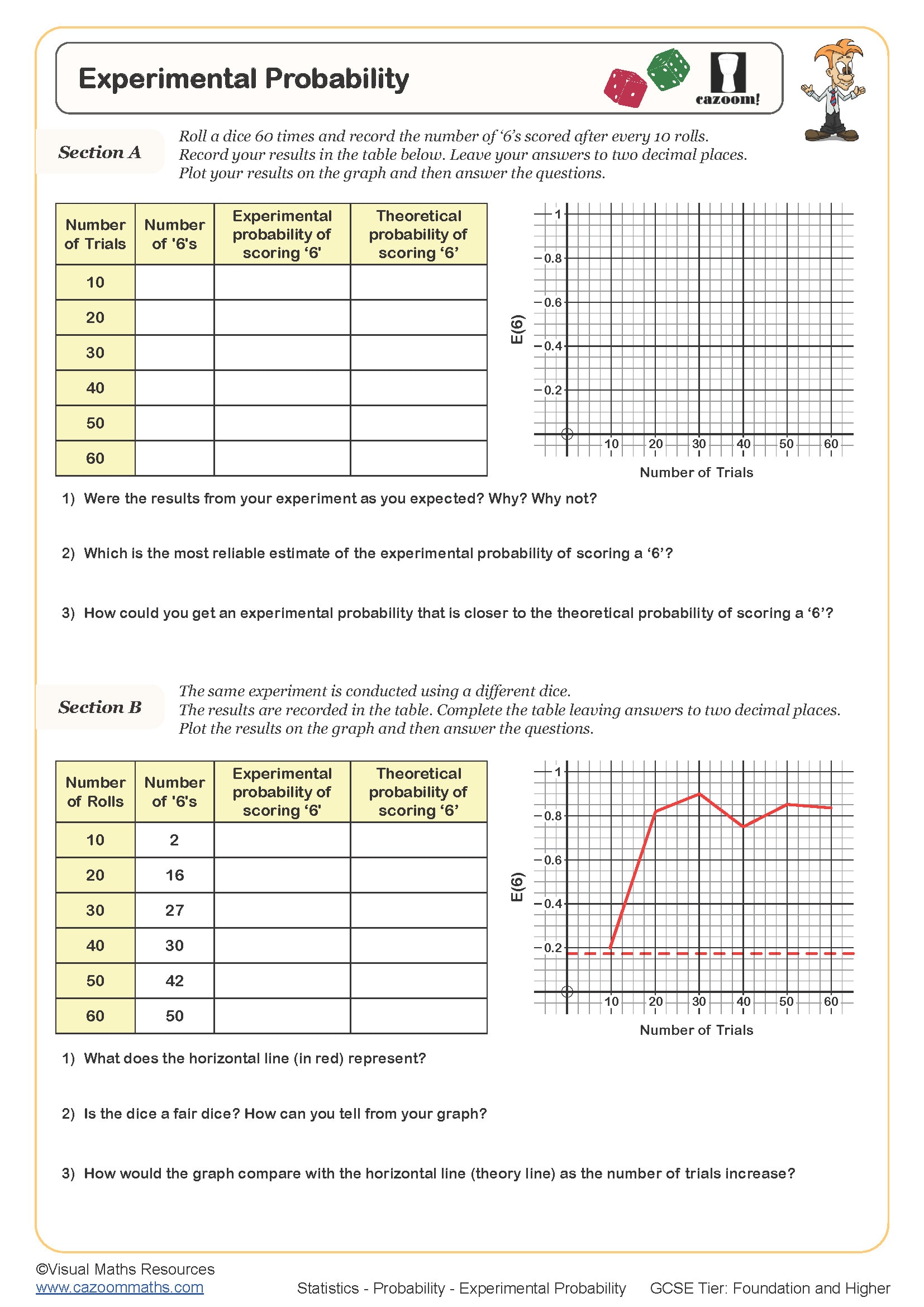
Experimental Probability
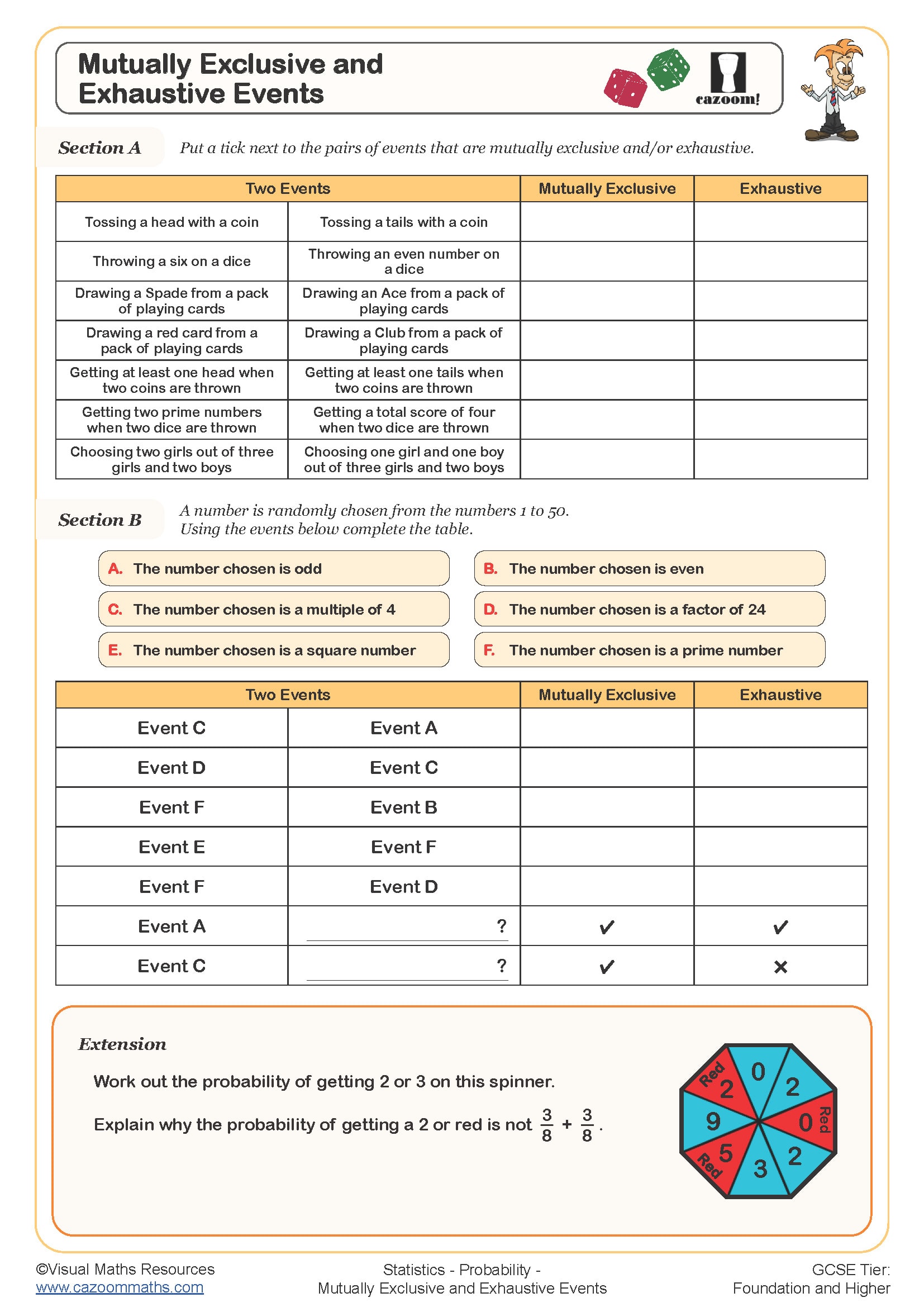
Mutually Exclusive and Exhaustive Events
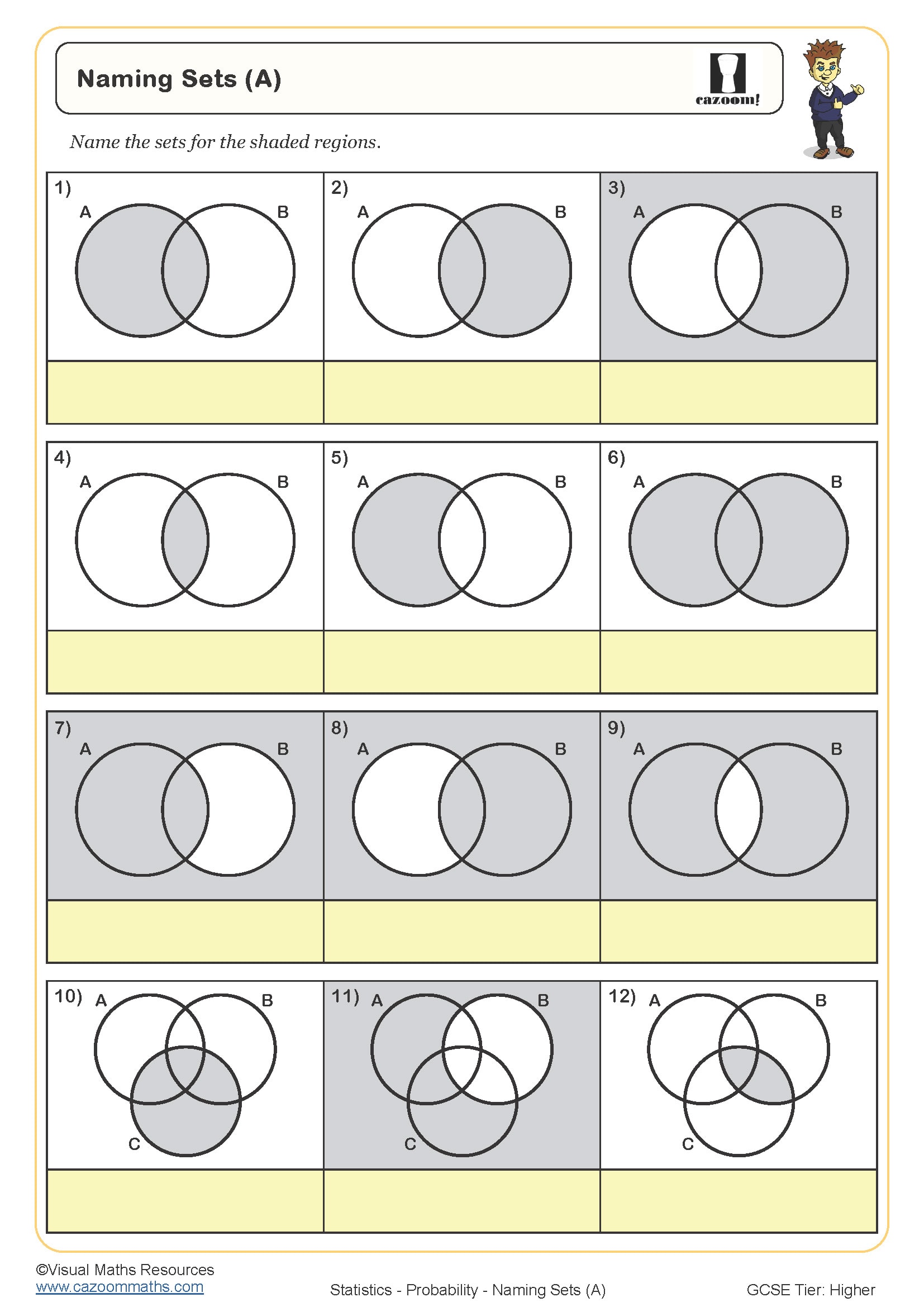
Naming Sets (A)
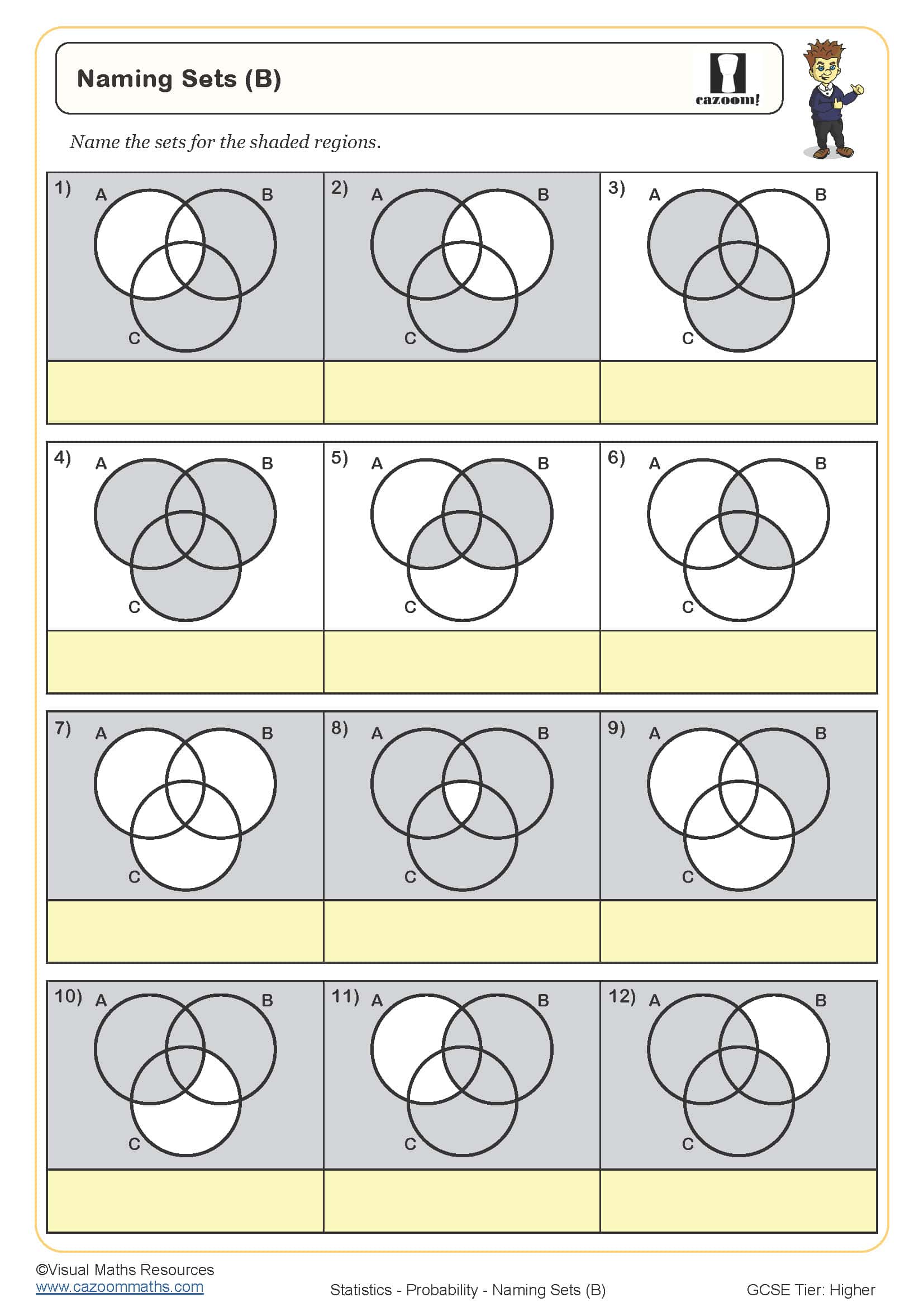
Naming Sets (B)
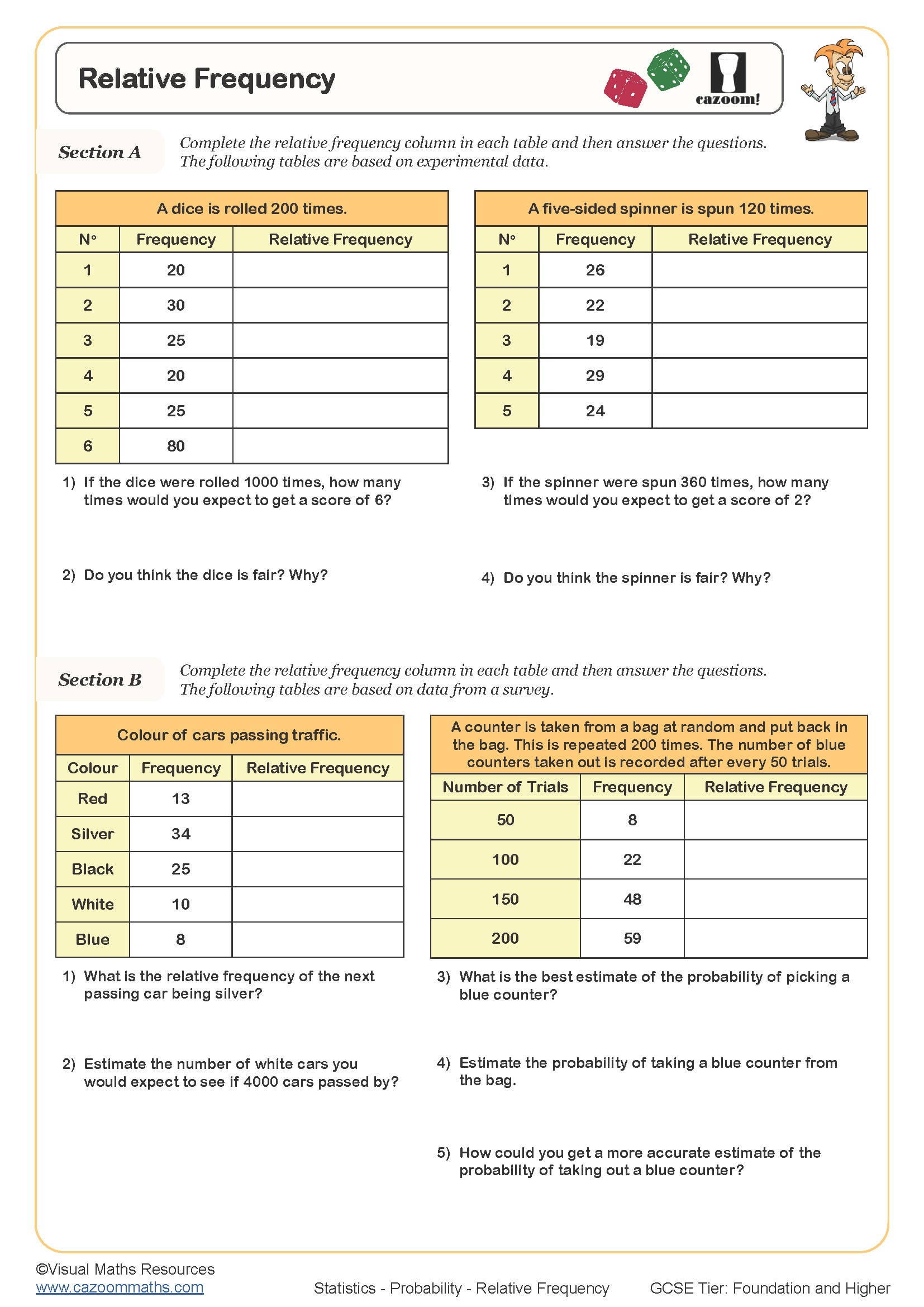
Relative Frequency
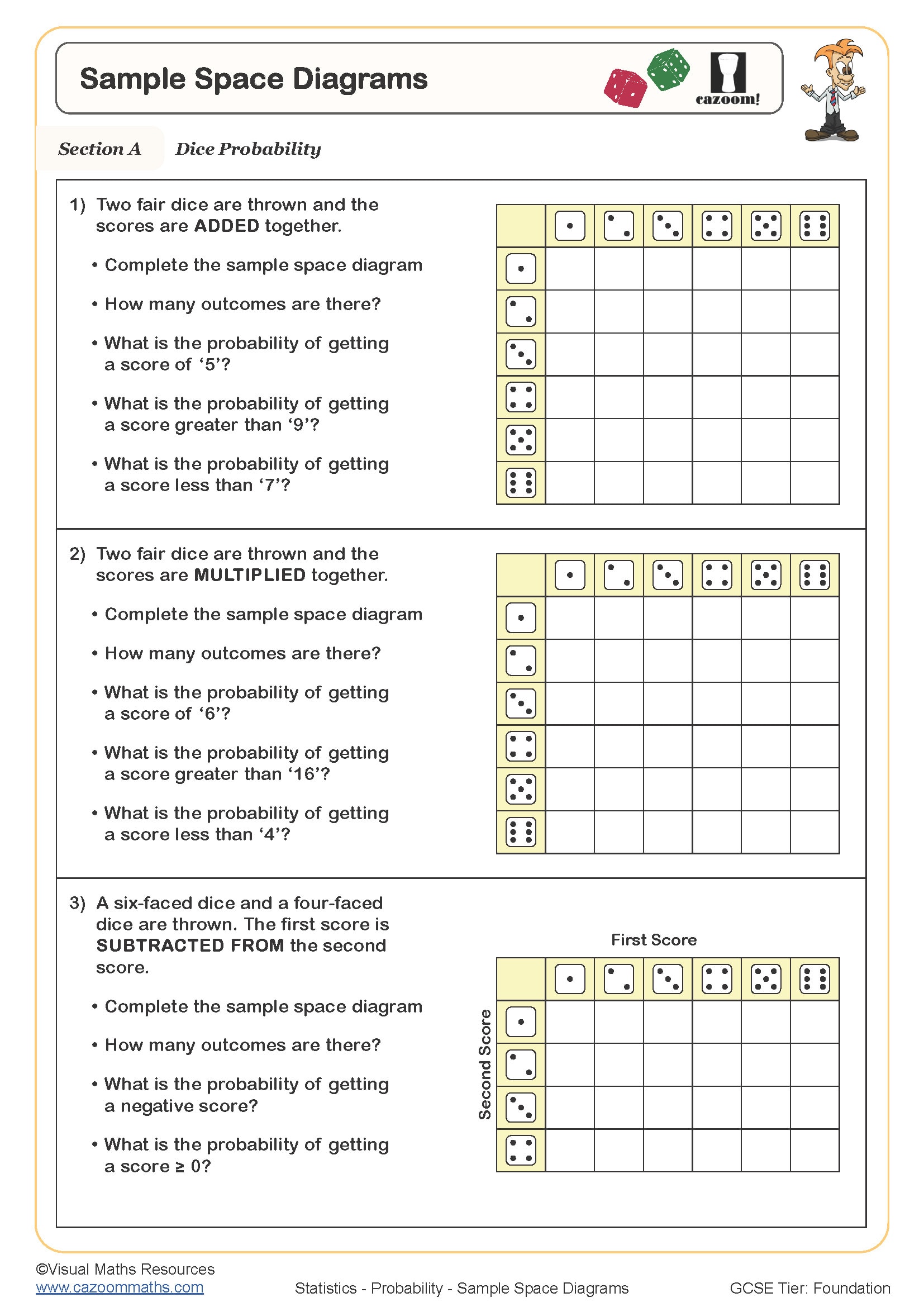
Sample Space Diagrams
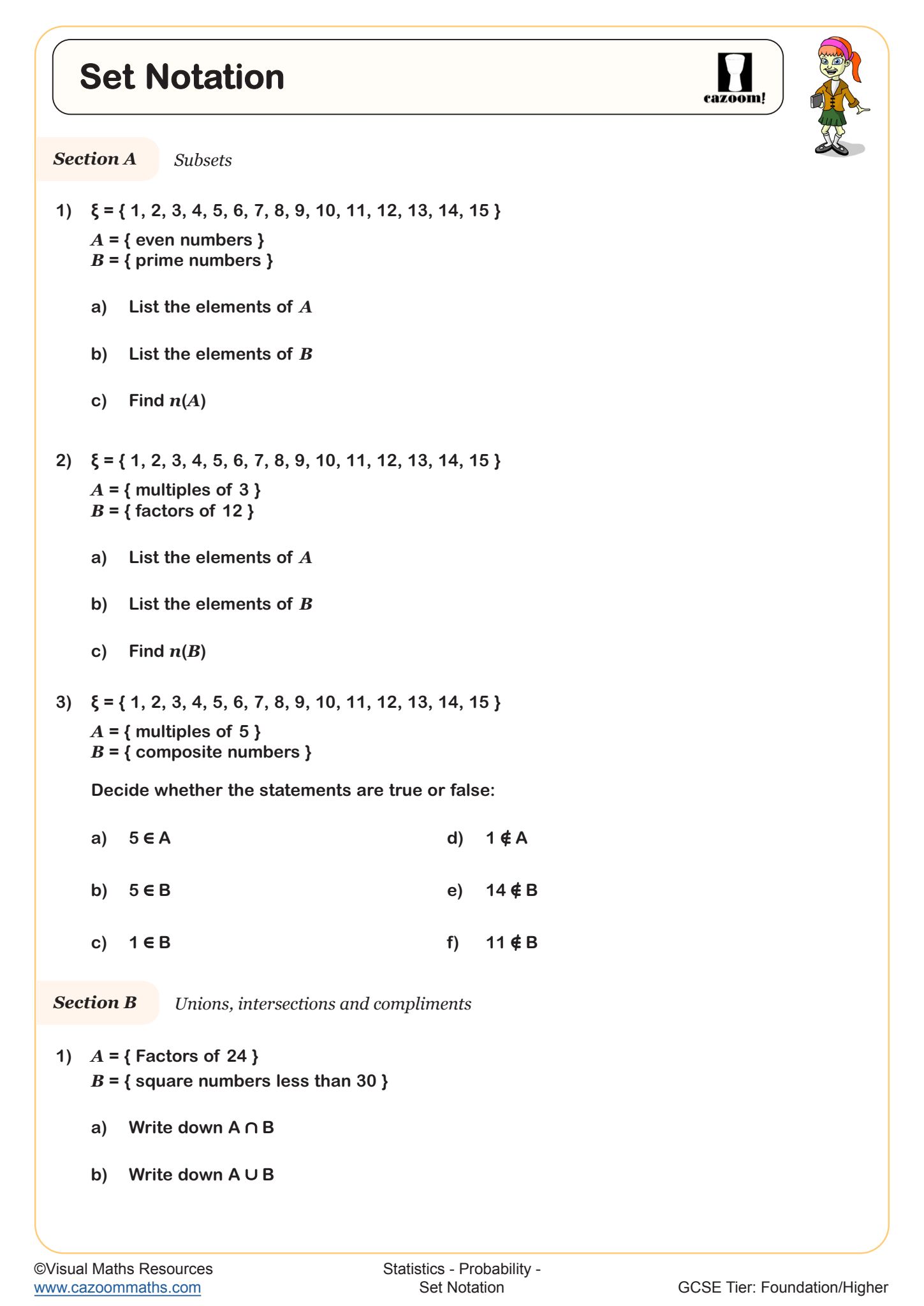
Set Notation
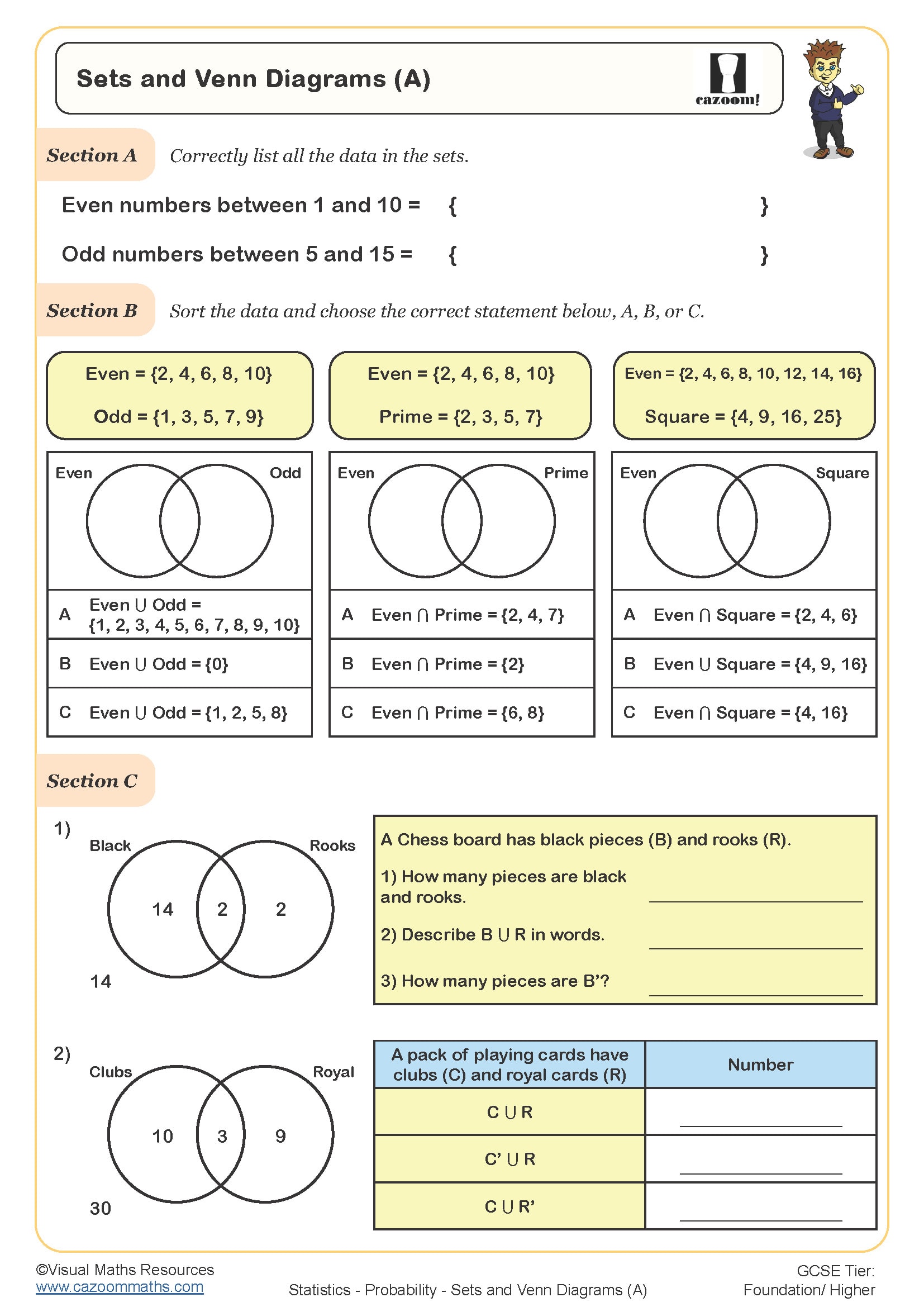
Sets and Venn Diagrams (A)
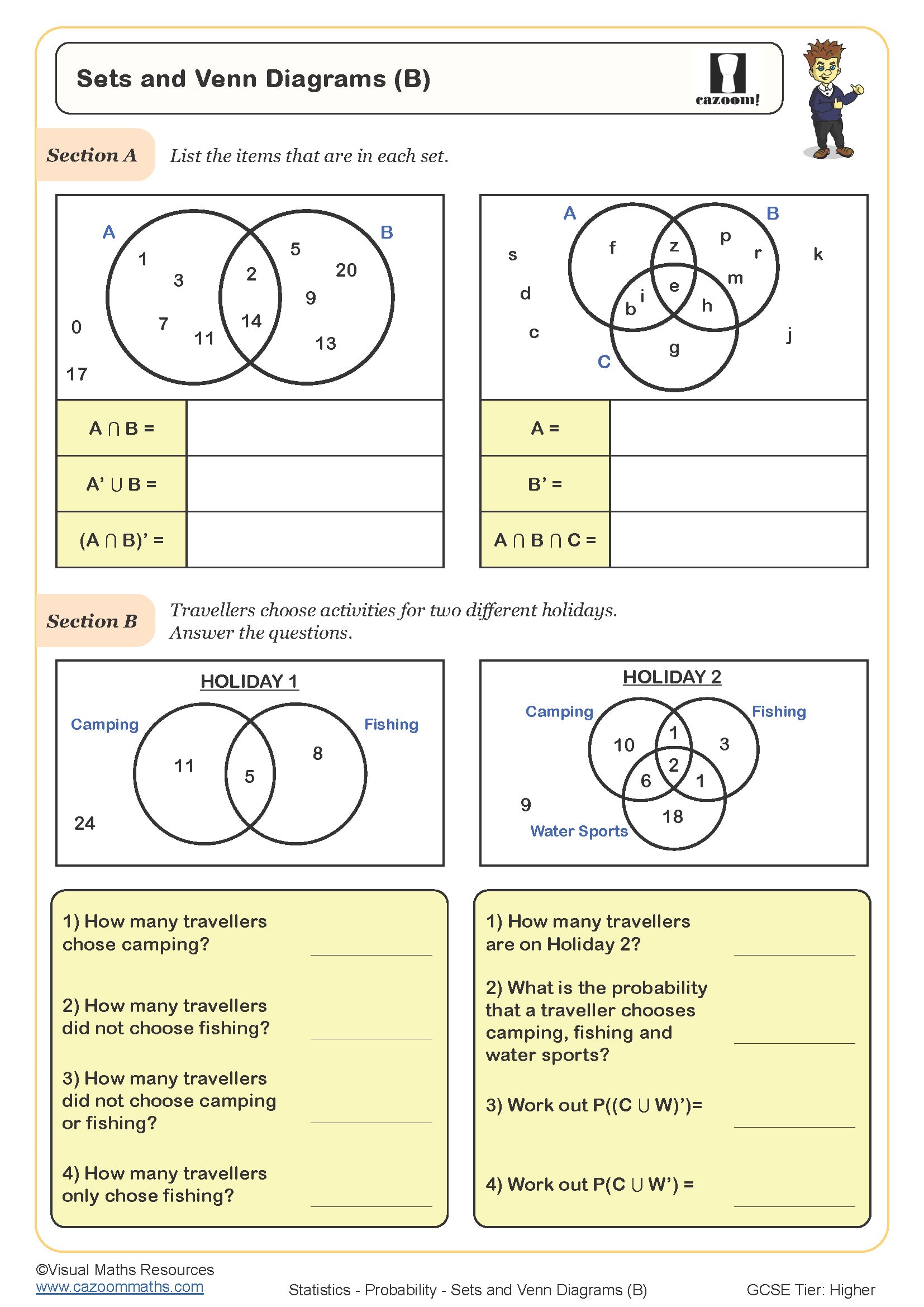
Sets and Venn Diagrams (B)
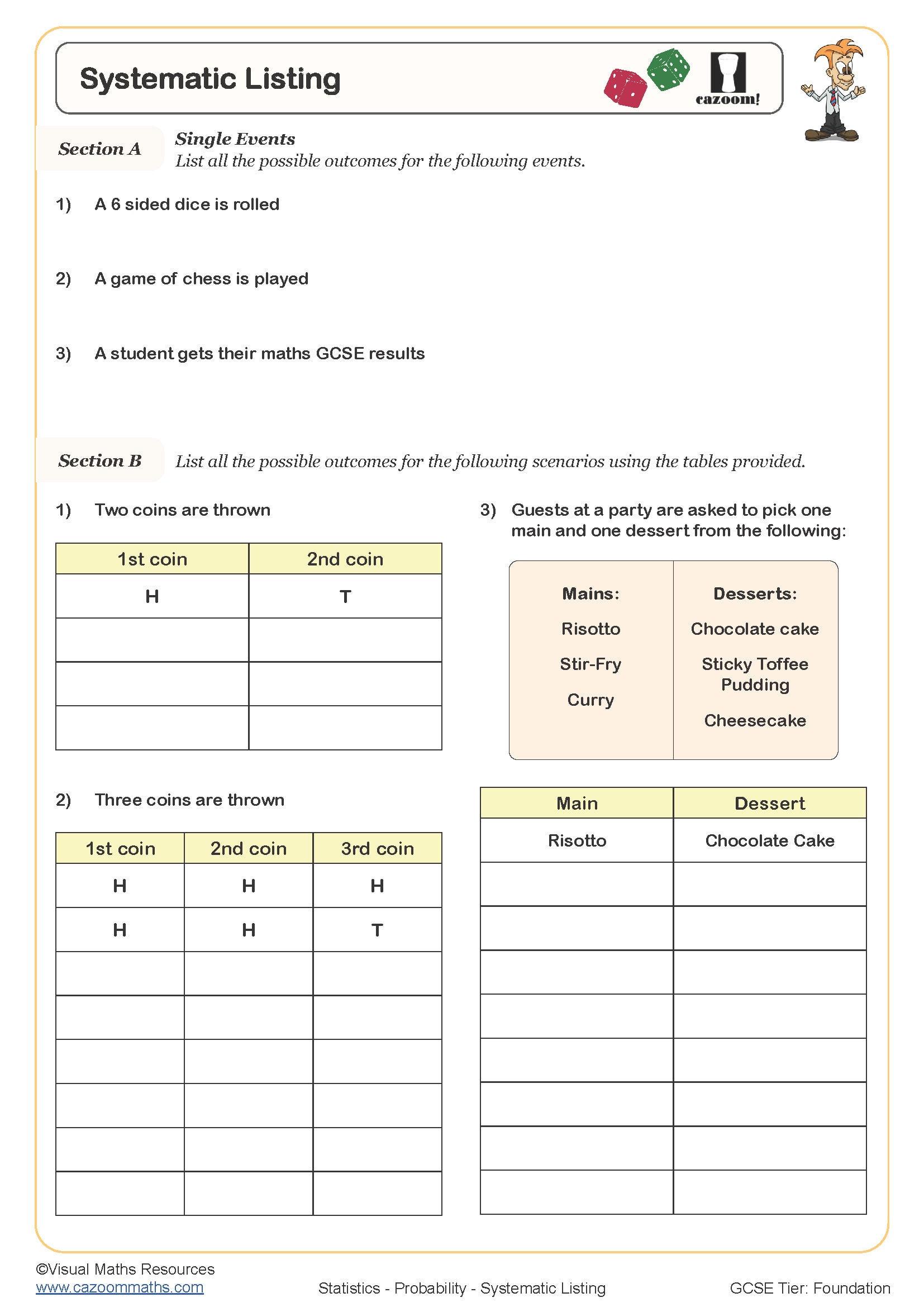
Systematic Listing
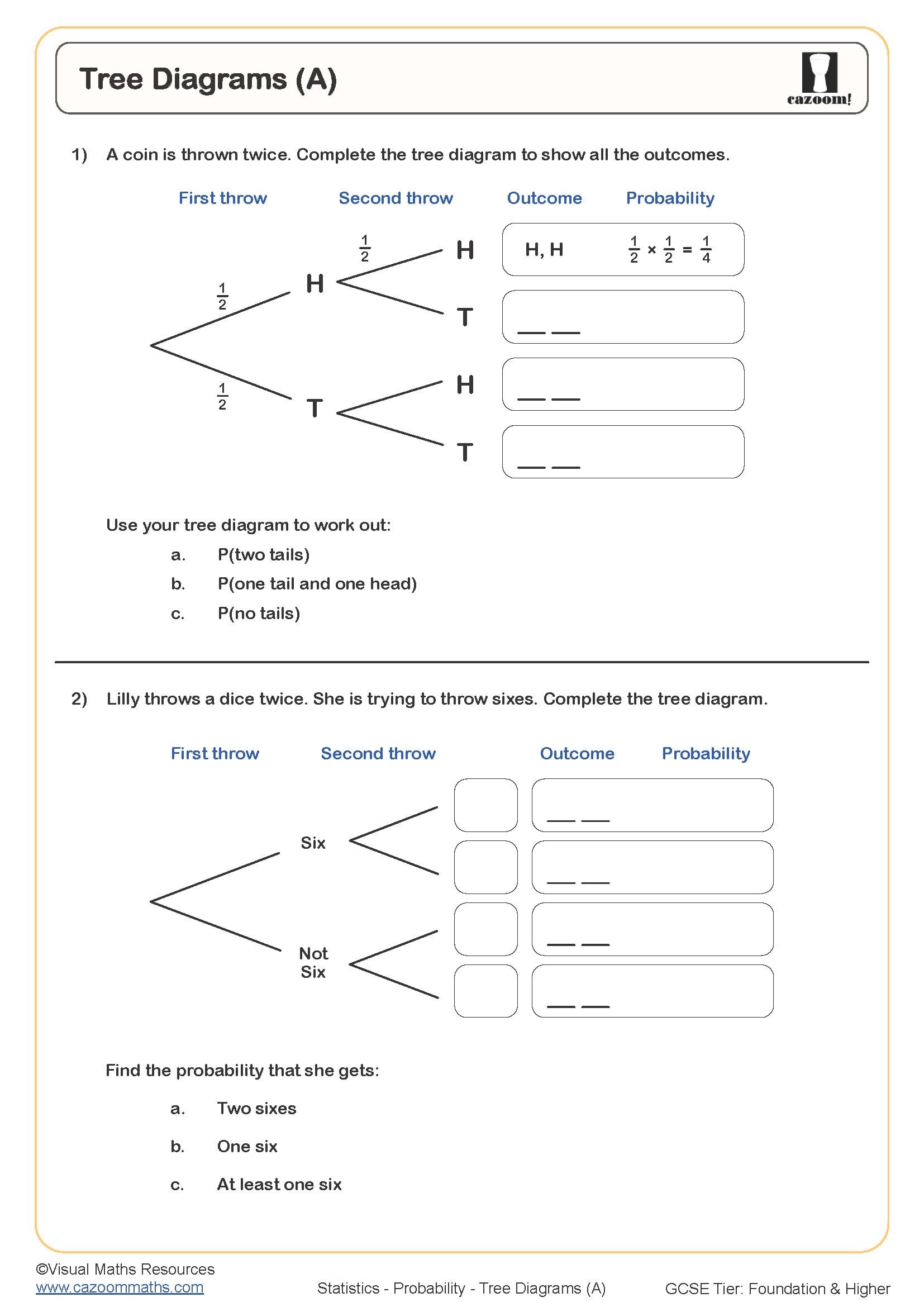
Tree Diagrams (A)
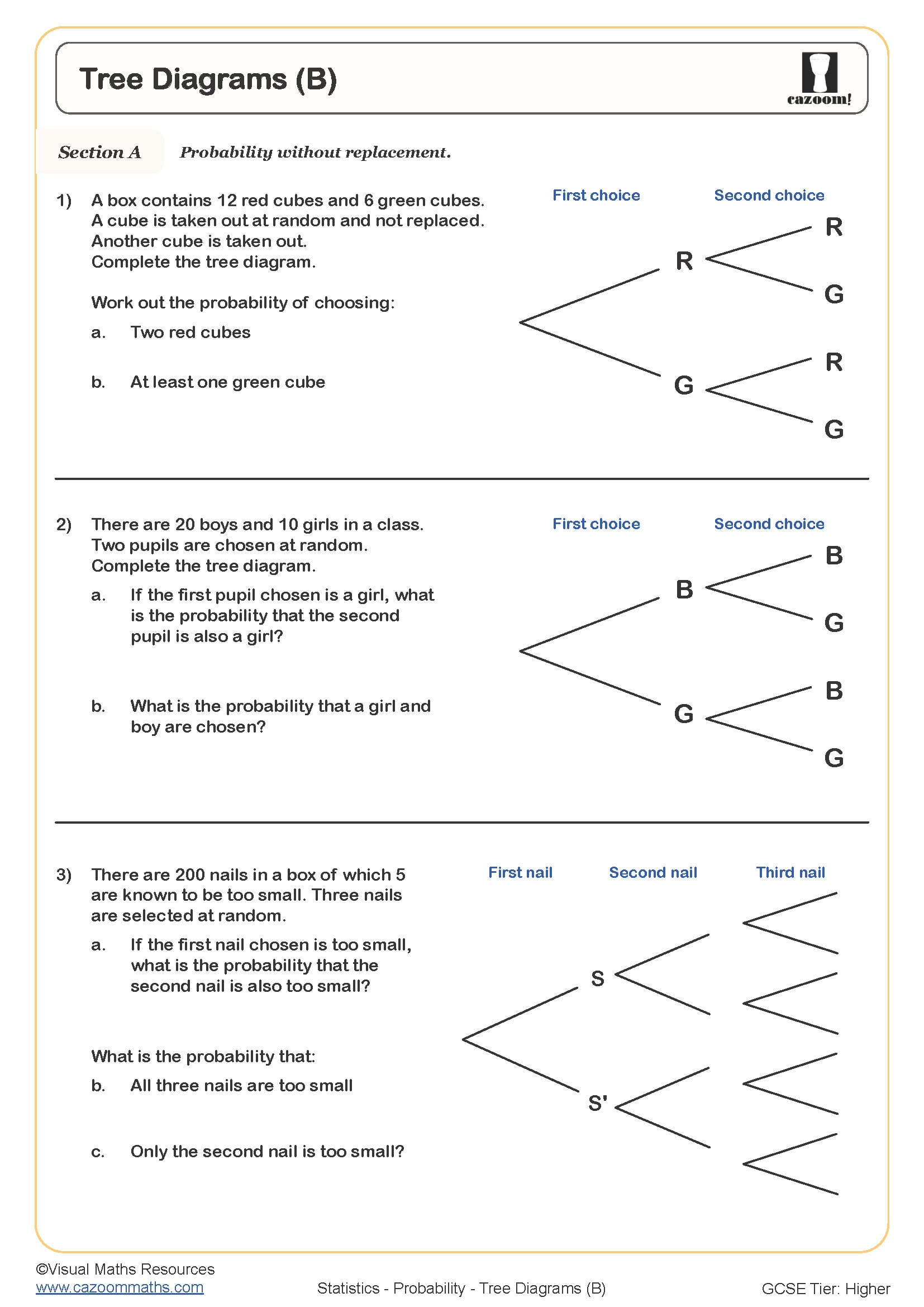
Tree Diagrams (B)
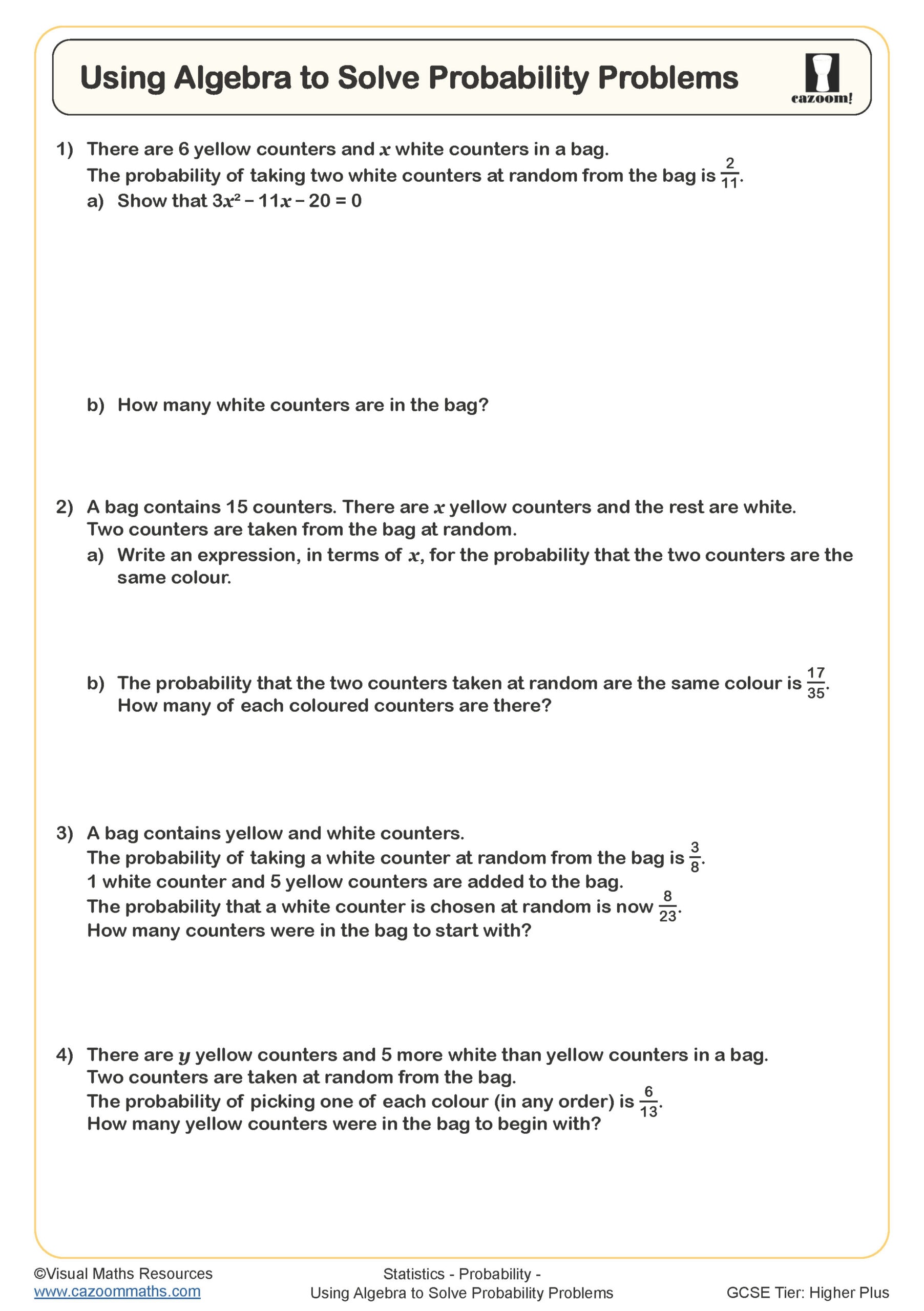
Using Algebra to Solve Probability Problems
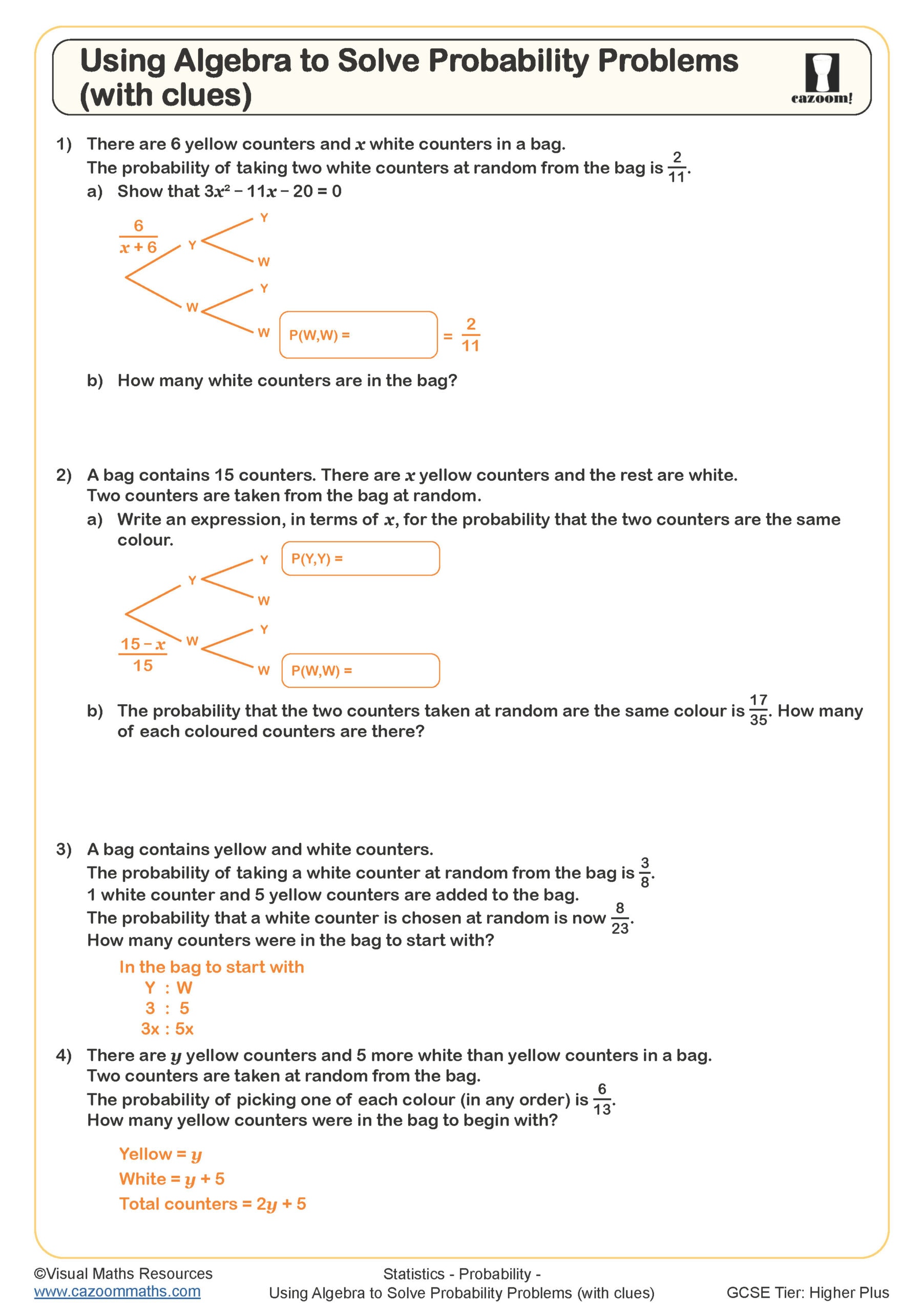
Using Algebra to Solve Probability Problems (with clues)
All worksheets are created by the team of experienced teachers at Cazoom Maths.
What makes a good probability worksheet for KS4 students?
Effective probability worksheets for KS4 build systematically from basic single-event calculations to complex multi-stage problems, incorporating both theoretical and experimental probability approaches. They should include sample space diagrams, tree diagrams, and Venn diagrams while addressing common GCSE question types including conditional probability and mutually exclusive events.
Teachers frequently observe that students perform well on isolated probability calculations but struggle when questions combine multiple concepts or require interpretation of results. Quality worksheets bridge this gap by including contextualised problems that mirror exam conditions, helping students recognise when to apply different probability rules and methods.
Can probability worksheets KS3 students use help prepare for Year 10 probability?
While KS3 probability worksheets introduce fundamental concepts like basic probability calculations and simple combined events, Year 10 probability demands significantly more sophisticated reasoning and calculation skills. The transition requires students to move from listing outcomes to using systematic approaches like tree diagrams for complex scenarios.
Many teachers notice that students who haven't mastered fraction manipulation at KS3 level struggle disproportionately with KS4 probability work. The algebraic thinking required for conditional probability and expected value calculations builds directly on KS3 foundations, making thorough preparation focused for GCSE success.
How should students approach tree diagram probability questions?
Tree diagrams provide a systematic method for calculating probabilities in multi-stage experiments, but teachers consistently observe that students make errors in two key areas: incorrectly labelling branches with outcomes rather than probabilities, and failing to multiply along paths correctly when calculating final probabilities.
The most effective approach involves teaching students to always verify that probabilities from each branch point sum to 1, and to clearly distinguish between 'with replacement' and 'without replacement' scenarios. Students should practise reading tree diagrams backwards to find individual probabilities, as this reverse engineering frequently appears in GCSE examinations and develops deeper understanding of the underlying mathematics.
What's the best way to use probability worksheets in lessons?
Teachers find most success when using probability worksheets as targeted practice after introducing concepts through practical experiments or real-world contexts. Starting lessons with physical probability experiments like dice rolling or card drawing helps students connect abstract calculations to concrete experiences before moving to worksheet consolidation.
The included answer sheets work particularly well for peer assessment activities, where students can immediately identify calculation errors and discuss different solution methods. Teachers often structure lessons so students complete initial problems independently, then work collaboratively on more challenging scenarios, using the answer sheets to guide discussions about common misconceptions and alternative approaches to complex problems.