Factors and Multiples Worksheets
Factors
Year groups: 7, 8
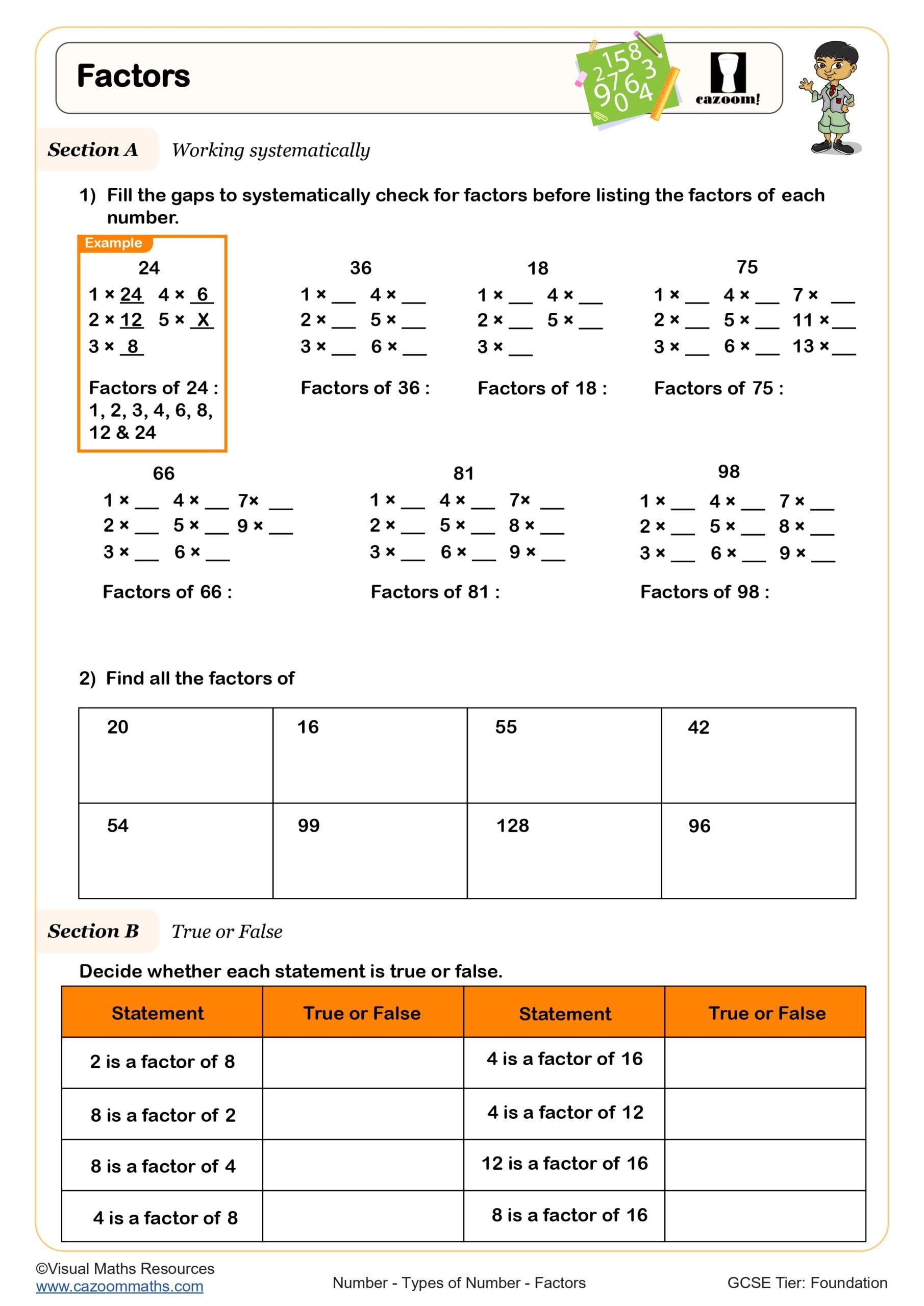
Factors and Primes
Year groups: 7, 8
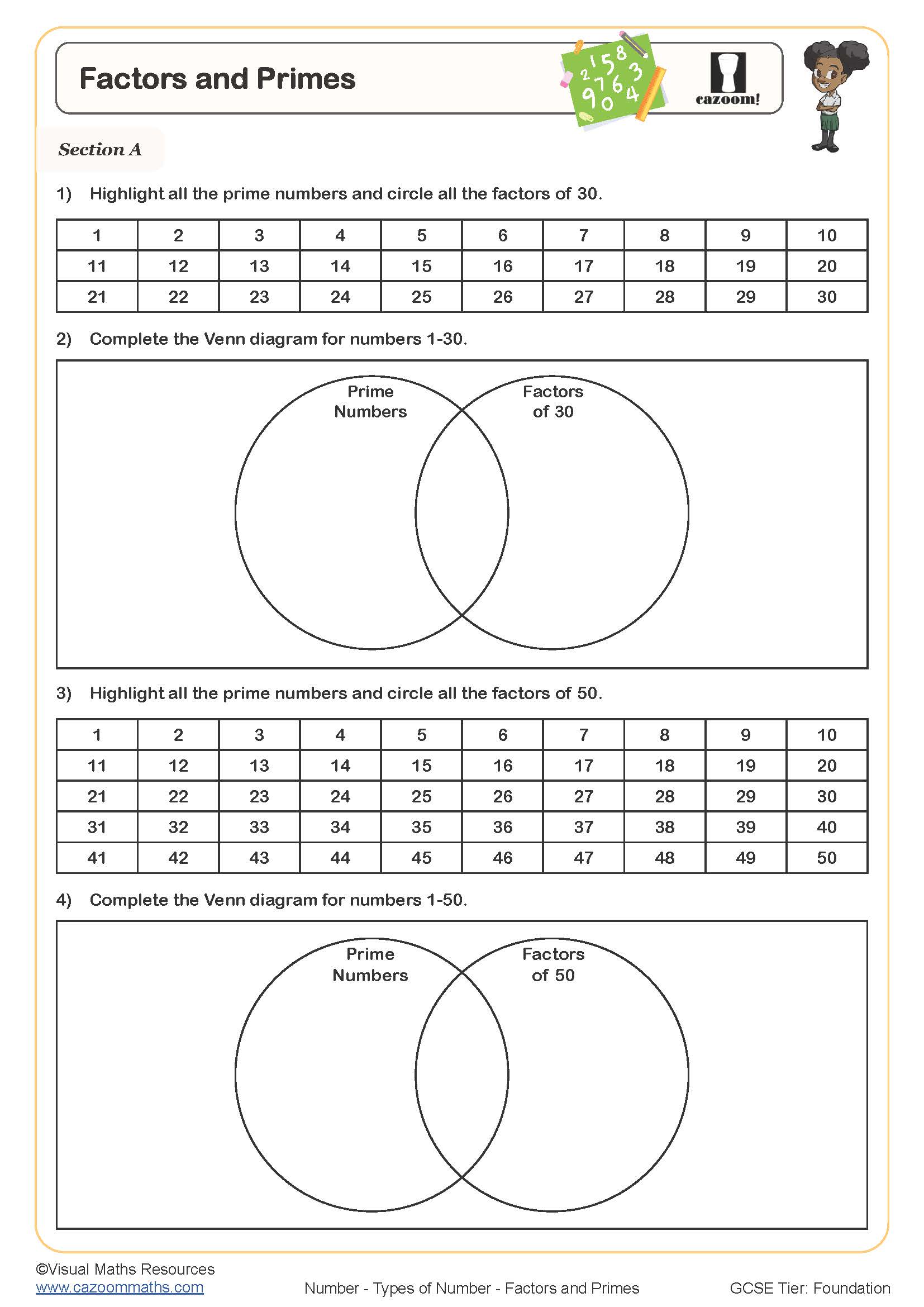
Finding HCF and LCM - Including the Use of Venn Diagrams
Year groups: 7, 8, 9
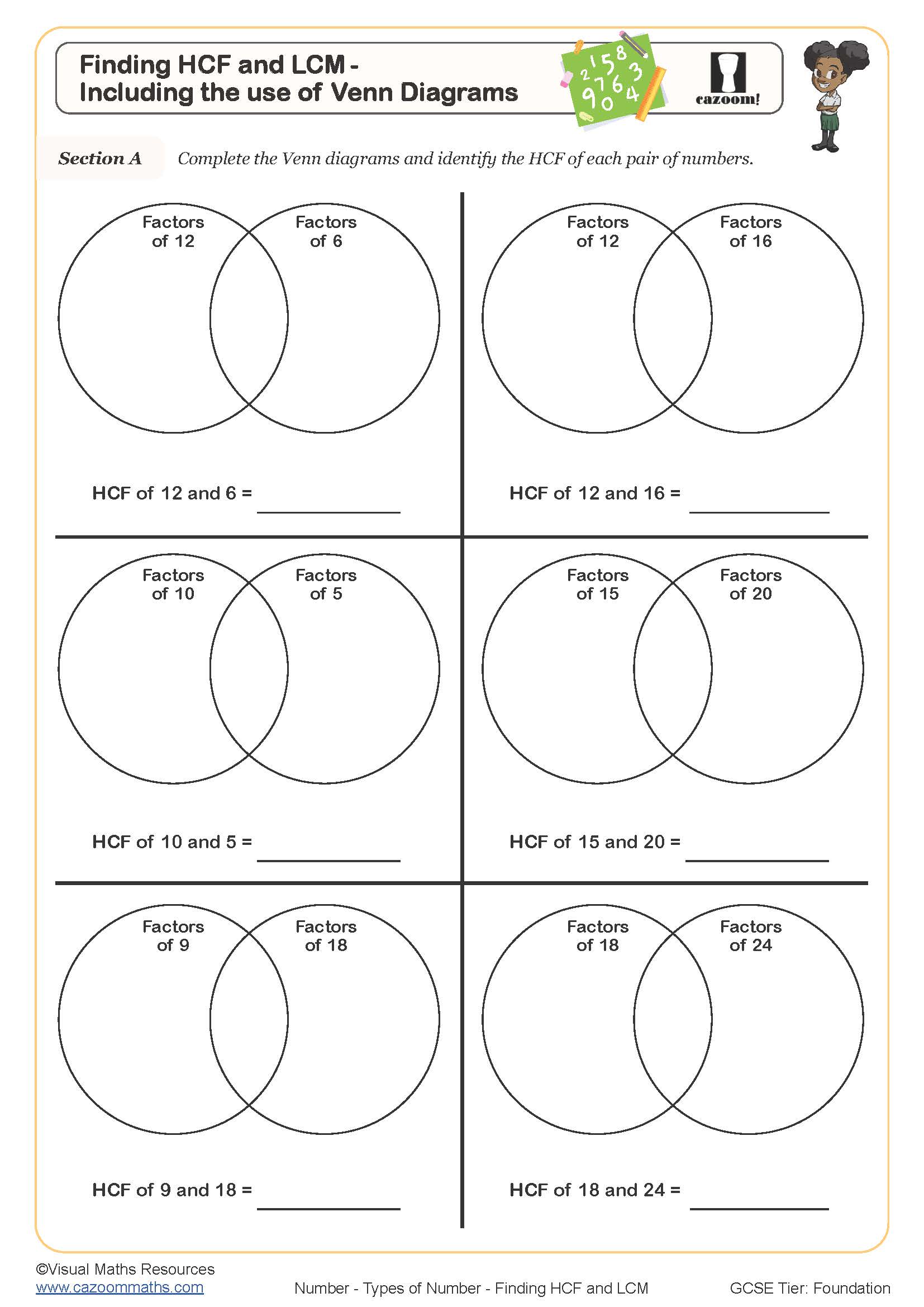
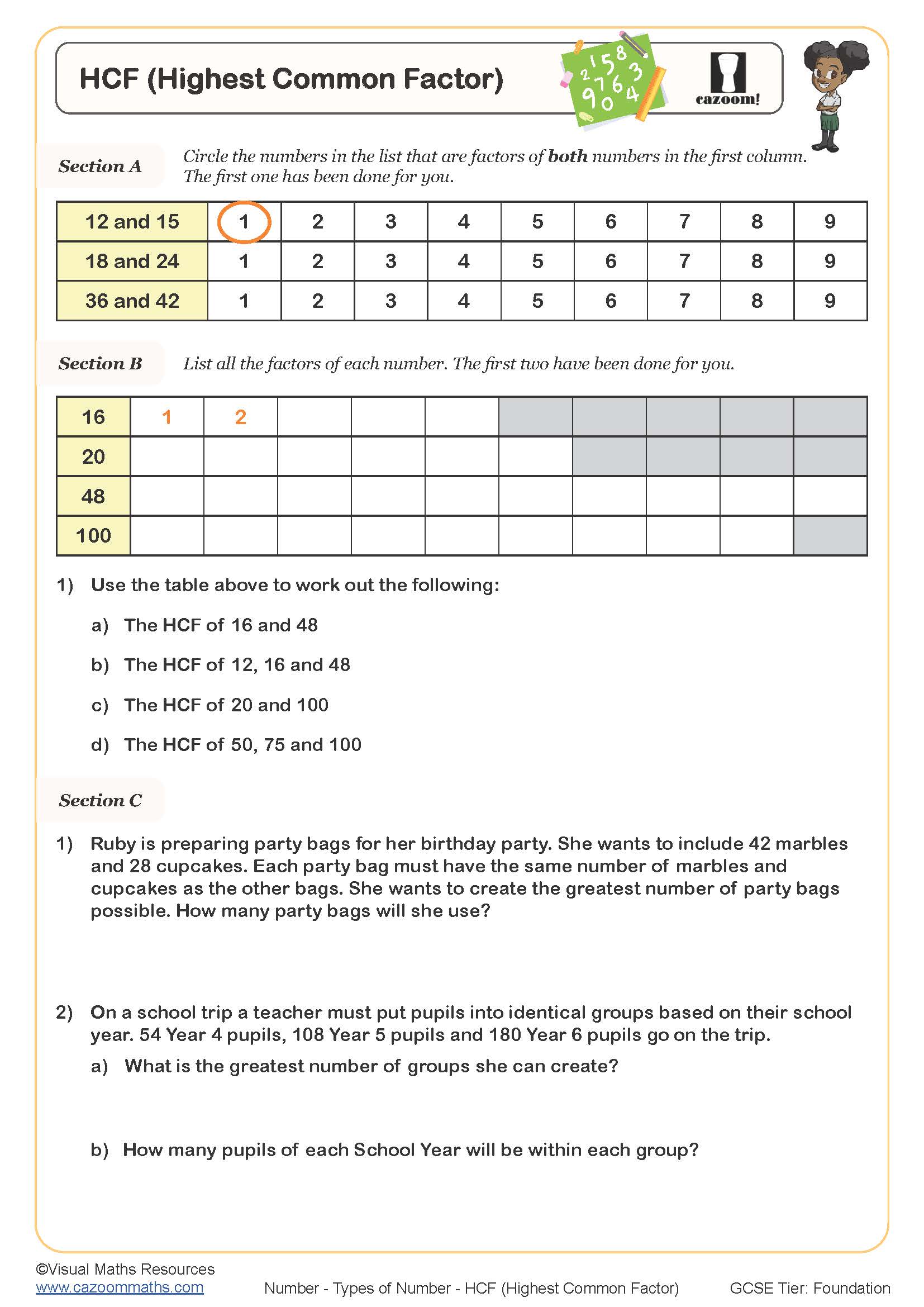
Highest Common Factor
Year groups: 7, 8, 9
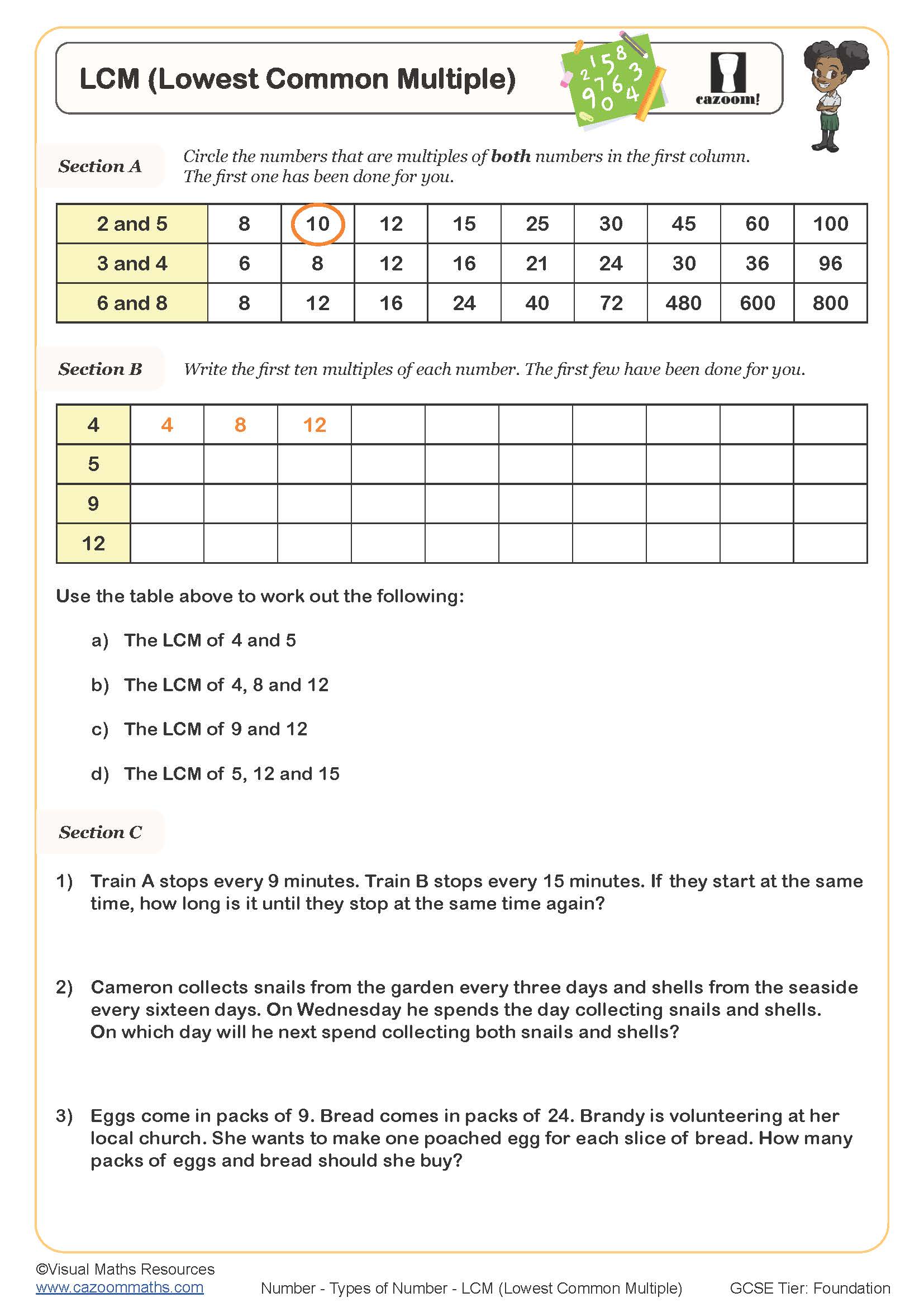
Lowest Common Multiple
Year groups: 7, 8, 9
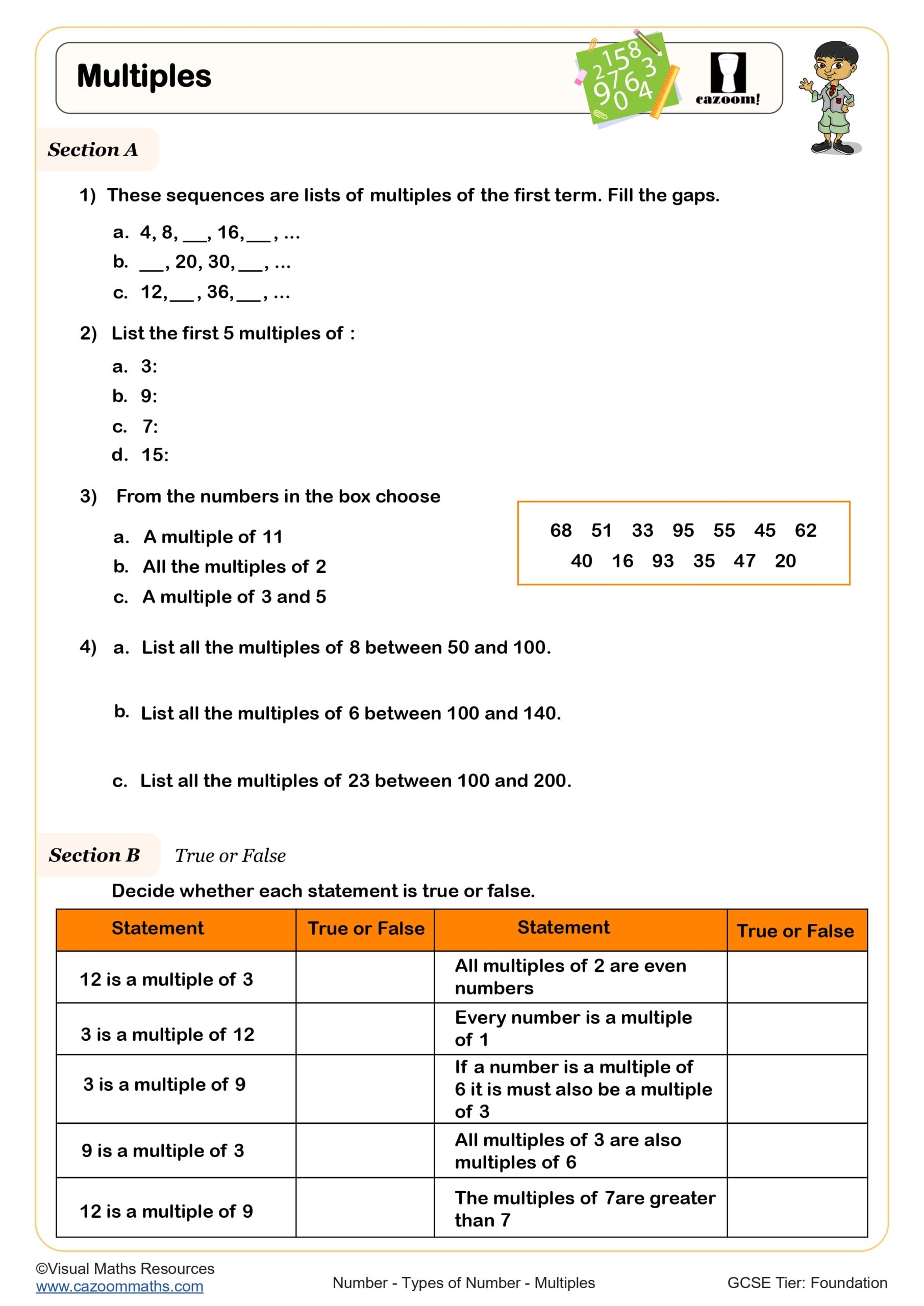
Multiples
Year groups: 7, 8
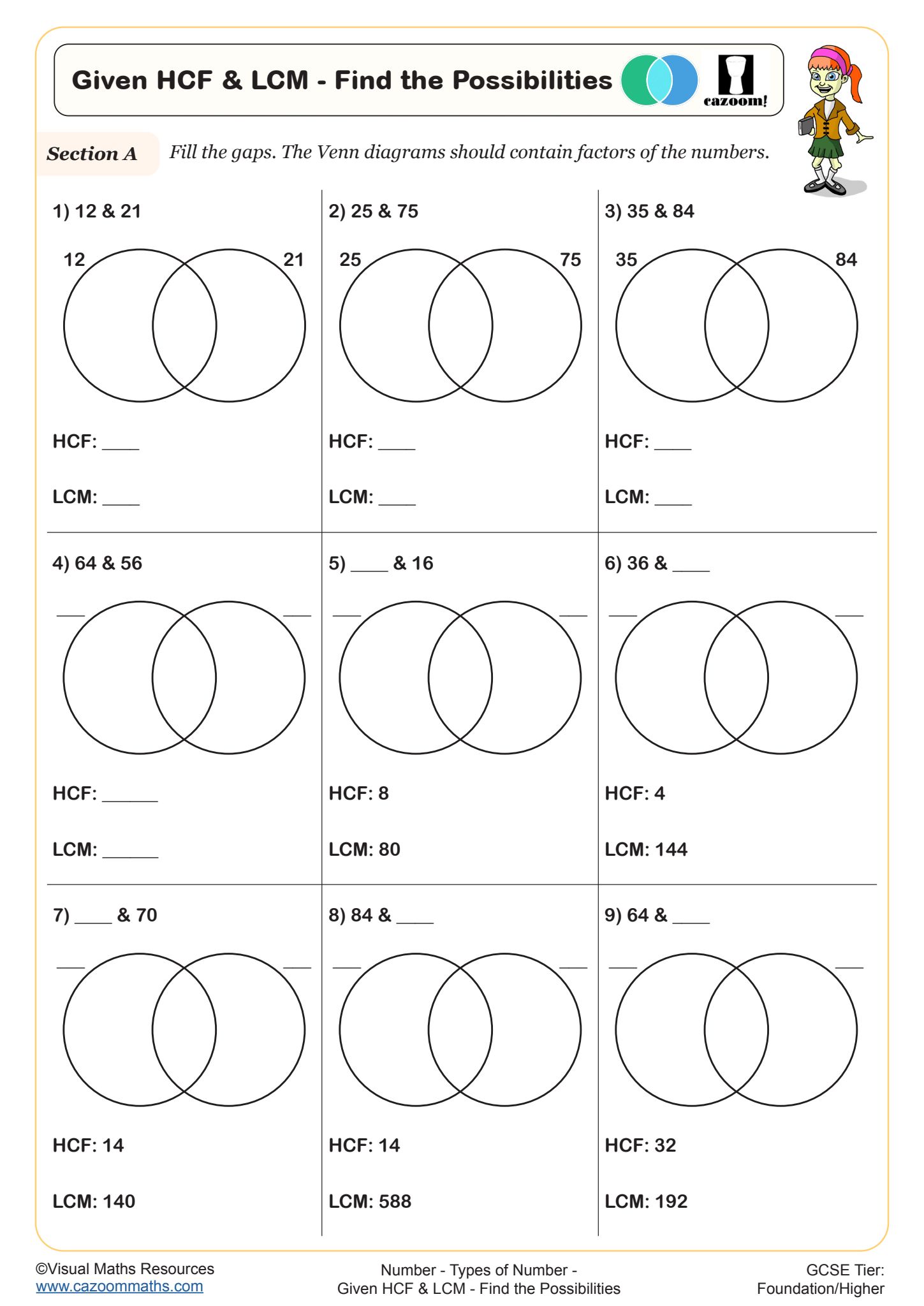
Given HCF & LCM - Find Possible Numbers
Year groups: 8, 9
All worksheets are created by the team of experienced teachers at Cazoom Maths.
What are factors and multiples in maths?
Factors are whole numbers that divide exactly into another number without leaving a remainder, whilst multiples are the results of multiplying a number by integers. For example, the factors of 12 are 1, 2, 3, 4, 6, and 12 (all divide into 12 exactly), while multiples of 3 include 3, 6, 9, 12, 15, and so on. This distinction appears throughout the KS3 National Curriculum as students need these concepts for simplifying fractions, solving equations, and working with ratio.
A widespread misconception involves students listing factors beyond the number itself or forgetting that 1 and the number are always factors. Exam mark schemes frequently penalise incomplete factor lists, particularly when students miss factor pairs in the middle range. Students also commonly write multiples in the wrong direction, starting from zero rather than the number itself, or stopping too early when asked to find the first five multiples.
Which year groups study factors and multiples?
These worksheets cover Years 7, 8, and 9, spanning the KS3 curriculum where factors and multiples transition from basic number work to applications in algebraic manipulation and problem-solving. Year 7 students typically consolidate primary learning by finding factors and multiples of numbers up to 100, whilst also introducing systematic methods for listing them. By Year 8, the focus shifts toward common factors and common multiples, preparing students for HCF and LCM work.
The progression across KS3 increases in abstraction and application rather than just using larger numbers. Year 7 worksheets emphasise recognition and systematic listing, Year 8 introduces finding common factors and multiples between two or more numbers, and Year 9 connects these concepts to prime factorisation and problem-solving contexts. Teachers find that students who struggle with factors and multiples in Year 9 often have gaps from Year 7 that resurface when simplifying algebraic fractions or solving worded problems involving repeated patterns.
How do you find multiples of a number?
Finding multiples involves multiplying the number by positive integers in sequence: 1, 2, 3, 4, and so on. For multiples of 7, multiply 7 by each integer to get 7, 14, 21, 28, 35, continuing the pattern. Students need to recognise that multiples extend infinitely upward, though questions typically ask for a specific quantity such as the first five multiples or all multiples within a given range. The worksheets develop fluency by varying the numbers used and the ways questions are phrased.
Multiples connect directly to real-world scheduling and timing problems across STEM contexts. Engineers use multiples when calculating gear ratios, ensuring teeth on interconnected gears align at regular intervals. Timetabling relies on finding common multiples to determine when events coincide, such as buses departing from the same stop at different intervals or production cycles synchronising on a manufacturing line. Understanding multiples helps students see the mathematics behind cyclic patterns in technology, astronomy, and logistics.
How can these worksheets support maths lessons?
The worksheets scaffold learning through varied question types that progress from straightforward identification tasks to multi-step problems requiring reasoning. Each PDF includes worked examples or clear instructions that help students tackle unfamiliar contexts independently, whilst answer sheets enable immediate feedback during lessons or homework. Teachers report that having complete answers supports self-marking activities where students identify their own errors and develop metacognitive skills around accuracy checking.
These resources work effectively as starter activities to assess prior knowledge before introducing highest common factors or lowest common multiples. Many teachers use them for targeted intervention with small groups who missed earlier Key Stage 2 content, whilst others assign specific worksheets as homework following whole-class teaching. The worksheets suit paired work where students explain their reasoning to each other, particularly when discussing why a number is or isn't a factor. They also provide focused revision material before end-of-unit assessments or GCSE preparation when students need to consolidate foundational number skills.