Year 8 Ratio Worksheets
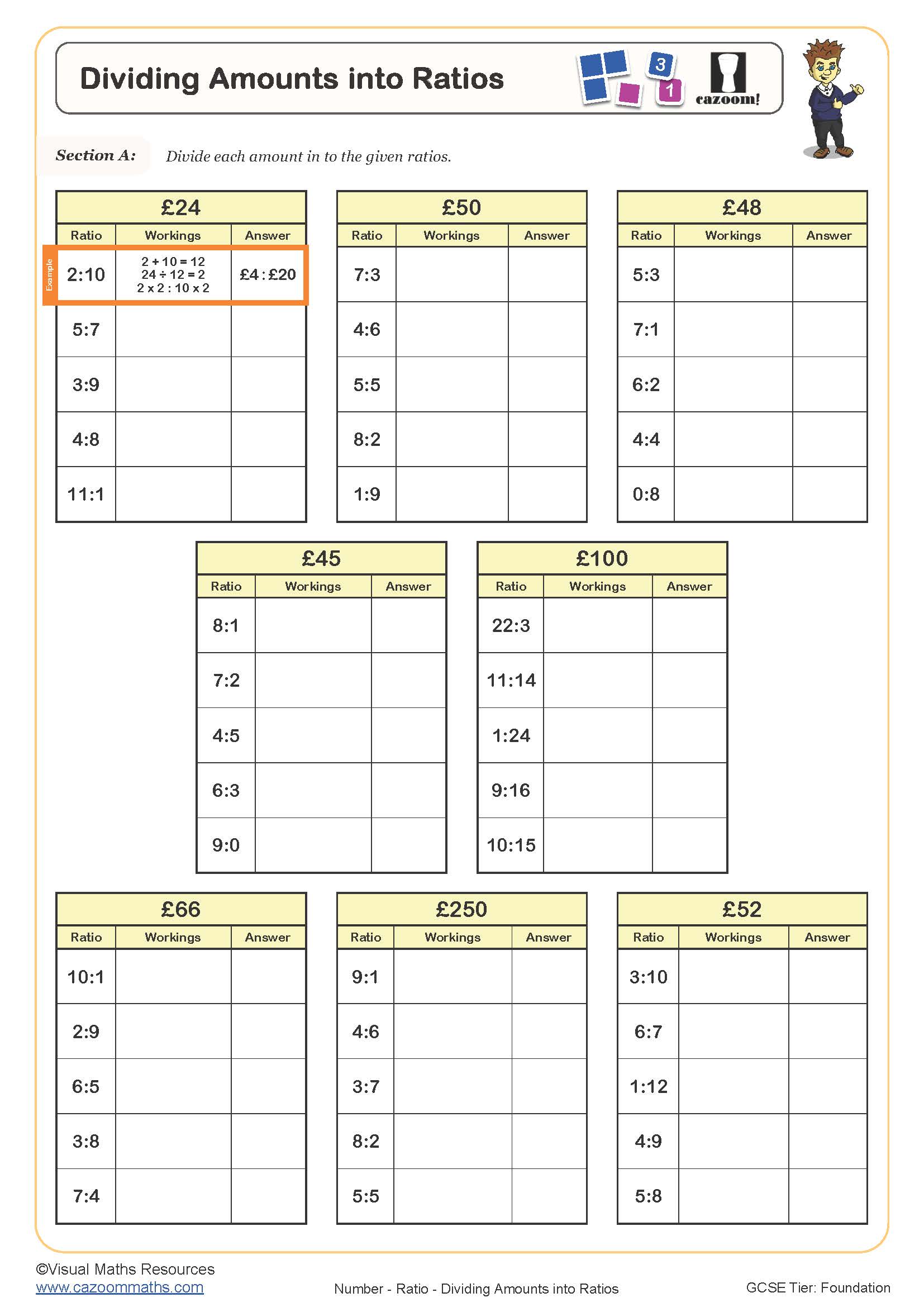
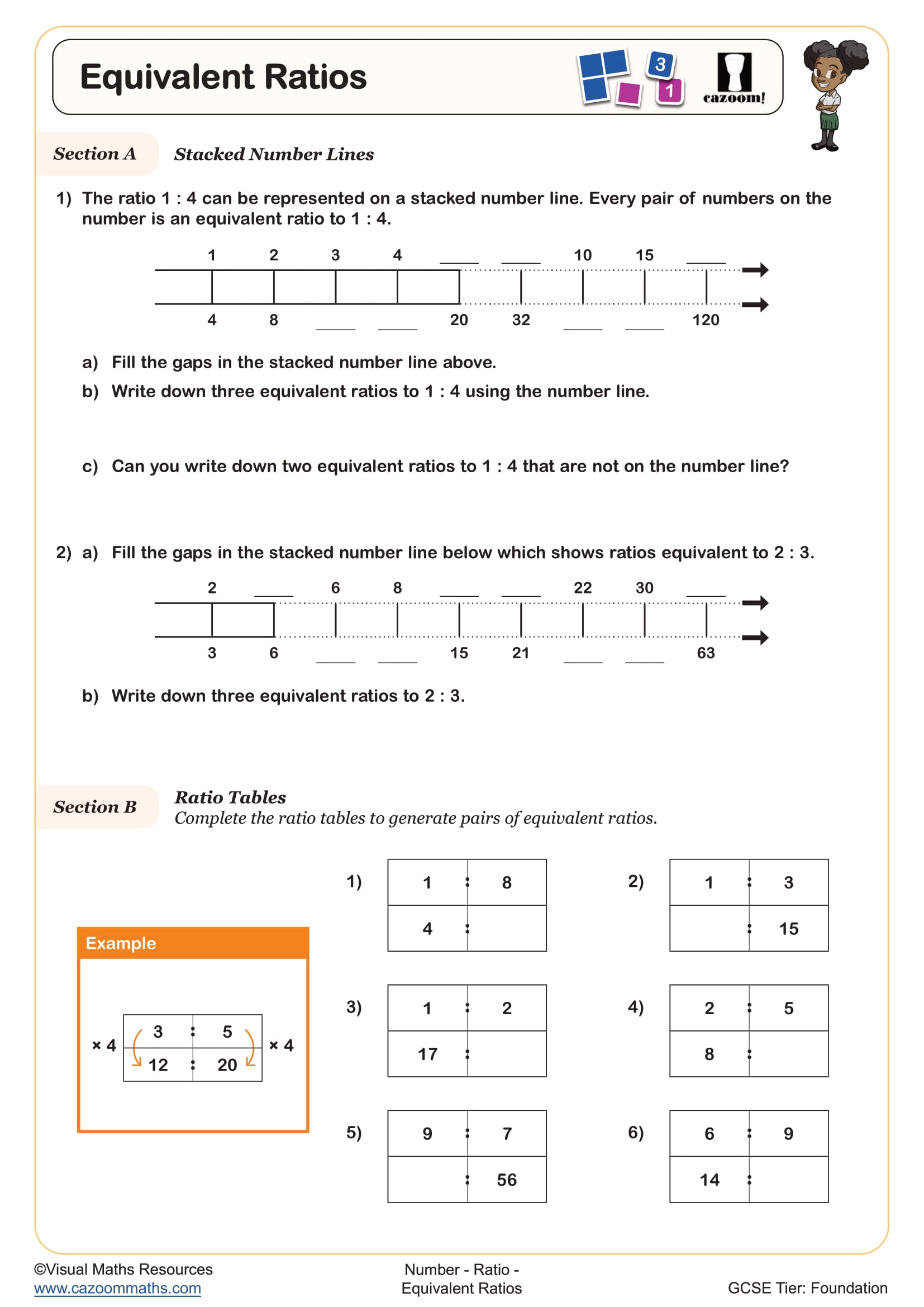
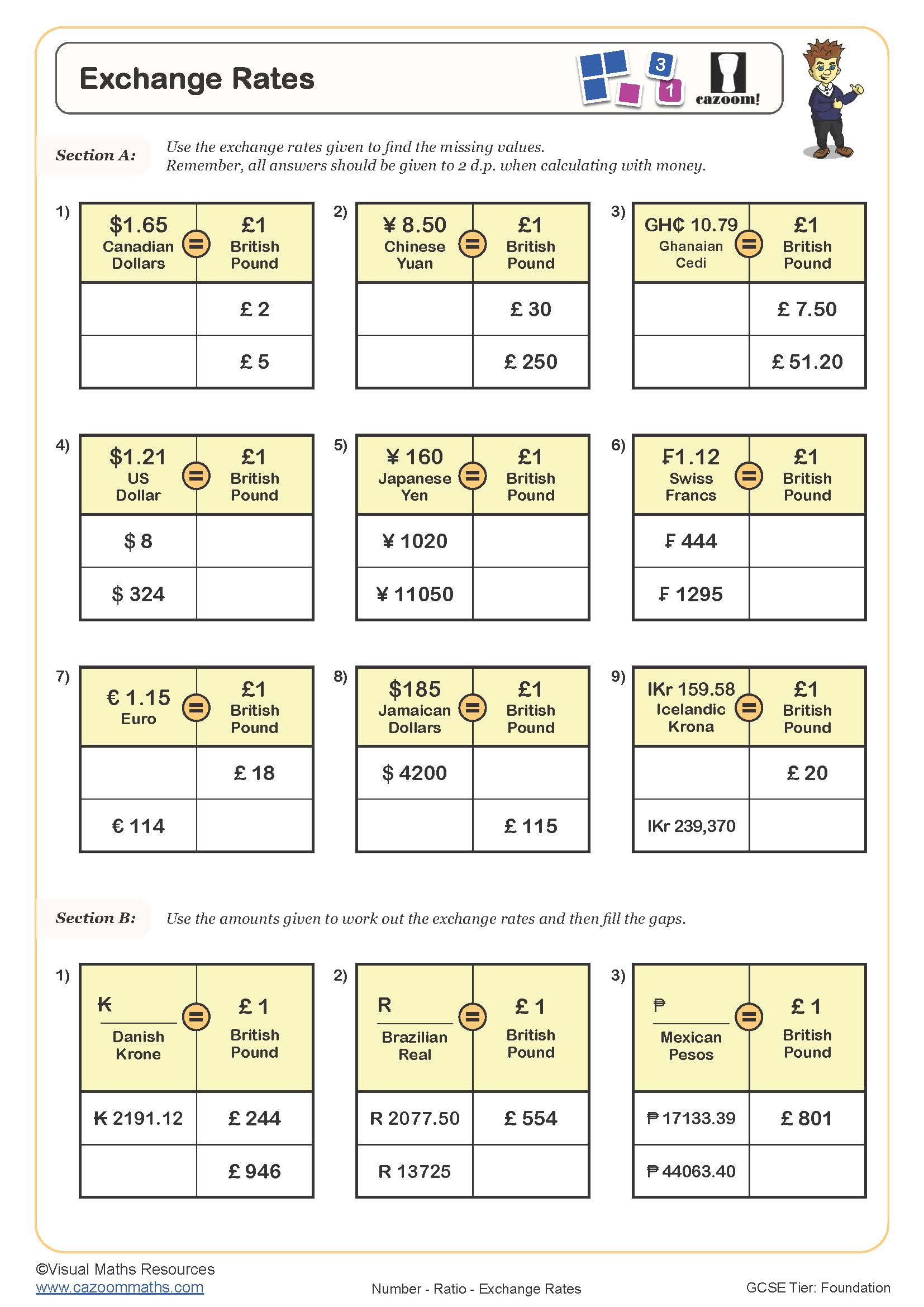
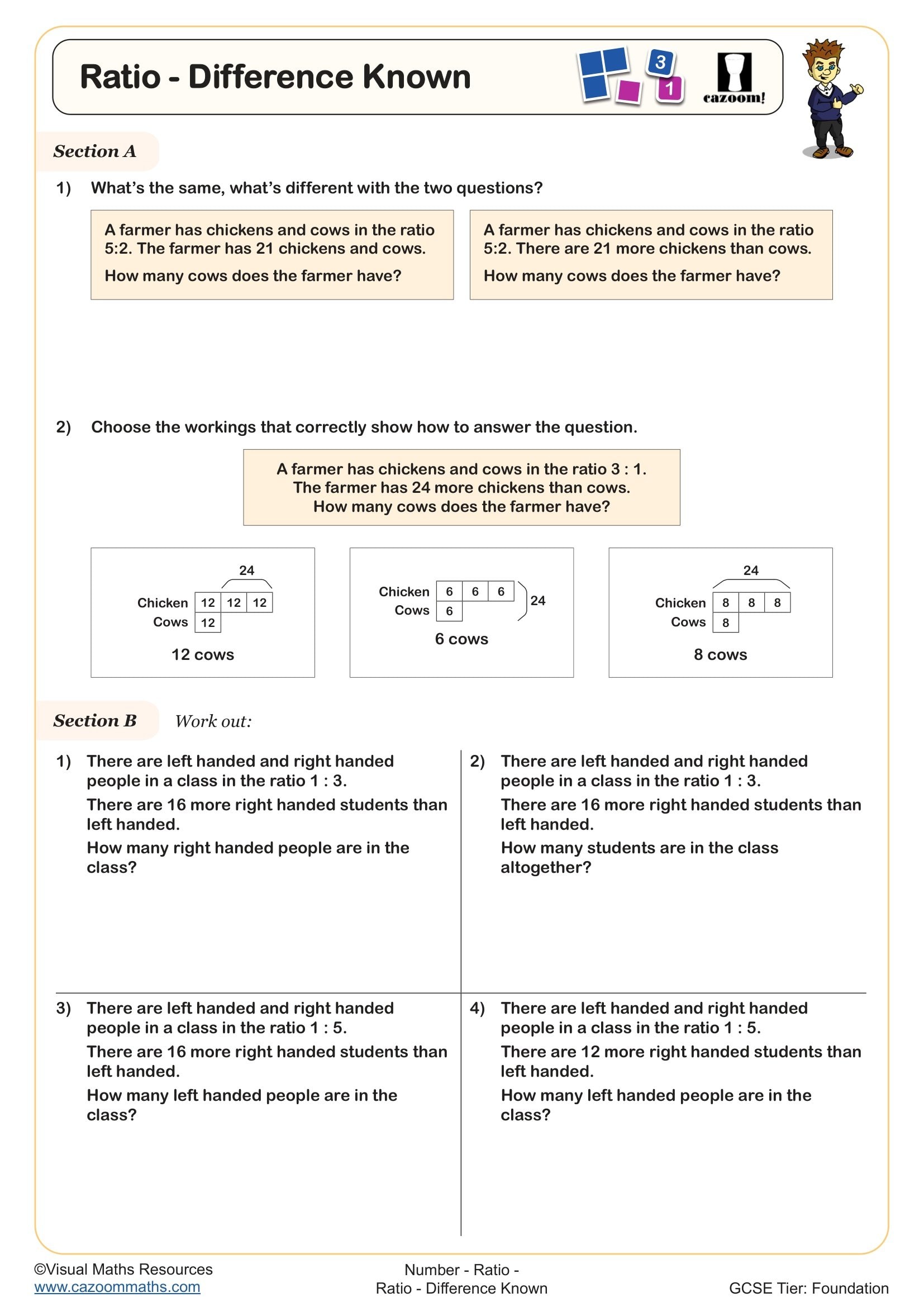
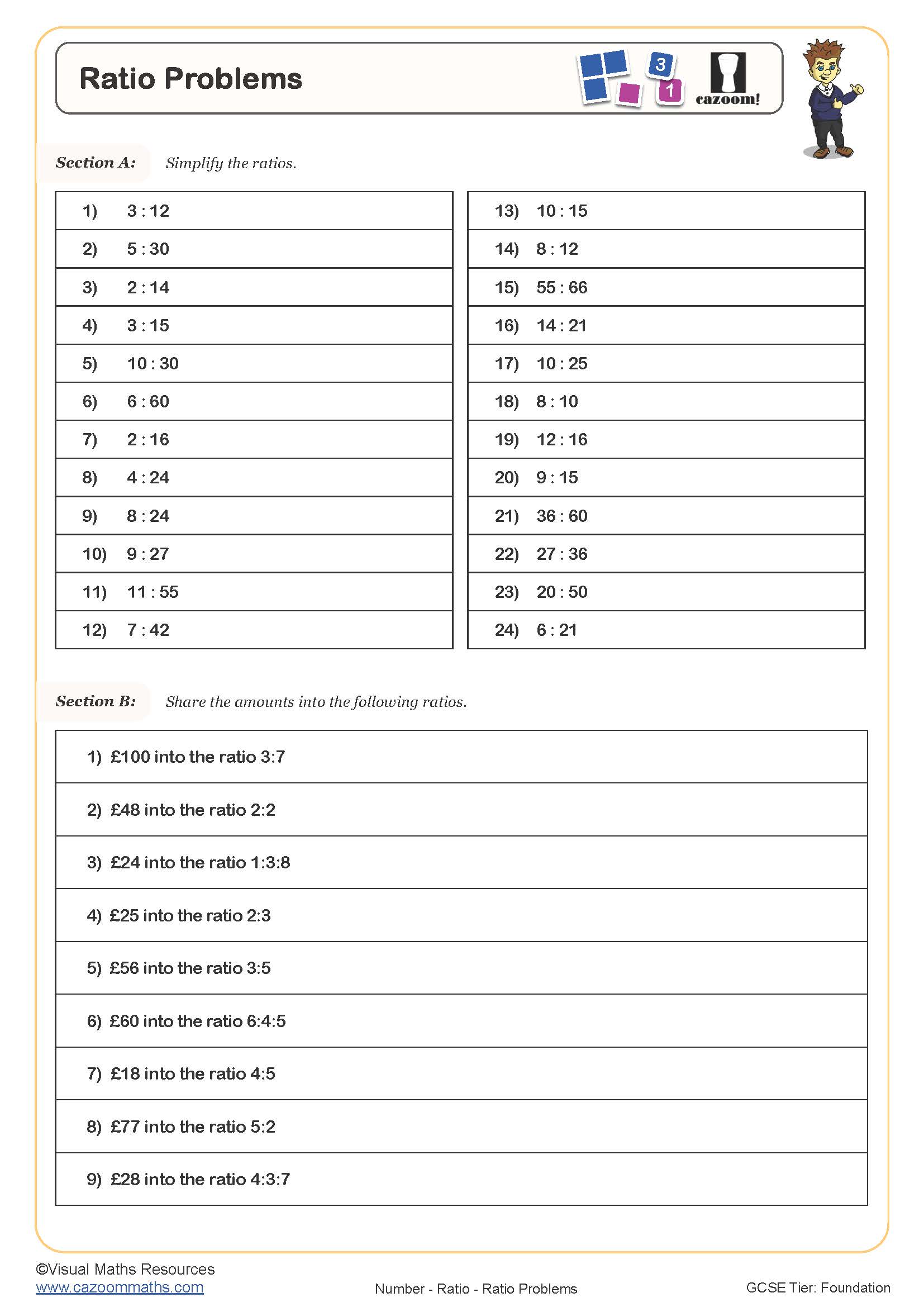
/Cazoom-Maths-Ratio-Simplifying-Ratios-(A)-Worksheet.jpg?w=3840)
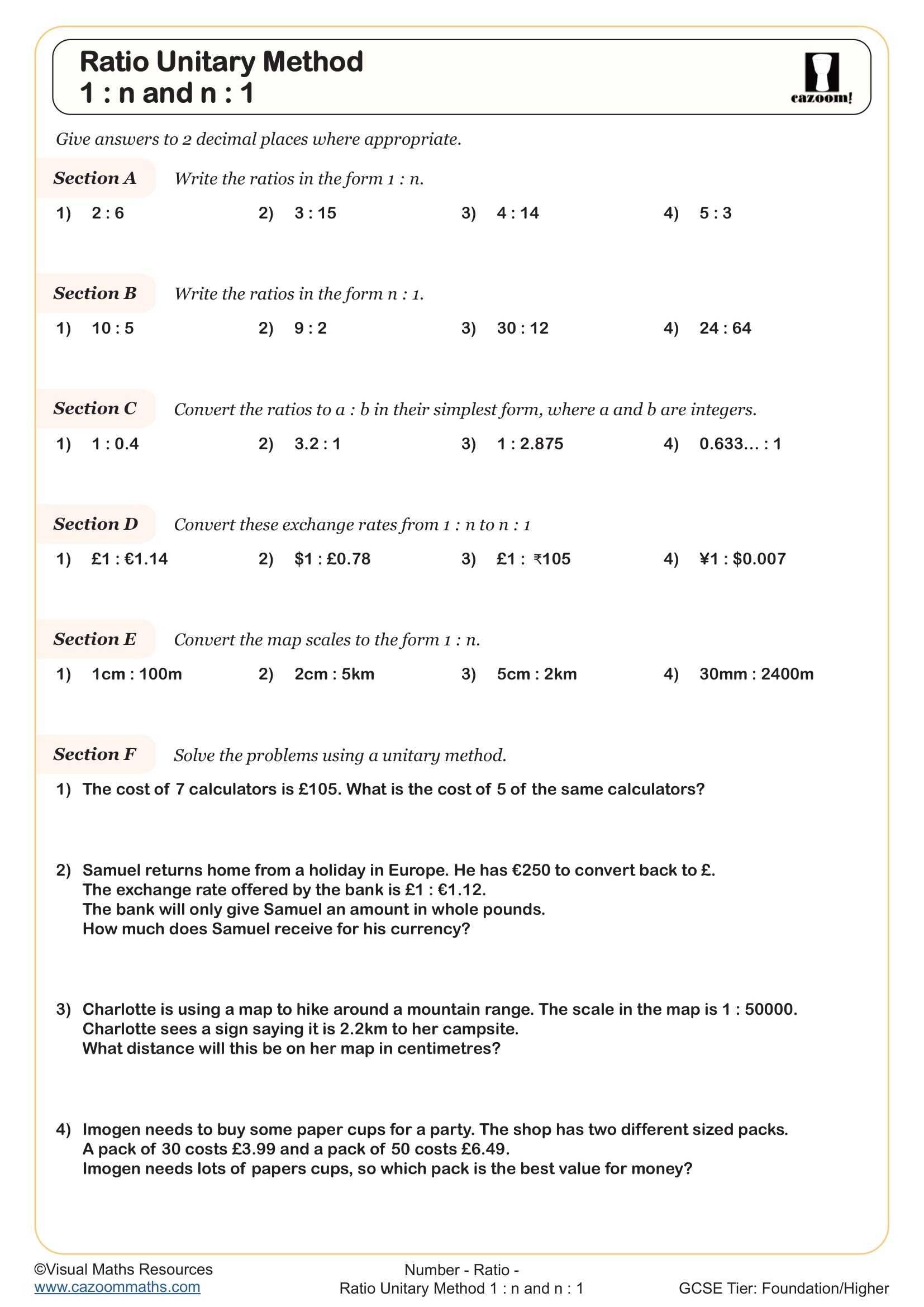
-Worksheet.jpg?w=3840)
All worksheets are created by the team of experienced teachers at Cazoom Maths.
What Should Year 8 Students Know About Ratios?
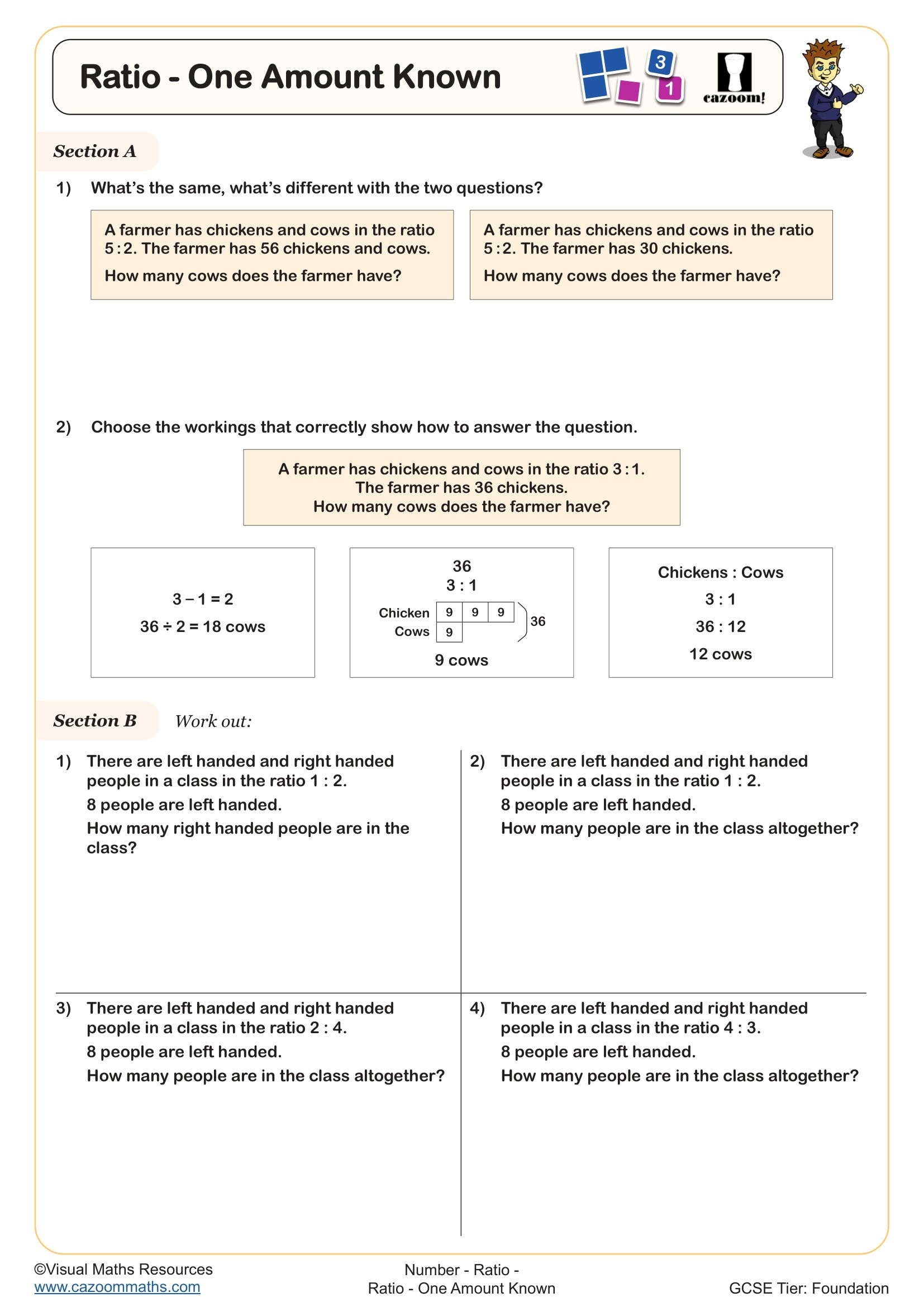
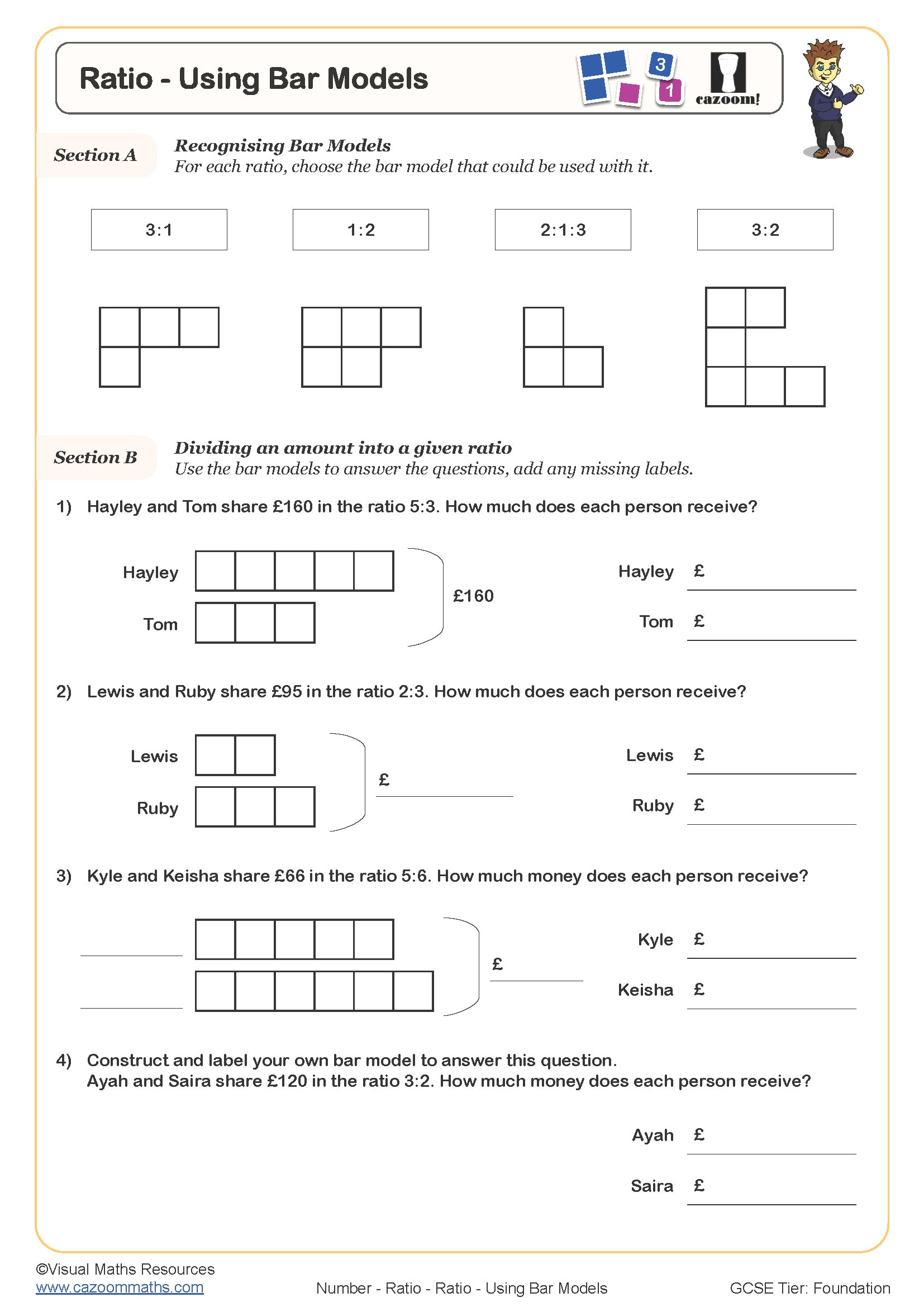
By Year 8, students should confidently simplify ratios, divide quantities in given ratios, and solve problems involving ratio and direct proportion. The National Curriculum expects students at this stage to work with ratios involving more than two parts and to express relationships using ratio notation correctly. Year 8 ratios worksheets typically introduce algebraic thinking within ratio contexts, preparing students for the formal algebra-ratio crossover at GCSE.
A common error teachers observe is students adding ratio parts incorrectly when working backwards from a total. For example, if a ratio is 3:5 and the difference is 16, students often divide 16 by 8 (the sum) rather than by 2 (the difference between parts). This conceptual gap becomes particularly evident when checking answers, which is why answer sheets prove invaluable for identifying where logical errors occur.
Which Year Groups Use These Ratio Worksheets?
These worksheets are designed specifically for Year 8 students working within Key Stage 3 of the National Curriculum. At this stage, ratio work bridges the gap between the introductory concepts from Year 7 and the formal proportional reasoning required for GCSE mathematics. Year 8 marks the point where ratio problems become multi-step and require students to combine several operations within one question.
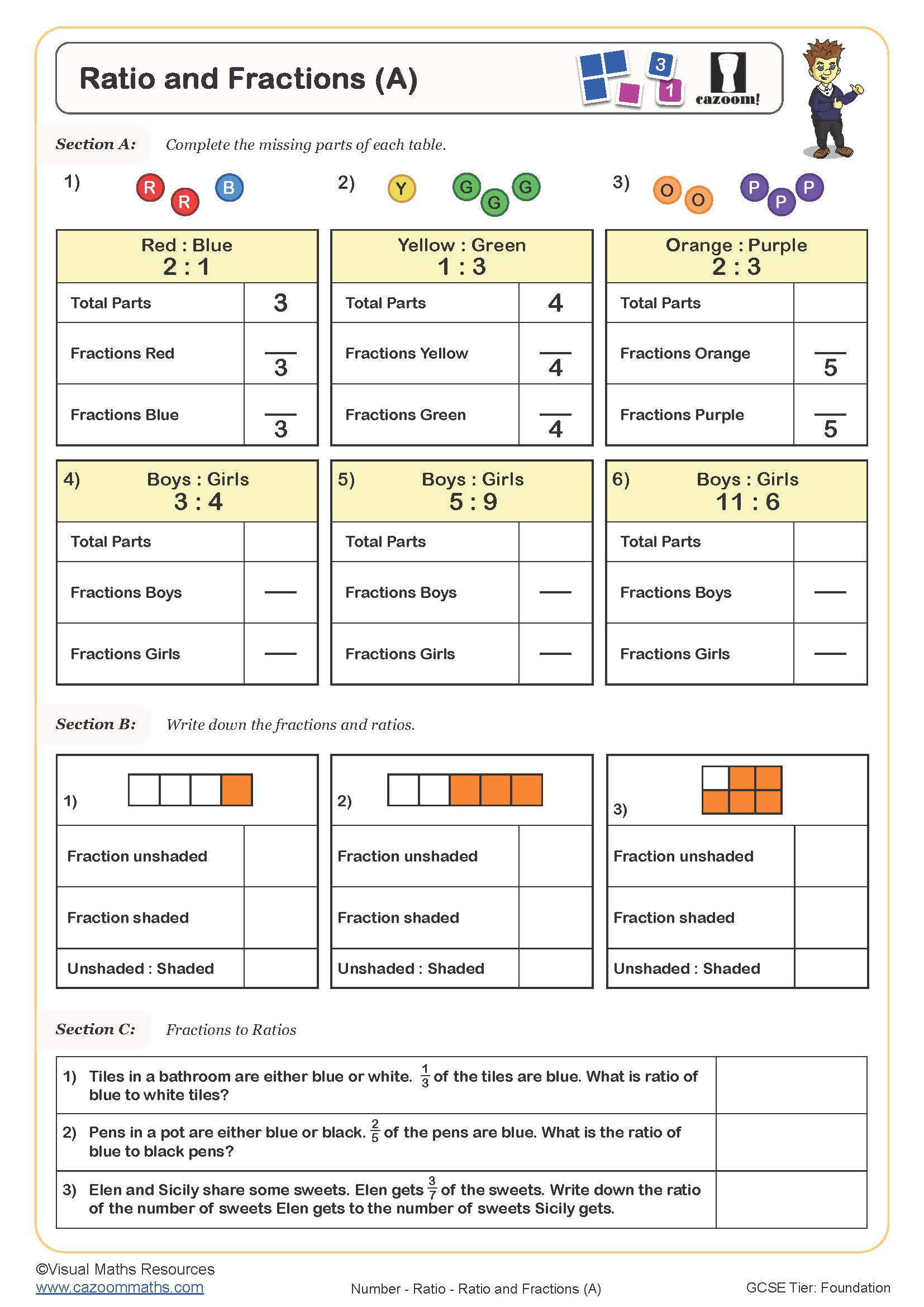
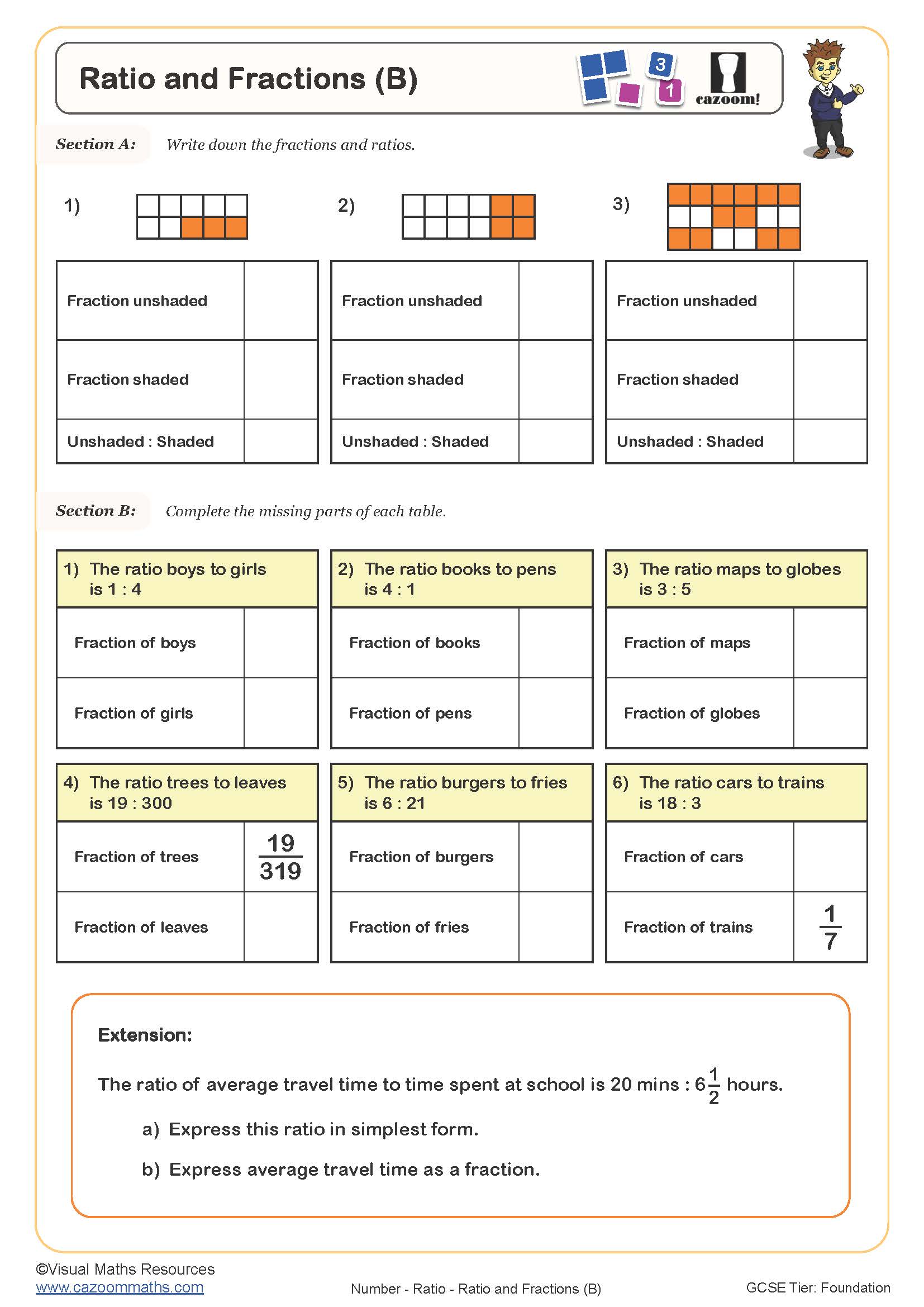
The progression in Year 8 ratio worksheets moves from straightforward ratio simplification towards problems involving fractions, algebraic notation, and reverse calculations. Students who master these skills find the proportion and percentage work in Year 9 considerably more accessible, as they've already developed the underlying proportional reasoning. Teachers frequently use these worksheets to assess whether students are ready for the compound measures and similarity work that follows.
How Do Ratios Connect to Real-World Mathematics?
Ratio underpins numerous practical applications in STEM fields, from mixing concrete in construction (where cement, sand, and aggregate must be combined in precise ratios) to scaling recipes in food science. In chemistry, stoichiometric ratios determine exactly how much of each reactant is needed for complete reactions, whilst engineers use ratios constantly when working with scale drawings and models. Understanding ratio allows students to see that proportional relationships govern much of the quantitative world around them.
Year 8 maths ratio worksheets often include problems set in these real contexts, helping students recognise that ratio isn't just abstract number manipulation. For instance, mixing paint colours requires maintaining exact ratios to achieve consistent shades, whilst photographers use aspect ratios to crop images without distortion. These connections make the sometimes-dry procedural work more meaningful and help students remember the methods when they encounter examination questions.
How Can Teachers Use These Ratio Worksheets Effectively?
The worksheets provide structured practice that allows students to build confidence through repeated application of ratio techniques. Many teachers use them diagnostically at the start of a unit to identify which students need intervention on prerequisite skills like simplifying fractions or working with common factors. The variety of subtopics covered means teachers can assign specific worksheets targeting the exact skills individual students need to develop, rather than generic revision.
In the classroom, these year 8 ratio worksheets with answers pdf work particularly well for paired work, where students complete questions together and then check their working against the answer sheets. This approach encourages mathematical discussion about methods and helps students identify errors in their reasoning before these become embedded. Teachers also find them useful for homework tasks that reinforce lesson content, with the complete answer sheets enabling parents to support their children's learning at home.