KS3 Lines and Angles Worksheets
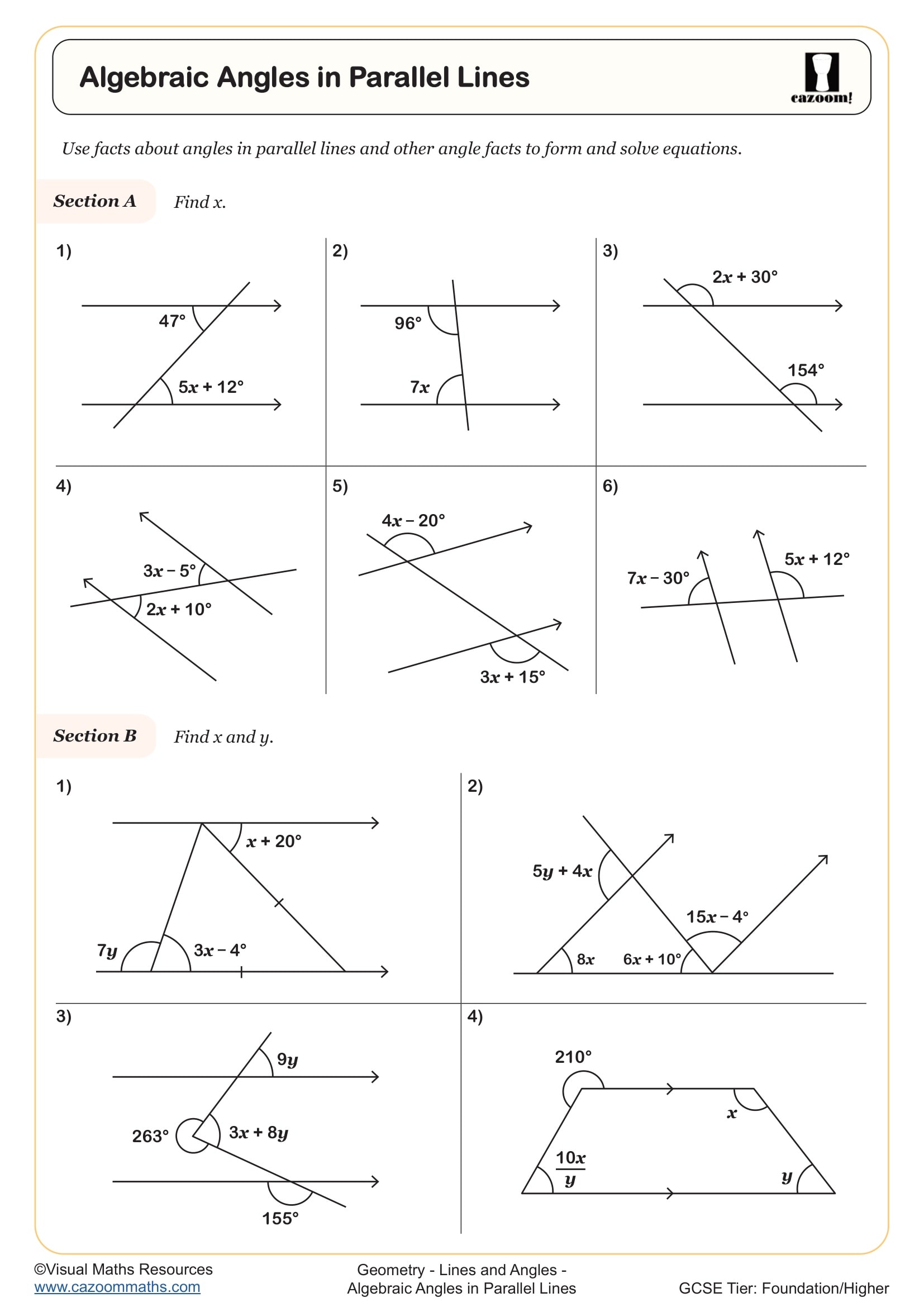
Algebraic Angles in Parallel Lines
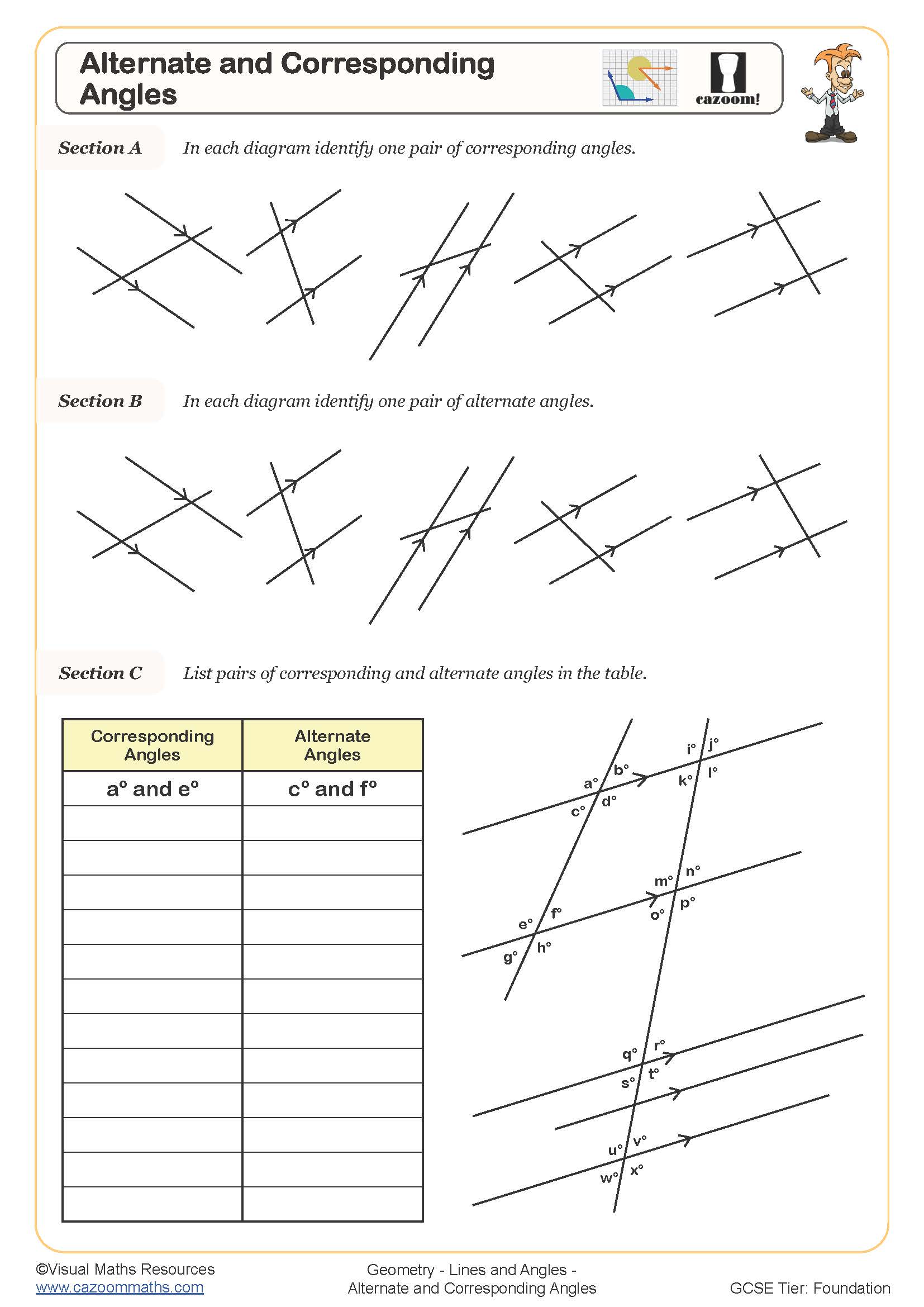
Alternate and Corresponding Angles (A)
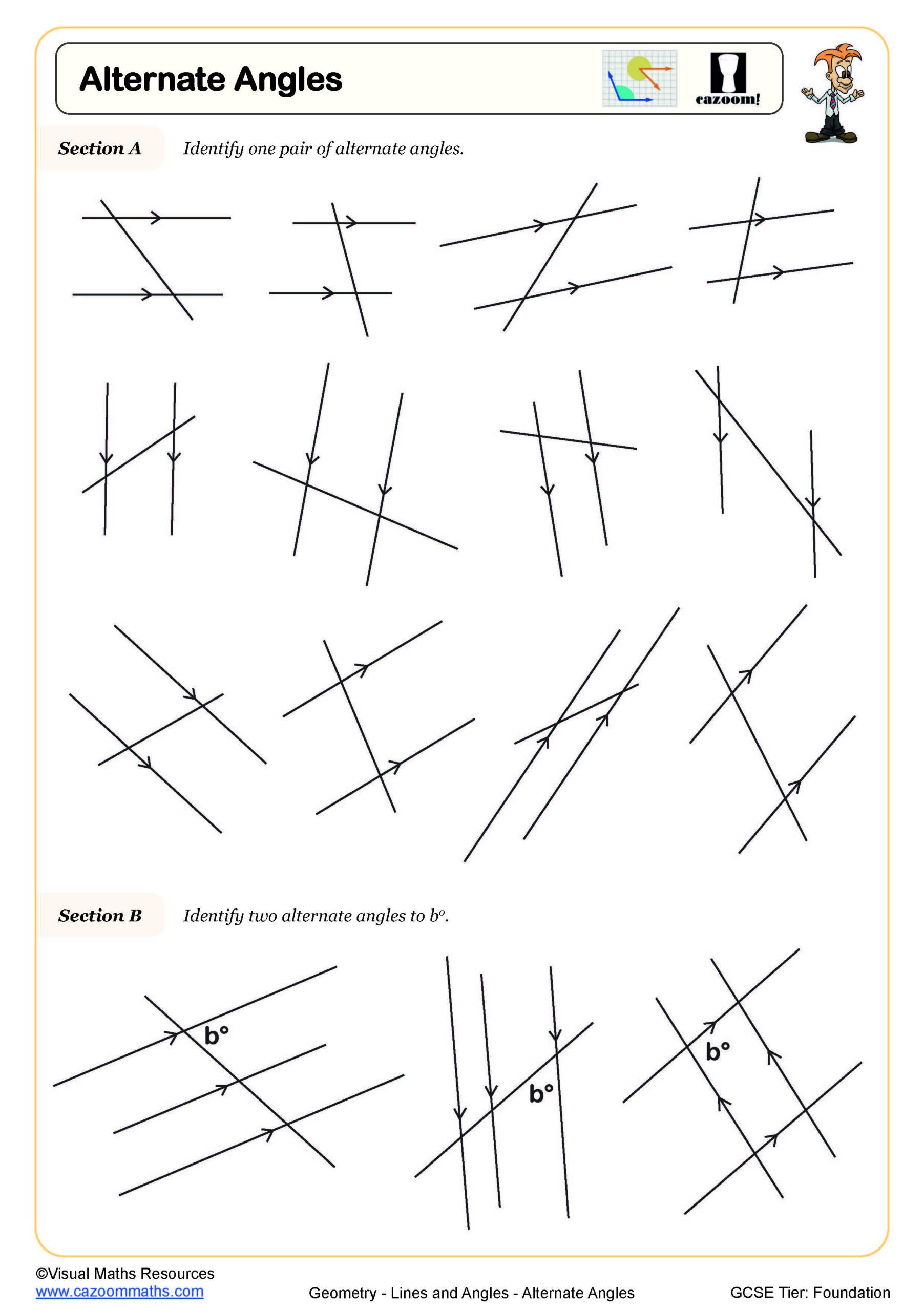
Alternate Angles
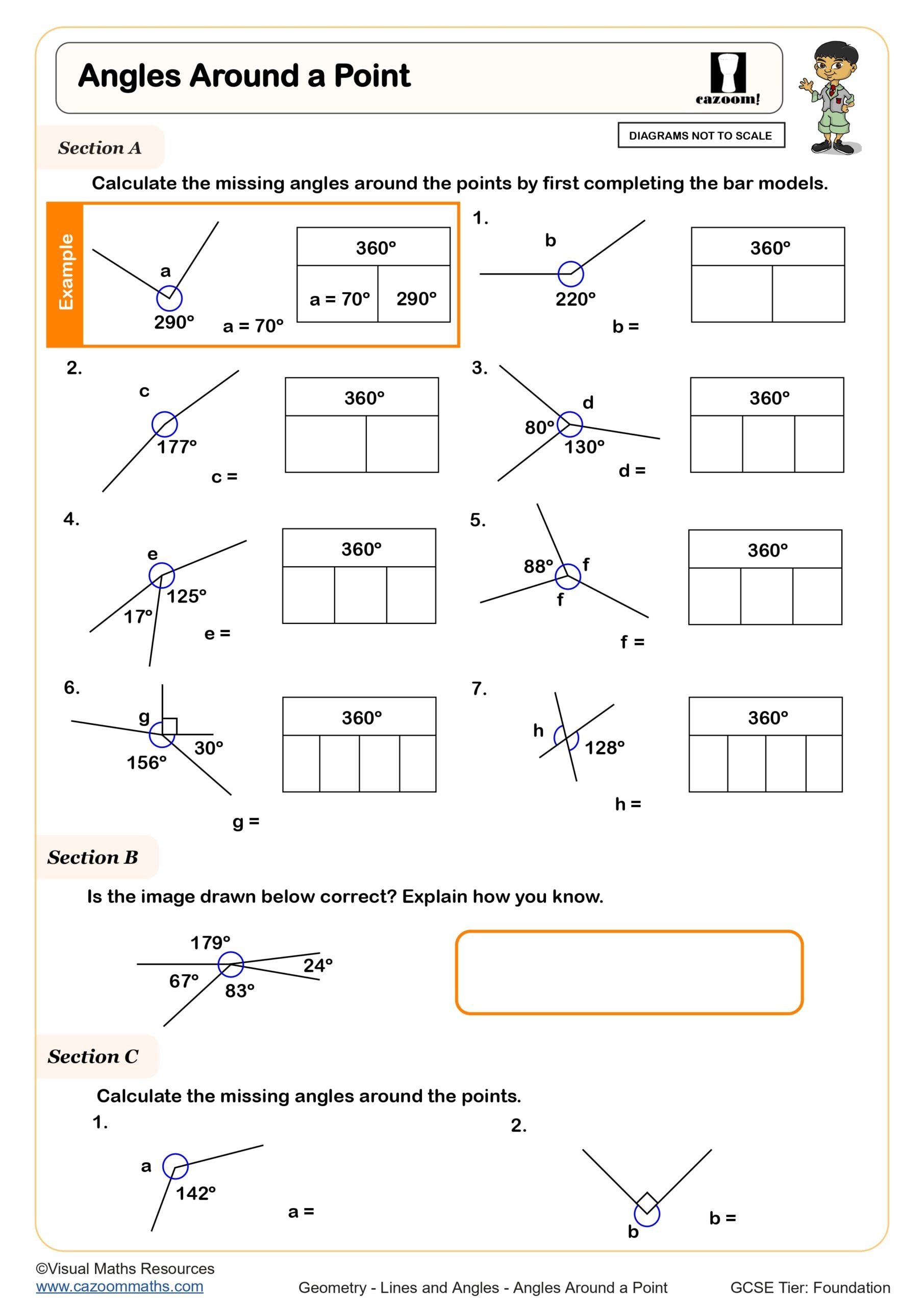
Angles Around a Point
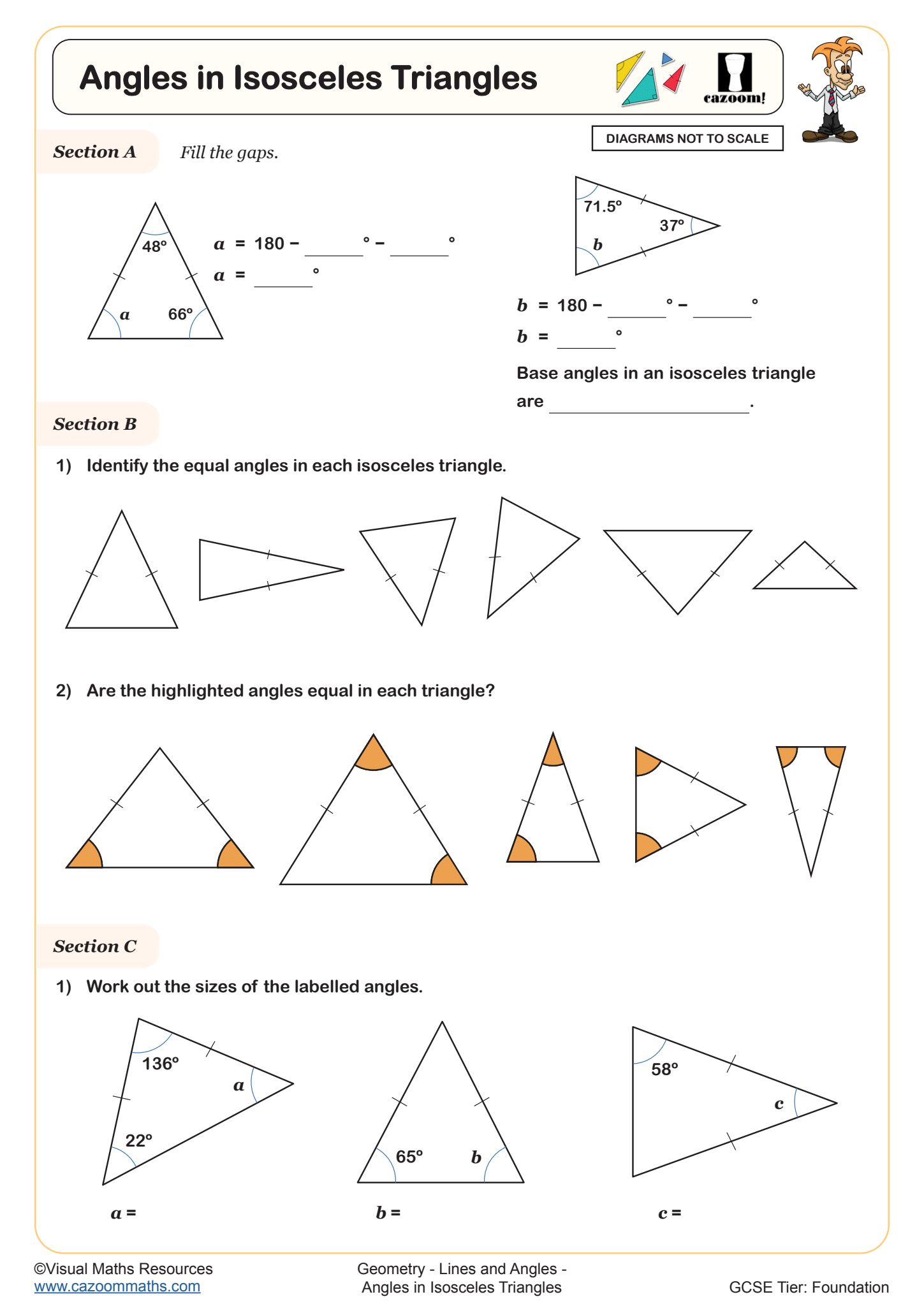
Angles in Isosceles Triangles
Angles in Kites

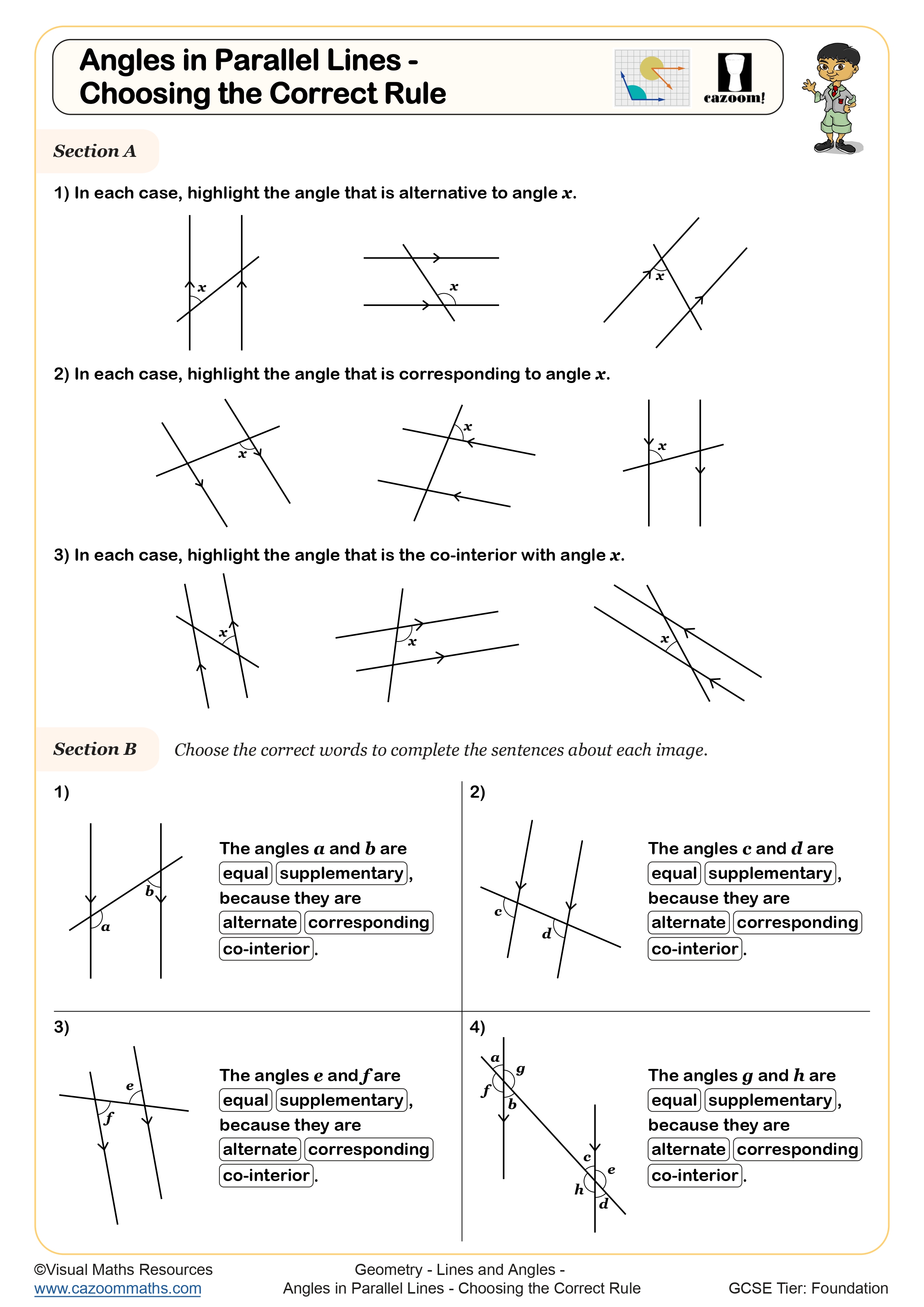
Angles in Parallel Lines - Choosing the Correct Rule
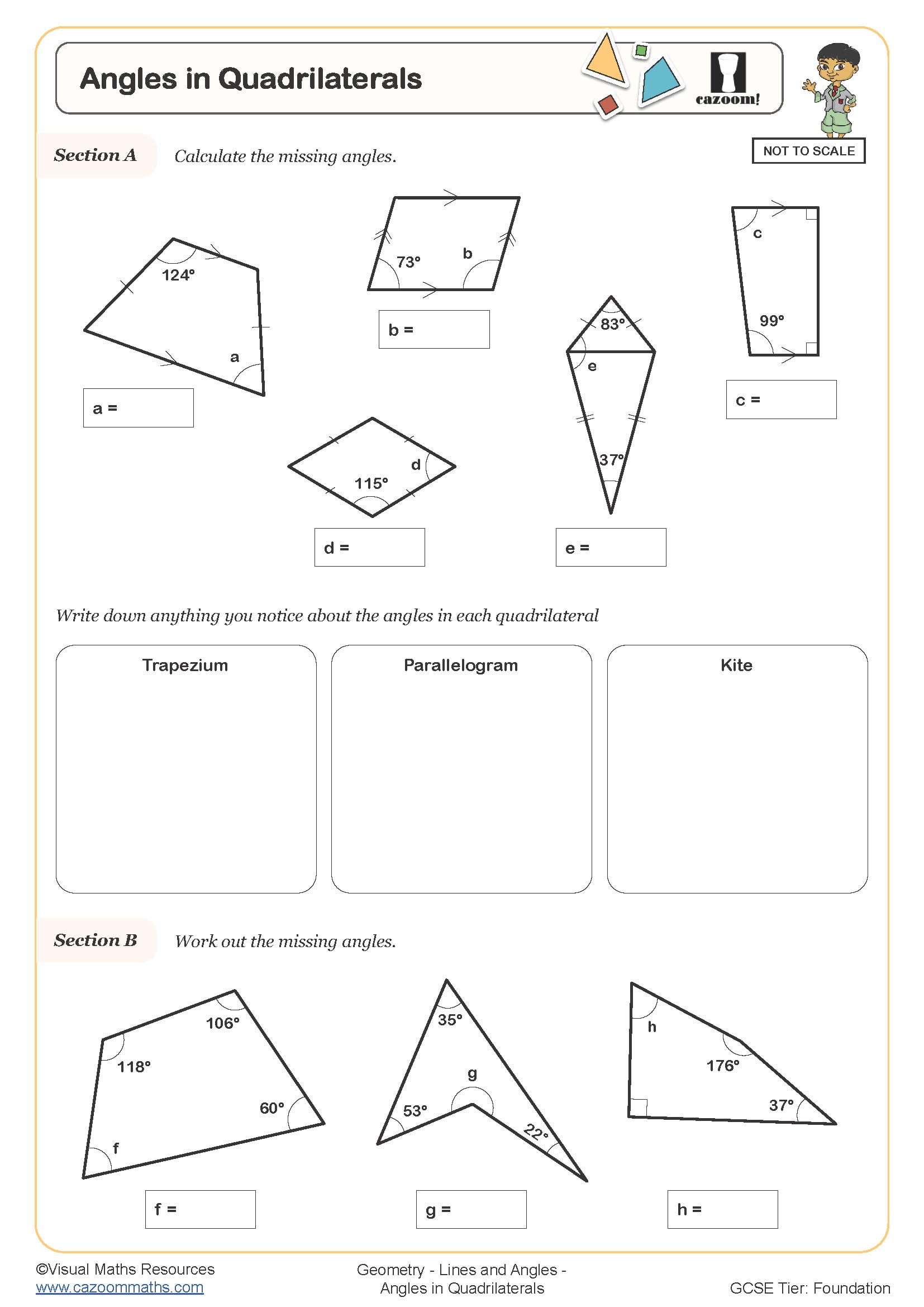
Angles in Quadrilaterals
Angles in Triangles (A)
-Worksheet.jpg?w=3840)
Angles in Triangles (B)
/Cazoom-Maths-Lines-and-Angles-Angles-in-Triangles-(B-Worksheet.jpg?w=3840)
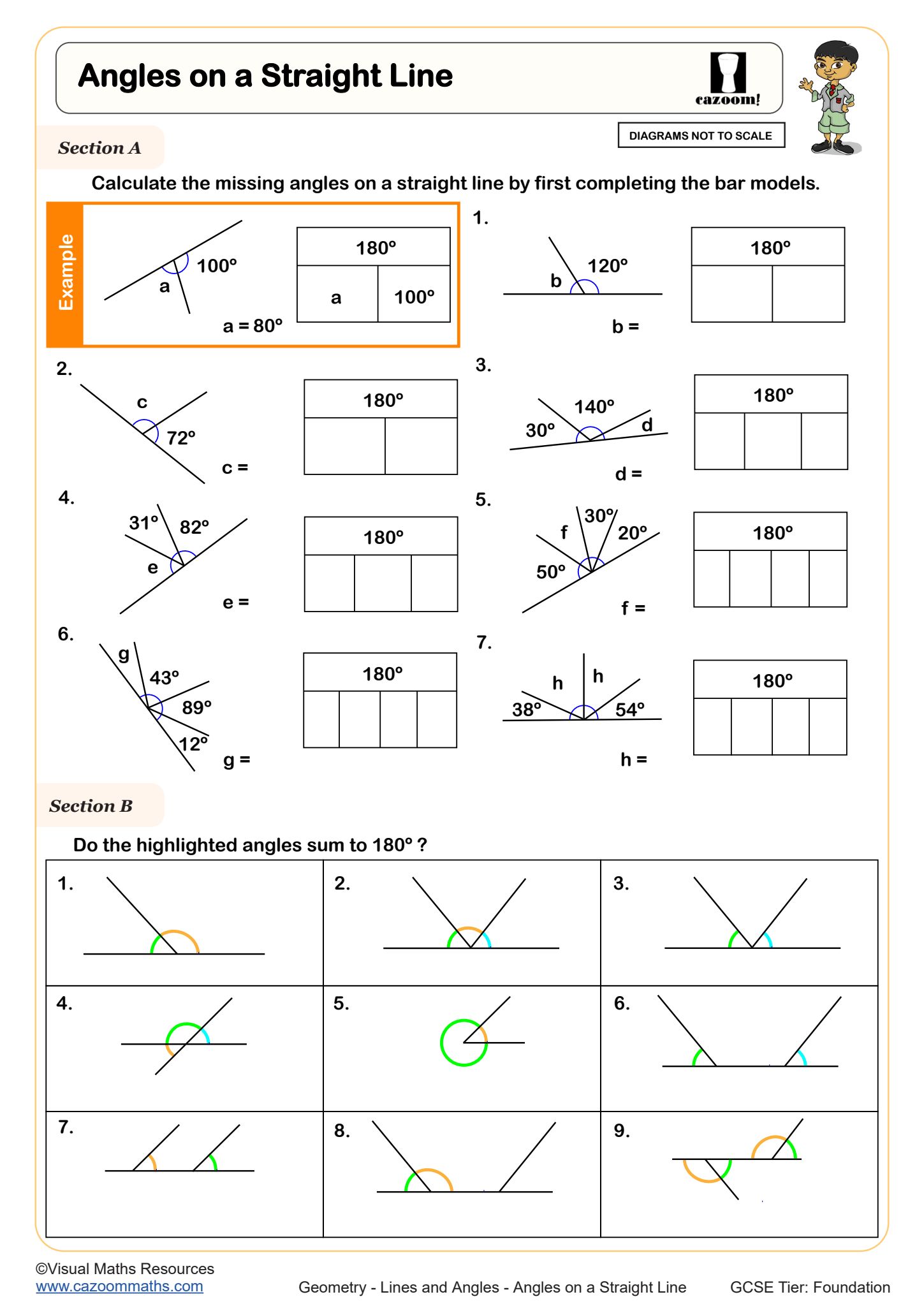
Angles on a Straight Line
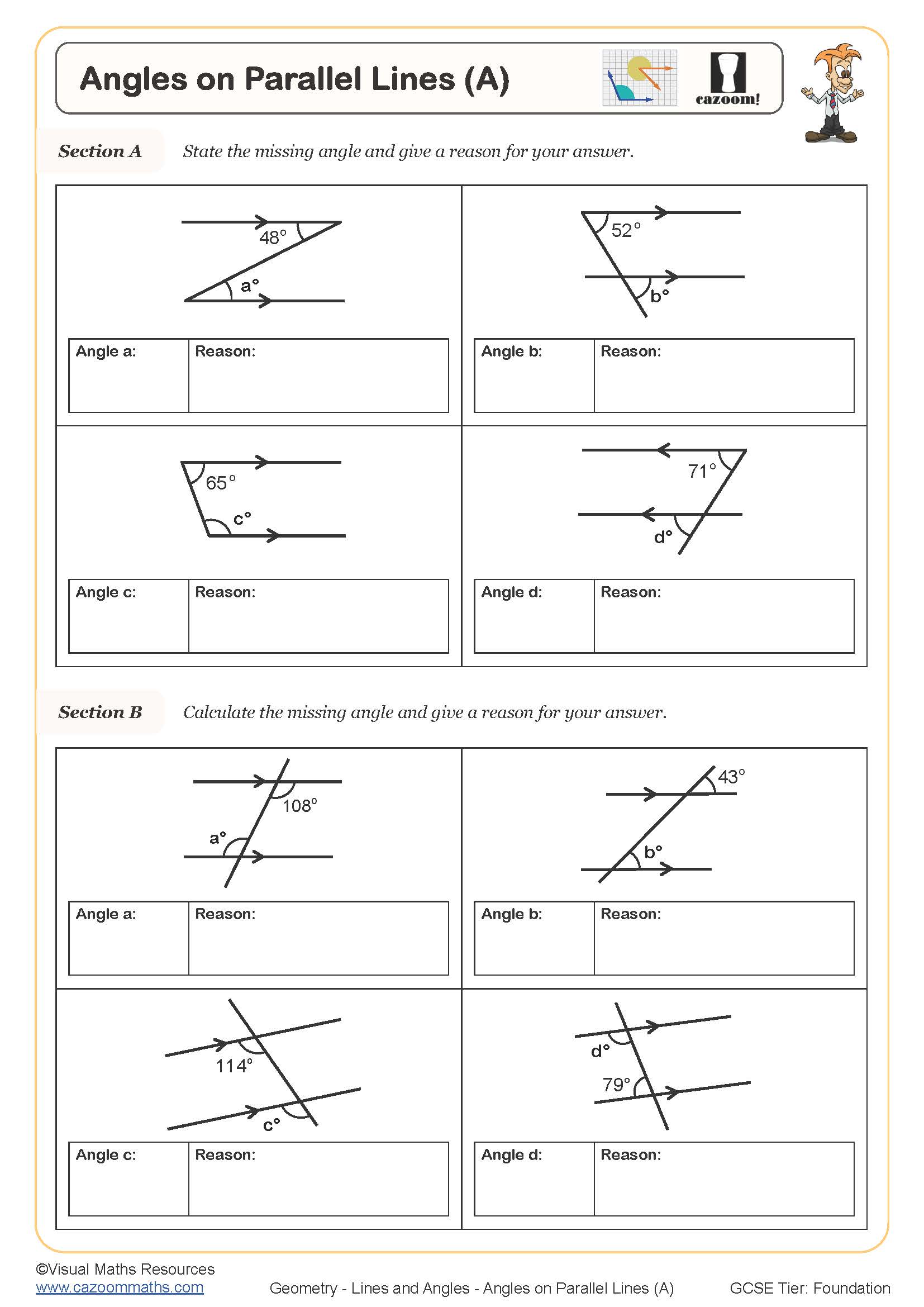
Angles on Parallel Lines (A)
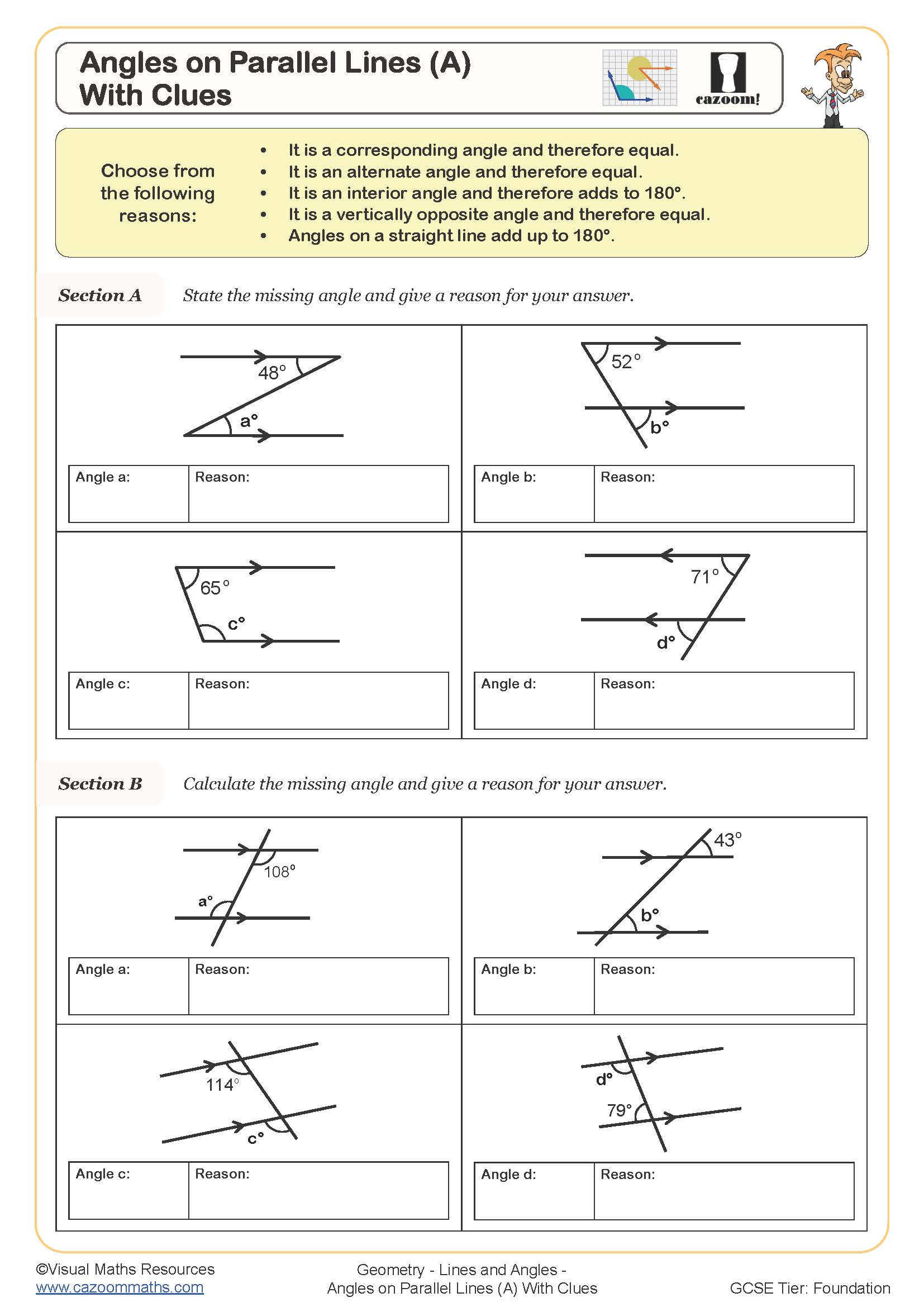
Angles on Parallel Lines (A) (With Clues)
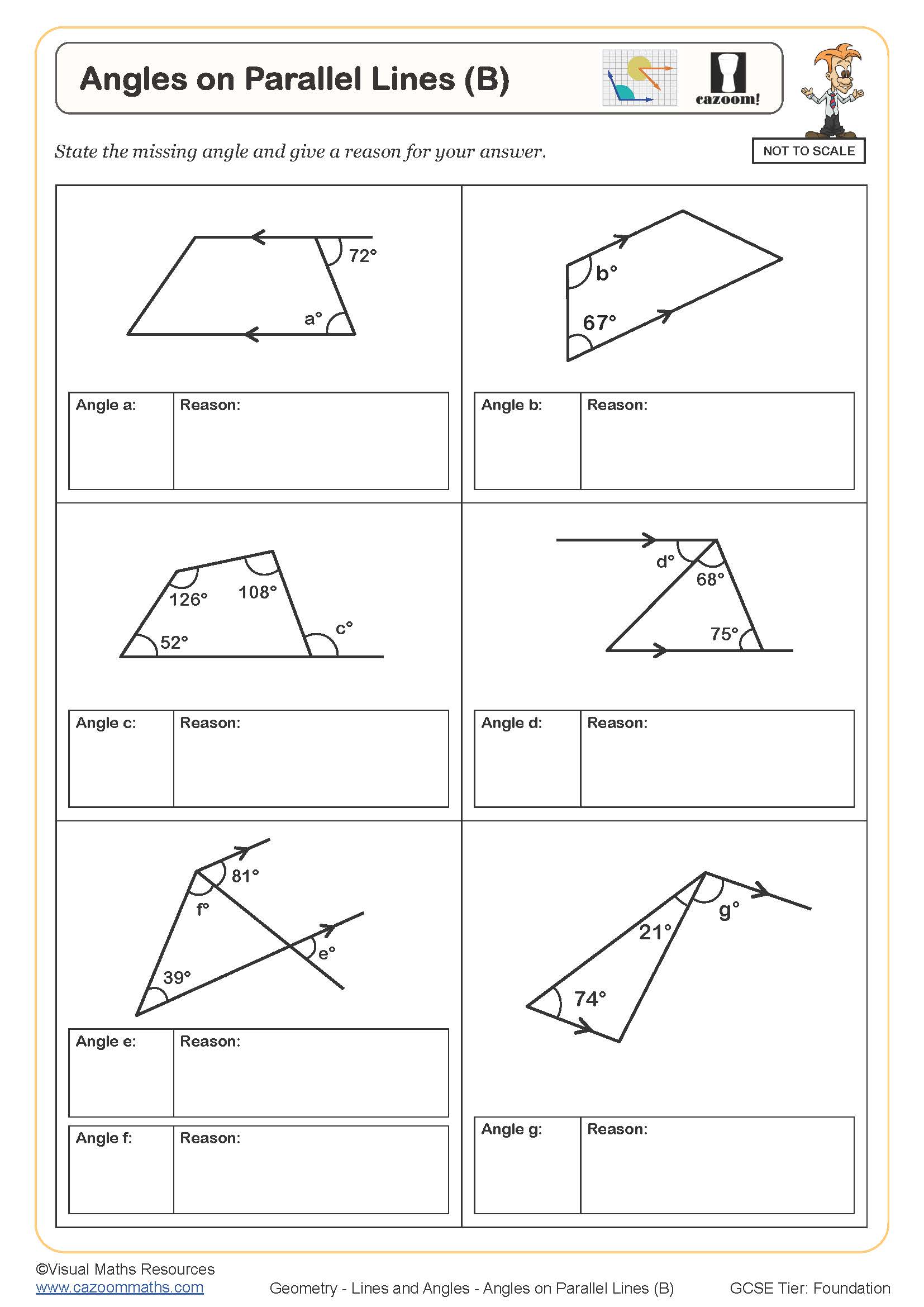
Angles on Parallel Lines (B)
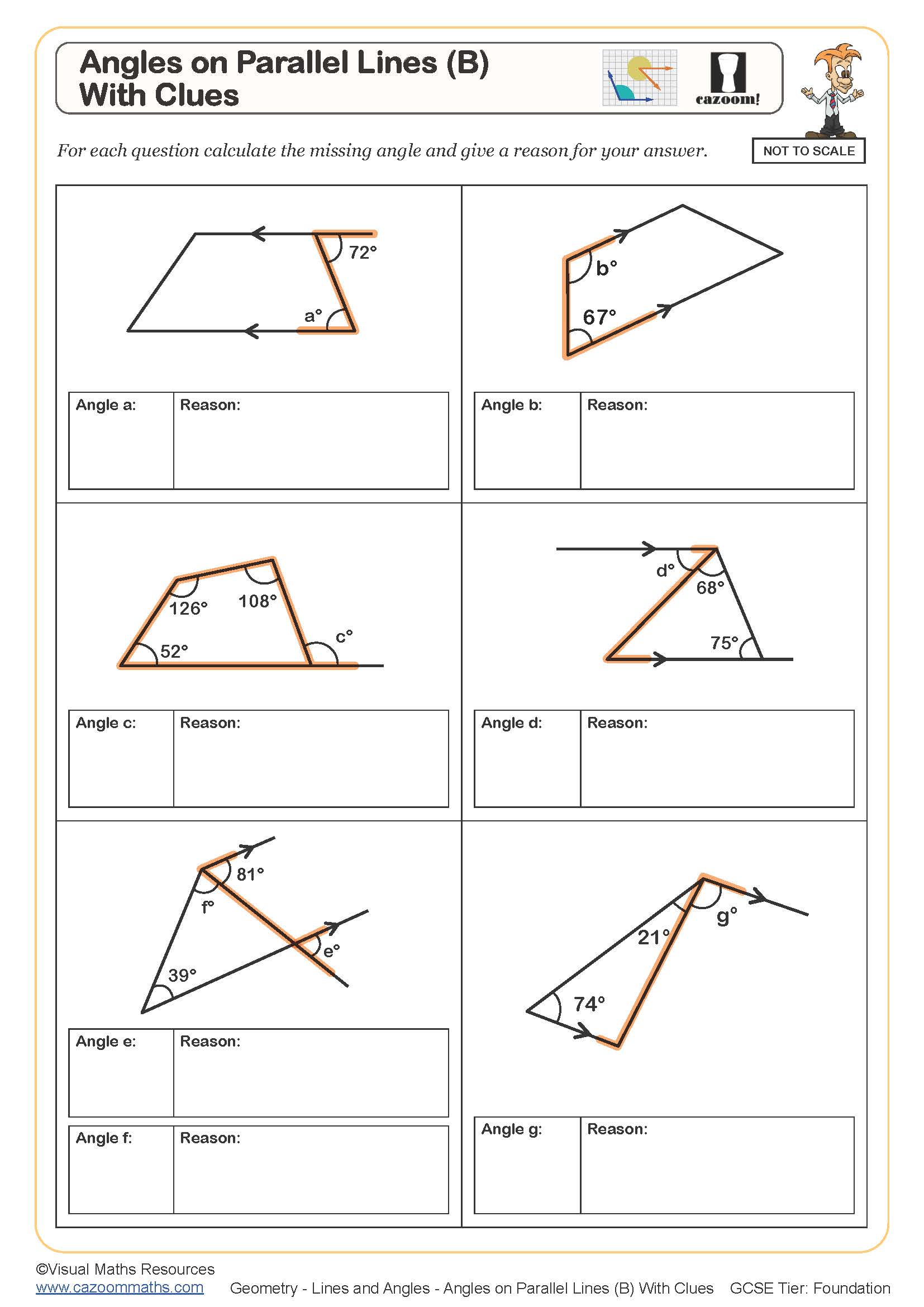
Angles on Parallel Lines (B) (With Clues)
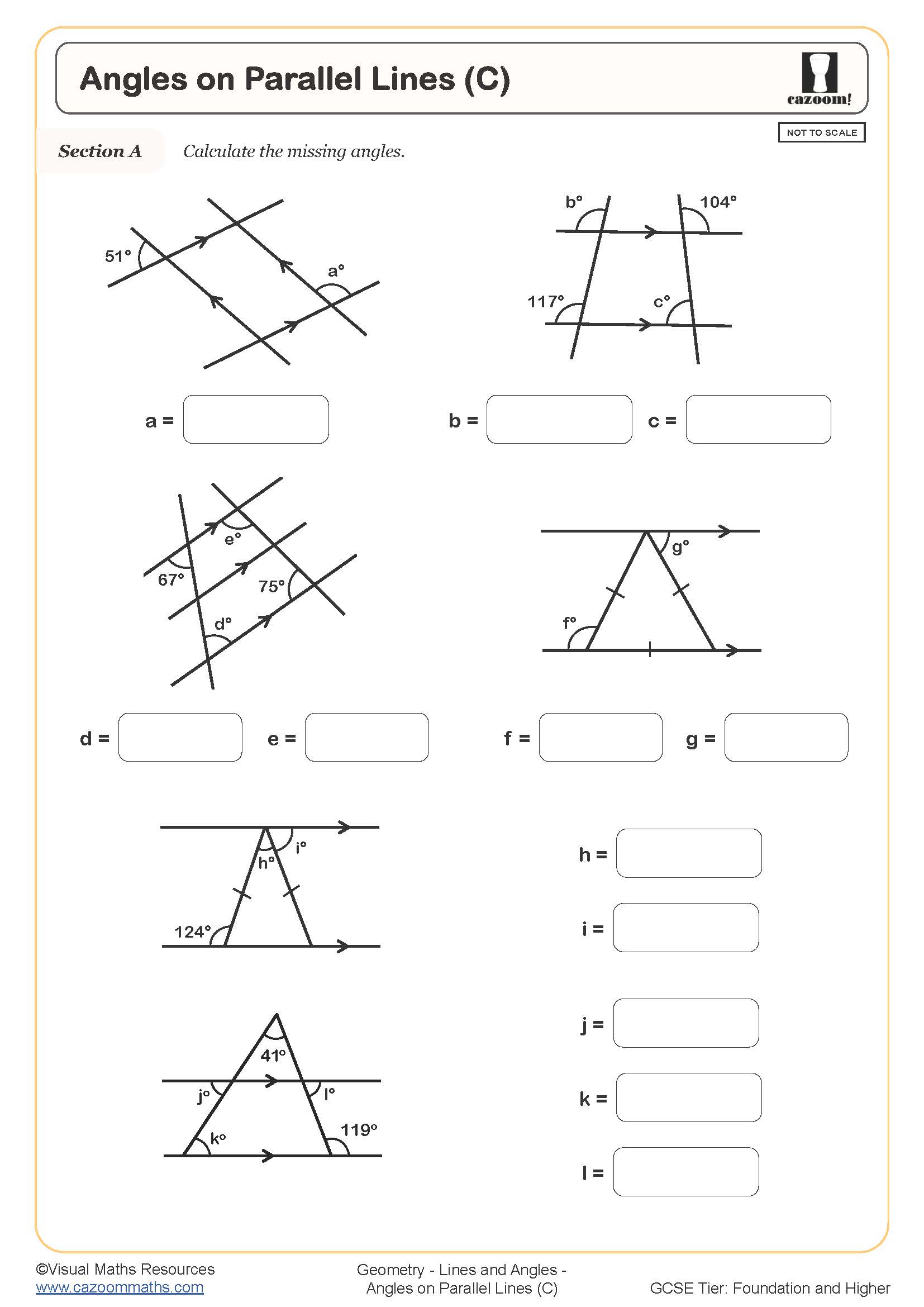
Angles on Parallel Lines (C)
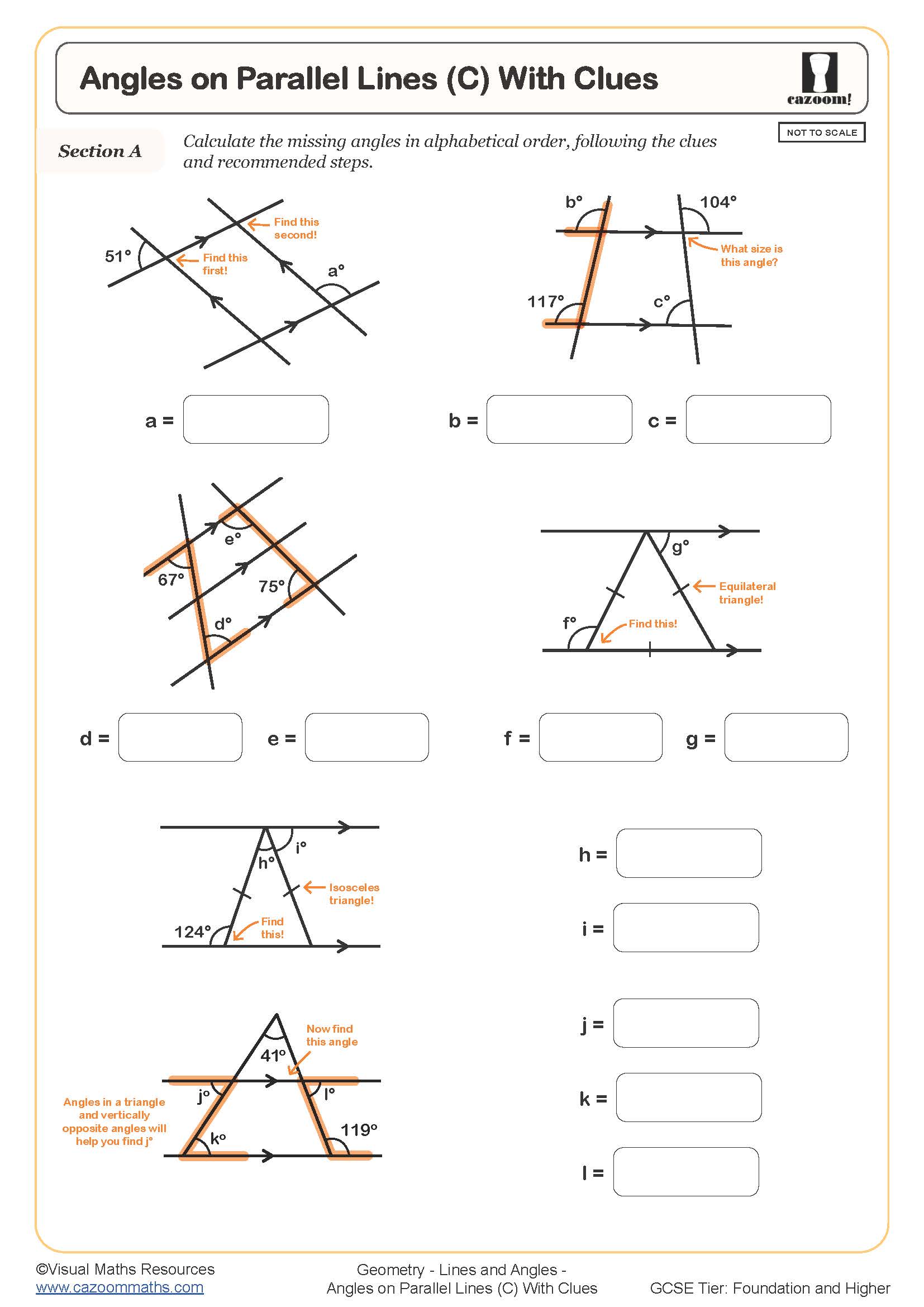
Angles on Parallel Lines (C) (With Clues)
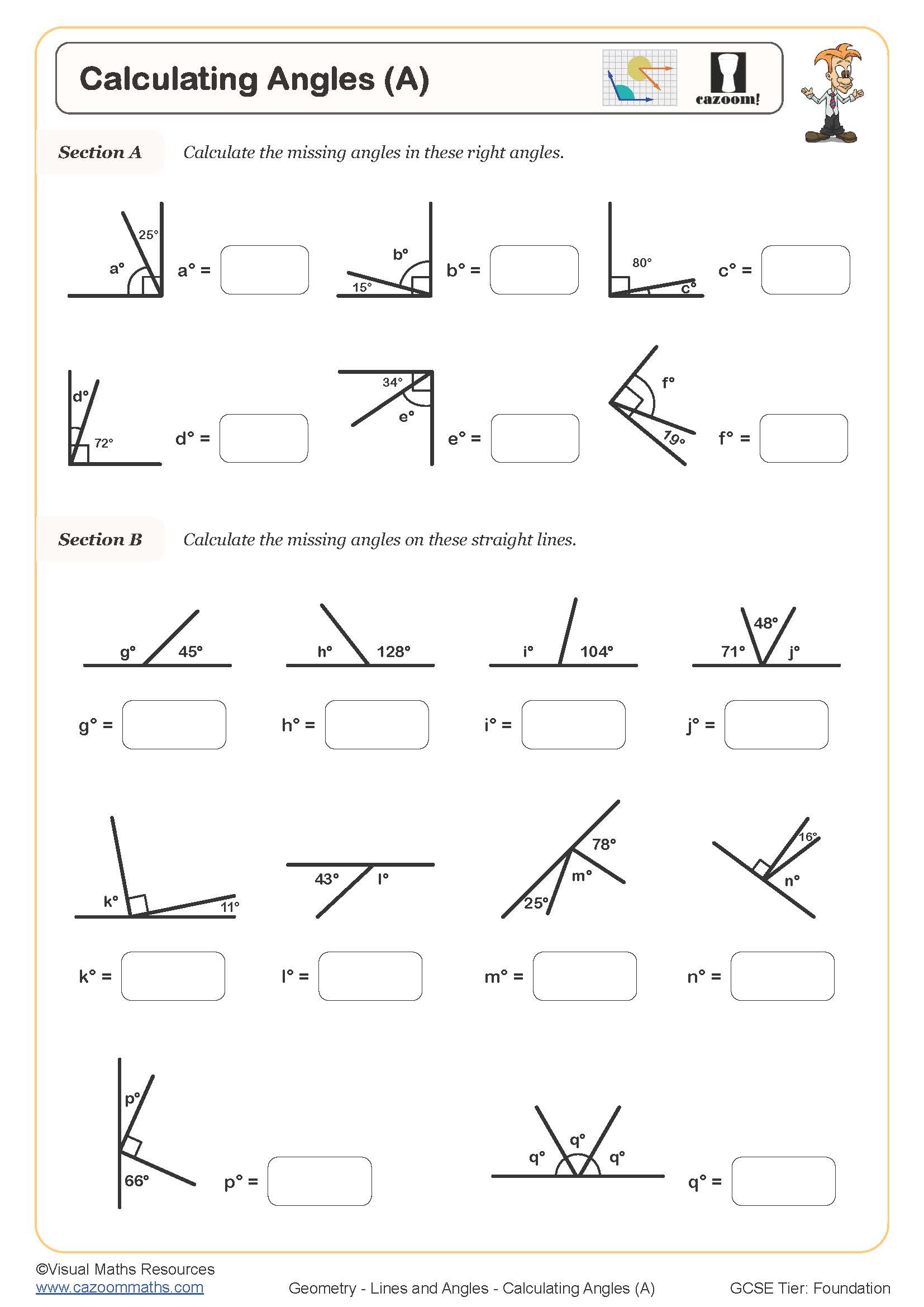
Calculating Angles (A)
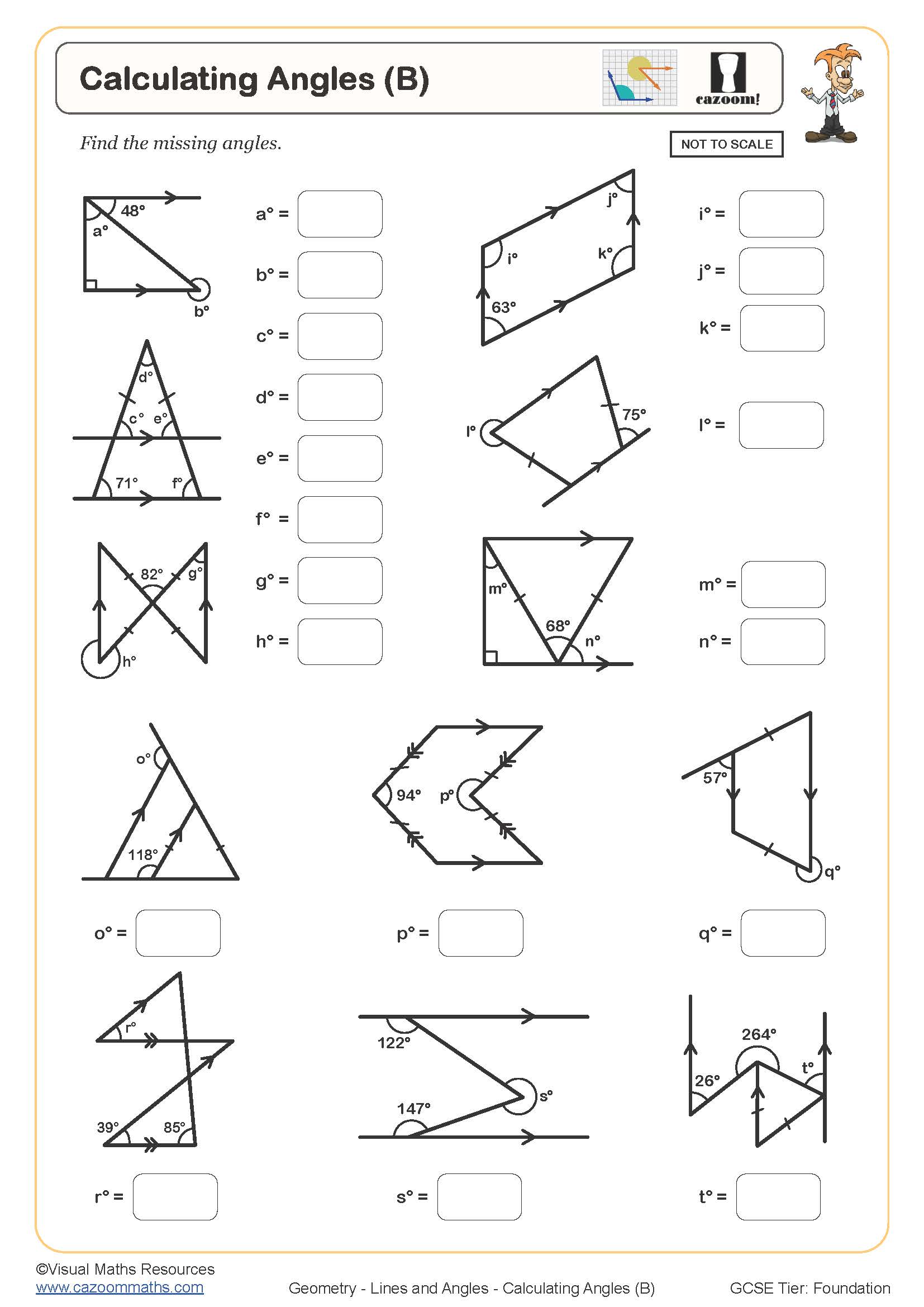
Calculating Angles (B)
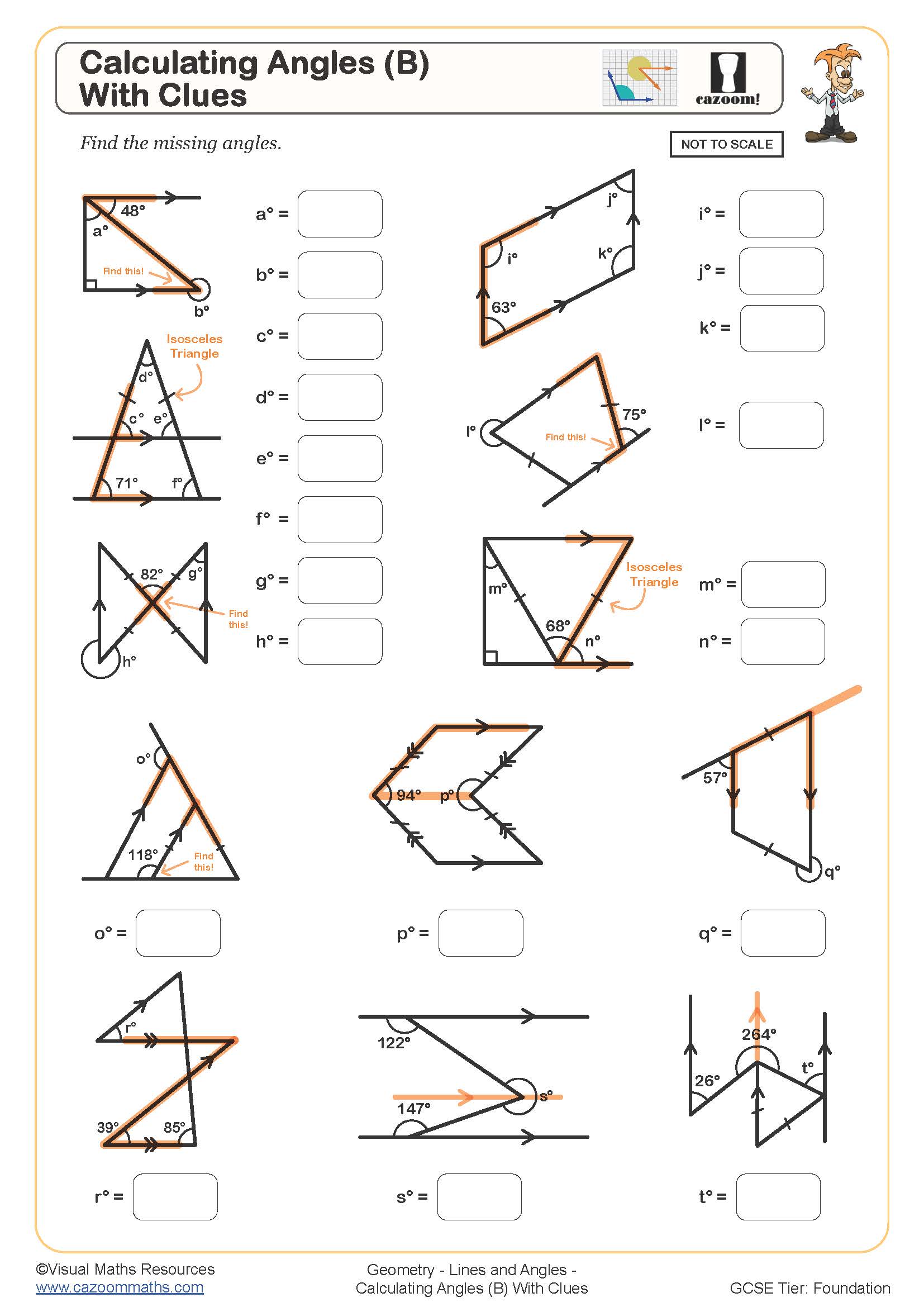
Calculating Angles (B) (With Clues)
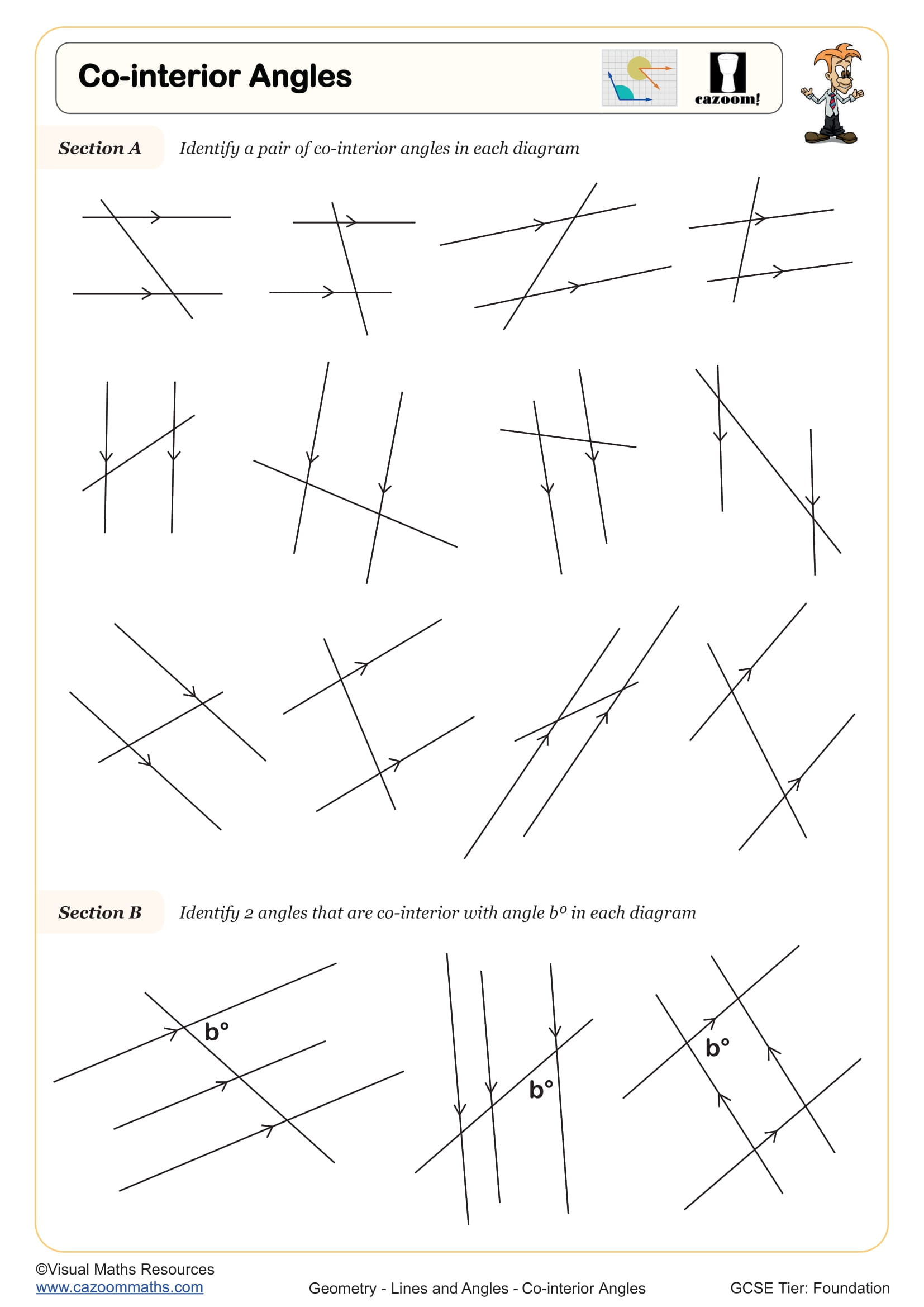
Co-interior Angles
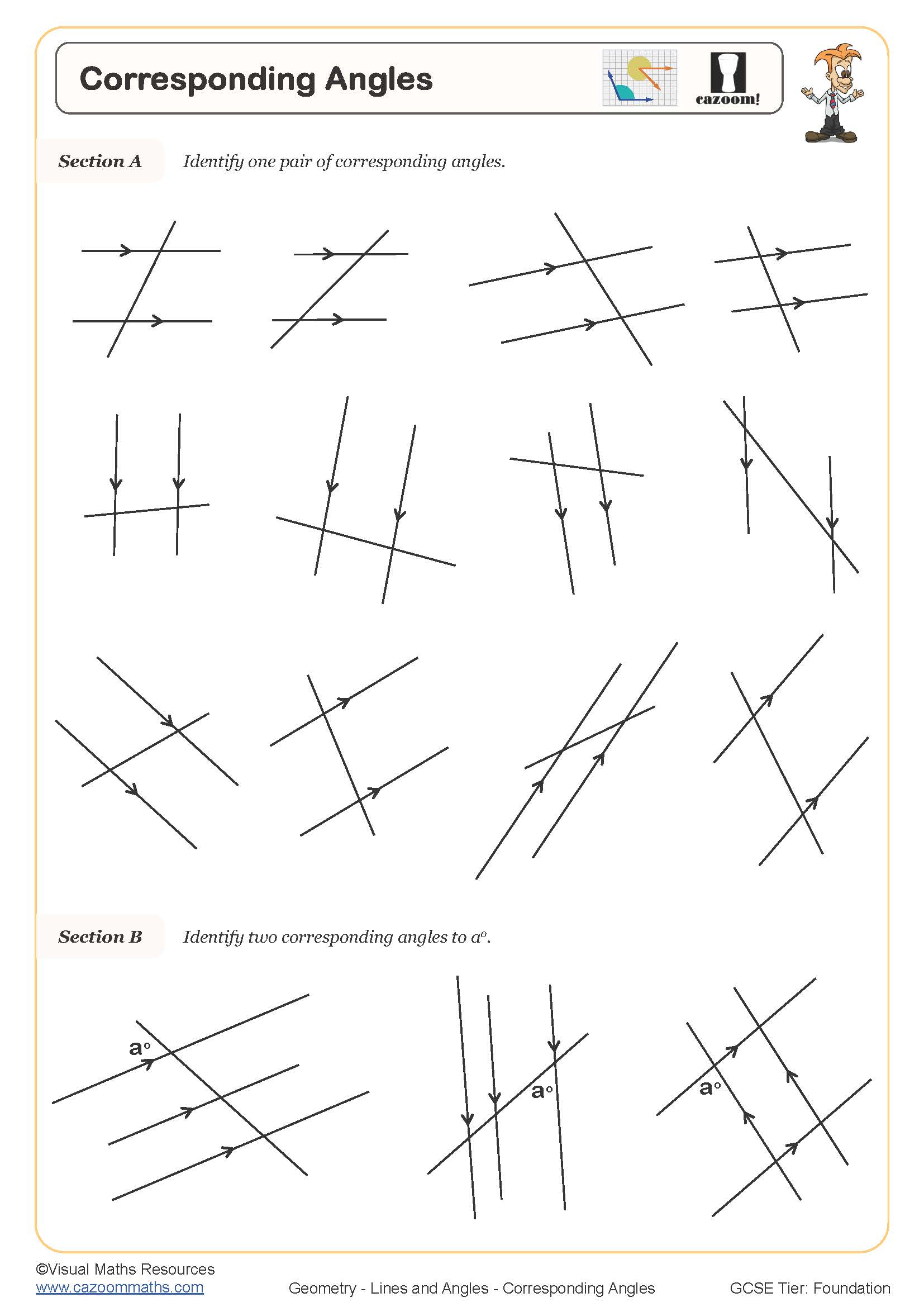
Corresponding Angles
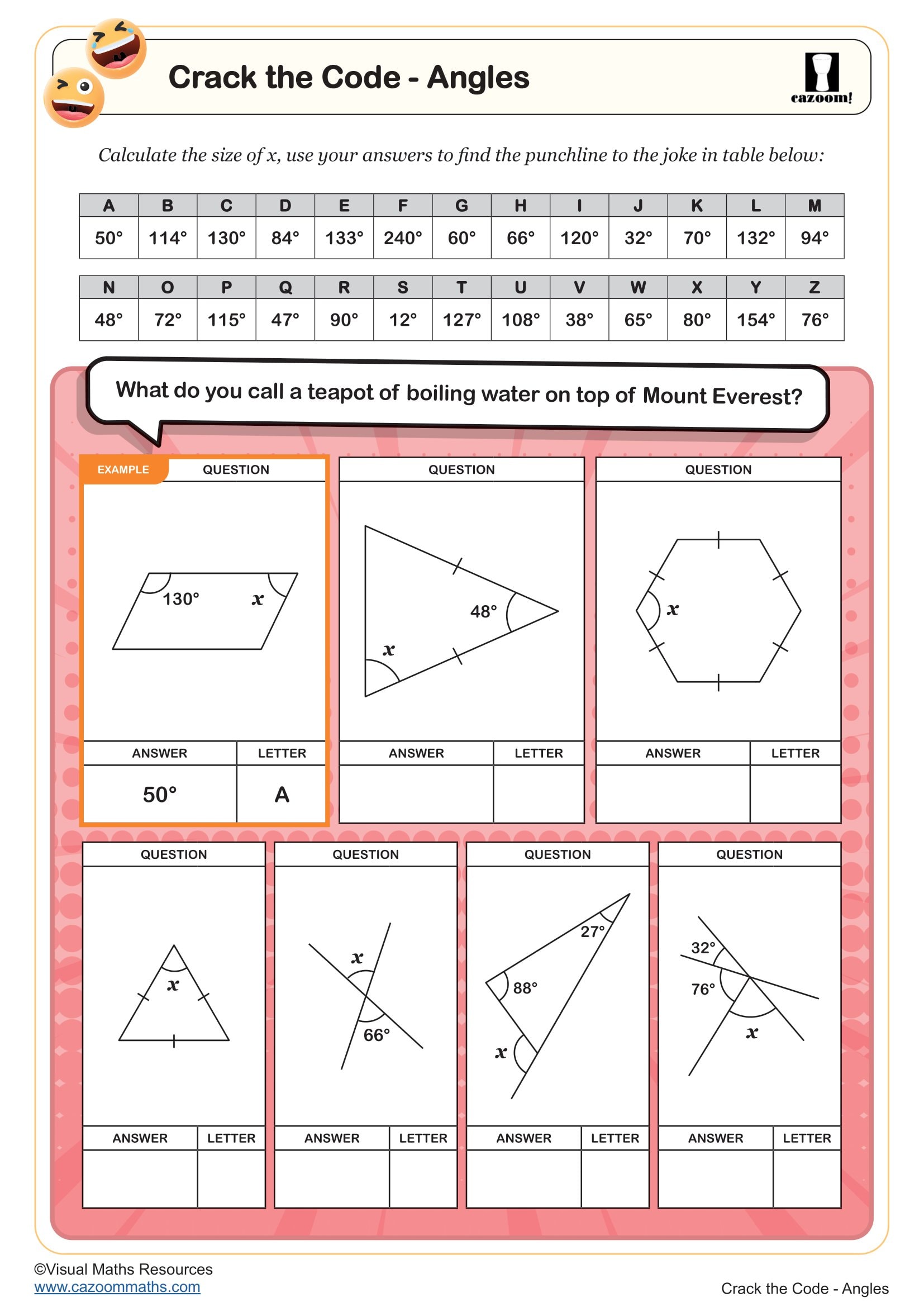
Crack the Code - Angles
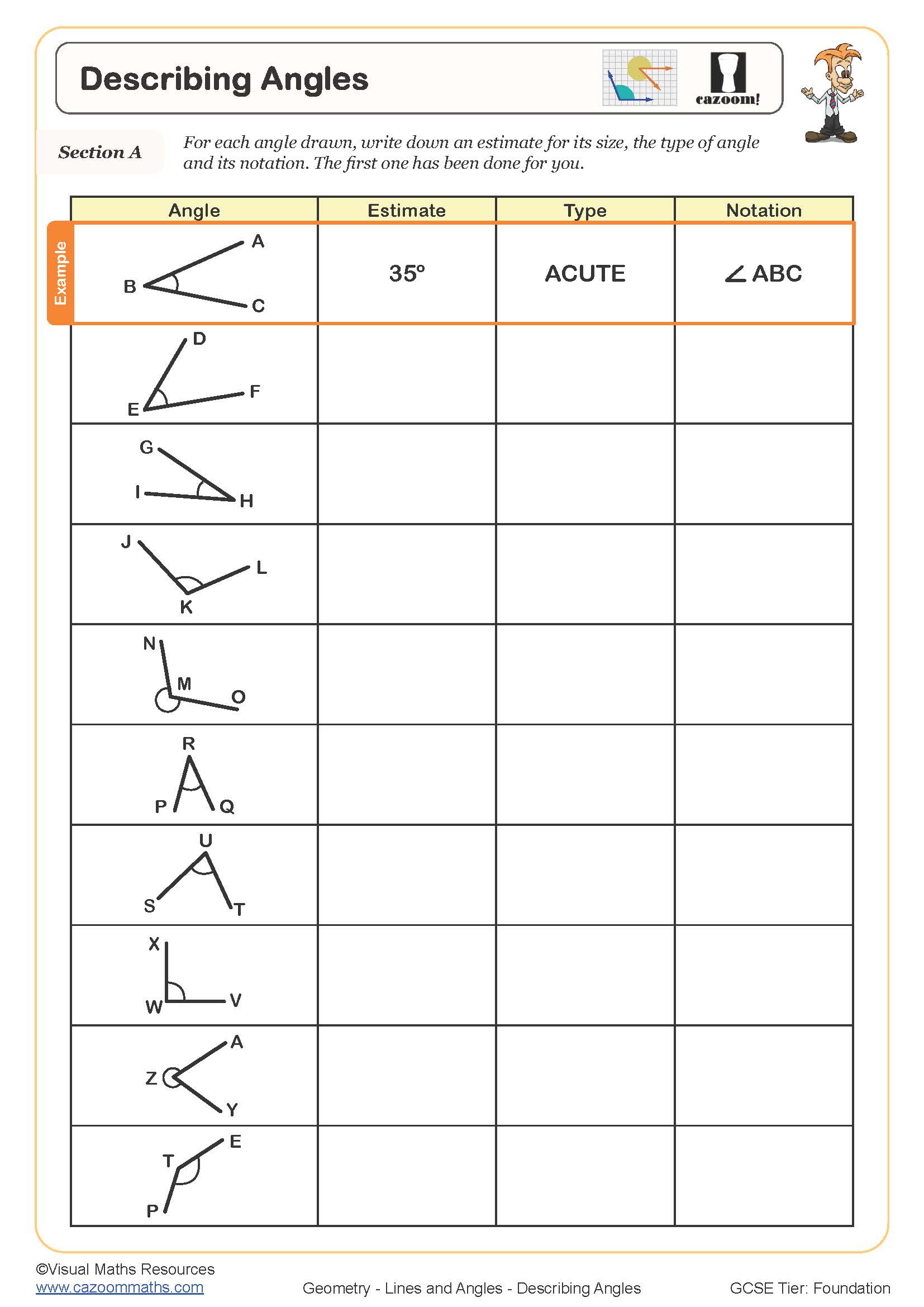
Describing Angles
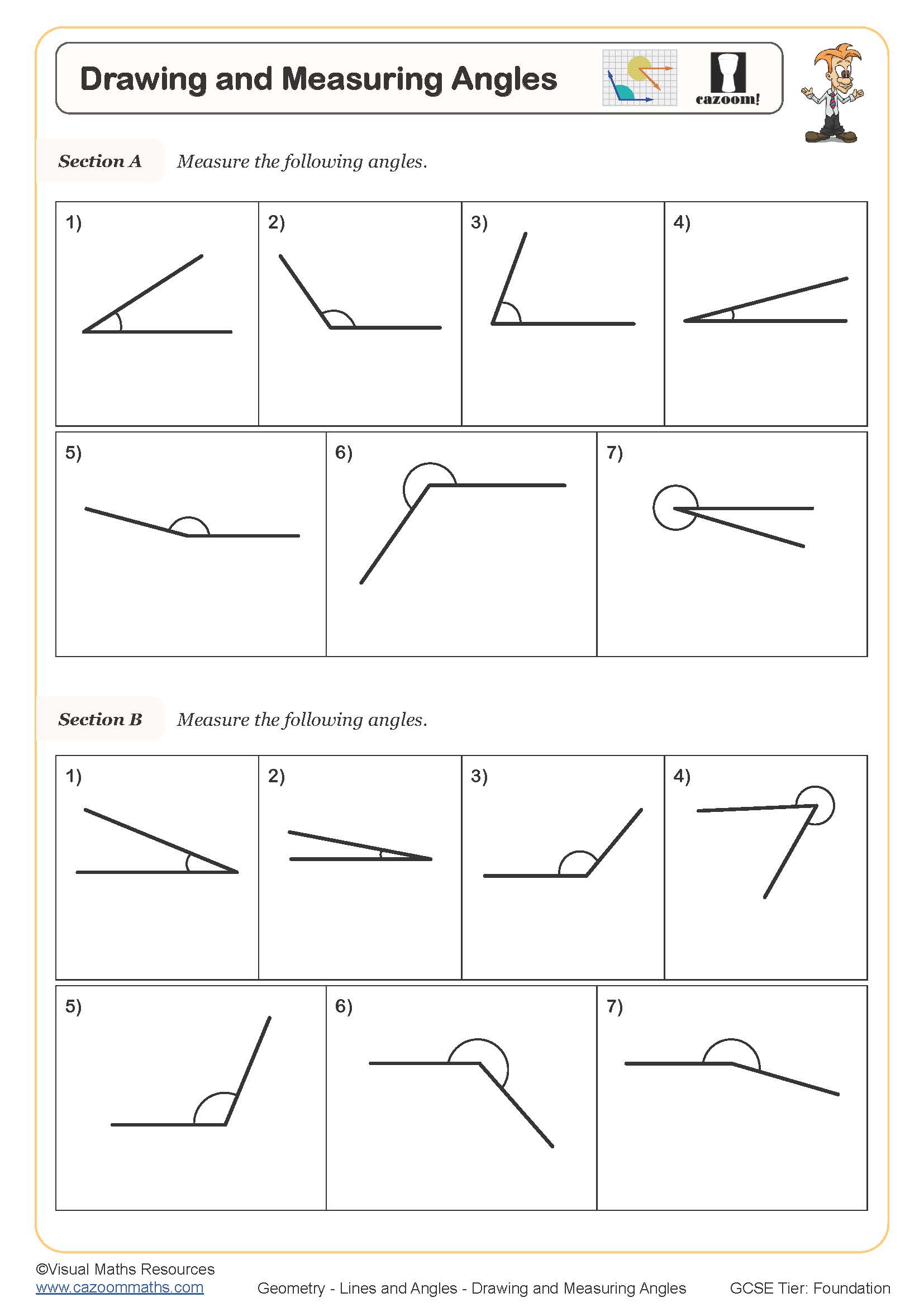
Drawing and Measuring Angles
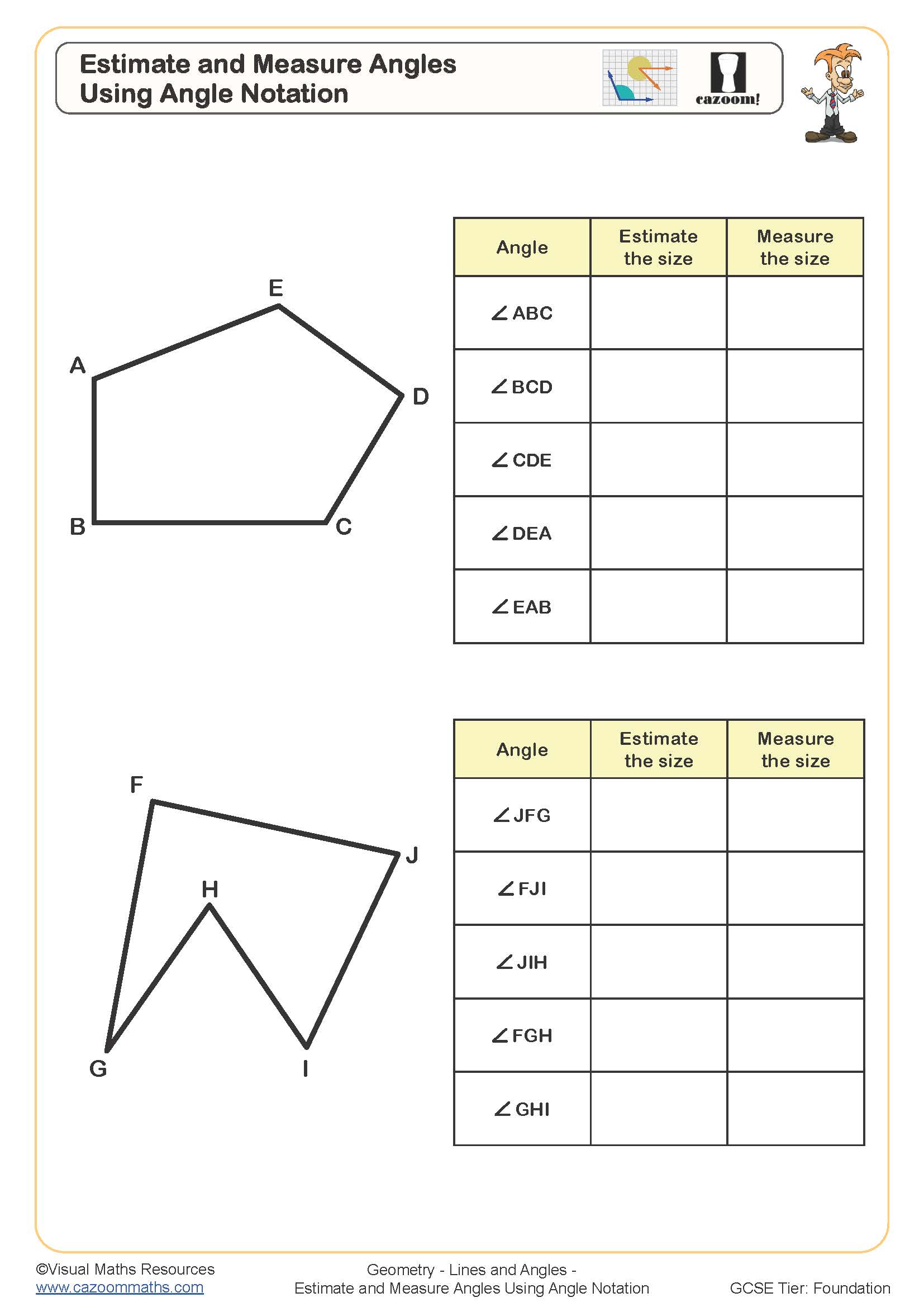
Estimate and Meaure Angles using Angle Notation
Forming and Solving Equations Involving Angles (B)
-Worksheet.jpg?w=3840)
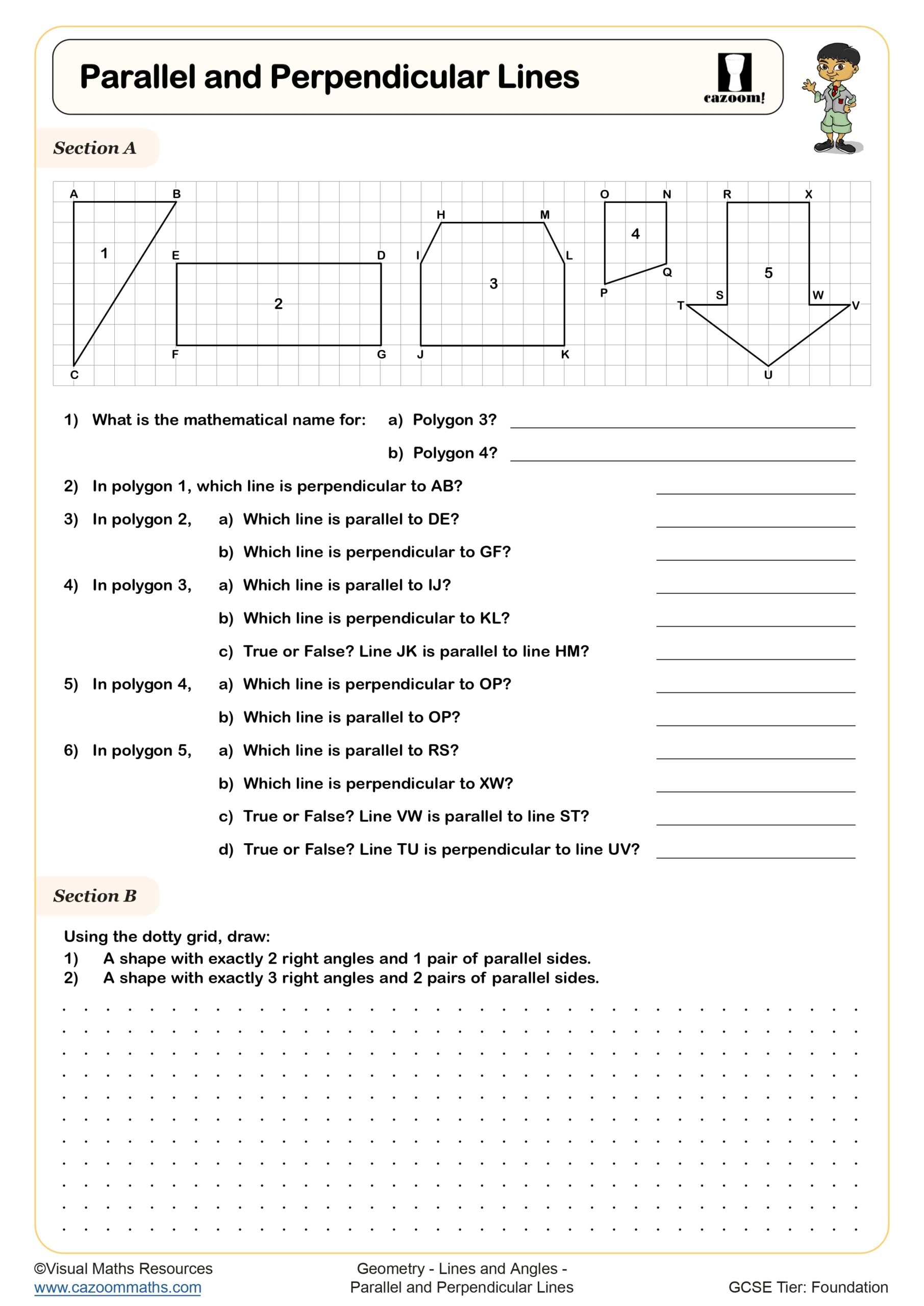
Parallel and Perpendicular Lines
Vertically Opposite Angles
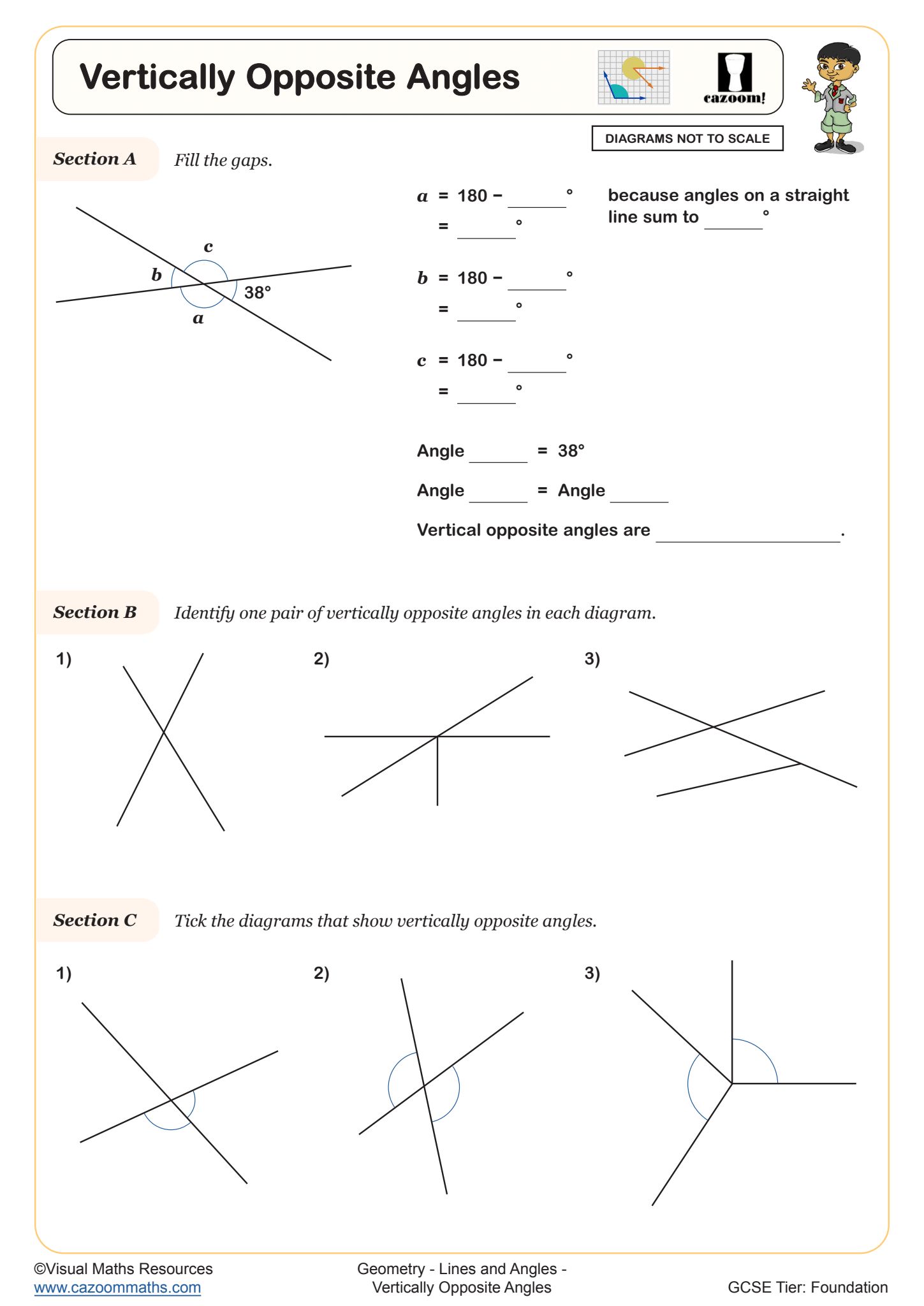
All worksheets are created by the team of experienced teachers at Cazoom Maths.
What should students know about angles in KS3?
In KS3 angles, students develop fluency with angle properties that underpin geometric proof at GCSE. The National Curriculum expects students to recognise acute, obtuse, reflex, and right angles, apply properties of angles at a point (360°), on a straight line (180°), and vertically opposite angles, then progress to angles in parallel lines (alternate, corresponding, and co-interior angles). By Year 9, students should confidently use these properties to solve multi-step problems involving algebraic expressions.
A common misconception occurs when students identify alternate angles but apply the wrong property, particularly confusing alternate angles (equal) with co-interior angles (sum to 180°). Many teachers find that students lose marks in exam questions by stating 'alternate angles' without specifying which pair they're referring to, or by failing to show clear working when solving for unknown angles. Ample practice with annotated diagrams helps students develop the precision exam mark schemes demand.
Which year groups study lines and angles?
These worksheets cover Years 7, 8, and 9, spanning the entire KS3 programme of study for angles. Year 7 typically focuses on angle types, measurement, angles on a straight line, around a point, and in triangles. Year 8 introduces parallel lines with transversals (alternate, corresponding, and co-interior angles) and extends work on polygons, including interior and exterior angle sums.
The progression intensifies in Year 9, where students tackle increasingly complex multi-step problems, often involving algebra. For instance, Year 7 students might find a missing angle in a triangle given two angles, whilst Year 9 students solve problems where angles are expressed as 3x + 20° and require equation-solving skills. This spiral curriculum ensures students revisit core concepts with greater sophistication, building the geometric reasoning essential for GCSE proofs and construction work.
Why are alternate and corresponding angles important?
Alternate and corresponding angles describe the relationships created when a transversal crosses parallel lines. Alternate angles (Z-pattern) are equal, corresponding angles (F-pattern) are equal, and co-interior angles (C-pattern) sum to 180°. Students must identify these patterns confidently, as they're fundamental to geometric proof and appear frequently in GCSE problem-solving questions worth multiple marks. Teachers often observe that students recognise the patterns visually but struggle to articulate which angles they're referring to in formal written solutions.
These angle properties have direct applications in engineering, architecture, and design. When structural engineers design roof trusses, they rely on parallel beam configurations where alternate and corresponding angles ensure load distribution and structural integrity. Similarly, urban planners use these principles when designing road networks where streets intersect at predictable angles, ensuring consistent junction geometry for traffic flow and safety. Understanding these relationships allows students to see geometry as a practical tool, not just abstract theory.
How do these worksheets support learning about angles?
The lines and angles worksheets build systematically from identifying and labelling angles through to solving complex problems requiring multiple steps. Each worksheet scaffolds difficulty, starting with straightforward applications of single properties before progressing to questions where students must combine several angle facts. Many worksheets include diagrams that gradually reduce visual cues, encouraging students to sketch their own working diagrams and develop independent problem-solving strategies rather than relying on pre-drawn annotations.
Teachers use these resources flexibly across different classroom contexts. They work well for starter activities to retrieve prior knowledge, as differentiated practice during lessons where different year groups tackle appropriate complexity, and for targeted intervention with students who need additional consolidation. The answer sheets make them particularly valuable for homework or independent revision, allowing students to self-assess and identify which angle properties they need to revisit. Paired work with these worksheets also encourages mathematical discussion, as students must justify their angle identification to each other.